WORKSPACE-AWARE PRE-EMPTIVE WORKLOAD PROVISIONING
US20260093538A1
2026-04-02
18/903,196
2024-10-01
Smart Summary: An information handling system can decide if it should move an artificial intelligence task to another system. It checks if the other system has a reservation for workspace before making this decision. If the other system is reserved, the task can be transferred there. This helps manage workloads more efficiently. Overall, it ensures that tasks are handled in the best possible environment. 🚀 TL;DR
Abstract:
An information handling system includes a processor and a memory coupled to the processor, the memory having program instructions stored thereon that, upon execution may cause the information handling system to determine whether to offload an artificial intelligence workload to another information handling system. The information handling system may also be configured to determine whether the other information handling system is associated with a workspace reservation, in response to a determination to offload the artificial intelligence workload to the other information handling system. In addition, the information handling system may be configured to offload the artificial intelligence workload to the other information handling system, in response to a determination that the other information handling system is associated with the workspace reservation.
Inventors:
- Mitchell Markow 18 🇺🇸 Hutto, TX, United States
- Balasingh Samuel 21 🇺🇸 Round Rock, TX, United States
- Jacob Mink 11 🇺🇸 Cedar Park, TX, United States
Applicant:
Interested in similar patents?
Get notified when new applications in this technology area are published.
Classification:
G06F9/5027 » CPC main
Arrangements for program control, e.g. control units using stored programs, i.e. using an internal store of processing equipment to receive or retain programs; Multiprogramming arrangements; Allocation of resources, e.g. of the central processing unit [CPU] to service a request the resource being a machine, e.g. CPUs, Servers, Terminals
G06F9/50 IPC
Arrangements for program control, e.g. control units using stored programs, i.e. using an internal store of processing equipment to receive or retain programs; Multiprogramming arrangements Allocation of resources, e.g. of the central processing unit [CPU]
Description
FIELD OF THE DISCLOSURE
The present disclosure generally relates to information handling systems, and more particularly relates to workspace-aware pre-emptive workload provisioning.
BACKGROUND
As the value and use of information continues to increase, individuals and businesses seek additional ways to process and store information. One option is an information handling system. An information handling system generally processes, compiles, stores, or communicates information or data for business, personal, or other purposes. Technology and information handling needs and requirements can vary between different applications. Thus, information handling systems can also vary regarding what information is handled, how the information is handled, how much information is processed, stored, or communicated, and how quickly and efficiently the information can be processed, stored, or communicated. The variations in information handling systems allow information handling systems to be general or configured for a specific user or specific use such as financial transaction processing, airline reservations, enterprise data storage, or global communications. In addition, information handling systems can include a variety of hardware and software resources that can be configured to process, store, and communicate information and can include one or more computer systems, graphics interface systems, data storage systems, networking systems, and mobile communication systems. Information handling systems can also implement various virtualized architectures. Data and voice communications among information handling systems may be via networks that are wired, wireless, or some combination.
SUMMARY
An information handling system includes a processor and a memory coupled to the processor, the memory having program instructions stored thereon that, upon execution may cause the information handling system to determine whether to offload an artificial intelligence workload to another information handling system. The information handling system may also be configured to determine whether the other information handling system is associated with a workspace reservation, in response to a determination to offload the artificial intelligence workload to the other information handling system. In addition, the information handling system may be configured to offload the artificial intelligence workload to the other information handling system, in response to a determination that the other information handling system is associated with the workspace reservation.
BRIEF DESCRIPTION OF THE DRAWINGS
It will be appreciated that for simplicity and clarity of illustration, elements illustrated in the Figures are not necessarily drawn to scale. For example, the dimensions of some elements may be exaggerated relative to other elements. Embodiments incorporating teachings of the present disclosure are shown and described with respect to the drawings herein, in which:
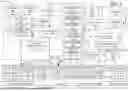
FIG. 1 is a block diagram of a distributed system of information handling systems for a workspace-aware pre-emptive artificial intelligence workload provisioning, according to an embodiment of the present disclosure;
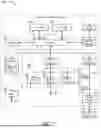
FIG. 2 is a flowchart of a method for workspace-aware pre-emptive artificial intelligence workload provisioning, according to an embodiment of the present disclosure; and
FIG. 3 is a block diagram of an information handling system, according to an embodiment of the present disclosure.
The use of the same reference symbols in different drawings indicates similar or identical items.
DETAILED DESCRIPTION OF THE DRAWINGS
The following description in combination with the Figures is provided to assist in understanding the teachings disclosed herein. The description is focused on specific implementations and embodiments of the teachings and is provided to assist in describing the teachings. This focus should not be interpreted as a limitation on the scope or applicability of the teachings.
In a distributed computing environment, in which a single user's artificial intelligence (AI) workloads may execute locally on a user's information handling system or remotely, such as on a connected computing device or on a cloud resource, one of the key opportunities for improving user experience is a latency of AI workloads. When a user is working on their computer, the latency of the AI workload may be too high to feasibly run the AI workload locally. If the user is connected to a local external computer, that is the next best place to run the workload. If instead the user is disconnected from any externally connected computer, then the next best location to run their workload may be the cloud. However this comes with tradeoffs like data security, network availability, etc. In order to alleviate these issues around choosing the cloud, the present disclosure provides a system and method by which an information technology decision maker (ITDM) may enable offloaded AI workloads on the cloud to be automatically pre-provisioned to a specific information handling system in the ITDM's control via workspace reservation tools. This system and method are enabled particularly by workspace reservation tools or known work locations.
FIG. 1 illustrates a portion of a distributed system environment 100 for workspace-aware pre-emptive AI workload provisioning, according to an embodiment of the present disclosure. Distributed system environment 100 includes a set of communicatively coupled information handling systems or compute devices, such as information handling systems 135 and 160, a device 150, and a cloud data center 185. Local and remote information handling systems in distributed system environment 100 may be communicatively linked either by hardwired data links, wireless data links, or a combination of hardwired and wireless data links through a network.
The network may be a public network, such as the Internet, a physical private network, a wireless network, a virtual private network, or any combination thereof. The network may be implemented as or may be implemented as or may be a part of, a storage area network, a personal area network, a local area network, a metropolitan area network, a wide area network, a wireless local area network, an intranet, or any other appropriate architecture or system that facilitates the communication of signals, data, and/or messages.
Information handling systems generally process, compile, store, and/or communicate information or data for business, personal, or other purposes thereby allowing users to take advantage of the value of the information. Nevertheless, a continually growing number of information handling systems and devices are being enhanced with AI services, such as heuristic learning, machine learning, deep learning, reinforcement learning services, and the like. Currently, most AI services are performed in central processing units (CPUs), graphics processing units (GPUs), system on chips (SOCs), neural processing units (NPUs), or other processors of the information handling system.
As the number of AI services increases, so will the need for computing resources to execute machine learning or AI models. Nevertheless, executing AI services in the information handling system, such as on-the-box (OTB) can inadvertently affect end-user productivity and negatively exhibit adverse effects, such as reduced battery life, system performance, and overall end-user experience. Conventional techniques to address this problem include AI hardware accelerators and AI software accelerators. However, these accelerators can be busy performing other tasks. In addition, these accelerators can be expensive and thus may not get integrated into low-cost platforms. Accordingly, embodiments of the present disclosure provide a system and method for preemptive and secure transitioning of AI workload to a premium information handling system, such as a dock using workspace reservation information.
Information handling system 135, which is similar to information handling system 300 of FIG. 3 may be a personal computer, a desktop computer system, a laptop computer system, a server computer system, a mobile device, a tablet computing device, a personal digital assistant, a consumer electronic device, an electronic music player, an electronic camera, an electronic video player, a wireless access point, a network storage device, or any other suitable computing device. Information handling system 135 may also be a portable information handling system that may include a laptop, a notebook, a smartphone, a tablet, or a personal digital assistant, among others. In one example, information handling system 135 may be an employee's corporate laptop that he or she docks into device 150 upon arrival at a cubicle.
Information handling system 135 may be communicatively coupled to device 150 and information handling system 160. Information handling system 135 may also be communicatively coupled to cloud data center 185 via the Internet. In this example, information handling system 160 is communicatively coupled with a device 194 and a dock 196. Device 194 may be similar to device 105 while dock 196 may be similar to device 150. However, any variety of connections between various components of distributed system environment 100, such as connections between information handling systems 135 and 160, devices 105 and 194, and dock 196 with cloud data center 185 are envisioned as falling within the scope of the present disclosure. In addition, connections between components and within the various components of distributed system environment 100 are also envisioned as falling within the scope of the present disclosure. In addition, connections between components and within the various components may be omitted for descriptive clarity.
Information handling system 135 includes a device 105, a CPU 136, a GPU 138, a discrete NPU (dNPU) 140, an NPU 142, an integrated NPU (INPU) 144, an AI processor 146, and a memory 148. CPU 136, which is similar to processors 302 and 304 of FIG. 3, may be configured to execute instructions of an application, such as applications 102 and 104. CPU 136 may also be configured to execute instructions associated with an AI workload orchestrator 110, a device selection service 112, a policy management service 114, and a firmware management service 116. In addition, CPU 136 along with GPU 138, dNPU 140, NPU 142, INPU 144, and AI processor 146 may be configured to execute an AI workload, such as AI workload 115.
GPU 138, which may be similar to a graphics adapter 330 of FIG. 3 may comprise any system, device, or apparatus configured to process graphical or visual content and to communicate that content to a monitor or display where the content may be rendered. An NPU may comprise any system, device, or apparatus, such as a hardware accelerator that is designed for AI and ML tasks. NPUs are optimized to handle the complex computations required by deep learning algorithms. This optimization makes NPUs efficient at processing AI tasks, such as natural language processing, image analysis, and more. NPUs utilized by information handling system 135 may be of various types including dNPU 158, INPU 144, and AI processor 146. DNPU may be a discrete NPU, such as an NPU in a USB stick. An NPU may also be integrated with information handling system 135. INPU 144 may be connected via an m.2 slot within information handling system 135. AI processor 146 may comprise any system, device, or apparatus configured to process AI workloads.
Memory 148, which is similar to a memory 320 of FIG. 3, may comprise a non-volatile memory accessible by CPU 136, GPU 138, dNPU 140, NPU 142, INPU 144, device 105, or AI processor 146. However, each one of the aforementioned may be associated with a separate non-volatile memory device. Memory 148 may include a static random access memory (SRAM), a dynamic random access memory (DRAM), or any suitable device to support high-speed memory operations. In certain embodiments, memory 148 may combine both persistent, non-volatile memory and volatile memory. In certain embodiments, memory 148 may include multiple removable memory modules.
Device 105 includes a control plane 106, a data storage 108, AI workload orchestrator 110, device selection service 112, policy management service 114, firmware management service 116, and applications 102 and 104. Applications 102 and 104 are applications installed locally on device 105, also referred to as on-the-box (OTB) applications. For example, application 102 may be a video telephony software program while application 104 may be a natural language processing application.
Control plane 106 may be configured to control or route data received from cloud gateway services 175 to one or more components of information handling system 135, such as policy management service 114. In one example, control plane 106 may route IT policy 182 to device selection service 112. Data storage 108 may be a persistent data storage device. Data storage 108 may include solid-state disks, hard disk drives, magnetic tape libraries, optical disk drives, magneto-optical disk drives, compact disk drives, compact disk arrays, disk array controllers, and/or any computer-readable medium operable to store data. Data storage 108 may include a database or a collection of files that is a central repository of data associated with workloads that are accessible by AI workload orchestrator 110 and applications 102 and 104. For example, AI workload orchestrator 110 and applications 102 and 104 may retrieve, store, and utilize data stored in data storage 108.
AI workload orchestrator 110 may be configured to monitor, control, and/or manage AI workloads instantiated using a CPU, GPU, NPU, or similar, such as AI workload 115. AI workload 115 generally refers to data associated with an AI service that is to be performed to generate one or more inferences based on the data. For example, AI workload 115 may include a set of input data, such as telemetry data, past profile recommendations, machine learning hints from other AI services, etc., that may be processed to generate one or more inferences. As such, AI workload 115 may include machine learning and deep learning workloads, such as tasks performed by AI systems which typically involve processing large amounts of data and performing complex computations.
For example, a typical machine learning workflow may include building a model from a sample dataset, evaluating the model against one or more additional sample datasets to decide whether to keep the model and to benchmark how good the model is, using the model in production to make predictions or decisions against live input data captured by an application. The training set, validation set, and/or test set can respectively include pairs of input datasets and output datasets that correspond to the respective input datasets.
Device selection service 112 may comprise any system, device, or apparatus configured to determine a physical and/or virtual device or information handling system to process or transition an AI workload according to a policy, such as IT policy 182. For example, device selection service 112 may determine whether to transition AI workload 115 to a trusted device or information handling system within distributed system environment 100 that includes an AI processor capable of executing an AI workload. An AI processor includes a GPU, CPU, NPU, dNPU, INPU, or similar that is capable of executing an AI workload. Typically, an OTB AI processor is prioritized over a “near the box” device or information handling system. However, the “near the box” device or information handling system is generally prioritized over a “far from the box” device or information handling system. Accordingly, the “far from the box” AI processor or information handling system is generally prioritized over a cloud resource.
Device selection service 112 and/or AI workload orchestrator 110 may gather data or information from monitoring services 118 or its components. The data or information may include current performance, power utilization, and acoustic and thermal levels, among others to characterize the current state or utilization of one or more components of information handling system 135. This information may be utilized to determine whether to offload AI workloads according to policy, such as IT policy 182 provided by policy management service 114. Policy management service 114 may comprise any system, device, or apparatus configured to manage, monitor, and/or control IT policies, such as policies associated with AI workload transitions.
Firmware management service 116 may comprise any system, device, or apparatus configured to communicate with relevant hardware post-device selection. For example, firmware management service 116 may interface with a specific vendor application programming interface (API) to an OTB hardware, to a hardware connected to information handling system 135, or it may pass through to external components in order to run the workload.
Monitoring services 118 may be configured to monitor, control, and/or manage one or more features of information handling system 135 and/or device 105, such as the health and performance of device 105. As such, monitoring service 118 includes one or more monitoring services, wherein each monitoring service may monitor, control, and/or manage a feature of device 105. For example, monitoring service 118 includes a performance monitor 120, a security monitor 122, a power monitor 124, an acoustics monitor 126, a location monitor 128, a thermal monitor 130, a reliability monitor 132, and monitor 134. Monitoring services 118 can include other monitors or monitoring service than depicted herein as new information becomes available to information handling system 135 and/or monitoring services 118.
Performance monitor 120 may be configured to monitor, manage, and/or control the performance of device 105 and/or its components. For example, performance monitor 120 can collect performance metrics over time, at specified intervals, and generate logs that can be analyzed to identify system performance issues. Security monitor 122 may be configured to monitor, manage, and/or control security of device 105 and/or its components. For example, security monitor 122 can detect a security data threat with data associated with AI workload. Power monitor 124 may be configured to monitor, manage, and/or control power consumption of device 105 and/or its components. For example, power monitor 124 may determine the power consumption of each one of applications 102 and 104. Acoustics monitor 126 may be configured to monitor, manage, and/or control the acoustics level of device 105 and/or its components. For example, acoustics monitor 126 may provide a current acoustics level to performance monitor 120.
Location monitor 128 may comprise any system, device, or apparatus configured to determine the location and movement of information handling system 135, such as based on triangulation of network information or information accessible via the operating system, or a location subsystem, such as a global positioning system (GPS) module. Thermal monitor 130 may be configured to monitor, manage, and/or control thermal level of device 105 and/or its components. For example, thermal monitor 130 may receive temperature information from one or more temperature sensors. In addition, thermal monitor 130 may provide a current thermal level to performance monitor 120.
Reliability monitor 132 may comprise any system, device, or apparatus configured to monitor, manage, and/or control hardware or software issues that may affect the performance and reliability of information handling system 135. Monitor 134 may comprise any system, device, or apparatus configured to determine other information to be utilized by monitoring services 118 during the monitoring, managing, and/or controlling information handling system 135 and/or its components. For example, monitor 134 may be configured to support proximity sensors, including optical, infrared, and/or sonar sensors, which may be configured to provide an indication of a user's presence near information handling system 135, absence from information handling system 135, and/or distance from information handling system 135, such as near-field, mid-field, or far-field.
In general, computer networks are considered to be trusted according to the following rules: a. by default, provisioned information handling systems under the purview of an organization's information technology (IT) department are trusted by each other for many corporate information handling system users, and b. by default multiple systems registered with the same account are considered to be trusted for non-corporate users. IT administrators have the ability to create smaller groups within their organization, such as engineering laptops workstations, desktop computers, and based on the organization's policy on potential data sharing. Additionally, AI workload processes may consume a relatively large amount of processing resources, yet the results they provide often do not require instantaneous implementation, such as other process-intensive services. On certain conditions and based on the local resources, it could otherwise be better to send the data to another device or a trusted information handling system within an organization group with the capability to perform AI workloads, such as devices with “premium” AI capabilities like device 150. A premium device may include a dock, an M.2 connected NPU, a webcam, or similar that includes an AI processor.
Device 150 may be referred to as a “premium” device with AI processing capabilities that can be utilized to process an AI workload, such as a firmware/software (FW/SW) service 152, a GPU 154, a dNPU 158, and memories 156 and 159. Device 150 may be a dock or docking station, wherein information handling system 135 is connected, such as via a wired connection or a short-range wireless connection like Bluetooth®. Wi-Fi®, NearLink®, near-field communication (NFC), low-power wide-area network, ultra-wideband, Institutes of Electrical and Electronics Engineers (IEEE) 802.15, or similar. As such, device 150 may be a trusted device and classified as a “near the box” system relative to information handling system 135. In addition, physical devices or peripherals that are plugged in or associated with device 150 or other information handling systems that are physically connected to information handling system 135 or via a short-range wireless connection may also be classified as “near the box” devices or information handling systems. This includes a webcam, keyboard, monitor, or other devices that are connected to information handling system 135 and/or device 150.
FW/SW management service 152 may comprise any system, device, or apparatus configured to communicate with the relevant information handling system post-selection. For example, FW/SW management service 152 may interface with a device, component, or information handling system that will be leveraged on the device itself in order to run the AI workload. Accordingly, FW/SW management service 152 may be configured to receive an AI workload, run the AI workload locally, and then return the result to the source or display the result to the user. For example, FW/SW management service 152 may communicate via APIs to another information handling system, component, device, or to a cloud workload orchestrator, such as cloud workload orchestrator 184. In another example, FW/SW management service 152 may communicate with AI workload orchestrator 110.
GPU 154, which is similar to GPU 138, may comprise any system, device, or apparatus configured to process graphical or visual content and to communicate that content to a monitor or display where the content may be rendered. DNPU 158 may be similar to dNPU 140. Device 150 may include other AI processing units, also referred to as AI processors, similar to NPU 142, INPU 144, and AI processor 146. Memories 156 and 159 may be similar to memory 148. In one embodiment, memory 156 may be accessible by GPU 154 while memory 159 may be accessible by dNPU 158. However, GPU 154 and dNPU 158 may also be configured to share one memory.
Information handling system 160 can be a physical or virtual computing device that includes an FW/SW management service 152, a CPU 164, a GPU 166, a dNPU 168, and memories 170 and 172. Information handling system 160 may also be coupled to device 194 and dock 196, which is similar to device 105 and device 150 respectively. In one embodiment, distributed system environment 100 may include a trusted workgroup that is configured in a trusted peer network. The trusted workgroup may include information handling systems 135 and 160, and device 150, wherein these information handling systems and devices may be configured with AI services. As such, information handling system 160 may be a “trusted peer” of information handling system 135. Thus, information handling system 160 may be available to share AI workload 115 similar to device 150. In this example, information handling system 160 may be deployed within a communication network but farther from information handling system 135 than device 150. For example, information handling systems 135 and 160 may be configured within a local area network. As such, information handling system 160 may be referred to as a “far from the box” system relative to information handling system 135. Accordingly, a computing device or information handling system that is configured within a local network similar to information handling system 160 may be deemed as far from the box relative to information handling system 135. For example, device 194 and dock 196 may also be deemed as far from the box.
FW/SW management service 162 may comprise any system, device, or apparatus configured with functionality that is similar to FW/SW management service 152. CPU 164 may comprise any system, device, or apparatus configured with functionality that is similar to CPU 136. GPU 166 may comprise any system, device, or apparatus configured with functionality that is similar to GPU 138. DNPU 168 may comprise any system, device, or apparatus configured with functionality that is similar to dNPU 140. INPU 174 may comprise any system, device, or apparatus configured with functionality that is similar to iNPU 144. Memories 170 and 172 may be configured similar to memory 148. In this example, memory 170 may be accessible by CPU 164 while memory 172 may be accessible by GPU 166. However, information handling system 160 may have more or less memories than shown. For example, information handling system 160 may have one memory that is accessible by CPU 164, GPU 166, dNPU 168, and iNPU 174.
Cloud data center 185 includes cloud gateway services 175, an information handling system 176, and an AI server 180. Cloud data center 185 may also include one or more racks that house information handling systems. In addition, other cloud data centers aside from cloud data center 185 may also be included as part of the cloud. In another embodiment, cloud gateway services 175 may be hosted by information handling system 176 or AI server 180. One or both of information handling system 176 and AI server 180 may be a physical or a virtual computing device. Cloud gateway services 175 includes a cloud workload orchestrator 184, an ITDM portal 186, a workspace reservation data store 188, IT policy 182, and applications 190 and 192. Applications 190 and 192 are applications installed remotely on cloud gateway service 175, also referred to as on-the-cloud (OTC) applications. These applications may be discrete application entities, or they may work in conjunction with OTB applications of information handling systems within the network, such as applications 102 and 104.
Cloud workload orchestrator 184 may comprise any system, device, or apparatus configured to run an AI workload on an available cloud computer, which can be in a private cloud, or a cloud computing platform based on an IT policy. ITDM portal 186 may comprise any system, device, or apparatus configured to allow an ITDM or a user to set policy on distributed system environment 100 as a whole, a set of information handling systems, or an individual information handling system. ITDM portal 186 also allows the ITDM to participate in the allocation of the information handling systems or resources in distributed system environment 100. In addition, ITDM portal 186 further allows the ITDM, user, or cloud workload orchestrator 184 to look up forthcoming workspace reservations and decide where a machine learning model, a deep learning model, an AI workload, or similar should be run.
Workspace reservation data store 188 may comprise any system, device, or apparatus configured to allow cloud gateway services 175 to store and retrieve data, such as workspace reservations. In one embodiment, workspace reservation data store 188 may be similar to data storage 108. For example, workspace reservation data store 188 may include a magnetic hard disk storage drive or a solid-state storage drive. In certain embodiments, workspace reservation data store 188 may be a cloud system of storage devices that is accessible via network. Further workspace reservation data store 188 may include a database or a collection of files that is a central repository of data associated with workspace reservations that are accessible by cloud workload orchestrator 184, ITDM portal 186, and/or applications 190 and 192. For example, cloud workload orchestrator 184 may retrieve, store, and utilize data stored in workspace reservation data store 188 via ITDM portal 186.
In modern enterprises, the term “hoteling,” shared workspaces, or co-working spaces collectively refer to physical environments where clients, users, or employees can schedule their hourly, daily, or weekly use of individual spaces, such as office desks, cubicles, or conference rooms, thus serving as an alternative to conventional, permanently assigned seating. In some cases, hoteling clients, users, or employees access a reservation system to book an individual space, such as a desk, a cubicle, a conference room, an office, etc. before they arrive at work, which gives them the freedom and flexibility to work wherever they want to. Each workspace may include its own set of peripheral devices or components, such as displays, webcams, microphones, speakers, headsets, printers, etc. When a client, user, or employee reaches the workspace, they typically bring their individual information handling system, connect their information handling system to a dock or docking station, and integrate with the set of peripheral devices or components.
Shared workspaces and computer equipment can be preconfigured based on location or utility. In today's work from home environment, employees infrequently visit office buildings. Cubicles, desks, and their accompanying computer equipment are thus shared by different employees in a hoteling arrangement. An employee can typically reserve a workspace using a portal online to select the workspace based on various factors, such as building, team locality, hardware, and length of time for usage. An example of a workspace reservation is shown below:
| { | |
| “User”: “FirstName_LastName”, | |
| “Start_Time”: “2024/08/30 13:00:00 -05:00” | |
| “End_Time”: “2024/08/30 18:00:00 -5:00” | |
| “Country”: “United States”, | |
| “State”: “Texas”, | |
| “City”: “Austin”, | |
| “Office_Code”: “12345-3-1” | |
| “Workspace_Code”: “PS3-2-134-1” | |
| } | |
When the employee arrives at the cubicle, desk, or other workspace, the employee's smartphone and laptop computer may be provisioned via wired or wireless network, such as WI-FI®, BLUETOOTH®, and other wireless networks serving the workspace. For example, provisioning may include FW/SW management services 152 determining whether there is an upcoming workspace reservation and whether there is an AI workload to be processed associated with the workspace reservation. The processing of the AI workload can also be triggered when the employee logs in. The devices or information handling system associated with the workspace reservation may also be pre-provisioned prior to the employee logging in. As such, the AI workload can be processed before the employee logs in. This enables optimization of the AI workload offload procedure.
IT policy 182 may comprise an IT policy or a set of IT policies that may indicate whether a given AI workload is eligible for migration, for example, based upon contextual information indicative of a level of processing required for that workload (e.g., whether an offload allowed or not allowed based upon AI processing capability, location requirement, security requirement, etc.). In one example, IT policy 182 may be a global IT policy as shown below:
| { | |
| “IncludeCompute”: [“CPU”, “GPU”, “NPU”], | |
| “VideoWorkloads”: “Disabled”, | |
| “AudioWorkloads”: “Enabled”, | |
| “ExcludeDevicePattern”: “Intel ® iGPU*” | |
| } | |
The above policy may enable the use of CPU, GPU, and NPU on the information handling systems included in distributed system environment 100 that the ITDM manages, such as information handling system 135 and 160, and device 150. According to this policy, video workloads would be disabled on the information handling systems and devices. However, this policy allows audio workloads. In this example, the IT policy would limit the use of the CPU, GPU, and NPU to clean up a meeting video but would allow the use of the CPU, GPU, and NPU to participate in cleaning up audio associated with the meeting.
In general, computer networks are considered to be trusted according to some rules, such as: a. by default, provisioned information handling systems under the purview of an organization's information technology (IT) department are trusted by each other for many corporate information handling system users, and b. by default, multiple systems registered with the same account are considered to be trusted for non-corporate users. IT administrators have the ability to create smaller groups within their organization, such as engineering computing devices, workstations, etc. to trust other engineering computing devices or workstations, according to the organization's policy. For example, IT policy 182 may be configured as an engineering system group policy for a specific set or group of information handling systems as shown below:
| { | |
| “LocalWorkloads”: { | |
| “Never”: { | |
| “ApplicationList”: [“Visual Studio”, “Creo”] | |
| }, | |
| “NPUAvailable”: { | |
| “ApplicationList”: [“Teams ®”, “Zoom ®”, “VSCode ®”] | |
| } | |
| } | |
| } | |
The above policy may apply to a set or group of information handling systems in an engineering domain that an ITDM manages. This policy may be configured to control when an AI workload can be run locally in one or more information handling systems in the engineering domain. In this example, local AI workloads may not be run locally if an end user is running a Visual Studio® or Creo® application. On the other hand, if the end-user is running Teams®, Zoom®, or VSCode®, then local AI workloads may run when there is a local NPU available.
In various embodiments, distributed system environment 100 may not include each of the components shown in FIG. 1. Additionally, or alternatively, distributed system environment 100 may include various additional components to those shown in FIG. 1. Furthermore, some components that are represented as separate components in FIG. 1 may in certain embodiments be integrated with other components. For example, in certain embodiments, all or a portion of the illustrated components may instead be provided by components integrated into one or more processors, such as a SOC.
FIG. 1 is annotated with a series of letters A-G. Each of these letters represents a stage of one or more operations. Although these stages are ordered for this example, the stages illustrate one example to aid in understanding this disclosure and should not be used to limit the claims. Subject matter falling within the scope of the claims can vary with respect to the order of the operations.
At stage A, application 102 of information handling system 135 creates an AI workload 115. AI workload 115 may be scheduled to run immediately or deferred later based on its urgency per IT policy 182. In one example scenario, a user is working using information handling system 135, which may be a portable information handling system, at a public location, and disconnected from device 150. In a particular example, the user is a corporate employee and is working from a café of the organization. The user is using an application, such as application 104 which is using an NPU to perform an AI processing. Another application, such as application 102 may be scheduled to run an AI workload. In this scenario, both applications 102 and 104 are OTB applications or applications installed locally in information handling system 135.
At this point, information handling system 135 is not connected to a docking station of the corporate distributed network, such as distributed system environment 100. Because the NPU of information handling system 135 is busy being utilized by application 104, it may not have enough processing capability to process AI workload 115. As such, AI workload orchestrator 110 with device selection service 112 may determine to offload AI workload 115 to cloud data center 185. However, if information handling system 135 is communicatively coupled to a nearby information handling system, such as when information handling system 135 is connected to device 150, device selection service 112 may determine to offload AI workload 115 to device 150 instead of cloud data center 185.
At stage B, AI workload orchestrator 110 may migrate data associated with the AI workload 115 to cloud data center 185 based on the selection of device selection service 112. At stage C, cloud workload orchestrator 184 may check for workspace reservations from workspace reservations data store 188. For example, cloud workload orchestrator 184 may query workspace reservation data store 188 via ITDM portal 186. When there is a workspace reservation then cloud workload orchestrator 184 may offload the AI workload to a workspace associated with the workspace reservation at stage D based on IT policy 182. For example, based on IT policy 182, AI workload orchestrator 110 may offload AI workload 115 to device 150 if the user that owns AI workload 115 has a workspace reservation associated with device 150. AI workload orchestrator 110 may offload according to policy. For example, AI workload orchestrator 110 may offload an AI workload with a deferred execution, offload an AI workload if the AI workload is associated with a workspace reservation within a period of time, offload the AI workload if there is a workspace reservation regardless of timing, offload the AI workload when a user logs on to a reserved workspace, etc.
In this example, the workspace reservation is associated with device 150 and/or components connected to information handling system 135 via device 150 for the duration of the workspace reservation. For example, the components may include a webcam, a mouse, a monitor, etc. that is connected to device 150. Accordingly, cloud workload orchestrator 184 may migrate AI workload 115 along with its data to device 150. However, when there is no workspace reservation, then cloud workload orchestrator 184 may run the AI workload and transmit results to device 150.
Upon receipt of AI workload 115, device 150 may start running AI workload 115. In another embodiment, device 150 may run AI workload 115 when a user logs in. At stage E, the user connects or logs into device 150. This may trigger the start of the start of the AI workload 115 at device 150 after a secure handshake was performed to authorize and/or authenticate the identity of the user. For example, once the user is logged in the workspace, the user may need to authenticate with FW/SW management services 152 and/or cloud gateway services 175 to gain access to the AI processors in device 150 and verify the user's ownership of AI workload 115 before the user can authorize the execution of AI workload 115.
FW/SW management services 152 may be configured to manage the execution of AI workload 115 prior to or when the employee arrives at the workspace station and connects to device 150. For example, FW/SW management services 152 may determine whether one of its processors, such as GPU 154 or dNPU 158 can handle the execution of AI workload 115. The employee may thus immediately and productively use the computer equipment, without manual configuration that consumes precious reserved time. In another embodiment, when AI workload 115 is run upon receipt, then the connection or login of the user may trigger the reporting of results associated with the running of AI workload 115 after the authorization and/or authentication of the user.
Those of ordinary skill in the art will appreciate that the configuration, hardware, and/or software components of distributed system environment 100 depicted in FIG. 1 may vary. For example, the illustrative components within distributed system environment 100 are not intended to be exhaustive but rather are representative to highlight components that can be utilized to implement aspects of the present disclosure. For example, other devices, information handling systems, and/or components may be used in addition to or in place of the devices, information handling systems, or components depicted. The depicted example does not convey or imply any architectural or other limitations with respect to the presently described embodiments and/or the general disclosure. In the discussion of the figures, reference may also be made to components illustrated in other figures for continuity of the description.
FIG. 2 shows a flowchart of a method 200 for a workspace-aware pre-emptive AI workload provisioning. Method 200 may be performed by any suitable component of distributed system environment 100 including, but not limited to, information handling system 135, device 150, and cloud data center 185 of FIG. 1, among others. While embodiments of the present disclosure are described in terms of the components of distributed system environment 100 of FIG. 1, it should be recognized that other components may be utilized to perform the described method. One of skill in the art will appreciate that this flowchart explains a typical example, which can be extended to applications or services in practice. Further, it will be readily appreciated that not every method step set forth in this flow chart is always necessary and that certain steps of the methods may be combined, performed simultaneously, in a different order, or perhaps omitted, without varying from the scope of the disclosure.
Method 200 typically starts at block 205 where an application creates an AI workload locally at a client information handling system, such as information handling system 135. The AI workload may be scheduled to be executed immediately or deferred at a later time based on its urgency or priority. The method proceeds to block 210 where a local AI workload orchestrator may analyze the current AI processing load to determine whether to execute the AI workload locally or offload the AI workload to a cloud resource. For example, the AI workload orchestrator may determine the current AI processing load of information handling system 135. The AI processing load generally refers to the level or amount of processing resources that are consumed by a processing device, such as a CPU, GPU, NPU, etc.
AI workload processes may consume a relatively large amount of AI processing resources, yet the results they provide often do not require instantaneous or real-time implementation, such as other process-intensive services like video rendering services. On certain conditions, based on the local resources, and according to policy, it could otherwise be better to send the AI workload and associated data to connected components, such as peripherals, or another trusted information handling system within an organization that can execute the AI workload. If there is no component or trusted information handling system within the organization that can execute the AI workload, the AI workload orchestrator may determine to offload the AI workload to a cloud resource. The AI workload orchestrator may direct a device selection service to select the device, information handling system, or cloud resource.
The method proceeds to decision block 215 where the AI workload orchestrator may determine whether it can process the AI workload. If the AI workload can be processed locally, then the “YES” branch is taken, and the method proceeds to block 217. If the AI workload cannot be processed locally, then the “NO” branch is taken, and the method proceeds to decision block 220. At block 217, the AI workload is processed locally. Afterwards, the method ends.
At decision block 220, the AI workload orchestrator with the device selection service may determine whether to offload the AI workload to a trusted computing device or information handling system, such as device 150. If the AI workload is to be offloaded to the trusted computing device or information handling system, then the “YES” branch is taken where the AI workload is offloaded to the trusted computing device or information handling system and the method proceeds to block 240. If the AI workload is not to be offloaded to the compute device or information handling system, then the “NO” branch is taken, and the method proceeds to block 225.
At block 225, the cloud workload orchestrator receives a request to process the AI workload from the AI workload orchestrator. The cloud workload orchestrator may verify at a workspace registry whether there is a workspace reservation request associated with the AI workload. The cloud workload orchestrator may further verify whether a user who owns the AI workload is associated with the workspace reservation. The method proceeds to decision block 230. At decision block 230, the cloud workplace orchestrator may determine whether there is a workspace registration associated with the AI workload. For example, the cloud workplace orchestrator may determine if there is workspace registration associated with the user that is further associated with the AI workload.
The cloud workspace orchestrator may further determine whether the information handling system and/or devices associated with the workspace registration have the capability to perform the AI workload. For example, the cloud workspace orchestrator may query a management controller of the information handling system and/or an embedded controller of the devices and compare information received with the requirements of the AI workload. Based on the response from the management controller and/or the embedded controller, the cloud workspace orchestrator may determine whether the workspace associated with the workspace registration is capable of executing the AI workload.
Determining whether there is a workspace registration prior to the offload allows the AI workload to be processed securely and efficiently. For example, the AI workload may be processed before the user logs in the workstation, saving the user time. The AI workload may also only be processed if the information handling system and/or user is authenticated and/or authorized to execute the AI workload. If there is a workspace registration capable of handling the AI workload, then the “YES” branch is taken, and the method proceeds to decision block 232. If there is no workspace registration, then the “NO” branch is taken, and the method proceeds to block 245.
At decision block 232, cloud workspace orchestrator may determine whether to offload the workload now by checking at least one IT policy, such as IT policy 182 of FIG. 1. If the workload is to be offloaded immediately, then the “YES” branch is taken and the method proceeds to block 235. If the workload is not to be offloaded immediately, then the “NO” branch is taken and the method proceeds to block 233. At block 233, cloud workspace orchestrator may determine how long the offload of the workload is to be deferred. At a particular time that the workload can be offloaded, the method proceeds to block 235. In another embodiment, cloud workspace orchestrator may start a timer based on the timing of the deferral. At the end of the timer, the method proceeds to block 235.
At block 235, the cloud workspace orchestrator may offload the AI workload to an information handling system associated with the workspace registration. The information handling system may have been identified based on its capability to effectively process the AI workload. The information handling system may be located near information handling system 135. However, the information handling system may be located far from information handling system 135 but is trusted. For example, the information handling system may be within a distributed system that information handling system 135 belongs to. In this example, the information handling system associated with the workspace registration is device 150.
The method proceeds to block 240 wherein an AI processor, such as a CPU, GPU, NPU, etc. of device 150 runs the AI workload and returns the result to information handling system 135. In another embodiment, device 150 may run the AI workload and return the results after a user associated with the AI workload logged into device 150. In yet another embodiment, device 150 may run the AI workload and return the results after the user authorized, the execution of the AI workload. At block 245, a cloud AI processor, such as a CPU, NPU, GPU, etc. of cloud data center 185 may run the AI workload and return the results to information handling system 135. At block 250, information handling system 135 may receive the results. The user may retrieve the results subsequent to the user's login. Afterwards, the method ends.
FIG. 3 illustrates an embodiment of an information handling system 300 including processors 302 and 304, a chipset 310, a memory 320, a graphics adapter 330 connected to a video display 334, a non-volatile RAM (NVRAM) 340 that includes a basic input and output system/extensible firmware interface (BIOS/EFI) module 342, a disk controller 350, a hard disk drive (HDD) 354, an optical disk drive (ODD) 356, a disk emulator 360 connected to a solid-state drive (SSD) 364, an I/O interface 370 connected to an add-on resource 374 and a trusted platform module (TPM) 376, a network interface 380, and a BMC 390. Processor 302 is connected to chipset 310 via processor interface 306, and processor 304 is connected to the chipset via processor interface 308. In a particular embodiment, processors 302 and 304 are connected together via a high-capacity coherent fabric, such as a HyperTransport link, a QuickPath Interconnect, or the like. Chipset 310 represents an integrated circuit or group of integrated circuits that manage the data flow between processors 302 and 304 and the other elements of information handling system 300. In a particular embodiment, chipset 310 represents a pair of integrated circuits, such as a northbridge component and a southbridge component. In another embodiment, some or all of the functions and features of chipset 310 are integrated with one or more of processors 302 and 304.
Memory 320 is connected to chipset 310 via a memory interface 322. An example of memory interface 322 includes a DDR memory channel and memory 320 represents one or more DDR DIMMs. In a particular embodiment, memory interface 322 represents two or more DDR channels. In another embodiment, one or more of processors 302 and 304 include a memory interface that provides a dedicated memory for the processors. A DDR channel and the connected DDR DIMMs can be in accordance with a particular DDR standard, such as a DDR3 standard, a DDR4 standard, a DDR5 standard, or the like.
Memory 320 may further represent various combinations of memory types, such as Dynamic Random Access Memory (DRAM) DIMMs, Static Random Access Memory (SRAM) DIMMs, non-volatile DIMMs (NV-DIMMs), storage class memory devices, Read-Only Memory (ROM) devices, or the like. Graphics adapter 330 is connected to chipset 310 via a graphics interface 332 and provides a video display output 336 to a video display 334. An example of a graphics interface 332 includes a PCIe interface and graphics adapter 330 can include a four-lane (x4) PCIe adapter, an eight-lane (x8) PCIe adapter, a 16-lane (x16) PCIe adapter, or another configuration, as needed or desired. In a particular embodiment, graphics adapter 330 is provided down on a printed circuit board (PCB). Video display output 336 can include a Digital Video Interface (DVI), a High-Definition Multimedia Interface (HDMI), a DisplayPort interface, or the like, and video display 334 can include a monitor, a smart television, an embedded display such as a laptop computer display, or the like.
NVRAM 340, disk controller 350, and I/O interface 370 are connected to chipset 310 via an I/O channel 312. An example of I/O channel 312 includes one or more point-to-point PCIe links between chipset 310 and each of NVRAM 340, disk controller 350, and I/O interface 370. Chipset 310 can also include one or more other I/O interfaces, including a PCIe interface, an Industry Standard Architecture (ISA) interface, a Small Computer Serial Interface (SCSI) interface, an Inter-Integrated Circuit (PC) interface, a System Packet Interface, a Universal Serial Bus (USB), another interface, or a combination thereof. NVRAM 340 includes BIOS/EFI module 342 that stores machine-executable code (BIOS/EFI code) that operates to detect the resources of information handling system 300, to provide drivers for the resources, to initialize the resources, and to provide common access mechanisms for the resources. The functions and features of BIOS/EFI module 342 will be further described below.
Disk controller 350 includes a disk interface 352 that connects the disc controller to a hard disk drive (HDD) 354, to ODD 356, and to disk emulator 360. An example of disk interface 352 includes an Integrated Drive Electronics (IDE) interface, an Advanced Technology Attachment (ATA) such as a parallel ATA (PATA) interface or a SATA interface, a SCSI interface, a USB interface, a proprietary interface, or a combination thereof. Disk emulator 360 permits SSD 364 to be connected to information handling system 300 via an external interface 362. An example of external interface 362 includes a USB interface, an IEEE 1394 (Firewire) interface, a proprietary interface, or a combination thereof. Alternatively, SSD 364 can be disposed within information handling system 300.
I/O interface 370 includes a peripheral interface 372 that connects the I/O interface to add-on resource 374, to TPM 376, and to network interface 380. Peripheral interface 372 can be the same type of interface as I/O channel 312 or can be a different type of interface. As such, I/O interface 370 extends the capacity of I/O channel 312 when peripheral interface 372 and the
I/O channel are of the same type, and the I/O interface translates information from a format suitable to the I/O channel to a format suitable to the peripheral interface 372 when they are of a different type. Add-on resource 374 can include a data storage system, an additional graphics interface, a network interface card (NIC), a sound/video processing card, another add-on resource, or a combination thereof. Add-on resource 374 can be on a main circuit board, on a separate circuit board, or add-in card disposed within information handling system 300, a device that is external to the information handling system, or a combination thereof.
Network interface 380 represents a network communication device disposed within information handling system 300, on a main circuit board of the information handling system, integrated onto another component such as chipset 310, in another suitable location, or a combination thereof. Network interface 380 includes a network channel 382 that provides an interface to devices that are external to information handling system 300. In a particular embodiment, network channel 382 is of a different type than peripheral interface 372 and network interface 380 translates information from a format suitable to the peripheral channel to a format suitable to external devices.
In a particular embodiment, network interface 380 includes a NIC or host bus adapter (HBA), and an example of network channel 382 includes an InfiniBand channel, a Fibre Channel, a Gigabit Ethernet channel, a proprietary channel architecture, or a combination thereof. In another embodiment, network interface 380 includes a wireless communication interface, and network channel 382 includes a Wi-Fi channel, a NFC channel, a Bluetooth® or Bluetooth-Low-Energy (BLE) channel, a cellular-based interface such as a Global System for Mobile (GSM) interface, a Code-Division Multiple Access (CDMA) interface, a Universal Mobile Telecommunications System (UMTS) interface, a Long-Term Evolution (LTE) interface, or another cellular based interface, or a combination thereof. Network channel 382 can be connected to an external network resource (not illustrated). The network resource can include another information handling system, a data storage system, another network, a grid management system, another suitable resource, or a combination thereof.
BMC 390 is connected to multiple elements of information handling system 300 via one or more management interface 392 to provide out-of-band monitoring, maintenance, and control of the elements of the information handling system. As such, BMC 390 represents a processing device different from processor 302 and processor 304, which provides various management functions for information handling system 300. For example, BMC 390 may be responsible for power management, cooling management, and the like. The term BMC is often used in the context of server systems, while in a consumer-level device, a BMC may be referred to as an embedded controller (EC). A BMC included in a data storage system can be referred to as a storage enclosure processor. A BMC included at a chassis of a blade server can be referred to as a chassis management controller and embedded controllers included at the blades of the blade server can be referred to as blade management controllers. Capabilities and functions provided by BMC 390 can vary considerably based on the type of information handling system. BMC 390 can operate in accordance with an Intelligent Platform Management Interface (IPMI). Examples of BMC 390 include an Integrated Dell® Remote Access Controller (IDRAC).
Management interface 392 represents one or more out-of-band communication interfaces between BMC 390 and the elements of information handling system 300 and can include an Inter-Integrated Circuit (I2C) bus, a System Management Bus (SMBUS), a Power Management Bus (PMBUS), a Low Pin Count (LPC) interface, a serial bus such as a Universal Serial Bus (USB) or a Serial Peripheral Interface (SPI), a network interface such as an Ethernet interface, a high-speed serial data link such as a PCIe interface, a Network Controller Sideband Interface (NC-SI), or the like. As used herein, out-of-band access refers to operations performed apart from a BIOS/operating system execution environment on distributed system environment 100, that is apart from the execution of code by processors 302 and 304 and procedures that are implemented on the information handling system in response to the executed code.
BMC 390 operates to monitor and maintain system firmware, such as code stored in BIOS/EFI module 342, option ROMs for graphics adapter 330, disk controller 350, add-on resource 374, network interface 380, or other elements of information handling system 300, as needed or desired. In particular, BMC 390 includes a network interface 394 that can be connected to a remote management system to receive firmware updates, as needed or desired. Here, BMC 390 receives the firmware updates, stores the updates to a data storage device associated with the BMC, and transfers the firmware updates to NVRAM 340 of the device or system that is the subject of the firmware update, thereby replacing the currently operating firmware associated with the device or system, and reboots information handling system, whereupon the device or system utilizes the updated firmware image.
BMC 390 utilizes various protocols and application programming interfaces (APIs) to direct and control the processes for monitoring and maintaining the system firmware. An example of a protocol or API for monitoring and maintaining the system firmware includes a graphical user interface (GUI) associated with BMC 390, an interface defined by the Distributed Management Taskforce (DMTF) (such as a Web Services Management (WSMan) interface, a Management Component Transport Protocol (MCTP) or, a Redfish® interface), various vendor-defined interfaces (such as a Dell EMC Remote Access Controller Administrator (RACADM) utility, a Dell EMC OpenManage Enterprise, a Dell EMC OpenManage Server Administrator (OMSA) utility, a Dell EMC OpenManage Storage Services (OMSS) utility, or a Dell EMC OpenManage Deployment Toolkit (DTK) suite), a BIOS setup utility such as invoked by a “F2” boot option, or another protocol or API, as needed or desired.
In a particular embodiment, BMC 390 is included on a main circuit board (such as a baseboard, a motherboard, or any combination thereof) of information handling system 300 or is integrated onto another element of the information handling system such as chipset 310, or another suitable element, as needed or desired. As such, BMC 390 can be part of an integrated circuit or a chipset within information handling system 300. An example of BMC 390 includes an iDRAC, or the like. BMC 390 may operate on a separate power plane from other resources in information handling system 300. Thus BMC 390 can communicate with the management system via network interface 394 while the resources of information handling system 300 are powered off. Here, information can be sent from the management system to BMC 390 and the information can be stored in a RAM or NVRAM associated with the BMC. Information stored in the RAM may be lost after power-down of the power plane for BMC 390, while information stored in the NVRAM may be saved through a power-down/power-up cycle of the power plane for the BMC.
Information handling system 300 can include additional components and additional buses, not shown for clarity. For example, information handling system 300 can include multiple processor cores, audio devices, and the like. While a particular arrangement of bus technologies and interconnections is illustrated for the purpose of example, one of skill will appreciate that the techniques disclosed herein are applicable to other system architectures. Information handling system 300 can include multiple CPUs and redundant bus controllers. One or more components can be integrated together. Information handling system 300 can include additional buses and bus protocols, for example, I2C and the like. Additional components of information handling system 300 can include one or more storage devices that can store machine-executable code, one or more communications ports for communicating with external devices, and various input and output (I/O) devices, such as a keyboard, a mouse, and a video display.
For purposes of this disclosure, information handling system 300 can include any instrumentality or aggregate of instrumentalities operable to compute, classify, process, transmit, receive, retrieve, originate, switch, store, display, manifest, detect, record, reproduce, handle, or utilize any form of information, intelligence, or data for business, scientific, control, entertainment, or other purposes. For example, information handling system 300 can be a personal computer, a laptop computer, a smartphone, a tablet device or other consumer electronic device, a network server, a network storage device, a switch, a router, or another network communication device, or any other suitable device and may vary in size, shape, performance, functionality, and price. Further, information handling system 300 can include processing resources for executing machine-executable code, such as processor 302, a programmable logic array (PLA), an embedded device such as a System-on-a-Chip (SoC), or other control logic hardware. Information handling system 300 can also include one or more computer-readable media for storing machine-executable code, such as software or data.
Although FIG. 2 shows example blocks of method 200 in some implementations, method 200 may include additional blocks, fewer blocks, different blocks, or differently arranged blocks than those depicted in FIG. 2. Those skilled in the art will understand that the principles presented herein may be implemented in any suitably arranged processing system. Additionally, or alternatively, two or more of the blocks of method 200 may be performed in parallel.
In accordance with various embodiments of the present disclosure, the methods described herein may be implemented by software programs executable by a computer system. Further, in an exemplary, non-limited embodiment, implementations can include distributed processing, component/object distributed processing, and parallel processing. Alternatively, virtual computer system processing can be constructed to implement one or more of the methods or functionalities as described herein.
When referred to as a “device,” a “module,” a “unit,” a “controller,” or the like, the embodiments described herein can be configured as hardware. For example, a portion of an information handling system device may be hardware such as, for example, an integrated circuit (such as an Application Specific Integrated Circuit (ASIC), a Field Programmable Gate Array (FPGA), a structured ASIC, or a device embedded in a larger chip), a card (such as a Peripheral Component Interface (PCI) card, a PCI-express card, a Personal Computer Memory Card International Association (PCMCIA) card, or other such expansion card), or a system (such as a motherboard, a system-on-a-chip (SoC), or a stand-alone device).
The present disclosure contemplates a computer-readable medium that includes instructions or receives and executes instructions responsive to a propagated signal; so that a device connected to a network can communicate voice, video, or data over the network. Further, the instructions may be transmitted or received over the network via the network interface device.
While the computer-readable medium is shown to be a single medium, the term “computer-readable medium” includes a single medium or multiple media, such as a centralized or distributed database, and/or associated caches and servers that store one or more sets of instructions. The term “computer-readable medium” shall also include any medium that is capable of storing, encoding, or carrying a set of instructions for execution by a processor or that causes a computer system to perform any one or more of the methods or operations disclosed herein.
In a particular non-limiting, exemplary embodiment, the computer-readable medium can include a solid-state memory such as a memory card or other package that houses one or more non-volatile read-only memories. Further, the computer-readable medium can be a random-access memory or other volatile re-writable memory. Additionally, the computer-readable medium can include a magneto-optical or optical medium, such as a disk or tapes, or another storage device to store information received via carrier wave signals such as a signal communicated over a transmission medium. A digital file attachment to an e-mail or other self-contained information archive or set of archives may be considered a distribution medium that is equivalent to a tangible storage medium. Accordingly, the disclosure is considered to include any one or more of a computer-readable medium or a distribution medium and other equivalents and successor media, in which data or instructions may be stored.
Although only a few exemplary embodiments have been described in detail above, those skilled in the art will readily appreciate that many modifications are possible in the exemplary embodiments without materially departing from the novel teachings and advantages of the embodiments of the present disclosure. Accordingly, all such modifications are intended to be included within the scope of the embodiments of the present disclosure as defined in the following claims. In the claims, means-plus-function clauses are intended to cover the structures described herein as performing the recited function and not only structural equivalents but also equivalent structures.
Claims
What is claimed is:1. A method comprising:
determining, by a processor, whether to offload an artificial intelligence workload to an information handling system;
in response to determining to offload the artificial intelligence workload to the information handling system, determining whether the information handling system is associated with a workspace reservation; and
in response to determining that the information handling system is associated with the workspace reservation, offloading the artificial intelligence workload to the information handling system.
2. The method of claim 1, further comprising determining whether the information handling system is capable of executing the artificial intelligence workload.
3. The method of claim 1, further comprising determining whether a user that owns the artificial intelligence workload is associated with the workspace reservation.
4. The method of claim 1, wherein the offloading of the artificial intelligence workload to the information handling system is based on a policy.
5. The method of claim 1, wherein a user is authorized to execute the artificial intelligence workload.
6. The method of claim 1, wherein the information handling system is a dock.
7. The method of claim 1, wherein the information handling system is a cloud resource.
8. The method of claim 1, further comprising in response to determining that the information handling system is not associated with the workspace reservation, executing the artificial intelligence workload at a cloud resource.
9. An information handling system, comprising:
a processor; and
a memory coupled to the processor, the memory having program instructions stored thereon that upon execution cause the processor to:
determine whether to offload an artificial intelligence workload to another information handling system;
in response to a determination to offload the artificial intelligence workload to the other information handling system, determine whether the other information handling system is associated with a workspace reservation; and
in response to a determination that the other information handling system is associated with the workspace reservation, offload the artificial intelligence workload to the other information handling system.
10. The information handling system of claim 9, wherein the program instructions, upon execution, further cause the information handling system to determine whether the other information handling system is capable of executing the artificial intelligence workload.
11. The information handling system of claim 9, wherein the program instructions, upon execution, further cause the information handling system to determine whether a user that owns the artificial intelligence workload is associated with the workspace reservation.
12. The information handling system of claim 9, wherein the offload of the artificial intelligence workload to the information handling system is based on a policy.
13. The information handling system of claim 9, wherein the a is authorized to execute the artificial intelligence workload.
14. The information handling system of claim 9, wherein the information handling system is a dock.
15. A non-transitory computer-readable medium to store instructions that are executable to perform operations comprising:
determining whether to offload an artificial intelligence workload to an information handling system;
in response to determining to offload the artificial intelligence workload to the information handling system, determining whether the information handling system is associated with a workspace reservation; and
in response to determining that the information handling system is associated with the workspace reservation, offloading the artificial intelligence workload to the information handling system.
16. The non-transitory computer-readable medium of claim 15, wherein the operations further comprise determining whether the information handling system is capable of executing the artificial intelligence workload.
17. The non-transitory computer-readable medium of claim 15, wherein the operations further comprise determining whether a user that owns the artificial intelligence workload is associated with the workspace reservation.
18. The non-transitory computer-readable medium of claim 15, wherein the offloading of the artificial intelligence workload to the information handling system is based on a policy.
19. The non-transitory computer-readable medium of claim 15, wherein a user is authorized to execute the artificial intelligence workload.
20. The non-transitory computer-readable medium of claim 15, wherein the information handling system is a cloud resource.
Images & Drawings included:


Sources:
- United States Patent and Trademark Office - verify current appl. status at the USPTO↗
Recent applications in this class:
- » 20260093545 2026-04-02
TASK PLANNING USING MACHINE LEARNING MODELS - » 20260093544 2026-04-02
CENTRALIZED MANAGEMENT AND CONTROL SYSTEM FOR AI AGENTS WITHIN SOFTWARE-AS-A-SERVICE PLATFORMS - » 20260093543 2026-04-02
DATA PROCESSING METHOD, ELECTRONIC DEVICE AND STORAGE MEDIUM - » 20260093542 2026-04-02
COMPUTER-READABLE RECORDING MEDIUM HAVING STORED THEREIN INFORMATION PROCESSING PROGRAM, INFORMATION PROCESSING DEVICE, AND INFORMATION PROCESSING METHOD - » 20260093541 2026-04-02
COMPUTER-READABLE RECORDING MEDIUM HAVING STORED THEREIN CALCULATION RESOURCE MANAGEMENT PROGRAM, CALCULATION RESOURCE MANAGEMENT METHOD, AND INFORMATION PROCESSING APPARATUS - » 20260093540 2026-04-02
LOCALITY-AWARE TOKEN MANAGEMENT FOR A DISTRIBUTED FILE SYSTEM - » 20260093539 2026-04-02
SYSTEMS AND METHODS FOR ARTIFICIAL INTELLIGENCE BASED PIPELINE-AWARE ORCHESTRATION - » 20260093537 2026-04-02
TECHNIQUES FOR RESOURCE ALLOCATION AND MANAGEMENT - » 20260093536 2026-04-02
ADVANCED DATA-DRIVEN SERVICE EVOLUTION ECOSYSTEM - » 20260093535 2026-04-02
EDGE CROSS EXTERNAL FABRIC PROVIDER FRAMEWORK FOR MULTI EXTERNAL FABRICS INTERACTIONS