LATE-BOUND LICENSING OF ENDPOINT DEVICES
US20260093786A1
2026-04-02
18/899,308
2024-09-27
Smart Summary: New methods and systems help manage devices like computers and smartphones. These devices can be set up by using special ownership vouchers that confirm who has control over them. The vouchers also come with licenses that the devices can use automatically during the setup process. This means that the current owner doesn’t need to do anything for the devices to be ready. Overall, it makes managing and onboarding devices easier and more efficient. 🚀 TL;DR
Abstract:
Methods and systems for managing endpoint devices are disclosed. The endpoint devices may be managed by onboarding them. To onboard the endpoint devices, ownership vouchers may be used to cryptographically verify to which entities authority over the endpoint devices have been delegated. The ownership vouchers may also include licenses to be applied by the endpoint devices during the onboarding. The licenses may be applied during the onboarding with zero intervention by a current owner of the endpoint devices.
Inventors:
- Mahesh Babu Ramaiah 32 🇮🇳 Bangalore, India
- Bradley K. Goodman 75 🇺🇸 Nashua, NH, United States
Applicant:
Interested in similar patents?
Get notified when new applications in this technology area are published.
Classification:
H04L9/3265 » CPC further
arrangements for secret or secure communications Cryptographic mechanisms or cryptographic ; Network security protocols including means for verifying the identity or authority of a user of the system or for message authentication, e.g. authorization, entity authentication, data integrity or data verification, non-repudiation, key authentication or verification of credentials involving certificates, e.g. public key certificate [PKC] or attribute certificate [AC]; Public key infrastructure [PKI] arrangements using certificate chains, trees or paths; Hierarchical trust model
G06F21/10 IPC
Security arrangements for protecting computers, components thereof, programs or data against unauthorised activity Protecting distributed programs or content, e.g. vending or licensing of copyrighted material
H04L9/32 IPC
arrangements for secret or secure communications Cryptographic mechanisms or cryptographic ; Network security protocols including means for verifying the identity or authority of a user of the system or for message authentication, e.g. authorization, entity authentication, data integrity or data verification, non-repudiation, key authentication or verification of credentials
Description
FIELD
Embodiments disclosed herein relate generally to device management. More particularly, embodiments disclosed herein relate to systems and methods to manage late-bound onboarding of devices.
BACKGROUND
Computing devices may provide computer-implemented services. The computer-implemented services may be used by users of the computing devices and/or devices operably connected to the computing devices. The computer-implemented services may be performed with hardware components such as processors, memory modules, storage devices, and communication devices. The operation of these components, and hosted entities such applications, may impact the performance of the computer-implemented services.
BRIEF DESCRIPTION OF THE DRAWINGS
Embodiments disclosed herein are illustrated by way of example and not limitation in the figures of the accompanying drawings in which like references indicate similar elements.
FIG. 1A shows a block diagram illustrating a system in accordance with an embodiment.
FIGS. 1B-1J show diagrams illustrating aspects of operation of the system of FIG. 1A in accordance with an embodiment.
FIG. 2A shows a data flow diagram in accordance with an embodiment.
FIG. 2B shows an interaction diagram in accordance with an embodiment.
FIG. 3 shows a flow diagram illustrating a method in accordance with an embodiment.
FIG. 4 shows a block diagram illustrating a data processing system in accordance with an embodiment.
DETAILED DESCRIPTION
Various embodiments will be described with reference to details discussed below, and the accompanying drawings will illustrate the various embodiments. The following description and drawings are illustrative and are not to be construed as limiting. Numerous specific details are described to provide a thorough understanding of various embodiments. However, in certain instances, well-known or conventional details are not described in order to provide a concise discussion of embodiments disclosed herein.
Reference in the specification to “one embodiment” or “an embodiment” means that a particular feature, structure, or characteristic described in conjunction with the embodiment can be included in at least one embodiment. The appearances of the phrases “in one embodiment” and “an embodiment” in various places in the specification do not necessarily all refer to the same embodiment.
References to an “operable connection” or “operably connected” means that a particular device is able to communicate with one or more other devices. The devices themselves may be directly connected to one another or may be indirectly connected to one another through any number of intermediary devices, such as in a network topology.
In general, embodiments disclosed herein relate to methods and systems for managing authority in a distributed system. To manage authority, endpoint devices may be onboarded.
During onboarding, authority over the endpoint devices may be established. To establish the authority, ownership vouchers, and/or other data structures may be presented to the endpoint devices. The endpoint devices may utilize these data structures to identify the entities that have authority over the endpoint devices.
The ownership vouchers may delegate authority over the endpoint devices by including public keys. The public keys may be used to demonstrate that an entity (e.g., an orchestrator or other device making up a control plane of a deployment or the like) alleged to have authority of the endpoint device has access to corresponding private keys.
These ownership vouchers may also be configured to contain information and/or data (e.g., licenses) that can be used by the endpoint devices to complete their onboarding. For example, during the onboarding process, the endpoint device may install one or more software-based applications (e.g., Microsoft Office™, or the like) that require activation using one or more licenses. As another example, the endpoint device may already be installed with hardware components with additional functions (e.g., pay to use functions) that require unlocking via one or more licenses.
By including licenses in the ownership vouchers, the onboarding process can be completed by the endpoint devices in a true zero-touch manner without any intervention from a current owner of the endpoint device. For example, if the ownership vouchers did not include the licenses, the current owner would have to manually retrieve (e.g., download, find the physical manual containing the license key, or the like) and apply and/or enter the licenses (e.g., digital certificates, digital keys, license files, or the like) required to activate one or more of the current owner's desired functions (e.g., computer implemented services provided by the endpoint device) in an attempt to complete the endpoint device's onboarding process. Such manual intervention by the current owner violates the “zero-touch” principals associated with zero-touch secure provisioning (ZTSP) and Fast IDentity Online (FIDO) Device Onboarding (FDO) processes and requirements.
As a result, embodiments disclosed herein provide an improvement (e.g., a technological improvement) to the field of device onboarding technology. In particular, an endpoint device can be fully onboarded into a state desired by a current owner (e.g., a state where the device is ready for use without further configuration being needed to activate one or more components of the endpoint device) without the current owner having to intervene with the onboarding process after the current owner has powered on the endpoint device to start the onboarding.
This advantageously allows owners who are less sophisticated with computing devices to avoid having to manually apply any licenses to activate desired functions of the endpoint devices. This also advantageously allow entities (e.g., general consumers, businesses, corporations, or the like) to fully onboard endpoint devices at locations where these entities do not have technicians (or other individuals/employees) that are available to apply such licenses to truly complete the onboarding of these endpoint devices to a state desired by the entities.
For example, a sales personnel of a corporation with no computer experience and/or proficiency can take an endpoint device, place it where the endpoint device will be used, turn on the endpoint device, and obtain a fully onboarded and license activated device all the while only having to plug-in and power on the endpoint device (and do nothing more in terms of configuring the endpoint device for providing the computer-implemented services desired by the at corporation). Furthermore, this corporation would not even need any information technology (IT) personnel to interfere and/or assist with the onboarding of the endpoint device.
Embodiments disclosed herein also improves the operations of the endpoint devices that are being onboarded in that the endpoint devices are provided with a novel mechanism (e.g., via inclusion of license within an ownership voucher) that allows the endpoint devices themselves to automatically configure themselves to reach a true final state (e.g., fully onboarded with fully activated components) desired by the current owner of the endpoint devices.
Additionally, with the use of the ownership vouches, embodiments disclosed herein may also address, among others, the technical problem of establishing authority (e.g., back to a root of trust or the like) in a distributed system.
In an embodiment, a method for managing endpoint devices is provided. The method may include, during an onboarding of an endpoint device of the endpoint devices: obtaining, by the endpoint device, an ownership voucher, the ownership voucher comprising a component license associated with a component of the endpoint device; validating, by the endpoint device and using the ownership voucher, that the component license is signed by a trusted entity associated with the endpoint device that delegated an ownership of the endpoint device to a current owner of the endpoint device; and applying, by the endpoint device and in response to validating that the component license is signed by the trusted entity, the component license to the component as part of completing the onboarding of the endpoint device.
Prior to the onboarding being started and completed, the endpoint device is in a state that is unable to provide any computer-implemented services for the current owner.
The state is a late-bounding state where the endpoint device, prior to the onboarding being started, is not provisioned with a host operating system (OS).
The onboarding is part of a late bound zero-touch secure provisioning (ZTSP) process.
The ownership voucher may include a certificate that: includes a license payload that contains the component license, includes a delegation of the ownership of the endpoint device from the trusted entity to the current owner, and is cryptographically signed by the trusted entity.
The certificate is part of a certificate chain comprising one or more instances of the certificate, the certificate chain delegates authority from a root of trust of the endpoint device to the current owner, the root of trust being associated with the trusted entity, and the certificate chain being cryptographically verifiable back to the root of trust using respective public private key pairs of the current owner and the trusted entity. Validating that the component license is associated with a trusted entity comprises using the respective public private key pairs of the current owner and the trusted entity to cryptographically validate the certificate chain back to the root of trust.
The component license comprises an activation key or a license file, and applying the component license to the component may include: using, by the endpoint device and without any intervention by the current owner, the activation key or the license file from the component license to activate one or more functions of the component.
In an embodiment, a non-transitory media is provided. The non-transitory media may include instructions that when executed by a processor cause the computer-implemented method to be performed.
In an embodiment, a data processing system (e.g., an endpoint device) is provided. The data processing system may include the non-transitory media and a processor, and may perform the method when the computer instructions are executed by the processor.
Turning to FIG. 1A, a block diagram illustrating a system in accordance with an embodiment is shown. The system shown in FIG. 1A may provide computer-implemented services. The computer implemented services may include any type and quantity of computer implemented services. For example, the computer implemented services may include data storage services, instant messaging services, database services, and/or any other type of service that may be implemented with a computing device.
To provide the computer implemented services, any number of endpoint devices may be deployed to a deployment. The endpoint devices may cooperatively provide the computer implemented services.
To manage the endpoint devices to provide the computer implemented services, authority over the endpoint devices may need to be established. In other words, the endpoint devices must be able to ascertain that they are under the authority of a particular entity. Based on this authority, the entity may, for example, issue work order and/or other types of instructions to manage the operation of the endpoint devices to provide desired computer implemented services.
To facilitate ascertaining of the authority over them, the endpoint devices may utilize secrets. The secrets may allow the endpoint devices to cryptographically verify delegations of authority over the endpoint devices from a root of trust (e.g., a trusted key of a manufacturer) to another entity (e.g., a current/present owner of the endpoint devices).
Overtime the resources requirements for providing computer implemented services may change and/or endpoint devices may need to be replaced. For example, additional services may be desired to be provided, different types of services may be desired to be provided, etc. In another example, an endpoint device that contributed to the computer implemented services may cease to operate thereby reducing the quantity of resources available to provide the computer implemented services. To satisfy the resource requirements based on these changes to an exist systems, additional endpoint devices may be onboarded and thereby contribute to the resources available to provide the computer implemented services.
However, onboarding an endpoint device may require access to particular types of cryptographic information. If this cryptographic is not available, then the endpoint devices may not be able to be onboarded.
Further, to facilitate management of large numbers of endpoint devices, multiple management entities such as orchestrators may be utilized. To successfully onboard endpoint devices, the orchestrator that onboards each endpoint device may need to have access to the particular cryptographic information (e.g., the endpoint devices may only recognize the authority of entities that can demonstrate access to the cryptographic information). As system complexity increases, this requirement may be progressively more difficult to meet, and wide scale distribution of cryptographic information may reduce the security of the cryptographic information. If the cryptographic information is compromised by a malicious entity, the malicious entity may utilize the cryptographic information to take authority of the endpoint devices.
In general, embodiments disclosed herein may provide methods, systems, and/or devices for managing endpoint devices to improve their likelihood of being able to cryptographically verify authority over them thereby allowing them to contribute to desired computer implemented services. To improve the likelihood, embodiments disclosed herein may provide a framework for onboarding endpoint devices in a manner that allow for the endpoint devices to verify authority over them without the proliferation of cryptographic information.
The framework may include processes for establishing cryptographic chains of delegation of authority that do not require orchestrators or other management entities to have access to the particular cryptographic information that the endpoint devices rely on for establishing trust. By not requiring that the orchestrators have access to this cryptographic information, the endpoint devices may be onboarded with reduced risk of the cryptographic information being compromised.
To provide the above noted functionality, the system of FIG. 1A may include manufacturer system 100, voucher management system 110, rendezvous system 120, deployment 130, and communication system 140. Each of these components is discussed below.
Manufacturer system 100 may be a system used by a manufacturer of endpoint devices 102. Manufacturer system 100 may include, for example, factories, assembly plants, distribution facilities, and/or other types of facilities for creating endpoint devices 102.
Endpoint devices 102 may be data processing systems which may be usable to provide various computer implemented services.
When manufactured, manufacturer system 100 may put endpoint devices 102 in condition for subsequent onboarding to various deployments (e.g., 130) and/or other environments (e.g., data centers, edge systems, etc.) in which endpoint devices may be positioned to provide desired computer implemented services.
To place endpoint devices 102 in condition for subsequent onboarding, manufacturer system 100 may (i) establish a root of trust for each endpoint device, (ii) record various information regarding the endpoint devices (e.g., hardware/software loadout, identifiers of various components positioned therein, etc.), and (iii) install various pieces of software, establish various configuration settings, update various hardware components, and/or perform other actions so that only entities to which authority over the endpoint devices has been delegated from the root of trust are able to control and/or otherwise use the endpoint device. Refer to FIG. 1C for additional details regarding establishing a root of trust for the endpoint device.
Once constructed, endpoint devices 102 may be sold directly to end users and/or placed into the stream of commerce (e.g., sold to resellers, etc.) and through which endpoint devices 102 eventually reach end users. Refer to FIG. 1B for additional details regarding how endpoint devices may reach end users (e.g., individuals, organizations, etc.).
As ownership over the endpoint devices changes, information regarding the changes in ownership and/or authority may be recorded in an ownership voucher. The ownership voucher may allow an end user to establish authority over the endpoint device such that the endpoint device will be usable by the end user.
Voucher management system 110 may document and manage information regarding changes in ownership and authority over endpoint devices 102. To do so, voucher management system 110 may generate ownership vouchers (e.g., based on information such as the root of trust and other instructions received from the manufacturer system 100). An ownership voucher may be a cryptographically verifiable data structure usable to establish which entities have authority over endpoint devices 102.
For example, an ownership voucher may include certificate chains that documents the changes in ownership and authority over endpoint devices 102. Each certificate may be signed using various keys. The keys used to sign (e.g., private keys) and keys included in (e.g., public keys) in ownership vouchers may enable endpoint devices to ascertain whether to trust various data structures, such as work orders which may be signed. Refer to FIGS. 1D-1I for additional information regarding ownership vouchers.
When one of endpoint devices 102 is obtained by an end user, the end user may add the endpoint devices to a collection such as deployment 130. When so added, an orchestrator (e.g., 132) or other entity may utilize a corresponding ownership voucher from voucher management system 110 to establish authority over the endpoint device. In this manner, any number of endpoint devices (e.g., 134) may be onboarded and brought under the control of a control plane which may include any number of orchestrators (e.g., 132). Different endpoint devices (e.g., 136, 138) may be onboarded at different points in time and/or for different purposes.
However, the ownership voucher provided by voucher management system 110 may delegate authority over the endpoint device to the end user by establishing a public key of a public private key pair maintained by the end user as having been delegated authority over the endpoint device. To issue verifiable work orders or other types of instructions to the endpoint device, the work order may need to be signed by the private key of the public private key pair. This private key of the public private key pair may be stored by the orchestrator 132 (or by the current owner and later provided to the orchestrator 132 when the orchestrator 132 needs to use the private key and the ownership voucher to allow the endpoint device to establish a verifiable chain of delegations of authority from the root of trust to the orchestrator 132).
When one of endpoint devices 102 initially powers on after manufacturing, the endpoint device may reach out to rendezvous system 120. Rendezvous system 120 may be a system that directs endpoint devices to entities such as orchestrator 132 that will onboard the endpoint devices.
To do so, the entities such as orchestrator 132 may provide rendezvous system 120 with information usable to authenticate that orchestrator 132 will manage the endpoint devices. For example, orchestrator 132 may provide information from ownership vouchers, and/or other sources to rendezvous system 120. Once verified, rendezvous system 120 may redirect endpoint devices to the corresponding entities when the endpoint devices reach out to rendezvous system 120 after being powered on.
Once onboarded, endpoint devices 134 may perform various operations to complete onboarding. The operations may include any number and type of operation (e.g., configuration operations, security operations, software installation operations, account establishment operations, license activation and/or application, etc.), and the operations may be directed by orchestrator 132 (or by another source (e.g., the manufacturer system 100) acting as a control plane for the onboarding of the endpoint device). Once onboarded, the endpoint devices may begin to contribute to computer implemented services by deployment 130.
When providing their functionality, any of manufacturer system 100, endpoint devices 102, voucher management system 110, rendezvous system 120, deployment 130, orchestrator 132, and/or endpoint devices 134 may perform all, or a portion, of the processes, interactions, and methods illustrated in FIGS. 1B-3.
Any of manufacturer system 100, endpoint devices 102, voucher management system 110, rendezvous system 120, deployment 130, orchestrator 132, and endpoint devices 134, may be implemented using a computing device (also referred to as a data processing system) such as a host or a server, a personal computer (e.g., desktops, laptops, and tablets), a “thin” client, a personal digital assistant (PDA), a Web enabled appliance, a mobile phone (e.g., Smartphone), and edge device, an embedded system, local controllers, an edge node, and/or any other type of data processing device or system. For additional details regarding computing devices, refer to FIG. 4.
Any of the components illustrated in FIG. 1A may be operably connected to each other (and/or components not illustrated) with communication system 140. Communication system 140 may facilitate communications between the components of FIG. 1A. In an embodiment, communication system 140 includes one or more networks that facilitate communication between any number of components. The networks may include wired networks and/or wireless networks (e.g., and/or the Internet). The networks and communication devices may operate in accordance with any number and types of communication protocols (e.g., such as the Internet protocol).
While illustrated in FIG. 1A as including a limited number of specific components, a system in accordance with an embodiment may include fewer, additional, and/or different components than those illustrated therein.
As discussed above, endpoint devices (e.g., 102) may traverse through a stream of commerce between when the endpoint devices are manufactured and when the endpoint devices reaches a final owner. Turning to FIG. 1B, diagram of an example path through a stream of commerce in accordance with an embodiment is shown.
In FIG. 1B, vertical dashed lines indicate different geographic locations in which various facilities may be positioned. Representations of such facilities (e.g., 150-154) may be positioned below the pages. Representations of movement of endpoint devices between these facilities is illustrated using truck shaped images. Some instances of the graphical representation of endpoint device 103 are illustrated using dashed outlining to indicate that endpoint device 103 may only be present at one of the facilities at any point in time, and the instance of the graphical representation of endpoint device 103 drawn in solid outlining indicates where endpoint device 103 is located in the example shown in FIG. 1B.
The stream of commerce may begin, for example, at manufacturer facility 150. Manufacturer facility 150 may be a facility operated by a manufacturer of endpoint devices. During manufacturing, the manufacturer may establish a root of trust for an endpoint device (e.g., 103). Refer to FIG. 1C for additional details regarding establishing the root of trust for endpoint device 103. The root of trust may be used by endpoint device 103 to discern which entities have authority over it, which entities to trust, and/or for other purposes. The initial root of trust may indicate that the manufacturer is the owner of and has authority over endpoint device 103.
Once the root of trust is established, endpoint device 103 may be sold and resold to various intermediate owners. These intermediate owners may operate various intermediate owner facilities (e.g., 152), such as warehouses, distribution centers, sales rooms, etc. When sold, endpoint device 103 may be shipped to these various facilities.
Finally, once purchased from an intermediate owner, a final owner may operate a final owner facility (e.g., 154), such as a data center, edge deployment, and/or other type of computer deployment to which endpoint device 103 may be onboarded. To facilitate onboarding, voucher management system 110 may collect and add information regarding changes in ownership of endpoint device 103 to an ownership voucher. Orchestrator 132 may use the ownership voucher to establish authority over endpoint device 103.
Additionally, embodiments disclosed herein apply new advents in the practice of Zero-Touch Secure Onboarding (STSO) that provide (in methods and processes such as Zero-Touch Secure Provisioning (ZTSP) and Fast IDentity Online (FIDO) Device Onboarding (FDO)) mechanisms that establish ownership credentials, and even install software on endpoint devices in a “Late-Bound” manner (also referred to herein as “late bound ZTSP process” and “late-bounding state”) when the endpoint devices are being onboarded. In embodiments, “Late-Bound” means that software and/or ownership credentials do not to be known or established at the time of manufacturing (e.g., when the endpoint device is being manufactured in manufacturer facility 150), but can be established subsequently (even while the physical endpoint device remains “boxed” during warehousing or transport) after the manufactured endpoint devices have reached the final owner facility 154.
Additionally, such zero-touch processes provide a mechanism for endpoint devices to receive (in a secured and trusted manner) final ownership and/or software data upon first-power-on of these endpoint devices in the field. Such zero-touch processes advantageously eliminate the need to do custom software installation in manufacturing or second-touch, allowing manufactured endpoint devices to be pulled directly from stock and delivered to a customer (and for such customizations to still be dynamically applied in-field, on rst-boot/startup/power on).
Turning to FIG. 1C, a diagram of an example process for establishing a root of trust in endpoint device 103 in accordance with an embodiment is shown. To establish a root of trust, when endpoint device 103 is manufactured, root of trust 160 may be installed in endpoint device 103.
Root of trust 160 may be a public key of a public private key pair controlled by the manufacturer of endpoint device 103. The public private key pair may be established using any process.
To install root of trust 160, root of trust 160 may be stored in endpoint device 103. The storage location and security precautions taken with respect to storing root of trust 160 may vary depending on the architecture of endpoint device 103.
For example, endpoint device 103 may host or include a security manager (e.g., 162). Security manager 162 may be implemented using a discrete hardware component, or may be a software component. Security manager 162 may enforce various security policies on endpoint device 103. For example, the security policies may require that endpoint device 103 validate authority over it back to root of trust 160 before complying with any instructions from other entities that allege to have authority over endpoint device 103.
To validate entities having authority over endpoint device 103, endpoint device 103 may utilize ownership vouchers.
Turning to FIG. 1D, a diagram of an example process for generating ownership voucher 176 in accordance with an embodiment is shown. To generate ownership voucher 176, information regarding changes in ownership and authority over an endpoint device may be added. The information may take the form of a cryptographically verifiable certificate (e.g., 178). Refer to FIG. 1E for additional information regarding certificate 178.
To add a certificate to ownership voucher 176, transfer process 174 may be performed. During transfer process 174, ownership transfer data 170 and private key 172 may be obtained. Ownership transfer data 170 may document a change in ownership and/or authority over an endpoint device. For example, when an endpoint device is sold, a public key of a public private key pair controlled by the purchaser may be added to ownership transfer data 170, along with other types of information regarding the transfer. This public key may be usable to verify signed work orders or other signed data structures from the new owner (e.g., the new owner may be able to use the corresponding private key for signing). The information in ownership transfer data 170 may be treated as a delegation statement, which an endpoint device may parse to identify entities having authority over it.
Private key 172 may be a private key of a public private key pair controlled by an entity that has authority over an endpoint device at the time authority over the endpoint device changes (e.g., via sale or other mechanism). In a scenario in which the manufacturer is the seller, the private key corresponding to the root of trust may be private key 172. Similarly, in a scenario in which an intermediate owner is the seller, private key 172 may be the private corresponding to the public key included in the delegation statement in ownership voucher 176 that establishes the intermediate owner has the owner of the endpoint device. In other words, to establish a delegation of authority, the entity that has authority over the endpoint device as defined by the certificates of ownership voucher 176 may need to sign the ownership transfer data 170 to further delegate ownership and authority over the endpoint device. By doing so, a chain of delegations that are cryptographically verifiable back to the root of trust may be established. Refer to FIGS. 1F-1H for additional details regarding establishing chains of delegations.
Any number of certificates may be added to ownership voucher 176 thereby enabling certificate chains that establish chains of delegation from the root of trust for an endpoint device. Ownership voucher 176 may, as discussed above, be used during onboarding.
Turning to FIG. 1E, a diagram of an example certificate 178 in accordance with an embodiment is shown. Certificate 178 may include delegation 179A and cryptographic data 179B.
Delegation 179A may include information documenting a delegation of authority/ownership over an endpoint device. For example, delegation 179A may include a public key, and indicate what is delegated to the entity that has control over the public private key pair of which the public key is a member. The extent of what is delegated may be specified at a macro level (e.g., ownership) or a micro level (e.g., limited authority).
Cryptographic data 179B may include signature usable to verify the integrity of delegation 179A and ascertain whether delegation 179A is valid.
To determine whether certificate 178 includes a valid delegation, an endpoint device may attempt to establish a chain of delegations back to the root of trust.
Turning to FIG. 1F, a diagram of an example certificate chain 182 of ownership voucher 176 in accordance with an embodiment is shown. Certificate chain 182 may be a series of certificates that can be sequentially validated back to the root of trust. To sequentially validate the certificate back to the root of trust, the first certificate (e.g., 178) in the chain may attempt to be validated using the root of trust (e.g., a public key). Thus, the first certificate in the chain may only be validated if the private key (e.g., controlled by the manufacturer) corresponding to the root of trust was used to sign certificate 178. Other certificates in the chain may be similarly validated by using the public key from the delegation statement of the previous certificate to check the signature in the next certificate in the chain. Certificate chain 182 may include any number of certificates (e.g., 178-180) that can be sequentially verified back to the root of trust. Refer to FIGS. 1G-1H for additional information regarding establishing valid certificate chains.
Turning to FIG. 1G, a diagram of an example process for validating a portion of a certificate chain of an ownership voucher in accordance with an embodiment is shown. In FIG. 1G, two certificates (e.g., 184, 188) from a certificate chain are shown.
As seen, certificate 184 may include delegation 185 which includes a public key (e.g., 186) of a second entity. The delegation statement may indicate that a first entity is delegating authority to the second entity.
Certificate 184 may include signature 187. Signature 187 may be generated using a private key controlled by the first entity that delegated authority to the second entity. In this example, the private key may correspond to root of trust 160 (e.g., may be a private corresponding to the public key installed when an endpoint device is manufactured).
To establish a certificate chain, signature 187 may be checked using root of trust 160. If verified as having been signed using the private key corresponding to the root of trust, then certificate 184 may be treated as being valid.
Like certificate 184, certificate 188 may include delegation 189 which includes a public key (e.g., 190) of a third entity, and in this example the owner. The delegation statement of delegation 189 may indicate that the second entity is delegating authority to the third entity (i.e., the owner).
Certificate 188 may include signature 191. Signature 91 may be generated using a private key controlled by the second entity that delegated authority to the third entity. In this example, the private key may correspond to the public key (e.g., 186) of the second entity which may be included in delegation 185.
To extend the certificate chain, signature 191 may be checked using public key of second entity 186. If verified as having been signed using the private key corresponding to public key of second entity 186, then certificate 188 may be treated as being valid.
Once the chain is established, the delegations (e.g., 185, 189) in the chain may be parsed to identify keys to which authority has been delegated from root of trust 160. These public key may then be used to decide whether various work orders are valid, which entities have authority of an endpoint device, and/or for other purposes.
For example, during onboarding, an endpoint device may evaluate whether to perform various work orders using the keys to which authority has been delegated.
Turning to FIG. 1H, a diagram of an example process for validating a work order in accordance with an embodiment is shown. In FIG. 1H, only a portion of the certificates (e.g., 184, 188) shown in FIG. 1G are shown for clarity.
When a work order (e.g., 196) is received by an endpoint device, the endpoint device may evaluate whether the entity issuing the work order has authority over the endpoint device. To do so, the endpoint device may parse the certificates to identify the public keys to which authority over the endpoint device has been delegated.
The endpoint device may then, using the keys, check a signature (e.g., 198) included in the work order. If the signature can be verified as having been generated using the private key corresponding to one of the public keys to which authority over the endpoint device has been delegated, then the endpoint device may treat work order 196 as having been issued by an entity with authority over it. For example, signature 198 may be checked using public key of owner entity 190, in this example.
The endpoint device may then, for example, process various statements 197 included in work order 196, and take action based on those statements. These statements may include instructions that change the manner of operation of the endpoint device to, for example, comply with security requirements of a new owner, and/or perform other actions.
However, in some cases, orchestrators or other entities may lack access to the private key to which public key of owner entity 190 and/or other public keys in the certificate chains delegate authority over the endpoint device. Thus, the orchestrators may lack the ability to generate work orders that may be validated by the endpoint devices using information from ownership vouchers.
For example, turning to FIG. 1I which shows a diagram in accordance with an embodiment, signed data 204 such as a work order may be validated if public keys included in ownership voucher certificate chains (e.g., 202) correspond to private keys to which the work order issuing entity (e.g., the orchestrator 132, the manufacturer system 100, or any other computing device connected to an endpoint device (that is being onboarded) through communication system 140) has access. In this example, ownership voucher certificate chain 202 may be used to establish delegations of authority from root of trust 200 for an endpoint device to the keys used to sign signed data 204.
Turning now to FIG. 1J, FIG. 1J shows a license payload 210 that may be included in any of the certificates (e.g., 178-180, 184, 188, or the like as shown in FIGS. 1F-1H). The license payload 210 may also be stored in an extra payload space of the ownership voucher 176 and associated with one of the certificates included in the ownership voucher 176.
As also shown in FIG. 1J, the license payload 210 may include any number of component licenses 212A-212N. Each of the component licenses 212A-212N may be a license (e.g., a license key, a license file, a license certificate, or the like) for activating one or more components (e.g., hardware and/or software) installed within an endpoint device. For example, component license 212A may be a license key for activating a host operating system (OS) that is installed in an endpoint device during an onboarding of the endpoint device.
By including the license payload 210 in a certificate (or associating the license payload 210 with a certificate), the component licenses 212A-212N may be authenticated and/or validated using the signatures (e.g., 187, 191 of FIGS. 1G-1H) included in the certificate. Said another way, because the certificates are signed by a trusted source (e.g., a vendor, manufacturer, or the like) of the endpoint device, the signature (e.g., 187, 191 of FIGS. 1G-1H) of the trusted source can be leveraged as proof that the license is legitimate (e.g., valid) and purchased from an issuer of the license (with such purchase being endorsed by the trusted source via the trusted source's signature included in the certificate containing or associated with the license payload).
As a result, any or all of the component licenses 212A-212N may be applied-as-is to activate one or more components of an endpoint device without the need for either the endpoint device or a current owner of the endpoint device to request generation of a separate license (e.g., component license) using any of these component licenses 212A-212N during the onboarding of the endpoint device.
Additional details regarding how the component licenses 212A-212N are obtained and stored in the ownership voucher 176 and how the component licenses 212A-212N may be applied to the respective components of the endpoint device are described below in reference to FIG. 2A.
To further clarify embodiments disclosed herein, data flow and interactions diagrams in accordance with an embodiment are shown in FIGS. 2A-2B, respectively. These data flow and interactions diagrams may illustrate how data may be obtained and used within the system of FIGS. 1A-1J.
Starting with the data flow diagram of FIG. 2A, flows of data and processing of data are illustrated using different sets of shapes. A first set of shapes (e.g., 222, 221, 224, etc.) is used to represent data structures (e.g., files, data packets, or the like), a second set of shapes (e.g., 2220, 223, 226, etc.) is used to represent processes performed using and/or that generate data, and a third set of shapes (e.g., 110, 130, 136, etc.) is used to represent the components (e.g., the devices, hardware and/or software components, or the like discussed above in reference to FIGS. 1A-1J) that perform the processes shown using the second set of shapes.
As shown in FIG. 2A, voucher management system 110 may perform license obtaining process 220 to obtain a component license 221 (e.g., any of 212A-212N of FIG. 1J). The component license 221 may be obtained from an issuer of the license based on one or more instructions received by the voucher management system 110 from, for example, the manufacturer system 100 (or another source associated with a manufacturer, vendor, reseller, or the like of an endpoint device).
For example, a manufacturer (vendor, reseller, or the like) of the endpoint device may receive a purchase order from an entity (e.g., a customer) wishing to purchase and deploy the endpoint device to provide computer-implemented services for the entity. The entity may specify (e.g., via the purchase order) that the entity wishes to activate one or more functions of components (e.g., hardware and/or software) that are already (or that will be during onboarding of the endpoint device) installed within the endpoint device. Activation of these one or more functions may require licenses (e.g., the component license 221) to be obtained (e.g., purchased, retrieved, or the like) from issuers of such licenses.
The voucher management system 110 may receive such license requirement information from the manufacturer (vendor, reseller, or the like) and use such license requirement information to obtain the necessary licenses (e.g., component license 221) from an issuer of the licenses. In embodiments, the issuer of the licenses may be the manufacturer (vendor, reseller, or the like) itself. Alternatively, the issuer of the licenses may be different from the manufacturer (vendor, reseller, or the like) of the endpoint device.
Once the voucher management system 110 has obtained the component license 221, the voucher management system 110 uses the component license 221 and an ownership voucher 222 (e.g., obtained or newly generated) for the endpoint device in ownership voucher generation or update process 223 to obtain an ownership voucher with component license 224. Whether the ownership voucher 222 is obtained or newly generated may depend on where in the stream of commerce (e.g., shown in FIG. 1B) the license requirement information is provided to the voucher management system 110.
For example, if the license requirement information is provided to the voucher management system 110 while the endpoint device is still at the manufacturer facility 150, the ownership voucher 222 may be newly generated for that endpoint device because the ownership voucher 222 may not have existed before the purchase order (used as the basis of the license requirement information) was received.
As another example, should the endpoint device have already left the manufacturer facility 150 and passed hands from the manufacturer to a vendor or reseller, the ownership voucher 222 may already exist and include certificates delegating ownership of the endpoint device to the vendor or reseller. This existing ownership voucher 222 may then be obtained for ownership voucher generation or update process 223 when the license requirement information is provided to the voucher management system 110 by the vendor or reseller.
Additionally, license obtaining process 220 may also be performed by the voucher management system 110 any number of times at any point during the stream of commerce (e.g., shown in FIG. 1B) before the endpoint device reaches the current owner (e.g., at final owner facility 154). More specifically, assume that the manufacturer by default has included one or more component licenses as a promotion (or as part of a reseller and/or vendor's purchase order), the vendor and/or reseller may add on additional component licenses (e.g., to the ownership voucher) upon receiving a purchase order from the current owner associated with the final owner facility 154.
In embodiments the (obtained or newly generated) ownership voucher with component license 224 may include a certificate (e.g., any of 178-180, 184, 188, or the like as shown in FIGS. 1F-1H) that includes or is associated with a license payload (e.g., 210, FIG. 1J) containing the component license 221.
This ownership voucher with component license 224 (e.g., obtained using ownership voucher generation or update process 223) may then be transferred by the voucher management system 110 to deployment 130 when an onboarding of the endpoint device has been started by a current owner of the endpoint device (e.g., 136, FIG. 1A).
Once received by deployment 130 (e.g., by orchestrator 132 of the deployment 130 or the like), the components (e.g., computing devices) of the deployment 130 may use the ownership voucher with component license 224 in an endpoint device onboarding process 226. An example set of steps associated with this endpoint device onboarding process 226 are discussed in more detail below in reference to FIG. 2B.
As a result of the endpoint device onboarding process 226, an onboarded and fully licenses activated endpoint device (e.g., endpoint device (with activated license(s)) 136 of FIG. 2A)) may be obtained. In embodiments, at the completion of its onboarding, the endpoint device (with activated license(s)) 136 may be installed with all components (e.g., software and/or hardware) that the current owner of the endpoint device wanted (e.g., by way of the late-bound ZTSP process), and a portion or all of these installed components may be activated using all of the licenses (e.g., component licenses) included in the ownership voucher with component license 224.
Said another way, the endpoint device (with activated license(s)) 136 will have specifications that are identical to the specifications provided by the current owner via the purchase order made by the current owner. For example, if the current owner specified in the purchase order a desktop computer with (among various other specifications specified by the current owner) 32 GB RAM and fully activated Microsoft Office™ software, the endpoint device (with activated license(s)) 136 will be a desktop computer with (among various other specifications specified by the current owner) the 32 GB RAM and fully activated Microsoft Office™ software.
Any of the processes illustrated using the second set of shapes (shown in FIG. 2A) may be performed, in part or whole, by digital processors (e.g., central processors, processor cores, etc.) that execute corresponding instructions (e.g., computer code/software). Execution of the instructions may cause the digital processors to initiate performance of the processes. Any portions of the processes may be performed by the digital processors and/or other devices. For example, executing the instructions may cause the digital processors to perform actions that directly contribute to performance of the processes, and/or indirectly contribute to performance of the processes by causing (e.g., initiating) other hardware components to perform actions that directly contribute to the performance of the processes.
Any of the processes illustrated using the second set of shapes may be performed, in part or whole, by special purpose hardware components such as digital signal processors, application specific integrated circuits, programmable gate arrays, graphics processing units, data processing units, and/or other types of hardware components. These special purpose hardware components may include circuitry and/or semiconductor devices adapted to perform the processes. For example, any of the special purpose hardware components may be implemented using complementary metal-oxide semiconductor-based devices (e.g., computer chips).
Turning now to FIG. 2B, FIG. 2B shows an interaction diagram illustrating an example onboarding process of the endpoint device (e.g., endpoint device (with activated license(s)) 136 of FIG. 2A)).
In the interaction diagram of FIG. 2B, processes performed by and interactions between components of a system in accordance with an embodiment are shown. In the diagrams, components of the system are illustrated using a first set of shapes (e.g., 110, 120, 132, 136, etc.), located towards the top of each figure. Lines descend from these shapes. Some descending lines are drawn in dashing to indicate that the device is not operating during corresponding periods of time, while other lines are drawn solid to indicate that the devices are operating during the corresponding period of time. For example, in FIG. 2B, endpoint device 136 may not be operating until interaction 250.
Processes performed by the components of the system are illustrated using a second set of shapes (e.g., 242, 246, etc.) superimposed over these lines. Interactions (e.g., communication, data transmissions, etc.) between the components of the system are illustrated using a third set of shapes (e.g., 240, 244, etc.) that extend between the lines. The third set of shapes may include lines terminating in one or two arrows. Lines terminating in a single arrow may indicate that one way interactions (e.g., data transmission from a first component to a second component) occur, while lines terminating in two arrows may indicate that multi-way interactions (e.g., data transmission between two components) occur.
Generally, the processes and interactions are temporally ordered in an example order, with time increasing from the top to the bottom of each page. For example, the interaction labeled as 240 may occur prior to the interaction labeled as 244. However, it will be appreciated that the processes and interactions may be performed in different orders, any may be omitted, and other processes or interactions may be performed without departing from embodiments disclosed herein.
As shown in FIG. 2B, to onboard endpoint device 136, orchestrator 132 may, at interaction 240, send a voucher request to voucher management system 110. The voucher request may be a request for an ownership voucher for an endpoint device (e.g., 136). In the example interactions shown in FIG. 2B, an entity may have purchased endpoint device 136 thereby causing voucher management system 110 to add information to the ownership voucher for endpoint device 136 that establishes chains of certificates/delegations from the root of trust to the owner.
When received, voucher management system 110 may attempt to validate the voucher request by performing validation process 242. During validation process, credentials and/or other information from orchestrator 132 may be evaluated to ascertain whether an ownership voucher should be provided (e.g., determining whether the orchestrator 132 has the private key to which the ownership voucher delegates authority over endpoint device 136).
Presuming that the validation process is successful, at interaction 244, voucher management system 110 may send an ownership voucher to orchestrator 132.
Once the ownership voucher is obtained by orchestrator 132, at interaction 248, orchestrator 132 may send a registration request to rendezvous system 120. The registration request may be a request to have rendezvous system 120 redirect endpoint device 136 to orchestrator 132. The registration request may include information usable by rendezvous system 120 to verify that orchestrator 132 should have authority over endpoint device 136.
Once endpoint device 136 reaches a destination location (e.g., a data center, edge deployment, etc.), endpoint device 136 may be powered on and may, at interaction 250, send a request to rendezvous system 120 regarding which entity to contact as part of an onboarding procedure.
Presuming the rendezvous system 120 registered orchestrator 132 based on the registration request, rendezvous system may, at interaction 252, provide onboarding data to endpoint device 136. The onboarding data may include, for example, various validation information and re-direct information (e.g., network address) for orchestrator 132.
Once obtained, endpoint device 136 may perform validation process 254. During validation process 254, endpoint device 136 may attempt to validate the onboarding data. If successfully validated, endpoint device 136 may, at interaction 256, generate and send an onboarding request to orchestrator 132. The onboarding request may request, for example, cryptographic data such as ownership vouchers. The request may initiate a cooperatively performed onboarding and license activation process 258, at interaction 260, by endpoint device 136 and orchestrator 132.
During onboarding and license activation process 258, orchestrator 132 may provide endpoint device 136 with the ownership voucher and/or other information to enable endpoint device 136 to ascertain whether orchestrator 132 has authority over endpoint device 136. To do so, endpoint device 136 may, as discussed above, attempt to validate certificate chains and delegation statements to establish a chain of delegation of authority from the root of trust to orchestrator 132 (e.g., the delegation statements may identify a particular public key for which orchestrator 132 controls a corresponding private key). Endpoint device 136 may issue various challenges (e.g., signing challenges) to orchestrator 132, and endpoint device 136 may test the signed responses to the challenges using the particular public key. If the signed responses can be validated using the public key, then endpoint device 136 may conclude that orchestrator 132 has authority over it.
If successfully validated as having authority over it, endpoint device 136 may continue to participate in the onboarding by, for example, evaluating the trustworthiness of signed work orders issued by orchestrator 132, and complying with any signed work orders that can be validated as having been signed with the private key corresponding to the particular public key.
The aforementioned work orders may cause endpoint device 136 to, for example, modify its configuration, install/remove software, enable/disable various hardware components, establish accounts for end users, apply all licenses (e.g., component licenses) the endpoint device identifies within the ownership voucher and/or perform other operations as directed by orchestrator 132. The aforementioned operations may place endpoint device 136 in an operating state specified by the owner of endpoint device 136.
More specifically, as part of onboarding and license activation process 258, the endpoint device 136 may apply all licenses the endpoint device 136 has found (e.g., identified) within the ownership voucher to the respective components (to which the licenses are associated) (e.g., software and/or hardware components) installed within the endpoint device 136.
For example, assume that the ownership voucher comprises a component license in the form of an activation key or a license file. The endpoint device 136 may use, and without any intervention by the current owner, the activation key or the license file (e.g., by way of invoking one or more processes such as an application programming interface (API) or the like) to activate one or more functions (previously locked or unavailable without application of the component license) of a component associated with that component license.
Once all of the component licenses included in the ownership voucher have been applied by the endpoint device 136, in one or more embodiments, the endpoint device 136 may store the ownership voucher (or just the component licenses retrieved from the ownership voucher) in a storage device of the endpoint device 136 for later use.
For example, the component licenses may be stored for software and/or hardware components that have not yet been installed as part of the onboarding, but that will be installed at a later time. As another example, the component licenses may be stored for when the endpoint device 136 is later reset (e.g., wiped, re-installed, or the like) and the re-application of the component licenses will be required after the reset.
Any of the processes illustrated using the second set of shapes and interactions illustrated using the third set of shapes in FIG. 2B may be performed, in part or whole, by digital processors (e.g., central processors, processor cores, etc.) that execute corresponding instructions (e.g., computer code/software). Execution of the instructions may cause the digital processors to initiate performance of the processes. Any portions of the processes may be performed by the digital processors and/or other devices. For example, executing the instructions may cause the digital processors to perform actions that directly contribute to performance of the processes, and/or indirectly contribute to performance of the processes by causing (e.g., initiating) other hardware components to perform actions that directly contribute to the performance of the processes.
Any of the processes illustrated using the second set of shapes and interactions illustrated using the third set of shapes in FIG. 2B may be performed, in part or whole, by special purpose hardware components such as digital signal processors, application specific integrated circuits, programmable gate arrays, graphics processing units, data processing units, and/or other types of hardware components. These special purpose hardware components may include circuitry and/or semiconductor devices adapted to perform the processes. For example, any of the special purpose hardware components may be implemented using complementary metal-oxide semiconductor based devices (e.g., computer chips).
Any of the processes and interactions shown in FIGS. 2A-2B may be implemented using any type and number of data structures. The data structures may be implemented using, for example, tables, lists, linked lists, unstructured data, data bases, and/or other types of data structures. Additionally, while described as including particular information, it will be appreciated that any of the data structures may include additional, less, and/or different information from that described above. The informational content of any of the data structures may be divided across any number of data structures, may be integrated with other types of information, and/or may be stored in any location.
Thus, the processes and interactions shown in FIGS. 2A-2B may advantageously be used to facilitate true late bound ZTSP of endpoint devices without requiring manual intervention by a current owner of the endpoint device to apply any licenses that the current owner wishes to apply to the onboarding endpoint device.
As discussed above, the components of FIG. 1A may perform various methods to onboarding endpoint devices. FIG. 3 illustrates a method that may be performed by the components of the system of FIGS. 1A-1J. In the diagram discussed below and shown in FIG. 3, any of the operations may be repeated, performed in different orders, and/or performed in parallel with or in a partially overlapping in time manner with other operations.
Turning to FIG. 3, a flow diagram illustrating a method for performing an onboarding in accordance with an embodiment is shown. The method may be performed by any of the components of the system shown in FIG. 1A.
For example, the method may be performed by an endpoint device after the endpoint device has been first plugged-in and powered on after being removed from a box in which the endpoint device was shipped to a current (e.g., final) owner facility (e.g., 154, FIG. 1B). Upon being first powered on, the endpoint device may initiate (e.g., start) an onboarding process (e.g., a late-bound ZTSP process) including the following operations 300-304.
In particular, at Operation 300, and as discussed above in reference to FIGS. 1A-1J and 2A-2B, an endpoint device may, while it is being onboarded after first being plugged-in and powered on, may obtain an ownership voucher.
In embodiments, the ownership voucher may include one or more component licenses associated with one or more components installed within (or to be installed within) the endpoint device.
Additionally, prior to the onboarding being started and completed, the endpoint device may be in a state where the endpoint device is unable to provide any computer-implemented services for the current owner. This is because before the onboarding being started and completed, the endpoint device may not have (e.g., be provisioned with) all of the necessary software and/or other configurations (e.g., a host OS, applications, or the like) required to provide the computer-implemented services.
In Operation 302, and as discussed above in reference to FIGS. 1D-1I and FIG. 2B, the endpoint device may use the ownership voucher (e.g., obtained from an orchestrator or the like) to validate that the component license included in the ownership voucher is signed (e.g., cryptographically signed) by a trusted entity.
In embodiments, the trusted entity may be any entity (e.g., a manufacturer, vendor, reseller, or the like) that has cryptographically signed one or more certificates included in the ownership voucher. Said another way, the trusted entity may be any entity that has delegated (e.g., directly or indirectly) ownership and authority of the endpoint device to the current owner by way of the ownership voucher.
For example, the endpoint device may use the information (e.g., the certificates or the like) included in the ownership voucher to verify the ownership voucher back to a root of trust installed in the endpoint device (e.g., using the validation method described above in reference to FIGS. 1C-1I).
In Operation 304, as discussed above in refence to FIGS. 2A-2B, the endpoint device may activate (e.g., once the endpoint device has validated that the component license is signed by the trusted entity) the component license (or licenses) to apply the component license (or licenses) to the respective components (software and/or hardware) installed in the endpoint device to which the component license (or licenses) are associated.
The process of FIG. 3 may end following Operation 304.
Any of the components illustrated in FIGS. 1A-3 may be implemented with one or more computing devices. Turning to FIG. 4, a block diagram illustrating an example of a data processing system (e.g., a computing device) in accordance with an embodiment is shown. For example, system 400 may represent any of data processing systems described above performing any of the processes or methods described above. System 400 can include many different components. These components can be implemented as integrated circuits (ICs), portions thereof, discrete electronic devices, or other modules adapted to a circuit board such as a motherboard or add-in card of the computer system, or as components otherwise incorporated within a chassis of the computer system. Note also that system 400 is intended to show a high level view of many components of the computer system. However, it is to be understood that additional components may be present in certain implementations and furthermore, different arrangement of the components shown may occur in other implementations. System 400 may represent a desktop, a laptop, a tablet, a server, a mobile phone, a media player, a personal digital assistant (PDA), a personal communicator, a gaming device, a network router or hub, a wireless access point (AP) or repeater, a set-top box, or a combination thereof. Further, while only a single machine or system is illustrated, the term “machine” or “system” shall also be taken to include any collection of machines or systems that individually or jointly execute a set (or multiple sets) of instructions to perform any one or more of the methodologies discussed herein.
In one embodiment, system 400 includes processor 401, memory 403, and devices 405-407 via a bus or an interconnect 410. Processor 401 may represent a single processor or multiple processors with a single processor core or multiple processor cores included therein. Processor 401 may represent one or more general-purpose processors such as a microprocessor, a central processing unit (CPU), or the like. More particularly, processor 401 may be a complex instruction set computing (CISC) microprocessor, reduced instruction set computing (RISC) microprocessor, very long instruction word (VLIW) microprocessor, or processor implementing other instruction sets, or processors implementing a combination of instruction sets. Processor 401 may also be one or more special-purpose processors such as an application specific integrated circuit (ASIC), a cellular or baseband processor, a field programmable gate array (FPGA), a digital signal processor (DSP), a network processor, a graphics processor, a network processor, a communications processor, a cryptographic processor, a co-processor, an embedded processor, or any other type of logic capable of processing instructions.
Processor 401, which may be a low power multi-core processor socket such as an ultra-low voltage processor, may act as a main processing unit and central hub for communication with the various components of the system. Such processor can be implemented as a system on chip (SoC). Processor 401 is configured to execute instructions for performing the operations discussed herein. System 400 may further include a graphics interface that communicates with optional graphics subsystem 404, which may include a display controller, a graphics processor, and/or a display device.
Processor 401 may communicate with memory 403, which in one embodiment can be implemented via multiple memory devices to provide for a given amount of system memory. Memory 403 may include one or more volatile storage (or memory) devices such as random access memory (RAM), dynamic RAM (DRAM), synchronous DRAM (SDRAM), static RAM (SRAM), or other types of storage devices. Memory 403 may store information including sequences of instructions that are executed by processor 401, or any other device. For example, executable code and/or data of a variety of operating systems, device drivers, firmware (e.g., input output basic system or BIOS), and/or applications can be loaded in memory 403 and executed by processor 401. An operating system can be any kind of operating systems, such as, for example, Windows® operating system from Microsoft®, Mac OS®/iOS® from Apple, Android® from Google®, Linux®, Unix®, or other real-time or embedded operating systems such as VxWorks.
System 400 may further include IO devices such as devices (e.g., 405, 406, 407, 408) including network interface device(s) 405, optional input device(s) 406, and other optional IO device(s) 407. Network interface device(s) 405 may include a wireless transceiver and/or a network interface card (NIC). The wireless transceiver may be a WiFi transceiver, an infrared transceiver, a Bluetooth transceiver, a WiMax transceiver, a wireless cellular telephony transceiver, a satellite transceiver (e.g., a global positioning system (GPS) transceiver), or other radio frequency (RF) transceivers, or a combination thereof. The NIC may be an Ethernet card.
Input device(s) 406 may include a mouse, a touch pad, a touch sensitive screen (which may be integrated with a display device of optional graphics subsystem 404), a pointer device such as a stylus, and/or a keyboard (e.g., physical keyboard or a virtual keyboard displayed as part of a touch sensitive screen). For example, input device(s) 406 may include a touch screen controller coupled to a touch screen. The touch screen and touch screen controller can, for example, detect contact and movement or break thereof using any of a plurality of touch sensitivity technologies, including but not limited to capacitive, resistive, infrared, and surface acoustic wave technologies, as well as other proximity sensor arrays or other elements for determining one or more points of contact with the touch screen.
IO devices 407 may include an audio device. An audio device may include a speaker and/or a microphone to facilitate voice-enabled functions, such as voice recognition, voice replication, digital recording, and/or telephony functions. Other IO devices 407 may further include universal serial bus (USB) port(s), parallel port(s), serial port(s), a printer, a network interface, a bus bridge (e.g., a PCI-PCI bridge), sensor(s) (e.g., a motion sensor such as an accelerometer, gyroscope, a magnetometer, a light sensor, compass, a proximity sensor, etc.), or a combination thereof. IO device(s) 407 may further include an imaging processing subsystem (e.g., a camera), which may include an optical sensor, such as a charged coupled device (CCD) or a complementary metal-oxide semiconductor (CMOS) optical sensor, utilized to facilitate camera functions, such as recording photographs and video clips. Certain sensors may be coupled to interconnect 410 via a sensor hub (not shown), while other devices such as a keyboard or thermal sensor may be controlled by an embedded controller (not shown), dependent upon the specific configuration or design of system 400.
To provide for persistent storage of information such as data, applications, one or more operating systems and so forth, a mass storage (not shown) may also couple to processor 401. In various embodiments, to enable a thinner and lighter system design as well as to improve system responsiveness, this mass storage may be implemented via a solid state device (SSD). However, in other embodiments, the mass storage may primarily be implemented using a hard disk drive (HDD) with a smaller amount of SSD storage to act as an SSD cache to enable non-volatile storage of context state and other such information during power down events so that a fast power up can occur on re-initiation of system activities. Also a flash device may be coupled to processor 401, e.g., via a serial peripheral interface (SPI). This flash device may provide for non-volatile storage of system software, including a basic input/output software (BIOS) as well as other firmware of the system.
Storage device 408 may include computer-readable storage medium 409 (also known as a machine-readable storage medium or a computer-readable medium) on which is stored one or more sets of instructions or software (e.g., processing module, unit, and/or processing module/unit/logic 428) embodying any one or more of the methodologies or functions described herein. Processing module/unit/logic 428 may represent any of the components described above. Processing module/unit/logic 428 may also reside, completely or at least partially, within memory 403 and/or within processor 401 during execution thereof by system 400, memory 403 and processor 401 also constituting machine-accessible storage media. Processing module/unit/logic 428 may further be transmitted or received over a network via network interface device(s) 405.
Computer-readable storage medium 409 may also be used to store some software functionalities described above persistently. While computer-readable storage medium 409 is shown in an exemplary embodiment to be a single medium, the term “computer-readable storage medium” should be taken to include a single medium or multiple media (e.g., a centralized or distributed database, and/or associated caches and servers) that store the one or more sets of instructions. The terms “computer-readable storage medium” shall also be taken to include any medium that is capable of storing or encoding a set of instructions for execution by the machine and that cause the machine to perform any one or more of the methodologies of embodiments disclosed herein. The term “computer-readable storage medium” shall accordingly be taken to include, but not be limited to, solid-state memories, and optical and magnetic media, or any other non-transitory machine-readable medium.
Processing module/unit/logic 428, components and other features described herein can be implemented as discrete hardware components or integrated in the functionality of hardware components such as ASICS, FPGAs, DSPs or similar devices. In addition, processing module/unit/logic 428 can be implemented as firmware or functional circuitry within hardware devices. Further, processing module/unit/logic 428 can be implemented in any combination hardware devices and software components.
Note that while system 400 is illustrated with various components of a data processing system, it is not intended to represent any particular architecture or manner of interconnecting the components; as such details are not germane to embodiments disclosed herein. It will also be appreciated that network computers, handheld computers, mobile phones, servers, and/or other data processing systems which have fewer components or perhaps more components may also be used with embodiments disclosed herein.
Some portions of the preceding detailed descriptions have been presented in terms of algorithms and symbolic representations of operations on data bits within a computer memory. These algorithmic descriptions and representations are the ways used by those skilled in the data processing arts to most effectively convey the substance of their work to others skilled in the art. An algorithm is here, and generally, conceived to be a self-consistent sequence of operations leading to a desired result. The operations are those requiring physical manipulations of physical quantities.
It should be borne in mind, however, that all of these and similar terms are to be associated with the appropriate physical quantities and are merely convenient labels applied to these quantities. Unless specifically stated otherwise as apparent from the above discussion, it is appreciated that throughout the description, discussions utilizing terms such as those set forth in the claims below, refer to the action and processes of a computer system, or similar electronic computing device, that manipulates and transforms data represented as physical (electronic) quantities within the computer system's registers and memories into other data similarly represented as physical quantities within the computer system memories or registers or other such information storage, transmission or display devices.
Embodiments disclosed herein also relate to an apparatus for performing the operations herein. Such a computer program is stored in a non-transitory computer readable medium. A non-transitory machine-readable medium includes any mechanism for storing information in a form readable by a machine (e.g., a computer). For example, a machine-readable (e.g., computer-readable) medium includes a machine (e.g., a computer) readable storage medium (e.g., read only memory (“ROM”), random access memory (“RAM”), magnetic disk storage media, optical storage media, flash memory devices).
The processes or methods depicted in the preceding figures may be performed by processing logic that comprises hardware (e.g. circuitry, dedicated logic, etc.), software (e.g., embodied on a non-transitory computer readable medium), or a combination of both. Although the processes or methods are described above in terms of some sequential operations, it should be appreciated that some of the operations described may be performed in a different order. Moreover, some operations may be performed in parallel rather than sequentially.
Embodiments disclosed herein are not described with reference to any particular programming language. It will be appreciated that a variety of programming languages may be used to implement the teachings of embodiments disclosed herein.
In the foregoing specification, embodiments have been described with reference to specific exemplary embodiments thereof. It will be evident that various modifications may be made thereto without departing from the broader spirit and scope of the embodiments disclosed herein as set forth in the following claims. The specification and drawings are, accordingly, to be regarded in an illustrative sense rather than a restrictive sense.
Claims
What is claimed is:1. A method for managing endpoint devices, the method comprising:
during an onboarding of an endpoint device of the endpoint devices:
obtaining, by the endpoint device, an ownership voucher, the ownership voucher comprising a component license associated with a component of the endpoint device;
validating, by the endpoint device and using the ownership voucher, that the component license is signed by a trusted entity associated with the endpoint device that delegated an ownership of the endpoint device to a current owner of the endpoint device; and
applying, by the endpoint device and in response to validating that the component license is signed by the trusted entity, the component license to the component as part of completing the onboarding of the endpoint device.
2. The method of claim 1, wherein, prior to the onboarding being started and completed, the endpoint device is in a state that is unable to provide any computer-implemented services for the current owner.
3. The method of claim 2, wherein the state is a late-bounding state where the endpoint device, prior to the onboarding being started, is not provisioned with a host operating system (OS).
4. The method of claim 2, wherein the onboarding is part of a late bound zero-touch secure provisioning (ZTSP) process.
5. The method of claim 4, wherein the ownership voucher comprises a certificate that:
comprises a license payload that contains the component license,
comprises a delegation of the ownership of the endpoint device from the trusted entity to the current owner, and
is cryptographically signed by the trusted entity.
6. The method of claim 5, wherein
the certificate is part of a certificate chain comprising one or more instances of the certificate, the certificate chain delegates authority from a root of trust of the endpoint device to the current owner, the root of trust being associated with the trusted entity, and the certificate chain being cryptographically verifiable back to the root of trust using respective public private key pairs of the current owner and the trusted entity, and
validating that the component license is associated with a trusted entity comprises using the respective public private key pairs of the current owner and the trusted entity to cryptographically validate the certificate chain back to the root of trust.
7. The method of claim 1, wherein
the component license comprises an activation key or a license file, and
applying the component license to the component comprises:
using, by the endpoint device and without any intervention by the current owner, the activation key or the license file from the component license to activate one or more functions of the component.
8. A non-transitory machine-readable medium having instructions stored therein, which when executed by a processor, cause the processor to perform operations for managing endpoint devices, the operations comprising:
during an onboarding of an endpoint device of the endpoint devices:
obtaining, by the endpoint device, an ownership voucher, the ownership voucher comprising a component license associated with a component of the endpoint device;
validating, by the endpoint device and using the ownership voucher, that the component license is signed by a trusted entity associated with the endpoint device that delegated an ownership of the endpoint device to a current owner of the endpoint device; and
applying, by the endpoint device and in response to validating that the component license is signed by the trusted entity, the component license to the component as part of completing the onboarding of the endpoint device.
9. The non-transitory machine-readable medium of claim 8, wherein, prior to the onboarding being started and completed, the endpoint device is in a state that is unable to provide any computer-implemented services for the current owner.
10. The non-transitory machine-readable medium of claim 9, wherein the state is a late-bounding state where the endpoint device, prior to the onboarding being started, is not provisioned with a host operating system (OS).
11. The non-transitory machine-readable medium of claim 9, wherein the onboarding is part of a late bound zero-touch secure provisioning (ZTSP) process.
12. The non-transitory machine-readable medium of claim 11, wherein the ownership voucher comprises a certificate that:
comprises a license payload that contains the component license,
comprises a delegation of the ownership of the endpoint device from the trusted entity to the current owner, and
is cryptographically signed by the trusted entity.
13. The non-transitory machine-readable medium of claim 12, wherein
the certificate is part of a certificate chain comprising one or more instances of the certificate, the certificate chain delegates authority from a root of trust of the endpoint device to the current owner, the root of trust being associated with the trusted entity, and the certificate chain being cryptographically verifiable back to the root of trust using respective public private key pairs of the current owner and the trusted entity, and
validating that the component license is associated with a trusted entity comprises using the respective public private key pairs of the current owner and the trusted entity to cryptographically validate the certificate chain back to the root of trust.
14. The non-transitory machine-readable medium of claim 8, wherein
the component license comprises an activation key or a license file, and
applying the component license to the component comprises:
using, by the endpoint device and without any intervention by the current owner, the activation key or the license file from the component license to activate one or more functions of the component.
15. An endpoint device, comprising:
a processor; and
a memory coupled to the processor to store instructions, which when executed by the processor, cause the endpoint device to perform operations for onboarding, the operations comprising:
during an onboarding of the endpoint device:
obtaining an ownership voucher, the ownership voucher comprising a component license associated with a component of the endpoint device;
validating, using the ownership voucher, that the component license is signed by a trusted entity associated with the endpoint device that delegated an ownership of the endpoint device to a current owner of the endpoint device; and
applying, in response to validating that the component license is signed by the trusted entity, the component license to the component as part of completing the onboarding of the endpoint device.
16. The endpoint device of claim 15, wherein, prior to the onboarding being started and completed, the endpoint device is in a state that is unable to provide any computer-implemented services for the current owner.
17. The endpoint device of claim 16, wherein the state is a late-bounding state where the endpoint device, prior to the onboarding being started, is not provisioned with a host operating system (OS), and wherein the onboarding is part of a late bound zero-touch secure provisioning (ZTSP) process.
18. The endpoint device of claim 17, wherein the ownership voucher comprises a certificate that:
comprises a license payload that contains the component license,
comprises a delegation of the ownership of the endpoint device from the trusted entity to the current owner, and
is cryptographically signed by the trusted entity.
19. The endpoint device of claim 18, wherein
the certificate is part of a certificate chain comprising one or more instances of the certificate, the certificate chain delegates authority from a root of trust of the endpoint device to the current owner, the root of trust being associated with the trusted entity, and the certificate chain being cryptographically verifiable back to the root of trust using respective public private key pairs of the current owner and the trusted entity, and
validating that the component license is associated with a trusted entity comprises using the respective public private key pairs of the current owner and the trusted entity to cryptographically validate the certificate chain back to the root of trust.
20. The endpoint device of claim 19, wherein
the component license comprises an activation key or a license file, and
applying the component license to the component comprises:
using, by the endpoint device and without any intervention by the current owner, the activation key or the license file from the component license to activate one or more functions of the component.
Images & Drawings included:

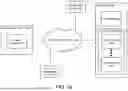


Sources:
- United States Patent and Trademark Office - verify current appl. status at the USPTO↗
Recent applications in this class:
- » 20250378145 2025-12-11
SYSTEM FOR LINKING PHYSICAL PRODUCTS TO BLOCKCHAIN-CONNECTED DIGITAL ENTITIES AND AUTHENTICATION OF THE PHYSICAL PRODUCTS - » 20250225208 2025-07-10
MOBILE DRIVER’S LICENSE ISSUING APPARATUS, MOBILE DRIVER’S LICENSE ISSUING METHOD, AND COMPUTER-READABLE RECORDING MEDIUM - » 20250209139 2025-06-26
LICENSE BINDING OF AN APPLICATION LICENSE TO A DEVICE - » 20250103684 2025-03-27
DISPLAY DEVICE GATED ON NON-FUNGIBLE TOKEN CONTRACTS - » 20240427850 2024-12-26
APPARATUS, SERVER AND SYSTEM FOR AUTHENTICATION OF DIGITAL ALBUM, AND METHOD THEREOF - » 20240303300 2024-09-12
SYSTEMS AND METHODS FOR EXECUTABLE GRAPH-BASED MODEL OWNERSHIP - » 18319308 2026-02-10
Platform for selection of media content versions