Converter Parameter Determination Method, And Control Method
US20260095089A1
2026-04-02
19/110,144
2022-09-08
Smart Summary: A method helps find the best settings for a converter that includes both an AC/DC module and a DC/DC module. It starts by setting the AC/DC output voltage to its lowest level and adjusts the DC/DC module to reach a specific DC voltage. The method then calculates how much power is lost by comparing input and output power. It keeps track of various measurements, like output voltage and current, while gradually increasing the AC/DC output voltage. Finally, it identifies the settings that result in the least power loss. 🚀 TL;DR
Abstract:
A method for determining optimal operating parameters of a converter including an AC/DC module and a DC/DC module, where the AC/DC output voltage of the AC/DC module has a predetermined range includes: setting the output voltage to the minimum value of the range; causing the output voltage of the DC/DC module to reach a certain DC voltage by changing the switching frequency of the DC/DC module; calculating the power loss of the converter based on the input power and the output power; recording: an AC/DC output voltage, a DC output current, DC output voltage and switching frequency of the DC/DC module, and a power loss; increasing the AC/DC output voltage and repeatedly performing the power loss calculation until the AC/DC output voltage reaches the maximum value within the range; and comparing recorded losses and using the output voltage and switching frequency corresponding to the power loss with the minimum value.
Inventors:
- Yan Feng ZHAO 4 🇨🇳 Beijing, China
- Hui Jin Wang 2 🇨🇳 Beijing, China
- Yu Zhou Lei 1 🇨🇳 Beijing, China
Assignee:
- SIEMENS AKTIENGESELLSCHAFT 4,867 🇩🇪 Munchen, Germany
Applicant:
Interested in similar patents?
Get notified when new applications in this technology area are published.
Classification:
H02M1/0048 » CPC main
Details of apparatus for conversion Circuits or arrangements for reducing losses
H02M3/33576 » CPC further
Conversion of dc power input into dc power output with intermediate conversion into ac by static converters using discharge tubes with control electrode or semiconductor devices with control electrode to produce the intermediate ac using devices of a triode or a transistor type requiring continuous application of a control signal using semiconductor devices only having several active switching elements having at least one active switching element at the secondary side of an isolation transformer
H02M1/00 IPC
Details of apparatus for conversion
H02M3/335 IPC
Conversion of dc power input into dc power output with intermediate conversion into ac by static converters using discharge tubes with control electrode or semiconductor devices with control electrode to produce the intermediate ac using devices of a triode or a transistor type requiring continuous application of a control signal using semiconductor devices only
Description
CROSS-REFERENCE TO RELATED APPLICATIONS
This application is a U.S. National Stage Application of International Application No. PCT/CN2022/117909 filed Sep. 8, 2022, which designates the United States of America, the contents of which are hereby incorporated by reference in their entirety.
TECHNICAL FIELD
The present disclosure relates to circuits. Various embodiments of the teachings herein include systems and/or methods for parameter determination and control.
BACKGROUND
AC/DC and DC/DC converters are widely used in many fields, such as electric vehicle charging, power supply for 5G base stations, photovoltaic inverters, energy storage converters, etc. With the development of science and technology, people are paying more and more attention to energy conversion efficiency. To achieve high conversion efficiency, low-power-loss power switches such as SIC elements or GAN elements can usually be used, all of which have the characteristics of low conduction efficiency and low switching loss. At the same time, some key technologies such as soft switching technology and synchronous rectification technology are used in actual products. With these new solutions, the conversion efficiency of the system can be improved.
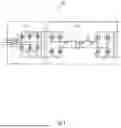
FIG. 1 shows a typical topology of an AC/DC-DC/DC converter 100. In the AC/DC part 102, a two-level topology is used; and in the DC/DC part 104, a CLLLC topology is used. Typically, the converter shown in FIG. 1 will have a wide input and output voltage range and load variation, whereas the output voltage on the AC/DC side is fixed. When the output voltage of the DC/DC part needs to be changed, it may be achieved by changing the switching frequency. System losses mainly include switching losses and conduction losses of all switches, transformer losses, and other losses such as line losses. For high-frequency applications, especially under high load conditions, transformer losses and line losses cannot be ignored. Therefore, how to achieve higher efficiency becomes more important.
At present, no effective solution has been found to improve the efficiency. Only in some special cases, such as under over-resonant frequency, the switching loss increases significantly. Therefore, to avoid operating in the over-resonant frequency range, the input voltage is controlled at a lower level. This solution can reduce the loss of over-resonant applications.
However, this is not the best way. When the switching frequency is reduced, the switching loss may be reduced, but the conduction loss may be increased and the transformer loss may also be increased. When the converter operates under under-resonance (switching frequency<resonant frequency) conditions, during the time difference between the switching frequency and the resonant frequency in one cycle, no energy is moved from the primary side to the secondary side, and this part of the current will still flow through the switch and the transformer on the primary side. In this case, the conduction loss of the switch and the transformer loss will increase additionally. Therefore, the optimal energy efficiency cannot be obtained in this solution.
SUMMARY
A brief summary of some example embodiments of the teachings of the present disclosure are given below, so as to provide a basic understanding of certain aspects of the present disclosure. It should be understood that this summary is not an exhaustive summary. It is not intended to determine key or important parts of the present disclosure, nor is it intended to limit the scope thereof. Its purpose is merely to give certain concepts in a simplified form as a prelude to a more detailed description discussed later. In view of this, some embodiments of the teachings of the present disclosure include solutions for AC/DC-DC/DC converters so that the optimal energy efficiency can be obtained.
For example, some embodiments of the teachings herein include a method for determining operating a optimal parameters of converter, wherein the converter comprises an AC/DC module and a DC/DC module, and an AC/DC output voltage of the AC/DC module has a predetermined range, the method comprising: setting the AC/DC output voltage to a minimum value within the predetermined range; performing a power loss calculation operation, the power loss calculation operation comprising: causing an output voltage of the DC/DC module to reach a predetermined DC output voltage by changing a switching frequency of the DC/DC module; calculating a power loss of the converter based on an input power of the AC/DC module and an output power of the DC/DC module; and recording current operating parameters, the operating parameters comprising an AC/DC output voltage, a DC output current, DC output voltage and switching frequency of the DC/DC module, and a power loss; increasing the AC/DC output voltage, and repeatedly performing the power loss calculation operation until the AC/DC output voltage reaches a maximum value within the predetermined range; and comparing all recorded power losses, and using the AC/DC output voltage and the switching frequency corresponding to the power loss with a minimum value as the optimal operating parameters under the condition of the predetermined DC output voltage.
In some embodiments, the method further comprises storing, as empirical data, the AC/DC output voltage and the switching frequency, DC output voltage and DC output current of the DC/DC module corresponding to the power loss with the minimum value.
In some embodiments, calculating the power loss of the converter based on the input power of the AC/DC module and the output power of the DC/DC module comprises: measuring an input current and an input voltage of the AC/DC module to calculate the input power of the AC/DC module; measuring an output current and an output voltage of the DC/DC module to calculate the output power of the DC/DC module; and obtaining the power loss by subtracting the output power from the input power.
As another example, some embodiments include a method for controlling a converter, wherein the converter comprises an AC/DC module and a DC/DC module, the method comprising: monitoring a DC output voltage and a DC output current of the DC/DC module of the converter; determining whether the DC output voltage or the DC output current is changed; if not, going back to the previous step, and if so, executing the next step; querying whether corresponding empirical data is stored for the current DC output voltage and DC output current, wherein the empirical data comprises the DC output voltage, the DC output current, the corresponding AC/DC output voltage of the AC/DC module, and the corresponding switching frequency of the DC/DC module; if the corresponding empirical data is stored, controlling the converter by using the AC/DC output voltage and the switching frequency in the empirical data; and if the corresponding empirical data is not stored, determining an AC/DC output voltage and a switching frequency corresponding to the current DC output voltage and DC output current by using one or more of the methods described herein, and controlling the converter by using the determined AC/DC output voltage and switching frequency.
As another example, some embodiments of the teachings herein include an apparatus for determining optimal operating parameters of a converter, wherein the converter comprises an AC/DC module and a DC/DC module, and an AC/DC output voltage of the AC/DC module has a predetermined range, the apparatus comprising: an initial voltage setting unit, configured to set the AC/DC output voltage to a minimum value within the predetermined range; a power loss calculation unit, configured to perform the following power loss calculation operation: causing an output voltage of the DC/DC module to reach a predetermined DC output voltage by changing a switching frequency of the DC/DC module; and calculating a power loss of the converter based on an input power of the AC/DC module and an output power of the DC/DC module; and recording current operating parameters, the operating parameters comprising an AC/DC output voltage, an output current and a switching frequency of the DC/DC module, and a power loss; a repetitive control unit, configured to increase the AC/DC output voltage and to control the power loss calculation unit to perform the operation until the AC/DC output voltage reaches a maximum value within the predetermined range; and an optimal parameter determination unit, configured to compare all recorded power losses and to use the AC/DC output voltage and the switching frequency corresponding to the power loss with a minimum value as the optimal operating parameters under the condition of the predetermined DC output voltage.
As another example, some embodiments include a control apparatus for a converter, wherein the converter comprises an AC/DC module and a DC/DC module, the control apparatus comprising: a monitoring unit, configured to monitor a DC output voltage and a DC output current of the DC/DC module of the converter; a first determination unit, configured to determine whether the DC output voltage or the DC output current is changed; a second determination unit, configured to, in a case where the DC output voltage or the DC output current is changed, query whether corresponding empirical data is stored for the current DC output voltage and DC output current, wherein the empirical data comprises the DC output voltage, the DC output current, the corresponding AC/DC output voltage of the AC/DC module, and the corresponding switching frequency of the DC/DC module; a first control unit, configured to, in a case where the corresponding empirical data is stored, control the converter using the AC/DC output voltage and switching frequency in the empirical data; a second control unit, configured to, in a case where the corresponding empirical data is not stored, determine an AC/DC output voltage and a switching frequency corresponding to the current DC output voltage and DC output current by using the apparatus for determining the optimal operating parameters of the converter described in any one of claims 6-8, and control the converter by using the determined AC/DC output voltage and switching frequency.
As another example, some embodiments include a computing device comprising: at least one processor; and a memory coupled to the at least one processor, wherein the memory is used to store instructions, which, when executed by the at least one processor, cause the processor to perform one or more of the methods described herein.
As another example, some embodiments include a non-transitory machine-readable storage medium having executable instructions stored thereon, which, when executed, cause the machine to perform one or more of the methods described herein.
As another example, some embodiments include a computer program comprising computer-executable instructions, which, when executed, cause at least one processor to perform one or more of the methods described herein.
As another example, some embodiments include a computer program product y stored on a computer-readable medium and comprising computer-executable instructions, which, when executed, cause at least one processor to perform one or more of the methods described herein.
BRIEF DESCRIPTION OF THE DRAWINGS
The above and other objectives, features, and advantages of the teachings of the present disclosure are more easily understood with reference to the following description of the embodiments in conjunction with the accompanying drawings. The components in the accompanying drawings are only for illustrating the principles herein. In the accompanying drawings, the same or similar technical features or components will be denoted by the same or similar reference numerals. In the accompanying drawings:
FIG. 1 is a topological diagram of a prior ar; AC/DC-DC/DC converter.
FIG. 2 is a flow chart of an example process of a method for determining optimal operating parameters of a converter incorporating teachings of the present disclosure;
FIG. 3 is a flowchart of an example process of a method for controlling a converter incorporating teachings of the present disclosure;
FIG. 4 is a block diagram of an example configuration of an apparatus for determining optimal operating parameters of a converter incorporating teachings of the present disclosure;
FIG. 5 is a block diagram of an example configuration of a control apparatus for a converter incorporating teachings of the present disclosure; and
FIG. 6 shows a block diagram of a computing device used in a method for determining optimal operating parameters of a converter or a method for controlling a converter incorporating teachings of the present disclosure.
In the figures, reference numerals are as follows:
| 100: AC/DC-DC/DC converter | 102: AC/DC part | |
| 104: DC/DC part | 200: Method for determining | |
| optimal operating parameters | ||
| of a converter | ||
| S202, S204, S206, S208, S210, | 300: Method for controlling a | |
| S302, S304, S306, S308, S310: | converter | |
| Step | ||
| 400: Apparatus for determining | 402: Initial voltage setting | |
| optimal operating parameters | unit | |
| of a converter | ||
| 404: Power loss calculation | 406: Repetitive control unit | |
| unit | ||
| 410: Experience data storage | 500: Control apparatus for a | |
| unit | converter | |
| 502: Monitoring unit | 504: First determination unit | |
| 506: Second determination unit | 508: First control unit | |
| 510: Second control unit | 600: Computing device | |
| 602: Processor | 604: Memory | |
DETAILED DESCRIPTION
In an example method for determining the optimal operating parameters of the converter and the control method for the converter of the present disclosure, the optimal operating parameters of the converter are found, and the converter is controlled to operate according to the optimal operating parameters, so that the optimal energy efficiency of the converter can be achieved. In addition, in the method of the present disclosure, the optimal operating parameters found each time are stored as empirical data in a database. Therefore, the database can be dynamically updated, so that other converters can directly use the empirical data in the database through the network without the need for an additional search process. This example method is simple and easy to implement without the need for any change of the hardware.
The subject matter described herein will now be discussed with reference to specific example embodiments. It should be understood that the discussion of these embodiments is only to enable those skilled in the art to better understand and implement the subject matter described herein, and is not a limitation of the scope of protection, applicability, or examples set forth in the claims. The functions and arrangement of the elements discussed may be changed without departing from the scope of protection of the present disclosure. In various examples, various processes or components may be omitted, replaced or added as needed. For example, the described method may be performed in an order different from the described order, and various steps may be added, omitted or combined. In addition, the features described with respect to some examples may also be combined in other examples.
As used herein, the term “including” and its variations are open terms, meaning “including but not limited to”. The term “based on” means “based at least in part on”. The terms “one embodiment” and “an embodiment” mean “at least one embodiment”. The term “another embodiment” means “at least one other embodiment”. The terms “first”, “second”, etc. may refer to different or the same objects. Other definitions, whether explicit or implicit, may be included below. Unless the context clearly indicates otherwise, the definition of a term is consistent throughout the specification.
The present disclosure proposes a solution for AC/DC-DC/DC converters so that the optimal energy efficiency can be obtained. Through the above analysis, it can be seen that the main factors affecting energy include efficiency switching losses and conduction losses of the main switch components, transformer losses and line losses. For the same load current, reducing the switching frequency may reduce the switching losses of the main components. However, during the period when no energy is transmitted to the secondary side, the conduction losses of the switch components will increase due to the higher magnetic current, and the same is true for the transformer. Therefore, the optimal operating parameters of the converter are found from the perspective of the system level to obtain the optimal energy efficiency.
An example method for determining optimal operating parameters of a converter and a method for controlling the converter incorporating teachings of the present disclosure are be described below with reference to the accompanying drawings.
FIG. 2 is a flow chart of an example method 200 for determining optimal operating parameters of a converter incorporating teachings of the present disclosure. Method 200 is primarily directed to an AC/DC-DC/DC converter, i.e., a converter including an AC/DC conversion part and a DC/DC conversion part, wherein there is no limitation on the specific topological structures of the AC/DC and DC/DC parts.
The output voltage of the AC/DC module has a predetermined voltage range, and the output voltage of the DC/DC module is a DC voltage ultimately required by the converter, which is referred to as a predetermined DC output voltage. For the same AC/DC output voltage, to obtain a predetermined DC output voltage value, the gain can be changed by changing the switching frequency of the DC/DC module. The lower the switching frequency, the greater the gain. In this case, the switching loss is small and the conduction loss is large. The higher the switching frequency, the smaller the gain. In this case, the switching loss is large and the conduction loss is small.
The AC/DC output voltage is changed within the predetermined voltage range of the AC/DC output voltage, and the predetermined DC output voltage is achieved by changing the switching frequency of the DC/DC module. In this process, the operating parameters with the minimum power loss can be found, including the AC/DC output voltage and the switching frequency of the DC/DC module.
In step S202, the AC/DC output voltage is set to a minimum value within the predetermined range.
In step S204, a power loss calculation operation is performed. The power loss calculation operation includes: causing the output voltage of the DC/DC module to reach the predetermined DC output voltage by changing the switching frequency of the DC/DC module;
-
- calculating a power loss of the converter based on an input power of the AC/DC module and an output power of the DC/DC module; and
- recording current operating parameters, the operating parameters including an AC/DC output voltage, a DC output current, DC output voltage and switching frequency of the DC/DC module, and a power loss.
When the system is controlled to be in a steady state, the input power of the AC/DC module may be calculated by measuring an input current and an input voltage of the AC/DC module. At the same time, the output power of the DC/DC module may be calculated by measuring an output current and an output voltage of the DC/DC module. An instantaneous power loss may be obtained by subtracting the output power from the input power.
In step S206, the AC/DC output voltage is increased, and step S204 is repeatedly performed until the AC/DC output voltage reaches a maximum value within the predetermined range. For example, the AC/DC output voltage may be increased by a fixed increment each time, and the size of the increment may be set by a user according to accuracy requirements. For each increase in the AC/DC output voltage, the switching frequency is changed to reach the predetermined DC output voltage. Then, the power loss in this case is calculated, and the relevant operating parameters are recorded. When the AC/DC output voltage reaches the maximum value, the next step is executed.
During the operation of the converter, the DC output current (load current) generally remains unchanged, but in the case of different DC output currents, they will correspond to different AC/DC output voltages or different switching frequencies of the DC/DC modules. Therefore, the recorded operating parameters include the AC/DC output voltage, the DC output current, DC output voltage, and switching frequency of the DC/DC module, and the power losses.
In step S208, all recorded power losses are compared, and the AC/DC output voltage and switching frequency corresponding to the power loss with the minimum value are used as the optimal operating parameters under the condition of the predetermined DC output voltage. The AC/DC output voltage is adjusted within the voltage range of the AC/DC output voltage, and the switching frequency of the DC/DC module is adjusted accordingly, the power loss in each case is recorded, and finally the operating parameters corresponding to the minimum power loss are obtained as the optimal operating parameters.
When the DC output current is changed, steps S202-S208 may be repeatedly performed to determine the optimal operating parameters under the condition of the DC output current.
In addition, changes in ambient temperature may also affect the power loss, but this change is relatively slow and the impact is relatively small. In most cases, the impact of temperature can be ignored. Of course, the impact of temperature may also be considered. In this case, similar steps to the above may be used to determine the optimal operating parameters, which will not be described in detail here.
In some embodiments, the method further includes step S210, storing, as empirical data, the AC/DC output voltage and the switching frequency, DC output voltage and DC output current of the DC/DC module corresponding to the power loss with the minimum value. The stored empirical data may also be used as a reference for other converters, as will be explained below.
FIG. 3 is a flowchart of an exemplary process of an example method 300 for controlling a converter incorporating teachings of the present disclosure.
In step S302, during the operation of the converter, the DC output voltage and DC output current of the DC/DC module of the converter are continuously monitored.
In step S304, it is determined whether the DC output voltage or the DC output current is changed. If the DC output voltage or the DC output current is not changed (N), then the process goes back to step S302, and monitoring is continued without any other operations.
If one or both of the DC output voltage or the DC output current is changed (Y), step S306 is executed. In step S306, it is queried whether corresponding empirical data is stored for the current DC output voltage and DC output current. The empirical data includes the DC output voltage, the DC output current, the corresponding AC/DC output voltage of the AC/DC module, and the corresponding switching frequency of the DC/DC module.
In some embodiments, a database may be stored in a main control chip of the converter, wherein the database includes empirical data for controlling the converter. If there is the empirical data corresponding to the current DC output voltage and DC output current (Y), step S308 is performed, wherein the converter is controlled using the AC/DC output voltage and switching frequency in the empirical data.
If the corresponding empirical data is not stored (N), then step S310 is performed, wherein the AC/DC output voltage and switching frequency corresponding to the current DC output voltage and DC output current are determined using the method for determining the optimal operating parameters described above with reference to FIG. 2, and the converter is controlled using the determined AC/DC output voltage and switching frequency.
That is, in a case where there is no corresponding empirical data stored in the database, the optimal operating parameters will be determined according to the method described above with reference to FIG. 2. In addition, the new set of optimal operating parameters determined may also be stored as empirical data in the database, so that the empirical data stored in the database can be continuously updated.
After executing step S308 or S310, the method 300 may go back to step S302, that is, continuously monitoring the DC output voltage or DC output current of the converter to ensure that the operation of the converter can be controlled with the optimal operating parameters in real time, thereby causing the converter to have the optimal energy efficiency.
Multiple AC/DC-DC/DC converters may be grouped into a network, and converters in a group may share empirical data with each other; or multiple AC/DC-DC/DC converters are connected to the Internet or a communication network (4G/5G), and a central control unit is connected to the network, wherein the central control unit may store multiple sets of empirical data, and the converter may obtain empirical data from the central control unit through the network to perform parameter control. This is not described in detail again.
FIG. 4 is a block diagram of a configuration of an example apparatus 400 for performing one or more of the methods for determining the optimal operating parameters of the converter shown in FIG. 2. In FIG. 4, the apparatus 400 for determining the optimal operating parameters of the converter includes: an initial voltage setting unit 402, a power loss calculation unit 404, a repetitive control unit 406, and an optimal parameter determination unit 408.
Here, the converter includes an AC/DC module and a DC/DC module, and an AC/DC output voltage of the AC/DC module has a predetermined range. The initial voltage setting unit 402 is configured to set the AC/DC output voltage to a minimum value within the predetermined range.
The power loss calculation unit 404 is configured to perform the following power loss calculation operations:
-
- causing an output voltage of the DC/DC module to reach a predetermined DC output voltage by changing a switching frequency of the DC/DC module;
- calculating a power loss of the converter based on an input power of the AC/DC module and an output power of the DC/DC module;
- recording current operating parameters, the operating parameters including an AC/DC output voltage, a DC output current, DC output voltage and switching frequency of the DC/DC module, and a power loss.
The repetitive control unit 406 is configured to increase the AC/DC output voltage and control the power loss calculation unit 404 to perform the operation until the AC/DC output voltage reaches a maximum value within the predetermined range.
The optimal parameter determination unit 408 is configured to compare all recorded power losses, and to use the AC/DC output voltage and switching frequency corresponding to the power loss with a minimum value as the optimal operating parameters under the condition of the predetermined DC output voltage.
In some embodiments, the apparatus 400 further includes an empirical data storage unit 410 configured to store, as empirical data, the AC/DC output voltage, and the switching frequency, DC output voltage and DC output current of the DC/DC module corresponding to the power loss with the minimum value.
The power loss calculation unit 404 is further configured to:
-
- measure an input current and an input voltage of the AC/DC module to calculate the input power of the AC/DC module;
- measure an output current and an output voltage of the DC/DC module to calculate the output power of the DC/DC module; and
- obtain the power loss by subtracting the output power from the input power.
FIG. 5 is a block diagram of an example control apparatus 500 for performing one or more of the control methods for the converter shown in FIG. 3. In FIG. 5, the control apparatus 500 includes a monitoring unit 502, a first determination unit 504, a second determination unit 506, a first control unit 508 and a second control unit 510.
The monitoring unit 502 is configured to monitor the DC output voltage and DC output current of the DC/DC module of the converter.
The first determination unit 504 is configured to determine whether the DC output voltage or the DC output current is changed.
The second determination unit 506 is configured to, in a case where the DC output voltage or DC output current is changed, query whether corresponding empirical data is stored for the current DC output voltage and DC output current, wherein the empirical data includes the DC output voltage, the DC output current, the corresponding AC/DC output voltage of the AC/DC module, and the corresponding switching frequency of the DC/DC module.
In a case where the corresponding empirical data is stored, the first control unit 508 is configured to control the converter using the AC/DC output voltage and switching frequency in the empirical data.
In a case where the corresponding empirical data is not stored, the second control unit 510 is configured to determine the AC/DC output voltage and switching frequency corresponding to the current DC output voltage and DC output current using the method 200 for determining the optimal operating parameters of the converter described above with reference to FIG. 2, and to control the converter using the determined AC/DC output voltage and switching frequency.
It should be noted that the structures of the apparatus for determining the optimal operating parameters of the converter shown in FIG. 4, and the control apparatus for the converter and its constituent units shown in FIG. 5 are merely exemplary, and those skilled in the art may modify the structural block diagrams shown in FIGS. 4 and 5 as needed.
The details of the operations and functions of the various parts of the apparatus 400 for determining the optimal operating parameters of the converter and the control apparatus 500 of the converter may be the same as or similar to the relevant parts of the embodiments of the method for determining the optimal operating parameters of the converter and the control method for the converter of the present disclosure described in conjunction with FIGS. 1-3, and will not be described in detail again here.
Some of the examples include a method for determining the optimal operating parameters of the converter and/or a control method. In general, the optimal operating parameters of the converter are found, and the converter is controlled to operate according to the optimal operating parameters, so that the optimal energy efficiency of the converter can be achieved. In addition, the optimal operating parameters found each time are stored in the database as empirical data, thereby making it possible to dynamically update the database, so that other converters can directly use the empirical data in the database through the network without the need for an additional search process. The method according to the present disclosure is simple and easy to implement without the need for any change of the hardware.
As described above with reference to FIGS. 1 to 5, the method for determining the optimal operating parameters of the converter, and the control method and apparatus for the converter, have been described. Each unit of the apparatus as described above may be implemented by hardware, or by software, or by a combination of hardware and software.
FIG. 6 shows a block diagram of an example computing device 600 used in one or more of the methods for determining optimal operating parameters of a converter or a method for controlling a converter described herein. In some embodiments, the computing device 600 may include at least one processor 602, and the processor 602 executes at least one computer-readable instruction (i.e., the above-mentioned element implemented in the form of software) stored or encoded in a computer-readable storage medium (i.e., a memory 604).
In some embodiments, computer-executable instructions are stored in the memory 604, and the computer-executable instructions, when executed, enable the at least one processor 602 to complete the operations performed by the control apparatus.
The computer-executable instructions stored in the memory 604, when executed, cause the at least one processor 602 to perform various operations and functions described above in conjunction with FIGS. 1-5 in various embodiments of the present disclosure.
In some embodiments, a non-transitory machine-readable medium stores machine-executable instructions (i.e., the above-mentioned elements implemented in the form of software), which, when executed by a machine, cause the machine to perform various operations and functions described above in conjunction with FIGS. 1-5 in various embodiments of the present disclosure.
In some embodiments, a computer program includes computer-executable instructions, which, when executed, cause at least one processor to perform various operations and functions described above in conjunction with FIGS. 1-5 in various embodiments of the present disclosure.
In some embodiments, a computer program product includes computer-executable instructions, which, when executed, cause at least one processor to perform various operations and functions described above in conjunction with FIGS. 1-5 in various embodiments of the present disclosure.
The specific embodiments described above in conjunction with the accompanying drawings have described exemplary embodiments, but do not represent all embodiments that can be implemented or fall within the scope of protection of the claims. The term “exemplary” used throughout this specification means “used as an example, instance, or illustration” and does not mean “preferred” or “having advantages” over other embodiments. For the purpose of providing an understanding of the described technology, the specific embodiments include specific details. However, these technologies can be implemented without these specific details. In some instances, in order to avoid making the concepts of the described embodiments difficult to understand, well-known structures and apparatuses are shown in the form of block diagrams.
The above description of the contents of the present disclosure is provided to enable any person of ordinary skill in the art to implement or use the contents of the present disclosure. Various modifications to the contents of the present disclosure will be apparent to those of ordinary skill in the art, and the general principles defined herein may be applied to other variations without departing from the scope of protection of the contents of the present disclosure. Therefore, the contents of the present disclosure are not limited to the examples and designs described herein, but are consistent with the widest range of principles and novel features disclosed herein.
The foregoing descriptions are only example teachings of the present disclosure and are not intended to limit the scope thereof. Any modifications, equivalent replacements, and improvements made without departing from the spirit and principle of the present disclosure shall fall within the scope of protection thereof.
Claims
What is claimed is:1. A method for determining optimal operating parameters of a converter, wherein the converter comprises an AC/DC module and a DC/DC module, and an AC/DC output voltage of the AC/DC module has a predetermined range, the method comprising:
setting the AC/DC output voltage to a minimum value within the predetermined range;
performing a power loss calculation operation comprising:
causing an output voltage of the DC/DC module to reach a predetermined DC output voltage by changing a switching frequency of the DC/DC module;
calculating a power loss of the converter based on an input power of the AC/DC module and an output power of the DC/DC module;
recording current operating parameters including: an AC/DC output voltage, a DC output current, DC output voltage and switching frequency of the DC/DC module, and a power loss;
increasing the AC/DC output voltage and repeatedly performing the power loss calculation operation until the AC/DC output voltage reaches a maximum value within the predetermined range; and
comparing all recorded power losses and using the AC/DC output voltage and the switching frequency corresponding to the power loss with a minimum value as the optimal operating parameters under the condition of the predetermined DC output voltage.
2. The method according to claim 2, further comprising:
storing the AC/DC output voltage, and the switching frequency, DC output voltage and DC output current of the DC/DC module corresponding to the power loss with the minimum value as empirical data.
3. The method according to claim 1, wherein calculating the power loss of the converter based on the input power of the AC/DC module and the output power of the DC/DC module comprises:
measuring an input current and an input voltage of the AC/DC module to calculate the input power of the AC/DC module;
measuring an output current and an output voltage of the DC/DC module to calculate the output power of the DC/DC module; and
obtaining the power loss by subtracting the output power from the input power.
4. A method for controlling a converter, wherein the converter comprises an AC/DC module and a DC/DC module, the method comprising:
monitoring a DC output voltage and a DC output current of the DC/DC module of the converter;
determining whether the DC output voltage or the DC output current is changed, if not, repeating the monitoring, and if so,
querying whether corresponding empirical data is stored for the current DC output voltage and DC output current, wherein the empirical data comprises the DC output voltage, the DC output current, the corresponding AC/DC output voltage of the AC/DC module, and the corresponding switching frequency of the DC/DC module;
if the corresponding empirical data is present in the Storage, controlling the converter using the AC/DC output voltage and switching frequency in the empirical data;
if the corresponding empirical data is not present in the storage, determining an AC/DC output voltage and a switching frequency corresponding to the current DC output voltage and DC output current, and controlling the converter by using the determined AC/DC output voltage and switching frequency.
5. An apparatus for determining optimal operating parameters of a converter, wherein the converter comprises an AC/DC module and a DC/DC module, and an AC/DC output voltage of the AC/DC module has a predetermined range, the apparatus comprising:
an initial voltage setting unit to set the AC/DC output voltage to a minimum value within the predetermined range;
a power loss calculation unit to perform power loss calculation operations including:
causing an output voltage of the DC/DC module to reach a predetermined DC output voltage by changing a switching frequency of the DC/DC module;
calculating a power loss of the converter based on an input power of the AC/DC module and an output power of the DC/DC module; and
recording current operating parameters, the operating parameters comprising an AC/DC output voltage, an output current and a switching frequency of the DC/DC module, and a power loss;
a repetitive control unit to increase the AC/DC output voltage and to control the power loss calculation unit to perform the operation until the AC/DC output voltage reaches a maximum value within the predetermined range; and
an optimal parameter determination unit to compare all recorded power losses, and to use the AC/DC output voltage and switching frequency corresponding to the power loss with a minimum value as the optimal operating parameters under the condition of the predetermined DC output voltage.
6. The apparatus according to claim 5, further comprising an empirical data storage unit to store the AC/DC output voltage, and the switching frequency, DC output voltage and DC output current of the DC/DC module corresponding to the power loss with the minimum value as empirical data.
7. The apparatus according to claim 5, wherein the power loss calculation unit is further configured to:
measure an input current and an input voltage of the AC/DC module to calculate the input power of the AC/DC module;
measure an output current and an output voltage of the DC/DC module to calculate the output power of the DC/DC module; and
obtain the power loss by subtracting the output power from the input power.
8. A control apparatus for a converter, wherein the converter comprises an AC/DC module and a DC/DC module, the control apparatus comprising:
a monitoring unit to monitor a DC output voltage and a DC output current of the DC/DC module of the converter;
a first determination unit to determine whether the DC output voltage or the DC output current is changed;
a second determination unit to, in a case where the DC output voltage or DC output current is changed, query whether corresponding empirical data is stored for the current DC output voltage and DC output current, wherein the empirical data includes the DC output voltage, the DC output current, the corresponding AC/DC output voltage of the AC/DC module, and the corresponding switching frequency of the DC/DC module;
a first control unit to, in a case where the corresponding empirical data is present in the storage, control the converter using the AC/DC output voltage and switching frequency in the empirical data;
a second control unit to, in a case where the corresponding empirical data is not present in the storage, determine an AC/DC output voltage and a switching frequency corresponding to the current DC output voltage and DC output current, and control the converter using the determined AC/DC output voltage and switching frequency.
9-11. (canceled)
Images & Drawings included:



Sources:
- United States Patent and Trademark Office - verify current appl. status at the USPTO↗
Similar patent applications:
Recent applications in this class:
- » 20260088700 2026-03-26
METHOD FOR PERFORMING DISCONTINUOUS CONDUCTION MODE PULSE CONTROL OF BUCK CONVERTER TO REDUCE INDUCTOR LOSS, AND ASSOCIATED APPARATUS - » 20260045865 2026-02-12
NON-ISOLATED PUSH-PULL CONVERTER - » 20260031700 2026-01-29
CHARGING SYSTEM - » 20260018986 2026-01-15
SWITCHING CONVERTER WITH CURRENT SENSE CIRCUIT - » 20260012077 2026-01-08
TRACKER MODULE - » 20250385594 2025-12-18
REGULATOR AND INTEGRATED CIRCUIT INCLUDING THE SAME - » 20250385593 2025-12-18
POWER SUPPLY DEVICE WITH LOW LOSS - » 20250373140 2025-12-04
DC-DC CONVERTER AND CORRESPONDING METHOD OF OPERATION - » 20250350184 2025-11-13
NON-ISOLATED SWITCHING CONVERTER WITH SHORT CIRCUIT PROTECTION - » 20250337312 2025-10-30
PULSE WIDTH MODULATION POWER SUPPLY METHOD, AND ELECTRONIC HIGH-VOLTAGE ENERGY EXTRACTION AND SAMPLING APPARATUS AND METHOD
Recent applications for this Assignee:
- » 20260081787 2026-03-19
Artefact Of A Container Instance, Which Artefact Is Signable In A Cascaded Manner - » 20260073190 2026-03-12
Methods And Apparatus For Estimating Remaining Useful Life - » 20260066613 2026-03-05
Electronic Subassembly - » 20260063702 2026-03-05
Electronic Subassembly - » 20260060103 2026-02-26
Sintered Power Electronic Module - » 20260059724 2026-02-26
Cooling an Electrical Module - » 20260057397 2026-02-26
Carbon Data Management Methods And Systems - » 20260056253 2026-02-26
DATA-BASED CONDITION MONITORING METHOD FOR MONITORING GRID-SIDE COMPONENTS - » 20260055893 2026-02-26
Component with Bus Termination - » 20260050509 2026-02-19
Method For Finding And Erasing Errors Within A Mapping Process