AI-DRIVEN TASK ORIENTED ROUTING SYSTEM
US20260097783A1
2026-04-09
18/905,616
2024-10-03
Smart Summary: A vehicle can receive information about a task that a passenger needs to complete and also know where the passenger wants to go. Using this information, the vehicle's AI predicts a route that includes stops at places related to the task. The vehicle then drives itself along this route. It stops at the important places so the passenger can complete their tasks. Finally, the vehicle suggests actions for the passenger to take at each stop. 🚀 TL;DR
Abstract:
An example operation includes one or more of receiving, by a vehicle, data related to at least one task of an occupant of the vehicle, receiving, by the vehicle, a final destination, executing an AI model to predict a route to at least one intermediate destination based on the data related to the at least one task of the occupant and the final destination, autonomously traveling by the vehicle along the predicted route and stopping by the vehicle at the at least one intermediate destination, wherein the at least one intermediate destination is related to the at least one task, and providing, by the vehicle, an action for the occupant to perform related to the at least one intermediate destination and the at least one task.
Inventors:
- Joshua C. Batie 71 🇺🇸 Frisco, TX, United States
- Imad Zahid 52 🇺🇸 Carrollton, TX, United States
Assignee:
- TOYOTA JIDOSHA KABUSHIKI KAISHA 3,464 🇯🇵 Aichi-ken, Japan
- Toyota Motor North America, Inc. 673 🇺🇸 Plano, TX, United States
Applicant:
Interested in similar patents?
Get notified when new applications in this technology area are published.
Classification:
B60W60/001 » CPC main
Drive control systems specially adapted for autonomous road vehicles Planning or execution of driving tasks
B60W50/00 » CPC further
Details of control systems for road vehicle drive control not related to the control of a particular sub-unit, e.g. process diagnostic or vehicle driver interfaces
G05B13/0265 » CPC further
Adaptive control systems, i.e. systems automatically adjusting themselves to have a performance which is optimum according to some preassigned criterion electric the criterion being a learning criterion
B60W2050/0008 » CPC further
Details of control systems for road vehicle drive control not related to the control of a particular sub-unit, e.g. process diagnostic or vehicle driver interfaces; Details of the control system; Automatic control, details of type of controller or control system architecture Feedback, closed loop systems or details of feedback error signal
B60W2556/50 » CPC further
Input parameters relating to data; External transmission of data to or from the vehicle for navigation systems
B60W60/00 IPC
Drive control systems specially adapted for autonomous road vehicles
G05B13/02 IPC
Adaptive control systems, i.e. systems automatically adjusting themselves to have a performance which is optimum according to some preassigned criterion electric
Description
BACKGROUND
Vehicles or transports, such as cars, motorcycles, trucks, planes, trains, etc., generally provide transportation to occupants and/or goods in a variety of ways. Functions related to vehicles may be identified and utilized by various computing devices, such as a smartphone or a computer located on and/or off the vehicle.
SUMMARY
The instant solution provides a method that includes one or more of receiving, by a vehicle, data related to at least one task of an occupant of the vehicle, receiving, by the vehicle, a final destination, executing an artificial intelligence (AI) model to predict a route to at least one intermediate destination based on the data related to the at least one task of the occupant and the final destination, autonomously traveling by the vehicle along the predicted route and stopping by the vehicle at the at least one intermediate destination, wherein the at least one intermediate destination is related to the at least one task, and providing, by the vehicle, an action for the occupant to perform related to the at least one intermediate destination and the at least one task.
The instant solution also provides a system that includes a memory communicably coupled to at least one processor, wherein the processor is configured to perform one or more of receive, by a vehicle, data related to at least one task of an occupant of the vehicle, receive, by the vehicle, a final destination, execute an AI model to predict a route to at least one intermediate destination based on the data related to the at least one task of the occupant and the final destination, autonomously travel by the vehicle along the predicted route and stop by the vehicle at the at least one intermediate destination, wherein the at least one intermediate destination is related to the at least one task, and provide, by the vehicle, an action for the occupant to perform related to the at least one intermediate destination and the at least one task.
The instant solution further provides a computer-readable storage medium comprising instructions, that when read by a processor, cause the processor to perform one or more of receiving, by a vehicle, data related to at least one task of an occupant of the vehicle, receiving, by the vehicle, a final destination, executing an AI model to predict a route to at least one intermediate destination based on the data related to the at least one task of the occupant and the final destination, autonomously traveling by the vehicle along the predicted route and stopping by the vehicle at the at least one intermediate destination, wherein the at least one intermediate destination is related to the at least one task, and providing, by the vehicle, an action for the occupant to perform related to the at least one intermediate destination and the at least one task.
BRIEF DESCRIPTION OF THE DRAWINGS
FIG. 1A is a diagram illustrating a process of a vehicle travelling along a route according to an example of the instant solution.
FIG. 1B is a diagram illustrating a process of a vehicle autonomously maneuvering to an intermediate destination according to an example of the instant solution.
FIG. 1C is a diagram illustrating a process of predicting an intermediate destination according to an example of the instant solution.
FIG. 1D is a diagram illustrating a process of displaying a recommendation generated by an AI model according to an example of the instant solution.
FIG. 1E is a diagram illustrating a process of training an AI model based on feedback data according to an example of the instant solution.
FIG. 2A illustrates a vehicle network diagram, according to an example of the instant solution.
FIG. 2B illustrates another vehicle network diagram, according to an example of the instant solution.
FIG. 2C illustrates yet another vehicle network diagram, according to an example of the instant solution.
FIG. 2D illustrates a further vehicle network diagram, according to an example of the instant solution.
FIG. 2E illustrates a flow diagram, according to an example of the instant solution.
FIG. 2F illustrates another flow diagram, according to an example of the instant solution.
FIG. 3A illustrates an Artificial Intelligence (AI)/Machine Learning (ML) network diagram for integrating an artificial intelligence (AI) model into any decision point in an example of the instant solution.
FIG. 3B illustrates a process for developing an Artificial Intelligence (AI)/Machine Learning (ML) model that supports AI-assisted vehicle or occupant decision points.
FIG. 3C illustrates a process for utilizing an Artificial Intelligence (AI)/Machine Learning (ML) model that supports AI-assisted vehicle or occupant decision points.
FIG. 3D illustrates a machine learning network diagram, according to an example of the instant solution.
FIG. 3E illustrates a machine learning network diagram, according to an example of the instant solution.
FIG. 4A illustrates a diagram depicting electrification of one or more elements, according to an example of the instant solution.
FIG. 4B illustrates a diagram depicting interconnections between different elements, according to an example of the instant solution.
FIG. 4C illustrates a further diagram depicting interconnections between different elements, according to an example of the instant solution.
FIG. 4D illustrates yet a further diagram depicting interconnections between elements, according to an example of the instant solution.
FIG. 4E illustrates yet a further diagram depicting an example of vehicles performing secured Vehicle-to-Vehicle (V2V) communications using security certificates, according to an example of the instant solution.
FIG. 5A illustrates an example vehicle configuration for managing database transactions associated with a vehicle, according to an example of the instant solution.
FIG. 5B illustrates an example blockchain group, according to an example of the instant solution.
FIG. 5C illustrates an example interaction between elements and a blockchain, according to an example of the instant solution.
FIG. 5D illustrates an example data block interaction, according to an example of the instant solution.
FIG. 5E illustrates a blockchain network diagram, according to an example of the instant solution.
FIG. 5F illustrates an example new data block, according to an example of the instant solution.
FIG. 6 illustrates an example system that supports one or more of an example of the instant solution.
DETAILED DESCRIPTION
It will be readily understood that the instant components, as generally described and illustrated in the figures herein, may be arranged and designed in a wide variety of different configurations. Thus, the following detailed description of the instant solution of at least one of a method, apparatus, computer-readable storage medium system, and other element, structure, component, or device as represented in the attached figures, is not intended to limit the scope of the application as claimed but is merely representative of aspects of the instant solution.
Communications between the vehicle(s) and certain entities, such as remote servers, other vehicles, and local computing devices (e.g., smartphones, personal computers, vehicle-embedded computers, etc.) may be sent and/or received and processed by one or more ‘components’ which may be hardware, firmware, software, or a combination thereof. The components may be part of any of these entities or computing devices or certain other computing devices. In one example, consensus decisions related to blockchain transactions may be performed by one or more computing devices or components (which may be any element described and/or depicted herein) associated with the vehicle(s) and one or more of the components outside or at a remote location from the vehicle(s).
The instant features, structures, or characteristics described in this specification may be combined in any suitable manner in the instant solution. Thus, the one or more features, structures, or characteristics of the instant solution, described or depicted in this specification, are utilized in various manners. Thus, the one or more features, structures, or characteristics of the instant solution may work in conjunction with one another, may not be functionally separate, and these features, structures, or characteristics may be combined in any suitable manner. Although presented in a particular manner, by example only, one or more feature(s), element(s), and step(s) described or depicted herein may be utilized together and in various combinations, without exclusivity, unless expressly indicated otherwise herein. In the figures, any connection between elements (for example, a line or an arrow) can permit one-way and/or two-way communication, even if the depicted connection shown is a one-way or two-way connection.
In the instant solution, a vehicle may include one or more of cars, trucks, Internal Combustion Engine (ICE) vehicles, battery electric vehicle (BEV), fuel cell vehicles, any vehicle utilizing renewable sources, hybrid vehicles, e-Palettes, buses, motorcycles, scooters, bicycles, boats, recreational vehicles, planes, drones, Unmanned Aerial Vehicles and any object that may be used to transport people and/or goods from one location to another.
In addition, while the term “message” may have been used in the description of method, apparatus, computer-readable storage medium system, and other element, structure, component, or device, other types of network data, such as, a packet, frame, datagram, etc. may also be used. Furthermore, while certain types of messages and signaling may be depicted in exemplary configurations they are not limited to a certain type of message and signaling.
Example configurations of the instant solution provide methods, systems, components, non-transitory computer-readable storage mediums, devices, and/or networks, which provide at least one of a transport (also referred to as a vehicle or car herein), a data collection system, a data monitoring system, a verification system, an authorization system, and a vehicle data distribution system. The vehicle status condition data received in the form of communication messages, such as wireless data network communications and/or wired communication messages, may be processed to identify vehicle status conditions and provide feedback on the condition and/or changes of a vehicle. In one example, a user profile may be applied to a particular vehicle to authorize a current vehicle event, service stops at service stations, to authorize subsequent vehicle rental services, and enable vehicle-to-vehicle communications.
An instant method, apparatus, computer-readable storage medium system, and other element, structure, component, or device provides a service to a particular vehicle and/or a user profile that is applied to the vehicle. For example, a user may be the owner of a vehicle or the operator of a vehicle owned by another party. The vehicle may require service at certain intervals, and the service needs may require authorization before permitting the services to be received. Also, service centers may offer services to vehicles in a nearby area based on the vehicle's current route plan and a relative level of service requirements (e.g., immediate, severe, intermediate, minor, etc.). The vehicle needs may be monitored via one or more vehicle and/or road sensors or cameras, which report sensed data to a central controller computer device in and/or apart from the vehicle. This data is forwarded to a management server for review and action. A sensor may be located on one or more of the interior of the vehicle, the exterior of the vehicle, on a fixed object apart from the vehicle, and/or on another vehicle proximate the vehicle. The sensor may also be associated with the vehicle's speed, the vehicle's braking, the vehicle's acceleration, fuel levels, service needs, the gear-shifting of the vehicle, the vehicle's steering, and the like. A sensor, as described herein, may also be a device, such as a wireless device in and/or proximate to the vehicle. Also, sensor information may be used to identify whether the vehicle is operating safely and whether an occupant has engaged in any unexpected vehicle conditions, such as during a vehicle access and/or utilization period. Vehicle information collected before, during and/or after a vehicle's operation may be identified and stored in a transaction on a shared/distributed ledger, which may be generated and committed to the immutable ledger as determined by a permission granting consortium, and thus in a “decentralized”manner, such as via a blockchain membership group.
Each interested party (i.e., owner, user, company, agency, etc.) may want to limit the exposure of private information, and therefore the blockchain and its immutability can be used to manage permissions for each user vehicle profile. A smart contract may be used to provide compensation, quantify a user profile score/rating/review, apply vehicle event permissions, determine when service is needed, identify a collision and/or degradation event, identify a safety concern event, identify parties to the event and provide distribution to registered entities seeking access to such vehicle event data. Also, the results may be identified, and the necessary information can be shared among the registered companies and/or individuals based on a consensus approach associated with the blockchain. Such an approach may not be implemented on a traditional centralized database.
Various driving systems of the instant solution can utilize software, an array of sensors as well as machine learning functionality, light detection and ranging (LiDAR) projectors, radar, ultrasonic sensors, etc. to create a map of terrain and road that a vehicle can use for navigation and other purposes. In some examples of the instant solution, global positioning system (GPS), maps, cameras, sensors, and the like can also be used in autonomous vehicles in place of LiDAR.
The instant solution includes, in certain instant examples, authorizing a vehicle for service via an automated and quick authentication scheme. For example, driving up to a charging station or fuel pump may be performed by a vehicle operator or an autonomous vehicle and the authorization to receive charge or fuel may be performed without any delays provided the authorization is received by the service and/or charging station. A vehicle may provide a communication signal that provides an identification of a vehicle that has a currently active profile linked to an account that is authorized to accept a service, which can be later rectified by compensation. Additional measures may be used to provide further authentication, such as another identifier may be sent from the user's device wirelessly to the service center to replace or supplement the first authorization effort between the vehicle and the service center with an additional authorization effort.
Data shared and received may be stored in a database, which maintains data in one single database (e.g., database server) and generally at one particular location. This location is often a central computer, for example, a desktop central processing unit (CPU), a server CPU, or a mainframe computer. Information stored on a centralized database is typically accessible from multiple different points. A centralized database is easy to manage, maintain, and control, especially for purposes of security because of its single location. Within a centralized database, data redundancy is minimized as having a single storing place of all data and also implies that a given set of data only has one primary record. A decentralized database, such as a blockchain, may be used for storing vehicle-related data and transactions.
Any of the actions described herein may be performed by one or more processors (such as a microprocessor, a sensor, an Electronic Control Unit (ECU), a head unit, and the like), with or without memory, which may be located on-board the vehicle and/or off-board the vehicle (such as a server, computer, mobile/wireless device, etc.). The one or more processors may communicate with other memory and/or other processors on-board or off-board other vehicles to utilize data being sent by and/or to the vehicle. The one or more processors and the other processors can send data, receive data, and utilize this data to perform one or more of the actions described or depicted herein.
The instant solution utilizes an AI model to provide actions for an occupant to perform at intermediate locations along a route. As another example, the instant solution enables an AI model to reroute a vehicle to one or more intermediate destinations while en route to a final destination.
The instant solution may be embodied as a software application or embedded within an existing software application such as a navigation application, etc. The system may provide tailored routing recommendations that help users accomplish specific tasks during their journey, routing users not just to the quickest route to a destination but to points of interest (POIs) that align with their to-do lists, such as picking up an item or obtaining a service, while considering the current traffic scenario. The system may maintain a comprehensive user profile that includes preferences, past behaviors, and frequent destinations and which also integrates to-do lists (e.g., from a mobile device, etc.) with tasks such as picking up groceries, stopping at a pharmacy, getting gas/charge, visiting a particular service provider, and the like.
The system may acquire real-time traffic data, POI metadata, user behavior data, and the like, may be collected from various sources such as traffic sensors, GPS data, historical traffic patterns, and business directories and train an AI model that matches tasks with relevant POIs along the current or planned route, evaluating traffic conditions to suggest routes optimized for task completion rather than speed. This includes recommending convenient charging stations near selected POIs to ensure users can complete tasks while charging their vehicles.
The system may integrate real-time traffic data, user input, and POI metadata to provide up-to-date recommendations through APIs and data feeds from traffic management systems, GPS providers, and local business directories. An advanced recommendation engine may use machine learning functionality to tailor suggestions based on the user's profile, current location, and traffic conditions, prioritizing POIs that match the user's to-do list while optimizing the route to minimize travel time and inconvenience. The AI model may adjust recommendations based on changing traffic conditions and new user data, with continuous learning algorithms refining the system's accuracy over time.
The system may utilize various traffic scenarios for its recommendations. For example, the system may suggest routes that avoid traffic congestion by suggesting alternative routes that include relevant POIs, adjust for events or road closures by rerouting users to nearby POIs, provide time-sensitive recommendations for tasks with specific time windows, and predict future traffic conditions using historical data to suggest efficient routes during peak hours. For example, the system may determine that a user driving home from work needs to pick up groceries and drop off a package. The AI model may analyze current traffic conditions and suggest a route that includes a grocery store and post office with convenient charging stations nearby. Despite a slightly longer route time, the user completes both tasks efficiently as a result of the AI model's tailored recommendations and traffic-aware routing.
The system described herein may receive data related to at least one task of an occupant of the vehicle. The data may be input manually by the user through a mobile application or onboard vehicle interface, or it can be automatically retrieved from the user's to-do list, calendar, or other integrated applications. The system may also receive the final destination from the user, which can be set similarly through manual input or retrieved from pre-saved locations. The solution may include an AI model, which is trained using a neural network with various types of data, including historical traffic data, real-time traffic data, POI data, occupant behavior data, and vehicle location data. Historical traffic data helps the system understand typical traffic patterns and predict future conditions. Real-time traffic data is essential for making current, up-to-date routing decisions. POI data includes information about businesses, services, and other locations that might be relevant to the user's tasks. Occupant behavior data reflects the user's preferences and past behaviors, allowing the system to make personalized recommendations. Vehicle location data is used to track the current position of the vehicle and provide accurate routing.
The AI model's training process may use the data inputs to understand the optimal routes for various tasks and conditions. Feedback data from the model's performance is continually fed back into the training process to improve its accuracy and effectiveness over time. Once the AI model is trained, it is executed to predict a route to the destination based on the task data and final destination provided by the user. The model evaluates various potential routes, considering the tasks that need to be completed, and selects the one that optimizes task completion and travel efficiency. This might involve selecting routes that include stops at specific POIs relevant to the user's tasks. As the vehicle autonomously travels along the predicted route, it stops at intermediate destinations related to the tasks. For example, if the user needs to pick up groceries and visit a pharmacy, the route will include stops at a grocery store and a pharmacy along the way. The solution ensures that each intermediate destination is convenient and relevant to the tasks at hand. Throughout the journey, the vehicle may provide actions for the occupant to perform at each intermediate destination. This might include notifications or reminders to pick up items or complete tasks at each stop. A user interface output on a display device of the vehicle can display these actions and provide additional information as needed to assist the user in completing their tasks efficiently.
In one embodiment, the solution is integrated into the onboard navigation system of a personal vehicle, transforming the driving experience by tailoring routes based on the user's tasks and preferences. The primary interface for interaction is the vehicle's infotainment system, which includes a touchscreen display and voice command capabilities. Additionally, a dedicated mobile application may synchronize with the vehicle to provide a comprehensive user profile, including preferences, past behaviors, frequent destinations, and an up-to-date to-do list. Upon starting the vehicle, the solution may automatically retrieve the user's to-do list from the synchronized mobile app. Users can also manually input tasks or destinations through the vehicle's touchscreen interface or by using voice commands. The solution gathers real-time traffic data from integrated GPS systems and traffic management networks, ensuring that the AI model has the most current information to make informed routing decisions.
The AI model processes the user's tasks and final destination, predicting and suggesting an optimal route that balances task completion with travel efficiency. For example, if a user needs to pick up groceries and visit the pharmacy on their way home, the solution identifies suitable POIs along the route and incorporates these stops into the journey. The AI model may consider real-time traffic conditions, historical traffic patterns, and the locations of relevant POIs to provide a route that minimizes travel time while ensuring all tasks are completed. Throughout the journey, the user interface provides clear, timely notifications about upcoming stops and the actions required at each location. For instance, as the user approaches the grocery store, the system might display a reminder to pick up specific items from their shopping list. The solution also suggests convenient parking spots or charging stations near the POIs to further enhance the user's experience. The system continuously monitors traffic conditions and user inputs, dynamically adjusting the route if necessary. For example, if a traffic jam occurs, the system can reroute the user to avoid delays while still completing the required tasks. This real-time adaptability ensures that the user's journey remains efficient and stress-free, even in changing traffic scenarios.
In one embodiment, the system may be integrated into a fleet management system designed to optimize the operations of delivery and service vehicles. Fleet managers use a centralized dashboard to oversee the entire fleet's operations. They input detailed information about each vehicle's tasks, such as delivery schedules, service appointments, and pick-up/drop-off points. The data is aggregated into the system, which also collects real-time traffic data from GPS providers, traffic management systems, and historical traffic patterns. The AI model may use this comprehensive data set to predict and optimize routes for each vehicle, ensuring that all tasks are completed in the most efficient manner possible.
The AI model may evaluate multiple variables, including current traffic conditions, task urgency, and the proximity of relevant POIs, to determine the optimal route for each vehicle. This involves coordinating routes for multiple vehicles to avoid congestion and reduce travel time. For example, if two delivery vans are operating in the same area, the solution might allocate different routes and tasks to avoid overlap and ensure each van completes its deliveries efficiently. As the vehicles are en route, the system may dynamically adjust their routes based on real-time traffic updates and any new tasks that may be added. If a sudden traffic jam or road closure occurs, the solution reroutes the affected vehicles to maintain efficiency and meet delivery deadlines. This real-time adaptability is crucial for maintaining the punctuality and reliability of fleet operations. Drivers receive their optimized routes through their vehicle's navigation system or a mobile application linked to the fleet management platform. The user interface provides clear instructions and updates, ensuring that drivers are aware of their tasks and the most efficient routes to complete them. Notifications and alerts about upcoming stops and required actions are provided to keep drivers informed and on schedule. The solution provides comprehensive reporting tools for fleet managers. The reports include detailed analytics on route efficiency, task completion rates, fuel consumption, and vehicle performance.
In one embodiment, the system may be integrated into a ridesharing service platform, enhancing the functionality and user experience by allowing riders to incorporate their personal tasks into their journey. When a rider books a ride through the ridesharing app, they have the option to input additional tasks or stops they need to make along the way. The tasks can include picking up groceries, visiting a pharmacy, stopping at a bank, etc. The system may gather the information along with the rider's final destination. The AI model within the ridesharing platform may process this data, along with real-time traffic conditions, historical traffic patterns, and the locations of relevant points of interest (POIs).
Using the data, the AI model may predict and suggest an optimal route that accommodates the rider's tasks while minimizing travel time and inconvenience. For example, if a rider needs to pick up a prescription and withdraw cash before heading to the airport, the solution identifies a route that includes a pharmacy and a bank along the way. The AI model may consider current traffic conditions to ensure that the route is efficient and avoids congestion. As the ride progresses, the driver receives real-time updates and turn-by-turn directions through the ridesharing app or an integrated navigation system. The updates include detailed information about each intermediate stop, ensuring that the driver is aware of the tasks and can plan accordingly.
The system may dynamically adjust the route if traffic conditions change or if the rider adds new tasks during the journey, providing a flexible and adaptive service. Riders receive notifications about upcoming stops and the actions they need to perform at each location. The notifications are delivered through the ridesharing app, ensuring that riders are well-informed and can efficiently complete their tasks. For example, as the vehicle approaches a grocery store, the app might remind the rider of specific items on their shopping list. Riders enjoy a more personalized and convenient service, allowing them to make the most of their travel time by completing errands along the way. Drivers benefit from optimized routes that account for real-time traffic conditions and minimize detours, leading to more efficient and profitable rides.
In another embodiment, the system may also detect when an occupant needs a “break” and suggest at least one intermediate destination in response. Studies have shown that driving more than 10 miles each way to and from work is associated with higher blood pressure and cholesterol levels, which are warning signs for heart disease. The discomfort a person may feel after a long drive is more than just a temporary inconvenience, it's a sign of potential long-term health issues. From poor posture to limited movement, prolonged driving puts a strain on the body that can lead to serious health problems down the line. Effects of driving include eye strain, headaches, and muscle stiffness. These effects are not just bothersome; they're a sign of the strain that driving puts on your body. From the way a person sits in their seat to the glare of the road, every aspect of driving can contribute to these immediate health issues. Prolonged immobility, particularly on long road trips, can increase the risk of DVT, a condition where blood clots form in deep veins, potentially leading to serious health issues. Additionally, excessive driving is associated with stress and anxiety. The stress of traffic, the pressure of time, and the physical strain all add up to a significant health challenge. Regular breaks, stretching exercises, and eye relaxation techniques are not luxuries; they're necessities. The human body is not designed to sit in one position for hours on end, and driving is no exception.
Regular breaks and simple exercises can keep your body fresh, and your mind alert. For example, regular breaks can help combat fatigue and improve alertness, reducing the risk of accidents, particularly during long road trips. By stretching legs and moving around, an occupant can prevent stiffness and discomfort associated with prolonged sitting, making the journey more comfortable. Short breaks provide mental refreshment, enhancing your ability to stay attentive and make clear decisions. Pausing to relax and unwind lowers stress levels, ensuring you arrive at your destination feeling more refreshed. Driving websites recommend stopping for at least 15 minutes for every two hours of driving, stopping for at least 45 minutes every 4.5 hours of driving, and limiting driving to 9 hours a day maximum (or up to 12 hours if there are two drivers).
In the example embodiments, the AI model may reroute a vehicle to one or more intermediate destinations while en route to a final destination. For example, the system may introduce a trip and route planner that leverages an AI model to recommend activities and reroute vehicles not primarily to save time but to position the vehicle and its occupants for subsequent activities, potentially reducing the time spent in traffic. The system is an AI-powered trip and route planner designed to enhance the travel experience by suggesting and positioning users for engaging activities. Unlike traditional navigation systems focused solely on minimizing travel time, this system aims to optimize the journey experience by recommending activities and rerouting vehicles to facilitate these activities. For example, a user might ask the AI, “What is a good activity for the end of this evening?”and the system will suggest and route to an appropriate destination.
The system may determine user preferences without requiring direct input by leveraging data analytics and machine learning techniques to analyze historical behavior, contextual information, and implicit feedback. The system can infer preferences over time by tracking and analyzing patterns in the user's past activities, destinations, and choices. For example, it can identify frequently visited types of locations, such as restaurants, parks, or entertainment venues, and determine favored times for these activities. Additionally, the system integrates data from the user's digital footprint, such as calendar appointments, social media activity, and location history from mobile devices, to gather contextual insights about the user's interests and routines. The AI uses collaborative filtering, comparing the user's behavior with that of similar users to predict preferences based on commonalities.
The system may aggregate information on various activities (such as restaurants, theaters, parks, and other POIs), real-time traffic and location data, and user behavior and preferences to tailor the recommendations accurately. AI-driven recommendations are generated based on this data, with the system calculating routes that position the vehicle and its occupants for the suggested activities while considering current and predicted traffic conditions to minimize time spent in traffic. The system may provide a user experience through a user-friendly interface, whether via a mobile app or in-car infotainment system, delivering clear and actionable recommendations with detailed routing instructions.
For example, a user may be driving home after work and may desire to enjoy the evening. The AI model, aware of the user's preference for Italian cuisine and outdoor activities, might suggest a nearby Italian restaurant followed by a visit to a scenic park. The system may calculate the best route, including stops at the restaurant and park, taking current traffic conditions into consideration to minimize delays. The system utilizes various traffic scenarios to optimize recommendations. During large events or road closures, it reroutes users to avoid congested areas while suggesting alternative activities that fit user preferences. It can also recommend activities and routes that take advantage of off-peak traffic times, enhancing the user's experience and reducing time spent in traffic. Predictive traffic analysis helps the system recommend activities and routes that optimize the journey, even during peak hours.
In some embodiments, the system may optimize travel by recommending activities and rerouting vehicles based on user preferences, state of charge (SOC) of an electric vehicle (EV) battery, or fuel level of an internal combustion engine (ICE) vehicle, and the duration the occupants have been in the vehicle. The system may receive the SOC of an EV battery or the fuel level of a vehicle while the vehicle is en route to a destination. The system may capture the amount of time at least one occupant has been in the vehicle, which is crucial for assessing the need for breaks or activities to enhance the travel experience. The AI model, trained using neural network capabilities, leverages various data sources, including points of interest (POI) data along the route, historical data related to the actions of other vehicles on similar routes, and historical data of other occupants in those vehicles. This comprehensive training ensures that the AI model can accurately predict and recommend intermediate destinations and actions that occupants might find engaging or necessary. The AI model may also incorporate feedback data to continuously improve its predictions and recommendations.
Once trained, the AI model may be executed to predict at least one intermediate destination and corresponding action for the vehicle occupants based on the SOC or fuel level and the time occupants have been traveling. These predictions aim to optimize the travel experience by considering current and predicted traffic conditions, user preferences inferred from historical behavior, and contextual information such as calendar appointments and social media activity. The intermediate destination and the reason for its selection are then displayed on the vehicle's display, providing clear and actionable recommendations to the occupants. The vehicle may autonomously route to the selected intermediate destination, ensuring that the suggested activities are seamlessly integrated into the journey. The system may also determine if the occupants performed the recommended action at the intermediate destination, providing feedback to further refine future recommendations.
In one example of the instant solution, vehicle routes may be optimized for leisure activities by using AI to recommend and reroute vehicles based on user preferences and real-time data. The solution begins by receiving the state of charge (SOC) of an electric vehicle (EV) battery or the fuel level of an internal combustion engine (ICE) vehicle, as well as the amount of time occupants have been traveling. The system may train an AI model with data from points of interest (POI) along the route, historical data of other vehicles and occupants, and model feedback. The AI model may predict intermediate destinations that align with the user's leisure preferences, such as parks, restaurants, or entertainment venues. These recommendations are displayed on the vehicle's interface, along with the reasons for their selection. The vehicle may autonomously route to the chosen destinations, ensuring a seamless integration of leisure activities into the journey.
In one example of the instant solution, vehicle routes may be optimized to improve the health and wellness of vehicle occupants by suggesting breaks and activities that promote physical and mental well-being. The system may capture the SOC of an EV or the fuel level of a vehicle, along with the duration occupants have been in the vehicle. The AI model may be trained with POI data, historical travel patterns, and feedback to identify suitable health and wellness stops, such as parks for walking, gyms, or wellness centers. Based on the vehicle's current status and the time occupants have been traveling, the AI predicts intermediate destinations that encourage physical activity or relaxation. The recommendations may be displayed on the vehicle's screen with an explanation for their selection. The vehicle may autonomously navigate itself to these wellness stops, allowing occupants to engage in activities that break up long journeys and promote well-being.
In some embodiments, vehicle routes may be optimized for business travelers, ensuring efficiency and productivity during transit. The system may receive the SOC of an EV or the fuel level of an ICE vehicle, along with the time occupants have been traveling. The AI model is trained using POI data, historical data of business-related travel, and feedback from previous trips. It predicts intermediate destinations that cater to business needs, such as coffee shops with Wi-Fi, co-working spaces, or meeting venues. The destinations are chosen based on the vehicle's current status and the travel duration, aiming to maximize productivity and minimize downtime. The recommendations may be displayed on the vehicle's interface with the rationale for their selection. The vehicle may autonomously route to these business-friendly stops, allowing travelers to conduct meetings, catch up on work, or simply take a productive break.
FIG. 1A illustrates a process 100A of a vehicle travelling along a route according to an example of the instant solution. Referring to FIG. 1A, a vehicle 110 may be travelling along a route 102 toward a final destination 104. In this example, the vehicle 110 may be travelling autonomously using sensors installed on the vehicle 110, an autonomous driving system installed in the vehicle 110 such as an Advanced Driver-Assistance System (ADAS), or the like. The autonomous driving capabilities may be implemented using artificial intelligence (AI), image data from sensors, route data from mapping software, and the like. As another example, the vehicle 110 may be manually driven by an occupant/driver.
The final destination 104 may be provided by the occupant, for example, by inputting a description of the final destination 104 into a navigation system, a mobile application, a ridesharing application, or the like. The vehicle 110 may include a navigation system which receives the final destination 104 and a current location of the vehicle 110, and generates the route 102 from the current location of the vehicle 110 to the final destination 104. The route 102 may be displayed on a graphical user interface (GUI) such as an infotainment system within the vehicle 110. For example, the GUI may include a map with different roads, locations, etc. and the route 102 displayed therein. The navigation system may update the current location of the vehicle 110, the route 102, and the like, with respect to the final destination 104 as the vehicle travels.
In the example embodiments, the vehicle 110 may include a routing system that can recommend intermediate destinations while the vehicle 110 is en route to the final destination 104. For example, the routing system may include one or more AI models. The one or more AI models may predict at least one intermediate destination based on a task to be performed by an occupant of the vehicle 110. As another example, the one or more AI models may predict at least one intermediate destination to provide the occupant with a break from riding in the vehicle 110, driving the vehicle 110, and the like.
FIG. 1B illustrates a process 100B of the vehicle 110 autonomously maneuvering to an intermediate destination 106 according to an example of the instant solution. Referring to FIG. 1B, the system described herein may determine an intermediate destination 106 for the vehicle 110 while en route to the final destination 104. For example, the system may retrieve a to-do list from a mobile device of an occupant of the vehicle 110 and analyze the to-do list for tasks that need to be performed. The to-do list may be part of a software application that is in communication with software installed on a computer of the vehicle 110. As another example, the system may detect a task to be performed based on a user input into a user interface of the software. Here, the user may enter a task into a mobile application on the mobile device, a navigation system of the vehicle 110, a ridesharing application, and the like. The task may include shopping for groceries, getting gas/charge, running errands, and the like.
As another example, the system may automatically recommend the intermediate destination 106 when the vehicle 110 has been travelling for a predetermined amount of time, for example, 45 minutes, one hour, two hours, or the like. Here, the system may identify one or more locations of leisure such as a park, a playground, a scenic walk, a town center, a shopping center, a coffee shop, a restaurant, and the like.
The intermediate destination 106 may be added to the route 102 along with modifications to the route resulting in a modified route 102b as shown in the example of FIG. 1B. Here, the modified route 102b may be displayed on a GUI of the navigation system, mobile application, or the like, thereby notifying the occupant of the modification to the original route. In some embodiments, the vehicle 110 may autonomously drive itself to the intermediate destination 106 upon determining to add the intermediate destination 106 to the route. The autonomous driving may be performed by an autonomous vehicle (AV) system installed in the vehicle 110 such as an ADAS system, sensors, AI models, and the like. As another example, the occupant may drive the vehicle 110 to the intermediate destination 106.
When the occupant arrives at the intermediate destination 106, the occupant may get out of the vehicle 110 and spend time at the intermediate destination 106. When the vehicle 110 is turned on again, the navigation system may recall the modified route 102b including the final destination 104, and output routing instructions from the intermediate destination 106 to the final destination 104 via a GUI of the navigation system/infotainment system.
In some embodiments, the system described herein may receive data related to at least one task of an occupant of the vehicle. The data may be input manually by the user through a mobile application or onboard vehicle interface such as the navigation system/infotainment system, or it can be automatically retrieved from a mobile device such as from a calendar application, ridesharing application, or other integrated applications. The system may also receive the final destination from the user, which can be set similarly through manual input or retrieved from pre-saved locations.
The solution may include at least one AI model, which is trained using a neural network with various types of data, including historical traffic data, real-time traffic data, POI data, occupant behavior data, and vehicle location data. Historical traffic data helps the system understand typical traffic patterns and predict future conditions. Real-time traffic data is essential for making current, up-to-date routing decisions. POI data includes information about businesses, services, and other locations that might be relevant to the user's tasks. Occupant behavior data reflects the user's preferences and past behaviors, allowing the system to make personalized recommendations. Vehicle location data is used to track the current position of the vehicle and provide accurate routing.
The system may acquire real-time traffic data, POI metadata, user behavior data, and the like, may be collected from various sources such as traffic sensors, GPS data, historical traffic patterns, and business directories and train an AI model that matches tasks with relevant POIs along the current or planned route, evaluating traffic conditions to suggest routes optimized for task completion rather than speed. This includes recommending convenient charging stations near selected POIs to ensure users can complete tasks while charging their vehicles.
In the example embodiments, the system may reroute a vehicle to one or more intermediate destinations while en route to a final destination. For example, the system may introduce a trip and route planner that leverages an AI model to recommend activities and reroute vehicles not primarily to save time but to position the vehicle and its occupants for subsequent activities, potentially reducing the time spent in traffic. The system is an AI-powered trip and route planner designed to enhance the travel experience by suggesting and positioning users for engaging activities. Unlike traditional navigation systems focused solely on minimizing travel time, this system aims to optimize the journey experience by recommending activities and rerouting vehicles to facilitate these activities. For example, a user might ask the AI, “What is a good activity for the end of this evening?” and the system will suggest and route to an appropriate destination.
The system may predict at least one intermediate destination and corresponding action for the vehicle occupants based on the SOC or fuel level and the time occupants have been traveling. These predictions aim to optimize the travel experience by considering current and predicted traffic conditions, user preferences inferred from historical behavior, and contextual information such as calendar appointments and social media activity. The intermediate destination and the reason for its selection are then displayed on the vehicle's display, providing clear and actionable recommendations to the occupants. The vehicle may autonomously route to the selected intermediate destination, ensuring that the suggested activities are seamlessly integrated into the journey. The system may also determine if the occupants performed the recommended action at the intermediate destination, providing feedback to further refine future recommendations.
FIG. 1C illustrates a process 100C of predicting an intermediate destination according to an example of the instant solution. Referring to FIG. 1C, the vehicle 110 may include a system for predicting at least one intermediate destination. The system may include a software application 111 which is installed within a computer of the vehicle 110. The software application 111 may include at least on AI model 112 that is capable of predicting an intermediate destination based on various attributes such as current traffic conditions, past user behavior, preferences, to-do lists, and the like. As another example, the at least one AI model 112 may predict an intermediate destination based on leisure activities for relieving driving stress, time of driving, state of charge data of a vehicle's battery, and the like.
In some embodiments, the software application 111 may be a stand-alone software application. As another example, the software application 111 may be integrated with a navigation system 114 of the vehicle 110. The navigation system 114 may include a graphical user interface (GUI) 115 installed within the vehicle 110 which displays routing information, mapping information, destination information, and the like. In this example, the software application 111 can also retrieve preferences, driving history, stops history, and the like, from a route history database 113. In some embodiments, the vehicle 110 may record previous routes and previous stops made by the vehicle 110 within the route history database 113. As such, the route history data within the route history database 113 can be used by the at least one AI model 112 to predict an intermediate destination.
The vehicle 110 may also include an occupant (not shown) with a mobile device 130 which includes a software application installed therein, such as a mobile application. Here, the software application 111 on the vehicle 110 may pair with the mobile device 130 via Bluetooth, Wi-Fi, or some other means, and retrieve data via the paired channel from the software application on the mobile device 130. As an example, the software application 111 may query the mobile device 130 for a to-do list, search history from a browser, preferences, user profile data, and the like. This data may also be used by the at least one AI model 112 to predict an intermediate destination. Furthermore, the software application 111 may also receive real-time traffic data from a traffic server 120 (which may be any server) over a computer network such as the Internet. The real-time traffic data may be used to predict the at least one intermediate destination.
In some embodiments, the vehicle may include an AV system 116 which the vehicle 110 can trigger to autonomously maneuver the vehicle 110 to an intermediate destination, a final destination, or the like. For example, the AV system 116 may use computer vision (from AI models, etc.) and sensor data from sensors on the vehicle 110 to maneuver the vehicle 110 on a physical road to a destination, intermediate destination, and the like.
The at least one AI model 112 may process the user's tasks and final destination, predicting and suggesting an optimal route that balances task completion with travel efficiency. For example, if a user needs to pick up groceries and visit the pharmacy on their way home, the solution identifies suitable POIs along the route and incorporates these stops into the journey. The at least one AI model 112 may consider real-time traffic conditions, historical traffic patterns, and the locations of relevant POIs to provide a route that minimizes travel time while ensuring all tasks are completed. Throughout the journey, the GUI 115 may be used to provide clear, timely notifications about upcoming stops and the actions required at each location. For instance, as the user approaches the grocery store, the system might display a reminder to pick up specific items from their shopping list. The system may also suggest convenient parking spots or charging stations near the POIs to further enhance the user's experience. The system continuously monitors traffic conditions and user inputs, dynamically adjusting the route if necessary. For example, if a traffic jam occurs, the system can reroute the user to avoid delays while still completing the required tasks. This real-time adaptability ensures that the user's journey remains efficient and stress-free, even in changing traffic scenarios.
As another example, vehicle routes may be optimized for leisure activities by using the at least one AI mode 112 to recommend and reroute vehicles based on user preferences and real-time data. The system may receive the state of charge (SOC) of an electric vehicle (EV) battery or the fuel level of an internal combustion engine (ICE) vehicle, as well as the amount of time occupants have been traveling. The system may train the at least one AI model 112 with data from points of interest (POI) along the route, historical data of other vehicles and occupants, and model feedback. The at least one AI model 112 may predict intermediate destinations that align with the user's leisure preferences, such as parks, restaurants, or entertainment venues. These recommendations are displayed on the vehicle's interface, along with the reasons for their selection. The vehicle may autonomously route to the chosen destinations, ensuring a seamless integration of leisure activities into the journey.
FIG. 1D illustrates a process 100D of displaying a recommendation generated by an AI model according to an example of the instant solution. In some embodiments, the vehicle 110 may request that the occupant confirm the at least one intermediate destination before the vehicle 110 re-routes the vehicle 110 to the at least one intermediate destination or before the vehicle 110 autonomously maneuvers toward the at least one intermediate destination. Referring to FIG. 1D, the GUI 115 from FIG. 1C is shown with content displayed therein. Here, the content includes a recommendation 140 with an intermediate destination (i.e., Grocery Store B) and a task to perform (i.e., grocery shopping). In this example, the GUI 115 can display the recommendation 140 as description/text content that describes the intermediate destination and the task. In some embodiments, the software application may also display a location of the Grocery Store B on the map with respect to the route thereby enabling the user to quickly visualize how close the Grocery Store B is to the route.
In this example, the software application displays a confirmation button 142, a request different stop button 144, and a request different activity button 146. The GUI 115 also includes a button 148 for providing feedback about the requested intermediate stop. Here, the user can touch the GUI 115 or otherwise provide inputs to the GUI 115 on one or more of the graphical elements to make selections that control the vehicle 110. For example, the user may confirm the recommendation 140 by pressing the confirm button 142. In response, the software application may detect the confirmation and instruct the AV system 116 to maneuver the vehicle 110 to the intermediate stop. As another example, the user may request a different intermediate stop recommendation by pressing on the request different stop button 144. In response, the software may generate an additional/new intermediate stop recommendation and display it on the GUI with the same buttons. As another example, the user may request a different activity altogether (and a different stop) by pressing on the request different activity button 146. In response, the software may generate an additional/new intermediate stop recommendation for a different activity/task, and display it on the GUI with the buttons.
FIG. 1E illustrates a process 100E of training the AI model 112 according to an example of the instant solution. However, it should also be appreciated that the process 100E shown in FIG. 1E is applicable to other types of models such as machine learning models, and the like. Referring to FIG. 1E, a host platform 150 may host a software application 160 (which may correspond to the software application 111 shown in FIG. 1A), and which includes access to a training script, service, integrated development environment, etc., which can be used to train and retrain AI models, machine learning models, and the like. In this example, the software application 160 may include a user interface accessible by a user device (not shown) over a network or through a local connection. For example, the software application 160 may be embodied as a web application that can be accessed at a network address, URL, etc., by a device. As another example, the software application 160 may be locally or remotely installed on a computing device where it is accessed and used locally.
The software application 160 may be used to design a model, such as an AI model that can predict a reaction of a user to content being viewed. The model can be executed/trained based on the training data established via the user interface. For example, the user interface may be used to build a new model. The training data for training such a new model may be provided from a training data store such as a database 153 which includes training samples from the web, from customers, and the like. As another example, the training data may be pulled from one or more external databases 155 such as publicly available sites, etc. As another example, the training data (retraining data, etc.) may include runtime data from a runtime log 154. The runtime log 154 may include predicted intermediate destinations, activities, and the like, made by the AI model during runtime and user feedback indicating whether those predictions were correct, etc. For example, a user may receive an output identifying an intermediate destination and an activity to perform, along with a request which asks whether the intermediate destination and/or the activity is correctly predicted. In response, the user may submit an indication of whether the AI model 112 correctly predicted the reaction based on inputs via a user interface.
During training, the AI model 112 may be executed on training data via an AI engine 151 of the host platform 150. Through the execution, which may be iteratively performed, the AI model 112 may learn how to predict intermediate destinations and routes to the intermediate destinations. When the model is fully trained, it may be stored within the model repository 152 via the software application 160.
As another example, the software application 160 may be used to retrain the AI model 112 after the model has already been deployed. The retraining process may use executional results that have already been generated/output by the AI model 112 in a live environment (including any user feedback, etc.) to retrain the AI model 112. For example, predicted intermediate destinations, activities, and the like, made by the AI model 112 during runtime and user feedback indicating whether those predictions were correct may be used to retrain the AI model 112. This data may be captured and stored within the runtime log 154 or other data store within the live environment and can be subsequently used to retrain the AI model 112.
Although the flow diagrams depicted herein, such as FIG. 2C, FIG. 2D, FIG. 2E, and FIG. 2F, may be presented as separate flow diagrams, the steps depicted therein may be utilized in conjunction with one another with departing from the scope of the instant solution. Any of the operations in one flow diagram may be utilized and shared with another flow diagram. No example operation is intended to limit the subject matter of any feature, structure, or characteristic of the instant solution or corresponding claim.
It is important to note that all the flow diagrams and corresponding steps and processes derived from FIG. 2C, FIG. 2D, FIG. 2E, and FIG. 2F may be part of a same process or may share sub-processes/steps with one another thus making the diagrams combinable into a single preferred configuration that does not require any one specific operation but which performs certain operations from one example process and from one or more additional processes. All the example processes are related to the same physical system and can be used separately or interchangeably.
The instant solution can be used in conjunction with one or more types of vehicles: battery electric vehicles, hybrid vehicles, fuel cell vehicles, internal combustion engine vehicles and/or vehicles utilizing renewable sources.
FIG. 2A illustrates a vehicle network diagram 200, according to the instant solution. The network comprises elements including a vehicle 202 including a processor 204, as well as a vehicle 202′ including a processor 204′. The vehicles 202, 202′ communicate with one another via the processors 204, 204′, as well as other elements (not shown) including transceivers, transmitters, receivers, storage, sensors, and other elements capable of providing communication. The communication between the vehicles 202, and 202′ can occur directly, via a private and/or a public network (not shown), or via other vehicles and elements comprising one or more of a processor, memory, and/or software. Although depicted as single vehicles and processors, a plurality of vehicles and processors may be present. One or more of the applications, features, steps, solutions, etc., described and/or depicted herein may be utilized and/or provided by the instant elements.
FIG. 2B illustrates another vehicle network diagram 210, according to the instant solution. The network comprises elements including a vehicle 202 including a processor 204, as well as a vehicle 202′ including a processor 204′. The vehicles 202, 202′ communicate with one another via the processors 204, 204′, as well as other elements (not shown), including transceivers, transmitters, receivers, storage, sensors, and other elements capable of providing communication. The communication between the vehicles 202, and 202′ can occur directly, via a private and/or a public network (not shown), or via other vehicles and elements comprising one or more of a processor, memory, and software. The processors 204, 204′ can further communicate with one or more elements 230 including sensor 212, wired device 214, wireless device 216, database 218, mobile phone 220, vehicle node 222, computer 224, input/output (I/O) device 226, and voice application 228. The processors 204, 204′can further communicate with elements comprising one or more of a processor, memory, and/or software.
Although depicted as single vehicles, processors and elements, a plurality of vehicles, processors and elements may be present. Information or communication can occur to and/or from any of the processors 204, 204′ and elements 230. For example, the mobile phone 220 may provide information to the processor 204, which may initiate the vehicle 202 to take an action, may further provide the information or additional information to the processor 204′, which may initiate the vehicle 202′ to take an action, and may further provide the information or additional information to the mobile phone 220, the vehicle 222, and/or the computer 224. One or more of the applications, features, steps, solutions, etc., described and/or depicted herein may be utilized and/or provided by the instant elements.
FIG. 2C illustrates yet another vehicle network diagram 240, according to the instant solution. The network comprises elements including a vehicle 202, a processor 204, and a non-transitory computer-readable storage medium 242C. The processor 204 is communicably coupled to the non-transitory computer-readable storage medium 242C and elements 230 (which were depicted in FIG. 2B). The vehicle 202 may be a vehicle, server, or any device with a processor and memory.
The processor 204 performs one or more of receiving, by a vehicle, data related to at least one task of an occupant of the vehicle in 244C, receiving, by the vehicle, a final destination in 246C, executing an artificial intelligence (AI) model to predict a route to at least one intermediate destination based on the data related to the at least one task of the occupant and the final destination in 248C, autonomously traveling by the vehicle along the predicted route and stopping by the vehicle at the at least one intermediate destination, wherein the at least one intermediate destination is related to the at least one task in 250C, and providing, by the vehicle, an action for the occupant to perform related to the at least one intermediate destination and the at least one task in 252C.
FIG. 2D illustrates a further vehicle network diagram 250, according to the instant solution. The network comprises elements including a vehicle 202, a processor 204, and a non-transitory computer-readable storage medium 242D. The processor 204 is communicably coupled to the non-transitory computer-readable storage medium 242D and elements 230 (which were depicted in FIG. 2B). The vehicle 202 may be a vehicle, server or any device with a processor and memory.
The processor 204 performs one or more of training the AI model using at least one neural network training capability with at least one of historical traffic data, real-time traffic data, points of interest (POI) data, occupant behavior data, vehicle location data, and model feedback data to generate routes to destinations in 244D, receiving feedback about the at least one intermediate destination from a graphical user interface (GUI), adding the feedback to the model feedback data, and retraining the AI model based on the model feedback data with the feedback added thereto in 245D, querying a mobile application installed on a mobile device of the occupant for a to-do list, identifying an activity to be performed from the retrieved to-do list, and predicting the at least one intermediate destination based on execution of the AI model on the activity to be performed in 246D, detecting routes previously travelled by the vehicle and stops previously made by the vehicle, and predicting the at least one intermediate destination based on execution of the AI model on the routes previously travelled and the stops previously made in 247D, retrieving a current location of the vehicle from a global positioning system (GPS) sensor and real-time traffic data from an external server based on the current location, and predicting the at least one intermediate destination based on execution of the AI model on the real-time traffic data in 248D, and displaying the at least one intermediate destination and the action for the occupant to perform via a display device within the vehicle, receiving confirmation of the at least one destination and the action for the occupant to perform based on an input to the display device, and starting the autonomously travelling to the at least one intermediate destination in response to the receiving the confirmation in 249D.
While this example describes in detail only one vehicle 202, multiple such nodes may be connected, such as via a network or blockchain. It should be understood that the vehicle 202 may include additional components and that some of the components described herein may be removed and/or modified without departing from the scope of the instant application. The vehicle 202 may have a computing device or a server computer, or the like, and may include a processor 204, which may be a semiconductor-based microprocessor, a central processing unit (CPU), an application-specific integrated circuit (ASIC), a field-programmable gate array (FPGA), and/or another hardware device. Although a single processor 204 is depicted, it should be understood that the vehicle 202 may include multiple processors, multiple cores, or the like without departing from the scope of the instant application. The vehicle 202 may be a vehicle, server or any device with a processor and memory.
The processors and/or computer-readable storage medium may fully or partially reside in the interior or exterior of the vehicles. The steps or features stored in the computer-readable storage medium may be fully or partially performed by any of the processors and/or elements in any order. Additionally, one or more steps or features may be added, omitted, combined, performed at a later time, etc.
FIG. 2E illustrates a flow diagram 260, according to the instant solution. Referring to FIG. 2E, the instant solution includes one or more of receiving, by a vehicle, data related to at least one task of an occupant of the vehicle in 244E, receiving, by the vehicle, a final destination in 246E, executing an artificial intelligence (AI) model to predict a route to at least one intermediate destination based on the data related to the at least one task of the occupant and the final destination in 248E, autonomously traveling by the vehicle along the predicted route and stopping by the vehicle at the at least one intermediate destination, wherein the at least one intermediate destination is related to the at least one task in 250E, and providing, by the vehicle, an action for the occupant to perform related to the at least one intermediate destination and the at least one task in 252E.
FIG. 2F illustrates another flow diagram 270, according to the instant solution. Referring to FIG. 2F, the instant solution includes one or more of training the AI model using at least one neural network training capability with at least one of historical traffic data, real-time traffic data, points of interest (POI) data, occupant behavior data, vehicle location data, and model feedback data to generate routes to destinations in 244F, receiving feedback about the at least one intermediate destination from a graphical user interface (GUI), adding the feedback to the model feedback data, and retraining the AI model based on the model feedback data with the feedback added thereto in 245F, querying a mobile application installed on a mobile device of the occupant for a to-do list, identifying an activity to be performed from the retrieved to-do list, and predicting the at least one intermediate destination based on execution of the AI model on the activity to be performed in 246F, detecting routes previously travelled by the vehicle and stops previously made by the vehicle, and predicting the at least one intermediate destination based on execution of the AI model on the routes previously travelled and the stops previously made in 247F, retrieving a current location of the vehicle from a global positioning system (GPS) sensor and real-time traffic data from an external server based on the current location, and predicting the at least one intermediate destination based on execution of the AI model on the real-time traffic data in 248F, and displaying the at least one intermediate destination and the action for the occupant to perform via a display device within the vehicle, receiving confirmation of the at least one destination and the action for the occupant to perform based on an input to the display device, and starting the autonomously travelling to the at least one intermediate destination in response to the receiving the confirmation in 249F.
Technological advancements typically build upon the fundamentals of predecessor technologies; such is the case with Artificial Intelligence (AI) models. An AI classification system describes the stages of AI progression. The first classification is known as “Reactive Machines,” followed by present-day AI classification “Limited Memory Machines” (also known as “Artificial Narrow Intelligence”), then progressing to “Theory of Mind” (also known as “Artificial General Intelligence”), and reaching the AI classification “Self-Aware” (also known as “Artificial Superintelligence”). Present-day Limited Memory Machines are a growing group of AI models built upon the foundation of its predecessor, Reactive Machines. Reactive Machines emulate human responses to stimuli; however, they are limited in their capabilities as they cannot typically learn from prior experience. Once the AI model's learning abilities emerged, its classification was promoted to Limited Memory Machines. In this present-day classification, AI models learn from large volumes of data, detect patterns, solve problems, generate and predict data, and the like, while inheriting all of the capabilities of Reactive Machines. Examples of AI models classified as Limited Memory Machines include, but are not limited to, Chatbots, Virtual Assistants, Machine Learning (ML), Deep Learning (DL), Natural Language Processing (NLP), Generative AI (GenAI) models, and any future AI models that are yet to be developed possessing characteristics of Limited Memory Machines. Generative AI models combine Limited Memory Machine technologies, incorporating ML and DL, forming the foundational building blocks of future AI models. For example, Theory of Mind is the next progression of AI that may be able to perceive, connect, and react by generating appropriate reactions in response to an entity with which the AI model is interacting; all of these capabilities rely on the fundamentals of Generative AI. Furthermore, in an evolution into the Self-Aware classification, AI models will be able to understand and evoke emotions in the entities they interact with, as well as possess their own emotions, beliefs, and needs, all of which rely on the Generative AI fundamentals of learning from experiences to generate and draw conclusions about itself and its surroundings. Generative AI models are integral and core to future artificial intelligence models. As described herein, Generative AI refers to present-day Generative AI models and future AI models.
FIG. 3A illustrates an AI/ML network diagram 300A that supports AI-assisted vehicle or occupant decision points.
Vehicle node 310 may include a plurality of sensors 312 that may include but are not limited to, light sensors, weight sensors, cameras, LiDAR, and radar. In some configurations of the instant solution, these sensors 312 send data to a database 320 that stores data about the vehicle and occupants of the vehicle. In some configurations of the instant solution, these sensors 312 send data to one or more decision subsystems 316 in vehicle node 310 to assist in decision-making.
Vehicle node 310 may include one or more user interfaces (UIs) 314, such as a steering wheel, navigation controls, audio/video controls, temperature controls, etc. In some configurations of the instant solution, these UIs 314 send data to a database 320 that stores event data about the UIs 314 that includes but is not limited to selection, state, and display data. In some configurations of the instant solution, these UIs 314 send data to one or more decision subsystems 316 in vehicle node 310 to assist decision-making.
Vehicle node 310 may include one or more decision subsystems 316 that drive a decision-making process around, but not limited to, vehicle control, temperature control, charging control, etc. In some configurations of the instant solution, the decision subsystems 316 gather data from one or more sensors 312 to aid in the decision-making process. In some configurations of the instant solution, a decision subsystem 316 may gather data from one or more UIs 314 to aid in the decision-making process. In some configurations of the instant solution, a decision subsystem 316 may provide feedback to a UI 314.
An AI/ML production system 330 may be used by a decision subsystem 316 in a vehicle node 310 to assist in its decision-making process. The AI/ML production system 330 includes one or more AI/ML models 332 that are executed to retrieve the needed data, such as, but not limited to, a prediction, a categorization, a UI prompt, etc. In some configurations of the instant solution, an AI/ML production system 330 is hosted on a server. In some configurations of the instant solution, the AI/ML production system 330 is cloud-hosted. In some configurations of the instant solution, the AI/ML production system 330 is deployed in a distributed multi-node architecture. In some configurations of the instant solution, the AI production system resides in vehicle node 310.
An AI/ML development system 340 creates one or more AI/ML models 332. In some configurations of the instant solution, the AI/ML development system 340 utilizes data in the database 320 to develop and train one or more AI models 332. In some configurations of the instant solution, the AI/ML development system 340 utilizes feedback data from one or more AI/ML production systems 330 for new model development and/or existing model re-training. In another configuration of the instant solution, the AI/ML development system 340 resides and executes on a server. In another configuration of the instant solution, the AI/ML development system 340 is cloud-hosted. In a further configuration of the instant solution, the AI/ML development system 340 utilizes a distributed data pipeline/analytics engine.
Once an AI/ML model 332 has been trained and validated in the AI/ML development system 340, it may be stored in an AI/ML model registry 360 for retrieval by either the AI/ML development system 340 or by one or more AI/ML production systems 330. The AI/ML model registry 360 resides in a dedicated server in one configuration of the instant solution. In some configurations of the instant solution, the AI/ML model registry 360 is cloud-hosted. The AI/ML model registry 360 is a distributed database in other examples of the instant solution. In further examples of the instant solution, the AI/ML model registry 360 resides in the AI/ML production system 330.
FIG. 3B illustrates a process 300B for developing one or more AI/ML models that support AI-assisted vehicle or occupant decision points. An AI/ML development system 340 executes steps to develop an AI/ML model 332 that begins with data extraction 342, in which data is loaded and ingested from one or more data sources. In some examples of the instant solution, vehicle and user data is extracted from a database 320. In some examples of the instant solution, model feedback data is extracted from one or more AI/ML production systems 330.
Once the required data has been extracted 342, it must be prepared 344 for model training. In some examples of the instant solution, this step involves statistical testing of the data to see how well it reflects real-world events, its distribution, the variety of data in the dataset, etc. In some examples of the instant solution, the results of this statistical testing may lead to one or more data transformations being employed to normalize one or more values in the dataset. In some examples of the instant solution, this step includes cleaning data deemed to be noisy. A noisy dataset includes values that do not contribute to the training, such as but not limited to, null and long string values. Data preparation 344 may be a manual process or an automated process using one or more of the elements and/or functions described or depicted herein.
Features of the data are identified and extracted 346. In some examples of the instant solution, a feature of the data is internal to the prepared data from step 344. In other examples of the instant solution, a feature of the data requires a piece of prepared data from step 344 to be enriched by data from another data source to be used in developing an AI/ML model 332. In some examples of the instant solution, identifying features is a manual process or an automated process using one or more of the elements and/or functions described or depicted herein. Once the features have been identified, the values of the features are collected into a dataset that will be used to develop the AI/ML model 332.
The dataset output from feature extraction step 346 is split 348 into a training and a validation data set. The training data set is used to train the AI/ML model 332, and the validation data set is used to evaluate the performance of the AI/ML model 332 on unseen data.
The AI/ML model 332 is trained and tuned 350 using the training data set from the data splitting step 348. In this step, the training data set is fed into an AI/ML algorithm with an initial set of algorithm parameters. The performance of the AI/ML model 332 is then tested within the AI/ML development system 340 utilizing the validation data set from step 348. These steps may be repeated with adjustments to one or more algorithm parameters until the model's performance is acceptable based on various goals and/or results.
The AI/ML model 332 is evaluated 352 in a staging environment (not shown) that resembles the ultimate AI/ML production system 330. This evaluation uses a validation dataset to ensure the performance in an AI/ML production system 330 matches or exceeds expectations. In some examples of the instant solution, the validation dataset from step 348 is used. In other examples of the instant solution, one or more unseen validation datasets are used. In some examples of the instant solution, the staging environment is part of the AI/ML development system 340. In other examples of the instant solution, the staging environment is managed separately from the AI/ML development system 340. Once the AI/ML model 332 has been validated, it is stored in an AI/ML model registry 360, which can be retrieved for deployment and future updates. As before, in some configurations of the instant solution, the model evaluation step 352 is a manual process or an automated process using one or more of the elements and/or functions described or depicted herein.
Once an AI/ML model 332 has been validated and published to an AI/ML model registry 360, it may be deployed 354 to one or more AI/ML production systems 330. In some examples of the instant solution, the performance of deployed AI/ML models 332 is monitored 356 by the AI/ML development system 340. In some examples of the instant solution, AI/ML model 332 feedback data is provided by the AI/ML production system 330 to enable model performance monitoring 356. In some examples of the instant solution, the AI/ML development system 340 periodically requests feedback data for model performance monitoring 356. In some examples of the instant solution, model performance monitoring includes one or more triggers that result in the AI/ML model 332 being updated by repeating steps 342-354 with updated data from one or more data sources.
FIG. 3C illustrates a process 300C for utilizing an AI/ML model that supports AI-assisted vehicle or occupant decision points. As stated previously, the AI model utilization process depicted herein reflects ML, which is a particular branch of AI, but the instant solution is not limited to ML and is not limited to any AI algorithm or combination of algorithms.
Referring to FIG. 3C, an AI/ML production system 330 may be used by a decision subsystem 316 in vehicle node 310 to assist in its decision-making process. The AI/ML production system 330 provides an application programming interface (API) 334, executed by an AI/ML server process 336 through which requests can be made. In some examples of the instant solution, a request may include an AI/ML model 332 identifier to be executed. In some examples of the instant solution, the AI/ML model 332 to be executed is implicit based on the type of request. In some examples of the instant solution, a data payload (e.g., to be input to the model during execution) is included in the request. In some examples of the instant solution, the data payload includes sensor 312 data received from vehicle node 310. In some examples of the instant solution, the data payload includes UI 314 data from vehicle node 310. In some examples of the instant solution, the data payload includes data from other vehicle node 310 subsystems (not shown), including but not limited to, occupant data subsystems. In some examples of the instant solution, one or more elements or nodes 320, 330, 340, or 360 may be located in the vehicle node 310.
Upon receiving the API 334 request, the AI/ML server process 336 may need to transform the data payload or portions of the data payload to be valid feature values in an AI/ML model 332. Data transformation may include but is not limited to combining data values, normalizing data values, and enriching the incoming data with data from other data sources. Once any required data transformation occurs, the AI/ML server process 336 executes the appropriate AI/ML model 332 using the transformed input data. Upon receiving the execution result, the AI/ML server process 336 responds to the API caller, which is a decision subsystem 316 of vehicle node 310. In some examples of the instant solution, the response may result in an update to a UI 314 in vehicle node 310. In some examples of the instant solution, the response includes a request identifier that can be used later by the decision subsystem 316 to provide feedback on the AI/ML model 332 performance. Further, in some configurations of the instant solution, immediate performance feedback may be recorded into a model feedback log 338 by the AI/ML server process 336. In some examples of the instant solution, execution model failure is a reason for immediate feedback.
In some examples of the instant solution, the API 334 includes an interface to provide AI/ML model 332 feedback after an AI/ML model 332 execution response has been processed. This mechanism may be used to evaluate the performance of the AI/ML model 332 by enabling the API caller to provide feedback on the accuracy of the model results. For example, if the AI/ML model 332 provided an estimated time of arrival of 20 minutes, but the actual travel time was 24 minutes, that may be indicated. In some examples of the instant solution, the feedback interface includes the identifier of the initial request so that it can be used to associate the feedback with the request. Upon receiving a call into the feedback interface of API 334, the AI/ML server process 336 records the feedback in the model feedback log 338. In some examples of the instant solution, the data in this model feedback log 338 is provided to model performance monitoring 356 in the AI/ML development system 340. This log data is streamed to the AI/ML development system 340 in one example of the instant solution. In some examples of the instant solution, the log data is provided upon request. In some examples and features of the instant solution, the model feedback records in the model feedback log 338 are used as input for retraining the AI model 332.
Model retraining involves repeating steps 342-354 using the current data in the data source along with the model feedback log 338. In some examples and features of the instant solution, the AI model 332 is retrained periodically as a matter of business process to consider the latest data and/or retrained based on a trigger, such as, but not limited to, a recent model accuracy falling below a predetermined threshold. In some examples and features of the instant solution, the model feedback data 338 is used as input to determine the recent model accuracy.
A number of the steps/features that may utilize the AI/ML process described herein include one or more of: receiving, by a vehicle, data related to at least one task of an occupant of the vehicle, receiving, by the vehicle, a final destination, executing an artificial intelligence (AI) model to predict a route to at least one intermediate destination based on the data related to the at least one task of the occupant and the final destination, autonomously traveling by the vehicle along the predicted route and stopping by the vehicle at the at least one intermediate destination, wherein the at least one intermediate destination is related to the at least one task, providing, by the vehicle, an action for the occupant to perform related to the at least one intermediate destination and the at least one task, training the AI model using at least one neural network training capability with at least one of historical traffic data, real-time traffic data, points of interest (POI) data, occupant behavior data, vehicle location data, and model feedback data to generate routes to destinations, receiving feedback about the at least one intermediate destination from a graphical user interface (GUI), adding the feedback to the model feedback data, and retraining the AI model based on the model feedback data with the feedback added thereto, querying a mobile application installed on a mobile device of the occupant for a to-do list, identifying an activity to be performed from the retrieved to-do list, and predicting the at least one intermediate destination based on execution of the AI model on the activity to be performed, detecting routes previously travelled by the vehicle and stops previously made by the vehicle, and predicting the at least one intermediate destination based on execution of the AI model on the routes previously travelled and the stops previously made, retrieving a current location of the vehicle from a global positioning system (GPS) sensor and real-time traffic data from an external server based on the current location, and predicting the at least one intermediate destination based on execution of the AI model on the real-time traffic data, and displaying the at least one intermediate destination and the action for the occupant to perform via a display device within the vehicle, receiving confirmation of the at least one destination and the action for the occupant to perform based on an input to the display device, and starting the autonomously travelling to the at least one intermediate destination in response to the receiving the confirmation.
Data associated with any of these steps/features, as well as any other features or functionality described or depicted herein, the AI/ML production system 330, as well as one or more of the other elements depicted in FIG. 3C may be used to process this data in a pre-transformation and/or post-transformation process. Data related to this process can be used by the vehicle node 310. In one example of the instant solution, data related to this process may be used with a charging infrastructure, such as charging station/charging point, a server, a wireless device, and/or any of the processors described or depicted herein.
FIG. 3D illustrates a process 300D of designing a new machine learning model via a user interface 370 of the system according to examples of the instant solution. As an example, a model may be output as part of the AI/ML Development System 340. Referring to FIG. 3D, a user can use an input mechanism from a menu 372 of a user interface 370 to add pieces/components to a model being developed within a workspace 374 of the user interface 370.
The menu 372 includes a plurality of graphical user interface (GUI) menu options which can be selected to reveal additional components that can be added to the model design shown in the workspace 374. The GUI menu includes options for adding elements to the workspace, such as features which may include neural networks, machine learning models, AI models, data sources, conversion processes (e.g., vectorization, encoding, etc.), analytics, etc. The user can continue to add features to the model and connect them using edges or other elements to create a flow within the workspace 374. For example, the user may add a node 376 to a flow of a new model within the workspace 374. For example, the user may connect the node 376 to another node in the diagram via an edge 378, creating a dependency within the diagram. When the user is done, the user can save the model for subsequent training/testing.
In another example, the name of the object can be identified from a web page or a user interface 370 where the object is visible within a browser or the workspace 374 on the user device. A pop-up within the browser or the workspace 374 can be overlayed where the object is visible. The pop-up includes an option to navigate to the identified web page corresponding to the alternative object via a rule set.
FIG. 3E illustrates a process 300E of accessing an object 392 from an object storage 390 of the host platform 380 according to examples of the instant solution. For example, the object storage 390 may store data that is used by the AI models and machine learning (ML) models, including but not limited to training data, expected outputs for testing, training results, and the like. The object storage 390 may also store any other kind of data. Each object may include a unique identifier, a data section 394, and a metadata section 396, which provide a descriptive context associated with the data, including data that can later be extracted for purposes of machine learning. The unique identifier may uniquely identify an object with respect to all other objects in the object storage 390. The data section 394 may include unstructured data such as web pages, digital content, images, audio, text, and the like.
Instead of breaking files into blocks stored on disks in a file system, the object storage 390 handles objects as discrete units of data stored in a structurally flat data environment. Here, the object storage may not use folders, directories, or complex hierarchies. Instead, each object may be a simple, self-contained repository that includes the data, the metadata, and the unique identifier that a client application can use to locate and access it. In this case, the metadata is more descriptive than a file-based approach. The metadata can be customized with additional context that can later be extracted and leveraged for other purposes, such as data analytics.
The objects that are stored in the object storage 390 may be accessed via an API 384. The API 384 may be a Hypertext Transfer Protocol (HTTP)-based RESTful API (also known as a RESTful Web service). The API 384 can be used by the client application or system 382 to query an object's metadata to locate the desired object data via the Internet from anywhere on any device. The API 384 may use HTTP commands such as “PUT” or “POST” to upload an object, “GET” to retrieve an object, “DELETE”to remove an object, and the like.
The object storage 390 may provide a directory 398 that uses the metadata of the objects to locate appropriate data files. The directory 398 may contain descriptive information about each object stored in the object storage 390, such as a name, a unique identifier, a creation timestamp, a collection name, etc. To query the object within the object storage 390, the client application may submit a command, such as an HTTP command, with an identifier of the object 392, a payload, etc. The object storage 390 can store the actions and results described herein, including associating two or more lists of ranked assets with one another based on variables used by the two or more lists of ranked assets that have a correlation at or above a predetermined threshold.
FIG. 4A illustrates a diagram 400A depicting the electrification of one or more elements. In one example, a vehicle 402A may provide energy stored in its batteries to one or more elements, including other vehicle(s) 408A, charging station(s) 406A, and electric grid(s) 404A. The electric grid(s) 404A is/are coupled to one or more of the charging station(s) 406A, which may be coupled to one or more of the vehicle(s) 408A. This configuration allows the distribution of electricity/power received from the vehicle 402A. The vehicle 402A may also interact with the other vehicle(s) 408A, such as via V2V technology, communication over cellular networks, Wi-Fi®, and the like. The vehicle 402A may also interact via wired and/or wireless connections with other vehicles 408A, the charging station(s) 406A and/or with the electric grid(s) 404A. In one example, the vehicle 402A is routed (or routes itself) in a safe and efficient manner to the electric grid(s) 404A, the charging station(s) 406A, or the other vehicle(s) 408A. Using one or more examples of the instant solution, the vehicle 402A can provide energy to one or more of the elements depicted herein in various advantageous ways as described and/or depicted herein. Further, the safety and efficiency of the vehicle may be increased, and the environment may be positively affected as described and/or depicted herein. The term “charging station” herein may be referred to as a charging point, a charging bay, or a charging device and may refer to a device that is connected to a vehicle, such as through a charging port on the vehicle, where electricity is provided to the vehicle or received from the vehicle (Vehicle-to-Grid or V2G). It may also refer to a location connected to the charging port on the vehicle, such as an outlet or device at a home that provides electricity to charge the vehicle's battery. The connection can be between the vehicle and the charging infrastructure. The connection can be a physical and/or a wireless connection.
The terms ‘energy,’ ‘electricity,’ ‘power,’ and the like may be used to denote any form of energy received, stored, used, shared, and/or lost by the vehicle(s). The energy may be referred to in conjunction with a voltage source and/or a current supply of charge provided from an entity to the vehicle(s) during a charge/use operation. Energy may also be in the form of fossil fuels (for example, for use with a hybrid vehicle) or via alternative power sources, including but not limited to lithium-based, nickel-based, hydrogen fuel cells, atomic/nuclear energy, fusion-based energy sources, and energy generated during an energy sharing and/or usage operation for increasing or decreasing one or more vehicles energy levels at a given time.
In one example, the charging station 406A manages the amount of energy transferred from the vehicle 402A such that there is sufficient charge remaining in the vehicle 402A to arrive at a destination. In another example, a wireless connection is used to wirelessly direct an amount of energy transfer between vehicles 408A, wherein the vehicles may both be in motion. In another example, wireless charging may occur via a fixed charger and batteries of the vehicle in alignment with one another (such as a charging mat in a garage or parking space). In another example, an idle vehicle, such as a vehicle 402A (which may be autonomous) is directed to provide an amount of energy to a charging station 406A and return to the original location (for example, its original location or a different destination). In another example, a mobile energy storage unit (not shown) is used to collect surplus energy from at least one other vehicle 408A and transfer the stored surplus energy at a charging station 406A. In another example, factors determine an amount of energy to transfer to a charging station 406A, such as distance, time, traffic conditions, road conditions, environmental/weather conditions, the vehicle's condition (weight, etc.), an occupant(s) schedule while utilizing the vehicle, a prospective occupant(s) schedule waiting for the vehicle, etc. In another example, the vehicle(s) 408A, the charging station(s) 406A and/or the electric grid(s) 404A can provide energy to the vehicle 402A.
In one example of the instant solution, a location such as a building, a residence, or the like (not depicted), is communicably coupled to one or more of the electric grid(s) 404A, the vehicle 402A, and/or the charging station(s) 406A. The rate of electric flow to one or more of the location, the vehicle 402A and/or the other vehicle(s) 408A is modified, depending on external conditions, such as weather. For example, when the external temperature is extremely hot or extremely cold, raising the chance for an outage of electricity, the flow of electricity to a connected vehicle 402A/408A is slowed to help minimize the chance of an outage.
In one example of the instant solution, vehicles 402A and 408A may be utilized as bidirectional vehicles. Bidirectional vehicles are those that may serve as mobile microgrids that can assist in the supplying of electrical power to the grid 404A and/or reduce the power consumption when the grid is stressed. Bidirectional vehicles incorporate bidirectional charging, which in addition to receiving a charge to the vehicle, the vehicle can transfer energy from the vehicle to the grid 404A, otherwise referred to as “V2G”. In bidirectional charging, the electricity flows both ways; to the vehicle and from the vehicle. When a vehicle is charged, alternating current (AC) electricity from the grid 404A is converted to direct current (DC). This may be performed by one or more of the vehicle's own converter(s) or a converter on the charging station 406A. The energy stored in the vehicle's batteries may be sent in an opposite direction back to the grid. The energy is converted from DC to AC through a converter usually located in the charging station 406A, otherwise referred to as a bidirectional charger. Further, the instant solution as described and depicted with respect to FIG. 4A can be utilized in this and other networks and/or systems.
FIG. 4B is a diagram showing interconnections between different elements 400B. The instant solution may be stored and/or executed entirely or partially on and/or by one or more computing devices 414B, 418B, 424B, 428B, 432B, 436B, 406B, 442B and 410B associated with various entities, all communicably coupled and in communication with a network 402B. A database 438B is communicably coupled to the network and allows for the storage and retrieval of data. In one example, the database is an immutable ledger. One or more of the various entities may be a vehicle 404B, service provider 416B, public building 422B, traffic infrastructure 426B, residential dwelling 430B, an electric grid/charging station 434B, a microphone 440B, and/or another vehicle 408B. Other entities and/or devices, such as one or more private users using a mobile device 412B, a laptop 420B, an augmented reality (AR) device, a virtual reality (VR) device, and/or any wearable device may also interwork with the instant solution. The mobile device 412B, laptop 420B, microphone 440B, and other devices may be connected to one or more of the connected computing devices 414B, 418B, 424B, 428B, 432B, 436B, 406B, 442B, and 410B. The one or more public buildings 422B may include various agencies. The one or more public buildings 422B may utilize a computing device 424B. The one or more service provider(s) 416B may include a dealership, a tow truck service, a collision center, or other repair shop. The one or more service provider(s) 416B may utilize a computing apparatus 418B. These various computer devices may be directly and/or communicably coupled to one another, such as via wired networks, wireless networks, blockchain networks, and the like. In one example, the microphone 440B may be utilized as a virtual assistant. In another example, the one or more traffic infrastructure 426B may include one or more traffic signals, one or more sensors including one or more cameras, vehicle speed sensors or traffic sensors, and/or other traffic infrastructure. The one or more traffic infrastructure 426B may utilize a computing device 428B.
In one example of the instant solution, anytime an electrical charge is given or received to/from a charging station and/or an electrical grid, the entities that allow that to occur are one or more of a vehicle, a charging station, a server, and a network communicably coupled to the vehicle, the charging station, and the electrical grid.
In one example, a vehicle 408B/404B can transport a person, an object, a permanently or temporarily affixed apparatus, and the like. In another example, the vehicle 408B may communicate with vehicle 404B via V2V communication through the computers associated with each vehicle 406B and 410B and may be referred to as a car, vehicle, automobile, and the like. The vehicle 404B/408B may be a self-propelled wheeled conveyance, such as a car, a sports utility vehicle, a truck, a bus, a van, or other motor or battery-driven or fuel cell-driven vehicle. For example, vehicle 404B/408B may be an electric vehicle, a hybrid vehicle, a hydrogen fuel cell vehicle, a plug-in hybrid vehicle, or any other type of vehicle with a fuel cell stack, a motor, and/or a generator. Other examples of vehicles include bicycles, scooters, trains, planes, boats, and any other form of conveyance that is capable of transportation. The vehicle 404B/408B may be semi-autonomous or autonomous. For example, vehicle 404B/408B may be self-maneuvering and navigate without human input. An autonomous vehicle may have and use one or more sensors and/or a navigation unit to drive autonomously. All of the data described or depicted herein can be stored, analyzed, processed and/or forwarded by one or more of the elements in FIG. 4B.
FIG. 4C is another block diagram showing interconnections between different elements in one example 400C. A vehicle 412C is presented and includes ECUs 410C, 408C, and a head unit (otherwise known as an infotainment system) 406C. An ECU is an embedded system in automotive electronics that controls one or more of the electrical systems or subsystems in a vehicle. ECUs may include but are not limited to the management of a vehicle's engine, brake system, gearbox system, door locks, dashboard, airbag system, infotainment system, electronic differential, and active suspension. ECUs are connected to the vehicle's Controller Area Network (CAN) bus 416C. The ECUs may also communicate with a vehicle computer 404C via the CAN bus 416C. The vehicle's processors/sensors (such as the vehicle computer) 404C can communicate with external elements, such as a server 418C via a network 402C (such as the Internet). Each ECU 410C, 408C, and head unit 406C may contain its own security policy. The security policy defines permissible processes that can be executed in the proper context. In one example, the security policy may be partially or entirely provided in the vehicle computer 404C.
ECUs 410C, 408C, and head unit 406C may each include a custom security functionality element 414C defining authorized processes and contexts within which those processes are permitted to run. Context-based authorization to determine validity if a process can be executed allows ECUs to maintain secure operation and prevent unauthorized access from elements such as the vehicle's CAN Bus. When an ECU encounters a process that is unauthorized, that ECU can block the process from operating. Automotive ECUs can use different contexts to determine whether a process is operating within its permitted bounds, such as proximity contexts, nearby objects, distance to approaching objects, speed, and trajectory relative to other moving objects, and operational contexts such as an indication of whether the vehicle is moving or parked, the vehicle's current speed, the transmission state, user-related contexts such as devices connected to the transport via wireless protocols, use of the infotainment, cruise control, parking assist, driving assist, location-based contexts, and/or other contexts.
Referring to FIG. 4D, an operating environment 400D for a connected vehicle, is illustrated according to some examples of the instant solution. As depicted, the vehicle 410D includes a CAN bus 408D connecting elements 412D-426D of the vehicle. Other elements may be connected to the CAN bus and are not depicted herein. The depicted elements connected to the CAN bus include a sensor set 412D, Electronic Control Units 414D, autonomous features or Advanced Driver Assistance Systems (ADAS) 416D, and the navigation system 418D. In some examples of the instant solution, the vehicle 410D includes a processor 420D, a memory 422D, a communication unit 424D, and an electronic display 426D.
The processor 420D includes an arithmetic logic unit, a microprocessor, a general-purpose controller, and/or a similar processor array to perform computations and provide electronic display signals to a display unit 426D. The processor 420D processes data signals and may include various computing architectures, including a complex instruction set computer (CISC) architecture, a reduced instruction set computer (RISC) architecture, or an architecture implementing a combination of instruction sets. The vehicle 410D may include one or more processors 420D. Other processors, operating systems, sensors, displays, and physical configurations that are communicably coupled to one another (not depicted) may be used with the instant solution.
Memory 422D is a non-transitory memory storing instructions or data that may be accessed and executed by the processor 420D. The instructions and/or data may include code to perform the techniques described herein. The memory 422D may be a dynamic random-access memory (DRAM) device, a static random-access memory (SRAM) device, flash memory, or another memory device. In some examples of the instant solution, the memory 422D also may include non-volatile memory or a similar permanent storage device and media, which may include a hard disk drive, a floppy disk drive, a compact disc read only memory (CD-ROM) device, a digital versatile disk read only memory (DVD-ROM) device, a digital versatile disk random access memory (DVD-RAM) device, a digital versatile disk rewritable (DVD-RW) device, a flash memory device, or some other mass storage device for storing information on a permanent basis. A portion of the memory 422D may be reserved for use as a buffer or virtual random-access memory (virtual RAM). The vehicle 410D may include one or more memories 422D without deviating from the current solution.
The memory 422D of the vehicle 410D may store one or more of the following types of data: navigation route data 418D, and autonomous features data 416D. In some examples of the instant solution, the memory 422D stores data that may be necessary for the navigation application 418D to provide the functions.
The navigation system 418D may describe at least one navigation route including a start point and an endpoint. In some examples of the instant solution, the navigation system 418D of the vehicle 410D receives a request from a user for navigation routes wherein the request includes a starting point and an ending point. The navigation system 418D may query a real-time data server 404D (via a network 402D), such as a server that provides driving directions, for navigation route data corresponding to navigation routes, including the start point and the endpoint. The real-time data server 404D transmits the navigation route data to the vehicle 410D via a wireless network 402D, and the communication system 424D stores the navigation data 418D in the memory 422D of the vehicle 410D.
The ECU 414D controls the operation of many of the systems of the vehicle 410D, including the ADAS systems 416D. The ECU 414D may, responsive to instructions received from the navigation system 418D, deactivate any unsafe and/or unselected autonomous features for the duration of a journey controlled by the ADAS systems 416D. In this way, the navigation system 418D may control whether ADAS systems 416D are activated or enabled so that they may be activated for a given navigation route.
The sensor set 412D may include any sensors in the vehicle 410D generating sensor data. For example, the sensor set 412D may include short-range sensors and long-range sensors. In some examples of the instant solution, the sensor set 412D of the vehicle 410D may include one or more of the following vehicle sensors: a camera, a Light Detection and Ranging (LiDAR) sensor, an ultrasonic sensor, an automobile engine sensor, a radar sensor, a laser altimeter, a manifold absolute pressure sensor, an infrared detector, a motion detector, a thermostat, a sound detector, a carbon monoxide sensor, a carbon dioxide sensor, an oxygen sensor, a mass airflow sensor, an engine coolant temperature sensor, a throttle position sensor, a crankshaft position sensor, a valve timer, an air-fuel ratio meter, a blind spot meter, a curb feeler, a defect detector, a Hall effect sensor, a parking sensor, a radar gun, a speedometer, a speed sensor, a tire-pressure monitoring sensor, a torque sensor, a transmission fluid temperature sensor, a turbine speed sensor (TSS), a variable reluctance sensor, a vehicle speed sensor (VSS), a water sensor, a wheel speed sensor, a global positioning system (GPS) sensor, a mapping functionality, and any other type of automotive sensor. The navigation system 418D may store the sensor data in the memory 422D.
The communication unit 424D transmits and receives data to and from the network 402D or to another communication channel. In some examples of the instant solution, the communication unit 424D may include a dedicated short-range communication (DSRC) transceiver, a DSRC receiver, and other hardware or software necessary to make the vehicle 410D a DSRC-equipped device.
The vehicle 410D may interact with other vehicles 406D via V2V technology. V2V communication includes sensing radar information corresponding to relative distances to external objects, receiving GPS information of the vehicles, setting areas where the other vehicles 406D are located based on the sensed radar information, calculating probabilities that the GPS information of the object vehicles will be located at the set areas, and identifying vehicles and/or objects corresponding to the radar information and the GPS information of the object vehicles based on the calculated probabilities, in one example.
For a vehicle to be adequately secured, the vehicle must be protected from unauthorized physical access as well as unauthorized remote access (e.g., cyber-threats). To prevent unauthorized physical access, a vehicle is equipped with a secure access system such as a keyless entry in one example. Meanwhile, security protocols are added to a vehicle's computers and computer networks to facilitate secure remote communications to and from the vehicle in one example.
ECUs are nodes within a vehicle that control tasks ranging from activating the windshield wipers to controlling anti-lock brake systems. ECUs are often connected to one another through the vehicle's central network, which may be referred to as a controller area network (CAN). State-of-the-art features such as autonomous driving are strongly reliant on implementing new, complex ECUs such as ADAS, sensors, and the like. While these new technologies have helped improve the safety and driving experience of a vehicle, they have also increased the number of externally-communicating units inside of the vehicle, making them more vulnerable to attack. Below are some examples of protecting the vehicle from physical intrusion and remote intrusion.
In an example of the instant solution, a CAN includes a CAN bus with a high and low terminal and a plurality of ECUs, which are connected to the CAN bus via wired connections. The CAN bus is designed to allow microcontrollers and devices to communicate with each other in an application without a host computer. The CAN bus implements a message-based protocol (i.e., ISO 11898 standards) that allows ECUs to send commands to one another at a root level. Meanwhile, the ECUs represent controllers for controlling electrical systems or subsystems within the vehicle. Examples of the electrical systems include power steering, anti-lock brakes, air-conditioning, tire pressure monitoring, cruise control, and many other features.
In one example, the ECU includes a transceiver and a microcontroller. The transceiver may be used to transmit and receive messages to and from the CAN bus. For example, the transceiver may convert the data from the microcontroller into a format of the CAN bus and also convert data from the CAN bus into a format for the microcontroller. Meanwhile, the microcontroller interprets the messages and also decides what messages to send using ECU software installed therein in one example.
To protect the CAN from cyber threats, various security protocols may be implemented. For example, sub-networks (e.g., sub-networks A and B, etc.) may be used to divide the CAN into smaller sub-CANs and limit an attacker's capabilities to access the vehicle remotely. In one example of the instant solution, a firewall (or gateway, etc.) may be added to block messages from crossing the CAN bus across sub-networks. If an attacker gains access to one sub-network, the attacker will not have access to the entire network. To make sub-networks even more secure, the most critical ECUs are not placed on the same sub-network, in one example.
In addition to protecting a vehicle's internal network, vehicles may also be protected when communicating with external networks such as the Internet. One of the benefits of having a vehicle connection to a data source such as the Internet is that information from the vehicle can be sent through a network to remote locations for analysis. Examples of vehicle information include GPS, onboard diagnostics, tire pressure, and the like. These communication systems are often referred to as telematics because they involve the combination of telecommunications and informatics. Further, the instant solution as described and depicted can be utilized in this and other networks and/or systems, including those that are described and depicted herein.
FIG. 4E illustrates an example 400E of vehicles 402E and 408E performing secured V2V communications using security certificates, according to examples of the instant solution. Referring to FIG. 4E, the vehicles 402E and 408E may communicate via V2V communications over a short-range network, a cellular network, or the like. Before sending messages, the vehicles 402E and 408E may sign the messages using a respective public key certificate. For example, the vehicle 402E may sign a V2V message using a public key certificate 404E. Likewise, the vehicle 408E may sign a V2V message using a public key certificate 410E. The public key certificates 404E and 410E are associated with the vehicles 402E and 408E, respectively, in one example.
Upon receiving the communications from each other, the vehicles may verify the signatures with a certificate authority 406E or the like. For example, the vehicle 408E may verify with the certificate authority 406E that the public key certificate 404E used by vehicle 402E to sign a V2V communication is authentic. If the vehicle 408E successfully verifies the public key certificate 404E, the vehicle knows that the data is from a legitimate source. Likewise, the vehicle 402E may verify with the certificate authority 406E that the public key certificate 410E used by the vehicle 408E to sign a V2V communication is authentic. Further, the instant solution as described and depicted with respect to FIG. 4E can be utilized in this and other networks and/or systems including those that are described and depicted herein.
In some examples of the instant solution, a computer may include a security processor. In particular, the security processor may perform authorization, authentication, cryptography (e.g., encryption), and the like, for data transmissions that are sent between ECUs and other devices on a CAN bus of a vehicle, and also data messages that are transmitted between different vehicles. The security processor may include an authorization module, an authentication module, and a cryptography module. The security processor may be implemented within the vehicle's computer and may communicate with other vehicle elements, for example, the ECUs/CAN network, wired and wireless devices such as wireless network interfaces, input ports, and the like. The security processor may ensure that data frames (e.g., CAN frames, etc.) that are transmitted internally within a vehicle (e.g., via the ECUs/CAN network) are secure. Likewise, the security processor can ensure that messages transmitted between different vehicles and devices attached or connected via a wire to the vehicle's computer are also secured.
For example, the authorization module may store passwords, usernames, PIN codes, biometric scans, and the like for different vehicle users. The authorization module may determine whether a user (or technician) has permission to access certain settings such as a vehicle's computer. In some examples of the instant solution, the authorization module may communicate with a network interface to download any necessary authorization information from an external server. When a user desires to make changes to the vehicle settings or modify technical details of the vehicle via a console or GUI within the vehicle or via an attached/connected device, the authorization module may require the user to verify themselves in some way before such settings are changed. For example, the authorization module may require a username, a password, a PIN code, a biometric scan, a predefined line drawing or gesture, and the like. In response, the authorization module may determine whether the user has the necessary permissions (access, etc.) being requested.
The authentication module may be used to authenticate internal communications between ECUs on the CAN network of the vehicle. As an example, the authentication module may provide information for authenticating communications between the ECUs. As an example, the authentication module may transmit a bit signature algorithm to the ECUs of the CAN network. The ECUs may use the bit signature algorithm to insert authentication bits into the CAN fields of the CAN frame. All ECUs on the CAN network typically receive each CAN frame. The bit signature algorithm may dynamically change the position, amount, etc., of authentication bits each time a new CAN frame is generated by one of the ECUs. The authentication module may also provide a list of ECUs that are exempt (safe list) and that do not need to use the authentication bits. The authentication module may communicate with a remote server to retrieve updates to the bit signature algorithm and the like.
The encryption module may store asymmetric key pairs to be used by the vehicle to communicate with other external user devices and vehicles. For example, the encryption module may provide a private key to be used by the vehicle to encrypt/decrypt communications, while the corresponding public key may be provided to other user devices and vehicles to enable the other devices to decrypt/encrypt the communications. The encryption module may communicate with a remote server to receive new keys, updates to keys, keys of new vehicles, users, etc., and the like. The encryption module may also transmit any updates to a local private/public key pair to the remote server.
FIG. 5A illustrates an example vehicle configuration 500A for managing database transactions associated with a vehicle, according to examples of the instant solution. Referring to FIG. 5A, as a particular vehicle 525A is engaged in transactions (e.g., vehicle service, dealer transactions, delivery/pickup, transportation services, etc.), the vehicle may receive assets 510A and/or expel/transfer assets 512A according to a transaction(s). A vehicle processor 526A resides in the vehicle 525A and communication exists between the vehicle processor 526A, a database 530A, and the transaction module 520A. The transaction module 520A may record information, such as assets, parties, credits, service descriptions, date, time, location, results, notifications, unexpected events, etc. Those transactions in the transaction module 520A may be replicated into a database 530A. The database 530A can be one of a SQL database, a relational database management system (RDBMS), a relational database, a non-relational database, a blockchain, a distributed ledger, and may be on board the vehicle, may be off-board the vehicle, may be accessed directly and/or through a network, or be accessible to the vehicle.
In one example of the instant solution, a vehicle may engage with another vehicle to perform various actions such as to share, transfer, acquire service calls, etc. when the vehicle has reached a status where the services need to be shared with another vehicle. For example, the vehicle may be due for a battery charge and/or may have an issue with a tire and may be en route to pick up a package for delivery. A vehicle processor resides in the vehicle and communication exists between the vehicle processor, a first database, and a transaction module. The vehicle may notify another vehicle, which is in its network and which operates on its service, such as its blockchain member service. A vehicle processor resides in another vehicle and communication exists between the vehicle processor, a second database, and a transaction module. The another vehicle may then receive the information via a wireless communication request to perform the package pickup from the vehicle and/or from a server (not shown). The transactions are logged in the transaction modules and of both vehicles. The credits are transferred from the vehicle to the other vehicle and the record of the transferred service is logged in the first database. The first database can be one of a SQL database, an RDBMS, a relational database, a non-relational database, a blockchain, a distributed ledger, and may be on board the vehicle, may be off-board the vehicle, may be accessible directly and/or through a network. A maximum charge capacity of a battery of a vehicle is a measure of the battery's capacity relative to when it was new. As a battery ages chemically, its capacity decreases, which can result in fewer hours of usage between charges.
FIG. 5B illustrates a blockchain architecture configuration 500B, according to examples of the instant solution. Referring to FIG. 5B, the blockchain architecture 500B may include certain blockchain elements, for example, a group of blockchain member nodes 502B-505B as part of a blockchain group 510B. In one example of the instant solution, a permissioned blockchain is not accessible to all parties but only to those members with permissioned access to the blockchain data. The blockchain nodes participate in a number of activities, such as blockchain entry addition and validation process (consensus). One or more of the blockchain nodes may endorse entries based on an endorsement policy and may provide an ordering service for all blockchain nodes. A blockchain node may initiate a blockchain action (such as an authentication) and seek to write to a blockchain immutable ledger stored in the blockchain, a copy of which may also be stored on the underpinning physical infrastructure.
The blockchain transactions 520B are stored in memory of computers as the transactions are received and approved by the consensus model dictated by the members'nodes. Approved transactions 526B are stored in current blocks of the blockchain and committed to the blockchain via a committal procedure, which includes performing a hash of the data contents of the transactions in a current block and referencing a previous hash of a previous block. Within the blockchain, one or more smart contracts 530B may exist that define the terms of transaction agreements and actions included in smart contract executable application code 532B, such as registered recipients, vehicle features, requirements, permissions, sensor thresholds, etc. The code may be configured to identify whether requesting entities are registered to receive vehicle services, what service features they are entitled/required to receive given their profile statuses and whether to monitor their actions in subsequent events. For example, when a service event occurs and a user is riding in the vehicle, the sensor data monitoring may be triggered, and a certain parameter, such as a vehicle charge level, may be identified as being above/at/below a particular threshold for a particular period of time, then the result may be a change to a current status, which requires an alert to be sent to the managing party (i.e., vehicle owner, vehicle operator, server, etc.) so the service can be identified and stored for reference. The vehicle sensor data collected may be based on types of sensor data used to collect information about vehicle's status. The sensor data may also be the basis for the vehicle event data 534B, such as a location(s) to be traveled, an average speed, a top speed, acceleration rates, whether there were any collisions, was the expected route taken, what is the next destination, whether safety measures are in place, whether the vehicle has enough charge/fuel, etc. All such information may be the basis of smart contract terms 530B, which are then stored in a blockchain. For example, sensor thresholds stored in the smart contract can be used as the basis for whether a detected service is necessary and when and where the service should be performed.
In one example of the instant solution, a blockchain logic example includes a blockchain application interface as an API or plug-in application that links to the computing device and execution platform for a particular transaction. The blockchain configuration may include one or more applications, which are linked to application programming interfaces (APIs) to access and execute stored program/application code (e.g., smart contract executable code, smart contracts, etc.), which can be created according to a customized configuration sought by participants and can maintain their own state, control their own assets, and receive external information. This can be deployed as an entry and installed, via appending to the distributed ledger, on all blockchain nodes.
The smart contract application code provides a basis for the blockchain transactions by establishing application code, which when executed causes the transaction terms and conditions to become active. The smart contract, when executed, causes certain approved transactions to be generated, which are then forwarded to the blockchain platform. The platform includes a security/authorization, computing devices, which execute the transaction management and a storage portion as a memory that stores transactions and smart contracts in the blockchain.
The blockchain platform may include various layers of blockchain data, services (e.g., cryptographic trust services, virtual execution environment, etc.), and underpinning physical computer infrastructure that may be used to receive and store new entries and provide access to auditors, which are seeking to access data entries. The blockchain may expose an interface that provides access to the virtual execution environment necessary to process the program code and engage the physical infrastructure. Cryptographic trust services may be used to verify entries such as asset exchange entries and keep information private.
The blockchain architecture configuration of FIGS. 5A and 5B may process and execute program/application code via one or more interfaces exposed, and services provided, by the blockchain platform. As a non-limiting example, smart contracts may be created to execute reminders, updates, and/or other notifications subject to the changes, updates, etc. The smart contracts can themselves be used to identify rules associated with authorization and access requirements and usage of the ledger. For example, the information may include a new entry, which may be processed by one or more processing entities (e.g., processors, virtual machines, etc.) included in the blockchain layer. The result may include a decision to reject or approve the new entry based on the criteria defined in the smart contract and/or a consensus of the peers. The physical infrastructure may be utilized to retrieve any of the data or information described herein.
Within smart contract executable code, a smart contract may be created via a high-level application and programming language, and then written to a block in the blockchain. The smart contract may include executable code that is registered, stored, and/or replicated with a blockchain (e.g., distributed network of blockchain peers). An entry is an execution of the smart contract code, which can be performed in response to conditions associated with the smart contract being satisfied. The executing of the smart contract may trigger a trusted modification(s) to a state of a digital blockchain ledger. The modification(s) to the blockchain ledger caused by the smart contract execution may be automatically replicated throughout the distributed network of blockchain peers through one or more consensus protocols.
The smart contract may write data to the blockchain in the format of key-value pairs. Furthermore, the smart contract code can read the values stored in a blockchain and use them in application operations. The smart contract code can write the output of various logic operations into the blockchain. The code may be used to create a temporary data structure in a virtual machine or other computing platform. Data written to the blockchain can be public and/or can be encrypted and maintained as private. The temporary data that is used/generated by the smart contract is held in memory by the supplied execution environment, then deleted once the data needed for the blockchain is identified.
A smart contract executable code may include the code interpretation of a smart contract, with additional features. As described herein, the smart contract executable code may be program code deployed on a computing network, where it is executed and validated by chain validators together during a consensus process. The smart contract executable code receives a hash and retrieves from the blockchain a hash associated with the data template created by use of a previously stored feature extractor. If the hashes of the hash identifier and the hash created from the stored identifier template data match, then the smart contract executable code sends an authorization key to the requested service. The smart contract executable code may write to the blockchain data associated with the cryptographic details.
FIG. 5C illustrates a blockchain configuration for storing blockchain transaction data, according to examples of the instant solution. Referring to FIG. 5C, the example configuration 500C provides for the vehicle 562C, the user device 564C and a server 566C sharing information with a distributed ledger (i.e., blockchain) 568C. The server may represent a service provider entity inquiring with a vehicle service provider to share user profile rating information in the event that a known and established user profile is attempting to rent a vehicle with an established rated profile. The server 566C may be receiving and processing data related to a vehicle's service requirements. As the service events occur, such as the vehicle sensor data indicates a need for fuel/charge, a maintenance service, etc., a smart contract may be used to invoke rules, thresholds, sensor information gathering, etc., which may be used to invoke the vehicle service event. The blockchain transaction data 570C is saved for each transaction, such as the access event, the subsequent updates to a vehicle's service status, event updates, etc. The transactions may include the parties, the requirements (e.g., 18 years of age, service eligible candidate, valid driver's license, etc.), compensation levels, the distance traveled during the event, the registered recipients permitted to access the event and host a vehicle service, rights/permissions, sensor data retrieved during the vehicle event operation to log details of the next service event and identify a vehicle's condition status, and thresholds used to make determinations about whether the service event was completed and whether the vehicle's condition status has changed.
FIG. 5D illustrates blockchain blocks 500D that can be added to a distributed ledger, according to examples of the instant solution, and contents of block structures 582A to 582n. Referring to FIG. 5D, clients (not shown) may submit entries to blockchain nodes to enact activity on the blockchain. As an example, clients may be applications that act on behalf of a requester, such as a device, person, or entity to propose entries for the blockchain. The plurality of blockchain peers (e.g., blockchain nodes) may maintain a state of the blockchain network and a copy of the distributed ledger. Different types of blockchain nodes/peers may be present in the blockchain network including endorsing peers, which simulate and endorse entries proposed by clients and committing peers which verify endorsements, validate entries, and commit entries to the distributed ledger. In this example, the blockchain nodes may perform the role of endorser node, committer node, or both.
The instant system includes a blockchain that stores immutable, sequenced records in blocks, and a state database (current world state) maintaining a current state of the blockchain. One distributed ledger may exist per channel and each peer maintains its own copy of the distributed ledger for each channel of which they are a member. The instant blockchain is an entry log, structured as hash-linked blocks where each block contains a sequence of N entries. Blocks may include various components such as those shown in FIG. 5D. The linking of the blocks may be generated by adding a hash of a prior block's header within a block header of a current block. In this way, all entries on the blockchain are sequenced and cryptographically linked together preventing tampering with blockchain data without breaking the hash links. Furthermore, because of the links, the latest block in the blockchain represents every entry that has come before it. The instant blockchain may be stored on a peer file system (local or attached storage), which supports an append-only blockchain workload.
The current state of the blockchain and the distributed ledger may be stored in the state database. Here, the current state data represents the latest values for all keys ever included in the chain entry log of the blockchain. Smart contract executable code invocations execute entries against the current state in the state database. To make these smart contract executable code interactions extremely efficient, the latest values of all keys are stored in the state database. The state database may include an indexed view into the entry log of the blockchain, it can therefore be regenerated from the chain at any time. The state database may automatically get recovered (or generated if needed) upon peer startup, before entries are accepted.
Endorsing nodes receive entries from clients and endorse the entry based on simulated results. Endorsing nodes hold smart contracts, which simulate the entry proposals. When an endorsing node endorses an entry, the endorsing node creates an entry endorsement, which is a signed response from the endorsing node to the client application indicating the endorsement of the simulated entry. The method of endorsing an entry depends on an endorsement policy that may be specified within smart contract executable code. An example of an endorsement policy is “the majority of endorsing peers must endorse the entry.” Different channels may have different endorsement policies. Endorsed entries are forwarded by the client application to an ordering service.
The ordering service accepts endorsed entries, orders them into a block, and delivers the blocks to the committing peers. For example, the ordering service may initiate a new block when a threshold of entries has been reached, a timer times out, or another condition is met. In this example, a blockchain node is a committing peer that has received a data block 582A for storage on the blockchain. The ordering service may be made up of a cluster of orderers. The ordering service does not process entries, smart contracts, or maintain the shared ledger. Rather, the ordering service may accept the endorsed entries and specify the order in which those entries are committed to the distributed ledger. The architecture of the blockchain network may be designed such that the specific implementation of ‘ordering’ becomes a pluggable component.
Entries are written to the distributed ledger in a consistent order. The order of entries is established to ensure that the updates to the state database are valid when they are committed to the network. Unlike a cryptocurrency blockchain system where ordering occurs through the solving of a cryptographic puzzle, or mining, in this example the parties of the distributed ledger may choose the ordering mechanism that best suits that network.
Referring to FIG. 5D, a block 582A (also referred to as a data block) that is stored on the blockchain and/or the distributed ledger may include multiple data segments such as a block header 584A to 584n, transaction-specific data 586A to 586n, and block metadata 588A to 588n. It should be appreciated that the various depicted blocks and their contents, such as block 582A and its contents are merely for purposes of an example and are not meant to limit the scope of the examples of the instant solution. In some cases, both the block header 584A and the block metadata 588A may be smaller than the transaction-specific data 586A, which stores entry data; however, this is not a requirement. The block 582A may store transactional information of N entries (e.g., 100, 500, 1000, 2000, 3000, etc.) within the block data 590A to 590n. The block 582A may also include a link to a previous block (e.g., on the blockchain) within the block header 584A. In particular, the block header 584A may include a hash of a previous block's header. The block header 584A may also include a unique block number, a hash of the block data 590A of the current block 582A, and the like. The block number of the block 582A may be unique and assigned in an incremental/sequential order starting from zero. The first block in the blockchain may be referred to as a genesis block, which includes information about the blockchain, its members, the data stored therein, etc.
The block data 590A may store entry information of each entry that is recorded within the block. For example, the entry data may include one or more of a type of the entry, a version, a timestamp, a channel ID of the distributed ledger, an entry ID, an epoch, a payload visibility, a smart contract executable code path (deploy tx), a smart contract executable code name, a smart contract executable code version, an input (smart contract executable code and functions), a client (creator) identifier such as a public key and certificate, a signature of the client, identities of endorsers, endorser signatures, a proposal hash, smart contract executable code events, response status, namespace, a read set (list of key and version read by the entry, etc.), a write set (list of key and value, etc.), a start key, an end key, a list of keys, a Merkel tree query summary, and the like. The entry data may be stored for each of the N entries.
In some examples of the instant solution, the block data 590A may also store transaction-specific data 586A, which adds additional information to the hash-linked chain of blocks in the blockchain. Accordingly, the data 586A can be stored in an immutable log of blocks on the distributed ledger. Some of the benefits of storing such data 586A are reflected in the various examples of the instant solution disclosed and depicted herein. The block metadata 588A may store multiple fields of metadata (e.g., as a byte array, etc.). Metadata fields may include signature on block creation, a reference to a last configuration block, an entry filter identifying valid and invalid entries within the block, last offset of an ordering service that ordered the block, and the like. The signature, the last configuration block, and the orderer metadata may be added by the ordering service. Meanwhile, a committer of the block (such as a blockchain node) may add validity/invalidity information based on an endorsement policy, verification of read/write sets, and the like. The entry filter may include a byte array of a size equal to the number of entries in the block data and a validation code identifying whether an entry was valid/invalid.
The other blocks 582B to 582n in the blockchain also have headers, files, and values. However, unlike the first block 582A, each of the headers 584A to 584n in the other blocks includes the hash value of an immediately preceding block. The hash value of the immediately preceding block may be just the hash of the header of the previous block or may be the hash value of the entire previous block. By including the hash value of a preceding block in each of the remaining blocks, a trace can be performed from the Nth block back to the genesis block (and the associated original file) on a block-by-block basis, as indicated by arrows 592, to establish an auditable and immutable chain-of-custody.
FIG. 5E illustrates a process 500E of a new block being added to a distributed ledger 520E, according to examples of the instant solution, and FIG. 5D illustrates the contents of FIG. 5E's new data block structure 530E for blockchain, according to examples of the instant solution. Referring to FIG. 5E, clients (not shown) may submit transactions to blockchain nodes 511E, 512E, and/or 513E. Clients may be instructions received from any source to enact activity on the blockchain 522E. As an example, clients may be applications that act on behalf of a requester, such as a device, person, or entity to propose transactions for the blockchain. The plurality of blockchain peers (e.g., blockchain nodes 511E, 512E, and 513E) may maintain a state of the blockchain network and a copy of the distributed ledger 520E. Different types of blockchain nodes/peers may be present in the blockchain network including endorsing peers which simulate and endorse transactions proposed by clients and committing peers which verify endorsements, validate transactions, and commit transactions to the distributed ledger 520E. In this example, the blockchain nodes 511E, 512E, and 513E may perform the role of endorser node, committer node, or both.
The distributed ledger 520E includes a blockchain which stores immutable, sequenced records in blocks, and a state database 524E (current world state) maintaining a current state of the blockchain 522E. One distributed ledger 520E may exist per channel and each peer maintains its own copy of the distributed ledger 520E for each channel of which they are a member. The blockchain 522E is a transaction log, structured as hash-linked blocks where each block contains a sequence of N transactions. The linking of the blocks (shown by arrows in FIG. 5E) may be generated by adding a hash of a prior block's header within a block header of a current block. In this way, all transactions on the blockchain 522E are sequenced and cryptographically linked together preventing tampering with blockchain data without breaking the hash links. Furthermore, because of the links, the latest block in the blockchain 522E represents every transaction that has come before it. The blockchain 522E may be stored on a peer file system (local or attached storage), which supports an append-only blockchain workload.
The current state of the blockchain 522E and the distributed ledger 520E may be stored in the state database 524E. Here, the current state data represents the latest values for all keys ever included in the chain transaction log of the blockchain 522E. Chaincode invocations execute transactions against the current state in the state database 524E. To make these chaincode interactions extremely efficient, the latest values of all keys are stored in the state database 524E. The state database 524E may include an indexed view into the transaction log of the blockchain 522E, and it can therefore be regenerated from the chain at any time. The state database 524E may automatically get recovered (or generated if needed) upon peer startup, before transactions are accepted.
Endorsing nodes receive transactions from clients and endorse the transaction based on simulated results. Endorsing nodes hold smart contracts which simulate the transaction proposals. When an endorsing node endorses a transaction, the endorsing node creates a transaction endorsement which is a signed response from the endorsing node to the client application indicating the endorsement of the simulated transaction. The method of endorsing a transaction depends on an endorsement policy which may be specified within chaincode. An example of an endorsement policy is “the majority of endorsing peers must endorse the transaction.” Different channels may have different endorsement policies. Endorsed transactions are forwarded by the client application to the ordering service 510E.
The ordering service 510E accepts endorsed transactions, orders them into a block, and delivers the blocks to the committing peers. For example, the ordering service 510E may initiate a new block when a threshold of transactions has been reached, a timer times out, or another condition is met. In the example of FIG. 5E, the blockchain node 512E is a committing peer that has received a new data block 530E for storage on blockchain 522E. The first block in the blockchain may be referred to as a genesis block which includes information about the blockchain, its members, the data stored therein, etc.
The ordering service 510E may be made up of a cluster of orderers. The ordering service 510E does not process transactions, smart contracts, or maintain the shared ledger. Rather, the ordering service 510E may accept the endorsed transactions and specifies the order in which those transactions are committed to the distributed ledger 522E. The architecture of the blockchain network may be designed such that the specific implementation of ‘ordering’ becomes a pluggable component.
Transactions are written to the distributed ledger 520E in a consistent order. The order of transactions is established to ensure that the updates to the state database 524E are valid when they are committed to the network. Unlike a cryptocurrency blockchain system where ordering occurs through the solving of a cryptographic puzzle, or mining, in this example the parties of the distributed ledger 520E may choose the ordering mechanism that best suits the network.
When the ordering service 510E initializes a new data block 530E, the new data block 530E may be broadcast to committing peers (e.g., blockchain nodes 511E, 512E, and 513E). In response, each committing peer validates the transaction within the new data block 530E by checking to make sure that the read set and the write set still match the current world state in the state database 524E. Specifically, the committing peer can determine whether the read data that existed when the endorsers simulated the transaction is identical to the current world state in the state database 524E. When the committing peer validates the transaction, the transaction is written to the blockchain 522E on the distributed ledger 520E, and the state database 524E is updated with the write data from the read-write set. If a transaction fails, that is, if the committing peer finds that the read-write set does not match the current world state in the state database 524E, the transaction ordered into a block will still be included in that block, but it will be marked as invalid, and the state database 524E will not be updated.
Referring to FIG. 5F 500F, a new data block 530 (also referred to as a data block) that is stored on the blockchain 522E of the distributed ledger 520E may include multiple data segments such as a block header 540, block data 550, and block metadata 560. It should be appreciated that the various depicted blocks and their contents, such as new data block 530 and its contents shown in FIG. 5F, are merely examples and are not meant to limit the scope of the examples of the instant solution. The new data block 530 may store transactional information of N transaction(s) (e.g., 1, 10, 100, 500, 1000, 2000, 3000, etc.) within the block data 550. The new data block 530 may also include a link to a previous block (e.g., on the blockchain 522E in FIG. 5E) within the block header 540. In particular, the block header 540 may include a hash of a previous block's header. The block header 540 may also include a unique block number, a hash of the block data 550 of the new data block 530, and the like. The block number of the new data block 530 may be unique and assigned in various orders, such as an incremental/sequential order starting from zero.
The block data 550 may store transactional information of each transaction that is recorded within the new data block 530. For example, the transaction data may include one or more of a type of the transaction, a version, a timestamp, a channel ID of the distributed ledger 520E (shown in FIG. 5E), a transaction ID, an epoch, a payload visibility, a chaincode path (deploy tx), a chaincode name, a chaincode version, an input (chaincode and functions), a client (creator) identifier such as a public key and certificate, a signature of the client, identities of endorsers, endorser signatures, a proposal hash, chaincode events, response status, namespace, a read set (list of key and version read by the transaction, etc.), a write set (list of key and value, etc.), a start key, an end key, a list of keys, a Merkel tree query summary, and the like. The transaction data may be stored for each of the N transactions.
In one example of the instant solution, the block data 563 may include data comprising one or more of at least one task, at least one intermediate destination, at least one activity to be performed at the at least one intermediate destination, input data to an AI model, output data from an AI model, training data of the AI model, and the like.
Although in FIG. 5F the blockchain data 563 is depicted in the block data 550 but may also be located in the block header 540 or the block metadata 560.
The block metadata 560 may store multiple fields of metadata (e.g., as a byte array, etc.). Metadata fields may include signature on block creation, a reference to a last configuration block, a transaction filter identifying valid and invalid transactions within the block, last offset of an ordering service that ordered the block, and the like. The signature, the last configuration block, and the orderer metadata may be added by the ordering service 510E in FIG. 5E. Meanwhile, a committer of the block (such as blockchain node 512E in FIG. 5E) may add validity/invalidity information based on an endorsement policy, verification of read/write sets, and the like. The transaction filter may include a byte array of a size equal to the number of transactions in the block data and a validation code identifying whether a transaction was valid/invalid.
The above examples of the instant solution may be implemented in hardware, in a computer program executed by a processor, in firmware, or in a combination of the above. A computer program may be embodied on a computer-readable storage medium, such as a storage medium. For example, a computer program may reside in random access memory (“RAM”), flash memory, read-only memory (“ROM”), erasable programmable read-only memory (“EPROM”), electrically erasable programmable read-only memory (“EEPROM”), registers, hard disk, a removable disk, a compact disk read-only memory (“CD-ROM”), or any other form of storage medium known in the art.
An exemplary storage medium may be coupled to the processor such that the processor may read information from, and write information to, the storage medium. In the alternative, the storage medium may be integral to the processor. The processor and the storage medium may reside in an application-specific integrated circuit (“ASIC”). In the alternative, the processor and the storage medium may reside as discrete components. For example, FIG. 6 illustrates an example computing system architecture 600, which may represent or be integrated in any of the above-described components, etc.
FIG. 6 illustrates a computing environment according to examples of the instant solution. FIG. 6 is not intended to suggest any limitation as to the scope of use or functionality of examples of the instant solution of the application described herein. Regardless, the computing environment 600 can be implemented to perform any of the functionalities described herein. In computer environment 600, computing system 601 is operational within numerous other general-purpose or special-purpose computing system environments or configurations.
Computing system 601 may take the form of a desktop computer, laptop computer, tablet computer, smartphone, smartwatch or other wearable computer, server computing system, thin client, thick client, network PC, minicomputing system, mainframe computer, quantum computer, and distributed cloud computing environment that includes any of the described systems or devices, and the like or any other form of computer or mobile device now known or to be developed in the future that is capable of running a program, accessing a network 650 or querying a database. Depending upon the technology, the performance of a computer-implemented method may be distributed among multiple computers and between multiple locations. However, in this presentation of the computing environment 600, a detailed discussion is focused on a single computer, specifically computing system 601, to keep the presentation as simple as possible.
Computing system 601 may be located in a cloud, even though it is not shown in a cloud in FIG. 6. On the other hand, computing system 601 is not required to be in a cloud except to any extent as may be affirmatively indicated. Computing system 601 may be described in the general context of computing system-executable instructions, such as program modules, executed by a computing system 601. Generally, program modules may include routines, programs, objects, components, logic, data structures, and so on that perform tasks or implement certain abstract data types. As shown in FIG. 6, computing system 601 in computing environment 600 is shown in the form of a general-purpose computing device. The components of computing system 601 may include, but are not limited to, one or more processors or processing units 602, a system memory 630, and a bus 620 that couples various system components, including system memory 630 to processing unit 602.
Processing unit 602 includes one or more computer processors of any type now known or to be developed. The processing unit 602 may contain circuitry distributed over multiple integrated circuit chips. The processing unit 602 may also implement multiple processor threads and multiple processor cores. Cache 632 is a memory that may be in the processor chip package(s) or located “off-chip,” as depicted in FIG. 6. Cache 632 is typically used for data or code that the threads or cores running on the processing unit 602 should be available for rapid access. In some computing environments, processing unit 602 may be designed to work with qubits and perform quantum computing.
Network adapter 603 enables the computing system 601 to connect and communicate with one or more networks 650, such as a local area network (LAN), a wide area network (WAN), and/or a public network (e.g., the Internet). It bridges the computer's internal bus 620 and the external network, exchanging data efficiently and reliably. The network adapter 603 may include hardware, such as modems or Wi-Fi® signal transceivers, and software for packetizing and/or de-packetizing data for communication network transmission. Network adapter 603 supports various communication protocols to ensure compatibility with network standards. For Ethernet connections, it adheres to protocols such as IEEE 802.3, while for wireless communications, it might support IEEE 802.11 standards, Bluetooth®, near-field communication (NFC), or other network wireless radio standards.
Computing system 601 may include a removable/non-removable, volatile/non-volatile computer storage device 610. By way of example only, storage device 610 can be a non-removable, non-volatile magnetic media (not shown and typically called a “hard drive”). One or more data interfaces can connect it to the bus 620. In examples of the instant solution where computing system 601 is required to have a large amount of storage (for example, where computing system 601 locally stores and manages a large database), then this storage may be provided by storage devices 610 designed for storing very large amounts of data, such as a storage area network (SAN) that is shared by multiple, geographically distributed computers.
The operating system 611 is software that manages computing system 601 hardware resources and provides common services for computer programs. Operating system 611 may take several forms, such as various known proprietary operating systems or open-source Portable Operating System Interface type operating systems that employ a kernel.
The bus 620 represents one or more of several types of bus structures, including a memory bus or memory controller, a peripheral bus, an accelerated graphics port, and a processor or local bus using various bus architectures. By way of example, and not limitation, such architectures include Industry Standard Architecture (ISA) buses, Micro Channel Architecture (MCA) buses, Enhanced ISA (EISA) buses, Video Electronics Standards Association (VESA) local buses, and Peripheral Component Interconnect (PCI) bus. The bus 620 is the signal conduction path that allows the various components of computing system 601 to communicate with each other.
Memory 630 is any volatile memory now known or to be developed in the future. Examples include dynamic random-access memory (RAM 631) or static type RAM 631. Typically, the volatile memory is characterized by random access, but this is not required unless affirmatively indicated. In computing system 601, memory 630 is in a single package and is internal to computing system 601, but alternatively or additionally, the volatile memory may be distributed over multiple packages and/or located externally with respect to computing system 601. By way of example only, memory 630 can be provided for reading from and writing to a non-removable, non-volatile magnetic media (shown as storage device 610, and typically called a “hard drive”). Memory 630 may include at least one program product having a set (e.g., at least one) of program modules configured to carry out various functions. A typical computing system 601 may include cache 632, a specialized volatile memory generally faster than RAM 631 and generally located closer to the processing unit 602. Cache 632 stores frequently accessed data and instructions accessed by the processing unit 602 to speed up processing time. The computing system 601 may include non-volatile memory 633 in ROM, PROM, EEPROM, and flash memory. Non-volatile memory 633 often contains programming instructions for starting the computer, including the basic input/output system (BIOS) and information required to start the operating system 611.
Computing system 601 may also communicate with one or more peripheral devices 641 via an input/output (I/O) interface 640. Such devices may include a keyboard, a pointing device, a display, etc.; one or more devices that enable a user to interact with computing system 601; and/or any devices (e.g., network card, modem, etc.) that enable computing system 601 to communicate with one or more other computing devices. Such communication can occur via I/O interfaces 640. As depicted, I/O interface 640 communicates with the other components of computing system 601 via bus 620.
Network 650 is any computer network that can receive and/or transmit data. Network 650 can include a WAN, LAN, private cloud, or public Internet, capable of communicating computer data over non-local distances by any technology that is now known or to be developed in the future. Any connection depicted can be wired and/or wireless and may traverse other components that are not shown. In some examples of the instant solution, a network 650 may be replaced and/or supplemented by LANs designed to communicate data between devices located in a local area, such as a Wi-Fi® network. The network 650 typically includes computer hardware such as copper transmission cables, optical transmission fibers, wireless transmission, routers, firewalls, switches, gateway computers, edge servers, and network infrastructure known now or to be developed in the future. Computing system 601 connects to network 650 via network adapter 603 and bus 620.
User devices 651 are any computing systems used and controlled by an end user in connection with computing system 601. For example, in a hypothetical case where computing system 601 is designed to provide a recommendation to an end user, this recommendation may typically be communicated from network adapter 603 of computing system 601 through network 650 to a user device 651, allowing user device 651 to display, or otherwise present, the recommendation to an end user. User devices can be a wide array of devices, including personal computers (PCs), laptops, tablets, hand-held, mobile phones, etc.
Remote servers 660 are any computers that serve at least some data and/or functionality over a network 650, for example, WAN, a virtual private network (VPN), a private cloud, or via the Internet to computing system 601. These networks 650 may communicate with a LAN to reach users. The user interface may include a web browser or an application that facilitates communication between the user and remote data. Such applications have been called “thin” desktops or “thin clients.” Thin clients typically incorporate software programs to emulate desktop sessions. Mobile applications can also be used. Remote servers 660 can also host remote databases 661, with the database located on one remote server 660 or distributed across multiple remote servers 660. Remote databases 661 are accessible from database client applications installed locally on the remote server 660, other remote servers 660, user devices 651, or computing system 601 across a network 650.
A public cloud 670 is an on-demand availability of computing system resources, including data storage and computing power, without direct active management by the user. Public clouds 670 are often distributed, with data centers in multiple locations for availability and performance. Computing resources on public clouds 670 are shared across multiple tenants through virtual computing environments comprising virtual machines 671, databases 672, containers 673, and other resources. A container 673 is an isolated, lightweight software for running an application on the host operating system 611. Containers 673 are built on top of the host operating system's kernel and contain only applications and some lightweight operating system APIs and services. In contrast, virtual machine 671 is a software layer that includes a complete operating system 611 and kernel. Virtual machines 671 are built on top of a hypervisor emulation layer designed to abstract a host computer's hardware from the operating software environment. Public clouds 670 generally offer hosted databases 672 abstracting high-level database management activities. It should be further understood that one or more of the elements described or depicted in FIG. 6 can perform one or more of the actions, functionalities, or features described or depicted herein. Computing environment 600, which may be located in or associated with a vehicle, enhances the functionality and interoperability of components, including computing systems within vehicles. The architecture incorporates a processor and a storage medium, which can be integrated with the processor or configured as separate components. This flexible setup allows for customization based on specific vehicular computing needs, whether embedded within an application-specific integrated circuit (ASIC) for dedicated tasks or as discrete units for modular scalability. The computing system, depicted in FIG. 6, demonstrates adaptability to various vehicular settings, from passenger cars and commercial trucks to autonomous and connected vehicles, supporting a range of functionalities.
Computing system 601 includes a processing unit 602 connected to a system memory 630 via a bus 620. This configuration facilitates the rapid processing and communication necessary for real-time vehicular operations, such as navigation, telematics, and autonomous driving functionalities. A network adapter 603 ensures the system's connectivity to at least vehicular networks and the Internet of Vehicles (IoV), as well as supporting protocols and standards essential for vehicular communication, safety, and entertainment systems.
Storage solutions within the computing system 601 support the robust data requirements of vehicles, from storing extensive maps and software updates to logging vehicle diagnostics and telematics information. The system's operating system 611 is designed to manage these resources efficiently.
The bus architecture 620 is tailored to vehicular needs, supporting high-speed data transfer and reliable communication between the computing system's components, essential for the timely execution of vehicular functions. Memory 630, including both volatile and non-volatile options, is optimized for the operational demands of vehicles, providing the necessary speed and capacity for tasks ranging from immediate processing needs to long-term data storage.
Peripheral interfaces 641 and I/O interfaces 640 are integrated to facilitate interaction with other vehicular systems and components, such as sensors, actuators, and user interfaces, highlighting the system's capacity for vehicular integration. Moreover, the system's design accounts for connectivity with external networks 650, including at least dedicated vehicular communication networks.
One or more of the components described or depicted herein, including at least vehicle 202, computer 224, vehicle node 310, AI/ML systems 330/340/360/332, computers/servers 410C/414C/418C/424C/428C/432C/436C/442C/406C, server 418D, server 404E, Certificate Authority 306I, Member Nodes 502B-505B, server 566C, and servers 510E-513E, may be one or more of the components including at least 601, 641, 650, 651, 660, 670, and 671.
Although an example of at least one of a system, method, and non-transitory computer-readable storage medium has been illustrated in the accompanied drawings and described in the foregoing detailed description, it will be understood that the application is not limited to the examples of the instant solution disclosed, but is capable of numerous rearrangements, modifications, and substitutions as set forth and defined by the following claims. For example, the system's capabilities of the various figures can be performed by one or more of the modules or components described herein or in a distributed architecture and may include a transmitter, receiver, or pair of both. For example, all or part of the functionality performed by the individual modules, may be performed by one or more of these modules. Further, the functionality described herein may be performed at various times and in relation to various events, internal or external to the modules or components. Also, the information sent between various modules can be sent between the modules via at least one of a data network, the Internet, a voice network, an Internet Protocol network, a wireless device, a wired device, and/or via a plurality of protocols. Also, the messages sent or received by any of the modules may be sent or received directly and/or via one or more of the other modules.
One skilled in the art will appreciate that a “system” may be embodied as a personal computer, a server, a console, a personal digital assistant (PDA), a cell phone, a tablet computing device, a smartphone or any other suitable computing device, or combination of devices. Presenting the above-described functions as being performed by a “system” is not intended to limit the scope of the present application in any way but is intended to provide one example of many examples of the instant solution. Indeed, methods, systems and apparatuses disclosed herein may be implemented in localized and distributed forms consistent with computing technology.
It should be noted that some of the system features described in this specification have been presented as modules to emphasize their implementation independence. For example, a module may be implemented as a hardware circuit comprising custom very-large-scale integration (VLSI) circuits or gate arrays, off-the-shelf semiconductors such as logic chips, transistors, or other discrete components. A module may also be implemented in programmable hardware devices such as field-programmable gate arrays, programmable array logic, programmable logic devices, graphics processing units, or the like.
A module may also be at least partially implemented in software for execution by various types of processors. An identified unit of executable code may, for instance, comprise one or more physical or logical blocks of computer instructions that may, for instance, be organized as an object, procedure, or function. Nevertheless, the executables of an identified module need not be physically located together but may comprise disparate instructions stored in different locations that, when joined logically together, comprise the module and achieve the stated purpose for the module. Further, modules may be stored on a computer-readable storage medium, which may be, for instance, a hard disk drive, flash device, random access memory (RAM), tape, or any other such medium used to store data.
Indeed, a module of executable code may be a single instruction or many instructions and may even be distributed over several different code segments, among different programs, and across several memory devices. Similarly, operational data may be identified and illustrated within modules and embodied in any suitable form and organized within any suitable type of data structure. The operational data may be collected as a single data set or may be distributed over different locations, including over different storage devices, and may exist, at least partially, merely as electronic signals on a system or network.
It will be readily understood that the components of the application, as generally described and illustrated in the figures herein, may be arranged and designed in a wide variety of different configurations. Thus, the detailed description of the examples of the instant solution is not intended to limit the scope of the application as claimed but is merely representative of selected examples of the instant solution of the application.
One having ordinary skill in the art will readily understand that the above may be practiced with steps in a different order and/or with hardware elements in configurations that are different from those which are disclosed. Therefore, although the application has been described based upon these preferred examples of the instant solution, it would be apparent to those of skill in the art that certain modifications, variations, and alternative constructions would be apparent.
While preferred examples of the instant solution of the present application have been described, it is to be understood that the examples of the instant solution described are illustrative only and the scope of the application is to be defined solely by the appended claims when considered with a full range of equivalents and modifications (e.g., protocols, hardware devices, software platforms etc.) thereto.
Claims
What is claimed is:1. A method comprising:
receiving, by a vehicle, data related to at least one task of an occupant of the vehicle;
receiving, by the vehicle, a final destination;
executing an artificial intelligence (AI) model to predict a route to at least one intermediate destination based on the data related to the at least one task of the occupant and the final destination;
autonomously traveling by the vehicle along the predicted route and stopping by the vehicle at the at least one intermediate destination, wherein the at least one intermediate destination is related to the at least one task; and
providing, by the vehicle, an action for the occupant to perform related to the at least one intermediate destination and the at least one task.
2. The method of claim 1, comprising training the AI model using at least one neural network training capability with at least one of historical traffic data, real-time traffic data, points of interest (POI) data, occupant behavior data, vehicle location data, and model feedback data to generate routes to destinations.
3. The method of claim 2, comprising receiving feedback about the at least one intermediate destination from a graphical user interface (GUI), adding the feedback to the model feedback data, and retraining the AI model based on the model feedback data with the feedback added thereto.
4. The method of claim 1, wherein the receiving the data related to the at least one task comprises querying a mobile application installed on a mobile device of the occupant for a to-do list and identifying an activity to be performed from the to-do list, wherein the executing the AI model comprises predicting the at least one intermediate destination based on execution of the AI model on the activity to be performed.
5. The method of claim 1, comprising detecting routes previously travelled by the vehicle and stops previously made by the vehicle, wherein the executing the AI model comprises predicting the at least one intermediate destination based on execution of the AI model on the routes previously travelled and the stops previously made.
6. The method of claim 1, comprising retrieving a current location of the vehicle from a global positioning system (GPS) sensor and retrieving real-time traffic data from an external server based on the current location, wherein the executing the AI model comprises predicting the at least one intermediate destination based on execution of the AI model on the real-time traffic data.
7. The method of claim 1, comprising displaying the at least one intermediate destination and the action for the occupant to perform via a display device within the vehicle and receiving confirmation of the at least one intermediate destination and the action for the occupant to perform based on an input to the display device, wherein the autonomously travelling comprising starting the autonomously travelling to the at least one intermediate destination in response to the receiving the confirmation.
8. A system, comprising:
a memory; and
at least one processor, wherein the memory and the processor are communicably coupled, the at least one processor configured to:
receive, by a vehicle, data related to at least one task of an occupant of the vehicle,
receive, by the vehicle, a final destination,
execute an artificial intelligence (AI) model to predict a route to at least one intermediate destination based on the data related to the at least one task of the occupant and the final destination,
autonomously travel by the vehicle along the predicted route and stop by the vehicle at the at least one intermediate destination, wherein the at least one intermediate destination is related to the at least one task, and
provide, by the vehicle, an action for the occupant to perform related to the at least one intermediate destination and the at least one task.
9. The system of claim 8, wherein the at least one processor is further configured to train the AI model using at least one neural network training capability with at least one of historical traffic data, real-time traffic data, points of interest (POI) data, occupant behavior data, vehicle location data, and model feedback data to generate routes to destinations.
10. The system of claim 9, wherein the at least one processor is further configured to receive feedback about the at least one intermediate destination from a graphical user interface (GUI), add the feedback to the model feedback data, and retrain the AI model based on the model feedback data with the feedback added thereto.
11. The system of claim 8, wherein the at least one processor is configured to query a mobile application installed on a mobile device of the occupant for a to-do list, identify an activity to be performed from the to-do list, and predict the at least one intermediate destination based on execution of the AI model on the activity to be performed.
12. The system of claim 8, wherein the at least one processor is further configured to detect routes previously travelled by the vehicle and stops previously made by the vehicle, and predict the at least one intermediate destination based on execution of the AI model on the routes previously travelled and the stops previously made.
13. The system of claim 8, wherein the at least one processor is further configured to retrieve a current location of the vehicle from a global positioning system (GPS) sensor and retrieve real-time traffic data from an external server based on the current location, and predict the at least one intermediate destination based on execution of the AI model on the real-time traffic data.
14. The system of claim 8, wherein the at least one processor is further configured to display the at least one intermediate destination and the action for the occupant to perform via a display device within the vehicle, receive confirmation of the at least one intermediate destination and the action for the occupant to perform based on an input to the display device, and start autonomously travelling to the at least one intermediate destination in response to the receiving the confirmation.
15. A computer-readable storage medium comprising instructions, that when read by a processor, cause the processor to perform:
receiving, by a vehicle, data related to at least one task of an occupant of the vehicle;
receiving, by the vehicle, a final destination;
executing an artificial intelligence (AI) model to predict a route to at least one intermediate destination based on the data related to the at least one task of the occupant and the final destination;
autonomously traveling by the vehicle along the predicted route and stopping by the vehicle at the at least one intermediate destination, wherein the at least one intermediate destination is related to the at least one task; and
providing, by the vehicle, an action for the occupant to perform related to the at least one intermediate destination and the at least one task.
16. The computer-readable storage medium of claim 15, wherein the processor is further configured to perform training the AI model using at least one neural network training capability with at least one of historical traffic data, real-time traffic data, points of interest (POI) data, occupant behavior data, vehicle location data, and model feedback data to generate routes to destinations.
17. The computer-readable storage medium of claim 16, wherein the processor is further configured to perform receiving feedback about the at least one intermediate destination from a graphical user interface (GUI), adding the feedback to the model feedback data, and retraining the AI model based on the model feedback data with the feedback added thereto.
18. The computer-readable storage medium of claim 15, wherein the receiving the data related to the at least one task comprises querying a mobile application installed on a mobile device of the occupant for a to-do list and identifying an activity to be performed from the to-do list, and wherein the executing the AI model comprises predicting the at least one intermediate destination based on execution of the AI model on the activity to be performed.
19. The computer-readable storage medium of claim 15, wherein the processor is further configured to perform detecting routes previously travelled by the vehicle and stops previously made by the vehicle, and wherein the executing the AI model comprises predicting the at least one intermediate destination based on execution of the AI model on the routes previously travelled and the stops previously made.
20. The computer-readable storage medium of claim 15, wherein the processor is further configured to perform retrieving a current location of the vehicle from a global positioning system (GPS) sensor and retrieving real-time traffic data from an external server based on the current location, and wherein the executing the AI model comprises predicting the at least one intermediate destination based on execution of the AI model on the real-time traffic data.
Images & Drawings included:




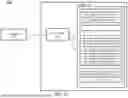


Sources:
- United States Patent and Trademark Office - verify current appl. status at the USPTO↗
Recent applications in this class:
- » 20260097788 2026-04-09
Method and System for Determining a Stopping Location and Trajectory for Reducing a Steering Angle - » 20260097787 2026-04-09
UNIFIED MATCHING METHOD AND UNIFIED MATCHING SYSTEM FOR MULTI-PEDESTRIAN TRACKING - » 20260097786 2026-04-09
SIMULATOR FOR A VEHICLE PLANNING SYSTEM - » 20260097785 2026-04-09
ACTIVATION OF ARTIFICIAL INTELLIGENCE MODELS PER DRIVING SCENARIO - » 20260097784 2026-04-09
SYSTEMS AND METHODS FOR EVALUATING OBJECT TRACKING METHODOLOGIES - » 20260097782 2026-04-09
SYSTEMS AND METHODS FOR TRAINING A LEARNING MODEL USING LABELED DATA GENERATED WITH AN ASSISTING OPERATOR FOR A TASK - » 20260097781 2026-04-09
TOKENIZED DATA STREAMING FOR MULTI-MODAL LANGUAGE MODELS - » 20260091805 2026-04-02
CRASH REPORT ADJUDICATION FOR AUTONOMOUS VEHICLES - » 20260091804 2026-04-02
SELF-LEARNING FROM AIR OF ARTIFICIAL INTELLIGENCE MODELS APPLICABLE FOR DRIVING - » 20260084716 2026-03-26
SYSTEM AND METHOD FOR AUTONOMOUS VEHICLE CONTROL
Recent applications for this Assignee:
- » 20260100490 2026-04-09
COVER MEMBER - » 20260100126 2026-04-09
DETERMINING AN ACTION TO BE PERFORMED FOR A PREDICTED ROAD ISSUE - » 20260100126 2026-04-09
DETERMINING AN ACTION TO BE PERFORMED FOR A PREDICTED ROAD ISSUE - » 20260100062 2026-04-09
EXPLORE UNTIL CONFIDENT: EFFICIENT EXPLORATION FOR EMBODIED QUESTION ANSWERING - » 20260097791 2026-04-09
DETERMINING ALTERNATE ROUTES BASED ON HEALTH-RELATED ADVANTAGES - » 20260097791 2026-04-09
DETERMINING ALTERNATE ROUTES BASED ON HEALTH-RELATED ADVANTAGES - » 20260094847 2026-04-02
PHOSPHATE-RESISTANT CATALYST MATERIAL HAVING OPTIMUM SURFACE MODIFICATION AND METHOD OF MITIGATING PHOSPHATE POISONING IN A FUEL CELL - » 20260094367 2026-04-02
HYBRID GEOMETRIC PRIMITIVE REPRESENTATION FOR POINT CLOUDS - » 20260088754 2026-03-26
SYSTEMS AND METHODS FOR PHASE-CHANGE COOLING AND THERMAL MANAGEMENT - » 20260088413 2026-03-26
ELECTRIC STORAGE APPARATUS AND VEHICLE MOUNTING STRUCTURE OF ELECTRIC STORAGE APPARATUS