CONTROL UNIT FOR CONTROLLING ELECTRIC OIL PUMPS
US20260098532A1
2026-04-09
19/350,722
2025-10-06
Smart Summary: A control unit is designed to manage electric oil pumps in vehicles that are being towed and are not running. It can send and receive information between the oil pumps and itself. The unit is also capable of identifying problems or faults in one or more of the electric oil pumps. This helps ensure that the oil pumps work correctly while the vehicle is being towed. Overall, it improves the safety and efficiency of the towing process. 🚀 TL;DR
Abstract:
A control unit (7) is configured for controlling electric oil pumps of at least one towed and switched-off vehicle (3.1, 3.2, 3.3). The control unit can be configured to transfer data between the electric oil pumps and the control unit and detecting a fault in one or more electric oil pumps.
Inventors:
- Stefan Renner 51 🇩🇪 Bodman-Ludwigshafen, Germany
- Michael TRÜBENBACH 14 🇩🇪 Friedrichshafen, Germany
- Patrick KNIESS 6 🇩🇪 Aulendorf, Germany
- Karlheinz HOHER 5 🇩🇪 Markdorf, Germany
- Andreas Acker 3 🇩🇪 Meckenbeuren, Germany
- Philipp SCHNEIDER 1 🇩🇪 Uhldingen-Mühlhofen, Germany
- Patrick TRÖSTLER 1 🇩🇪 Markdorf, Germany
Assignee:
- ZF FRIEDRICHSHAFEN AG 3,849 🇩🇪 Friedrichshafen, Germany
Applicant:
Interested in similar patents?
Get notified when new applications in this technology area are published.
Classification:
F04B49/065 » CPC main
Control, e.g. of pump delivery, or pump pressure of, or safety measures for, machines, pumps, or pumping installations, not otherwise provided for, or of interest apart from, groups - ; Control using electricity and making use of computers
F04B49/06 IPC
Control, e.g. of pump delivery, or pump pressure of, or safety measures for, machines, pumps, or pumping installations, not otherwise provided for, or of interest apart from, groups - Control using electricity
Description
RELATED APPLICATIONS
This application claims the benefit of and right of priority under 35 U.S.C. § 119 to German Patent Application no. 10 2024 209 738.1, filed on 7 Oct. 2024, the contents of which are incorporated herein by reference in its entirety
TECHNICAL FIELD
The invention relates to a control unit for the control of electric oil pumps, according to the preamble of Claim 1. The invention also relates to a system, a vehicle, a vehicle group, an electric oil pump, a method, a computer program, and a computer-readable medium according to the coordinated claims.
BACKGROUND
Electric vehicle drive systems are often equipped with electric oil pumps in order to ensure a controlled cooling and lubrication of the vehicle drive system, for example transmission components, engine components, and the like. In the case of towing processes or transfer trips, it can happen that the drive axles of the vehicle being towed are being pulled along by the tractor vehicle. In such cases since the towed vehicle is typically switched off, so that in particular the ignition is deactivated and terminals 15 and 30 are deactivated, the electric oil pump is not energized and does not operate. The result can be that parts of such drive systems, even when being towed with no load, roll or are at least exposed to friction and can consequently be damaged unless adequately lubricated.
It is true that from the prior art methods and devices are known which are intended to avoid damage to transmissions during towed journeys. For example, EP 2 286116 B1 describes a method and a device for ensuring the lubrication of an automated manual transmission. However, the known solutions have the disadvantage that they cannot ensure reliable lubrication of the components of electric vehicle drive units during towing processes, and they are relatively complex.
SUMMARY
The purpose of the present invention is to overcome or at least reduce the disadvantages of the prior art.
This objective is achieved by a control unit for controlling electric oil pumps, such that the control unit is suitable for controlling at least one electric oil pump of at least one vehicle which is switched off and is being towed. Such a control unit achieves the objective in that it provides the possibility of actuating electric oil pumps in vehicles that are to be towed and are therefore switched off, and thereby bringing the oil pumps into operation even in completely switched-off vehicles and thus ensuring sufficient lubrication of components that require lubrication in the electric drive systems of such vehicles.
In this context the term “electric oil pump” is in particular understood to mean an oil pump that can be activated by means of electrical signals and which is typically also able to receive and transmit digital electronic signals, preferably to transmit signals to a CAN bus of a vehicle, of which the oil pump is a part. A “switched-off vehicle” is typically switched off completely, i.e., one with its ignition switched off and its terminals 15 and 30 deactivated. The term “controlling” here is to be understood in the broadest possible sense and in particular includes the switching on and/or switching off of the electric oil pump and/or a data exchange with the electric oil pump and/or an exchange of electric signals with the electric oil pump, and in particular an exchange of digital signals. In advantageous embodiments, the control unit is an external control unit which is therefore not part of the towed vehicle itself. In such cases the control unit is preferably arranged on another vehicle, i.e., for example, on a towing vehicle. Alternatively, it is also possible to arrange the control unit temporarily on the towed vehicle, typically during the towing process. In typical embodiments the towed vehicle is a truck or a tractor of a truck. In the embodiments the vehicle is a bus or a passenger car. The term “towing” is typically understood to mean a process in which the towing vehicle pulls a towed vehicle, wherein at least one axle of the towed vehicle rolls with it.
In advantageous embodiments, the control unit is able to control at least one electric oil pump from the towing vehicle. The towing vehicle can also be called the tractor vehicle. In typical embodiments the towing vehicle is a truck or a lorry. Such controlling from the towing vehicle has for example the advantage that a driver of the towing vehicle has access to the control unit so that no other control units have to be arranged on other vehicles.
In advantageous embodiments, the control unit is able to control a plurality of electric oil pumps in a number of vehicles being towed at the same time, preferably by the towing vehicle. In this case, several different situations are conceivable: for example, each towed vehicle can have an electric oil pump and each of those electric oil pumps can be actuated by the control unit. It is also conceivable that each of the towed vehicles has a plurality of electric oil pumps, and all of them can be actuated by the control unit. It is also conceivable that some of the towed vehicles have no electric oil pump at all, and/or that a vehicle has both controllable electric oil pumps and in addition electric oil pumps that cannot be controlled.
In advantageous embodiments, the control unit can recognize when an electric oil pump under its control is faulty, in particular by evaluating the signals transmitted by the oil pump or pumps. For that purpose, the control unit typically comprises a fault recognition component for the recognition of faults in the oil pumps monitored by the control unit. In such a case, the control unit and/or the fault recognition component are typically able to receive bus signals from the oil pumps, in particular CAN signals from the oil pumps, and preferably also to evaluate those signals.
In advantageous embodiments, the control unit can be supplied with electric power by an external energy source, in particular a battery and preferably a battery of the towing vehicle. For that purpose, the control unit typically comprises a power connection that can be connected to the external energy source. Alternatively, it is also possible that the control unit itself comprises a battery or that the vehicle battery of the towing vehicle does not function as the battery, but rather, another external battery or even a battery in one of the towed vehicles to be used. In such cases the control unit can be connected to such external batteries.
In advantageous embodiments, the control unit can supply the oil pump or pumps with electric power so that they can be operated, this power supply preferably taking place by way of cables such that when more than one vehicle is being towed, the supply cables are preferably arranged in parallel or in series. In principle it is also possible for a power supply to take place not by way of cables but by inductive loading. A parallel power supply is understood to mean that in each case a cable connects the control unit to one of the towed vehicles or to an oil pump of one of the towed vehicles. In such cases, typically there is one cable for each towed vehicle and/or for each controlled oil pump, which cable connects the vehicle or its oil pump to the control unit. The term “in series” should then be understood to mean that (as viewed from the towing vehicle) the control unit is only connected directly to the first towed vehicle or to the electric oil pump of that first towed vehicle. All the remaining towed vehicles or their oil pumps are connected to the respective towed vehicle traveling ahead, or its oil pump. In such cases, therefore, there is no direct connection between the other towed vehicles and the control unit on the towing vehicle, but rather, there are only indirect connections by way of the towed vehicles driving ahead. By virtue of this looping-through of the electric power supply via the towed vehicles, on the one hand the complexity of the cable connections between towed vehicles and in particular their electric oil pumps, and on the other hand that of the control unit, can be minimized.
In advantageous embodiments, the control unit can carry out data communications with the oil pump(s), the data communication taking place by way of cables, preferably the cables of the cable-dependent electric power supply and/or by radio connection. In the latter case, the radio connection can be or can comprise a Bluetooth connection, a Wi-Fi connection, a Car-2-Car connection, or the like.
In advantageous embodiments, the control unit can send out information about the current condition of the controlled oil pump(s) and/or about recognized faults, in particular to the towing vehicle and/or to a display device. For that purpose, typically the control unit comprises an information outputting component for sending out such information about the current conditions of the oil pumps being controlled and/or about recognized faults in them, and/or further information, to a display device and/or to the towing vehicle. In typical embodiments, the display device consists of a display and/or a warning light and/or a loudspeaker and the information outputting component is advantageously able to send corresponding signals for such displays and/or warning lights and/or loudspeakers to the display device. The output of information to the towing vehicle and/or to the display device typically takes place by way of a cable signal line or, however, by radio transmission or by a combination of the two transmission modes.
The objective is also achieved by a system for the external control of oil pumps in towed vehicles, comprising a control unit according to at least one of the above-described embodiments.
In addition to the control unit, such a system typically comprises at least one electric power transfer system for supplying electric power to the electric oil pump(s) and/or a communication system for enabling communication, in particular by way of data, between the oil pump(s) and the control unit, and/or an energy source, in particular a battery, for supplying electric power to the control unit and/or the oil pump(s), and/or a display device. Here, an “electric power transfer system” is typically understood to mean a plurality of cables extending parallel or in series with one another and which typically can be arranged in the form of a cable harness. In typical embodiments, the communication system is a cabled system wherein the communication system preferably uses the same cables as the power transfer system. In other preferred embodiments, the communication system is wireless. In advantageous embodiments, the display device comprises a display and/or a warning light and/or a sound emission device such as a loudspeaker.
Advantageously, in the system at least some of the above components are implemented by means of computer program codes. In advantageous embodiments, the system is at least partially part of a vehicle control system and/or a Cloud. In typical embodiments, the system is a control unit, in particular a vehicle control unit.
In an embodiment of the invention, a vehicle comprises a control unit according to any of the above-described example embodiments and/or a system according to any of the above-described example embodiments.
An electric oil pump according to the invention is designed to be controlled by a control unit according to any of the above-described example embodiments and/or a system according to any of the above-described example embodiments. For that purpose, the oil pump typically comprises suitable components, for example a power input and/or a control connection and/or a communication unit for communicating with the control unit, and/or a signal generation component.
The objective of the invention is also achieved by a vehicle comprising an electric oil pump according to the invention.
A vehicle group according to the invention comprises a vehicle according to the invention and at least one towed vehicle, preferably a plurality of towed vehicles, wherein one or more electric oil pump(s) of the towed vehicle(s), in accordance with a previously described example embodiment, is/are connected to the control unit and/or the system, in particular by way of the electric power transfer system and/or the communication system.
With a method according to the invention, in the context of the method, an electric oil pump of at least one towed and switched-off vehicle is controlled, in particular by means of a control unit according to any of the example embodiments described earlier and/or by means of a system according to any of the example embodiments described earlier. In this case the method typically includes a communication process by virtue of which the control unit communicates with the oil pump(s) it is controlling, and/or a fault recognition process by means of which the presence of a fault in one of the oil pumps controlled by the control unit is recognized, and/or an information outputting process in which information, for example about the conditions of the oil pumps and/or about any faults in the oil pumps, is sent out, in particular to a display device as described earlier. In advantageous methods a plurality of vehicles is towed at the same time, in particular one behind another. This is then also referred to as “piggybacking”, that term of course originating in English. In particular, in the context of the method, in typical example embodiments two, three, or more vehicles are towed one behind another and typically at least one axle of each vehicle rolls.
In an embodiment of the invention, a computer program contains commands which, when the computer program is run on a computer, enable it to carry out any of the above-mentioned methods. The computer program can also be called a computer program product.
In an embodiment of the invention, a computer-readable medium contains computer program codes for carrying out any of the above-mentioned methods and/or a computer program as aforesaid. In this case, however, the term “computer-readable medium” is not to be exclusively understood to mean hard disks and/or servers and/or memory sticks and/or flash memories and/or DVDs and/or Bluerays and/or CDs. In addition, the term “computer-readable medium” can also be understood to mean a data stream such as that produced, for example, when a computer program or computer program product is downloaded from the internet.
BRIEF DESCRIPTION OF THE DRAWINGS
Below, the invention is explained briefly with reference to drawings, which show:
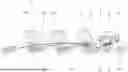
FIG. 1: A first embodiment of a vehicle group according to the invention,
FIG. 2: A second embodiment of a vehicle group according to the invention.
DESCRIPTION OF PREFERRED EXAMPLE EMBODIMENTS
FIG. 1 shows a first embodiment of a vehicle group 1 according to the invention. The vehicle group 1 comprises a towing vehicle 2 and three towed vehicles 3.1, 3.2, and 3.3. The first towed vehicle 3.1 rests with its front axle on the towing vehicle 2. The rear axle of the towed vehicle 3.1 is in contact with the road (not shown in FIG. 1) and accordingly rolls during the towing process. Correspondingly, the second towed vehicle 3.2 rests with its front axle on the first towed vehicle 3.1 and its rear axle rests on the road and rolls during the towing process. The third towed vehicle 3.3, in turn, rests with its front axle on the second towed vehicle 3.2 and its rear axle rests on the road and rolls during the towing process. The towing vehicle contains a control unit 7 which can control a respective electric oil pump in each of the towed vehicles 3.1, 3.2 and 3.3. In the example embodiment shown in FIG. 1 the respective oil pumps (which are not shown in detail in FIG. 1) can lubricate the rear axle of the towed vehicle 3.1, 3.2, and 3.3 concerned and its components. In the example embodiment shown in FIG. 1, the control unit 7 is connected to the oil pumps of the towed vehicles 3.1, 3.2, and 3.3 by means of an electric power transfer system. The power transfer system comprises a plurality of control cables 4.1, 4.2, and 4.3. The first control cable 4.1 connects the control unit 7 to the electric oil pump of the first towed vehicle 3.1. The second control cable 4.2 connects the control unit 7 to the electric oil pump of the second towed vehicle 3.2. The third control cable 4.3 connects the control unit 7 to the electric oil pump of the third towed vehicle 3.3. The towing vehicle 2 contains a vehicle battery 6. This battery 6 is connected by two battery connection cables 5.1, 5.2 to the control unit 7 and supplies electric power to the control unit 7 and thus indirectly also to the electric oil pumps of the towed vehicles 3.1, 3.2, and 3.3. The towing vehicle 2 also contains a display device 8, which is shown in FIG. 1 as a blinker light. The display device 8 is connected by a display cable 9 to the control unit 7. The control unit 7 can detect faults in the oil pumps of the towed vehicles 3.1, 3.2, and 3.3. For that purpose, the control unit 7 is designed such that it can evaluate reports, such as CAN reports, sent from the oil pumps and can draw conclusions from these reports about the presence of faults in the oil pumps. Furthermore, if such faults exist the control unit 7 can alert the display device 8, which can then, for example, generate a visual signal to a driver of the towing vehicle 2. In the example embodiment shown in FIG. 1, in the event of a fault being detected in one of the controlled oil pumps, the signal can for example be a blinking of the display device 8.
FIG. 2 shows a second embodiment of a vehicle group 1 according to the invention. The vehicle group 1 in FIG. 2 again comprises a towing vehicle 2 with a control unit 7, a vehicle battery 6, and a display device 8. The control unit 7 is connected by battery connection cables 5.1, 5.2 to the vehicle battery 6. The control unit is connected by a display cable 9 to the display device 8. The operating mode of the towing vehicle 2 in FIG. 2 is the same as the operating mode of the towing vehicle 2 in FIG. 1. Reference should therefore be made to the above explanations relating to FIG. 1. The towed vehicles 3.1, 3.2, and 3.3 also correspond to the towed vehicles in FIG. 1, and here too therefore, reference can be made to the above explanations relating to FIG. 1. However, otherwise than in the example embodiment shown in FIG. 1, the control cables 4.4, 4.5, and 4.6 are not arranged in parallel, but in series. It can be seen in FIG. 2 that the control unit 7 is connected directly only to the control cable 4.4. That control cable 4.4 connects an electric oil pump (not shown explicitly in FIG. 2) of the first towed vehicle 3.1 to the control unit 7. An electric oil pump (also not shown explicitly in FIG. 2) of the second towed vehicle 3.2 is not connected directly to the control unit 7, but rather, the control cable 4.5 connects this electric oil pump to the electric oil pump of the first towed vehicle 3.1 ahead of it. Analogously, the electric oil pump (again not shown explicitly in FIG. 2) of the third towed vehicle 3.3 is not connected directly to the control unit 7, but rather, that oil pump is connected by the control cable 4.6 to the oil pump of the second towed vehicle 3.2 ahead.
The invention is not limited to the example embodiments shown. Its protective scope is defined by the claims.
INDEXES
-
- 1. Vehicle group
- 2. Towing vehicle
- 3.1, 3.2, 3.3 Towed vehicles
- 4.1, 4.2, 4.3, 4.4, 4.5, 4.6 Control cables
- 5.1, 5.2 Battery connection cables
- 6. Vehicle battery (of the towing vehicle)
- 7. Control unit
- 8. Display device
- 9. Display cable
Claims
1. A control unit (7) for controlling electric oil pumps, wherein the control unit (7) is configured to control at least one electric oil pump of at least one towed and switched off vehicle (3.1, 3.2, 3.3).
2. The control unit (7) according to claim 1, wherein the control unit (7) is configured to control the at least one oil pump from a towing vehicle (2).
3. The control unit (7) according to claim 2, wherein the control unit (7) is configured to control a plurality of electric oil pumps in a plurality of vehicles (3.1, 3.2, 3.3) being towed at the same time, preferably-from the towing vehicle (2).
4. The control unit (7) according to claim 3, wherein the control unit (7) is configured to recognize a fault in one of the plurality of electric oil pumps it is controlling by evaluating signals emitted by at least one of the plurality of electric oil pump.
5. The control unit (7) according to claim 3, wherein the control unit (7) is configured to be supplied with electric power by battery (6) of the towing vehicle (2).
6. The control unit (7) according to claim 1, wherein the control unit (7) is configured to supply the at least one electric oil pump with electric power to enable operation, wherein the the electric power is supplied via supply cables, and when the at least one towed and switched off vehicle includes a plurality of towed vehicles (3.1, 3.2, 3.3), the supply cables are arranged in parallel or in series.
7. The control unit (7) according to claim 6, wherein the control unit (7) is configured to carry out data communication with the at least one electric oil pump, wherein the data communication takes place by way of control cables (4.1, 4.2, 4.3, 4.4, 4.5, 4.6) and/or by way of radio connection.
8. The control unit (7) according to claim 1, wherein the control unit (7) is configured to emit information to the towing vehicle (2) and/or to a display device (8) about the current conditions of the at least one oil pump and/or about recognized faults.
9. A system for the external control of oil pumps in towed vehicles (3.1, 3.2, 3.3), wherein the system comprises:
the control unit (7) according to claim 1;
an electric power transfer system (4.1, 4.2, 4.3, 4.4, 4.5, 4.6) configured for supplying power to the oil pumps;
a communication system (4.1, 4.2, 4.3, 4.4, 4.5, 4.6) configured for enabling communication by way of data between the oil pump and the control unit (7);
a battery (6) configured for supplying electric power to the control unit (7) and/or to the oil pumps; and
a display device (8).
10. A vehicle (2) comprising the control unit (7) according to claim 1.
11. An electric oil pump, wherein the electric oil pump is configured to be controlled by the control unit (7) according to claim 1.
12. A vehicle group (1), comprising:
a vehicle with the control unit (7) according to claim 1;
at least one towed vehicle (3.1, 3.2. 3.3); and
one or more electric oil pumps of the at least one towed vehicle (3.1, 3.2, 3.3) connected to the control unit (7) by means of an electric power transfer system (4.1, 4.2, 4.3, 4.4, 4.5, 4.6) configured to supply power to the one or more electric oil pumps and/or by means of a communication system (4.1, 4.2, 4.3, 4.4, 4.5, 4.6) configured to enable data transfer between the one or more oil pumps and the control unit.
13. A method for controlling one or more electric oil pumps of at least one towed and switched-off vehicle (3.1, 3.2, 3.3), the method comprising:
providing the control unit (7) according to claim 1;
providing at least one towed and switched off vehicle (3.1, 3.2, 3.3) having an electric oil pump coupled to the control unit;
transferring data between the electric oil pump and the control unit; and
detecting a fault in the electric oil pump of at one or more of the at least one towed and switched off vehicle.
14. A computer program, containing commands which, when the computer program is run on a computer, enable it to carry out a method comprising:
transferring data between an electric oil pump of one or more towed and switched off vehicles and the control unit according to claim 1; and
detecting a fault in the electric oil pump of the one or more towed and switched off vehicle.
15. A computer-readable medium, wherein the computer-readable medium contains computer program codes for carrying out a method comprising:
transferring data between an electric oil pump of one or more towed and switched off vehicles and the control unit according to claim 1; and
detecting a fault in the electric oil pump of the one or more towed and switched off vehicle.
Images & Drawings included:


Sources:
- United States Patent and Trademark Office - verify current appl. status at the USPTO↗
Similar patent applications:
- » 20070080582
Control unit for an electric oil pump
Recent applications in this class:
- » 20260085677 2026-03-26
SYSTEMS AND METHODS FOR CAPTURING EMISSIONS WITH AN INTERNAL COMBUSTION ENGINE - » 20260078749 2026-03-19
SYSTEM AND METHOD FOR HIERARCHICAL COMPRESSOR CONTROL - » 20260009382 2026-01-08
SYSTEM AND METHOD FOR SLEEP MODE FOR A PUMPING SYSTEM - » 20250376979 2025-12-11
MOTOR POWER OPTIMIZATION FOR DOWNHOLE MOTORS - » 20250369436 2025-12-04
METHOD FOR DETERMINING OPERATIONAL INFORMATION OF A METERING PUMP - » 20250320860 2025-10-16
Controlling Fracturing Pumps in a Hydraulic Fracturing System - » 20250305495 2025-10-02
CONTROL CALIBRATION APPARATUS FOR VARIABLE-CAPACITY PUMP AND METHOD THEREOF - » 20250270992 2025-08-28
MEMBRANE PUMP USAGE CONDITION DETECTION - » 20250230809 2025-07-17
PUMP PERFORMANCE DATA LOGGING APPARATUS - » 20250230808 2025-07-17
Portable Fluid Tank System with Multi-State Control Interface and Remote Operation
Recent applications for this Assignee:
- » 20260100182 2026-04-09
COMPUTER-IMPLEMENTED METHOD FOR FILTERING AT LEAST ONE USEFUL SIGNAL FROM AT LEAST ONE NOISY ACOUSTIC INPUT SIGNAL RECEIVED FROM AT LEAST ONE ACOUSTIC SENSOR - » 20260097688 2026-04-09
METHOD FOR HEATING COMPONENTS OF A VEHICLE - » 20260097469 2026-04-09
SELF-CENTERING CLAMPING RING AND SEALING BOOT WITH SUCH A CLAMPING RING - » 20260096074 2026-04-02
POWER ELECTRONICS UNIT FOR A VEHICLE - » 20260061828 2026-03-05
DRIVE MECHANISM, RANGE EXTENSION DEVICE AND RANGE EXTENSION SYSTEM FOR ELECTRIC VEHICLE, AND ELECTRIC VEHICLE - » 20260049658 2026-02-19
METHOD FOR OPERATING A DRIVING DEVICE OF A WORKING MACHINE - » 20260048748 2026-02-19
METHOD FOR CONTROLLING A DRIVE TRAIN AND DRIVE TRAIN - » 20260048668 2026-02-19
METHOD FOR OPERATING A DRIVING DEVICE OF A WORKING MACHINE - » 20260044155 2026-02-12
METHOD FOR INVERTING DRIVING INSTRUCTIONS FOR A WORKING MACHINE - » 20260043470 2026-02-12
METHOD FOR ENSURING A DESIRED SHIFTING STATE