TOUCH PANEL HAVING SENSING ELECTRODE WITH IMPROVED VISIBILITY
US20260099232A1
2026-04-09
19/112,400
2023-08-25
Smart Summary: A touch panel can detect when a finger or a similar tool touches its surface. It uses special transparent materials for its sensing parts, which helps improve visibility. The design includes zigzag-shaped electrodes and signal lines that work together to send touch signals. This setup allows for better interaction without compromising the panel's appearance. Overall, it enhances the touch experience while keeping the display clear and easy to see. 🚀 TL;DR
Abstract:
The present invention relates to a touch panel for detecting capacitive touch input from a human finger or a touch input tool having similar conductive characteristics thereto, and more particularly, to a touch panel having a sensing electrode with improved visibility. The touch panel having a sensing electrode with improved visibility includes: a plurality of sensing electrodes formed of a transparent conductive material to generate a touch capacitance (Ct) upon approach or touch by a touch means; and a plurality of sensor signal lines transmitting a touch signal generated by the sensing electrodes to a touch IC, wherein both the sensing electrodes and the sensor signal lines are formed in a repeated zigzag shape.
Inventors:
- Jae Hwan PARK 2 🇰🇷 Seongnam-si, South Korea
- Joo Bin PARK 2 🇰🇷 Seongnam-si, South Korea
- Jie On Seo 2 🇰🇷 Seongnam-Si, South Korea
Applicant:
Interested in similar patents?
Get notified when new applications in this technology area are published.
Classification:
G06F3/0448 » CPC main
Input arrangements for transferring data to be processed into a form capable of being handled by the computer; Output arrangements for transferring data from processing unit to output unit, e.g. interface arrangements; Input arrangements or combined input and output arrangements for interaction between user and computer; Arrangements for converting the position or the displacement of a member into a coded form; Digitisers, e.g. for touch screens or touch pads, characterised by the transducing means by capacitive means Details of the electrode shape, e.g. for enhancing the detection of touches, for generating specific electric field shapes, for enhancing display quality
G06F3/04164 » CPC further
Input arrangements for transferring data to be processed into a form capable of being handled by the computer; Output arrangements for transferring data from processing unit to output unit, e.g. interface arrangements; Input arrangements or combined input and output arrangements for interaction between user and computer; Arrangements for converting the position or the displacement of a member into a coded form; Digitisers, e.g. for touch screens or touch pads, characterised by the transducing means; Control or interface arrangements specially adapted for digitisers Connections between sensors and controllers, e.g. routing lines between electrodes and connection pads
G06F3/0446 » CPC further
Input arrangements for transferring data to be processed into a form capable of being handled by the computer; Output arrangements for transferring data from processing unit to output unit, e.g. interface arrangements; Input arrangements or combined input and output arrangements for interaction between user and computer; Arrangements for converting the position or the displacement of a member into a coded form; Digitisers, e.g. for touch screens or touch pads, characterised by the transducing means by capacitive means using a grid-like structure of electrodes in at least two directions, e.g. using row and column electrodes
G06F3/044 IPC
Input arrangements for transferring data to be processed into a form capable of being handled by the computer; Output arrangements for transferring data from processing unit to output unit, e.g. interface arrangements; Input arrangements or combined input and output arrangements for interaction between user and computer; Arrangements for converting the position or the displacement of a member into a coded form; Digitisers, e.g. for touch screens or touch pads, characterised by the transducing means by capacitive means
G06F3/041 IPC
Input arrangements for transferring data to be processed into a form capable of being handled by the computer; Output arrangements for transferring data from processing unit to output unit, e.g. interface arrangements; Input arrangements or combined input and output arrangements for interaction between user and computer; Arrangements for converting the position or the displacement of a member into a coded form Digitisers, e.g. for touch screens or touch pads, characterised by the transducing means
Description
CROSS-REFERENCE TO RELATED APPLICATIONS
This application is a National Phase of International Application No. PCT/KR2023/012615 which claims priority to Korean Patent Application No. 10-2022-0128327, filed on Oct. 7, 2022, the disclosures of each of which are incorporated herein by reference.
TECHNICAL FIELD
The present invention relates to a touch panel for detecting capacitive touch input from a human finger or a touch input tool having similar conductive characteristics thereto, and more particularly, to a touch panel having a sensing electrode with improved visibility.
BACKGROUND ART
Generally, a touch panel is attached to a display apparatus, such as a liquid crystal display (LCD), a plasma display panel (PDP), an organic light emitting diode (OLED) display, and an active-matrix organic light emitting diode (AMOLED) displays, and serves as an input device that generates a signal corresponding to a touched location upon touch by an object, such as a finger or a stylus. Touch panels are used in a wide range of fields, including small mobile terminals, industrial terminals, and digital information devices (DIDs), and the scope of their application is expanding.
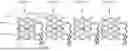
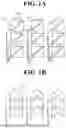
FIGS. 1A, 1B and 1C are a view illustrating examples of a sensing electrode pattern of a typical capacitive touch panel.
A capacitive touch panel refers to a device that generates a predetermined capacitance between a touch pattern thereof and a human finger or a touch input tool having similar conductive characteristics thereto to determine the presence of a touch based on a change in voltage across the generated capacitance.
In response to increasing resolution requirements for sensing electrodes in devices such as smartphones, sensing electrodes constituting touch panels are becoming more sophisticated and diversified for accurate and rapid determination of touch locations.
The sensing electrode patterns shown in FIGS. 1A, 1B, and 1C illustrate typical capacitive touch patterns, wherein a unit pattern 100 is formed by abutment of two pieces 110a, 110b (see FIG. 1A), or a unit pattern is formed with an integral geometric shape (120 or 140) (see FIG. 1B and FIG. 1C).
Typical touch panels, such as those illustrated in FIGS. 1A, 1B, and 1C, are capable of achieving higher resolution by reducing the size of the unit patterns 100, 120, 140 themselves as needed.
FIG. 2 is a view illustrating another example of a sensing electrode pattern of a typical capacitive touch panel.
Referring to FIG. 2, each column of the touch panel is formed by repeatedly arranging a shape in which a sensing electrode of a first pattern (200-1) and a sensing electrode of a second pattern (200-2) are vertically interlocked to each other, with phases thereof offset by 180 degrees with respect to each other.
As shown in FIG. 2, a column is formed by interlocking a first pattern and a second pattern of similar shapes with phases thereof horizontally reversed with respect to each other, followed by repeatedly arranging the interlocked pattern in a direction indicated by the arrow (210), that is, in a longitudinal direction. Subsequently, a sensing electrode of the touch panel is formed by repeatedly arranging a plurality of columns formed in the same manner as above.
However, the sensing electrode pattern as shown in FIG. 2 can cause reduced visibility of the touch panel.
DISCLOSURE
Technical Problem
It is an aspect of the present invention to provide a touch panel having sensing electrodes with improved visibility.
Technical Solution
In accordance with one aspect of the present invention, a touch panel having a sensing electrode with improved visibility includes:
-
- a plurality of sensing electrodes formed of a transparent conductive material to generate a touch capacitance (Ct) upon approach or touch by a touch means; and
- a plurality of sensor signal lines transmitting a touch signal generated by the sensing electrodes to a touch IC,
- wherein both the sensing electrodes and the sensor signal lines are formed in a repeated zigzag shape.
Preferably,
-
- each of the sensing electrodes includes:
- a first sub-pattern and a third sub-pattern each formed by connecting two ‘>’-shaped patterns in a longitudinal direction;
- a second sub-pattern and a fourth sub-pattern formed by horizontally flipping the first sub-pattern and the third sub-pattern 180 degrees, respectively;
- a first combination pattern in which the first sub-pattern and the second sub-pattern are connected at two points; and
- a second combination pattern in which the third sub-pattern and the fourth sub-pattern are connected at two points, wherein the first combination pattern and the second combination pattern are connected at one point.
Preferably,
-
- each of the sensing electrodes includes
- four sub-patterns connected in a transverse direction and each formed by connecting two ‘>’-shaped patterns in a longitudinal direction, and each of the four sub-patterns is connected to another sub-pattern adjacent thereto through one connection point.
Preferably,
-
- each of the sensor signal lines is formed by repetition of a ‘>’-shaped pattern in the longitudinal direction.
Preferably,
-
- the transparent conductive material includes one of indium tin oxide (ITO), carbon nanotubes (CNTs), antimony tin oxide (ATO), and indium zinc oxide (IZO).
Preferably,
-
- the touch capacitance is in the range of several femto-farads (fF) to tens of micro farads.
Advantageous Effects
Embodiments of the present invention provide a touch panel having a sensing electrode with improved visibility, in which both a sensing electrode and a sensor signal line are formed in a uniform zigzag pattern, thereby effectively improving visibility of the touch panel.
Embodiments of the present invention provide a touch panel having a sensing electrode with improved visibility, which ensures a reduced pattern area, thereby reducing influence of noise.
DESCRIPTION OF DRAWINGS
FIGS. 1A, 1B and 1C are a view illustrating examples of a sensing electrode pattern of a typical capacitive touch panel.
FIG. 2 is a view illustrating another example of a sensing electrode pattern of a typical capacitive touch panel.
FIG. 3 is a plan view of a touch panel having sensing electrodes with improved visibility according to one embodiment of the present invention.
FIG. 4 is a plan view of a touch panel having sensing electrodes with improved visibility according to another embodiment of the present invention.
BEST MODE
For full understanding of the present invention, operational advantages thereof, and the purposes accomplished by practice thereof, reference is made to the accompanying drawings, which illustrate preferred embodiments of the invention, and to the description thereof.
Hereinafter, the present invention will be described in detail with reference to preferred embodiments of the present invention illustrated in the accompanying drawings. It should be noted that like elements will be denoted by like reference numerals throughout the specification and the accompanying drawings.
Hereinafter, preferred embodiments of the present invention will be described in detail with reference to the accompanying drawings.
Herein, “touch panel” refers to a capacitive touch panel, which is a device that generates a predetermined capacitance between a touch pattern thereof and a human finger or a touch input tool having similar conductive characteristics thereto to detect the presence of a touch based on a change in voltage across the generated capacitance.
Herein, “visibility” refers to the degree to which sensing electrodes and sensor signal lines formed on a display are directly visible to a user's naked eye.
Herein, “improving visibility” means making the sensing electrodes and the sensor signal lines less visible to a user's naked eye.
In addition, “improving visibility” means reducing image distortion (moiré) caused by interference of light emitted from a display screen by sensing electrodes and sensor signal lines formed on a display.
FIG. 3 is a plan view of a touch panel having a sensing electrode with improved visibility according to one embodiment of the present invention.
The touch panel having a sensing electrode with improved visibility according to the present invention includes a plurality of sensing electrodes 310 and a plurality of sensor signal lines 330.
The sensing electrodes and the sensor signal lines are formed of a transparent conductive material.
The transparent conductive material may include, for example, indium tin oxide (ITO), carbon nanotubes (CNTs), antimony tin oxide (ATO), or indium zinc oxide (IZO).
The sensing electrodes of the touch panel are arranged in a matrix of multiple columns and multiple rows.
The touch panel includes a plurality of sensing electrodes 310, 320 (in column 1, column 2, . . . ) arranged in a matrix. The sensing electrodes are formed of a transparent conductive material so as to generate a touch capacitance Ct upon approach or touch by a touch means.
The touch panel according to the present invention includes a plurality of sensor signal lines 330.
The sensor signal line transmits a touch signal generated by the sensing electrode to a touch IC (not shown) to determine the presence of a touch and to extract touch coordinates.
Here, the touch signal is a voltage signal across the touch capacitance Ct.
A touch pattern of the sensing electrode formed of a conductive material can generate a touch capacitance Ct upon approach or touch by a touch means. The touch capacitance generated upon approach or touch by the touch means is in the range of several femto-farads (fF) to tens of micro farads (μF).
Both the sensing electrode and the sensor signal line according to the present invention are formed in a repeated zigzag shape. The zigzag shapes forming the sensing electrode and the sensor signal line have a small pattern area, thereby improving visibility of the touch panel while significantly reducing influence of noise.
Referring to FIG. 3, each of the sensing electrodes includes several sub-patterns and a combination pattern in which sub-patterns are connected to each other.
A first sub-pattern 301-1 of the sensing electrode 310 according to the present invention is formed by connecting two ‘>’-shaped patterns in a longitudinal direction. A third sub-pattern 310-3 of the sensing electrode 310 is formed in the same manner as the first sub-pattern 301-1.
A second sub-pattern 301-2 of the sensing electrode 310 is formed by horizontally flipping the first sub-pattern 301-1 180 degrees.
A fourth sub-pattern 301-4 of the sensing electrode 310 is formed by horizontally flipping the third sub-pattern 301-3 180 degrees.
The first sub-pattern 301-1 and the second sub-pattern 301-2 are connected at two points to form a first combination pattern.
The third sub-pattern 301-3 and the fourth sub-pattern 301-4 are connected at two points to form a second combination pattern. The first combination pattern and the second combination pattern are connected at one point.
As shown in FIG. 3, each of the sensing electrodes includes four sub-patterns, wherein the sub-patterns are connected in pairs to form two combination patterns.
Each of the sensor signal lines is formed by repetition of a ‘>’-shaped pattern in the longitudinal direction.
FIG. 4 is a plan view of a touch panel having a sensing electrode with improved visibility according to another embodiment of the present invention.
Referring to FIG. 4, a sensing electrode 410 is formed by connecting four sub-patterns in a transverse direction, wherein each of the sub-patterns is formed by connecting two ‘>’-shaped patterns in the longitudinal direction.
Each of the four sub-patterns is connected to another sub-pattern adjacent thereto through one connection point.
A sensor signal wire 440 is formed by repetition of a ‘>’-shaped pattern in the longitudinal direction.
Although some embodiments have been described herein, it should be understood by a person having ordinary knowledge in the art that the present invention is not limited to the above embodiments and the accompanying drawings and that various modifications, variations, and alterations can be made without departing from the spirit and scope of the invention.
Claims
1. A touch panel having a sensing electrode with improved visibility, comprising:
a plurality of sensing electrodes formed of a transparent conductive material to generate a touch capacitance (Ct) upon approach or touch by a touch means; and
a plurality of sensor signal lines transmitting a touch signal generated by the sensing electrodes to a touch IC,
wherein both the sensing electrodes and the sensor signal lines are formed in a repeated zigzag shape,
wherein each of the sensing electrodes comprises:
a first sub-pattern and a third sub-pattern each formed by connecting two ‘>’-shaped patterns in a longitudinal direction;
a second sub-pattern and a fourth sub-pattern formed by horizontally flipping the first sub-pattern and the third sub-pattern 180 degrees, respectively;
a first combination pattern in which the first sub-pattern and the second sub-pattern are connected at two points; and
a second combination pattern in which the third sub-pattern and the fourth sub-pattern are connected at two points,
wherein the first combination pattern and the second combination pattern are connected at one point.
2. (canceled)
3. The touch panel according to claim 1, wherein each of the sensing electrodes comprises four sub-patterns connected in a transverse direction and each formed by connecting two ‘>’-shaped patterns in a longitudinal direction, and each of the four sub-patterns is connected to another sub-pattern adjacent thereto through one connection point.
4. The touch panel according to claim 3, wherein each of the sensor signal lines is formed by repetition of a ‘>’-shaped pattern in the longitudinal direction.
5. The touch panel according to claim 1, wherein the transparent conductive material comprises one of indium tin oxide (ITO), carbon nanotubes (CNTs), antimony tin oxide (ATO), and indium zinc oxide (IZO).
6. The touch panel according to claim 1, wherein the touch capacitance is in the range of several femto-farads (fF) to tens of micro farads (μF).
Images & Drawings included:


Sources:
- United States Patent and Trademark Office - verify current appl. status at the USPTO↗
Recent applications in this class:
- » 20260093368 2026-04-02
WAVY ELECTRODES FOR REDUCED STRAIN TOUCH SENSOR PANEL - » 20260050353 2026-02-19
Organic Responsive User Interface System and Method of Use - » 20260050352 2026-02-19
CAPACITIVE DETECTION DEVICE UTILIZING TRAPEZOIDAL SUBSHAPE - » 20260044240 2026-02-12
INPUT DEVICE, DISPLAY DEVICE, AND ELECTRONIC DEVICE - » 20260016924 2026-01-15
ELECTRONIC DEVICE AND METHOD FOR IDENTIFYING TOUCH INPUT - » 20250377755 2025-12-11
TOUCH PANEL AND DISPLAY DEVICE - » 20250341932 2025-11-06
Display Device - » 20250335064 2025-10-30
ELECTRONIC DEVICE - » 20250315138 2025-10-09
DISPLAY PANEL, PREPARATION METHOD THEREOF, AND DISPLAY DEVICE - » 20250264968 2025-08-21
DISPLAY DEVICE