Rechargeable Solid-State Dual-Pole Aluminum-Ion Cell
US20260100409A1
2026-04-09
18/907,543
2024-10-06
Smart Summary: A new type of battery can store electricity using aluminum and graphite materials. It has a special design with a coiled aluminum wire for one part and graphite sheets for another part. This battery is made from cheap materials, making it cost-effective. It can be built in a simple way and combined into larger power packs for more energy. Overall, it offers a practical solution for rechargeable energy storage. 🚀 TL;DR
Abstract:
A method and apparatus for storing electricity using a rechargeable electrochemical dual-pole-cell with a coiled aluminum wire disc as the anode, graphite-based sheets as cathodes, and solid electrolyte discs. The invention teaches the use of inexpensive materials, simplified dual-pole-cell construction, assembling of dual-pole-cells into power modules, and power modules into battery power packs.
Assignee:
- Fuel Cells Global LTD 10 🇺🇸 Bentleyville, OH, United States
Applicant:
Interested in similar patents?
Get notified when new applications in this technology area are published.
Classification:
H01M10/0561 » CPC main
Secondary cells; Manufacture thereof; Accumulators with non-aqueous electrolyte characterised by the materials used as electrolytes, e.g. mixed inorganic/organic electrolytes the electrolyte being constituted of inorganic materials only
H01M4/38 » CPC further
Electrodes; Electrodes composed of, or comprising, active material; Selection of substances as active materials, active masses, active liquids of elements or alloys
H01M4/587 » CPC further
Electrodes; Electrodes composed of, or comprising, active material; Selection of substances as active materials, active masses, active liquids of inorganic compounds other than oxides or hydroxides, e.g. sulfides, selenides, tellurides, halogenides or LiCoF; of polyanionic structures, e.g. phosphates, silicates or borates; Carbonaceous material, e.g. graphite-intercalation compounds or CFx for inserting or intercalating light metals
H01M10/054 » CPC further
Secondary cells; Manufacture thereof; Accumulators with non-aqueous electrolyte Accumulators with insertion or intercalation of metals other than lithium, e.g. with magnesium or aluminium
H01M50/107 » CPC further
Constructional details or processes of manufacture of the non-active parts of electrochemical cells other than fuel cells, e.g. hybrid cells; Primary casings, jackets or wrappings of a single cell or a single battery characterised by their shape or physical structure having curved cross-section, e.g. round or elliptic
H01M50/213 » CPC further
Constructional details or processes of manufacture of the non-active parts of electrochemical cells other than fuel cells, e.g. hybrid cells; Mountings; Secondary casings or frames; Racks, modules or packs; Suspension devices; Shock absorbers; Transport or carrying devices; Holders; Racks, modules or packs for multiple batteries or multiple cells characterised by their shape adapted for cells having curved cross-section, e.g. round or elliptic
H01M50/509 » CPC further
Constructional details or processes of manufacture of the non-active parts of electrochemical cells other than fuel cells, e.g. hybrid cells; Current conducting connections for cells or batteries; Interconnectors for connecting terminals of adjacent batteries; Interconnectors for connecting cells outside a battery casing characterised by the type of connection, e.g. mixed connections
H01M2300/002 » CPC further
Electrolytes; Non-aqueous electrolytes Inorganic electrolyte
H01M2300/0085 » CPC further
Electrolytes Immobilising or gelification of electrolyte
Description
REFERENCES
- Archer, L., Das, S. & Navaneedhakrishman, 2014. Aluminum Ion Battery Including Metal Sulfide or Monocrystalline Vanadium Oxide Cathode and Ionic Liquid Based Electrolyte. United States of America, US20140242457.
- Azimi, G. & Ng, K. L., 2023. Aluminum-Ion Battery Using Aluminum Chloride/Trimethylamine Ionic Liquid As Electrolyte. United States of America, US20230104025.
- Bockstie, L., Trevethan, D. & Zaromb, S., 1963. Control of Al corrosion in caustic solutions. Journal of The Electrochemical Society, 110 (4), pp. 267-271.
- Caban-Acevado, M. & Yushin, G., 2023. Rechargeable Batteries With Alkali Metal Ion Cathodes, Aluminum Metal-Based Anodes And Displacement Electrolyte. United States of America, US20230411595.
- Craig, B., Schoetz, T., Cruden, A. & Ponce de Leon, C., 2020. Review of current progress in non-aqueous aluminum batteries. Renewable and Sustainable Energy Reviews, Volume 133.
- Das, S. K., Mahapatra, S. & Lahan, H., 2017. Aluminum-ion batteries: developments and challenges. J. Mater. Chem. A, Volume 5, pp. 6347-6367.
- Du Yuan, Jin Zhao, William Manalastas Jr., Sonal Kumar, Madhavi Srinivasan, 2020. Emerging rechageable aqueous aluminum ion battery: Status, challenges, and outlooks. Nano Materials Science, pp. 248-263.
- Elia, G. et al., 2021. An Overview and Prospective on AI and Al-Ion Battery Technologies. Journal of Power Sources, 481 (228870).
- Friesen, C. A. & Martinez, J. A. B., 2018. s.l. U.S. Pat. No. 10,090,520.
- Friesen, C. A., McDowell, F. & Bautista, M. J. A., 2016. Aluminum-Based Metal-Air Batteries. United States of America, U.S. Pat. No. 9,236,643 B2.
- Gan, F. et al., 2019. Low cost ionic liquid electrolytes for rechargeable aluminum/graphite batteries. International Journal of Ionics—The Science and Technology of Ionic Motion, Volume 25, pp. 4243-4249.
- Gao, C. & Chen, H., 2018. Preparation Method of Graphene Film Anode Material and Application in Aluminum Ion Battery. United States of America, US20190296353.
- Giuseppe, Antonio Elia, Kostiantyn V. Kravchyk, Maksym V. Kovalenko, Joaquin Chacon, Alex Holland, Richard G. A. Wills, 2021. An overview and prospective on AI and Al-ion battery technologies. Journal of Power Resources.
- Huang, L.-M. & Chen, C.-H., 2018. Aluminum-Ion Battery. United States of America, U.S. Pat. No. 20180219257.
- Leisegang, T. et al., 2019. The Aluminum-Ion attery: A Sustainable and Seminal Concept?. Front Chem, 7 (268).
- Levy, N. & Ein-Eli, Y., 2020. Aluminum-ion battery technology: a rising star or a devastating fall?. J Solid State Electrochem, Volume 24, pp. 2067-2071.
- Li, C., Zhang, X. & He, W., 2018. Design and modification of cathode materials for high energy density aluminum-ion batteries: a review. J Mater Sci: Mater Electron, Volume 29, pp. 14353-14370.
- Miguel, A. et al., 2020. Tough Polymer Gel Electrolytes for Aluminum Secondary Batteries Based on Urea: AlCl3, Prepared by a New Solvent-Free and Scalable Procedure. Polymers, 12(6).
- Miller, Y., Tzidon, D. & Yadgar, A., 2021. United States of America, US20210075078.
- Mori, R., 2020. Recent Developments for Aluminum-Air Batteries. Electrochemical Energy Reviews, Volume 3, pp. 344-369.
- Mukherjee, R. & Koratkar, N. A., 2017. Rechargeable Aluminum Ion Battery. United States of America, U.S. Pat. No. 9,819,220 B2.
- Mukherjee, R. et al., 2021. Aqueous aluminum ion batteries, hybrid battery-capacitors, compositions of said batteries and battery-capacitors, and associated methods of manufacture and use. United States of America, U.S. Pat. No. 10,978,734 B2.
- Niksa, M. J., Niksa, A. J. & Noscal, J. M., 1990. Primary aluminum-air battery. United States of America, U.S. Pat. No. 4,925,744.
- Pan, W. et al., 2022. Non-aqueous Al-ion batteries: cathode materials and corresponding underlying ion storage mechanisms. Rare Met., Volume 41, pp. 762-774.
- Sasaki, K., 2015. United States of America, US20150009365.
- Stoddart, J., Kim, D., Choi, J. & Yoo, D.-J., 2021. Rechargeable Aluminum Organic Batteries. United States of America, US2020242452.
- Su, Y.-S. et al., 2020. Aluminum secondary battery having a high-capacity and high-rate capable cathode and manufacturing method. United States of America, US20180254512.
- Wang, D.-Y. et al., 2017. Advanced rechargeable aluminium ion battery with a high-quality natural graphite cathode. Nature Communications, 8(14283).
- Wang, D.-Y. et al., 2017. Advanced Rechargeable Aluminum Ion battery with a High-Quality Natural Graphite Cathode. Nature Communications, Volume 8, p. 14283.
- Wang, Y. et al., 2023. Solid-state Al-air battery with an ethanol gel electrolyte. Green Energy & Environment, 8(4), pp. 1117-1127.
- Yuan, D. et al., 2020. Emerging rechargeable aqueous aluminum ion battery: Status, challenges, and outlooks. Nano Materials Science, Volume 2, pp. 243-263.
- Zaromb, S., 1962. The use and behavior of aluminum anodes in alkaline primary batteries. Journal of The Electrochemical Society, 109(12), pp. 1125-1130.
FIELD OF INVENTION
The present invention generally relates to electricity generation, and more particularly to a method and apparatus for electrical energy storage using rechargeable aluminum-ion electrochemical cells.
PRIOR ART
An aluminum-ion battery is a rechargeable battery in which aluminum ions serve as charge carriers. Aluminum-ion batteries consist of electrodes emersed in an electrolyte. The obvious material for the anode is aluminum, an alloy of aluminum, or a compound of aluminum. Common materials for the cathode (Pan, et al., 2022) include: carbon-based materials such as graphite, amorphous carbons, porous carbons (Li, et al., 2018). Common materials for the electrolyte include CO(NH2)2 or carbamide (also called urea), sea-salt, and acidic room temperature non-aqueous ionic liquids (IL). The ionic liquid is made of aluminum chloride (AlCl3) and 1-ethyl-3-methylimidazolium chloride [EmIm]Cl (Miguel, et al., 2020). The use of the ionic liquid as an electrolyte prevents passivation.
Aluminum-ion batteries are promising alternatives to the lithium-ion batteries commonly used in portable electronics, electric vehicles, and stationary energy for homes, commercial buildings, and grid-scale applications. Key advantages of aluminum-ion batteries include the relatively low-cost, high-energy density, safety, and long cycle life (Leisegang, et al., 2019). Recent investigations on aluminum-ion batteries have been conducted by:
-
- (Wang, et al., 2017) who presented an advanced rechargeable aluminum-ion battery with a high-quality natural graphite cathode.
- (Das, et al., 2017) who detailed developments and challenges faced by aluminum-ion batteries. The authors focus on the electrode materials, innovative perspectives, and future research efforts on rechargeable aluminum-ion batteries.
- (Gan, et al., 2019) who designed a high-performance rechargeable aluminum battery using a graphite cathode and AlCl3/Et3NHCl ionic liquid electrolyte.
- (Levy & Ein-Eli, 2020) who discussed the potential of aluminum-ion batteries as a cost-effective energy storage technology for renewable energy sources.
- (Craig, et al., 2020) who reviewed current progress in non-aqueous aluminum batteries. The authors conclude that graphite-based positive electrodes, especially cheap and abundant graphite flakes, offer the best overall performance because of the stability and high discharge potential.
- (Yuan, et al., 2020) who described the status, challenges, emerging, and outlooks of emerging rechargeable aqueous aluminum-ion battery.
- (Elia, et al., 2021) who reviewed developments in different classes of aluminum-centered batteries. The focus was on “aluminum electrolyte chemistry based on “chloroaluminate melts, deep eutectic solvents, polymers, and chlorine-free formulations.”
Patents which taught implementations of the aluminum-ion batteries include:
-
- (Archer, et al., 2014) which teaches an aluminum ion battery using an aluminum anode, a vanadium oxide material cathode, and an ionic liquid electrolyte. The vanadium oxide material cathode comprises a monocrystalline orthorhombic vanadium oxide material.
- (Mukherjee & Koratkar, 2017) which describes a rechargeable battery using a solution of an aluminum salt as an electrolyte.
- (Huang & Chen, 2018) which describes an aluminum-ion battery using an electrolyte comprising of an aluminum halide, a solvent and a compound made from alkyl or fluoroalkyl group.
- (Gao & Chen, 2018) which discloses a method of preparing a graphene anode material by coating a graphene oxide solution on a substrate, drying, removing the substrate, performing reduction, and obtaining a graphene film with ultra-high conductivity.
- (Mukherjee, et al., 2021) which describes an aqueous aluminum ion battery with improved charge storage capacity.
- (Stoddart, et al., 2021) which discloses rechargeable aluminum batteries using cathodic phenanthrenequinone unit and a graphite flake.
- (Azimi & Ng, 2023) which describes aluminum-ion battery technology with an electrolyte consisting of an aluminum trichloride (Al—Cl3)/trimethylamine hydrochloride ionic liquid, aluminum metal as the anode material, and a compatible cathode active material.
- (Su, et al., 2020) which describes an aluminum-ion battery with a cathode comprising of a layer of recompressed exfoliated graphite or carbon material that is oriented in such a manner that the layer has a graphite edge plane in direct contact with the electrolyte and facing the separator.
- (Caban-Acevado & Yushin, 2023) which describes rechargeable batteries with alkali metal ion cathodes, aluminum metal-based anodes and displacement electrolyte.
BACKGROUND OF THE INVENTION
Aluminum-ion batteries are emerging as better alternatives to lithium-ion batteries, the leading choice for wireless devices, computers, electric mobility, and small-scale to grid-scale stationary energy storage applications. The advantages of aluminum-ion batteries over lithium-ion batteries include: cost-effectiveness of aluminum because of its abundance in the Earth's crust; safety because aluminum-ion batteries are less prone to thermal runaway and fire hazards; significantly higher theoretical energy density (1060 Wh/kg, versus 406 Wh/kg theoretical limit for lithium-ion batteries); high recyclability of aluminum; longevity due to the large number of charging and discharging cycles of aluminum-ion batteries.
This invention uses the advantages inherent in the electrochemistry of aluminum-ion batteries to teach the construction of an ultra-low-cost solid-state rechargeable battery. The electrodes maximize electrochemical reaction surfaces. The dual-pole cells are easy to build. The dual-pole cell components are affordable, and the materials are widely available.
SUMMARY OF THE INVENTION
According to the present invention there is provided a method of storing electrical energy using an electrochemical dual-pole cell comprising circular exterior container discs, coiled anodic aluminum wire discs, graphite discs, and solid electrolyte discs based on a compound mixture of urea, sea-salt, and sodium silicate.
An advantage of the present invention is the provision of a method and apparatus for converting electricity into chemical energy stored in an aluminum-ion cell.
Still another advantage of the present invention is the provision of a method and apparatus for electricity storage which utilizes dual solid ionic electrolyte discs.
Still another advantage of the present invention is the provision of a method and apparatus for electricity storage which utilizes a disc of coiled anodic aluminum wire.
Still another advantage of the present invention is the provision of a method and apparatus for electricity storage which utilizes two graphite discs.
Still other advantages of the invention will become apparent to those skilled in the art upon reading and understanding the following detailed description, accompanying drawings and appended claims.
BRIEF DESCRIPTION OF DRAWINGS
The invention may take physical form in certain parts and arrangements of parts, a preferred embodiment and method of which will be described in detail in this specification and illustrated in the accompanying drawings which form a part hereof, and wherein:
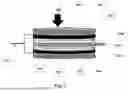
FIG. 1 is an illustration of the isometric view of the Dual-Pole Cell;
FIG. 2 is an illustration of the vertical cross-section of the Dual-Pole Cell;
FIG. 3 is an illustration of the anodic coiled aluminum wire of the Dual-Pole Cell;
FIG. 4 is an illustration of the steps involved in the construction of the Dual-Pole Cell.
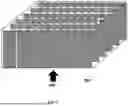
FIG. 5 is an illustration of stacking of Dual-Pole Cells to form a Cylindrical Power Module.
FIG. 6 is an illustration of the isometric view of Cylindrical Power Modules arranged to form a Battery Power Pack.
DETAILED DESCRIPTION OF THE INVENTION
It should be appreciated that while a preferred embodiment of the present invention will be described with reference to aluminum-ion electrochemical cell, other metal-ion electrochemical cells are also suitable for use in connection with the present invention. These include zinc-ion, iron-ion, magnesium-ion, lithium-ion, calcium-ion, sodium-ion, potassium-ion, and tin-ion electrochemical cells.
In accordance with a preferred embodiment, the present invention teaches the storage of electricity using a dual-pole electrochemical cell comprising a) two circular exterior discs; b) a disc of coiled anodic wire; c) two cathodic graphite-based discs; and d) an electrolyte based on a mixture of urea, sea-salt, and sodium silicate.
Referring now to the drawings wherein the showings are for the purposes of illustrating a preferred embodiment of the invention only and not for purposes of limiting same, FIG. 1 is an illustration of the isometric view of dual-pole cell 100. At the middle of the dual-pole cell is aluminum anode 101, sandwiched by layers of solid electrolyte discs 102, cathodes 102, current collectors 104, and exterior covering 105. Positive terminals 107 are attached to current collectors 104.
Referring now to FIG. 2 and FIG. 3:
-
- 1. Aluminum Anode 101. According to the preferred embodiment of this patent, anode 101 is pure aluminum in the form of a coiled aluminum wire disc.
- 2. Cathode 102. According to the preferred embodiment of this patent, cathode 103 is a graphite sheet disc or a cellulosic material carbonized by doping with carbon ink derived from graphite powder and Acrylic Glazing Liquid.
- 3. Negative Terminal 103: According to the preferred embodiment of this patent, negative terminal 103, is the protruding end of coiled aluminum wire anode 101.
- 4. Current Collector 104. According to the preferred embodiment of this patent, current collector 104 consists of a conductive copper sheet, copper foil, or mesh of copper into a circular shape.
- 5. Exterior Covering 105. According to the preferred embodiment of this patent, exterior disc 105 consists of a conductive copper foil, or a polycarbonate plastic material.
- 6. Solid Electrolyte Discs 106. According to this invention, electrolyte 106 is formulated by mixing x parts by volume of powdery urea (NH2)2CO with y parts by volume of sea-salt, with z parts by volume of sodium silicate (water glass). The mixture is stirred until a uniformly smooth gel is achieved. Solid Electrolyte Discs 106 are formed by molding the fresh electrolyte in a Petri dish, or soaking super absorbent cellulosic materials with the freshly made electrolyte.
- 7. Positive Terminal 107: According to the preferred embodiment of this patent, positive terminal 107, is a thin nickel strip (thickness 0.15 mm, width 8 mm) attached to current collector 104.
Referring now to FIG. 4, the steps 200 involved in the construction of the Dual-Pole-Cell 100 are:
-
- 1. Place first current collector disc 104 on a flat surface.
- 2. Place first cathode 102 on current collector 104.
- 3. Place first electrolyte disc 106 on first cathode 102.
- 4. Place coiled aluminum anode 101 on first electrolyte disc 106.
- 5. Place second electrolyte disc 106 on coiled aluminum wire anode 101.
- 6. Place second cathode 102 on second electrolyte disc 106.
- 7. Place second current collector disc 104 on second cathode 102.
- 8. Wrap entire unit tightly with exterior covering 105.
- 9. Ensure positive terminal 109. and negative terminal 110 are aligned to the same direction.
Referring now to FIG. 5:
-
- 1. Dual-Pole Cells 100 are stacked to form a Cylindrical Power Module 300.
- 2. Dual-Pole Cells 100 are connected in series and/or parallel to achieve specific power and energy capacities for Cylindrical Power Module 300.
Referring now to FIG. 6:
-
- 1. Cylindrical Power Modules 300 are arranged in a rectangular formation to obtain Prismatic Battery Pack 400.
- 2. Cylindrical Power Modules 300 are connected in series and/or parallel to achieve specific power and energy capacities for Battery Pack 400.
EXAMPLE
To establish the characteristics of the fuel dual-pole-cell, according to the invention disclosed herein, a discharge test was conducted on a dual-pole-cell of distinct size configuration. In the following example:
-
- Diameter of Dual-Pole Cell: 100 mm
- Thickness of Dual-Pole Cell: 17 mm
- Anode: 90 mm diameter coiled Gauge 12 aluminum wire
- Cathode: Carbon Graphite Disk (100 mm diameter; 5 mm thick)
- Electrolyte: 2×100 mm diameter×2 mm thick solid-state ionic electrolyte prepared from a mixture of 10 ml of urea, 10 ml of sea-salt, and 240 ml of sodium silicate.
- Current Collector: 2×100 mm diameter×0.5 mm thick) pure copper round.
- Positive Terminal: Single nick strip attached to both current collectors
- Negative Terminal: Outer end of anodic aluminum coil
- Open Circuit Voltage: 2.5V
- Discharge Current: 100 mA
- Test duration: 11,467 minutes
- Current Capacity: 19,111 mAh
- Energy Produced: 10,608 mWh
- Average Operating Voltage: 0.6V
The present invention has been described with reference to a preferred embodiment. Obviously, modifications and alterations will occur to others upon a reading and understanding of this specification. It is intended that all such modifications and alterations be included as far as they come within the scope of the appended claims or the equivalents thereof.
Claims
1. According to the present invention there is provided a method of storing electrical energy using an electrochemical dual-pole cell comprising circular discs as exterior container, an anode consisting of aluminum wire, graphite-based discs as cathode, and electrolyte based on a compound mixture of urea, sea-salt, and sodium silicate.
2. A method according to claim 1, wherein the cathode consists of two graphite discs.
3. A method according to claim 1, wherein the cathode consists of two discs obtained from super absorbent cellulosic material carbonized by doping with carbon ink derived from graphite powder and Polyvinyl Acetate (PVA), a vinyl polymer.
4. A method according to claim 1, wherein the anode is a coiled disc of aluminum wire.
5. A method according to claim 1, wherein the electrolyte is solid, consisting of a compound mixture of urea, sea-salt, and sodium silicate.
6. A method according to claim 1, wherein the membrane separators are cellulosic sheets.
7. An apparatus according to claim 1, wherein the fuel dual-pole cells are stacked to form a Cylindrical Power Module.
8. An apparatus according to claim 7, wherein the Cylindrical Power Modules are arranged in rectangular grid formation and connected in series and parallel to form a Battery Power Pack.
Images & Drawings included:



Sources:
- United States Patent and Trademark Office - verify current appl. status at the USPTO↗
Recent applications in this class:
- » 20220393230 2022-12-08
Seasonal energy storage technologies based on rechargeable batteries - » 20220200042 2022-06-23
Lithium metal recovery and synthesis - » 20200106127 2020-04-02
Lithium metal recovery and synthesis - » 20190288330 2019-09-19
ELECTRODE, SECONDARY BATTERY, BATTERY PACK, AND VEHICLE - » 20190173126 2019-06-06
ELECTROLYTE FOR LITHIUM METAL BATTERY AND LITHIUM METAL BATTERY COMPRISING SAME - » 20190020058 2019-01-17
Magnesium-based electrolyte compositions and uses thereof - » 20180375147 2018-12-27
ELECTRICAL ENERGY STORAGE DEVICE WITH NON-CORROSIVE ELECTROLYTE - » 20160104915 2016-04-14
HYBRID ION BATTERY SYSTEM - » 20150280281 2015-10-01
Electrochemical nanofluid or particle suspension energy conversion and storage device - » 20140154592 2014-06-05
Magnesium borohydride and its derivatives as magnesium ion transfer media
Recent applications for this Assignee:
- » 20260100451 2026-04-09
Dual-Pole Aluminum-Air Fuel Cell - » 20260100423 2026-04-09
Hypogeal Battery Using Sandy Al-Ion Rechargeable Cells - » 20260098664 2026-04-09
Hypogeal Electricity Generator Using Sandy Al-Air Fuel Cells - » 20250309410 2025-10-02
Ultra-Low-Cost Luffa Aluminum-Air Fuel Cell - » 20250309335 2025-10-02
Solid-State Aluminum-Ion Battery with Carbonized Luffa Cathode - » 20250293394 2025-09-18
Organic Luffa Aluminum-Ion Battery - » 20250286119 2025-09-11
Low-Cost Solid-State Aluminum-Ion Battery - » 20250286116 2025-09-11
All-Solid-State Aluminum-Ion Battery - » 20250226456 2025-07-10
Aluminum-Air Fuel Cell Using Bioplastic Electrolyte