METHOD AND SYSTEM FOR CHARGING A BATTERY
US20260100599A1
2026-04-09
19/348,918
2025-10-03
Smart Summary: A new way to charge a battery involves applying a specific voltage to its terminals. When the difference between this charging voltage and the battery's no-load voltage gets too small, the charging stops. This helps to protect the battery's internal parts from damage. By monitoring the voltage difference, the method ensures safe charging. Overall, it aims to extend the battery's life and improve its performance. 🚀 TL;DR
Abstract:
A method for charging a battery, including the steps of charging the battery by application of a charge voltage to the terminals of the battery; and interrupting the charge when the differential between the charge voltage and the no-load voltage of the battery is below a margin so as to protect the internal resistance of the battery.
Assignee:
- Commissariat A L'Energie Atomique Et Aux Energies Alternatives 4,987 🇫🇷 Paris, France
Applicant:
Interested in similar patents?
Get notified when new applications in this technology area are published.
Classification:
H02J7/00 IPC
Circuit arrangements for charging or depolarising batteries or for supplying loads from batteries
Description
CROSS-REFERENCE TO RELATED APPLICATIONS
This application claims priority to French Patent Application No. FR2410736, filed on Oct. 4, 2024, the entire contents of which are incorporated herein by reference.
FIELD OF THE INVENTION
The invention relates to the monitoring of the charge of a battery in order to avoid its degradation over time as the charge and discharge cycles progress.
STATE OF THE ART
A battery, in particular a lithium-ion battery comprises several cells including a rechargeable electrochemical system to provide a nominal voltage.
With the development of the electrical systems operating by means of a rechargeable battery, in particular the electric vehicles, the charge time of the battery is to be optimized.
To quickly charge a battery, significant charge voltages must be used. However, the higher the voltages used, the faster the battery degrades over its usage cycles.
There is a need to optimize a battery charge that strikes a balance between battery life and charge time.
DISCLOSURE OF THE INVENTION
The invention allows monitoring the charge of a battery in order to prevent its rapid degradation.
To this end, the invention proposes, according to a first aspect, a method for charging a battery, comprising the following steps:
-
- charging the battery by application of a charge voltage to the terminals of the battery;
- interrupting the charge when the differential between the charge voltage and the no-load voltage of the battery is below a margin so as to protect the internal resistance of the battery.
The method according to the first aspect is supplemented by the following characteristics, alone or in combination:
-
- after a first full charge of the battery, the method comprises the following steps: obtaining a measurement of the current circulating in the battery during the application of the charge voltage; determining the differential between the charge voltage and the no-load voltage of the battery as a function of the measured current and of the internal resistance of the battery; interrupting the charge as soon as the determined differential is below the margin ensuring a no-load voltage of the battery lower than the charge voltage;
- the differential between the charge voltage and the no-load voltage of the battery is determined by Rint. Is, with Is is the measured current and Rint is the internal resistance of the battery.
- the internal resistance of the battery is measured at the first full charge, the battery being fully charged at the first charge when the differential between the charge voltage and the no-load voltage of the battery is below the margin protecting the internal resistance of the battery.
- the internal resistance of the battery is measured before the application of the charge voltage, preferably every 10 to 100 charges.
- the margin is comprised between 10 mV and 250 mV, preferably 100 mV;
- before the charge of the battery, a step of measuring the no-load voltage at the terminals of the battery, the charge beginning if the measured voltage is below a threshold from which the internal resistance of the battery is no longer protected.
- at the first charge, the method comprises the following steps: a) charging the battery for a maximum duration, preferably between 10 seconds and 100 seconds, typically 60 seconds; b) measuring the internal resistance of the battery; c) measuring the no-load voltage at the terminals at the end of the determined duration; d) determining a differential between the charge voltage and the no-load voltage; repeating steps a) to d) as long as the differential between the charge voltage and the no-load voltage of the battery is above the margin protecting the internal resistance of the battery, the method comprising during step a): e) measuring the current circulating in the battery during the charge; f) determining the differential between the charge voltage and the no-load voltage of the battery as a function of the measured current and of the internal resistance of the battery; g) interrupting the charge if the determined differential is below the margin.
The invention proposes, according to a second aspect, a charging system comprising a processor for the implementation of the method according to the first aspect of the invention.
The invention proposes, according to a third aspect, a computer program product comprising program code instructions for the execution of the steps of the method according to the first aspect of the invention when the program is executed on a computer.
DESCRIPTION OF THE FIGURES
Other characteristics, aims, and advantages of the invention will emerge from the following description, which is purely illustrative and non-limiting, and which should be read in relation to the appended drawings, in which:
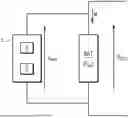
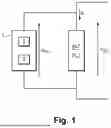
FIG. 1 represents an equivalent diagram of a battery and of a system for charging the battery.
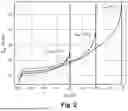
FIG. 2 represents curves showing the evolution of the internal resistance of several batteries as a function of an off-load (or open-circuit) voltage measured at the terminals of the battery for different charge voltages of the battery.
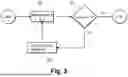
FIG. 3 illustrates a charging method according to a first embodiment of the invention.
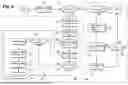
FIG. 4 illustrates a charging method according to a second embodiment of the invention.
Throughout the figures, the similar elements bear identical references.
DETAILED DESCRIPTION OF THE INVENTION
FIG. 1 illustrates a battery BAT (for example Lithium-Ion) rechargeable by means of a system 1 for charging a battery comprising a processor 2 configured to implement a charging method described below. The charging system 1 is preferably integrated within a battery charger, for example a battery charger for example of an electric vehicle. The charging system 1 also comprises a memory 3 for storing different values used during the charging method. The processor 2 is configured to obtain several measurements in particular a measurement of the no-load voltage VOCV (that is to say the voltage when the battery is disconnected from any circuit) at the terminals of the battery characteristic of the state of charge of the battery BAT, a measurement of the current Is circulating in the battery BAT. The processor 2 is also configured to control the application of a charge voltage Vmax to the terminals of the battery BAT, and to process the different measurements and more generally to control the charge of the battery BAT.
The idea of the method of the invention is to protect the battery BAT in order to prevent its internal resistance, denoted Rint, from degrading during its charge. Indeed, it has been observed that when the no-load voltage VOCV at the terminals of the battery approaches the charge voltage Vmax (or setpoint), the internal resistance Rint degrades, impacting the battery life. Such a phenomenon is illustrated in FIG. 2 which shows curves of the evolution of the internal resistance Rint as a function of the no-load voltage VOCV measured at the terminals of the battery, and this for several batteries. Each curve corresponds to a charge voltage Vmax (4.1 V, 4.2 V, 4.3 V) for different batteries. According to these curves, it is observed that the internal resistance Rint increases almost exponentially as the no-load voltage VOCV approaches the charge voltage Vmax. However, the more this internal resistance Rint increases, the more quickly the battery BAT degrades.
Consequently, it is proposed to prevent the no-load voltage VOCV from reaching this charge voltage Vmax during the charge of the battery. Thus, a margin η=Vmax−VOCV guaranteeing a no-load voltage VOCV measured at the terminals of the battery lower than the charge voltage Vmax is defined. Such a margin depends on the battery and is typically η<100 mV for an all solid-state battery. The monitoring of the no-load voltage VOCV is therefore relevant for optimizing the charge of the battery. The monitoring of this no-load voltage is carried out either by direct measurement or by measuring the current according to either of the embodiments described below.
According to a first embodiment, illustrated in FIG. 3, at the beginning of the method, the system measures the no-load voltage VOCV at the terminals of the battery (step E0). If a potential difference between the charge voltage Vmax and the no-load voltage VOCV is above the margin η (step E01) then the charge starts by application of the charge voltage Vmax (step E02) for a determined duration (Xs) typically between 10 seconds and 100 seconds, preferably 60 seconds. The charge voltage Vmax is typically comprised between 4.1 V and 10 V but can vary as a function of the battery type. At the end of this duration, the no-load voltage VOCV at the terminals of the battery (step E0) is measured, and the charge continues as long as the potential difference between the charge voltage Vmax and the no-load voltage VOCV is above the margin η; otherwise, it ends. According to this first embodiment, the internal resistance of the battery is protected, and it is necessary to interrupt the charge to measure the no-load voltage VOCV.
According to a second embodiment, illustrated in FIG. 4, to improve the charge time, it is the current circulating in the battery that is measured to avoid having to interrupt the charge during normal use after the first charge.
According to this second embodiment, at the beginning of the method, the system detects (step E1) whether it is the first charge of the battery (that is to say that it has never been charged) and measures the no-load voltage VOCV at the terminals of the battery (step E0). The detection of the first charge depends on the type of battery. At the first charge of the battery, a conditioning of the battery is carried out (step E2), which consists in fully charging the battery, that is to say up to the charge limit such that a potential difference between the charge voltage and the no-load voltage VOCV is below the margin η. To do so, the charge voltage is applied (step E21) to the battery for a maximum duration (Xs), for example between 10 seconds and 100 seconds, preferably 60 seconds. At the end of this duration, the application of the charge voltage Vmax is interrupted and the internal resistance Rint of the battery is measured as well as the no-load voltage VOCV (steps E22 and E23). These periods of charge and measurement of the resistance and voltage are repeated as long as the potential difference between the charge voltage and the no-load voltage is above the margin η, this difference being calculated and compared with the margin (step E24). As soon as this potential difference is below the margin, the conditioning is interrupted.
During the charge, the current Is circulating in the battery is also measured (step E25) and the product of the measured current to the last measured internal resistance Rint of the battery is determined (step E26). If this product is below the margin η, then the charge at the voltage Vmax is interrupted; otherwise, it continues as long as this product is above the margin η and as long as the duration Xs has not elapsed (step E27). This allows protecting the internal resistance Rint of the battery during the charge period.
During the next charges (step E3), the state of charge is first verified by measuring the no-load voltage VOCV (step E31). If the potential difference between the charge voltage and the no-load voltage VOCV is above the margin, then the charge starts; otherwise, the charge is not carried out and the method is interrupted.
Before starting the charge, a measurement of the internal resistance of the battery is performed and this value is stored (step E32). This measurement is not systematically necessary because the charging system can use the measurement of the internal resistance of the battery at the end of the first charge. This is particularly true if this resistance does not vary over time. Of course, if this measurement is not available, then the measurement of the internal resistance is performed. This measurement can be made periodically every N charge cycles, with N comprised between 10 and 100.
Then, the charge voltage is applied (step E33) and, during the charge, the current Is circulating in the battery is measured (step E34). Then, the product of the measured current and of the internal resistance of the battery is determined (step E35). If this product is below the margin, then the charge is interrupted; otherwise, it continues as long as this ratio is above the margin.
In other words, it is verified whether Is<η/Rint. Indeed, when a voltage is applied to a battery, which has a certain no-load voltage VOCV, it is the difference between VOCV and Vmax that determines the current and not directly Vmax. Consequently, the product between the internal resistance Rint of the battery and the current Is circulating in the battery is given by the margin η. This is also because the no-load voltage VOCV is measured relative to the ground and not relative to the potential of the battery. The no-load voltage VOCV and the voltage Vmax are referenced relative to the ground and not to each other (Vmax is not a potential difference, but an absolute value).
Claims
1. A method for charging a battery (BAT), comprising the following steps:
charging (E01, E21, E33) the battery (BAT) by application (E02, E21, E33) of a charge voltage (Vmax) to the terminals of the battery (BAT);
interrupting (E01, E31, E35) the charge when the differential between the charge voltage (Vmax) and the no-load voltage (VOCV) of the battery (BAT) is below a margin (η) so as to protect the internal resistance of the battery.
2. The method according to claim 1, comprising the following steps, implemented after a first full charge (E2) of the battery (BAT):
obtaining (E34) a measurement of the current (Is) circulating in the battery (BAT) during the application of the charge voltage (Vmax);
determining (E35) the differential between the charge voltage (Vmax) and the no-load voltage (VOCV) of the battery (BAT) as a function of the measured current (Is) and of the internal resistance (Rint) of the battery (BAT);
interrupting the charge as soon as the determined differential is below the margin (η) ensuring a no-load voltage (VOCV) of the battery (BAT) lower than the charge voltage (Vmax).
3. The method according to claim 2, wherein the differential between the charge voltage and the no-load voltage (VOCV) of the battery (BAT) is determined (E35) by Rint. Is, with Is the measured current and Rint the internal resistance of the battery.
4. The method according to claim 3, wherein the internal resistance (Rint) of the battery is measured (E22) at the first full charge, the battery being fully charged at the first charge (E2) when the differential between the charge voltage and the no-load voltage (VOCV) of the battery is below the margin (η) protecting the internal resistance of the battery.
5. The method according to claim 3, wherein the internal resistance (Rint) of the battery is measured (E32) before the application of the charge voltage, preferably every 10 to 100 charges.
6. The method according to claim 1, wherein the margin (η) is comprised between 10 mV and 250 mV, preferably 100 mV.
7. The method according to claim 1, comprising, before the charge of the battery, a step of measuring (E0) the no-load voltage (VOCV) at the terminals of the battery, the charge beginning if the measured voltage is below a threshold from which the internal resistance of the battery is no longer protected.
8. The method according to claim 1, wherein at the first charge (E2), the method comprises the following steps:
a) charging (E21) the battery for a maximum duration (X), preferably between 10 seconds and 100 seconds, typically 60 seconds;
b) measuring (E22) the internal resistance of the battery;
c) measuring (E23) the no-load voltage (VOCV) at the terminals at the end of the determined duration;
d) determining (E24) a differential between the charge voltage and the no-load voltage (Vmax−VOCV);
repeating steps a) to d) as long as the differential between the charge voltage and the no-load voltage (VOCV) of the battery is above the margin (η) protecting the internal resistance of the battery, the method comprising, during step a),
e) measuring (E25) the current (Is) circulating in the battery (BAT) during the charge;
f) determining (E26) the differential between the charge voltage (Vmax) and the no-load voltage (VOCV) of the battery (BAT) as a function of the measured current (Is) and of the internal resistance (Rint) of the battery (BAT);
g) interrupting (E26) the first charge if the determined differential is below the margin (η).
9. A system (1) for charging a battery comprising a processor (1) for the implementation of a method according to claim 1.
10. A computer program product comprising program code instructions for the execution of the steps of the method according to claim 1, when the program is executed on a computer.
Images & Drawings included:
Sources:
- United States Patent and Trademark Office - verify current appl. status at the USPTO↗
Similar patent applications:
- » 20110095725
Batteries, battery systems, battery submodules, battery operational methods, battery system operational methods, battery charging methods, and battery system charging methods - » 20160079779
Batteries, battery systems, battery submodules, battery operational methods, battery system operational methods, battery charging methods, and battery system charging methods - » 20110080139
Batteries, battery systems, battery submodules, battery operational methods, battery system operational methods, battery charging methods, and battery system charging methods - » 20110084663
Batteries, battery systems, battery submodules, battery operational methods, battery system operational methods, battery charging methods, and battery system charging methods - » 20190207394
Batteries, battery systems, battery submodules, battery operational methods, battery system operational methods, battery charging methods, and battery system charging methods - » 20220368160
A WIRELESS BATTERY CHARGING SYSTEM AND METHOD FOR BATTERY CHARGING AND HANDSHAKING - » 20230080880
DYNAMIC BATTERY CHARGING SYSTEM AND METHOD, AND BATTERY CHARGING DEVICE - » 20050134225
Smart battery charging system, method, and computer program product - » 20130257321
Battery system, method for charging battery modules, and method for balancing battery modules - » 20160114692
BATTERY CHARGING DEVICES, BATTERY CHARGING METHODS, BATTERY SYSTEMS, AND METHODS FOR CONTROLLING BATTERIES
Recent applications in this class:
- » 20260081443 2026-03-19
BATTERY POWER MANAGEMENT PROTECTION BOARD, QUICK SHUTDOWN METHOD AND QUICK DISCHARGE CIRCUIT THEREOF - » 20260074539 2026-03-12
BATTERY CONTROL DEVICE AND SHORT-CIRCUIT DETECTION METHOD THEREOF - » 20260074538 2026-03-12
BATTERY UNDER VOLTAGE LOCK OUT AND REVERSE POLARITY CHARGER PROTECTION CIRCUITRY - » 20260074537 2026-03-12
DEVICE, SYSTEM, AND METHOD FOR MANAGING BATTERY - » 20260074536 2026-03-12
METHODS AND APPARATUS TO IMPLEMENT CURRENT SENSORS
Recent applications for this Assignee:
- » 20260098996 2026-04-09
COATING A FIBRE, PARTICULARLY AN OPTICAL FIBRE, WITH A BORON NITRIDE-BASED COATING - » 20260093774 2026-04-02
APPROXIMATE COMPUTING DIGITAL CIRCUIT FOR POST-QUANTUM CRYPTOGRAPHY APPLICATIONS - » 20260091362 2026-04-02
MICROFLUIDIC DEVICE WITH A DEFORMABLE MEMBRANE ACTIVATABLE BY A HYDRAULIC CIRCUIT - » 20260079271 2026-03-19
AROMATIC EUTECTIC MIXTURES AND THEIR USE AS LIQUID SCINTILLATORS - » 20260079257 2026-03-19
APPARATUS AND METHOD FOR DETERMINING THE POSITION OF AN OBJECT IN FRONT OF A DISPLAY SCREEN - » 20260077278 2026-03-19
AROMATIC EUTECTIC MIXTURES AND THEIR USE AS SOLVENTS, PARTICULARLY IN LIQUID-LIQUID SEPARATION - » 20260072282 2026-03-12
IMAGE DISPLAY DEVICE - » 20260072210 2026-03-12
STRUCTURE FOR EXTRACTING A GUIDED MODE - » 20260068396 2026-03-05
EMISSIVE OPTOELECTRONIC DEVICE WITH IMPROVED COLOR CONVERSION EFFICIENCY AND METHOD FOR MANUFACTURING SAME - » 20260066258 2026-03-05
STORAGE DEVICE AND MANUFACTURING METHOD