Nail Grinder
US20260101985A1
2026-04-16
19/422,398
2025-12-16
Smart Summary: A nail grinder is a device designed to trim and shape nails. It has a housing that contains a grinding assembly and a lamp. The grinding assembly includes a rod that spins to grind nails and a fan that helps control dust. An adsorption sponge captures the dust created during grinding, keeping the area clean. Additionally, the built-in lamp provides light therapy to help with nail health while grinding. 🚀 TL;DR
Abstract:
The present disclosure relates to a nail grinder, comprising a housing, a nail grinding assembly and a nail lamp. The nail grinding assembly comprises a driving assembly, a nail grinding rod and a fan. The driving assembly simultaneously drives the nail grinding rod and the fan to rotate. By arranging an adsorption sponge between the fan and the nail grinding rod, the airflow generated by the fan guides the dust produced during grinding to the adsorption sponge for capture, effectively reducing dust dispersion. The nail lamp is integrated at one end of the housing, achieving functional integration of grinding and light therapy curing.
Assignee:
- Wenzhou Yueshi Electronic Technology Co., Ltd 1 🇨🇳 Zhejiang, China
Applicant:
Interested in similar patents?
Get notified when new applications in this technology area are published.
Classification:
A45D29/05 » CPC main
Manicuring or pedicuring implements; Nail files, e.g. manually operated motor-driven
A45D2200/205 » CPC further
Details not otherwise provided for in; Additional enhancing means Radiation, e.g. UV, infrared
Description
TECHNICAL FIELD
The present disclosure relates to the technical field of personal care appliances, particularly to a nail grinder.
BACKGROUND
Existing nail grinders typically only have basic grinding functions, but they generate a large amount of dust during use. This dust not only affects operational visibility and hygiene of the working environment but may also be inhaled by users, posing potential health risks. Moreover, most existing devices lack effective dust collection and handling mechanisms, allowing dust to easily enter the interior of the device. Long-term accumulation may cause jamming of transmission components, circuit failures, and other issues, thereby affecting the device’s performance, lifespan, and reliability.
On the other hand, existing nail grinders have relatively single functionalities and usually do not integrate additional features such as a nail lamp. Due to the lack of subsequent phototherapy curing steps, users need to prepare multiple separate devices to complete the entire nail care process. This design not only wastes users’ time and space but also reduces operational convenience and efficiency, failing to provide a smoother and more complete nail care experience.
Therefore, existing technologies have obvious shortcomings in dust control, device multifunctionality, and user operational convenience. There is an urgent need for an innovative nail grinder that can address these issues. This nail grinder should effectively collect and handle dust, prevent it from entering the device interior, and integrate multifunctional designs such as additional features like a nail lamp, enabling users to directly complete subsequent nail care steps like phototherapy curing after grinding, thereby improving the device’s overall performance and user experience.
SUMMARY
The present disclosure provides a nail grinder to solve the problems raised in the background art.
To achieve the above object, the present disclosure adopts the following technical solutions:
A nail grinder includes a housing, including a fixing groove, with an installation space formed inside the housing; a nail grinding assembly arranged in the installation space, including a driving assembly, a nail grinding rod and a fan, wherein the driving assembly is drivingly connected to the fan and the nail grinding rod, and the driving assembly is capable of driving the fan and the nail grinding rod to rotate; an adsorption sponge arranged between the fan and the nail grinding rod, working in coordination with the fan to guide dust generated during a nail grinding process to the adsorption sponge through an airflow produced by the fan, effectively adsorbing and capturing the dust, thereby reducing dust spread inside and outside the device and ensuring a clean working environment; and a nail lamp, including a boss that cooperates with the fixing groove to securely install the nail lamp to the housing, wherein the nail lamp is configured to irradiate nails.
A nail grinder includes a housing, including a fixing groove, with an installation space formed inside the housing; a nail grinding assembly arranged in the installation space, including a motor, a nail grinding rod and a fan, wherein the motor is drivingly connected to the fan and the nail grinding rod, and the motor is capable of driving the fan and the nail grinding rod to rotate; an adsorption sponge arranged between the fan and the nail grinding rod, working in coordination with the fan to guide dust generated during a nail grinding process to the adsorption sponge through an airflow produced by the fan, effectively adsorbing and capturing the dust, thereby reducing dust spread inside and outside the device and ensuring a clean working environment; and a nail lamp, including a boss that cooperates with the fixing groove to securely install the nail lamp to the housing, wherein the nail lamp is configured to illuminate nails.
The beneficial effects of the present disclosure compared to prior art are as follows:
The present disclosure effectively addresses the issues of dust pollution and health hazards during use by simultaneously driving the grinding and dust-collecting fan with the same driving assembly, combined with the adsorption sponge placed between them, while significantly reducing the risk of dust entering the device and causing malfunctions. By integrating the nail lamp into the housing, it achieves multifunctional integration of grinding, dust removal, and light therapy curing, greatly simplifying the user’s complete nail care process, improving operational convenience and overall user experience, and enhancing the device’s structural reliability and lifespan.
BRIEF DESCRIPTION OF DRAWINGS
The drawings, which form part of this application, are included to provide further understanding of the present disclosure. The illustrative embodiments and the descriptions thereof are intended to explain the present disclosure and do not constitute undue limitations. In the drawings:
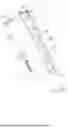
FIG. 1 is a perspective schematic view of an embodiment provided by the present disclosure.
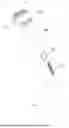
FIG. 2 is an exploded schematic view of the housing in the embodiment of FIG. 1.
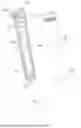
FIG. 3 is another exploded schematic diagram of the housing in the embodiment shown in FIG. 2.
FIG. 4 is a perspective schematic diagram of the nail lamp in the embodiment shown in FIG. 1.
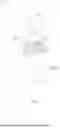
FIG. 5 is a structural schematic diagram of the nail grinding assembly in the embodiment shown in FIG. 2.
FIG. 6 is an exploded schematic diagram of the nail grinding assembly in the embodiment shown in FIG. 5.
FIG. 7 is a connection schematic diagram of the mounting seat and the rotating disc in the embodiment shown in FIG. 6.
FIG. 8 is a perspective schematic diagram of the nail grinding rod in the embodiment shown in FIG. 1.
FIG. 9 is an installation schematic diagram of the wind cover in the embodiment shown in FIG. 1.
Reference signs: Housing (100); Control Button (101); Display Assembly (102); Left Housing (103); Right Housing (104); Engagement Component (105); Clamping Groove (106); Charging Port (109); Installation Space (110); Fixing Groove (111); Mounting Groove (112); Nail Lamp (113); Boss (114); Control Assembly (115); Power Assembly (116); Nail Grinding Assembly (117); Driving Assembly (118); Fan (119); Adsorption Sponge (120); Nail Grinding Rod (121); Reinforcing Rib (122); Limiting Part (123); Driving Shaft (124); Rotating Shaft (125); Rotating Disc (126); Mounting Seat (127); Replacement Socket (128); Stepped Groove (130); Wind Cover (131); Stepped Buckle (132); Ventilation Window (133).
DESCRIPTION OF EMBODIMENTS
The technical solution in the embodiment of the present disclosure will be clearly and completely described below with reference to the drawings. Obviously, the described embodiment is part of, rather than all of the embodiments of the present disclosure. The following description of at least one exemplary embodiment is illustrative in nature and is in no way intended to limit the present disclosure, its application or uses. Based on the embodiments in the present disclosure, all other embodiments obtained by those skilled in the art without creative work belong to the scope of protection of the present disclosure.
It should be noted that the terminology used here is only for describing specific embodiments, and is not intended to limit exemplary embodiments according to the present application. As used herein, the singular form is also intended to include the plural form unless the context clearly indicates otherwise. Furthermore, it should be appreciated that when the terms "comprising" and/or "including" are used in this specification, they specify the presence of features, steps, operations, equipment, components and/or combinations thereof.
Unless otherwise specified, the relative arrangement of components and steps, numerical expressions and numerical values set forth in these embodiments do not limit the scope of the present disclosure. At the same time, it should be appreciated that for the convenience of description, the dimensions of various parts shown in the drawings are not drawn according to the actual scale relationship. Techniques, methods and equipment known to those skilled in the art may not be discussed in detail, but in appropriate cases, they should be regarded as part of the authorization specification. In all the examples shown and discussed herein, any specific values should be interpreted as illustrative, and not as limiting. Therefore, other examples of exemplary embodiments may have different values. It should be noted that similar numbers and letters indicate similar items in the following drawings, therefore once an item is defined in one drawing, it does not need to be further discussed in subsequent drawings.
As shown in FIG. 1, the nail grinder 1 of the present disclosure mainly includes a housing 100, a control assembly 115, and a driving assembly 118 installed inside the housing 100. The exterior of the housing 100 is designed with a control button 101 for user operation, allowing users to control the nail grinder. The housing 100 is also equipped with a display assembly 102 to show operational information and device status, enabling users to monitor the device’s operation in real time. The arrangement of the control button 101 and the display assembly 102 enhances the user experience of the nail grinder 1, making it more convenient to operate and monitor the device’s status.
Referring to FIGS. 2 and 3, the housing 100 adopts a split-shell design, consisting of a left housing 103 and a right housing 104. The right housing 104 is provided with an engagement component 105, while the left housing 103 has a clamping groove 106. The right housing 104 is securely attached to the left housing 103 by engaging the engagement component 105 with the clamping groove 106. This detachable structural design facilitates the assembly and disassembly of the nail grinder 1, making it easier for users to replace, maintain, or upgrade internal components. It not only improves the device’s maintainability but also extends its lifespan and enhances the user experience.
Specifically, as shown in FIGS. 2 and 3, in this embodiment, the control button 101 for user operation is located on the left housing 103, allowing users to conveniently operate the nail grinder 1 and control its functions. Meanwhile, the display assembly 102 is also mounted on the left housing 103 to display real-time information such as the device’s working status and operation mode, helping users better understand its performance. The right housing 104 features a charging port 109, enabling users to charge the nail grinder 1 and ensure uninterrupted operation. These designs improve the device’s convenience and user experience, making the nail grinder 1 smarter and more efficient to operate.
In other embodiments of the present disclosure (not shown), to enhance charging convenience and modernization, the charging port 109 can be replaced with a wireless charging design. Specifically, a wireless charging receiver and transmitter are adopted to achieve device charging through electromagnetic induction. Users only need to place the nail grinder on a wireless charging base to complete charging. The wireless charging design improves the device’s modernity and user convenience, avoids wear and poor contact issues caused by traditional ports, simplifies the charging process, and enhances user experience. Additionally, the wireless charging design aligns the device with modern design trends, reduces the need for physical contact, extends the device’s lifespan, and is particularly suitable for frequently used devices.
As shown in FIGS. 2, 3, and 4, after the left housing 103 and right housing 104 are assembled, they form the installation space 110 inside the housing 100. The installation space 110 is open at both ends, with a fixing groove 111 and a mounting groove 112 formed at each end of the housing 100 respectively. A nail lamp 113 is installed in the fixing groove 111. Part of the nail lamp 113 (e.g., UV or LED light source) is exposed outside the housing, and the nail lamp 113 accelerates the curing process of nail polish or gel through UV, LED, or UV-LED hybrid light sources, thereby improving nail treatment efficiency. By integrating the nail lamp 113 into the nail grinder 1, users can quickly cure their nails after polishing, avoiding the lengthy waiting time in traditional nail treatments and significantly enhancing efficiency. Specifically, the nail lamp 113 is equipped with a boss 114 that is engaged with the fixing groove 111 to securely fasten the nail lamp 113 inside the housing 100, ensuring stability during use and preventing loosening or displacement. The fixation of the nail lamp 113 not only enhances device stability but also improves overall safety and reliability. Moreover, the integrated nail lamp 113 design gives the nail grinder 1 dual functionality of polishing and curing, reducing the hassle of using multiple tools, improving operational convenience, and meeting modern users’ demands for efficient and aesthetically pleasing nail care.
Refer to FIG. 2, the installation space 110 houses the control assembly 115, which is preferably a control panel integrated with a microprocessor. The primary function of the control assembly 115 is to receive electrical signals from the control button 101 on the surface of the housing 100 and perform corresponding operational controls based on these signals. Specifically, when the user presses the control button 101, it generates electrical signals transmitted to the control assembly 115. The control assembly 115 processes these signals to regulate the operational states of internal functional modules, including the signal connection with the nail lamp 113. The connection between the control assembly 115 and the nail lamp 113 enables precise adjustment of the lamp’s on/off state, brightness, or working duration, ensuring flexible customization during nail treatments for optimal curing effects.
Additionally, refer to FIGS. 2 and 3, the control assembly 115 is also equipped with a power assembly 116, which supplies the necessary power to the control assembly 115 and other internal components. The power assembly 116 works closely with the control assembly 115 to ensure stable power delivery during startup and operation, preventing malfunctions or performance instability due to insufficient power. The design of the control assembly 115 and power assembly 116 not only enhances the device’s intelligence but also ensures coordinated operation among functional modules, improving overall reliability and stability. This allows the nail grinder 1 to operate efficiently and steadily.
Refer to FIGS. 2, 5, and 6, in this embodiment, the installation space 110 accommodates the nail grinding assembly 117, which specifically includes the driving assembly 118, fan 119, adsorption sponge 120, and nail grinding rod 121. The driving assembly 118, preferably a motor, provides power for the nail grinder 1. Through the transmission connection between the driving shaft 124 and the rotating shaft 125, the driving assembly 118 rotates the driving shaft 124, which in turn drives the rotating shaft 125 and the attached nail grinding rod 121 to spin at high speed. The rotation of the nail grinding rod 121 acts on the nail surface to achieve grinding and shaping functions. This power transmission structure ensures stable and efficient nail grinding operations for the nail grinder 1.
In other embodiments of the present disclosure (not shown), to improve the efficiency of the nail grinder and adapt to different application environments, the driving assembly 118 may be a pneumatic motor, and the driving shaft 124 is replaced with a pneumatic transmission system. Specifically, the pneumatic motor transmits power through an air pressure pump and pneumatic pipelines, with airflow driving the rotation of the nail grinding rod 121 and the fan 119, eliminating reliance on an electric motor and traditional electric driving shafts. Through this replacement, the nail grinder can reduce battery consumption or power demand, making the device suitable for prolonged continuous operation in environments with limited power supply. The pneumatic drive system can make the nail grinder more lightweight, reduce dependence on electricity, and maintain device stability during high-load operation. Additionally, the working principle of the pneumatic motor is smooth, reducing vibration of internal components and helping to extend the device’s service life.
As shown in FIGS. 3 and 6, to enhance the overall structural strength of the housing 100, multiple reinforcing ribs 122 are formed in the installation space 110 through injection molding. These reinforcing ribs 122 strengthen the housing 100, improving its load-bearing capacity and ensuring it is less prone to deformation or damage during use. The reinforcing ribs 122 not only enhance the stability of the housing 100 but also collectively form a limiting part 123. The limiting part 123 provides a fixed and supported position for the driving assembly 118, ensuring stable operation during work and preventing loosening or displacement, thereby improving the reliability and stability of the nail grinder 1.
Furthermore, referring to FIGS. 5 and 6, in this embodiment, the driving shaft 124 and the rotating shaft 125 are drivingly connected, ensuring the effective transfer of power from the driving assembly 118. The rotating shaft 125 is sleeved onto the driving shaft 124, and when the driving shaft 124 rotates, the rotating shaft 125 synchronously rotates, thereby driving the nail grinding rod 121 to turn. This design allows the driving assembly 118 to efficiently transmit rotational power to the nail grinding rod 121, ensuring smooth and precise nail grinding. The overall design is simple and compact, reducing potential component interference and improving the device’s operational efficiency and service life.
Refer to FIG. 6. In the nail grinding assembly 117, a fan 119 is sleeved on the rotating shaft 125. The rotation of the rotating shaft 125 drives the fan 119 to spin, generating airflow to aid heat dissipation and cleaning. One end of the rotating shaft 125 adjacent to the mounting groove 112 is equipped with a rotating disc 126, which rotates synchronously with the rotating shaft 125. The end of the rotating disc 126 away from the rotating shaft 125 is threadedly connected with a mounting seat 127, enabling the mounting seat 127 to rotate along with the rotating disc 126. This design ensures coordinated movement between the fan 119 and the rotating disc 126, improving heat dissipation efficiency and operational stability.
Refer to FIG. 6. The rotation of the fan 119 not only aids in device cooling to prevent overheating but also propels airflow, effectively clearing dust and debris generated during operation. By integrating the fan 119 with the rotation of the rotating shaft 125, a compact structural design is achieved, reducing redundant components while enhancing overall efficiency. The cooperation between the rotating disc 126 and the mounting seat 127 ensures stable operation of the fan 119 during rotation, maintaining high performance over prolonged use. This design improves the device’s overall performance, ensuring effective heat dissipation and cleaning during extended operation, thereby extending the device’s lifespan.
In other embodiments of the present disclosure (not shown), to optimize the heat dissipation of the nail grinder, the fan 119 may no longer be directly connected through the rotating shaft 125 but instead adopt an independent electric fan design. Specifically, the fan is driven by a separate electric motor, independent of the rotation of the rotating shaft 125. The fan’s electric motor operates independently, enabling higher rotational speeds for stronger airflow and improved heat dissipation. The independently driven fan provides more efficient air circulation, effectively preventing overheating. Compared to traditional fans directly driven by the rotating shaft 125, the independent electric fan offers more flexible speed adjustment and reduces the impact of the grinding process on the fan, thereby enhancing cooling performance and operational stability.
As shown in FIGS. 7 and 8, the mounting seat 127 is provided with a replacement socket 128. Through this socket 128, users can easily remove and replace different types of nail grinding rods 121. Specifically, part of the mounting seat 127 is exposed outside the housing 100, allowing users to conveniently remove and replace nail grinding rods 121 of various specifications to meet different grinding needs. The design of the replacement socket 128 makes the process of changing nail grinding rods 121 simple and quick, enabling users to flexibly select the appropriate rod 121 based on specific usage requirements, thereby achieving precise nail grinding and trimming. This design allows users to effortlessly switch between different nail grinding rods 121 according to personal needs, enhancing the device’s versatility and adaptability. Coarse grinding heads are suitable for large-scale grinding tasks, quickly removing excess nail material, while fine grinding heads can be used for detailed trimming and polishing, ensuring a smooth and glossy nail surface. Through this modular design, the nail grinder 1 not only meets the needs of different users but also significantly improves flexibility and convenience, allowing the device to adapt to various operating scenarios, further enhancing its practicality and efficiency.
Specifically, referring to FIGS. 5 and 6, the rotating shaft 125 is also sleeved with an adsorption sponge 120, located between the fan 119 and the rotating disc 126. The primary function of the adsorption sponge 120 is to effectively capture dust and debris generated during the nail grinding process, maintaining a clean work area. The fan 119 generates airflow through rotation, directing air and debris toward the adsorption sponge 120, which, thanks to its special material and structure, adsorbs and traps these particles, preventing them from dispersing into the air or contaminating the operating environment. The adsorption sponge 120 not only improves the device’s cleaning efficiency but also reduces the impact of dust on user health during operation, particularly in maintaining a tidy work area during prolonged use. By coordinating the adsorption sponge 120 with the fan 119 and rotating disc 126, dust and debris are efficiently captured and managed, ensuring stable device operation and long-term comfort. Additionally, this design enhances the user experience of the nail grinder 1, allowing users to enjoy nail grinding services while avoiding the dust pollution issues common in traditional grinding processes.
In other embodiments of the present disclosure (not shown), to improve dust collection efficiency and facilitate cleaning, the adsorption sponge 120 can be replaced with a washable metal or plastic filter screen. This screen sieves and collects dust and debris through airflow, no longer relying on the adsorption properties of sponge material. The aperture size of the filter screen can be optimized according to the size of the dust, enabling higher collection efficiency. The filter screen not only allows easier cleaning and reuse, reducing the risk of declining adsorption performance after prolonged use, but also provides higher airflow permeability. This ensures unobstructed airflow inside the device, efficient sieving and collection of dust, reduced internal contamination, and more stable, efficient operation of the device.
Referring to FIG. 9, the housing 100 is provided with a stepped groove 130 at one end of the mounting groove 112, and the wind cover 131 is detachably installed through the stepped groove 130. Specifically, the wind cover 131 is equipped with a stepped buckle 132, which can snap into the stepped groove 130 to achieve secure installation of the wind cover 131. This matching design of the stepped buckle and stepped groove allows easy installation and removal of the wind cover 131, facilitating user cleaning, maintenance, or part replacement. Through the snap-fit connection of the stepped buckle 132 and stepped groove 130, the wind cover 131 is firmly fixed to the housing 100, preventing loosening or detachment of the wind cover due to vibration or improper operation during use. At the same time, users can easily remove the wind cover 131 for maintenance or part replacement, simplifying the device upkeep process. This design not only enhances the stability and safety of the device but also improves usability and maintenance convenience, ensuring long-term reliability.
As shown in FIGS. 1 and 6, the housing 100 is equipped with ventilation windows 133 at positions corresponding to the fan 119. The airflow generated by the fan 119 during operation forms an air circulation through the wind cover 131 and ventilation windows 133. This airflow not only aids in cooling the area around the fan 119, preventing device overheating, but also effectively guides the dust and debris generated during nail grinding. Through this air circulation, debris is directed to the adsorption sponge 120, which captures the debris, maintaining a clean operating area and preventing airborne particles that could affect user experience. The coordination between the fan 119 and ventilation windows 133 ensures efficient device heat dissipation, guaranteeing stability and safety during prolonged operation. The synergy between airflow guidance and the adsorption sponge 120 enhances cleaning effectiveness, reduces potential health impacts from dust, and improves device comfort and efficiency. This design makes the nail grinder more efficient and eco-friendly during use while extending its lifespan.
In other embodiments of the present disclosure (not shown), to optimize device heat dissipation and airflow, the wind cover 131 can be replaced with an adjustable airflow fan cover. Specifically, a fan cover with an adjustable switch allows users to modify airflow intensity based on actual needs, thereby optimizing cooling performance and operational stability. This not only improves heat dissipation but also adjusts airflow according to ambient temperature and device load, enhancing efficiency and durability. The adjustable fan cover design offers greater flexibility, ensuring optimal performance across different usage scenarios while preventing overheating and performance degradation.
In the description of the present disclosure, it should be appreciated that directional terms such as "front, rear, up, down, left, right", "horizontal, vertical, perpendicular, horizontal" and "top, bottom" etc. indicate the orientation or positional relationship based on the orientation or positional relationship shown in the drawings, and are only for the convenience of describing the present disclosure and simplifying the description. In the absence of a contrary explanation, these directional terms do not indicate or imply that the device or element referred to must have a specific orientation or be constructed and operated in a specific orientation, and therefore should not be understood as limiting the scope of protection of the present disclosure; the directional terms "inside, outside" refer to the inside and outside relative to the contour of each component itself.
For the convenience of description, spatial relative terms such as "on...", "above...", "on the upper surface of...", "upper" etc. may be used here to describe the spatial positional relationship of a device or feature with other devices or features as shown in the drawings. It should be appreciated that spatial relative terms are intended to encompass different orientations of the device in use or operation other than the orientation described in the drawings. For example, if the device in the drawing is inverted, the device described as "above other devices or structures" or "on other devices or structures" will subsequently be positioned as "below other devices or structures" or "under other devices or structures". Thus, the exemplary term "above" can include both "above" and "below" orientations. The device can also be positioned in other different ways (rotated 90 degrees or in other orientations), and the spatial relative descriptions used here should be interpreted accordingly.
In addition, it should be noted that the use of terms such as "first", "second" etc. to define components is for the convenience of distinguishing the corresponding components. Unless otherwise stated, the above terms have no special meaning, and therefore should not be understood as limiting the scope of protection of the present disclosure.
The above description is only a preferred embodiment of the present disclosure and is not intended to limit the present disclosure. For those skilled in the art, the present disclosure can have various modifications and changes. Any modifications, equivalent replacements, improvements etc. made within the spirit and principles of the present disclosure should be included within the scope of protection of the present disclosure.
Claims
What is claimed is:1. A nail grinder, comprising:
a housing, comprising a fixing groove, with an installation space formed inside the housing;
a nail grinding assembly arranged in the installation space, comprising a driving assembly, a nail grinding rod and a fan, wherein the driving assembly is drivingly connected to the fan and the nail grinding rod, and the driving assembly is capable of driving the fan and the nail grinding rod to rotate;
an adsorption sponge arranged between the fan and the nail grinding rod, working in coordination with the fan to guide dust generated during a nail grinding process to the adsorption sponge through an airflow produced by the fan, effectively adsorbing and capturing the dust, thereby reducing dust spread inside and outside the device and ensuring a clean working environment; and
a nail lamp, comprising a boss that cooperates with the fixing groove to securely install the nail lamp to the housing, wherein the nail lamp is configured to irradiate nails.
2. The nail grinder according to claim 1, wherein the driving assembly is a motor comprising a driving shaft.
3. The nail grinder according to claim 2, wherein the nail grinding assembly further comprises a rotating shaft sleeved on the driving shaft and drivingly connected to the driving shaft.
4. The nail grinder according to claim 3, wherein the nail grinding assembly further comprises a rotating disc and a mounting seat, and the rotating disc is fixedly arranged at an end of the rotating shaft away from the driving assembly.
5. The nail grinder according to claim 4, wherein the mounting seat is installed onto the rotating disc by threaded connection.
6. The nail grinder according to claim 5, wherein the mounting seat is provided with a socket, and the nail grinding rod is detachably inserted into the socket.
7. The nail grinder according to claim 6, wherein at least part of the mounting seat is exposed outside the housing to allow users to replace the nail grinding rod.
8. The nail grinder according to claim 1, further comprising a control assembly arranged inside the housing, wherein the control assembly is in communication connection with the driving assembly and the nail lamp respectively for controlling operations thereof.
9. The nail grinder according to claim 8, wherein the control assembly comprises a control panel, the housing is provided with a control button and a display assembly, and both the control button and the display assembly are in communication connection with the control panel.
10. The nail grinder according to claim 8, further comprising a power assembly arranged inside the housing, wherein the housing is provided with a charging port electrically connected to the power assembly, and the power assembly supplies power to the control assembly, the driving assembly and the nail lamp.
11. A nail grinder, comprising:
a housing, comprising a fixing groove, with an installation space formed inside the housing;
a nail grinding assembly arranged in the installation space, comprising a motor, a nail grinding rod and a fan, wherein the motor is drivingly connected to the fan and the nail grinding rod, and the motor is capable of driving the fan and the nail grinding rod to rotate;
an adsorption sponge arranged between the fan and the nail grinding rod, working in coordination with the fan to guide dust generated during a nail grinding process to the adsorption sponge through an airflow produced by the fan, effectively adsorbing and capturing the dust, thereby reducing dust spread inside and outside the device and ensuring a clean working environment; and
a nail lamp, comprising a boss that cooperates with the fixing groove to securely install the nail lamp to the housing, wherein the nail lamp is configured to illuminate nails.
12. The nail grinder according to claim 11, wherein the motor comprises a driving shaft.
13. The nail grinder according to claim 12, wherein the nail grinding assembly further comprises a rotating shaft sleeved on the driving shaft and drivingly connected to the driving shaft.
14. The nail grinder according to claim 13, wherein the nail grinding assembly further comprises a rotating disc and a mounting seat, and the rotating disc is fixed to an end of the rotating shaft away from the motor.
15. The nail grinder according to claim 14, wherein the mounting seat is installed onto the rotating disc by threaded connection.
16. The nail grinder according to claim 15, wherein the mounting seat is provided with a socket, and the nail grinding rod is detachably inserted into the socket.
17. The nail grinder according to claim 16, wherein at least part of the mounting seat is exposed outside the housing to allow users to replace the nail grinding rod.
18. The nail grinder according to claim 11, wherein the motor is arranged in the installation space, and the installation space is provided with several reinforcing ribs that enclose to form a limiting part for fixing the motor.
19. The nail grinder according to claim 11, wherein the housing further comprises a detachable wind cover, the wind cover is provided with a stepped buckle, the housing has a corresponding stepped groove, and the wind cover is fixed to the housing through engagement of the stepped buckle and the stepped groove.
20. The nail grinder according to claim 11, wherein the housing is provided with a ventilation window at a position corresponding to the fan.
Images & Drawings included:



Sources:
- United States Patent and Trademark Office - verify current appl. status at the USPTO↗
Similar patent applications:
- » 20250374889
PET NAIL GRINDER - » 20080099032
Nail grinder - » 20160000039
Takedown pet nail grinder - » 20200260689
NAIL GRINDER FOR PET ANIMALS - » 20220071171
Pet nail grinder - » 20220346350
DUST SUCTION CABIN AND NAIL GRINDER SET - » 20220346521
NAIL GRINDER - » 20240260540
Lubricated pet nail grinder - » 20250255398
NAIL GRINDER - » 20090158593
Pet nail trimmer including a nail clipper and a grinder
Recent applications in this class:
- » 20250344828 2025-11-13
ELECTRONIC NAIL FILE WITH RECHARGEABLE CHARGING BASE - » 20250261736 2025-08-21
Long-Handled Nail Groomer with a Stand Configured to Cradle a Toe for Initial Centering of a Filing Bit on the Toenail - » 20250228349 2025-07-17
NAIL GRINDING MACHINE - » 20240049863 2024-02-15
Electronic nail file with digital control and display and system of operation - » 20240000211 2024-01-04
NAIL GRINDING PEN AND NAIL GRINDING HOST MACHINE - » 20230320472 2023-10-12
NAIL FILING, BUFFING AND COLOR CHANGING SYSTEM - » 20230134504 2023-05-04
ELECTRONIC NAIL FILE - » 20230106212 2023-04-06
Electronic nail file with digital control and display and system of operation - » 20220395070 2022-12-15
Long-Handled Motorized Nail Groomer for Ease of Use on Toenails, with Detachable Grooming Head for Use on Fingernails - » 20220346521 2022-11-03
NAIL GRINDER