ANTIFOULING MEMBER, AND DISPLAY, TOUCH PANEL AND SENSOR USING SAID ANTIFOULING MEMBER, AND METHOD FOR MANUFACTURING ANTIFOULING MEMBER
US20260103422A1
2026-04-16
19/250,835
2025-06-26
Smart Summary: An antifouling member is created by first making tiny bumps or grooves on a surface. These bumps are very small, measured in nanometers. Next, a special coating is applied that helps prevent unwanted substances from sticking to the surface. This coating contains a compound that includes perfluoropolyether, which is effective against fouling. The process can be used in various applications, such as displays, touch panels, and sensors. 🚀 TL;DR
Abstract:
A first aspect of the present invention provides a method for manufacturing an antifouling member including: a step for providing irregularities on an order of nanometers on a surface of one face of a base material; and a step for forming an antifouling layer containing a perfluoropolyether-containing silane compound at least in recesses of the irregularities.
Inventors:
- Hisashi Mitsuhashi 40 🇯🇵 Osaka, Japan
- Kaori OZAWA 18 🇯🇵 Osaka, Japan
- Takeshi Maehira 10 🇯🇵 Osaka, Japan
- Masanori KIMURA 5 🇯🇵 Tokyo, Japan
- Shinji Kida 2 🇯🇵 Tokyo, Japan
Assignee:
- MOMENTIVE PERFORMANCE MATERIALS JAPAN LLC 68 🇯🇵 Tokyo, Japan
- DAIKIN INDUSTRIES, LTD. 3,804 🇯🇵 Osaka, Japan
Applicant:
Interested in similar patents?
Get notified when new applications in this technology area are published.
Classification:
C03C17/30 » CPC main
Surface treatment of glass, not in the form of fibres or filaments, by coating with organic material with silicon-containing compounds
G02B1/18 » CPC further
Optical elements characterised by the material of which they are made; Optical coatings for optical elements; Optical coatings produced by application to, or surface treatment of, optical elements Coatings for keeping optical surfaces clean, e.g. hydrophobic or photo-catalytic films
C03C2217/76 » CPC further
Coatings on glass; Properties of coatings Hydrophobic and oleophobic coatings
C03C2218/31 » CPC further
Methods for coating glass; Aspects of methods for coating glass not covered above Pre-treatment
Description
CROSS REFERENCE TO RELATED APPLICATIONS
This application is a Rule 53(b) Continuation of International Application No. PCT/JP2023/046965 filed Dec. 27, 2023, claiming priority based on Japanese Patent Application No. 2022-211197 filed Dec. 28, 2022, the disclosures of which are incorporated herein by reference in their respective entireties BACKGROUND
1. TECHNICAL FIELD
The present invention relates to an antifouling member, and a display, a touch panel, and a sensor using the same, and a method for manufacturing the antifouling member.
2. Related Art
It is known that water/oil repellency and antifouling property are imparted to a base material by using a fluorine-based compound for surface treatment of the base material (for example, Patent Documents 1 and 2).
- Patent Document 1: Japanese Patent Application Publication No. 2014-218639
- Patent Document 2: Japanese Patent Application Publication No. 2017-082194
A first aspect of the present invention provides a method for manufacturing an antifouling member. The method for manufacturing includes an underlayer forming step and an antifouling layer forming step. In the underlayer forming step, an underlying layer may be formed on a surface of one face of a base material. In the antifouling layer forming step, an antifouling layer containing a perfluoropolyether-containing silane compound may be formed on the underlying layer.
In the above, the underlying layer may have irregularities on an order of nanometers. In the antifouling layer forming step, the antifouling layer may be formed at least in recesses of the irregularities.
In the above, the underlayer forming step may include a step for drying and a step for forming irregularities. In the step for drying, an underlayer resin composition may be applied onto the base material and dried. In the step for forming irregularities, the irregularities may be formed on the underlayer resin composition that has been dried.
In the above, the underlayer resin composition may contain a silicone resin including a T unit structure and a Q unit structure. The step for forming irregularities on the dried underlayer resin composition may include pretreating the underlayer resin composition that has been dried to convert the T unit structure into silica.
In the above, the pretreating may be performed by exposure to light having a wavelength of 150 to 200 nm.
In the above, in the pretreating, exposure may be performed so that an integrated illuminance is in a range of 200 to 6000 mJ/cm2.
In the above, the pretreating may be performed by applying an Ar/O2 mixed gas plasma within an output range of 0.2 to 1.0 kW.
In the above, the pretreating may be performed by applying the Ar/O2 mixed gas plasma at a flow rate of 2000 to 5000 sccm and an oxygen fraction in a range of 0.03 to 0.4.
In the above, in the step for applying the underlayer resin composition onto the base material and drying the underlayer resin composition, applying may be performed such that an applied film thickness is 1 to 20 μm.
In the above, in the step for applying the underlayer resin composition onto the base material and drying the underlayer resin composition, drying may be performed at a temperature of 100 to 150° C. for 10 to 120 minutes.
In the above, the underlayer forming step further may include a step for applying a primer composition onto the base material before the step for applying the underlayer resin composition onto the base material and drying the underlayer resin composition.
In the above, the base material may be glass or resin.
In the above, an average pitch width of protrusions of the irregularities may be 5 to 18 nm.
In the above, a surface roughness (Rz) of the irregularities may be 3 to 15 nm.
In the above, a contact angle when water comes into contact with a side of the one face may be 105 to 120°.
In the above, a pencil hardness on a side of the one face may be HB or more.
In the above description, the antifouling member may be used to cover at least a part of a display portion of a display.
In the above description, the antifouling member may be used to cover at least a part of a touch portion of a touch panel.
In the above description, the antifouling member may be used to cover at least a partial surface of a sensor.
A second aspect of the present invention provides an antifouling member including: a base material; an underlying layer which is provided on the base material; and an antifouling layer which is provided on the underlying layer. ΔHaze on an antifouling layer side before and after a Taber abrasion test may be 8 or less. A contact angle of water on the antifouling layer side after the Taber abrasion test may be 850 or more.
In the above, the underlying layer may contain a silicone resin.
In the above, the silicone resin may include a Q unit structure and a T unit structure.
Note that, the summary clause does not necessarily describe all necessary features of the embodiments of the present invention. In addition, the present invention may also be a sub-combination of the features described above.
BRIEF DESCRIPTION OF THE DRAWINGS
FIG. 1 illustrates an example of an antifouling member 10 in the present embodiment.
FIG. 2 illustrates another example of the antifouling member 10 in the present embodiment.
FIG. 3 illustrates an example of a flow of a method for manufacturing the antifouling member 10 of the present embodiment.
FIG. 4 illustrates an example of S100 of the flow of FIG. 3 when an underlying layer 120 is provided.
DESCRIPTION OF EXEMPLARY EMBODIMENTS
Hereinafter, the present invention will be described through embodiments of the invention. However, the following embodiments do not limit the invention defined in the claims. In addition, not all combination of the features described in the embodiments are necessary for the solution of the invention.
FIGS. 1 and 2 illustrate an example of an antifouling member 10 in the present embodiment. The antifouling member 10 is a surface protection member to which adhering substances such as dirt are less likely to adhere and from which adhering substances that have adhered are easily removed. The antifouling member 10 is applied to a product (an automobile, a mobile terminal such as a smartphone, an optical product such as a camera, a measuring instrument such as a sensor, other machine, an electrical product, or the like) or a component for which adhesion of dirt (for example, dust, pollen, fingerprint, oil, or the like) is not preferable. For example, the antifouling member 10 is used to cover at least a part of a display portion of a display, to cover at least a part of a touch portion of a touch panel, or to cover at least a partial surface of a sensor. In the antifouling member 10, irregularities on an order of nanometers are provided on a surface of one face, and an antifouling layer 130 provided on recesses of the irregularities is provided.
In FIG. 1, the antifouling member 10 includes a base material 110, an underlying layer 120, and the antifouling layer 130, and irregularities on the order of nanometers are provided on a surface of the underlying layer 120.
The base material 110 has a role of supporting the irregularities and the antifouling layer 130 provided on the antifouling member 10. The base material 110 can be selected from various materials according to a purpose of using the antifouling member 10. For example, the base material 110 may be formed from any material, such as glass, resin, metal, ceramics, semiconductor, fiber material, fur, leather, wood, porcelain, or stone. When the antifouling member 10 is provided on an optical product such as a display or a touch panel or a component thereof, the base material 110 may be formed from a transparent material such as glass or resin. The base material 110 may have any shape as long as it has a place where irregularities can be provided, and may have, for example, a plate shape.
The underlying layer 120 is a layer which is provided on one face of the base material 110 and holds the antifouling layer 130. The underlying layer 120 may further function as a hard coat layer which imparts abrasion resistance to the antifouling member 10. The underlying layer 120 may be a material having abrasion resistance, and may be formed from, for example, an inorganic material such as silica or a metal oxide, or a relatively hard organic material such as a silicone resin, an acrylic resin, a melamine resin, or a urethane resin.
In the example of FIG. 1, irregularities are provided in the underlying layer 120. Since the irregularities are provided in the underlying layer 120 which is a lower layer of the antifouling layer 130, the antifouling layer 130 is surrounded and protected by protrusions, and the antifouling layer 130 fits into recesses, so that the antifouling layer 130 is firmly joined to the underlying layer 120. Conventionally, an antifouling layer on a surface of an antifouling member may be worn by friction such as wiping of dirt or use for a long period of time, and an antifouling performance may not be maintained. On the other hand, according to the antifouling member 10 of the present embodiment, since the antifouling layer 130 is more firmly held by the irregularities, the antifouling performance can be maintained for a longer period of time. Further, since the irregularities are on the order of nanometers, transparency of the antifouling member 10 can also be secured.
As an example, the underlying layer 120 may be composed of a silicone resin having irregularities. The silicone resin may include a Q unit structure and a T unit structure. The recesses of the irregularities may include more T unit structures than the protrusions of the irregularities. In such a case, the underlying layer 120 does not become excessively hard, and when applied to the base material 110, occurrence of cracks can be suppressed during a degradation test such as a heat resistance test. At least partially, an active silanol group (Si—OH) may be exposed on surfaces of the protrusions and the recesses (particularly, the surface of the recesses). Accordingly, it is possible to further strengthen bonding with the antifouling layer 130. A method for forming the irregularities of the silicone resin will be described later.
Various shapes can be adopted for a cross section of the protrusions of the irregularities. For example, the cross section of the protrusions may be a shape which has a rectangular tip, a shape which has a tapered or inversely tapered tip, a shape which has a pointed tip, a shape which has a tip with a curved surface such as a hemisphere, or the like.
An average pitch width (average peak-to-peak length) of the protrusions of the irregularities may be 5 to 18 nm, and preferably 7 to 15 nm. When the average pitch width is equal to or less than a predetermined size, the transparency of the antifouling member 10 can be secured. In addition, when the average pitch width is equal to or more than the predetermined size, the antifouling layer 130 can be more firmly held.
A surface roughness (Rz) of the irregularities may be 3 to 15 nm, preferably 5 to 15 nm. When the surface roughness (Rz) is equal to or less than a predetermined size, the transparency of the antifouling member 10 can be secured. In addition, when the surface roughness (Rz) is equal to or more than the predetermined size, the antifouling layer 130 can be more firmly held.
The antifouling layer 130 is formed on a side of the underlying layer 120 opposite to the base material 110 (that is, an outermost surface of the antifouling member 10), and prevents adhering substances such as dirt from adhering to a surface of the antifouling member 10. The antifouling layer 130 may be formed in at least the recesses of the irregularities of the underlying layer 120. For example, as illustrated in FIG. 1, the antifouling layer 130 may be formed only in the recesses.
Alternatively, the antifouling layer 130 may be formed not only in the recesses but also on the protrusions. In this case, there is a possibility that a part or a whole of the antifouling layer 130 on the protrusions is peeled off by transportation and use of a product, wiping off adhering substances, or the like. Even in such a case, the recess portion firmly holds the antifouling layer 130. Therefore, the antifouling member 10 can maintain the antifouling performance.
It is sufficient if the antifouling layer 130 is provided at least on a bottom surface of the recesses and/or an upper surface of the protrusions. The antifouling layer 130 may be provided, or may not be provided at all, on a whole or a part of a side surface portion of the recesses and/or the protrusions.
A height, in a normal direction of the one face (a vertical direction in FIG. 1), of the antifouling layer 130 formed in the recesses of the underlying layer 120 may not exceed that of the protrusions of the irregularities of the underlying layer 120. For example, it is desirable that, in at least about 50% of the recesses, the height of the antifouling layer 130 in the recesses does not exceed that of the protrusions. In the example of FIG. 1, the height, in the normal direction of the one face, of the antifouling layer 130 formed in the recesses is the same as the height of the protrusions of the underlying layer 120 (that is, flush with the upper surface of the protrusions). In addition, a thickness of the antifouling layer 130 on the recesses is preferably 1 to 10 nm.
A surface portion of the antifouling layer 130 exhibits the antifouling performance, but if a film thickness of the antifouling layer 130 in the recesses is excessively thick, it may cause haze (cloudiness) of the antifouling member. As described above, since the film thickness of the antifouling layer 130 in the recesses is not excessively thick, haze (cloudiness) of the antifouling member can be prevented. Note that since a thick film portion of the antifouling layer 130 on the protrusions is relatively easily worn by wiping or the like, a problem of haze (cloudiness) hardly occurs.
The antifouling layer 130 may be formed from a material having oil repellency and/or water repellency. For example, the antifouling layer 130 may contain a fluorine-containing silane compound. Examples of the fluorine-containing silane compound include a perfluoropolyether-containing silane compound, a perfluoroalkyl group-containing silane compound, an isocyanuric skeleton-containing silane compound, or the like. Details of the material of the antifouling layer 130 will be described later.
The antifouling member 10 may have a contact angle of 105 to 1200 when water comes into contact with one face side (for example, the antifouling layer 130 side). Accordingly, the antifouling member 10 exhibits water repellency and can exhibit antifouling performance. Furthermore, the antifouling member 10 may have a contact angle of 850 or more, preferably, 90° or more after abrasion test 1 and/or abrasion test 2 described later. Accordingly, the antifouling member 10 can exhibit the antifouling performance for a long time.
A pencil hardness of the one face side (for example, the antifouling layer 130 side) of the antifouling member 10 may be HB or more. Accordingly, the antifouling member 10 can possess abrasion resistance sufficient for holding the antifouling layer 130 for a longer period of time.
The antifouling member 10 may have, on one face side (for example, the antifouling layer 130 side), a ΔHaze (increase in haze value before and after the test) of 10 or less, preferably 8 or less, more preferably 5 or less, and still more preferably 2 or less in a Taber abrasion test based on ASTM D1044 standard (or an abrasion test 2 described later). Accordingly, the antifouling member 10 can hold the antifouling layer 130 for a longer period of time and can possess abrasion resistance sufficient for maintaining the transparency.
In the embodiment of FIG. 2, the antifouling member 10 includes the base material 110 and the antifouling layer 130. In FIG. 2, the underlying layer 120 is not present, and irregularities are provided on the surface of the base material 110. Accordingly, the base material 110 and the antifouling layer 130 are in direct contact with each other. Also in the embodiment of FIG. 2, since the antifouling layer 130 is firmly held by the irregularities, a same effect as that of the embodiment of FIG. 1 can be obtained. Matters described in FIG. 1 such as the materials and shapes of the base material 110 and the antifouling layer 130, and the size, contact angle, or hardness of the irregularities are also applied to the embodiment of FIG. 2, and thus the description thereof is omitted.
In the examples of FIGS. 1 and 2, examples have been described in which the antifouling member 10 includes the base material 110 and the antifouling layer 130 (and further the underlying layer 120 in FIG. 1), but another layer may be further provided. For example, the antifouling member 10 may be provided with a layer such as a primer layer, an antireflection layer, an antiglare layer, an insulating layer, an adhesive layer, a release layer, a polarizing layer, and/or a retardation layer as necessary.
FIG. 3 illustrates an example of a flow of a method for manufacturing the antifouling member 10 of the present embodiment. The antifouling member 10 may be manufactured by executing at least a part of S100 to S200.
In S100, irregularities on the order of nanometers are provided on a surface of the base material 110. The base material 110 may be the one described in FIGS. 1 and 2. For example, irregularities may be formed on the base material 110 by providing the base material 110 with the underlying layer 120 provided with irregularities on the order of nanometers.
FIG. 4 illustrates an example of S100 of the flow of FIG. 3 when the underlying layer 120 is provided. S100 in FIG. 3 may be executed by performing S110 to S130 in FIG. 4.
In S110, an underlayer resin composition is applied onto the base material 110. The underlayer resin composition may be an organosiloxane-based hard coat agent having the T unit structure and the Q unit structure. The underlayer resin composition may further contain one or more of a UV absorber, a catalyst, or a solvent.
The Q unit structure may be contained in the underlayer resin composition as silica gel particles (colloidal silica). The silica gel particles impart a shape of protrusions of irregularities later, and may have a diameter of preferably 1 to 100 nm, preferably 10 to 50 nm, and more preferably 10 to 20 nm. Here, the diameter may be a median diameter D50 which is a particle diameter at which a cumulative volume is 50 vol % when a volume-based particle size distribution is measured by a laser diffraction/scattering particle size distribution measuring method.
The T unit structure may be contained in the underlayer resin composition as an organosilsesquioxane polymer. The Q unit structure may be uniformly dispersed in a matrix of the T unit structure. The Q unit structure may be contained in an amount of 5 to 50 wt %, preferably 15 to 35 wt %, with respect to a sum of the T unit structure and the Q unit structure.
For example, in the underlayer resin composition, the underlayer resin composition containing the T unit structure and the Q unit structure can be obtained by hydrolyzing colloidal silica and an alkyl trialkoxysilane (as an example, methyltrimethoxysilane) and then condensing them.
A skeleton having an ultraviolet absorbing function may be at least partially incorporated in the T unit structure and/or the Q unit structure. Examples of the skeleton having an ultraviolet absorbing function can include 4,6-dibenzoyl-2-(3-trialkoxysilylalkyl)resorcinol (specifically, 4,6-dibenzoyl-2-(3-triethoxysilylpropyl)resorcinol or the like) described in Japanese Patent Application Publication No. H7-278525, hydroxybenzophenone-based compounds described in Japanese Patent Application Publication No. S57-21476 and Japanese Patent Application Publication No. S57-21432, or the like. As an example of the underlayer resin composition, hard coats AS4700, AS4700F, PHC587C, and PHC587C2 manufactured by Momentive Performance Materials Inc. or the like can be used.
As the organosilsesquioxane polymer serving as the T unit structure, a component A described in Japanese translation publication of a PCT route patent application No. 2021-531387 may be used. For example, as the organosilsesquioxane polymer, the component A represented by an organic alkoxysilane of Formula (R1)dSi(OR2)4-d may be used. Herein, R1 is a C1-C3 monovalent hydrocarbon, and may be preferably a C1-C3 alkyl radical, more preferably a methyl or ethyl group. R2 is a C1-C3 monovalent hydrocarbon or a hydrogen radical, and d may be 0, 1, or 2. As an example, the component A may be methyltrimethoxysilane.
The component A includes methyltrimethoxysilane, methyltriethoxysilane, or mixtures thereof, which can form a partial condensate. Additional organic alkoxysilanes include, but are not limited to, tetraethoxysilane, ethyltriethoxysilane, diethyldiethoxysilane, tetramethoxysilane, dimethyldimethoxysilane, ethyltriethoxysilane, propyltriethoxysilane, or the like.
The component A may be present in an amount ranging from about 5 wt % to about 99.9 wt %, from about 10 wt % to about 90 wt %, further from about 20 wt % to about 80 wt %, based on a total weight of the underlayer resin composition.
The catalyst may be at least one or more selected from a group consisting of tetra-n-butylammonium acetate, tetra-n-butylammonium formate, tetra-n-butylammonium benzoate, tetra-n-butylammonium 2-ethylhexanoate, tetra-n-butylammonium p-ethylbenzoate, tetra-n-butylammonium propionate, and TBD-acetate (acetate of 1,5,7-triazabicyclo (4.4.0)deca-5-ene (TBD)).
The catalyst can be added to the underlayer resin composition as needed for a particular purpose or intended application. Generally, the catalyst may be added in an amount sufficient to not affect or impair physical properties of the coating, but effective to catalyze curing reaction. In one embodiment, the catalyst is provided in an amount ranging from 1 ppm to about 75 ppm, from about 10 ppm to about 70 ppm, further from about 20 ppm to about 60 ppm. Note that ppm represents a weight of 1/1 million with respect to the total weight of the underlayer resin composition.
The catalyst can be added directly to the underlayer resin composition or dissolved in a solvent or other suitable carrier. The solvent may be a polar solvent such as methanol, ethanol, n-butanol, t-butanol, n-octanol, n-decanol, 1-methoxy-2-propanol, isopropyl alcohol, ethylene glycol, tetrahydrofuran, dioxane, bis(2-methoxyethyl) ether, 1,2-dimethoxyethane, acetonitrile, benzonitrile, methyl ethyl ketone, dimethylformamide (DMF), dimethyl sulfoxide (DMSO), N-methylpyrrolidinone (NMP), and propylene carbonate.
A UV absorber can also be selected from a combination of an inorganic UV absorber and an organic UV absorber. Examples of a suitable organic UV absorber include, but are not limited to, those capable of co-condensing with silanes. Such UV absorbers are disclosed in U.S. Pat. Nos. 4,863,520, 4,374,674, 4,680,232, and 5,391,795, which are incorporated herein by reference in their entireties. Specific examples include 4-(gamma-(trimethoxysilyl)propoxyl)-2-hydroxybenzophenone and 4-(gamma-(triethoxysilyl)propoxyl)-2-hydroxybenzophenone and 4,6-dibenzoyl-2-(3-triethoxysilylpropyl)resorcinol. When a UV absorber capable of co-condensation with a silane is used, the UV absorber is to be co-condensed with other reactive species by thoroughly mixing before applying a coating composition to the base material. Co-condensation of the UV absorber prevents degradation in coating performance caused by leaching of a free UV absorber into an environment during weathering.
The solvent can be selected from an aliphatic alcohol, a glycol ether, an alicyclic alcohol, an aliphatic ester, an alicyclic ester, an aliphatic hydrocarbon, an alicyclic hydrocarbon, an aromatic hydrocarbon, a halogenated aliphatic compound, a halogenated alicyclic compound, a halogenated aromatic compound, an aliphatic ether, an alicyclic ether, an amide solvent, a sulfoxide solvent, or a combination of two or more thereof. Examples of a suitable solvent include, but are not limited to, alcohols such as methanol, ethanol, propanol, isopropanol, n-butanol, tert-butanol, methoxypropanol, ethylene glycol, diethylene glycol butyl ether, or combinations thereof. Other polar organic solvents such as acetone, methyl ethyl ketone, ethylene glycol monopropyl ether, or 2-butoxyethanol can also be used. In one embodiment, the solvent used is one or more selected from 1-methoxy-2-propanol, diacetone alcohol (DAA), acetylacetone, cyclohexanone, methoxypropyl acetate, ketone, glycol ether, or a mixture of two or more thereof. An amount of solvent in the underlayer resin composition preferably ranges from about 25 wt % to about 85 wt %, more preferably from about 40 wt % to about 80 wt %, and most preferably from about 50 wt % to about 75 wt %, based on a total weight of entire composition. The composition may also include a catalyst. The catalyst is not particularly limited, and any suitable catalyst for curing the underlayer resin composition can be used.
The underlayer resin composition may include other materials or additives to provide desired properties to coating for a particular purpose or intended application. The underlayer resin composition of the present invention can also contain a surfactant as a leveling agent. Examples of suitable surfactants include, but are not limited to, a surfactant such as silicone polyethers sold under trade names of SILWET (registered trademark) and COATOSIL (registered trademark) available from Momentive Performance Materials, Inc. of Albany, N.Y. and FLUORAD (trademark) manufactured by 3M Company of St. Paul, Minn.; and polyether-polysiloxane copolymers such as BYK (registered trademark)-331 manufactured by BYK (registered trademark)-Chemie. A suitable antioxidant includes, but are not limited to, hindered phenols (for example, IRGANOX (registered trademark) 1010 available from Ciba Specialty Chemicals).
As an application method, application may be performed by various coating methods such as dip coating, spin coating, flow coating, spray coating, roll coating, and gravure coating, or printing methods such as letterpress printing, gravure printing, lithographic printing, reverse printing, and inkjet printing.
A film thickness to which the underlayer resin composition is applied may be 1 to 20 μm, and preferably 3 to 10 μm.
Note that in S110, a primer composition for enhancing adhesion between the base material 110 and the underlayer resin composition may be applied to the base material 110 before the application of the underlayer resin composition. For example, the primer composition may be an acrylic resin composition, a polyester resin composition, a polyurethane resin composition, an epoxy resin composition, a melamine resin composition, a polyolefin resin composition, or a urethane acrylate resin composition.
Next, in S120, the underlayer resin composition applied in S110 is dried. For example, thermal curing may be performed at a temperature of 100 to 150° C., preferably 120 to 130° C., for a time of 10 to 120 minutes, preferably 30 to 60 minutes. The drying may be performed by a hot air drying furnace, a hot plate, an infrared heater, or the like.
Next, in S130, irregularities are formed on the underlayer resin composition that has been dried. For example, the irregularities are formed by pretreating the underlayer resin composition. This is because the T unit structure of the underlayer resin composition is converted into silica (SiO2) by pretreatment, resulting in volume shrinkage. For example, the pretreatment may be exposure or plasma treatment. Specifically, ozone and active oxygen radicals are generated from oxygen in an atmosphere by irradiation with UV light in the exposure, and these react with a Si-alkyl group contained in the T unit structure. As a result, the Si-alkyl group contained in the T unit structure is decomposed into a silanol group and an aldehyde, and two silanol groups are further condensed to form silica (SiO2). The aldehyde is further decomposed into water and CO2. As described above, when the T unit structure is converted to silica (SiO2), volume shrinkage occurs, and a place where the volume shrinkage occurs is recessed to be recesses.
Note that depending on exposure conditions, it is considered that not all of the T unit structures are converted into silica (SiO2) that is the Q unit structure, and there is a component remaining as the T unit structure. Accordingly, the protrusions of the irregularities are composed of the Q unit structures, and the recesses of the irregularities contain the Q unit structure and the T unit structure.
On the other hand, in the Q unit structure (colloidal silica), chemical change does not occur by exposure, and volume shrinkage does not occur either. As a result, in a layer of the underlayer resin composition, recesses are formed only in a portion containing a large amount of T unit structures, and a portion containing a large amount of Q unit structures becomes protrusions. In this manner, the underlying layer 120 having irregularities is formed.
The silanol group remains on the surface of the underlying layer 120 formed in this manner. In particular, the silanol group decomposed from the T unit structure remains in the recesses without being partially condensed. In addition, a part of the Si-alkyl group derived from the T unit structure remains in the recesses. As a result, carbon atoms contained in the recesses have a higher composition ratio than that of carbon atoms contained in the protrusions. As described above, as a result of a large amount of carbon atoms and silanol groups remaining in the recesses, it is possible to more firmly bond with the antifouling layer 130 containing the perfluoropolyether-containing silane compound or the like, and to enhance durability of the antifouling layer 130. Note that a molar concentration of carbon atoms can be measured by an X-ray photoelectron spectrometer.
As a light source used for exposure, any light source may be used as long as the T unit structure can be converted to silica, and for example, a light source having a wavelength of about 150 to 190 nm may be used. Specifically, exposure may be performed by using an excimer lamp, an excimer laser, an F2 laser, or the like.
The exposure may be performed such that an integrated illuminance is 300 mJ/cm2 or more. When the integrated illuminance is less than 1000 mJ/cm2, decomposition condensation of the T unit structure is insufficient and irregularities may not be sufficiently formed.
The exposure may be performed such that the integrated illuminance is 6000 mJ/cm2 or less. When the integrated illuminance exceeds 6000 mJ/cm2, the silanol group does not sufficiently remain on the surface of the recesses, and adhesiveness with the antifouling layer 130 may be insufficient. However, even when the integrated illuminance exceeds 6000 mJ/cm2, the underlying layer 120 itself is formed, which sufficiently contributes to improvement of the durability of the antifouling layer, and thus, the integrated illuminance does not necessarily need to be 6000 mJ/cm2 or less.
Instead of/in addition to the exposure, plasma treatment using an Ar/O2 mixed gas plasma or the like may be applied. In this case, a flow rate of the Ar/O2 mixed gas plasma may be 2000 sccm or more. When the flow rate is less than 2000 sccm, a decomposition condensation of the T unit structure is insufficient and formation of irregularities may be insufficient.
The flow rate of the Ar/O2 mixed gas plasma may be 5000 sccm or less. When the flow rate exceeds 5000 sccm, the silanol group does not sufficiently remain on the surface of the recesses, and adhesiveness with the antifouling layer 130 may be insufficient.
An output of the Ar/O2 mixed gas plasma may be 0.2 kW or more. When the output is less than 0.2 kW, the decomposition condensation of the T unit structure is insufficient and the formation of irregularities may be insufficient.
The Ar/O2 mixed gas plasma may be performed so that the output is 1.0 kW or less. When the output exceeds 1.0 kW, the silanol group does not sufficiently remain on the surface of the recesses, and the adhesiveness with the antifouling layer 130 may be insufficient. The Ar/O2 mixed gas plasma may be applied so that an oxygen fraction is 0.03 to 0.4.
In the description related to FIG. 4, it has been described that the underlying layer 120 is obtained by exposing the organosiloxane-based hard coat agent to light, but the present invention is not limited to this method. The underlying layer 120 may form irregularities on the order of nanometers by performing nanoimprinting, photolithography, plasma treatment, laser treatment, or the like on a thin film formed of a resin material or the like.
Instead of processing of S110 to S130 of FIG. 4, S100 may be executed by forming irregularities on the base material 110. For example, desired irregularities may be formed by performing nanoimprinting, photolithography, plasma treatment, laser treatment, or the like on the base material 110. In this case, the antifouling member 10 as illustrated in FIG. 2 is formed. Processing of S200 is performed after S100.
In S200, the antifouling layer 130 is formed on the irregularities formed in S100. For example, the antifouling layer 130 may be formed by forming, on the irregularities, a layer of a fluorine-containing silane compound having oil repellency and/or water repellency. The antifouling layer 130 may be formed by applying a composition containing the fluorine-containing silane compound onto the irregularities and drying the composition.
Examples of the fluorine-containing silane compound include a perfluoroalkyl group-containing silane compound (particularly, a perfluoropolyether-containing silane compound), an isocyanuric skeleton-containing silane compound, or the like.
Examples of the perfluoroalkyl group-containing silane compound include a compound represented by following Formula (I).
-
- (wherein:
- Q2 is a linking group having a valence of (b1+b2),
- A is a group represented by Rf3—O—Rf2—,
- Rf2 is a poly(oxyfluoroalkylene) chain,
- Rf3 is a perfluoroalkyl group,
- B is a monovalent group having one —R12—(SiR2rX23-r) and containing no fluorine atom,
- R12 is a hydrocarbon group having 2 to 10 carbon atoms, which may have an etheric oxygen atom between carbon atoms or at a terminal opposite to a terminal to which Si is bonded, or may have an —NH— between carbon atoms,
- R2 is independently a monovalent hydrocarbon group having 1 to 6 carbon atoms, which may have a hydrogen atom or a substituent,
- X2 is independently a hydroxyl group or a hydrolyzable group,
- r is an integer of 0 to 2,
- Q2 and B do not include a cyclic siloxane structure,
- b1 is an integer of 1 to 3,
- b2 is an integer of 2 to 9, and
- here, when b1 is 2 or more, b1 units of A may be identical or different, and b2 units of B may be identical or different)
In Formula (I), A is a group represented by Rf3—O—Rf2—.
Rf3 is a perfluoroalkyl group, and a number of at least one carbon atom is preferably 1 to 20, and more preferably 1 to 6. Rf3 may be linear or branched. Among them, in terms of availability, a linear group: CF3(CF2)m3-1 (here, m3 is 1 to 20, preferably 1 to 6) is preferable, CF3— or CF3(CF2)2— is more preferable, and CF3(CF2)2— is particularly preferable.
Rf2 is a poly(oxyfluoroalkylene) chain. Rf2 is, for example, —(CXF2xO)y— (x is an integer of 1 to 6, γ is an integer of 2 or more, and each —CXF2xO— unit may be identical or different). The —CXF2xO— unit may be linear or branched, and examples thereof include —CF2CF2CF2CF2CF2CF2O—, —CF2CF2CF2CF2CF2O—, —CF2CF2CF2CF2O—, —CF2CF2CF2O—, —CF(CF3)CF2O—, —CF2CF2O—, and —CF2O—. γ can be appropriately adjusted according to a desired number-average molecular weight. A preferable upper limit value of γ is 200.
Rf2 may be a combination of a plurality of units, and in this case, each unit may be present in any of a block, alternating, or random sequence. For example, it is preferable to include —CF2CF2CF2CF2CF2CF2O—, —CF2CF2CF2CF2CF2O—, and —CF2CF2CF2CF2O— in terms of excellent light resistance, it is preferable that these structures are present in higher proportions, and it is more preferable that the unit is —CF2CF2O—CF2CF2CF2CF2O— which is a combination of —CF2CF2CF2CF2O— and —CF2CF2O— in terms of ease of synthesis.
Specific examples of Rf2 include —(CF2CF2CF2CF2CF2CF2O)n3—(CF2CF2CF2CF2CF2O)n4—(CF2CF2CF2CF2O)n5—(CF2CF2CF2O)n6—(CF(CF3)CF2O)n7—(CF2CF2O)n8—(CF2O)n9— (here, n3, n4, n5, n6, n7, n8, and n9 are each independently an integer of 0 or more, but a total of n3, n4, n5, n6, n7, n8, and n9 is 2 or more, and each repeating unit may be present in any of a block, alternating, or random sequence).
As Rf2, {(CF2O)n11(CF2CF2O)n12}, (CF2CF2O)n13, (CF2CF2CF2O)n14, and (CF2CF2O—CF2CF2CF2CF2O)n15 are preferable, and {(CF2O)n11(CF2CF2O)n12} and (CF2CF2CF2O)n14 are more preferable. Here, n11 is an integer of 1 or more, n12 is an integer of 1 or more, n11+n12 is an integer of 2 to 200, and a bonding order of n11 units of CF2O and n12 units of CF2CF2O is not limited. n13 and n14 are integers of 2 to 200, and n15 is an integer of 1 to 100.
In Formula (I), a number (b1) of at least one group A represented by Rf3—O—Rf2— is an integer of 1 to 3. In Formula (I), when there are a plurality of groups A, the groups A may be identical or different. The group A and a perfluoroalkyl group in a fluoroalkylsilane compound are groups contributing to water repellency of a resulting surface treatment layer. When the perfluoroalkyl group-containing silane compound has a plurality of groups A, a density of Rf3—O—Rf2— groups is increased, which is preferable from a viewpoint of excellent friction resistance of a surface treatment layer.
In Formula (I), a group B has one —R12—(SiR2rX23-r) (hereinafter, also referred to as a “group (Ba)”) at its terminal position and is a monovalent group containing no cyclic siloxane structure and no fluorine atom.
The group B is specifically a group represented by —Ya—R12—(SiR2rX23-r). The group (Ba) and Q2 are linked by —Ya—. Ya is a single bond or a divalent organic group containing no cyclic siloxane structure and no fluorine atom. For example, Ya is a divalent group which has an alkylene group containing, at its terminal, an arylene group such as a phenylene group having 6 to 8 carbon atoms (for example, an alkylene or arylene group having 8 to 16 carbon atoms or the like), or an alkylene group (for example, having 1 to 20 carbon atoms) bonded with a silalkylene structure (for example, having 1 to 10 carbon atoms and 2 to 10 Si atoms) or a silarylene structure (for example, 1 to 10 carbon atoms and 2 to 10 Si atoms), and the terminal on the group (Ba) side is other than an alkylene group. An atom of Q2 to which Ya bonds is an atom constituting a main chain, and specific examples thereof include Si, C, and N. Ya is preferably a single bond.
R12 is a hydrocarbon group having 2 to 10 carbon atoms which may have an etheric oxygen atom between carbon atoms or at a terminal opposite to a terminal which is bonded to Si, or may have an —NH— between carbon atoms. Specifically, a group selected from a group consisting of —CH2CH2—, —CH2CH2CH2—, —CH2OCH2CH2CH2—, and —OCH2CH2CH2— (where a right side is bonded to Si) is preferable, and in terms of excellent light resistance of the water-repellent film, —CH2CH2— and —CH2CH2CH2— having no etheric oxygen atom are particularly preferable. R12 groups of a plurality of groups B present in Formula (I) may be all identical, or may not be all identical.
X2 is a hydroxyl group or a hydrolyzable group, and as for the hydrolyzable group, examples and preferred aspects of the hydrolyzable group for X1 are applied. r is an integer of 0 to 2, and is preferably 0 or 1, more preferably 0, in terms of excellent adhesion and durability. When a plurality of X2 groups are present, the X2 groups may be identical or different, but are preferably identical in terms of availability.
R2 is a hydrogen atom or a monovalent hydrocarbon group having 1 to 6 carbon atoms, and the hydrocarbon group may contain a substituent. Examples of the hydrocarbon group include a linear or branched alkyl group. Among them, in terms of availability, a linear or branched alkyl group having 1 to 4 carbon atoms is preferable, and a methyl group or an ethyl group is more preferable. Examples of the substituent include halogen atoms (for example, chlorine atoms). r, which is a number of at least one R2 group bonded to Si, is an integer of 0 to 2. When a plurality of R2 groups are present, the R2 groups may be identical or different, but are preferably identical in terms of availability.
In Formula (I), a number of groups B represented by b2 is an integer of 2 to 9. Thus, a number of groups (Ba) in the perfluoroalkyl group-containing silane compound is 2 to 9. The group (Ba) is a group that contributes to light resistance and abrasion resistance of a resulting water-repellent film. The number of groups B in the perfluoroalkyl group-containing silane compound, that is, the number of groups (Ba) is preferably 2 to 4 in terms of excellent light resistance and abrasion resistance of the resulting water-repellent film.
Note that a plurality of groups B of the perfluoroalkyl group-containing silane compound may be identical or different. The groups (Ba) may be identical or different.
In Formula (I), Q2 is a (b1+b2) valent linking group. Q2 is, for example, a hydrocarbon group, and may have an ester bond, an ether bond, an amide bond, a urethane bond, a phenylene group, —S—, a divalent amino group, a silalkylene structure, a silarylene structure, or a siloxane structure (not containing a cyclic siloxane structure) at its terminal or between carbon atoms, and a hydrogen atom of the hydrocarbon group may be substituted with a fluorine atom. The hydrogen atom of the hydrocarbon group may be substituted with a hydroxyl group, but a number of at least one hydroxyl group to be substituted is preferably 1 to 5. The hydrocarbon group may be linear or branched. A number of at least one carbon atom in Q2 is preferably 1 to 20, and more preferably 1 to 10.
Note that in Q2, the group A and the group B may be bonded to a same atom, but are preferably bonded to different atoms, and bonded atoms are more preferably separated as much as possible in a molecule.
In addition, Q2 may have —SiR0r1X43-r1 (R0, X4, and r1 are the same as R2, X2, and r of the group (Ba), respectively) directly bonded to an atom other than a terminal of a molecular chain, but preferably has no hydrolyzable silyl group other than the group (Ba) as the perfluoroalkyl group-containing silane compound. Note that when the perfluoroalkyl group-containing silane compound has —SiR0r1X43-r1 directly bonded to an atom other than the terminal of the molecular chain, the —SiR0r1X43-r1 is not included in SiR2rX23-r when calculating a molar ratio between SiR1pX13-p of the compound (1) and SiR2rX23-r of the perfluoroalkyl group-containing silane compound.
In one aspect, the perfluoroalkyl group-containing silane compound may be a compound represented by any one of following Formula (A1), (A2), (B1), (B2), (C1) or (C2):
-
- (wherein:
- PFPE may be, in each occurrence, independently a group represented by a formula:
-
- (wherein a, b, c, and d are each independently an integer of 0 to 200, a sum of a, b, c, and d is at least 1, and a sequence of each repeating unit parenthesized with a subscript a, b, c, or d is arbitrary in the formula);
- Rf, in each occurrence, independently represents an alkyl group having 1 to 16 carbon atoms which may be substituted with one or more fluorine atoms;
- R21, in each occurrence, independently represents a hydroxyl group or a hydrolyzable group;
- R22, in each occurrence, independently represents a hydrogen atom or an alkyl group having 1 to 22 carbon atoms;
- n1 is, independently for each (—SiR21n1R223-n1) unit, an integer of 0 to 3; provided that, in Formulas (A1) and (A2), at least one n1 is an integer of 1 to 3;
- X5 independently represents a single bond or a 2 to 10 valent organic group;
- β is independently an integer of 1 to 9;
- β′ is independently an integer of 1 to 9;
- X7 independently represents a single bond or a 2 to 10 valent organic group;
- γ′ is independently an integer of 1 to 9;
- γ′ is independently an integer of 1 to 9;
- Ra, in each occurrence, independently represents —Z1—SiR71p1R72q1R73r1;
- Z1, in each occurrence, independently represents an oxygen atom or a divalent organic group;
- R71, in each occurrence, independently represents Ra′;
- Ra′ has a same meaning as Ra;
- in Ra, a number of at least one Si atom linearly linked via a Z1 group is at most 5;
- R72, in each occurrence, independently represents a hydroxyl group or a hydrolyzable group;
- R73, in each occurrence, independently represents a hydrogen atom or a lower alkyl group;
- p1 is, in each occurrence, independently an integer of 0 to 3;
- q1 is, in each occurrence, independently an integer of 0 to 3;
- r1 is, in each occurrence, independently an integer of 0 to 3;
- provided that, in Formulas (B1) and (B2), at least one q1 is an integer of 1 to 3;
- Rb, in each occurrence, independently represents a hydroxyl group or a hydrolyzable group;
- Rc, in each occurrence, independently represents a hydrogen atom or a lower alkyl group;
- k1 is, in each occurrence, independently an integer of 1 to 3;
- l1 is, in each occurrence, independently an integer of 0 to 2;
- m1 is, in each occurrence, independently an integer of 0 to 2;
- provided that, in a unit parenthesized with γ, a sum of k1, l1 and m1 is 3;
- X9 independently represents a single bond or a 2 to 10 valent organic group;
- δ is independently an integer of 1 to 9;
- δ′ is independently an integer of 1 to 9;
- Rd, in each occurrence, independently represents —Z2—CR81p2R82q2R83r2;
- Z2, in each occurrence, independently represents an oxygen atom or a divalent organic group;
- R81, in each occurrence, independently represents Rd′;
- Rd′ has a same meaning as Rd′;
- in Rd, a number of at least one C atom linearly linked via a Z2 group is at most 5;
- R82, in each occurrence, independently represents —Y—SiR85n2R863-n2;
- Y, in each occurrence, independently represents a divalent organic group;
- R85, in each occurrence, independently represents a hydroxyl group or a hydrolyzable group;
- R86, in each occurrence, independently represents a hydrogen atom or a lower alkyl group;
- n2 represents, independently for each (—Y—SiR85n2R863-n2) unit, an integer of 0 to 3;
- provided that, in Formulas (C1) and (C2), at least one n2 is an integer of 1 to 3;
- R83, in each occurrence, independently represents a hydrogen atom, a hydroxyl group or a lower alkyl group;
- p2 is, in each occurrence, independently an integer of 0 to 3;
- q2 is, in each occurrence, independently an integer of 0 to 3;
- r2 is, in each occurrence, independently an integer of 0 to 3;
- Re, in each occurrence, independently represents —Y—SiR85n2R863-n2;
- Rf, in each occurrence, independently represents a hydrogen atom, a hydroxyl group or a lower alkyl group;
- k2 is, in each occurrence, independently an integer of 0 to 3;
- l2 is, in each occurrence, independently an integer of 0 to 3;
- m2 is, in each occurrence, independently an integer of 0 to 3; and
- provided that, in Formulas (C1) and (C2), at least one q2 is 2 or 3, or at least one 12 is 2 or 3)
Formulas (A1) and (A2):
In above Formulas (A1) and (A2), PFPE is, in each occurrence, independently a group represented by
In the formula, a, b, c, d, e, and f are each independently an integer of 0 to 200, and a sum of a, b, c, d, e, and f is at least 1. Preferably, the sum of a, b, c, d, e, and f is 5 or more, and more preferably 10 or more. Preferably, the sum of a, b, c, d, e, and f is 200 or less, more preferably 200 or less, for example, 10 or more and 200 or less, and more specifically 10 or more and 100 or less. In addition, a sequence of each repeating unit parenthesized with a, b, c, d, e, or f is arbitrary in the formula.
The above a and b are each independently preferably 0 or more and 30 or less, and may be 0.
In one aspect, a, b, c, and d are each independently preferably an integer of 0 or more and 30 or less, more preferably an integer of 20 or less, particularly preferably an integer of 10 or less, still more preferably an integer of 5 or less, and may be 0.
In one aspect, a sum of a, b, c, and d is preferably 30 or less, more preferably 20 or less, still more preferably 10 or less, and particularly preferably 5 or less.
In one aspect, a sum of e and f is preferably 30 or more, more preferably 40 or more, and still more preferably 50 or more.
These repeating units may be linear or branched, but are preferably linear. For example, —(OC6F12)— may be —(OCF2CF2CF2CF2CF2CF2)—, —(OCF(CF3)CF2CF2CF2CF2)—, —(OCF2CF(CF3)CF2CF2CF2)—, —(OCF2CF2CF(CF3)CF2CF2)—, —(OCF2CF2CF2CF(CF3)CF2)—, —(OCF2CF2CF2CF2CF(CF3))—, or the like, and is preferably —(OCF2CF2CF2CF2CF2CF2)—. —(OC5F10)— may be —(OCF2CF2CF2CF2CF2)—, —(OCF(CF3)CF2CF2CF2)—, —(OCF2CF(CF3)CF2CF2)—, —(OCF2CF2CF(CF3)CF2)—, —(OCF2CF2CF2CF(CF3))—, or the like, but is preferably —(OCF2CF2CF2CF2CF2)—. —(OC4F8)— may be any of —(OCF2CF2CF2CF2)—, —(OCF(CF3)CF2CF2)—, —(OCF2CF(CF3)CF2)—, —(OCF2CF2CF(CF3))—, —(OC(CF3)2CF2)—, —(OCF2C(CF3)2)—, —(OCF(CF3)CF(CF3))—, —(OCF(C2F5)CF2)—, or —(OCF2CF(C2F5))—, and is preferably —(OCF2CF2CF2CF2)—. —(OC3F6)— may be any of —(OCF2CF2CF2)—, —(OCF(CF3)CF2)—, or —(OCF2CF(CF3))—, and is preferably —(OCF2CF2CF2)—. In addition, —(OC2F4)— may be any of —(OCF2CF2)— or —(OCF(CF3))—, but is preferably —(OCF2CF2)—.
In one aspect, the PFPE is —(OC3F6)d— (wherein d is an integer of 1 or more and 200 or less, preferably 5 or more and 200 or less, and more preferably 10 or more and 200 or less). Preferably, the PFPE is —(OCF2CF2CF2)d— (wherein d is an integer of 1 or more and 200 or less, preferably 5 or more and 200 or less, and more preferably 10 or more and 200 or less) or —(OCF(CF3)CF2)d— (wherein d is an integer of 1 or more and 200 or less, preferably 5 or more and 200 or less, and more preferably 10 or more and 200 or less). More preferably, the PFPE is —(OCF2CF2CF2)d— (wherein d is an integer of 1 or more and 200 or less, preferably 5 or more and 200 or less, and more preferably 10 or more and 200 or less).
In another aspect, the PFPE is —(OC4F8)c—(OC3F6)d—(OC2F4)e—(OCF2)f— (wherein c and d are each independently an integer of 0 or more and 30 or less, e and f are each independently an integer of 1 or more and 200 or less, preferably 5 or more and 200 or less, and more preferably 10 or more and 200 or less, a sum of c, d, e, and f is at least 5 or more, preferably 10 or more, and a sequence of each repeating unit parenthesized with a subscript c, d, e, or f is arbitrary in the formula). Preferably, the PFPE is —(OCF2CF2CF2CF2)c—(OCF2CF2CF2)d—(OCF2CF2)e—(OCF2)f—.
In one aspect, the PFPE may be —(OC2F4)e—(OCF2)f— (wherein e and fare each independently an integer of 1 or more and 200 or less, preferably 5 or more and 200 or less, and more preferably 10 or more and 200 or less, and a sequence of each repeating unit parenthesized with a subscript e or f is arbitrary in the formula).
In still another aspect, the PFPE is a group represented by —(R6—R7)j—. In the formula, R6 is, in each occurrence, independently OCF2 or OC2F4, preferably OC2F4. In the formula, R7 is, in each occurrence, independently a group selected from OC2F4, OC3F6, OC4F8, OC5F10 and OC6F12, or a combination of 2 or 3 groups independently selected from these groups. Preferably, R7 is a group selected from OC2F4, OC3F6 and OC4F8 or a group selected from OC3F6, OC4F8, OC5F10, and OC6F12, or a combination of two or three groups independently selected from these groups. The combination of two or three groups independently selected from OC2F4, OC3F6, and OC4F8 is not particularly limited, and examples thereof include —OC2F4OC3F6—, —OC2F4OC4F8—, —OC3F6OC2F4—, —OC3F6OC3F6—, —OC3F6OC4F8—, —OC4F8OC4F8—, —OC4F8OC3F6—, —OC4F8OC2F4—, —OC2F4OC2F4OC3F6—, —OC2F4OC2F4OC4F8—, —OC2F4OC3F6OC2F4—, —OC2F4OC3F6OC3F6—, —OC2F4OC4F8OC2F4—, —OC3F6OC2F4OC2F4—, —OC3F6OC2F4OC3F6—, —OC3F6OC3F6OC2F4—, —OC4F8OC2F4OC2F4, or the like. The j is an integer of 2 or more, preferably 3 or more, more preferably 5 or more and 100 or less, preferably 50 or less. In the above formula, OC2F4, OC3F6, OC4F8, OC5F10 and OC6F12 may be linear or branched, preferably linear. In this aspect, the PFPE is preferably —(OC2F4—OC3F6)j— or —(OC2F4—OC4F8)j—.
In PFPE, the ratio of e to f (hereinafter, referred to as “e/f ratio”) is 0.1 or more and 10 or less, preferably 0.2 or more and 5 or less, more preferably 0.2 or more and 2 or less, and still more preferably 0.2 or more and 1.5 or less. By setting the e/f ratio within the above range, water repellency, oil repellency, and chemical resistance (for example, durability against brine, acid or basic aqueous solutions, acetone, oleic acid or hexane) of a surface treatment layer obtained from a surface treatment agent of the present disclosure can be further improved. The smaller the e/f ratio, the better the water repellency, oil repellency, and chemical resistance of the surface treatment layer. On the other hand, by setting the e/f ratio to 0.1 or more, stability of the compound can be further enhanced. The greater the e/f ratio, the better the stability of the compound.
In the above formula, Rf represents an alkyl group having 1 to 16 carbon atoms which may be substituted with one or more fluorine atoms.
The “alkyl group having 1 to 16 carbon atoms” in the alkyl group having 1 to 16 carbon atoms which may be substituted with one or more fluorine atoms may be a linear or branched alkyl group, preferably a linear or branched alkyl group having 1 to 6 carbon atoms, particularly 1 to 3 carbon atoms, and more preferably a linear alkyl group having 1 to 3 carbon atoms.
The Rf is preferably an alkyl group having 1 to 16 carbon atoms substituted with one or more fluorine atoms, more preferably a CF2H—C1-15 fluoroalkylene group, and still more preferably a perfluoroalkyl group having 1 to 16 carbon atoms.
The perfluoroalkyl group having 1 to 16 carbon atoms may be linear or branched, and is preferably a linear or branched perfluoroalkyl group having 1 to 6 carbon atoms, particularly 1 to 3 carbon atoms, and more preferably a linear perfluoroalkyl group having 1 to 3 carbon atoms, specifically —CF3, —CF2CF3, or —CF2CF2CF3.
In the above formula, R21, in each occurrence, independently represents a hydroxyl group or a hydrolyzable group.
In the above formula, R22, in each occurrence, independently represents a hydrogen atom or an alkyl group having 1 to 22 carbon atoms, preferably an alkyl group having 1 to 4 carbon atoms.
In the above formula, n1 is, independently for each (—SiR21n1R223-n1) unit, an integer of 0 to 3, preferably 1 to 3, and more preferably 3. However, in the formula, not all n1 are simultaneously 0. In other words, at least one R21 is present in the formula.
In the above formula, X5 independently represents a single bond or a 2 to 10 valent organic group. In the compounds represented by Formulas (A1) and (A2), the X5 is understood to be a linker which links a perfluoropolyether moiety which mainly provides water repellency, surface slidability, or the like (Rf-PFPE moiety or -PFPE-moiety) and a silane moiety which provides a bonding ability to a base material (specifically, —SiR21n1R223-n1). Therefore, the X5 may be any organic group as long as the compounds represented by Formulas (A1) and (A2) can be stably present.
In the above formula, β is an integer of 1 to 9, and β′ is an integer of 1 to 9. These β and β′ are determined according to a valence of X3, and in Formula (A1), a sum of β and β′ is the same as a valence of X5. For example, when X5 is a 10 valent organic group, the sum of β and β′ is 10, for example, β may be 9 and β′ may be 1, β may be 5 and β′ may be 5, or β may be 1 and β′ may be 9. In addition, when X5 is a divalent organic group, β and β′ are 1. In Formula (A2), β is a value obtained by subtracting 1 from the valence value of X5.
The X5 is preferably an organic group having a valency of 2 to 7, more preferably 2 to 4, and still more preferably 2.
In one aspect, X5 is a 2 to 4 valent organic group, β is 1 to 3, and β′ is 1.
In another aspect, X5 is a divalent organic group, β is 1, and β′ is 1. In this case, Formulas (A1) and (A2) are represented by following Formulas (A1′) and (A2′).
Examples of the X5 include, but are not particularly limited to, a single bond or a divalent group represented by a following formula:
-
- (wherein:
- R31, in each occurrence, independently represents a single bond, —(CH2)s′—, or an o-, m- or p-phenylene group, preferably —(CH2)s′—,
- s′ is an integer of 1 to 20, preferably an integer of 1 to 6, more preferably an integer of 1 to 3, still more preferably 1 or 2,
- Xa, in each occurrence, independently represents —(Xb)l′—,
- Xb, in each occurrence, independently represents a group selected from a group consisting of —O—, —S—, an o-, m- or p-phenylene group, —C(O)O—, —Si(R33)2—, —(Si(R33)2O)m′—Si(R33)2—, —CONR34—, —O—CONR34—, —NR34—, and —(CH2)n′—,
- R33, in each occurrence, independently represents a phenyl group, a C1-6 alkyl group or a C1-6 alkoxy group, preferably a phenyl group or a C1-6 alkyl group, more preferably a methyl group,
- R34, in each occurrence, independently represents a hydrogen atom, a phenyl group or a C1-6 alkyl group (preferably a methyl group),
- m′ is, in each occurrence, independently an integer of 1 to 100, preferably an integer of 1 to 20,
- n′ is, in each occurrence, independently an integer of 1 to 20, preferably an integer of 1 to 6, more preferably an integer of 1 to 3,
- l′ is an integer of 1 to 10, preferably an integer of 1 to 5, more preferably an integer of 1 to 3,
- p′ is 0, 1 or 2, and
- q′ is 0 or 1,
- wherein at least one of p′ or q′ is 1, and a sequence of each repeating unit parenthesized with p′ or q′ is arbitrary)
- Herein, R31 and Xa (typically hydrogen atoms of R31 and Xa) may be substituted with one or more substituents selected from a fluorine atom, a C1-3 alkyl group, and a C1-3 fluoroalkyl group.
In one aspect, l′ is 1.
Preferably, the X5 is —(R31)p′—(Xa)q′—R32—. R32 represents a single bond, —(CH2)t′—, or an o-, m- or p-phenylene group, preferably —(CH2)t′—. t′ is an integer of 1 to 20, preferably an integer of 2 to 6, more preferably an integer of 2 to 3. Herein, R32 (typically hydrogen atoms of R32) may be substituted with one or more substituents selected from a fluorine atom, a C1-3 alkyl group and a C1-3 fluoroalkyl group.
Preferably, the X5 may be a single bond or a group represented by —Rf′—X12— (wherein, X12 is a C1-20 alkylene group, —R31—Xc—R32—, or —Xd—R32— (wherein, R31 and R32 have same meanings as described above), Rf′ is a single bond or —(Cl′F2l′)—, and l′ is an integer of 1 to 4).
Note that the alkylene group is a group having a —(CnH2n)— structure, and may be substituted or unsubstituted, and may be linear or branched.
Still more preferably, the X5 is
-
- —Xf—,
- a —Xf—C1-20 alkylene group,
- —Xf—(CH2)s′—Xc—,
- —Xf—(CH2)s′—Xc—(CH2)t′—
- —Xf—Xd—, or
- —Xf—Xd—(CH2)t′—.
In the formula, s′ and t′ have same meanings as described above.
In the above formula, Xf is an alkylene group having 1 to 6 carbon atoms, preferably 1 to 4 carbon atoms, more preferably 1 to 2 carbon atoms, for example, a methylene group. The hydrogen atom in Xf may be substituted, preferably substituted, with one or more substituents selected from a fluorine atom, a C1-3 alkyl group, and a C1-3 fluoroalkyl group. Xf may be linear or branched, and is preferably linear.
More preferably, the X5 may be
-
- a single bond or a group represented by —Rf′—X13—
- (wherein X13 is
- a C1-20 alkylene group,
- —(CH2)s′—Xc—,
- —(CH2)s′—Xc—(CH2)t′—,
- —Xd—, or
- —Xd—(CH2)t′—
- (wherein, s′ and t′ have the same meanings as described above),
- Rf′ is a single bond or —(ClF2l′)—, and
- l′ is an integer of 1 to 4).
In the above formula, Xc represents
-
- —O—,
- —S—,
- —C(O)O—,
- —CONR34—,
- —O—CONR34—,
- —Si(R33)2—,
- —(Si(R33)2O)m′—Si(R33)2—,
- —O—(CH2)u′—(Si(R33)2O)m′—Si(R33)2—,
- —O—(CH2)u′—Si(R33)2—O—Si(R33)2—CH2CH2—Si(R33)2—O—Si(R33)2—,
- —O—(CH2)u′—Si(OCH3)2OSi(OCH3)2—,
- —CONR34—(CH2)u′—(Si(R33)2O)m′—Si(R33)2—,
- —CONR34—(CH2)u′—N(R34)—, or
- —CONR34-(o-, m- or p-phenylene)-Si(R33)2—
- (wherein R33, R34, and m′ have same meanings as described above, and
- u′ is an integer of 1 to 20, preferably an integer of 2 to 6, more preferably an integer of 2 to 3).
- Xc is preferably —O—.
In the above formula, Xd represents
-
- —S—,
- —C(O)O—,
- —CONR34—,
- —CONR34—(CH2)u′—(Si(R33)2O)m′—Si(R33)2—,
- —CONR34—(CH2)u′—N(R34)—, or
- —CONR34-(o-, m- or p-phenylene)-Si(R33)2—
- (wherein, each symbol has a same meaning as described above).
Particularly preferably, the X5 is a group represented by
-
- —Xf—,
- a —Xf—C1-20 alkylene group,
- —Xf—(CH2)s′—Xc—,
- —Xf—(CH2)s′—Xc—(CH2)t′—,
- —Xf—Xd—, or
- —Xf—Xd—(CH2)t′—
- (wherein, Xf, s′ and t′ have the same meanings as described above),
- Xc is —O— or —CONR34—,
- Xd is —CONR34—, and
- R34, in each occurrence, independently represents a hydrogen atom, a phenyl group or a C1-6 alkyl group (preferably a methyl group)).
In one aspect, the X5 is a group represented by
-
- —Xf—(CH2)s′—Xc—,
- —Xf—(CH2)s′—Xc—(CH2)t′—,
- —Xf—Xd—, or
- —Xf—Xd—(CH2)t′—
- (wherein, Xf, s′ and t′ have the same meanings as described above),
- Xc is —CONR34—,
- Xd is —CONR34—, and
- R34, in each occurrence, independently represents a hydrogen atom, a phenyl group or a C1-6 alkyl group (preferably a methyl group)).
In one aspect, the X5 is a group represented by
-
- a single bond,
- a C1-20 alkylene group,
- —(CH2)s′—Xc—(CH2)t′—, or
- —Xd—(CH2)t′—
- (wherein, each symbol has a same meaning as described above).
Preferably, the X5 is a group represented by
-
- a single bond or —Rf′—X14—
- (wherein, X14 is
- a C1-20 alkylene group,
- —(CH2)s′—O—(CH2)t′—,
- —(CH2)s′—(Si(R33)2O)m′—Si(R33)2—(CH2)t′—,
- —(CH2)s′—O—(CH2)u′—(Si(R33)2O)m′—Si(R33)2—(CH2)t′—, or
- —(CH2)s′—O—(CH2)t′—Si(R33)2—(CH2)u′—Si(R33)2—(CvH2v)—
- (wherein, R33, m′, s′, t′ and u′ have same meanings as above, and v is an integer of 1 to 20, preferably an integer of 2 to 6, more preferably an integer of 2 to 3),
- Rf′ is a single bond or —(Cl′F2l′)—, and
- l′ is an integer of 1 to 4).
In the above formula, —(CvH2v)— may be linear or branched, and may be, for example, —CH2CH2—, —CH2CH2CH2—, —CH(CH3)—, or —CH(CH3)CH2—.
The X5 group may be substituted with one or more substituents selected from a fluorine atom, a C1-3 alkyl group, and a C1-3 fluoroalkyl group (preferably a C1-3 perfluoroalkyl group).
In another aspect, examples of the X5 group include following groups:
-
- (wherein, R41 independently represents a hydrogen atom, a phenyl group, an alkyl group having 1 to 6 carbon atoms, or a C1-6 alkoxy group, preferably a methyl group;
- D is a group represented by
- —Rf′—X15—
- (wherein, X15 is a group selected from
- —CH2O(CH2)2—,
- —CH2O(CH2)3—,
- —CF2O(CH2)3—,
- —(CH2)2—,
- —(CH2)3—,
- —(CH2)4—,
- —CONH—(CH2)—,
- —CONH—(CH2)2—,
- —CONH—(CH2)3—,
- —CON(CH3)—(CH2)3—,
- —CON(Ph)-(CH2)3— (wherein Ph means phenyl), and
-
- (wherein R42 independently represents a hydrogen atom, a C1-6 alkyl group, or a C1-6 alkoxy group, preferably a methyl group or a methoxy group, more preferably a methyl group),
- Rf′ is a single bond or —(Cl′F2l′)—, and
- l′ is an integer of 1 to 4),
- E is —(CH2)n— (n is an integer of 2 to 6),
- D is bonded to PFPE of a molecular main chain, and E is bonded to an opposite group of the PFPE)
For example, specific examples of the X5 include:
-
- a single bond or a group represented by —Rf′—X10—
- (wherein, X10 is a group selected from a group consisting of
- —CH2OCH2—,
- —CH2O(CH2)2—,
- —CH2O(CH2)3—,
- —CH2O(CH2)6—,
- —CF2—CH2—O—CH2—,
- —CF2—CH2—O—(CH2)2—,
- —CF2—CH2—O—(CH2)3—,
- —CF2—CH2—O—(CH2)6—,
- —CH2O(CH2)3Si(CH3)2OSi(CH3)2(CH2)2—,
- —CH2O(CH2)3Si(CH3)2OSi(CH3)2OSi(CH3)2(CH2)2—,
- —CH2O(CH2)3Si(CH3)2O(Si(CH3)2O)2Si(CH3)2(CH2)2—,
- —CH2O(CH2)3Si(CH3)2O(Si(CH3)2O)3Si(CH3)2(CH2)2—,
- —CH2O(CH2)3Si(CH3)2O(Si(CH3)2O)10Si(CH3)2(CH2)2—,
- —CH2O(CH2)3Si(CH3)2O(Si(CH3)2O)20Si(CH3)2(CH2)2—,
- —CH2OCF2CHFOCF2—,
- —CH2OCF2CHFOCF2CF2—,
- —CH2OCF2CHFOCF2CF2CF2—,
- —CH2OCH2CF2CF2OCF2—,
- —CH2OCH2CF2CF2OCF2CF2—,
- —CH2OCH2CF2CF2OCF2CF2CF2—,
- —CH2OCH2CF2CF2OCF(CF3)CF2OCF2—,
- —CH2OCH2CF2CF2OCF(CF3)CF2OCF2CF2—,
- —CH2OCH2CF2CF2OCF(CF3)CF2OCF2CF2CF2—,
- —CH2OCH2CH FCF2OCF2—,
- —CH2OCH2CH FCF2OCF2CF2—,
- —CH2OCH2CH FCF2OCF2CF2CF2—,
- —CH2OCH2CH FCF2OCF(CF3)CF2OCF2—,
- —CH2OCH2CH FCF2OCF(CF3)CF2OCF2CF2—,
- —CH2OCH2CH FCF2OCF(CF3)CF2OCF2CF2CF2—,
- —CH2OCF2CHFOCF2CF2CF2—C(O)NH—CH2—,
- —CH2OCH2(CH2)7CH2Si(OCH3)2OSi(OCH3)2(CH2)2Si(OCH3)2OSi(OCH3)2(CH2)2—,
- —CH2OCH2CH2CH2Si(OCH3)2OSi(OCH3)2(CH2)3—,
- —CH2OCH2CH2CH2Si(OCH2CH3)2OSi(OCH2CH3)2(CH2)3—,
- —CH2OCH2CH2CH2Si(OCH3)2OSi(OCH3)2(CH2)2—,
- —CH2OCH2CH2CH2Si(OCH2CH3)2OSi(OCH2CH3)2(CH2)2—,
- —(CH2)2—Si(CH3)2—(CH2)2—,
- —CH2—,
- —(CH2)2—,
- —(CH2)3—,
- —(CH2)4—,
- —(CH2)5—,
- —(CH2)6—,
- —CF2—,
- —(CF2)2—,
- —CF2—CH2—,
- —CF2—(CH2)2—,
- —CF2—(CH2)3—,
- —CF2—(CH2)4—,
- —CF2—(CH2)5—,
- —CF2—(CH2)6—,
- —CO—
- —CONH—
- —CONH—CH2—,
- —CONH—(CH2)2—,
- —CONH—(CH2)3—,
- —CONH—(CH2)6—,
- —CF2CONH—,
- —CF2CONHCH2—,
- —CF2CONH(CH2)2—,
- —CF2CONH(CH2)3—,
- —CF2CONH(CH2)6—,
- —CON(CH3)—(CH2)3—,
- —CON(Ph)-(CH2)3— (wherein Ph means phenyl),
- —CON(CH3)—(CH2)6—,
- —CON(Ph)-(CH2)6— (wherein Ph means phenyl),
- —CF2—CON(CH3)—(CH2)3—,
- —CF2—CON(Ph)-(CH2)3— (wherein Ph means phenyl),
- —CF2—CON(CH3)—(CH2)6—,
- —CF2—CON(Ph)-(CH2)6— (wherein Ph means phenyl),
- —CONH—(CH2)2NH(CH2)3—,
- —CONH—(CH2)6NH(CH2)3—,
- —CH2O—CONH—(CH2)3—,
- —CH2O—CONH—(CH2)6—,
- —S—(CH2)3—,
- —(CH2)2S(CH2)3—,
- —CONH—(CH2)3Si(CH3)2OSi(CH3)2(CH2)2—,
- —CONH—(CH2)3Si(CH3)2OSi(CH3)2OSi(CH3)2(CH2)2—,
- —CONH—(CH2)3Si(CH3)2O(Si(CH3)2O)2Si(CH3)2(CH2)2—,
- —CONH—(CH2)3Si(CH3)2O(Si(CH3)2O)3Si(CH3)2(CH2)2—,
- —CONH—(CH2)3Si(CH3)2O(Si(CH3)2O)10Si(CH3)2(CH2)2—,
- —CONH—(CH2)3Si(CH3)2O(Si(CH3)2O)20Si(CH3)2(CH2)2—,
- —C(O)O—(CH2)3—,
- —C(O)O—(CH2)6—,
- —CH2—O—(CH2)3—Si(CH3)2—(CH2)2—Si(CH3)2—(CH2)2—,
- —CH2—O—(CH2)3—Si(CH3)2—(CH2)2—Si(CH3)2—CH(CH3)—, —CH2—O—(CH2)3—Si(CH3)2—(CH2)2—Si(CH3)2—(CH2)3—,
- —CH2—O—(CH2)3—Si(CH3)2—(CH2)2—Si(CH3)2—CH(CH3)—CH2—,
- —OCH2—,
- —O(CH2)3—, and
- —OCFHCF2—,
-
- Rf′ is a single bond or —(Cl′F2l′)—, and
- l′ is an integer of 1 to 4),
- or the like.
In a more preferred aspect, X5 represents Xe′. Xe′ is a single bond, an alkylene group having 1 to 6 carbon atoms, —R51—C6H4—R52—, —R51—CONR4—R52—, —R51—CONR4—C6H4—R52—, —R51—CO—R52—, —R51—CO—C6H4—R52—, —R51—SO2NR4—R52—, —R51—SO2NR4—C6H4—R52—, —R51—SO2—R52—, or —R51—SO2—C6H4—R52—. R51 and R52 each independently represent a single bond or an alkylene group having 1 to 6 carbon atoms, and is preferably a single bond or an alkylene group having 1 to 3 carbon atoms. R4 has a same meaning as described above. The alkylene group is substituted or unsubstituted, preferably unsubstituted. Examples of a substituent of the alkylene group can include a halogen atom, preferably a fluorine atom. The alkylene group is linear or branched, and preferably linear.
In a further preferred aspect, Xe′ may be
-
- a single bond,
- —Xf—,
- an alkylene group having 1 to 6 carbon atoms, preferably 1 to 3 carbon atoms,
- a —Xf—C1-6 alkylene group, preferably a —Xf—C1-3 alkylene group, more preferably
- a —Xf—C1-2 alkylene group,
- —C6H4′—R52′—,
- —CONR4′—R52′—,
- —CONR4′—C6H4—R52′—,
- —Xf—CONR4′—R52′—,
- —Xf—CONR4′—C6H4—R52′—,
- —CO—R52′—,
- —CO—C6H4—R52′—,
- —SO2NR4′—R52′—,
- —SO2NR4′—C6H4—R52′—,
- —SO2—R52′—,
- —SO2—C6H4—R52′—,
- —R51′—C6H4—,
- —R51′—CONR4′—,
- —R51′—CONR4′—C6H4—,
- —R51′—CO—,
- —R51′—CO—C6H4—,
- —R51′—SO2NR4′—,
- —R51′—SO2NR4′—C6H4—,
- —R51′—SO2—,
- —R51′—SO2—C6H4—,
- —C6H4—
- —CONR4′—,
- —CONR4′—C6H4—,
- —Xf—CONR4′—,
- —Xf—CONR4′—C6H4—,
- —CO—,
- —CO—C6H4—,
- —SO2NR4′—,
- —SO2NR4′—C6H4—,
- —SO2—, or
- —SO2—C6H4—
- (wherein R51′ and R52′ are each independently a linear alkylene group having 1 to 6 carbon atoms, preferably 1 to 3 carbon atoms, and as described above, the alkylene group is substituted or unsubstituted, and examples of a substituent of the alkylene group can include a halogen atom, preferably a fluorine atom.
- R4′ is a hydrogen atom or a methyl group).
Preferably, among the above, Xe′ may be
-
- —Xf—,
- an alkylene group having 1 to 6 carbon atoms, preferably 1 to 3 carbon atoms,
- a —Xf—C1-6 alkylene group, preferably a —Xf—C1-3 alkylene group, more preferably
- a —Xf—C1-2 alkylene group,
- —CONR4′—R52′—,
- —CONR4′—C6H4—R52′—,
- —Xf—CONR4′—R52′—,
- —Xf—CONR4′—C6H4—R52′—,
- —R51′—CONR4′—,
- —R51′—CONR4′—C6H4—,
- —CONR4′—,
- —CONR4′—C6H4—,
- —Xf—CONR4′—,
- —Xf—CONR4′—C6H4—,
- —R51′—CONR4′—, or
- —R51′—CONR4′—C6H4—.
In the formula, Xf, R4, R51 and R52′ each have a same meaning as described above.
More preferably, among the above, Xe′ may be
-
- —CONR4′—R52′—,
- —CONR4′—C6H4—R52′—,
- —Xf—CONR4′—R52′—,
- —Xf—CONR4′—C6H4—R52′—,
- —R51′—CONR4′—,
- —R51′—CONR4′—C6H4—,
- —CONR4′—,
- —CONR4′—C6H4—,
- —Xf—CONR4′—, or
- —Xf—CONR4′—C6H4—.
In this aspect, for example, specific examples of Xe′ include
-
- a single bond,
- a perfluoroalkylene group having 1 to 6 carbon atoms (for example, —CF2—, —(CF2)2—, or the like),
- an alkylene group having 1 to 6 carbon atoms,
- a —CF2—C1-6 alkylene group,
- —CONH—,
- —CONH—CH2—,
- —CONH—(CH2)2—
- —CONH—(CH2)3—,
- —CF2—CONH—,
- —CF2CONHCH2—,
- —CF2CONH(CH2)2—,
- —CF2CONH(CH2)3—,
- —CON(CH3)—,
- —CON(CH3)—CH2—,
- —CON(CH3)—(CH2)2—,
- —CON(CH3)—(CH2)3—,
- —CF2—CON(CH3)—,
- —CF2—CON(CH3)CH2—,
- —CF2—CON(CH3)—(CH2)2—,
- —CF2—CON(CH3)—(CH2)3—,
- —CH2—CONH—,
- —CH2—CONH—CH2—,
- —CH2—CONH—(CH2)2—,
- —CH2—CONH—(CH2)3—,
- —CF2—CH2—CONH—,
- —CF2—CH2—CONH—CH2—,
- —CF2—CH2—CONH—(CH2)2—,
- —CF2—CH2—CONH—(CH2)3—,
- —CONH—C6H4—,
- —CON(CH3)—C6H4—,
- —CH2—CON(CH3)—CH2—,
- —CH2—CON(CH3)—(CH2)2—,
- —CH2—CON(CH3)—(CH2)3—,
- —CON(CH3)—C6H4—,
- —CF2—CONH—C6H4—,
- —CF2—CON(CH3)—C6H4—,
- —CF2—CH2—CON(CH3)—CH2—,
- —CF2—CH2—CON(CH3)—(CH2)2—,
- —CF2—CH2—CON(CH3)—(CH2)3—,
- —CF2—CON(CH3)—C6H4—,
- —CO—,
- —CO—C6H4—,
- —C6H4—,
- —SO2NH—,
- —SO2NH—CH2—,
- —SO2NH—(CH2)2—,
- —SO2NH—(CH2)3—,
- —SO2NH—C6H4—,
- —SO2N(CH3)—,
- —SO2N(CH3)—CH2—,
- —SO2N(CH3)—(CH2)2—,
- —SO2N(CH3)—(CH2)3—,
- —SO2N(CH3)—C6H4—,
- —SO2—,
- —SO2—CH2—,
- —SO2—(CH2)2—,
- —SO2—(CH2)3—,
- —SO2—C6H4—
- or the like.
Among the above lists, examples of preferable Xe′ include
-
- an alkylene group having 1 to 6 carbon atoms,
- a perfluoroalkylene group having 1 to 6 carbon atoms (for example, —CF2—, —(CF2)2—, or the like),
- a —CF2—C1-6 alkylene group,
- —CONH—,
- —CONH—CH2—,
- —CONH—(CH2)2—,
- —CONH—(CH2)3—,
- —CF2CONH—,
- —CF2CONHCH2—,
- —CF2CONH(CH2)2—,
- —CF2CONH(CH2)3—,
- —CON(CH3)—,
- —CON(CH3)—CH2—,
- —CON(CH3)—(CH2)2—,
- —CON(CH3)—(CH2)3—,
- —CF2—CON(CH3)—,
- —CF2—CON(CH3)CH2—,
- —CF2—CON(CH3)—(CH2)2—,
- —CF2—CON(CH3)—(CH2)3—,
- —CH2—CONH—,
- —CH2—CONH—CH2—,
- —CH2—CONH—(CH2)2—,
- —CH2—CONH—(CH2)3—,
- —CF2—CH2—CONH—,
- —CF2—CH2—CONH—CH2—,
- —CF2—CH2—CONH—(CH2)2—,
- —CF2—CH2—CONH—(CH2)3—,
- —CONH—C6H4—,
- —CON(CH3)—C6H4—,
- —CH2—CON(CH3)—CH2—,
- —CH2—CON(CH3)—(CH2)2—,
- —CH2—CON(CH3)—(CH2)3—,
- —CON(CH3)—C6H4—
- CF2—CONH—C6H4—,
- —CF2—CON(CH3)—C6H4—,
- —CF2—CH2—CON(CH3)—CH2—,
- —CF2—CH2—CON(CH3)—(CH2)2—,
- —CF2—CH2—CON(CH3)—(CH2)3—,
- —CF2—CON(CH3)—C6H4—,
- or the like.
Among the above lists, examples of more preferable Xe′ include
-
- —CONH—,
- —CONH—CH2—,
- —CONH—(CH2)2—,
- —CONH—(CH2)3—,
- —CF2CONH—,
- —CF2CONHCH2—,
- —CF2CONH(CH2)2—,
- —CF2CONH(CH2)3—,
- —CON(CH3)—,
- —CON(CH3)—CH2—,
- —CON(CH3)—(CH2)2—,
- —CON(CH3)—(CH2)3—,
- —CF2—CON(CH3)—,
- —CF2—CON(CH3)CH2—,
- —CF2—CON(CH3)—(CH2)2—,
- —CF2—CON(CH3)—(CH2)3—,
- —CH2—CONH—,
- —CH2—CONH—CH2—,
- —CH2—CONH—(CH2)2—,
- —CH2—CONH—(CH2)3—,
- —CF2—CH2—CONH—,
- —CF2—CH2—CONH—CH2—,
- —CF2—CH2—CONH—(CH2)2—,
- —CF2—CH2—CONH—(CH2)3—,
- —CONH—C6H4—,
- —CON(CH3)—C6H4—,
- —CH2—CON(CH3)—CH2—,
- —CH2—CON(CH3)—(CH2)2—,
- —CH2—CON(CH3)—(CH2)3—,
- —CON(CH3)—C6H4—
- —CF2—CONH—C6H4—,
- —CF2—CON(CH3)—C6H4—,
- —CF2—CH2—CON(CH3)—CH2—,
- —CF2—CH2—CON(CH3)—(CH2)2—,
- —CF2—CH2—CON(CH3)—(CH2)3—,
- —CF2—CON(CH3)—C6H4—,
- or the like.
Compounds represented by above Formulas (A1) and (A2) can be produced by a known method, for example, the method described in Patent Document 1 or an improved method thereof.
Formulas (B1) and (B2):
In above Formulas (B1) and (B2), Rf and PFPE have same meanings as those described for above Formulas (A1) and (A2).
In the above formula, X7 independently represents a single bond or a 2 to 10 valent organic group. In the compounds represented by Formulas (B1) and (B2), the X7 is understood to be a linker which links a perfluoropolyether moiety which mainly provides water repellency, surface slidability, or the like (Rf-PFPE moiety or -PFPE-moiety) and a silane moiety which provides a bonding ability to a base material (specifically, —SiRak1Rbl1Rcm1 group). Therefore, the X7 may be any organic group as long as the compounds represented by Formulas (B1) and (B2) can be stably present.
In the above formula, γ is an integer of 1 to 9, and γ′ is an integer of 1 to 9. These γ and γ′ are determined according to a valence of X7, and in Formula (B1), a sum of γ and γ′ is the same as the valence of X7. For example, when X7 is a 10 valent organic group, the sum of γ and γ′ is 10, for example, γ may be 9 and γ′ may be 1, γ may be 5 and γ′ may be 5, or γ may be 1 and γ′ may be 9. In addition, when X7 is a divalent organic group, γ and γ′ are 1. In Formula (B2), γ is a value obtained by subtracting 1 from a valence value of X7.
The X7 is preferably an organic group having a valency of 2 to 7, more preferably 2 to 4, and still more preferably 2.
In one aspect, X7 is a 2 to 4 valent organic group, γ is 1 to 3, and γ′ is 1.
In another aspect, X7 is a divalent organic group, γ is 1, and γ′ is 1. In this case, Formulas (B1) and (B2) are represented by following Formulas (B1′) and (B2′).
Examples of the X7 include, but are not particularly limited to, those described for X5.
In the above formula, Ra, in each occurrence, independently represents —Z1—SiR71p1R72q1R73r1.
In the formula, Z1, in each occurrence, independently represents an oxygen atom or a divalent organic group.
The Z1 is preferably a divalent organic group, and does not include a group forming a siloxane bond with a Si atom (a Si atom to which Ra is bonded) at a terminal of a molecular main chain in Formula (B1) or (B2).
The Z1 is preferably a C1-6 alkylene group, —(CH2)g—O—(CH2)h— (wherein g is an integer of 1 to 6 and h is an integer of 1 to 6) or -phenylene-(CH2)i— (wherein i is an integer of 0 to 6), and more preferably a C1-3 alkylene group. These groups may be substituted with one or more substituents selected from, for example, a fluorine atom, a C1-6 alkyl group, a C2-6 alkenyl group, and a C2-6 alkynyl group.
In the formula, R71, in each occurrence, independently represents Ra′. Ra′ has a same meaning as Ra.
In Ra, a number of at least one Si atom linearly linked via a Z1 group is at most 5. That is, in the Ra, when at least one R71 is present, two or more Si atoms linearly linked via the Z1 group are present in the Ra, but the number of at least one Si atom linearly linked via the Z1 group in this manner is at most 5. Note that the “number of at least one Si atom linearly linked via the Z1 group in the Ra” is equal to a number of at least one repetition of —Z1—Si— linearly linked in Ra.
For example, an example in which Si atoms are linked via a Z1 group (hereinafter simply referred to as “Z”) in Ra will be described below.
In the above formula, * means a site which is bonded to Si of a main chain, and . . . means that a predetermined group other than ZSi is bonded, that is, when all three bonds of a Si atom are . . . , it means an end point of ZSi repetition. In addition, a superscript number of Si means a number of occurrences of Si linearly linked via the Z group, the number being counted from *. That is, in a chain in which ZSi repetition is completed in Si2, the “number of at least one Si atom linearly linked via the Z1 group in the Ra” is 2, and similarly, in chains in which the ZSi repetition is completed in Si3, Si4, and Sil, the “number of at least one Si atom linearly linked via the Z1 group in the Ra” is 3, 4, and 5, respectively. Note that, as is clear from the above formula, a plurality of ZSi chains are present in the Ra, but they do not need to have a same length, and may each have any length.
In a preferred aspect, as shown below, the “number of at least one Si atom linearly linked via the Z1 group in the Ra” is 1 (left formula) or 2 (right formula) in all chains.
In one aspect, the number of at least one Si atom linearly linked via the Z group in the Ra is 1 or 2, preferably 1.
In the formula, R72, in each occurrence, independently represents a hydroxyl group or a hydrolyzable group.
The “hydrolyzable group” as used in the present specification means a group capable of undergoing hydrolysis reaction. Examples of the hydrolyzable group include —OR, —OCOR, —O—N═C(R)2, —N(R)2, —NHR, halogen (in these Formulas, R represents a substituted or unsubstituted alkyl group having 1 to 4 carbon atoms), or the like, and is preferably —OR (alkoxy group). Examples of R include an unsubstituted alkyl group such as a methyl group, an ethyl group, a propyl group, an isopropyl group, a n-butyl group, or an isobutyl group; and a substituted alkyl group such as a chloromethyl group. Among them, an alkyl group, particularly an unsubstituted alkyl group is preferable, and a methyl group or an ethyl group is more preferable. The hydroxyl group is not particularly limited, but may be generated by hydrolysis of the hydrolyzable group.
Preferably, R72 is —OR (wherein R represents a substituted or unsubstituted C1-3 alkyl group, more preferably a methyl group).
In the formula, R73, in each occurrence, independently represents a hydrogen atom or a lower alkyl group. The lower alkyl group is preferably an alkyl group having 1 to 20 carbon atoms, more preferably an alkyl group having 1 to 6 carbon atoms, and still more preferably a methyl group.
In the formula, p1 is, in each occurrence, independently an integer of 0 to 3; q1 is, in each occurrence, independently an integer of 0 to 3; and r1 is, in each occurrence, independently an integer of 0 to 3. Here, a sum of p1, q1, and r1 is 3.
In a preferred aspect, Ra′ (when Ra′ is not present, Ra) at a terminal in Ra, the q1 is preferably 2 or more, for example, 2 or 3, more preferably 3.
In a preferred aspect, at least one of termini of Ra may be —Si(—Z1—SiR72qR73r)2 or —Si(—Z1—SiR72qR73r)3, preferably —Si(—Z1—SiR72qR73r)3. In the formula, a unit of (—Z1—SiR72qR73r) is preferably (—Z1—SiR723). In a further preferred aspect, the termini of Ra may all be —Si(—Z1—SiR72qR73r)3, preferably —Si(—Z1—SiR723)3.
In above Formulas (B1) and (B2), at least one R72 is present.
In the above formula, Rb, in each occurrence, independently represents a hydroxyl group or a hydrolyzable group.
The Rb is preferably a hydroxyl group, —OR, —OCOR, —O—N═C(R)2, —N(R)2, —NHR, or halogen (in these Formulas, R represents a substituted or unsubstituted alkyl group having 1 to 4 carbon atoms), and is preferably —OR. R includes an unsubstituted alkyl group such as a methyl group, an ethyl group, a propyl group, an isopropyl group, a n-butyl group, or an isobutyl group; and a substituted alkyl group such as a chloromethyl group. Among them, an alkyl group, particularly an unsubstituted alkyl group is preferable, and a methyl group or an ethyl group is more preferable. The hydroxyl group is not particularly limited, but may be generated by hydrolysis of the hydrolyzable group. More preferably, Rb is —OR (wherein R represents a substituted or unsubstituted C1-3 alkyl group, more preferably a methyl group).
In the above formula, Rc, in each occurrence, independently represents a hydrogen atom or a lower alkyl group. The lower alkyl group is preferably an alkyl group having 1 to 20 carbon atoms, more preferably an alkyl group having 1 to 6 carbon atoms, and still more preferably a methyl group.
In the formula, k1 is, in each occurrence, independently an integer of 0 to 3; l1 is, in each occurrence, independently an integer of 0 to 3; and m1 is, in each occurrence, independently an integer of 0 to 3. Here, a sum of k1, l1, and m1 is 3.
In a preferred aspect, k1 is, in each occurrence, independently an integer of 1 to 3; l1 is, in each occurrence, independently an integer of 0 to 2; and m1 is, in each occurrence, independently an integer of 0 to 2.
The compounds represented by Formulas (B1) and (B2) can be obtained, for example, by using, as a raw material, a perfluoropolyether derivative corresponding to a Rf-PFPE- moiety, introducing a hydroxyl group at its terminal, then introducing a group having an unsaturated bond at the terminal, reacting the group having an unsaturated bond with a silyl derivative having a halogen atom, further introducing the hydroxyl group at the terminal to the silyl group, and reacting the introduced group having an unsaturated bond with the silyl derivative.
Formulas (C1) and (C2):
In above Formulas (C1) and (C2), Rf and PFPE have the same meanings as those described for above Formulas (A1) and (A2).
In the above formula, X9 independently represents a single bond or a 2 to 10 valent organic group. In the compounds represented by Formulas (C1) and (C2), the X is understood to be a linker which links a perfluoropolyether moiety which mainly provides water repellency, surface slidability, or the like (that is, a Rf-PFPE moiety or a -PFPE- moiety) and a moiety which provides a bonding ability to a base material (that is, a group parenthesized with δ). Therefore, the X may be any organic group as long as the compounds represented by Formulas (C1) and (C2) can be stably present.
In the above formula, δ is an integer of 1 to 9 and δ′ is an integer of 1 to 9. These δ and δ′ may vary depending on a valence of X. In Formula (C1), a sum of δ and δ′ is the same as the valence of X. For example, when X is a 10 valent organic group, the sum of δ and δ′ is 10, for example, δ may be 9 and δ′ may be 1, δ may be 5 and δ′ may be 5, or δ may be 1 and δ′ may be 9. In addition, when X9 is a divalent organic group, δ and δ′ are 1. In Formula (C2), δ is a value obtained by subtracting 1 from a valence of X9.
The X9 is preferably an organic group having a valency of 2 to 7, more preferably 2 to 4, and still more preferably 2.
In one aspect, X9 is a 2 to 4 valent organic group, δ is 1 to 3, and δ′ is 1.
In another aspect, X9 is a divalent organic group, δ is 1, and δ′ is 1. In this case, Formulas (C1) and (C2) are represented by following Formulas (C1′) and (C2′).
Examples of the X9 include, but are not particularly limited to, those described for X5.
In the above formula, Rd, in each occurrence, independently represents —Z2—CR81p2R82q2R83r2.
In the formula, Z2, in each occurrence, independently represents an oxygen atom or a divalent organic group.
The Z2 is preferably a C1-6 alkylene group, —(CH2)g—O—(CH2)h— (wherein g is an integer of 0 to 6, for example, an integer of 1 to 6, and h is an integer of 0 to 6, for example, an integer of 1 to 6), or -phenylene-(CH2)i— (wherein i is an integer of 0 to 6), and more preferably a C1-3 alkylene group. These groups may be substituted with one or more substituents selected from, for example, a fluorine atom, a C1-6 alkyl group, a C2-6 alkenyl group, and a C2-6 alkynyl group.
In the formula, R81, in each occurrence, independently represents Rd′. Rd′ has the same meaning as Rd.
In Rd, a number of at least one C atom linearly linked via a Z2 group is at most 5. That is, in the Rd, when at least one R81 is present, two or more C atoms linearly linked via the Z2 group are present in the Rd, but the number of at least one C atom linearly linked via the Z2 group in this manner is at most 5. Note that the “number of at least one C atom linearly linked via the Z2 group in the Rd” is equal to a number of at least one repetition of —Z2—C— linearly linked in Rd. This is similar to the description regarding Ra in Formulas (B1) and (B2).
In a preferred aspect, the “number of at least one C atom linearly linked via the Z2 group in the Rd” is 1 (left formula) or 2 (right formula) in all chains.
In one aspect, the number of at least one C atom linearly linked via the Z2 group in the Rd is 1 or 2, preferably 1.
In the formula, R82 represents —Y—SiR85n2R863-2n.
Y, in each occurrence, independently represents a divalent organic group.
In a preferred aspect, the Y is a C1-6 alkylene group, —(CH2)g′—O—(CH2)h′— (wherein g′ is an integer of 0 to 6, for example, an integer of 1 to 6, and h′ is an integer of 0 to 6, for example, an integer of 1 to 6), or -phenylene-(CH2)i′— (where i′ is an integer of 0 to 6). These groups may be substituted with one or more substituents selected from, for example, a fluorine atom, a C1-6 alkyl group, a C2-6 alkenyl group, and a C2-6 alkynyl group.
In one aspect, the Y may be a C1-6 alkylene group, —O—(CH2)h′— or -phenylene-(CH2)i′—. When the Y is the group as described above, light resistance, particularly ultraviolet resistance, can be improved.
The R85, in each occurrence, independently represents a hydroxyl group or a hydrolyzable group.
The “hydrolyzable group” as used in the present specification means a group capable of undergoing hydrolysis reaction. Examples of the hydrolyzable group include —OR, —OCOR, —O—N═C(R)2, —N(R)2, —NHR, halogen (in these Formulas, R represents a substituted or unsubstituted alkyl group having 1 to 4 carbon atoms), or the like, and is preferably —OR (alkoxy group). Examples of R include an unsubstituted alkyl group such as a methyl group, an ethyl group, a propyl group, an isopropyl group, a n-butyl group, or an isobutyl group; and a substituted alkyl group such as a chloromethyl group. Among them, an alkyl group, particularly an unsubstituted alkyl group is preferable, and a methyl group or an ethyl group is more preferable. The hydroxyl group is not particularly limited, but may be generated by hydrolysis of the hydrolyzable group.
Preferably, R85 is —OR (wherein R represents a substituted or unsubstituted C1-3 alkyl group, more preferably an ethyl group or a methyl group, particularly, a methyl group).
The R86, in each occurrence, independently represents a hydrogen atom or a lower alkyl group. The lower alkyl group is preferably an alkyl group having 1 to 20 carbon atoms, more preferably an alkyl group having 1 to 6 carbon atoms, and still more preferably a methyl group.
n2 represents, independently for each (—Y—SiR85n2R863-n2) unit, an integer of 0 to 3, preferably an integer of 1 to 3, more preferably 2 or 3, still more preferably 3.
The R83, in each occurrence, independently represents a hydrogen atom, a hydroxyl group, or a lower alkyl group. The lower alkyl group is preferably an alkyl group having 1 to 20 carbon atoms, more preferably an alkyl group having 1 to 6 carbon atoms, and still more preferably a methyl group. In one aspect, R83, in each occurrence, independently represents a hydrogen atom or a lower alkyl group.
In the formula, p2 is, in each occurrence, independently an integer of 0 to 3; q2 is, in each occurrence, independently an integer of 0 to 3; and r2 is, in each occurrence, independently an integer of 0 to 3. Here, a sum of p2, q2, and r2 is 3.
In a preferred aspect, Rd′ (when Rd′ is not present, Rd) at a terminal in Rd, the q2 is preferably 2 or more, for example, 2 or 3, more preferably 3.
In a preferred aspect, at least one of termini of Rd may be —C(—Y—SiR85q2R86r2)2 or —C(—Y—SiR85q2R86r2)3, preferably —C(—Y—SiR85q2R86r2)3. In the formula, a unit of (—Y—SiR85q2R86r2) is preferably (—Y—SiR853). In a further preferred aspect, the termini of Rd may all be —C(—Y—SiR85q2R86r2)3, preferably —C(—Y—SiR853)3.
In the above formula, Re, in each occurrence, independently represents —Y—SiR85n2R863-n2. Here, Y, R85, R86, and n2 have same meanings as described in the R82.
In the above formula, Rf, in each occurrence, independently represents a hydrogen atom, a hydroxyl group, or a lower alkyl group. The lower alkyl group is preferably an alkyl group having 1 to 20 carbon atoms, more preferably an alkyl group having 1 to 6 carbon atoms, and still more preferably a methyl group. In one aspect, Rf, in each occurrence, independently represents a hydrogen atom or a lower alkyl group.
In the formula, k2 is, in each occurrence, independently an integer of 0 to 3; l2 is, in each occurrence, independently an integer of 0 to 3; and m2 is, in each occurrence, independently an integer of 0 to 3. Here, a sum of k2, l2, and m2 is 3.
In one aspect, at least one k2 is 2 or 3, preferably 3.
In one aspect, k2 is 2 or 3, preferably 3.
In one aspect, l2 is 2 or 3, preferably 3.
In above Formulas (C1) and (C2), at least one q2 is 2 or 3, or at least one l is 2 or 3. That is, at least two —Y—SiR85n2R863-n2 groups are present in the formula.
A perfluoro(poly)ether group-containing silane compound represented by Formula (C1) or (C2) can be produced by combining known methods. For example, a compound represented by Formula (C1′) in which X is divalent can be produced as follows, but is not limited thereto.
In one aspect, Rf′ in each aspect described above is a single bond in Formulas (A1), (B1), and (C1), and in Formulas (A2), (B2), and (C2), is (Cl′F2l′) at X5 located on a left side of PFPE, and is (Cl′F2l′) at X5 located on a right side of PFPE.
In one aspect, Rf′ in each aspect described above may be a single bond.
A perfluoro(poly)ether group-containing silane compound represented by Formulas (A1), (A2), (B1), (B2), (C1) and (C2) is not particularly limited, but may have a number-average molecular weight of 5×10² to 1×10⁵. The number-average molecular weight may be preferably 2,000 to 30,000, more preferably 3,000 to 10,000, and still more preferably 3,000 to 8,000. The “number-average molecular weight” is measured by GPC (gel permeation chromatography) analysis.
In the surface treatment agent of the present disclosure, a total of compounds represented by Formulas (A1), (B1), and (C1) (hereinafter, also referred to as a “single-ended compound”) and compounds respectively represented by Formulas (A2), (B2) or (C2) (hereinafter, also referred to as a “double-ended compound”) preferably contains 0.1 mol % or more and 35 mol % or less of the double-ended compound. A lower limit of a content of the double-ended compound with respect to the total of the single-ended compound and the double-ended compound may be preferably 0.1 mol %, more preferably 0.2 mol %, still more preferably 0.5 mol %, still more preferably 1 mol %, particularly preferably 2 mol %, and particularly 5 mol %. An upper limit of the content of the double-ended compound with respect to the total of the single-ended compound and the double-ended compound may be preferably 35 mol %, more preferably 30 mol %, still more preferably 20 mol %, and still more preferably 15 mol % or 10 mol %. The content of the double-ended compound with respect to the total of the single-ended compound and the double-ended compound is preferably 0.1 mol % or more and 30 mol % or less, more preferably 0.1 mol % or more and 20 mol % or less, still more preferably 0.2 mol % or more and 10 mol % or less, still more preferably 0.5 mol % or more and 10 mol % or less, particularly preferably 1 mol % or more and 10 mol % or less, for example, 2 mol % or more and 10 mol % or less, or 5 mol % or more and 10 mol % or less. When the content of the double-ended compound is in such a range, friction durability can be further improved.
Other examples of the perfluoroalkyl group-containing silane compound include following (1) and (2) described in WO 2020/019653 A.
-
- RF1 is, in each occurrence, independently Rf1—RF—Oq—;
- RF2 is —Rf2p—RF—Oq—;
- Rf1 is, in each occurrence, independently a C1-16 alkyl group which may be substituted with one or more fluorine atoms;
- Rf2 is a C1-6 alkylene group which may be substituted with one or more fluorine atoms;
- RF is, in each occurrence, independently a divalent fluoropolyether group;
- p is 0 or 1;
- q is, in each occurrence, independently 0 or 1;
- RSi is, in each occurrence, independently a monovalent group containing a Si atom to which a hydroxyl group, a hydrolyzable group, a hydrogen atom, or a monovalent organic group is bonded;
- at least one RSi is a monovalent group containing a Si atom to which a hydroxyl group or a hydrolyzable group is bonded;
- XA is independently a single bond or a 2 to 10 valent organic group;
- α is an integer of 1 to 9;
- β is an integer of 1 to 9; and
- γ is each independently an integer of 1 to 9.
As the isocyanuric skeleton-containing silane compound, for example, a compound having following isocyanuric skeleton described in WO2018/056413 can be used.
(wherein R1 represents a monovalent organic group containing a polyether chain, X1 and X2 independently represent a monovalent group, and the polyether chain is a chain represented by a formula: —(OC6F12)m11—(OC5F10)m12—(OC4F8)m13—(OC3X106)m14—(OC2F4)m15—(OCF2)m16— (wherein m11, m12, m13, m14, m15 and m16 are independently 0 or an integer of 1 or more, X10 is independently H, F or Cl, and a sequence of each repeating unit is arbitrary)).
The antifouling layer 130 may be formed on irregularities by using, with a fluorine-containing silane compound, a vapor deposition process such as PVD such as vacuum deposition, sputtering, or resistance heating vapor deposition, or CVD.
Alternatively, the antifouling layer 130 may be formed by dissolving a fluorine-containing silane compound in an organic solvent, applying the solution to irregularities, and drying the solution. Examples of the organic solvent include acetone, methyl ethyl ketone, methyl amyl ketone, ethyl acetate, propylene glycol, propylene glycol monomethyl ether, propylene glycol monomethyl ether acetate (PGMEA), dipropylene glycol, dipropylene glycol monomethyl ether, dipropylene glycol dimethyl ether, dipropylene glycol monomethyl ether acetate, dipropylene glycol diacetate, tripropylene glycol, 3-methoxybutyl acetate (MBA), 1,3-butylene glycol diacetate, cyclohexanol acetate, dimethylformamide, dimethyl sulfoxide, methyl cellosolve, cellosolve acetate, butyl cellosolve, butyl carbitol, carbitol acetate, ethyl lactate, isopropyl alcohol, methanol, ethanol, chloroform, HFC141b, HCHC225, hydrofluoroether, pentane, hexane, heptane, octane, cyclohexane, benzene, toluene, xylene, petroleum ether, tetrahydrofuran, 1,4-dioxane, methyl isobutyl ketone, butyl acetate, 1,1,2,2-tetrachloroethane, 1,1,1-trichloroethane, trichloroethylene, perchloroethylene, tetrachlorodifluoroethane, trichlorotrifluoroethane, or the like, and one or more thereof may be selected and used.
As an application method, application may be performed by various coating methods such as dip coating, spin coating, flow coating, spray coating, roll coating, and gravure coating, or printing methods such as letterpress printing and inkjet printing.
Drying may be performed under a condition where the organic solvent evaporates to form a solid film of the antifouling layer 130. For example, heating may be performed at 100 to 200° C. for 1 to 60 minutes. Note that since condensation reaction itself proceeds even at a low temperature, drying may be performed under a milder condition than this condition (more than 60 minutes at a temperature of less than 100° C.). For example, drying may be performed by leaving at room temperature for a long time.
In addition to the fluorine-containing silane compound, a monomer, an oligomer, a polymer, a filler such as silica, and other additives (a catalyst, a surfactant, a polymerization inhibitor, a sensitizer, or the like) may be used to form the antifouling layer 130.
For example, when an isocyanuric skeleton-containing silane compound is used as the fluorine-containing silane compound, in addition to this,
-
- (A) polymerizable coating agent monomers such as monofunctional and/or multifunctional acrylates and methacrylates (hereinafter, acrylates and methacrylates are also collectively referred to as “(meth)acrylates”), monofunctional and/or multifunctional urethane (meth)acrylates, or monofunctional and/or multifunctional epoxy (meth)acrylates, or
- (B) (b-1) thermosetting resins such as acrylic polymers, polycarbonate-based polymers, polyester-based polymers, polyamide-based polymers, polyimide-based polymers, polyethersulfone-based polymers, cyclic polyolefin-based polymers, fluorine-containing polyolefin-based polymers (such as PTFE), or fluorine-containing cyclic amorphous polymers (such as CYTOP (registered trademark), or TEFLON (registered trademark) AF), and (b-2) curable monomers such as urethane (meth)acrylates, epoxy (meth)acrylates, polyester (meth)acrylates, polyether (meth)acrylates, silicon (meth)acrylates, or (meth)acrylate monomers may be used.
When a perfluoroalkyl group-containing silane compound is used as the fluorine-containing silane compound, the antifouling layer 130 may be formed by further using a fluoroalkylsilane oligomer mixture in addition to the perfluoroalkyl group-containing silane compound.
The fluoroalkylsilane oligomer mixture may contain a partial hydrolysis condensate of a fluoroalkylsilane compound represented by following Formula (II).
-
- (wherein:
- Rf1 is ClF2l+1,
- l is an integer of 1 to 10,
- Q1 is a single bond or a divalent hydrocarbon group having 1 to 6 carbon atoms,
- R1 independently represents a monovalent hydrocarbon group having 1 to 6 carbon atoms,
- X1 is independently a hydroxyl group or a hydrolyzable group,
- p is an integer of 0 to 2)
- In Formula (II), Rf1 is ClF2l±1, l is an integer of 1 to 10, preferably an integer of 1 to 8, more preferably an integer of 1 to 6, for example, an integer of 2 to 6 or an integer of 3 to 6.
In Formula (II), Q1 is a single bond or a divalent hydrocarbon group having 1 to 6 carbon atoms, and examples of the hydrocarbon group include a linear or branched alkylene group, a group having an amide group or an etheric oxygen atom between carbon atoms of the linear or branched alkylene group having 2 to 6 carbon atoms, or the like. Among them, in terms of excellent weather resistance, a linear alkylene group having 1 to 6 carbon atoms: —(CH2)t— (where t is an integer of 1 to 6) is preferable, and —(CH2)2—, —(CH2)3—, or —(CH2)4— is more preferable, and —(CH2)2— is particularly preferable.
In Formula (II), R1 is a monovalent hydrocarbon group having 1 to 6 carbon atoms, and examples thereof include a linear or branched alkyl group. Among them, in terms of availability, a linear or branched alkyl group having 1 to 4 carbon atoms is preferable, and a methyl group or an ethyl group is more preferable. When a plurality of R1 groups are present, the R1 groups may be identical or different, but are preferably identical in terms of availability.
In Formula (II), X1 represents a hydroxyl group or a hydrolyzable group. Here, the “hydrolyzable group” as used in the present specification means a group that can be desorbed from a main skeleton of a compound by hydrolysis reaction. Examples of the hydrolyzable group include —OR, —OCOR, —O—N═CR2, —NR2, —NHR, halogen (in these Formulas, R represents a substituted or unsubstituted alkyl group having 1 to 4 carbon atoms), or the like, and is preferably —OR (that is, an alkoxy group). Examples of R include an unsubstituted alkyl group such as a methyl group, an ethyl group, a propyl group, an isopropyl group, a n-butyl group, or an isobutyl group; and a substituted alkyl group such as a chloromethyl group. Among them, an alkyl group, particularly an unsubstituted alkyl group is preferable, and a methyl group or an ethyl group is more preferable. The hydroxyl group is not particularly limited, but may be generated by hydrolysis of the hydrolyzable group.
When X1 is a chlorine atom, reactivity is high, and the hydrolysis reaction sufficiently proceeds without adding an acid catalyst. Depending on an application, a compound in which X1 is a chlorine atom is preferably used.
In Formula (II), p is an integer of 0 to 2, and is preferably 0 or 1, more preferably 0, in terms of excellent adhesion and durability.
Examples of the compound represented by Formula (II) include following compounds. In the formula, examples and preferred aspects of l, t, X1, R1 are as described above.
The fluoroalkylsilane compound represented by Formula (II) may be used singly or in combination of two or more kinds thereof. The fluoroalkylsilane compound represented by Formula (II) can be produced by a general production method, and is commercially available.
The fluoroalkylsilane oligomer is obtained by hydrolyzing (SiX1) moieties of two or more fluoroalkylsilane compounds represented by Formula (II) and condensing them with each other. The fluoroalkylsilane oligomer may usually be a mixture containing mainly oligomers with a degree of polymerization of 2 to 14.
A degree of oligomerization/condensation can be measured by 29Si-NMR, and is indicated by integral values of T0 species (40 to 48 ppm of 29Si-NMR), T1 species (48 to 54 ppm), T2 species (54 to 63 ppm), and T3 species (63 to 75 ppm), respectively. A 29Si-NMR of a fluoroalkylene oligomer mixture indicates 0 to 10%, more preferably 0 to 5%, still more preferably 0 to 3% of T0 species (40 to 48 ppm), 0 to 40%, more preferably 1 to 30%, still more preferably 10 to 25% of T1 species (48 to 54 ppm), and 20 to 80%, more preferably 25 to 75%, still more preferably 30 to 70% of T2 species (54 to 63 ppm). Note that “Tatsuya Miyazaki and 2 others, “Structure analysis of silicon-containing materials by 29Si NMR method”, (online), Asahi Glass Research Report 66 (2016), p. 32 to 36, the Internet <URL: https://www.agc.com/innovation/library/pdf/66-07.pdf>” describes descriptions of T0, T1, T2, and T3.
An oligomer is formed by hydrolysis of the compound represented by Formula (II). The oligomer may be formed by hydrolysis of same or different compounds represented by Formula (II). Hydrolysis reaction between the compound represented by Formula (II) and water can be performed both in presence and absence of a catalyst. A suitable catalysts include, but are not particularly limited to, an acid catalyst, an alkali catalyst, an organic amine catalyst, or a metal catalyst. In one specific example, the catalyst is selected from hydrochloric acid, nitric acid, acetic acid, sulfuric acid, phosphoric acid, sulfonic acid, methanesulfonic acid, p-toluenesulfonic acid, sodium hydroxide, potassium hydroxide, ammonia, triethylamine, titanium isopropoxide, or dibutyltin dilaurate. It is understood that water can be provided as a part of an aqueous catalyst composition.
The degree of oligomerization (based on 29Si-NMR analysis) and/or oligomer size (based on number-average molecular weight) can be adjusted by adjusting an amount of water in a reaction system, by selecting a suitable catalyst, and/or by selecting a suitable reaction condition. In particular, a molar ratio of water to silicon is controlled the provision of oligomers according to the present disclosure. In one specific example, the molar ratio of water to silicon (water:silicon) may be equal to or less than about 2.5:1, equal to or less than about 2:1, equal to or less than about 1.5:1, equal to or less than about 1.25:1, equal to or less than about 1:1, equal to or less than about 0.75:1, or equal to or less than about 0.5:1. In one specific example, the molar ratio of water to silicon (water:silicon) may be 0.5:1 to 2.5:1, 0.75:1 to 2:1, 1:1 to 1.5:1, or 1:1 to 1.25:1. Note that even in a range other than the above ranges, another range obtained by combining an upper limit and a lower limit of each of the above ranges can be used.
The fluoroalkylsilane oligomer can be subjected to structural analysis and composition analysis by 1H-NMR, 29Si-NMR, GC (gas chromatography), and LC (liquid chromatography) analysis, and a composition and ratio of a mixture containing oligomers with a degree of polymerization of 2 to 14, a ratio and residual ratio of hydrolyzable groups, a degree of condensation, or the like can be measured.
The number-average molecular weight of the fluoroalkylsilane oligomer mixture may be preferably 300 or more, preferably 400 or more, more preferably 500 or more, and still more preferably 800 or more.
The number-average molecular weight of the fluoroalkylsilane oligomer mixture may be preferably 4500 or less, more preferably 4000 or less, still more preferably 3500 or less, and still more preferably 3000 or less.
Note that in the present invention, the “number-average molecular weight” is measured by GPC (gel permeation chromatography) analysis.
In the fluoroalkylsilane oligomer mixture, a content ratio (OCH3/Si, molar ratio) of methoxy groups (OCH3) to silicon (Si) may be preferably 1.5 or more, more preferably 2.0 or more, and still more preferably 2.2 or more. By setting the ratio to 1.5 or more, friction durability is further improved. In addition, the content ratio of methoxy groups to silicon may be preferably 2.8 or less, more preferably 2.7 or less, and still more preferably 2.5 or less. By setting the ratio to 2.8 or less, abrasion durability is further improved.
The content ratio of methoxy groups to silicon can be measured using 29Si-NMR.
The fluoroalkylsilane oligomer mixture may be preferably 20 mass % or less, and more preferably 10 mass % or less with respect to a total amount of the fluoroalkylsilane oligomer mixture and the perfluoroalkyl group-containing silane compound.
The fluoroalkylsilane oligomer mixture may be preferably 0.1 mass % or more, and more preferably 0.5 mass % or more with respect to the total amount of the fluoroalkylsilane oligomer mixture and the perfluoroalkyl group-containing silane compound.
As described above, according to the present embodiment, the antifouling layer 130 is formed on irregularities (the irregularities of the base material 110 or the underlying layer 120) by executing S100 to S200. Accordingly, the antifouling layer 130 is firmly bonded to the irregularities, so that the abrasion resistance and durability of the antifouling layer 130 can be improved.
EXAMPLES
Hereinafter, examples of the present embodiment will be described with reference to examples.
Example 1
Generation of Underlayer Resin Composition
Acetic acid (2.71 g) and methyltrimethoxysilane (MTMS, 35.21 g) were placed in a small glass bottle, and then a mixture was cooled in an ice bath. Next, a mixture of silica (LUDOX (registered trademark) AS-40,14.16 g) and water was added to the cooled mixture of silane and acetic acid over about 20 minutes. The mixture was slightly heated by exothermic hydrolysis reaction of the silane and stirred for several hours while cooling to room temperature. Next, a mixture of isopropyl alcohol (IPA) and n-butanol (n-BuOH) was added and mixed for about 30 minutes. Next, 4,6-dibenzoyl-2-(3-triethoxysilylpropyl)resorcinol (SDBR) was added to the hydrolysis mixture (2.82 g, 32% SDBR in 1-methoxy-2-proanol solution) and stirring was continued until the SDBR was dispersed. The reaction mixture was stirred for an additional day for mixing. A 40% solution of tetrabutylammonium acetate (TBAA) (0.1 g) in water and BYK (registered trademark) 302 (0.05 g) were added. Next, formulation was sufficiently aged to generate the underlayer resin composition.
Generation of Primer Composition
A primer formulation were prepared by mixing polymethyl methacrylate PMMA, a solvent, and a flow control agent. A PMMA solution was prepared by dissolving PMMA resin (7 gm) in 93 g of a mixture of 1-methoxy-2-propanol (85 wt %) and diacetone alcohol (15 wt %) at 50° C. for more than 17 hours in a glass bottle. BYK (registered trademark) 331 (0.03%) flow additive was added to the above mixture to generate a primer composition.
A polycarbonate substrate was used as a base material, the primer composition was applied onto the base material, and dried at 120° C. for 30 minutes. Thereafter, the underlayer resin composition was applied to a surface of the base material applied with the primer composition by dip coating to a thickness of 8 μm. Thereafter, drying was performed at 120° C. for 60 minutes in a hot air drying furnace.
In an exposure step, the dried underlayer resin composition was irradiated with an Xe excimer lamp (wavelength: 172 nm, illuminance: 100 mW/cm2) at an integrated illuminance of 300 mJ/cm2. Accordingly, the underlying layer 120 was formed. A member obtained in this manner is referred to as Example member 1.
Formation of Antifouling Layer 130
For Example member 1 and Comparative example member 1, optool UD120 (manufactured by Daikin Industries, Ltd.) containing a fluorine-containing silane compound (perfluoroalkyl group-containing silane compound) was diluted with a fluorine-based solvent HFE7200 so as to be 0.5 wt %, and then the antifouling layer 130 was formed by flow coating. The antifouling member obtained from Example member 1 is referred to as Antifouling member A1.
Example 2
Example member 2 and Antifouling member A2 were obtained by performing a same treatment as in Example 1 except that the integrated illuminance was 2100 mJ/cm2 in the exposure step.
Example 3
Example member 3 and Antifouling member A3 were obtained by performing the same treatment as in Example 1 except that the integrated illuminance was 2100 mJ/cm2 in the exposure step, and a drying condition of the UD120 was 25° C. for 164 hours.
Example 4
The same treatment as in Example 1 was performed except that, after application of the underlayer resin composition, Ar/O2 mixed gas plasma irradiation was performed at a flow rate of 3000 scccm, an oxygen fraction of 0.1, and an output of 0.5 kW instead of the exposure step. Members obtained in this manner are referred to as Example member 4 and Antifouling member A4.
Comparative Example 1
The same treatment as in Example 1 was performed except that, after the application of the underlayer resin composition, the underlayer resin composition was not exposed, and the antifouling layer was not provided. A member obtained in this manner is referred to as Comparative example member 1.
Comparative Example 2
A same treatment as in Example 2 was performed except that the antifouling layer was provided. A member obtained in this manner is referred to as Comparative example member 2.
Comparative Example 3
The same treatment as in Example 1 was performed except that the exposure step was omitted. Members obtained in this manner are referred to as Comparative example member 3 and Antifouling member B3.
Comparative Example 4
The same treatment as in Example 1 was performed except that, after the underlayer resin composition was applied and dried, silica vapor deposition was performed without exposure, and the UD120 was provided by vapor deposition instead of flow coating. Members obtained in this manner are referred to as Comparative example member 4 and Antifouling member B4.
Evaluation of Irregularities
Surface Roughness Rz
Surface roughnesses (Rz) of Example member 1 and Comparative example member 1 were measured by atomic force microscope measurement. As a result, Rz of Example member 1 was 6.62 nm, and Rz of Comparative example member 1 was 2.07 nm.
Evaluation of Antifouling Member
Pencil Hardness
When pencil hardnesses of Antifouling member A1 and Antifouling member B1 were measured, both were HB.
Here, Antifouling members A1 to A4 and Antifouling members B1 to B4 were evaluated for TT, haze, water contact angle, and ink wiping performance in an initial state after production, after Abrasion test 1, after Abrasion test 2, and after a weather resistance test. A content of Abrasion test 1 or the like and various evaluation methods are as follows.
Abrasion Test 1
Abrasion test 1 was performed as follows. A 2×2 cm piece of steel wool was fixed to a weight of a cylindrical body (cylindrical, d=4 cm, height=7 cm) with a double-sided adhesive tape. The weight was selected so as to have a load of 500 g/cm2. As the steel wool piece, a steel wool type grade #0000 (Rakso microfibers, Lahr, Germany) was used. A 10 cm long coated surface of the antifouling member was traversed with 500 reciprocating weights.
Abrasion Test 2
Abrasion test 2 was a Taber abrasion test, and was performed as follows. Using an abrasion tester (Toyo Seiki Seisaku-sho, Ltd., TS type), an abrasion test of the antifouling member was performed under conditions of an abrasion wheel: CS-10F type, a load: 500 g, and a rotation speed of 1000 cycles. Note that Abrasion test 2 may conform to JIS K 7204.
Weather Resistance Test
A 7.5 kw water-cooled xenon lamp was irradiated for 5000 hours using a Super Xenon weather meter model SX75 (Suga Test Instruments Co., Ltd). The irradiation conditions were as follows: irradiance was 62 W/m2 at a wavelength of 300 nm to 400 nm, the black panel temperature of the antifouling member was 55° C., and the distance between the lamp and the surface of the antifouling member was 29 cm.
Haze Measurement
A light scattering degree (haze) of a sample surface was measured using a haze meter (Nippon Denshoku Industries Co., Ltd., NDH-4000).
Total Transmittance (TT)
A total transmittance (TT) was measured together with the haze using the haze meter (Nippon Denshoku Industries Co., Ltd., NDH-4000).
Contact Angle
A water droplet of 2 μL of pure water was deposited on a surface of the antifouling member, a contact angle with water was measured at 5 points by using a contact angle meter (automatic contact angle meter DropMaster701 manufactured by Kyowa Interface Science Co., Ltd), and an average was calculated.
Ink Wiping Performance
An oil-based ink pen (Zebra Co., Ltd., Mackee Ultra Fine Black) was used to apply oil-based ink to the surface of the antifouling member, and after drying, the ink was wiped off using a Kimwipe that had not been moistened, and an appearance was observed. A case where the oily ink was completely wiped off was evaluated as OK, and a case where the ink remained was evaluated as NG.
Results for the initial state are shown below. As shown in the table, Antifouling members B1 and B2 failed to exhibit sufficient antifouling performance, and Antifouling members B3 and B4 showed deteriorated haze with respect to Antifouling members A1 to A4.
| TABLE 1 | ||||||||
| ANTIFOULING MEMBER | A1 | A2 | A3 | A4 | B1 | B2 | B3 | B4 |
| TT | 92.17 | 91.94 | 92.20 | 92.65 | 92.17 | 91.88 | 92.11 | 91.74 |
| HAZE | 0.38 | 0.37 | 0.39 | 0.36 | 0.33 | 0.36 | 0.46 | 0.51 |
| CONTACT ANGLE | 110 | 114 | 114 | 114 | 94 | 74 | 106 | 114 |
| (°) | ||||||||
| INK WIPING | OK | OK | OK | OK | NG | NG | OK | OK |
Results after performing Abrasion test 1 on the initial state are shown below. As shown in the table, Antifouling members A1 to A4 maintained the antifouling performance even after abrasion, whereas Antifouling members B1 to B4 lost the antifouling performance after abrasion and showed significantly deteriorated haze.
| TABLE 2 | ||||||||
| ANTIFOULING MEMBER | A1 | A2 | A3 | A4 | B1 | B2 | B3 | B4 |
| TT | 91.77 | 92.04 | 92.02 | 92.02 | 91.95 | 91.91 | 91.88 | 91.92 |
| HAZE | 0.61 | 0.48 | 0.41 | 0.44 | 2.04 | 1.37 | 1.36 | 3.24 |
| CONTACT ANGLE | 100 | 100 | 102 | 104 | 76 | 74 | 80 | 78 |
| (°) | ||||||||
| INK WIPING | OK | OK | OK | OK | NG | NG | NG | NG |
Results after performing Abrasion test 2 on the initial state are shown below. As shown in the table, Antifouling members A1 to A4 maintained the antifouling performance even after abrasion, whereas Antifouling members B1 to B4 lost the antifouling performance after abrasion.
| TABLE 3 | ||||||||
| ANTIFOULING MEMBER | A1 | A2 | A3 | A4 | B1 | B2 | B3 | B4 |
| TT | 91.83 | 91.66 | 91.78 | 91.81 | 91.38 | 91.72 | 91.62 | 91.69 |
| HAZE | 4.86 | 2.45 | 2.70 | 2.33 | 5.49 | 1.97 | 3.96 | 5.51 |
| CONTACT ANGLE | 92 | 90 | 94 | 93 | 74 | 55 | 80 | 80 |
| (°) | ||||||||
| INK WIPING | OK | OK | OK | OK | NG | NG | NG | NG |
Results after the weather resistance test was performed on the initial state are shown below. As shown in the table, Antifouling members A1 to A4 maintained the antifouling performance even after the weather resistance test, whereas Antifouling members B1 to B4 lost the antifouling performance after the weather resistance test.
| TABLE 4 | ||||||||
| ANTIFOULING MEMBER | A1 | A2 | A3 | A4 | B1 | B2 | B3 | B4 |
| TT | 92.33 | 92.26 | 92.44 | 92.33 | 92.31 | 92.13 | 92.30 | 92.00 |
| HAZE | 0.46 | 0.43 | 0.42 | 0.45 | 0.49 | 0.53 | 0.44 | 0.47 |
| CONTACT ANGLE | 100 | 105 | 107 | 104 | 75 | 73 | 87 | 88 |
| (°) | ||||||||
| INK WIPING | OK | OK | OK | OK | NG | NG | NG | NG |
While the present invention has been described by way of the embodiments, the technical scope of the present invention is not limited to the above-described embodiments. It is apparent to persons skilled in the art that various alterations or improvements can be made to the above-described embodiments. It is also apparent from the scope of the claims that the embodiments added with such alterations or improvements can be included in the technical scope of the invention.
It should be noted that each process of the operations, procedures, steps, stages, and the like performed by a method shown in the claims, specification, or drawings can be executed in any order as long as the order is not indicated by “prior to,” “before,” or the like and as long as a result of a previous process is not used in a later process. Even if the operation flow is described by using phrases such as “first” or “next” for the sake of convenience in the claims, specification, and drawings, it does not necessarily mean that the process must be performed in this order.
EXPLANATION OF REFERENCES
-
- 10: antifouling member;
- 110: base material;
- 120 underlying layer; and
- 130: antifouling layer.
Claims
1. A method for manufacturing an antifouling member comprising:
forming an underlayer for forming an underlying layer on a surface of one face of a base material; and
forming an antifouling layer containing a perfluoropolyether-containing silane compound on the underlying layer.
2. The method for manufacturing the antifouling member according to claim 1, wherein
the underlying layer has irregularities on an order of nanometers, and
in the forming the antifouling layer, the antifouling layer is formed at least in recesses of the irregularities.
3. The method for manufacturing the antifouling member according to claim 2, wherein
the forming the underlayer includes
applying an underlayer resin composition onto the base material and drying the underlayer resin composition, and
forming irregularities on the underlayer resin composition that has been dried.
4. The method for manufacturing the antifouling member according to claim 3, wherein
the underlayer resin composition contains a silicone resin including a T unit structure and a Q unit structure, and
the forming the irregularities on the underlayer resin composition that has been dried includes
pretreating the underlayer resin composition that has been dried to convert the T unit structure into silica.
5. The method for manufacturing the antifouling member according to claim 4, wherein the pretreating is performed by exposure to light having a wavelength of 150 to 200 nm.
6. The method for manufacturing the antifouling member according to claim 5, wherein in the pretreating, exposure is performed so that an integrated illuminance is in a range of 200 to 6000 mJ/cm2.
7. The method for manufacturing the antifouling member according to claim 4, wherein
in the pretreating, an Ar/O2 mixed gas plasma is applied within an output range of 0.2 to 1.0 kW, and
the Ar/O2 mixed gas plasma is applied at a flow rate of 2000 to 5000 sccm and an oxygen fraction in a range of 0.03 to 0.4.
8. The method for manufacturing the antifouling member according to claim 3, wherein
in the applying the underlayer resin composition onto the base material and drying the underlayer resin composition, the applying is performed such that an applied film thickness is 1 to 20 km.
9. The method for manufacturing the antifouling member according to claim 3, wherein
in the applying the underlayer resin composition onto the base material and drying the underlayer resin composition, the drying is performed at a temperature of 100 to 150° C. for 10 to 120 minutes.
10. The method for manufacturing the antifouling member according to claim 3, wherein
the forming the underlayer further includes
applying a primer composition onto the base material before the applying the underlayer resin composition onto the base material and drying the underlayer resin composition.
11. The method for manufacturing the antifouling member according to claim 1, wherein
the base material is glass or resin.
12. The method for manufacturing the antifouling member according to claim 2, wherein
an average pitch width of protrusions of the irregularities is 5 to 18 nm, and
a surface roughness (Rz) of the irregularities is 3 to 15 nm.
13. The method for manufacturing the antifouling member according to claim 1, wherein
a contact angle when water comes into contact with a side of the one face is 105 to 120°.
14. The method for manufacturing the antifouling member according to claim 1, wherein
a pencil hardness on a side of the one face is HB or more.
15. The method for manufacturing the antifouling member according to claim 1, wherein
the antifouling member is used to cover at least a part of a display portion of a display.
16. The method for manufacturing the antifouling member according to claim 1, wherein
the antifouling member is used to cover at least a part of a touch portion of a touch panel.
17. The method for manufacturing the antifouling member according to claim 1, wherein
the antifouling member is used to cover at least a partial surface of a sensor.
18. An antifouling member comprising:
a base material;
an underlying layer which is provided on the base material; and
an antifouling layer which is provided on the underlying layer, wherein
Δhaze on an antifouling layer side before and after a Taber abrasion test is 8 or less, and
a contact angle of water on the antifouling layer side after the Taber abrasion test is 85° or more.
19. The antifouling member according to claim 18, wherein
the underlying layer contains a silicone resin.
20. The antifouling member according to claim 19, wherein
the silicone resin includes a Q unit structure and a T unit structure.
Images & Drawings included:
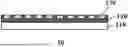




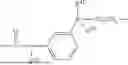
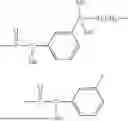
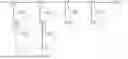
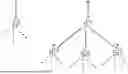
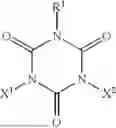


Sources:
- United States Patent and Trademark Office - verify current appl. status at the USPTO↗
Recent applications in this class:
- » 20260022061 2026-01-22
Methods for Camera Movement Compensation - » 20250296876 2025-09-25
SOLID PRODUCT, OPTICAL MEMBER, METHOD FOR MANUFACTURING SOLID PRODUCT, SURFACE FORMATION METHOD, SPECTACLES, TOUCH PANEL, SMARTPHONE, AND TABLET TERMINAL - » 20250214887 2025-07-03
METHOD FOR PRODUCING TRANSPARENT POROUS FILM - » 20250162931 2025-05-22
COATING AGENT - » 20250019296 2025-01-16
IMPROVEMENT OF GLASS STRENGTH AND FRACTURE TOUGHNESS BY A NON-BRITTLE COATING - » 20240391824 2024-11-28
Methods for Camera Movement Compensation - » 20240336519 2024-10-10
SUBSTRATE AND PACKAGE SUBSTRATE COMPRISING THE SAME - » 20240279110 2024-08-22
ANTIFOG-FILM-ATTACHED GLASS ARTICLE AND COATING LIQUID FOR FORMING ANTIFOG FILM - » 20240254036 2024-08-01
SUBSTRATE FOR LIQUID DROPLETS - » 20240124352 2024-04-18
IMPROVEMENT OF GLASS STRENGTH AND FRACTURE TOUGHNESS BY A NON-BRITTLE ABRASION RESISTANT COATING
Recent applications for this Assignee:
- » 20260104169 2026-04-16
AIR BLOWING STRUCTURE AND INDOOR UNIT OF AIR CONDITIONER - » 20260104047 2026-04-16
COMPRESSOR AND REFRIGERATION APPARATUS - » 20260098135 2026-04-09
DOUBLE LAYER TUBE AND METHOD FOR PRODUCING THE SAME - » 20260092730 2026-04-02
REFRIGERATION CYCLE APPARATUS AND CONTROL METHOD THEREOF - » 20260092182 2026-04-02
PRIMER COMPOSITION, MULTILAYER BODY, ARTICLE, AND METHOD FOR PRODUCING MULTILAYER BODY - » 20260091325 2026-04-02
METHOD FOR PRODUCING PURIFIED DIFLUOROMETHANE (HFC-32), AND COMPOSITION CONTAINING HFC-32 - » 20260085225 2026-03-26
WORKING FLUID COMPOSITION AND REFRIGERATOR - » 20260085224 2026-03-26
WORKING FLUID COMPOSITION AND REFRIGERATOR - » 20260085223 2026-03-26
WORKING FLUID COMPOSITION, REFRIGERATION OIL, AND REFRIGERATOR - » 20260085141 2026-03-26
MODIFIED POLYMER, COMPOSITION, COATING FILM, AND MULTILAYER BODY