OCTANE-ENHANCING COMPOSITION, METHOD OF USE THEREOF, AND KIT CONTAINING THE SAME
US20260103653A1
2026-04-16
19/350,382
2025-10-06
Smart Summary: An octane-enhancing composition is made with a chemical called MMT and an antioxidant, mixed with a fluid carrier. This mixture is designed to improve the octane levels in fuel. To use it, you add the composition to your fuel supply and let it mix well. After some time, the enhanced fuel can be used to improve engine performance. Overall, this composition helps make fuel burn better and more efficiently. 🚀 TL;DR
Abstract:
An octane-enhancing composition is provided that includes methylcyclopentadienyl manganese tricarbonyl (MMT), a sterically unhindered antioxidant, with a fluid carrier including an aliphatic fluid present as the remainder of the composition. A method of octane-enhancement is also provided that includes introducing the inventive octane-enhancing composition into a fuel supply, allowing sufficient time for the inventive octane-enhancing composition to add mix into the fuel supply to elevate octane levels and enhance combustion activity, and utilizing the fuel supply.
Inventors:
- Tze-Lee Phang 7 🇺🇸 Glenview, IL, United States
- Kirstie Tan 2 🇺🇸 Glenview, IL, United States
- Kimberly Vo 1 🇺🇸 Glenview, IL, United States
Assignee:
- Illinois Tool Works Inc. 5,542 🇺🇸 Glenview, IL, United States
Applicant:
Interested in similar patents?
Get notified when new applications in this technology area are published.
Classification:
C10L10/10 » CPC main
Use of additives to fuels or fires for particular purposes for improving the octane number
C10L2200/0407 » CPC further
Components of fuel compositions; Organic compounds Specifically defined hydrocarbon fractions as obtained from, e.g. a distillation column
Description
RELATED APPLICATIONS
This application is a non-provisional application that claims priority benefit of U.S. Provisional Application Ser. No. 63/706,063 filed Oct. 11, 2024; the contents of which are hereby incorporated by reference.
FIELD OF THE INVENTION
The present disclosure relates to an octane-enhancing composition, and specifically to an octane-enhancing composition with improved stability and manufacturing.
BACKGROUND OF THE INVENTION
Methylcyclopentadienyl manganese tricarbonyl (MMT) is a versatile fuel additive used in fuels such as gasoline, diesel, fuel oil, and turbine oil. This fuel additive elevates octane levels, functions to prevent knocking, and enhance combustion efficiency. Specific combustion efficiency enhancement mechanisms include minimizing tailpipe emissions of carbon monoxide and unburned hydrocarbons.
MMT is light sensitive and decomposes within minutes upon exposure to ambient sunlight, breaking down into manganese oxide and carbonates. Currently available solutions to delay MMT photodecomposition have met with limited success for several reasons that include being costly, environmentally hazardous, and toxicity. Another disadvantage is that currently available solutions require complex chemical formulas containing critical constituents that are difficult to obtain. A further disadvantage is that the production of currently available solutions often also requires special manufacturing equipment. As such, currently available solutions fail to address the rapid decomposition of MMT from an efficient manufacturing and ease-of-use perspective.
One solution known in the art includes adding a photosensitive dye to MMT, such as p-dimethylaminoazobenzene, to limit light absorption into a solution containing MMT. This photosensitive dye stabilization approach suffers the aforementioned problems of cost, and hazards to both the environment and human health. Another solution known in the art includes covering blend tanks and production lines with opacifying material. This approach again is costly and is not efficient from a manufacturing perspective as it requires burdensome capital equipment investment in the special material required to cover blend tanks and production lines.
Thus, there remains a need for an octane-enhancing composition with enhanced manufacturing efficiency and ease-of-use. Additionally, there is a need for a method of use of an octane-enhancing composition with enhanced manufacturing efficiency and ease-of-use, and a further need for a kit containing the same.
SUMMARY OF THE INVENTION
An octane-enhancing composition is provided that includes methylcyclopentadienyl manganese tricarbonyl (MMT) present in an amount of 0.1 to 19.9 total weight percent. A sterically unhindered antioxidant is also present in an amount of 0.1 to 19.9 total weight percent with the sterically unhindered antioxidant and the MMT present in a ratio of the antioxidant to the MMT of at least 0.1-10:1. A fluid carrier comprising an aliphatic fluid is also present as the remainder of the composition.
A method of octane-enhancement is also provided that includes introducing the inventive octane-enhancing composition into a fuel supply, allowing sufficient time for the inventive octane-enhancing composition to admix into the fuel supply to elevate octane levels and enhance combustion activity, and utilizing the fuel supply.
BRIEF DESCRIPTION OF THE DRAWINGS
The subject matter that is regarded as the invention is particularly pointed out and distinctly claimed in the claims at the conclusion of the specification.
The patent or application file contains at least one drawing executed in color. Copies of this patent or patent application publication with color drawing(s)/photograph(s) will be provided by the Office upon request and payment of the necessary fee.
The foregoing and other objects, features, and advantages of the invention are apparent from the following detailed description taken in conjunction with the accompanying drawings in which:
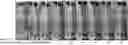
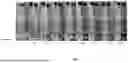
FIG. 1 are a series of time-lapsed images of clear bottles containing an inventive composition adjacent to a comparative composition showing enhanced stability of an inventive composition;
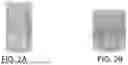
FIG. 2A is a photograph of an inventive composition as formulated; and
FIG. 2B is a photograph of an inventive composition 4 weeks after being formulated.
DESCRIPTION OF THE INVENTION
The present invention has utility as an octane-enhancing composition with enhanced manufacturing efficiency and ease-of-use. The present invention has further utility as a method of use of an octane-enhancing composition with enhanced manufacturing efficiency and ease-of-use.
The octane-enhancing composition of the present invention provides improved efficiency and production ease-of-use in manufacture. The inventive octane-enhancing composition is stable and minimizes light exposure thereby decreasing the rate of MMT degradation without the need for special manufacturing equipment or chemical constituents that are difficult to obtain. The octane-enhancing composition of the present invention achieves enhanced stabilization with fewer critical ingredients relative to available prior art solutions, further improving efficiency from both a manufacturing and cost perspective. The inventive octane-enhancing composition is also less hazardous to both the environment and human health relative to available prior art solutions.
Prior art solutions resort to the use of sterically hindered phenol antioxidants to achieve light stabilization. Some prior art sterically hindered phenol antioxidants include bulky alkyls such as 2,6-di-tert-butylphenol and 2,4,6-tri-tert-butylphenol which include tertiary butyl groups at both ortho positions to the hydroxyl group. The bulky tertiary butyl groups stabilize phenoxy radicals via steric hindrance. In contrast, it is appreciated that the antioxidant of an inventive composition is sterically unhindered while still achieving enhanced light stabilization and thereby decreasing the rate of MMT degradation. By way of non-limiting illustrative example, it is appreciated that the sterically unhindered antioxidant according to embodiments of the inventive composition has at least one ortho position to the hydroxyl group of hydrogen or a C1-C6 alkyl with the proviso that the C1-C6 alkyl is not tertiary or cyclic when both ortho positions are C1-C6 alkyl.
It is to be understood that in instances where a range of values are provided that the range is intended to encompass not only the end point values of the range but also intermediate values of the range as explicitly being included within the range and varying by the last significant figure of the range. By way of example, a recited range of from 1 to 4 is intended to include 1-2, 1-3, 2-4, 3-4, and 1-4.
Unless otherwise defined, all technical and scientific terms used herein have the same meaning as commonly understood by one of ordinary skill in the art to which this invention belongs. The terminology used in the description of the invention herein is for the purpose of describing particular embodiments only and is not intended to be limiting of the invention.
Unless indicated otherwise, explicitly or by context, the following terms are used herein as set forth below.
As used in the description of the invention and the appended claims, the singular forms “a,” “an” and “the” are intended to include the plural forms as well, and the term “or” is understood to be inclusive, unless the context clearly indicates otherwise.
Also as used herein, “and/or” refers to and encompasses any and all possible combinations of one or more of the associated listed items, as well as the lack of combinations when interpreted in the alternative (“or”).
The suffix “(s)” as used herein is intended to include both the singular and the plural of the term that it modifies, thereby including one or more of that term.
Reference throughout the specification to “one embodiment,” “another embodiment,” “an embodiment,” and so forth, when present, means that a particular element (e.g., feature, structure, and/or characteristic) described in connection with the embodiment is included in at least one embodiment described herein, and may or may not be present in other embodiments. In addition, it is to be understood that the described facets may be combined in any suitable manner.
An inventive octane-enhancing composition includes methylcyclopentadienyl manganese tricarbonyl (MMT) present in an amount of 0.1 to 19.9 total weight percent, a sterically unhindered antioxidant present in an amount of 0.1 to 19.9 total weight percent, and a fluid carrier that includes an aliphatic fluid present as the remainder of the composition, regardless of the inclusion of optional additives.
An aliphatic fluid operative in the present invention illustratively includes dearomatized aliphatic fluid (CAS 64742-47-8); toluene; xylene; white spirits; a polar solvent such as esters and alcohols that illustratively include hexanol, 2-ethylhexanol, decanol, isotridecanol alcohol mixtures; and combinations thereof. The fluid carrier phase represents the majority by weight of an inventive composition and limited only by the dissolution of other components therein and compatibility with the engine fuel to which the inventive composition is added.
In some inventive embodiments, the sterically unhindered antioxidant is butylated phenol, 2-ethylhexanol; butylated hydroxytoluene (BHT); butylated hydroxyanisolate (BHA); tert-butylhydroquinone (TBHQ); or a combination thereof. The sterically unhindered antioxidant present in an amount of 0.1 to 19.9 total weight percent. In some inventive embodiments, a molecular mole ratio of the sterically unhindered antioxidant to the MMT is between 0.1-10:1.
It is appreciated that in some embodiments, an additional antioxidant is present in an inventive composition. A secondary antioxidant operative in embodiments herein illustratively includes 2,6-di-ter-butyl cresol, 2,2′-methylene bis(6-t-butyl-4-methyl phenol), 2,2′-thio bis(6-t-butyl-4-methyl phenol), di-tert-butyl hydroquinone, di-tert-amyl hydroquinone, methyl hydroquinone, p-methoxy phenol, tetrakis[methylene-3-(3′,5′-di-tert-butyl-4′-hydroxyphenyl)propionate]methane, N-(2-aminoethyl)-3-[3,5-bis(tert-butyl)-4-hydroxyphenyl]propanamide, 5,7-di-tert-butyl-3-(3,4,-dimethylphenyl)-3H-benzofuran-2-one, dilauryl thiodipropionate, dimyristyl thiodipropionate, tris(nonylphenyl) phosphite, and combinations thereof. Typical loadings of a secondary antioxidant according to embodiments of the inventive composition are from 0 to 12 total weight percent.
In some inventive embodiments, the sterically unhindered antioxidant is only butylated phenol, 2-ethylhexanol. In other inventive embodiments, the butylated phenol, 2-ethylhexanol has the ethylhexanol group in a para position to the hydroxyl group. In still other inventive embodiments, the butylated phenol, 2-ethylhexanol has the ethylhexanol group in a meta position to the hydroxyl group, or as a mixture of para and meta positions to the hydroxyl group.
An inventive composition in other embodiments includes a fuel cleaner. The fuel cleaner is illustratively at least one of polyisobutylene amine (PIBA), polyetheramine (PEA), Mannich reaction products, or a combination thereof. The fuel cleaner is present in an amount of 0 and 70 total weight percent.
In some inventive embodiments, the composition also includes at least one of a lubricant, a corrosion inhibitor, or a combination thereof.
In other embodiments, corrosion inhibitors operative herein include C6-C12 carboxylic acids of which isononanoic acid is exemplary; organically modified zinc aluminum molybdenum orthophosphate hydrate; zinc-5-nitroisophthalate; calcium borosilicate; a zinc salt of a benzoic acid; alkaline earth metal phosphate; zinc-barium phosphate; zinc phosphate; benzotriazol; tolytriazol; or combinations thereof. A corrosion inhibitor, if present, is included from 0 to 5 total weight percent of the inventive composition.
Table 1 lists the major components of an embodiment of an inventive composition.
| Ingredient | Typical | Preferred | |
| Methylcyclopentadienyl | 0.1-19 | 0.3-9 (2) | |
| manganese tricarbonyl | |||
| Sterically unhindered | 0.1-19 | 0.2-10 (1) | |
| antioxidant | |||
| Secondary antioxidant | 0-12 | 0.05-5 | |
| Fuel additive cleaner | 0-70 | 0.1-50 (1) | |
| Dearomatized aliphatic fluid | to 100% | to 100% | |
An inventive method of octane-enhancement is also provided and includes introducing an inventive composition into a fuel supply, allowing sufficient time for the inventive composition to admix into the fuel supply to elevate octane levels and enhance combustion efficiency, and utilizing the fuel supply. In inventive embodiments, the fuel supply is at least one of leaded gasoline, unleaded gasoline, ethanol containing gasoline, aviation gasoline, aviation turbine, fuel oil, jet fuel, diesel fuel, biodiesel fuel, turbine oil, kerosene, diesel oil, high speed diesel fuel, or a combination thereof. As used herein, “leaded” in the context of gasoline refers to organolead compounds such as the prototypical tetraethyl lead.
The present disclosure is now illustrated by reference to the following example. Unless otherwise specified, all parts, percentages and ratios are on a weight basis.
EXAMPLES
Example 1
A solution is prepared that includes 2 total weight percent of methylcyclopentadienyl manganese tricarbonyl (MMT) and 1 total weight percent of butylated phenol, 2-ethylhexanol in dearomatized aliphatic fluid.
Comparative Example
The solution of Example 1 is prepared with the butylated phenol, 2-ethylhexanol replaced with a like amount of dearomatized aliphatic fluid.
Example 2
Example 1 and Comparative Example solutions are placed in adjacent bottles and photographed together at timed intervals. These are shown in FIG. 2 from 0 to 255 minutes. The Example 1 remains visibly unchanged while the Comparative Example visibly darkens to the unaided human eye after less than 60 minutes. The Example 1 solution as prepared is shown again in FIG. 2A and unchanged after more than 4 weeks, as shown in FIG. 2B.
Example 3
The composition of Example 1 is modified through inclusion of 0.5 total weight percent of butylated hydroxytoluene in place of butylated phenol, 2-ethylhexanol replaced with a commensurate increase in the amount of dearomatized aliphatic fluid. The resulting composition has stability properties similar to those of Example 2.
Examples 4 and 5
The composition of Example 1 is modified through inclusion of 1 total weight percent of polyisobutylene amine (PIBA) or polyetheramine with a commensurate reduction in the amount of dearomatized aliphatic fluid. The resulting compositions has stability properties similar to those of Example 2.
Example 6
The composition of Example 1 is modified through a like amount of xylene in place of the dearomatized aliphatic fluid. The resulting composition has stability properties similar to those of Example 2.
Example 7
The composition of Example 1 is modified to only include 0.1 total weight percent of butylated phenol, 2-ethylhexanol with a commensurate increase in the amount of dearomatized aliphatic fluid. The resulting composition has stability properties similar to those of Example 2.
Example 8
The composition of Example 7 is modified through inclusion of 1 total weight percent of 2,2′-methylene bis(6-t-butyl-4-methyl phenol) with a commensurate decrease in the amount of dearomatized aliphatic fluid. The resulting composition has stability properties similar to those of Example 2.
Example 9
The composition of Example 1 is placed in a bottle according to U.S. Pat. No. 9,694,532 B2 and stored at standard temperature and pressure for two months before being supplied to a fuel supply of 85 octane rated fuel in an amount of 0.1 total weight percent of the fuel. The fuel provided to a 4 cylinder internal combustion engine. Varying types of gasoline with an initial RON/MON can effectively improve the octane number rating ranging from 1 to 4 numbers when using an octane-enhancing composition.
While particular embodiments have been described, alternatives, modifications, variations, improvements, and substantial equivalents that are or may be presently unforeseen may arise to applicants or others skilled in the art. Accordingly, the appended claims as filed and as they may be amended, are intended to embrace all such alternatives, modifications variations, improvements, and substantial equivalents. It should also be appreciated that the exemplary embodiment or exemplary embodiments are only examples, and are not intended to limit the scope, applicability, or configuration of the described embodiments in any way. Rather, the foregoing detailed description will provide those skilled in the art with a convenient roadmap for implementing the exemplary embodiment or exemplary embodiments. It should be understood that various changes may be made in the function and arrangement of facets without departing from the scope as set forth in the appended claims and the legal equivalents thereof.
To the extent any patent documents and publications mentioned in the specification are indicative of the levels of those skilled in the art to which the invention pertains. These documents and publications are incorporated herein by reference to the same extent as if each individual document or publication was specifically and individually incorporated herein by reference.
Claims
1. An octane-enhancing composition comprising:
methylcyclopentadienyl manganese tricarbonyl (MMT) present in an amount of 0.1 to 19.9 total weight percent;
a sterically unhindered antioxidant present in an amount of 0.1 to 19.9 total weight percent, said sterically unhindered antioxidant and said MMT present in a ratio of said antioxidant to said MMT of at least 0.1-10:1; and
a fluid carrier comprising an aliphatic fluid present as the remainder of the composition.
2. The composition of claim 1 wherein said sterically unhindered antioxidant is butylated phenol, 2-ethylhexanol; butylated hydroxytoluene (BHT); butylated hydroxyanisolate (BHA); tert-butylhydroquinone (TBHQ); or a combination thereof.
3. The composition of claim 1 wherein said sterically unhindered antioxidant is only butylated phenol, 2-ethylhexanol having a hydroxyl group and a 2-ethoxyhexanol group.
4. The composition of claim 3 wherein said butylated phenol, 2-ethylhexanol has the ethylhexanol group in a para position to the hydroxyl group.
5. The composition of claim 3 wherein said butylated phenol, 2-ethylhexanol has the ethylhexanol group in a meta position to the hydroxyl group, or as a mixture of para and meta positions to the hydroxyl group.
6. The composition of claim 1 further comprising a fuel cleaner, said fuel cleaner being at least one of polyisobutylene amine (PIBA), polyetheramine (PEA), Mannich reaction products, or a combination thereof.
7. The composition of claim 1 further comprising at least one of a lubricant, a corrosion inhibitor, or a combination thereof.
8. A method of octane-enhancement comprising:
introducing the composition of claim 1 into a fuel supply;
allowing sufficient time for the composition of claim 1 to admix into said fuel supply to elevate octane levels and enhance combustion efficiency; and
combusting said fuel supply.
9. The method of claim 8 wherein said fuel supply is at least one of leaded gasoline, unleaded gasoline, ethanol containing gasoline, aviation gasoline, aviation turbine, fuel oil, jet fuel, diesel fuel, biodiesel fuel, turbine oil, kerosene, diesel oil, high speed diesel fuel, or a combination thereof.
Images & Drawings included:
Sources:
- United States Patent and Trademark Office - verify current appl. status at the USPTO↗
Recent applications in this class:
- » 20230227745 2023-07-20
Octane enhanced intermediate hydrocarbon composition - » 20210238492 2021-08-05
Fuel compositions for controlling combustion in engines - » 20210189276 2021-06-24
Production of high-value fuel mixtures from synthetic and biologically derived hydrocarbon molecules - » 20210139803 2021-05-13
Alcohol and ether fuel additives for lead-free gasoline - » 20210130723 2021-05-06
Methods for blending fuels - » 20210040407 2021-02-11
HIGH-POWER AND ECO-FRIENDLY FUEL COMPOSITION - » 20200407655 2020-12-31
Processes for increasing an octane value of a gasoline component - » 20200157450 2020-05-21
Method of producing a fuel additive - » 20200123462 2020-04-23
On-board separation of oxygenates from fuels - » 20200040275 2020-02-06
AVIATION FUEL WITH A RENEWABLE OXYGENATE
Recent applications for this Assignee:
- » 20260077923 2026-03-19
CONTAINER CARRIER - » 20260077922 2026-03-19
CONTAINER CARRIER - » 20260060507 2026-03-05
DOOR LOCK DEVICE AND ELECTRICAL APPLIANCE - » 20260053330 2026-02-26
DUAL POLARITY FAN ASSIST VENT FOR DISHWASHER - » 20260042558 2026-02-12
CONTAINER CARRIER APPLICATING MACHINE - » 20260028162 2026-01-29
FLEXIBLE RECLOSABLE ENCLOSURE WITH FLAP - » 20260027849 2026-01-29
APPARATUSES AND METHODS FOR PRINTED SECURITY FEATURES - » 20260022588 2026-01-22
AUTOMATED OPENING MODULE FOR A DOOR OF A HOUSEHOLD APPLIANCE - » 20260022240 2026-01-22
ANTI-FOG AND SUBSTRATE CLEANING COMPOSITION AND PROCESS FOR THE USE THEREOF - » 20260008594 2026-01-08
GUSSET BAGS WITH TEAR STRIPS