BATTERY PROCESSING METHOD AND BATTERY PROCESSING SYSTEM
US20260103776A1
2026-04-16
19/350,075
2025-10-06
Smart Summary: A method is designed to improve lithium-ion batteries, which have a positive side, a negative side, and a liquid solution. First, gas is produced inside the battery to help with the process. Then, the battery is charged by applying more pressure in a specific direction, which helps to deposit lithium onto the negative side. This technique aims to enhance the battery's performance and efficiency. Overall, it focuses on better managing the materials inside the battery for improved energy storage. 🚀 TL;DR
Abstract:
A battery processing method for processing a lithium-ion battery including a positive electrode material, a negative electrode material, and an electrolytic solution and configured by laminating the positive electrode material and the negative electrode material in a lamination direction, the battery processing method includes: a gas generation step of generating gas in the lithium-ion battery; and a lithium deposition step of charging the lithium-ion battery by increasing a pressing force in the lamination direction on at least a part thereof in comparison with a remaining portion to deposit lithium on the negative electrode material.
Inventors:
- Susumu MINEOI 7 🇯🇵 Aki-gun, Japan
- Tenyu YAN 5 🇯🇵 Aki-gun, Japan
- Kenjiro MOMOSAKI 5 🇯🇵 Aki-gun, Japan
- Tomoki YAMAMOTO 5 🇯🇵 Aki-gun, Japan
Assignee:
- MAZDA MOTOR CORPORATION 2,524 🇯🇵 Hiroshima, Japan
Applicant:
Interested in similar patents?
Get notified when new applications in this technology area are published.
Classification:
C22B26/12 » CPC main
Obtaining alkali, alkaline earth metals or magnesium; Obtaining alkali metals Obtaining lithium
C22B1/005 » CPC further
Preliminary treatment of ores or scrap Preliminary treatment of scrap
C22B7/006 » CPC further
Working up raw materials other than ores, e.g. scrap, to produce non-ferrous metals and compounds thereof; Methods of a general interest or applied to the winning of more than two metals Wet processes
H01M10/54 » CPC further
Secondary cells; Manufacture thereof Reclaiming serviceable parts of waste accumulators
C22B1/00 IPC
Preliminary treatment of ores or scrap
C22B7/00 IPC
Working up raw materials other than ores, e.g. scrap, to produce non-ferrous metals and compounds thereof; Methods of a general interest or applied to the winning of more than two metals
Description
CROSS-REFERENCE TO RELATED APPLICATION
The present application claims priority to Japanese Patent Application 2024-179274, filed Oct. 11, 2024, the entire contents of which are incorporated herein by reference.
FIELD
Embodiments relate to a battery processing method and a battery processing system.
BACKGROUND
In recent years, lithium-ion batteries have been widely used as in-vehicle batteries of electric-powered vehicles such as electric vehicles and hybrid vehicles. The lithium-ion battery contains valuable substances including lithium. It is requested to recycle valuable substances from the used lithium-ion batteries for resource circulation.
Patent Literature 1 discloses a method for increasing an amount of lithium contained in a positive electrode material by discharging the used lithium-ion battery to collect lithium from the positive electrode material.
CITATION LIST
Patent Literature
[Patent Literature 1] JP-A-2022-049831
SUMMARY
The positive electrode material is generally configured by forming a positive electrode active material on a current collector foil such as aluminum. For example, in a case of a ternary system (NMC), the positive electrode active materials include the valuable substances such as nickel, manganese, and cobalt. In order to collect the valuable substances from the positive electrode active material, the positive electrode material is roasted together with a reducing agent and pulverized, and then a black mass or the like containing the positive electrode active material is selected. Next, the black mass is subjected to stepwise solvent extraction to sequentially extract manganese, cobalt, and nickel, and finally lithium is extracted. Thus, it takes time and effort to collect lithium in particular.
An object of the invention is to provide a battery processing method and a battery processing system capable of efficiently collecting lithium from a lithium-ion battery.
An aspect of the invention provides
-
- a battery processing method for processing a lithium-ion battery including a positive electrode material, a negative electrode material, and an electrolytic solution and configured by laminating the positive electrode material and the negative electrode material in a lamination direction, the battery processing method including:
- a gas generation step of generating gas in the lithium-ion battery; and
- a lithium deposition step of charging the lithium-ion battery by increasing a pressing force in the lamination direction on at least a part thereof in comparison with a remaining portion to deposit lithium on the negative electrode material.
Another aspect of the invention provides a battery processing system including:
-
- a charging device that charges a lithium-ion battery including a positive electrode material, a negative electrode material, and an electrolytic solution and configured by laminating the positive electrode material and the negative electrode material in a lamination direction;
- a gas generating device that generates gas in the lithium-ion battery; and
- a pressing device that presses the lithium-ion battery by increasing a pressing force in the lamination direction on at least a part thereof in comparison with a remaining portion.
ADVANTAGEOUS EFFECTS
According to the invention, lithium can be efficiently collected from a negative electrode of the lithium-ion battery.
BRIEF DESCRIPTION OF DRAWINGS
FIG. 1 is a block diagram schematically illustrating a reuse system according to a first embodiment.
FIG. 2 is a perspective view illustrating a schematic configuration of a lithium-ion battery.
FIG. 3 is a cross-sectional view illustrating a schematic configuration of a battery cell.
FIG. 4 is a view illustrating a schematic configuration of a pressing device.
FIG. 5 is a flowchart schematically illustrating a flow of reuse of the lithium-ion battery.
FIG. 6 is a view schematically illustrating an example of operation of the pressing device.
FIG. 7 is a block diagram schematically illustrating a reuse system according to second and third embodiments.
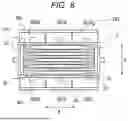
FIG. 8 is a view schematically illustrating an example of operation of a heating device and a pressing device according to the second embodiment.
FIG. 9A is a view schematically illustrating an example of operation of a heating device and a pressing device according to the third embodiment.
FIG. 9B is a view schematically illustrating the example of the operation of the pressing device following FIG. 9A.
DETAILED DESCRIPTION
The present inventors have conducted intensive studies to efficiently collect lithium from a lithium-ion battery, and have found that lithium can be efficiently collected from the lithium-ion battery by intentionally generating lithium deposition (for example, dendrite), which is not desirable in a normal charging reaction, on a negative electrode material. Based on this finding, the present inventors have completed a battery processing method capable of efficiently collecting lithium from the lithium-ion battery.
A method for reusing a lithium-ion battery according to an embodiment of the invention includes
-
- a battery processing method for processing a lithium-ion battery including a positive electrode material, a negative electrode material, and an electrolytic solution and configured by laminating the positive electrode material and the negative electrode material in a lamination direction, the battery processing method including:
- a gas generation step of generating gas in the lithium-ion battery; and
- a lithium deposition step of charging the lithium-ion battery by increasing a pressing force in the lamination direction on at least a part thereof in comparison with a remaining portion to deposit lithium on the negative electrode material.
First Embodiment
Hereinafter, a reuse system of a lithium-ion battery according to a first embodiment of the invention will be described with reference to the accompanying drawings. FIG. 1 is a block diagram schematically illustrating a reuse system 100 of a lithium-ion battery 1. As illustrated in FIG. 1, the reuse system 100 includes: a reuse unit 10 secondarily using the lithium-ion battery 1 that has been used primarily in an electric-powered vehicle, for example; and a recycle unit 20 collecting lithium from the lithium-ion battery 1 that has been used secondarily. That is, the reuse system 100 is a battery processing system for secondarily using the lithium-ion battery 1 and thereafter collecting lithium from the lithium-ion battery 1, in other words, for processing the lithium-ion battery 1.
The reuse unit 10 reuses the lithium-ion battery 1, which has been used primarily, as an electrical storage device. In general, a deteriorated state of the lithium-ion battery for the electric-powered vehicle is determined on the basis of state of health (SOH) that indicates, for example, how much capacity is available in comparison with a new battery when the battery is fully charged. When it is determined that the lithium-ion battery 1 is inappropriate for use in the electric-powered vehicle on the basis of a degree of the deterioration, the lithium-ion battery 1 is removed from the vehicle, and is used in the reuse unit 10 as the electrical storage device for any of various secondary applications, such as a storage of renewable energy including solar power and wind power and a backup power source in the event of a disaster. For example, when the SOH becomes 70% or less, it may be determined to be inappropriate for the primary use, that is, for use in the electric-powered vehicle.
The reuse unit 10 includes the lithium-ion battery 1, which is used secondarily as the electrical storage device, a charging device 12, and a pressing device 301. The charging device 12 can charge the lithium-ion battery 1 in any appropriate charging pattern by adjusting a voltage and a current. For example, the lithium-ion battery 1 can be charged continuously with a predetermined voltage and a predetermined current, and can also be charged intermittently with the predetermined voltage and the predetermined current (also referred to as pulse charging). An upper limit of a charging voltage by the charging device 12 is a withstand voltage of the lithium-ion battery 1 or less, and is 4.3 V or less, for example. The pressing device 301 will be described in detail after a description on a structure of the lithium-ion battery 1.
The recycle unit 20 includes: a disassembly device 21 that disassembles the lithium-ion battery 1 into a positive electrode material 31, a negative electrode material 35, and the like through a lithium deposition step described below when it is determined that the lithium-ion battery 1 can be inappropriate for secondary use on the basis of the SOH, for example; an extraction device 22 that extracts lithium from the negative electrode material 35 after the disassembly; and a collection device 23 that collects extracted lithium. For example, when the SOH becomes 40% or less, it may be determined that it can be inappropriate for the secondary use.
FIG. 2 schematically illustrates the lithium-ion battery 1 that is mounted on the electric-powered vehicle. The lithium-ion battery 1 constitutes a battery pack having battery modules 4, each of which incorporates functions as a charge/discharge circuit and a cooling mechanism. Furthermore, the plural battery modules 4 are connected to each other and accommodated in a case. Each of the battery modules 4 is formed by connecting plural battery cells 3 in series or in parallel with each other, and is adjusted to desired capacity and a desired voltage.
The lithium-ion battery 1 is a rechargeable lithium-ion secondary battery. In the present specification, the term “lithium-ion battery” may collectively refer to the battery cell, the battery module, and the battery pack unless otherwise specified.
FIG. 3 is a cross-sectional view schematically illustrating the battery cell 3. As illustrated in FIG. 3, the battery cell 3 according to the present embodiment is of a laminated type. The battery cell 3 includes: a laminated electrode body 38 in which the positive electrode material 31, a separator 34, and the negative electrode material 35 are laminated in this order in a lamination direction A; and a case 40 that accommodates the laminated electrode body 38.
In the present embodiment, the laminated electrode body 38 is formed by laminating plural sets of the positive electrode material 31, the separator 34, and the negative electrode material 35 in the lamination direction A. The battery cell 3 has a rectangular shape that is thin and long in a width direction B when viewed in the lamination direction A.
The positive electrode material 31 includes a positive electrode current collector 32 and a positive electrode active material 33 that is disposed on a surface of the positive electrode current collector 32 facing the separator 34. In a positive electrode current collector end portion 32a, the plural positive electrode current collectors 32 are connected to each other at one end (a left side in FIG. 3) in the width direction B that is orthogonal to the lamination direction A. A metal foil suitable for a positive electrode can be suitably used for each of the positive electrode current collectors 32. A material that is used as a positive electrode active material of a lithium-ion secondary battery can be used as the positive electrode active material 33. In the present embodiment, each of the positive electrode current collectors 32 is made of aluminum, and the positive electrode active material 33 is made of NMC (nickel, manganese, and cobalt).
The negative electrode material 35 includes a negative electrode current collector 36 and a negative electrode active material 37 that is disposed on a surface of the negative electrode current collector 36 facing the separator 34. In a negative electrode current collector end portion 36a, the plural negative electrode current collectors 36 are connected to each other at the other end (a right side in FIG. 3) in the width direction B. A metal foil suitable for a negative electrode can be suitably used for each of the negative electrode current collectors 36. A material that is used as a negative electrode active material of the lithium-ion secondary battery can be used for the negative electrode active material 37. In the present embodiment, each of the negative electrode current collectors 36 is made of copper, and the negative electrode active material 37 is a carbon material (graphite) that has a layer structure.
The positive electrode active material 33 and the negative electrode active material 37 each contain an electrolytic solution 39. The electrolytic solution 39 is, for example, an organic solvent in which lithium ions can move. In the present embodiment, the electrolytic solution 39 contains dimethyl carbonate (DMC), ethylene carbonate (EC), and diethyl carbonate (DEC) in a volume ratio of 1:1:1, and contains lithium hexafluoride phosphate (LiPF6) at a concentration of 1 mol/L.
The separator 34 is disposed between the positive electrode material 31 and the negative electrode material 35, and physically and electrically separates them from each other. The separator 34 may be a porous body having plural minute pores through which the lithium ions can pass. In the present embodiment, the separator 34 is a porous film that is made of polyolefin.
The case 40 has a first case 41 and a second case 42 that are provided as a pair on both sides in the lamination direction A of the laminated electrode body 38. The first case 41 and the second case 42 are each formed to have a hat-shaped cross section. The first case 41 includes: a pair of flange portions 41a located at both ends in the width direction B; and a body portion 41b that is located between the paired flange portions 41a and bulges in a direction away from the second case 42 in the lamination direction A. Similarly, the second case 42 includes a pair of flange portions 42a and a body portion 42b that bulges in a direction away from the first case 41.
The first case 41 and the second case 42 are joined to each other in a state of sandwiching the positive electrode current collector end portion 32a and the negative electrode current collector end portion 36a between the flange portions 41a, 42a, and thereby constitute the case 40. That is, in a state where the laminated electrode body 38 is accommodated in the case 40, the positive electrode current collector end portion 32a and the negative electrode current collector end portion 36a are sandwiched between the paired flange portions 41a, 42a, and a remaining portion of the laminated electrode body 38 is accommodated in a space that is defined between the paired body portions 41b, 42b. In the state of being accommodated in the case 40, the laminated electrode body 38 is crimped with a predetermined pressure in the lamination direction A by the paired body portions 41b, 42b. An example of a tab 43 according to the invention is formed by a portion, which is sandwiched by the paired flange portions 41a, 42a, in the battery cell 3.
Next, the pressing device 301 will be described. The pressing device 301 is a device that presses the battery cell 3 with a predetermined pressing force in the lamination direction A. In order to generate a charging/discharging reaction in the lithium-ion battery 1, the pressing device 301 may be provided to the lithium-ion battery 1 that has been primarily used in the electric-powered vehicle, or may be provided to the lithium-ion battery 1 that has been secondarily used in the reuse unit 10. Alternatively, a pressing device that can automatically or manually adjust a pressing force may be provided separately. The pressing device 301 may include a suitable actuator such as a hydraulic cylinder or a pneumatic cylinder can be used.
FIG. 4 is a view schematically illustrating the pressing device 301. FIG. 4 schematically illustrates the battery cell 3 that is pressed by the pressing device 301. As illustrated in FIG. 4, the pressing device 301 includes plural sets of presser pairs 302, each set of which is provided as a pair on both sides of the battery cell 3 in the lamination direction A, and which are divided in the width direction B of the battery cell 3. In the present embodiment, the pressing device 301 includes: a central presser pair 302A located at a center in the width direction B; a one-side or first side presser pair 302B located on one side (a left side in FIG. 4) in the width direction B; and an other-side or second side presser pair 302C located on the other side (a right side in FIG. 4) in the width direction B. A number of the presser pairs 302 may be three, or may be two, four, or more.
Next, reuse of the lithium-ion battery 1 will be described. FIG. 5 is a flowchart schematically illustrating a flow of reuse of the lithium-ion battery 1. As illustrated in FIG. 5, when it is determined that the lithium-ion battery 1, which is mounted on the electric-powered vehicle, is in the deteriorated state that is not suitable for use in the electric-powered vehicle on the basis of the SOH, for example, a reuse step (step S1) is executed. In the reuse step S1, the lithium-ion battery 1 is removed from the electric-powered vehicle and used secondarily in the reuse unit 10.
In a case where it is determined that the lithium-ion battery 1 is in a predetermined deteriorated state after being used secondarily as the electrical storage device, a gas generation step (step S2) of generating gas in the battery cell 3 is executed following the secondary use in the reuse unit 10.
In the gas generation step S2, the entire battery cell 3 is charged with an excessive charging current by the charging device 12 in a state of being pressed in the lamination direction A by the predetermined pressing force from the pressing device 301. The predetermined pressing force in the gas generation step S2 is such a magnitude of a pressure that a charging/discharging reaction can occur in the primary use or the secondary use of the lithium-ion battery 1. The current that flows in the gas generation step S2 is a higher current than an upper limit current in a lithium deposition step S3 described below. When the excessive current flows through the entire battery cell 3, heat is generated inside the battery cell 3, and the gas is generated from the electrolytic solution 39 prior to a reduction reaction of lithium ions (that is, a lithium deposition reaction). Thus, in the first embodiment, the charging device 12 is also a gas generating device. The gas that is generated in the gas generation step S2 is methane and/or carbon dioxide, for example.
Next, the lithium deposition step (step S3) is executed. In the lithium deposition step S3, the lithium-ion battery 1 is charged while being pressed in the lamination direction A under a predetermined pressing condition. In the lithium deposition step S3, the battery cell 3 is locally pressed by operating at least some presser pairs 302 of the plural sets of the presser pairs 302. Accordingly, in the lithium deposition step S3, the battery cell 3 is pressed by increasing the pressing force in the lamination direction A on at least a part thereof in comparison with the remaining portion. In general, in order to generate the charging/discharging reaction in the lithium-ion battery 1, the battery cell 3 has to be pressed (that is, constrained) in the lamination direction. In the lithium deposition step S3, the battery cell 3 is pressed with the pressing force for at least generating the charging/discharging reaction. For example, the pressing force is 10 kPa or greater and 1 MPa or less.
“Increasing the pressing force in the lamination direction A on at least a part thereof in comparison with the remaining portion” also means reducing the pressing force in the remaining portion in a state where the entire battery cell 3 is uniformly pressed. That is, the lithium deposition step S3 includes partially reducing or releasing pressing from a state where the entire battery cell 3 is pressed in the gas generation step S2 described above.
In the lithium deposition step S3, the lithium-ion battery 1 is charged to deposit lithium on the negative electrode material 35 in the state where the battery cell 3 is locally pressed by the pressing device 301.
As illustrated in FIG. 6, the battery cell 3 includes the gas generated in the gas generation step S2 in entirety thereof and, furthermore, only another end portion 3c (a right side in FIG. 6) is pressed by the pressing device 301. In general, when the gas is generated in the battery cell 3, transfer of electrons between the positive electrode material 31 and the negative electrode material 35 is inhibited by the gas, and thus the charging/discharging reaction is less likely to occur. Under such a circumstance, when charging is performed by pressing only a part of the battery cell 3 (the other end portion 3c in FIG. 6), the charging reaction is more likely to be accelerated (concentrated) in the part than remaining portions (a central portion 3a and one end portion 3b in FIG. 6). As a result, the charging current is concentrated in a place where the charging reaction is accelerated. Thus, local deposition of lithium is facilitated.
In the present embodiment, lithium is deposited on the negative electrode material 35 by charging the lithium-ion battery 1 by high-rate charging. The high-rate charging means charging with a large current that intentionally generates lithium in the negative electrode material 35 during charging.
For example, when the lithium-ion battery 1 is of a so-called capacitive type (also referred to as an energy type) that is mounted on an electric vehicle, it may be charged with a current of 2 C or greater, for example. Meanwhile, when the lithium-ion battery 1 is of a so-called high-output type (also referred to as a power type) that is mounted on a hybrid vehicle, it may be charged with a current of 10 C or greater, for example. Here, the current of 1 C means a current that is required to fully charge each of the lithium-ion batteries in one hour. Lithium can be deposited on the negative electrode material 35 by the continuous high-rate charging for a predetermined time.
In the present specification, the lithium-ion battery 1 being of the capacitive type means a case where the energy density thereof is 600 Wh/L or greater. In addition, the lithium-ion battery 1 being of the high-output type means a case where output density thereof is 4000 kW/L or greater.
As described above, when the charging current by the high-rate charging becomes excessively large, gasification of the electrolytic solution 39 is gasified due to heat generation, and the deposition of lithium becomes difficult. For this reason, in the lithium deposition step S3, the excessive charging current is not preferable. For example, when the lithium-ion battery 1 is of the capacitive type, an upper limit of the charging current may be set to about 3 C. Meanwhile, when the lithium-ion battery 1 is of the high-output type, the upper limit of the charging current may be set to about 20 C. Accordingly, in the gas generation step S2 described above, the higher current than 3 C can flow when the lithium-ion battery 1 is of the capacitive type, and the higher current than 20 C can flow when the lithium-ion battery 1 is of the high-output type.
Here, in the lithium deposition step S3, the lithium-ion battery 1 only needs to be charged in the pressed state. A pressing step of the lithium-ion battery 1 by the pressing device 301 and charging of the lithium-ion battery 1 by the charging device 12 may be started simultaneously, or one thereof may be started first. That is, after the pressing step by the pressing device 301 is executed, the charging device 12 may execute a charging step while the pressed state by the pressing device 301 is maintained.
Next, the lithium-ion battery 1 is removed from the reuse unit 10, and a battery disassembly step (step S4) is executed by the disassembly device 21. In the battery disassembly step S4, the lithium-ion battery 1 is disassembled into components such as the positive electrode material 31, the separator 34, the negative electrode material 35, and the case 40. When only lithium is intended to be collected, at least the negative electrode material 35 may only be disassembled.
Next, a lithium extraction step (step S5) is executed. In the lithium extraction step S5, lithium is extracted from the disassembled negative electrode material 35. In the lithium extraction step S5, after exuding the negative electrode material 35 with water, the extraction device 22 filters the negative electrode material 35 to remove the negative electrode current collector 36 and the negative electrode active material 37, and thereby extracts an aqueous solution containing lithium ions. In the lithium extraction step S5, lithium is selectively extracted from the portion of the disassembled negative electrode material 35, and lithium has been locally deposited on the negative electrode material 35 in the lithium deposition step S3. That is, lithium is selectively extracted from the portion of the negative electrode material 35 that corresponds to the portion pressed by the pressing device 301. Which negative electrode material 35 of the plural disassembled negative electrode materials 35 corresponds to the part described above can be visually identified, or can be identified on the basis of the portion pressed by the pressing device 301. This makes it possible to extract lithium further efficiently.
Finally, a lithium collection step (step S6) is executed. In the lithium collection step S6, lithium is collected from the aqueous solution containing lithium ions. In the lithium collection step S6, after subjecting lithium to a solution treatment with carbonated water, the collection device 23 filters the solution and collects lithium as lithium carbonate.
In the above embodiment, the case where the presser pair 302 is divided in the width direction B of the battery cell 3 has been described as an example. In an implementation, it may be divided in a height direction C orthogonal to the lamination direction A and the width direction B of the battery cell 3, or may be further divided in both the width direction B and the height direction C.
That is, the battery processing method according to the present embodiment is
-
- the battery processing method for processing the lithium-ion battery 1 including the positive electrode material 31, the negative electrode material 35, and the electrolytic solution 39 and configured by laminating the positive electrode material 31 and the negative electrode material 35 in the lamination direction A, the battery processing method including:
- the gas generation step S2 of generating gas in the lithium-ion battery 1; and
- the lithium deposition step S3 of charging the lithium-ion battery 1 by increasing the pressing force in the lamination direction A on at least a part thereof in comparison with the remaining portion to deposit lithium on the negative electrode material 35.
As a result, since the negative electrode material 35 is generally formed by laminating graphite on the current collector foil, such as copper, in the form of the layer, it contains less types of valuable substances than the positive electrode material 31 that has plural types of the valuable substances such as cobalt, nickel, and manganese. Accordingly, unlike a case where lithium is collected from the positive electrode material 31, stepwise solvent extraction of plural types of the valuable metals does not require time and effort. Thus, lithium can be efficiently collected from the negative electrode material 35. In addition, by generating the gas in the lithium-ion battery 1 and increasing the pressing force on at least a part of the lithium-ion battery 1, lithium is easily and locally deposited on the negative electrode material 35 that corresponds to the part. As a result, lithium can be collected further efficiently.
In the lithium extraction step S5, lithium is selectively extracted from a portion, which corresponds to at least the part pressed in the lithium deposition step S3, in the negative electrode material 35.
As a result, lithium can be extracted further efficiently.
Second Embodiment
A second embodiment differs in that a second gas generation step S12 is employed instead of the gas generation step S2 according to the first embodiment. In the second gas generation step S12, the entire battery cell 3 is heated by a heating device or heater 401, and the gas is thereby generated in the battery cell 3.
A reuse system 200 according to the second embodiment further includes the heating device 401 with reference to FIG. 7. The heating device 401 may be any device as long as being able to heat a surface of the battery cell 3 to 80° C., for example. For example, the heating device 401 is a Peltier element. As illustrated in FIG. 8, the heating device 401 is disposed on the presser pairs 302 that are provided on both sides of the battery cell 3 in the lamination direction A.
In the second gas generation step S12, as illustrated in FIG. 8, the entire battery cell 3 is heated by the heating device 401 while being pressed in the lamination direction A by the predetermined pressing force from the pressing device 301. In the second gas generation step S12, the battery cell 3 is not charged with at least the excessive charging current. By heating the entire battery cell 3, the same gas as that in the first embodiment is generated from the electrolytic solution 39 in the battery cell 3. Thus, in the second gas generation step S12, the gas is generated by heating the entire battery cell 3.
As a result, compared with a case where the battery cell 3 is charged with an excessive charging current to generate the gas, side reactions in the other unfavorable battery cells 3 can be suppressed, and power consumption in the gas generation step can be reduced.
Third Embodiment
A third embodiment is different in that a third gas generation step S13 is employed instead of the gas generation step S2 according to the first embodiment. A reuse system 300 according to the third embodiment includes the heating device 401 as in the second embodiment with reference to FIG. 7.
As illustrated in FIG. 9A, the heating device 401 in the third embodiment is disposed only on the central presser pair 302A and the one-side presser pair 302B. In the third gas generation step S13, a part of the battery cell 3 is heated by the heating device 401, and the gas is thereby generated in the part of the battery cell 3.
In the third gas generation step S13, as illustrated in FIG. 9A, only the central portion 3a and the one end portion 3b of the battery cell 3 are heated by the heating device 401 in a state where the entire battery cell 3 is pressed in the lamination direction A by the predetermined pressing force from the pressing device 301. Thus, the gas is generated in the central portion 3a and the one end portion 3b. In addition, since the other end portion 3c, which is not heated, is pressed, the generated gas hardly flows to the other end portion 3c.
Next, in the lithium deposition step S3, as illustrated in FIG. 9B, only the other end portion 3c, in which the gas is not generated, is pressed. That is, according to the third embodiment, the gas is partially generated in the battery cell 3 by heating the remaining portion, which is not pressed in the lithium deposition step S3 or is pressed with the pressing force less than that on the part in which lithium is locally deposited, of the battery cell 3.
As a result, since the gas is not generated in the pressed part, the charging reaction is further easily accelerated. This makes it possible to collect lithium further efficiently.
Each of the reuse systems 100 to 300 of the lithium-ion battery 1 according to the present disclosure may correspond to the configuration described in the above embodiment, or various modifications can be made thereto.
In the above embodiment, the description has been made on the example in which the lithium-ion battery is of the laminated type. In an implementation, a lithium-ion battery in a cylindrical shape or a polygonal shape may be adopted, which is formed by winding a belt-shaped laminated electrode body, in which a belt-shaped positive electrode material, a belt-shaped separator, and a belt-shaped negative electrode material are laminated in the lamination direction A, in a cylindrical shape or a square shape. In a case of the cylindrical shape or the polygonal shape, the lamination direction corresponds to a radial direction orthogonal to a winding direction.
Although the description has been made on a cell-by-cell basis, it may be implemented on a module-by-module basis or on a battery pack-by-battery pack basis. In a case of the implementation on the battery pack-by-battery pack basis, the pressing device may be provided in the battery pack in advance.
In the lithium deposition step S3, the high-rate charging may not be performed. That is, when the lithium-ion battery 1 is the capacitive type, it may be charged with the current of less than 2 C, for example. Meanwhile, when being of the high-output type, the lithium-ion battery 1 may be charged with the current of less than 10 C, for example.
REFERENCE SIGNS LIST
-
- 1: lithium-ion battery
- 3: battery cell
- 4: battery module
- 10: reuse unit
- 12: charging device
- 20: recycle unit
- 21: disassembly device
- 22: extraction device
- 23: collection device
- 31: positive electrode material
- 34: separator
- 35: negative electrode material
- 38: laminated electrode body
- 39: electrolytic solution
- 40: case
- 100: reuse system
- 301: pressing device
- 401: heating device
Claims
1. A battery processing method for processing a lithium-ion battery including a positive electrode material, a negative electrode material, and an electrolytic solution and configured by laminating the positive electrode material and the negative electrode material in a lamination direction, the battery processing method comprising:
a gas generation step of generating gas in the lithium-ion battery; and
a lithium deposition step of charging the lithium-ion battery and increasing a pressing force in the lamination direction on at least a part of the lithium-ion battery and not increasing the pressing force on a remaining portion of the lithium-ion battery to deposit lithium on the negative electrode material.
2. The battery processing method according to claim 1, wherein, in the gas generation step, the gas is generated by heating the entire lithium-ion battery.
3. The battery processing method according to claim 2, further comprising:
a battery disassembly step of disassembling at least the negative electrode material from the lithium-ion battery after the lithium deposition step; and
a lithium extraction step of extracting lithium from the negative electrode material.
4. The battery processing method according to claim 2, wherein:
the pressing force is increased by using a pressing device that includes a plurality of presser pairs, each presser pair is on opposite sides of the lithium-ion battery in the lamination direction, and each presser pair is divided in a width direction of the lithium-ion battery,
the lithium-ion battery is charged in a state where the lithium-ion battery is locally pressed by operating only some presser pairs of the plurality of presser pairs,
the entire lithium-ion battery is heated with a heater that is on the plurality of presser pairs.
5. The battery processing method according to claim 4, wherein the heater includes a Peltier element.
6. The battery processing method according to claim 1, wherein, in the gas generation step, the gas is partially generated in the lithium-ion battery by heating at least the remaining portion.
7. The battery processing method according to claim 6, further comprising:
a battery disassembly step of disassembling at least the negative electrode material from the lithium-ion battery after the lithium deposition step; and
a lithium extraction step of extracting lithium from the negative electrode material.
8. The battery processing method according to claim 7, wherein, in the lithium extraction step, lithium is selectively extracted from a portion, which corresponds to at least the part pressed in the lithium deposition step, in the negative electrode material.
9. The battery processing method according to claim 1, further comprising:
a battery disassembly step of disassembling at least the negative electrode material from the lithium-ion battery after the lithium deposition step; and
a lithium extraction step of extracting lithium from the negative electrode material.
10. The battery processing method according to claim 1, wherein:
the pressing force is increased by using a pressing device that includes a plurality of presser pairs, each presser pair is on opposite sides of the lithium-ion battery in the lamination direction, and each presser pair is divided in a width direction of the lithium-ion battery, and
the lithium-ion battery is charged in a state where the lithium-ion battery is locally pressed by operating only some presser pairs of the plurality of presser pairs.
11. The battery processing method according to claim 1, wherein:
the pressing force is increased by using a pressing device that includes a plurality of presser pairs, each presser pair is on opposite sides of the lithium-ion battery in the lamination direction,
the pressing device includes: a central presser pair located at a center in a width direction of the lithium-ion battery; a first side presser pair located on one side of the lithium-ion battery in the width direction; and a second side presser pair located on another side of the lithium-ion battery in the width direction, and
at least one of the first side presser pair and the second side presser pair is not actuated during application of the pressing force.
12. The battery processing method according to claim 1, wherein the pressing force is 10 kPa or greater and 1 MPa or less.
13. A battery processing system, comprising:
a charging device that charges a lithium-ion battery including a positive electrode material, a negative electrode material, and an electrolytic solution and configured by laminating the positive electrode material and the negative electrode material in a lamination direction;
a gas generating device that generates gas in the lithium-ion battery; and
a pressing device that presses the lithium-ion battery by increasing a pressing force in the lamination direction on at least a part of the lithium-ion battery and does not press a remaining portion of the lithium-ion battery.
14. The battery processing system according to claim 13, wherein:
the pressing device includes a plurality of presser pairs, each presser pair is on opposite sides of the lithium-ion battery in the lamination direction, and each presser pair is divided in a width direction of the lithium-ion battery, and
the charging device is configured to charge the lithium-ion battery in a state where the lithium-ion battery is locally pressed by operating only some presser pairs of the plurality of presser pairs.
15. The battery processing system according to claim 13, wherein the gas generating device includes a heater, the heater being on the pressing device.
16. The battery processing system according to claim 15, wherein the heater includes a Peltier element.
17. The battery processing system according to claim 15, wherein the heater is on only some presser pairs of the plurality of presser pairs.
Images & Drawings included:






Sources:
- United States Patent and Trademark Office - verify current appl. status at the USPTO↗
Similar patent applications:
- » 20200033414
BATTERY INFORMATION PROCESSING SYSTEM, METHOD OF ESTIMATING CAPACITY OF SECONDARY BATTERY, AND BATTERY ASSEMBLY AND METHOD OF MANUFACTURING BATTERY ASSEMBLY - » 20200041570
Battery information processing system, method of estimating capacity of secondary battery, and battery assembly and method of manufacturing battery assembly - » 20260106239
BATTERY PROCESSING METHOD AND BATTERY PROCESSING SYSTEM - » 20200049771
Battery information processing system, battery information processing method, and battery assembly and method of manufacturing battery assembly - » 20240175934
BATTERY PROCESSING SYSTEM AND BATTERY PROCESSING METHOD - » 20190331737
Battery information processing system, battery assembly, method of evaluating characteristic of battery module, and method of manufacturing battery assembly - » 20190334213
Battery information processing system, battery assembly, method of calculating capacity of battery module, and method of manufacturing battery assembly - » 20190331738
Battery information processing system, battery assembly, method of evaluating characteristic of battery module, and method of manufacturing battery assembly - » 20260106241
BATTERY PROCESSING METHOD AND BATTERY PROCESSING SYSTEM - » 20260106242
BATTERY PROCESSING METHOD AND BATTERY PROCESSING SYSTEM
Recent applications in this class:
- » 20260098321 2026-04-09
METHOD FOR PRODUCING LITHIUM-CONTAINING SOLUTION - » 20260092340 2026-04-02
A PROCESS AND SYSTEM FOR HEATING A LITHIUM CONTAINING MATERIAL - » 20260085381 2026-03-26
METHODS FOR EXTRACTING CRITICAL MINERALS FROM SEDIMENTARY ROCK - » 20260055484 2026-02-26
PROCESSES FOR EXTRACTING METALS FROM LITHIUM-ION BATTERIES - » 20260049376 2026-02-19
REMOVAL OF IMPURITIES FROM LITHIUM ELUATE - » 20260035768 2026-02-05
ION EXTRACTION COLUMN FOR BRINE - » 20260028696 2026-01-29
GLOBAL PROCESS FOR OBTAINING LITHIUM SULFATE MONOHYDRATE ORE WITH LOW CONTENTS OF IMPURITIES ASSOCIATED WITH CHLORINE AND MAGNESIUM - » 20260002234 2026-01-01
LITHIUM EXTRACTION FROM BRINES WITH MODULATED ION CONCENTRATIONS - » 20250388996 2025-12-25
A PROCESS FOR TREATING IMPURITY CONTAINING STREAMS - » 20250382682 2025-12-18
METHODS OF OPERATING LITHIUM EXTRACTION PROCESSES, AND RELATED SYSTEMS
Recent applications for this Assignee:
- » 20260106255 2026-04-16
BATTERY PROCESSING METHOD AND BATTERY PROCESSING SYSTEM - » 20260106254 2026-04-16
BATTERY PROCESSING METHOD AND BATTERY PROCESSING SYSTEM - » 20260106253 2026-04-16
BATTERY PROCESSING METHOD AND BATTERY PROCESSING SYSTEM - » 20260106245 2026-04-16
BATTERY PROCESSING METHOD AND BATTERY PROCESSING SYSTEM - » 20260106244 2026-04-16
BATTERY PROCESSING METHOD AND BATTERY PROCESSING SYSTEM - » 20260106243 2026-04-16
BATTERY PROCESSING METHOD AND BATTERY PROCESSING SYSTEM - » 20260106242 2026-04-16
BATTERY PROCESSING METHOD AND BATTERY PROCESSING SYSTEM - » 20260106241 2026-04-16
BATTERY PROCESSING METHOD AND BATTERY PROCESSING SYSTEM - » 20260106239 2026-04-16
BATTERY PROCESSING METHOD AND BATTERY PROCESSING SYSTEM - » 20260103390 2026-04-16
BATTERY PROCESSING METHOD