METHOD FOR LEACHING OF RARE EARTH ELEMENTS IN FLUORESCENT LAMP WASTE
US20260103777A1
2026-04-16
19/116,376
2024-03-22
Smart Summary: A new method helps extract rare earth elements from waste produced by fluorescent lamps. It allows for the direct removal of specific elements like Yttrium (Y) and Europium (Eu) from red phosphorus, as well as Lanthanum (La), Cerium (Ce), Gadolinium (Gd), and Terbium (Tb) from blue and green phosphorus. This process is done in one step, making it simpler and more efficient. It eliminates the need for energy-intensive pre-treatment of the phosphor powders. Overall, this method is a more sustainable way to recover valuable materials from fluorescent lamp waste. 🚀 TL;DR
Abstract:
A method for leaching of rare earth elements in fluorescent lamp waste is provided, which enables the direct leaching of Y and Eu in the red phosphorus within the phosphor powder and La, Ce, Gd and Tb metals, especially in the blue and green phosphorus, in a single step, without using pre-treatment step of phosphor powders in fluorescent lamp waste, which require high energy consumption.
Assignee:
- YILDIZ TEKNOLOJI TRANSFER OFISI ANONIM SIRKETI 4 🇹🇷 Istanbul, Turkey
- YILDIZ TEKNIK ÜNIVERSITESI DÖNER SERMAYE ISLETME MÜD 1 🇹🇷 Istanbul, Turkey
Applicant:
Interested in similar patents?
Get notified when new applications in this technology area are published.
Classification:
C22B59/00 » CPC main
Obtaining rare earth metals
C22B1/24 » CPC further
Preliminary treatment of ores or scrap; Agglomerating; Briquetting; Binding; Granulating Binding; Briquetting ; Granulating
C22B4/04 » CPC further
Electrothermal treatment of ores or metallurgical products for obtaining metals or alloys Heavy metals
Description
CROSS REFERENCE TO THE RELATED APPLICATIONS
This application is the national phase entry of International Application No. PCT/TR2024/050284, filed on Mar. 22, 2024, which is based upon and claims priority to Turkish Patent Application No. 2023/004202, filed on Apr. 14, 2023, the entire contents of which are incorporated herein by reference.
TECHNICAL FIELD
The present disclosure relates to a method for leaching rare earth elements (REE) in phosphorus powders.
The present disclosure relates particularly to the method that enables the direct leaching of Y and Eu in the red phosphorus within the phosphor powder and La, Ce, Gd and Tb metals, especially in the blue and green phosphorus, in a single step, without using pre-treatment step of phosphor powders in fluorescent lamp waste, which require high energy consumption.
BACKGROUND
The use of fluorescent lamps is still quite common in many parts of the world. When fluorescent lamps reach the end of their lifespan or become waste due to any malfunction, it is important to recycle the materials they contain, as they have many uses in today's technology.
Rechargeable batteries, electronic equipment and fluorescent lamps constitute an important source of raw materials when they become waste. Particularly, the phosphor powders in fluorescent lamps are rich in rare earth elements and constitute an important raw material source and are the subject of this study in terms of the recovery of rare earth elements.
In today's technology, methods of obtaining rare earth elements from natural sources appear as expensive and complex process applications. Low-cost, environmentally friendly methods are needed for the recycling of waste equipment and material recovery.
In order to recover rare earth elements, the leaching method is a preferred hydrometallurgical process since it is economical, and its parameters are controllable. The leaching process uses solvents to remove soluble components from ores or similar solids into solution. In existing methods, before the leaching process, the ore or the solid material to be used requires preparation for the process by being subjected to processes such as alkaline fusion and mechanical activation, which require high energy. This causes the method to be costly, consumes extra energy and prolongs the process. In order to overcome the disadvantages of the state of the art and to obtain high efficiency of rare earth elements from phosphorus powders, the microwave leaching process is included in the invention.
In the state of the art, there is a technique numbered AU2003229402A1, which deals with the leaching process with microwave energy to recover valuable components such as metal from ores. In said document, parameters such as pulse duration, intensity and waiting interval of microwave energy are mentioned. For “microwave energy” it is specified as electromagnetic radiation with frequencies in the range of 0.3-300 GHz. In paragraph 12 of the document, it is explained that unwanted materials can be separated from crushed ore particles and thus can be separated from pollutants, and phosphorus and aluminium materials are given as examples. In said document, it was stated that phosphorus should be separated from the ore as a polluting material, and it was observed that there was no motivating application for the separation of rare earth elements and metals in phosphorus dust.
In the document numbered AU2014250661A1, a method that requires more than one step and includes a pre-leaching process is mentioned to recover rare earth elements. In the relevant art, subjecting the ore to pre-leaching with sulphuric acid requires multiple repeated process applications such as mixing acid-insoluble minerals and calcium sulphate precipitate present in the solid phase with sulphuric acid and acid baking the mixture at a temperature in the range of 200 to 300° C., producing a baked solid phase and then subjecting it to an aqueous leaching in water and/or pre-leaching liquid phase, dissolving the rare earth elements in the acid-baked solid phase, forming the liquid phase by leaching with water and the solid phase by leaching with water. Unlike the method described in the said art, the method of the invention includes microwave leaching application and it has been revealed that REEs in blue and green phosphorus can be separated with the parameters applied in the method of the invention. Therefore, it is understood that the art in document numbered AU2014250661A1 is not for phosphorus powder and the parameters are not suitable for Tb, La, Ce and Gd leaching.
WO2017100933A1 describes a process for the selective extraction of rare earth elements from an ore or mineral concentrate containing one or more gangue-derived elements such as iron, aluminium, zirconium and niobium. The process consists of the process steps of preparing a mineral concentrate, mixing concentrated sulphuric acid into the mineral concentrate, heating said mixture to promote its sulphation in a first thermal vessel, increasing the temperature to selectively decompose non-rare earth metal sulphation in a second thermal vessel, and preparing a leaching solution containing rare earth elements. When the steps and parameters in the method are evaluated, it can be seen that the leaching process is intended for ores containing gangue-derived elements such as iron, aluminium, zirconium and niobium and is not suitable for application to phosphorus powders. It does not contain parameters and steps for the recovery of La, Ce, Gd and Tb metals.
The publication titled “Investigation of the Recovery of REEs in Phosphorus Powder Used in Fluorescent Glasses” dated October 2019, which includes the inventors, is also a document in the relevant technical field. In this publication, the dissolution behaviours of Y and Eu metals in phosphorus powder by H2SO4 leaching at different times and temperatures were examined and the applied method and results were explained(www.researchgate.net/publication/337414536_Floresan_Camlarda_Kullanilan_Fosfor_Tozundaki_NTE's_Geri_Kazaniminin_Arastirilmasi). In the publication dated 2019, a study on the leaching of Y and Eu metals with sulphuric acid is explained, and upon mentioning the obtaining of Y and Eu metals, it is understood that it is a study on red phosphorus.
It is known that phosphorus powder contains red, blue and green phosphorus. Red phosphorus contains oxide forms of Y and Eu metals, and blue and green phosphorus contain aluminate and phosphate-bound structures of La, Ce, Gd and Tb metals.
It is known in the literature that in order to leach Tb, La, Ce and Gd from blue and green phosphorus, preliminary processes such as alkaline fusion and mechanical activation are required. After these pre-treatments, it is possible to leach La, Ce, Gd and Tb metals with high efficiency by repeating the leaching process in acidic solutions. When the prior art and literature in the relevant technical field are examined, it is understood that there is no study on the single-step leaching of REE from phosphorus powders, especially blue and green phosphorus.
Consequently, due to the insufficiency of the known technical applications and developed solutions, innovation has been required for the leaching method of rare earth elements (REE) in fluorescent lamp waste, especially for blue and green phosphorus.
SUMMARY
The present invention relates to the method for the leaching of rare earth elements (REE) in fluorescent lamp waste, which meets the above-mentioned requirements, eliminates all disadvantages and brings some additional advantages.
The method of the invention aims to obtain a solution loaded with high concentration rare earth elements.
In the method of the invention, it is aimed to obtain metals separately in high efficiency by using microwave leaching process, and to make the reactions homogeneous, fast and controllable. The method of the invention aims to obtain REE-loaded solutions without applying high energy-requiring pre-treatments.
By the method of the invention, Tb, La, Ce and Gd metals are taken into solution in a single step.
In this way, it is aimed to obtain high concentration REE loaded solutions.
By the method of the invention, it is aimed to take Tb, La, Ce and Gd metals into solution and at the same time to leach Y and Eu metals with higher efficiency.
In the method of the invention, it is aimed to achieve environmentally friendly and high-efficiency REE extraction with less energy consumption by means of avoiding the use of pre-treatments such as alkaline fusion and mechanical activation.
The method of the invention aims to directly leach blue and green phosphorus in phosphorus powder in a single step for the first time in the literature.
In the method of the invention, microwave leaching is applied to increase the yield of metal recovered and to reduce the process time. The microwave leaching step provides the opportunity to work with more controllable parameters.
The structural and characteristic features of the invention and all its advantages will be understood more clearly by means of the detailed explanation written, and therefore the evaluation should be made by taking this detailed explanation into consideration.
BRIEF DESCRIPTION OF THE DRAWINGS
The “method developed for the leaching of rare earth elements (REE) in fluorescent lamp waste”, which is the subject of this application, is shown in the attached FIGURES.
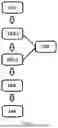
FIGURE is a diagram of the process steps representing the method of the invention.
DESCRIPTION OF THE PROCESS STEPS OF THE METHOD
-
- 101. Procurement of raw materials
-
102. Pre-treatment of raw materials
- 102.1. Size classification of phosphorus powders
- 102.2. Homogenisation of phosphorus powders
- 103. Microwave leaching process
- 104. Solid-liquid separation
DETAILED DESCRIPTION OF THE EMBODIMENTS
In this detailed description, the preferred embodiments of the method for the leaching of rare earth elements (REE) in fluorescent lamp waste are explained only for a better understanding of the subject and without any limiting effect.
The method of the invention that enables the direct leaching of rare earth elements (REE) in the phosphorus dust in a single step, without using the high energy-requiring pre-treatment step of the phosphor dust in the fluorescent lamp waste, includes the process steps of:
-
- Procurement of raw materials (101)
- Pre-treatment of raw materials that does not require high energy (102)
- Size classification of phosphorus powders (102.1)
- Homogenisation of phosphorus powders (102.2)
- Microwave leaching process (103), and
- Solid-liquid separation (104).
In the step of procuring the raw materials (101), 1-1000 kg of fluorescent waste phosphorus powder is procured from the recycling facility.
In the step of pre-treatment of raw materials (102), processes that do not require high energy are included. In process step 102, the size classification (102.1) and homogenisation (102.2) of the phosphorus powders obtained from recycling are performed.
The step of size classification of phosphorus powders (102.1) is the process of classifying the particle size of phosphorus powder by passing it through 100 μm and 45 μm sieves.
The step of homogenisation of phosphorus powders (102.2) includes homogenising the phosphorus powders in a ball mill for 0.1-100 h at a grinding speed of 50 to 5000 rpm and washing them with pure water.
Microwave leaching process, which allows Tb, La, Ce and Gd metals in blue and green phosphorus and Eu and Y metals in red phosphorus to be taken into solution in a single step (103) is the process of applying microwave leaching to phosphorus powders in 0.01-12 M acid solutions in a volume of 0.1-1000 L at a temperature of 15-250° C. for 0.1-20 h.
The power applied in the microwave leaching process (103) is not constant. Microwave applications vary between 0-1600 W depending on the specified temperature (15-250° C.). High efficiency REE-loaded solution was obtained by microwave application at different values within the mentioned parameters.
In the microwave leaching process (103), 0.01-12 M sulphuric acid (H2SO4), nitric acid (HNO3) and hydrochloric acid (HCl) solutions are used.
The single-step solution of Tb, La, Ce and Gd metals in blue and green phosphorus and Eu and Y metals in red phosphorus is achieved by the application of microwave leaching process (103). With the explained parameters, the solution of rare earth elements in phosphorus powders was achieved in a single process step. As the last step, after the microwave leaching process (103) is performed, solid-liquid separation is performed (104). In the solid-liquid separation (104) process, solids that do not enter the solution are preferably separated by filtration.
| TABLE 1 |
| REE values in solution |
| REE | ppm (solute/solution) | |
| Y | 7000-10000 | |
| Eu | 100-1000 | |
| La | 10-500 | |
| Ce | 10-500 | |
| Gd | 10-500 | |
| Tb | 10-500 | |
When the method of the invention is applied, the final products obtained are solutions containing high concentrations of Y and Eu, as well as La, Ce, Gd and Tb. The table above shows the REE values obtained as a result of the application of the method that is the subject of the invention.
Claims
What is claimed is:1-10. (canceled)
11. A method for leaching of rare earth elements (REE) from fluorescent lamp wastes, comprising steps of:
performing a procurement of a fluorescent lamp waste phosphorus powder,
performing a size classification and a homogenisation of the fluorescent lamp waste phosphorus powder to obtain homogenised fluorescent lamp waste phosphorus powder,
performing a microwave leaching process to the homogenised fluorescent lamp waste phosphorus powder in an acid solution, and
performing a separation of a solid and a liquid formed as a result of the microwave leaching process.
12. The method according to claim 11, wherein the fluorescent lamp waste phosphorus powder is passed through sieves of 100 μm and 45 μm in size for the size classification.
13. The method according to claim 11, wherein a grinding operation for the homogenisation is carried out at a value in a range from 50 to 5000 rpm.
14. The method according to claim 13, wherein the grinding operation for the homogenisation is carried out in a ball mill at a value in a range from 0.1 to 100 h.
15. The method according to claim 11, wherein a water washing is carried out at least once after the homogenisation.
16. The method according to claim 11, wherein at least one of the group consisting of sulfuric acid, nitric acid, and hydrochloric acid is used as the acid solution in the microwave leaching process.
17. The method according to claim 16, wherein the acid solution is used at a value in a range from 0.01 to 12 M and in a volume in a range from 0.1 to 1000 L during the microwave leaching process.
18. The method according to claim 11, wherein the microwave leaching process is carried out at a temperature in a range from 15 to 250° C. for a period of time in a range from 0.1 to 20 h.
19. The method according to claim 11, wherein the microwave leaching process is carried out at a maximum of 1600 W.
20. The method according to claim 11,
wherein at least one of metals Tb, La, Ce, or Gd is obtained, when blue and/or green waste phosphorus powders are used as a raw material,
wherein at least one of metals Eu or Y is obtained, when red waste phosphorus powders are used as a raw material.
21. The method according to claim 12, wherein a grinding operation for the homogenisation is carried out at a value in a range from 50 to 5000 rpm.
22. The method according to claim 12, wherein a water washing is carried out at least once after the homogenisation.
23. The method according to claim 13, wherein a water washing is carried out at least once after the homogenisation.
24. The method according to claim 14, wherein a water washing is carried out at least once after the homogenisation.
25. The method according to claim 12, wherein at least one of the group consisting of sulfuric acid, nitric acid, and hydrochloric acid is used as the acid solution in the microwave leaching process.
26. The method according to claim 13, wherein at least one of the group consisting of sulfuric acid, nitric acid, and hydrochloric acid is used as the acid solution in the microwave leaching process.
27. The method according to claim 14, wherein at least one of the group consisting of sulfuric acid, nitric acid, and hydrochloric acid is used as the acid solution in the microwave leaching process.
28. The method according to claim 15, wherein at least one of the group consisting of sulfuric acid, nitric acid, and hydrochloric acid is used as the acid solution in the microwave leaching process.
29. The method according to claim 12, wherein the microwave leaching process is carried out at a temperature in a range from 15 to 250° C. for a period of time in a range from 0.1 to 20 h.
30. The method according to claim 13, wherein the microwave leaching process is carried out at a temperature in a range from 15 to 250° C. for a period of time in a range from 0.1 to 20 h.
Images & Drawings included:

Sources:
- United States Patent and Trademark Office - verify current appl. status at the USPTO↗
Recent applications in this class:
- » 20260103778 2026-04-16
RARE EARTH ELEMENT EXTRACTION METHODS AND APPARATUSES - » 20260092341 2026-04-02
METHODS AND APPARATUS FOR PRODUCTION OF RARE EARTH ELEMENTS FROM COAL AND CLAY ORES - » 20260071299 2026-03-12
APPARATUS AND METHODS FOR RARE EARTH ELEMENT RECOVERY AND PURIFICATION - » 20260071298 2026-03-12
Continuous Ion Exchange Processes for Separating Rare Earth Elements - » 20260062770 2026-03-05
METHOD FOR LEACHING SEPARATION OF MIXED RARE EARTH CONCENTRATE - » 20260055485 2026-02-26
TARGETED EXTRACTION OF RARE EARTH ELEMENTS, YTTRIUM AND RADIUM FROM MINERALOGICALLY CHARACTERIZED PHOSPHOGYPSUM - » 20260028698 2026-01-29
A Process and System for Extracting Rare Earth Elements Using High Pulp Density Cracking - » 20260015692 2026-01-15
ADVANCED SYSTEMS AND METHODS FOR LEACHING RARE EARTHS FROM ORE - » 20260002235 2026-01-01
Method for Producing Rare Earth Metals via Thermite Reduction of Rare Earth Compounds with Aluminum - » 20250369075 2025-12-04
PROCESS FOR SEPARATING RARE-EARTH METALS IN ADMIXTURE IN AQUEOUS SOLUTION
Recent applications for this Assignee:
- » 20240302683 2024-09-12
ELECTRONICALLY CONTROLLED DIELECTRIC HUYGENS RESONATOR SPATIAL LIGHT MODULATOR - » 20240083804 2024-03-14
QUANTUM DOT-DOPED GLASS NANOCOMPOSITE AS A RADIATION COLOUR CONVERTER AND PRODUCTION METHOD THEREOF - » 20240003154 2024-01-04
SEISMIC COMBINATION APPARATUS WITH ELASTOMER AND WITH FRICTION PARTICULARLY FOR USE IN BUILDINGS