TEMPERATURE MEASURING SYSTEM WITHOUT DAMAGE TO LADLE STRUCTURE
US20260104296A1
2026-04-16
19/422,396
2025-12-16
Smart Summary: A temperature measuring system is designed to check the heat of a ladle used in metal processing. The ladle has a strong steel outer layer, an insulating inner layer, and a permanent layer in between. It features exhaust holes on the outer surface that allow gases to escape. Special temperature measuring devices fit into these exhaust holes without harming the ladle. These devices have parts that stick out to hold them in place while leaving space for gas to flow around them. 🚀 TL;DR
Abstract:
A temperature measuring system includes a ladle and temperature measuring members. The ladle includes a steel shell, a refractory layer and a permanent layer arranged between the steel shell and the refractory layer. An outer surface of the steel shell is provided with exhaust holes which extend to an outer surface of the permanent layer. The cross-section of the temperature measuring members is less than that of the exhaust holes such that the temperature measuring members can extend into the exhaust holes for temperature measurement without damage to the ladle structure. Outer sides of the temperature measuring members are provided with protruding portions which abut against walls of the exhaust holes to fix the temperature measuring members in the exhaust holes. Gaps are formed between non-protruding portions of the temperature measuring members and the walls of the exhaust holes for discharging gas.
Assignee:
- RHI MAGNESITA (DALIAN) CO., LTD. 1 🇨🇳 Dalian City, China
Applicant:
Interested in similar patents?
Get notified when new applications in this technology area are published.
Classification:
G01K7/02 » CPC main
Measuring temperature based on the use of electric or magnetic elements directly sensitive to heat ; Power supply therefor, e.g. using thermoelectric elements using thermoelectric elements, e.g. thermocouples
F27B14/10 » CPC further
Crucible or pot furnaces; Details peculiar to crucible or pot furnaces Crucibles
G01K1/024 » CPC further
Details of thermometers not specially adapted for particular types of thermometer; Means for indicating or recording specially adapted for thermometers for remote indication
G01K1/14 » CPC further
Details of thermometers not specially adapted for particular types of thermometer Supports; Fastening devices; Arrangements for mounting thermometers in particular locations
F27B2014/106 » CPC further
Crucible or pot furnaces; Details peculiar to crucible or pot furnaces; Crucibles Ladles
Description
CROSS REFERENCE TO RELATED APPLICATION
The present disclosure is a continuation application of PCT application No. PCT/CN2023/105498 filed on July 3, 2023, which claims priority of Chinese patent application No. 202310731048.9, entitled “Temperature Measuring System Without Damage to Ladle Structure”, filed with the China National Intellectual Property Administration on June 19, 2023. All of the above are hereby incorporated by reference in their entirety.
FIELD
The invention relates to the technical field of ladles, in particular to a temperature measuring structure without damage to a ladle structure.
BACKGROUND
A ladle, as a vessel used for receiving and pouring molten steel, is sequentially provided with a steel shell, a permanent layer, and a refractory layer from outside to inside. The steel shell is provided with exhaust holes that extend to the outer wall of the permanent layer. When the ladle contains high-temperature molten steel, the high-temperature molten steel is in contact with the refractory layer, resulting in damage to the refractory layer. If the refractory layer is burned through by the high-temperature molten steel, serious accidents such as leaking of the molten steel may occur. In order to timely find the damage of the refractory layer, the temperature of the refractory layer is monitored in the prior art, that is, thermocouples are inserted into the ladle to monitor the temperature in the ladle; if the monitored temperature is higher than a risk threshold, it indicates that the refractory layer has been damaged and needs to be repaired and replaced. Because the exhaust holes in the steel shell are used for discharging gas and cannot be blocked, the thermocouples are not allowed be installed in the exhaust holes in the prior art, and an additional hole needs to be drilled in the steel shell for installation of the thermocouples, which will cause damage to the ladle structure.
SUMMARY
The technical issue to be settled by the invention is to provide a temperature measuring system without damage to a ladle structure.
In order to solve the above-mentioned technical problem, the present invention provides a temperature measuring system without damage to a ladle structure, comprising a ladle and temperature measuring members, the ladle comprising a steel shell, a refractory layer arranged on an inner side of the steel shell and a permanent layer arranged between the steel shell and the refractory layer, an outer surface of the steel shell defining exhaust holes which extend to an outer surface of the permanent layer, wherein a cross-section of the temperature measuring members is less than that of the exhaust holes such that the temperature measuring members are capable of extending into the exhaust holes for temperature measurement; outer sides of the temperature measuring members are provided with protruding portions which abut against walls of the exhaust holes to thereby fix the temperature measuring members in the exhaust holes, and gaps are formed between non-protruding portions on the outer sides of the temperature measuring members and the walls of the exhaust holes for discharging gas.
Furthermore, outer walls of the temperature measuring members are sleeved with polygonal nuts, corners of the polygonal nuts act as the protruding portions, and edges of the polygonal nuts act as the non-protruding portions.
Furthermore, the temperature measuring members extend through the exhaust holes to reach the outer surface of the permanent layer.
Furthermore, the temperature measuring members are thermocouples.
Furthermore, the temperature measuring system comprises a temperature measuring box, wherein a temperature acquisition module is arranged in the temperature measuring box, and the temperature measuring members are electrically connected to the temperature acquisition module in the temperature measuring box.
Furthermore, a wireless communication device is arranged in the temperature acquisition module and has a wireless communication function.
Furthermore, the number of the exhaust holes is more than one.
Furthermore, a side surface of the steel shell serves as a lying surface, the steel shell can lie down with the lying surface facing downwards to perform ladle baking, and side surfaces, not serving as the lying surface, of the steel shell are provided with the exhaust holes.
Furthermore, the top of the steel shell forms a slag discharge port, and an area, less than 800 mm below the slag discharge port, on the outer wall of the steel shell is a hazardous slag-splashing area. The exhaust holes are formed in portions, outside the hazardous slag-splashing area, on the side surfaces not serving as the lying surface.
Furthermore, a left cross-beam and a right cross-beam are arranged on the outer surface of the steel shell, an area below the left cross-beam and the right cross-beam is a half-embedded area. The exhaust holes are formed in portions, outside the half-embedded area, on the side surfaces not serving as the lying surface.
Compared with the prior art where holes are drilled in the steel shell to mount temperature measuring members, temperature measuring members are mounted in the exhaust holes of the steel shell in the present invention, thus avoiding damage to the ladle structure. To guarantee gas discharge of the exhaust holes, the protruding portions are arranged on the outer sides of the temperature measuring members. After installation of the temperature measuring members, the protruding portions abut against the walls of the exhaust holes to fix the temperature measuring members in the exhaust holes, the gaps are formed between the non-protruding portions on the outer sides of the temperature measuring members and the walls of the exhaust holes to discharge gas. The gas pressure in the ladle is high, such that gas in the ladle can be smoothly discharged from the gaps under the action of a force applied by the gas pressure, thus guaranteeing smooth gas discharge. In addition, the temperature measuring members are fixed in the exhaust holes by means of the protruding portions, such that the temperature measuring members are prevented from radial deflection, thus avoiding disturbance to gas discharge.
BRIEF DESCRIPTION OF THE DRAWINGS
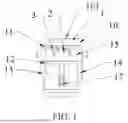
FIG. 1 is a schematic diagram of a temperature measuring system without damage to a ladle structure.
FIG. 2 is a longitudinal sectional view of a side wall of a ladle.
FIG. 3 is a schematic diagram of a hexagon nut and an exhaust hole.
Reference signs: 1, ladle; 10, steel shell; 11, upper cross-beam; 12, lower cross-beam; 13, left cross-beam; 14, right cross-beam; 15, exhaust hole; 161, slag discharge port; 162, cavity; 17, hook; 18, permanent layer; 19, refractory layer; 2, temperature measuring box; 3, thermocouple; 4, hexagon nut; 51, protruding portion; 52, non-protruding portion; 6, gap.
DESCRIPTION OF THE EMBODIMENTS
The invention is described in further detail below in conjunction with specific embodiments.
Referring to FIG. 1, a ladle 1 includes a steel shell 10. Referring to FIG. 2, a refractory layer 19 is arranged on an inner side of the steel shell 10, a permanent layer 18 is arranged between the steel shell 10 and the refractory layer 19, and a cavity 162 is delimited and surrounded by the refractory layer 19. An outer surface of the steel shell 10 defines a plurality of exhaust holes 15 arranged at an interval, and the exhaust holes 15 extend from the outer surface of the steel shell 10 to an outer surface of the permanent layer 18 for discharging gas in the ladle 1. Referring to FIG. 1, a temperature measuring box 2 made from a thermal-insulation material is mounted on the outer wall of the steel shell 10, and a temperature acquisition module is arranged in the temperature measuring box 2. Thermocouples 3 are arranged on an outer side of the temperature measuring box 2, and the thermocouples 3 are electrically connected to the temperature acquisition module arranged in the temperature measuring box 2 and configured to transmit temperature data of the ladle to the temperature acquisition module. A wireless communication device is arranged in the temperature acquisition module and configured to upload the received temperature data of the ladle 1 to a host computer. Outer walls of the thermocouples 3 are sleeved with hexagon nuts 4. Referring to FIG. 3, the hexagon nuts 4 are hexagonal, six corners of each hexagon nut 4 form protruding portions 51, and six edges of each hexagon nut 4 are non-protruding portions 52. The cross-section of the thermocouples 3 is less than that of the exhaust holes 15. The thermocouples 3 extend through the exhaust holes 15 to reach the outer surface of the permanent layer 18 for temperature measurement. The protruding portions 51 of the hexagon nuts 4 abut against walls of the exhaust holes 15 to thereby fix the thermocouples 3 in the exhaust holes 15, and gaps 6 are formed between the non-protruding portions 52 of the hexagon nuts 4 and the walls of the exhaust holes 15. The gas pressure in the ladle 1 is high, and gas in the ladle 1 is smoothly discharged from the gaps 6 under the action of a force applied by the gas pressure. The temperature measuring system provided by the invention consists of the ladle 1, the temperature measuring box 2, the temperature acquisition module, the thermocouples 3, and the hexagon nut 4 arranged on the thermocouples 3. Preferably, the walls of the exhaust holes 15 are round. The hexagon nuts 4 are coaxial with the exhaust holes 15.
Referring to FIG. 1, an upper cross-beam 11, a lower cross-beam 12, a left cross-beam 13 and a right cross-beam 14 are arranged on the outer wall of the steel shell 10. FIG. 1 illustrates the outer surface of the rear side of the steel shell 10 on which a hook 17 is arranged. The steel shell 10 has a front side not shown. Since the ladle 1 needs to lie down to be baked by a baking device in the ladle baking process, one side surface of the ladle 1 needs to be used as a lying surface. In this embodiment, the side surface of the steel shell 10 in the front side is used as the lying surface of the ladle 1, and the steel ladle 10 lies down with the front surface of the steel shell 10 facing downwards. Therefore, during temperature measurement, the thermocouples 3 should extend into the exhaust holes in other side surfaces of the steel shell 10, preferably extend into the exhaust holes 15 in a rear surface of the steel shell 10 rather than extending into the exhaust holes 15 in the front surface of the steel shell 10. A slag discharge port 161 is formed in the top of the steel shell 10. Since steel slag easily splashes into an area of less than 800 mm below the slag discharge port 161, on the outer wall of the steel shell 1 (this area is called a hazardous slag-splashing area) when poured out from the cavity 162 via the slag discharge port 161, the thermocouples 3 should extend into the exhaust holes 15 beyond the hazardous slag-splashing area rather than extending into the exhaust holes 15 in the hazardous slag-splashing area. Before the smelting process, the ladle 1 is generally half-embedded in a mud pit on a transport vehicle to be transported to a smelting place, an area, below the left cross-beam 13 and the right cross-beam 14, of the outer wall of the steel shell 10 is a half-embedded area, and the thermocouples 3 should extend into the exhaust holes 15 outside the half-embedded area rather than extending into the exhaust holes 15 in the half-embedded area.
The embodiments of the invention are described above, but the protection scope of the invention is not limited to the above embodiments. Any non-substantive transformations or substitutions made by those skilled in the art based on the concept of the invention should fall within the protection scope of the invention.
Claims
What is claimed is:1. A temperature measuring system without damage to a ladle structure, comprising a ladle and temperature measuring members, the ladle comprising a steel shell, a refractory layer arranged on an inner side of the steel shell and a permanent layer arranged between the steel shell and the refractory layer, an outer surface of the steel shell defining exhaust holes which extend to an outer surface of the permanent layer, wherein a cross-section of the temperature measuring members is less than that of the exhaust holes such that the temperature measuring members are capable of extending into the exhaust holes for temperature measurement; outer sides of the temperature measuring members are provided with protruding portions which abut against walls of the exhaust holes to thereby fix the temperature measuring members in the exhaust holes, and gaps are formed between non-protruding portions on the outer sides of the temperature measuring members and the walls of the exhaust holes for discharging gas.
2. The temperature measuring system according to claim 1 wherein outer walls of the temperature measuring members are sleeved with polygonal nuts, corners of the polygonal nuts act as the protruding portions, and edges of the polygonal nuts act as the non-protruding portions.
3. The temperature measuring system according to claim 1 wherein the temperature measuring members extend through the exhaust holes to reach the outer surface of the permanent layer.
4. The temperature measuring system according to claim 1 wherein the temperature measuring members are thermocouples.
5. The temperature measuring system according to claim 1 further comprising a temperature measuring box, wherein a temperature acquisition module is arranged in the temperature measuring box, and the temperature measuring members are electrically connected to the temperature acquisition module in the temperature measuring box.
6. The temperature measuring system according to claim 5 wherein a wireless communication device is arranged in the temperature acquisition module and has a wireless communication function.
7. The temperature measuring system according to claim 1 wherein the number of the exhaust holes is more than one.
8. The temperature measuring system according to claim 1 wherein a side surface of the steel shell serves as a lying surface, the steel shell can lie down with the lying surface facing downwards to perform ladle baking, and side surfaces, not serving as the lying surface, of the steel shell are provided with the exhaust holes.
9. The temperature measuring system according to claim 8 wherein a slag discharge port is formed in a top of the steel shell, and an area, less than 800 mm below the slag discharge port, on the outer wall of the steel shell is a hazardous slag-splashing area, and the exhaust holes are formed in portions, outside the hazardous slag-splashing area, of the side surfaces not serving as the lying surface.
10. The temperature measuring system according to claim 8 wherein a left cross-beam and a right cross-beam are arranged on the outer surface of the steel shell, an area below the left cross-beam and the right cross-beam is a half-embedded area, and the exhaust holes are formed in portions, outside the half-embedded area, of the side surfaces not serving as the lying surface.
11. The temperature measuring system according to claim 1 wherein the walls of the exhaust holes are round.
12. The temperature measuring system according to claim 11 wherein the hexagon nuts are coaxial with the exhaust holes.
Images & Drawings included:



Sources:
- United States Patent and Trademark Office - verify current appl. status at the USPTO↗
Recent applications in this class:
- » 20260029280 2026-01-29
THERMOCOUPLE SENSOR ASSEMBLY - » 20250354875 2025-11-20
TEMPERATURE DETECTOR PROBE WITH THERMAL ISOLATION - » 20250277706 2025-09-04
SYSTEM AND METHOD FOR TEMPERATURE DETERMINATION - » 20250146884 2025-05-08
CHANNEL STRUCTURE AND SEMICONDUCTOR MANUFACTURING DEVICE - » 20250060259 2025-02-20
VAPORIZER HEATER AND TEMPERATURE SENSING ELEMENT - » 20240393184 2024-11-28
THIN COMPACT THERMOCOUPLE AND METHOD FOR MANUFACTURING SUCH A THERMOCOUPLE - » 20240280415 2024-08-22
SENSOR, SENSOR SYSTEM AND METHOD FOR DETECTING THERMODYNAMIC PARAMETERS OF A SAMPLE, AND USE OF THE SENSOR OR SENSOR SYSTEM - » 20240110835 2024-04-04
CORROSION RESISTANT COATING FOR TEMPERATURE PROBES - » 20240060828 2024-02-22
SYSTEM AND METHOD FOR TEMPERATURE DETERMINATION - » 20240053206 2024-02-15
REMOTE STRUCTURE TEMPERATURE MONITOR