MULTIPATH-PLUGIN-BASED SOFTWARE RAID DATA STRIPING SYSTEM
US20260104992A1
2026-04-16
18/915,862
2024-10-15
Smart Summary: A new system helps manage data storage more efficiently by using a method called software RAID. It identifies how to split data into smaller pieces and decides the best path to send it to different storage devices. When a data command is received, the system creates smaller commands for each storage device and sends them out in a round-robin order. This means that it sends data to each device one after the other, rather than all at once. As a result, the system improves data handling and speed across multiple storage devices. 🚀 TL;DR
Abstract:
A multipath-plugin-based software RAID data striping system includes a software RAID multipath plugin that identifies a strip size and a respective path to each physical storage device that provides a software RAID logical storage system, and configures round robin data striping based on the strip size. When the software RAID multipath plugin receives a primary software RAID data command for the software RAID logical storage system, it uses it to generate respective secondary software RAID data commands for each of the physical storage devices and transmits each of them to a software RAID driver according to the round robin data striping and via the respective path to the physical storage device for that secondary software RAID data command, causing the software RAID driver to forward each of the respective secondary software RAID data commands to the respective physical storage device for that secondary software RAID data command.
Inventors:
- Nikhith Ganigarakoppal Kantharaju 22 🇮🇳 Hassan, India
- Abhijit Shashikant Mirajkar 14 🇮🇳 Bangalore, India
- Ajay Sukumaran Nair Syamala Bai 13 🇮🇳 Bangalore, India
Applicant:
Interested in similar patents?
Get notified when new applications in this technology area are published.
Classification:
G06F12/023 » CPC main
Accessing, addressing or allocating within memory systems or architectures; Addressing or allocation; Relocation; User address space allocation, e.g. contiguous or non contiguous base addressing Free address space management
G06F12/0607 » CPC further
Accessing, addressing or allocating within memory systems or architectures; Addressing or allocation; Relocation; Addressing a physical block of locations, e.g. base addressing, module addressing, memory dedication Interleaved addressing
G06F13/1642 » CPC further
Interconnection of, or transfer of information or other signals between, memories, input/output devices or central processing units; Handling requests for interconnection or transfer for access to memory bus based on arbitration with request queuing
G06F12/02 IPC
Accessing, addressing or allocating within memory systems or architectures Addressing or allocation; Relocation
Description
CROSS-REFERENCE TO RELATED APPLICATIONS
The present application is related to the following co-pending applications: U.S. patent application Ser. No. ______, attorney docket no. 139631.01, filed ______; U.S. patent application Ser. No. ______, attorney docket no. 139632.01, filed ______; and U.S. patent application Ser. No. ______, attorney docket no. 139633.01, filed ______, the disclosures of which are incorporated by reference herein in their entirety.
BACKGROUND
The present disclosure relates generally to information handling systems, and more particularly to performing multipath-plugin-based software RAID data striping in a software Redundant Array of Independent Disks (RAID) provided using an information handling system.
As the value and use of information continues to increase, individuals and businesses seek additional ways to process and store information. One option available to users is information handling systems. An information handling system generally processes, compiles, stores, and/or communicates information or data for business, personal, or other purposes thereby allowing users to take advantage of the value of the information. Because technology and information handling needs and requirements vary between different users or applications, information handling systems may also vary regarding what information is handled, how the information is handled, how much information is processed, stored, or communicated, and how quickly and efficiently the information may be processed, stored, or communicated. The variations in information handling systems allow for information handling systems to be general or configured for a specific user or specific use such as financial transaction processing, airline reservations, enterprise data storage, or global communications. In addition, information handling systems may include a variety of hardware and software components that may be configured to process, store, and communicate information and may include one or more computer systems, data storage systems, and networking systems.
Information handling systems such as, for example, server devices and/or other computing devices known in the art, sometimes use a software Redundant Array of Independent Disks (RAID) to store their data. As will be appreciated by one of skill in the art in possession of the present disclosure, a software RAID uses software in place of dedicated hardware (e.g., a hardware RAID controller, etc.) in order to perform RAID operations that utilize multiple physical storage devices to provide a RAID logical storage system that is configured to store data in a manner that provides data redundancy, storage performance improvements, and/or other RAID benefits known in the art. For example, a server device will typically utilize its processing resources (e.g., the Central Processing Unit (CPU), operating system, drivers, etc.) to perform RAID operations for the software RAID that include data redundancy operations, striping operations, and/or other RAID operations known in the art. However, the conventional provisioning of a software RAID can raise some issues.
For example, some conventional operating systems (e.g., the ESXi hypervisor available from VMWARE, LLC of Palo Alto, California, United States) utilize a storage controller that requires native Small Computer System Interface (SCSI) drivers, thus requiring a software RAID driver for that operating system to be provided by a native SCSI driver (a “software RAID SCSI driver” below). However, many conventional software RAID systems are provided using Non-Volatile Memory express (NMVe) storage devices, and in such conventional software RAID systems the software RAID SCSI drivers discussed above must receive Input/Output (IO) commands from the operating system in an SCSI format (e.g., in a Command Descriptor Block (CDB)), convert those I/O commands to NVMe commands, and send those NVMe commands to the NVMe storage devices. Similarly, in such conventional software RAID systems the software RAID SCSI drivers discussed above must receive NVMe responses from the NVMe storage devices, convert those NVMe responses to SCSI responses, and send those SCSI responses to the operating system.
Furthermore, in conventional software RAID systems the software RAID SCSI drivers discussed above present the RAID logical storage system to the operating system as being controlled by a native controller that is included in the processing system of the server device, that is not hot-removable, and that performs RAID operations using the logical storage system. For example, in some processing systems that native controller is provided by an Advanced Host Controller Interface (AHCI) controller, while in other processing systems (e.g., Virtual RAID on CPU (VROC) processing systems available from INTEL® corporation of Santa Clara, California, United States) that native controller is provided by a Volume Management Device (VMD). As will be appreciated by one of skill in the art, such native controller requirements result in the native controllers discussed above being provided in processing systems in order to support software RAIDs even in server devices that do not support Serial AT Attachment (SATA) storage devices (e.g., a server device including only NVMe storage devices).
As will be appreciated by one of skill in the art in possession of the present disclosure, such software RAID hardware dependencies (e.g., the dependency of the software RAID on the native controller provided in the processing system by the AHCI controller or VMD) raise the costs of providing software RAIDs. Furthermore, for processing systems that use the AHCI controller as the native controller discussed above, a chipset SATA controller that provides the AHCI operates as a dedicated boot controller for the software RAID. However, such chipset SATA controllers are being phased out of future server devices, thus presenting issues with the ability to control the boot of software RAIDs in the future. Further still, even in the event a new dedicated boot controller is provided in future processing systems (i.e., in place of the chipset SATA controller discussed above), such hardware controllers require development resources for each generation of server device, thus raising costs associated with those server devices as described above.
Accordingly, it would be desirable to provide a software RAID provisioning system that addresses the issues discussed above.
SUMMARY
According to one embodiment, an Information Handling System (IHS) includes a processing system; and a memory system that is coupled to the processing system and that includes instructions that, when executed by the processing system, cause the processing system to provide an operating system engine that includes: a software Redundant Array of Independent Disks (RAID) multipath plugin sub-engine is configured to: identify round robin data striping for a software RAID logical storage system provided by a plurality of physical storage devices; identify a strip size and a respective path to each of the plurality of physical storage devices; configure the round robin data striping based on the strip size; receive a primary software RAID data command for the software RAID logical storage system; generate, from the primary software RAID data command, respective secondary software RAID data commands for each of the plurality physical storage devices; and transmit, to a software RAID driver sub-engine that is included in the operating system engine, each of the respective secondary software RAID data commands according to the round robin data striping and via the respective path to the physical storage device for that secondary software RAID data command to cause the software RAID driver subsystem to forward each of the respective secondary software RAID data commands to the respective physical storage device for that secondary software RAID data command.
BRIEF DESCRIPTION OF THE DRAWINGS
FIG. 1 is a schematic view illustrating an embodiment of an Information Handling System (IHS).
FIG. 2 is a schematic view illustrating an embodiment of a computing device that may provide the software RAID provisioning system of the present disclosure.
FIG. 3A is a flow chart illustrating an embodiment of a portion of a method for providing a software RAID.
FIG. 3B is a flow chart illustrating an embodiment of a portion of a method for providing a software RAID.
FIG. 4 is a schematic view illustrating an embodiment of the computing device of FIG. 2 operating during the method of FIG. 3.
FIG. 5 is a schematic view illustrating an embodiment of the computing device of FIG. 2 operating during the method of FIG. 3.
FIG. 6 is a schematic view illustrating an embodiment of the computing device of FIG. 2 operating during the method of FIG. 3.
FIG. 7 is a schematic view illustrating an embodiment of the computing device of FIG. 2 operating during the method of FIG. 3.
FIG. 8 is a schematic view illustrating an embodiment of the computing device of FIG. 2 operating during the method of FIG. 3.
FIG. 9 is a schematic view illustrating an embodiment of the computing device of FIG. 2 operating during the method of FIG. 3.
FIG. 10A is a schematic view illustrating an embodiment of the computing device of FIG. 2 operating during the method of FIG. 3.
FIG. 10B is a schematic view illustrating an embodiment of the computing device of FIG. 2 operating during the method of FIG. 3.
FIG. 10C is a schematic view illustrating an embodiment of the computing device of FIG. 2 operating during the method of FIG. 3.
FIG. 11 is a schematic view illustrating an embodiment of the computing device of FIG. 2 operating during the method of FIG. 3.
FIG. 12A is a schematic view illustrating an embodiment of the computing device of FIG. 2 operating during the method of FIG. 3.
FIG. 12B is a schematic view illustrating an embodiment of the computing device of FIG. 2 operating during the method of FIG. 3.
FIG. 12C is a schematic view illustrating an embodiment of the computing device of FIG. 2 operating during the method of FIG. 3.
FIG. 13A is a schematic view illustrating an embodiment of the computing device of FIG. 2 operating during the method of FIG. 3.
FIG. 13B is a schematic view illustrating an embodiment of the computing device of FIG. 2 operating during the method of FIG. 3.
FIG. 13C is a schematic view illustrating an embodiment of the computing device of FIG. 2 operating during the method of FIG. 3.
FIG. 14 is a schematic view illustrating an embodiment of the computing device of FIG. 2 operating during the method of FIG. 3.
FIG. 15 is a schematic view illustrating an embodiment of a computing device that may provide the multipath-plugin-based software RAID data striping system of the present disclosure.
FIG. 16 is a flow chart illustrating an embodiment of a portion of a method for multipath-plugin-based software RAID data striping.
FIG. 17 is a schematic view illustrating an embodiment of the computing device of FIG. 15 operating during the method of FIG. 16.
FIG. 18 is a schematic view illustrating an embodiment of the computing device of FIG. 15 operating during the method of FIG. 16.
FIG. 19 is a schematic view illustrating an embodiment of the computing device of FIG. 15 operating during the method of FIG. 16.
FIG. 20 is a schematic view illustrating an embodiment of the computing device of FIG. 15 operating during the method of FIG. 16.
FIG. 21A is a schematic view illustrating an embodiment of a storage device in the computing device of FIG. 15 operating during the method of FIG. 16.
FIG. 21B is a schematic view illustrating an embodiment of a storage device in the computing device of FIG. 15 operating during the method of FIG. 16.
FIG. 21C is a schematic view illustrating an embodiment of the computing device of FIG. 15 operating during the method of FIG. 16.
FIG. 22 is a schematic view illustrating an embodiment of the computing device of FIG. 15 operating during the method of FIG. 16.
FIG. 23 is a schematic view illustrating an embodiment of the computing device of FIG. 15 operating during the method of FIG. 16.
FIG. 24A is a schematic view illustrating an embodiment of storage devices in the computing device of FIG. 15 operating during the method of FIG. 16.
FIG. 24B is a schematic view illustrating an embodiment of storage devices in the computing device of FIG. 15 operating during the method of FIG. 16.
FIG. 24C is a schematic view illustrating an embodiment of the computing device of FIG. 15 operating during the method of FIG. 16.
DETAILED DESCRIPTION
For purposes of this disclosure, an information handling system may include any instrumentality or aggregate of instrumentalities operable to compute, calculate, determine, classify, process, transmit, receive, retrieve, originate, switch, store, display, communicate, manifest, detect, record, reproduce, handle, or utilize any form of information, intelligence, or data for business, scientific, control, or other purposes. For example, an information handling system may be a personal computer (e.g., desktop or laptop), tablet computer, mobile device (e.g., personal digital assistant (PDA) or smart phone), server (e.g., blade server or rack server), a network storage device, or any other suitable device and may vary in size, shape, performance, functionality, and price. The information handling system may include random access memory (RAM), one or more processing resources such as a central processing unit (CPU) or hardware or software control logic, ROM, and/or other types of nonvolatile memory. Additional components of the information handling system may include one or more disk drives, one or more network ports for communicating with external devices as well as various input and output (I/O) devices, such as a keyboard, a mouse, touchscreen and/or a video display. The information handling system may also include one or more buses operable to transmit communications between the various hardware components.
In one embodiment, IHS 100, FIG. 1, includes a processor 102, which is connected to a bus 104. Bus 104 serves as a connection between processor 102 and other components of IHS 100. An input device 106 is coupled to processor 102 to provide input to processor 102. Examples of input devices may include keyboards, touchscreens, pointing devices such as mouses, trackballs, and trackpads, and/or a variety of other input devices known in the art. Programs and data are stored on a mass storage device 108, which is coupled to processor 102. Examples of mass storage devices may include hard discs, optical disks, magneto-optical discs, solid-state storage devices, and/or a variety of other mass storage devices known in the art. IHS 100 further includes a display 110, which is coupled to processor 102 by a video controller 112. A system memory 114 is coupled to processor 102 to provide the processor with fast storage to facilitate execution of computer programs by processor 102. Examples of system memory may include random access memory (RAM) devices such as dynamic RAM (DRAM), synchronous DRAM (SDRAM), solid state memory devices, and/or a variety of other memory devices known in the art. In an embodiment, a chassis 116 houses some or all of the components of IHS 100. It should be understood that other buses and intermediate circuits can be deployed between the components described above and processor 102 to facilitate interconnection between the components and the processor 102.
Referring now to FIG. 2, an embodiment of a computing device 200 is illustrated that may provide the software RAID provisioning system of the present disclosure. In an embodiment, the computing device 200 may be provided by the IHS 100 discussed above with reference to FIG. 1 and/or may include some or all of the components of the IHS 100, and in specific examples may be provided by a server device. However, while illustrated and discussed as being provided by a server device, one of skill in the art in possession of the present disclosure will recognize that the functionality of the computing device 200 discussed below may be provided by other devices that are configured to operate similarly as the computing device 200 discussed below.
In the illustrated embodiment, the computing device 200 includes a chassis 202 that houses the components of the computing device 200, only some of which are illustrated and described below. For example, the chassis 202 may house a processing system 204 that may include the processor 102 discussed above with reference to FIG. 1 such as, for example, a Central Processing Unit (CPU) and/or other processors that would be apparent to one of skill in the art in possession of the present disclosure. The chassis 202 may also house a memory system 206 that is coupled to the processing system 204 and that may include the memory 114 discussed above with reference to FIG. 1 such as, for example, a Dynamic Random Access Memory (DRAM) system and/or other memory systems that would be apparent to one of skill in the art in possession of the present disclosure. As discussed below, the memory system 206 may include instructions that, when executed by the processing system 204, cause the processing system 204 to provide an operating system engine that is configured to provide an operating system for the computing device 200 that performs the functionality of the operating system engines, operating systems, and/or computing devices discussed below.
The chassis 202 may also house a storage system (not illustrated, but which may include the storage 108 discussed above with reference to FIG. 1) that is coupled to the processing system 204 and that includes a software RAID (“SWRAID” in FIG. 2 and the other figures referenced below) database 207 that is configured to store any of the information utilized by the operating system engine provided by the processing system 204 as described below. In the embodiments illustrated and described below, the chassis 202 also houses a plurality of physical storage devices that are provided by Non-Volatile Memory express (NVMe) storage devices 208a, 208b, and up to 208c and that are coupled to the processing system 204 via respective physical paths (i.e., cabling, ports, traces, and/or other processor/storage device connections/couplings that would be apparent to one of skill in the art in possession of the present disclosure) to provide a Direct Attached Storage (DAS) topology.
As will be appreciated by one of skill in the art in possession of the present disclosure, each of the physical storage devices may include a physical controller such as, for example, an NVMe controller in each of the NVMe storage devices 208a-208c in the examples illustrated and described below. As will be appreciated by one of skill in the art in possession of the present disclosure, such NVMe controllers have not conventionally be used to provide primary controllers for a software RAID logical storage system because NVMe devices are “hot-removable” from the computing device 200 (i.e., they may be disconnected/decoupled from the processing system 200 while the processing system provides an operating system for the computing device 200), and such hot-removal of the primary controller for a software RAID logical storage system would “crash” or otherwise render the software RAID logical storage system unavailable. However, as discussed below, the systems and methods of the present disclosure allow the use of NVMe storage devices to provide primary controllers for a software RAID logical storage system, and one of skill in the art in possession of the present disclosure will appreciate how the NVMe storage devices described herein may be replaced by other types of storage devices with similar functionality as the NVMe storage devices (e.g., storage devices including controllers similar to NVMe controllers) while remaining within the scope of the present disclosure.
Furthermore, while physical storage devices housed in the chassis 202 are illustrated and described below, one of skill in the art in possession of the present disclosure will recognize how physical storage devices utilized in the software RAID provisioning system of the present disclosure may be located outside of the chassis 202 of the computing device 200 (i.e., while connected to the processing system 204 via a cable, network, etc.), and/or may be provided in any of a variety of physical storage device configurations while remaining within the scope of the present disclosure as well. As such, while a specific computing device 200 has been illustrated and described, one of skill in the art in possession of the present disclosure will recognize that computing devices (or other devices operating according to the teachings of the present disclosure in a manner similar to that described below for the computing device 200) may include a variety of components and/or component configurations for providing conventional computing device functionality, as well as the software RAID provisioning functionality discussed below, while remaining within the scope of the present disclosure as well.
Referring now to FIGS. 3A and 3B, an embodiment of a method 300 for providing a software Redundant Array of Independent Disks (RAID) is illustrated. As discussed below, the systems and methods of the present disclosure provide a software RAID multipath plugin for an operating system that allows any of a plurality of hot-removable storage devices that provide a software RAID logical storage system to be presented as the controller for the software RAID logical storage system via presentation of an “active” path to that controller. For example, the software RAID provisioning system of the present disclosure may include an operating system having a software RAID multipath plugin coupled to a software RAID driver and an operating system kernel. The software RAID multipath plugin identifies first and second physical storage devices that have been configured by the software RAID driver to provide a software RAID logical storage system, and that provide a primary and secondary controller, respectively, for the software RAID logical storage system. The software RAID multipath plugin then presents a software RAID logical controller for the software RAID logical storage system to the operating system kernel. When the software RAID multipath plugin receives a command from the operating system kernel directed to the software RAID logical controller, it provides the command via an active path to the primary controller presented by the software RAID driver to cause the software RAID driver to attempt to execute the command As will be appreciated by one of skill in the art in possession of the present disclosure, the systems and methods of the present disclosure eliminate the hardware dependency of software RAIDs on the native controller provided in the processing system used to provide those software RAIDs, solving the issues with conventional software RAID provisioning systems discussed above.
The method 300 begins at block 302 where a computing device is provided with an operating system having an operating system kernel subsystem, a software RAID driver subsystem, and a software RAID multi-path plugin subsystem. With reference to FIGS. 2 and 4, in an embodiment of block 302, the processing system 204 in the computing device 200 may execute instructions stored on the memory system 206 to provide an operating system engine 400 that is configured to provide an operating system for the computing device 200 that performs any of the operating system operations described below. In a specific example, the operating system engine 400 may be configured to provide a hypervisor such as the ESXi hypervisor available from VMWARE, LLC of Palo Alto, California, United States, although one of skill in the art in possession of the present disclosure will appreciate how other operating systems will fall within the scope of the present disclosure as well. As will be appreciated by one of skill in the art in possession of the present disclosure, the operating system provided by the operating system engine 400 includes the storage multipath functionality described below that allows simultaneous use of multiple physical data paths between the processing system 204 and a software RAID logical storage system (e.g., a RAID volume/LUN) provided by the NVMe storage devices 208a-208c.
As illustrated, the processing system 204 in the computing device 200 may also execute instructions stored on the memory system 206 to provide an operating system kernel sub-engine 402 in the operating system engine 400 that is configured to provide an operating system kernel for the operating system that performs any of the operating system kernel operations performed by the operating system kernel sub-engines, operating system kernel subsystems, operating system engines, operating systems, and/or computing devices described below. In a specific example, the operating system kernel sub-engine 402 may be configured to provide a virtual machine kernel that, as illustrated, is configured to use the components in the computing device 200 to provide a plurality of virtual machines 404a, 404b, and up to 404c, although one of skill in the art in possession of the present disclosure will appreciate how other operating system kernels will fall within the scope of the present disclosure as well.
With reference to FIG. 5, as part of the provisioning of the operating system by the operating system engine 400 (e.g., during a boot process or other initialization of the computing device 200), the processing system 204 in the computing device 200 may execute instructions stored on the memory system 206 to provide a software RAID driver sub-engine 500 in the operating system engine 400 that is configured to provide a software RAID driver for the operating system that is coupled to each of the NVMe storage devices 208a-208c (e.g., via a coupling between the processing system 204 and the NVMe storage devices 208a-208c), and that performs any of the software RAID driver operations performed by the software RAID driver sub-engines, software RAID driver subsystems, operating system engines, operating systems, and/or computing devices described below.
In the specific examples discussed below, the software RAID driver sub-engine 500 is provided by an NVMe driver sub-engine that is configured to provide an NVMe driver that operates with an NVMe transport layer in the operating system kernel sub-engine 402 to eliminate the need for SCSI-to-NVMe translations. However, in other embodiments, the software RAID driver sub-engine 500 may be provided by a Small Computer System Interface (SCSI) driver sub-engine that is configured to provide a SCSI driver that supports the NVMe storage devices 208a-208c, which one of skill in the art in possession of the present disclosure will appreciate may include receiving CDB-format SCSI commands generated by the operating system kernel sub-engine 402 and converting them to NVMe commands (e.g., using a SCSI-to-NVMe translation layer). Furthermore, while two specific examples have been described, one of skill in the art in possession of the present disclosure will appreciate how the software RAID driver sub-engine 500 may be, provided by other storage technology driver sub-engine/drivers known in the art.
With reference to FIG. 6, as part of the provisioning of the operating system by the operating system engine 400 (e.g., during a boot process or other initialization of the computing device 200), the processing system 204 in the computing device 200 may execute instructions stored on the memory system 206 to provide a software RAID multipath plugin sub-engine 600 in the operating system engine 400 that is configured to provide a software RAID multipath plugin for the operating system that performs any of the software RAID multipath plugin operations performed by the software RAID multipath plugin sub-engines, software RAID multipath plugin subsystems, operating system engines, operating systems, and/or computing devices described below. As illustrated, the software RAID multipath plugin sub-engine 600 is communicatively coupled to each of the operating system kernels sub-engine 402 and the software RAID driver sub-engine 500 using any of a variety of hardware/software coupling techniques known in the art.
As will be appreciated by one of skill in the art in possession of the present disclosure, the provisioning of the software RAID driver sub-engine 500 and the software RAID multipath plugin sub-engine 600 at block 302 may be based on one or more claim rules in a claim rule set. For example, a claim rule may provide for the loading or other provisioning of the software RAID multipath plugin sub-engine 600 whenever the software RAID driver sub-engine 500 has been loaded (e.g., during boot or other initialization of the computing device 200 as described above). However, in another example, a claim rule may provide for the loading or other provisioning of the software RAID multipath plugin sub-engine 600 when a software RAID logical storage system is detected as being provided by the software RAID driver sub-engine 500 as described in further detail below. However, while two specific claim rules/techniques for providing the software RAID multipath plugin sub-engine 600 have been described, one of skill in the art in possession of the present disclosure will appreciate how the software RAID multipath plugin sub-engine 600 may be provide using a variety of techniques and in a variety of manners that will fall within the scope of the present disclosure.
In some examples, the software RAID multipath plugin sub-engine 600 may be provided using a “native multipath plugin” for the operating system provided by the operating system engine 400, which one of skill in the art in possession of the present disclosure will recognize requires a provider of the operating system engine 400/operating system to configure the “native multipath plugin” with the functionality of the software RAID multipath plugin sub-engine 600 described below. However, in other examples, the software RAID multipath plugin sub-engine 600 may be provided using a “third-party multipath plugin” for the operating system provided by the operating system engine 400, which one of skill in the art in possession of the present disclosure will recognize allows a third-party to configure the “third-party multipath plugin” with the functionality of the software RAID multipath plugin sub-engine 600 described below, and provide it for use with the operating system engine 400 and its operating system. As such, if the “native multipath plugin” for the operating system provided by the operating system engine 400 does not provide the functionality of the software RAID multipath plugin sub-engine 600 described below, the third-party plugin for the operating system provided by the operating system engine 400 may be developed to do so.
The method 300 then proceeds to block 304 where the software RAID driver subsystem provides a software RAID logical storage system using physical storage devices that provide a primary controller and at least one secondary controller for the software RAID logical storage system. With reference to FIG. 7, in an embodiment of block 304, the software RAID driver sub-engine 500 in the operating system engine 400 of the computing device 200 may initialize and discover each of the NVMe storage devices 208a, 208b, and up to 208c, and then perform storage device metadata retrieval operations 700 that include retrieving metadata from each of the NVMe storage devices 208a, 208b, and up to 208c. With reference to FIG. 8, the software RAID driver sub-engine 500 may then use the metadata retrieved from the NVMe storage devices 208a, 208b, and up to 208c with any of a variety of software RAID creation techniques known in the art to create a software RAID logical storage subsystem 800 that one of skill in the art in possession of the present disclosure will recognize provides a RAID volume, Logical Unit Number (LUN), and/or other software RAID logical storage known in the art.
In the illustrated example, each of the NVMe storage devices 208a-208c are used to provide the software RAID logical storage system 800, and thus those NVMe storage devices 208a-208c belong to a RAID storage device group 801 (e.g., a “RAID disk group”). However, one of skill in the art in possession of the present disclosure will appreciate the software RAID provisioning system of the present disclosure may provide a software RAID using as few as two physical storage devices while remaining within the scope of the present disclosure as well.
Following the provisioning of the software RAID logical storage system 800, the software RAID driver sub-engine 500 may select one of the NVMe storage devices 208a-208c to present as a primary controller for the software RAID logical storage system 800, and may select at least one of the remaining NVMe storage devices 208a-208c (i.e., other than the NVMe storage device that was selected for presentation as the primary controller) to present as a secondary controller for the software RAID logical storage system 800, and one of skill in the art in possession of the present disclosure will appreciate how any selection criteria known in the art may be used to select the primary controller and the secondary controller(s) at block 304.
In the embodiments illustrated and described below, the software RAID driver sub-engine 500 selects the NVMe storage device 208a for presentation as the primary controller for the software RAID logical storage system 800 (as indicated by the “active” path 802 illustrated by the solid line connecting the software RAID logical storage system 800 to the software RAID multipath plugin sub-engine 600 that, as described below, is presented by the software RAID driver sub-engine 500 between the software RAID logical storage system 800 and the software RAID multipath plugin sub-engine 600), and selects the NVMe storage device 208c for presentation as the secondary controller for the software RAID logical storage system 800 (as indicated by the “failover” path 806 illustrated by the dashed line connecting the software RAID logical storage system 800 to the software RAID multipath plugin sub-engine 600 that, as described below, is presented by the software RAID driver sub-engine 500 between the software RAID logical storage system 800 and the software RAID multipath plugin sub-engine 600).
While not illustrated or described in detail below, the software RAID driver sub-engine 500 may also select the NVMe storage device 208b for presentation as a tertiary controller for the software RAID logical storage system 800 (as indicated by the “failover” path 804 illustrated by the dashed line connecting the software RAID logical storage system 800 to the software RAID multipath plugin sub-engine 600 that, as described below, is presented by the software RAID driver sub-engine 500 between the software RAID logical storage system 800 and the software RAID multipath plugin sub-engine 600), and one of skill in the art in possession of the present disclosure will appreciate how the tertiary controller may provide failover for the secondary controller in the event the secondary controller is unavailable similarly as described below with regard to the secondary controller providing failover for the primary controller in the event the primary controller is unavailable.
Furthermore, while the presentation of only two failover paths are illustrated and described herein, one of skill in the art in possession of the present disclosure will appreciate how failover paths in the software RAID provisioning system of the present disclosure are only limited by the number of NVMe storage devices that are used to provide the software RAID logical storage system 800 (i.e., failover path may be presented to each NVMe storage device that provides the software RAID logical storage system, other than the NVMe storage device presented as the primary controller for the software RAID logical storage system). In the discussions below, the tertiary controller may be considered a “second” secondary controller, a quaternary controller provided by another NVMe storage device (not illustrated) may be considered a “third” secondary controller, and so on, such that a plurality of “failover” paths to respective “secondary controllers” for the software RAID logical storage system 800 are presented.
While the paths to the NVMe storage devices 208a-208c are illustrated and described below as being used to present “active” and “failover” paths to controllers provided by the NVMe storage devices 208a-208c, one of skill in the art in possession of the present disclosure will appreciate how the paths to the NVMe storage devices 208a-208c may provide a variety of other functionality that will fall within the scope of the present disclosure as well. For example, the inventors of the present disclosure describe techniques for enabling software RAID data exchange between the software RAID multipath plugin sub-engine 600 and the software RAID driver sub-engine 500 via a “failover” path in U.S. patent application Ser. No. ______, attorney docket no. 139633.01, filed ______, the disclosure of which is incorporated by reference herein in its entirety. Furthermore, while not described in detail below, one of skill in the art in possession of the present disclosure will recognize how the paths to the NVMe storage devices 208a-208c may be used for load balancing associated with data storage operations for the software RAID logical storage system 800, as well any other operations that would be apparent to one of skill in the art in possession of the present disclosure.
The software RAID driver sub-engine 500 may then report the paths for the NVMe storage devices 208a-208c that are being used to provide the RAID logical storage system 800 to the software RAID multipath plugin sub-engine 600. For example, the software RAID driver sub-engine 500 may generate controller/path information for each NVMe storage device that is being used to provide the software RAID logical storage system 800, and may store that controller/path information in the software RAID database 207. To provide a specific example, a format that identifies the NVMe storage device, the controller included in that NVMe storage device, a target that identifies the address of that NVMe storage device, and in the case of the primary controller, the software RAID logical storage system, may be used as follows for each NVMe storage device 208a-208c to identify the controller/path information for the NVMe storage devices 208a-208c providing the software RAID logical storage system 800:
“NVME208a: Controller208a: target208a: SWRAIDLogicalStorage800”
“NVME208b: Controller208b: target208b”
“nvme208c: Controller208c: Target208c”
As will be appreciated by one of skill in the art in possession of the present disclosure, the controller/path information used to identify the NVMe storage device that is presented as the primary controller (i.e., the NVMe storage device 208a in the above example) includes an identification of the software RAID logical storage system (i.e., the software RAID logical storage system 800), while the controller/path information used to identify the NVMe storage devices (i.e., the NVMe storage devices 208b and 208c in the above example) that are presented as the secondary/tertiary controllers does not identify the software RAID logical storage system. However, other controller/physical path formats and/or controller/path information conventions may be used to identify physical storage devices providing a software RAID logical storage system while remaining within the scope of the present disclosure as well.
The method 300 then proceeds to block 306 where the software RAID multipath plugin identifies physical storage devices used to provide the software RAID logical storage system. With reference to FIG. 9, in an embodiment of block 306, the software RAID driver sub-engine 500 may perform software RAID logical storage system information provisioning operations 900 that include providing software RAID logical storage system information about the software RAID logical storage system 800 to the software RAID multipath plugin sub-engine 600. For example, the software RAID driver sub-engine 500 may retrieve the controller/path information for each NVMe storage device 208a-208c that is being used to provide the software RAID logical storage system 800 from the software RAID database 207, and provide that controller/path information to the software RAID multipath plugin sub-engine 600 (which is illustrated as being performed via the “active” path 802 in FIG. 9, but which one of skill in the art in possession of the present disclosure will appreciate may be performed via any available path while remaining within the scope of the present disclosure).
However, while the provisioning of the controller/path information for each of the NVMe storage devices 208a-208c being used to provide the software RAID logical storage system 800 has been illustrated and described, one of skill in the art in possession of the present disclosure will appreciate how controller/path information for as few as two physical storage devices/two paths to primary/secondary controllers for the software RAID logical storage system 800 may be provided to the software RAID multipath plugin sub-engine 600 while remaining within the scope of the present disclosure as well. Furthermore, while specific software RAID logical storage system information about the software RAID logical storage system 800 provided by the controller/path information discussed above has been described, one of skill in the art in possession of the present disclosure will appreciate how the software RAID driver sub-engine 500 may identify a variety of details about the software RAID logical storage system 800 using any of a variety of software RAID logical storage system information while remaining within the scope of the present disclosure as well.
The method 300 then proceeds to block 308 where the software RAID multipath plugin subsystem presents a software RAID logical controller for the software RAID logical storage system to the operating system kernel subsystem. In response to receiving the controller/path information, the software RAID multipath plugin sub-engine 600 may use that controller/path information to create a software RAID logical controller (or a software RAID logical multipath disk that operates similarly to the software RAID logical controller discussed below) for the software RAID logical storage system 800 based on the respective paths to each of the NVMe storage devices 208a-208c (i.e., as identified in the controller/path information). For example, with reference to FIG. 10A, the software RAID multipath plugin sub-engine 600 may perform path claiming initiation operations 1000 that may include generating and transmitting a path claiming initiation communication (e.g., a “pathClaimBegin” callback communication that indicates that the software RAID multipath plugin sub-engine 600 is ready to claim paths based on claim rule(s)) to the operating system kernel sub-engine 402.
With reference to FIG. 10B, following the sending of the path claiming initiation communication, the software RAID multipath plugin sub-engine 600 may then perform path claiming operations 1002 that may include, for each path available to the operating system kernel sub-engine 402, generating a path information retrieval communication for that path (e.g., using a “Claim_path” callback communication that is configured to retrieve path data), transmitting that path information retrieval communication to the operating system kernel sub-engine 402 to retrieve path information (e.g., a “vmk_ScsiPath” parameter), using data included in that path parameter to determine whether its associated path matches a path utilized in the software RAID logical storage system 800 (e.g., whether a path identified in the controller/path information matches that path according to claim rule(s)) and, if so, claiming that path. In an embodiment, the software RAID multipath plugin sub-engine 600 may then store path information for each path it claims in the software RAID database 207.
With reference to FIG. 10C, once each path utilized in the software RAID logical storage system 800 (e.g., each path identified in the controller/path information) is claimed, the software RAID multipath plugin sub-engine 600 may perform path claiming completion operations 1004 that may include generating and transmitting a path claiming completion communication (e.g., a “pathClaimEnd” callback communication that indicates that the software RAID multipath plugin sub-engine 600 has completed path claiming operations) to the operating system kernel sub-engine 402 As such, the paths to each of the NVMe storage devices 208a-208c that provide the software RAID logical storage system 800 may be claimed by the software RAID multipath plugin sub-engine 600 to provide the software RAID logical storage system 800. However, while a specific technique for providing a software RAID multipath plugin multiple paths to a software RAID logical storage system provided by multiple physical storage devices has been described, one of skill in the art in possession of the present disclosure will appreciate how multiple paths to a software RAID logical storage system may be provided using other techniques that will fall within the scope of the present disclosure as well.
With reference to FIG. 11, following the provisioning of the multiple paths for the software RAID multipath plugin sub-engine 600 to software RAID logical storage system 800, the software RAID multipath plugin sub-engine 600 may create a software RAID logical controller 1100 for the software RAID logical storage system 800, with the NVMe storage device 208a presented as the primary controller for the software RAID logical storage system 800 that is accessible via the “active” path 802 between the software RAID logical storage system 800 and the software RAID multipath plugin sub-engine 600, the NVMe storage device 208c that presented as the secondary controller for the software RAID logical storage system 800 that is accessible via the “failover” path 806 between the software RAID logical storage system 800 and the software RAID multipath plugin sub-engine 600 (and in some embodiments the NVMe storage device 208b presented as the tertiary controller for the software RAID logical storage system 800 that is accessible via the “failover” path 804 between the software RAID logical storage system 800 and the software RAID multipath plugin sub-engine 600). The software RAID multipath plugin sub-engine 600 may then present that software RAID logical controller 1100 to the operating system kernel sub-engine 402.
In some embodiments, following the creation of the software RAID logical controller 1100, the software RAID driver sub-engine 500 may configure the software RAID logical storage system 800 to operate in a desired manner. For example, the metadata retrieved from the NVMe storage devices 208a, 208b, and up to 208c as part of the storage device metadata retrieval operations 700 may include a configuration for the software RAID logical storage system 800 (e.g., a software RAID logical storage system configuration provided by a network administrator or other user in the metadata included in the NVMe storage devices 208a-208c). In another example, the configuration for the software RAID logical storage system 800 may be accessible via the software RAID database 207 and/or a database that is otherwise accessible to the software RAID driver sub-engine 500. However, while a few specific examples of providing software RAID logical storage system configurations have been described, one of skill in the art in possession of the present disclosure will appreciate how the software RAID logical storage system configurations may be provided in a variety of manners that will fall within the scope of the present disclosure as well.
In a specific example, the software RAID logical storage system 800 may be configured at block 308 with a RAID-storage-device-group-based striping configuration that provides for the dividing of data included in a data write request into data subsets (i.e., RAID “strips”) that are written to the respective NVMe storage devices 208a-208c in the RAID storage device group 801 that provide the software RAID logical storage system 800, allowing data to be written and read simultaneously across the NVMe storage devices 208a-208c and improving data read and write speeds and other Input/Output Per Second (IOPS) characteristics. As such, one of skill in the art in possession of the present disclosure will appreciate how the RAID-storage-device-group-based striping configuration provided for the software RAID logical storage system 800 may define the size of the data subsets described above, as well as any other parameters of the RAID-storage-device-group-based striping configuration that would be apparent to one of skill in the art in possession of the present disclosure.
In another example, the software RAID logical storage system 800 may be configured at block 308 with a maximum data transfer size configuration that defines a maximum size of data that may be transmitted to the software RAID logical storage system 800. For example, the software RAID driver sub-engine 500 may provide the maximum data transfer size configuration for the software RAID logical storage system 800 by configuring the operating system kernel sub-engine 402 with that maximum data transfer size. In another example, the software RAID logical storage system 800 may be configured at block 308 with a maximum queue depth configuration that defines a maximum depth of a data queue for the software RAID logical storage system 800. For example, the software RAID driver sub-engine 500 may provide the maximum queue depth configuration for the software RAID logical storage system 800 by configuring the operating system kernel sub-engine 402 with that maximum queue depth. However, while a few specific examples have been provided, one of skill in the art in possession of the present disclosure will appreciate how the software RAID logical storage system 800 may be configured in any of a variety of manners that will fall within the scope of the present disclosure.
Furthermore, while the configuration of a single software RAID logical controller 1100 is illustrated and described herein, the inventors of the present disclosure describe techniques for providing a plurality of software RAID logical controllers for respective software RAID logical storage systems, and configuring each of those software RAID logical controllers with different configurations, in U.S. patent application Ser. No. ________, attorney docket no. 139632.01, filed ________, the disclosure of which is incorporated by reference herein in its entirety.
The method 300 then proceeds to decision block 310 where the method 300 proceeds depending on whether a command is received that is directed to the software RAID logical controller. As described below, the operating system kernel sub-engine 402 may receive data requests (e.g., data write requests, data read requests, etc.) from any of the virtual machines 404a-404c and, in response, may generate NVMe commands for those data requests that are directed to the software RAID logical controller 1100, and transmit those NVMe commands to the software RAID multipath plugin sub-engine 600. As such, in an embodiment of decision block 310, the software RAID multipath plugin sub-engine 600 may monitor for NVMe commands from the operating system kernel sub-engine 402. However, while particular commands have been described, one of skill in the art in possession of the present disclosure will appreciate how the software RAID logical storage system 800 may be accessed by the operating system kernel sub-engine 402 in a variety of manners that will fall within the scope of the present disclosure as well.
If, at decision block 310, no command is received that is directed to the software RAID logical controller, the method 300 returns to block 308. As such, the method 300 may loop such that the software RAID multipath plugin sub-engine 600 continues to present the software RAID logical controller 1100 to the operating system kernel sub-engine 402 until a command is received.
If, at decision block 310, a command is received that is directed to the software RAID logical controller, the method 300 proceeds to block 312 where the software RAID multipath plugin subsystem provides the command to the software RAID driver subsystem via an active path presented by the software RAID driver subsystem to cause the software RAID driver subsystem to attempt to execute the command using the physical storage device(s). With reference to FIG. 12A, in a specific example of decision block 310, the virtual machine 404a may perform data request operations 1200 that may include providing a data request (e.g., a data write request, a data read request, etc.) to the operating system kernel sub-engine 402. In response to receiving the data request, the operating system kernel sub-engine 402 may perform command provisioning operations 1202 that include generating an NVMe command for the data request (e.g., an NVMe write command for a data write request, an NVMe read command for a data read request, etc.) that is directed to the software RAID logical controller 1100, and transmitting that NVMe command to the software RAID logical controller 1100 such that it is received by the software RAID multipath plugin sub-engine 600. As will be appreciated by one of skill in the art in possession of the present disclosure, the transmission of the NVMe command may be according to the maximum data transfer size configuration and/or the maximum queue depth configuration for the software RAID logical storage system 800 discussed above, and/or any other software RAID logical storage system configurations that would be apparent to one of skill in the art in possession of the present disclosure.
However, while a particular virtual machine 404a is described as providing a data request that causes the NVMe command to be generated and transmitted to the software RAID logical controller 1100/software RAID multipath plugin sub-engine 600 at block 306, one of skill in the art in possession of the present disclosure will appreciate that the operating system kernel sub-engine 402 may generate and provide commands (e.g., CDB-format SCSI commands that must be translated to NVMe commands by the software RAID driver sub-engine 500 as described above) to the software RAID logical controller 1100/software RAID multipath plugin sub-engine 600 in other manners that will fall within the scope of the present disclosure as well.
In an embodiment, at block 312 and in response to receiving the NVMe command, the software RAID multipath plugin sub-engine 600 may perform command provisioning operations 1204 that may include transmitting the NVMe command via the “active” path 802 to the software RAID logical storage system 800 such that it is received by the software RAID driver sub-engine 500. For example, the instruction (as well as other plugin/driver communications described below) may be transmitted by the software RAID multipath plugin sub-engine 600 to the software RAID driver sub-engine 500 using Input/Output ConTroL (IOCTL) communications, vendor-defined commands, and/or other plugin/driver communication techniques known in the art.
The software RAID driver sub-engine 500 may then attempt to execute the NVMe command at block 312. As will be appreciated by one of skill in the art in possession of the present disclosure, the attempt to execute the NVMe command by the software RAID driver sub-engine 500 may be based on the software RAID logical storage system configurations discussed above, and thus the attempt to execute the NVMe command may conform to the RAID-storage-device-group-based striping configuration described above, and/or any other software RAID logical storage system configuration of the software RAID logical storage system 800.
With reference to FIG. 12B, in response to receiving the NVMe command, the software RAID driver sub-engine 500 may perform command execution operations 1206 that may include attempting to execute the NVMe command by attempting to perform any data exchange operations with any or all of the NVMe storage devices 208a-208c (as illustrated by the dashed/bolded double-sided arrows between the software RAID logical storage system 800 and each of the NVMe storage devices 208a-208c), which one of skill in the art in possession of the present disclosure will appreciate will depend on the details of the NVMe command. To provide some specific examples, the command execution operations 1206 may include an attempt to perform a “full stripe” write to all of the NVMe storage devices 208a-208c, an attempt to perform a “full stripe” read from all of the NVMe storage devices 208a-208c, an attempt to perform a “partial stripe” write to some of the NVMe storage devices 208a-208c, an attempt to perform a “partial stripe” read from some of the NVMe storage devices 208a-208c, and/or any an attempt to perform other data exchange operations that would be apparent to one of skill in the art in possession of the present disclosure.
The method 300 then proceeds to decision block 314 where the method 300 proceeds depending on whether the command was executed successfully. As will be appreciated by one of skill in the art in possession of the present disclosure, the attempt to execute the NVMe command at block 312 on the software RAID logical storage system 800 may succeed and, following successful execution of the NVMe command, any of the NVMe storage devices 208a-208c used to execute that NVMe command will generate a response for the executed NVMe command (e.g., an Input/Output (IO) completion communication), and transmit that response to the software RAID logical storage system 800 such that it is received by the software RAID driver sub-engine 500. As such, in an embodiment of decision block 314 and following the attempt to execute the command, the software RAID multipath plugin sub-engine 600 may monitor for responses for the executed NVMe command to determine whether the NVMe command executed successfully.
If, at decision block 314, the NVMe command executed successfully, the method 300 proceeds to block 316 where the software RAID multipath plugin subsystem provides the response to the operating system kernel subsystem. With reference to FIG. 12C, in an embodiment of decision block 314 and following the successful execution of the NVMe command, any or all of the NVMe storage devices 208a-208c that were used to execute the NVMe command may perform response provisioning operations 1208 that include generating a respective response for the executed NVMe command, and transmitting that response to the software RAID logical storage system 800 such that it is received by the software RAID driver sub-engine 500 (with the response provisioning operations 1208 illustrated in bolded/dashed lines to indicate that only the NVMe storage devices 208a-208c that are used to execute the NVMe command will perform those response provisioning operations 1208).
In response to receiving the NVMe response, the software RAID driver sub-engine 500 may perform response provisioning operations 1210 that include providing an NVMe response to the software RAID logical controller 1100 via the “active” path 802 such that it is received by the software RAID multipath plugin sub-engine 600. For example, the NVMe response (as well as other driver/plugin communications described herein) may be forwarded to the software RAID multipath plugin sub-engine 600 by the software RAID driver sub-engine 500 using IOCTL communications, vendor-defined commands, and/or other plugin/driver communication techniques known in the art.
In an embodiment, at block 316 and in response to receiving the NVMe response, the software RAID multi-path plugin sub-engine 600 may perform response forwarding operations 1212 that may include forwarding the NVMe response received from the software RAID driver sub-engine 500 to the operating system kernel sub-engine 402. In the specific example illustrated in FIG. 12C, in response to receiving the NVMe response, the operating system kernel sub-engine 402 may perform data request confirmation provisioning operations 1214 that include providing a confirmation for the data request to the virtual machine 404a, although one of skill in the art in possession of the present disclosure will appreciate how the operating system kernel sub-engine 402 may perform other NVMe response operations in response to receiving the NVMe response while remaining within the scope of the present disclosure as well.
If, at decision block 314, the NVMe command is not executed successfully, or following block 316, the method 300 proceeds to decision block 318 where the method 300 proceeds depending on whether an unavailable primary controller communication is received. As will be appreciated by one of skill in the art in possession of the present disclosure, if the NVMe storage device 208a that is presented as the primary controller for the software RAID logical storage system 800 is unavailable, an attempt to execute the NVMe command by the software RAID driver sub-engine 500 at block 312 may not succeed if that NVMe command requires the NVMe storage device 208a for its execution, and no response will be received by the software RAID driver sub-engine 500 from the NVMe storage device 208a in such a situation. As such, in some embodiments, the failure of the attempt to execute the NVMe command may identify to the software RAID driver sub-engine 500 the unavailability of the NVMe storage device 208a that is presented as the primary controller for the software RAID logical storage system 800.
However, an attempt to execute the NVMe command by the software RAID driver sub-engine 500 at block 312 may succeed despite the unavailability of the NVMe storage device 208a that is presented as the primary controller for the software RAID logical storage system 800 if that NVMe command does not require the NVMe storage device 208a for its execution, As such, in some embodiments of decision block 318, the software RAID driver sub-engine 500 monitor for the unavailability of the NVMe storage device 208a that is presented as the primary controller for the software RAID logical storage system 800. However, while two specific examples of the identification of the unavailability of the primary controller have been described, one of skill in the art in possession of the present disclosure will appreciate how the unavailability of the primary controller may be identified in a variety of manners that will fall within the scope of the present disclosure as well.
In response to identifying the unavailability of the primary controller, the software RAID driver sub-engine 500 may provide an unavailable primary controller communication to the software RAID multipath plugin sub-engine 600. As such, at decision block 318, the software RAID multipath plugin sub-engine 600 may monitor for an unavailable primary controller communication. If, at decision block 318, no unavailable primary controller communication is received, the method 300 returns to block 308. As such, the method 300 may loop such that the software RAID multipath plugin sub-engine 600 receives NVMe commands from the operating system kernel sub-engine 402 that are directed to the software RAID logical controller 1100, and provides those NVMe commands via the “active” path presented by the software RAID driver sub-engine 500 for execution (while providing NVMe responses to the operating system kernel sub-engine 402 upon successful NVMe command execution), as long as no unavailable primary controller communication is received.
If, at decision block 318, an unavailable primary controller communication is received, the method 300 proceeds to block 320 where the software RAID multipath plugin subsystem provides a secondary controller activation communication to the software RAID driver subsystem. With reference to FIG. 13A, in an embodiment, the NVMe storage device 208a may be removed from the RAID storage device group 801 or may otherwise become unavailable (e.g., the NVMe controller in the NVMe storage device 208a that is presented as the primary controller for the software RAID logical storage system 800 may become unavailable), and at decision block 314 the software RAID driver sub-engine 500 will identify that unavailability. As described below, the identification of the unavailability of the NVMe storage device 208a that is presented as the primary controller for the software RAID logical storage system 800 may initiate primary controller switching operations (or “active”/“failover” path switching operations) that are described as being performed by the software RAID multipath plugin sub-engine 600 below, but that may be performed by a Storage Array Type Plugin (SATP) in the operating system and/or using other techniques that would be apparent to one of skill in the art in possession of the present disclosure.
For example, with reference to FIG. 13B and in response to identifying the unavailability of the NVMe storage device 208a that was presented as the primary controller for the software RAID logical storage system 800, the software RAID drive engine 500 will perform unavailable primary controller communication provisioning operations 1300 that include generating an unavailable primary controller communication that is configured to inform the software RAID multipath plugin sub-engine 600 that the primary controller for the RAID logical storage system 800 is not available, and providing the unavailable primary controller communication via the “failover” path 806 (or any other available path) to the software RAID multipath plugin sub-engine 600 at decision block 318 as described above.
In a specific example, the NVMe storage device 208a may be “hot-removed” from the RAID storage device group 801 by disconnecting or otherwise decoupling the NVMe storage device 208a from the processing system while the operating system engine 400 is providing an operating system for the computing device 200, preventing the NVMe storage device 208a (i.e., the NVMe controller in the NVMe storage device 208a that is presented as the primary controller for the software RAID logical storage system 800) from being presented as the primary controller for the software RAID logical storage system 800, and resulting in the software RAID driver sub-engine 400 providing the primary controller unavailable communication to the software RAID multipath plugin sub-engine 600 at decision block 318. However, one of skill in the art in possession of the present disclosure will appreciate that the NVMe storage device and/or its NVMe controller may become unavailable for other reasons that will fall within the scope of the present disclosure as well.
With reference to FIG. 13C, in an embodiment of block 320 and in response to receiving the primary controller unavailable communication, the software RAID multipath plugin sub-engine 600 may perform secondary controller activation communication provisioning operations 1302 that include generating a secondary controller activation communication that is configured to instruct the software RAID driver sub-engine 500 to switch from presenting the NVMe storage device 208a as the primary controller for the software RAID logical storage system 800 to presenting the NVMe storage device 208c as the primary controller for the software RAID logical storage system 800, and providing the secondary controller activation communication via the “failover” path 806 to the software RAID driver sub-engine 500.
In a specific embodiment, the secondary controller activation communication may instruct the software RAID driver sub-engine 500 to switch the primary controller presented for the RAID logical storage system 800 from the NVMe storage device 208a to the NVMe storage device 208c (i.e., remove the NVMe storage device 208a from being presented as the primary controller of the RAID logical storage system 800, switch the NVMe storage device 208c from being presented as the secondary controller of the RAID logical storage system 800 to being presented as the primary controller of the RAID logical storage system 800, switch the NVMe storage device 208b from being presented as the tertiary controller of the RAID logical storage system 800 to being presented as the secondary controller of the RAID logical storage system 800, and so on).
As illustrated in FIG. 13C, the secondary controller activation communication may cause the software RAID driver sub-engine 500 to present the NVMe storage device 208c as the “new” primary controller for the software RAID logical storage system 800 (with the “failover” path 806 between the software RAID multipath plugin sub-engine 600 and the software RAID logical storage system 800 becoming the “active” path presented to the “new” primary controller for the software RAID logical storage system 800), and provide an acknowledgement to the software RAID multipath plugin sub-engine 600 that the primary controller for the software RAID logical storage system 800 has been switched from the NVMe storage device 208a to the NVMe storage device 208c. In response to receiving the acknowledgement, the software RAID multipath plugin sub-engine 600 may present the NVMe storage device 208c as the “new” primary controller for the software RAID logical storage system 800 that is accessible via an “active” path 806, and present the NVMe storage device 208b as the “new” secondary controller for the software RAID logical storage system 800 that is accessible via a “failover” path 804 for the software RAID logical controller 1100.
The method 300 then proceeds to block 322 where the software RAID multipath plugin subsystem provides the command to the software RAID driver subsystem via the failover path presented by the software RAID driver subsystem to cause the software RAID driver subsystem to attempt to execute the command using the physical storage device(s). With reference to FIG. 14, in an embodiment of block 322 and following the provisioning of the secondary controller activation communication, the software RAID driver sub-engine 500 may perform command instruction provisioning operations 1400 that may include using the software RAID logical controller 1100 to transmit the NVMe command via the “failover” path 806 (now the “active” path 806) to the software RAID logical storage system 800 such that it is received by the software RAID driver sub-engine 500.
Similarly as described above, in response to receiving the NVMe command, the software RAID driver sub-engine 500 may perform instruction execution operations 1402 that include attempting to execute the command using any or all of the NVMe storage devices 208b-208c similarly as described above with reference to FIG. 12C.
The method 300 then returns to decision block 314. As such, one of skill in the art in possession of the present disclosure will appreciate that the method 300 may loop until the NVMe command received from the operating system kernel sub-engine 402 is successfully executed, with the software RAID provisioning system of the present disclosure changing the NVMe storage device that is presented as the primary controller for the software RAID logical storage system 800 until an available NVMe storage device/NVMe storage controller is selected to present as that primary controller (i.e., the NVME storage device that is presented as the primary controller for the software RAID logical storage system 800 may be changed a number of times that is only limited on the number of NVMe storage devices being used to provide the software RAID logical storage system 800).
While not described in detail herein, one of skill in the art in possession of the present disclosure will recognize that the “hot-removal” or other unavailability of the NVMe storage device 208a and/or its NVMe controller described above with reference to FIG. 13A will require any of a variety of RAID data recovery operations known in the art to recover the data that was stored on the NVMe storage device 208a, and while those RAID data recovery operations are not described herein in detail, one of skill in the art in possession of the present disclosure will appreciate how they may be performed by the software RAID driver sub-engine 500 using NVMe commands similarly as discussed above.
Thus, systems and methods have been described that provide a software RAID multipath plugin for an operating system that allows any of a plurality of hot-removable storage devices that provide a software RAID logical storage system to be used at the controller for the software RAID logical storage system. For example, the software RAID provisioning system of the present disclosure may include an operating system having a software RAID multipath plugin coupled to a software RAID driver and an operating system kernel. The software RAID multipath plugin identifies first and second physical storage devices that have been configured by the software RAID driver to provide a software RAID logical storage system, and that provide a primary and secondary controller, respectively, for the software RAID logical storage system. The software RAID multipath plugin then presents a software RAID logical controller for the software RAID logical storage system to the operating system kernel. When the software RAID multipath plugin receives a command from the operating system kernel directed to the software RAID logical controller, it provides the command via an active path to the primary controller presented by the software RAID driver to cause the software RAID driver to attempt to execute the command As such, the hardware dependency of software RAIDs on the native controller provided in the processing system (e.g., the non-hot-pluggable ACHI controller or VMD described above) used to provide those software RAIDs is eliminated, solving the issues with conventional software RAID provisioning systems discussed above.
As discussed above, data may be written to and read from a software RAID provided according the teachings of the present disclosure discussed above using data striping techniques. For example, data in a data write request received from the operating system kernel sub-engine 402 may be divided into data subsets (i.e., RAID “strips”) that are written to the respective NVMe storage devices 208a-208c in the RAID storage device group 801 that provide the software RAID logical storage system 800, and data in a data read request received from the operating system kernel sub-engine 402 may be divided into data subsets (i.e., RAID “strips”) that are read from the respective NVMe storage devices 208a-208c in the RAID storage device group 801 that provide the software RAID logical storage system 800, allowing data to be written and read simultaneously across the NVMe storage devices 208a-208c, improving data read and write speeds and other IOPS characteristics.
In conventional software RAID systems, data striping is performed by the RAID driver or other firmware, with the RAID driver or other firmware waiting for each RAID strip to be completed in its respective storage device before completing the request from the host. As will be appreciated by one of skill in the art in possession of the present disclosure, such conventional software RAID data striping techniques can delay data striping operations and completion of the request from the host, and such delays increase as the number of storage devices and/or the data strip size increases. As discussed below, software RAID systems provided according to the teachings of the present disclosure may be configured to address such issues by providing for stripe-based load balancing via the software RAID multipath plugin subsystem using a round robin data striping configuration that is based on a round robin path selection policy available via the software RAID multipath plugin subsystem, which as discussed below provides for more efficient data striping operations relative to conventional software RAID data striping operations.
With reference to FIG. 15, the computing device 200 discussed above with reference to FIG. 2 may be provided with an operating system having the operating system kernel sub-engine 402, the software RAID driver sub-engine 500, and the software RAID multipath plugin sub-engine 600 similarly as described above with reference to block 302 of the method 300. Furthermore, the software RAID sub-engine 500 may provide the software RAID logical storage system 800 using the NVMe storage devices 208a-208c that provide the primary controller and secondary controller(s) for the software RAID logical storage system 800 (and present the “active” path 802 and “failover” paths 804 and 806 to the software RAID multipath plugin sub-engine 600) similarly as described above with reference to block 304 of the method 300. Further still, the software RAID multipath plugin sub-engine 600 may then identify the NVMe storage devices 208a-208c used to provide the software RAID logical storage system 800, and present the software RAID logical controller 1100 for the software RAID logical storage system 800 to the operating system kernel sub-engine 402 similarly as described above with reference to blocks 306 and 308 of the method 300.
In addition, a path selection sub-engine 1500 may be provided for the software RAID multipath plugin sub-engine 600, and one of skill in the art in possession of the present disclosure will appreciate how the path selection sub-engine 1500 in the software RAID multipath plugin sub-engine 600 may be provided by a path selection component in an operating system multipath plugin that has been modified to perform functionality of the path selection sub-engines, path selection subsystems, and/or operating systems described below. However, while a specific configuration of the computing device 200 that provides the multipath-plugin-based software RAID data striping system of the present disclosure has been illustrated and described, one of skill in the art in possession of the present disclosure will appreciate how the multipath-plugin-based software RAID data striping functionality described below may be enabled via a variety of components and/or component configurations while remaining within the scope of the present disclosure as well.
With reference to FIG. 16, an embodiment of a method 1600 for multipath-plugin-based software RAID data striping is illustrated. As discussed below, the systems and methods of the present disclosure provide a software RAID multipath plugin subsystem that orchestrates data striping operations in response to a primary software RAID data command from an operating system, allowing a software RAID driver subsystem to simply forward secondary software RAID data commands to storage devices that provide a software RAID logical storage system to complete the primary software RAID data command. For example, the multipath-plugin-based software RAID data striping system of the present disclosure may include a software RAID multipath plugin that identifies a strip size and a respective path to each physical storage device that provides a software RAID logical storage system, and configures round robin data striping based on the strip size. When the software RAID multipath plugin receives a primary software RAID data command for the software RAID logical storage system, it uses it to generate respective secondary software RAID data commands for each of the physical storage devices and transmits each of them to a software RAID driver according to the round robin data striping and via the respective path to the physical storage device for that secondary software RAID data command, causing the software RAID driver to forward each of the respective secondary software RAID data commands to the respective physical storage device for that secondary software RAID data command. As discussed below, software RAID data striping operations performed according to the teachings of the present disclosure may be conducted in a more efficient manner while also being offloaded from the software RAID driver subsystem.
The method 1600 begins at block 1602 where a software RAID multipath plugin subsystem identifies round robin data striping for a software RAID logical storage system. With reference to FIG. 17, in an embodiment of block 1602, the path selection sub-engine 1500 in the software RAID plugin sub-engine 600 may perform round robin data striping identification operations 1700 that include identifying round robin data striping for the software RAID logical storage system 800. As discussed above, the identification of round robin data striping for the software RAID logical storage system 800 may be based on a path selection configuration of the path selection sub-engine 1500/software RAID multipath plugin sub-engine 600. In some examples, the path selection sub-engine 1500 may be configured to use round robin path selection by default, and thus the “identification” and use of round robin data striping during the method 1600 may be a default operation in which the path selection sub-engine 1500/software RAID multipath plugin subsystem “determine” they are configured to use round robin path selection by default. However, in other examples, the path selection sub-engine 1500/software RAID multipath plugin subsystem may change their path selection configuration to round robin path selection at block 1602 while remaining within the scope of the present disclosure as well.
The method 1600 then proceeds to block 1604 where the software RAID multipath plugin subsystem identifies a strip size and respective path to each physical storage device that provides the software RAID logical storage system. With reference to FIG. 18, in an embodiment of block 1604, the software RAID multipath plugin sub-engine 600 may perform strip size/path identification operations 1800 with the software RAID driver sub-engine 500 that include identifying a strip size for the software RAID logical storage system 800, as well as paths to each of the NVMe storage devices 208a-208c, respectively, that provide the software RAID logical storage system 800. To provide a specific example, the strip size may be 64KB and the paths may be the “active” path 802 to the NVMe storage device 208a and the “failover” paths 804 and 806 to the NVMe storage devices 208b and 208c discussed above.
In the illustrated example, the strip size/path identification operations 1800 are illustrated as being performed via the failover path 806 for simplicity. However, the inventors of the present disclosure have developed techniques for software RAID multipath plugin sub-engine/software RAID driver sub-engine communications in U.S. patent application Ser. No. ______, attorney docket no. 139633.01, filed ______, the disclosure of which is incorporated herein by reference in its entirety. As described in that document, the strip size/path identification operations 1800 may include the software RAID multipath plugin sub-engine 600 configuring a buffer memory subsystem to receive software RAID data associated with software RAID logical storage system 800, generating a software RAID data command requesting software RAID data (e.g., the strip size and path information) from the software RAID driver sub-engine 500, transmitting the software RAID data command via the failover path 806 to the software RAID driver sub-engine 500, and initiating a software RAID data command timer. In response to receiving the software RAID data command, the software RAID driver sub-engine 500 will provide software RAID data (e.g., the strip size and path information) in the buffer memory subsystem, and at the completion of the software RAID data command timer, the software RAID multipath plugin sub-engine 600 will retrieve the software RAID data from the buffer memory subsystem.
However, while a specific technique has been described in which the software RAID multipath plugin sub-engine 600 requests and receives data (e.g., the strip size and path information) from the software RAID driver sub-engine 500, one of skill in the art in possession of the present disclosure other techniques (e.g., the software RAID driver sub-engine 500 providing data to the software RAID multipath plugin sub-engine 600 as described in the document referenced above) for software RAID multipath plugin sub-engine/software RAID driver sub-engine communication will fall within the scope of the present disclosure as well. Furthermore, in some examples the strip size may be fixed, while in other examples the strip size may be configurable (e.g., configurable via a strip size configuration plugin that is provided in the operating system and that allows a user to increase the strip size to provide improved buffer performance for relatively larger data write operations).
The method 1600 then proceeds to block 1606 where the software RAID multipath plugin subsystem configures the round robin data striping based on the strip size. In an embodiment, at block 1606, the path selection sub-engine 1500 in the software RAID multipath plugin sub-engine 600 may configure the round robin data striping for the software RAID logical storage system 800 by configuring the round robin path selection identified for the path selection sub-engine 1500 based on the strip size (e.g., the 64KB strip size in the specific example provided above). As described in further detail below and as will be appreciated by one of skill in the art in possession of the present disclosure, the configuration of the round robin path selection based on the strip size of the software RAID logical storage system 800 configures the round robin data striping for the software RAID logical storage system 800 such that the software RAID multipath plugin sub-engine 600 only provides stripe-aligned RAID data commands to the software RAID driver sub-engine 500.
Furthermore, as also discussed in further detail below, the round robin data striping may be configured at block 1606 to utilize each of the paths to the NVMe storage devices 208a-208c that were identified at block 1604. Continuing with the specific example provided above, at block 1606, the round robin data striping may be configured at block 1606 to utilize each of the “active” path 802 to the NVMe storage device 208a and the “failover” paths 804 and 806 to the NVMe storage devices 208b and 208c, and thus the paths 802, 804, and 806 may each be considered “active” paths for the purposes of the data striping operations described below. Furthermore, in some embodiments, the paths 804 and 806 may be configured with dual roles: “failover” roles for the purposes of providing a controller for the software RAID logical storage system 800, and “active”roles for the purposes of data striping operations.
The method 1600 then proceeds to decision block 1608 where the method 1600 proceeds depending on whether a primary software RAID data command is received. As will be appreciated by one of skill in the art in possession of the present disclosure, following block 1606 the software RAID logical storage system 800 is configured for multipath-plugin-based software RAID data striping operations, which are initiated by “primary” software RAID data commands received from the operating system kernel sub-engine 402 as described below. As such, in an embodiment of decision block 1608, the software RAID multipath plugin sub-engine 600 may monitor for such primary software data commands from the operating system kernel sub-engine 402. If, at decision block 1608, no primary software RAID data command is received, the method 1600 returns to decision block 1608. As such, the method 1600 may loop such that the software RAID multipath plugin sub-engine 600 monitors for a primary software data command from the operating system kernel sub-engine 402 until it is received.
If, at decision block 1608, a primary software RAID data command is received, the method 1600 proceeds to block 1610 where the software RAID multipath plugin uses the primary software RAID data command to generate respective software RAID data command(s) for the physical storage device(s). With reference to FIG. 19, in an embodiment of decision block 1608, the operating system kernel sub-engine 402 may perform primary software RAID data command provisioning operations 1900 that, similarly as described above, may include receiving a data request (e.g., a data write request, a data read request, etc.) from one of the virtual machines (e.g., the virtual machine 404a in the illustrated example), generating a primary software RAID data command for that data request, and transmitting the primary software RAID data command to the software RAID logical controller 1100 such that it is received by software RAID multipath plugin sub-engine 600 and provided to the path selection sub-engine 1500.
In an embodiment, at block 1610 and in response to receiving the primary software RAID data command, the path selection sub-engine 1500 uses the primary software RAID data command to generate one or more “secondary” software RAID data commands for the respective NVMe storage device(s) 208a-208c that are configured to execute the primary software RAID data command. As described below, the secondary software RAID data commands are generated at block 1610 to provide stripe-aligned RAID data commands to the software RAID driver sub-engine 500 for forwarding to the NVMe storage device(s) 208a-208c.
In a first example of a primary software RAID data command that is discussed in further detail below, the primary software RAID data command is an “aligned” primary software RAID data write command that requests a software RAID data write operation that begins at a Logical Block Address (LBA) of 0 and includes a data size of 32 KB (e.g., half the strip size identified for the software RAID logical storage system 800 in the example provided above), and the path selection sub-engine 1500 generates a single secondary software RAID data write command for that primary software RAID data write command that is directed to the NVMe storage device 208a and that, as described below, provides a stripe-aligned RAID data command. However, while a specific example of an aligned primary software data command has been described, one of skill in the art in possession of the present disclosure will appreciate how a variety of other aligned primary software RAID data commands (e.g., aligned primary software RAID data read commands, aligned primary software RAID data commands having a data size equal to or greater than the strip size identified for the software RAID logical storage system 800, etc.) may be handled similarly as described below.
The method 1600 then proceeds to block 1612 where the software RAID multipath plugin subsystem transmits each secondary software RAID data command according to the round robin data striping and via the respective path to the physical storage device for that secondary software RAID data command. With reference to FIG. 20, in an embodiment of block 1612, the path selection sub-engine 1500 may perform secondary software RAID data command transmission operations 2000 that include transmitting a secondary software RAID data command according to the round robin data striping for the software RAID logical storage system 800 via the path 802 to the software RAID logical storage system 800 such that it is received by the software RAID driver sub-engine 500.
Continuing with the specific example provided above in which the primary software RAID data command received from the operating system kernel sub-engine 402 is the aligned primary software RAID data write command (which began at an LBA of 0 and includes a data size of 32 KB) that resulted in the path selection sub-engine 1500 generating a single secondary software RAID data write command for that primary software RAID data write command that was directed to the NVMe storage device 208a as described above, the secondary software RAID data command transmission operations 2000 include the path selection sub-engine 1500 transmitting that secondary software RAID data write command according to the round robin data striping, which in this example transmits that secondary software RAID data write command via the path 802 for the NVMe storage device 208a because that path 802 is the path currently designated for utilization according to the round robin path selection.
The method 1600 then proceeds to block 1614 where the software RAID driver subsystem forwards each secondary software RAID data command to the respective physical storage device for that secondary software RAID data command. With continued reference to FIG. 20, in an embodiment of block 1614 and in response to receiving the secondary software RAID data command at block 1612 via the path 802, the software RAID driver sub-engine 500 may perform secondary software RAID data command forwarding operations 2002 that include forwarding that secondary software RAID data command to the NVMe storage device 208a. As such, one of skill in the art in possession of the present disclosure will appreciate that the software RAID driver sub-engine 500 of the present disclosure need not perform any data striping orchestration operations, and rather may simply receive and forward the stripe-aligned software RAID data command(s) to respective NVMe storage device(s) as described herein.
With reference to FIGS. 21A and 21B, and continuing with the specific example in which the secondary software RAID data write command was generated from the aligned primary software RAID data write command that began at an LBA of 0 and included a data size of 32 KB, the secondary software RAID data command forwarding operations 2002 may operate to forward that secondary software RAID data write command to the NVMe storage device 208a that includes the logical address space having LBAs 0-127 as illustrated in FIGS. 21A and 21B. In this specific example, the LBAs each provide a data capacity of 512 bytes, and thus FIG. 21B illustrates how the secondary software RAID data write command that was generated from the aligned primary software RAID data write command (which began with an LBA of 0 and included a data size of 32 KB) results in the NVMe storage device 208a executing the secondary software RAID data write command to perform a data write to the sixty-four LBAs 0-63. As such, one of skill in the art in possession of the present disclosure will appreciate how the secondary software RAID data write command forwarded by the software RAID driver sub-engine 500 provides a stripe-aligned RAID data command for execution by the NVMe storage device 208a.
With reference to FIG. 21C, following the execution of the secondary software RAID data write command, the NVMe storage device 208a may perform secondary software RAID data command completion communication operations 2100 that include generating a secondary software RAID data command completion communication and transmitting the secondary software RAID data command completion communication to the software RAID driver sub-engine 500 such that the software RAID driver sub-engine 500 forwards that secondary software RAID data command completion communication to the software RAID multipath plugin sub-engine 600. In response to receiving the secondary software RAID data command completion communication, the software RAID multipath plugin sub-engine 600 may perform primary software RAID data command completion operations 2102 that include generating a primary software RAID data command completion communication and transmitting the primary software RAID data command completion communication to the operating system kernel sub-engine 402.
The method 1600 then returns to decision block 1608. As such, the method 1600 may loop such that, when the operating system kernel sub-engine 402 provides primary software RAID data commands to the software RAID multipath plugin sub-engine 600, the software RAID multipath plugin sub-engine 600 generates secondary software RAID data command(s) for the NVMe storage device(s) 208a-208c, and transmits each of those secondary software RAID data command(s) according to the round robin data striping and via the respective path to the NVMe storage device for that secondary software RAID data command such that the software RAID driver sub-engine 500 forwards each of those secondary software RAID data command(s) via the respective path to the NVMe storage device for that secondary software RAID data command.
With reference to FIG. 22, in an embodiment of decision block 1608 and as part of a second iteration of the method 1600 that follows the first example described above in which the primary software RAID data command provided an aligned primary software RAID data write command (i.e., beginning with an LBA of 0 and including a data size of 32 KB) that was executed by writing data to the NVMe storage device 208a, the operating system kernel sub-engine 402 may perform primary software RAID data command provisioning operations 2200 that, similarly as described above, may include receiving a data request (e.g., a data write request, a data read request, etc.) from one of the virtual machines (e.g., the virtual machine 404a in the illustrated example), generating a primary software RAID data command for that data request, and transmitting the primary software RAID data command to the software RAID logical controller 1100 such that it is received by software RAID multipath plugin sub-engine 600 and provided to the path selection sub-engine 1500.
In an embodiment, at block 1610 and in response to receiving the primary software RAID data command, the path selection sub-engine 1500 uses the primary software RAID data command to generate one or more software RAID data commands for the respective NVMe storage device(s) 208a-208c that are configured to execute the primary software RAID data command. In this second example of a primary software RAID data command that is discussed in further detail below, the primary software RAID data command is an “unaligned” primary software RAID data write command that requests a software RAID data write operation that begins at an LBA of 64 and includes a data size of 64KB (e.g., the strip size identified for the software RAID logical storage system 800 in the specific example provided above), and the path selection sub-engine 1500 generates a first of the “secondary” software RAID data write commands for that primary software RAID data write command that is directed to the NVMe storage device 208a and provides a stripe-aligned RAID data command to write 32 KB of data from the primary software RAID data write command (i.e., due to only 32 KB of its available 64 KB data stripe having been written to the NVMe storage device 208a during the immediately previous/first iteration of the method 1600 described in the first example above), and a second of the “secondary” software RAID data write commands for that primary software RAID data write command that is directed to the NVMe storage device 208b and provides a stripe-aligned RAID data command to write the remaining 32 KB of data from the primary software RAID data write command.
However, while a specific example of an unaligned primary software data command has been described, one of skill in the art in possession of the present disclosure will appreciate how a variety of other unaligned primary software RAID data commands (e.g., unaligned primary software RAID data read commands, unaligned primary software RAID data commands having a data size less than or greater than the strip size identified for the software RAID logical storage system 800, etc.) may be handled similarly as described below.
The method 1600 then proceeds to block 1612 where the software RAID multipath plugin subsystem transmits each secondary software RAID data command according to the round robin data striping and via the respective path to the physical storage device for that secondary software RAID data command. With reference to FIG. 23, in an embodiment of block 1612, the path selection sub-engine 1500 may perform secondary software RAID data command transmission operations 2300 that include transmitting the first of the secondary software RAID data commands according to the round robin data striping for the software RAID logical storage system 800 and via the path 802 to the software RAID logical storage system 800 such that it is received by the software RAID driver sub-engine 500, and transmitting the second of the secondary software RAID data commands according to the round robin data striping for the software RAID logical storage system 800 and via the path 804 to the software RAID logical storage system 800 such that it is received by the software RAID driver sub-engine 500.
Continuing with the specific example provided above in which the primary software RAID data command received from the operating system kernel sub-engine 402 is an unaligned primary software RAID data write command (which began at an LBA of 64 and included a data size of 64KB) that resulted in the path selection sub-engine 1500 generating a pair of secondary software RAID data write commands for that primary software RAID data write command that were directed to the NVMe storage devices 208a and 208b, respectively, the secondary software RAID data command transmission operations 2300 include the path selection sub-engine 1500 transmitting those secondary software RAID data write command according to the round robin data striping, which in this example transmits the first of those secondary software RAID data write commands via the path 802 for the NVMe storage device 208a because that path 802 is the path currently designated for utilization according to the round robin path selection, and transmitting the second of those secondary software RAID data write commands via the path 804 for the NVMe storage device 208a because that path 804 is the next path designated for utilization according to the round robin path selection (i.e., once the first of those secondary software RAID data write commands fills the data strip provided by the NVMe storage device 208a).
The method 1600 then proceeds to block 1614 where the software RAID driver subsystem forwards each secondary software RAID data command to the respective physical storage device for that secondary software RAID data command. With continued reference to FIG. 23, in an embodiment of block 1614 and in response to receiving the first of the secondary software RAID data commands at block 1612 via the path 802, the software RAID driver sub-engine 500 may perform secondary software RAID data command forwarding operations 2302a that include forwarding the first of the secondary software RAID data commands to the NVMe storage device 208a. Similarly, in response to receiving the second of the secondary software RAID data commands at block 1612 via the path 804, the software RAID driver sub-engine 500 may perform secondary software RAID data command forwarding operations 2302b that include forwarding the second of the secondary software RAID data commands to the NVMe storage device 208b.
With reference to FIGS. 24A and 24B, and continuing with the specific example in which the pair of secondary software RAID data write commands were generated from the unaligned primary software RAID data write command that begins at an LBA of 64 and includes a data size of 64 KB, the secondary software RAID data command forwarding operations 2302a may operate to forward the first of the secondary software RAID data write commands to the NVMe storage device 208a that includes the logical address space having LBAs 0-127 as illustrated in FIGS. 24A and 24B. Continuing with the specific example provided above, the LBAs each provide a data capacity of 512 bytes, and thus FIG. 24B illustrates how the first of the secondary software RAID data write commands that was generated from the unaligned primary software RAID data write command (which began with an LBA of 64 and included a data size of 64 KB) results in the NVMe storage device 208a executing the first of the secondary software RAID data write commands to perform a data write to the sixty-four LBAs 64-127 (i.e., because the sixty-four LBAs 0-63 were written to as described above with reference to FIGS. 20, 21A, and 21B). As such, one of skill in the art in possession of the present disclosure will appreciate how the first of the secondary software RAID data write commands forwarded by the software RAID driver sub-engine 500 provides a stripe-aligned RAID data command for execution by the NVMe storage device 208a.
With continued reference to FIGS. 24A and 24B, and continuing with the specific example in which the pair of secondary software RAID data write commands were generated from the unaligned primary software RAID data write command that begins at an LBA of 64 and includes a data size of 64 KB, the secondary software RAID data command forwarding operations 2302b may operate to forward the second of the secondary software RAID data write commands to the NVMe storage device 208b that includes the logical address space having LBAs 0-127 as illustrated in FIGS. 23A and 23B. Continuing with the specific example provided above, the LBAs each provide a data capacity of 512 bytes, and thus FIG. 24B illustrates how the second of the secondary software RAID data write commands that was generated from the unaligned primary software RAID data write command (which began with an LBA of 64 and included a data size of 64 KB) results in the NVMe storage device 208b executing the second of the secondary software RAID data write commands to perform a data write to the sixty-four LBAs 0-63. As such, one of skill in the art in possession of the present disclosure will appreciate how the second of the secondary software RAID data write commands forwarded by the software RAID driver sub-engine 500 provides a stripe-aligned RAID data command for execution by the NVMe storage device 208b.
With reference to FIG. 24C, following the execution of the secondary software RAID data write command, the NVMe storage device 208a may perform secondary software RAID data command completion communication operations 2404 that include generating a secondary software RAID data command completion communication and transmitting the secondary software RAID data command completion communication to the software RAID driver sub-engine 500 such that the software RAID driver sub-engine 500 forwards that secondary software RAID data command completion communication to the software RAID multipath plugin sub-engine 600. Similarly, following the execution of the secondary software RAID data write command, the NVMe storage device 208b may perform secondary software RAID data command completion communication operations 2406 that include generating a secondary software RAID data command completion communication and transmitting the secondary software RAID data command completion communication to the software RAID driver sub-engine 500 such that the software RAID driver sub-engine 500 forwards that secondary software RAID data command completion communication to the software RAID multipath plugin sub-engine 600.
In response to receiving the secondary software RAID data command completion communications from each of the NVMe storage devices 208a and 208b, the software RAID multipath plugin sub-engine 600 may perform primary software RAID data command completion operations 2408 that include generating a primary software RAID data command completion communication and transmitting the primary software RAID data command completion communication to the operating system kernel sub-engine 402. The method 1600 then returns to decision block 1608. As such, one of skill in the art in possession of the present disclosure will appreciate how the method 1600 may loop such that aligned and unaligned primary software RAID data command received from the operating system kernel sub-engine 402 are handled by the software RAID multipath plugin sub-engine 600 similarly as described above. Furthermore, while the use of particular aligned and unaligned primary software RAID data commands to generate particular stripe-aligned secondary software RAID data commands has been described, one of skill in the art in possession of the present disclosure will appreciate how the stripe-aligned secondary software RAID data commands of the present disclosure may be generated based on any aligned and unaligned primary software RAID data commands using the techniques described above while remaining within the scope of the present disclosure as well.
Thus, systems and methods have been described that provide a software RAID multipath plugin subsystem that orchestrates data striping operations in response to a primary software RAID data command from an operating system, allowing a software RAID driver subsystem to simply forward secondary software RAID data commands to storage devices that provide a software RAID logical storage system to complete the primary software RAID data command. For example, the multipath-plugin-based software RAID data striping system of the present disclosure may include a software RAID multipath plugin that identifies a strip size and a respective path to each physical storage device that provides a software RAID logical storage system, and configures round robin data striping based on the strip size. When the software RAID multipath plugin receives a primary software RAID data command for the software RAID logical storage system, it uses it to generate respective secondary software RAID data commands for each of the physical storage devices and transmits each of them to a software RAID driver according to the round robin data striping and via the respective path to the physical storage device for that secondary software RAID data command, causing the software RAID driver to forward each of the respective secondary software RAID data commands to the respective physical storage device for that secondary software RAID data command. As discussed above, software RAID data striping operations performed according to the teachings of the present disclosure may be conducted in a more efficient manner while also being offloaded from the software RAID driver subsystem.
Although illustrative embodiments have been shown and described, a wide range of modification, change and substitution is contemplated in the foregoing disclosure and in some instances, some features of the embodiments may be employed without a corresponding use of other features. Accordingly, it is appropriate that the appended claims be construed broadly and in a manner consistent with the scope of the embodiments disclosed herein.
Claims
What is claimed is:1. A multipath-plugin-based software Redundant Array of Independent Disks (RAID) data striping system, comprising:
a plurality of physical storage devices that are configured to provide a software Redundant Array of Independent Disks (RAID) logical storage system;
a software RAID driver subsystem that is coupled to the plurality of physical storage devices; and
a software RAID multipath plugin subsystem that is coupled to the software RAID driver subsystem and that is configured to:
identify round robin data striping for the software RAID logical storage system;
identify a strip size and a respective path to each of the plurality of physical storage devices;
configure the round robin data striping based on the strip size;
receive a primary software RAID data command for the software RAID logical storage system;
generate, from the primary software RAID data command, respective secondary software RAID data commands for each of the plurality physical storage devices; and
transmit, to the software RAID driver subsystem, each of the respective secondary software RAID data commands according to the round robin data striping and via the respective path to the physical storage device for that secondary software RAID data command to cause the software RAID driver subsystem to forward each of the respective secondary software RAID data commands to the respective physical storage device for that secondary software RAID data command.
2. The system of claim 1, wherein the primary software RAID data command is a primary write command to write data, and wherein each of the respective secondary software RAID data commands is a secondary write command to write a respective subset of the data.
3. The system of claim 1, wherein the primary software RAID data command is a primary read command to write data, and wherein each of the respective secondary software RAID data commands is a secondary read command to read a respective subset of the data.
4. The system of claim 1, wherein the identifying the round robin data striping for the software RAID logical storage system includes either:
determining that the software RAID multipath plugin subsystem is configured to use round robin path selection by default; or
changing a path selection configuration for the software RAID multipath plugin subsystem to round robin path selection.
5. The system of claim 1, wherein the identifying the strip size of the plurality of physical storage devices includes either:
determining that strip size configuration of the plurality of physical storage devices is set as the strip size; or
retrieving, from the software RAID driver subsystem, the strip size and changing a data striping configuration for the software RAID logical storage system to the strip size.
6. The system of claim 1, wherein the respective secondary software RAID data commands generated for each of the plurality physical storage devices from the primary software RAID data command are configured such that the respective secondary software RAID data commands provide only stripe-aligned RAID data commands to the software RAID driver subsystem.
7. An Information Handling System (IHS), comprising:
a processing system; and
a memory system that is coupled to the processing system and that includes instructions that, when executed by the processing system, cause the processing system to provide an operating system engine that includes:
a software Redundant Array of Independent Disks (RAID) multipath plugin sub-engine is configured to:
identify round robin data striping for a software RAID logical storage system provided by a plurality of physical storage devices;
identify a strip size and a respective path to each of the plurality of physical storage devices;
configure the round robin data striping based on the strip size;
receive a primary software RAID data command for the software RAID logical storage system;
generate, from the primary software RAID data command, respective secondary software RAID data commands for each of the plurality physical storage devices; and
transmit, to a software RAID driver sub-engine that is included in the operating system engine, each of the respective secondary software RAID data commands according to the round robin data striping and via the respective path to the physical storage device for that secondary software RAID data command to cause the software RAID driver subsystem to forward each of the respective secondary software RAID data commands to the respective physical storage device for that secondary software RAID data command.
8. The IHS of claim 7, wherein the primary software RAID data command is a primary write command to write data, and wherein each of the respective secondary software RAID data commands is a secondary write command to write a respective subset of the data.
9. The IHS of claim 7, wherein the primary software RAID data command is a primary read command to write data, and wherein each of the respective secondary software RAID data commands is a secondary read command to read a respective subset of the data.
10. The IHS of claim 7, wherein the identifying the round robin data striping for the software RAID logical storage system includes either:
determining that the software RAID multipath plugin sub-engine is configured to use round robin path selection by default; or
changing a path selection configuration for the software RAID multipath plugin sub-engine to round robin path selection.
11. The IHS of claim 7, wherein the identifying the strip size of the plurality of physical storage devices includes either:
determining that strip size configuration of the plurality of physical storage devices is set as the strip size; or
retrieving, from the software RAID driver subsystem, the strip size and changing a data striping configuration for the software RAID logical storage system to the strip size.
12. The IHS of claim 7, wherein the respective secondary software RAID data commands generated for each of the plurality physical storage devices from the primary software RAID data command are configured such that the respective secondary software RAID data commands provide only stripe-aligned RAID data commands to the software RAID driver sub-engine.
13. The IHS of claim 7, wherein the software RAID multipath plugin sub-engine is configured to:
receive, from the software RAID driver sub-engine, a respective command completion communication for each of the respective secondary software RAID data commands and, in response, generate and transmit a primary software RAID data command completion communication.
14. A method for multipath-plugin-based software Redundant Array of Independent Disks (RAID) data striping, comprising:
identifying, by a software Redundant Array of Independent Disks (RAID) multipath plugin subsystem included in an operating system, round robin data striping for a software RAID logical storage system provided by a plurality of physical storage devices;
identifying, by the software RAID multipath subsystem, a strip size and a respective path to each of the plurality of physical storage devices;
configuring, by the software RAID multipath subsystem, the round robin data striping based on the strip size;
receiving, by the software RAID multipath subsystem, a primary software RAID data command for the software RAID logical storage system;
generating, by the software RAID multipath subsystem from the primary software RAID data command, respective secondary software RAID data commands for each of the plurality physical storage devices; and
transmitting, by the software RAID multipath subsystem to a software RAID driver subsystem that is included in the operating system, each of the respective secondary software RAID data commands according to the round robin data striping and via the respective path to the physical storage device for that secondary software RAID data command to cause the software RAID driver subsystem to forward each of the respective secondary software RAID data commands to the respective physical storage device for that secondary software RAID data command.
15. The method of claim 14, wherein the primary software RAID data command is a primary write command to write data, and wherein each of the respective secondary software RAID data commands is a secondary write command to write a respective subset of the data.
16. The method of claim 14, wherein the primary software RAID data command is a primary read command to write data, and wherein each of the respective secondary software RAID data commands is a secondary read command to read a respective subset of the data.
17. The method of claim 14, wherein the identifying the round robin data striping for the software RAID logical storage system includes either:
determining that the software RAID multipath plugin subsystem is configured to use round robin path selection by default; or
changing a path selection configuration for the software RAID multipath plugin subsystem to round robin path selection.
18. The method of claim 14, wherein the identifying the strip size of the plurality of physical storage devices includes either:
determining that strip size configuration of the plurality of physical storage devices is set as the strip size; or
retrieving, from the software RAID driver subsystem, the strip size and changing a data striping configuration for the software RAID logical storage system to the strip size.
19. The method of claim 14, wherein the respective secondary software RAID data commands generated for each of the plurality physical storage devices from the primary software RAID data command are configured such that the respective secondary software RAID data commands provide only stripe-aligned RAID data commands to the software RAID driver subsystem.
20. The method of claim 14, further comprising:
receiving, by the software RAID multipath subsystem from the software RAID driver subsystem, a respective command completion communication for each of the respective secondary software RAID data commands and, in response, generating and transmitting a primary software RAID data command completion communication.
Images & Drawings included:

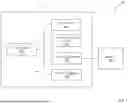


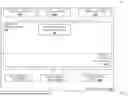
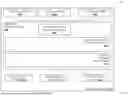
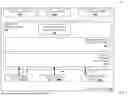




Sources:
- United States Patent and Trademark Office - verify current appl. status at the USPTO↗
Recent applications in this class:
- » 20260104993 2026-04-16
APPARATUS AND METHOD WITH COMPRESSED MEMORY - » 20260104991 2026-04-16
SOFTWARE RAID PROVISIONING SYSTEM - » 20260099438 2026-04-09
STORAGE METHOD FOR MIXED PRECISION WEIGHTS IN NEURAL NETWORKS - » 20260086934 2026-03-26
MULTI-DOMAIN HARDWARE MEMORY COMPRESSION - » 20260086933 2026-03-26
CHIP AND ITS MEMORY MANAGEMENT METHOD - » 20260086932 2026-03-26
METHOD, SYSTEM, AND COMPUTER PROGRAM PRODUCT FOR ADAPTIVE MEMORY MANAGEMENT FOR DATA INGESTION AND FLUSH - » 20260079828 2026-03-19
MODEL BASED ERROR AVOIDANCE - » 20260079827 2026-03-19
READ AND WRITE ADDRESS TRANSLATION USING RESERVED MEMORY PAGES FOR MULTI-PAGE TRANSLATION UNITS - » 20260079826 2026-03-19
Technique for Power Optimized Memory Pools - » 20260072820 2026-03-12
NEURAL PROCESSING UNIT INCLUDING MEMORY BANKS ALLOCATABLE WITH DATA BLOCKS OF NEURAL NETWORK MODEL