Antenna Array Feeding Network, Feeding System, and Communication Device
US20260106648A1
2026-04-16
19/366,726
2025-10-23
Smart Summary: An antenna array feeding network helps manage signals for communication devices. It has a special part that can change how power is divided between two beam signals, allowing for adjustable strength. There are two additional components that handle different sets of signals, producing first and second beam signals. These signals are then combined by a hybrid component to create a final output signal. This setup improves the efficiency and effectiveness of communication systems. 🚀 TL;DR
Abstract:
An antenna array feeding network includes a power division ratio-adjustable power division component, a first power division component, a second power division component, and a hybrid component. The power division ratio-adjustable power division component outputs two beam vectors, and beam amplitudes of the two beam vectors are adjustable. The first power division component and the second power division component output X first beam signals and Y second beam signals respectively for received signals. The hybrid component mixes the first beam signals and the second beam signals to form an output signal.
Inventors:
- Haiwei ZHANG 4 🇨🇳 Dongguan, China
- Fengwen CHEN 4 🇨🇳 Dongguan, China
- Xukun Tian 1 🇨🇳 Dongguan, China
Assignee:
- HUAWEI TECHNOLOGIES CO., LTD. 29,780 🇨🇳 Shenzhen, China
Applicant:
Interested in similar patents?
Get notified when new applications in this technology area are published.
Classification:
H04B7/0408 » CPC main
Radio transmission systems, i.e. using radiation field; Diversity systems; Multi-antenna system, i.e. transmission or reception using multiple antennas using two or more spaced independent antennas using two or more beams, i.e. beam diversity
H04B7/043 » CPC further
Radio transmission systems, i.e. using radiation field; Diversity systems; Multi-antenna system, i.e. transmission or reception using multiple antennas using two or more spaced independent antennas; MIMO systems; Power distribution using best eigenmode, e.g. beam forming or beam steering
H04B7/0426 IPC
Radio transmission systems, i.e. using radiation field; Diversity systems; Multi-antenna system, i.e. transmission or reception using multiple antennas using two or more spaced independent antennas; MIMO systems Power distribution
Description
CROSS-REFERENCE TO RELATED APPLICATIONS
This is a continuation of International Patent Application No. PCT/CN2024/090085, filed on Apr. 26, 2024, which claims priority to Chinese Patent Application No. 202310493146.3, filed on Apr. 28, 2023. The disclosures of the aforementioned applications are hereby incorporated by reference in their entireties.
TECHNICAL FIELD
Embodiments of this disclosure relate to the field of communication technologies, and in particular, to an antenna array feeding network, a feeding system, and a communication device.
BACKGROUND
An antenna is a device that implements an energy conversion function and directionally radiates or receives electromagnetic waves in wireless communication. With development of mobile communication technologies, there are an increasing number of functional requirements for a base station antenna, and higher challenges are posed to a beam adjustment and control capability of the antenna.
Currently, beam adjustment and control of an antenna are mainly implemented by adjusting and controlling an amplitude, a phase, element distribution, and the like of feeding for an antenna array. For example, for a phased array commonly used by a base station antenna, a phase difference between elements is adjusted and controlled by a phase shifter, so that adjustable pointing of an antenna beam can be implemented. A beam width, as an important technical indicator of an antenna, represents coverage of the antenna and is an important factor to be considered during antenna design and network planning. For adjustment and control of the beam width, in some technology, when an amplitude of feeding for an antenna array is adjusted and controlled, an adjustable range of the beam width of the antenna is limited, and a plurality of adjustable power dividers need to be adjusted at the same time, resulting in a complex control manner.
Therefore, how to provide a simple antenna with a large adjustment amplitude of a beam width of the antenna becomes a problem to be resolved urgently.
SUMMARY
Embodiments of this disclosure provide an antenna array feeding network, a feeding system, and a communication device, so that an antenna beam width can be adjusted in a large range, an antenna array feeding system is simplified, and a technology problem of a complex antenna array feeding system for making an antenna beam width adjustable is resolved.
A first aspect of this disclosure provides an antenna array feeding network, including a power division ratio-adjustable power division component, where the power division ratio-adjustable power division component has a first output port, a second output port, and an input port for receiving an input signal, and an amplitude ratio of a signal output from the first output port to a signal output from the second output port is adjustable. A first power division component, where an input end of the first power division component is electrically connected to the first output port, and the first power division component is configured to divide a signal received from the first output port into X first beam signals and transmit the X first beam signals to a hybrid component respectively through X output ports, where X is an integer greater than or equal to 1. A second power division component, where an input end of the second power division component is electrically connected to the second output port, and the second power division component is configured to divide a signal received from the second output port into Y second beam signals and transmit the Y second beam signals to the hybrid component respectively through Y output ports, where Y is also an integer greater than or equal to 1, and the hybrid component, where an input end of the hybrid component is electrically connected to both an output end of the first power division component and an output end of the second power division component, an output end of the hybrid component is configured to be electrically connected to an antenna array, and the hybrid component is configured to at least partially mix the X first beam signals and the Y second beam signals, and output a mixed signal to the antenna array.
According to the antenna array feeding network provided in embodiments, the power division ratio-adjustable power division component can divide an input signal into a first beam component and a second beam component, the two beam components are divided respectively by the first power division component and the second power division component into X first beam signals and Y second beam signals based on an amplitude ratio of elements of a first beam vector A and an amplitude ratio of elements of a second beam vector B, and the hybrid component mixes the X first beam signals and the Y second beam signals to form an output signal. A first beam corresponding to the first beam vector A can define the narrowest beam of an antenna, and a second beam corresponding to the second beam vector B defines performance of a wide beam. An amplitude ratio of the first beam vector A to the second beam vector B is changed by using the power division ratio-adjustable power division component at a first stage, so that an amplitude ratio of a signal output from the first output port to a signal output from the second output port is adjustable, and proportions of the two finally output beam vectors are adjustable. After the hybrid component mixes the first beam signals and the second beam signals, a beam width of an antenna can be adjusted in a large range by adjusting and controlling mixed proportions of the first beam signals and the second beam signals. Therefore, according to the antenna array feeding network provided in embodiments, the beam width of the antenna can be adjusted in a large range, and the feeding network is simplified.
In a possible implementation, the hybrid component is configured to mix the X first beam signals and the Y second beam signals, and output N output signals, where N is a quantity of elements of the antenna array, and N≥2;
-
- when N is an even number, X, Y, and N meet the following formula:
X = Y = N / 2 ;
-
- when N is an odd number, X, Y, and N meet the following formulas:
X = ( N + 1 ) / 2 ; Y = ( N - 1 ) / 2.
In a possible implementation, the hybrid component includes at least one 180° bridge, and each 180° bridge has a sum input port and a difference input port; and at least some of the X first beam signals are separately connected to the sum input port of the at least one 180° bridge, and the Y second beam signals are separately connected to the difference input port of the at least one 180° bridge.
In a possible implementation, N is an even number, and the hybrid component includes N/2 180° bridges disposed in parallel; and the X first beam signals are respectively connected to sum input ports of the N/2 180° bridges, and the Y second beam signals are respectively connected to difference input ports of the N/2 180° bridges.
In a possible implementation, N is an odd number, the hybrid component includes a phase compensator and (N−1)/2 180° bridges disposed in parallel, and the phase compensator and the 180° bridges are disposed in parallel; an input end of the phase compensator is electrically connected to one of the output ports of the first power division component, an output end of the phase compensator is electrically connected to one radiating element in the antenna array, and the phase compensator is configured to perform phase compensation on one of the X first beam signals and output the first beam signal to the radiating element; and remaining (N−1)/2 signals of the X first beam signals are respectively connected to sum input ports of the (N−1)/2 180° bridges, and the Y second beam signals are respectively connected to difference input ports of the (N−1)/2 180° bridges.
In a possible implementation, the power division ratio-adjustable power division component is configured to divide the input signal into a first beam component and a second beam component, the first output port is configured to output the first beam component, and the second output port is configured to output the second beam component; and a signal amplitude ratio of the first beam component to the second beam component meets the following formula:
❘ "\[LeftBracketingBar]" A ❘ "\[RightBracketingBar]" ∶ ❘ "\[LeftBracketingBar]" K × B ❘ "\[RightBracketingBar]" ,
where K is an amplitude ratio regulation factor of the power division ratio-adjustable power division component, K is greater than or equal to 0, A is a first beam vector, and B is a second beam vector; and |A| is a signal amplitude of the first beam vector, and |B| is a signal amplitude of the second beam vector.
In a possible implementation, the first power division component is a fixed power divider with a fixed amplitude ratio regulation factor; when N is an odd number, the first beam vector
A = [ A 0 , 2 A 1 , 2 A 2 , … , 2 A N - 1 2 ] ,
and an amplitude ratio of the X first beam signals is
A 0 ∶ 2 A 1 ∶ 2 A 2 ∶ … ∶ 2 A N - 1 2 ;
when N is an even number, the first beam vector
A = [ 2 A 1 , 2 A 2 , … , 2 A N 2 ] ,
2 A 1 ∶ 2 A 2 ∶ … ∶ 2 A N 2 ; a nd A 0 , A 1 , A 2 , … , A N - 1 2 , a nd A N 2
are elements of the first beam vector. In this way, a quantity of control units for controlling the first power division component is reduced, thereby simplifying adjustment and control.
In a possible implementation, the first power division component is a power divider with an adjustable amplitude ratio regulation factor; and the first power division component includes one or more power dividers, and the one or more power dividers are all adjustable power dividers. In this way, adjustment and control are more refined.
In a possible implementation, the second power division component is a fixed power divider with a fixed amplitude ratio regulation factor; when N is an odd number, the second beam vector
B = [ 2 B 1 , 2 B 2 , … , 2 B N - 1 2 ] ,
and an amplitude ratio of the Y second beam signals is
2 K × B 1 ∶ 2 K × B 2 ∶ … ∶ 2 K × B N - 1 2 ;
when N is an even number, the second beam vector
B = [ 2 B 1 , 2 B 2 , … , 2 B N 2 ] ,
and an amplitude ratio of the Y second beam signals is
2 K × B 1 ∶ 2 K × B 2 ∶ … ∶ 2 K × B N 2 ; and B 1 , B 2 , … , B N - 1 2 , and B N 2
are elements of the second beam vector.
In a possible implementation, the second power division component is a power divider with an adjustable amplitude ratio regulation factor; and the second power division component includes one or more power dividers, and the one or more power dividers are all adjustable power dividers.
In a possible implementation, when N is an odd number, an amplitude ratio of the N output signals is
A 0 ∶ ( A 1 + K × B 1 ) ∶ ( A 1 - K × B 1 ) ∶ … ∶ ( A N - 1 2 + K × B N - 1 2 ) ∶ ( A 1 + A N - 1 2 - K × B N - 1 2 ) ;
or when N is an even number, an amplitude ratio of the N output signals is
( A 1 + K × B 1 ) ∶ ( A 1 - K × B 1 ) ∶ … ∶ ( A N 2 + K × B N 2 ) ∶ ( A N 2 - K × B N 2 ) .
In a possible implementation, the power division ratio-adjustable power division component includes a power divider, an adjustable phase shifter, and a 90° bridge. One output port of the power divider is connected to one input port of the 90° bridge, and the other output port of the power divider is connected to an input port of the adjustable phase shifter, and an output port of the adjustable phase shifter is connected to the other input port of the 90° bridge.
In a possible implementation, the power division ratio-adjustable power division component includes a power divider, a 90° phase shifter, an adjustable phase shifter, and a 90° bridge. One output port of the power divider is connected to one input port of the 90° bridge; and the other output port of the power divider is connected to an input port of the 90° phase shifter, an output port of the 90° phase shifter is connected to an input port of the adjustable phase shifter, and an output port of the adjustable phase shifter is connected to the other input port of the 90° bridge.
In a possible implementation, the power division ratio-adjustable power division component includes two 90° bridges and an adjustable phase shifter. One output port of one 90° bridge of the two 90° bridges is connected to one input port of the other 90° bridge of the two 90° bridges, and the other output port of the one 90° bridge is connected to the other input port of the other 90° bridge by the adjustable phase shifter.
In a possible implementation, the power division ratio-adjustable power division component includes a first circuit board and a slidable second circuit board that are stacked, a first metal layer is disposed on the first circuit board, an end of the first metal layer has the input port, the first output port and the second output port that are connected in parallel are formed on the first metal layer, an end at which the first output port is provided on the first metal layer has a first coupling gap, and an end at which the second output port is provided on the first metal layer has a second coupling gap. A second metal layer and a third metal layer are disposed on a surface that is of the second circuit board and that faces the first metal layer, and when the second circuit board slides toward the first output port, the second metal layer corresponds to the first coupling gap, and the third metal layer corresponds to the second coupling gap.
In a possible implementation, the third metal layer includes a plurality of first strip lines with different widths, and the second metal layer includes a plurality of second strip lines with different widths.
A second aspect of embodiments of this disclosure provides a feeding system, including a first-stage feeding network, where the foregoing antenna array feeding network is used as the first-stage feeding network; and an output end of the first-stage feeding network is configured to be electrically connected to a corresponding radiating element in an antenna array.
In a possible implementation, the feeding system further includes a plurality of second-stage feeding networks, where the foregoing antenna array feeding network is used as each second-stage feeding network the plurality of second-stage feeding networks are disposed in parallel, and each second-stage feeding network and the first-stage feeding network are connected in series, an output end of the second-stage feeding network is configured to be electrically connected to a corresponding radiating element in the antenna array, and a quantity of output signals output by the first-stage feeding network is the same as a quantity of rows of the antenna array, and a quantity of output signals output by each second-stage feeding network is the same as a quantity of columns of the antenna array.
In a possible implementation, the quantity of output signals output by the first-stage feeding network is the same as a quantity of the second-stage feeding networks, and an input end of each second-stage feeding network is in a communication connection with one output signal of the first-stage feeding network.
In a possible implementation, an amplitude ratio regulation factor of a power division ratio-adjustable power division component in the first-stage feeding network is the same as an amplitude ratio regulation factor of a power division ratio-adjustable power division component in the second-stage feeding network, or an amplitude ratio regulation factor of a power division ratio-adjustable power division component in the first-stage feeding network is different from an amplitude ratio regulation factor of a power division ratio-adjustable power division component in the second-stage feeding network.
A third aspect of embodiments of this disclosure provides a communication device, including an antenna device and a radio frequency module, where the radio frequency module is connected to the antenna device by a transmission line; and the antenna device includes an antenna array and the foregoing feeding system, an input end of the feeding system is electrically connected to the radio frequency module by a transmission line, and an output end of the feeding system is electrically connected to each radiating element in the antenna array.
In a possible implementation, when the antenna array is a linear array, the output end of the first-stage feeding network in the feeding system is electrically connected to each radiating element in the antenna array.
In a possible implementation, when the antenna array is a rectangular array, the first-stage feeding network of the feeding system and each second-stage feeding network are connected in series; and the output end of each second-stage feeding network is electrically connected to each radiating element in the antenna array.
BRIEF DESCRIPTION OF DRAWINGS
FIG. 1 is a diagram of an antenna array feeding network according to an embodiment;
FIG. 2 is a diagram of a structure of an antenna array feeding network corresponding to a case in which N is an odd number according to an embodiment;
FIG. 3 shows an antenna array with five elements according to an embodiment;
FIG. 4 is a diagram of a structure of an antenna array feeding network corresponding to a case in which N=5 according to an embodiment;
FIG. 5 is a diagram of a structure of an antenna array feeding network corresponding to a case in which N is an even number according to an embodiment;
FIG. 6 shows an antenna array with six elements according to an embodiment;
FIG. 7 is a diagram of a structure of an antenna array feeding network corresponding to a case in which N=6 according to an embodiment;
FIG. 8 is a diagram of a structure of a power division ratio-adjustable power division component in an antenna array feeding network according to an embodiment;
FIG. 9 is a diagram of another structure of a power division ratio-adjustable power division component in an antenna array feeding network according to an embodiment;
FIG. 10 is a diagram of still another structure of a power division ratio-adjustable power division component in an antenna array feeding network according to an embodiment;
FIG. 11 is a diagram of another structure of a power division ratio-adjustable power division component being a dispersion-type power division ratio-adjustable power division component according to an embodiment;
FIG. 12 is a diagram of still another structure of a power division ratio-adjustable power division component being a dispersion-type power division ratio-adjustable power division component according to an embodiment;
FIG. 13 is a diagram of simulation of an antenna at 1.7 gigahertz (GHz) by using an antenna array feeding network according to an embodiment;
FIG. 14 is a diagram of simulation of an antenna at 2.2 GHz by using an antenna array feeding network according to an embodiment;
FIG. 15 is a diagram of simulation of an antenna at 2.7 GHz by using an antenna array feeding network according to an embodiment;
FIG. 16 is a diagram of yet still another structure of a power division ratio-adjustable power division component in an antenna array feeding network according to an embodiment;
FIG. 17 is a diagram of metal layers in the structure shown in FIG. 16;
FIG. 18 is a diagram of another structure of an antenna array feeding network according to an embodiment;
FIG. 19 is a diagram of a structure of another antenna array feeding network corresponding to a case in which N is an odd number according to an embodiment;
FIG. 20 is a diagram of a structure of another antenna array feeding network corresponding to a case in which N=5 according to an embodiment;
FIG. 21 shows an antenna array with seven elements according to an embodiment;
FIG. 22 is a diagram of a structure of another antenna array feeding network corresponding to a case in which N=7 according to an embodiment;
FIG. 23 is a diagram of a structure of another antenna array feeding network corresponding to a case in which N is an odd number according to an embodiment;
FIG. 24 shows an antenna array with eight elements according to an embodiment;
FIG. 25 is a diagram of a structure of another antenna array feeding network corresponding to a case in which N=8 according to an embodiment;
FIG. 26 is a diagram of a structure of a feeding system according to an embodiment;
FIG. 27 is a diagram of another structure of a feeding system according to an embodiment;
FIG. 28 is a diagram of distribution of a 5×5 antenna array according to an embodiment;
FIG. 29A, FIG. 29B, FIG. 29C, and FIG. 29D are diagrams of a structure of a feeding system corresponding to a 5×5 antenna array according to an embodiment;
FIG. 30 is a diagram of distribution of a 5×4 antenna array according to an embodiment;
FIG. 31a, FIG. 31B, FIG. 31C, and FIG. 31D are diagrams of a structure of a feeding system corresponding to a 5×4 antenna array according to an embodiment;
FIG. 32 is a diagram of distribution of a 4×4 antenna array according to an embodiment;
FIG. 33A, FIG. 33B, FIG. 33C, and FIG. 31D are diagrams of a structure of a feeding system corresponding to a 5×4 antenna array according to an embodiment;
FIG. 34 is a diagram of distribution of a 4×5 antenna array according to an embodiment; and
FIG. 35A, FIG. 35B, FIG. 35C, and FIG. 35D are diagrams of a structure of a feeding system corresponding to a 4×5 antenna array according to an embodiment.
-
- Reference numerals: 100: antenna array feeding network; 111: power division ratio-adjustable power division component; 111e: third metal layer; 111c: second metal layer; 111f: first coupling gap; 111g: second coupling gap; 111d: first metal layer; 111b: first circuit board; 111a: second circuit board; 121: first power division component; 122: second power division component; 1211: first power divider; 1212: third power divider; 1221: second power divider; 1213: fourth power divider; 1222: fifth power divider; 1223: sixth power divider; 1111 and 1114: 90° bridge; 1112: adjustable phase shifter; 113: 90° phase shifter; 1115: power divider; 1116: power division-phase structure; 131: hybrid component; 1311: phase compensator; 1332: 180° bridge; 200: antenna array.
DESCRIPTION OF EMBODIMENTS
A beam width, as an important technical indicator of an antenna, represents coverage of the antenna and is an important factor to be considered during antenna design and network planning.
In some technology, an amplitude of feeding for an antenna array is adjusted and controlled. However, a plurality of stages of power dividers are usually cascaded for adjusting and controlling the feeding amplitude, and the power divider at each stage usually needs to be controlled separately. Consequently, an entire feeding system is complex. In addition, when the amplitude of feeding for the antenna array is adjusted and controlled, an adjustable range of the beam width of the antenna is limited.
Therefore, to resolve the foregoing problem, embodiments of this disclosure provide an antenna array feeding network including a power division ratio-adjustable power division component. The power division ratio-adjustable power division component can divide an input signal into a first beam component and a second beam component, the two beam components are divided respectively by a first power division component and a second power division component into X first beam signals and Y second beam signals based on an amplitude ratio of elements of a first beam vector A and an amplitude ratio of elements of a second beam vector B, and a hybrid component mixes the X first beam signals and the Y second beam signals to form an output signal. A first beam corresponding to the first beam vector A can define the narrowest beam of an antenna, and a second beam corresponding to the second beam vector B defines performance of a wide beam. An amplitude ratio of the first beam vector A to the second beam vector B is changed by using the power division ratio-adjustable power division component, so that an amplitude ratio of a signal output from a first output port to a signal output from a second output port is adjustable, and proportions of the two finally output beam vectors are adjustable. After the hybrid component mixes the first beam signals and the second beam signals, a beam width of an antenna can be adjusted in a large range by adjusting and controlling mixed proportions of the first beam signals and the second beam signals. Therefore, according to the antenna array feeding network provided in embodiments, the beam width of the antenna can be adjusted in a large range, and the feeding network is simplified.
The following describes in detail a structure of an antenna array feeding network provided in embodiments.
Refer to FIG. 1. An embodiment provides an antenna array feeding network 100. The antenna array feeding network 100 is configured to adjust and control a feeding signal of a radiating element in an antenna array 200, to adjust an antenna array beam width of the radiating element. The antenna array may be a linear array in which a plurality of radiating elements are arranged into one row and a plurality of columns or into one column and a plurality of rows, or may be a rectangular array in which a plurality of radiating elements are arranged into a plurality of rows and a plurality of columns.
In an embodiment, as shown in FIG. 1, a power division ratio-adjustable power division component 111 is included. The power division ratio-adjustable power division component 111 has a first output port (not shown), a second output port (not shown), and an input port (not shown) for receiving an input signal. The first output port and the second output port are configured to output two signals. For example, the first output port is configured to output a signal corresponding to a beam vector (for example, a first beam vector), and the second output port is configured to output a signal corresponding to another beam vector (for example, a second beam vector B). The power division ratio-adjustable power division component 111 is a power division unit with an adjustable amplitude ratio regulation factor. Therefore, in an embodiment, an amplitude ratio of a signal output from the first output port to a signal output from the second output port is adjustable.
The power division ratio-adjustable power division component 111 may divide an input signal into two parts: a first beam vector A and a second beam vector B. In addition, to make a beam width adjustable, an amplitude ratio of elements in the first beam vector A and an amplitude ratio of elements in the second beam vector B are adjusted. For example, an amplitude ratio of a signal output from the first output port to a signal output from the second output port of the power division ratio-adjustable power division component 111 is |A|: |K×B|, where K is an amplitude ratio regulation factor of the power division ratio-adjustable power division component 111, K≥0, |A| is a signal amplitude of the first beam vector A, and |B| is a signal amplitude of the second beam vector B. In this way, for example, when K=1, the amplitude ratio of the signal output from the first output port to the signal output from the second output port is |A|: |B|; or when K=0.5, the amplitude ratio of the signal output from the first output port to the signal output from the second output port is |A|: |0.5×B|.
In an embodiment, the first beam vector A corresponds to the narrowest beam of an antenna, and the second beam vector B corresponds to the widest beam of the antenna. In this case, during third-stage mixing, when a proportion of the second beam vector increases, the beam width may be adjusted. Therefore, mixed proportions of the first beam vector and the second beam vector determine the beam width of the antenna.
It should be noted that, when K=0, there is only the signal that is output from the first output port and that corresponds to the first beam vector. In this case, the beam of the antenna is the narrowest. As the proportion of the second beam vector increases, for example, K increases, the beam of the antenna gradually becomes wider.
It may be understood that, in an embodiment, a number of K is not limited to 0 or 1. For example, in some examples, the number of K may alternatively be 2, 3, or another integer.
In an embodiment, as shown in FIG. 1, a first power division component 121 and a second power division component 122 that are disposed in parallel are further included. The first power division component 121 is electrically connected to the first output port, and the second power division component 122 is electrically connected to the second output port. In this case, the signal corresponding to the first beam vector A is transmitted to the first power division component 121 through the first output port, and the signal corresponding to the second beam vector B is transmitted to the second power division component 122 through the second output port. The amplitude ratio of the signal output from the first output port to the signal output from the second output port is |A|: |K×B|.
The first power division component 121 divides a signal received from the first output port into X first beam signals according to the amplitude ratio of the elements in the first beam vector A, and transmits the X first beam signals to a hybrid component respectively through X output ports. The second power division component 122 is configured to divide a signal received from the second output port into Y second beam signals according to the amplitude ratio of the elements in the second beam vector B, and transmit the Y second beam signals to the hybrid component respectively through Y output ports. In this case, the first power division component 121 and the second power division component 122 at a second stage 120 jointly output X+Y beam signals.
It may be understood that amplitudes of the X first beam signals may be different, and amplitudes of the Y second beam signals may be different.
In an embodiment, when N is an even number, X=Y=N/2; or when N is an odd number, X=(N+1)/2, and Y=(N−1)/2. For example, in FIG. 3, the antenna array 200 is a linear array, and the antenna array 200 has five radiating elements: a radiating element a1, a radiating element a2, a radiating element a3, a radiating element a4, and a radiating element a5. In this case, N=5, X=3, and Y=2. Alternatively, for example, in FIG. 6, the antenna array 200 has six radiating elements: a radiating element a1, a radiating element a2, a radiating element a3, a radiating element a4, a radiating element a5, and a radiating element a6. In this case, N=6, X=3, and Y=3.
As shown in FIG. 1, in an embodiment, a hybrid component 131 is further included. An input end of the hybrid component 131 is electrically connected to output ends of the first power division component 121 and the second power division component 122. The X first beam signals output by the first power division component 121 are transmitted to the hybrid component 131 respectively through the X output ports. The Y second beam signals output by the second power division component 122 are transmitted to the hybrid component 131 respectively through the Y output ports. In an embodiment, the hybrid component 131 mixes the X first beam signals and the Y second beam signals based on elements at corresponding locations in the first beam vector and the second beam vector, and N formed output signals are a combination of elements at corresponding locations in the first beam vector and the second beam vector. In this way, by adjusting the amplitude ratio of the elements in the first beam vector and in the second beam vector, the antenna array 200 can implement adjustment and control of the beam width of the array antenna in a large range.
The amplitude ratio of the first beam vector A to the second beam vector B is changed by using the power division ratio-adjustable power division component, so that the amplitude ratio of the signal output from the first output port to the signal output from the second output port is adjustable, and proportions of the two finally output beam vectors are adjustable. After the hybrid component mixes the first beam signals and the second beam signals, the beam width of the antenna can be adjusted in a large range by adjusting and controlling the mixed proportions of the first beam signals and the second beam signals. Therefore, according to the antenna array feeding network provided in embodiments, the beam width of the antenna can be adjusted in a large range, and the feeding network is simplified.
In a possible implementation, the hybrid component 131 may mix the X first beam signals and the Y second beam signals through a 180° hybrid network based on elements at corresponding locations in the first beam vector and the second beam vector. The 180° hybrid network is a four-port network with a 180° phase shift between two output ports. The 180° hybrid network may be a ring hybrid network, or may be a gradually changed matching line and a coupling line, or may be a magic T.
In a possible implementation, in an embodiment, for the hybrid component 131 to mix the X first beam signals and the Y second beam signals based on the elements at the corresponding locations in the first beam vector and the second beam vector, the hybrid component 131 includes at least one 180° bridge 1332, and each 180° bridge 1332 has a sum input port and a difference input port; and at least some of the X first beam signals are separately connected to the sum input port of the at least one 180° bridge 1332, and the Y second beam signals are separately connected to the difference input port of the at least one 180° bridge 1332. Each 180° bridge 1332 mixes one first beam signal input from the sum input port and one second beam signal input from the difference input port into two output signals. The two output signals both include the first beam signal and the second beam signal, and phases of the second beam signal included in the two output signals are opposite. For example, an amplitude of one output signal is an amplitude of the first beam signal plus an amplitude of the second beam signal, and an amplitude of the other output signal is the amplitude of the first beam signal minus the amplitude of the second beam signal.
It may be understood that the 180° bridge is an existing device and may include four variable resistors. Resistance values of the four resistors may be adjusted to change performance of a circuit. When a voltage in the circuit changes, the 180° bridge adjusts the resistance value of the resistor to keep output signals of the circuit at a 180° phase difference.
In a possible implementation, as shown in FIG. 2, when N is an odd number, the hybrid component includes a phase compensator 1311 and (N−1)/2 180° bridges 1332 disposed in parallel, and the phase compensator 1311 and the 180° bridges 1332 are disposed in parallel; the phase compensator 1311 is electrically connected to the first power division component, the phase compensator 1311 is configured to perform phase compensation on one of the X first beam signals (for example, a signal formed after power division of an element at a location with no corresponding location in the second beam vector B), (N−1)/2 signals of the X first beam signals are respectively connected to sum input ports of the (N−1)/2 180° bridges 1332, and the Y second beam signals are respectively connected to difference input ports of the (N−1)/2 180° bridges 1332. For example, as shown in FIG. 4, N=5, X=3, and Y=2. In this case, the hybrid component includes a phase compensator 1311 and two 180° bridges 1332. Two first beam signals of three first beam signals correspond to two second beam signals. Therefore, a first beam signal and a second beam signal that correspond to each other are input respectively to a sum input port and a difference input port of one 180° bridge 1332, a first beam signal and a second beam signal that correspond to each other in another group are input respectively to a sum input port and a difference input port of the other 180° bridge 1332, the remaining first beam signal is transmitted to the phase compensator 1311, and the phase compensator 1311 performs phase compensation on the first beam signal.
It may be understood that the phase compensator 1311 may be implemented by using any one of a phase shifter, a transmission line, a filter, and the like.
In a possible implementation, as shown in FIG. 5, when N is an even number, the hybrid component includes N/2 180° bridges 1332 disposed in parallel; and the X first beam signals are respectively connected to sum input ports of the N/2 180° bridges 1332, and the Y second beam signals are respectively connected to difference input ports of the N/2 180° bridges 1332. For example, as shown in FIG. 6 and FIG. 7, N=6, and then X=3 and Y=3. The hybrid component includes three 180° bridges 1332 disposed in parallel, three first beam signals are output respectively to sum input ports of the three 180° bridges 1332, and three second beam signals are output respectively to difference input ports of the three 180° bridges 1332. Each 180° bridge 1332 mixes the first beam signal and the second beam signal to form two output signals. An amplitude of one output signal is an amplitude of the first beam signal plus an amplitude of the second beam signal, and an amplitude of the other output signal is the amplitude of the first beam signal minus the amplitude of the second beam signal. Finally, six output signals are output.
In an embodiment, both the first power division component 121 and the second power division component 122 may be fixed power dividers with fixed amplitude ratio regulation factors. In this way, when a control unit is provided, the first power division component and the second power division component do not need to be separately controlled, thereby simplifying a control manner.
In an embodiment, in a case that both the first power division component and the second power division component may be fixed power dividers with fixed amplitude ratio regulation factors, when N is an odd number, the first beam vector
A = [ A 0 , 2 A 1 , 2 A 2 , 2 A N - 1 2 ] ,
as shown in FIG. 3, an amplitude ratio of the X first beam signals is
A 0 : 2 A 1 : 2 A 2 : … : 2 A N - 1 2 , where A 0 , A 1 , A 2 , … , A N - 1 2 , and A N 2
are elements of the first beam vector A.
When N is an odd number, the second beam vector
B = [ 2 B 1 , 2 B 2 , … , 2 B N - 1 2 ] ,
and an amplitude ratio of the Y second beam signals is
2 K × B 1 : 2 K × B 2 : … : 2 K × B N - 1 2 , where B 1 , B 2 , … , B N - 1 2 , and B N 2
are elements of the second beam vector B.
As shown in FIG. 2, an amplitude of one of the X first beam signals is A0, the signal is transmitted to the phase compensator 1311, and the remaining (N−1)/2 signals of the X first beam signals are respectively connected to sum input ports of (N−1)/2 180° bridges 1332. The 180° bridge 1332 mixes one first beam signal and one second beam signal based on two elements at corresponding locations in the first beam vector A and the second beam vector B. For example, a location of the element A1 in the first beam vector A corresponds to a location of the element B1 in the second beam vector B. As shown in FIG. 3, a first beam signal with an amplitude of √{square root over (2)}A1 and a second beam signal with an amplitude of √{square root over (2)}B1 are respectively transmitted to a sum input port and a difference input port of a same 180° bridge 1332, and a first beam signal with an amplitude of √{square root over (2)}A2 and a second beam signal with an amplitude of √{square root over (2)}B2 are respectively transmitted to a sum input port and a difference input port of another 180° bridge 1332.
As shown in FIG. 2, when N is an odd number, an amplitude ratio of N output signals is
A 0 : ( A 1 + K × B 1 ) : ( A 1 - K × B 1 ) : … : ( A N - 1 2 + K × B N - 1 2 ) : ( A 1 + A N - 1 2 - K × B N - 1 2 ) .
Therefore, in an embodiment, the N output signals are output through mixing of the first beam signals and the second beam signals by the 180° bridge 1332, and through phase compensation on one of the first beam signals by the phase compensator 1311. In this way, amplitudes of the N output signals can be adjusted by adjusting and controlling a value of K, thereby adjusting the beam width of the antenna in a large range.
As shown in FIG. 3, the antenna array 200 is a linear array, the antenna array 200 includes five radiating elements: a radiating element a1, a radiating element a2, a radiating element a3, a radiating element a4, and a radiating element a5, and a center of the antenna array 200 is the radiating element a3. N=5, X=3, and Y=2. As shown in FIG. 4, amplitudes of three first beam signals output by the first power division component 121 are A0, √{square root over (2)}A1, and √{square root over (2)}A2, and amplitudes of two second beam signals output by the second power division component 122 are K×√{square root over (2)}B1 and K×√{square root over (2)}B2. There are two 180° bridges 1332. Amplitudes of two output signals formed by mixing √{square root over (2)}A1 and K×√{square root over (2)}B1 by one 180° bridge 1332 are respectively A1+K×B1 and A1−K×B1, and amplitudes of two output signals formed by mixing √{square root over (2)}A2 and K×√{square root over (2)}B2 by the other 180° bridge 1332 are respectively A2+K×B2 and A2−K×B2. The phase compensator 1311 adjusts and controls a phase of A0. Amplitudes of five output signals that are finally output are A2+K×B2, A1+K×B1, A0, A1−K×B1, and A2−K×B2. Locations of the five output signals correspond to locations of the five radiating elements in FIG. 3. For example, as shown in FIG. 4, the output signal with the amplitude of A2+K×B2 is fed into the radiating element a1, the output signal with the amplitude of A2−K×B2 is fed into the radiating element a5, the output signal with the amplitude of A1+K×B1 is fed into the radiating element a2, the output signal with the amplitude of A1−K×B1 is fed into the radiating element a4, and the output signal with the amplitude of A0 is fed into the radiating element a3.
In an embodiment, when N is an even number, the first beam vector
A = [ 2 A 1 , 2 A 2 , … , 2 A N 2 ] ,
and an amplitude ratio of the X first beam signals is
2 A 1 : 2 A 2 : … : 2 A N 2 .
When N is an even number, the second beam vector
B = [ 2 B 1 , 2 B 2 , … , 2 B N 2 ] ,
and an amplitude ratio of the Y second beam signals is
2 K × B 1 : 2 K × B 2 : … : 2 K × B N 2 .
As shown in FIG. 5, when N is an even number, an amplitude ratio of the N output signals is
( A 1 + K × B 1 ) : ( A 1 - K × B 1 ) : … : ( A N 2 + K × B N 2 ) : ( A N 2 - K × B N 2 ) .
For example, as shown in FIG. 6, the antenna array 200 is a linear array, the antenna array 200 includes six radiating elements: a radiating element a1, a radiating element a2, a radiating element a3, a radiating element a4, a radiating element a5, and a radiating element a6, and a center of the antenna array 200 is a center line L in FIG. 6. N=6, X=3, and Y=3. As shown in FIG. 7, amplitudes of three first beam signals output by the first power division component 121 according to amplitudes of elements in the first beam vector A are respectively √{square root over (2)}A1, √{square root over (2)}A2, and √{square root over (2)}A3, and amplitudes of three second beam signals output by the second power division component 122 according to amplitudes of elements in the second beam vector B are respectively Kx √{square root over (2)}B1, K×√{square root over (2)}B2, and K×√{square root over (2)}B3. There are three 180° bridges 1332. Amplitudes of two output signals formed by mixing √{square root over (2)}A1 and K×√{square root over (2)}B1 by one 180° bridge 1332 are respectively A1+K×B1 and A1−K×B1, amplitudes of two output signals formed by mixing √{square root over (2)}A2 and K×√{square root over (2)}B2 by another 180° bridge 1332 are respectively A2+K×B2 and A2−K×B2, and amplitudes of two output signals formed by mixing √{square root over (2)}A3 and Kx √{square root over (2)}B3 by the third 180° bridge 1332 are respectively A3+K×B3 and A3−K×B3. Amplitudes of six output signals that are finally output are respectively A3+K×B3, A2+K×B2, A1+K×B1, A1−K×B1, A2−K×B2, and A3−K×B3. Ordered locations of the six output signals correspond to locations of the six radiating elements in FIG. 6. For example, as shown in FIG. 7, the output signal with the amplitude of A3+K×B3 is fed into the radiating element a1, the output signal with the amplitude of A2+K×B2 is fed into the radiating element a2, the output signal with the amplitude of A2−K×B2 is fed into the radiating element a5, the output signal with the amplitude of A1+K×B1 is fed into the radiating element a3, the output signal with the amplitude of A1−K×B1 is fed into the radiating element a4, and the output signal with the amplitude of A3−K×B3 is fed into the radiating element a6.
In a possible implementation, as shown in FIG. 8, the power division ratio-adjustable power division component 111 includes a power divider 1115, a 90° bridge 1111, and an adjustable phase shifter 1112. An input end of the power divider 1115 is configured to receive an input signal. One output port of the power divider 1115 is connected to one input port of the 90° bridge 1111, the other output port of the power divider 1115 is connected to an input port of the adjustable phase shifter 1112, and an output port of the adjustable phase shifter 1112 is connected to the other input port of the 90° bridge 1111. The power divider 1115 divides the input signal into two parts through equal power division. The adjustable phase shifter 1112 adjusts and controls a phase of an input signal of the bridge 1111. The 90° bridge 1111 makes a vector sum of an output signal of the bridge 1111 adjustable, thereby making an amplitude ratio of two-path output signals of the bridge 1111 adjustable.
In a possible implementation, as shown in FIG. 9 and FIG. 10, the power division ratio-adjustable power division component 111 includes a power division-phase structure 1116 and a bridge 1111. The power division-phase structure 1116 may be an integrated structure formed by combining the power divider 1115 and the adjustable phase shifter 1112, and the power division-phase structure 1116 can implement functions of power division and phase shifting. As shown in FIG. 9, the power division-phase structure 1116 changes phases of two-path signals by rotating a pointer of a rotating shaft a on an arc b. Alternatively, as shown in FIG. 10, in the power division-phase structure 1116, a slidable medium c is disposed on a transmission line of the power division part, and electrical lengths on the two paths are changed by sliding the medium c, so that phases of the two-path signals are changed.
In a possible implementation, a structure of the power division ratio-adjustable power division component 111 may alternatively be shown in FIG. 11. The power division ratio-adjustable power division component 111 includes a power divider 1115, a 90° phase shifter 1113, an adjustable phase shifter 1112, and a 90° bridge 1111.
One output port of the power divider 1115 is connected to one input port of the 90° bridge 1111, the other output port of the power divider 1115 is connected to an input port of the 90° phase shifter 1113, an output port of the 90° phase shifter 1113 is connected to an input port of the adjustable phase shifter 1112, and an output port of the adjustable phase shifter 1112 is connected to the other input port of the 90° bridge 1111.
Alternatively, a structure of the power division ratio-adjustable power division component 111 may alternatively be shown in FIG. 12. The power division ratio-adjustable power division component 111 includes two 90° bridges and an adjustable phase shifter 1112. The two 90° bridges are respectively a 90° bridge 1114 and a 90° bridge 1111, and the adjustable phase shifter 1112 is located between the 90° bridge 1114 and the 90° bridge 1111. An input port of the adjustable phase shifter 1112 is connected to an output port of the 90° bridge 1114, an output port of the adjustable phase shifter 1112 is connected to one input port of the 90° bridge 1111, and the other input port of the 90° bridge 1111 is connected to the other output port of the 90° bridge 1114. The 90° bridge 1114 divides an input signal into two paths of signals. A phase of a signal on one path changes after the signal passes through the adjustable phase shifter 1112, and a signal on the other path is input to the 90° bridge 1111. The 90° bridge 1111 mixes the two paths of signals and generates two signals.
In an embodiment, by using the power division ratio-adjustable power division component 111 of the foregoing structure, different proportions of the first beam vector and the second beam vector at high frequency and low frequency are obtained. At low frequency, the proportion of the first beam vector increases, so that the beam is narrowed. At high frequency, the proportion of the second beam vector increases, so that the beam becomes wider. In this way, a characteristic of a same beam width from low frequency to high frequency is obtained through compensation, implementing same beam width coverage from low frequency to high frequency in a wide band.
In an embodiment, when the power division ratio-adjustable power division component 111 is used, a simulation test is performed on the antenna array 200. A test result is shown in FIG. 13. At the low frequency 1.7 GHZ, a gain is 15.6 dB, and a 3 dB beam width is 30.9. As shown in FIG. 14, at the intermediate frequency 2.2 GHZ, a gain is 16 dB, and a 3 dB beam width is 31.4. As shown in FIG. 15, at the high frequency 2.7 GHZ, a gain is 16 dB, and a 3 dB beam width is 30.2. Therefore, by using the dispersion-type power division ratio-adjustable power division component 111, a characteristic of a same beam width from low frequency to high frequency in a wide band is obtained, implementing same beam width coverage from low frequency to high frequency. In this way, during application, cells from low frequency to high frequency are implemented, so that different operators or different bands can operate in a same cell range, and can be set according to a same set of network planning and optimization.
In a possible implementation, the power division ratio-adjustable power division component 111 may alternatively implement power division by switching strip lines through mechanical sliding. As shown in FIG. 16, the power division ratio-adjustable power division component 111 includes a first circuit board 111b and a slidable second circuit board 111a that are stacked, and a first metal layer 111d is disposed on the first circuit board 111b. As shown in FIG. 17, an end of the first metal layer 111d has an input port (for example, P1), and a first output port (P3) and a second output port (P2) that are connected in parallel are formed on the first metal layer 111d. In FIG. 17, an end at which the first output port (P3) is located on the first metal layer 111d has a first coupling gap 111f, and an end at which the second output port (P2) is located on the first metal layer 111d has a second coupling gap 111g.
A second metal layer 111c and a third metal layer 111e are disposed on a surface that is of the second circuit board 111a and that faces the first metal layer 111d. The second metal layer 111c corresponds to the first coupling gap 111f, and the third metal layer 111e corresponds to the second coupling gap 111g. In use, the second circuit board 111a may be slid in an arrow direction in FIG. 16. During sliding, the second metal layer 111c and the third metal layer 111e are located respectively at the first coupling gap 111f and the second coupling gap 111g. In this case, two ends of the first coupling gap 111f are coupled and connected by the second metal layer 111c, and two ends of the second coupling gap 111g are coupled and connected by the third metal layer 111e. In this way, the first output port (P3) and the second output port (P2) can output signals. Different impedance is generated at the first coupling gap 111f and the second coupling gap 111g by controlling widths of the second metal layer 111c and the third metal layer 111e, so that two signals with different amplitudes are output respectively from the first output port (P3) and the second output port (P2) after an input signal passes through the first metal layer 111d, thereby implementing power division on the input signal.
It should be noted that the change of the amplitude ratio regulation factor that is implemented through the power division in FIG. 16 and FIG. 17 is not a continuous change, and may be divided into several fixed ranges based on quantities of strip lines in the second metal layer 111c and the third metal layer 111e that are used.
As shown in FIG. 17, the third metal layer 111e may include a plurality of first strip lines B with different widths. For example, FIG. 17 shows three first strip lines B with different widths. The second metal layer 111c includes a plurality of second strip lines A with different widths. For example, FIG. 17 shows four second strip lines A with different widths. The first strip line B and one of the second strip lines A may have a same width. In this way, the change can be divided into several fixed ranges based on quantities of the first strip lines B and the second strip lines A, thereby implementing power division on the input signal based on different amplitude ratio regulation factors.
It should be noted that, in an embodiment, the first strip line B and the second strip line A in FIG. 17 have line widths that may be set based on a requirement, and include, but are not limited to, the structure shown in FIG. 17.
In another possible implementation, as shown in FIG. 18, a power division ratio-adjustable power division component may be provided as the first power division component 121, and a power division ratio-adjustable power division component may be provided as the second power division component 122. In this case, if the first power division component 121 has different amplitude ratio regulation factors, amplitudes of X first beam signals that are output are adjustable, and if the second power division component 122 has different amplitude ratio regulation factors, amplitudes of Y second beam signals that are output are adjustable, thereby implementing refined adjustment of the beam width.
The following describes in detail power division corresponding to a case in which the first power division component 121 and the second power division component 122 are power division units with adjustable amplitude ratio regulation factors, mainly through implementations of two cases in which N is an odd number and N is an even number.
In a first implementation, N is an odd number. For example, as shown in FIG. 19, amplitudes of X first beam signals output by the first power division component 121 may be respectively
A 0 ( x ) , A 1 ( x ) , A 2 ( x ) , … , and A N - 1 2 ( x ) .
Amplitudes of Y second beam signals may be respectively
K × B 1 ( y ) , K × B 2 ( y ) , … , and K × B N - 1 2 ( y ) . A 0 ( x ) = X 0 A 0 , A 1 ( x ) = X 1 A 1 , A 2 ( x ) = X 2 A 2 , A N - 1 2 ( x ) = X N - 1 2 A N - 1 2 , and A N 2 ( x ) = X N 2 A N 2 , where X 0 , X 1 , X 2 , X N - 1 2 , and
are power division coefficients of the first power division component
B 1 ( y ) = Y 1 B 1 , B 2 ( y ) = Y 2 B 2 , B N - 1 2 ( y ) = Y N - 1 2 B N - 1 2 , and B N 2 ( y ) = Y N 2 B N 2 , where Y 1 , Y 2 , Y N - 1 2 , and Y N 2
are power division coefficients of the second power division component 122. For a manner of calculating each power division coefficient, refer to the following description.
As shown in FIG. 19, when N is an odd number, X first beam signals and Y second beam signals are mixed by using a phase compensator 1311 and (N−1)/2 180° bridges 1332 to form N output signals, where the N output signals are respectively
( A N - 1 2 ( x ) + K × B N - 1 2 ( y ) , … , A 2 ( x ) + K × K × B 2 ( y ) , A 1 ( x ) + K × K × B 1 ( y ) , A 0 ( x ) , A 1 ( x ) - K × K × B 1 ( y ) , A 2 ( x ) - K × K × B 2 ( y ) , … , A N - 1 2 ( x ) - K × B N - 1 2 ( y ) ) .
In an embodiment, the power division ratio-adjustable power division component 111 with an adjustable amplitude ratio regulation factor is provided as both the first power division component 121 and the second power division component 122. In this way, refined adjustment and control can be implemented, so that a beam representation capability for entire vector space can be obtained.
In an embodiment, the first power division component 121 includes (X−1) power dividers, where the (X−1) power dividers are connected in series, in parallel, or in series and parallel; and the second power division component 122 includes (Y−1) power dividers, where the (Y−1) power dividers are connected in series, in parallel, or in series and parallel.
For example, as shown in FIG. 20, N=5, X=3, and Y=2. The first power division component 121 includes two power dividers: a first power divider 1211 and a third power divider 1212. An amplitude ratio regulation factor of the first power divider 1211 may be K1. In this case, amplitudes of two signals output by the first power divider 1211 are A0 and K1×√{square root over (2)}(A1, A2). An amplitude ratio regulation factor of the third power divider 1212 may be K3. In this case, amplitudes of two signals output by the third power divider 1212 are K1×√{square root over (2)}A1 and K3×K1×√{square root over (2)}A2. Finally, three first beam signals output by the first power division component 121 are (A0 (x), A1 (x), A2 (x)), with amplitudes of A0, K1×√{square root over (2)}A1, and K3×K1×√{square root over (2)}A2 respectively. Therefore, X0=1, X1=K1×2, and X2=K3×K1×2. Refined adjustment and control of the X first beam signals can be implemented by adjusting and controlling the amplitude ratio regulation factors K1 and K3 of the first power divider 1211 and the third power divider 1212.
Correspondingly, as shown in FIG. 20, the second power division component includes one power divider, for example, a second power divider 1221. An amplitude ratio regulation factor of the second power divider 1221 may be 1: K2. In this case, amplitudes of two second beam signals output by the second power divider 1221 are respectively K×√{square root over (2)}×B1 and K×K2×√{square root over (2)}×B2, where K is an amplitude ratio regulation factor of the power division ratio-adjustable power division component 111, and K2 is the amplitude ratio regulation factor of the second power divider 1221. In this case, the two second beam signals (K×B1 (y), K×B2 (y)) output by the second power division component 122 are respectively K×√{square root over (2)}×B1 and K×K2×√{square root over (2)}×B2, and then Y1=√{square root over (2)}, and Y2=K2×√{square root over (2)}. Power division coefficients of the second power division component 122 are respectively Y1=√{square root over (2)}, and Y2=K2×√{square root over (2)}.
When the phase compensator 1311 and the 180° bridges 1332 in the hybrid component 131 mix the first beam signals and the second beam signals, for a mixing manner, refer to the description in the foregoing content. Amplitudes of five output signals that are finally output are respectively (K3×K1×A2+K×K2×B2), (K1×A1+K×B1), A0, (K1×A1−K×B1), and (K3×K1×A2-K×K2×B2).
A correspondence between the foregoing five output signals and the five radiating elements (the radiating element a1, the radiating element a2, the radiating element a3, the radiating element a4, and the radiating element a5) in the antenna array 200 shown in FIG. 3 may be shown in Table 1:
| TABLE 1 | ||||
| a1 | a2 | a3 | a4 | a5 |
| K3 × K1 × A2 + K × K2 × B2 | K1 × A1 + K × B1 | A0 | K1 × A1 − K × B1 | K3 × K1 × A2 − K × K2 × B2 |
In an embodiment, both a quantity of power dividers included in the first power division component 121 and a quantity of power dividers of the second power division component 122 are related to a quantity of elements of the antenna array 200. For example, as shown in FIG. 21, the antenna array 200 has seven radiating elements in a row, and the seven radiating elements are respectively a radiating element a1, a radiating element a2, a radiating element a3, a radiating element a4, a radiating element a5, a radiating element a6, and a radiating element a7. In this case, N=7, X=(N−1)/2+1=4, Y=(N−1)/2=3, and the first power division component 121 includes three power dividers: a first power divider 1211, a third power divider 1212, and a fourth power divider 1213. The third power divider 1212 and the fourth power divider 1213 are connected in parallel. The first power divider 1211 is separately connected in series to the third power divider 1212 and the fourth power divider 1213. Amplitude ratio regulation factors of the first power divider 1211, the third power divider 1212, and the fourth power divider 1213 are respectively K1, K3, and K4. The second power division component 122 includes two power dividers: a second power divider 1221 and a fifth power divider. The fifth power divider is connected to one output end of the second power divider 1221. Amplitude ratio regulation factors of the second power divider 1221 and the fifth power divider are respectively K2 and K5. In this case, amplitudes of four first beam signals (A0 (x), A1 (x), A2(x), A3 (x)) output by the first power division component 121 are respectively A0, K4×√{square root over (2)}A1, K1×√{square root over (2)}A2, and K1×K3×√{square root over (2)}A3. Therefore, X0=1, X1=K4×√{square root over (2)}, X2=K1×2, and X3=K1×K3×√{square root over (2)}, where K1, K3, and K4 are the amplitude ratio regulation factors of the first power divider 1211, the third power divider 1212, and the fourth power divider 1213 respectively.
Correspondingly, as shown in FIG. 22, the second power division component 122 includes two power dividers: a second power divider 1221 and a fifth power divider 1222. Amplitude ratio regulation factors of the second power divider 1221 and the fifth power divider 1222 are respectively K2 and K5. Amplitudes of three second beam signals (K×B1 (y), K×B2 (y), K×B3 (y)) output by the second power division component 122 are respectively K×√{square root over (2)}×B1, K×K2×√{square root over (2)}×B2, and K×K2×K5×√{square root over (2)}×B3. Therefore, power division coefficients are respectively Y1=√{square root over (2)}, Y2=K2×√{square root over (2)}, and Y3=K2×K5×√{square root over (2)}.
Seven output signals formed by mixing the first beam signals and the second beam signals by using the phase compensator 1311 and the three 180° bridges 1332 are respectively (K1×K3×√{square root over (2)}A3+K×K2×K5×√{square root over (2)}×B3), (K1×√{square root over (2)}A2+K×K2×√{square root over (2)}×B2), (K4×√{square root over (2)}A1+K×√{square root over (2)}×B1), A0, (K4×√{square root over (2)}A1−K×√{square root over (2)}×B1), (K1×√{square root over (2)}A2−K×K2×√{square root over (2)}×B2), and (K1×K3×√{square root over (2)}A3+K×K2×K5×√{square root over (2)}×B3).
A correspondence between the foregoing seven output signals and the seven radiating elements (the radiating element a1, the radiating element a2, the radiating element a3, the radiating element a4, and the radiating element a5, the radiating element a6, and the radiating element a7) in the antenna array 200 shown in FIG. 21 may be shown in Table 2 and FIG. 22:
| TABLE 2 | |||
| a1 | a2 | a3 | a4 |
| K1 × K3 × √{square root over (2)}A3 + K × | K1 × √{square root over (2)}A2 + K × | K4 × √{square root over (2)}A1 + | A0 |
| K2 × K5 × √{square root over (2)} × B3 | K2 × √{square root over (2)} × B2 | K × √{square root over (2)} × B1 | |
| a5 | a6 | a7 | |
| K4 × √{square root over (2)}A1 − | K1 × √{square root over (2)}A2 − K × | K1 × K3 × √{square root over (2)}A3 + K × | |
| K × √{square root over (2)} × B1 | K2 × √{square root over (2)} × B2 | K2 × K5 × √{square root over (2)} × B3 | |
In a second implementation, N is an even number. For example, as shown in FIG. 23, X first beam signals output by the first power division component 121 are respectively
A 1 ( x ) , A 2 ( x ) , ⋯ , and A N 2 ( x ) .
Y second beam signals are respectively
B 1 ( y ) , B 2 ( y ) , … , and B N 2 ( y ) .
The X first beam signals and the Y second beam signals are mixed by using N/2 180° bridges 1332 to form an output vector
A ( x ) + K × B ( y ) = ( A N 2 ( x ) + K × B N 2 ( y ) , ⋯ , A 2 ( x ) + K × B 2 ( y ) , A 1 ( x ) + K × B 1 ( y ) , A 1 ( x ) - K × B 1 ( y ) , A 2 ( x ) - K × B 2 ( y ) , A N 2 ( x ) - K × B N 2 ( y ) .
For example, as shown in FIG. 24, the antenna array 200 includes eight radiating elements (a radiating element a1, a radiating element a2, a radiating element a3, a radiating element a4, a radiating element a5, a radiating element a6, a radiating element a7, and a radiating element a8). Therefore, N=8, X=4, Y=4, X−1=3, Y−1=3, and N/2=4. As shown in FIG. 25, the first power division component 121 includes three power dividers: a first power divider 1211, a third power divider 1212, and a fourth power divider 1213. Amplitude ratio regulation factors of the first power divider 1211, the third power divider 1212, and the fourth power divider 1213 are respectively K1, K3, and K4. The third power divider 1212 and the fourth power divider 1213 are connected in parallel. The first power divider 1211 is separately connected in series to the third power divider 1212 and the fourth power divider 1213. Amplitudes of signals output by the first power divider 1211 are respectively √{square root over (2)}(A1, A2) and K1×√{square root over (2)}(A3, A4). Amplitudes of signals output by the fourth power divider 1213 are respectively √{square root over (2)}A1 and K4×√{square root over (2)}A2. Amplitudes of signals output by the third power divider 1212 are respectively K1×√{square root over (2)}A3 and K3×K1×√{square root over (2)}A4. Signal amplitudes of four first beam signals (A1 (x), A2 (x), A3 (x), A4 (x)) output by the first power division component 121 are respectively √{square root over (2)}A1, K4×√{square root over (2)}A2, K1×√{square root over (2)}A3, and K3×K1×√{square root over (2)}A4. According to A1 (x)=X1A1, A2 (x)=X2A2, A3 (x)=X3A3, and A4 (x)=X4A4, power division coefficients in the first power division component 121 are respectively X1=√{square root over (2)}, X2=K4×√{square root over (2)}, X3=K1×2, and X4=K3×K1×√{square root over (2)}.
Correspondingly, the second power division component 122 includes three power dividers: a second power divider 1221, a fifth power divider 1222, and a sixth power divider 1223. The fifth power divider 1222 and the sixth power divider 1223 are disposed in parallel. The second power divider 1221 is separately connected in series to the fifth power divider 1222 and the sixth power divider 1223. Amplitude ratio regulation factors of the second power divider 1221, the fifth power divider 1222, and the sixth power divider 1223 are respectively K2, K5, and K6. The second power divider 1221 outputs K×√{square root over (2)}×(B1, B2) and K×K2×√{square root over (2)}×(B3, B4). Amplitudes of signals output by the sixth power divider 1223 are respectively K×√{square root over (2)}×B1 and K×√{square root over (2)}×K6×B2. Amplitudes of signals output by the fifth power divider 1222 are respectively K×K2×√{square root over (2)}×B3 and K×√{square root over (2)}×K2×K5×B4. In this case, signal amplitudes of four second beam signals (B1 (y), B2 (y), B3 (y), B4 (y)) output by the second power division component 122 are respectively K×√{square root over (2)}×B1, K×√{square root over (2)}×K6×B2, K×K2×2×B3, and K×2×K2×K5×B4. In this case, power division coefficients in the second beam vector are respectively Y1=√{square root over (2)}, Y2=K6×√{square root over (2)}, Y3=K2×2, and Y4=K2×K5×√{square root over (2)}.
When four 180° bridges 1332 in the hybrid component 131 mix the four first beam signals and the four second beam signals, for a mixing manner, refer to the description in the foregoing content. Eight output signals that are finally output are respectively (K3×K1×√{square root over (2)}A4+K×√{square root over (2)}×K2×K5×B4), (K1×√{square root over (2)}A3+K×K2×√{square root over (2)}×B3), (K4×√{square root over (2)}A2+K×√{square root over (2)}×K6×B2), (√{square root over (2)}A1+K×√{square root over (2)}×B1), (√{square root over (2)}A1−K×√{square root over (2)}×B1), (K4×√{square root over (2)}A2−K×√{square root over (2)}×K6×B2), (K1×√{square root over (2)}A3-K×K2×√{square root over (2)}×B3), and (K3×K1×√{square root over (2)}A4−K×√{square root over (2)}×K2×K5×B4). A correspondence between the foregoing eight output signals and the eight radiating elements (the radiating element a1, the radiating element a2, the radiating element a3, the radiating element a4, the radiating element a5, the radiating element a6, the radiating element a7, and the radiating element a8) in the antenna array 200 shown in FIG. 24 may be shown in Table 3 and FIG. 25:
| TABLE 3 |
| a1 | a2 | a3 | a4 |
| K3 × K1 × √{square root over (2)}A4 + K × | K1 × √{square root over (2)}A3 + K × | K4 × √{square root over (2)}A2 + K × | √{square root over (2)}A1 + K × |
| √{square root over (2)} × K2 × K5 × B4 | K2 × √{square root over (2)} × B3 | √{square root over (2)} × K6 × B2 | √{square root over (2)} × B1 |
| a5 | a6 | a7 | a8 |
| √{square root over (2)}A1 − K × √{square root over (2)} × B1 | K4 × √{square root over (2)}A2 − | K1 × √{square root over (2)}A3 − | K3 × K1 × √{square root over (2)}A4 − |
| K × √{square root over (2)} × K6 × B2 | K × K2 × √{square root over (2)} × B3 | K × √{square root over (2)} × K2 × K5 × B4 | |
It can be learned from the foregoing content that, by providing the power division ratio-adjustable power division component 111 with an adjustable amplitude ratio regulation factor as the first power division component 121 and the second power division component 122, when the radiating element of the antenna array 200 changes, the amplitude of each element in the first beam vector and the second beam vector can be accurately adjusted, thereby improving a degree of freedom of adjustment and control of entire vector space, making a range of adjustment and control of a beam width larger, and making sidelobe suppression and roll-off control more refined.
It may be understood that, in an embodiment, when the first power division component 121 and the second power division component 122 are fixed power dividers with fixed amplitude ratio regulation factors, the structures shown in FIG. 20, FIG. 22, and FIG. 25 may be used for the first power division component 121 and the second power division component 122. Different from the foregoing embodiments, when the first power division component 121 and the second power division component 122 are fixed power dividers with fixed amplitude ratio regulation factors, K1=K3=K4=1, and K2=K5=K6=1. In this case, the power division circuits shown in FIG. 2 and FIG. 5 can be obtained.
The antenna array feeding network 100 provided in embodiments may provide feeding signals to the linear arrays shown in FIG. 24 and FIG. 21, and may further provide a feeding signal to a rectangular antenna array 200 shown in FIG. 28. When a feeding signal is provided to a linear array, one stage of feeding network shown in FIG. 26 may be required. When a feeding signal is provided to a rectangular antenna array 200, power division usually needs to be performed on a row and a column separately, and in this case, two stages of feeding networks shown in FIG. 27 are usually required.
The following separately describes in detail feeding systems required for the two antenna arrays 200.
When the antenna array 200 is a linear array (as shown in FIG. 3, FIG. 6, FIG. 21, and FIG. 24), a feeding system provided in an embodiment, as shown in FIG. 27, includes a first-stage feeding network 101. The antenna array feeding network 100 described in any one of the foregoing embodiments may be used as the first-stage feeding network 101. The first-stage feeding network 101 may feed a signal into each radiating element in the antenna array 200. For a structure of the antenna array feeding network 100, refer to the foregoing descriptions. Details are not described again in embodiments.
When the antenna array 200 is a rectangular array, for example, a 5×5 array shown in FIG. 28, the antenna array 200 may include other antenna arrays, for example, antenna arrays 200 formed by different rows and columns, such as a 5×4 array and a 4×4 array, a feeding system includes two stages. As shown in FIG. 27, the feeding system includes a first-stage feeding network 101 and a plurality of second-stage feeding networks 102. The plurality of second-stage feeding networks 102 are disposed in parallel. Each second-stage feeding network 102 and the first-stage feeding network 101 are connected in series. The antenna array feeding network 100 in the foregoing embodiments is used as both the first-stage feeding network 101 and each second-stage feeding network 102. Row power division (or column power division) for the antenna array 200 may be implemented on an input signal through the first-stage feeding network 101. Each second-stage feeding network 102 may perform column power division (or row power division) on a signal output by the first-stage feeding network 101. Finally, each output signal output by the second-stage feeding network 102 corresponds to each radiating element in the antenna array 200. In an embodiment, power division is performed on both a row and a column of the antenna array 200 respectively through two stages of feeding networks, so that beams in two dimensions of a horizontal plane and a vertical plane are reconfigurable.
The following describes in detail the two stages of feeding networks by using several examples.
First, an antenna array 200 whose quantity of row elements and quantity of column elements are odd numbers is used as an example for description. As shown in FIG. 28, a 5×5 antenna array 200 is used as an example. A quantity of row elements of the antenna array 200 is 5, a quantity of column elements is also 5, and a total of 25 radiating elements are included. A distance between the radiating elements may be 80 mm, or may be another value. A feeding system needs to output 25 output signals in total. Therefore, as shown in FIG. 29A, a first-stage feeding network 101 may first perform row power division on an input signal once, to implement one-to-five row power division control. Then, column power division control is performed on each row.
As shown in FIG. 29A, FIG. 29B, FIG. 29C, and FIG. 29D, the feeding system includes the first-stage feeding network 101 and five second-stage feeding networks 102. For the first-stage feeding network 101, N=5. It can be learned from the foregoing embodiments and the description corresponding to FIG. 4 that amplitudes of five output signals output by the first-stage feeding network 101 are respectively A2+K×B2, A1+K×B1, A0, A1−K×B1, and A2−K×B2. The five output signals output by the first-stage feeding network 101 are respectively transmitted to the five second-stage feeding networks 102. For example, A0 is transmitted to a first second-stage feeding network 102, A1+K×B1 is transmitted to a second second-stage feeding network 102, A1−K×B1 is transmitted to a third second-stage feeding network 102, A2+K×B2 is transmitted to a fourth second-stage feeding network 102, and A2−K×B2 is transmitted to a fifth second-stage feeding network 102. For the second-stage feeding network 102, a quantity of column elements is 5, that is, N=5. For column power division performed by each second-stage feeding network 102, refer to the foregoing embodiments and the description corresponding to FIG. 4. Finally, amplitudes of 25 output signals output by the second-stage feeding networks 102 and a correspondence between the 25 signals and the 25 radiating elements are shown in FIG. 29A, FIG. 29B, FIG. 29C, and FIG. 29D, and Table 4:
| TABLE 4 | ||||
| a11 | a12 | a13 | a14 | a15 |
| (A2 + K × B2) × | (A2 + K × B2) × | (A2 + K × B2) × A0 | (A2 + K × B2) × | (A2 + K × B2) × |
| (A2 + K × B2) | (A1 + K × B1) | (A1 − K × B1) | (A2 − K × B2) | |
| a21 | a22 | a23 | a24 | a25 |
| (A1 + K × B1) × | (A1 + K × B1) × | (A1 + K × B1) × A0 | (A1 + K × B1) × | (A1 + K × B1) × |
| (A2 + K × B2) | (A1 + K × B1) | (A1 − K × B1) | (A2 − K × B2) | |
| a31 | a32 | a33 | a34 | a35 |
| A0 × (A2 + K × B2) | A0 × (A1 + K × B1) | A0 × A0 | A0 × (A1 − K × B1) | A0 × (A2 − K × B2) |
| a41 | a42 | a43 | a44 | a45 |
| (A1 − K × B1) × | (A1 − K × B1) × | (A1 − K × B1) × A0 | (A1 − K × B1) × | (A1 − K × B1) × |
| (A2 + K × B2) | (A1 + K × B1) | (A1 − K × B1) | (A2 − K × B2) | |
| a51 | a52 | a53 | a54 | a55 |
| (A2 − K × B2) × | (A2 − K × B2) × | (A2 − K × B2) × A0 | (A2 − K × B2) × | (A2 − K × B2) × |
| (A2 + K × B2) | (A1 + K × B1) | (A1 − K × B1) | (A2 − K × B2) | |
In an embodiment, a simulation test is performed on the radiating elements of the antenna array 200 shown in FIG. 28 by using the foregoing feeding system, for example, A1=1, A2=0.7, A3=0.5, B1=0.7, and B2=0.8. A test result is as follows: In an antenna coverage band of 1.7 GHz to 2.7 GHZ, when K=0, a corresponding beam width is 15°; when K=1, a corresponding beam width is 30°; when K=0.6, a corresponding beam width is 20°; or when K=0.8, a corresponding beam width is 25°. Therefore, the antenna beam width can change from 15° to 30° by controlling K to change from 0 to 1. A larger beam width can also be obtained. A larger beam width can be obtained by continuously controlling K to increase.
In an embodiment, an amplitude ratio regulation factor of a power division ratio-adjustable power division component 111 in the first-stage feeding network 101 may be the same as an amplitude ratio regulation factor of a power division ratio-adjustable power division component 111 in the second-stage feeding network 102. For example, in FIG. 29A, FIG. 29B, FIG. 29C, and FIG. 29D, the amplitude ratio regulation factor of the power division ratio-adjustable power division component 111 in the first-stage feeding network 101 is K, and the amplitude ratio regulation factor of the power division ratio-adjustable power division component 111 in the second-stage feeding network 102 is also K. By setting same amplitude ratio regulation factors of the power division ratio-adjustable power division components 111 in the two stages of feeding networks, a horizontal beam width and a vertical beam width can be adjusted and controlled synchronously under same control.
Alternatively, an amplitude ratio regulation factor of a power division ratio-adjustable power division component 111 in the first-stage feeding network 101 may be different from an amplitude ratio regulation factor of a power division ratio-adjustable power division component 111 in the second-stage feeding network 102. For example, the amplitude ratio regulation factor of the power division ratio-adjustable power division component 111 in the first-stage feeding network 101 is K, and the amplitude ratio regulation factor of the power division ratio-adjustable power division component 111 in the second-stage feeding network 102 is K0, where K is not equal to K0. In this case, the power division ratio-adjustable power division component 111 in the first-stage feeding network 101 and the power division ratio-adjustable power division component 111 in the second-stage feeding network 102 can be separately controlled, so that a horizontal beam width and a vertical beam width can be separately controlled. Therefore, more degrees of freedom of adjustment and control of the beam width are obtained.
When the amplitude ratio regulation factor of the power division ratio-adjustable power division component 111 in the first-stage feeding network 101 is different from the amplitude ratio regulation factor of the power division ratio-adjustable power division component 111 in the second-stage feeding network 102, for example, the amplitude ratio regulation factor K of the power division ratio-adjustable power division component in the first-stage feeding network 101 is 0, and the amplitude ratio regulation factor K0 of the power division ratio-adjustable power division component 111 in the second-stage feeding network 102 is 1, a beam width in a horizontal direction is 15°, and a beam width in a vertical direction is 30°.
Alternatively, the amplitude ratio regulation factor K of the power division ratio-adjustable power division component 111 in the first-stage feeding network 101 is 1, and the amplitude ratio regulation factor K of the power division ratio-adjustable power division component 111 in the second-stage feeding network 102 is 0. It is obtained through testing that a beam width in a horizontal direction is 30°, and a beam width in a vertical direction is 15°. In this way, the horizontal beam width and the vertical beam width can be separately controlled. Therefore, more degrees of freedom of adjustment and control of the beam width are obtained.
In another example, an antenna array 200 whose quantity of row elements is an odd number and whose quantity of column elements is an even number is used as an example for description. As shown in FIG. 30, a 5×4 antenna array 200 is used as an example. A quantity of row elements of the antenna array 200 is 5, a quantity of column elements is 4, and a total of 20 radiating elements are included. A distance between the radiating elements may be 80 mm, or may be another value. A feeding system needs to output 20 output signals in total. Therefore, as shown in FIG. 31A, a first-stage feeding network 101 may first perform row power division on an input signal once, to implement one-to-five row power division control. Then, a second-stage feeding network 102 performs column power division (one-to-four) control on each row.
As shown in FIG. 31A, FIG. 31B, FIG. 31C, and FIG. 31D, the feeding system includes the first-stage feeding network 101 and five second-stage feeding networks 102. For the first-stage feeding network 101, N=5. It can be learned from the foregoing embodiments and the description corresponding to FIG. 4 that amplitudes of five output signals output by the first-stage feeding network 101 are respectively A2+K×B2, A1+K×B1, A0, A1−K×B1, and A2−K×B2. The five output signals output by the first-stage feeding network 101 are respectively transmitted to the five second-stage feeding networks 102. For example, A0 is transmitted to a first second-stage feeding network 102, A1+K×B1 is transmitted to a second second-stage feeding network 102, A1−K×B1 is transmitted to a third second-stage feeding network 102, A2+K×B2 is transmitted to a fourth second-stage feeding network 102, and A2−K×B2 is transmitted to a fifth second-stage feeding network 102.
For the second-stage feeding network 102, a quantity of column elements is 4, that is, N=4. For column power division performed by each second-stage feeding network 102, refer to the foregoing embodiments and the power division corresponding to a case in which N is an even number in FIG. 5. Each second-stage feeding network 102 may output four output signals. Finally, the five second-stage feeding networks 102 output 20 output signals. The 20 output signals output by the second-stage feeding networks 102 and a correspondence between the 20 output signals and the 20 radiating elements are shown in FIG. 31A, FIG. 31B, FIG. 31C, and FIG. 31D, and Table 5:
| TABLE 5 | |||
| a11 | a12 | a13 | a14 |
| (A2 + K × B2) × | (A2 + K × B2) × | (A2 + K × B2) × | (A2 + K × B2) × |
| (A2 + K × B2) | (A1 + K × B1) | (A1 − K × B1) | (A2 − K × B2) |
| a21 | a22 | a23 | a24 |
| (A1 + K × B1) × | (A1 + K × B1) × | (A1 + K × B1) × | (A1 + K × B1) × |
| (A2 + K × B2) | (A1 + K × B1) | (A1 − K × B1) | (A2 − K × B2) |
| a31 | a32 | a33 | a34 |
| A0 × (A2 + K × B2) | A0 × (A1 + K × B1) | A0 × (A1 − K × B1) | A0 × (A2 − K × B2) |
| a41 | a42 | a43 | a44 |
| (A1 − K × B1) × | (A1 − K × B1) × | (A1 − K × B1) × | (A1 − K × B1) × |
| (A2 + K × B2) | (A1 + K × B1) | (A1 − K × B1) | (A2 − K × B2) |
| a51 | a52 | a53 | a54 |
| (A2 − K × B2) × | (A2 − K × B2) × | (A2 − K × B2) × | (A2 − K × B2) × |
| (A2 + K × B2) | (A1 + K × B1) | (A1 − K × B1) | (A2 − K × B2) |
In another example, an antenna array 200 whose quantity of row elements is an even number and whose quantity of column elements is an even number is used as an example for description. As shown in FIG. 32, a 4×4 antenna array 200 is used as an example. A quantity of row elements of the antenna array 200 is 4, a quantity of column elements is also 4, and a total of 16 radiating elements are included. A distance between the radiating elements may be 80 mm, or may be another value. A feeding system needs to output 16 output signals in total. Therefore, as shown in FIG. 33A, a first-stage feeding network 101 may first perform row power division on an input signal once, to implement one-to-four row power division control. Then, a second-stage feeding network 102 performs column power division (one-to-four) control on each row.
As shown in FIG. 33A, FIG. 33B, FIG. 33C, and FIG. 33D, the feeding system includes the first-stage feeding network 101 and four second-stage feeding networks 102. For the first-stage feeding network 101, N=4. According to the foregoing embodiments and the power division corresponding to a case in which N is an even number in FIG. 5, amplitudes of four output signals output by the first-stage feeding network 101 are respectively A2+K×B2, A1+K×B1, A1−K×B1, and A2−K×B2. The four output signals output by the first-stage feeding network 101 are respectively transmitted to the four second-stage feeding networks 102.
For the second-stage feeding network 102, a quantity of column elements is 4, that is, N=4. For column power division performed by each second-stage feeding network 102, refer to the foregoing embodiments and the power division corresponding to a case in which N is an even number in FIG. 5. Each second-stage feeding network 102 may output four output signals. Finally, the four second-stage feeding networks 102 output 16 output signals. The 16 output signals output by the second-stage feeding networks 102 and a correspondence between the 16 output signals and the 16 radiating elements are shown in FIG. 33A, FIG. 33B, FIG. 33C, and FIG. 33D, and Table 6:
| TABLE 6 | |||
| a11 | a12 | a13 | a14 |
| (A2 + K × B2) × | (A2 + K × B2) × | (A2 + K × B2) × | (A2 + K × B2) × |
| (A2 + K × B2) | (A1 + K × B1) | (A1 − K × B1) | (A2 − K × B2) |
| a21 | a22 | a23 | a24 |
| (A1 + K × B1) × | (A1 + K × B1) × | (A1 + K × B1) × | (A1 + K × B1) × |
| (A2 + K × B2) | (A1 + K × B1) | (A1 − K × B1) | (A2 − K × B2) |
| a31 | a32 | a33 | a34 |
| (A1 − K × B1) × | (A1 − K × B1) × | (A1 − K × B1) × | (A1 − K × B1) × |
| (A2 + K × B2) | (A1 + K × B1) | (A1 − K × B1) | (A2 − K × B2) |
| a41 | a42 | a43 | a44 |
| (A2 − K × B2) × | (A2 − K × B2) × | (A2 − K × B2) × | (A2 − K × B2) × |
| (A2 + K × B2) | (A1 + K × B1) | (A1 − K × B1) | (A2 − K × B2) |
Substitute Specification (Clean)
In another example, an antenna array 200 whose quantity of row elements is an even number and whose quantity of column elements is an odd number is used as an example for description. As shown in FIG. 34, a 4×5 antenna array 200 is used as an example. A quantity of row elements of the antenna array 200 is 4, a quantity of column elements is 5, and a total of 20 radiating elements are included. A distance between the radiating elements may be 80 mm, or may be another value. A feeding system needs to output 20 output signals in total. Therefore, as shown in FIG. 35A, a first-stage feeding network 101 may first perform row power division on an input signal once, to implement one-to-four row power division control. Then, a second-stage feeding network 102 performs column power division (one-to-five) control on each row.
As shown in FIG. 35A, FIG. 35B, FIG. 35C, and FIG. 35D, the feeding system includes the first-stage feeding network 101 and four second-stage feeding networks 102. For the first-stage feeding network 101, N=4. According to the foregoing embodiments and the power division corresponding to a case in which N is an even number in FIG. 5, amplitudes of four output signals output by the first-stage feeding network 101 are respectively A2+K×B2, A1+K×B1, A1−K×B1, and A2−K×B2. The four output signals output by the first-stage feeding network 101 are respectively transmitted to the four second-stage feeding networks 102.
For the second-stage feeding network 102, a quantity of column elements is 5, that is, N=5. For column power division performed by each second-stage feeding network 102, refer to the foregoing embodiments and the power division corresponding to a case in which N is an odd number in FIG. 4. Each second-stage feeding network 102 may output five output signals. Finally, the four second-stage feeding networks 102 output 20 output signals. The 20 output signals output by the second-stage feeding networks 102 and a correspondence between the 20 output signals and the 20 radiating elements are shown in FIG. 35A, FIG. 35B, FIG. 35C, and FIG. 35D, and Table 7:
| TABLE 7 | ||||
| a11 | a12 | a13 | a14 | a15 |
| (A2 + K × B2) × | (A2 + K × B2) × | (A2 + K × B2) × A0 | (A2 + K × B2) × | (A2 + K × B2) × |
| (A2 + K × B2) | (A1 + K × B1) | (A1 − K × B1) | (A2 − K × B2) | |
| a21 | a22 | a23 | a24 | a25 |
| (A1 + K × B1) × | (A1 + K × B1) × | (A1 + K × B1) × A0 | (A1 + K × B1) × | (A1 + K × B1) × |
| (A2 + K × B2) | (A1 + K × B1) | (A1 − K × B1) | (A2 − K × B2) | |
| a31 | a32 | a33 | a34 | a35 |
| (A1 − K × B1) × | (A1 − K × B1) × | (A1 − K × B1) × A0 | (A1 − K × B1) × | (A1 − K × B1) × |
| (A2 + K × B2) | (A1 + K × B1) | (A1 − K × B1) | (A2 − K × B2) | |
| a41 | a42 | a43 | a44 | a45 |
| (A2 − K × B2) × | (A2 − K × B2) × | (A2 − K × B2) × A0 | (A2 − K × B2) × | (A2 − K × B2) × |
| (A2 + K × B2) | (A1 + K × B1) | (A1 − K × B1) | (A2 − K × B2) | |
It can be learned from the foregoing examples that a quantity of output signals output by the first-stage feeding network 101 is the same as a quantity of the second-stage feeding networks 102. For example, if the first-stage feeding network 101 outputs five output signals, five second-stage feeding networks 102 are required. When the first-stage feeding network 101 outputs four output signals, four second-stage feeding networks 102 are required, and each second-stage feeding network 102 receives one output signal of the first-stage feeding network 101.
In an embodiment, a communication device is further provided and may include an antenna device and a radio frequency module. The antenna device and the radio frequency module may be connected by a transmission line. The transmission line may be a cable or a microstrip line. The radio frequency module may be a remote radio unit (RRU).
The antenna device includes an antenna array 200 and the feeding system in the foregoing embodiments, an input end of the feeding system is electrically connected to the radio frequency module by a transmission line, and an output end of the feeding system is electrically connected to each radiating element in the antenna array 200. By using the foregoing feeding system, adjustment of a feeding signal of each radiating element in the antenna array 200 is implemented, making a range of adjustment and control of a beam width larger, and making sidelobe suppression and roll-off control more refined. In addition, when the feeding system includes two stages of feeding networks, through the two stages of networks, beams in two dimensions of a horizontal plane and a vertical plane are reconfigurable and can be controlled together or separately, thereby obtaining more degrees of freedom of beam adjustment and control.
The communication device provided in an embodiment may be a base station antenna or a wireless local area network (WLAN) antenna. During application, the communication device may be an antenna of an indoor venue, such as a stadium, a high-speed railway station, or a small indoor station of an airport, or may be an enterprise-level WLAN antenna. Because these antennas have a high-density layout requirement, these antennas pose a high challenge to a beam width, a sidelobe, and roll-off. In embodiments, a characteristic of an adjustable beam width can be obtained in a case that characteristics such as sidelobe suppression and roll-off of these antennas are met.
In descriptions of embodiments of this disclosure, it should be noted that, unless otherwise clearly specified and limited, the term “mounting”, “interconnection”, or “connection” should be understood in a broad sense, for example, may be a fixed connection, or may be an indirect interconnection through an intermediate medium, or may be an internal communication between two elements or an interaction relationship between two elements. A person of ordinary skill in the art may understand specific meanings of the foregoing terms in embodiments based on specific cases.
In embodiments, it is implied that an apparatus or element in question needs to have a particular orientation or needs to be constructed and operated in a particular orientation, and therefore cannot be construed as a limitation on embodiments. In the description of embodiments, unless otherwise exactly and specifically ruled, “plurality of” means two or more than two.
In the specification, claims, and accompanying drawings of embodiments, the terms “first”, “second”, “third”, “fourth”, and the like (if any) are intended to distinguish between similar objects but do not necessarily indicate a specific order or sequence. It should be understood that the data termed in such a way are interchangeable in proper circumstances, so that embodiments described herein can be implemented in other orders than the orders illustrated or described herein. In addition, the terms “include” and “have” and any other variants are intended to cover the non-exclusive inclusion. For example, a process, method, system, product, or device that includes a list of steps or units is not necessarily limited to those expressly listed steps or units, but may include other steps or units not expressly listed or inherent to such a process, method, product, or device.
The term “plurality of” in this specification means two or more. The term “and/or” in this specification describes only an association relationship between associated objects and indicates that three relationships may exist. For example, A and/or B may indicate the following three cases: Only A exists, both A and B exist, and only B exists. In addition, the character “/” in this specification usually indicates an “or” relationship between associated objects, and the character “/” in formulas indicates a “division” relationship between associated objects.
It may be understood that various numbers in embodiments are merely used for differentiation for ease of description, and are not used to limit the scope of embodiments of this disclosure.
It may be understood that, in embodiments, sequence numbers of the foregoing processes do not mean an execution sequence. The execution sequence of the processes should be determined based on functions and internal logic of the processes, and should not be construed as any limitation on the implementation processes of embodiments of this disclosure.
Claims
What is claimed is:1. An antenna array feeding network, comprising:
a power division ratio-adjustable power division component comprising:
a first output port;
a second output port; and
a first input port for receiving an input signal, wherein an amplitude ratio of a signal output from the first output port to a signal output from the second output port is adjustable;
a first power division component comprising:
a first input end electrically connected to the first output port, and configured to divide a signal received from the first output port into X first beam signals, and to transmit the X first beam signals to a hybrid component respectively through X output ports,
wherein X is an integer greater than or equal to one; and
a first output end;
a second power division component comprising:
a second input end electrically connected to the second output port, and configured to divide a signal received from the second output port into Y second beam signals, and to transmit the Y second beam signals to the hybrid component respectively through Y output ports, wherein Y is also an integer greater than or equal to one; and
a second output end; and
a hybrid component, comprising:
a third input end electrically connected to both the first output end and the second output end; and
a third output end configured to be electrically connected to an antenna array, to at least partially mix the X first beam signals and the Y second beam signals, and to output a mixed signal to the antenna array.
2. The antenna array feeding network of claim 1, wherein the hybrid component is further configured to mix the X first beam signals and the Y second beam signals, and output N output signals, wherein N is a quantity of elements of the antenna array, and N≥2, wherein;
when N is an even number, X, Y, and N meet the following formula:
X = Y = N / 2 ;
and wherein
when N is an odd number, X, Y, and N meet the following formulas:
X = ( N + 1 ) / 2 ; Y = ( N - 1 ) / 2 .
3. The antenna array feeding network of claim 2, wherein the hybrid component further comprises at least one 180° bridge, wherein each 180° bridge comprises:
a sum input port, wherein at least some of the X first beam signals are separately connected to the sum input port; and
a difference input port, wherein the Y second beam signals are separately connected to the difference input port.
4. The antenna array feeding network of claim 3, wherein N is an even number, wherein the hybrid component comprises N/2 180° bridges disposed in parallel, wherein the X first beam signals are respectively connected to sum input ports of the N/2 180° bridges, and wherein the Y second beam signals are respectively connected to difference input ports of the N/2 180° bridges.
5. The antenna array feeding network of claim 3, wherein N is an odd number, wherein the hybrid component further comprises:
a phase compensator comprising:
an input end electrically connected to one of the X output ports of the first power division component;
an output end electrically connected to one radiating element in the antenna array, wherein the phase compensator is configured to perform phase compensation on one of the X first beam signals and output the first beam signal to the radiating element; and
(N−1)/2 180° bridges disposed in parallel with the phase compensator;
wherein remaining (N−1)/2 signals of the X first beam signals are respectively connected to sum input ports of the (N−1)/2 180° bridges, and wherein the Y second beam signals are respectively connected to difference input ports of the (N−1)/2 180° bridges.
6. The antenna array feeding network of claim 2, wherein the power division ratio-adjustable power division component is configured to divide the input signal into a first beam component and a second beam component, wherein the first output port is configured to output the first beam component, wherein the second output port is configured to output the second beam component, and wherein a signal amplitude ratio of the first beam component to the second beam component meets the following formula:
| A | : | K × B | ,
wherein K is an amplitude ratio regulation factor of the power division ratio-adjustable power division component, K is greater than or equal to zero, A is a first beam vector, B is a second beam vector, |A| is a signal amplitude of the first beam vector, and |B| is a signal amplitude of the second beam vector.
7. The antenna array feeding network of claim 6, wherein the first power division component is a fixed power divider with a fixed amplitude ratio regulation factor wherein;
when N is an odd number, the first beam vector
A = [ A 0 , 2 A 1 , 2 A 2 , … , 2 A N - 1 2 ] ,
and an amplitude ratio of the X first beam signals is
A 0 : 2 A 1 : 2 A 2 : ⋯ : 2 A N - 1 2 ;
when N is an even number, the first beam vector
A = [ 2 A 1 , 2 A 2 , … , 2 A N 2 ] ,
and an amplitude ratio of the X first beam signals is
2 A 1 : 2 A 2 : ⋯ : 2 A N 2 ; and A 0 , A 1 , A 2 , … , A N - 1 2 , and A N 2
are elements of the first beam vector.
8. The antenna array feeding network of claim 6, wherein the first power division component is a power divider with an adjustable amplitude ratio regulation factor, and wherein the first power division component comprises one or more adjustable power dividers.
9. The antenna array feeding network of claim 4, wherein the second power division component is a fixed power divider with a fixed amplitude ratio regulation factor, and wherein;
when N is an odd number, a second beam vector
B = [ 2 B 1 , 2 B 2 , … , 2 B N - 1 2 ] ,
and an amplitude ratio of the Y second beam signals is
2 K × B 1 : 2 K × B 2 : ⋯ : 2 K × B N - 1 2 ;
when N is an even number, the second beam vector
B = [ 2 B 1 , 2 B 2 , … , 2 B N 2 ] ,
and an amplitude ratio of the Y second beam signals is
2 K × B 1 : 2 K × B 2 : ⋯ : 2 K × B N 2 ; and B 1 , B 2 , … , B N - 1 2 , and B N 2
are elements of the second beam vector.
10. The antenna array feeding network of claim 4, wherein the second power division component is a power divider with an adjustable amplitude ratio regulation factor, and wherein the second power division component comprises one or more adjustable power dividers.
11. The antenna array feeding network of claim 7, wherein
when N is an odd number, an amplitude ratio of the N output signals is
A 0 : ( A 1 + K × B 1 ) : ( A 1 - K × B 1 ) : ⋯ : ( A N - 1 2 + K × B N - 1 2 ) : ( A 1 + A N - 1 2 - K × B N - 1 2 ) ;
or
when N is an even number, an amplitude ratio of the N output signals is
( A 1 + K × B 1 ) : ( A 1 - K × B 1 ) : ⋯ : ( A N 2 + K × B N 2 ) : ( A N 2 - K × B N 2 ) .
12. The antenna array feeding network of claim 1, wherein the power division ratio-adjustable power division component further comprises:
a power divider;
an adjustable phase shifter; and
a 90° bridge;
wherein one output port of the power divider is connected to one input port of the 90° bridge,
wherein the other output port of the power divider is connected to an input port of the adjustable phase shifter, and
wherein an output port of the adjustable phase shifter is connected to the other input port of the 90° bridge.
13. The antenna array feeding network of claim 1, wherein the power division ratio-adjustable power division component further comprises:
a power divider;
a 90° phase shifter,
an adjustable phase shifter, and
a 90° bridge;
wherein one output port of the power divider is connected to one input port of the 90° bridge,
wherein the other output port of the power divider is connected to an input port of the 90° phase shifter,
wherein an output port of the 90° phase shifter is connected to an input port of the adjustable phase shifter, and
wherein an output port of the adjustable phase shifter is connected to the other input port of the 90° bridge.
14. The antenna array feeding network of claim 1, wherein the power division ratio-adjustable power division component further comprises:
two 90° bridges; and
an adjustable phase shifter;
wherein one output port of one 90° bridge of the two 90° bridges is connected to one input port of the other 90° bridge of the two 90° bridges, and
wherein the other output port of the one 90° bridge is connected to the other input port of the other 90° bridge by the adjustable phase shifter.
15. The antenna array feeding network of claim 1, wherein the power division ratio-adjustable power division component further comprises:
a first circuit board comprising a first metal layer is disposed on the first circuit board, an end of the first metal layer has the input port, the first output port and the second output port that are connected in parallel are formed on the first metal layer, an end at which the first output port is provided on the first metal layer has a first coupling gap, and an end at which the second output port is provided on the first metal layer has a second coupling gap; and
a slidable second circuit board stacked with the first circuit board, wherein a second metal layer and a third metal layer are disposed on a surface of the second circuit board that faces the first metal layer, and wherein the second circuit board is configured to slide toward the first output port such that the second metal layer corresponds to the first coupling gap and the third metal layer corresponds to the second coupling gap.
16. The antenna array feeding network of claim 15, wherein the third metal layer comprises a plurality of first strip lines of different widths, and wherein the second metal layer comprises a plurality of second strip lines of different widths.
17. A feeding system comprising:
a first-stage feeding network comprising an antenna array feeding network comprising:
an output end configured to be electrically connected to a corresponding radiating element in the antenna array, wherein the antenna array feeding network comprises:
a first output port;
a second output port; and
a first input port for receiving an input signal, wherein an amplitude ratio of a signal output from the first output port to a signal output from the second output port is adjustable;
a first power division component comprising:
a first input end electrically connected to the first output port, and configured to divide a signal received from the first output port into X first beam signals, and to transmit the X first beam signals to a hybrid component respectively through X output ports, wherein X is an integer greater than or equal to one; and
a first output end;
a second power division component comprising:
a second input end electrically connected to the second output port, and configured to divide a signal received from the second output port into Y second beam signals, and to transmit the Y second beam signals to the hybrid component respectively through Y output ports, wherein Y is also an integer greater than or equal to one; and
a second output end; and
a hybrid component, comprising:
a third input end electrically connected to both the first output end and the second output end; and
a third output end configured to be electrically connected to the antenna array, to at least partially mix the X first beam signals and the Y second beam signals, and to output a mixed signal to an antenna array.
18. The feeding system of claim 17, wherein the antenna array feeding network comprises a plurality of second-stage feeding networks;
wherein the plurality of second-stage feeding networks are disposed in parallel, and each second-stage feeding network and the first-stage feeding network are connected in series,
wherein an output end of the second-stage feeding network is configured to be electrically connected to a corresponding radiating element in the antenna array, and
wherein a quantity of output signals output by the first-stage feeding network is the same as a quantity of rows of the antenna array, and a quantity of output signals output by each second-stage feeding network is the same as a quantity of columns of the antenna array.
19. The feeding system of claim 18, wherein the quantity of output signals output by the first-stage feeding network is the same as a quantity of the second-stage feeding networks, and wherein an input end of each second-stage feeding network is in a communication connection with one output signal of the first-stage feeding network.
20. A communication device comprising:
a radio frequency circuit; and
an antenna device coupled with the radio frequency circuit by a transmission line, and comprising:
an antenna array comprising a plurality of radiating elements;
a feeding system, wherein an input end of the feeding system is electrically connected to the radio frequency circuit by the transmission line, and wherein an output end of the feeding system is electrically connected to each radiating element in the antenna array;
wherein the feeding system further comprises a first-stage feeding network comprising an antenna array feeding network, wherein an output end of the first-stage feeding network is configured to be electrically connected to a corresponding radiating element in the antenna array, wherein the antenna array feeding network comprises:
a power division ratio-adjustable power division component comprising:
a first output port;
a second output port; and
a first input port for receiving an input signal, wherein an amplitude ratio of a signal output from the first output port to a signal output from the second output port is adjustable;
a first power division component comprising:
a first input end electrically connected to the first output port, and configured to divide a signal received from the first output port into X first beam signals, and to transmit the X first beam signals to a hybrid component respectively through X output ports, wherein X is an integer greater than or equal to one; and
a first output end;
a second power division component comprising:
a second input end electrically connected to the second output port, and configured to divide a signal received from the second output port into Y second beam signals, and to transmit the Y second beam signals to the hybrid component respectively through Y output ports, wherein Y is also an integer greater than or equal to one; and
a second output end; and
a hybrid component, comprising:
a third input end electrically connected to both the first output end and the second output end; and
a third output end configured to be electrically connected to an antenna array, to at least partially mix the X first beam signals and the Y second beam signals, and to output a mixed signal to the antenna array.
Images & Drawings included:

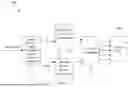












Sources:
- United States Patent and Trademark Office - verify current appl. status at the USPTO↗
Recent applications in this class:
- » 20260066954 2026-03-05
Satellite Communication System Transmitting Navigation Signals Using a Wide Beam and Data Signals Using a Directive Beam - » 20260039335 2026-02-05
Conditional Handover Configurations of Beams of a Cell - » 20260031863 2026-01-29
APPARATUS AND METHODS FOR PHASE DETERMINATION IN MULTI-BEAM COMMUNICATION SYSTEMS - » 20260025169 2026-01-22
BEAM CONFIGURATION METHOD AND APPARATUS, STORAGE MEDIUM, AND PROGRAM PRODUCT - » 20260005733 2026-01-01
SELF-INSTALLATION OF PHASED ARRAY ANTENNA USING AUGMENTED REALITY - » 20250385716 2025-12-18
SWITCHING ANTENNAS FOR SUPPLEMENTARY UPLINK - » 20250350324 2025-11-13
FAST BEAM SWEEPING FOR L3 MEASUREMENT - » 20250286586 2025-09-11
MEASUREMENT REPORTING ENHANCEMENTS IN BEAM BASED SYSTEMS - » 20250266867 2025-08-21
TIME CODING FOR DATA COMMUNICATION - » 20250260445 2025-08-14
BEAM PREDICTION METHOD AND APPARATUS, AND DEVICE AND STORAGE MEDIUM
Recent applications for this Assignee:
- » 20260107397 2026-04-16
HINGE MECHANISM AND ELECTRONIC DEVICE - » 20260107337 2026-04-16
COMMUNICATION METHOD AND COMMUNICATION APPARATUS - » 20260107308 2026-04-16
SATELLITE COMMUNICATION METHOD AND APPARATUS - » 20260107184 2026-04-16
DATA AMOUNT REPORTING METHOD, APPARATUS, AND READABLE STORAGE MEDIUM - » 20260107133 2026-04-16
COMMUNICATION METHOD AND APPARATUS - » 20260107132 2026-04-16
METHOD FOR TRANSMITTING USER TERMINAL CAPABILITY INFORMATION AND RELATED APPARATUS - » 20260106992 2026-04-16
INTER PREDICTION METHOD AND APPARATUS - » 20260106991 2026-04-16
VIDEO DATA INTER PREDICTION METHOD AND APPARATUS - » 20260106990 2026-04-16
METHOD FOR CHROMA SUBSAMPLED FORMATS HANDLING IN MACHINE-LEARNING-BASED PICTURE CODING - » 20260106967 2026-04-16
Encoder, a Decoder, and Corresponding Methods