BIODEGRADABLE FIBER-BASED PLANT POTS AND ASSOCIATED SYSTEMS AND METHODS
US20260107883A1
2026-04-23
19/353,067
2025-10-08
Smart Summary: These plant pots are made from biodegradable fibers, which means they can break down naturally over time. They are designed to hold moisture, helping plants grow without falling apart. The pots have special additives that make them strong when wet or dry, ensuring they last during different conditions. Additionally, they contain an antimicrobial ingredient that helps prevent mold from growing. Overall, these pots are eco-friendly and support healthy plant development. 🚀 TL;DR
Abstract:
Biodegradable fiber-based plant pots and associated systems and methods are disclosed herein. In some embodiments, a molded nursery pot for plants has a composition including a base material made of fiber and a moisture barrier configured to provide moisture resistance for the nursery pots. The composition can also include a wet strength additive that strengthens the nursery pots when exposed to wet conditions for extended periods of time, such as watering in a greenhouse during plant growth, and/or a dry strength additive configured to enhance the strength of the nursery pots in dry conditions. The composition can further include an antimicrobial additive configured to inhibit mold growth.
Applicant:
Interested in similar patents?
Get notified when new applications in this technology area are published.
Classification:
B65D85/52 » CPC main
Containers, packaging elements or packages, specially adapted for particular articles or materials for living organisms, articles or materials sensitive to changes of environment or atmospheric conditions, e.g. land animals, birds, fish, water plants, non-aquatic plants, flower bulbs, cut flowers or foliage for living plants; for growing bulbs
A01G9/02 IPC
Cultivation in receptacles, forcing-frames or greenhouses ; Edging for beds, lawn or the like Receptacles, e.g. flower-pots or boxes ; Glasses for cultivating flowers
Description
CROSS-REFERENCE TO RELATED APPLICATIONS
This application claims priority to U.S. Provisional Application No. 63/708,694, titled “BIODEGRADABLE FIBER-BASED PLANT POTS AND ASSOCIATED SYSTEMS AND METHODS,” filed on October 17, 2024, which is hereby incorporated by reference in its entirety.
TECHNICAL FIELD
The present technology generally relates to biodegradable, fiber-based products and, more particularly, to biodegradable, fiber-based nursery plant pots and associated systems and methods.
BACKGROUND
Nursery pots for plants are in high need in farming and gardening. These pots are typically filled with soil and planted with seeds, seedlings, and/or root cuttings. The young plants grow within the nursery pot for a period of time in a greenhouse or other suitable growing environment before they are ready to be transported to a store for sake and/or transplanted into larger, more permanent growing spaces. The nursery pots are typically made from a plastic material as it is lightweight, sufficiently rigid to retain and support the growing plant and its root system, and do not absorb water during the growing period (or while at a retail establishment).
In use, the nursery pot is meant to provide a controlled environment that promotes healthy root development and initial growth. In addition, the pots typically hold one or a small number of plants in each receptacle, which allows growers, transportation workers, retail workers, and consumers to more easily handle (e.g., lift and move) the individual plants in the nursery pots until they are in their final growing destination. These nursery pots are often made from plastic, which can withstand in-pot growing.
BRIEF DESCRIPTION OF THE DRAWINGS
Many aspects of the present disclosure can be better understood with reference to the following drawings. The components in the drawings are not necessarily to scale. Instead, emphasis is placed on clearly illustrating the principles of the present disclosure.
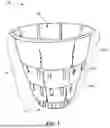
FIG. 1 is an isometric view of a fiber-based nursery pot for plants and other fauna configured in accordance with the present technology.
FIG. 2 is a block diagram of a system for manufacturing molded, fiber-based nursery pots configured in accordance with the present technology.
FIG. 3 illustrates a process for manufacturing molded, fiber-based nursery pots configured in accordance with the present technology.
FIG. 4 is a flow diagram of a process for manufacturing molded, fiber-based nursery pots in accordance with the present technology.
DETAILED DESCRIPTION
Described herein are biodegradable, fiber-based plant pots (also referred to as nursery pots, seedling pots, and the like) for growing plants and other fauna (collectively referred to as “plants”), as well as associated methods and systems. In various embodiments, the plant pots disclosed herein can be made from a fiber-based, biodegradable material, yet still maintain their structural integrity for a period of time under moist growing conditions. In some embodiments, a nursery pot configured in accordance with embodiments of the present technology can be molded from a composition that includes a base material, such as cellulose fiber and/or other biodegradable materials, and one or more additives that impart various properties on the pot product. The one or more additives can include a moisture barrier that provides moisture resistance, strength additives that impart structural integrity on the pot through dry and/or wet conditions, antimicrobial agents to inhibit microbial growth (e.g., mold growth), and/or other additives.
Various embodiments of the molded plant pots disclosed herein can provide a container for growing nursery plants in an enclosed environment. The pot is biodegradable and can be compostable to reduce waste. In some embodiments, the pot is made of base material including recycled fiber material. Furthermore, the pot can maintain its structural integrity for a desired period of time (e.g., at least 20 days, 30 days, 50 days, or more) in moist conditions (e.g., throughout watering cycles). This allows the plants to be watered while inside the pots without the moisture decomposing or degrading the structure of the pots within the desired time. For example, plants contained within the disclosed nursery pots can be watered during early growth in a nursery (e.g., a greenhouse), transported within the pot to a retail environment for sale (where they continue to be watered), and eventually to their final growth destinations in the pots. In some embodiments, due to the degradability of the pot, the nursery plants can be planted together with the pot into the soil (e.g., planting bed, larger plant container, agricultural field, and the like). The pot will eventually decompose to the soil. In some embodiments, the pots include antimicrobial agents that can inhibit or prevent mold growth on the pot itself, within the soil, and/or on the plant (e.g., in the roots).
Specific details of several embodiments of the present technology are described herein with reference to FIGS. 1-4. The present technology, however, can be practiced without some of these specific details. In some instances, well-known structures and techniques often associated with molded fiber-based products have not been shown in detail so as not to obscure the present technology. The terminology used in the description presented below is intended to be interpreted in its broadest reasonable manner, even though it is being used in conjunction with a detailed description of certain specific embodiments of the disclosure. Certain terms can even be emphasized below; however, any terminology intended to be interpreted in any restricted manner will be overtly and specifically defined as such in this Detailed Description section.
The accompanying Figures depict embodiments of the present technology and are not intended to be limiting of its scope. The sizes of various depicted elements are not necessarily drawn to scale, and these various elements can be arbitrarily enlarged to improve legibility. Component details can be abstracted in the Figures to exclude details such as the position of components and certain precise connections between such components when such details are unnecessary for a complete understanding of how to make and use the present technology. Many of the details, dimensions, angles, and other features shown in the Figures are merely illustrative of particular embodiments of the disclosure. Accordingly, other embodiments can have other details, dimensions, angles, and features without departing from the spirit or scope of the present technology.
FIG. 1 is an isometric view of a nursery pot 100 for plants in accordance with the present technology. The nursery pot 100 includes a base portion 102 (e.g., a bottom portion) and a side-wall portion 104 that together define a container with an interior space 101 (also referred to as a receptacle region) for receiving and retaining planting materials (e.g., soil, seeds, sapplings, plants, roots). The side-wall portion 104 has a first end region 105a proximate to the base portion 102 and a second end region 105b opposite the first end region 105a. The first end region 105a of the side-wall portion 104 extends around the perimeter of the base portion 102, and the side-wall portion 104 extends away from (e.g., upwards) the base portion 102 (in a different plane) and terminates at second end region 105b. The second end region 105b of the side-wall portion 104 defines a main opening 106 (also referred to as a first opening or a top opening) such that the nursery pot 100 has an open top for receiving planting materials. The nursery pot 100 can be made from a biodegradable, compostable fiber material such as cellulose.
In the embodiment illustrated in FIG. 1, the base portion 102 has a circular shape and the side-wall portion 104 extends away from the base portion 102 at an angle greater than 90⁰ such that the nursery pot 100 has an overall conical shape. In some embodiments, the base portion 102 can also have a polygonal shape (e.g., triangular, square, or rectangular), elliptical shape, or irregular shape, and the side-wall portion 104 can extend from the base portion 102 in a vertical manner (90⁰) and/or at other angles from the base portion 102. As such, the nursery pot 100 can have overall shapes different suitable for growing plants. In some embodiments, the nursery pot 100 has walls (e.g., the side-wall portion 104 and/or the base portion 102) with a wall thickness between 1.2mm and 1.6mm. In some embodiments, the wall thickness may be less than 1.2mm, greater than 1.6mm, differ between the base portion 102 and the side-wall portion 104, and/or vary along the length of one or more portions 102, 104. In various embodiments, the nursery pot 100 can be manufactured such that the walls of the finished product have a predefined moisture content suitable to maintain the structural integrity of the nursery pot 100 over a suitable period of time. In general, moisture content can affect the biodegradation rate of the nursery pot 100 when used for growing plants, and lower moisture content typically increases the time the nursery pot 100 can retain its structural integrity. In certain embodiments, for example, one or more of the walls of the nursery pot 100 has a moisture content of less than 6 % (in the finished, manufactured product). In other embodiments, the moisture content may be higher or lower than 6 % and/or the moisture content may differ across different regions of the nursery pot 100. For example, the base portion 102 may have a lower moisture content than the side-wall portion 104.
As shown in FIG. 1, the nursery pot 100 can include one or more side openings 108 extending through the side-wall portion 104 to allow for drainage, provide for air circulation through the interior space 101, enhance air-root pruning and horizontal root branching, and/or provide for the creation of a fibrous, non-circling root system for accelerated plant growth. In FIG. 1, the openings 108 are positioned along the first end region 105a. In some embodiments, the openings 108 are positioned along the first end region 105a and the second end region 105b, along only the base portion 102, and/or in other suitable arrangements. In some embodiments, the base portion 102 can include one or more openings in addition to or as an alternative to the side openings 108 of FIG. 1. The side openings 108 can also allow the flow of extraction of water and/or nutrients from the environment to the soil inside the nursery pot 100. The structure of the nursery pot 100 can be configured to enhance air-root pruning and horizontal root branching as well as create a fibrous, non-circling root system for accelerated plant growth.
The nursery pot 100 is made out of a composition comprising cellulose fiber and one or more additives. The composition is suitable for making the nursery pot 100 by molding. For example, the composition is a slurry composition for manufacturing the nursery pot 100 by molding. In some embodiments, due to its composition including the cellulose fiber and the one or more additives, the nursery pot 100 is configured to retain structural integrity and inhibit mold growth for a period of time in a nursery environment. For example, the nursery pot 100 is configured to retain the structural integrity for at least 20 days. During this time, a nursery plant can be watered inside the nursery pot 100 and be handled (e.g., carried) with the nursery pot 100. The pot then can degrade and decompose after the plant is planted to its final growth environment (e.g., to ground). The degradable and compostable formulation of the nursery pot 100 allows the plant to be planted in the final growth environment together with the nursery pot 100. The one or more of the additives can be mixed with the cellulose fiber (also referred to as internal additives) or added as coatings to the dried and molded pots (also referred to as external additives).
In some embodiments, the base material comprises cellulose fiber. The cellulose fiber can include virgin cellulose fiber and/or recycled cellulose fiber. As used herein, virgin cellulose fiber includes fibers obtained from natural sources such as wood pulp or plant materials, and recycled cellulose fiber refers to fibers derived from materials that have already been used in fiber-based products such as paper or cardboard. In some embodiments, the base material includes up to 10 %, up to 20 %, up to 30 %, up to 40 %, or up to 50 % of virgin cellulose fiber. In some embodiments, the cellulose fiber includes at least 50 %, at least 60 %, at least 70 %, at least 80 %, or at least 90 % of recycled cellulose fiber. For example, the base material includes up to 30 % of the virgin fiber and 70 % to 100 % of the recycled fiber (e.g., the base material includes 30 % of the virgin fiber and 70 % of the recycled fiber). The fiber concentrations are provided herein with respect to the weight of the respective fiber in a dry product.
In some embodiments, the cellulose fiber includes newsprint, old corrugated containers (OCC), and/or double-lined kraft (DLK). Newsprint refers to a paper commonly used for printing newspapers. Newsprint is generally thin and lightweight. The cellulose fiber can include 10 % to 50 %, 20 % to 40 %, 25 % to 35 %, 10 % to 30 %, or 30 % to 50 % of newsprint. For example, the cellulose fiber includes 30 % of newsprint. OCC refers to recycled corrugated cardboard packaging. Corrugated cardboard is a type of paperboard that consists of a ridged inner layer sandwiched between two flat outer layers. The cellulose fiber can include 50 % to 90 %, 60 % to 80 %, 65 % to 75 %, 50 % to 70 %, or 70 % to 90 % of OCC. For example, the cellulose fiber includes 70 % of OCC. DLK refers to a type of cardboard packaging material that includes two layers of kraft paper on each side of the corrugated medium. The cellulose fiber can include 50 % to 90 %, 60 % to 80 %, 65 % to 75 %, 50 % to 70 %, or 70 % to 90 % of DLK. For example, the cellulose fiber includes 70 % of DLK.
In some embodiments, the cellulose fiber includes 50 % to 90 %, 60 % to 80 %, 65 % to 75 %, 50 % to 70 %, or 70 % to 90 % of a combination of OCC and DLK. For example, the cellulose fiber includes 10 % to 60 %, 20 % to 50 %, or 30 % to 40 % of OCC, and 10 % to 60 %, 20 % to 50 %, or 30 % to 40 % of DLK. In some embodiments, the cellulose fiber comprises 10 % to 50 % of newsprint and 50 % to 90 % of OCC and/or DLK or 20 % to 40 % of newsprint and 60 % to 80 % of OCC and/or DLK. For example, the cellulose fiber comprises 30 % of newsprint and 70 % of OCC and/or DLK.
In some embodiments, the composition of the nursery pot 100 includes a moisture barrier (e.g., a moisture barrier additive or hydrophobic additive). A moisture barrier refers to a substance configured to prevent the passage or absorption of moisture or water vapor. The moisture barrier is configured to provide moisture resistance for the nursery pot 100. The moisture barrier, applied either as an internal additive or an external additive, can be 1 % to 10 %, 3 % to 6 %, 4 % to 5 %, 1 % to 5 %, or 5 % to 10 % of the total content of the composition (e.g., the percentage given as a weight percentage of the total weight of the composition). For example, the moisture barrier is 5 % of the total weight of the composition.
In some embodiments, the moisture barrier includes long-chain diketene, alkenyl succinic anhydride (ASA), and/or a wax. These compounds are generally known to be hydrophobic. Long-chain diketenes refer to unsaturated organic compounds with two ketone functional groups that are separated from each other with a chain of at least four carbon atoms. In some embodiments, the long-chain diketene includes alkyl ketene dimer (AKD). When mixed with the base material, the moisture barrier compounds can attach to the surfaces of the fibers of the base material, thereby decreasing the absorption of water and moisture to the fiber.
In some embodiments, the composition of the nursery pot 100 includes wet strength additives. The strength additives generally improve fiber-based material’s ability to withstand external forces without tearing, breaking, or deforming. In some embodiments, when the strength additives are combined with the moisture barrier, the strength additives can enhance the moisture resistance property of the moisture barrier. For example, the strength additives can enable the generation of fiber networks within the base material that can then enable better interaction of the moisture barrier with the base material. The strength additives can include wet strength additives and/or dry strength additives. Wet strength additives are substances configured to improve the strength of fiber-based products (e.g., paper) when in wet and damp conditions. Wet strength additives can increase the resistance of fiber-based products to disintegrate when exposed to water or moisture. In some embodiments, the wet strength additive applied either as an internal additive or an external additive, is up to 2 %, up to 3 %, up to 5 %, up to 7 %, up to 10 %, 1 % to 10 %, 1 % to 7 %, 1 % to 5 %, or 1 % to 3 % of a total weight of the composition. For example, the wet strength additive can be 2 % of the total weight of the composition.
In some embodiments, the wet strength additive includes a resin (e.g., a polymerized resin) or a polymer (e.g., a polymerized monomer). In some embodiments, the wet strength additive includes polyamide-epichlorohydrin (PAE) resin. For example, the wet strength additive includes PAE resin manufactured by Solenis LLC of Wilmington, DE, US, such as KymeneTM resins (e.g., KymeneTM 1500 LV).
Dry strength additives are substances configured to improve the strength of fiber-based products (e.g., paper) when in dry conditions. In some embodiments, the dry strength additive applied either as an internal additive or an external additive, is up to 2 %, up to 3 %, up to 5 %, up to 7 %, up to 10 %, 1 % to 10 %, 1 % to 7 %, 1 % to 5 %, or 1 % to 3 % of a total content of the composition. For example, the dry strength additive is 2 % of the total weight of the composition.
In some embodiments, the dry strength additive includes modified starch and/or cationic starch. For example, the wet strength additive includes cationic starch manufactured by Ingredion Inc. of Westchester, IL, US, such as Topcat® cationic additives.
In some embodiments, the wet and/or dry strength additives can enhance the effectiveness of the moisture barrier when added to a mixture including the base material and the moisture barrier. For example, the wet and/or dry strength additive can enable separation of the fibers in the base material while forming fiber networks thereby enhancing the interaction between the moisture barrier and the fiber of the base material.
In some embodiments, the composition of the nursery pot 100 includes an antimicrobial additive. An antimicrobial additive refers to a substance configured to inhibit or kill microorganisms and/or prevent the growth of the microorganisms. The antimicrobial additive can be mixed within the base material and optionally the moisture barrier, the wet strength additive, and/or the dry strength additive. Alternatively, the antimicrobial additive can be coated on the surface of the nursery pot 100. The microorganisms can include fungi (e.g., mold), bacteria, and/or algae. In some embodiments, the antimicrobial additive applied either as an internal additive or an external additive, is 0.1 % to 6 %, 1 % to 5 %, 2 % to 4 %, 1 % to 3 %, or 3 % to 6 % of a total content of the composition. For example, the antimicrobial additive can be 3 % of the total weight of the composition.
In some embodiments, the microbial additive includes zinc pyrithione and/or zinc oxide nanoparticles. The microbial additive can be in the form of an aqueous dispersion when added to the mixture of the base material and other additives or on the surface of the nursery pot 100. For example, the microbial additive includes zinc pyrithione manufactured by Janssen PMP of Beerse, Belgium, such as Zinc PyrionTM 48 % MPF.
In some embodiments, the composition comprises the base material, the moisture barrier, the wet strength additive, the dry strength additive, and the antimicrobial additive. The base material can include 10 % to 50 % of newsprint and 50 % to 90 % of OCC and/or DLK, the moisture barrier can include 1 % to 10 % of a total content of the composition of long-chain diketene, ASA, and/or a wax, the wet strength additive can include up to 10 % of the total content of the composition of a resin or a polymer, the dry strength additive can include up to 10 % of the total content of the composition of modified starch and/or cationic starch, and the antimicrobial additive can include 0.1 % to 6 % of the total content of the composition of zinc pyrithione or zinc oxide nanoparticles.
In some embodiments, the composition described above can be applied to manufacturing other molded fiber-based products. Specifically, the composition can be applied to biodegradable and compostable products that are required to maintain their structure for a desired period of time in moist conditions before degrading. Exemplary products can include tree guards and tree watering stakes.
FIG. 2 is a block diagram of a system 200 for manufacturing molded nursery pots for plants configured in accordance with the present technology. For example, in some embodiments the system 200 can be used for manufacturing the nursery pot 100 described with respect to FIG. 1 by molding. The system includes a base material source 202, a moisture barrier source 204, a wet strength additive source 206, a dry strength additive source 208, an antimicrobial additive source 210, a mixing unit 212, a molding unit 214, and a drying unit 220. The system can also include conveyor lines that transmit substances and/or products between the units (e.g., conveyor lines 216, 218, and 222). In some embodiments, the system 200 can further include other components. For example, the system 200 can include a water source and/or sources for other additives.
The mixing unit 212 is configured to mix the base material with one or more of the additives to form a slurry. For example, the mixing unit 212 receives the base material from the base material source 202, the moisture barrier from the moisture barrier source 204, the wet strength additive from the wet strength additive source 206, the dry strength additive from the dry strength additive source 208, and the antimicrobial additive from the antimicrobial additive source 210 and mixes them into a slurry having the slurry composition described with respect to FIG. 1. The additives can be received, e.g., via conveyor lines 216. The mixing unit 212 then transfers the mixed slurry into the molding unit 214 (e.g., via conveyor lines 218). The molding unit 214 is configured to mold the slurry into nursery pots (e.g., the nursery pot 100 in FIG. 1) using heat and/or pressure to form the final products.
The drying unit 220 is configured to receive the molded pots from the molding unit 214 (e.g., via the conveyor line 222) and dry them for a period of time. For example, the drying unit 220 includes an oven where the molded pots can be placed to dry under heat. The drying unit 220 can heat the pots so that the pots have a moisture content that is less than the desired threshold content (e.g., the moisture content is less than 6 %).
In some embodiments, one or more of the additives are added on the surfaces of the molded nursery pots instead of being mixed in the slurry composition. For example, one or more of the additives are added when the nursery pots are molded and before or after they are dried. In such embodiments, one or more additives are transmitted from their respective sources to the molding unit instead of being transmitted to the mixing unit 212.
FIG. 3 illustrates a process 300 for manufacturing molded, fiber-based nursery pots configured in accordance with the present technology. At stage 302, the process 300 includes obtaining pulp sheets that are used as a base material for the nursery pots. At stage 304, the pulp sheets are processed (e.g., pulped) to form a pulp (e.g., a fiber and water slurry that can be used to produce fiber-based products). The pulping can include mechanical pulping, chemical pulping, or a combination thereof. At stage 306, one or more barrier and/or pulp additives are added to the pulp and mixed therein. The additives can include one or more of the additives described above (e.g., wet strength additives, dry strength additives, antimicrobial additives, and moisture barriers) to provide properties advantageous for nursery pots. Two or more of the additives can be deposited into the pulp slurry together in a single step and/or the additives can be deposited individually in a successive manner.
Once the additives have been distributed d the pulp, the process 300 can continue on to molding the pulp into the desired shape. Fore example, at stage 308, the pulp is formed into one or more shapes corresponding to the general shape of nursery pots (e.g., vacuum formed by drawing the pulp to a mold piece). For example, a mold piece having a negative shape of multiple nursery pots, is submerged in the pulp, and a vacuum is applied to draw the pulp onto the surface of the mold piece. The vacuum removes at least some of the moisture (e.g., water) from the pulp (referred to as “dewatering”), leaving a layer of fibers that conform to the shape of the mold piece. Additional vacuum or pressure can be applied to remove any remaining water. At stage 310, a hot press can be applied to the layer of fibers positioned on the surface of the mold piece (i.e., on the surface of the fiber layer facing away from the mold piece) to form the fibers into the thickness of the nursery pots. During the pressing stage 310, the pressure and heat applied also serve to remove steam and dry the layer of fibers.
Once the molding steps are complete and the fibrous material is formed into the general shape and thickness of the nursery pots, the molded fibrous material can be removed from the mold and the process 300 can continue at stage 312, where the formed nursery pots are trimmed and cut to finalize the shape and size of the individual nursery pots. For example, trimming can include removing excess material from molded nursery pots to achieve the desired final shape and dimensions and/or to separate the nursery pots from each other. At stage 314, the nursery pots can optionally be coated to apply one or more layers of coating (e.g., one or more additives described above) to one or more surfaces of the individual nursery pots. The coatings can be absorbed into the fibrous material or remain on the exterior surface of the nursery pots. For example, an antimicrobial additive can be sprayed on one or more surfaces of a nursery pot. At stage 316, the nursery pots can be dried (e.g., to dry the newly applied coatings). At stage 318, the nursery pots are in the form of final products. Some of the steps of the process 300 described with respect to FIG. 3 can be omitted. For example, the pulp adjustment and/or coating process stages 306 and 314 can be optional additives that can be disposed only at the slurry stage (e.g., before molding) or only as coatings after molding. Further, if the coating stage 314 is omitted, the drying stage 316 may also be omitted.
FIG. 4 is a flow diagram of a process 400 for manufacturing molded, fiber-based nursery pots in accordance with the present technology. For example, the process 400 can be for manufacturing molded nursery pots such as the nursery pot 100 of FIG. 1. The process 400 includes making the pots from the composition (e.g., the slurry composition) of the nursery pot 100 as described above. The process 400 can be performed with the system 200 described with respect to FIG. 2.
The process 400 includes mixing a base material and a moisture barrier to form a first mixture (block 402). For example, the mixing unit 212 in FIG. 2 receives the base material from the base material source 202 and the moisture barrier from the moisture barrier source 204 and mixes to form a first mixture. The first mixture can be a slurry that is suitable for molding fiber-based products. The base material can include cellulose fiber, and the moisture barrier can include a long-chain diketene, alkenyl succinic anhydride (ASA), and/or a wax.
The process 400 includes adding a wet strength additive and a dry strength additive to the first mixture to form a second mixture (block 404). For example, the mixing unit 212 in FIG. 2 receives the wet strength additive from the wet strength additive source 206 and the dry strength additive from the dry strength additive source 208 and mixes the strength additives with the mixture including the base material and the moisture barrier.
The process 400 includes adding an antimicrobial additive to the second mixture to form a third mixture (block 406). For example, the mixing unit 212 in FIG. 2 receives the antimicrobial additive from the antimicrobial additive source 210 and mixes the antimicrobial additive with the mixture including the base material, the moisture barrier, and the strength additives. It is understood that the different additives can be added to the base material in different orders and some additives can be excluded from the mixture. In some embodiments, one or more of the additives can be added as coatings to the dried and molded pots instead of mixing them with the base material. For example, the antimicrobial additive can be coated on one or more surfaces of the respective molded pots (e.g., the antimicrobial additive is added as a coating on the surface of the side-wall portion of the nursery pot 100).
The process 400 includes wet molding the third mixture under heat and/or pressure to produce a plurality of nursery pots (e.g., block 408). For example, the wet molding can include obtaining a mold that includes the shapes of a plurality of pots, adding the formed third mixture onto the mold, and adding pressure and/or heat to form the plurality of pots. Alternatively, the mixture can be formed into a sheet that is then spread onto a mold formed of a mesh and pressed and dried to form the plurality of pots. In some embodiments, wet molding the third mixture includes forming the plurality of nursery pots to each have a wall thickness between 1.2mm and 1.6mm. The wall thickness can have an effect on the decomposition rate of the pot thereby affecting its ability to maintain its structural integrity.
The process 400 includes drying the plurality of nursery pots to produce finished molded nursery pots (e.g., block 410). In some embodiments, the drying includes drying the plurality of nursery pots such that each of the nursery pots has a moisture content of less than 6 % (e.g., less than 6 %, less than 5 %, or less than 4 %). For example, the drying unit 220 in FIG. 2 can receive the molded products from the molding unit 214 and dry them for a period of time to produce the pots with moisture content that is less than the desired threshold content.
In some embodiments, the plurality of nursery pots is configured to retain structural integrity and inhibit mold growth for at least 20 days (e.g., at least 20 days, at least 30 days, at least 40 days, or at least 60 days) of plant growth in a nursery environment. Such features allow the nursery plants to be watered and nourished during seedling and early growth while also allowing the plants to be handled and moved around inside the pots. After the plants are planted, with or without the pots, the pots can degrade and decompose thereby not producing waste. The antimicrobial additive can inhibit mold growth in the plant’s roots and/or soil to support a healthy nursery environment.
The present technology is illustrated, for example, according to various aspects described below. Various examples of aspects of the present technology are described as numbered examples (1, 2, 3, etc.) for convenience. These are provided as examples and do not limit the present technology. It is noted that any of the dependent examples may be combined in any combination, and placed into a respective independent example. The other examples can be presented in a similar manner.
1. A composition of a molded nursery pot for plants, the composition including; a base material including cellulose fiber; a moisture barrier configured to provide moisture resistance for the nursery pots; a wet strength additive configured to enhance a strength of the nursery pots when exposed to wet conditions; a dry strength additive configured to enhance the strength of the nursery pots in dry conditions; and an antimicrobial additive configured to prevent mold growth.
2. The composition of any one of the examples herein, wherein the base material includes 10 % to 50 % of newsprint and 50 % to 90 % of old corrugated containers (OCC) and/or double lined kraft (DLK); the moisture barrier includes 1 % to 10 % of a total content of the composition of long-chain diketene, alkenyl succinic anhydride (ASA), and/or a wax; the wet strength additive includes up to 10 % of the total content of the composition of a resin or a polymer; the dry strength additive includes up to 10 % of the total content of the composition of modified starch and/or cationic starch; and the antimicrobial additive includes 0.1 % to 6 % of the total content of the composition of zinc pyrithione or zinc oxide nanoparticles.
3. The composition of any one of the examples herein, wherein the cellulose fiber includes up to 30 % of virgin cellulose fiber and 70 % to 100 % of recycled cellulose fiber.
4. The composition of any one of the examples herein, wherein the cellulose fiber includes newsprint, old corrugated containers (OCC), and/or double lined kraft (DLK).
5. The composition of any one of the examples herein, wherein the cellulose fiber includes 10 % to 50 % of newsprint and 50 % to 90 % of old corrugated containers (OCC) and/or double lined kraft (DLK).
6. The composition of any one of the examples herein, wherein the moisture barrier is 1 % to 10 % of a total content of the composition.
7. The composition of any one of the examples herein, wherein the moisture barrier is 3 % to 6 % of a total content of the composition.
8. The composition of any one of the examples herein, wherein the moisture barrier includes long-chain diketene, alkenyl succinic anhydride (ASA), and/or a wax.
9. The composition of any one of the examples herein, wherein the moisture barrier includes alkyl ketene dimer (AKD).
10. The composition of any one of the examples herein, wherein the wet strength additive is up to 10 % of a total content of the composition.
11. The composition of any one of the examples herein, wherein the wet strength additive is 1 % to 3 % of a total content of the composition.
12. The composition of any one of the examples herein, wherein the wet strength additive includes a resin or a polymer.
13. The composition of any one of the examples herein, wherein the wet strength additive includes polyamide-epichlorohydrin (PAE) resin.
14. The composition of any one of the examples herein, wherein the dry strength additive is up to 10 % of a total content of the composition.
15. The composition of any one of the examples herein, wherein the dry strength additive is 1 % to 3 % of a total content of the composition.
16. The composition of any one of the examples herein, wherein the dry strength additive includes modified starch and/or cationic starch.
17. The composition of any one of the examples herein, wherein the antimicrobial additive is 0.1 % to 6 % of a total content of the composition.
18. The composition of any one of the examples herein, wherein the antimicrobial additive is 2 % to 4 % of a total content of the composition.
19. The composition of any one of the examples herein, wherein the antimicrobial additive includes zinc pyrithione or zinc oxide nanoparticles.
20. A slurry composition for manufacturing molded nursery pots for plants, the composition including; a base material including cellulose fiber; a moisture barrier; a wet strength additive; and a dry strength additive.
21. A process for manufacturing molded nursery pots for plants, the process including; mixing a base material and a moisture barrier to form a first mixture, wherein the base material includes including cellulose fiber; adding a wet strength additive and a dry strength additive to the first mixture to form a second mixture; adding an antimicrobial additive to the second mixture to form a third mixture; wet molding the third mixture under heat and/or pressure to produce a plurality of nursery pots; and drying the plurality of nursery pots to produce finished molded nursery pots.
22. The process of any one of the examples herein, wherein drying includes drying the plurality of nursery pots such that each of the nursery pots has a moisture content of less than 6 %.
23. The process of any one of the examples herein, wherein wet molding the third mixture includes forming the plurality of nursery pots to each have a wall thickness between 1.2mm and 1.6mm.
24. The process of any one of the examples herein, wherein the plurality of nursery pots is configured to retain structural integrity and inhibit mold growth for at least 20 days of plant growth in a nursery environment.
Conclusion
The above detailed description of embodiments of the technology is not intended to be exhaustive or to limit the technology to the precise form disclosed above. Although specific embodiments of, and examples for, the technology are described above for illustrative purposes, various equivalent modifications are possible within the scope of the technology, as those skilled in the relevant art will recognize. For example, although steps are presented in a given order, alternative embodiments can perform steps in a different order. The various embodiments described herein can also be combined to provide further embodiments.
From the foregoing, it will be appreciated that specific embodiments of the technology have been described herein for purposes of illustration, but well-known structures and functions have not been shown or described in detail to avoid unnecessarily obscuring the description of the embodiments of the technology. Where the context permits, singular or plural terms can also include the plural or singular term, respectively.
Moreover, unless the word "or" is expressly limited to mean only a single item exclusive from the other items in reference to a list of two or more items, then the use of "or" in such a list is to be interpreted as including (a) any single item in the list, (b) all of the items in the list, or (c) any combination of the items in the list. Additionally, the term "comprising" is used throughout to mean including at least the recited feature(s) such that any greater number of the same feature and/or additional types of other features are not precluded. It will also be appreciated that specific embodiments have been described herein for purposes of illustration but that various modifications can be made without deviating from the technology. Further, while advantages associated with some embodiments of the technology have been described in the context of those embodiments, other embodiments can also exhibit such advantages, and not all embodiments need necessarily exhibit such advantages to fall within the scope of the technology. Accordingly, the disclosure and associated technology can encompass other embodiments not expressly shown or described herein.
Claims
What is claimed is:1. A composition of a molded nursery pot for plants, the composition comprising;
a base material comprising cellulose fiber;
a moisture barrier configured to provide moisture resistance for the nursery pots;
a wet strength additive configured to enhance a strength of the nursery pots when exposed to wet conditions;
a dry strength additive configured to enhance the strength of the nursery pots in dry conditions; and
an antimicrobial additive configured to prevent mold growth.
2. The composition of the molded nursery pot of claim 1 wherein:
the base material comprises 10 % to 50 % of newsprint and 50 % to 90 % of old corrugated containers (OCC) and/or double lined kraft (DLK);
the moisture barrier comprises 1 % to 10 % of a total content of the composition of long-chain diketene, alkenyl succinic anhydride (ASA), and/or a wax;
the wet strength additive comprises up to 10 % of the total content of the composition of a resin or a polymer;
the dry strength additive comprises up to 10 % of the total content of the composition of modified starch and/or cationic starch; and
the antimicrobial additive comprises 0.1 % to 6 % of the total content of the composition of zinc pyrithione or zinc oxide nanoparticles.
3. The composition of the molded nursery pot of claim 1 wherein the cellulose fiber comprises up to 30 % of virgin cellulose fiber and 70 % to 100 % of recycled cellulose fiber.
4. The composition of the molded nursery pot of claim 1 wherein the cellulose fiber comprises newsprint, old corrugated containers (OCC), and/or double lined kraft (DLK).
5. The composition of the molded nursery pot of claim 1 wherein the cellulose fiber comprises 10 % to 50 % of newsprint and 50 % to 90 % of old corrugated containers (OCC) and/or double lined kraft (DLK).
6. The composition of the molded nursery pot of claim 1 wherein the moisture barrier is 1 % to 10 % of a total content of the composition.
7. The composition of the molded nursery pot of claim 1 wherein the moisture barrier comprises long-chain diketene, alkenyl succinic anhydride (ASA), and/or a wax.
8. The composition of the molded nursery pot of claim 1 wherein the moisture barrier comprises alkyl ketene dimer (AKD).
9. The composition of the molded nursery pot of claim 1 wherein the wet strength additive is up to 10 % of a total content of the composition.
10. The composition of the molded nursery pot of claim 1 wherein the wet strength additive comprises a resin or a polymer.
11. The composition of the molded nursery pot of claim 10 wherein the wet strength additive comprises polyamide-epichlorohydrin (PAE) resin.
12. The composition of the molded nursery pot of claim 1 wherein the dry strength additive is up to 10 % of a total content of the composition.
13. The composition of the molded nursery pot of claim 1 wherein the dry strength additive comprises modified starch and/or cationic starch.
14. The composition of the molded nursery pot of claim 1 wherein the antimicrobial additive is 0.1 % to 6 % of a total content of the composition.
15. The composition of the molded nursery pot of claim 1 wherein the antimicrobial additive comprises zinc pyrithione or zinc oxide nanoparticles.
16. A slurry composition for manufacturing molded nursery pots for plants, the composition comprising;
a base material comprising cellulose fiber;
a moisture barrier;
a wet strength additive; and
a dry strength additive.
17. A process for manufacturing molded nursery pots for plants, the process comprising;
mixing a base material and a moisture barrier to form a first mixture, wherein the base material comprises comprising cellulose fiber;
adding a wet strength additive and a dry strength additive to the first mixture to form a second mixture;
adding an antimicrobial additive to the second mixture to form a third mixture;
wet molding the third mixture under heat and/or pressure to produce a plurality of nursery pots; and
drying the plurality of nursery pots to produce finished molded nursery pots.
18. The process of claim 17 wherein drying comprises drying the plurality of nursery pots such that each of the nursery pots has a moisture content of less than 6 %.
19. The process of claim 17 wherein wet molding the third mixture comprises forming the plurality of nursery pots to each have a wall thickness between 1.2mm and 1.6mm.
20. The process of claim 17 wherein the plurality of nursery pots is configured to retain structural integrity and inhibit mold growth for at least 20 days of plant growth in a nursery environment.
Images & Drawings included:



Sources:
- United States Patent and Trademark Office - verify current appl. status at the USPTO↗
Recent applications in this class:
- » 20260015158 2026-01-15
DECORATIVE PLANT HOLDER - » 20240417158 2024-12-19
CONTAINER FOR TRANSPORT OF ROOTED PLANT CUTTINGS - » 20240140686 2024-05-02
PLANT PACKAGING SYSTEM AND PARTS THEREOF - » 20240124219 2024-04-18
Leaf Vegetable Packaging Tray - » 20230365321 2023-11-16
PACKAGING SYSTEMS FOR MULTIPLE POTTED PLANTS AND ASSOCIATED BLANKS AND PACKAGING METHODS - » 20230356922 2023-11-09
Packaging box configuration for protectively packaging potted plants by means of a basic box in a vertical or horizontal position of this basic box - » 20230294911 2023-09-21
PACKAGING CONTAINERS AND ASSOCIATED SYSTEMS AND PACKAGING METHODS - » 20220204253 2022-06-30
Transport Container For Free-Rooted Plants - » 20210347555 2021-11-11
DECORATIVE TREE STORAGE CONTAINER - » 20200361699 2020-11-19
Shipping container systems for live samples and related die cut tray inserts