FLOATING SOFT SWIMBAIT DEVICE
US20260107932A1
2026-04-23
19/305,932
2025-08-21
Smart Summary: A new fishing lure is designed to float and mimic the movement of real fish. It has three main parts: a head, a body, and a tail. The body is made from a special foam that is completely closed off, making it lightweight and buoyant. This helps it stay on the surface of the water while fishing. The lure aims to attract more fish by looking and acting like a live bait. 🚀 TL;DR
Abstract:
A soft floating fishing swimbait having a head section, a tail section and a body section, the body section comprising entirely closed cell foam.
Applicant:
Interested in similar patents?
Get notified when new applications in this technology area are published.
Classification:
A01K85/1821 » CPC main
Artificial bait for fishing flexible or with flexible appendages, e.g., worms Bodies with trailing flexible appendages
A01K85/1837 » CPC further
Artificial bait for fishing weighted
A01K85/00 IPC
Artificial bait for fishing
Description
CROSS-REFERENCE TO RELATED APPLICATION
This application claims the benefit of and priority to U.S. Provisional Application No. 63/709,726, filed on Oct. 21, 2024, the content of which is incorporated herein by reference in its entirety.
BACKGROUND OF THE INVENTION
Fishing lures have been manufactured for years of soft plastic material in an attempt to replicate the swimming motion of live bait to various degrees of success. Previous lures did not incorporate closed cell foam as a complete component of the lure and therefore suffered from buoyancy restrictions. One prior lure design incorporated a small portion of foam internally within the body section and included a main body formed from a soft synthetic resin molded into a live bait shape and a weight for stabilizing the posture of the main body, wherein the weight was made from a soft foaming agent for giving buoyancy to the inside. Because the weight was positioned totally within a portion of the main body, buoyancy was only very marginally improved and cast distance was limited. Consequently, a need exists for an improved floating swimbait that addresses the drawbacks of prior lures.
SUMMARY
The invention is directed to a fishing lure, and more particularly to a floating soft swimbait. The swimbait comprises a head section, a tail section and a body section wherein at least one of the sections comprises closed cell foam. Preferably the full body section is made of closed cell foam.
One advantage of a swimbait having full body closed-cell foam design, versus the a design of a smaller foam buried in resin, is drastically higher buoyancy. The swimbait of the present invention is able to achieve at least triple the foam volume versus the prior designs, leading to far higher buoyancy and cast distance, which is the desired effect. In prior lures, the enclosed foam only plays a small part in its functionality. In the present invention, the full body foam is the central to improved performance. During prototype testing, due to the required wall thickness of the non-buoyant resin in prior lures, gains in buoyancy were found to be marginal. In contrast, a full body foam design using a 1 oz overall weight, achieves a 60% increase in cast distance compared to a similarly buoyant standard swimbait rigged ⅜ oz. In contrast, the maximum possible cast distance increase with the enclosed foam of prior lure designs was found to be only 20% during testing. With a full body foam design, the drastically improved cast distance (while maintaining desired buoyancy) is a huge benefit for any shore-based fishing, leading to many more fish being caught.
In terms of benefits to action of the swimbait, the floating swimbait design of the present invention offers several advantages to the less buoyant prior swimbait design and standard swimbait design. First, when rigged Texas rig, as shown in the drawings, the floating swimbait always stays at least several inches off the bottom of the ocean floor, as the tungsten bullet weight separates from the float bait and hits the ocean bottom. As such, the floating swimbait is always in the strike zone just off the bottom. A standard swimbait rigged Texas rig will eventually fall to the bottom and out of the strike zone. The swimbait design with a built-in weight cannot be rigged “Texas rig” style and will also fall to the bottom. With the floating swimbait of the present invention, the longer time in the strike zone leads to more fish being caught.
Second, it is unprecedented for a swimbait to achieve paddle tail motion while being dragged on the bottom, but the floating swimbait of the present invention achieves this. Even if the floating swimbait is rigged so the 1 oz weight is fully pinned to it (and will fall to the bottom as one piece), its full body buoyant foam design ensures the tail will always be just off the bottom and maintaining paddle-tail side to side motion. Due to the high buoyancy of the full-body foam, the tail is always off the bottom while the weighted front is on the bottom, leading to more bites. In contrast, the prior designs are not capable of maintaining paddle tail motion while the swimbait is being dragged on the bottom.
BRIEF DESCRIPTION OF THE DRAWINGS
The above and other aspects, features, and enhancements of certain embodiments of the disclosure will be more apparent from the following description taken in conjunction with the accompanying drawings, in which:
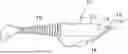
FIG. 1 is a perspective side view of the floating swimbait device according to an embodiment;
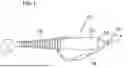
FIG. 2 is an angled side view of the floating swimbait device according to an embodiment;
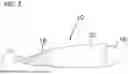
FIG. 3 is an isometric view for the floating swimbait device according to an embodiment.
DETAILED DESCRIPTION
FIG. 1 illustrates a floating swimbait 10 of the present invention rigged “Texas rig” style with a sliding black ¾ oz. tungsten bullet weight 12 and a weedless offset worm hook 14 weighted ¼ oz. This is one example of hundreds of possible rigging configurations using the floating swimbait concept of the present invention with different weight/hook styles and sizes chosen for the desired weed lessness, buoyancy, and action. FIG. 1 is just one example. The swimbait 10 comprises a head section 16, a tail section 18 and a body section 20 wherein at least one of the sections comprises closed cell foam. Preferably the full body section 20 is made of closed cell foam.
FIGS. 2 and 3 illustrate different angles of the floating soft swimbait 10 of FIG. 1. The floating swimbait is designed to be used by fishermen, in place of standard soft swimbaits that are less buoyant. There are multiple ways to manufacture such a swimbait, but the basic principle applies for all of them. The body section of a standard soft plastisol swimbait is replaced by a buoyant closed cell foam.
The soft plastisol head section 16 and tail section 18 can be attached to the closed cell foam body section 20 through any number of methods (adhesives, heating, etc). The diameter and length of the closed cell foam body section 20 can be modified for desired buoyancy. The soft plastisol head section 16 facilitates attachment to a variety of swimbait hooks 14. The soft plastisol tail section 18 provides excellent swimming action at slow retrieve speeds.
There is currently no swimbait available that is comprised of closed cell foam material combined with soft plastisol material. The floating swimbait has exceptional buoyancy, which has advantages for catching fish in many applications.
The soft floating swimbait can be made in any color or length. The floating swimbait design shown utilizes a tail 18 in the style of a paddle tail, but any tail style can be utilized (curly tail, paddle tail, etc.). Again, the defining feature of the of the swimbait is a closed cell foam used in conjunction with typical soft swimbait material like plastisol. Plastisol may be replaced by a similar plastic such as silicone, with no change in the functionality of the floating swimbait.
The present invention has been disclosed and described with respect to an embodiment thereof, however, changes and modifications can be made therein which are intended to be within the scope of the invention as claimed herein.
Claims
What is claimed is:1. A fishing swimbait comprising a head section, a tail section and a body section wherein at least one of the sections comprises entirely closed cell foam.
2. The swimbait of claim 1 wherein the body section is closed cell foam.
3. The swimbait of claim 2 wherein the body section is positioned between the head section and the tail section.
4. The swimbait of claim 1 wherein the head section and the tail section are soft swimbait material.
5. The swimbait of claim 4 wherein the head section and the tail section is plastisol or silicone.
6. The swimbait of claim 1 further having a weight.
7. The swim bait of claim 1 further having a hook.
8. A fishing lure comprising:
a head portion;
a body portion made entirely of foam attached on one end to the head portion; and
a tail section attached to an opposite end of the body portion.
9. The lure of claim 8 further including a hook.
10. The lure of claim 8 further including a weight.
11. A floating soft swimbait device comprising a plastisol head attached to a closed cell body and a plastisol tail attached to the body opposite from the head.
12. The device of claim 11 further including a hook.
13. The device of claim 11 further including a weight.
Images & Drawings included:

Sources:
- United States Patent and Trademark Office - verify current appl. status at the USPTO↗
Recent applications in this class:
- » 20250380678 2025-12-18
RECOIL LURE - » 20240349708 2024-10-24
Pre-Cut Round Strand Skirt Material - » 20220408707 2022-12-29
FISHING JIG - » 19091077 2026-02-24
Weedless lures, hooks, and casting lures - » 17962586 2025-02-04
Fishing lure with ball chain