Personal Care Device
US20260108115A1
2026-04-23
18/919,711
2024-10-18
Smart Summary: A personal care device has a part you hold, a pad for applying products, and a way to attach the two. The pad can absorb water and skincare products and may come with a product already included. The holding part is waterproof and can be reused, while the pad is meant to be thrown away after use. This device helps with better grip and hygiene, ensures you use the right amount of product, and reduces waste. It may also come with a handle to help reach difficult areas of the body. 🚀 TL;DR
Abstract:
A personal care device includes a holding portion, an applicator pad, and an attachment mechanism for mechanically and removably attaching the reusable holding portion and the applicator pad. The applicator pad may have one or more layers, including an absorbent layer, capable of absorbing water and skincare products. The applicator pad may have a skin care or cleansing product impregnated therein. The holding portion may be waterproof, and reusable. The applicator pad may be disposable, intended, for example, for a single use. Such a personal care device may offer several advantages, including but not limited to, better grip, greater hygiene, accurate dosing of skincare products, little to no wastage of the body washing product, and richer lather which is easier to create. The personal care device may have an optional extension handle for hard-to-reach areas of the body.
Inventors:
- Richard Rothman 1 🇺🇸 Silver Spring, MD, United States
- Ashok Advani 1 🇺🇸 Westlake, TX, United States
Applicant:
Interested in similar patents?
Get notified when new applications in this technology area are published.
Classification:
A47K7/03 » CPC main
Body washing or cleaning implements; Bathing sponges, brushes, gloves, or similar cleaning or rubbing implements containing soap or other cleaning ingredients, e.g. impregnated
Description
TECHNICAL FIELD
The present disclosure relates to personal care devices. More particularly, the present disclosure relates to bathing aids and skin care product applicators.
BACKGROUND
A variety of skin care and body cleansing products are available in the marketplace, such as moisturizers, exfoliants, cleansers, soaps, bodywashes, pharmaceuticals and herbal products for treating skin concerns, and so forth. Typically, such products are intended to be applied by hand, and are packaged as such—in tubes, tubs, pump bottles, and the like.
Bar soap is one of the most commonly used body washing product available in the marketplace. Bar soap is familiar to most people and convenient to use and requires no extra steps for lathering. However, bar soap suffers from certain limitations, leading to proliferation of liquid body washes in the marketplace. For instance, soap bars get slippery once wet. Particularly, soap bars become more difficult to handle or use as they are consumed and become smaller with every use. This is particularly problematic for people who have difficulty or inability to bend to pick up soap bars dropped during bathing. Some people therefore discard a substantial portion of the soap bar because the smaller size makes it difficult to handle.
Liquid body washes partially solve the problem of soap handling during bathing. However, liquid body wash needs to be frequently reapplied during the bath. Further, liquid body wash doesn't lather as well when used directly with the hands.
Similarly, body lotions, creams and other skin treatment products typically ship in containers that require frequent pumping from the container, particularly if the area to be treated is large. Using the hands to apply the product also leads to a messy experience where the container needs to be handled for more product, with hands that still have some residual product left after application. There is also the problem of inaccurate dosing—particularly for medicinal products for treating skin concerns.
Some of the problems with liquid soap are alleviated by the use of bathing aids such as wash cloths, natural loofahs, synthetic loofahs, body poofs, bath brushes, and so forth. Such bathing aid products are primarily intended to enable richer lather, providing a better bathing experience. However, such bathing aids need to be sufficiently dried off after use, to prevent bacterial growth between uses. Similarly, lotion applicators also need to be washed thoroughly after use, to prevent build-up of residual lotion, and subsequent bacterial growth.
Various solutions have been developed to address some of these problems. However, the solutions known in the art still suffer from limitations. Therefore, there is a need for an applicator product, to address the aforementioned problems of ease of handling, luxurious experience during use, accurate product dosing, hygiene, and other limitations of the solutions known in the art.
SUMMARY
Particular embodiments of the present disclosure are described herein below with reference to the accompanying drawings. However, it shall be appreciated that the disclosed embodiments are merely examples of the disclosure, which may be embodied in various forms. Well-known functions or constructions are not described in detail to avoid obscuring the present disclosure in unnecessary detail. Therefore, specific structural and functional details disclosed herein are not to be interpreted as limiting, but merely as a basis for the claims and as a representative basis for teaching one skilled in the art to variously employ the present disclosure in virtually any appropriately detailed structure.
A personal care device includes a holding portion, an applicator pad, and an attachment mechanism for mechanically and removably attaching the reusable holding portion and the applicator pad. The applicator pad may have one or more layers, including an absorbent layer, capable of absorbing water and skincare products. The applicator pad may have a skin care or cleansing product impregnated therein. The holding portion may be waterproof, and reusable. The applicator pad may be disposable, intended, for example, for a single use. Such a personal care device may offer several advantages, including but not limited to, better grip, greater hygiene, accurate dosing of skincare products, little to no wastage of the body washing product, and richer lather which is easier to create. The personal care device may have an optional extension handle for hard-to-reach areas of the body.
BRIEF DESCRIPTION OF THE DRAWINGS
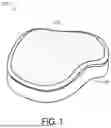
FIG. 1 illustrates a personal care device, according to one exemplary embodiment;
FIG. 2 illustrates an exploded view of a personal care device, according to one exemplary embodiment;
FIG. 3 illustrates a holding portion, according to one exemplary embodiment;
FIG. 4 illustrates a holding portion, according to another exemplary embodiment;
FIG. 5 illustrates an applicator pad, according to one exemplary embodiment;
FIG. 6 illustrates an applicator pad, according to one exemplary embodiment;
FIG. 7 illustrates an applicator pad, according to one exemplary embodiment, and
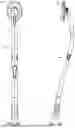
FIGS. 8A and 8B illustrate an extension handle for the personal care device, according to one exemplary embodiment.
DETAILED DESCRIPTION
Prior to describing the invention in detail, definitions of certain words or phrases used throughout this patent document will be defined: the terms “include” and “comprise”, as well as derivatives thereof, mean inclusion without limitation; the term “or” is inclusive, meaning and/or; the phrases “coupled with” and “associated therewith”, as well as derivatives thereof, may mean to include, be included within, interconnect with, contain, be contained within, connect to or with, couple to or with, be communicable with, cooperate with, interleave, juxtapose, be proximate to, be bound to or with, have a property of, or the like; Definitions of certain words and phrases are provided throughout this patent document, and those of ordinary skill in the art will understand that such definitions apply in many, if not most, instances to prior as well as future uses of such defined words and phrases.
Reference throughout this specification to “one embodiment,” “an embodiment,” or similar language means that a particular feature, structure, or characteristic described in connection with the embodiment is included in at least one embodiment. Thus, appearances of the phrases “in one embodiment,” “in an embodiment,” and similar language throughout this specification may, but do not necessarily, all refer to the same embodiment, but mean “one or more but not all embodiments” unless expressly specified otherwise. The terms “including,” “comprising,” “having,” and variations thereof mean “including but not limited to” unless expressly specified otherwise. An enumerated listing of items does not imply that any or all of the items are mutually exclusive and/or mutually inclusive, unless expressly specified otherwise. The terms “a,” “an,” and “the” also refer to “one or more”unless expressly specified otherwise.
Although the operations of exemplary embodiments of the disclosed method may be described in a particular, sequential order for convenient presentation, it should be understood that the disclosed embodiments can encompass an order of operations other than the particular, sequential order disclosed. For example, operations described sequentially may in some cases be rearranged or performed concurrently. Further, descriptions and disclosures provided in association with one particular embodiment are not limited to that embodiment and may be applied to any embodiment disclosed herein. Moreover, for the sake of simplicity, the attached figures may not show the various ways in which the disclosed system, method, and apparatus can be used in combination with other systems, methods, and apparatuses.
Furthermore, the described features, advantages, and characteristics of the embodiments may be combined in any suitable manner. One skilled in the relevant art will recognize that the embodiments may be practiced without one or more of the specific features or advantages of a particular embodiment. In other instances, additional features and advantages may be recognized in certain embodiments that may not be present in all embodiments. These features and advantages of the embodiments will become more fully apparent from the following description and apportioned claims or may be learned by the practice of embodiments as set forth hereinafter.
Turning now to the figures, various embodiments of a personal care device are described herein. Some embodiments of the personal care device may be used for personal hygiene purposes, such as bathing and cleansing. Some other embodiments of the personal care device may be used for deep skin cleansing, such as physical and chemical exfoliation. Still other embodiments of the personal care device may be used for skin treatment product application, and pharmaceutical product application.
Embodiments of the personal care device described herein provide several advantages over solutions known in the art. The personal care device may be easy to handle and provide improved grip, for example, compared to bar soaps. Further, bathing and cleansing variants of the personal care device may provide improved lathering, due to a larger absorbent pad, with a larger water and cleansing product absorption capacity, leading to a better bathing experience. The flexibility and easy deformability of the personal care device may allow improved conformance to the contours of the body, consequently leading to more effective bathing, cleansing, or product application. In some embodiments, a backing cushion layer may allow enhanced contour following, while distributing the pressure more evenly over the surface of the personal care device. Interchangeable pads may allow the reuse of the personal care device, while reducing mixing or cross contamination of products used in conjunction with different pads. Disposable pads may provide improved hygiene. Product infusion within the disposable pads may allow accurate dosing of the products, for example, for a single use. Further, a detachable handle may also be provided, which may enable users to reach hard to reach places, such as the users'back. This may help ageing users, obese users, and/or users with limited flexibility. However, it shall be appreciated that these advantages are merely exemplary and the personal care device described herein may have other advantages.
PERSONAL CARE DEVICE
FIG. 1 illustrates a personal care device 100 according to one embodiment. FIG. 2 illustrates an exploded view of the personal care device 100 according to one embodiment. The personal care device 100 will now be described jointly in conjunction with FIGS. 1 and 2. The personal care device 100 includes a holding portion 110, an applicator pad 120, and an attachment mechanism 130.
The holding portion 110 is configured to provide a structure or portion thereof, for gripping the personal care device 100. A user may hold the personal care device 100 using the holding portion 110.
As illustrated in FIG. 1, the holding portion 110 may have a planar structure, with a substantially uniform thickness. The planar structure of the holding portion 110 allows for deformation or flexure during use of the personal care device 100. In some embodiments, the holding portion 110 is a contoured planar structure. The holding portion 110 may be a concave planar structure, to conform to a cupped position of a user's palm. The contour of the holding portion 110 may be a uniform curve such as a surface section of a sphere, or an ellipsoid. Alternatively, the contour of the holding portion 110 may be a complex shape having multiple curvatures at different portions. For example, the contour of the complex shape may include a convex portion in the middle of the holding portion 110, and flat or convex portions at the periphery of the holding portion 110. The contoured shape of the holding portion 100 allows for a better, more natural feeling grip during use of the personal care device 100, since a user may naturally cup their hand at least to a certain extent, for applying cleansing or skin care product to their body.
In other embodiments, the holding portion 110 is a flat planar structure. A flat planar structure may provide other advantages, such as ease of manufacture. The flat planar structure may be constructed to be more flexible than a contoured planar structure, to allow sufficient conformance to the natural cupping of the user's hands, while minimizing the effort required to deform it by hand.
The holding portion 110 may be constructed from a flexible material, such as, but not limited to, polyurethane (PU), thermoplastic urethane (TPU), thermoplastic rubber, silicone, latex rubber, or a combination thereof.
The holding portion 110 may be flexible and deformable. The flexibility and deformability of the holding portion 110 may be enabled by a material of construction, a structural shape of the holding portion 110, or a combination thereof. For example, the thickness of the holding portion 110, the material of construction of the holding portion 110, and the shape of the holding portion 110 may be selected in a way that yields the desired flexibility of the holding portion 110. In various embodiments, the thickness of the planar structure of the holding portion 110 is less than 12 mm, and preferably between 5 mm and 10 mm. Such a thickness allows for easy deformation of the holding portion 110, so as to permit squeezing of the personal care device 100 while in use, or to permit following the contour of the body while in use.
The holding portion 110 may provide a non-slip grip to the personal care device 100, to minimize or prevent the risk of the personal care device 100 slipping out of the user's hands while in use. For example, while bathing, the use of a cleansing product such as soap, body wash, or face wash, is inherently slippery. The holding portion 110 may have a rough surface that provides an improved grip as compared to a smooth surface, particularly in the presence of a cleansing product. Alternatively, the holding portion 110 may have other surface features such as, but not limited to, ridges, crosshatching, dimples, and so forth, for providing the improved grip for the holding portion 110.
The holding portion 110 may be waterproof or water repellant. This allows the holding portion 110 to be easily cleaned with water and optionally detergent, and also allows the holding portion 110 to be quickly and sufficiently dry after being cleaned or used. Such a property enables the holding portion 110 to be reusable.
The applicator pad 120 is configured to temporarily hold, and subsequently transfer to the user's body, a personal care product, during use. The applicator pad 120 may be constructed from an absorbent material configured to absorb water, cleansing product, or a skin care product. In some embodiments, the applicator pad 120 includes an absorbent open cell foam. In some other embodiments, the applicator pad 120 includes an absorbent fabric sheet, such as, but not limited to, a non-woven synthetic fabric, a woven synthetic fabric, a knit synthetic fabric, a woven natural fabric, or a knit natural fiber fabric. The applicator pad 120 is configured to be flexible, and/or deformable when in use, to allow for the applicator pad 120 to follow the contour of the user's body, and to allow for the applicator pad 120 to follow the contour of the user's palm in which the personal care device 100 is held. When used for bathing and cleansing, the applicator pad 120 is capable of producing a lather when squeezed. In various embodiments, the applicator pad 120 is of substantially uniform thickness. The thickness of the applicator pad 120 may be between 12 mm and 50 mm. Preferably, the thickness of the applicator pad 120 may be between 20 mm and 40 mm.
Alternatively, the applicator pad 120 may be constructed from a non-absorbent material, such as silicone, polyurethane (PU), thermoplastic urethane (TPU), thermoplastic rubber, latex rubber, or a combination thereof. Such a non-absorbent construction may be beneficial for uses such as for application of lotions, body oils, pharmaceuticals ointments, and so forth, where the product needs to be transferred to the user's body, without producing a lather. The non-absorbent material may allow easier cleaning of the applicator pad 120 between uses.
In various embodiments, the applicator pad 120 may be disposable. The applicator pad 120 may be disposable after a single use. Alternatively, the applicator pad 120 may be configured for several uses before being disposed.
In some embodiments of the disposable applicator pad 120, the applicator pad 120 may have a skin care product impregnated therein. Such an applicator pad 120 may be made available as pre-impregnated pads, already impregnated with the skin care product. Such a pre-impregnated applicator pad 120 allows convenience of use, where the users may only need to procure the applicator pad 120 of their choice, without having to procure the skincare or cleansing products separately.
Pre-impregnated applicator pads 120 allow for accurate dosing of the skincare products, since the exact amount of skincare product may be impregnated into the applicator pad 120 and packaged. For bathing and cleansing applications, the pre-impregnated applicator pads 120 may hold the exact quantity of cleansing product, for a single or predefined number of uses. This may prevent wastage of soap, while providing a clean applicator pad 120 after a single or a predefined number of uses.
Disposable pre-impregnated applicator pads 120 may also allow for a more hygienic experience, preventing contamination of the applicator pad 120 while not in use—since they may be single use disposable. This may minimize or prevent the risk of skin infections arising from multiple use skincare applicators and/or bathing devices, such as loofahs, washcloths, and the like.
While pre-impregnated applicator pads 120 provide several advantages, applicator pads 120 without pre-impregnated skincare or cleansing products are also envisioned. In particular, for bathing and cleansing applications, the applicator pad 120 may not have a cleansing product impregnated therein. The user may apply a cleansing product of their choice on the applicator pad 120 and use the personal care device 100 for bathing. Other advantages described previously still apply to such applicator pads 120—including rich lathering, improved grip, and a more satisfying or luxurious skin feel during use.
The holding portion 110 and the applicator pad 120 may be removably secured to one another, using the attachment mechanism 130. The attachment mechanism 130 may include one of several mechanical attachment mechanisms. For example, the attachment mechanism 130 may be a hook and loop fastening mechanism. The holding portion 110 and the applicator pad 120 may include one of the hook portion and the complementary loop portion. The hook and loop fasteners may be disposed over the entire mating surfaces of the holding portion 110 and the applicator pad 120. Alternatively, the hook and loop fasteners may be disposed only at the peripheral edges of the mating surfaces of the holding portion 110 and the applicator pad 120. In yet another variation, several pieces of hook and loop fasteners may be disposed at corresponding locations of the mating surfaces of the holding portion 110 and the applicator pad 120.
In some alternate embodiments, the attachment mechanism 130 includes one or more snap-fit connectors. For example, a single snap fit connector in the form of a peripheral connector may be disposed at the entire peripheral edges of the holding portion 110 and the applicator pad 120. Another exemplary attachment mechanism 130 may include a plurality of snap-fit connectors. The plural snap-fit connectors may be disposed uniformly over the mating surfaces of the holding portion 110 and the applicator pad 120. It shall be appreciated that any other arrangement of snap-fit connectors may be used, without deviating from the scope of the present disclosure.
HOLDING PORTION
FIG. 3 illustrates a holding portion 310, according to one exemplary embodiment. The holding portion 310 includes a grip 312 configured to provide an additional surface for gripping the personal care device 100. The grip 312 includes one or more posts 314 and a backplate 316. The posts 314 extend perpendicular to the back surface of the holding portion 310. The posts 314 are connected to the backplate 316. The backplate 316 may be substantially parallel to the back surface of the holding portion 310. Thus, the posts 314 and the backplate 316 define a T-shaped structure of the grip 312. The grip 312 may be configured to provide enhanced grip for the fingers of the user. The posts 314 may be configured to be held between the fingers of the user, while the backplate 316 may be configured to prevent the personal care device 100 from slipping from the fingers of the user. In various embodiments, the grip 312 may be integrally formed with the holding portion 310.
FIG. 4 illustrates a holding portion 410, according to one exemplary embodiment. The holding portion 410 includes a grip 412 configured to provide an additional surface for gripping the personal care device 100. The grip 412 includes a loop coupled to the holding portion 410, at peripheral edges of the holding portion 410. The grip 412 may be configured to receive a palm of the user. In various embodiments, the grip 412 may be integrally formed with the holding portion 610.
In an alternate embodiment, the grip 412 includes a plurality of loops coupled to the holding portion 410. The grip 412 may be configured to receive one or more fingers of the user. In various embodiments, the grip 412 may be integrally formed with the holding portion 410.
APPLICATOR PAD
While various embodiments presented herein describe an applicator pad 120 having a single layer absorbent or non-absorbent construction, in some other embodiments, the applicator pad 120 may have a multi-layer construction. The applicator pad 120 may be interchangeably referred to as a bathing pad, or a treatment pad throughout this specification, to describe the intended use, without deviating from the scope and functionality thereof.
FIG. 5 illustrates an applicator pad 520, according to one exemplary embodiment. The applicator pad 520 includes an absorbent layer 522, and a cushioning layer 524.
The absorbent layer 522 is configured to temporarily hold, and subsequently transfer to the user's body, a personal care product, during use. The absorbent layer 522 is configured to touch the user's body during use. Throughout this specification, the absorbent layer 522 may be interchangeably referred to as a skin engaging layer, without deviating from the scope and functionality thereof. The absorbent layer 522 may be constructed from an absorbent material configured to absorb water, cleansing product, or a skin care product. In some embodiments, the absorbent layer 522 includes an absorbent open cell foam. In some other embodiments, the absorbent layer 522 includes an absorbent fabric sheet, such as, but not limited to, a non-woven synthetic fabric, a woven synthetic fabric, a knit synthetic fabric, a woven natural fabric, or a knit natural fiber fabric.
The cushioning layer 524 may be waterproof or water repellant. For example, the cushioning layer 524 may be constructed from a non-absorbent material, such as a closed cell foam, silicone rubber foam, polyurethane (PU) foam, or a combination thereof.
Both, the absorbent layer 522, and the cushioning layer 524 are configured to be flexible, and/or deformable when in use, to allow for the applicator pad 520 to follow the contour of the user's body, and to allow for the applicator pad 520 to follow the contour of the user's palm in which the personal care device 100 is held. When used for bathing and cleansing, the applicator pad 520 is capable of producing a lather when squeezed.
Such a two-layer construction may enable precise optimization of the cushioning and contour following ability of the applicator pad 520, and the skincare product holding capacity of the applicator pad 520. The two-layer construction may also enable precise optimization of the amount of water retention capacity of the applicator pad 520 and consequently the amount of lather generated, when used in as a bathing device. The optimization may be configured through configuring the thickness of the absorbent layer 522 and the thickness of the cushioning layer 524. For example, a thin absorbent layer 522 may hold a smaller quantity of skincare product or cleanser, while a thicker absorbent layer 522 may hold a larger quantity of the skincare product or cleanser. The thickness of the cushioning layer 524 may responsively be determined, to provide the requisite cushioning of the complete applicator pad 520. More particularly, the thickness of the absorbent layer 522 may first be determined based on the required skincare product retention capacity thereof. The resultant thickness of the absorbent layer 522 may therefore have a particular cushioning effect. To tune the overall cushioning and contour following effect of the applicator pad 520, the thickness of the cushioning pad 524 may then be configured. In other embodiments, a compressibility or Shore hardness may be tuned for the cushioning layer 524, to provide the overall cushioning and contour following effect of the applicator pad 520.
In various embodiments, the thickness of the absorbent layer 522 is less than 5 mm—for example, for disposable pads used for skincare product application. In other embodiments, the thickness of the absorbent layer 522 is between 5 mm and 25 mm—for example, for pads used for bathing. Consequently, the cushioning layer 524 may be between 5 mm and 50 mm, such that the thickness of the whole applicator pad 520 is close to about 50 mm or less than 50 mm.
SKINCARE PRODUCT IMPREGNATION
In various embodiments, a skincare product may be infused or impregnated within the applicator pad 120 (or absorbent layer 522).
In some embodiments of the disposable applicator pad 120, the applicator pad 120 (or absorbent layer 522) may have a skin care product impregnated therein. Such an applicator pad 120 (or applicator pad 520) may be made available as pre-impregnated pads, already impregnated with the skin care product. Such a pre-impregnated applicator pad 120 (or applicator pad 520) allows convenience of use, where the users may only need to procure the applicator pad 120 (or applicator pad 520) of their choice, without having to procure the skincare or cleansing products separately.
Pre-impregnated applicator pads 120 (or applicator pad 520) allow for accurate dosing of the skincare products, since the exact amount of skincare product may be impregnated into the applicator pad 120 (or applicator pad 520) and packaged. For bathing and cleansing applications, the pre-impregnated applicator pads 120 may hold the exact quantity of cleansing product, for a single or predefined number of uses. This may prevent wastage of soap, while providing a clean applicator pad 120 after a single or a predefined number of uses.
Disposable pre-impregnated applicator pads 120 (or applicator pad 520) may also allow for a more hygienic experience, preventing contamination of the applicator pad 120 (or applicator pad 520) while not in use—since they may be single use disposable. This may minimize or prevent the risk of skin infections arising from multiple use skincare applicators and/or bathing devices, such as loofahs, washcloths, and the like.
In some embodiments, the skincare product impregnated into the applicator pad 120 (or applicator pad 520) may be a cleansing product, such as, but not limited to, a soap, a synthetic detergent (syndet), a body wash, a face wash, a shampoo, an intimate wash, and so forth.
In another embodiment, the skincare product impregnated into the applicator pad 120 (or applicator pad 520) may be a moisturizing product, including emollients, humectants, occlusives, or any combination thereof.
In yet another embodiment, the skincare product impregnated into the applicator pad 120 (or applicator pad 520) may be an exfoliating product, such as, but not limited to alpha hydroxy acids (AHAs) including mandelic acid, lactic acid, glycolic acid, and so forth. Alternatively, the skincare product may be a beta hydroxy acid (BHA), such as salicylic acid.
In yet another embodiment, the skincare product impregnated into the applicator pad 120 (or applicator pad 520) may be non-prescription skincare products such as, but not limited to, retinol, azelaic acid, non-prescription tyrosinase inhibitors such as tranexamic acid, kojic acid, topical vitamins such as vitamin B3, vitamin B5, vitamin C, and so forth.
In yet another embodiment, the skincare product impregnated into the applicator pad 120 (or applicator pad 520) may be a pharmaceutical composition for treating a skin disorder. Such skincare products may include steroids, corticoids, topical antibiotics, prescription retinoids such as tretinoin, prescription tyrosinase inhibitors such as hydroquinone, and so forth.
In yet another embodiment, the skincare product impregnated into the applicator pad 120 (or applicator pad 520) may be a sun protection compound such as a physical UV filter, a chemical UV filter, or a combination thereof.
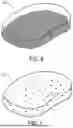
FIG. 6 illustrates an applicator pad 620 impregnated with a skincare product, according to one exemplary embodiment. The applicator pad 620 may include the skincare product impregnated in a single continuous layer. In some embodiments, the skincare product may be impregnated in a continuous layer on the surface of the applicator pad 620. Typical candidates for such an infusion include, without limitation, sun protection products, chemical exfoliants, prescription pharmaceutical compositions, and so forth.
In some other embodiments, the skincare product may be impregnated in a continuous layer below the surface of the applicator pad 620, at a predefined depth, or at the bottom of the applicator pad 620. Typical candidates for such an infusion include water soluble compounds such as, but not limited to, AHAs, BHA, water soluble skincare vitamins (B3, B5, water soluble forms of vitamin C), and so forth. In yet other embodiments, skin cleansing products activated by water, such as soap, body wash, face wash, shampoo, may be infused below the surface of the applicator pad 620.
It shall be appreciated that, while particular skincare products are listed as examples herein, any skincare product may be impregnated in this manner.
FIG. 7 illustrates an applicator pad 720 impregnated with skincare product, according to one exemplary embodiment. The applicator pad 720 may include the skincare product impregnated in a plurality of discrete beads. In some embodiments, the skincare product may be impregnated as discrete beads on the surface of the applicator pad 720. In other embodiments, the skincare product may be impregnated as discrete beads below the surface of the applicator pad 720, at a predefined depth. The beads may be in the form of dots, or lines. Typical candidates for such an infusion include, without limitation, water soluble products, water activated cleansers such as soap, face wash, body wash, shampoo, and so forth.
It shall be appreciated that, while particular skincare products are listed as examples herein, any skincare product may be impregnated in this manner.
As described herein, the water soluble or water activated skincare and skin cleansing products benefit particularly from the infusion/impregnation described herein. Infusing or impregnating dehydrated forms of water soluble or water activated skincare products and cleansers may provide advantages such as enhanced shelf life, fewer or no requirement for preservatives, improved stability, and so forth. Such skincare products may be activated simply by adding water to the applicator pad 120 (or 620, or 720). While distilled water may be beneficial, tap water may also be used, since the skincare product will be used immediately following wetting, and therefore decreasing the chance of adverse reactions with ions or dissolved solids in the water.
FIGS. 8A and 8B illustrate a top view and a side view, respectively, of an extension handle for an exemplary personal care device 800. The extension handle 850 is configured to enable a user to use the personal care device 800 on hard to reach areas, such as the user's back. Users with limited flexibility and obese users may also benefit from the extension handle 850. The extension handle 850 may be detachably attached to the personal care device 800. In one embodiment, the extension handle 850 is attached to the personal care device 800 using a snap fit connector. The personal care device 800 may have a female portion or a receptacle of the snap fit connector, while the handle 850 may have the corresponding male portion or plug of the snap fit connector. Such an arrangement enables the personal care device 800 to have a more comfortable, protrusion free holding surface, for the times when the personal care device 800 needs to be used without the extension handle 850.
The extension handle 850 may be a split handle with multiple segments. The segments may interconnect with one another, to form extension handles of different lengths. Each segment may have a male snap fit connector on one end, and a female snap fit connector on the other end, such that each segment may be connectable to a subsequent segment. In various embodiments, the connector between the personal care device 800 and the handle 850, and the segments of the handle 850 may be identical, such that any segment may be directly coupled to the personal care device 800.
Various other implementations are possible. For example, the handle 850 may be a single piece handle. The snap fit connectors may be substituted with threaded connectors.
The embodiments described herein are merely exemplary in nature. The features, elements or variations described herein may be used in any combination, to enable improved functionality over the products and solutions known in the art. The description of the embodiments presented herein shall not be considered limiting. Instead, the innovation is described in the appended claims, with implementation variations presented in the detailed description above.
Claims
1. A bathing device comprising:
a holding portion for gripping the bathing device, wherein the holding portion is flexible and reusable;
a bathing pad comprising a body washing product impregnated therein; wherein the bathing pad is flexible and disposable; and
an attachment mechanism for mechanically and removably attaching the bathing pad and the holding portion.
2. The bathing device of claim 1, wherein the attachment mechanism comprises one of a hook and loop fastener, one or more snap fit connectors, or a combination thereof.
3. The bathing device of claim 1, wherein the cleaning product comprises one of a soap, or a synthetic detergent.
4. The bathing device of claim 1, wherein the cleaning product comprises a solid cleaning product.
5. The bathing device of claim 1, wherein the cleaning product comprises a liquid cleaning product.
6. The bathing device of claim 1, wherein the cleaning product is impregnated into the bathing pad in the form of multiple, discrete beads distributed throughout the bathing pad.
7. The bathing device of claim 1, wherein the cleaning product is impregnated uniformly over the volume of the bathing pad.
8. The bathing device of claim 1, wherein the bathing pad is disposable after a single use, or multiple uses.
9. The bathing device of claim 1, wherein the bathing device further comprises a cushioning layer, wherein the cushioning layer is compressible to at least partially follow the contour of the body during use.
10. The bathing device of claim 1, wherein the bathing device further comprises a skin engaging layer, wherein the skin engaging layer comprises one of a soft touch surface, an exfoliating surface, or a combination thereof.
11. A bathing device comprising:
a holding portion for gripping the bathing device, wherein the holding portion is flexible and reusable;
a bathing pad comprising an absorbent open cell foam capable of absorbing water and a cleansing product, wherein the bathing pad is capable of producing a lather when squeezed, and wherein the bathing pad is flexible and disposable; and
an attachment mechanism for mechanically and removably attaching the bathing pad and the holding portion.
12. The bathing device of claim 11, wherein the attachment mechanism comprises one of a hook and loop fastener, one or more snap fit connectors, or a combination thereof.
13. The bathing device of claim 11, wherein the bathing device further comprises a cushioning layer, wherein the cushioning layer is compressible to at least partially follow the contour of the body during use.
14. The bathing device of claim 11, wherein the bathing device further comprises a skin engaging layer, wherein the skin engaging layer comprises one of a soft touch surface, an exfoliating surface, or a combination thereof.
15. A skincare product applicator comprising:
a holding portion for gripping the skincare product applicator with fingers of a user, wherein the holding portion is flexible and reusable;
a treatment pad comprising a skincare product impregnated therein, wherein the treatment pad is flexible and disposable; and
an attachment mechanism for mechanically and removably attaching the treatment pad and the holding portion.
16. The skincare product applicator of claim 15, wherein the attachment mechanism comprises one of a hook and loop fastener, one or more snap fit connectors, or a combination thereof.
17. The skincare product applicator of claim 15, wherein the skincare product comprises one of a micellar cleanser, a cleansing oil, a cleansing balm, an alpha hydroxy acid (AHA), a beta hydroxy acid (BHA), or a combination thereof.
18. The skincare product applicator of claim 15, wherein the skincare product comprises a moisturizing product, a pharmaceutical composition, a herbal composition, or a combination thereof.
19. The skincare product applicator of claim 15, wherein the skincare product applicator further comprises a cushioning layer, wherein the cushioning layer is compressible to at least partially follow the contour of the body during use.
Images & Drawings included:



Sources:
- United States Patent and Trademark Office - verify current appl. status at the USPTO↗
Similar patent applications:
- » 20160367001
Heat conducting mechanism for personal care device and personal care device - » 20250345160
PERSONAL CARE DEVICE AND SLEEVE FOR A PERSONAL CARE DEVICE - » 20240217129
PERSONAL CARE DEVICE AND METHOD OF MANUFACTURING SUCH PERSONAL CARE DEVICE - » 20230373118
PERSONAL CARE DEVICE AND METHOD OF MANUFACTURING SUCH PERSONAL CARE DEVICE - » 20250256415
PERSONAL CARE DEVICE AND METHOD FOR DETERMINING A LOCATION OF THE PERSONAL CARE DEVICE ON A BODY PART - » 20160158947
Personal care device as well as a cutting unit for such a personal care device - » 20130008562
Instrument, a system and a container for provisioning a device for personal care treatment, and a device for personal care treatment with such a container - » 20090063775
Instrument, a system and a container for provisioning a device for personal care treatment, and a device for personal care treatment with such a container - » 20200033448
Handheld personal care device and a method of estimating a position and/or an orientation of a handheld personal device relative to a subject - » 20060240380
Valves for personal care devices
Recent applications in this class:
- » 20250339002 2025-11-06
Finger-Wipe Apparatus - » 20250113954 2025-04-10
Shower Soap Mesh With Handle - » 20250089949 2025-03-20
Soap Glove Device - » 20240366038 2024-11-07
Soap Retaining Washcloth - » 20240138631 2024-05-02
Bath Pouf Pouch - » 20240122415 2024-04-18
Hand washing assembly - » 20240057824 2024-02-22
BAR SOAP EXFOLIANT WRAPPING - » 20230102001 2023-03-30
SYSTEMS AND METHODS FOR DISPENSING FLUID FROM A RUPTURABLE CELL - » 20230090471 2023-03-23
Pouched washcloth for storing a soap bar - » 20230009381 2023-01-12
Makeup Removing Glove Assembly