DRIVE ASSEMBLY FOR DRIVING A MOVABLE FLOW DEVICE OF AN AIRCRAFT
US20260109447A1
2026-04-23
19/364,078
2025-10-21
Smart Summary: A drive assembly helps control a movable flow device on an aircraft. It uses a single actuator with a long part that connects to the aircraft's structure. This actuator can move the flow device back and forth between two positions: extended and retracted. The assembly includes support elements that help guide this movement. It can be part of a larger system used in aircraft wings and overall aircraft design. 🚀 TL;DR
Abstract:
A drive assembly for driving a movable flow device of an aircraft. The drive assembly has a single actuator comprising a longitudinal transmission element, a first support element and a second support element. The longitudinal transmission element of the single actuator is oriented transversely to an extending direction of the movable flow device, is to be mounted to a fixed support structure of the aircraft, and acts on the first and second support elements such that the movable flow device moves between extended or retracted positions relative to the fixed support structure. Also a drive system, a high lift system, an aircraft wing, an aircraft and a method of actuating a movable flow device.
Applicant:
Interested in similar patents?
Get notified when new applications in this technology area are published.
Classification:
B64C9/00 » CPC main
Adjustable control surfaces or members, e.g. rudders
B64C13/26 » CPC further
Control systems or transmitting systems for actuating flying-control surfaces, lift-increasing flaps, air brakes, or spoilers; Transmitting means without power amplification or where power amplification is irrelevant
Description
CROSS-REFERENCES TO RELATED APPLICATIONS
This application claims the benefit of German Patent Application Number 10 2024 130 899.0 filed on Oct. 23, 2024, the entire disclosure of which is incorporated herein by way of reference.
FIELD OF THE INVENTION
The present invention generally relates to movable flow device systems. In particular, the invention relates to a drive assembly for driving a movable flow device of an aircraft, a drive system comprising a plurality of drive assemblies, a high lift system, an aircraft wing, an aircraft and a method of actuating a movable flow device.
BACKGROUND OF THE INVENTION
Movable flow device systems are typically used in an aircraft to be able to switch between a takeoff or landing configuration and a cruise configuration of an airfoil. A so-called flow device may be a fixed component, or a movable mechanism which is deployed when required. Examples of a flow device are movable high-lift devices that can include wing flaps or slats. Flaps (usually at the trailing edge of an aircraft wing) and slats (usually at the leading edge of an aircraft wing) may increase the lift that the wing of an aircraft can produce at a lower speed when extended. Thus, in order to keep the takeoff and landing speeds as low as possible, highly efficient flaps and slats can be set to different positions: when extended, they alter the airflow so the wing can produce more lift at lower speed; for high-speed flight, they are retracted to reduce drag.
Flap or slat actuation systems are mostly operated centrally, wherein mechanical transmission shafts are routed along the wing and drive the slats or flaps by a central power drive unit. This mechanical connection synchronizes the flaps between left-hand and right-hand wing and between inboard and outboard flap/slat on both wings.
Another option are differential settings on the leading edge and/or the trailing edge (e.g. due to differential flap setting function or due to a need to drive the devices sequentially as for example for Kruger devices to prevent a failure mode with all devices jamming in one position). However, it has been shown that this may result in a complex components'setup.
SUMMARY OF THE INVENTION
It may be seen as an object of the invention to provide further improved drive systems for a flow device of an aircraft. The object of the present invention may be solved by the subject-matter of one or more embodiments described herein.
In particular, provided is a drive assembly, a drive system, a high lift system, an aircraft wing, an aircraft and a method, all according to one or more embodiments described herein.
According to an aspect of the invention, a drive assembly for driving a movable flow device of an aircraft is provided. The drive assembly comprises a single actuator comprising a longitudinal transmission element, the longitudinal transmission element having a first end and a second end. The longitudinal transmission element of the single actuator is configured to be oriented transversely to an extending direction of the movable flow device and the single actuator is further configured to be mounted to a fixed support structure of an aircraft. The drive assembly further comprises a first support element having a first end and a second end, which is mountable with the first end to a first section of the fixed support structure of the aircraft and with the second end to a first section of a movable flow device. The drive assembly further comprises a second support element having a first end and a second end, which is mountable with the first end to a second section of the fixed support structure of the aircraft and with the second end to a second section of the movable flow device. The single actuator is configured to act on the first and second support elements such that the movable flow device is movable between extended or retracted positions relative to the fixed support structure.
The inventive drive assembly may be seen as an approach to provide an improved architecture of a decentralized single slat or flap driving system. For example, in order to guarantee symmetry and uniform movement of all flap or slat surfaces, the individually driven flaps or slats will be controlled and monitored centrally.
The architecture has been simplified in that the drive assembly comprises only one single actuator per movable flow device.
Fewer parts result in a better physical integration feasibility, in a weight saving on system level, in an installation time saving, and in lower drag of the system reducing the necessary power to operate the high lift system. It will also likely reduce costs.
Reducing the actuators needed from for example two to one per device improves the integration of the actuation system within the strongly restricted space that is available in the thin wing. The improved architecture could also be used in a wingtip leading edge high lift system.
As a further advantage, using only one actuator eliminates a specific failure case which could lead to an active skewing of the device. A situation in a two-actuator set-up per device where an actuator has experienced a disconnect or failure, e.g. on the input side, but still supports the device while the opposite actuator on the device continues to move. In the inventive drive assembly this case is eliminated by architecture because a disconnect to either side of the single actuator will be detected and only leads to a passive skewing of the device by airloads.
A “movable flow device” can also be referred to as a movable flow body and may be referred to as movable high-lift device. A movable flow device comprises, for example, flaps and slats (such as for example Kruger flaps) of an aircraft wing. Flaps and slats may be configured to be moved between extended or retracted positions at a leading edge or at a trailing edge of the wing. The movement direction, also referred to as the deployment direction or extending direction, may be perpendicular to the transverse axis, i.e., parallel to the longitudinal axis of the aircraft in case the wings are arranged at right angles. However, as aircraft wings are usually mounted at a slight angle to the rear, the extending direction may be defined as being parallel to the chord of the wing. The axis of the extending direction of the movable flow device may e.g. form an angle of 0 to 45 degrees with the longitudinal axis of the aircraft.
The “single actuator” is configured to be oriented, with its longitudinal transmission element, transversely to an extending direction of the movable flow device. For example, the longitudinal transmission element of the single actuator is oriented in a spanwise direction along the spar of the aircraft wing. In other words, the longitudinal transmission element of the single actuator may be arranged substantially (+/−10%) parallel to the long side of the movable flow device. In addition, the single actuator is configured to be mounted to a fixed support structure of the aircraft.
The single actuator may, for example, be a linear actuator providing for a linear actuation of the longitudinal transmission element. Linear actuators can, for example, operate by conversion of rotary motion into linear motion.
A “longitudinal transmission element” typically refers to a component or mechanism that facilitates the transmission of force or motion along a longitudinal axis. This can include various devices such as drive shafts or push rods.
For example, a longitudinal transmission element can transmit force or motion along a straight path. The term “longitudinal” indicates that the transmission or motion occurs along the length of the element, rather than in a lateral or rotational manner.
The single actuator is configured to drive or act on the two support elements and can thereby move the movable flow device.
The “first and the second support elements” each have a first end and a second end and are mountable with their first ends to different sections, i.e., a first and a second section of a fixed support structure of the aircraft and with their second ends to different sections, i.e., a first and a second section, of the movable flow device. The support elements may also be referred to as support stations or support levers. The support elements may be rigid and are, for example, fixed rods or bars that are mountable at the specified points and connect the movable flow device with the support structure of the aircraft. Optionally, the support elements can contain a gear segment that may interact with a straight rack on the longitudinal transmission element.
The longitudinal transmission element of the single actuator may be connected with its right or left end, respectively, (i.e. with its first or second end) to the support elements. Consequently, there may be a mechanical connection between the driven support elements which ensures a synchronous movement, i.e. a synchronous deployment of the movable flow device. However, in an arrangement with intermediate links, such as connection rods, there may be a kinematic difference between the left and right deployment of the support elements which could be compensated by the attachment principle to the device and/or the flexibility of the device.
According to an embodiment, the drive assembly further comprises an electric motor which activates the single actuator, and two Motor Control Electronics (MCEs) which are coupled with the electric motor. The MCEs are connected to one or more Flight Control Computer(s) (FCC(s)).
The electric motor can be a redundant electric motor. For example, a redundant electric brushless DC motor can be used, which is connected to two local Motor Control Units and-for example but not necessarily-supplied by HVDC from two electric systems of the aircraft. The redundant sides of the motor act on one single motor output shaft. This set-up enables the function of the devices if one electric system, one MCE, or one winding side of the electric motor fails.
The drive assembly may be regarded as a single slat drive architecture as sub-system per slat device in a leading edge high-lift system. But it could also be used for a single flap drive system in a trailing edge high lift system.
This means that each high lift device can be controlled individually by the central Flight Control Computer(s) commanding the local drive units. The synchronization between the devices per wing or between the left hand (LH) and right hand (RH) wing is done electronically by a suitable control and monitoring via the FCC(s). In the case of a high lift system with multiple devices, such decentralized architecture enables non-faulty pairs to remain fully operational after certain failure cases of other pairs. In an embodiment, the drive assembly further comprises at least one position sensor and/or at least one load sensor.
For control and monitoring each drive assembly contains at least one position sensor, for example at least one electrically redundant position sensor, optionally two electrically redundant position sensors, in the actuator measuring the push/pull-rod position, i.e. the position of the longitudinal transmission element; furthermore, the drive assembly may contain at least one, for example two, electrically redundant load sensor(s), arranged at two opposite sides of the actuator, e.g. towards the support elements.
According to an embodiment, the single actuator is configured to drive the longitudinal transmission element into a translational or a rotational movement (also referred to as a translating movement or a rotating movement, respectively). In an example, a redundant electric motor may be associated with the actuator, e.g. a redundant electric motor may be coupled with the actuator.
In the actuating system, energy, e.g. electric energy provided by a redundant electric motor, may be converted into motion. The actuator may convert-via its longitudinal transmission element-a movement into another movement, for example a rotation around an axis may be converted into a rotation around another axis or into a translation. The actuator may also convert a translational movement into a rotational movement or into another translational movement. Translational movement refers to motion along a straight path, like the movement of a piston in a cylinder, while rotational movement involves spinning around an axis, like the rotation of a motor shaft. The actuator can be designed to perform either type of movement depending on the application it is intended for.
The transmission element may be linked to the two support elements and consequently, a motion can be transferred to the support elements and to the movable flow device.
In another variant, if the longitudinal transmission element rotates it could drive for example two pinions of a typical rack and pinion arrangement at the slat or flap support (e.g. the support elements); as a further example, it could also drive a support element bearing assembly in a linkage.
According to another embodiment, the drive assembly further comprises at least one power-off brake (PoB) for breaking either a translating movement or a rotating movement of the longitudinal transmission element of the single actuator. In a preferred embodiment, the drive assembly comprises two PoBs for safety reasons.
Two power-off brakes may be used in the architecture for the braking function of the actuator outputs due to redundancy needs for safety. For example, the power-off brakes may be located at each side, i.e. at two opposite sides, of the through drive actuator outputs. In a beneficial arrangement, each PoB comprises two solenoids holding the brake open and connected to the two MCEs.
In an embodiment, the drive assembly further comprises a rack and a pinion element, the single actuator being configured to act on the support elements via the rack and/or the pinion element, or a gear segment. The rack may be a translating rack and the pinion may be a rotating pinion element. For example, the rack comprises a number of teeth, and the rotating pinion element is a pinion segment. In another example, the rotating pinion element is a pinion.
In an embodiment, the pinion element is arranged on the longitudinal transmission element and the rack is arranged on the support elements.
In another embodiment, the rack is arranged on the longitudinal transmission element and the pinion is arranged on the support elements.
Hence, there may be a translating rack from the actuator side and a rotating pinion on the kinematics side. It is possible that a rotational output movement of the actuator drives a pinion which may drive a rack of a slat track. In an example, the single actuator is used to control the support elements through a combination of translational and rotational motion.
For example, the rack may engage with a rotating pinion element or a pinion segment. The pinion may be mounted on a shaft and rotates when the rack moves. This rotational motion may be perpendicular to the direction of movement of the rack. The rotational motion of the pinion element can then be used to actuate or control the support elements. Depending on the design, the support elements might pivot, lift, or perform other actions in response to the rotational motion imparted by the pinion element.
This combination of translational motion via the rack and rotational motion via the pinion element allows the single actuator to control the support elements effectively.
In an embodiment, the single actuator is configured to act on the first and second support elements such that the support elements perform a swivel movement. For example, if the transmission element is moved by the actuator in a linear direction parallel to the fixed support structure such that the first support element is pulled towards the actuator whereas the second support element is pushed away from the actuator, the two support elements can perform a swivel movement.
The movement of the actuator can enable the support elements to pivot or swivel around a fixed point (such as the connection point with the fixed support structure). Hence, the actuator may induce the desired swivel movement in the support elements. Such swivel movement of the support elements could serve various purposes, such as positioning components like a movable flow device. In a preferred embodiment, a movable flow device is moved between retracted and extended position(s) with respect to a fixed support structure.
In a further embodiment the drive assembly further comprises a first connection rod having a first end and a second end, and a second connection rod having a first end and a second end. The first end of the first connection rod is coupled to the first support element, and the second end of the first connection rod is coupled to the first end of the longitudinal transmission element of the single actuator. The first end of the second connection rod is coupled to the second end of the longitudinal transmission element of the single actuator, and the second end of the second connection rod is coupled to the second support element, such that the single actuator acts on the support elements via the connection rods.
The connection rods are stiff connection rods and are connected, between the support elements, to the longitudinal transmission element of the single actuator. With their other ends the connection rods are mounted to the support elements. As the actuator moves the connection rods, the support elements are moved which again move the connected flow device.
In an example, the connection rods are connected to the support elements via linkage. In this arrangement there may be a kinematic difference between the left and right deployment of the support elements which could be compensated by the attachment principle to the device and/or the flexibility of the device. In another example, the connection rods are configured as a rack and connect with the support elements via a pinion segment.
Thus, there may be a mechanical connection via push/pull rods between the two driven support elements which ensures a synchronous deployment. In other words, this architecture can keep a mechanical link between the two support elements to synchronize the movement at two stations of the movable flow device.
Instead of directly translating the motion, the actuator may generate a rotational movement. The rotational output from the actuator can be transferred to a pinion gear which rotates when driven by the actuator. The rotation of the pinion gear may engage with a rack which is a straight or curved gear with teeth along its length. As the pinion gear turns, it moves the rack either forward or backward along its path.
The rack may be part of a track system connected to the support elements. As the rack moves due to the rotation of the pinion, it imparts motion to the support elements.
Thus, the support elements likely control or adjust the position of the movable flow device.
According to an embodiment, a drive assembly is provided, wherein a load path from the electric motor to the single actuator is a single load path or a dual load path.
The single actuator can use a single load path design except for a redundant electric motor and its connection to e.g. a nut acting on a ball screw or a pinion acting on a rack. This motor to nut or motor to pinion load path can be doubled (and potentially there could be a reduction gearing in between). Such a set-up within the actuator would have the advantage that in a failure case of slipping of one load path (e.g. nut to one side of motor) the other load path would still hold the actuator in position.
Another variant could also be a single load path connection to the motor which would then necessitate a quick reaction time of the system via the FCC to close the brakes in such a failure case. The above described two load paths to the motor are advantageous.
According to an aspect, a drive system is provided comprising a plurality of drive assemblies as described herein, wherein the drive assemblies are independent from each other, such that individual movable flow devices are movable independently from each other.
The drive system may be referred to as a decentralized drive system, or as single flap or single slat drive system. This means that each high lift device or drive assembly can be controlled individually by the central Flight Control Computer(s) (FCCs) commanding the local drive units. The synchronization between the devices per wing or between the LH and RH wing is done electronically by a suitable control and monitoring via the FCCs.
According to an aspect, a high lift system comprising at least one drive system as described herein and/or at least one drive assembly as described herein, and at least one movable flow device coupled with the at least one drive system and/or the at least one drive assembly, is provided. As an example, a distributed leading edge high lift system architecture comprising at least one drive system comprising at least one drive assembly with one single actuator per device is provided.
In the case of a high lift system with multiple devices, a decentralized architecture as described herein for example enables non-faulty pairs to remain fully operational after certain failure cases.
According to another aspect, an aircraft wing is provided comprising at least one high lift system as described herein, wherein the high lift system is arranged at a leading edge region and/or at a trailing edge region of the aircraft wing.
According to another aspect, an aircraft comprising at least one aircraft wing as described herein and/or at least one high lift system as described herein and/or at least one drive system as described herein and/or at least one drive assembly as described herein is provided.
According to another aspect, a method of actuating a movable flow device of an aircraft using the drive assembly as herein described is provided. In a step of the method, a single actuator comprising a longitudinal transmission element is provided, wherein the longitudinal transmission element has a first end and a second end. In another step, a first support element is provided which has a first end and a second end, and which is mountable with the first end to a first section of a fixed support structure and with the second end to a first section of the movable flow device. In yet another step, a second support element is provided which has a first end and a second end, and which is mountable with the first end to a second section of the fixed support structure and with the second end to a second section of the movable flow device.
The longitudinal transmission element of the single actuator is configured to be oriented transversely to an extending direction of the movable flow device. The single actuator is configured to be mountable to the fixed support structure of the aircraft and acts on the first and second support elements such that the movable flow device is movable between an extended or retracted position relative to the fixed support structure. The method steps may be performed in the indicated order.
BRIEF DESCRIPTION OF THE DRAWINGS
The present invention will hereinafter be described in conjunction with the following drawing figures, wherein like numerals denote like elements.
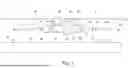
FIG. 1 shows a schematic illustration of a drive assembly for driving a movable flow device of an aircraft.
FIG. 2 shows a schematic illustration of the drive assembly shown in FIG. 1 in a second position.
FIG. 3 shows a schematic illustration of a variant of the drive assembly.
FIG. 4A shows a schematic illustration of load paths from motor to actuator.
FIG. 4B shows a second schematic illustration of load paths from motor to actuator.
FIG. 5 shows an aircraft comprising a high lift system.
FIG. 6 shows a flow diagram of a method of actuating a movable flow device.
DETAILED DESCRIPTION OF THE PREFERRED EMBODIMENTS
The representations and illustrations in the drawings are schematic and not to scale. A better understanding of the assembly, the system and the method described above may be obtained through a review of the illustrations accompanying this application together with a review of the detailed description that follows.
FIG. 1 shows a drive assembly 2 for driving a movable flow device 4 of an aircraft 50. The drive assembly 2 comprises a single linear actuator 10 which is mounted to a fixed support structure 6 of an aircraft wing 52 and comprises a longitudinal transmission element 48. The drive assembly further comprises two rigid support elements (indicated by dashed lines), i.e. a first support element 12 and a second support element 18. The first support element 12 is mounted with its first end 14 to a first section of a fixed support structure 6 of the wing 52 of an aircraft 50, and with its second end 16 to a first section of a movable flow device 4. Likewise, the second support element 18 is mounted with its first end 20 to a second section of the fixed support structure 6, and with its second end 22 to a second section of the movable flow device 4.
Two stiff connection rods 28, 34 are provided between the support elements 12, 18. The connection rods are connected via linkage both to the support elements 12, 18 and to the ends 46, 47 of the longitudinal transmission element 48 of the single actuator 10. In particular, a first end 30 of the first connection rod 28 is coupled to the first support element 12, and a second end 32 of the first connection rod 28 is coupled to the first end 46 of the longitudinal transmission element 48. On the other side of the linear actuator 10, a first end 36 of the second connection rod 34 is coupled to the second end 47 of the longitudinal transmission element 48 of the actuator 10, and a second end 38 of the second connection rod 34 is coupled to the second support element 18.
Two motor control electronics (MCEs) 26 are shown, which are coupled to a redundant electric motor 24. The redundant electric motor 24 activates the single linear actuator 10. The actuator 10 transmits a motion along the longitudinal axis and consequently, can move the connection rods 28, 34 via its longitudinal transmission element 48. The connection rods 28, 34 move the support elements 12, 18, and the support elements 12, 18 can thus move the connected movable flow device 4.
In addition, two load sensors 44 are shown. The two load sensors 44 are arranged at two opposite sides of the actuator 10. The load sensors 44 can measure the force applied to the longitudinal transmission element 48. Two power-off brakes (PoBs) 40 are provided which can break a translating movement of the single actuator 10. And finally, a position sensor 42 is provided in the actuator 10, which measures the push/pull-rod position, i.e. the position of the longitudinal transmission element 48.
The power-off brakes (PoBs) 40 are used for braking the function of the actuator 10 due to redundancy needs for safety. The power-off brakes 40 are located at each side of the through drive actuator 10 outputs. Each PoB 40 comprises two solenoids (not shown) holding the brake open and connected to the two MCEs 26. The MCEs 26 are connected to a flight control computer (not shown).
In this example, the two support elements 12, 18 may perform a swivel movement deploying the movable flow device 4 into an extended position.
For a better understanding, FIG. 2 shows a schematic illustration of the drive assembly shown in FIG. 1 in a second, extended position.
The longitudinal transmission element 48 has been moved to the right such that the connection rods 28, 34 are pulled or pushed, respectively, and now appear slightly bent at the joint of their first or second end 36, 32, with which they are coupled to the transmission element 48. The two support elements 12, 18 have swiveled downwards and the flow device 4 is now in a more extended position with respect to the fixed support structure 6.
FIG. 3 shows a schematic illustration of a variant of the drive assembly 2, wherein the single actuator 10 acts on the support elements 12, 18 via translating rack 41 and rotating pinion 39. In particular, FIG. 3 shows translating racks 41 from the actuator side and a rotating pinion segments 39 on the kinematics side. In this case, the actuator 10 drives racks 41 which are connected at both sides to the longitudinal transmission element 48 of the actuator. The racks 41 engage with rotating pinion segments 39. The pinion segments 39 are mounted on the support elements 12, 18 and rotate when the racks 41 move. The rotational motion of the pinion segments 39 is then used to actuate or control the support elements 12, 18. As explained with respect to FIG. 1, the support elements 12, 18 perform a swivel movement in response to the rotational motion imparted by the pinion segments 39.
FIGS. 4A and 4B shows a load path 25 from the electric motor 24 to the single actuator 10 either as a single load path (shown in FIG. 4B) or as a dual load path (shown in FIG. 4A). In addition, two power-off brakes 40 are provided on both sides of the actuator.
The single actuator 10 mostly uses a single load path 25 design as in the example that is shown in FIG. 4B. In this example, the single load path 25 connection to the motor 24 however necessitates a quick reaction time of the system via the FCC (not shown) to close the brakes 40 in such a failure case.
In the example in FIG. 4A, the load path 25 is doubled and a reduction gearing is arranged in between (not shown). Such a set-up within the actuator 10 has the advantage that in case of slipping of one load path 25 (e.g. nut to one side of motor) the other load path 25 would still hold the actuator 10 in position.
FIG. 5 shows an aircraft 50 comprising a high lift system comprising a drive assembly 2 as explained above with respect to FIGS. 1 to 3. The aircraft 50 comprises an aircraft wing 52 with a leading edge 54 and a trailing edge 56, wherein the high lift system is arranged at the leading edge 54 of the aircraft wing 52.
FIG. 6 shows a flow diagram of a method 200 of actuating a movable flow device of an aircraft, for example using the drive assembly 2 as explained above with respect to FIGS. 1 to 3. A step 202 comprises providing a single actuator comprising a longitudinal transmission element, the longitudinal transmission element having a first end and a second end. Another step 204 of the method comprises providing a first support element having a first end and a second end, which is mountable with the first end to a first section of a fixed support structure and with the second end to a first section of the movable flow device. A further step 206 comprises providing a second support element having a first end and a second end, which is mountable with the first end to a second section of the fixed support structure and with the second end to a second section of the movable flow device. The single actuator is configured to be oriented transversely to an extending direction of the movable flow device, and is configured to be mountable to the fixed support structure of the aircraft. The single actuator is further configured to act on the first and second support elements such that the movable flow device is movable between an extended or retracted position relative to the fixed support structure.
The systems and devices described herein may include a controller or a computing device comprising a processing unit and a memory which has stored therein computer-executable instructions for implementing the processes described herein. The processing unit may comprise any suitable devices configured to cause a series of steps to be performed so as to implement the method such that instructions, when executed by the computing device or other programmable apparatus, may cause the functions/acts/steps specified in the methods described herein to be executed. The processing unit may comprise, for example, any type of general-purpose microprocessor or microcontroller, a digital signal processing (DSP) processor, a central processing unit (CPU), an integrated circuit, a field programmable gate array (FPGA), a reconfigurable processor, other suitably programmed or programmable logic circuits, or any combination thereof.
The memory may be any suitable known or other machine-readable storage medium. The memory may comprise non-transitory computer readable storage medium such as, for example, but not limited to, an electronic, magnetic, optical, electromagnetic, infrared, or semiconductor system, apparatus, or device, or any suitable combination of the foregoing. The memory may include a suitable combination of any type of computer memory that is located either internally or externally to the device such as, for example, random-access memory (RAM), read-only memory (ROM), compact disc read-only memory (CDROM), electro-optical memory, magneto-optical memory, erasable programmable read-only memory (EPROM), and electrically-erasable programmable read-only memory (EEPROM), Ferroelectric RAM (FRAM) or the like. The memory may comprise any storage means (e.g., devices) suitable for retrievably storing the computer-executable instructions executable by processing unit.
The methods and systems described herein may be implemented in a high-level procedural or object-oriented programming or scripting language, or a combination thereof, to communicate with or assist in the operation of the controller or computing device. Alternatively, the methods and systems described herein may be implemented in assembly or machine language. The language may be a compiled or interpreted language. Program code for implementing the methods and systems described herein may be stored on the storage media or the device, for example a ROM, a magnetic disk, an optical disc, a flash drive, or any other suitable storage media or device. The program code may be readable by a general or special-purpose programmable computer for configuring and operating the computer when the storage media or device is read by the computer to perform the procedures described herein.
Computer-executable instructions may be in many forms, including modules, executed by one or more computers or other devices. Generally, modules include routines, programs, objects, components, data structures, etc., that perform particular tasks or implement particular abstract data types. Typically, the functionality of the modules may be combined or distributed as desired in various embodiments.
It will be appreciated that the systems and devices and components thereof may utilize communication through any of various network protocols such as TCP/IP, Ethernet, FTP, HTTP and the like, and/or through various wireless communication technologies such as GSM, CDMA, Wi-Fi, and WiMAX, is and the various computing devices described herein may be configured to communicate using any of these network protocols or technologies.
While at least one exemplary embodiment of the present invention(s) is disclosed herein, it should be understood that modifications, substitutions and alternatives may be apparent to one of ordinary skill in the art and can be made without departing from the scope of this disclosure. This disclosure is intended to cover any adaptations or variations of the exemplary embodiment(s). In addition, in this disclosure, the terms “comprise” or “comprising” do not exclude other elements or steps, the terms “a” or “one” do not exclude a plural number, and the term “or” means either or both. Furthermore, characteristics or steps which have been described may also be used in combination with other characteristics or steps and in any order unless the disclosure or context suggests otherwise. This disclosure hereby incorporates by reference the complete disclosure of any patent or application from which it claims benefit or priority.
REFERENCE SIGNS
-
- 2 drive assembly
- 4 movable flow device
- 6 fixed support structure
- 10 single actuator
- 12 first support element
- 14 first end of first support element
- 16 second end of first support element
- 18 second support element
- 20 first end of second support element
- 22 second end of second support element
- 24 electric motor
- 25 load path
- 26 motor control electronics (MCE)
- 28 first connection rod
- 30 first end of first connection rod
- 32 second end of first connection rod
- 34 second connection rod
- 36 first end of second connection rod
- 38 second end of second connection rod
- 39 pinion element
- 40 Power-off brake (PoB)
- 41 rack
- 42 position sensor
- 44 load sensor
- 46 first end of the longitudinal transmission element
- 47 second end of the longitudinal transmission element
- 48 longitudinal transmission element
- 50 aircraft
- 52 aircraft wing
- 54 leading edge
- 56 trailing edge
Claims
Claimed is:1. A drive assembly for driving a movable flow device of an aircraft, the drive assembly comprising:
a single actuator comprising a longitudinal transmission element, the longitudinal transmission element having a first end and a second end;
a first support element having a first end and a second end, the first support element mounted with the first end to a first section of a fixed support structure of the aircraft and with the second end to a first section of the movable flow device; and
a second support element having a first end and a second end, the second support element mounted with the first end to a second section of the fixed support structure of the aircraft and with the second end to a second section of the movable flow device,
wherein the longitudinal transmission element of the single actuator is configured to be oriented transversely to an extending direction of the movable flow device,
wherein the single actuator is configured to be mounted to the fixed support structure of the aircraft, and
wherein the single actuator is configured to act on the first and second support elements such that the movable flow device is movable between an extended position and a retracted position relative to the fixed support structure.
2. The drive assembly according to claim 1, further comprising:
a redundant electric motor; and,
two motor control electronics coupled with the redundant electric motor and connected to at least one flight control computer,
wherein the single actuator is activated by the redundant electric motor.
3. The drive assembly according to claim 1, further comprising:
at least one position sensor in the actuator, or at least one load sensor arranged at two opposite sides of the actuator, or both.
4. The drive assembly according to claim 1, wherein the single actuator is configured to drive the longitudinal transmission element into a translational or a rotational movement.
5. The drive assembly according to claim 4, further comprising:
two power-off brakes for breaking either a translational movement or a rotational movement of the longitudinal transmission element of the single actuator.
6. The drive assembly according to claim 1, further comprising:
a rack; and
a pinion,
wherein the single actuator is configured to act on the first and second support elements via the rack and the pinion.
7. The drive assembly according to claim 6, wherein the pinion is arranged on the longitudinal transmission element and the rack is arranged on the support elements, or
wherein the rack is arranged on the longitudinal transmission element and the pinion is arranged on the support elements.
8. The drive assembly according to claim 1, wherein the single actuator is configured to act on the first and second support elements such that the first and second support elements perform a swivel movement.
9. The drive assembly according to claim 1, further comprising:
a first connection rod having a first end and a second end; and,
a second connection rod having a first end and a second end,
wherein the first end of the first connection rod is coupled to the first support element,
wherein the second end of the first connection rod is coupled to the first end of the longitudinal transmission element of the single actuator,
wherein the first end of the second connection rod is coupled to the second end of the longitudinal transmission element of the single actuator, and
wherein the second end of the second connection rod is coupled to the second support element,
such that the single actuator acts on the support elements via the first and second connection rods.
10. The drive assembly according to claim 1, wherein a load path from an electric motor to the single actuator is a single load path or a dual load path.
11. A drive system comprising:
a plurality of drive assemblies according to claim 1,
wherein the drive assemblies of the plurality of drive assemblies are independent from each other such that individual movable flow devices are movable independently from each other.
12. A high lift system comprising:
the drive assembly according to claim 1, and
a movable flow device coupled with the drive assembly.
13. An aircraft wing comprising:
the high lift system according to claim 12, wherein the high lift system is arranged at a leading edge region of the aircraft wing, or at a trailing edge region of the aircraft wing, or at both.
14. An aircraft comprising:
the aircraft wing according to claim 13.
15. A method of actuating a movable flow device of an aircraft, comprising the following steps:
providing a single actuator comprising a longitudinal transmission element, the longitudinal transmission element having a first end and a second end;
providing a first support element having a first end and a second end, the first support element mounted with the first end to a first section of a fixed support structure and with the second end to a first section of the movable flow device; and
providing a second support element having a first end and a second end, the second support element mounted with the first end to a second section of the fixed support structure and with the second end to a second section of the movable flow device,
wherein the single actuator is configured to be oriented transversely to an extending direction of the movable flow device,
wherein the single actuator is configured to be mountable to the fixed support structure of the aircraft, and
wherein the single actuator acts on the first and second support elements such that the movable flow device is movable between an extended position and a retracted position relative to the fixed support structure.
Images & Drawings included:



Sources:
- United States Patent and Trademark Office - verify current appl. status at the USPTO↗
Recent applications in this class:
- » 20250042534 2025-02-06
Control Surface and Method of Making the Same - » 20230242243 2023-08-03
Resin pressure molded aerostructure with integrated metal coupling - » 20230061907 2023-03-02
Method of making a control surface - » 20220033061 2022-02-03
Bead-stiffened movable surfaces - » 20210362833 2021-11-25
STRUCTURAL COMPOSITE AIRFOILS WITH A MULTI-SPAR PIECE, AND RELATED METHODS - » 20210362832 2021-11-25
STRUCTURAL COMPOSITE AIRFOILS WITH AN IMPROVED LEADING EDGE, AND RELATED METHODS - » 20210362831 2021-11-25
Structural composite airfoils with an improved leading edge, and related methods - » 20210362830 2021-11-25
STRUCTURAL COMPOSITE AIRFOILS WITH AN IMPROVED LEADING EDGE, AND RELATED METHODS - » 20210362829 2021-11-25
Structural composite airfoils with a single spar, and related methods - » 20210362828 2021-11-25
STRUCTURAL COMPOSITE AIRFOILS WITH DIRECTLY COUPLED FRONT SPARS, AND RELATED METHODS