A MINERAL PHOSPHATE ASH BASED FERTILIZER AND A PROCESS FOR THE PRODUCTION THEREOF
US20260109656A1
2026-04-23
19/117,430
2023-10-03
Smart Summary: A new type of fertilizer is made from mineral phosphate ash. It has a high solubility, meaning that most of its phosphorus can be easily absorbed by plants. Specifically, at least 90% of the phosphorus in this fertilizer can dissolve in a special solution, while 15-80% can dissolve in water. This makes it effective for helping plants grow. The process to create this fertilizer is also included in the invention. 🚀 TL;DR
Abstract:
There is provided herein a mineral phosphate ash fertilizer comprising a NAC solubility of at least 90% of total amount of P2O5 and a water solubility of 15-80% of the total amount of P2O5.
Inventors:
- Khalil ABU-RABEAH 22 🇮🇱 Beer Sheva, Israel
- Amir GERBER 7 🇮🇱 Sheizaf, Israel
- Lucas JOHANNES WILLIAM VAN DER SAAG 1 🇳🇱 Amsterdam, Netherlands
- Johan FRED VAN THIEL 1 🇳🇱 Hoorn, Netherlands
- Anthony ZANELLI 1 Amsterdam, 2H
Applicant:
Interested in similar patents?
Get notified when new applications in this technology area are published.
Classification:
C05B1/04 » CPC main
Superphosphates, i.e. fertilisers produced by reacting rock or bone phosphates with sulfuric or phosphoric acid in such amounts and concentrations as to yield solid products directly Double-superphosphate; Triple-superphosphate; Other fertilisers based essentially on monocalcium phosphate
C05B11/08 » CPC further
Fertilisers produced by wet-treating or leaching raw materials either with acids in such amounts and concentrations as to yield solutions followed by neutralisation, or with alkaline lyes using mineral acid using sulfuric acid
C05B11/10 » CPC further
Fertilisers produced by wet-treating or leaching raw materials either with acids in such amounts and concentrations as to yield solutions followed by neutralisation, or with alkaline lyes using mineral acid using orthophosphoric acid
C05B19/02 » CPC further
of superphosphates or mixtures containing them
C05G3/44 » CPC further
Mixtures of one or more fertilisers with additives not having a specially fertilising activity for affecting fertiliser dosage or release rate; for affecting solubility for affecting solubility
C05G5/12 » CPC further
Fertilisers characterised by their form; Solid or semi-solid fertilisers, e.g. powders Granules or flakes
C05G3/40 IPC
Mixtures of one or more fertilisers with additives not having a specially fertilising activity for affecting fertiliser dosage or release rate; for affecting solubility
Description
FIELD OF THE INVENTION
The present invention relates to the field of fertilizers, specifically to production of fertilizers from a mineral phosphate ash source.
BACKGROUND OF THE INVENTION
To grow properly, plants need nutrients (nitrogen, potassium, calcium, zinc, magnesium, iron, manganese, etc.) which normally can be found in the soil. Sometimes fertilizers are needed to achieve a desired plant growth as these can enhance the growth of plants.
This growth of plants is met in two ways, the traditional one being additives that provide nutrients. The second mode by which some fertilizers act is to enhance the effectiveness of the soil by modifying its water retention and aeration. Fertilizers typically provide, in varying proportions, three main macronutrients:
-
- Nitrogen (N): leaf growth;
- Phosphorus (P): Development of roots, flowers, seeds, fruit;
- Potassium (K): Strong stem growth, movement of water in plants, promotion of flowering and fruiting;
- three secondary macronutrients: calcium (Ca), magnesium (Mg), and sulphur(S); micronutrients: copper (Cu), iron (Fe), manganese (Mn), molybdenum (Mo), zinc (Zn), boron (B), and of occasional significance there are silicon (Si), cobalt (Co), and vanadium (V) plus rare mineral catalysts.
The most reliable and effective way to make the availability of nutrients coincide with plant requirements is by controlling their release into the soil solution, using slow release or controlled release fertilizers.
Both slow release fertilizers (SRF) and controlled release fertilizers (CRF) supply nutrients gradually. Yet, slow release fertilizers and controlled release fertilizers differ in many ways: The technology they use, the release mechanism, longevity, release controlling factors and more.
Phosphorus (P) is vital for healthy plant growth. When phosphorus is deficient, plant cells cannot function properly. Key processes such as photosynthesis and the transfer and storage of energy in plants suffer. Without adequate phosphorus, plants show signs of weak health and poor growth. Crops need a good supply of phosphorus at every stage of the growing cycle. Phosphate fertilizers are essential to plant growth. Triple Super Phosphate (TSP fertilizer) and Single Super Phosphate (SSP fertilizer) enable good germination, optimum root development, and robust stalk and stem growth.
Healthy plants experience superior blooming and improved fruiting or grain formation. Correctly nourished plants are also more attractive to consumers, generally providing a greater nutrient density and tasting better. They also look more healthy and attractive on supermarket shelves.
Currently, rock phosphate is the common raw material in the form of P fertilizers. There are two types of rock phosphates: igneous and sedimentary; both have the same phosphate mineral. The general formula for pure rock phosphate is Ca10(PO4)6(X)2, where X is F—, OH— or Cl—.
The major deposits of phosphate rock can be found in the US followed by China, Morocco and Russia. P fertilizers are produced from either acid-treated or heat-treated rock phosphate to break the apatite bond and to increase the water-soluble P content.
The complicated process for the utilization of phosphate rock and the cost thereof, creates a need for the development of alternative processes for preparing P fertilizers.
SUMMARY OF THE INVENTION
According to some demonstrative embodiments, there is provided herein a mineral phosphate ash fertilizer comprising a NAC solubility of at least 90% of total amount of P2O5 and a water solubility of 15-80% of the total amount of P2O5.
According to some embodiments, the water solubility of the total amount of P2O5 may be 15-55%.
According to some embodiments, the NAC solubility of the total amount of P2O5 may be at least 95%.
According to some embodiments, the fertilizer may have an abrasion of 0.05% or less, preferably, 0.02% or less.
According to some embodiments, the fertilizer may further include CaSO4.
According to some embodiments, the fertilizer may be produced from one or more P sources, including sewage sludge ash, bone meal ash or precipitated calcium phosphate (PCP).
According to some embodiments, the one or more P sources may preferably be sewage sludge ash (SSA).
According to some embodiments, the fertilizer may further comprise Iron Phosphate or Aluminum Phosphate in a concentration of at least 5% w/w.
According to some embodiments, the fertilizer may further comprise Ca(H2PO4)2H2O.
According to some embodiments, the fertilizer granule of the present invention may have a water uptake of at least 5% and a strength of at least 25 Newtons, after being placed in a climate chamber.
According to some embodiments, there is provided herein a process for the production of a mineral phosphate ash fertilizer comprising P2O5, said process comprising: mixing a mineral phosphate ash with sulfuric acid, phosphoric acid, a gas or a combination thereof, to provide an intermediate product; maintaining the intermediate product in a reactor or a belt between 2 minutes to 2 hours, to provide a cured intermediate product; and mixing said cured intermediate product with water or steam in a granulator.
According to some embodiments, the step of mixing the mineral phosphate ash with sulfuric acid, phosphoric acid or a combination thereof may be performed using bubbling, e.g., using gas.
According to some embodiments, mixing the cured intermediate product with water or steam in a granulator may further comprise adding a fertilizing compound.
According to some embodiments, the fertilizing compound may be selected from the group including Anhydrite, Potash, Polyhalite, Ammonium Sulphate, Urea, Gypsum, Kieserite, Epsomite. Glauberite, Blodite, Langbeinite, Kainite, Schonite or any other suitable fertilizer.
According to some embodiments, the fertilizing compound may preferably be Polyhalite, Kieserite, Urea or Potash.
According to some embodiments, the fertilizing compound may preferably be red Potash.
According to some embodiments, additional micronutrients may be added to the mixture, e.g., in order to enhance the nutrient value of the final fertilizer. According to some embodiments, the micronutrients may include: Nitrogen (N), Phosphorus (P), Potassium (K), calcium (Ca), magnesium (Mg), and Sulphur(S), copper (Cu), iron (Fe), manganese (Mn), molybdenum (Mo), zinc (Zn), boron (B), silicon (Si), cobalt (Co), vanadium (V) and rare mineral catalysts.
BRIEF DESCRIPTION OF THE FIGURES
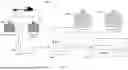
FIG. 1 is a depiction of an exemplary diagram of a step one of the process for the production of the fertilizer of the present invention in accordance with some demonstrative embodiments
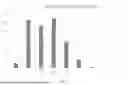
FIG. 2 is a graph showing the particle size distribution of the final product as per one of the examples, according to some demonstrative embodiments.
DETAILED DESCRIPTION OF THE INVENTION
According to some demonstrative embodiments, there is provided herein a mineral phosphate ash fertilizer having a water solubility of 15-55% of total amount of P2O5 and a NAC solubility of at least 90% of total amount of P2O5, preferably at least 95%, most preferably, at least 99%.
According to some embodiments, the fertilizer may have a pH of 3-3.6.
According to some embodiments, the fertilizer may have an abrasion of 0.05% or less, preferably 0.02% or less, most preferably 0.01%.
According to some embodiments, the fertilizer of the present invention may have a soil solubility of 99% of total P2O5 present.
According to some embodiments, the mineral phosphate ash may include, but not limited to any suitable source, e.g., a P source, including sewage sludge ash (SSA), bone meal ash, precipitated Calcium Phosphate (PCP) and the like.
According to some demonstrative embodiments, the P source may include a specific combination of sewage sludge ash (SSA), bone meal ash and precipitated Calcium Phosphate (PCP), e.g., at predetermined ratios.
According to some embodiments, the mineral phosphate ash fertilizer of the present invention may include Triple Super Phosphate (TSP fertilizer) and/or Single Super Phosphate (SSP fertilizer), for example when the P-source is reacted with sulfuric acid, the mineral phosphate ash fertilizer may include SSP, and when the P-source is reacted with phosphoric acid, the mineral phosphate ash fertilizer may include TSP.
According to some embodiments, the fertilizer of the present invention may be formulated in various forms, including, liquid, solid, prills, crystals powder, granules and the like.
According to some embodiments, the fertilizer may preferably be in the form of a granule.
According to some embodiments, the fertilizer of the present invention may possess numerous advantages in comparison to ordinary P fertilizers, e.g., Phosphate rock-based fertilizers. For example, the SSA fertilizer of the present invention may allow for the control over the release of the P from the fertilizer.
According to some demonstrative embodiments, there is provided herein a fertilizer derived from mineral phosphate ash characterized by a water solubility spanning from 15-55% of its overall P2O5 content. According to some embodiments, the fertilizer also demonstrates a NAC solubility of no less than 90% of its P2O5 content, with a heightened preference of at least 95% and, ideally, reaching up to 99%.
Based on specific examples, this described fertilizer may possess a pH value situated between 3 and 3.6.
According to some embodiments, the fertilizer's resistance to wear or “abrasion” is capped at 0.05%.
According to some embodiments, the fertilizer possesses a soil solubility that captures 99% of the entire P2O5 present.
According to some embodiments, the origin of the mineral phosphate ash is diverse, encompassing multiple apt sources. Examples of these P sources span from sewage sludge ash (SSA), bone meal ash, to precipitated Calcium Phosphate (PCP), and beyond.
According to some embodiments, the primary P source might be an intentional blend of sewage sludge ash (SSA), bone meal ash, and precipitated Calcium Phosphate (PCP), possibly in set combinations.
According to some embodiments, the mineral phosphate ash fertilizer of the present invention may include components like Triple Super Phosphate (TSP fertilizer) and Single Super Phosphate (SSP fertilizer). To elaborate, when the primary P-source interacts with sulfuric acid, SSP might be a component of the resultant fertilizer. On the other hand, phosphoric acid reactions might lead to the inclusion of TSP.
According to some embodiments, the water-soluble phosphate may be the phosphate that may be directly available for absorption into the soil.
According to some embodiments, in most fertilizers, the water-soluble phosphate may immediately go in the water phase and hopefully be taken up by the plant.
However, according to some embodiments, the phosphate in the fertilizer of the present invention may not be water soluble, but NAC (Neutral Ammonium Citrate) soluble and thus will slowly dissolve due to the activity of the microbiology around the roots of the plant. The phosphate will thus be slowly released and taken up by the plant.
According to some embodiments, the fertilizer of the present invention may further include another fertilizing compound, selected from the group including Anhydrite, Potash, Polyhalite, Ammonium Sulphate, urea, Gypsum, Kieserite, Epsomite, Glauberite, Blodite, Langbeinite, Kainite, Schonite or any other suitable fertilizer.
According to some embodiments, the fertilizing compound may preferably be red Potash.
According to some embodiments, the fertilizer of the present invention may include Polyhalite.
Polyhalite is an evaporite mineral, a hydrated sulfate of potassium, calcium and magnesium with formula: K2Ca2Mg(SO4)4·2H2O. Polyhalite is used as a fertilizer since it contains four important nutrients and is low in chloride:
-
- 48% SO3 as sulfate
- 14% K2O
- 6% MgO
- 17% CaO
According to some embodiments, the specific combination of Polyhalite and the P2O5 of the fertilizer of the present invention allows for a synergistic effect between the controlled release of phosphate and the multi-nutrient release from Polyhalite, for optimal plant growth.
The combination of P2O5 nutrients and nutrients from polyhalite allows for an optimal coverage of plant nutrients for best plant nutrition.
In addition, according to some embodiments, the fertilizer of the present invention may demonstrate a greater ability to absorb water (hygroscopic effect), however, surprisingly, the strength of the fertilizer granule is hardly affected by this water absorption, as can be seen, for example, in table 4 and 5 below.
According to some demonstrative embodiments, there is provided herein a process for the production of a mineral phosphate ash fertilizer comprising:
-
- a first step of acidulation, comprising mixing a mineral phosphate ash with sulfuric acid, phosphoric acid or a combination thereof, optionally together with a surfactant to provide an intermediate product;
- a second step of curing (also referred to herein as “soaking”) comprising maintaining the intermediate product in a reactor or a belt between 2 min to 2 hours, preferably for 20 minutes to provide a cured intermediate product; and
- a third step of finalizing the fertilizer comprising mixing the cured intermediate product with water or steam and/or one or more fertilizing compounds in a granulator.
According to some embodiments, the first step may be performed in a suitable mixer, preferably a pugmill mixer.
According to some embodiments, when both phosphoric acid and sulfuric acid are added in step one, the ratio of phosphoric acid to sulfuric acid may be between 1:3 to 3:13, and preferably 0.68 phosphoric acid and 0.06 sulfuric acid.
According to some embodiments, in step three, the fertilizing compound may include Anhydrite, Potash, Polyhalite, Ammonium Sulphate, urea, Gypsum, Kieserite, Epsomite. Glauberite, Blodite, Langbeinite, Kainite, Schonite or any other suitable fertilizer.
According to some embodiments, the fertilizing compound may preferably be red Potash.
According to some embodiments, the granulator may include a granulation drum, pan granulator, fluidized bed, an Eirich granulator and the like.
According to some embodiments, the use of a mineral phosphate ash possesses numerous benefits over other processes using phosphate rock. For example, unlike phosphate rock which need to be milled before initiation of the acidulation process, the mineral phosphate ash has a small particle size.
According to some embodiments, the process of the present invention may include the use of gas for creating a bubbling, for example, that may enhance the mixing of the solid-liquid mixture created in the first step, and this allows for the effective mixing and creation of the cured intermediate product.
According to some embodiments, in step three, the cured intermediate product may be mixed together with a fertilizer, e.g., potash, polyhalite, ammonium sulphate optionally in the presence of water and/or steam in a granulator, e.g., granulation drum, pan granulator or Eirich granulator.
According to some embodiments, after a granulation time of 2-10 minutes, preferably 4 minutes, the resulting product may be dried for 10-30 minutes, preferably, 20 min in a drier, e.g., drying drum, belt drier, microwave drier or fluidized bed drier.
According to some embodiments, after drying, the product may be sieved, wherein the final product may have a size of 1-6 mm, preferably between 2 and 5 mm.
According to some embodiments, the product may further be cooled in a cooling drum.
During the granulation phase in the third step of the process of the present invention, water and/or steam may be added to wet the mixture and help the particles bind to one another. The liquid-to-solid ratio is used to determine the amount of water and steam necessary for granulation.
According to some embodiments, for an optimal granulation process, an ideal liquid-to-solid ratio is preferable. This ratio may be unique for every granulation, the steam is added to heat up the granulation bed and the temperature of the bed can vary between 65 and 95° C., preferably 75° C. The residence time in the granulation drum is 1 to 10 minutes, preferably 4 minutes. According to some embodiments, after this step, the granules may be transferred to a dryer, e.g., a rotary drying drum. According to some embodiments, hot air, e.g., at around 450° C., may be blown into the drying drum to dry the granules for 20 minutes.
According to some embodiments, the dried granules may be transported to a sieve tower to be sieved. According to these embodiments, any granules having a size of over 6 mm, preferably over 5 mm, may be crushed in a grinding machine and used as recycle together with smaller granules, for example, granules smaller than 2 mm. Granules in the desired size range, for example 1-6 mm, preferably 2-5 mm may be transported to a cooling drum. According to some embodiments, the granules are cooled down to below 40° C. before storage.
Reference is now made to FIG. 1 which depicts an exemplary diagram of a step one (100) of the process for the production of the fertilizer of the present invention in accordance with some demonstrative embodiments.
As shown in FIG. 1, step 100 may include the mixing of SSA 102 and Calcium Carbonate 104 in a hopper 106 to provide an SSA and Calcium carbonate mixture.
The mixture may then be transferred to a mixer 114, e.g., a screw mixer, into which sulphuric acid 110 and phosphoric acid 112 may be added and mixed to provide an intermediate product.
According to some embodiments, the intermediate product may be transferred to a broadfield 116 for the second step of the process to take place.
According to some demonstrative embodiments, the final product of the process described hereinabove is a P-Fertilizer.
According to some demonstrative embodiments, there is provided herein a mineral phosphate ash fertilizer having water soluble P2O5 of 15 to 55% of the total P2O5 present in the fertilizer.
An exemplary analysis of raw materials of two separate batches is presented in table 1
| TABLE 1 | |||||
| Sample | P2O5 Tot % | Al2O3% | Fe2O3% | CaO % | SO3% |
| SSA Batch 1 | 21 | 6.6 | 15.2 | 22.8 | 3.2 |
| SSA Batch 2 | 25 | 4.3 | 12.9 | 13.7 | 0.8 |
Table 2 shows a chemical analysis of the fertilizer of the present invention from two exemplary batches.
According to some embodiments, the fertilizer may contain a high moisture content of at least 5% w/w, preferably at least 6% w/w, most preferably 6.8% w/w. According to some embodiments, the high moisture content is the result of the unique process described herein above which results from the high moisture content after production and the natural moisture uptake of the product.
According to some embodiments, the fertilizer of the present invention may have a relatively low water-soluble amount of P2O5 of 15-80% or less, but a high NAC % P2O5 of at least 90% w/w, preferably at least 95% w/w, most preferably at least 99% w/w, for example, especially when the P source is bone meal and/or PCP.
According to some embodiments, the fertilizer of the present invention may have a relatively low water-soluble amount of P2O5 of 15-55% or less, but a high NAC % P2O5 of at least 90% w/w, preferably at least 95% w/w, most preferably at least 99% w/w, for example, especially when the P source is 5 SSA
According to some embodiments, the relatively low water-soluble amount of P2O5 yet the high NAC % P2O5 shows that the phosphate in the product is bio-available for the plant.
| TABLE 2 | |||||||||||
| P2O5 | P2O5 | ||||||||||
| P2O5 | NAC | Tot | K2O | MgO | CaO | Cl | H2O | ||||
| Sample | Ws % | % | % | % | % | % | SO4% | F•A | % | pH | % |
| Batch 1 | 20.9 | 35.0 | 39.0 * | 1.2 | 1.8 | 11.2 | 7.7 | 2.4 | 0.6 | 3.3 | 6.8 |
| Batch 2 | 21.8 | 36.8 | 38.3 * | 1.3 | 1.9 | 11.1 | 7.3 | 2.6 | 0.8 | 3.3 | 7 |
In Table 3 the analysis of the heavy metals of the fertilizer of the present invention in comparison to the EU limits as defined by the FPR '22.
| TABLE 3 | ||||||||||||
| Al2O3 | Fe2O3 | MgO | As | Cd | Cr | Cu | Hg | Mn | Ni | Pb | Zn | |
| [%] | [%] | [%] | [ppm | [ppm | [ppm | [ppm | [ppm | [ppm | [ppm | [ppm | [ppm | |
| EU-limit | N.A. | N.A. | N.A. | 40 | N.A. | N.A. | 600 | 1 | N.A. | 100 | 120 | 1 500 |
| SSA | 4.3 | 12.9 | N.A. | 51 | 3 | 110 | 1200 | <0.1 | N.A. | 85 | 280 | 2 800 |
| (supplier | ||||||||||||
| 1- HVC) | ||||||||||||
| SSA SNB | 6.6 | 15.2 | N.A. | 22 | 2 | 115 | 955 | 0.1 | 780 | 69 | 200 | 2 300 |
| SSA | 5.24 | 10.4 | 2.7 | 17.3 | 2 | 69 | 894 | <1 | 782 | 63 | 247 | 2 432 |
| supplier | ||||||||||||
| 2 -SNB) | ||||||||||||
| Final | 2.0 | 2.5 | 1.9 | 12 | 11 | 99 | 400 | 0 | 466 | 49 | 92 | 1 338 |
| product - | ||||||||||||
| sample 1 | ||||||||||||
| Final | 2.1 | 3.5 | 1.8 | 13 | 11 | 98 | 384 | 0 | 449 | 49 | 88 | 1 304 |
| product - | ||||||||||||
| sample 2 | ||||||||||||
According to some embodiments, the fertilizer of the present invention has an abrasion of 0.05% or less, preferably 0.03% or less, most preferably 0.01%.
According to these embodiments, the low abrasion level of the fertilizer of the present invention may produce very little dust during transport and handling.
Table 4 presents the results of a strength test before and after a climate chamber test, thereby representing the granule strength.
As can be seen from table 4, the average strength of the granules is around 30 N, and according to some embodiments, the granules may stay strong during storage in the warehouse. As shown in the results, the strength of the granule of the fertilizer of the present invention is not reduced significantly after 24 hrs in the climate chamber (24 hrs, 21° C. and 70% humidity) and picking up 6 wt % humidity.
| TABLE 4 | ||||
| Sample | AVG [N] | STD Div | Remarks | |
| Before Climate | 31 | 4 | Strong light gray | |
| Chamber | granules | |||
| After Climate | 28 | 5 | Darker color, | |
| Chamber | feels strong | |||
Table 5 shows the moisture uptake of the granule of the present invention after 24 hrs in the climate chamber. According to some embodiments, it is evident that the quality of the granules after the climate chamber stays stable. According to some embodiments, the storage of the granule in a warehouse in high humidity conditions will not damage the granule.
| TABLE 5 | ||
| Sample | Humidity Uptake [wt %] | Remarks |
| Batch 1 | 5.67 | Darker shade of color, still |
| strong, very small stick to | ||
| bottom and bit sweating | ||
| but not moist feeling | ||
Example 1
Experiment starts by weighting dry components with a p-source. In a beaker the surfactant is mixed with desired acid (sulfuric acid and/or phosphoric acid). The liquids in the beaker are mixed and the dry materials are added to the liquid. The mixing takes five seconds and is stopped. Afterwards the material continues to react for 20 min. Directly after mixing the temperature is measured. After 20 min, the material is crushed to powder and analyzed. During the whole process the quality aspects are noted; cake rise, temperature increase, stickiness, powder quality, dryness and crushability.
| TABLE 6 | |||||||
| H2SO4 | Phosphoric | Reaction | |||||
| SSA | (75%) | acid (53%) | Resulting | Time | T | Cake | |
| Experiment | [g] | [g] | [g] | ROP [g] | [min] | [C.] | Forming |
| SSP (SSA) | 180 | 146 | 332 | 20 | 102 | 4.9 | |
| TSP (SSA) | 180 | 270 | 451.5 | 20 | N.A. | ||
Typical Analysis:
| TABLE 7 | |||||||||||
| P2O5% | |||||||||||
| Water | P2O5% | K2O % | MgO % | CaO % | Free | Cl % | Acidulation | ||||
| Experiment | soluble | TOT | TOT | Total | TOT | SO4% | Acid | TOT | Ph | Humidity | Yield (%) |
| SSP (SSA) | 5.3 | 11 | 0.7 | 1.7 | 14.6 | 35.5 | 13.4 | 0.3 | 2.1 | 9.2 | 48.4 |
| TSP (SSA) | 29.4 | 37.75 | 6.8 | 1.5 | 2.6 | 1.5 | 5.5 | 0.2 | 2.9 | 12.9 | 77.8 |
| TABLE 8 | ||
| 0 | 5 | |
| Unstickiness | Very sticky | Not sticky at all |
| Powder | Hard rocks, it's not possible to | Fine Powder |
| form powder | ||
| Cake | No cake forming | Very nice cake |
| Forming | forming | |
| Dryness | Very Wet | Perfectly dry |
| Crushability | Hammer is required to crush | No need to crush |
The results indicate that SSA can be acidulated using phosphoric acid or sulfuric acid. The resulting ROP has a good quality and can be used for granulation.
Example 2
Experiment testing the third step of the process of the present invention initiated by mixing dry materials together; the SSA cured intermediate product, potash, Polyhalite, ammonium sulfate (total 2 kg). The dry materials are added to a granulation drum. To mimic the factory, experiments are also done with recycle (material smaller than 2 mm from another run). The granulation is started by turning on the granulation drum and adding water and steam. After 4 min the granulation drum is stopped, and the material is transferred to the drying drum. The material is dried for 20 min. After the drying the material is sieved and analyzed for chemical composition, strength, abrasion, hygroscopicity and particle size distribution.
| TABLE 9 | ||||||||||
| SSA | Steam | Gran | T Gran | Drying | ||||||
| ROP | Potash | Recycle | H2O | Steam | Time | time | Bed | Time | GRAN | |
| Sample | [g] | [g] | [g] | [g] | [g] | [sec] | [min] | [C.] | [min] | [g] |
| Typical | 1712 | 0 | 288 | 170 | 121.3 | 70 | 6:00 | N.A. | 20 | 1750 |
| TABLE 10 | |||||||||
| P2O5% | |||||||||
| Water | P2O5% | K2O % | MgO % | CaO % | Free | Cl % | |||
| soluble | TOT | TOT | TOT | TOT | SO4% | Acid | TOT | Ph | Humidity |
| 16 | 34.6 | 3.6 | 2.0 | 8.6 | 7.1 | 1.6 | 1.9 | 3.4 | 4.8 |
Example 3
Experiment testing the third step of the process of the present invention initiated by mixing dry materials together; the SSA cured intermediate product, potash, Polyhalite, ammonium sulfate (total 2 kg). The dry materials are added to a granulation drum. To mimic the factory, experiments are also done with recycle (material smaller than 2 mm from another run). The granulation is started by turning on the granulation drum and adding water and steam. After 4 min the granulation drum is stopped, and the material is transferred to the drying drum. The material is dried for 20 min. After the drying the material is sieved and analyzed for chemical composition, strength, abrasion, hygroscopicity and particle size distribution.
| TABLE 11 | ||||||||||
| SSP | 2 mm < | |||||||||
| ROP | Ammonium | Granulation | >2 | x > 5 | <5 | |||||
| (SSA) | sulfate | Potash | Water | Steam | Time | mm | mm | mm | % | |
| Experiment | [g] | [g] | [g] | [g] | [g] | [min] | [g] | [g] | [g] | water |
| 1 | 802.9 | 500 | 704.7 | 102.3 | 92.8 | 3:30 | 181 | 650 | 1004.5 | 8.9 |
| 2 | 800 | 504 | 700 | 80.8 | 78.7 | 4:00 | 236.4 | 1360.7 | 139.4 | 7.4 |
The experiment proves it is possible to produce an NPK product made out of ROP based on sewage sludge ash, ammonium sulphate and potash.
| TABLE 12 | |||||||||||
| P2O5 | P2O5 | K2O | MGO | CAO | SO4 | FREE | CL | ||||
| WS | TOT | TOT | TOT | TOT | TOT | ACID | WO | ||||
| SAMPLE | N—NH4% | % | % | % | % | % | % | % | % | PH | HUMIDITY |
| EXPERIMENT 1 | 4.7 | 1.1 | 4.7 | 22.7 | 0 | 5.3 | 34.2 | 3.7 | 18.9 | 2.9 | 0.8 |
It can be seen from table 12 that the P2O5 water solubility (WS) is 23% (1.1/4.7).
Example 4
Experiment testing the third step of the process of the present invention initiated by mixing dry materials together; the Bonemeal and Precipitated Calcium Phopshate cured intermediate product, potash, Polyhalite, ammonium sulfate (total 2 kg). The dry materials are added to a granulation drum. To mimic the factory, experiments are also done with recycle (material smaller than 2 mm from another run). The granulation is started by turning on the granulation drum and adding water and steam. After 4 min the granulation drum is stopped, and the material is transferred to the drying drum. The material is dried for 20 min. After the drying the material is sieved and analyzed for chemical composition, strength, abrasion, hygroscopicity and particle size distribution.
| TABLE 13 | ||||||
| PCP | BMA | |||||
| SSP | SSP | Gran | ||||
| ROP | ROP | H2O | Steam | time | GRAN | |
| Explanation | [g] | [g] | [g] | [g] | [min] | Efficiency |
| Granulation | 2037.8 | 48.2 | 106.0 | 5:30 | 59% | |
| with bone meal | ||||||
| Granulation | 2001.1 | 48.4 | 81.9 | 6:00 | 58% | |
| PCP | ||||||
| TABLE 14 | ||||||||||
| P2O5% | P2O5% | K2O % | MgO % | CaO % | Free | Cl % | ||||
| Sample | WS | TOT | TOT | TOT | TOT | SO2% | Acid | TOT | pH | Humidity |
| Granulation | 14.5 | 19.2 | 1.5 | 0.8 | 25.9 | 37.8 | 7.9 | 0.4 | 2.3 | 2.4 |
| with bone | ||||||||||
| meal | ||||||||||
| Granulation | 20.7 | 21.7 | 0 | 0.5 | 28.6 | 40.9 | 4.9 | 0.1 | 2.7 | 3.1 |
| PCP | ||||||||||
The experiment proves it is possible to produce a final product made out of ROP from PCP or bone meal.
Example 5
Experiment testing the third step of the process of the present invention initiated by mixing dry materials together; the SSA cured intermediate product, potash and Polyhalite (total 2 kg). The dry materials are added to a granulation drum. To mimic the factory, experiments are also done with recycle (material smaller than 2 mm from another run). The granulation is started by turning on the granulation drum and adding water and steam. After 4 min the granulation drum is stopped, and the material is transferred to the drying drum. The material is dried for 20 min. After the drying the material is sieved and analyzed for chemical composition, strength, abrasion, hygroscopicity and particle size distribution.
| TABLE 15 | |||||||
| SSA | |||||||
| SSP | GRAN | ||||||
| ROP | POTASH | POLYHALITE | H2O | STEAM | TIME | GRANULATION | |
| EXPLANATION | [G] | [G] | [G] | [G] | [G] | [MIN] | EFFICIENCY |
| GRANULATION SSP SSA + | 1002.3 | 1001.6 | 0 | 79 | 53 | 6:11 | 44% |
| POATASH | |||||||
| GRANULATION SSP SSA + | 1000 | 0 | 1002.3 | 174 | 53 | 4:00 | 48% |
| POLYHALITE | |||||||
| GRANULATION SSP SSA + | 1001.7 | 500.3 | 499.8 | 95 | 50 | 4:00 | 25% |
| POTASH + POLYHALITE | |||||||
| TABLE 16 | |||||||||||
| P2O5% | P2O5% | K2O % | CAO % | FREE | CL % | ||||||
| SAMPLE | N—NH4% | N—NO3% | WO | TOT | TOT | TOT | SO2% | ACID | TOT | PH | HUMIDITY |
| GRANULATION | 0.3 | 0 | 1 | 6.3 | 30.7 | 7.1 | 19.5 | 3.8 | 21.9 | 2.8 | 2.6 |
| SSP SSA + | |||||||||||
| POTASH | |||||||||||
| GRANULATION | 1.4 | 0 | 0.8 | 8.1 | 5.8 | 14.2 | 42.7 | 4.3 | 3.7 | 2.7 | 0.6 |
| SSP SSA + | |||||||||||
| POLYHALITE | |||||||||||
Experiment 5 indicates that it is possible to granulate the SSP ROP made from SSA with potash, polyhalite and a combination of both.
Example 6
The goal of this experiment is to develop products made from recycled sources of phosphate. One of these alternative sources of phosphate is Sewage Sludge Ash (SSA). Based on experiments done in the pilot plant, SSP ROP made from SSA could be used in a NPK production. The pilot experiments were performed with Ammonium Sulfate and Dead Sea Potash (DSP). During the test described in this example a NPK 5-5-22 product was produced using SSA as the P-source. This example will describe the granulation process and the quality of the final granular product.
Test Run
For this test run SSA-based Single Superphosphate (SSP) Run of pile (ROP) was used. Furthermore, ammonium sulfate, DSP and later on in the run potash Standard were used as raw materials. On top of that slurry water and steam were used during the granulation.
The test run started at around 11.25 on Sep. 20 2022. The input values were set to 17 t/h SSP ROP, 10 t/h ammonium sulfate and 15 t/h potash. Initially the granulated mixture left the granulation drum as a very fine mixture of granules, which led to a big recycle stream. The granulation was not working as well as in the pilot. Therefore, the decision was made to increase the water flow from 3 m3/h to 4.5 m3/h while maintaining a steam rate of around 2.5 t/h as to approach an optimum ratio of solid and liquid phase in the granulation drum, which is crucial for the granulation process. This led to an improvement in granulation, whilst not increasing the recycle stream.
| TABLE 17 |
| overview test |
| SSP | Ammonium | T Gran | ||||||
| ROP | sulfate | Potash | Water | Steam | Recycle | Bed | % | |
| Time | [t/h] | [t/h] | [t/h] | [m3/h] | [t/h] | [t/h] | [C.] | Water |
| 12:20 | 17 | 10 | 15 | 6.8 | 2.8 | 70 | 78.7 | 9.45 |
| 13:25 | 18 | 10 | 15 | 6.3 | 2.7 | 75 | 91.8 | 8.67 |
| 14:00 | 18 | 10 | 15 | 11 | 2.8 | 88 | 80.7 | 11.01 |
At approximately 12.20 the temperature in the granulation bed was measured the temperature was around 78.7° C. Notable was the fact that the granules didn't appear to granulate homogenously. The water input was increased further to 8.3 m3/h, while the steam rate was 2.7 t/h to improve the granulation. This had the side effect that the temperature in the drying step also needed to be increased as to properly evaporate all the added water in the granules. This side effect led to an increased gas consumption which exceeded 1000 m3/h.
Because the output still was not rising even though the increased water input, the recycle build up. At around 12.45 the decision was made to stop the addition of raw materials to the system as to avoid overloading the factory. The recycle stream eventually did granulate and decreased. At 13.25 the granulation bed had a temperature of 91.8° C. This could have been caused by the fact that only recycled material was being added to the granulation drum. The heat from the recycled temperature had not dissipated yet causing a higher temperature in the granulation bed.
The decision was made to continue the test for a little bit longer and increase the water addition further. Furthermore, the addition of raw materials was slightly changed and the SSP ROP was increased from 17 t/h to 18 t/h. The water input at this point was 6.3 m3/h, while the steam input was 2.7 t/h. Since the recycle rate was getting too high, the decision was made at 14.00 to halt the input of raw materials to lessen the burden on the system.
At 15:30 the test run was resumed and the input ratios of raw materials were set at 19 t/h SSP ROP, 10 t/h ammonium sulfate and 15 t/h potash with a water input of about 5.1 m3/h and a steam input of 2.4 t/h. The water input was steadily increased until it reached a value of approximately 9 m3/h as it was clear that to increase the granulation efficiency, more water was needed. This coincided with the output of product reaching a value of over 40 t/h. It was concluded that the granulation is working at high wetness. The product coming out of the granulation drum seems very wet and no granules can be distinguished.
The granulation of the material continues in the first meters of the drying drum where there are no lifters yet. 10 t/h of this potash type was added for the remainder of the test run. The amount of water being added at this point was about 7.5 m3/h).
Results & Discussion
During the run, it was imperative to reach a final product output value that equaled the total input of raw material. Therefore, the aim was to reach an output of approximately 40 t/h. This goal was eventually reached. The first moment a true output of 40 t/h was reached was at 5.00 pm as the peak at 3.30 occurred when only recycled material was present in the system. The parameters that were changed throughout the test run to reach an increase in output were the water input, the ratio of raw materials, and the type of raw materials used.
The first major obstacle during this test run was determining the optimal water ratio to obtain desired granulation. The high rate of recycled material cycling through the system at the start of the test run was likely also caused by an inappropriate water input, causing the granules to not properly granulate as the ratio between the solid phase and liquid phase was not sufficient for granulation to occur. When the desired output was reached at 5 p.m. the water output was approximately 9 m3/h. But to increase and subsequently sustain an output of minimally 40 t/h the water expenditure of the process was increased up to 11 m3/h which led to an output of 45 t/h, with peaks of 50 t/h. The granulation of SSP ROP has to be performed using high amounts of water. Also notable was the drop in water demand after 8.00 μm. The water demand at that point dropped from 9.5 m3/h to approximately 8 m3/h. This gives the impression that the process has a lower water expenditure when Potash is used.
The problem with water input also led to issues with the gas consumption as water in the granules of the recycle stream had to be dried, more heat was needed in the drying drum in order to reach the required humidity in the granules. At 2.00 pm when the drying drum had reached its capacity limit, the gas consumption exceeded 1100 m3/h.
The ratio of raw material input was slightly altered throughout the run, but this didn't have any significant effect on the output of the product. It can be concluded that for efficient granulation, a high amount of water is needed.
Table 17 shows the chemical analysis of the SSP ROP and final product during the run. The nitrogen was relatively high in the beginning of the run. At the same time the recycle was analyzed and had higher nitrogen content. It is expected that the increased nitrogen level is partly a residue from the previous run and not caused by segregation during granulation of the nutrients or increased dosing of ammonium sulfate. After stabilizing the process around 17:00, the chemical content of the final product is constant with a slight decrease in nitrogen content.
| TABLE 18 |
| Overview Chemical Analysis Test Run |
| P2O5 | P2O5 | K2O | K2O | MgO | CaO | SO4 | Free | Cl | |||||
| WS | Tot | WS | Tot | Tot | Tot | Tot | Acid | WO | |||||
| Sample | Time | N—NH4% | % | % | % | % | % | % | % | % | % | pH | Humidity |
| SSP ROP | 13:21:22 | 0.1 | 3.9 | 12.6 | 1.6 | 1.9 | 1.9 | 13.4 | 34.4 | 7.7 | 2.7 | 7.4 | |
| SSP ROP | 19:06:03 | 0 | 2.7 | 13 | 1.5 | 2.6 | 2 | 12 | 34 | 6.5 | 2.8 | 6.9 | |
| Final | 13:24:24 | 7.7 | 2.1 | 6.3 | 19.4 | 19.9 | 0.8 | 5.1 | 35.6 | 1.1 | 15 | 3.4 | 2.7 |
| Product | |||||||||||||
| W115 | 13:42:14 | 8.5 | 2.3 | 5.9 | 19.1 | 19.9 | 0.8 | 4.8 | 37.8 | 1 | 14.6 | 3.4 | 1.4 |
| (recycle) | |||||||||||||
| Final | 15:10:07 | 6.4 | 0.9 | 5.3 | 21.1 | 22.4 | 0.7 | 5.3 | 33.5 | 1.6 | 16 | 3.2 | 2.7 |
| Product | |||||||||||||
| Final | 16:54:55 | 5.1 | 0.8 | 5.5 | 22.4 | 23 | 0.8 | 5.7 | 31.7 | 2.7 | 17.5 | 2.9 | 2 |
| Product | |||||||||||||
| Final | 17:36:27 | 4.9 | 0.8 | 5.5 | 22.5 | 23.6 | 0.8 | 5.8 | 31.4 | 2.8 | 17.6 | 2.9 | 1.9 |
| Product | |||||||||||||
| Final | 19:06:07 | 4.8 | 0.8 | 5.7 | 21.7 | 22.8 | 0.8 | 6.1 | 31.3 | 2.6 | 16.9 | 2.9 | 2.5 |
| Product | |||||||||||||
| Final | 21:04:10 | 4.6 | 0.7 | 5.9 | 23.7 | 25.4 | 5.5 | 31.9 | 2.5 | 18.8 | 2.9 | 2 | |
| Product | |||||||||||||
| AVG FP | N.A. | 5.6 | 1.0 | 5.7 | 21.8 | 22.9 | 0.8 | 5.6 | 32.6 | 2.2 | 17.0 | 3.0 | 2.3 |
Final Product
We will now discuss the quality of the final product. The quality is assessed by the chemical composition, NAC % analysis, heavy metals analysis and physical quality (abrasion, strength, hygroscopicity and particle size distribution).
| TABLE 19 |
| Chemical Analysis Final product |
| P2O5 | P2O5 | K2O | MgO | CaO | SO4 | Free | Cl WO | ||||
| Sample | N—NH4% | WS % | Tot % | Tot % | Tot % | Tot % | Tot % | Acid % | % | pH | H2O % |
| Final Product | 5 | 0.6 | 6.2 | 23.3 | 0.8 | 5.7 | 33.3 | 2.5 | 18.9 | 2.9 | 2.6 |
| NPK 5-5-22 | |||||||||||
The final product was named NPK May 5, 2022. Table 19 shows the chemical analysis of the product. As can be seen for the N, P and K fraction the minimum values have been obtained. The product has a higher abrasion that standard P or PK products. The abrasion is lower than the abrasion measured for a standard NPK product. The relatively high abrasion is further supported by the fact that during transport of the product from the factory to the storage facility a lot of fine dust was released.
| TABLE 20 |
| Abrasion |
| Sample | Abrasion | |
| NPK 5-5-22 (SSA) | 0.40% | |
| NPK 11-9-16 | 0.59% | |
| NPKS 6-9-24 + 3 MgO + 0.1 B LC | 0.26% | |
| PKplus 21-10 + 2 MgO | 0.21% | |
| P 39 | 0.20% | |
| TABLE 21 | ||
| Sample | Humidity Uptake | Remarks |
| Final Product (NPK 5- | 3.43% | No significant color |
| 5-22) | change, still strong, | |
| little bit of a stick to | ||
| the container but not | ||
| significant. | ||
The high occurrence of fine dust is surprising, when data from the particle size distribution (FIG. 2) shows that the particles tend to fall on the bigger side of the on-size spectrum (>2 mm, <5 mm). The humidity uptake of the product seems to be very low, whilst the quality of the granules doesn't seem to be impacted too much by storage in warehouse with relatively high humidity.
CONCLUSION
The optimum water input for a raw material input of 19 t/h SSP ROP, 9 t/h for Ammonium Sulfate and 14.5 t/h for Fine White Potash lays between 9 and 11 m3 water per hour. However, when Fine White Potash is replaced with Red potash the necessary water input declines to 7.5 m3 and 8 m3 water per hour. This in turn also saves energy cost in the form of less gas expenditure during the drying step. This makes red potash a better option for a K-source in conjunction with SSA as a P-source and Ammonium Sulfate as a N-source for a NPK product. The chemical analysis of the final product is also promising as the parameters agree with the parameters of an NPK May 5, 2022.
While this invention has been described in terms of some specific examples, many modifications and variations are possible. It is therefore understood that within the scope of the appended claims, the invention may be realized otherwise than as specifically described.
Claims
1. A mineral phosphate ash fertilizer comprising a NAC solubility of at least 90% of total amount of P2O5 and a water solubility of 15-80% of the total amount of P2O5.
2. The fertilizer of claim 1, wherein said water solubility of the total amount of P2O5 is 15-55%.
3. The fertilizer of claim 1, wherein said NAC solubility of the total amount of P2O5 is at least 95%.
4. The fertilizer of claim 3, comprising an abrasion of 0.05% or less.
5. The fertilizer of claim 4, comprising an abrasion of 0.02% or less.
6. The fertilizer of claim 5, further comprising CaSO4.
7. The fertilizer of claim 1, produced from one or more P sources, including sewage sludge ash, bone meal ash or precipitated calcium phosphate (PCP).
8. The fertilizer of claim 2, wherein said one or more P sources is sewage sludge ash.
9. The fertilizer of claim 8, further comprising Iron Phosphate or Aluminum Phosphate in a concentration of at least 5% w/w.
10. The fertilizer of claim 9, further comprising Ca(H2PO4)2H2O.
11. The fertilizer of claim 1, having a water uptake of at least 5% and a strength of at least 25 Newtons, after being placed in a climate chamber.
12. A process for the production of a mineral phosphate ash fertilizer comprising P2O5, said process comprising:
mixing a mineral phosphate ash with a gas and sulfuric acid, phosphoric acid or a combination thereof, to provide an intermediate product;
maintaining the intermediate product in a reactor or a belt between 2 minutes to 2 hours, to provide a cured intermediate product; and
mixing said cured intermediate product with water or steam in a granulator.
13. The process of claim 12, wherein said mixing a mineral phosphate ash with sulfuric acid, phosphoric acid or a combination thereof is performed using bubbling.
14. The process of claim 13, wherein said mixing said cured intermediate product with water or steam in a granulator further comprises adding a fertilizing compound.
15. The process of claim 14, wherein said fertilizing compound is selected from the group including Anhydrite, Potash, Polyhalite, Ammonium Sulphate, Urea, Gypsum, Kieserite, Epsomite, Glauberite, Blodite, Langbeinite, Kainite, Schonite or any other suitable fertilizer.
Images & Drawings included:

Sources:
- United States Patent and Trademark Office - verify current appl. status at the USPTO↗
Recent applications in this class:
- » 20240317649 2024-09-26
PROCESS FOR PRODUCING PHOSPHATE FERTILIZER WITH MICRONIZED SULFUR - » 20200199034 2020-06-25
Anti-caking fertilizer compositions - » 20060010949 2006-01-19
Slow-release (GSSP) fertilizer