METHOD FOR EXTRACTING ALUMINUM
US20260110053A1
2026-04-23
19/054,192
2025-02-14
Smart Summary: A new way to get aluminum involves several steps. First, an aluminum alloy undergoes a reaction with hydrogen. Next, a compound called NaAlH4 is separated from the mixture. Then, this compound goes through another reaction to remove hydrogen. Finally, pure aluminum is extracted from the process. 🚀 TL;DR
Abstract:
A method for extracting aluminum according to one embodiment of the present disclosure comprises a hydrogenation reaction step of an aluminum (Al) alloy; a separation step of NaAlH4 generated from the hydrogenation reaction step; a dehydrogenation reaction step of the NaAlH4; and a pure aluminum extraction step.
Assignee:
- Hyundai Motor Company 21,725 🇰🇷 Seoul, South Korea
- KIA CORPORATION 6,511 🇰🇷 Seoul, South Korea
Applicant:
Interested in similar patents?
Get notified when new applications in this technology area are published.
Classification:
C22B21/02 » CPC main
Obtaining aluminium with reducing
B22F9/023 » CPC further
Making metallic powder or suspensions thereof using physical processes Hydrogen absorption
B22F9/04 » CPC further
Making metallic powder or suspensions thereof using physical processes starting from solid material, e.g. by crushing, grinding or milling
C22B5/02 » CPC further
Dry methods smelting of sulfides or formation of mattes
B22F2009/043 » CPC further
Making metallic powder or suspensions thereof using physical processes starting from solid material, e.g. by crushing, grinding or milling by ball milling
B22F2301/052 » CPC further
Metallic composition of the powder or its coating; Light metals Aluminium
B22F2998/10 » CPC further
Supplementary information concerning processes or compositions relating to powder metallurgy Processes characterised by the sequence of their steps
B22F9/02 IPC
Making metallic powder or suspensions thereof using physical processes
Description
CROSS-REFERENCE TO RELATED APPLICATION
This present application claims the benefit of and priority to Korean Patent Application No. 10-2024-0143873, entitled “Method of extracting aluminum” filed on Oct. 21, 2024, in the Korean Intellectual Property Office, the entire disclosure of which is incorporated herein by reference.
FIELD
The present disclosure relates to a method for extracting aluminum.
BACKGROUND
As internal combustion systems are converted to electric systems, components using primary aluminum are increasing. However, secondary aluminum contains many alloy elements such as Si, Cu, and Mg, making it difficult to be recycled as a primary material.
Therefore, there is a growing need for a technology for extracting expensive pure aluminum from a low-priced secondary aluminum alloy.
SUMMARY
An aspect of the present disclosure is to provide a method for extracting expensive pure aluminum from a low-priced aluminum alloy.
In order to achieve the aspect, the present disclosure provides a method for extracting aluminum including: a hydrogenation reaction step of an aluminum (Al) alloy; a separation step of NaAlH4 generated from the hydrogenation reaction step; a dehydrogenation reaction step of the NaAlH4; and a pure aluminum extraction step.
In the method for extracting aluminum according to an example of the present disclosure, in the hydrogenation reaction step, the aluminum alloy may react with sodium hydride (NaH).
In the method for extracting aluminum according to an example of the present disclosure, in the NaAlH4 separation step, the NaAlH4 may be dissolved in a solvent.
In the method for extracting aluminum according to an example of the present disclosure, the solvent may dissolve only NaAlH4.
In the method for extracting aluminum according to an example of the present disclosure, the solvent may be one or more of tetrahydrofuran (THF), dioxane, acetone, dimethyl sulfoxide (DMSO), dimethylformamide (DMF), 1-methyl-2-pyrrolidone (NMP), or any combination thereof.
In the method for extracting aluminum according to an example of the present disclosure, in the NaAlH4 separation step, the NaAlH4 may be dissolved in a solvent and then the dissolved NaAlH4 solution (created by the NaAlH4 being dissolved in the solvent) may be heated.
In the method for extracting aluminum according to an example of the present disclosure, the dehydrogenation reaction step may comprise heating the NaAlH4 at a first temperature and separating remaining NaAlH4 and NaH.
In the method for extracting aluminum according to an example of the present disclosure, the first temperature may be 95° C. or higher.
In the method for extracting aluminum according to an example of the present disclosure, the dehydrogenation reaction step may further comprise recapturing NaH and H2.
In the method for extracting aluminum according to an example of the present disclosure, the dehydrogenation reaction step may comprise heating the NaAlH4 at a second temperature and supplying hydrogen.
In the method for extracting aluminum according to an example of the present disclosure, the second temperature may be a sodium (Na) evaporation temperature or higher.
In the method for extracting aluminum according to an example of the present disclosure, the second temperature may be 882° C. or higher.
According to various examples of the present disclosure, the method for extracting aluminum can separate pure aluminum from an aluminum alloy containing a large amount of fine metallic elements. According to various examples of the present disclosure, the method for extracting aluminum can extract expensive pure aluminum from a low-priced aluminum alloy through a hydrogenation/dehydrogenation reaction of NaH.
According to various examples of the present disclosure, the method for extracting aluminum can recycle NaH, a solvent, hydrogen gas, and the like generated during an extraction process, so that the process is highly efficient and eco-friendly.
According to various examples of the present disclosure, the method for extracting aluminum can reduce CO2 emissions by about 84% or more compared to conventional aluminum extraction methods.
The effects of the present disclosure are not limited to the aforementioned effects, and other effects, which are not mentioned above, should be apparent to those having ordinary skill in the art from the following description.
BRIEF DESCRIPTION OF THE DRAWINGS
The above and other aspects, features, and advantages of the present disclosure should become apparent from the detailed description of the following aspects in conjunction with the accompanying drawings, in which:
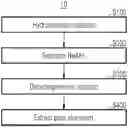
FIG. 1 is a process flowchart of a method for extracting aluminum according to one example of the present disclosure;
FIG. 2 is a schematic diagram for describing a method for extracting aluminum according to one example of the present disclosure;
FIG. 3 illustrates an example of a hydrogenation reaction step and a NaAlH4 separation step;
FIG. 4 is a process flowchart of a dehydrogenation reaction step according to one example of the present disclosure;
FIG. 5 is a process flowchart of a dehydrogenation reaction step according to another example of the present disclosure; and
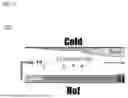
FIG. 6 is a schematic diagram of describing the dehydrogenation reaction step according to the example of FIG. 5.
DETAILED DESCRIPTION
Hereinafter, examples of the present disclosure are described in detail with reference to the accompanying drawings. Like or similar reference numerals designate like or similar elements in the following description, and the detailed description thereof may be omitted.
As used herein, the terms “comprising”, “including”, and “having” specify the presence of features, integers, steps, operations, elements, components, or combinations thereof disclosed on the present disclosure, but do not preclude any one of features, integers, steps, operations, elements, components, and/or combinations thereof in advance.
Various examples of the present disclosure relate to a method for extracting aluminum. Various examples of the present disclosure relate to a method for extracting expensive pure aluminum from a low-priced aluminum alloy.
FIG. 1 is a process flowchart of a method for extracting aluminum according to an example of the present disclosure. FIG. 2 is a schematic diagram for describing a method for extracting aluminum according to an example of the present disclosure.
Referring to FIGS. 1 and 2, an aluminum extraction method 10 according to various examples of the present disclosure may comprise a hydrogenation reaction step (S100), a NaAlH4 separation step (S200), a dehydrogenation reaction step (S300), and a pure aluminum extraction step (S400).
In the hydrogenation reaction step (S100), an aluminum alloy may react with sodium hydride (NaH). The aluminum alloy may be various aluminum alloys, such as cast aluminum, secondary aluminum, primary aluminum, and 3D printing aluminum powder. The aluminum alloy may be an alloy that further comprises a metallic element in addition to aluminum. For example, the aluminum alloy may mean an alloy that further comprises one or more of Si, Cu, Mg, Zn, Fe, Mn, Ni, Sn, or any combination thereof, in addition to aluminum.
The aluminum alloy may be in the form of a processed chip having a total length of 50 mm or less or a powder having a diameter of 5 mm or less.
In one example, NaH reacting with the aluminum alloy may be a single component. In one example, NaH may be a solid state.
The aluminum alloy and NaH may be prepared at a molar ratio of 1:1, for example.
In the hydrogenation reaction step (S100), hydrogen may be supplied. In the hydrogenation reaction step (S100), hydrogen may be supplied in a gaseous form. In the hydrogenation reaction step (S100), hydrogen may be supplied at a pressure of 80 bars to 90 bars. In the hydrogenation reaction step (S100), hydrogen may be supplied continuously.
FIG. 3 illustrates an example of the hydrogenation reaction step (S100) and the NaAlH4 separation step (S200). Referring to FIG. 3, the hydrogenation reaction step (S100) may be performed in a ball milling device. In the hydrogenation reaction step (S100), the reaction may be performed while charging an aluminum alloy and NaH into the ball milling device and supplying hydrogen gas.
In the hydrogenation reaction step (S100), a reaction according to the following Reaction Formula may occur. In other words, in the hydrogenation reaction step (S100), NaAlH4 may be generated.
NaH(s)+aluminum alloy(s)+H2(g)→NaAlH4(s)+Si(s), Mg(s), Cu(s), Fe(s), and the like. Reaction Formula
Next, the NaAlH4 separation step (S200) may be performed. In the NaAlH4 separation step (S200), NaAlH4 generated in the hydrogenation reaction step (S100) above may be separated.
In the NaAlH4 separation step (S200), NaAlH4 may be dissolved using a solvent. The solvent may be a solvent that dissolves NaAlH4. For example, the solvent may be one or more of tetrahydrofuran (THF), dioxane, acetone, dimethyl sulfoxide (DMSO), dimethylformamide (DMF), 1-methyl-2-pyrrolidone (NMP), or any combination thereof. In one example, the solvent may be tetrahydrofuran. For example, the solvent may comprise a single component of tetrahydrofuran.
The solvent may dissolve NaAlH4 and NaH in a solid state. The solvent may not react with trace metallic elements generated in the hydrogenation reaction step (S100). In other words, the solvent does not react with Si, Cu, Mg, Zn, Fe, Mn, Ni, Sn, and the like.
When the NaAlH4 is dissolved with the solvent, the dissolution may be performed at a temperature of less than 66° C. At a temperature of 66° C. or higher, the solvent may be evaporated. When the NaAlH4 is dissolved with the solvent, the dissolution may be maintained for at least 10 minutes.
In the NaAlH4 separation step (S200), a reaction according to the following Reaction Formula may occur.
NaAlH4(s)+solvent→NaAlH4(sol) Reaction Formula
Referring to FIG. 3, in the NaAlH4 separation step (S200), the NaAlH4 dissolved in the solvent passes through a filter, and trace metallic elements that are not dissolved in the solvent may be separated by the filter.
Next, the NaAlH4 solution dissolved in the solvent may be heated at a temperature of 66° C. or higher. Through this heating step, the solvent in the NaAlH4 solution may be evaporated. By evaporating the solvent, only the NaAlH4 may be separated. In one example, the evaporated solvent may be recaptured and recycled.
Next, in the dehydrogenation reaction step (S300), a reduction reaction of the separated NaAlH4(s) may occur. The dehydrogenation reaction step (S300) may be performed according to various examples. A first example and a second example is described below.
FIG. 4 is a process flowchart of a dehydrogenation reaction step according to a first example. Referring to FIG. 4, a dehydrogenation reaction step (S301) according to a first example may comprise heating NaAlH4 (S311) and separating remaining NaAlH4 and NaH (S312).
In the heating of NaAlH4 (S311), the NaAlH4 separated in the NaAlH4 separation step (S200) may be heated at a first temperature. The first temperature may be 95° C. or higher. In one example, the first temperature may be 97.5° C. or higher. In another example, the first temperature may be 97.9° C. or higher. Through the heating of NaAlH4 (S311) at the first temperature, NaAlH4 may be decomposed into NaH, Al, and H2.
In the separating of the remaining NaAlH4 and NaH (S312), the unreacted NaAlH4 and NaH may be dissolved using a solvent. The solvent may be a solvent that dissolves only NaAlH4 and NaH in a solid state. For example, the solvent may be one or more of tetrahydrofuran (THF), dioxane, acetone, dimethyl sulfoxide (DMSO), dimethylformamide (DMF), 1-methyl-2-pyrrolidone (NMP), or any combination thereof. In one example, the solvent may be tetrahydrofuran. For example, the solvent may comprise a single component of tetrahydrofuran.
The separating of the remaining NaAlH4 and NaH (S312) may be performed at a temperature of less than 66° C. At a temperature of 66° C. or higher, the solvent may be evaporated. When the remaining NaAlH4 and NaH are dissolved in the solvent, the dissolution may be maintained for at least 10 minutes.
In the separating of the remaining NaAlH4 and NaH (S312), pure aluminum that is not dissolved in the solvent may be separated.
The dehydrogenation reaction step (S301) according to the first example may be performed by a ball milling process. The ball milling time may be within 5 hours. Through this, the carbon emissions may be reduced while maximally decomposing NaAlH4. For example, the remaining NaAlH4 that is not decomposed in the dehydrogenation reaction step (S301) according to the first example may be less than 10 wt % compared to initial NaAlH4.
The separating of the remaining NaAlH4 and NaH (S312) may further comprise recapturing NaH and H2. The recaptured NaH and H2 may be recycled and used in the hydrogenation reaction step (S100).
In the dehydrogenation reaction step (S301), a reaction according to the following Reaction Formula may occur. In the dehydrogenation reaction step (S301), a reduction reaction of NaAlH4(s) may occur.
NaAlH4(s)→NaH(s)+Al(s)+2H2(g) Reaction Formula
FIG. 5 is a process flowchart of a dehydrogenation reaction step according to a second example. FIG. 6 is a schematic diagram for describing the dehydrogenation reaction step according to the second example of FIG. 5.
Referring to FIG. 5, a dehydrogenation reaction step (S302) according to a second example may comprise heating NaAlH4 (S311) and supplying hydrogen (S312).
Referring to FIG. 6, the dehydrogenation reaction step (S302) according to the second example may be performed in a reactor equipped with a cold upper plate (Cold) and a hot lower plate (Hot).
In the heating of NaAlH4 (S311), the NaAlH4 separated in the NaAlH4 separation step (S200) may be heated at a second temperature. The second temperature may be equal to or higher than a sodium (Na) evaporation temperature. For example, the second temperature may be 882° C. or higher. In the heating of NaAlH4 (S311), Na may be evaporated.
Referring to FIGS. 5 and 6, in the supplying of hydrogen (S312), the evaporated Na and hydrogen may react with each other. In other words, in the supplying of hydrogen (S312), the evaporated Na and hydrogen may react with each other to generate NaH according to the following Reaction Formula.
Na(g)+½H2(g)→NaH(s) Reaction Formula
The NaH generated in the supplying of hydrogen (S312) may be accumulated on the cold upper plate (Cold). This NaH may be scraped off and reused.
Once the NaH generated in the supplying of hydrogen (S312) is removed, only pure aluminum may remain in the reactor. For example, pure aluminum may be accumulated on the hot lower plate (Hot) in the reactor.
Next, in the pure aluminum extraction step (S400), pure aluminum separated in the dehydrogenation reaction step (S300) may be extracted.
For example, in the separating of the remaining NaAlH4 and NaH (S312) of the dehydrogenation reaction step (S301) according to the first example, pure aluminum not dissolved in the solvent is separated through filter paper, and the corresponding aluminum may be extracted.
After removing the NaH generated in the supplying of hydrogen (S312) of the dehydrogenation reaction step (S302) according to the second example, pure aluminum may be extracted.
According to various examples of the present disclosure, the method of extracting aluminum may separate pure aluminum from an aluminum alloy containing a large amount of fine metallic elements. According to various examples of the present disclosure, the method of extracting aluminum may extract expensive pure aluminum from a low-priced aluminum alloy through a hydrogenation/dehydrogenation reaction of NaH.
According to various examples of the present disclosure, the method of extracting aluminum may recycle NaH, a solvent, hydrogen gas, and the like generated during an extraction process, so that the process is highly efficient and eco-friendly.
According to various examples of the present disclosure, the method of extracting aluminum may reduce CO2 emissions by about 84% or more compared to conventional aluminum extraction methods.
Hereinafter, the present disclosure is described in more detail by Examples. However, the following Examples and Experimental Examples are only intended to describe the present disclosure in more detail, and the scope of the present disclosure is not limited by the following Examples and Experimental Examples.
Example
Various aluminum alloys having compositions shown in Table 1 were prepared.
| TABLE 1 | |
| Composition (wt. %) |
| Ex. | Cu | Si | Mg | Zn | Fe | Mn | Ni | Sn | Etc. | Al |
| Ex. 1 | 1.5~3.5 | 9.6~12.0 | 0.3 max. | 1.0 max. | 1.3 max. | 0.5 max. | 0.5 max. | 0.3 max. | 0.5 max. | Rem. |
| Ex. 2 | 0.35 max. | 0.2~0.6 | 0.45~0.9 | — | 0.1 max. | <0.1 | — | — | — | Rem. |
| Ex. 3 | 0.05 max. | 9.0~10.0 | 0.25~0.45 | 0.1 max. | 0.55 max | 0.45 max. | 0.05 max. | 0.05 amx. | — | Rem. |
Example 1 was ADCl2 (secondary aluminum). Example 2 was A6005 (primary aluminum). Example 3 was 3D printing powder. The aluminum alloys of Examples 1-3 were prepared in the form of processed chips with a total length of 50 mm or less or in the form of powders with a diameter of 5 mm or less.
The aluminum alloys of Examples 1-3 and NaH were charged into a ball milling device, and hydrogen gas was supplied at 83 Bar to induce a hydrogenation reaction.
As a result of the hydrogenation reaction, NaAlH4(s) was generated. Since the aluminum alloy that participated in the reaction contained trace elements such as Si, Mg, Cu, and Fe in addition to aluminum, the corresponding trace elements were included after the hydrogenation reaction.
Next, NaAlH4 was dissolved using tetrahydrofuran (THF) as a solvent. The NaAlH4 solution passed through a filter. Since the solvent did not react with trace elements such as Si, Mg, Cu, and Fe, the corresponding trace elements were separated by a filter. The NaAlH4 solution was heated at a temperature of 66° C. or higher to evaporate and recapture THF. Thereafter, solid NaAlH4 remained.
Next, the solid NaAlH4 was charged into the ball milling device again and applied with a temperature of 97.9° C. or higher. NaAlH4 was decomposed into NaH(s), Al(s), and H2(g). After the reaction was completed, H2(g) was captured as gas, and solid pure aluminum, NaH(s), and unreacted NaAlH4(s) remained. The remaining NaAlH4(s) and NaH(s) were dissolved in THF, and pure aluminum was separated using filter paper. The NaH(s) and H2(g) were recaptured and recycled.
Experimental Example 1: Comparison of Carbon Dioxide Emissions
The carbon dioxide emissions of a conventional aluminum extraction method and an aluminum extraction method using ADCl2 (secondary aluminum) of Example 1 were compared. Specifically, according to the conventional aluminum extraction method, a graphite anode, a graphite cathode, and molten cryolite as an electrolyte were prepared in a steel tank and then electrolyzed.
A carbon oxidation reaction occurred at the anode as follows:
A carbon reduction reaction occurred at the cathode as follows:
The overall Reaction Formula was as follows:
Molten aluminum was extracted through this reaction. The CO2 emissions when extracting 1 kg of aluminum were 16 kg.
On the other hand, when the aluminum extraction method using ADC12 (secondary aluminum) of Example 1 was used, the CO2 emissions when extracting 1 kg of aluminum were 2.5 kg.
In other words, it was confirmed that aluminum extraction methods of the Examples above could reduce the CO2 emissions by about 84% compared to the conventional aluminum extraction method.
Hereinabove, the examples of the present disclosure have been described together with the drawings. The examples are illustrative, and the present disclosure is not limited to the above-described examples and the contents of the drawings.
It should be apparent to those having ordinary skill in the art that modifications of the present disclosure may be made within the scope of the disclosed technical idea. The described examples should be considered as part of the present disclosure, and the scope of the present disclosure should not be limited only to the described examples.
The scope of the present disclosure should be judged by the technical ideas set forth in the appended claims. In addition, even if the actions or effects according to the configuration are not explicitly described while explaining the embodiments of the present disclosure, it is understood that the actions or effects that may be predicted by the configuration should also be recognized as the present disclosure.
Claims
1. A method for extracting aluminum comprising:
a hydrogenation reaction step of an aluminum (Al) alloy;
a separation step of NaAlH4 generated from the hydrogenation reaction step;
a dehydrogenation reaction step of the NaAlH4; and
a pure aluminum extraction step.
2. The method for extracting aluminum of claim 1, wherein in the hydrogenation reaction step, the aluminum alloy reacts with sodium hydride (NaH).
3. The method for extracting aluminum of claim 1, wherein in the separation step of NaAlH4, the NaAlH4 is dissolved in a solvent.
4. The method for extracting aluminum of claim 3, wherein the solvent dissolves only NaAlH4.
5. The method for extracting aluminum of claim 3, wherein the solvent is one or more of tetrahydrofuran (THF), dioxane, acetone, dimethyl sulfoxide (DMSO), dimethylformamide (DMF), 1-methyl-2-pyrrolidone (NMP), or any combination thereof.
6. The method for extracting aluminum of claim 1, wherein in the separation step of NaAlH4, the NaAlH4 is dissolved in a solvent to create a dissolved NaAlH4 solution, and wherein the method further comprises heating the dissolved NaAlH4 solution.
7. The method for extracting aluminum of claim 1, wherein the dehydrogenation reaction step comprises:
heating the NaAlH4 at a first temperature; and
separating remaining NaAlH4 and NaH.
8. The method for extracting aluminum of claim 7, wherein the first temperature is 95° C. or higher.
9. The method for extracting aluminum of claim 7, wherein the dehydrogenation reaction step further comprises recapturing NaH and H2.
10. The method for extracting aluminum of claim 1, wherein the dehydrogenation reaction step comprises:
heating the NaAlH4 at a second temperature; and
supplying hydrogen.
11. The method for extracting aluminum of claim 10, wherein the second temperature is a sodium (Na) evaporation temperature or higher.
12. The method for extracting aluminum of claim 10, wherein the second temperature is 882° C. or higher.
Images & Drawings included:



Sources:
- United States Patent and Trademark Office - verify current appl. status at the USPTO↗
Similar patent applications:
- » 20150321946
Method for preparing a soda-lime-silica glass basic formulation and a method for extracting aluminum from coal ash for co-production of glass - » 20250333816
METHOD FOR EXTRACTING ALUMINUM - » 20230265540
EXTRACTION METHOD FOR REMOVING ALUMINUM FROM TERNARY BATTERY MATERIAL LEACHATE - » 20250083122
Preparation Method for Functional Material for Extracting Lithium from Aluminum Salt - » 20090314453
Method and apparatus for improved heat extraction from aluminum castings for directional solidification - » 20060207742
Method and apparatus for improved heat extraction from aluminum castings for directional solidification - » 20250099940
Preparation Method for High-Adsorption-Capacity Granular Aluminum Salt Lithium Extraction Adsorbent - » 20210221697
Method for extracting lithium from salt lake brine and simultaneously preparing aluminum hydroxide - » 20250122087
Purification method and system for lithium-extraction dissolving-solution of aluminum electrolysis waste - » 20230257784
Method for producing biogas from waste liquid/residue after diosgenin extraction from by aluminum chloride
Recent applications in this class:
- » 20240327949 2024-10-03
ALUMINUM PRODUCTION POWERED BY GEOTHERMAL ENERGY - » 20160348211 2016-12-01
Method using plasma-coupled solar thermal energy and related device - » 20140260805 2014-09-18
Methods of reducing old oxides in aluminum castings - » 20110165332 2011-07-07
Carbothermic processes - » 20100147113 2010-06-17
Decarbonization process for carbothermically produced aluminum - » 20090199679 2009-08-13
Carbothermic processes - » 20080237058 2008-10-02
Method for Producing Aluminum and Method for Producing a Gas-Tight Electrode for Carbothermic Reduction Furnace - » 20080196545 2008-08-21
Low carbon aluminum production method using single furnace carbothermic reduction operated in batch mode - » 20050254544 2005-11-17
Gas-tight electrode for carbothermic reduction furnace
Recent applications for this Assignee:
- » 20260113492 2026-04-23
METHOD AND APPARATUS FOR VIDEO CODING USING PRE-PROCESSING AND POST-PROCESSING - » 20260113492 2026-04-23
METHOD AND APPARATUS FOR VIDEO CODING USING PRE-PROCESSING AND POST-PROCESSING - » 20260113134 2026-04-23
RADIO APPARATUS FOR VEHICLE AND CONTROL METHOD THEREOF - » 20260113134 2026-04-23
RADIO APPARATUS FOR VEHICLE AND CONTROL METHOD THEREOF - » 20260112978 2026-04-23
POWER MODULE FOR VEHICLE AND MANUFACTURING METHOD THEREOF - » 20260112978 2026-04-23
POWER MODULE FOR VEHICLE AND MANUFACTURING METHOD THEREOF - » 20260112643 2026-04-23
SOLID ELECTROLYTE-CONDUCTIVE MATERIAL COMPOSITE AND POSITIVE ELECTRODE MATERIAL INCLUDING THE COMPOSITE - » 20260112643 2026-04-23
SOLID ELECTROLYTE-CONDUCTIVE MATERIAL COMPOSITE AND POSITIVE ELECTRODE MATERIAL INCLUDING THE COMPOSITE - » 20260112007 2026-04-23
METHOD OF CORRECTING KEYPOINT AND VEHICLE IMPLEMENTING THE SAME - » 20260112007 2026-04-23
METHOD OF CORRECTING KEYPOINT AND VEHICLE IMPLEMENTING THE SAME