Compensation of a dead time in a PWM-controlled switching arm
US20260112965A1
2026-04-23
19/358,693
2025-10-15
Smart Summary: A new method helps fix delays that happen in systems using Pulse Width Modulation (PWM) to control electrical switches. These delays, known as dead times, can cause problems in devices like inverters that connect two power sources. The approach adjusts the timing of the PWM signals to reduce these delays. This makes the system work more smoothly and efficiently. Overall, it improves the performance of devices that rely on PWM control. 🚀 TL;DR
Abstract:
Examples include system and method for compensating dead times in a Pulse Width Modulation control applied to a switching arm connected between two supply lines, for example a switching arm of an inverter.
Applicant:
Interested in similar patents?
Get notified when new applications in this technology area are published.
Classification:
H02M1/385 » CPC main
Details of apparatus for conversion; Means for preventing simultaneous conduction of switches with means for correcting output voltage deviations introduced by the dead time
H02M7/5395 » CPC further
Conversion of ac power input into dc power output; Conversion of dc power input into ac power output; Conversion of dc power input into ac power output without possibility of reversal by static converters using discharge tubes with control electrode or semiconductor devices with control electrode using devices of a triode or transistor type requiring continuous application of a control signal using semiconductor devices only, e.g. single switched pulse inverters with automatic control of output wave form or frequency by pulse-width modulation
H02M1/38 IPC
Details of apparatus for conversion Means for preventing simultaneous conduction of switches
Description
BACKGROUND
The present disclosure relates to a method and system for compensating dead times in PWM (Pulse Width Modulation) control of a switching arm, the switching arm being, for example, used in a variable speed drive (VSD), also called voltage source inverter (VSi).
It is known that an inverter, commonly used in a variable speed drive, has several switching arms, each connected to an electric load to be controlled. The switching arms are connected in parallel between two power lines connected to a voltage source. Each arm comprises at least two switches connected in series between the two power lines and a midpoint located between the first switch and the second switch, which is connected to an electric load. Each switch notably includes a transistor, for example of the IGBT type, associated with a diode.
In a switching arm of an inverter, the two switches are controlled by complementary PWM signals, meaning that when one switch is closed, the other switch is open, and vice versa. Additionally, to avoid both switches being closed at the same time, a dead time is inserted between the switching times of the two switches. During this dead time, both switches are open. This prevents short-circuits between the two power lines when both switches are closed, and avoids the current spikes caused by such short-circuits.
During the dead time, an output voltage applied on an electrical load may be determined by the sign of the current flowing through the switching arm. For instance, a positive current (flowing towards the load) generates a negative output voltage, and a negative current (flowing from the load towards the switches) generates a positive output voltage. This situation results in significant uncertainty about the actual output voltage applied during the dead time, which should be determined and considers in the PWM signals for improving the control of the electrical load.
To manage this situation, document EP2403119 A1 proposes to integrate the output voltage applied to the electrical load during a time window comprising a dead time and applying a compensation time in the PWM signals based on the integrated voltage.
The present disclosure improves the solution proposed by document EP2403119 A1.
BRIEF DESCRIPTION OF THE DRAWINGS
FIG. 1 schematically illustrates an example of a PWM sequence for controlling two switches of a switching arm, and an integration time window of an output voltage according to document EP2403119 A1.
FIG. 2 schematically illustrates an example of an inverter according to the present disclosure.
FIG. 3 schematically illustrates an example of a PWM sequence for controlling two switches of a switching arm, and an effect of this sequence on an output voltage according to the present disclosure.
FIG. 4 schematically illustrates an example of a system for compensating a dead time in a PWM control applied to a switching arm according to the present disclosure.
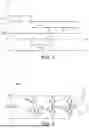
FIG. 5a schematically illustrates an example of an electronic circuit of a system according to the present disclosure.
FIG. 5b schematically illustrates another example of an electronic circuit of a system according to the present disclosure.
FIG. 6 schematically illustrates an example of the different phases of an electronic circuit according to the present disclosure.
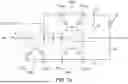
FIG. 7a schematically illustrates yet another example of an electronic circuit of a system according to the present disclosure.
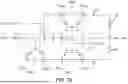
FIG. 7b schematically illustrates yet another example of an electronic circuit of a system according to the present disclosure.
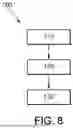
FIG. 8 schematically illustrates an example of method for compensating a dead time in a PWM control applied to a switching arm according to the present disclosure.
DETAILED DESCRIPTION
The inventor has noticed that, in the solution presented by document EP2403119 A1, the time window during which the output voltage is integrated is larger than the effective duration of the dead time, which therefore adds an error in the integrated output voltage used to apply the compensation time in the PWM signals. The document especially indicates that the duration of the integration time window Wint is set to be slightly larger than the dead time duration for considering the time propagation of the switching order and the time for commuting the switches.
The overlap of the integration time window Wint in the conducting time of a switch of a switching arm following the dead time of document EP2403119 A1 is represented in FIG. 1 of the present application, and corresponds to the duration between t′d and t′1, wherein t′d is the effective end of the dead time, and t′1 is the effective end of the integration time window Wint. In this figure, CT1 represents a PWM signal of a first switch T11 and CT2 represents a PWM signal of a second switch T21. As represented in the figure, the duration between t′d and t′1, which is a part of the integration window Wint, corresponds to a conducting time of the second switch T21. It should therefore be noted that the voltage integrated during the time between t′d and t′1 does not correspond to an output voltage applied to the electrical load during the dead time DT, although it is considered to correct the PWM signals.
To mitigate or even suppress this overlap of the integrating time window Wint on the next conducting cycle, the inventor cleverly proposes to analogically synchronize the integration of the output voltage with the dead time. Hence, the obtained integrated output voltage during the dead time does not comprise any component belonging to a time in which a switch was conducting.
With reference to FIG. 2, it is now presented an example of an inverter INV, which can be used in a variable speed drive, and in which the solution proposed by the disclosure can be applied.
By inverter, we mean all conventional two-level or multi-level inverters that include a Direct Current, DC, bus, as well as so-called flying capacitor inverters and matrix converter-type inverters. In the following description, we focus on a conventional two-level inverter, but it should be understood that the solution of the disclosure may be applied to all of the aforementioned inverters, and more generally to each device comprising a switching arm.
An inverter INV comprises two power lines, a positive power line and a negative power line, between which a bus capacitor Cbus and several switching arms 1, 2, 3 are connected. Typically, each switching arm 1, 2, 3 includes at least two switches (T11, T21, T12, T22, T13, T23) connected between the two power lines. In each arm 1, 2, 3, a connection midpoint located between the two switches is connected to the electrical load M.
The solution of the present disclosure can be applied to each switching arm of the inverter independently. In the following description, we will focus on a single switching arm 1, which may for example comprise the switches T11 and T21.
Referring to FIG. 3, a PWM control sequence for controlling the switches T11 and T21 of the switching arm 1 includes, in a chronological order:
-
- 1) maintaining switch T11 closed for a certain duration (curve CT1),
- 2) a command to open the switch T11 (curve CT1),
- 3) a dead time DT during which both switches T11 and T21 are open,
- 4) a command to close switch T21 (curve CT2),
- 5) maintaining switch T21 closed for a certain duration (curve CT2),
- 6) a command to open switch T21 (curve CT2),
- 7) a new dead time DT,
- 8) a command to close switch T11 (curve CT1).
The switching duration of the switches are determined based on an output voltage Vph that is desired to be applied to the electrical load M. Outside the dead time DT, the output voltage Vph is controlled since one of the switches is always closed. However, during the dead time DT, which is necessary to prevent short-circuiting the DC bus, the evolution of the output voltage Vph applied to the electrical load M depends on the sign and value of the current (noted is FIG. 2) flowing through the electrical load M. FIG. 3 illustrates this aspect. In this figure, it can be seen that the actual output voltage Vph obtained from the switching arm presents different profiles depending on whether the current is positive (Vph_is >0), negative (Vph_is <0), or near zero (Vph_is˜0). This figure also shows the ideal voltage Vph_id that is desired.
With reference to FIG. 4, it is now presented an example of system 10 for compensating a dead time DT in a PWM control applied to a switching arm in order to apply an output voltage Vph to a first electrical load M.
The example of system 10 comprises an electronic circuit 11 and a data processing device 12.
The data processing device 12 may for example comprise a processor PROC and a memory MEM. The processor PROC may implement a PWM control based on a control law of the first electrical load M. The control law performed by the processor PROC makes it possible to determine the output voltage Vph to be applied to the output phases intended to be connected to the electric load M to be controlled. The processor PROC may be configured to operate at least a part of any examples of the method 100 hereby described.
The memory MEM may correspond to a non-transitory machine-readable or computer readable storage medium. The memory MEM may be encoded with instructions executable by a controller such as the controller PROC. The memory MEM may comprise instructions to operate the controller PROC to perform at least a part of the examples of the method 100 hereby described. The memory MEM according to this disclosure may be any electronic, magnetic, optical or other physical storage device that stores executable instructions. The memory MEM may be, for example, Random Access Memory (RAM), an Electrically Erasable Programmable Read Only Memory (EEPROM), a storage drive, an optical disk, and the like. The controller PROC has therefore access to the information stored in the memory MEM.
The electronic circuit 11 is configured to integrate the output voltage Vph during a time window Wint analogically synchronized with the dead time DT in order to determine a compensation duration of a pulse of the PWM control.
By time window Wint analogically synchronized with the dead time DT, the present disclosure means that the time window Wint is synchronized with the electric signals of the switching orders of the switches T11, T21, such that the time window Wint starts with an opening order of one the switches T11, T21 and ends with a closing order of the other switch.
By measuring the integral of the output voltage Vph over the duration of the time window Wint analogically synchronized with the dead time DT, the system 10 allows determining with precision the output voltage Vph applied to the first electrical load M during a duration (the dead time DT) where it is the most uncertain. The output voltage Vph applied to the first electrical load M is determinate with more accuracy than using the solution proposed by document EP2403119 A1 in which the determined applied output voltage comprises a component external to the dead time DT, considering that the integration time window Wint is always defined to be slightly larger than the dead time DT (see FIG. 1).
The data processing device 12 is configured to determine a width of a pulse of the PWM control based on the compensation duration; and to apply the pulse. The pulse may preferably be the next pulse following the dead time DT during which the output voltage has been integrated, i.e. the pulse following the integration time window Wint.
Since the output voltage Vph is integrated during a time window Wint analogically synchronized with the dead time DT, the obtained integrated output voltage does not comprise any component belonging to time in which a switch was conducting. Hence, the compensation duration determined based on said integrated voltage is more precise than the one determined in document EP2403119 A1, such that the control of the electrical load may be improved.
Examples of electronic circuit 11 configured to integrate the output voltage Vph during a time window Wint analogically synchronized with the dead time DT will be presented in reference to FIGS. 5a, 5b, 7a and 7b. These figures represent possible examples of electronic circuit 11 allowing integrating the output voltage Vph during a time window Wint analogically synchronized with the dead time DT, but other examples can be implemented.
In some examples, the electronic circuit 11 may comprise a H-topology circuit and an output circuit.
The output circuit may be understood as an electronic circuit delivering a voltage signal with a width proportional to the integrated output voltage, as explained below.
The H-topology circuit comprising a first arm h1, a second arm h2, and a middle arm hm connected between the first h1 and the second h2 arms. The middle arm hm is connected to a respective connection midpoint of the first arm h1 and of the second arm h2. The arms h1, h2 and hm therefore form the H-topology circuit.
The middle arm hm comprises a capacitor C. The capacitor C will be used to integrate the output voltage Vph during the time window Wint analogically synchronized with the dead time DT.
In some examples illustrated in FIGS. 5a and 5b, the first arm h1 comprises a switching circuit F1, a first current source F2, and a first connection midpoint arranged between the switching circuit F1 and the current source F2. The first connection midpoint connects the first arm h1 to the middle arm hm. The first connection midpoint especially connects the first arm h1 to a first terminal of the capacitor C.
A first terminal of the switching circuit F1 may be connected to a voltage line Vcc. A second terminal of the switching circuit F1 may be connected to the first connection midpoint. A first terminal of the first current source F2 may be connected to the first connection midpoint of the first arm h1. A second terminal of the first current source F2 may be connected to a ground of the voltage line Vcc, as illustrated in the FIGS. 5a and 5b. The first current source F2 generates a current dependent from the output voltage Vph, as illustrated in the FIGS. 5a et 5b. In other words, the first current source F2 corresponds to a voltage controlled current source.
In some examples illustrated in FIGS. 5a and 5b, the switching circuit F1 is controlled based on electric signals (noted CT1 and CT2) respectively controlling the first switch T11, and the second switch T21. In other words, the switching circuit F1 is controlled based on PWM signals. The switching circuit F1 is especially controlled to be off during the dead time DT and to be on when one of the switches (T11, T12) is on. The switching circuit F1 may only be off during the dead time DT and may only be on when one of the switches (T11, T12) is on.
In some examples illustrated in FIGS. 5a and 5b, the second arm h2 comprises a diode circuit F3, a second current source F4, and a second connection midpoint arranged between the diode circuit F3 and the second current source F4.
As explained below, the second current source F4 will be used to discharge the capacitor C after that the capacitor C integrates the output voltage Vph during a dead time DT. It is then based on a time of discharge of the capacitor C that a compensation duration will be determined. Hence, the second current source F4 may be:
-
- constant, i.e. defined by the characteristics of the components used, as illustrated in FIG. 5a.
In this case, during the capacitor discharge, actual volt-seconds are recovered, which must then be normalized by the DC bus voltage to correct the pulse width for compensation, - dependent, i.e., proportional to the DC bus voltage at the inverter input, as illustrated in FIG. 5b where the DC bus voltage is referenced as Vbus.
In this case, the measured integral is already normalized by the DC bus voltage Vbus and directly corresponds to a time that can be used for compensation.
- constant, i.e. defined by the characteristics of the components used, as illustrated in FIG. 5a.
The second connection midpoint connects the second arm h2 to the middle arm hm. The second connection midpoint especially connects the second arm h2 to a second terminal of the capacitor C. The diode circuit F3 may be arranged in the second arm to prevent a current to flow from the midpoint of the second arm h2 to the voltage line Vcc, as illustrated in FIGS. 5a and 5b.
A first terminal of the diode circuit F3 (the anode) may be connected to the voltage line Vcc. A second terminal (the cathode) of the diode circuit F3 may be connected to the second connection midpoint of the second arm h2. A first terminal of the second current source F4 may be connected to the second connection midpoint. A second terminal of the second current source F4 may be connected to the ground of the voltage line Vcc.
In some examples illustrated in FIGS. 5a and 5b, the output circuit comprises a transistor function Tf, i.e. an electronic component which can be controlled like a transistor. Here, the transistor function TF may be controlled such that the transistor function Tf is on when the diode circuit F3 is on and is off when the diode circuit F3 is off. That is, the emitter-base of the transistor function Tf may be connected in parallel to the diode circuit F3.
Functioning Principles of the Electronic Architecture of FIGS. 5a and 5b:
As previously explained, the electronic architecture of FIG. 5 allows integrating the output voltage Vph during the dead time DT by charging the capacitor C. This architecture also allows triggering a pulse of a width proportional to the integrated output voltage, which can therefore be processed, for example by the data processing device 12 to determine a compensation duration for a pulse of the PWM control.
The functioning principles of the electronic architecture will be explained based on FIG. 6 representing the different phases of the electronic circuit 11.
In phase 1 (P1), until instant to (which corresponds to an opening order of the switch T11), the switch T11 is on (CT1=1), and the voltage across the capacitor C is constant and equals to a resting voltage labeled VC0. That is, no current flows through the capacitor C.
At instant t0, the switch T11 is open (CT1=0) starting the integration time window Wint. The electronic circuit is in phase 2 (P2). Indeed, since both switches of the switching arm are open (CT1+CT2=0), the dead time DT starts. Moreover, for the same reason (i.e. CT1+CT2=0), the switching circuit F1 is off. Since the switching circuit F1 is off, a current flowing through the diode circuit F3 and attracted by the first current source F2 is charging the second terminal of the capacitor C. It is reminded that the current i (t) drawn by the first current source F2 and charging the second terminal of the capacitor C is proportional to the output voltage Vph. The current charging the capacitor C (especially its second terminal) therefore corresponds to i(t)≈K1Vph(t), where Vph(t) corresponds to the output voltage, and K1 is a constant coefficient. It should also be noted that since the diode circuit F3 is on, the transistor function Tf is on too (the emitter-base terminals of the transistor function Tf are connected in parallel of the terminals of the diode circuit F3), such that a voltage corresponding to the voltage line Vcc can be measured between the collector of the transistor function Tf and a ground of the voltage line Vcc, which may be the ground of the electronic circuit 11.
At t1, the dead time DT ends with the closing of the switch T21 (CT2=1). The voltage VC(t1) across the capacitor is given by the following relation:
V C ( t 1 ) = V C0 + K 1 C ∫ ? ? V ph ( t ) dt ( 1 ) ? indicates text missing or illegible when filed
We are entering in phase P3, from t1 to t2. The switching circuit F1 is closed (CT1+CT2=1 since CT2=1), such that the first terminal of the capacitor C is connected to the voltage line Vcc. However, the second terminal of the capacitor C, since it has been charged during phase P2, presents a voltage greater than the voltage line Vcc. Hence, at this point, the capacitor C is discharged using the second current source F4 until the capacitor reaches its resting voltage VC0 at t2. The evolution of the voltage across the capacitor C during the discharge depends on whether the second current source F4 is constant (examples illustrated in FIG. 5a) or dependent (examples illustrated in FIG. 5b), as detailed below.
When the second current source F4 is constant following the relation i(t)=−K2, wherein K2 is a constant, the evolution of the voltage VC(t) across the capacitor C current is given by the following relation:
V C ( t ) = V C ( t 1 ) - K 2 C ( t - t 1 )
Hence, since VC(t2)=VC0 at t2, we can obtain from (1) the following relation:
t 2 - t 1 = K 1 K 2 ∫ ? ? V ph ( t ) dt ? indicates text missing or illegible when filed
When the second current source F4 is dependent on the DC bus voltage following the relation i(t)=−K3Vbus, wherein K3 is a constant while Vbus corresponds to the DC-bus voltage, the evolution of the voltage VC(t) across the capacitor C current is given by the following relation:
V C ( t ) = V C ( t 1 ) - K 3 C ∫ ? ? V bus ( u ) du ? indicates text missing or illegible when filed
If we consider the DC-bus voltage Vbus constant during t1 and t2, we can obtain the following equation of voltage VC(t) across the capacitor C:
V C ( t ) = V C ( t 1 ) - K 3 V bus C ( t - t 1 )
and then we can therefore obtain:
t 2 - t 1 = K 1 K 2 ∫ ? ? V ph ( t ) dt ? indicates text missing or illegible when filed
The instant t2 can then be used to calculate a compensation duration to be applied in the PWM control to determine a width of a pulse of a PWM signal of a switch, as explained in EP2403119 A1.
It should be noted that during phase P3, the current cannot pass by the diode circuit F3 (the diode circuit F3 is off) since the potential of the second terminal of the diode circuit F3 (the cathode) is equal to the potential of the second terminal of the capacitor C, which is greater than the potential of the first terminal of the diode circuit F3 (the anode) corresponding to the potential of the voltage line Vcc. We understand that during the time period, the transistor function Tf is off since the emitter-base terminals of the transistor function Tf are connected in parallel of the diode circuit F3.
Then, when the second terminal of capacitor C is sufficiently discharged by the second current source F4 (at t2), the diode circuit F3 becomes again on (as well as the transistor function Tf) such that no more current is charging or discharging the second terminal of the capacitor C (phase P4) until reaching the next dead time DT.
We understand that since the diode circuit F3 is off during phase P3, from t1 to t2, a voltage measured between the collector of the transistor function Tf and the ground of the voltage line Vcc of the electronic circuit 11 is equal to 0 during this phase. Hence, by monitoring this voltage, and especially by monitoring the voltage transition from 0 to Vcc, it is possible to analogically determine the end of the discharge of the capacitor C, and therefore determine the instant t2 which can then be used to compute the compensation duration. The instant t1 may be obtained based on the PWM signals. In some examples, the compensation duration may be determined based on a duration during when the transistor function Tf is off, which therefore corresponds to the discharging time of the capacitor C.
In some examples, the output circuit may also comprise a second resistor R2 (a first resistor R1 will be introduced below). A first terminal of the second resistor R2 may be connected to a collector of the transistor function Tf. A second terminal of the second resistor R2 may be connected to the ground of the voltage line Vcc (which may correspond to the ground of the electronic circuit 11). The compensation duration may be determined based on a voltage across the second resistor R2.
In some examples, the switching circuit F1 may comprise or may correspond to a metal-oxide-semiconductor field-effect transistor, MOSFET, and especially to a P-channel MOSFET.
A source of the MOSFET may be connected to the voltage line Vcc. The source of the MOSFET may thereby be connected to the diode circuit F3 (especially to its anode), and to the transistor function Tf (especially to its emitter) through the voltage line Vcc.
A gate of the MOSFET may be controlled based on electric signals (CT1, CT2) triggering the first switch T11 and the second switch T21.
A drain of the MOSFET may be connected to a first terminal of the capacitor C, and to the first source of current F2.
In some examples, the first current source F2 may correspond to a first current mirror MC1.
A collector of a first transistor T1MC1 of the first current mirror MC1 may be connected to a first terminal of a first resistor R1. The second terminal of the first resistor R1 may be connected to the output voltage Vph.
A collector of a second transistor T2MC1 of the first current mirror MC1 may be connected to a first terminal of the capacitor C and to the switching circuit F1, especially to a drain of the MOSFET when the switching circuit F1 comprises a MOSFET.
An emitter of a first transistor T1MC1 and an emitter of a second transistor T2MC1 of the first current mirror MC1 may be connected to the ground of the voltage line Vcc.
In some examples, the second current source F4 may correspond to a second current mirror MC2.
A collector of a first transistor T1MC2 of the second current mirror MC2 may be connected to the second terminal of the capacitor C and to the diode circuit F3 (especially to its cathode).
A collector of a second transistor T2MC1 of the second current mirror MC2 may be connected to a first terminal of a third resistor R3. In some examples wherein the second current source F4 is a constant current source, a second terminal of the third resistor R3 may be connected to the voltage line Vcc (as illustrated in FIG. 7a). In some examples wherein the second current source F4 is a current source dependent on the DC bus voltage Vbus, a second terminal of the third resistor R3 may be connected to the DC bus voltage Vbus (as illustrated in FIG. 7b).
An emitter of a first transistor T1MC2 and an emitter of a second transistor T2MC2 of the second current mirror MC2 may be connected to the ground of the voltage line Vcc.
In some examples, the diode circuit F3 and the transistor function Tf are formed by a third current mirror MC3.
An emitter of a first transistor T1MC3 and an emitter of a second transistor T2MC3 of the third current mirror MC3 may be connected to the switching circuit F1 through the voltage line Vcc.
A collector of the first transistor T1MC3 of the third current mirror MC3 may be connected to the second terminal of the capacitor C and to the second current source F2.
A collector of the second transistor T2MC3 of the third current mirror MC3 may be connected to the first terminal of the second resistor R2. A second terminal of the second resistor R2 may be connected to the ground of the voltage line Vcc.
In some examples, a freewheeling diode fD may be connected in parallel to the second transistor T2MC3 of the third current mirror MC3 for protecting the latter transistor against voltage spikes. A cathode of the freewheeling diode fD may therefore be connected to the switching circuit F1 (especially to a source of the MOSFET when the switching circuit F1 comprises a MOSFET), and to the emitters of the first T1MC3 and second T2MC3 transistors of the third current mirror MC3 through the voltage line Vcc. An anode of the freewheeling diode fD may be connected to the first terminal of the second resistor R2 and to the collector of the second transistor T2MC3 of the third current mirror MC3. These examples are for example illustrated in FIGS. 7a and 7b.
In some examples of electronic circuit 11 illustrated in FIGS. 7a and 7b, the output circuit comprises the second resistor R2. The first current source F2 corresponds to the first current mirror MC1. The second current source F4 corresponds to the second current mirror MC2. The diode circuit F3 and the transistor function Tf are formed by the third current mirror MC3. The switching circuit F1 corresponds to a MOSFET.
In some examples of electronic circuit 11 illustrated in FIGS. 7a and 7b, the collector of the first transistor T1MC1 of the first current mirror MC1 is connected to the first terminal of the first resistor R1. The second terminal of the first resistor R1 is connected to the output voltage Vph. The collector of the second transistor T2MC1 of the first current mirror MC1 is connected to the first terminal of the capacitor C and to the drain of the MOSFET. The emitter of the first transistor T1MC1 and the emitter of the second transistor T2MC1 of the first current mirror MC1 are connected to the ground of the voltage line Vcc, which again may correspond to the ground of the electronic circuit 11.
In some examples of electronic circuit 11 illustrated in FIGS. 7a and 7b, the collector of the first transistor T1MC2 of the second current mirror MC2 is connected to the second terminal of the capacitor C and to the collector of the first transistor T1MC3 of the third current mirror MC3. The collector of a second transistor T2MC2 of the second current mirror MC2 is connected to the first terminal of the third resistor R3. In some examples wherein the second current source F4 is a constant current source, the second terminal of the third resistor R3 is connected to the voltage line Vcc (FIG. 7a). In some examples wherein the second source of current F4 is a current source dependent on the DC bus voltage Vbus, the second terminal of the third resistor R3 is connected to the DC bus voltage Vbus (as illustrated in FIG. 7b).
The emitters of the first T1MC2 and second T2MC2 transistors of the second current mirror MC2 and the second terminal of the second resistor R2 are connected to the ground of the voltage line Vcc. Hence, the emitters of the transistors of the first MC1 and second MC2 mirrors of current and the second terminal of the resistor R2 are connected to the ground of the voltage line Vcc.
In some examples of electronic circuit 11 illustrated in FIGS. 7a and 7b, the emitter of the first transistor T1MC3 and the emitter of the second transistor T2MC3 of the third current mirror MC3 are connected to the source of the MOSFET through the voltage line Vcc. The emitter of the first transistor T1MC3 and the emitter of the second transistor T2MC3 of the third current mirror MC3 may also be connected to the cathode of the freewheeling diode fD.
The collector of the first transistor T1MC3 of the third current mirror MC3 is connected to the second terminal of the capacitor C and to the collector of the first transistor T1MC2 of the second current mirror MC2. The collector of the second transistor T2MC3 of the third current mirror MC3 is connected to the first terminal of a second resistor R2. The collector of the second transistor T2MC3 of the third current mirror MC3 may also be connected to the anode of the freewheeling diode fD.
In some examples of electronic circuit 11 illustrated in figure FIGS. 7a and 7b, the source of the MOSFET is connected to the emitter of the first transistor T1MC3 and to the emitter of a second transistor T2MC3 of the third current mirror MC3 through the voltage line Vcc. The source of the MOSFET may also be connected to the cathode of the freewheeling diode fD. The gate of the MOSFET is controlled based on electric signals triggering the first switch T11 and the second switch T21. The drain of the MOSFET is connected to the first terminal of the capacitor C, and to the collector of the second transistor T2MC1 of the first current mirror MC1.
In some examples of electronic circuit 11 illustrated in FIGS. 7a and 7b, the compensation duration is determined based on a voltage across the second resistor R2.
In the examples of electronic circuit 11 illustrated in figure FIGS. 7a and 7b, the electronic circuit 11 may be implemented as an Application-Specific Integrated Circuit, ASIC. Implementing the electronic circuit 11 as an ASIC provides significant advantages, including a compact design and cost efficiency for large-scale production, making it well suited for integration into the existing inverters.
Examples of method 100 for compensating dead times DT in a PWM control applied to a switching arm will be presented in reference to FIG. 8.
As illustrated by block 110, the method 100 comprises an integration of the output voltage Vph during a time window Wint analogically synchronized with the dead time DT in order to determine a compensation duration of a pulse of the PWM control. The compensation duration of a pulse of the PWM control may be determined based on the discharging time of the capacitor C as previously explained, for example based on the instants t1 and t2.
As illustrated by block 120, the method 100 comprises determining a width of a pulse of the PWM control based on the compensation duration. The pulse may preferably be the next pulse following the dead time DT during which the output voltage has been integrated, i.e. the pulse following the integration time window Wint, as explained above.
As illustrated by block 130, the method 100 comprises applying the pulse determined in block 120.
In some examples, the integration of the output voltage Vph during a time window Wint analogically synchronized with the dead time DT of block 110 is implemented by any one of the examples of electronic circuit 11 presented in the present disclosure.
The present disclosure also presents a computer-readable storage medium comprising instructions which, when executed by at least one controller, cause the controller to carry out any one of the methods presented hereby.
The present disclosure also describes a computer program product comprising instructions which, when the program is executed by a computer, cause the computer to carry out any one of the methods hereby described.
The terms used herein are for the purpose of describing specific examples only and are not intended to limit the present disclosure. As used herein, the singular forms “a”, “an” and “the” are intended to include the plural forms as well, unless the context clearly indicates otherwise. It will be further understood that the terms “comprises”, “comprising”, “includes”, “including” and/or “having”, when used herein, specify the presence of stated features, integers, steps, operations, blocks, constitutional elements, components and/or combinations thereof, but do not preclude the presence or addition of one or more other features, integers, steps, operations, blocks, constitutional elements, components, and/or combinations thereof.
The various examples described above can be combined to provide further examples. These and other changes can be made to the examples in light of the above-detailed description. In general, in the following claims, the terms used should not be construed to limit the claims to the specific examples disclosed in the specification, but should be construed to include all possible examples along with the full scope of equivalents to which such claims are entitled.
Claims
1. A system for compensating a dead time in a Pulse Width Modulation, PWM, control applied to a switching arm in order to apply an output voltage to a first electrical load;
the switching arm comprising a first switch, a second switch and a connection midpoint arranged between the first switch and the second switch and connected to the electrical load;
the system comprising:
an electronic circuit configured to integrate the output voltage during a time window analogically synchronized with the dead time in order to determine a compensation duration of a pulse of the PWM control; and
a data processing device configured to:
determine a width of a pulse of the PWM control based on the compensation duration; and
apply the pulse.
2. The system according to the preceding claim 1, wherein the electronic circuit comprises a H-topology circuit and an output circuit;
the H-topology circuit comprising a first arm, a second arm, and a middle arm connected between the first and the second arms to form the H-topology;
the middle arm comprising a capacitor;
the first arm comprising a switching circuit, a first current source, and a connection midpoint arranged between the switching circuit and the current source and connected to the middle arm;
the second arm comprising a diode circuit, a second current source, and a connection midpoint arranged between the diode circuit and the current source and connected to the middle arm;
the output circuit comprises a transistor function arranged such that the transistor function is on when the diode circuit is on and is off when the diode circuit is off;
wherein the switching circuit is controlled based on electric signals controlling the first switch, and the second switch such that the switching circuit is off during the dead time and is on when one of the switches is on;
wherein the first current source is arranged to charge the capacitor by a current proportional to the output voltage when the switching circuit is off and when the diode circuit is on; and
wherein the second current source is arranged to discharge the capacitor when the switching circuit is on and when the diode circuit is off.
3. The system according to claim 2, wherein the compensation duration is determined based on the time during when the transistor function is off.
4. The system according to claim 2, wherein the switching circuit comprises a P-channel metal-oxide-semiconductor field-effect transistor, MOSFET;
wherein a source of the MOSFET is connected to the diode circuit and to the transistor function through a voltage line;
a gate of the MOSFET is controlled based on electric signals controlling the first switch and the second switch;
and a drain of the MOSFET is connected to a first terminal of the capacitor, and to the first source of current.
5. The system according to claim 2, wherein the first current source corresponds to a first current mirror.
6. The system according to claim 5, wherein a collector of a first transistor of the first current mirror is connected to a first terminal of a first resistor, the second terminal of the first resistor being connected to the output voltage;
wherein a collector of a second transistor of the first current mirror is connected to a first terminal of the capacitor and to the switching circuit; and wherein an emitter of a first transistor and an emitter of a second transistor of the first current mirror are connected to a ground of a voltage line.
7. The system according to claim 2, wherein the second current source corresponds to a second current mirror.
8. The system according to claim 7, wherein a collector of a first transistor of the second current mirror is connected to a second terminal of the capacitor and to the diode circuit;
wherein a collector of a second transistor of the second current mirror is connected to a first terminal of a third resistor, the second terminal of the third resistor being connected either to a voltage line or to a DC bus voltage; and
wherein an emitter of a first transistor and an emitter of a second transistor of the second current mirror are connected to a ground of the voltage line.
9. The system according to claim 2, wherein the diode circuit and the transistor function are formed by a third current mirror.
10. The system according to claim 9, wherein an emitter of a first transistor and an emitter of a second transistor of the third current mirror are connected to the switching circuit through a voltage line;
wherein a collector of the first transistor of the third current mirror is connected to a second terminal of the capacitor and to the second current source; wherein a collector of the second transistor of the third current mirror is connected to a first terminal of a second resistor;
and wherein a second terminal of the second resistor is connected to a ground of the voltage line.
11. The system according to claim 1, wherein the output circuit comprises a second resistor;
wherein a first terminal of the second resistor is connected to a collector of the transistor function;
wherein a second terminal of the second resistor is connected to a ground of the voltage line; and
wherein the compensation duration is determined based on a voltage across the second resistor.
12. The system according to claim 2, wherein the output circuit comprises a second resistor, the first current source corresponds to a first current mirror, the second current source corresponds to a second current mirror, the diode circuit and the transistor function are formed by a third current mirror, and the switching circuit corresponds to a P-channel metal-oxide-semiconductor field-effect transistor, MOSFET;
wherein a collector of a first transistor of the first current mirror is connected to a first terminal of a first resistor, a second terminal of the first resistor being connected to the output voltage; a collector of a second transistor of the first current mirror is connected to a first terminal of the capacitor and to a drain of the MOSFET; an emitter of a first transistor and an emitter of the second transistor of the first current mirror are connected to a ground of a voltage line;
wherein a collector of a first transistor of the second current mirror is connected to a second terminal of the capacitor and to a collector of a first transistor of the third current mirror; a collector of a second transistor of the second current mirror is connected to a first terminal of a third resistor, a second terminal of the third resistor being connected either to the voltage line or to a DC bus voltage; an emitter of the first transistor, an emitter of the second transistor of the second current mirror, and a second terminal of the second resistor are connected to the ground of the voltage line;
wherein an emitter of a first transistor and an emitter of a second transistor of the third current mirror are connected to a source of the MOSFET through the voltage line; a collector of the second transistor of the third current mirror is connected to a first terminal of the second resistor;
wherein a gate of the MOSFET is controlled based on electric signals controlling the first switch and the second switch; and
wherein the compensation duration is determined based on a voltage across the second resistor.
13. A method for compensating dead times in a Pulse Width Modulation, PWM, control applied to a switching arm connected between two supply lines, the switching arm comprising a first switch, a second switch and a connection midpoint located between the first switch and the second switch, and connected to an electrical load,
the PWM control performs a switching of the first switch and a switching of the second switch and inserts a dead time between the switching of the first switch and the switching of the second switch, in order to apply an output voltage to the electrical load,
wherein the method comprises: integrating the output voltage during a time window analogically synchronized with the dead time in order to determine a compensation duration of a pulse of the PWM control;
determining a width of a pulse of the PWM control based on the compensation duration; and
applying the pulse.
14. The method according to claim 13, wherein integrating the output voltage during a determined time window synchronized with the dead time is implemented by an electronic circuit configured to integrate the output voltage during a time window analogically synchronized with the dead time in order to determine a compensation duration of a pulse of the PWM control.
15. A computer-readable storage medium comprising instructions which, when executed by at least one controller, cause the at least one controller to carry out at least part of a method comprising:
integrating an output voltage during a time window analogically synchronized with a dead time in order to determine a compensation duration of a pulse of a PWM control;
determining a width of the pulse of the PWM control based on the compensation duration; and
applying the pulse.
Images & Drawings included:



Sources:
- United States Patent and Trademark Office - verify current appl. status at the USPTO↗
Recent applications in this class:
- » 20260112966 2026-04-23
Control Method for an Asymmetric Half-Bridge Circuit, Control Chip, Power Supply Circuit, and Charger - » 20260088711 2026-03-26
QUASI-RESONANT FORCED CONTINUOUS CONDUCTION MODE POWER CONVERTERS - » 20250293589 2025-09-18
POWER CONVERSION SYSTEM - » 20250274037 2025-08-28
CIRCUIT ARRANGEMENT FOR REDUCING DEAD TIME LOSSES OF AN INVERTER AND ELECTRICAL SYSTEM - » 20250246995 2025-07-31
SWITCHING CONVERTER DEADTIME CONTROL - » 20250239933 2025-07-24
GATE DRIVER WITH SELF-ADJUSTED ADAPTIVE DEAD TIME - » 20250105726 2025-03-27
SYSTEMS AND METHODS FOR ADAPTIVE DEAD TIME CONTROL OF A DEVICE INTEGRATED WITH CONVERTERS THAT IMPLEMENT SOFT SWITCHING - » 20240178747 2024-05-30
SWITCHING POWER SUPPLY, AMPLIFICATION DEVICE, AND COMMUNICATION DEVICE - » 20240171067 2024-05-23
INTEGRATED CIRCUIT AND CONVERTER HAVING THE SAME - » 20240128858 2024-04-18
Power stage adaptive deadtime and drive strength