HELMET FOR EMERGENCY RESPONDERS
US20260114533A1
2026-04-30
19/004,694
2024-12-30
Smart Summary: A special helmet is designed for emergency responders who deal with large accidents or disasters. It has features like alert systems to warn about dangers, tracking systems to find people, and protection systems to keep the wearer safe. The helmet also includes visualization systems to help see better in tough situations and communication systems to talk with others. Responders can easily activate these features using a button or switch on the helmet. Overall, it helps them work more effectively during emergencies. 🚀 TL;DR
Abstract:
A helmet for emergency responders having various capabilities including one or more of alert systems, tracking systems, protection systems, visualization systems, communication systems, and data systems, specifically designed for mass casualty incidents (MCI). The helmet includes a module, a base and at least one activating mechanism actuable by the wearer to activate one or more of the systems.
Applicant:
Interested in similar patents?
Get notified when new applications in this technology area are published.
Classification:
A42B3/0433 » CPC main
Helmets; Helmet covers ; Other protective head coverings; Parts, details or accessories of helmets; Accessories for helmets Detecting, signalling or lighting devices
A42B3/044 » CPC further
Helmets; Helmet covers ; Other protective head coverings; Parts, details or accessories of helmets; Accessories for helmets; Detecting, signalling or lighting devices Lighting devices, e.g. helmets with lamps
A42B3/04 IPC
Helmets; Helmet covers ; Other protective head coverings Parts, details or accessories of helmets
Description
BACKGROUND OF THE INVENTION
This application claims priority from provisional application Ser. No. 63/607,592, filed Dec. 8, 2023, the entire contents of which are incorporated herein by reference.
1. FIELD OF THE INVENTION
This application relates to a helmet, and more particularly, to a helmet having various capabilities (systems) wearable by emergency responders to multiple casualty incidents.
2. BACKGROUND OF THE RELATED ART
U.S. Patent Publication 2020/0352801 (hereinafter the '801 publication) attempted to address the deficiencies in current responses to mass (multiple) casualty incidents (MCI's) which include insufficient: 1) situational awareness, 2) communications; 3) command, control and coordination; 4) responder health, safety and performance; 5) logistics and resource management; 6) casualty management; and 7) training and exercise. Situational awareness requires the ability to communicate with responders and peers as well as knowledge of their location and their proximity to risks and hazards in real time. This includes the ability to rapidly identify hazardous agents and contaminants at the incident site. Situational awareness also benefits from the capability of incorporating information from multiple and nontraditional sources, e.g., crowdsourcing and social media, into incident command operations.
Communications involves the ability to communicate with responders in various environmental conditions, including through barriers, inside buildings, underground, etc. During an incident, communication gets confusing, especially in terms of where the responders/EMS personnel should go. Communicating which station is for which hospital and ambulances is difficult and sometimes important information and communication gets missed. Additionally, responders frequently rely on a two way radio for communication which is limiting as oftentimes 30+ people are talking so there is communication chaos. Sometimes communication breaks down due to many stakeholders and actors simultaneously making calls over the radio. Communication tools may also falter due to distance, obstacles or electronic interference, resulting in misinformation or a lack of essential updates from command centers or team members. With insufficient communication, valuable treatment time for the injured is lost, resulting in unnecessary loss of lives, increased injuries and long term health consequences. Lack of adequate communication can also lead to duplicated efforts.
Command, control and coordination include the ability to remotely monitor the tactical actions and progress of all responders involved in the incident in real time. It also involves a centralized control to properly coordinate location and tasks of first responders. The ability to identify trends, patterns and important content from large volumes of information from multiple sources at the site, including nontraditional sources, are beneficial to support incident decision making. It also includes the ability to identify, assess and validate emergency response related software applications.
Responder health, safety and performance include providing the first responders with protective equipment that protects against multiple hazards. For example, oftentimes after an incident, such as a terrorist attack, there are hazardous materials which pose a health risk to first responders. Additionally, sometimes at the site of a terrorist attack, there is a planned secondary event, e.g., a second explosion or other attack, which leaves the first responders vulnerable. Therefore, there is a need to protect the safety of the first responders. Additionally, protecting the safety could speed up treatment of the injured.
Logistic and resource management include the ability to identify what resources are available to support a response (including resources not traditionally involved in a response), what their capabilities are, and where they are in real time. It also includes the ability to monitor in real time the status of resources and their functionality.
Casualty management includes the ability to remotely scan an incident scene for signs of life and decomposition to identify and differentiate casualties and fatalities.
During such Multi Casualty Incidents (MCI'S) such as terror attacks, e.g., gas attacks, bombings, etc., multi-car crashes, fires, natural disasters, etc., it is imperative that the first responders gain access to the injured as fast as possible, which oftentimes involves having to pass through dense and chaotic crowds. This need becomes more critical in triage conditions which often accompany such incidents.
Additionally, documentation is critical to triage and transporting patients safely, but manually done, it requires too much time given the severity and chaos of MCI's. As much, if not more, insights are gleaned from personnel being able to look back upon an incident to see what occurred and actions taken.
The '801 publication disclosed first responder bags in an attempt to address the above-described deficiencies. However, an inventor of the '801 publication recognized there were significant deficiencies of the bags disclosed in the '801 publication. Not only were these bags expensive and complex in their design and use, but were cumbersome. Although lighter than prior bags, they still were of significant weight and size to cause user fatigue and difficult to navigate with through crowds and MCI's. The excess equipment in these bags also added to expense, complexity and bulk. The vests disclosed in the '801 publication were likewise heavy, bulky and expensive. Further, once the vests were removed, they had the same disadvantages of the bags as described below. If worn during treatment at the site, they would adversely affect the first responders' mobility and cause fatigue.
Additionally, first responders are put in a range of situations where their personal safety is at risk by another unpredictable secondary event such as a second terror attack. Although, the bags of the '801 publication attempted to provide sufficient protection for the first responders, such bags being either hand carried or worn like a backpack or vest, did not protect the head of the first responder.
Further, once at the site, the bags were removed from the first responder and removed, placed on the ground adjacent the first responder. At the chaos at the site, the first responder could become separated from the bag. Further, if the first responders rely on their proximity to the bag and if separated a sufficient distance from the bag, many of the features/capabilities of the bag were compromised such as the camera, sensors, audible communications, as well as the body protection, etc.
In summary, the need still exists to improve one or more of the seven insufficiencies listed above, thereby improving response to MCI's by first responders. Thus, it would be advantageous to provide a compact reduced bulk device for the first responder to provide protection, enable quicker passage of the first responders through crowds, have site evaluation capabilities and ensure the first responder does not become separated from the device functionalities/capabilities, i.e., the device remains at the site with the first responder. This needs to be accomplished in a cost effective, lightweight and efficient device wherein features are readily accessible to the user in a compact, quick and easy to use manner.
SUMMARY
The present invention advantageously provides a device to facilitate access to victims in mass casualty incidents (MCI's) and provides several capabilities to enhance access to victims, responder safety, and communication/collaboration outside the site with command centers and at the site with other first responders and emergency personnel. Such device of the present invention provides faster response time and enhanced patient care as well as improves teamwork. The device provides such capabilities in a compact, lightweight, technologically advanced wearable helmet which various features are strategically located to enhance user/wearer access and maximize function, and remain with the user/wearer during the entire time at the site, and do not further fatigue the user.
As can be appreciated, rapid response translates to saving lives, and the helmet of the present invention is not encumbering while clearing through crowds, and its coordinated communication features and identification features improves speed of treatment. Further, the wearable helmet of the present invention not only saves lives of the victims but its features protect the health and lives of first responders. Further, the helmet enables gathering data at the scene for real time analysis. The data can be stored and used for later analysis which can potentially be utilized to prevent further incidents or at least provide an education tool to improve response and efficiency at future incidents. Machine learning capabilities could also be part of the system to improve outcomes at the incident in real time or for future incidents.
Thus, the present invention provides a safer, cost effective and highly efficient device which overcomes the deficiencies of the prior art and more specifically solves the problems and overcomes the deficiencies of the “portable ambulance” for MCI's of the common inventor's '801 publication which tried to solve some of the problems with prior art bags/vests but had its own disadvantages of bulk, complexity, inefficiency, unreliability, etc.
In accordance with one aspect of the present invention, a lightweight wearable protective helmet is provided with a series of built in features which include one or more of a) an alarm system, b) a lighting system, c) a sensing system, d) an imaging system, e) a communication system, and f) an identification system. Each of these systems is described in detail below.
In accordance with another aspect of the present invention, a first responder helmet wearable by a first responder to facilitate treatment of injured people at a mass casualty incident is provided, the helmet comprising a) a base; b) a module, the module and base being lightweight; and c) one or more of the following systems i) an alert system to alert bystanders of the presence of the helmet wearer; ii) a tracking system to facilitate locating the first responder; iii) a protection system to analyze environmental parameters; iv) a visualization system; v) a data system to collect and store data obtained at the site; and d) at least one activating mechanism (activator) actuable by the first responder/wearer to activate one or more of the alert, tracking, safety, visualization, and data systems.
In some embodiments, the data system automatically gathers data when the helmet is activated.
In some embodiments, the at least one activating mechanism comprises an activator to turn on the alert system.
In some embodiments, the alert system comprises one or both of a visible flashing light and an audible alarm (e.g., siren).
In some embodiments, the at least one activating mechanism includes an activator to turn on an audible alarm of the alert system, the activator is on a side of the module and is electrically connected to one or more speakers on the module. In some embodiments, the activator for the flashing light and the activator for the audible alarm are independently actuable. The activator for the flashing light and the activator for the alarm can be positioned on a side of the helmet at a mid portion thereof for ease of access.
In some embodiments, the module and base are interchangeable such that the module can be removed from the base and replaced with another module attachable to the base.
In some embodiments, the tracking system comprises a team indicator to identify and track the first responder on a same first responder team. In some embodiments, the module is interchangeable so individuals of the team can be reassigned via substitution of a different module with a different team indicator.
The team indicator can be color coded or differentiated by other indica.
In some embodiments, the visualization system comprises a front working light, the front working light being manually adjustable to adjust a beam angle. In some embodiments, the working light is automatically activated when the alert system is actuated.
In some embodiments, the safety system comprises an environmental sensing unit, the sensing unit measuring levels of one or more gas levels to thereby evaluate air quality in the first responder surroundings. In some embodiments, placement of the helmet on the head of the wearer activates a switch to automatically turn the gas sensing system on. In some embodiments, the helmet includes a display viewable by the first responder while the helmet is worn by the first responder, and can further include a microcontroller in communication with a sensor of the sensing unit to receive first signals from the sensor indicative of gas measurement and transmit second signals in response to the first signals to provide a readout of gas levels on the display thereby alerting the first responder of hazardous air conditions. The gas level readings can provide readings of gas levels of one or more gasses. The gas levels readings are in some embodiments transmitted by the microcontroller to a remote site. The display in some embodiments can be on a visor of the helmet.
The data system of the helmet can include data collected of one or both of measured gas levels and changes in gas levels over a period of time, the data collected being stored for future reference. The data collected can be transmitted in real time to a remote site.
In some embodiments, the safety system further comprises an alarm if the gas level measurement or change in value of gas levels over a period of time exceeds a predetermined threshold. The alarm can be one or both of a visual or audible alarm.
In some embodiments, the helmet further includes a rechargeable battery pack to power the electronics in the helmet, and the battery pack can in some embodiments be removably mounted to the helmet and replaceable with another charged battery back.
In some embodiments, the helmet visualization system includes a camera. The data system can include data collected and stored by the camera.
The helmet in some embodiments further comprises a front visor pivotably attached to the helmet and extendable downwardly, the visor movable from a stored substantially horizontal position to a downwardly angled position to protect a face of the wearer.
In some embodiments, the helmet includes an initial activation switch to initiate individual activators, wherein turning on the initial activation switch automatically turns on the camera so data is automatically collected without requiring an additional activation by the first responder.
In some embodiments, the system includes an activation switch, wherein the activation switch enables activation of the audible alarm and activation of the flashing light, wherein upon turning on the activation switch, the user/wearer can select one of only turning on the audible alarm, only turning on the flashing light or turning on the audible alarm and flashing light simultaneously. In some embodiments, the helmet includes a microprocessor controlling the light and audible alarm(s).
BRIEF DESCRIPTION OF THE DRAWINGS
So that those having ordinary skill in the art to which the subject invention appertains will more readily understand how to make and use the surgical apparatus disclosed herein, preferred embodiments thereof will be described in detail hereinbelow with reference to the drawings, wherein:
FIG. 1 is a side perspective view of a first embodiment of the emergency first responder helmet of the present invention showing the strap and the protective visor in the deployed position;
FIG. 2 is a side perspective view similar to FIG. 1 showing the strap and visor in the stored (non-deployed) position;
FIG. 3 is a side perspective view of the helmet showing the opposite side of the FIG. 1 view;
FIG. 4 is a front view of the helmet of FIG. 1 with the visor in the deployed position and the strap in the extended position;
FIG. 5 is a bottom view of the helmet of FIG. 1;
FIG. 6 is a front view of the helmet of FIG. 1 with the visor in the stored position;
FIG. 7A is a rear view of an alternate embodiment of the emergency responder helmet of the present invention showing the protective visor in the deployed position and the strap in the extended position;
FIG. 7B is a rear view of the helmet of FIG. 7A showing the visor and strap in the stored position;
FIG. 8 is a top view of the helmet of FIG. 7A;
FIG. 9 is a bottom view of the helmet of FIG. 7A;
FIG. 10 is a front view of the helmet of FIG. 7A showing the visor in the deployed position and the strap in the extended position;
FIG. 11 is a front view similar to FIG. 10 showing the visor in the stored position;
FIG. 12 is a bottom view of the helmet of FIG. 7A;
FIGS. 13A, 13B, 13C, 13D and 13E show the helmet of FIG. 7A from various angles wherein FIGS. 13A and 13D are side perspective views from a first side; FIGS. 13C and 13E are side perspective views from an opposite (second) side and FIG. 13B is a front/side perspective view; and
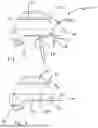
FIG. 14 is a diagram illustrating the features of the helmet of FIG. 7A.
DETAILED DESCRIPTION OF PREFERRED EMBODIMENTS
The helmet of the present invention has various capabilities including one or more of an alarm system, a lighting system, a sensing system, an imaging system, a communication system, and an identification system, specifically designed for mass casualty incidents (MCI).
A Mass Casualty Incident (MCI) essentially has three time components. The first component, i.e., the beginning, is what happens before the first responders arrive. The second component, i.e., the middle, is the actual response including triage, patient assessment, treatment, and transport of individuals from the scene to hospitals or other venues. The third or last component is the resolution of the MCI and the demobilization of the first responders and EMS professionals. During the middle component, when the first responders arrive, speed is of the essence, both in access to the injured as well as in treatment of the injured.
The helmet in accordance with some embodiments of the present invention enables a post analysis/evaluation of the scenario. Analysis of the MCI can be beneficial for several reasons: 1) to analyze the first responders'actions to determine where improvements can be made in future responses to MCI's; 2) to analyze the site to determine steps which can be taken to prevent future attacks; and 3) to analyze the site if it is a result of a human-induced event such as terrorist attack to locate the perpetrators (analogous to a crime scene investigation). In arriving at the scene, the focus of the first responders is rightfully on life saving steps and not evidence preservation and therefore unfortunately evidence can be lost if not collected initially as the first responders rapidly work to clear objects, move the injured, etc. However, the helmet of the present invention provides a way for the first responders, who are usually the first to arrive, to passively collect data (without distracting from the treatment efforts) to be shared with later arriving law enforcement officials before evidence is destroyed by the focus on triage. Further, by being worn on the head, the data collection is not interrupted since the helmet remains with the wearer/first responder. If separated, data/evidence could be lost.
As explained above, the present inventor's '801 publication tried to improve the response and impact of first responders but came up short in several respects. Although it provided many features, these were all contained in a bag or vest that was cumbersome to carry or wear, which had the drawbacks of user fatigue as well as increased the difficultly of passing through crowds to get to the target patients. These bags also were complex as they contained additional components, and had to be removed and opened for use. Further, the bags which contained the sensors, communication systems, alarm systems, etc. were removed by the user at the site and thus were no longer at the most desired/efficient location, i.e., became separated from the user. In fact, with the chaos at the site, the user could become too distant from the bag so the systems were no longer effectively usable and/or individuals or other obstructions could become between the bag and first responder, further detrimentally affecting the bag's technical capabilities. The bag could also be lost in the chaos at the scene. The vests were also complex and limited the first responder's mobility and needed to be removed to maximize use and efficiency. The inventor of the present application, recognizing these drawbacks, conceived/designed an improved first responder device/system which is worn by the user as a helmet to protect the first responder's head and has a uniquely placed alarm, signal, detection and communication features on the helmet itself which are strategically located to ease accessibility and activation by the wearer to improve patient outcomes at MCI's.
Referring now to the drawings wherein like reference numerals identify similar structural features of the devices disclosed herein, FIGS. 1-6 illustrate a first embodiment of the helmet of the present invention and FIGS. 7-13E illustrate an alternate embodiment of the helmet of the present invention. FIGS. 1-6 can be considered a more basic version and FIGS. 7-13E can be considered a more advanced version having all the features of the basic version of FIGS. 1-6 plus additional features. It should be understood that the present invention is not limited to these two specific embodiments of helmets as other versions of the helmet are also contemplated which can have one or more of the features of the helmets disclosed herein. That is, the helmet can have a combination of anywhere ranging from one of the features to all of the features described herein and be within the scope of the present invention.
FIG. 14 provides a diagram illustrating the various systems which can be incorporated into the emergency responder helmet of the present invention. These include a) a crowd/bystander alert system; b) a responder personal safety system; c) a responder tracking system; d) a visualization system; e) a communications system; and f) a data system. Each of these systems have various features that are described in detail below. It should be appreciated that the first responder helmet of the present invention can have fewer than all of the foregoing systems a-f, such as only a-c, only c & d, etc. and still provide advantages for MCT's treatment sites.
Turning first to the embodiment of FIGS. 1-6, the wearable responder helmet is designated generally by reference numeral 10 and has a base 12 and a module 14. The helmet 10 (base and module) is lightweight for user comfort but is made of sufficiently hard protective material to protect the wearer's head (forming part of the wearer protection system). Thus, it advantageously strikes a balance between lightweight (even with the systems provided therein/thereon) and protection. This is not only due to the material and helmet design but the due to the electronic components, including their placement on the helmet.
The module 14 as shown has a rim portion extending around a lower region of the base 12 and a front extension 14c extending upwardly and over the front portion of the base 12, either partially over or fully over the top portion. Thus, in these embodiments, it extends longitudinally along a top of base 12. A rubber material can be provided on portions of the module 14, e.g., on internal portions, or on a top portion which overlies the box, or the module 14 can itself be made of rubber material, to provide protection and added comfort to the wearer.
For increased comfort, a cushion of padding material 13 (see FIG. 5) is attached by straps or connectors 13a radiating outwardly from the material 13 to the inside of the helmet 10 which rests against the top of the wearer's head. Strap 16 is retained in hook 17 (FIG. 1) which extends from the helmet and can be attached either to the inside or outside of the helmet 10. Strap 16 is adjustable/tightenable around the wearer's chin to secure the helmet 10. The strap 16 in some embodiments can be stored inside the helmet 10 in a horizontal or folded/collapsed position so as not to protrude from the helmet 10 when not in use. A front flip up visor 18 forms part of the protection system to provide protection to the face and eyes while allowing quick access to the wearer's face to protect the face of the user. The visor 18 is pivotably/rotatably attached inside the helmet and is extendable downwardly from the front of the helmet 10. The visor 18 has a stored (flipped up) position wherein it is in a horizontal position as shown for example in FIG. 2 and a deployed (flipped down) position wherein it extends downwardly at an angle to the helmet 10 to protect the face of the wearer as shown for example in the front view of FIG. 4 and side view of FIG. 1. The visor 18 is made of clear/transparent (see through) material and is preferably pulled down manually by the wearer when desired and can be rotatably or hingedly attached inside (or alternatively outside) the helmet 10 so it can rotate between the extended and stored positions. Rear support of helmet 10 is designated by reference number 20.
In some embodiments, the base 12 and module 14 of helmet 10 are interchangeable. This enables coordination of teams as described below. This also enables replacement of the base 12 or module 14 if either is damaged, or if the electronics or any of the systems are not working. It also enables replacement of the module 14 or base 12 for other reasons. For example, modules having varying features/systems can be selected for attachment to the base 12, depending on the needs of the responder and the situation.
In other embodiments, the base 12 and module 14 are permanently affixed/attached. In still other embodiments, the base 12 and module 14 can be formed as one piece.
In the embodiment of FIGS. 1-6, the base 12 has a flashing alarm light 34 which forms part of the alert system. As shown, the alarm light 34 is in the form of a strip which extends around the base 12, i.e., it extends around the first side 12a (FIG. 2), around the rear and to the second (opposite side) 12b (FIG. 3). The strip 34 is shown located toward the top of the base 12 to improve visibility. Providing the strip 34 around both sides enables the alarm light 34 to be viewed from either side to alert other first responders as well as the injured and uninjured bystanders of the presence and location of the responders. The strip is configured to extend along a longitudinal length of the base (along a longitudinal axis L) and is in the form of a narrow band having a relatively short transverse dimension sufficient to provide enough flashing light indicator. It should be appreciated that other configurations and locations of the alarm light are also contemplated to provide an alert. Further, instead of a continuous strip, multiple strips can be provided. More than one flashing light is also contemplated. A flashing light on the module in addition to or instead of the flashing light on the base is also contemplated. Alternatively, a static light instead of a flashing light can be provided.
The strips 34 can be in the form of LED blinking lights which when activated provide a warning signal for spectators/non-essential personnel to disperse/clear to facilitate the first responder moving through crowds. Its visibility on the helmet, in one or more strips around the side and front surfaces of the helmet, either continuously or discontinuously, facilitates such crowd dispersion. Each strip 34 can have multiple lights. These flashing lights around the helmet indicate the presence of the first responder and facilitate clearing/parting crowds in an ambulance or emergency-like fashion. As the helmet is worn by the first responder during treatment at the MCI site, the blinking lights remain with the first responder.
The flashing light 34 is turned on by an activator (also referred to herein as an activating mechanism) in the form of an alarm light button 22 (or switch) of the alarm system which is easily accessible and conveniently positioned on the side of the module 14 and is connected via wires or alternatively via a wireless connection to the flashing light 34. A switch to change the flashing light to a static light is also contemplated. Adjacent the alarm light button 22 is an alarm activator in the form of an alarm sound button 24 (or switch) which activates the audible alarm emanating through one or more speakers 27 of the alarm system on the front of the module 14 toward the top of extension 14c. This audible alarm system forms part of the alert system along with the alarm light. The alarm helps clear crowds so facilitate the responder's access to the site. Note other speaker locations are also contemplated as well as a different number of speakers to provide an alert.
Note the terms activating mechanism and activator are used interchangeably herein.
In some embodiments such as that shown in FIGS. 1-6, the alarm light 34, actuated/activated via the alarm light button 22, and the alarm sound, activated/actuated via the alarm sound button 24, are independently actuable, i.e., the wearer can activate only the alarm light 34 without the alarm sound or alternatively activate only the alarm sound without the alarm light 34 or alternatively press both buttons 22, 24 to simultaneously activate both the alarm light and alarm sound. In alternate embodiments, the alarm light and alarm sound are linked so that a single activator, e.g., switch (button), could activate both the flashing light 34 and the alarm sound through speaker 27 at the same time. The buttons 22 and 24 are located on the side of the module 14 conveniently located for easy access by the user while wearing the helmet 10. They are also located toward a mid portion on the side/rim of the module 14, also for ease of access. As noted above, the alarm light 34 can be electrically connected to the actuation button 22 via a wired connection extending from the module 14 to the base 12, or alternatively, it can be connected via wireless connection. e.g., Bluetooth connection, Wi-Fi, cellular, z-wave, etc. Note that other button locations are also contemplated. (Such types of wireless connections can be used for the other systems described herein).
Remote actuation (remote from the helmet itself) is also another option within the scope of the present invention wherein the wearer can activate the alarm light and/or the alarm sound by a hand held device held by the wearer or other remote device carried by the wearer which is in wireless communication with the alert system. A remote device by a third party (not the wearer) to activate the alert system remotely is also contemplated.
Thus, the visible alert system, e.g., flashing light, can be beneficial in chaotic situations, helping signal a first responder's presence or indicate an urgent situation. The audible alert can be helpful in certain situations, especially where visible cues might be missed.
Also positioned on the side of the module 14 is a “team” color indicator LED 25 which forms part of the tracking system of the helmet as it serves as a responder identifier. In chaotic environments, quickly identifying team members can streamline operations and prevent friendly fire incidents.
The team indicator 25 can be located on both sides 14a and 14b of the module 14 as shown in FIGS. 2 and 3, respectively, to provide an identifier to other responders from either side, and the light provides visibility and identification at a distance. The indicators 25 providing team identification light(s) can be color coded for various teams that are attending to a situation by assigning different colors to different teams. In this manner, individuals on each team can be readily identified/located. Other lit up indicia, e.g., symbols, letters, etc., are also contemplated. The team identification enhances coordination and reduces confusion at the site. Being on the helmet worn by the first responder, this makes the first responder visible to teammates during the entire time at the site, including during patient treatment which enhances coordination and communication. Location on the helmet worn at the MCI also ensures the exact location of the first responder is known during the entire time at the site as compared to such indicators on removable bags. Such team indicators can also assist control at the command center.
Note the LED indicator 25 is shown as a rectangular shape but alternatively can be other shapes, other sizes, and/or placed in locations other than those shown. It could also alternatively be placed on the base 12. Multiple indicators 25 can also be provided as well as different types of lights. The helmet 10 could also include additional team indicators which can be placed on the module 14 or alternatively or additionally on the base 12. In the interchangeable embodiments wherein the module and base can be separated and another module or base attached as described above, individuals of a team can be reassigned via substitution of a different color coded module (or base). In some embodiments, individuals can also be reassigned by switching the color light within the module 14 (or base 12) to the desired team color.
A front working light 30 is provided on the front of the module 14 as part of the vision system of the helmet. In some embodiments, the beam angle is manually adjustable by the wearer to focus light where it is most needed. Along with the night vision camera (described below), it enhances visibility. One or more additional working lights can also be provided on the front or on other portions of the helmet module 14. The working light 30 in some embodiments is turned on manually, e.g., by a switch, by the user, such as by activation button positioned below or part of the light (e.g., by pressing light 30), but alternatively can be in other locations; in other embodiments it is automatically activated when the alarm light or sound button 22 or 24 is actuated. In other embodiments, it can be turned on by a wearer's hand held device or other remote device.
An environmental sensing unit 36 to evaluate air quality at the MCI can be included in the helmet 10 to provide an air quality readout of the ambient environment to provide a hazardous gas detection system. This forms part of the protection (safety) system of the helmet 10. The air quality sensor can measure various gasses in the surroundings such as LPG, methane, carbon monoxide (CO), hydrogen (H) and carbon dioxide (CO2) to determine if hazardous conditions are present, thereby protecting the first responder. Various sensors can be utilized to measure these gasses or other gasses in the atmosphere. Detecting hazardous gasses can be the difference between life and death, especially in fires, chemical spills or gas leaks. By provision in the helmet 10, these gasses can be detected as soon as the first responder wearing the helmet arrives near or at the site since the sensor is carried by the helmet and activated while worn. Provision as part of the wearable helmet 10 ensures that the readouts are at the location closest to the wearer and automatically follows with the wearer to protect the wearer as opposed to location in a separate accessory, such as a bag. In some embodiments, the sensor can be automatically activated as soon as the helmet is put on by the wearer; alternatively, a separate activator, e.g., a separate button or switch, can be provided to be activated by the wearer to turn on the gas sensor. An indicator light can be provided in the helmet to indicate that the gas sensor has been turned on. A warning light or sound is also contemplated if the sensor is no longer operating properly.
The helmet 10 in some embodiments can store data obtained from the gas/air quality sensors. The helmet can include a microcontroller in communication with the air quality sensors to receive signals from the sensors indicative of air quality and transmit signals to a display to provide a readout of gas levels on the display, thereby alerting the first responder of hazardous air conditions. This forms part of the data system of the helmet 10. In some embodiments, a display panel of the data obtained by the gas measurements can be provided in or on the helmet, such as on the visor or on an inside portion of the module 14 so it can be read in real time by the wearer, or in other embodiments, displayed on an outside portion of the helmet to be read by a member of the team or other individuals. Various displays can be provided which can include measured values of present gas and/or change in value, e.g., increase in values. Such value assessment can also be correlated with lapsed time to assess growing risk. The data obtained by the sensor measurements can be designed for display only at the site or alternatively or in addition, transmitted via wireless communication to a remote site such as other individuals of the team or a command center overseeing the MCI.
In some embodiments, an alarm indicator or other alert, visual and/or audible, can be provided on the helmet 10 which sets off automatically if the gas measurement exceeds a predetermined threshold, and/or a change in gas measurement over a preset amount of time exceeds a predetermined amount, to alert the wearer of such conditions. An alert can also be provided to indicate the sensor is not functioning properly. This forms part of the protection (safety) system of the helmet 10. Such indicators or alerts can also be sent to other first responders and/or a remote site such as a command center which can then send warnings to other first responders in the area.
As discussed above, in some embodiments, the wearer can manually turn on the environmental gas sensing system via an activator, e.g., an activation button or switch, when desired to evaluate the safety of the environment; in other embodiments, the environmental gas sensing system can automatically turn on when the alarm light button 22 and/or the alarm sound button 24 are turned on. In other embodiments, placement of the helmet on the wearer's head activates a switch to automatically turn on the gas sensing system so activation is passive rather than requiring an active step by the wearer.
A communications system having a long range communication module, identified generally by reference numeral 38, can be provided in helmet 10 (see also FIG. 13D). Effective communication is beneficial in emergencies, and the long range communication module 38 ensures first responders can receive vital information from command centers and/or other team members, even over long distances. In the illustrated embodiment, it is located at the rear of the helmet 10. In some embodiments, the communications systems can include a GPS chip mounted within the helmet 10, e.g., within the module 14, for tracking of the first responder's exact location during the entire time at the site, thus also forming part of the tracking system of the helmet 10. The location can be tracked by other individuals, e.g., other team personnel, or by a central command. In some embodiments, the communication system, e.g., WIFI communication, can include a transmitter so the first responder can communicate with other first responders at the site and/or the central command. Location of the transmitting and receiving features in the helmet 10 enhances communication as they are preferably adjacent the mouth and ears of the user, which limits the amount of external interference which can adversely affect audible and verbal communication.
The helmet 10 also preferably includes a rechargeable battery back 26 to power the electronics powering the helmet's features. The rechargeable and integrated battery ensures the helmet remains operational for extended periods. The battery back 26 is preferably removably mounted to the helmet 10 so it can easily be removed and replaced with another battery pack at the site and the removed battery pack 26 recharged at a later time for subsequent re-use. A charging input port can be provided to charge the batteries offsite, with the helmet removed, and can be plugged in via a cable to a standard electrical outlet. An indicator light, e.g., LED, can be provided to indicate the charging of the battery pack 26. An indicator light, e.g., LED, can also be provided to indicate the battery pack 26 is charged, and indicators can display the remaining charge.
In the embodiment of FIGS. 7A-13, the helmet 40 has the same features as helmet 10 plus the additional feature of a camera 32, which forms part of the vision system to assist the first responder since visibility can be compromised in many emergencies. The features/systems of helmet 40 which are the same as helmet 10 of the embodiment of FIGS. 1-6 are labeled with the same reference numerals as those of helmet 10 and for brevity are not repeated herein since the alarm system, lighting system, sensing system, tracking system, alert system, communication system, data system, etc., and their alternatives, described above with respect to helmet 10 are fully applicable to helmet 40.
The camera 32 of helmet 40 as shown in FIG. 10 is positioned on the front of the module 44 below the front light 30. Module 44 otherwise is the same as module 14 and can be interchangeable with the base 12, non-removably attached to the base or formed as one piece as described above with respect to module 14 and base 12 of FIG. 1. Top region 44a of module 44 overlies the base 12, extending from a front region rearwardly toward a rear region as it extends over the top in a similar manner as module 14. The camera 32 is preferably designed to provide wide angle viewing. The camera 42 is also suitable for night vision to assist the first responder in navigating dark or smoky environments, locating victims, and assessing the situations. Additional cameras, such as rear or side cameras could also be provided on the helmet 40 to provide a 360 degree viewing. The images can be transmitted in real time to another individual, e.g., a team member, or a central command center, thus forming part of the data system of the helmet 40. The photo and video data can also be stored by the imaging system for later viewing and/or stored in a remote storage device in communication with the imaging system. Recordation of the scene facilitates command operations real time/live use and enables post event evaluation and analysis. Images and data obtained can be utilized as a learning tool to improve outcomes in subsequent MCI's.
The helmet 40 can include, in addition to the side team indicators 25, indicators such as color LEDS, on the rear of the module 44, designated by reference numeral 46. This enables team identification from a 360 degree vantage point. Such additional team indicators can also be provided on helmet 10 and are not limited to helmet 40.
A switch can also be wired so it automatically turns on the camera 32 to activate the video monitoring. Thus, in some embodiments, instead of requiring the wearer to actively turn on the camera, when the siren and lights of the alert system are activated, it also automatically turns on the video monitoring, i.e., camera 32. In this way, the wearer/user (first responder) does not have to take an active step to initiate the surveillance at the scene, thereby eliminating the possibility of the user mistakenly forgetting to activate the surveillance camera, thus avoiding the forgoing disadvantages such as loss of evidence, reduced evaluation of the scene, etc. This passive activation ensures data collection which otherwise would be lost.
In some embodiments, the helmets described herein can be designed with a master switch wired with the various features which would simultaneously turn on one or more of the alarm light, alarm sound, team indicator, camera, hazardous gas detector sensor and/or other features. In other embodiments, various activators/switches can be provided to turn on one or more select features. In still other embodiments, an overall system power button on the interior or exterior of the helmet can be provided which turns the system on and off, i.e., enables activation of the various features via initiation of the electronics which could be the various switches for the systems or the master switch in the embodiments where provided. That is, for example, once the system is actuated by turning on the on-off switch, the wearer (first responder) has the option of independently activating select features, e.g., actuating the alarm light button 22 or alarm sound button 24 or simultaneously pressing/activating both buttons 22, 24. Such initiation switch, if utilized, would prevent premature activation of the systems of the helmet. This will also preserve battery life.
In the alternate embodiment of the system without the initiation requirement, an initial on-off switch does not need to be actuated in order to activate the other features, e.g., the alarm sound (siren) and lights. In these embodiments, the user selects when to activate each of the various features which enables the user to control the select capabilities of the helmet. Although this does not have the advantage of automatic actuation, it provides the user with more selective control of the helmet features as compared to a master switch for multiple functions.
In the helmets described herein, the activators, e.g. buttons or switches, can have indicia to provide an easy to identify label on the helmet. The activators can be provided in locations other than those shown in the drawings but are preferably positioned where they are easily actuable and accessible to the wearer and do not affect wearer comfort. The activators also preferably configured to not add excessive weight or bulk to the helmet so as not to decrease comfort and not to increase fatigue associated with a heavier helmet.
Note that in preferred embodiments, the lights utilized with the systems are LEDS, however, it is also contemplated that other types of lighting can be utilized. The lights could be controlled by a microcontroller in the helmet which can be programmed to change light color, change to a static light, change to a blinking light pattern, alter the cadence of the blinking light, etc. A different number of lights and different locations and configurations are also contemplated. The microcontroller can also control the speakers, e.g., control volume, tone, pattern, etc.
The microprocessor can also control the surveillance camera, e.g., control settings, image data storage, data transmission to remote sites, e.g., central command, etc. Note more than one microprocessor/microcontroller could be provided to control the alarm system, lighting systems, communications systems, tracking systems, data systems and/or imaging systems. The battery pack 38 can power the controller(s) or an additional battery can be utilized.
Wires can be provided within the helmet module for connection of microcontroller(s) to the camera, lights and/or siren as described herein. The various systems of the helmet, e.g., the alert system, safety system, tracking system, vision system, communications system and data system, can be placed in the module or the base of the helmet and the activation switches can be placed in the module or base, communicating via wired or wireless connection. Thus, for example, an activator and its output (alarm, light, sensing, imaging, etc.) can be provided on the module or alternatively provided on the base or alternatively the activator could be positioned on one of the base or module and the output could be positioned on the other of the base or module.
The helmets (base and module) are sufficiently lightweight to minimize fatigue as the first responder moves from person to person in the triage environment at the multiple-casualty incident.
The helmets of the present invention are produced in compliance with NFPA1951 and NFPA1971 standards.
As can be appreciated, the helmets of the present invention effectively address current challenges/barriers in emergency action. Emergencies with limited/low visibility hinder the responders'assessment, victim location and hazardous navigation.
The helmets of the present invention empower heroes on the front lines, redefining emergency response for paramedics, safety marshals, and military personnel, delivering real-time communication, safety features, and collaboration tools to ensure faster response, enhanced patient care, and seamless teamwork in the mission or operation.
The helmets of the present invention provide protection against head injuries, improved visibility and situation awareness and increased communication and collaboration capabilities.
Different models of the helmets of the present invention are contemplated, each having a different number of the features discussed herein. By way of example, first model could have an alarm light, alarm speaker, front working light, team color LEDs and a rechargeable battery pack; an advanced model could have all the first model features plus a flip up visor, camera suitable for night vision, hazardous gas detection sensor and a long range communication module.
Although the apparatus and methods of the subject disclosure have been described with respect to preferred embodiments, those skilled in the art will readily appreciate that changes and modifications may be made thereto without departing from the spirit and scope of the present disclosure as defined by the appended claims.
Additionally, persons skilled in the art will understand that the elements and features shown or described in connection with one embodiment may be combined with those of another embodiment without departing from the scope of the present invention and will appreciate further features and advantages of the presently disclosed subject matter based on the description provided.
Throughout the present invention, terms such as “approximately,” “generally,” “substantially,” and the like should be understood to allow for variations in any numerical range or concept with which they are associated. For example, it is intended that the use of terms such as “approximately” and “generally” and “substantially” should be understood to encompass variations on the order of 25%, or to allow for manufacturing tolerances and/or deviations in design.
Although terms such as “first,” “second,” “third,” etc., may be used herein to describe various operations, elements, components, regions, and/or sections, these operations, elements, components, regions, and/or sections should not be limited by the use of these terms in that these terms are used to distinguish one operation, element, component, region, or section from another. Thus, unless expressly stated otherwise, a first operation, element, component, region, or section could be termed a second operation, element, component, region, or section without departing from the scope of the present disclosure.
Each and every claim is incorporated as further disclosure into the specification and represents embodiments of the present disclosure. Also, the phrases “at least one of A, B, and C” and “A and/or B and/or C” should each be interpreted to include only A, only B, only C, or any combination of A, B, and C.
Claims
1. A lightweight first responder helmet wearable by a first responder to facilitate treatment of injured people at a mass casualty incident, the helmet comprising:
a) a base;
b) a module positionable on a head of the first responder;
c) a visor positionable at a front of the helmet to protect eyes and face of the first responder;
d) an alert system to alert bystanders of the presence of the helmet wearer; and
e) at least one activating mechanism actuable by the wearer to activate the alert system.
2. The helmet of claim I, further comprising a data system to collect and store data obtained at the mass casualty incident, wherein the data system automatically gathers data when the helmet is activated.
3. The helmet of claim 2, wherein the at least one activating mechanism comprises an alert activator to turn on the alert system, wherein the alert system comprises one or both of a visible flashing light and an audible alarm.
4. The helmet of claim 3, wherein the flashing light is in the form of a strip extending around the base of the helmet.
5. The helmet of claim 3, wherein the at least one activating mechanism includes an alarm activator to turn on an audible alarm of the alert system, the alarm is on a side of the module and is electrically connected to one or more speakers on the module.
6. The helmet of claim 3, wherein an alert activator for the flashing light and an alarm activator for the alarm button are independently actuable, and the alert activator for the flashing light and the alarm activator for the alarm button are positioned on a side of the helmet at a mid portion thereof.
7. The helmet of claim 1, wherein the module and base are interchangeable such that the module can be removed from the base and replaced with another module attachable to the base.
8. The helmet of claim 1. further comprising a tracking system to facilitate locating the first responder, wherein the tracking system comprises a team indicator to identify and track the first responder on a same first responder team.
9. The helmet of claim 8, wherein the module is interchangeable so individuals of the first responder team can be reassigned via substitution of a different module with a different team indicator or substitution of a different base with a different team indicator.
10. The helmet of claim 1, further comprising a visualization system, wherein the visualization system comprises a front working light, the front working light being manually adjustable to adjust a beam angle.
11. The helmet of claim 1, further comprising a protection system, wherein the protection system comprises an environmental sensing unit, the sensing unit measuring one or more gas levels to thereby evaluate air quality in the first responder surroundings.
12. The helmet of claim 11, wherein placement of the helmet on the head of a wearer activates a switch to automatically turn on the sensing unit.
13. The helmet of claim 11, further comprising a display viewable by the first responder while the helmet is worn by the first responder, the helmet further including a microcontroller in communication with the sensing unit to receive signals from the sensor indicator and transmit signals to provide a readout of one or more gas levels on the display thereby alerting the first responder of hazardous air conditions.
14. The helmet of claim 13, wherein the gas levels reading are transmitted by a microcontroller to a remote site.
15. The helmet of claim 13, further comprising a data system to collect and store data obtained at the mass casualty incident, wherein the data system includes collecting data of one or both of measured gas levels and changes in gas levels over a period of time, the data collected being stored for future reference.
16. The helmet of claim 15, wherein the protection system further comprises an alarm if the gas level measurement or change in value of gas levels over a period of time exceeds a predetermined threshold, wherein the alarm is one or both of a visual or audible alarm.
17. The helmet of claim 1, further comprising a rechargeable battery pack to power electronics in the helmet, the battery pack being removably mounted to the helmet.
18. The helmet of claim 1, further comprising a data system to collect and store data obtained at the mass casualty incident and a visualization system, wherein the visualization system includes a camera with night vision capabilities and the data system includes data collected and stored by the camera.
19. The helmet of claim 18, further comprising a protection system including an environmental sensing unit to analyze environmental parameters, a visualization system including an adjustable light and a camera and a communication system including transmitting and receiving features.
20. The helmet of claim 18, wherein the helmet includes an activation switch, wherein turning on the activation switch automatically tums on the camera so data is automatically collected without requiring an additional activation by the first responder.
21. The helmet of claim 1, wherein the system includes an activation switch, wherein the activation switch enables activation of a) an audible alarm or the alert system; and b) enables activation of a flashing light of the alert system, wherein upon turning on the activation switch, the wearer can select one of only turning on the audible alarm, only turning on the flashing light or turning on both the audible alarm and flashing light simultaneously.
Images & Drawings included:



Sources:
- United States Patent and Trademark Office - verify current appl. status at the USPTO↗
Recent applications in this class:
- » 20260108005 2026-04-23
System, Method, and Apparatus for Detecting IR Radiation in a Marker System - » 20250185745 2025-06-12
Snowboard Tracking Helmet Device - » 20250169562 2025-05-29
POWER AND DATA RETROFIT FOR HELMET SIDE RAIL SYSTEM - » 20240407494 2024-12-12
System, Method, and Apparatus for Detecting IR Radiation in a Marker System - » 20230397686 2023-12-14
System, method, and apparatus for detecting IR radiation in a marker system - » 20230397685 2023-12-14
SYSTEMS AND METHODS OF A SMART HELMET - » 20230337776 2023-10-26
Intelligent helmet device and method of operating the same - » 20230263255 2023-08-24
RUGBY HEADGEAR EVALUATION SYSTEM AND METHOD - » 20220175072 2022-06-09
Safety Headwear with Electronic Monitoring - » 20220142283 2022-05-12
Head-mounted device, heat stroke prevention system, and rehydration warning system