HELMET
US20260114535A1
2026-04-30
19/157,364
2024-03-08
Smart Summary: A helmet has a special energy-absorbing insert inside it to help protect the head. It also has a foam liner with a space designed to hold this insert securely. The foam liner includes vents to allow air to flow, keeping the wearer cool. A protective layer covers these vents, so the insert cannot be seen from the outside. This design helps keep the helmet safe and effective while looking neat. 🚀 TL;DR
Abstract:
Helmet (1) comprising: at least a cellular energy-absorbing insert (2); a foam liner (3) comprising at least one recess (4) shaped to accommodate the at least one cellular energy-absorbing insert (2); the foam liner (3) also comprises at least one vent (6); a continuous protective layer (10) that crosses the at least one vent (6) and closes the vent/s (6) such that the at least one cellular energy-absorbing insert (2) is not visible from outside the helmet (1) through the vent (6).
Assignee:
- GEORGE TFE SCP 13 Monaco, Monaco
Applicant:
Interested in similar patents?
Get notified when new applications in this technology area are published.
Classification:
A42B3/064 » CPC main
Helmets; Helmet covers ; Other protective head coverings; Parts, details or accessories of helmets; Impact-absorbing shells, e.g. of crash helmets with reinforcing means using layered structures with relative movement between layers
A42B3/124 » CPC further
Helmets; Helmet covers ; Other protective head coverings; Parts, details or accessories of helmets; Linings; Cushioning devices with at least one corrugated or ribbed layer
A42B3/128 » CPC further
Helmets; Helmet covers ; Other protective head coverings; Parts, details or accessories of helmets; Linings; Cushioning devices with a padded structure, e.g. foam with zones of different density
A42B3/283 » CPC further
Helmets; Helmet covers ; Other protective head coverings; Parts, details or accessories of helmets; Ventilating arrangements; Air ducting systems Air inlets or outlets, with or without closure shutters
A42B3/06 IPC
Helmets; Helmet covers ; Other protective head coverings; Parts, details or accessories of helmets Impact-absorbing shells, e.g. of crash helmets
A42B3/12 IPC
Helmets; Helmet covers ; Other protective head coverings; Parts, details or accessories of helmets; Linings Cushioning devices
A42B3/28 IPC
Helmets; Helmet covers ; Other protective head coverings; Parts, details or accessories of helmets Ventilating arrangements
Description
TECHNICAL FIELD
The present invention relates to the field of helmets with cellular energy-absorbing structures. In particular, the present invention relates to helmets using layered structures.
BACKGROUND ART
In the state of the art some helmet solutions using cellular energy-absorbing structures are known. These kinds of structures have excellent properties in terms of impact energy absorption with respect to traditional polymeric foam materials. Despite this, the foam allows to obtain fascinating shapes and is still easier to mould with respect to the cellular structures. Therefore, many solutions employing these kinds of energy-absorbing structures combine the use of foam liners and cellular structures.
An example in this sense is disclosed in the patent U.S. Pat. No. 10,834,987. This document relates to a helmet comprising a plurality of cellular liners that are retained within respective recesses of a polymer foam shell without the necessity of using additional fasteners or adhesive. Substantially, the cellular liner of this document is sized to fit snug within the recess. Despite the cellular liner being retained in the foam shell, during an oblique impact to the helmet, the cellular liner tends to slide over a barrier layer attached to the polymer shell and simultaneously it in-plane compresses. When the cellular liner crosses an air vent of the foam liner, the cells of the cellular liner tend to enter inside it and to get stuck into the vent, thus increasing the risk of a brain torque in the wearer. Indeed, the sliding of the cellular liner can abruptly interrupt, with serious implications in term of safety for the wearer.
The patent EP34731122B1 partially solves this problem through vent openings that are chamfered to allow an energy absorbing insert in a cycling helmet to not stop in a vent opening and to slide with a limited restriction.
The patent U.S. Pat. No. 10,736,373B2 describes how the vents, in a helmet comprising a foam liner and cellular inserts, can be arranged with respect to the recesses in which the cellular inserts are retained. This document does not refer to the interaction between vent and cellular insert during an impact.
A further solution is known in the state of the art and described in the document WO2008085108A1. In this solution, the air vents of the helmet are blind holes. The air passages in the helmet of this solution are branched to avoid pass-through holes in the helmet, which make the helmet less safe to penetration.
The document U.S. Pat. No. 5,937,446A describes a helmet having a dual layer outer shell, which partially cover the vents from outside, while permitting an incoming air flow through the vents. The document U.S. Pat. No. 10,834,987B1 describes a helmet having a plastic film arranged inside a cavity of the helmet that is completely open in correspondence of ventilation openings that run through the helmet from outside to inside.
SUMMARY
Said and other drawbacks of the state of the art are now solved by a helmet comprising: at least a cellular energy-absorbing insert; a foam liner comprising at least one recess shaped to accommodate the at least one cellular energy-absorbing insert. The foam liner also comprises at least one vent. The at least one vent is closed by a continuous protective layer such that the at least one cellular energy-absorbing insert is not visible from outside the helmet through the vent. The protective layer crosses the at least one vent. The closure of the vent prevents an airflow through the vent/s. In this manner the helmet is more comfortable during the cold season. Moreover, being the cellular energy-absorbing insert not visible from outside, the external aspect of the helmet is beautified and more uniform. Furthermore, a closed vent allows to achieve higher performance in penetration safety. Moreover, the manufacturer can mould only one type of foam liner and use it for both not-ventilated and ventilated helmets, allowing to diversify offer while keeping manufacturing costs low.
Advantageously, the cellular energy-absorbing insert can comprise a plurality of interconnected open cells configured to absorb energy by plastic deformation in response to a longitudinal compressive load applied to said cells. This kind of cellular material provides excellent results in terms of energy-absorption and is very light weight.
In particular, each cell can comprise a tube having a sidewall/s and a longitudinal axis, and the cells are connected to each other through their sidewalls. This feature enables the production of a sheet of interconnected side-by-side cells.
Advantageously, the protective layer can be attached to the foam liner in correspondence of bottom/s of said recess/es. The protecting layer contributes to facilitate the relative sliding of cellular energy-absorbing insert over the foam liner and to prevent the cellular energy-absorbing insert to sink in the foam liner.
In particular, the protective layer can be also attached to sidewall/s of said recess/es. In this manner even the insertion/extraction of the cellular energy-absorbing insert, during assembly or disassembly, is facilitated.
Preferably, the protective layer can be a sheet layered over the recess of the foam liner. Alternatively, the film can be easily attached, for example with an adhesive, to the bottom of the recess.
The protective layer crosses the at least one vent, protecting the wearer's head from any object that can enter in the air vent. The continuous protective layer that closes the vent/s allows a sliding of the cellular energy-absorbing insert relative to the foam liner without the risk that cells of the cellular insert jam in the vent.
The helmet can also comprise at least one plug shaped to fill the air vent. The plug closes the air vent improving the performance of the helmet in term of penetration. Moreover, being the vent/s closed, the risk that the cellular energy-absorbing insert enters and stop in the vent/s is prevented.
Advantageously, the cellular energy-absorbing insert can have synclastic properties. This feature makes the cellular energy-absorbing insert spherically deformable without distortion of cells. In this way, the cellular energy-absorbing insert can be realized as a flat sheet that is subsequently curved and inserted in the recess.
Preferably, the cellular energy-absorbing insert can be configured to provide an improved shock absorbing protection as compared with the foam liner. The cellular energy-absorbing insert has higher performance in term of energy absorption than the foam liner. Moreover, being independent from the foam liner, the cellular energy-absorbing insert can be arranged in specific areas of the helmet for improving the protection of certain parts of the wearer's head.
In particular, the foam liner can be made of a polymeric expanded foam. This material makes the foam liner easy to be manufactured and moulded.
These and other advantages will be better understood thanks to the following description of different embodiments of said invention given as non-limitative examples thereof, making reference to the annexed drawings.
DRAWINGS DESCRIPTION
In the drawings:
FIG. 1 shows a schematic cross-sectional view of a helmet according to the present invention;
FIG. 2 shows a schematic cross-sectional view of another helmet according to the present invention;
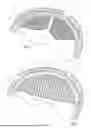
FIG. 3 shows an isometric view of a first type of cellular energy-absorbing insert according to the present invention;
FIG. 4 shows an isometric view of a second type of cellular energy-absorbing insert according to the present invention.
DETAILED DESCRIPTION
The following description of one or more embodiments of the invention refers to the annexed drawings. The same reference numbers indicate equal or similar parts. The object of the protection is defined by the annexed claims. Technical details, structures or characteristics of the solutions here-below described can be combined with each other in any suitable way.
In the following the term “cellular energy-absorbing insert” can be abbreviated with the term “cellular insert”.
With the reference number 1 is represented a helmet according to the present invention.
The helmet 1 comprises an outer foam liner 3, preferably made of a polymeric expanded foam like EPS or EPP. The helmet 1 also comprises one or more cellular inserts 2 arranged in respective recesses 4 of the foam liner 2. The helmet 1 depicted in FIG. 1 comprises more cellular inserts 2, while the helmet 1 depicted in FIG. 2 comprises one cellular insert 2.
Terms “outer” and “inner” refer to an ideal direction that goes from the cavity 13 of the helmet 1 wherein the head of the wearer can be positioned to the outside of the helmet 1.
Each recess 4 is shaped so as to hold a respective cellular insert 2. To make it possible, the outer face of the cellular insert 2 is larger than the inner face of the cellular insert 2 and the mouth of the recess 4 is stricter than the bottom of the recess 4. Moreover, the shape of the recess 4 is substantially complementary to the shape of the corresponding cellular insert 2, as shown in FIGS. 1,2.
The foam liner 3 comprises vents 6, thus passages that extend through the foam liner's thickness, as shown in FIGS. 1,2.
The cellular insert 2 is made of a plurality of interconnected open cells 7. These cells 7 are configured to absorb energy by plastic deformation in response to a longitudinal compressive load, thus an out-of-plane compression.
Each cell 7 creates a tube having a sidewall and a longitudinal axis.
The cells 7 are interconnected via their sidewalls 8. A bonding agent can keep the cells 7 joined together. The cells 7 can be welded to each other via a partial melting of their sidewalls 8. Alternatively, the cells 7 can be bonded by means of adhesive layers (not shown) interposed between adjacent sidewalls 8.
The cellular insert 2 can be realized from a flat sheet of interconnected cells 7 that subsequently is curved. The flat sheet of cells 7, as shown in FIGS. 3,4, is like a tile/brick of interconnected cells 7 having parallel longitudinal axes. For obtaining the shape of the cellular insert 2, the flat sheet is firstly cut according to a specific shape and secondly is curved. The flat sheet has normally a constant thickness.
The flat sheet of cells 7 can be curved via thermoforming or manually if it has synclastic properties. The flat sheet of cells 7 of FIGS. 3,4 can thus assume a single-curved shape or a double-curved shape.
The cells 7 can be cylindrical tubes, as in FIGS. 1,4. The tubes depicted in FIGS. 1,4 have a circular cross-section. Alternatively, cells 7 can comprise sidewalls 8 bonded together to form tubes having other shapes. In particular, the cross-section of the cells/tubes 7 can be a square, a hexagon, a non-uniform hexagon, a re-entrant hexagon, a chiral truss, a diamond, a triangle.
In the example of FIGS. 2,3, the cells 7 have an arrowhead shape. This kind of shape of cells 7 exhibits synclastic properties. Therefore, the sheet of cells 7 can be spherically curved with hands. Vice versa, the cylindrical cells 7 do not exhibit synclastic properties, therefore the curved shape of the cellular insert 2 is achieved by thermoforming the flat sheet.
The thickness of the sheet of cells 7 from which the cellular insert 2 is obtained can be between 15 and 40 mm.
When the cells 7 have a circular cross-section, the outer diameter of the circular cross-section can range between 2.5 and 8 mm, and the wall thickness of said cells 7 can range between 0.05 and 0.3 mm. According to these dimensional values, the energy absorption and the weight of cellular insert 2 is optimized.
The helmet 1 comprises a protective layer 10 arranged on the inner surface of the foam liner 3. In particular, the protective layer 10 is arranged on the surface of the recess 4.
The protective layer 10 can be a film attached, or otherwise layered, to the bottom of the recesses 4.
The protective layer 10 can be made of a low-friction material, like PTFE, polycarbonate or polyamide, for facilitating a relative translation between the cellular insert 2 and the foam liner 3.
When a helmet 1 undergoes an oblique impact, the cellular insert 2 tends to slide over the protective layer 10. The term “oblique impact” means an impact comprising both a normal component and a tangential component. Terms “normal” and “tangential” make reference to the outer surface of the helmet 1.
When the helmet 1 impacts an object, the helmet 1 is subject to a load that can tend to rotate the helmet 1 and with it the head of the wearer, that is attached to the helmet 1 through a retaining system (not shown). Despite this, the cellular insert 2 slides over the protective layer 10 attached to the foam liner 3. Therefore, a part of the helmet 1 rotates under the load, while the cellular insert 2 in-plane compresses absorbing the tangential component of the load and transferring less impact energy to the wearer's head.
If an outer shell 12 is present, the vent 6 also crosses the outer shell 12.
The vents 6 can lie in correspondence of the recesses/es 4 or not. The helmet 1 can also comprise vents 6 lying outside the perimeter of the recess/es 4 (not shown). In this case, these vents run from the outer to the inner surfaces of the helmet 1. In order to prevent the airflow, the vents 6 are closed. This closure of the vent/s 6 is configured so to make the cellular insert 2 non-visible from outside. This means that of each cell 7 of the cellular insert 2 is not entirely distinguishable through the vents 6 if someone observes the helmet 1 from the outside.
The protective layer 100 extends all over the bottom of recess/es 4, therefore crossing the aperture of the vent/s 6.
The plug are preferable inserted in the vents 6 from the inner cavity 13 before the cellular insert 2 is arranged in the recess 4, so that the cellular insert 2 keeps in position the plugs. Alternatively, the plug can be stuck in the vent 6. Otherwise, the plug can be bigger than the vent 6 and made of a material that is softer than the foam of the foam liner 3. In this way, the plug can be compressed and inserted in the vent 6 so that its subsequent expansion holds the plug in the vent 6.
Moreover, the vent 6 is blind and an eventual object that enters in the vent 6 is stopped by the plug.
This restriction of the vents 6 is particularly suitable for winter season and consequently for ski helmets. In this manner, the helmet is warmer and more comfortable during the cold season.
Concluding, the invention so conceived is susceptible to many modifications and variations all of which fall within the scope of the inventive concept, furthermore all features can be substituted to technically equivalent alternatives. Practically, the quantities can be varied depending on the specific technical requirements. Finally, all features of previously described embodiments can be combined in any way, so as to obtain other embodiments that are not herein described for reasons of practicality and clarity.
Legend of Reference Signs
-
- 1 helmet
- 2 cellular energy-absorbing insert
- 3 foam liner
- 4 recess
- 6 vent
- 7 cell
- 8 sidewall (of cell)
- 10 protective layer
- 11 sidewall (of recess)
- 12 outer shell
- 13 cavity (for wearer's head)
Claims
1. A helmet comprising:
at least a cellular energy-absorbing insert;
a foam liner comprising at least one recess shaped to accommodate the at least one cellular energy-absorbing insert; the foam liner also comprises at least one vent;
a protective layer that crosses the at least one vent and being a continuous protective layer closes the vent/s such that the at least one cellular energy-absorbing insert is not entirely distinguishable from outside the helmet through the vent.
2. The helmet according to claim 1, wherein the cellular energy-absorbing insert comprises a plurality of interconnected open cells configured to absorb energy by plastic deformation in response to a longitudinal compressive load applied to said cells.
3. The helmet according to claim 2, wherein each cell comprises a tube having sidewall/s and a longitudinal axis, and the cells are connected to each other through their sidewalls.
4. The helmet according to claim 1, wherein the protective layer is attached to the foam liner in correspondence of bottom/s of said recess/es.
5. The helmet according to claim 4, wherein protective layer is a sheet layered over the recess of the foam liner.
6. The helmet according to claim 1, wherein cellular energy-absorbing insert has synclastic properties.
7. The helmet according to claim 1, wherein the cellular energy-absorbing insert is configured to provide an improved shock absorbing protection as compared with the foam liner.
8. The helmet according to claim 1, wherein the foam liner is made of a polymeric expanded foam.
Images & Drawings included:


Sources:
- United States Patent and Trademark Office - verify current appl. status at the USPTO↗
Similar patent applications:
- » 20190045875
Protective Helmets, Protective Helmet Components and Methods for Manufacturing Protective Helmets, Including Protective Helmets Having an Enlargeable Bell Opening - » 20230346064
SUPPORT RAIL FOR ATTACHMENT OF HELMET ACCESSORY TO A HELMET, AS WELL AS HELMET ACCESSORY, SUPPORT SYSTEM AND HELMET - » 20240415224
HELMET, PARTICULARLY CYCLING HELMET COMPRISING SPACERS TO REDUCE MECHANICAL LOCKING OF OPPOSING LAYERS OF THE HELMET, AND HELMET WITH REDUCED GEOMETRICAL LOCKING - » 20180098593
Helmet strap, helmet, and method of manufacturing a helmet strap - » 20160292520
Helmet wearing determination method, helmet wearing determination system, helmet wearing determination apparatus, and program - » 20180213874
Helmet, liner for a helmet, comfort padding for a helmet and connector - » 20070033029
NOISE CANCELLATION HELMET, MOTOR VEHICLE SYSTEM INCLUDING THE NOISE CANCELLATION HELMET, AND METHOD OF CANCELING NOISE IN HELMET - » 20050117754
Active noise cancellation helmet, motor vehicle system including the active noise cancellation helmet, and method of canceling noise in helmet - » 20130212785
MOVEMENT DEVICE FOR A HELMET FOR MOVING A FIRST ELEMENT OF THE HELMET WITH RESPECT TO A SECOND ELEMENT OF THE HELMET - » 20130167289
Helmet and helmet element for use in a helmet
Recent applications in this class:
- » 20260114534 2026-04-30
HELMET - » 20260076435 2026-03-19
Hard Hat with Impact Protection Materials - » 20260026568 2026-01-29
HELMET - » 20260000144 2026-01-01
PROTECTIVE APPAREL AND HELMET - » 20250351912 2025-11-20
Helmet Safety System - » 20250275601 2025-09-04
CONNECTOR - » 20250275600 2025-09-04
CONNECTOR AND APPARATUS - » 20250234953 2025-07-24
HELMET - » 20250120469 2025-04-17
HELMET FOR IMPACT PROTECTION - » 20250089837 2025-03-20
CONNECTOR
Recent applications for this Assignee:
- » 20260114534 2026-04-30
HELMET - » 20260108006 2026-04-23
HELMET - » 20250031796 2025-01-30
HELMET - » 20240275421 2024-08-15
PROTECTIVE CASE FOR MOBILE DEVICE - » 20240239254 2024-07-18
Headrest - » 20240051440 2024-02-15
CHILD SAFETY SEAT - » 20230373427 2023-11-23
Rollcage protection - » 20230302983 2023-09-28
Headrest - » 20230097278 2023-03-30
Protective shell for mobile device - » 20230097084 2023-03-30
Body-protector