Truly Tamper-evident Container
US20260116634A1
2026-04-30
19/417,034
2025-12-11
Smart Summary: A new type of container is designed to show if it has been tampered with. It has special features inside the cap, like color-changing materials and RFID chips, which can be seen through a clear cap or window. These features help identify any tampering, making it especially useful for personal care, medicine, and consumer products. The evidence of tampering is visible before purchase, ensuring safety for the buyer. Overall, this container provides a reliable way to ensure products are secure and untouched. 🚀 TL;DR
Abstract:
A comprehensive tamper-evident container incorporates cap-internal safeguards from the references and adds advanced internal features in the clear cap, such as color-changing agents and embedded RFID chips in adhesives, visible through the clear cap or a clear window in the container body. These detect subtle tampering, especially for personal care, pharmaceutical, and consumer goods, distinguishing from external prior art, with all evidence confined to the clear cap or a window in the container body for pre-purchase visibility.
Applicant:
Interested in similar patents?
Get notified when new applications in this technology area are published.
Classification:
B65D55/026 » CPC main
Accessories for container closures not otherwise provided for; Locking devices; Means for discouraging or indicating unauthorised opening or removal of closure initial opening or unauthorised access being indicated by a visual change using indicators other than tearable means, e.g. change of colour, pattern or opacity
B65D41/3428 » CPC further
Caps, e.g. crown caps or crown seals, i.e. members having parts arranged for engagement with the external periphery of a neck or wall defining a pouring opening or discharge aperture; Protective cap-like covers for closure members, e.g. decorative covers of metal foil or paper; Caps or cap-like covers with lines of weakness, tearing-strips, tags, or like opening or removal devices, e.g. to facilitate formation of pouring openings; Threaded or like caps or cap-like covers provided with tamper elements formed in, or attached to, the closure skirt with flexible tabs, or elements rotated from a non-engaging to an engaging position, formed on the tamper element or in the closure skirt the tamper element being integrally connected to the closure by means of bridges
B65D55/028 » CPC further
Accessories for container closures not otherwise provided for; Locking devices; Means for discouraging or indicating unauthorised opening or removal of closure initial opening or unauthorised access being indicated by the presence or absence of an audible or electrical signal
B65D55/02 IPC
Accessories for container closures not otherwise provided for Locking devices; Means for discouraging or indicating unauthorised opening or removal of closure
B65D41/34 IPC
Caps, e.g. crown caps or crown seals, i.e. members having parts arranged for engagement with the external periphery of a neck or wall defining a pouring opening or discharge aperture; Protective cap-like covers for closure members, e.g. decorative covers of metal foil or paper; Caps or cap-like covers with lines of weakness, tearing-strips, tags, or like opening or removal devices, e.g. to facilitate formation of pouring openings Threaded or like caps or cap-like covers provided with tamper elements formed in, or attached to, the closure skirt
Description
CROSS-REFERENCE TO RELATED APPLICATIONS
This application is a Continuation-In-Part of U.S. patent application Ser. No. 18/175,901, filed on Feb. 28, 2023, now U.S. Patent Application Publication No. 2024/0051070 A1, which is a continuation-in-part of U.S. patent application Ser. No. 16/810,240, filed on Mar. 5, 2020, now U.S. Pat. No. 11,618,621, issued on Apr. 4, 2023. The disclosures, including the specifications, drawings, and claims, of U.S. Pat. No. 11,618,621 and U.S. Patent Application Publication No. 2024/0051070 A1 (corresponding to U.S. application Ser. No. 18/175,901) are hereby incorporated by reference in their entirety. This continuation-in-part application adds new matter relating to advanced tamper-evident safeguards integrated internally within the clear container cap, including color-changing agents in adhesives, embedded electronic chips (e.g., RFID/NFC) in tapes, and related mechanisms not disclosed in the incorporated parent applications. These new features extend the tamper-evident protection to detect sophisticated tampering attempts, such as adhesive disruption or environmental breaches, for products in personal care, pharmaceutical, and consumer goods areas, while distinguishing from external or non-adhesive-based systems in prior art to avoid infringement. All safeguards are located inside the clear cap, visible through the transparent cap material, ensuring customers can detect tampering before purchase without opening the container.
STATEMENT REGARDING FEDERALLY SPONSORED RESEARCH OR DEVELOPMENT
Not Applicable
REFERENCE TO A SEQUENCE LISTING, A LARGE TABLE, OR A COMPUTER PROGRAM LISTING APPENDIX ON READ-ONLY OPTICAL
Not Applicable
BACKGROUND OF THE INVENTION
The background of the invention is as described in the incorporated U.S. Pat. No. 11,618,621 and U.S. Patent Application Publication No. 2024/0051070 A1. To supplement, while the incorporated references provide robust tamper-evident safeguards internal to a clear cap to prevent sabotage at the dispensing end, vulnerabilities remain in detecting subtle tampering, such as partial adhesive disruption or environmental exposures that do not fully break visible elements. Existing prior art, such as color-changing labels (e.g., as in U.S. Pat. No. 5,022,545) or RFID tags (e.g., as in U.S. Patent Application Publication No. 2002/0135481), often focuses on external applications or non-integrated electronics, which can be bypassed or do not provide real-time, irreversible internal indication visible through clear components. The new matter addresses these gaps with advanced internal safeguards, such as color-changing adhesives and chip-embedded tapes, that are inaccessible externally and integrate seamlessly with the adhesive-based system of the incorporated references, ensuring comprehensive protection without overlapping with external mechanisms in other patents. All safeguards are positioned within the clear cap for visibility.
BRIEF SUMMARY OF THE INVENTION
In summary of the invention for the cap-based embodiments is as described in the incorporated U.S. Pat. No. 11,618,621 and U.S. Patent Application Publication No. 2024/0051070 A1.
In accordance with new embodiments disclosed herein and not present in the incorporated references or known prior art, the container assembly includes advanced tamper-evident safeguards integrated internally within the clear container cap, inaccessible from the exterior without damage. These include: a color-changing agent (80) embedded in the internal adhesive (e.g., gummy glue 62 or tape 46) that irreversibly alters color (e.g., from clear to red) upon disruption, exposure to air, pressure, or solvents, visible through the clear cap (12); an embedded electronic chip (82), such as RFID or NFC, integrated into the internal tape (46) or adhesive (62) that disables or signals tampering upon break, detectable via external scanner; and combinations thereof. These mechanisms are designed to be internal to the cap and trigger only upon specific tampering events, such as flipping or twisting the cap open, mirroring the internal cap safeguards of the incorporated references but enhanced for electronic and chemical detection, to cover tampering vectors not addressed therein, such as subtle adhesive alterations or remote verification, while avoiding external RFID labels or standalone color films that could infringe on patents like U.S. Patent Application Publication No. 2016/0275769 or U.S. Pat. No. 5,022,545. The non-clear solid container body ensures no visibility into the body, with all tamper evidence confined to the clear cap.
Advantages over the incorporated references and prior art include:
-
- (o) Irreversible color changes for visual confirmation of subtle tampering, visible through the clear cap.
- (p) Electronic detection via chips for remote or automated verification, integrated in the cap.
- (q) Non-infringing integration by embedding in internal adhesives visible through clear caps.
- (r) Enhanced market dominance through comprehensive, multi-modal tamper evidence in the cap.
BRIEF DESCRIPTION OF THE DRAWINGS
The drawings from U.S. Pat. No. 11,618,621 (FIGS. 1A-7B) and U.S. Patent Application Publication No. 2024/0051070 A1 (FIGS. 11-14) are incorporated by reference herein.
New figures for the added matter:
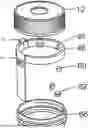
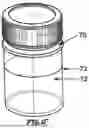
FIG. 15: Side elevational view of the container illustrating the clear body portion (70) and internal body tape (72).
FIG. 16: Perspective view of the container showing the breakaway body band (74) integrated within the body.
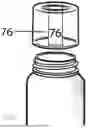
FIG. 17: A bottom plan view of the container depicting the clear window (78) and internal indicator strip (76).
FIG. 18: A cross-sectional view showing the body tape (72) in an intact state and a broken state upon deformation.
FIG. 19: Front view of the container illustrating the indicator strip (76) in a changed state after tampering.
FIG. 20 is a cross-sectional view of the cap showing the color-changing agent (80) embedded in the gummy glue (62), in intact and altered states.
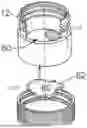
FIG. 21 is an exploded view of the cap internal tape (46) with embedded RFID chip (82).
DRAWINGS—REFERENCE NUMERALS
The numeral parts list from the incorporated U.S. Pat. No. 11,618,621 and U.S. Patent Application Publication No. 2024/0051070 A1 is adopted herein, including but not limited to:
-
- 10: Container body
- 12: Container cap
- 14: Lid
- 18: Hinge
- 22: Plateau
- 26: Vertical tube
- 46: Tape
- 50: Body neck
- 60: Inner wall of cap
- 62: Gummy glue
- 66: Mouth cover
- 84: Screw Thread
New numeral parts added for the new matter:
-
- 70: Clear body portion—a transparent section integrated into the body wall for internal visibility (located on the side or bottom of body 10).
- 72: Internal body tape—an embedded frangible tape adhered internally to the body wall, designed to break upon tampering (positioned within clear portion 70).
- 74: Breakaway body band—an internal frangible band molded within the body circumference (located mid-body within 10).
- 76: Internal indicator strip—a sensitive strip that alters upon tampering (located beneath clear window 78).
- 78: Clear window—a transparent inset in the body for viewing the indicator strip (located on the bottom or side of 10).
- 80: Color-changing agent—an embedded material in adhesive or tape that irreversibly changes color upon tampering (integrated into 62 or 46 inside cap 12).
- 82: Embedded electronic chip—an RFID/NFC chip integrated into internal tape or adhesive for electronic detection (embedded in 46 or 62 inside cap 12).
DETAILED DESCRIPTION OF THE INVENTION
The detailed description of the embodiments from U.S. Pat. No. 11,618,621 and U.S. Patent Application Publication No. 2024/0051070 A1 is incorporated by reference herein.
FIG. 15 illustrates a side elevational view of the container, highlighting the clear body portion (70) integrated into the non-clear container body (10) and the internal body tape (72) positioned within it. In this embodiment, the clear body portion (70) serves as a transparent section molded or inserted into the side or bottom of the container body (10), allowing visual inspection of internal components without compromising the overall opacity of the body. The internal body tape (72) is a frangible adhesive strip adhered to the inner wall of the container body (10) within the clear portion (70), designed to break or distort upon tampering, such as puncture or deformation of the body. A person of ordinary skill in the art can manufacture this by injection molding the container body (10) with a transparent polymer (e.g., PET or polycarbonate) for portion (70) during co-molding, then applying the tape (72) using standard adhesive techniques (e.g., pressure-sensitive acrylic adhesives) post-molding. The best mode involves using a brittle polymer tape for (72) with a break strength of 5-10 psi, ensuring it fractures visibly under minimal tampering force, integrated with the cap safeguards for comprehensive protection.
FIG. 16 presents a perspective view of the container, showing the breakaway body band (74) integrated within the container body (10). The breakaway body band (74) is an internal frangible ring molded circumferentially mid-body within (10), engineered to fracture upon lateral pressure or impact indicative of tampering. This band is co-molded using a weaker polymer (e.g., thin polystyrene layer) embedded in the main body material (e.g., HDPE), creating a predetermined failure point. Upon deformation, the band (74) snaps, producing an audible or visible break viewable through any adjacent clear portions or by feel. Skilled artisans can implement this by dual-injection molding, where the band material is injected into a groove during body formation. The best mode uses a band thickness of 0.5-1 mm with perforations for controlled fracture, enhancing detection when combined with cap features.
FIG. 17 depicts a bottom plan view of the container illustrating the clear window (78) in the container body (10) and the internal indicator strip (76) beneath it. The clear window (78) is a transparent inset (e.g., acrylic disk) sealed into the bottom or side of the body (10), providing a viewing portal to the indicator strip (76), a sensitive material strip that alters (e.g., changes color or texture) upon tampering. The strip (76) is adhered under the window (78) and responds to environmental changes like moisture or oxygen ingress. To make this, insert-mold the window (78) into the body base, then apply the strip (76) using lamination. A person of ordinary skill can use oxygen-sensitive inks for (76), with the best mode employing irreversible hydrochromic materials that turn from white to blue upon exposure, calibrated for detection thresholds of 1-5% oxygen increase.
FIG. 18 shows a cross-sectional view demonstrating the body tape (72) in both intact and broken states upon deformation. In the intact state, the tape (72) spans the inner wall within the clear window (78) or the clear body portion (70); in the broken state, it fragments, indicating tampering. This view illustrates how external force deforms the body (10), rupturing the tape (72). Fabrication involves adhering the tape post-molding with epoxy, designed to fail at 10-20 psi. The best mode uses scored tape for predictable breaking, visible through (70), allowing ordinary skilled practitioners to replicate for enhanced body integrity checks.
FIG. 19 provides a front view of the container, illustrating the indicator strip (76) in a changed state after tampering, visible through the clear window. Post-tampering, the strip (76) alters (e.g., color shift or pattern disruption), signaling breach. The window ensures visibility without body transparency. To construct, embed the strip (76) during assembly and seal the window with ultrasonic welding. Skilled artisans can use chemosensitive polymers for (76), with the best mode incorporating pH-sensitive dyes that change irreversibly upon contaminant exposure, optimized for rapid response (under 30 seconds).
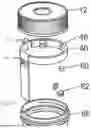
FIG. 20 depicts a cross-sectional view of the clear container cap (12), showing the color-changing agent (80) embedded in the gummy glue (62) in both intact and altered states. The gummy glue (62) is applied as a viscous, adhesive layer (e.g., silicone-based or acrylic polymer) along the inner surface to seal the cap to the body neck upon assembly. In the intact state (upper portion of the figure), the color-changing agent (80) is dispersed uniformly within the glue (62) as microencapsulated particles, appearing clear or neutral. Upon tampering—such as applying torque to twist or flip the cap open—the mechanical stress ruptures the microcapsules, releasing the agent and triggering an irreversible color change (e.g., from clear to red), as shown in the altered state (lower portion). This change is visible externally through the transparent cap material without removal. Each element works as follows: the cap (12) provides structural housing and visibility; the gummy glue (62) acts as the embedding matrix, formulated with 10-30 wt % agent for optimal sensitivity; the color-changing agent (80) utilizes leuco dye chemistry (e.g., crystal violet lactone with bisphenol A developer), where rupture allows protonation and quinoid formation for permanent coloration. To make this, mix the agent into the glue during extrusion or dispensing, apply to the cap inner wall via automated spraying, and cure at 50-80° C. for 10-30 minutes. Testing shows activation at 5-15 Nm torque, common for cap opening, enabling skilled artisans to replicate using equipment like adhesive dispensers from Nordson or Graco. The best mode uses thermochromic leuco dyes for added heat sensitivity, ensuring detection of stealth tampering attempts like heating the cap.
FIG. 21 shows an exploded view of the clear container cap (12), illustrating the internal tape (46) with the embedded RFID chip (82). The cap (12) is exploded to reveal its components: the tape (46) is a thin, frangible adhesive strip (e.g., polyester or paper-based, 0.1-0.5 mm thick) adhered to the inner wall (60) or mouth cover (66), with the RFID chip (82) integrated as a passive transponder (e.g., UHF RFID tag with antenna). In operation, the tape (46) spans the cap's sealing area; opening the cap fractures the tape and chip, deactivating the RFID signal (e.g., from readable to null response when scanned). This electronic change, combined with potential physical distortion of the tape visible through the clear cap, alerts to tampering. Each element functions as: the cap (12) houses and protects while allowing visibility; the tape (46) provides the frangible carrier, scored for controlled break; the chip (82) enables wireless detection via external NFC/RFID reader (e.g., at 13.56 MHz or 860-960 MHz). Manufacturing involves laminating the chip onto the tape during roll-to-roll processing, then affixing to the cap with pressure-sensitive adhesive. Skilled practitioners can use standard RFID embedding tools (e.g., from Avery Dennison), with assembly taking 1-5 seconds per unit in automated lines. The best mode embeds a tamper-loop antenna in the chip (82) for signal loss upon 2-5 mm stretch, integrated with color agents for dual verification.
The new matter extends the internal tamper-evident principles of the incorporated cap safeguards to advanced features within the clear cap (12), providing multi-modal protection against tampering not covered in the references or prior art like external color labels or standalone RFID. The color-changing agent (80), such as leuco dyes or thermochromics, is embedded in the gummy glue (62) or tape (46), adhered internally to the cap (as shown in FIG. 20, with leader lines to 80 in intact and altered states). Upon disruption (e.g., cap flipping, twisting, unscrewing, or puncture), it irreversibly changes color due to exposure or pressure, visible through the clear cap without opening, distinguishing from external changes in prior art.
The embedded electronic chip (82), such as a passive RFID or NFC transponder, is integrated into the tape (46) or glue (62) (FIG. 21, exploded view with leader to 82), designed to irreversibly fracture or deactivate upon tampering, enabling electronic verification via scanner while remaining internal and invisible externally.
Manufactured by embedding agents/chips during adhesive application or co-molding, these enable skilled artisans to produce secure containers, distinct from external systems to avoid infringement.
The best mode combines these cap internals (color/RFID) with incorporated features for complete, market-dominating protection, where opening the cap breaks or distorts the safeguards visible through the clear cap. The container may have a clear body portion (70) or a clear window (78) into the container body but the vast majority of the time the clear cap will be utilized by the customer.
The color-changing agent (80) operates based on established chemical principles to provide irreversible tamper evidence visible through the clear cap (12). For leuco dye embodiments, the agent comprises a colorless leuco form (e.g., crystal violet lactone or fluoran derivatives) encapsulated with a developer (e.g., bisphenol A or phenolic acids) and a solvent. Upon cap opening or tampering, mechanical disruption breaks the microcapsules, allowing protonation and formation of a colored quinoid structure, resulting in a permanent hue shift (e.g., from colorless to blue or red). This chemistry is tuned for sensitivity to pressures of 5-50 psi, typical of cap manipulation, ensuring detection without false positives from normal handling.
For thermochromic variants, the agent uses leuco dyes with temperature-sensitive solvents (e.g., long-chain alcohols melting at 30-60° C.). Heat from friction during tampering melts the solvent, separating components and triggering an irreversible color change via oxidation or polymerization stabilizers, preventing reversion. This distinguishes from reversible thermochromics in prior art (e.g., U.S. Pat. No. 5,022,545 external labels) by being internal and one-way.
Photochromic agents employ spiropyran or naphthopyran compounds that isomerize under UV (290-400 nm) from spiro to merocyanine form. Tampering exposes the agent to ambient light, locking the colored state via matrix entrapment or quenchers, visible through the cap for pre-purchase inspection.
Embedding occurs during adhesive application: mix 5-20 wt % agent into gummy glue (62) or tape (46) under inert atmosphere to prevent premature activation, then apply to inner cap wall (60). This enables skilled artisans to replicate using commercial materials (e.g., from Chromatic Technologies Inc. or Atlanta Chemical Engineering), with stability testing showing >2-year shelf life at room temperature.
The best mode uses a hybrid leuco-photochromic agent in gummy glue (62) with RFID chip (82) in tape (46), providing dual visual/electronic verification upon cap opening, maximizing tamper detection for store customers.
Color-Changing Agent Chemistry Explanation
Color-changing agents used in tamper-evident systems like those in my C-I-P application are based on specific chemical principles that allow for irreversible or reversible changes in response to stimuli (e.g., heat, light, pressure, or chemical exposure). These agents are typically organic compounds or formulations embedded in adhesives or materials.
Leuco Dyes
Chemistry: Leuco dyes are colorless (leuco form) precursors that convert to a colored form upon reaction with an acid or developer. They are often encapsulated in microcapsules within inks or adhesives. When the microcapsule breaks (e.g., due to tampering like opening the cap), the leuco dye mixes with a color developer (e.g., phenolic acids or bisphenol A), forming a colored complex via protonation. This is an irreversible process in tamper-evident designs, as the reaction doesn't revert without specific conditions.
Mechanism in Tamper Detection: In the gummy glue (62) or tape (46), disruption exposes the dye to air or pressure, triggering the color change (e.g., from clear to red). This is common in security inks, where microcapsules ensure the change is permanent and visible through the clear cap.
Examples/Applications: Used in thermal printing (like receipts) and tamper-evident labels. Patents like US20150064419A1 describe two-part leuco dye systems in inks for security, where breaking the seal mixes components for color development.
Thermochromic Materials:
Chemistry: These are temperature-sensitive compounds, often leuco dyes combined with a developer and a solvent (e.g., alcohols or fatty acids) in a microencapsulated form. At low temperatures, the mixture is solid, keeping the dye colored; heating melts the solvent, separating the dye and developer, turning it colorless (or vice versa). For tamper-evident uses, irreversible formulations use non-reversible phase changes or chemical reactions.
Mechanism in Tamper Detection: In my application, heat from tampering (e.g., friction during cap opening) causes an irreversible shift visible through the clear cap. This detects attempts like heating to loosen adhesives without visible damage.
Examples/Applications: Employed in smart packaging for temperature monitoring. Literature from sources like the NIH (PMC10007136) discusses leuco-dye-based thermochromics in adhesives, where UV resistance and stability are key for long-term tamper indication.
Photochromic Agents:
Chemistry: These compounds undergo structural changes upon UV light exposure. Common types include spiropyrans or naphthopyrans, which isomerize from a closed (colorless) spiro form to an open (colored) merocyanine form under UV. In tamper-evident designs, this is made irreversible by trapping the colored form or using one-way reactions.
Mechanism in Tamper Detection: Tampering exposes the agent to UV (e.g., if the cap is opened in light), causing a permanent color shift visible through the clear cap. This is useful for detecting subtle openings in lit environments like stores.
Examples/Applications: Patents like EP2484537A2 describe photochromic dyes in seals for security documents. Research from ACS Omega (ACS Publications) highlights photochromic films for anti-counterfeiting, where UV triggers irreversible changes for high-security labels.
These agents are safe for consumer products (non-toxic formulations exist) and can be tuned for sensitivity. For patentability, emphasizing irreversibility and integration into adhesives distinguishes from reversible prior art.
Claims
1. A tamper-evident container comprising the features as claimed in U.S. Pat. No. 11,618,621 and U.S. Patent Application Publication Number 2024/0051070 A1, further comprising an internal tamper-evident safeguard integrated within the clear container cap, inaccessible externally without damage, wherein the safeguard includes an indicator visible through the transparent cap and configured to irreversibly alter upon cap tampering, such as flipping or twisting open.
2. The container of claim 1, wherein the safeguard comprises a color-changing agent embedded in an internal adhesive that alters hue upon disruption or exposure.
3. The container of claim 2, wherein the color-changing agent is a leuco dye or thermochromic material integrated into gummy glue, changing from clear to colored upon air exposure.
4. The container of claim 1, wherein the safeguard comprises an embedded electronic chip in an internal tape that disables upon tampering for electronic detection.
5. The container of claim 4, wherein the chip is an RFID or NFC transponder fracturing upon adhesive break, detectable externally without visual alteration.
6. The container of claim 1, wherein the indicator alters to show tampering before purchase, visible through the clear cap.
7. The container of claim 1, wherein the safeguard combines color-changing and electronic elements in the same internal adhesive.
8. The container of claim 2, wherein the color-changing agent reacts via protonation to form a permanently colored complex.
9. The container of claim 3, wherein the thermochromic material uses microencapsulated leuco dyes with solvents melting at 30-60° C. for irreversible change.
10. The container of claim 1, further comprising a clear body portion integrated into the non-clear container body and an internal body tape positioned within the clear body portion, the internal body tape configured to break upon tampering.
11. The container of claim 1, further comprising a breakaway body band integrated within the container body, the breakaway body band configured to fracture upon deformation.
12. The container of claim 1, further comprising a clear window in the container body and an internal indicator strip beneath the clear window, the indicator strip configured to alter upon environmental changes indicative of tampering.
13. A method of making a tamper-evident container, comprising forming a container as described in the incorporated references, and embedding a color-changing agent in an internal cap adhesive.
14. The method of claim 13, further comprising integrating an RFID chip into the adhesive tape.
15. The container of claim 2, wherein the color change is triggered by pressure exceeding a threshold.
16. The container of claim 4, wherein the chip signals via signal loss upon partial adhesive disruption.
17. The container of claim 2, wherein the color-changing agent is photochromic and activates upon UV exposure due to tampering.
18. A tamper-evident system comprising cap-internal adhesives with color-changing agents and chips.
19. The container of claim 1, wherein the indicator alters based on environmental breach, such as solvent exposure.
20. The container of claim 7, wherein the combined safeguard provides both visual color change and electronic signal for dual verification, with all elements in the clear cap.
Images & Drawings included:


Sources:
- United States Patent and Trademark Office - verify current appl. status at the USPTO↗
Similar patent applications:
- » 20210276770
Truly tamper-evident container - » 20250051070
Truly tamper-evident container
Recent applications in this class:
- » 20260062187 2026-03-05
Tamper-Evident Container with Integrated Environmental Sensors for Storing and Monitoring Fine Wines - » 20250242985 2025-07-31
CONTAINER TAMPER DETECTION CAPSULE, CONTAINER LID AND CAPSULE AND LID PRODUCTION PROCESSES - » 20250051070 2025-02-13
Truly tamper-evident container - » 20240400275 2024-12-05
SYSTEMS AND METHODS FOR INDICATING TAMPERING OF A CONTAINER - » 20230227224 2023-07-20
Tamper evident bottle finish and cap assembly - » 20230182978 2023-06-15
Tamper-evident seals for containers - » 20220411148 2022-12-29
Devices, systems, and methods for sensing the opening of pharmaceutical bottles - » 20220250815 2022-08-11
TAMPER-EVIDENT RECLOSABLE PACKAGES - » 20220242632 2022-08-04
Anti-counterfeiting structure and packaging box having the same - » 20220097935 2022-03-31
PACKAGE AND CLOSURE WITH TAMPER-EVIDENT BAND