COMPOUND, COMPOSITION, SURFACE TREATMENT AGENT, ARTICLE, AND METHOD FOR MANUFACTURING ARTICLE
US20260117092A1
2026-04-30
19/429,560
2025-12-22
Smart Summary: A new compound has been developed that can create a special layer on surfaces to help remove fingerprints easily. This compound is made up of different chemical parts that work together to form the layer. It includes hydrocarbon groups and linking groups that connect various components. The technology can be used on different materials to improve their cleanliness and appearance. Overall, it offers a practical solution for keeping surfaces looking clear and free of smudges. 🚀 TL;DR
Abstract:
A new compound and related technologies useful for forming a surface-treated layer having an excellent fingerprint removal property on a substrate are provided. The compound is represented by Formula (1) {T-L1-(Si(R2)2—O)m-Si(R2)2-L2}p-X. T may be (R1)3Si—; R1 may be a hydrocarbon group; L1 may be —O—; R2 is a hydrocarbon group; L2 may be a single bond; X may be -L3-A-(Si(R)nL3-n)q; L3 may be —C(R4)3-p—; R4 and R5 may be hydrogen atoms; A is a linking group having a valence of (q+1); L4 may be an aromatic-ring group having a valence of (p+q); L5 may be a single bond; R is a hydrocarbon group; L may be a hydrolyzable group; m is a number of 1 or greater; n is an integer of 0 to 2; p is 2 or 3; and q is an integer of 1 or greater.
Assignee:
- AGC Inc. 1,268 🇯🇵 Tokyo, Japan
Applicant:
Interested in similar patents?
Get notified when new applications in this technology area are published.
Classification:
C09D183/08 » CPC main
Coating compositions based on macromolecular compounds obtained by reactions forming in the main chain of the macromolecule a linkage containing silicon, with or without sulfur, nitrogen, oxygen, or carbon only; Coating compositions based on derivatives of such polymers; Polysiloxanes containing silicon bound to organic groups containing atoms other than carbon, hydrogen, and oxygen
C03C17/30 » CPC further
Surface treatment of glass, not in the form of fibres or filaments, by coating with organic material with silicon-containing compounds
C07F7/1804 » CPC further
Compounds containing elements of Groups 4 or 14 of the Periodic System; Silicon compounds; Compounds having one or more C—Si linkages; Compounds having one or more C—Si linkages as well as one or more C—O—Si linkages Compounds having Si-O-C linkages
C08G77/38 » CPC further
Macromolecular compounds obtained by reactions forming a linkage containing silicon with or without sulfur, nitrogen, oxygen or carbon in the main chain of the macromolecule; Polysiloxanes Polysiloxanes modified by chemical after-treatment
C09D5/1675 » CPC further
Coating compositions, e.g. paints, varnishes or lacquers, characterised by their physical nature or the effects produced ; Filling pastes; Antifouling paints; Underwater paints characterised by the film-forming substance; Synthetic film-forming substance Polyorganosiloxane-containing compositions
C09D183/06 » CPC further
Coating compositions based on macromolecular compounds obtained by reactions forming in the main chain of the macromolecule a linkage containing silicon, with or without sulfur, nitrogen, oxygen, or carbon only; Coating compositions based on derivatives of such polymers; Polysiloxanes containing silicon bound to oxygen-containing groups
C03C2217/76 » CPC further
Coatings on glass; Properties of coatings Hydrophobic and oleophobic coatings
C03C2218/151 » CPC further
Methods for coating glass; Deposition methods from the vapour phase by vacuum evaporation
C07F7/18 IPC
Compounds containing elements of Groups 4 or 14 of the Periodic System; Silicon compounds; Compounds having one or more C—Si linkages Compounds having one or more C—Si linkages as well as one or more C—O—Si linkages
C09D5/16 IPC
Coating compositions, e.g. paints, varnishes or lacquers, characterised by their physical nature or the effects produced ; Filling pastes Antifouling paints; Underwater paints
Description
INCORPORATION BY REFERENCE
This application is based upon and claims the benefit of priority from Japanese patent application No. 2023-103355, filed on Jun. 23, 2023, and PCT application No. PCT/JP2024/022682 filed on Jun. 21, 2024, the disclosure of which is incorporated herein in its entirety by reference.
BACKGROUND
In recent years, there has been a demand for a technique for preventing the surface of an article from being stained with dirt such as fingerprints, and a technique for facilitating the removal of dirt such as fingerprints in order to improve properties of the article such as its appearance and visibility. As a specific method, a method for treating the surface of an article by using a surface treatment agent is known.
For example, International Patent Publication No. WO2023/017830 discloses a silane compound having a specific siloxane group used in such a surface treatment agent.
SUMMARY
The inventors of the present invention formed a surface-treated layer by using the silane compound disclosed in International Patent Publication No. WO2023/017830, and have found that it is necessary to further improve its fingerprint removal property.
The present disclosure has been made in view of the above-described circumstances, and a problem to be solved by an embodiment according to the present invention is to provide a new compound and a new composition useful as a surface treatment agent capable of forming a surface-treated layer having an excellent fingerprint removal property on a substrate.
Another problem to be solved by an embodiment according to the present invention is to provide a surface treatment agent capable of forming a surface-treated layer having an excellent fingerprint removal property on a substrate.
Another problem to be solved by an embodiment according to the present invention is to provide an article including a surface-treated layer having an excellent fingerprint removal property and a method for manufacturing such an article.
The present disclosure includes the below-shown aspects.
[1]
A compound represented by Formula (1)
-
- where T is each independently (R1)3Si—, a monovalent cyclic polysiloxane residue, or a monovalent cage-like polysiloxane residue,
- R1 is each independently a hydrocarbon group or a trialkylsilyloxy group,
- L1 is each independently —O— or an alkylene group,
- R2 is each independently a hydrocarbon group,
- L2 is each independently a single bond, an alkylene group, or —O—,
- X is -L3-A-(Si(R)nL3-n)q or -L4-(L5-Si(R)nL3-n)q,
- L3 is —C(R4)3-p—, —Si(R5)3-p—, an aromatic-ring group having a valence of (p+1), or an alicyclic ring group having a valence of (p+1),
- R4 and R5 are each independently a hydrogen atom or a hydrocarbon group,
- A is a linking group having a valence of (q+1);
- L4 is an aromatic-ring group having a valence of (p+q) or an alicyclic ring group having a valence of (p+q),
- L5 is a single bond or a divalent linking group,
- R is each independently a hydrocarbon group,
- L is each independently a hydrolyzable group, a group having a hydrolyzable group, or a hydroxyl group,
- m is a number of 1 or greater,
- n is an integer of 0 to 2,
- p is 2 or 3, and
- q is an integer of 1 or greater.
[2]
The compound described in Item [1], wherein X is -L3-A-(Si(R)nL3-n)q.
[3]
The compound described in Item [1] or [2], wherein L3 is —Si(R5)3-p—.
[4]
The compound described in any one of Items [1] to [3], wherein q is 1 to 4.
[5]
The compound described in any one of Items [1] to [4], wherein m is 2 to 600.
[6]
A composition comprising a compound described in any one of Items [1] to [5], and a liquid medium.
[7]
A surface treatment agent comprising a compound described in any one of Items [1] to [5].
[8]
A surface treatment agent comprising a compound described in any one of Items [1] to [5], and a liquid medium.
[9]
A method for manufacturing an article including a surface-treated layer formed on a substrate by performing a surface treatment on the substrate by using the surface treatment agent described in Item [7].
An article comprising a substrate, and a surface-treated layer disposed on the substrate, a surface of the surface-treated layer being treated with the surface treatment agent described in Item [7].
[11]
The article described in Item [10], wherein the article is an optical member.
[12]
The article described in Item [11], wherein the article is a display or a touch panel.
[13]
A method for manufacturing an article including a surface-treated layer formed on a substrate by performing a surface treatment on the substrate by using the surface treatment agent described in Item [8].
[14]
An article comprising a substrate, and a surface-treated layer disposed on the substrate, a surface of the surface-treated layer being treated with the surface treatment agent described in Item [8].
[15]
The article described in Item [14], wherein the article is an optical member.
[16]
The article described in Item [15], wherein the article is a display or a touch panel.
According to an embodiment of the present invention, it is possible to provide a new compound and a new composition useful as a surface treatment agent capable of forming a surface-treated layer having an excellent fingerprint removal property on a substrate.
According to an embodiment of the present invention, it is possible to provide a surface treatment agent capable of forming a surface-treated layer having an excellent fingerprint removal property on a substrate.
According to an embodiment of the present invention, it is possible to provide an article including a surface-treated layer having an excellent fingerprint removal property and a method for manufacturing such an article.
The above and other objects, features and advantages of the present disclosure will become more fully understood from the detailed description given hereinbelow.
DESCRIPTION OF EMBODIMENTS
A numerical value range specified by using “-” in the specification of the present disclosure includes numerical values before and after “-” as a lower limit value and an upper limit value, respectively, of the range.
In numerical ranges described in a stepwise manner in the present specification, the upper or lower limit value of one numerical range may be replaced with the upper or lower limit value of another numerical range described in a stepwise manner. Further, in numerical ranges described in a stepwise manner in the present specification, the upper or lower limit value of a numerical range may be replaced with values shown in Examples.
In the specification of the present disclosure, the “surface-treated layer” refers to a layer that is formed on the surface of a substrate by a surface treatment.
In this specification, when a compound or a group is represented by a specific formula (X), the compound or the group represented by this formula (X) may be expressed as a compound (X) or a compound X, and a group (X) or a group X, respectively.
In this specification, Me represents a methyl group.
The bonding direction of a divalent group shown in the specification of the present disclosure is not limited to any particular directions unless otherwise specified. For example, when Y is —COO— in a compound represented by a formula “X—Y—Z”, Y may be —CO—O— or —O—CO—. Further, the aforementioned compound may be “X—CO—O—Z” or “X—O—CO—Z”.
[Compound]
A compound according to the present disclosure is a compound represented by Formula (1) (which will be described later).
When a compound according to the present disclosure is used, a surface-treated layer having an excellent fingerprint removal property can be formed. Although details of this reason are not clear, it is presumed as follows.
It is presumed that by containing a plurality of groups each of which is represented by T-L1-(Si(R2)2—O)m—Si(R2)2-L1 in Formula (1) (which will be described later), the density of hydrocarbon groups having low surface free energy (e.g., methyl groups) on the surface increases, so that the compound exhibits oil repellency and hence fingerprints can be easily removed by wiping the surface.
Further, when a compound according to the present disclosure is used, a surface layer that also has excellent abrasion resistance and excellent water repellency can be formed. Although details of this reason are not clear, it is presumed as follows.
It is presumed that-Si(R)nL3-n contained in X in Formula (1) (which will be described later) was strongly chemically bonded to the substrate, so that a surface-treated layer having excellent abrasion resistance was obtained. Further, it is presumed that since the compound 1 contained a siloxane bond, a surface-treated layer having excellent water repellency was obtained.
A compound according to the present disclosure will be described hereinafter in detail.
<Compound Represented by Formula (1)>
In Formula (1),
-
- T is each independently (R1)3Si—, a monovalent cyclic polysiloxane residue, or a monovalent cage-like polysiloxane residue.
- R1 is each independently a hydrocarbon group or a trialkylsilyloxy group,
- L1 is each independently —O— or an alkylene group,
- R2 is each independently a hydrocarbon group.
- L2 is each independently a single bond, an alkylene group, or —O—,
- X is -L1-A-(Si(R)nL3-n)q or -L4-(L5-Si(R)nL3-n)q,
- L3 is —C(R4)3-p—, —Si(R5)3-p—, an aromatic-ring group having a valence of (p+1), or an alicyclic ring group having a valence of (p+1),
- R4 and R5 are each independently a hydrogen atom or a hydrocarbon group,
- A is a linking group having a valence of (q+1);
- L4 is an aromatic-ring group having a valence of (p+q) or an alicyclic ring group having a valence of (p+q),
- L1 is a single bond or a divalent linking group,
- R is each independently a hydrocarbon group,
- L is each independently a hydrolyzable group, a group having a hydrolyzable group, or a hydroxyl group,
- m is a number of 1 or greater,
- n is an integer of 0 to 2,
- p is an integer of 2 or greater, and
- q is an integer of 1 or greater.
In Formula (1), T is each independently (R1)3Si—, a monovalent cyclic polysiloxane residue, or a monovalent cage-like polysiloxane residue.
Examples of the hydrocarbon group represented by R1 include an aliphatic hydrocarbon group and an aromatic hydrocarbon group. In particular, the hydrocarbon group is preferably an aliphatic hydrocarbon group and more preferably an alkyl group. The alkyl group may be any of a linear alkyl group, a branched alkyl group, or a cyclic alkyl group, and is preferably a linear alkyl group. The number of carbon atoms of the alkyl group is preferably 1 to 10, more preferably 1 to 6, and still more preferably 1 to 4. The hydrocarbon group represented by R1 is more preferably a methyl group, an ethyl group, an n-propyl group, or an n-butyl group, and still more preferably a methyl group.
The alkyl group contained in the trialkylsilyloxy group represented by R1 may be any of a linear alkyl group, a branched alkyl group, or a cyclic alkyl group, and is preferably a linear alkyl group. The number of carbon atoms of the alkyl group contained in the trialkylsilyloxy group represented by R1 is preferably 1 to 10, more preferably 1 to 6, and still more preferably 1 to 4. The alkyl group contained in the trialkylsilyloxy group represented by R1 is more preferably a methyl group, an ethyl group, an n-propyl group, or an n-butyl group, and still more preferably a methyl group.
The plurality of R1 may be the same as each other or different from each other, and are preferably the same as each other in view of the ease of the manufacturing.
Examples of the group represented by (R1)3Si— include a methyldiethylsilyl group, a methylethylpropylsilyl group, a methylethylbutylsilyl group, a methyldipropylsilyl group, a methylpropylbutylsilyl group, a methyldibutylsilyl group, a dimethylethylsilyl group, a dimethylpropylsilyl group, a dimethylbutylsilyl group, a trimethylsilyl group, a triethylsilyl group, a tri-n-propylsilyl group, a tri-isopropylsilyl group, and a trialkylsilyloxy group having these groups.
Among them, in order to improve the water repellency of the surface-treated layer. R1 is preferably a trialkylsilyloxy group and more preferably a trimethylsilyloxy group or a triethylsilyloxy group.
The monovalent cyclic polysiloxane residue is preferably a group represented by Formula (T1).
In Formula (T1):
-
- R3 is each independently a hydrocarbon group, a hydrocarbon group having a substituent, or a group represented by —O—SiR513,
- s is an integer of 1 to 4,
- R51 is each independently a hydrocarbon group or a trialkylsilyloxy group, and
- * indicates a bonding position.
Examples of the hydrocarbon group represented by R3 include an aliphatic hydrocarbon group and an aromatic hydrocarbon group. In particular, the hydrocarbon group is preferably an aliphatic hydrocarbon group and more preferably an alkyl group.
The alkyl group in an aspect of the hydrocarbon group represented by R3 may be any of a linear alkyl group, a branched alkyl group, or a cyclic alkyl group, and is preferably a linear alkyl group. The number of carbon atoms of the alkyl group is preferably 1 to 10, more preferably 1 to 8, and still more preferably 1 to 4. Specifically, the alkyl group represented by R3 is preferably a methyl group, an ethyl group, an n-propyl group, an n-butyl group, an isobutyl group, or a sec-butyl group, and more preferably a methyl group.
Examples of the hydrocarbon group contained in the hydrocarbon group having a substituent represented by R3 include an aliphatic hydrocarbon group and an aromatic hydrocarbon group. In particular, the hydrocarbon group is preferably an aliphatic hydrocarbon group and more preferably an alkyl group. The alkyl group may be any of a linear alkyl group, a branched alkyl group, or a cyclic alkyl group, and is preferably a linear alkyl group. The number of carbon atoms of the alkyl group contained in the substituted alkyl group is preferably 1 to 10, more preferably 1 to 8, and still more preferably 2 to 4.
Examples of the substituent in the hydrocarbon group having the substituent represented by R3 include a halogen atom, a hydroxyl group, an alkoxy group, a trialkylsilyl ether group, a trialkylsilyl group, an amino group, a nitro group, a cyano group, a sulfonyl group, a trifluoromethyl group, and a group represented by —SiR523. R52 is each independently a hydrocarbon group or a trialkylsilyloxy group.
Examples of the hydrocarbon group represented by R52 include hydrocarbon groups similar to those represented by R3.
The alkyl group contained in the trialkylsilyloxy group represented by R52 may be any of a linear alkyl group, a branched alkyl group, or a cyclic alkyl group, and is preferably a linear alkyl group. The number of carbon atoms of the alkyl group is preferably 1 to 10, more preferably 1 to 8, still more preferably 1 to 4, and particularly preferably 1. The three alkyl groups contained in the trialkylsilyloxy group may be the same as each other or different from each other.
The three R52 may be the same as each other or different from each other, and are preferably the same as each other in view of the ease of manufacturing.
In the group represented by —O—SiR513, which is a group represented by R3, R51 is each independently a hydrocarbon group or a trialkylsilyloxy group. Examples of the hydrocarbon group represented by R51 include hydrocarbon groups similar to those represented by R3. Examples of the trialkylsilyloxy group represented by R51 include trialkylsilyloxy group similar to those represented by R52.
The plurality of R3 may be the same as each other or different from each other, and are preferably the same as each other in view of the ease of manufacturing.
Examples of monovalent cyclic polysiloxane residues include groups shown below. * indicates a bonding position.
The monovalent cage-like polysiloxane residue is preferably a group represented by Formula (T2).
In Formula (T2),
-
- R4 is each independently a hydrocarbon group or a trialkylsilyloxy group, and
- * indicates a bonding position.
Examples of the hydrocarbon group represented by R4 include an aliphatic hydrocarbon group and an aromatic hydrocarbon group. In particular, the hydrocarbon group is preferably an aliphatic hydrocarbon group and more preferably an alkyl group. The alkyl group may be any of a linear alkyl group, a branched alkyl group, or a cyclic alkyl group, and is preferably a linear alkyl group or a branched alkyl group. The number of carbon atoms of the alkyl group is preferably 1 to 10, more preferably 1 to 6, and still more preferably 1 to 4. The hydrocarbon group represented by R4 is more preferably a methyl group, an ethyl group, an n-propyl group, an n-butyl group, or an isobutyl group, and still more preferably an isobutyl group.
The alkyl group contained in the trialkylsilyloxy group represented by R4 may be any of a linear alkyl group, a branched alkyl group, or a cyclic alkyl group, and is preferably a linear alkyl group. The number of carbon atoms of the alkyl group contained in the trialkylsilyloxy group represented by R4 is preferably 1 to 10, more preferably 1 to 6, and still more preferably 1 to 4. The hydrocarbon group represented by R1 is more preferably a methyl group, an ethyl group, an n-propyl group, or an n-butyl group, and still more preferably a methyl group.
The plurality of R4 may be the same as each other or different from each other, and are preferably the same as each other in view of the ease of the manufacturing.
Examples of the monovalent cage-like polysiloxane residue include groups shown below. * indicates a bonding position.
In Formula (1),
-
- L1 is each independently —O— or an alkylene group.
The alkylene group in L1 may be any of a linear alkylene group, a branched alkylene group, or a cyclic alkylene group, and preferably a linear alkylene group or a branched alkylene group, and more preferably a linear alkylene group.
The number of carbon atoms of the alkylene group in L1 is preferably 1 to 20, more preferably 2 to 12, and still more preferably 2 to 6.
In Formula (1), R2 is each independently a hydrocarbon group.
Examples of R2 include the hydrocarbon group represented by R1. In particular, the hydrocarbon group is preferably an aliphatic hydrocarbon group and more preferably an alkyl group. The alkyl group may be any of a linear alkyl group, a branched alkyl group, or a cyclic alkyl group, and is preferably a linear alkyl group. The number of carbon atoms of the alkyl group is preferably 1 to 10, more preferably 1 to 6, and still more preferably 1 to 4. R2 is more preferably a methyl group, an ethyl group, an n-propyl group, or an n-butyl group, and still more preferably a methyl group.
The number of carbon atoms of R2 is preferably 1 to 10, more preferably 1 to 6, and still more preferably 1 to 4.
In Formula (1), L2 is each independently a single bond, an alkylene group, or —O—.
Examples of the alkylene group in L2 include the alkylene group in L1.
In Formula (1), X is -L3-A-(Si(R)nL3-n)q or -L4-(L5-Si(R)nL3-n)q, and is preferably -L3-A-(Si(R)nL3-n)q because the fingerprint removal property becomes more excellent.
-
- L3 is —C(R4)3-p—, —Si(R5)3-p—, an aromatic-ring group having a valence of (p+1), or an alicyclic ring group having a valence of (p+1), and is preferably —C(R4)3-p— or —Si(R5)3-p—, and more preferably —Si(R5)3-p— because the fingerprint removal property becomes more excellent.
- R4 and R5 are each independently a hydrogen atom or a hydrocarbon group.
Examples of the hydrocarbon groups in R4 and R5 include the hydrocarbon group represented by R1.
Note that when p is 2, two T-L1-(Si(R2)2—O)m—Si(R2)2-L2 and one R4 are bonded to C (carbon atom) represented by —C(R4)3-p—. Further, when p is 3, three T-L1-(Si(R2)2—O)m—Si(R2)2-L2 are bonded to C (carbon atom) represented by —C(R4)3-p—.
Specific examples of the aromatic ring in the aromatic-ring group having a valence of (p+1) in L3 include a benzene ring, a naphthalene ring, an anthracene ring, a phenanthrene ring, an indene ring, an azulene ring, a fluorene ring, a pyrene ring, a furan ring, a thiophene ring, a pyrrole ring, an imidazole ring, a pyridine ring, a pyrimidine ring, a pyrazine ring, an indole ring, a purine ring, a quinoline ring, an isoquinoline ring, a chromene ring, a phenothiazine ring, a phenoxazine ring, an acridine ring, a phenazine ring, and a carbazole ring. In order to improve the water repellency and the oil repellency, a benzene ring, a naphthalene ring, an anthracene ring, a phenanthrene ring, an indene ring, an azulene ring, and a fluorene ring are preferred. In view of the availability of raw materials, a benzene ring, a naphthalene ring, and a pyridine ring are preferred; a benzene ring and a naphthalene ring are more preferred; and a benzene ring are still more preferred.
The aromatic ring may or may not have a substituent(s). When the aromatic ring has a substituent(s), the number of substituents is preferably 1 to 15, more preferably 1 to 9, and still more preferably 1 to 7. Examples of substituents include a halogen atom, a hydroxyl group, an alkyl group having a number of carbon atoms of 1 to 10, an alkoxy group having a number of carbon atoms of 1 to 10, a haloalkyl group having a number of carbon atoms of 1 to 10, —OCF3, —SF5, —OC(O)Rs, —N(Rs)C(O)Rs, —NO2, —SO2Rs, —NRs2, —C(O)ORs, —C(O)NRs2, and —C(O)Rs. Rs is each independently a hydrogen atom or an alkyl group.
The ring constituting the alicyclic ring group having a valence of (p+1) in L3 may be saturated or unsaturated. The ring is preferably a 3 to 20 membered ring and more preferably a 4 to 15 membered ring. The number of carbon atoms of the ring constituting the alicyclic ring group is preferably 3 to 20, more preferably 3 to 10, and still more preferably 4 to 6. The ring may have a heteroatom, and examples include a silicon atom, an oxygen atom, a nitrogen atom, and a sulfur atom.
Specific examples of the ring constituting the alicyclic ring group having a valence of (p+1) in L3 include a cyclohexane ring, a cycloheptane ring, a cyclooctane ring, a norbornane ring, an adamantane ring, and a bicyclo[2.2.2]octane ring. Further, a cyclohexane ring and an adamantane ring are preferred.
The ring constituting the alicyclic ring group may or may not have a substituent(s). When the ring constituting the alicyclic ring group has a substituent(s), the number of substituents is preferably 1 to 10, more preferably 1 to 5, and still more preferably 1 to 2. Specific examples of substituents are similar to those in the above-described aromatic ring.
R is each independently a hydrocarbon group.
Examples of the hydrocarbon group represented by R include the hydrocarbon group represented by R1.
L is each independently a hydrolyzable group, a group having a hydrolyzable group, or a hydroxyl group.
The hydrolyzable group is a group which becomes a hydroxyl group through a hydrolysis reaction. That is, a hydrolyzable silyl group represented by Si-L becomes a silanol group represented by Si—OH through a hydrolysis reaction. Such silanol groups further react with each other and form a Si—O—Si bond. Further, such a silanol group has a dehydration condensation reaction with a silanol group derived from an oxide present on the surface of the substrate, and thereby can form a Si—O—Si bond.
Examples of hydrolyzable groups include an alkoxy group, an aryloxy group, a halogen atom, an acyl group, an acyloxy group, and an isocyanato group (—NCO). The alkoxy group is preferably an alkoxy group having a number of carbon atoms of 1 to 4. The aryloxy group is preferably an aryloxy group having a number of carbon atoms of 3 to 10. Note that the aryl group of the aryloxy group includes a heteroaryl group. The halogen atom is preferably a chlorine atom. The acyl group is preferably an acyl group having a number of carbon atoms of 1 to 6. The acyloxy group is preferably an acyloxy group having a number of carbon atoms of 1 to 6.
The group having a hydrolyzable group may be, for example, the group having a hydrolyzable group shown above as an example. The group having a hydrolyzable group is preferably —O-LA-LB. LA is an alkylene group, and LB is a hydrolyzable group. The number of carbon atoms of the alkylene group is preferably 1 to 10. The hydrolyzable group represented by LB is synonymous with the above-described hydrolyzable group represented by L, and its preferred forms are also the same as those described above.
In particular, L is preferably an alkoxy group having a number of carbon atoms of 1 to 4 or a halogen atom in view of the ease of the manufacturing of the compound. L is preferably an alkoxy group having a number of carbon atoms of 1 to 4 and more preferably an ethoxy group or a methoxy group in view of the fact that outgassing during the application is small and because the storage stability of the compound becomes more excellent.
In Formula (1), m is a number of 1 or greater.
-
- m is preferably 2 to 600, more preferably 3 to 500, still more preferably 9 to 50, particularly preferably 11 to 30, and most preferably 11 to 25.
In Formula (1), the number m of repetitive units represented by “(Si(R2)2—O)” is an average value calculated from data obtained by measuring the compound by a nuclear magnetic resonance (NMR) method.
-
- n is each independently an integer of 0 to 2.
- n is preferably 0 or 1 and more preferably 0. The presence of a plurality of L makes the adhesive property of the surface-treated layer for the substrate stronger.
When n is 1 or less, the plurality of L present in one molecule may be the same as each other or different from each other. The plurality of L are preferably the same as each other in view of the availability of raw materials and the ease of the manufacturing of the compound. When n is 2, the plurality of R present in one molecule may be the same as each other or different from each other. The plurality of R are preferably the same as each other in view of the availability of raw materials and the ease of the manufacturing of the compound.
-
- p is 2 or 3.
- q is an integer of 1 or greater.
- q is preferably an integer of 1 to 15, more preferably an integer of 1 to 6, still more preferably an integer of 1 to 4, and particularly preferably 2 or 3 because the abrasion resistance of the surface-treated layer becomes more excellent.
When q is an integer of 2 or greater, the plurality of [Si(R)nL3-n] may be the same as each other or different from each other.
In Formula (1), A is a single bond or a linking group having a valence of (q+1).
A may be any group that does not impair the effects of the present disclosure, and examples include an alkylene group which may have an etheric oxygen atom or a divalent organopolysiloxane residue, a carbon atom, a nitrogen atom, a silicon atom, an organopolysiloxane residue having a valence of 2 to 8, and groups obtained by removing Si(R)nL3-n from Formulas (3-1 A), (3-1B), and (3-1A-1) to (3-1A-7) (which will be described later).
Further, A may be any of groups (g2-1) to (g2-14) (which will be described later).
The group represented by -A(Si(R)nL3-n)q in Formula (1) is preferably a group (3-1A) or (3-1B), and more preferably a group (3-1A).
Note that in Formulas (3-1 A) and (3-1B), the definitions of R, L, and n are the same as those described above.
In Formula (3-1A), Qa is a single bond or a divalent linking group.
Examples of divalent linking groups include a divalent hydrocarbon group, a divalent heterocyclic group, —O—, —S—, —SO2—, —N(Rd)—, —C(O)—, —Si(Ra)2—, and groups obtained by combining two or more of these groups.
The aforementioned divalent hydrocarbon group may be a divalent saturated hydrocarbon group or a divalent aromatic hydrocarbon group. The divalent saturated hydrocarbon group may be a linear chain, a branched chain, or a ring, and examples include an alkylene group. The number of carbon atoms of the alkylene group is preferably 1 to 60, more preferably 1 to 30, still more preferably 1 to 20, particularly preferably 4 to 20, and most preferably 5 to 15. Further, the divalent aromatic hydrocarbon group is preferably one having a number of carbon atoms of 5 to 20, and examples include a phenylene group.
The aforementioned Ra is an alkyl group (preferably one having a number of carbon atoms of 1 to 10) or a phenyl group. The aforementioned Rd is a hydrogen atom or an alkyl group (preferably one having a number of carbon atoms of 1 to 10).
Note that examples of groups obtained by combining two or more of the aforementioned groups include alkylene groups having —C(O)O—, —C(O)S—, —C(O)N(Rd)—, —N(Rd)C(O)N(Rd)—, —N(Rd)C(O)O—, or —SO2N(Rd)—, an alkylene group having —C(O)N(Rd)—, an alkylene group having —OC(O)N(Rd)—, an alkylene group having an etheric oxygen atom, an alkylene group having —S—, an alkylene group having —C(O)O—, an alkylene group having —C(O)S—, an alkylene group having —N(Rd)—, an alkylene group having —N(Rd)C(O)N(Rd)—, an alkylene group having —SO2N(Rd)—, and an alkylene group having —Si(Ra)2-phenylene group —Si(Ra)2.
In particular, Qa is preferably a divalent hydrocarbon group (preferably an alkylene group), a divalent heterocyclic group, alkylene groups having —O—, —S—, —SO2—, —N(Rd)—, —C(O)—, —Si(Ra)2—, —C(O)O—, —C(O)S—, —C(O)N(Rd)—, —N(Rd)C(O)N(Rd)—, or —N(Rd)C(O)O—, an alkylene group having —SO2N(Rd)—, an alkylene group having —C(O)N(Rd)—, an alkylene group having —OC(O)N(Rd)—, an alkylene group having an etheric oxygen atom, an alkylene group having —S—, an alkylene group having —C(O)O—, an alkylene group having —C(O)S—, an alkylene group having —N(Rd)—, an alkylene group having —N(Rd)C(O)N(Rd)—, or an alkylene group having —SO2N(Rd)—, more preferably an alkylene group having —C(O)O— or —C(O)N(Rd)—, an alkylene group having —OC(O)N(Rd)—, an alkylene group having an etheric oxygen atom, an alkylene group having —S—, an alkylene group having —C(O)O—, an alkylene group having —C(O)S—, an alkylene group having —N(Rd)—, or an alkylene group having —N(Rd)C(O)N(Rd)—, and still more preferably an alkylene group having —C(O)O— or an alkylene group having —C(O)N(Rd)—.
Further, Qa is preferably a divalent hydrocarbon group, a divalent heterocyclic group, alkylene groups having —SO2—, —C(O)—, —Si(Ra)2—, —C(O)O—, —C(O)S—, —C(O)N(Rd)—, —SO2N(Rd)—, or —C(O)N(Rd)—, an alkylene group having —C(O)O—, an alkylene group having —SO2N(Rd)—, or an alkylene group —Si(Ra)2-phenylene group —Si(Ra)2, and more preferably —C(O)—. The definitions of Ra and Rd are the same as those described above.
In Formula (3-1A), X31 is a group having a single bond, an alkylene group, a nitrogen atom, a carbon atom, a silicon atom, an organopolysiloxane residue having a valence of 2 to 8, or a group having a ring having a valence of (h+i+1).
Note that the aforementioned alkylene group may have —O—, a silphenylene skeleton group, a divalent organopolysiloxane residue, or a dialkylsilylene group. The alkylene group may have a plurality of groups selected from the group consisting of —O—, a silphenylene skeleton group, a divalent organopolysiloxane residue, and a dialkylsilylene group.
The number of carbon atoms of the alkylene group represented by X31 is preferably 1 to 20 and more preferably 1 to 10.
Examples of organopolysiloxane residues having a valence of 2 to 8 include a divalent organopolysiloxane residue and an organopolysiloxane residue having a valence of (w+1) (which will be described later).
In Formula (3-1A), when X31 is a group having a ring having a valence of (h+i+1), Qa, (-Qb-Si(R)nL3-n), and R31 are directly bonded to atoms constituting this ring. However, this ring is a ring other than the organopolysiloxane ring.
The ring in X31 may be any of a monocyclic ring, a condensed polycyclic ring, a bridged ring, a spiro ring, and an assembled polycyclic ring, and the atoms constituting the ring may be a carbon ring consisting solely of carbon atoms or a heterocyclic ring consisting of heteroatoms having a valence of 2 or greater and carbon atoms. Further, the bond between the atoms constituting the ring may be a single bond or multiple bonds. Further, the ring may be an aromatic ring or a non-aromatic ring.
The monocyclic ring is preferably a 4 to 8 membered ring, and more preferably a 5 membered ring or a 6 membered ring. The condensed polycyclic ring is preferably a condensed polycyclic ring in which two or more 4 to 8 membered rings are condensed, more preferably a condensed polycyclic ring in which two or three rings each selected from a 5 membered ring and a 6 membered ring are bonded, and still more preferably a condensed polycyclic ring in which one or two rings each selected from a 5 membered ring and a 6 membered ring and one 4 membered ring are bonded. The bridged ring is preferably a bridged ring in which a 5 membered ring or a 6 membered ring is the largest ring, and the spiro ring is preferably a spiro ring consisting of two 4 to 6 membered rings. The assembled polycyclic ring is preferably an assembled polycyclic ring in which two or three rings each selected from a 5 membered ring and a 6 membered ring are bonded through a single bond, through one to three carbon atoms, or through one heteroatom having a valence of two or three. Note that in the assembled polycyclic ring, one of Qa, (-Qb-Si(R)nL3-n), and R31 (when i=1 or greater) is preferably bonded to each ring.
The heteroatoms constituting the aforementioned ring are preferably nitrogen atoms, oxygen atoms, and sulfur atoms, and more preferably nitrogen atoms and oxygen atoms. The number of heteroatoms constituting the ring is preferably three or less. Further, when the number of heteroatoms constituting the ring is two or greater, these heteroatoms may be different from one another.
The ring in X31 is preferably one selected from the group consisting of a 3 to 8 membered aliphatic ring, a benzene ring, a 3 to 8 membered heterocyclic ring, a condensed ring in which two or three of these rings are condensed, a bridged ring in which a 5 membered ring or a 6 membered ring is the largest ring, and an assembled polycyclic ring having two or more of these rings, in which the linking group is a single bond, an alkylene group having a number of carbon atoms of 3 or less, an oxygen atom, or a sulfur atom, in view of the ease of the manufacturing of the compound and because the abrasion resistance of the surface-treated layer becomes more excellent.
Preferred rings are a benzene ring, a 5 or 6 membered aliphatic ring, a 5 or 6 membered heterocyclic ring having a nitrogen atom or an oxygen atom, and a condensed ring consisting of a 5 or 6 membered carbon ring and a 4 to 6 membered heterocyclic ring.
Examples of the ring in X31 include the below-shown rings, a 1,3-cyclohexadiene ring, a 1,4-cyclohexadiene ring, an anthracene ring, a cyclopropane ring, a decahydronaphthalene ring, a norbornene ring, a norbornadiene ring, a furan ring, a pyrrole ring, a thiophene ring, a pyrazine ring, a morpholine ring, an aziridine ring, an isoquinoline ring, an oxazole ring, an isoxazole ring, a thiazole ring, an imidazole ring, a pyrazole ring, a pyran ring, a pyridazine ring, a pyrimidine ring, and an indene ring. Note that rings having an oxo group (═O) are also shown below.
The bond that does not constitute the ring of atoms constituting the ring in X31 is a bond that is bonded to Qa, (-Qb-Si(R)nL3-n), or R31. When there is a remaining bond(s), the remaining bond(s) is bonded to a hydrogen atom or a substituent. Examples of such substituents include a halogen atom, an alkyl group which may contain an etheric oxygen atom between carbon atoms, a cycloalkyl group, an alkenyl group, an allyl group, an alkoxy group, and an oxo group (═O).
Further, when one of carbon atoms constituting the ring (hereinafter also referred to as ring constituent carbon atoms) has two bonds bonded to Qa, (-Qb-Si(R)nL3-n), or R31, Qa and (-Qb-Si(R)nL3-n) may be bonded to this one carbon atom, or two (-Qb-Si(R)nL3-n) may be bonded to this one carbon atom. Qa and (-Qb-Si(R)nL3-n) or R31 are preferably bonded to ring constituent atoms different from each other. Each of h (-Qb-Si(R)nL3-n) (i.e., h pieces of -Qb-Si(R)nL3-n) may be bonded to ring constituent atoms different from each other, or two of them may be bonded to one of the ring constituent carbon atoms. Alternatively, there may be two or more ring constituent carbon atoms to which two (-Qb-Si(R)nL3-n) are bonded. i R31 (i.e., i pieces of R31) may be bonded to ring constituent atoms different from each other, or two of them may be bonded to one ring constituent carbon atom. Alternatively, there may be two or more ring constituent carbon atoms to which two R31 are bonded.
In particular, X31 is preferably a nitrogen atom, a carbon atom, a silicon atom, an organopolysiloxane residue having a valence of 4 to 8, or a group having a ring having a valence of (h+i+1), and more preferably a carbon atom in order to improve the abrasion resistance of the surface-treated layer.
In Formula (3-1A), Qb is a single bond or a divalent linking group. The definition of the divalent linking group is synonymous with the above-described definition of Qa.
In particular, Qb is preferably an alkylene group which may have an etheric oxygen atom. The number of carbon atoms of the alkylene group is preferably 1 to 30, more preferably 1 to 20, still more preferably 2 to 20, and may be 2 to 10, 2 to 6, or 2 to 5. For example, the number of carbon atoms is 2, 3, 8, 9 or 11. Further, the aforementioned number of carbon atoms may be 1 to 10.
In Formula (3-1A), R31 is a hydrogen atom, a hydroxyl group, or an alkyl group.
The alkyl group may be any of a linear chain, a branched chain, and a ring, and is preferably a linear chain.
The number of carbon atoms of the alkyl group is preferably 1 to 5, more preferably 1 to 3, and still more preferably 1.
When X31 is a single bond or an alkylene group, h is 1 and i is 0,
-
- when X31 is a nitrogen atom, h is an integer of 1 or 2 and i is an integer of 0 or 1, where h+i=2,
- when X3 is a carbon atom or a silicon atom, h is an integer of 1 to 3 and i is an integer of 0 to 2, where h+i=3, and
- when X31 is an organopolysiloxane residue having a valence of 2 to 8, h is an integer of 1 to 7 and i is an integer of 0 to 6, where h+i=1 to 7.
When X31 is a group having a ring having a valence of (h+i+1), h is an integer of 1 to 7 and i is an integer of 0 to 6, where h+i=1 to 7.
When there are two or more (-Qb-Si(R)nL3-n), the two or more (-Qb-Si(R)nL3-n) may be the same as each other or different from each other.
When there are two or more R31, the two or more (—R31) may be the same as each other or different from each other.
In particular, i is preferably 0 in order to improve the abrasion resistance of the surface-treated layer.
In Formula (3-1A), when Qa, X31, and Qb are single bonds, [Si(R)nL3-n] is directly bonded to L3.
In Formula (3-1B), Qc is a single bond or a divalent linking group.
The definition of the divalent linking group is synonymous with the above-described definition of Qa.
In Formula (3-1B), R32 is a hydrogen atom or an alkyl group having a number of carbon atoms of 1 to 10, and is preferably a hydrogen atom in view of the ease of the manufacturing of the compound.
The alkyl group is preferably a methyl group.
In Formula (3-1B), Qd is a single bond or an alkylene group. The number of carbon atoms of the alkylene group is preferably 1 to 10 and more preferably 1 to 6. In view of the ease of the manufacturing of the compound, Qd is preferably a single bond or CH2—.
In Formula (3-1B), R33 is a hydrogen atom or a halogen atom, and is preferably a hydrogen atom in view of the ease of the manufacturing of the compound.
-
- y is an integer of 1 to 10, and preferably an integer of 1 to 6.
The two or more [CH2C(R32)(-Qd-Si(R)nL3-n)] may be the same as each other or different from each other.
The group (3-1A) is preferably one of groups (3-1A-1) to (3-1A-7).
Note that in Formulas (3-1A-1) to (3-1A-7), the definitions of R, L, and n are the same as those described above.
In particular, the group (3-1A) is preferably the group (3-1A-1) or the group (3-1A-4), and more preferably the group (3-1A-4).
In the group (3-1A-1), X32 is —O—, —S—, —N(Rd)—, —C(O)—, —C(O)O—, —C(O)S—, —SO2N(Rd)—, —N(Rd)C(O)N(Rd)—, —OC(O)N(Rd)—, or —C(O)N(Rd)— (note that N in the formula is bonded to Qb1).
The definition of Rd is the same as that described above.
-
- s1 is 0 or 1.
In particular, X32 is preferably —O—, —S—, —N(Rd)—, —C(O)—, —C(O)O—, —C(O)S—, —SO2N(Rd)—, —N(Rd)C(O)N(Rd)—, —OC(O)N(Rd)—, or —C(O)N(Rd)—, more preferably —O—, —S—, —N(Rd)—, —C(O)O—, —C(O)S—, —N(Rd)C(O)N(Rd)—, —OC(O)N(Rd)—, or —C(O)N(Rd)—, and still more preferably —C(O)O— or —C(O)N(Rd)—.
Qb1 is a single bond or an alkylene group. Note that the alkylene group may have —O—, a silphenylene skeleton group, or a dialkylsilylene group. The alkylene group may have a plurality of groups selected from the group consisting of —O—, a silphenylene skeleton group, a divalent organopolysiloxane residue, and a dialkylsilylene group.
Note that when the alkylene group has —O—, a silphenylene skeleton group, a divalent organopolysiloxane residue or a dialkylsilylene group, it preferably has these groups between carbon atoms.
The number of carbon atoms of the alkylene group represented by Qb1 is preferably 1 to 30, more preferably 1 to 20, still more preferably 2 to 20, and particularly preferably 2 to 6. Further, the aforementioned number of carbon atoms may be 1 to 10.
In particular, s1 is preferably 1, and Qb1 is preferably an alkylene group having a number of carbon atoms of 2 to 6.
Further, s1 is preferably 0, and Qb1 is preferably an alkylene group having a number of carbon atoms of 2 to 6.
Examples of [—(X32)s1-Qb1-Si(R)nL3-n] in the group (3-1A-1) include groups shown below. In the below-shown formulas, * indicates a position of a bond with L3.
In the group (3-1A-2), X33 is —O—, —S—, —N(Rd)—, —C(O)—, —C(O)O—, —C(O)S—, —SO2N(Rd)—, —N(Rd)C(O)—, —N(Rd)C(O)N(Rd)—, —OC(O)N(Rd)—, or —C(O)N(Rd)—.
The definition of Rd is the same as that described above.
-
- s2 is 0 or 1. s2 is preferably 0 in view of the ease of the manufacturing of the compound.
In particular, X33 is preferably —O—, —S—, —N(Rd)—, —C(O)—, —C(O)O—, —C(O)S—, —SO2N(Rd)—, —N(Rd)C(O)—, —N(Rd)C(O)N(Rd)—, —OC(O)N(Rd)—, or —C(O)N(Rd)—.
Qa2 is a single bond, an alkylene group, —C(O)—, or an alkylene group having a number of carbon atoms of two or greater, which may have etheric oxygen atoms, —C(O)—, —C(O)O—, —C(O)N(Rd)—, —N(R)C(O)N(Rd)—, —N(Rd)C(O)O—, —SO2N(Rd)—, —C(O)N(Rd)—, or —NH—.
The definition of Rd is the same as that described above.
The number of carbon atoms of the alkylene group represented by Qa2 is preferably 1 to 20, more preferably 1 to 10, still more preferably 1 to 6, and particularly preferably 1 to 3.
The number of carbon atoms of the group having a number of carbon atoms of two or greater, represented by Qa2, which may have etheric oxygen atoms, —C(O)—, —C(O)O—, —C(O)N(Rd)—, —N(Rd)C(O)N(Rd)—, —N(Rd)C(O)O—, —SO2N(Rd)—, —C(O)N(Rd)—, or —NH— between carbon atoms, is preferably 2 to 10 and more preferably 2 to 6.
Qa2 is preferably a single bond in view of the ease of the manufacturing of the compound.
Qb2 is an alkylene group or a group having a divalent organopolysiloxane residue, an etheric oxygen atom, or —NH— between carbon atoms of an alkylene group having a number of carbon atoms of two or greater.
The number of carbon atoms of the alkylene group represented by Qb2 is preferably 1 to 30, more preferably 1 to 20, still more preferably 2 to 20, and may be 2 to 10 or 2 to 6. For example, the number of carbon atoms is 2, 3, 8, 9 or 11. Further, the number of carbon atoms may be 1 to 10.
The number of carbon atoms of the group having a divalent organopolysiloxane residue, an etheric oxygen atom, or —NH— between carbon atoms of an alkylene group having a number of carbon atoms of two or greater, represented by Qb2 is preferably 2 to 10 and more preferably 2 to 6.
Qb2 is preferably —CH2CH2CH2— or —CH2CH2OCH2CH2CH2— (note that the right end is bonded to Si) in view of the ease of the manufacturing of the compound.
The two [-Qb2-Si(R)nL3-n] may be the same as each other or different from each other.
Examples of [—(X33)s2-Qa2-N[-Qb2-Si(R)nL3-n]2] in the group (3-1A-2) include groups shown below. In the below-shown formulas, * indicates a position of a bond with L3.
Further, in the formula, α in (CH2)α that is bonded to a reactive silyl group is an integer indicating the number of methylene groups, is preferably 1 to 30, more preferably 1 to 20, still more preferably 2 to 20, and may be 2 to 10 or 2 to 6. For example, the number of carbon atoms is 2, 3, 8, 9 or 11. Further, the aforementioned number of carbon atoms may be 1 to 10. A plurality of a contained in the same compound may be the same as each other or different from each other, and is preferably the same as each other. For example, a plurality of a contained in the same compound are all 2, 3, 8, 9 or 11. The same applies hereinafter.
In the group (3-1A-3), Qa3 is a single bond, or an alkylene group which may have an etheric oxygen atom. In view of the ease of the manufacturing of the compound, Qa3 is preferably a single bond.
The number of carbon atoms of the alkylene group which may have an etheric oxygen atom is preferably 1 to 10 and more preferably 2 to 6.
Rg is a hydrogen atom, a hydroxyl group, or an alkyl group.
In view of the ease of the manufacturing of the compound, Re is preferably a hydrogen atom or an alkyl group. The alkyl group preferably has 1 to 10 carbon atoms, more preferably 1 to 4 carbon atoms, and still more preferably is a methyl group.
Qb3 is an alkylene group, or a group having an etheric oxygen atom or a divalent organopolysiloxane residue between carbon atoms of an alkylene group having a number of carbon atoms of two or greater.
The number of carbon atoms of the alkylene group represented by Qb3 is preferably 1 to 30, more preferably 1 to 20, still more preferably 2 to 20, and may be 2 to 10 or 2 to 6. For example, the number of carbon atoms is 2, 3, 8, 9 or 11. Further, the aforementioned number of carbon atoms may be 1 to 10.
The number of carbon atoms of the group having an etheric oxygen atom or a divalent organopolysiloxane residue between carbon atoms of an alkylene group having a number of carbon atoms of two or greater, represented by Qb3 is preferably 2 to 20, more preferably 2 to 10, and still more preferably 2 to 6.
Qb3 is preferably —CH2CH2—, —CH2CH2CH2—, or —CH2CH2CH2CH2CH2CH2CH2CH2— in view of the ease of the manufacturing of the compound.
The two [-Qb3-Si(R)nL3-n] may be the same as each other or different from each other.
Examples of the group (3-1A-3) include groups shown below. In the below-shown formulas, * indicates a position of a bond with L3.
In the group (3-1A-4), Qe is —C(O)O—, —SO2N(Rd)—, or —N(Rd)C(O)—.
The definition of R31 is the same as that described above. When w1 is 1 or 2, R31 is preferably a hydrogen atom.
-
- s4 is 0 or 1.
- Qa4 is a single bond, or an alkylene group which may have an etheric oxygen atom.
The number of carbon atoms of the alkylene group which may have an etheric oxygen atom is preferably 1 to 20, more preferably 1 to 10, still more preferably 1 to 6, and particularly preferably 1 to 3.
-
- t4 is 0 or 1 (note that it is 0 when Qa4 is a single bond).
In view of the ease of the manufacturing of the compound, when s4 is 0, -Qa4-(O)t4— is preferably a single bond, —CH2O—, —CH2OCH2—, —CH2OCH2CH2O—, —CH2OCH2CH2OCH2—, or —CH2OCH2CH2CH2CH2OCH2-(note that the left end is bonded to (XO)m). Further, when s4 is 1, it is preferably a single bond, —CH2—, or —CH2CH2—.
Further, when s4 is 0, -Qa4-(O)t4— is preferably —(CH2)β—. β is an integer indicating the number of methylene groups, and its suitable range will be described later.
Qb4 is an alkylene group, and the aforementioned alkylene group may have —O—, —C(O)N(Rd)— (the definition of Rd is the same as that described above), a silphenylene skeleton group, a divalent organopolysiloxane residue, or a dialkylsilylene group.
Note that when the alkylene group has —O— or a silphenylene skeleton group, it preferably has —O— or a silphenylene skeleton group between carbon atoms. Further, when the alkylene group has a —C(O)N(Rd)—, a dialkylsilylene group, or a divalent organopolysiloxane residue, it preferably has these groups between carbon atoms or at the end on the side on which the alkylene group is bonded to (O)u4.
The number of carbon atoms of the alkylene group represented by Qb4 is preferably 1 to 30, more preferably 1 to 20, still more preferably 2 to 20, and may be 2 to 11 or 2 to 6. For example, the number of carbon atoms is 2, 3, 8, 9 or 11. Further, the aforementioned number of carbon atoms may be 1 to 11.
-
- u4 is 0 or 1.
In view of the ease of the manufacturing of the compound, —(O)u4-Qb4- is preferably —CH2CH2—, —CH2CH2CH2—, —(CH2)b—, —CH2OCH2CH2CH2—, —CH2OCH2CH2CH2CH2CH2—, —OCH2CH2CH2—, —OSi(CH3)2CH2CH2CH2—, —OSi(CH3)2OSi(CH3)2CH2CH2CH2—, or —CH2CH2CH2Si(CH3)2PhSi(CH3)2CH2CH2— (note that the right end is bonded to Si). b is an integer of 4 to 11.
-
- w1 is an integer of 0 to 2, preferably 0 or 1, and more preferably 0.
When there are two or more [—(O)u4-Qb4-Si(R)nL3-n], the two or more [—(O)u4-Qb4-Si(R)nL3-n] may be the same as each other or different from each other. When there are two or more R31, the two or more (—R31) may be the same as each other or different from each other.
Examples of [-[Qe]s4-Qa4-(O)t4—C[—(O)u4-Qb4-Si(R)n L3-n]3-w1(—R31)w1] in the group (3-1 A-4) include groups shown below. In the below-shown formulas. * indicates a position of a bond with L3. Further, in the formula, β in (CH2)β is an integer indicating the number of methylene groups, and is preferably 1 to 40, more preferably 2 to 30, still more preferably 4 to 25, and particularly preferably 10 to 22.
In the group (3-1A-5), Qa5 is an alkylene group which may have an etheric oxygen atom.
The number of carbon atoms of the alkylene group which may have an etheric oxygen atom is preferably 1 to 10 and particularly preferably 2 to 6.
-
- Qa5 is preferably —OCH2CH2CH2—, —OCH2CH2OCH2CH2CH2—, —CH2CH2—, or —CH2CH2CH2— (note that the right end is bonded to Si) in view of the ease of the manufacturing of the compound.
- Qb5 is an alkylene group, or a group which has an etheric oxygen atom or a divalent organopolysiloxane residue between carbon atoms of an alkylene group having a number of carbon atoms of two or greater.
The number of carbon atoms of the alkylene group represented by Qb5 is preferably 1 to 30, more preferably 1 to 20, still more preferably 2 to 20, and may be 2 to 10 or 2 to 6. For example, the number of carbon atoms is 2, 3, 8, 9 or 11. Further, the aforementioned number of carbon atoms may be 1 to 10.
The number of carbon atoms of the group having an etheric oxygen atom or a divalent organopolysiloxane residue between carbon atoms of an alkylene group having a number of carbon atoms of two or greater, represented by Qb5 is preferably 2 to 20, more preferably 2 to 10, and still more preferably 2 to 6.
-
- Qb5 is preferably —CH2CH2CH2— or —CH2CH2OCH2CH2CH2— in view of the ease of the manufacturing of the compound (note that the right end is bonded to Si(R)nL3-n).
The three [-Qb5-Si(R)nL3-n] may be the same as each other or different from each other.
Examples of [-Qa5-Si[-Qb5-Si(R)nL3-n]3] in the group (3-1A-5) include groups shown below. In the below-shown formulas, * indicates a position of a bond with L3.
The definition of Qe in the group (3-1A-6) is the same as that defined in the above-described group (3-1A-4).
-
- v is 0 or 1.
- Qa6 is an alkylene group which may have an etheric oxygen atom.
The number of carbon atoms of the alkylene group which may have an etheric oxygen atom is preferably 1 to 10 and particularly preferably 2 to 6.
-
- Qa6 is preferably —CH2OCH2CH2CH2—, —CH2OCH2CH2OCH2CH2CH2—, —CH2CH2—, or —CH2CH2CH2— in view of the ease of the manufacturing of the compound (note that the right end is bonded to Za).
- Za is an organopolysiloxane residue having a valence of (w2+1), or a group having a valence of (w2+1) and having an alkylene group between organopolysiloxane residues.
- w2 is an integer of 2 to 7.
Examples of the organopolysiloxane residue having a valence of (w2+1), and the group having a valence of (w2+1) and having an alkylene group between organopolysiloxane residues include groups shown below. Note that Ra in the below-shown formulas is the same as that described above. * indicates a bonding position.
-
- Qb6 is an alkylene group, or a group having an etheric oxygen atom or a divalent organopolysiloxane residue between carbon atoms of an alkylene group having a number of carbon atoms of two or greater.
The number of carbon atoms of the alkylene group represented by Qb6 is preferably 1 to 30, more preferably 1 to 20, still more preferably 2 to 20, and may be 2 to 10 or 2 to 6. For example, the number of carbon atoms is 2, 3, 8, 9 or 11. Further, the aforementioned number of carbon atoms may be 1 to 10.
The number of carbon atoms of the group having an etheric oxygen atom or a divalent organopolysiloxane residue between carbon atoms of an alkylene group having a number of carbon atoms of two or greater, represented by Qb6 is preferably 2 to 20, more preferably 2 to 10, and still more preferably 2 to 6.
-
- Qb6 is preferably —CH2CH2— or —CH2CH2CH2— in view of the ease of the manufacturing of the compound.
- w2 [-Qb6-Si(R)nL3-n] (i.e., w2 units each represented by [-Qb6-Si(R)nL3-n]) may be the same as each other or different from each other.
Examples of [-[Qe]v-Qa6-Za[-Qb6-Si(R)nL3-n]w2] in the group (3-1A-6) include groups shown below. In the below-shown formulas. * indicates a position of a bond with L3.
In the group (3-1A-7), Ze is a hydrocarbon group having a valence of (w3+w4+1).
-
- w3 is an integer of 4 or greater.
- w4 is an integer of 0 or greater.
The definitions and the preferred ranges of Qe, s4, Qa4, t4, Qb4, and u4 are the same as those of the same symbols in the group (3-1A-4).
-
- Ze may consist of a hydrocarbon chain, may have an etheric oxygen atom between carbon atoms of a hydrocarbon chain, and preferably consists of a hydrocarbon chain.
The valence of Ze is preferably 5 to 20, more preferably 5 to 10, still more preferably 5 to 8, and particularly preferably 5 to 6.
The number of carbon atoms of Ze is preferably 3 to 50, more preferably 4 to 40, and still more preferably 5 to 30.
-
- w3 is preferably 4 to 20, more preferably 4 to 16, still more preferably 4 to 8, and particularly preferably 4 to 5.
- w4 is preferably 0 to 10, more preferably 0 to 8, still more preferably 0 to 6, particularly preferably 0 to 3, and most preferably 0
When there are two or more [—(O-Qb4)u4-Si(R)nL3-n], the two or more [—(O-Qb4)u4-Si(R)nL3-n] may be the same as each other or different from each other.
Examples of the group (3-1A-7) include groups shown below. In the below-shown formulas, * indicates a position of a bond with L3.
A in Formula (1) may be a group (g2-1) (note that d1+d3=1 and q=d2+d4), a group (g2-2) (note that q=e2), a group (g2-3) (note that q=2), a group (g2-4) (note that q=h2), a group (g2-5) (note that q=i2), a group (g2-6) (note that q=1), or a group (g2-7) (note that q=1+13).
Among them, A is preferably the group (g2-2).
Note that in Formulas (g2-1) to (g2-7), the A1 side is bonded to L3, and the Q22, Q23, Q24, Q25 or Q26 side is bonded to [—Si(R)nL3-n].
-
- A1 is a single bond, —C(O)NR6—, —C(O)—, —OC(O)O—, —NHC(O)O—, —NHC(O)NR6—, —O—, or SO2NR6—.
- Q11 is a single bond, —O—, an alkylene group, or a group having —C(O)NR6—, —C(O)—, —NR6—, or —O— between carbon atoms of an alkylene group having a number of carbon atoms of two or greater.
- Q12 is a single bond, an alkylene group, or a group having —C(O)NR6—, —C(O)—, —NR6—, or —O— between carbon atoms of an alkylene group having a number of carbon atoms of two or greater. Further, when A has two or more Q12, the two or more Q12 may be the same as each other or different from each other.
- Q13 is a single bond (note that A1 is —C(O)—), an alkylene group, a group having —C(O)NR6—, —C(O)—, —NR6—, or —O— between carbon atoms of an alkylene group having a number of carbon atoms of two or greater, or a group having —C(O)— at the end on the N side of an alkylene group.
- Q14 is Q12 when the atom in Z1 to which Q14 is bonded is a carbon atom, and is Q13 when the atom in Z1 to which Q14 is bonded is a nitrogen atom. Further, when A2 has two or more Q14, the two or more Q14 may be the same as each other or different from each other.
- Q15 is an alkylene group, or a group having —C(O)NR6—, —C(O)—, —NR6—, or —O— between carbon atoms of an alkylene group having a number of carbon atoms of two or greater. Further, when A has two or more Q15, the two or more Q15 may be the same as each other or different from each other.
- Q22 is an alkylene group, a group having —C(O)NR6—, —C(O)—, —NR6—, or —O— between carbon atoms of an alkylene group having a number of carbon atoms of two or greater, a group having —C(O)NR6—, —C(O)—, —NR6—, or —O— at the end on the side on which the alkylene group is not connected to Si, or a group having —C(O)NR6—, —C(O)—, —NR6—, or —O-between carbon atoms of an alkylene group having a number of carbon atoms of two or greater and having —C(O)NR6—, —C(O)—, —NR6—, or —O— at the end on the side on which the alkylene group is not connected to Si. Further, when A has two or more Q22, the two or more Q22 may be the same as each other or different from each other.
- Q23 is an alkylene group, or a group having —C(O)NR6—, —C(O)—, —NR6—, or O— between carbon atoms of an alkylene group having a number of carbon atoms of two or greater. Further, the two Q23 may be the same as each other or different from each other.
- Q24 is Q22 when the atom in Z1 to which Q24 is bonded is a carbon atom, and is Q23 when the atom in Z1 to which Q24 is bonded is a nitrogen atom. Further, when A has two or more Q24, the two or more Q24 may be the same as each other or different from each other.
- Q25 is an alkylene group or a group having —C(O)NR6—, —C(O)—, —NR6—, or —O— between carbon atoms of an alkylene group having a number of carbon atoms of two or greater. Further, when A has two or more Q25, the two or more Q25 may be the same as each other or different from each other.
- Q26 is an alkylene group, or a group having —C(O)NR6—, —C(O)—, —NR6—, or —O— between carbon atoms of an alkylene group having a number of carbon atoms of two or greater.
When Q22, Q23, Q24, Q25 and Q26 are alkylene groups, the number of carbon atoms is preferably 1 to 20, more preferably 1 to 10, and still more preferably 1 to 6.
-
- Z1 is a group having a ring structure having a valence of (1+h2), having a carbon atom or a nitrogen atom to which Q14 is directly bonded, and having a carbon atom or a nitrogen atom to which Q24 is directly bonded.
- Re1 is a hydrogen atom or an alkyl group, and two or more Rel may be the same as each other or different from each other.
- Re2 is a hydrogen atom, a hydroxyl group, an alkyl group, or an acyloxy group.
- Re3 is an alkyl group. R6 is a hydrogen atom, an alkyl group having a number of carbon atoms of 1 to 6, or a phenyl group.
- d1 is 0 or 1. d3 is 0 or 1. Further, d1+d3 is 1.
- d2 is an integer of 0 to 3. d4 is an integer of 0 to 3. Further, d2+d4 is an integer of 1 to 5.
- d1+d2 is an integer of 1 to 3.
- d3+d4 is an integer of 1 to 3.
- e2 is an integer of 1 to 3, and preferably 2 or 3.
- h2 is an integer of 1 or greater, and preferably 2 or 3.
- i2 is an integer of 1 to 3, and preferably 2 or 3.
- i3 is 2 or 3.
The number of carbon atoms of the alkylene groups of Q11, Q12, Q13, Q14, Q15, Q22, Q23, Q24, Q25 and Q26 are preferably 1 to 30, more preferably 1 to 20, still more preferably 2 to 20, and may be 2 to 10 or 2 to 6 in view of the ease of the manufacturing of the compound and because the abrasion resistance of the surface-treated layer becomes more excellent. For example, the number of carbon atoms is 2, 3, 8, 9 or 11. Further, the aforementioned number of carbon atoms may be 1 to 10, 1 to 6, or 1 to 4. However, when the alkylene group has a specific bond between carbon atoms, the lower limit value of its number of carbon atoms is 2.
Examples of the ring structure in Z1 include the ring structures described above, and its preferred forms are also similar to those described above. Note that Q14 and Q24 are directly bonded to the ring structure in Z1, so that a situation in which, for example, the alkylene group is bonded to the ring structure, and Q14 and Q24 are bonded to the alkylene group never occurs.
The number of carbon atoms of the alkyl group of Re1, Re2 or Re3 is preferably 1 to 6, more preferably 1 to 3, and still more preferably 1 to 2 in view of the ease of the manufacturing of the compound.
The number of carbon atoms of the alkyl group moiety of the acyloxy group of Re2 is preferably 1 to 6, more preferably 1 to 3, and still more preferably 1 to 2 in view of the ease of the manufacturing of the compound.
h2 is preferably 2 to 6, more preferably 2 to 4, and still more preferably two or three in view of the ease of the manufacturing of the compound and because the abrasion resistance of the surface-treated layer becomes more excellent.
Examples of other forms of A include a group (g2-8) (note that d1+d3=1, q=d2×k3+d4×k3), a group (g2-9) (note that q=e2×k3), a group (g2-10) (note that q=2×k3), a group (g2-11) (note that q=h2×k3), a group (g2-12) (note that q=i2×k3), a group (g2-13) (note that q=k3), or a group (g2-14) (note that q=i3×k3+k3).
Note that in Formulas (g2-9) to (g2-14), the A1 side is bonded to L3, and the G1 side is bonded to [—Si(R)nL3-n].
G1 is the below-shown group (g3), and two or more G1 included in A may be the same as each other or different from each other. Symbols other than G1 are similar to those in Formulas (g2-1) to (g2-7).
However, in the group (g3), the Si side is connected to Q22, Q23, Q24, Q25 and Q26, and the Q3 side is connected to [—Si(R)nL3-n]. R8 is an alkyl group. Q3 is an alkylene group, a group having —C(O)NR6—, —C(O)—, —NR6—, or —O— between carbon atoms of an alkylene group having a number of carbon atoms of two or greater, or (OSi(R9)2)p—O—. Further, two or more Q3 may be the same as each other or different from each other. k3 is two or three. R6 is a hydrogen atom, an alkyl group having a number of carbon atoms of 1 to 6, or a phenyl group. R9 is an alkyl group, a phenyl group, or an alkoxy group, and two R9 may be the same as each other or different from each other. p is an integer of 0 to 5. Further, when p is 2 or greater, two or more (OSi(R9)2) may be the same as each other or different from each other.
The number of carbon atoms of the alkylene group of Q3 is preferably 1 to 30, more preferably 1 to 20, still more preferably 2 to 20, and may be 2 to 10 or 2 to 6 in view of the ease of the manufacturing of the compound and because the abrasion resistance of the surface-treated layer becomes more excellent. For example, the number of carbon atoms is 2, 3, 8, 9 or 11. Further, the aforementioned number of carbon atoms may be 1 to 10, 1 to 6, or 1 to 4. However, the lower limit value of the number of carbon atoms of the alkylene group when the alkylene group has a specific bond between carbon atoms is 2.
The number of carbon atoms of the alkyl group of R8 is preferably 1 to 6, more preferably 1 to 3, and still more preferably 1 to 2 in view of the ease of the manufacturing of the compound.
The number of carbon atoms of the alkyl group of R9 is preferably 1 to 6, more preferably 1 to 3, and still more preferably 1 to 2 in view of the ease of the manufacturing of the compound.
The number of carbon atoms of the alkoxy group of R9 is preferably 1 to 6, more preferably 1 to 3, and still more preferably 1 to 2 because the storage stability of the compound becomes more excellent.
p is preferably 0 or 1.
Examples of compounds according to the present disclosure include compounds represented by the below-shown formulas. The compounds represented by the below-shown formulas are preferred because they are industrially manufactured with each, are easy to handle, and because the water repellency and the abrasion resistance of the surface-treated layer become more excellent. Rt in the compounds represented by the below-shown formulas is similar to that in the above-described {T-L1-(Si(R2)2—O)m—Si(R2)2-L2}p-L3-, and its preferred forms are also similar to those described above.
Examples of compounds in which A in Formula (1) is the group (g2-1) include compounds represented by the below-shown formulas.
Examples of compounds in which A in Formula (1) is the group (g2-2) include compounds represented by the below-shown formulas. In the below-shown formulas, Ak represents an alkyl group (e.g., an alkyl group having a number of carbon atoms of 1 to 15).
Examples of compounds in which A in Formula (1) is the group (g2-3) include compounds represented by the below-shown formulas.
Examples of compounds in which A in Formula (1) is the group (g2-4) include compounds represented by the below-shown formulas.
Examples of compounds in which A in Formula (1) is the group (g2-5) include compounds represented by the below-shown formulas.
Examples of compounds in which A in Formula (1) is the group (g2-6) include compounds represented by the below-shown formulas.
Examples of compounds in which A in Formula (1) is the group (g2-7) include compounds represented by the below-shown formulas.
Examples of compounds in which A in Formula (1) is the group (g2-8) include compounds represented by the below-shown formulas.
Examples of compounds in which A in Formula (1) is the group (g2-9) include compounds represented by the below-shown formulas.
Examples of compounds in which A in Formula (1) is the group (g2-10) include compounds represented by the below-shown formulas.
Examples of compounds in which A in Formula (1) is the group (g2-11) include compounds represented by the below-shown formulas.
Examples of compounds in which A in Formula (1) is the group (g2-12) include compounds represented by the below-shown formulas.
Examples of compounds in which A in Formula (1) is the group (g2-13) include compounds represented by the below-shown formulas.
Examples of compounds in which A in Formula (1) is the group (g2-14) include compounds represented by the below-shown formulas.
When X is -L4-(L5-Si(R)nL3-n)q, R, L, n and q in the formulas are the same as those described above.
L4 is an aromatic-ring group having a valence of (p+q) or an alicyclic ring group having a valence of (p+q).
Specific examples of the aromatic ring in the aromatic-ring group having a valence of (p+q) in L4 are similar to those of the aromatic-ring group having a valence of (p+1) in L3. The aromatic ring in the aromatic-ring group having a valence of (p+q) in L4 may or may not have a substituent(s). The number of substituents and specific examples thereof are similar to those of the aromatic-ring group having a valence of (p+1) in L3.
The specific examples of the ring constituting the alicyclic ring group having a valence of (p+q) in L4 are similar to those of the alicyclic ring group having a valence of (p+1) in L3. The ring constituting the alicyclic ring group having a valence of (p+q) in L4 may or may not have a substituent(s). The number of substituents and specific examples thereof are similar to those of the alicyclic ring group having a valence of (p+1) in L3.
L5 is a single bond or a divalent linking group.
The definition of the divalent linking group in L5 is synonymous with the above-described definition of Qa.
Examples of compounds represented by Formula (1) include compounds shown below. In the below-shown formulas. Me represents a methyl group, and the definition of m indicating the number of repetitive units is the same as that described above.
The number-average molecular weight (Mn) of a compound according to the present disclosure is preferably 500 to 20,000, more preferably 600 to 18,000, and still more preferably 700 to 15,000.
When Mn is 500 or larger, the abrasion resistance of the surface-treated layer becomes more excellent. When Mn is 20,000 or less, the viscosity can be easily adjusted within an appropriate range and the solubility is improved, so that the handling property during the film formation (i.e., during the deposition of the compound) becomes excellent.
<Compound Represented by Formula (1-1)>
Examples of preferred embodiments of the compound represented by Formula (1) include a compound represented by Formula (1-1). When the compound represented by Formula (1-1) is used, the effects of the present invention become more excellent.
-
- R1 is each independently a hydrocarbon group or a trialkylsilyloxy group,
- L1 is —O— or an alkylene group,
- R2 is each independently a hydrocarbon group.
- L6 is an alkylene group,
- R4 is each independently a hydrogen atom or a hydrocarbon group,
- A is a linking group having a valence of (q+1),
- R is each independently a hydrocarbon group,
- L is each independently a hydrolyzable group, a group having a hydrolyzable group, or a hydroxyl group,
- m is a number of 1 or greater,
- n is an integer of 0 to 2,
- p is 2 or 3, and
- q is an integer of 1 or greater.
In Formula (1-1), the definitions of R1, L1, R2, R4, A, R, L, m, n, p and q are all similar to groups assigned the same symbols described above with reference to Formula (1).
In Formula (1-1), the alkylene group represented by L6 is similar to the alkylene group in L2 in Formula (1).
<Compound Represented by Formula (1-2)>
Examples of preferred embodiments of the compound represented by Formula (1) include a compound represented by Formula (1-2). When the compound represented by Formula (1-2) is used, the effects of the present invention become more excellent.
-
- R1 is each independently a hydrocarbon group or a trialkylsilyloxy group,
- L1 is —O— or an alkylene group,
- R2 is each independently a hydrocarbon group.
- L7 is —O—,
- R5 is each independently a hydrogen atom or a hydrocarbon group,
- A is a linking group having a valence of (q+1),
- R is each independently a hydrocarbon group,
- L is each independently a hydrolyzable group, a group having a hydrolyzable group, or a hydroxyl group,
- m is a number of 1 or greater,
- n is an integer of 0 to 2,
- p is 2 or 3, and
- q is an integer of 1 or greater.
In Formula (1-2), the definitions of R1, L1, R2, R5, A, R, L, m, n, p, and q are all similar to groups assigned the same symbols described above with reference to Formula (1).
[Composition]
It is sufficient if a composition according to the present disclosure contains a compound according to the present disclosure, and its components other than the compound according to the present disclosure are not limited to any particular components. The composition according to the present disclosure preferably contains a compound according to the present disclosure and a liquid medium. In the case where the composition according to the present disclosure contains a liquid medium. It is sufficient if the liquid medium is in a liquid state. That is, the liquid medium may be a solution or a dispersion liquid.
It is sufficient if the composition according to the present disclosure contains a compound according to the present disclosure, and the composition may also contain impurities such as by-products generated in the process for manufacturing the compound according to the present disclosure.
The content of the compound according to the present disclosure is preferably 0.001 to 40 mass %, more preferably 0.01 to 20 mass %, and still more preferably 0.1 to 10 mass % based on the total amount of the composition according to the present disclosure. In the case where the composition according to the present disclosure is used in a wet coating method, the content of the compound according to the present disclosure is preferably 0.01 to 10 mass %, more preferably 0.02 to 5 mass %, still more preferably 0.03 to 3 mass %, and particularly preferably 0.05 to 2 mass % based on the total amount of the composition according to the present disclosure.
The composition according to the present disclosure may contain only one type of liquid medium, or may contain two or more types of liquid mediums.
The liquid medium is preferably an organic solvent.
Examples of organic solvents include compounds consisting solely of hydrogen atoms and carbon atoms, and compounds consisting solely of hydrogen atoms, carbon atoms, and oxygen atoms. Specifically, examples include hydrocarbon-based organic solvents, ketone-based organic solvents, ether-based organic solvents, ester-based organic solvents, glycol-based organic solvents, and alcohol-based organic solvents. Among them, the organic solvent is preferably a hydrocarbon-based organic solvent or an ester-based organic solvent.
Specific examples of hydrocarbon-based organic solvents include pentane, hexane, heptane, octane, hexadecane, isohexane, isooctane, isononane, cycloheptane, cyclohexane, bicyclohexyl, benzene, toluene, ethylbenzene, o-xylene, m-xylene, p-xylene, o-diethylbenzene, m-diethylbenzene, p-diethylbenzene, n-butylbenzene, sec-butylbenzene, and tert-butylbenzene.
Specific examples of ketone-based organic solvents include acetone, methyl ethyl ketone, methyl isobutyl ketone, diisobutyl ketone, cyclohexanone, 2-heptanone, 4-heptanone, 3,5,5-trimethyl-2-cyclohexene-1-one, 3,3,5-trimethylcyclohexanone, and isophorone.
Specific examples of ether-based organic solvents include diethyl ether, cyclopentyl methyl ether, tetrahydrofuran, and 1,4-dioxane.
Specific examples of ester-based organic solvents include methyl acetate, ethyl acetate, propyl acetate, isopropyl acetate, butyl acetate, isobutyl acetate, tert-butyl acetate, amyl acetate, isoamyl acetate, ethyl 3-ethoxypropionate, ethyl lactate ethylene glycol monobutyl ether acetate, diethylene glycol monobutyl ether acetate, propylene glycol monomethyl ether acetate, dipropylene glycol methyl ether acetate, 3-methoxy-3-methylbutyl acetate, 3-methoxybutyl acetate, propylene glycol monomethyl acetate, propylene glycol dimethyl acetate, ethylene glycol monoethyl ether acetate, ethylene glycol monomethyl ether acetate, diethylene glycol monoethyl ether acetate, cyclohexanol acetate, propylene glycol diacetate, propylene glycol monomethyl ether acetate, propylene glycol monomethyl ether propionate, propylene glycol monoethyl ether acetate, propylene glycol monobutyl ether acetate, propylene glycol monopropyl ether acetate, propylene glycol diacetate, dipropylene glycol-methyl ether acetate, 1,3-butylene glycol diacetate, 1,4-butanediol diacetate, 1,3-butylene glycol diacetate, 1,6-hexanediol diacetate, γ-butyrolactone, triacetin, and 2,2,4-trimethyl-1,3-pentanediol monoisobutyrate.
Specific examples of glycol-based organic solvents include ethylene glycol, ethylene glycol monobutyl ether, diethylene glycol monobutyl ether, triethylene glycol monobutyl ether, tetraethylene glycol monobutyl ether, ethylene glycol monohexyl ether, diethylene glycol monohexyl ether, ethylene glycol mono-2-ethylhexyl ether, diethylene glycol mono-2-ethylhexyl ether, propylene glycol monomethyl ether, propylene glycol monoethyl ether, propylene glycol monobutyl ether, propylene glycol monopropyl ether, ethylene glycol monoisopropyl ether, ethylene glycol monoethyl ether, ethylene glycol mono tert-butyl ether, ethylene glycol monopropyl ether, ethylene glycol monomethyl ether, diethylene glycol monoisopropyl ether, diethylene glycol monomethyl ether, dipropylene glycol monoethyl ether, dipropylene glycol monobutyl ether, dipropylene glycol monopropyl ether, dipropylene glycol monomethyl ether, dipropylene glycol monopropyl ether, dipropylene glycol monomethyl ether, tripropylene glycol monobutyl ether tripropylene glycol monomethyl ether, propylene glycol monophenyl ether, 1,3-butylene glycol, propylene glycol n-propyl ether, propylene glycol n-butyl ether, diethylene glycol monoethyl ether, dipropylene glycol n-propyl ether, dipropylene glycol n-butyl ether, tripropylene glycol methyl ether, tripropylene glycol n-butyl ether, ethylene glycol dimethyl ether, ethylene glycol diethyl ether, diethylene glycol diethyl ether, diethylene glycol dimethyl ether, diethylene glycol dimethyl ether, dipropylene glycol dimethyl ether, diethylene glycol dibutyl ether, tetraethylene glycol dimethyl ether, dipropylene glycol dimethyl ether pentane, triethylene glycol dimethyl ether, and polyethylene glycol dimethyl ether,
Specific examples of alcohol-based organic solvents include methanol, ethanol, 1-propanol, isopropyl alcohol, n-butanol, diacetone alcohol, isobutanol, sec-butanol, tert-butanol, pentanol, 3-methyl-1,3-butanediol, 1,3-butanediol, 1,3-butylene glycol, octanediol, 2,4-diethylpentanediol, butylethylpropanediol, 2-methyl-1,3-propanediol, 4-hydroxy-4-methyl-2-pentanone, 2-ethyl-1-hexanol, 3,5,5-trimethyl-1-hexanol, isodecanol, isotridecanol, 3-methoxy-3-methyl-1-butanol, 2-methoxybutanol, 3-methoxybutanol, cyclohexanol, furfuryl alcohol, tetrahydrofurfuryl alcohol, benzyl alcohol, and methylcyclohexanol.
Further, examples of organic solvents include a halogen-based organic solvent, a fluorine-containing organic solvent, a nitrogen-containing compound, a sulfur-containing compound, and a siloxane compound other than the compound according to the present disclosure.
Specific examples of halogen-based organic solvents include dichloromethane, chloroform, carbon tetrachloride, dichloroethane, chlorobenzene, o-chlorotoluene, m-chlorotoluene, p-chlorotoluene, m-dichlorobenzene, and 1,2,3-trichloropropane.
Examples of fluorine-containing organic solvents include polyfluoro aromatic hydrocarbons (e.g., 1,3-bis(trifluoromethyl) benzene); polyfluoro aliphatic hydrocarbons (e.g., C6F13CH2CH3 (e.g., Asahikrin (Registered Trademark) AC-6000 manufactured by AGC Inc.), 1,1,2,2,3,3,4-heptafluorocyclopentane (e.g. Zeorora (Registered Trademark) H manufactured by Zeon Corporation); hydrofluoroethers (HFE) (e.g., alkyl perfluoroalkyl ethers (perfluoroalkyl group and alkyl group may be linear chain or branched) such as perfluoropropyl methyl ether (C3F7OCH3) (e.g., Novec (Registered Trademark) 7000 manufactured by 3M Japan Limited), perfluorobutyl methyl ether (C4F9OCH3) (e.g., Novec (Registered Trademark) 7100 manufactured by 3M Japan Limited), perfluorobutyl ethyl ether (C4F9OC2H5) (e.g., Novec (Registered Trademark) 7200 manufactured by 3M Japan Limited), and perfluorohexyl methyl ether (C2F5CF(OCH3)C3F7) (e.g., Novec (Registered Trademark) 7300 manufactured by 3M Japan Limited), and CF3CH2OCF2CHF2 (e.g., Asahikrin (Registered Trademark) AE-3000 manufactured by AGC Inc.); and hydrofluoroolefins (HFO) (e.g., 1-chloro-2,3,3-trifluoro-1-propene (HCFO-1233 yd) (e.g., Amolea (Registered Trademark) AS-300 manufactured by AGC Inc.)).
Examples of nitrogen-containing compounds include nitrobenzene, acetonitrile, benzonitrile, N,N-dimethylformamide, N,N-dimethylacetamide, N-methylpyrrolidone, and 1,3-dimethyl-2-imidazolidinone.
Examples of sulfur-containing compounds include carbon disulfide and dimethyl sulfoxide.
Examples of siloxane compounds other than the compound according to the present disclosure include hexamethyldisiloxane, hexaethyldisiloxane, octamethyltrisiloxane, octaethyltrisiloxane, hexamethylcyclotrisiloxane, hexaethylcyclotrisiloxane, octamethylcyclotetrasiloxane, octaethylcyclotetrasiloxane, and decamethyltetrasiloxane.
The content of the liquid medium is preferably 60 to 99.999 wt. %, more preferably 80 to 99.99 wt. %, and still more preferably 90 to 99.9 wt. % based on the total amount of the composition according to the present disclosure. In the case where the composition according to the present disclosure is used in a wet coating method, the content of the liquid medium is preferably 90 to 99.99 wt. %, more preferably 95 to 99.98 wt. %, still more preferably 97 to 99.97 wt. %, and particularly preferably 98 to 99.95 wt. % based on the total amount of the composition according to the present disclosure.
In addition to the compound according to the present disclosure and the liquid medium, the composition according to the present disclosure may contain other components in a range in which the effects of the present disclosure are not impaired.
Examples of other components include additives, specifically, catalysts, such as acid catalysts and base catalysts, which accelerate the hydrolysis and the condensation reaction of a reactive silyl group.
For example, an arbitrary suitable acid or base, a transition metal (e.g., Ti, Ni, Sn, Zr, Al or B), a sulfur-containing compound having a non-covalent electron pair in the molecular structure, a nitrogen-containing compound (e.g., a sulfoxide compound, an aliphatic amine compound, an aromatic amine compound, a phosphoric acid amide compound, an amide compound, and a urea compound) can be used as the catalyst.
Examples of acid catalysts include acetic acid, formic acid, trifluoroacetic acid, hydrochloric acid, nitric acid. sulfuric acid, phosphoric acid, sulfonic acid, methanesulfonic acid, and p-toluenesulfonic acid.
Further, examples of base catalysts include ammonia, sodium hydroxide, and potassium hydroxide; and organic amines such as triethylamine and diethylamine.
Further, examples of other components also include metal compounds having hydrolyzable groups (hereinafter also referred to as “specific metal compounds”). When the composition according to the present disclosure contains a specific metal compound, the sliding property and the antifouling property of the surface-treated layer can be further improved. Examples of specific metal compounds include a metal compound represented by one of Formulas (M1) to (M3).
In Formula (M1),
-
- M is a trivalent or tetravalent metal atom,
- Xb1 is each independently a hydrolyzable group,
- Xb2 is each independently a siloxane skeleton-containing group. Xb3 is each independently a hydrocarbon chain-containing group,
- m1 is an integer of 2 to 4,
- m2 and m3 are each independently an integer of 0 to 2, and
- when M is a trivalent metal atom, m1+m2+m3 is 3, whereas when M is a tetravalent metal atom, m1+m2+m3 is 4.
In Formula (M2).
-
- Xb4 is a hydrolyzable silane oligomer residue, and
- Xb5 is each independently a hydrolyzable group or an alkyl group having a number of carbon atoms of 1 to 4.
In Formula (M3),
-
- Xb6 and Xb7 are each independently a hydrolyzable group or a hydroxyl group, and
- Yb1 is a divalent organic group.
The metal represented by M in Formula (M1) includes semimetals such as Si and Ge. M is preferably a trivalent metal or a tetravalent metal, more preferably Al, Fe, In, Hf, Si, Ti, Sn, or Zr, still more preferably Al, Si, Ti, or Zr, and particularly preferably Si.
The hydrolyzable group represented by Xb1 in Formula (M1) is synonymous with the hydrolyzable group represented by L in the above-shown Formula (1-1), and its preferred forms are also the same as those described above.
The siloxane skeleton-containing group represented by Xb2 has a siloxane unit (—Si—O—), and may be either a linear chain or a branched chain. The siloxane unit is preferably a dialkylsilyloxy group, and examples include a dimethylsilyloxy group and a diethylsilyloxy group. The number of repetitions of the siloxane unit in the siloxane skeleton-containing group is 1 or greater, preferably 1 to 5, more preferably 1 to 4, and still more preferably 1 to 3.
The siloxane skeleton-containing group may contain a divalent hydrocarbon group in a part of the siloxane skeleton. Specifically, an oxygen atom in a part of the siloxane skeleton may be replaced with a divalent hydrocarbon group. Examples of the aforementioned divalent hydrocarbon group include alkylene groups such as a methylene group, an ethylene group, a propylene group, and a butylene group.
A hydrolyzable group, a hydrocarbon group (preferably an alkyl group), or the like may be bonded to a silicon atom at the end of the siloxane skeleton-containing group.
The number of atoms of the siloxane skeleton-containing group is preferably 100 or less, more preferably 50 or less, and still more preferably 30 or less. The upper limit of the number of atoms is preferably 10 or larger.
The siloxane skeleton-containing group is preferably a group represented by *—(O—Si(CH3)2)nCH3, where n is an integer of 1 to 5 and * indicates a part bonded to an adjacent atom.
The hydrocarbon chain-containing group represented by Xb3 may be a group consisting solely of a hydrocarbon chain or a group having an etheric oxygen atom between carbon atoms of a hydrocarbon chain. The hydrocarbon chain may be a linear chain or a branched chain, and is preferably a linear chain. The hydrocarbon chain may be a saturated hydrocarbon chain or an unsaturated hydrocarbon chain, and is preferably a saturated hydrocarbon chain. The number of carbon atoms of the hydrocarbon chain-containing group is preferably 1 to 3, more preferably 1 to 2, and still more preferably 1. The hydrocarbon chain-containing group is preferably an alkyl group, and more preferably a methyl group, an ethyl group, or a propyl group.
-
- m1 is preferably 3 or 4.
The compound represented by Formula (M1) is preferably a compound represented by one of Formulas (M1-1) to (M1-5) in which M is Si, and more preferably a compound represented by Formula (M1-1). The compound represented by Formula (M1-1) is preferably tetraethoxysilane, tetramethoxysilane, or triethoxymethylsilane.
In Formula (M2), the number of silicon atoms contained in the hydrolyzable silane oligomer residue represented by Xb4 is preferably 3 or greater, more preferably 5 or greater, and still more preferably 7 or greater. The number of silicon atoms is preferably 15 or less, more preferably 13 or less, and still more preferably 10 or less. The hydrolyzable silane oligomer residue may have an alkoxy group that is bonded to a silicon atom.
Examples of the aforementioned alkoxy group include a methoxy group, an ethoxy group, a propoxy group, and a butoxy group. Further, the alkoxy group is preferably a methoxy group or an ethoxy group. The hydrolyzable silane oligomer residue may have one or two or more types of alkoxy groups, and preferably has one type of alkoxy group.
Examples of the hydrolyzable silane oligomer residue include (C2H5O)3Si—(OSi(OC2H5)2)4O—*. Note that * indicates a part bonded to an adjacent atom.
Examples of the hydrolyzable group represented by Xb5 in Formula (M2) include those similar to the hydrolyzable group represented by L in the above-shown Formula (1-1), a cyano group, a hydrogen atom, and an allyl group. Further, the hydrolyzable group is preferably an alkoxy group or an isocyanato group. The alkoxy group is preferably an alkoxy group having a number of carbon atoms of 1 to 4.
-
- Xb5 is preferably a hydrolyzable group.
Examples of the compound represented by Formula (M2) include (H5C2O)3—Si—(OSi(OC2H5)2)4OC2H5.
The compound represented by Formula (M3) is a compound having reactive silyl groups at both ends of a divalent organic group, i.e., is bissilane.
Examples of the hydrolyzable groups represented by Xb6 and Xb7 in Formula (M3) include an alkoxy group, an acyloxy group, a ketoxime group, an alkenyloxy group, an amino group, an aminoxy group, an amide group, an isocyanato group, and a halogen atom. Further, the hydrolyzable group is preferably an alkoxy group or an isocyanato group. The alkoxy group is preferably an alkoxy group having a number of carbon atoms of 1 to 4, and still more preferably a methoxy group or an ethoxy group.
In Formula (M3), Xb6 and Xb7 may be the same groups as each other or groups different from each other. In view of the availability, Xb6 and Xb7 are preferably the same groups as each other.
In Formula (M3), Yb1 is a divalent organic group connecting reactive silyl groups at both ends. The number of carbon atoms of Yb1 of the divalent organic group is preferably 1 to 8 and more preferably 1 to 3.
Examples of Yb1 include an alkylene group, a phenylene group, and an alkylene group having an etheric oxygen atom between carbon atoms. Examples include-CH2CH2—, —CH2CH2CH2—, —CH2CH2CH2CH2—, —CH2CH2CH2CH2CH2—, —CH2CH2CH2CH2CH2CH2—, —CH2C(CH2)2CH2—, —C(CH3)2CH2CH2C(CH3)2—, —CH2CH2OCH2CH2—, —CH2CH2CH2OCH2CH2CH2—, —CH(CH3) CH2OCH2CH(CH3)—, and —C6H4—.
Examples of the compound represented by Formula (M3) include (CH3O)3Si(CH2)2Si(OCH3)3, (C2H5O)2Si(CH2)2Si(OC2H5)3, (OCN)3Si(CH2)2Si(NCO)3, Cl3Si(CH2)2SiCl3, (CH3O)3Si(CH2)6Si(OCH3)3, and (C2H5O)3Si(CH2)6Si(OC2H5)3.
The content of other components which may be contained in the composition according to the present disclosure is preferably 10 mass % or less and more preferably 1 mass % or less based on the total amount of the composition according to the present disclosure. When the composition according to the present disclosure contains a specific metal compound, the content of the specific metal compound is preferably 0.01 to 30 wt. %, more preferably 0.01 to 10 wt. %, and still more preferably 0.05 to 5 wt. % based on the total amount of the composition according to the present disclosure.
The total content (hereinafter also referred to as “solid content concentration”) of the compound according to the present disclosure and the other components is preferably 0.001 to 40 wt. %, more preferably 0.01 to 20 wt. %, and still more preferably 0.1 to 10 wt. % based on the total amount of the composition according to the present disclosure. The solid content concentration of the composition according to the present disclosure is a value calculated from the mass of the composition before being heated and the mass thereof after being heated in a convection-type dryer at 120° C. for 4 hours.
Since the composition according to the present disclosure contains a liquid medium, it is useful for use in which the composition is used for coating, and can be used as a coating liquid.
In addition to the compound 1 and the liquid medium, components other than the compound 1 and the liquid medium may be contained in a range in which the effects of the present disclosure are not impaired. Examples of the other components include known additives such as acid catalysts and basic catalysts that accelerate the hydrolysis and the condensation reaction of the hydrolyzable silyl group.
The content of the other components in the surface treatment agent disclosed herein is preferably 10 mass % or less and more preferably 1 mass % or less.
Examples of the other components include compounds represented by the below-shown Formula (4).
In Formula (1), Y2 is Si, Sn, or Ge,
-
- Y1 is each independently a hydrocarbon group or a trialkylsilyloxy group,
- v1 is 0 or 1,
- Y3 is each independently an alkylene chain or a polyalkylene oxide chain, or a combination of an alkylene chain and a divalent polysiloxane residue,
- Y4 is a single bond or a linking group having a valence of (v2+v4),
- Y5 is each independently a hydrocarbon group,
- Y6 is each independently a hydrolyzable group or a hydroxyl group,
- v3 is each independently an integer of 0 to 2, and
- v2 and v4 are each independently an integer of 1 or greater.
The compound which may contain an etheric oxygen atom between carbon atoms is preferably one in which Y3 is an alkylene chain or a polyalkylene oxide chain.
Specific examples of the compound (4) include compounds shown below. γ in the formula is preferably 9 to 50, more preferably 11 to 30, and particularly preferably 11 to 25.
When the other component in the surface treatment agent disclosed herein is the compound (4), the content of the compound (4) is preferably 50 mass % or less and more preferably 40 mass % or less.
[Surface Treatment Agent]
In an embodiment, a surface treatment agent according to the present disclosure contains a compound according to the present disclosure. Further, a surface treatment agent according to the present disclosure may contain a compound according to the present disclosure and a liquid medium. A surface treatment agent according to the present disclosure may be a composition according to the present disclosure. Preferred embodiments of the liquid medium contained in the surface treatment agent according to the present disclosure are similar to those of the liquid medium contained in the composition according to the present disclosure.
[Article]
In an embodiment, an article according to the present disclosure includes a substrate and a surface-treated layer which is disposed on the substrate and of which the surface is treated with a surface treatment agent according to the present disclosure.
The surface-treated layer may be formed on a part of the surface of the substrate or over the entire surface of the substrate. The surface-treated layer may be spread in the form of a film on the surface of the substrate or scattered in the form of dots.
In the surface-treated layer, the compound according to the present disclosure is contained therein in a state in which the hydrolysis of some or all of reactive silyl groups has progressed and the dehydration condensation reaction of silanol groups has progressed.
The thickness of the surface-treated layer is preferably 1 to 100 nm and more preferably 1 to 50 nm. When the thickness of the surface-treated layer is 1 nm or larger, the effects of the surface treatment are likely to be obtained satisfactorily. When the thickness of the surface-treated layer is 100 nm or less, the usage efficiency is high. The thickness of the surface-treated layer can be calculated from the oscillation cycle of the interference pattern of the reflected X-ray, which is obtained by an X-ray reflectivity method using an X-ray diffractometer for thin film analysis (Product name: ATX-G, manufactured by Rigaku Corporation).
The type of the substrate is not limited to any particular types, and examples include a substrate which is required to have water repellency. Examples of the substrate include a substrate which may be used while touching it with another article (e.g., a stylus) or a human hand or fingers; a substrate which may be held by a human hand or fingers during the operation; and a substrate which may be placed on another article (e.g., a mounting table).
Examples of the material of the substrate include metals, resins, glass, sapphire, ceramics, semiconductors, stones, fibers, nonwoven fabric, paper, wood, fur, natural leather, artificial leather, ceramics, and composite materials thereof. The glass may be one that is chemically reinforced.
Examples of substrates including building materials, decorative building materials, interior goods, transportation apparatuses (e.g., automobiles), signboards, bulletin boards, drinking containers, tableware, water tanks, ornamental apparatuses (e.g., frames and boxes), laboratory apparatuses, furniture, textile products, and packaging containers: glass or resins used for art, sports, games and the like; glass or resins used for exterior parts (excluding display parts) of apparatuses such as mobile phones (e.g., smartphones), mobile information terminals, game machines, and remote controllers. The shape of the substrate may be plate-like or film-like.
The substrate is preferably a substrate for a touch panel, a substrate for a display, or a lens for eyeglasses, and particularly preferably a substrate for a touch panel. The material of a substrate for a touch panel is preferably glass or a transparent resin.
The substrate may be a substrate of which a surface treatment such as a corona discharge treatment, a plasma treatment, a plasma graft polymerization treatment, or the like has been performed on one or both of the surfaces. The substrate subjected to the surface treatment has a more excellent adhesive property for the surface-treated layer, and the abrasion resistance of the surface-treated layer is further improved. Therefore, it is preferred to perform a surface treatment on the surface of the substrate on the side which is brought into contact with the surface-treated layer. Further, in the case where an underlayer (which will be described later) is provided, the substrate subjected to the surface treatment has a more excellent adhesive property for the underlayer, and the abrasion resistance of the surface-treated layer is further improved. Therefore, in the case where an underlayer is provided, it is preferred to perform a surface treatment on the surface of the substrate on the side which is brought into contact with the underlayer.
The surface-treated layer may be directly disposed on the surface of the substrate, or an underlayer may be provided between the substrate and the surface-treated layer. In order to further improve the water repellency and the abrasion resistance of the surface-treated layer, an article according to the present disclosure preferably includes a substrate, an underlayer disposed on the substrate, and a surface-treated layer which is disposed on the underlayer and of which the surface is treated with a surface treatment agent according to the present disclosure.
The underlayer is preferably a layer containing an oxide containing silicon and at least one specific element selected from the group consisting of Group 1 elements, Group 2 elements, Group 4 elements. Group 5 elements, Group 13 elements, and Group 15 elements in the periodic table.
Group 1 elements in the periodic table (hereinafter also referred to simply as “Group 1 elements”) mean lithium, sodium, potassium, rubidium, and cesium. Group 1 elements are preferably lithium, sodium, and potassium, and more preferably sodium and potassium because the surface-treated layer can be formed more uniformly on the underlayer without defects or because variations in the composition of the underlayer among samples are more suppressed. The underlayer may contain two or more Group 1 elements.
Group 2 elements in the periodic table (hereinafter also referred to simply as “Group 2 elements”) mean beryllium, magnesium, calcium, strontium, and barium. Group 2 elements are preferably magnesium, calcium, and barium, and more preferably magnesium and calcium because the surface-treated layer can be formed more uniformly on the underlayer without defects or because variations in the composition of the underlayer among samples are more suppressed. The underlayer may contain two or more Group 2 elements.
Group 4 elements in the periodic table (hereinafter also referred to simply as “Group 4 elements”) mean titanium, zirconium, and hafnium. Group 4 elements are preferably titanium and zirconium, and more preferably titanium because the surface-treated layer can be formed more uniformly on the underlayer without defects or because variations in the composition of the underlayer among samples are more suppressed. The underlayer may contain two or more Group 4 elements.
Group 5 elements in the periodic table (hereinafter also referred to simply as “Group 5 elements”) mean vanadium, niobium, and tantalum. Group 5 elements are particularly preferably vanadium because the abrasion resistance of the surface-treated layer becomes more excellent. The underlayer may contain two or more Group 5 elements.
Group 13 elements in the periodic table (hereinafter also referred to simply as “Group 13 elements”) mean boron, aluminum, gallium, and indium. Group 13 elements are preferably boron, aluminum, and gallium, and more preferably boron and aluminum because the surface-treated layer can be formed more uniformly on the underlayer without defects or because variations in the composition of the underlayer among samples are more suppressed. The underlayer may contain two or more Group 13 elements.
Group 15 elements in the periodic table (hereinafter also referred to simply as “Group 15 elements”) mean nitrogen, phosphorus, arsenic, antimony, and bismuth. Group 15 elements are preferably phosphorus, antimony, and bismuth, and more preferably phosphorus and bismuth because the surface-treated layer can be formed more uniformly on the underlayer without defects or because variations in the composition of the underlayer among samples are more suppressed. The underlayer may contain two or more Group 15 elements.
The specific element contained in the underlayer is preferably a Group 1 element, a Group 2 element, and a Group 13 element, more preferably a Group 1 element and a Group 2 element, and still more preferably a Group 1 element because the abrasion resistance of the surface-treated layer becomes more excellent.
Only one element or two or more elements may be contained as the specific element(s).
The oxide contained in the underlayer may be a mixture of oxides each containing only one of the aforementioned elements (silicon and specific element) (e.g., a mixture of silicon oxide and an oxide of a specific element), a composite oxide containing two or more of the aforementioned elements, or a mixture of an oxide containing only one of the aforementioned elements and a composite oxide.
The ratio of the total molarity of the specific element in the underlayer to the molarity of silicon in the underlayer (specific element/silicon) is preferably 0.02 to 2.90, more preferably 0.10 to 2.00, and still more preferably 0.20 to 1.80 because the abrasion resistance of the surface-treated layer becomes more excellent.
The molarity (mol %) of each element in the underlayer can be measured, for example, by a depth-direction analysis by X-ray photoelectron spectroscopy (XPS) using ion sputtering.
The underlayer may be a single layer or may consist of a plurality of layer. The underlayer may have an uneven surface(s).
The thickness of the underlayer is preferably 1 to 100 nm, more preferably 1 to 50 nm, and still more preferably 2 to 20 nm. When the thickness of the underlayer is equal to or larger than the aforementioned lower limit value, the adhesive property of the surface-treated layer by the underlayer is further improved, so that the abrasion resistance of the surface-treated layer becomes more excellent. When the thickness of the underlayer is equal to or less than the aforementioned upper limit value, the abrasion resistance of the underlayer itself becomes excellent.
The thickness of the underlayer is measured by observing the cross section of the underlayer by a transmission electron microscope (TEM).
The underlayer can be formed, for example, by a vapor-deposition method using a vapor-deposition material or a wet coating method.
The vapor-deposition material used in the vapor-deposition method preferably contains silicon and an oxide containing a specific element.
Specific examples of the form of the vapor-deposition material include a powder, a molten material, a sintered compact, granules, and a crushed material. Further, a molten material, a sintered compact, and granules are preferred in view of the handling property
Note that the molten material means a solid material obtained by melting a powder of a vapor-deposition material at a high temperature, and then cooling and solidifying the molten vapor-deposition material. The sintered compact means a solid material obtained by firing a powder of a vapor-deposition material. Further, if necessary, instead of the powder of the vapor-deposition material, a molded compact formed by pressing the powder may be used. The granules means a solid material obtained by mixing and kneading a powder of a vapor-deposition material and a liquid medium (e.g., water or an organic solvent) and thereby obtaining particles thereof, and then drying the obtained particles.
The vapor-deposition material can be manufactured, for example, by the following methods.
-
- A method in which a powder of a vapor-deposition material is obtained by mixing a powder of silicon oxide with a powder of an oxide of a specific element.
- A method in which granules of a vapor-deposition material is obtained by, after obtaining particles by mixing and kneading a powder of the aforementioned vapor-deposition material and water, drying the obtained particles.
- A method in which a sintered compact is obtained by drying a mixture obtained by mixing a powder containing silicon (e.g., a powder made of silicon oxide, silica sand, or silica gel), a powder containing a specific element (e.g., a powder of an oxide of a specific element, a carbonate, a sulfate, a nitrate, an oxalate, or a hydroxide), and water, and then firing the dried mixture or a molded article obtained by press-molding the dried mixture.
- A method in which a molten material is obtained by melting a mixture obtained by mixing a powder containing silicon (e.g., a powder made of silicon oxide, silica sand, or silica gel), a powder containing a specific element (e.g., a powder of an oxide of a specific element, a carbonate, a sulfate, a nitrate, an oxalate, or a hydroxide), and water at a high temperature, and then cooling and solidifying the molten substance.
Specific examples of the vapor-deposition method using a vapor-deposition material include a vacuum vapor-deposition method. The vacuum vapor-deposition method is a method in which a vapor-deposition material is evaporated in a vacuum chamber and deposited on the surface of a substrate.
The temperature during the vapor-deposition (e.g., in the case where a vacuum deposition apparatus is used, the temperature of a boat in which the deposition material is disposed) is preferably 100 to 3,000° C., and more preferably 500 to 3,000° C.
The pressure during the vapor-deposition (e.g., in the case where a vacuum deposition apparatus is used, the pressure in a chamber in which the deposition material is disposed) is preferably 1 Pa or lower and more preferably 0.1 Pa or lower.
When an underlayer is formed by using a vapor-deposition material, one vapor-deposition material may be used, or two or more vapor-deposition materials containing different elements may be used.
Specific examples of the method for evaporating a vapor-deposition material include a resistive heating method in which a vapor-deposition material is melted and evaporated on a resistive heating boat made of a high melting-point metal, and an electron gun method in which a vapor-deposition material is irradiated with an electron beam and thereby directly heated, so that its surface is melted and evaporated.
As the method for evaporating a vapor-deposition material, the electron gun method is preferred because since the material can be locally heated, even a material having a high melting point can be evaporated, and since an area that is not irradiated with the electron beam is kept at a low temperature, there is no risk of reaction with the container nor risk of contamination by impurities.
As the method for evaporating a vapor-deposition material, a plurality of boats may be used, or the whole vapor-deposition materials may be put in a single boat. The vapor-deposition method may be co-vapor deposition or alternating vapor deposition. Specific examples include an example in which silica and a specific source are mixed and used in the same boat, an example in which co-vapor deposition is performed in a state in which silica and a specific element source put in separate boats, and an example in which alternating vapor deposition is performed in a similar manner, i.e., in a state in which silica and a specific element source are put in separate boats. The conditions for the vapor deposition, the order, and the like are selected as appropriate according to the structure of the underlayer.
In the wet coating method, it is preferred to form an underlayer on a substrate by a wet coating method using a coating liquid containing a compound containing silicon, a compound containing a specific element, and a liquid medium.
Specific examples of silicon compounds include silicon oxide, silicic acid, partial condensate of silicic acid, alkoxysilane, and partial hydrolysis condensate of alkoxysilane.
Specific examples of compounds containing a specific element include oxides of the specific element, alkoxides of the specific element, carbonates of the specific element, sulfates of the specific element, nitrates of the specific element, oxalates of the specific element, and hydroxides of the specific element.
Examples of liquid mediums include those similar to liquid mediums contained in the composition according to the present disclosure.
The content of the liquid medium is preferably 0.01 to 20 mass % and more preferably 0.1 to 10 mass % based on the total amount of the coating liquid used for the formation of the underlayer.
Specific examples of the wet coating method for forming an underlayer include a spin coating method, a wipe coating method, a spray coating method, a squeegee coating method, a dip coating method, a die coating method, an ink jet method, a flow coating method, a roll coating method, a casting method, a Langmuir-Blodgett method, and a gravure coating method.
After the wet-coated with the coating liquid, the coating is preferably dried. The drying temperature of the coating is preferably 20 to 200° C., and more preferably 80 to 160° C.
The article according to the present disclosure may be an optical material including a surface-treated layer as the outermost layer.
Examples of preferred optical materials include a wide variety of optical materials in addition to optical materials related to displays or the like.
Examples of optical materials include a cathode ray tube (CRT; e.g., a computer monitor), a display such as a liquid crystal display, a plasma display, an organic EL display, an inorganic thin film EL dot matrix display, a rear projection-type display, a vacuum fluorescent display (VFD), and a field emission display (FED), a protective plate for such a display, and those in which an antireflection film treatment is performed on their surfaces.
The article according to the present disclosure is preferably an optical member. Examples of optical members include a car navigation system, a mobile phone, a smartphone, a digital camera, a digital video camera, a PDA, a portable audio player, a car audio system, a game apparatus, a lens for eyeglasses, a camera lens, a lens filter, sunglasses, a medical apparatus such as a gastroscope, a copying machine, a PC, a display (e.g., a liquid crystal display, an organic EL display, a plasma display, and a touch panel display), a touch panel, a protective film, and an antireflection film.
Further, examples of optical members include a front protective plate for a display such as a PDP and an LCD, an antireflection plate, a polarizing plate, and an antiglare plate; a disk surface of an optical disk such as a Blu-ray (Blu-ray (Registered Trademark)) disk, a DVD disk, a CD-R, and an MO; an optical fiber; and a display surface of a clock or a watch.
In particular, the article according to the present disclosure is preferably a display or a touch panel.
The article according to the present disclosure may be a medical apparatus or a medical material. Further, the article according to the present disclosure may also be an automobile interior or exterior member. Examples of exterior members include a window, a light cover, and an external camera cover. Examples of interior members include an instrument panel cover, a navigation system touch panel, and a decorative interior member.
When the article according to the present disclosure is an optical member, the material constituting the surface of the substrate is a member for an optical member, e.g., glass or transparent plastic. Further, when the article according to the present disclosure is an optical member, a functional layer such as a hard coat layer or an antireflection layer may be formed on the surface (outermost layer) of the substrate. The antireflection layer may be either a single-layer antireflection layer or a multi-layer antireflection layer.
Examples of inorganic substances that can be used for the antireflection layer include SiO2, SiO, ZrO2, TiO2, TiO, Ti2O3, Ti2O5, Al2O3, Ta2O5, Ta3O5, Nb2O5, HfO2, Si3N4, CeO2, MgO, Y2O3, SnO2, MgF2, and WO3. These inorganic substances may be used alone or in combination (e.g., as a mixture) of two or more of them. In the case of the multi-layer antireflection layer, it is preferred to use SiO2 and/or SiO in the outermost layer. When the article according to the present disclosure is an optical glass component for a touch panel, a thin film using a transparent electrode, e.g., indium tin oxide (ITO), indium zinc oxide, or the like, may be provided on a part of the surface of the substrate (glass). Further, the substrate may also include an insulating layer, an adhesive layer, a protective layer, a decorative frame layer (I—CON), an atomization film layer, a hard coating film layer, a polarizing film, a phase difference film, a liquid crystal display module, or the like according to its specific specifications.
[Method for Manufacturing Article]
A method for manufacturing an article according to the present disclosure is, for example, a method for manufacturing an article including a surface-treated layer formed on a substrate by performing a surface treatment on the substrate by using a surface treatment agent according to the present disclosure. Examples of surface treatments include a dry coating method and a wet coating method.
Examples of dry coating methods include techniques such as vacuum vapor deposition, CVD, and sputtering. As the dry coating method, a vacuum vapor-deposition method is preferred in order to suppress the decomposition of the compound and in view of the simplicity of the apparatus. During the vacuum deposition, a pellet-like substance obtained by impregnating a porous material made of a metal such as iron or steel with a compound according to the present disclosure may be used. A pellet-like substance, which is obtained by impregnating a porous material made of a metal such as iron or steel with a composition containing a compound according to the present disclosure and a liquid medium, and drying the liquid medium, may be used.
Examples of wet coating methods include a spin coating method, a wipe coating method, a spray coating method, a squeegee coating method, a dip coating method, a die coating method, an ink jet method, a flow coating method, a roll coating method, a casting method, a Langmuir-Blodgett method, and a gravure coating method.
In order to improve the abrasion resistance of the surface-treated layer, when necessary, an operation for accelerating the reaction between the compound according to the present disclosure and the substrate may be performed. Examples of such operations include heating, humidification, and irradiation with light.
For example, it is possible to accelerate, by heating a substrate on which a surface-treated layer is formed in an atmosphere containing moisture, the reaction such as a hydrolysis reaction of a hydrolyzable group, a reaction between a hydroxyl group or the like and a silanol group on the surface of the substrate, and formation of a siloxane bond by a condensation reaction of a silanol group.
After the surface treatment, compounds which are contained in the surface-treated layer and are not chemically bonded to other compounds nor the substrate may be removed as required. Examples of removal methods include a method in which a solvent is poured over the surface-treated layer, and a method in which the surface-treated layer or the like is wiped with a cloth impregnated with a solvent.
EXAMPLES
The present invention will be described hereinafter in a more detailed manner by using examples, but the present invention is not limited to these examples.
[Compound (A)]
<Synthesis of Compound (A1)>
A compound (A1) was obtained according to a method disclosed in International Patent Publication No. WO2021/054413.
<Synthesis of Compound (A2)>
Dichloromethane (20 g) and oxalyl chloride (2.0 g) were added to the compound (A1) (2.0 g), and the mixture was stirred at 25° C. for 12 hours. After removing low-boiling components by distillation, dichloromethane (20 g), pentafluorophenol (2.0 g), and triethylamine (2.5 g) were added to the mixture, and the mixture was stirred at 25° C. for 1 hour. After removing low-boiling components by distillation, 2.2 g of a compound (A2) was obtained by performing flash column chromatography (developing solvent: hexane/dichloromethane) using silica gel.
The structure of the compound (A2) was confirmed from NMR data shown below.
1H-NMR (400 MHz, CDCl3) δ 5.80 (ddt, J=17.2, 10.2, 7.0 Hz, 2H), 5.20-4.67 (m, 4H), 2.37 (p, J=7.5 Hz, 1H), 2.03 (tdt, J=7.8, 6.9, 1.1 Hz, 4H), 1.81-0.94 (m, 32H)
<Synthesis of Compound (A3)>
Tetrahydrofuran (THF) (101 g) was added to hexamethylcyclotrisiloxane (76 g), and the mixture was stirred until it was dissolved. Then, a solution in which lithium salt of trimethylsilanol (5.1 g) was suspended in THF (20 g) was added to the mixture, and the mixture was stirred at 25° C. for 2 hours. After that, chlorodimethylsilane (10.5 g) was added to the mixture, and the mixture was stirred at 25° C. for 1 hour. After the extraction was performed by adding hexane and water, the solvent and low-boiling components were removed by distillation under a reduced pressure. Then, 25 g of a compound (A3) was obtained by performing flash column chromatography (developing solvent: hexane/dichloromethane) using silica gel.
The average value of m in the compound (A3) was 17. The structure of the compound (A3) was confirmed from NMR data shown below.
1H-NMR (400 MHz, CDCl3) δ 4.63 (hept, J=2.8 Hz, 1H), 0.21-0.08 (m, 6H), 0.07-0.12 (m, 111H).
<Synthesis of Compound (A4)>
Dichloromethane (20 g) and the compound (A3) (15 g) were added to the compound (A2) (2.0 g), and the mixture was stirred until it became homogeneous. Then, a toluene solution of a platinum/1,3-divinyl-1,1,3,3-tetramethyldisiloxane complex (platinum content: 3 mass %, 4.1 mg) was added to the mixture, and the mixture was stirred at 25° C. for 2 hours. After low-boiling components were removed by distillation under a reduced pressure, 10.5 g of a compound (A4) was obtained by performing flash column chromatography (developing solvent: hexane/dichloromethane) using silica gel.
The average value of m in the compound (A4) was 17. The structure of the compound (A4) was confirmed from NMR data shown below.
1H-NMR (400 MHz, CDCl3) δ 2.37 (p, J=7.5 Hz, 1H), 1.63-1.05 (m, 40H), 0.71 (t, J=8.3 Hz, 4H), 0.07-0.12 (m, 234H).
<Synthesis of Compound (A5)>
A compound (A5) was obtained according to a method disclosed in International Patent Publication No. WO2021/054413.
<Synthesis of Compound (A6)>
After dichloromethane (10 g) was added to the compound (A4) (1.0 g) and the mixture was made homogeneous, the compound (A5) (0.40 g) was added to the mixture, and the mixture was stirred at 25° C. for 12 hours. After removing low-boiling components by distillation, 0.84 g of a compound (A6) was obtained by performing flash column chromatography (developing solvent: hexane/ethyl acetate) using silica gel.
The average value of m in the compound (A6) was 17. The structure of the compound (A6) was confirmed from NMR data shown below.
1H-NMR (400 MHz, CDCl3) δ 5.89-4.80 (m, 7H), 3.04 (dd, J=6.2, 5.5 Hz, 2H), 2.34 (p, J=7.0 Hz, 1H), 2.17-1.89 (m, 4H), 1.73-0.96 (m, 72H), 0.71 (t, J=8.3 Hz, 4H), 0.07-0.12 (m, 234H).
<Synthesis of Compound (A)>
A toluene solution of a platinum/1,3-divinyl-1,1,3,3-tetramethyldisiloxane complex (platinum content: 3 mass %, 4.1 mg), aniline (2.6 mg), and trimethoxysilane (0.20 g) were added to the compound (A6) (0.84 g) dissolved in dichloromethane (10 g), and the mixture was stirred at 50° C. for 2 hours. 0.87 g of a compound (A) was obtained by removing the solvent by distillation under a reduced pressure.
The average value of m in the compound (A) was 17. The structure of the compound (A) was confirmed from NMR data shown below.
1H-NMR (400 MHz, CDCl3) δ 3.58 (s, 18H), 3.04 (dd, J=6.2, 5.5 Hz, 2H), 2.34 (p, J=7.0 Hz, 1H), 1.83-1.03 (m, 80H), 0.81-0.52 (m, 8H), 0.07-0.12 (m, 234H).
[Compound (B)]
<Synthesis of Compound (B1)>
Dichloromethane (20 g) and oxalyl chloride (2.0 g) were added to 4-Pentenoic acid, 2,2-di-2-propen-1-yl (1.8 g), and the mixture was stirred at 25° C. for 12 hours. After removing low-boiling components by distillation, dichloromethane (20 g), pentafluorophenol (2.5 g), and triethylamine (2.5 g) were added to the mixture, and the mixture was stirred at 25° C. for 1 hour. After removing low-boiling components by distillation, 2.0 g of a compound (B1) was obtained by performing flash column chromatography (developing solvent: hexane/dichloromethane) using silica gel.
The structure of the compound (B1) was confirmed from NMR data shown below.
1H-NMR (400 MHz, CDCl3) δ 5.68 (ddt, J=16.8, 11.3, 7.4 Hz, 3H), 5.35-4.86 (m, 6H), 2.36 (dt, J=7.5, 0.9 Hz, 6H).
<Synthesis of Compound (B2)>
Dichloromethane (10 g) was added to the compound (B1) (0.7 g) and the mixture was made homogeneous. Then, 1,1,3,3,5,5,7,7,9,9,11,11-dodecamethylhexasiloxane (13.4 g) and a toluene solution of a platinum/1,3-divinyl-1,1,3,3-tetramethyldisiloxane complex (platinum content: 3 mass %, 4.1 mg) were added to the mixture, and the mixture was stirred at 25° C. for 12 hours. After removing low-boiling components by distillation, 1.1 g of a compound (B2) was obtained by performing flash column chromatography (developing solvent: hexane/ethyl acetate) using silica gel.
The structure of the compound (B2) was confirmed from NMR data shown below.
1H-NMR (400 MHz, CDCl3) δ 4.63 (hept, J=2.8 Hz, 3H), 1.64 (dd, J=8.6, 4.3 Hz, 6H), 1.27-1.14 (m, 6H), 0.55-0.44 (m, 6H), 0.15-0.03 (m, 108H).
<Synthesis of Compound (B3)>
Dichloromethane (10 g) was added to the compound (B2) (1.1 g) and the mixture was made homogeneous. Then, tris(trimethylsiloxy) (vinyl) silane (1.7 g) and a toluene solution of a platinum/1,3-divinyl-1,1,3,3-tetramethyldisiloxane complex (platinum content: 3 mass %, 4.1 mg) were added to the mixture, and the mixture was stirred at 25° C. for 12 hours. After removing low-boiling components by distillation, 1.8 g of a compound (B3) was obtained by performing flash column chromatography (developing solvent: hexane/ethyl acetate) using silica gel.
The structure of the compound (B3) was confirmed from NMR data shown below.
1H-NMR (400 MHz, CDCl3) δ 1.68 (d, J=8.4 Hz, 6H), 1.40 (p, J=8.5 Hz, 6H), 0.93-0.30 (m, 18H), 0.16-0.15 (m, 189H).
<Synthesis of Compound (B4)>
Dichloromethane (10 g) was added to the compound (B3) (1.0 g) and the mixture was made homogeneous. Then, the compound (A5) (0.40 g) was added to the mixture, and the mixture was stirred at 25° C. for 12 hours. After removing low-boiling components by distillation, 0.80 g of a compound (B4) was obtained by performing flash column chromatography (developing solvent: hexane/ethyl acetate) using silica gel.
The structure of the compound (B4) was confirmed from NMR data shown below.
1H-NMR (400 MHz, CDCl3) δ 6.03-4.77 (m, 7H), 3.03 (dd, J=6.2, 4.4 Hz, 2H), 2.03 (tdt, J=7.7, 6.7, 1.0 Hz, 4H), 1.80-0.28 (m, 63H), 0.28-0.22 (m, 189H).
<Synthesis of Compound (B)>
A toluene solution of a platinum/1,3-divinyl-1,1,3,3-tetramethyldisiloxane complex (platinum content: 3 mass %, 4.1 mg), aniline (2.6 mg), and trimethoxysilane (0.20 g) were added to the compound (B4) (0.8 g) dissolved in dichloromethane (10 g), and the mixture was stirred at 50° C. for 2 hours. 0.83 g of a compound (B) was obtained by removing the solvent by distillation under a reduced pressure.
The structure of the compound (B) was confirmed from NMR data shown below.
1H-NMR (400 MHz, CDCl3) δ 3.58 (s, 18H), 3.03 (dd, J=6.2, 4.4 Hz, 2H), 1.79-0.28 (m, 75H), 0.27-0.12 (m, 189H).
[Synthesis of Compound (C)]
<Synthesis of Compound (C1)>
11-bromo-1-undecene (2.0 g) was dissolved in dichloromethane (10 g), and a toluene solution of a platinum/1,3-divinyl-1,1,3,3-tetramethyldisiloxane complex (platinum content: 3 mass %, 4.1 mg), aniline (2.6 mg), and trimethoxysilane (2.50 g) were added to the mixture. Then, the mixture was stirred at 50° C. for 2 hours. 3.0 g of a compound (C1) was obtained by removing low-boiling components by distillation under a reduced pressure.
The structure of the compound (C1) was confirmed from NMR data shown below.
1H-NMR (400 MHz, CDCl3) δ 3.65-3.20 (m, 11H), 1.86-1.17 (m, 18H), 0.65 (t, J=9.2 Hz, 2H).
<Synthesis of Compound (C2)>
A compound (C2) was obtained according to a method disclosed in Japanese Unexamined Patent Application Publication No. 2017-119849.
<Synthesis of Compound (C3)
After THF (10 g) was added to the compound (C2) (2.2 g) and the mixture was made homogeneous, the mixture was cooled to 0° C. Then, a butyllithium solution (4.0 mL) (1.6M, hexane solution) was added in the mixture and the mixture was stirred at 0° C. for 15 minutes. Hexamethylcyclotrisiloxane (1.6 g) was added to the mixture, and the mixture was stirred at 25° C. for 12 hours. After that, chlorodimethylsilane (1.5 g) was added to the mixture, and the mixture was stirred at 25° C. for 1 hour. After performing the extraction by adding hexane and water, low-boiling components were removed by distillation. 2.7 g of a compound (C3) was obtained by performing, for the obtained crude solution, flash column chromatography (developing solvent: hexane/ethyl acetate) using silica gel and thereby refining the solution.
The average value of m in the compound (C3) was 3. The structure of the compound (C3) was confirmed from NMR data shown below.
1H-NMR (400 MHz, CDCl3) δ 4.68-4.52 (m, J=2.9 Hz, 1H), 0.15-0.06 (m, 6H), 0.05-0.06 (m, 45H).
<Synthesis of Compound (C4)>
The compound (C1) (0.2 g) and toluene (10 g) were added to the compound (C3) (1.3 g), and the mixture was made homogeneous. Then, tris (pentafluorophenyl) borane (0.02 g) was added to the mixture, and the mixture was stirred at 25° C. for 12 hours. After that, low-boiling components were removed by distillation. 0.93 g of a compound (C4) was obtained by performing, for the obtained crude solution, flash column chromatography (developing solvent: hexane/ethyl acetate) using silica gel and thereby refining the solution.
The average value of m in the compound (C4) was 3. The structure of the compound (C4) was confirmed from NMR data shown below.
1H-NMR (400 MHz, CDCl3) δ 3.29 (t, J=6.9 Hz, 2H), 1.86-1.63 (m, 2H), 1.42-0.93 (m, 16H), 0.55-0.30 (m, 2H), 0.30-0.30 (m, 153H)
<Synthesis of Compound (C5)>
A compound (C5) was obtained according to a method disclosed in International Patent Publication No. WO2021/054413.
<Synthesis of Compound (C6)]
After THF (10 g), copper (II) chloride (0.01 g), and the compound (C5) (1.2 mL) (1.5M, THF solution) were added to the compound (C4) (0.93 g), and the mixture was stirred at 50° C. for 16 hours. The extraction was performed by adding hydrochloric acid and hexane, and low-boiling components were removed by distillation. 0.85 g of a compound (C6) was obtained by performing, for the obtained crude solution, flash column chromatography (developing solvent: hexane/ethyl acetate) using silica gel and thereby refining the solution.
The average value of m in the compound (C6) was 3. The structure of the compound (C6) was confirmed from NMR data shown below.
1H-NMR (400 MHz, CDCl3) δ 5.70 (ddt, J=16.6, 10.5, 7.4 Hz, 3H), 5.09-4.82 (m, 6H), 1.88 (dt, J=7.5, 1.3 Hz, 6H), 1.56-0.88 (m, 22H), 0.52-0.31 (m, 2H), 0.25-0.27 (m, 153H).
<Synthesis of Compound (C)>
A toluene solution of a platinum/1,3-divinyl-1,1,3,3-tetramethyldisiloxane complex (platinum content: 3 mass %, 4.1 mg), aniline (2.6 mg), and trimethoxysilane (0.45 g) were added to the compound (C6) (0.85 g) dissolved in dichloromethane (10 g), and the mixture was stirred at 50° C. for 2 hours. 0.93 g of a compound (C) was obtained by removing the solvent by distillation under a reduced pressure.
The average value of m in the compound (C) was 3. The structure of the compound (C) was confirmed from NMR data shown below.
1H-NMR (400 MHz, CDCl3) δ 3.55-3.38 (m, 27H), 1.29-0.91 (m, 34H), 0.44 (dt, J=30.6, 7.9 Hz, 8H), 0.20-0.21 (m, 153H).
[Synthesis of Compound (G)]
<Synthesis of Compound (G1)>
THF (10 g) was added to 18-bromo-1-octadecene (1 g), and magnesium (0.2 g) was added to the mixture. Then, the mixture was stirred at 60° C. for 2 hours. After filtering the reaction solution, the compound (C4) (0.51 g) and copper (II) chloride (0.05 g) were added to the filtrate, and the mixture was stirred at 60° C. for 24 hours. After performing the extraction by adding hydrochloric acid and hexane, low-boiling components were removed by distillation under a reduced pressure. Then, 0.4 g of a compound (G1) was obtained by performing flash column chromatography (developing solvent: hexane/dichloromethane) using silica gel.
The average value of m in the compound (G1) was 3. The structure of the compound (G1) was confirmed from NMR data shown below.
1H-NMR (400 MHz, CDCl3) δ5.91-5.65 (m, 1H), 5.05-4.77 (m, 2H), 2.13-1.85 (m, 2H), 1.53-1.14 (m, 50H), 0.53 (t, J=8.1 Hz, 2H), 0.30-0.30 (m, 153H)
<Synthesis of Compound (G)>
A toluene solution of a platinum/1,3-divinyl-1,1,3,3-tetramethyldisiloxane complex (platinum content: 3 mass %, 5 mg), aniline (3 mg), and trimethoxysilane (0.60 g) were added to the compound (G1) (0.4 g) dissolved in dichloromethane (10 g), and the mixture was stirred at 50° C. for 2 hours. 0.4 g of a compound (G) was obtained by removing the solvent by distillation under a reduced pressure.
The average value of m in the compound (G) was 3. The structure of the compound (G) was confirmed from NMR data shown below.
1H-NMR (400 MHz, CDCl3) δ 3.58 (s, 9H), 1.61-1.11 (m, 54H), 0.72-0.46 (m, 4H), 0.31-0.21 (m, 153H).
[Compound (D)]
A compound (D) was obtained according to a method disclosed in International Patent Publication No. WO 2023/017830.
[Compound (E)]
<Synthesis of Compound (E1)>
A compound (E1) was obtained according to a method disclosed in Japanese Unexamined Patent Application Publication No. 2017-119849.
<Synthesis of Compound (E2)>
2,3,4,5,6-pentafluorophenol (6.8 g), THF (42 mL), and triethylamine (5.1 g) were added to a 100 mL flask under a nitrogen atmosphere, and the mixture was stirred at 25° C. 10-undecenoyl chloride (5.0 g) was added dropwise to the reaction mixture, and the mixture was stirred for 1 hour. 7.9 g of a compound (E2) was obtained by filtering the reaction solution, removing the solvent and low-boiling components by distillation under a reduced pressure, and performing flash column chromatography (developing solvent: hexane/ethyl acetate) using silica gel.
The structure of the compound (E2) was confirmed from NMR data shown below.
1H-NMR (400 MHz, CDCl3) δ5.74 (ddt, J=16.9, 10.2, 6.6 Hz, 1H), 5.05-4.77 (m, 2H), 2.59 (t, J=7.4 Hz, 2H), 1.97 (q, J=7.1 Hz, 2H), 1.70 (p, J=7.4 Hz, 2H), 1.42-1.08 (m, 10H).
<Synthesis of Compound (E3)>
A xylene solution of a platinum/1,3-divinyl-1,1,3,3-tetramethyldisiloxane complex (platinum content: 3 mass %, 0.10 mL) was added to a mixture of the compound (E2) (5.6 g), THF (5.0 mL), and chlorodimethylsilane (2.3 g) in a 200 mL flask under a nitrogen atmosphere, and the mixture was stirred for 2 hours. 7.2 g of a compound (E3) was obtained by removing the solvent and low-boiling components by distillation under a reduced pressure.
The structure of the compound (E3) was confirmed from NMR data shown below.
1H-NMR (400 MHz, CDCl3) δ 2.63 (t, J=7.4 Hz, 2H), 1.74 (p, J=7.4 Hz, 2H), 1.46-1.17 (m, 14H), 0.90-0.69 (m, 2H), 0.37 (s, 6H).
<Synthesis of Compound (E4)>
The compound (E1) (2.5 g) and THF (20 mL) were added to a three-necked flask under a nitrogen atmosphere, and the mixture was stirred. The mixture was cooled to 0° C., and a hexane solution of n-BuLi (1.6M, 5.0 mL) was dropped. A THF solution of hexamethylcyclotrisiloxane (1.0M, 18.0 mL) was dropped, and a THF solution of hexamethylcyclotrisiloxane (1.0M, 48 mL) was also dropped. Then, the mixture was stirred for 2 hours. After that, the compound (E3) (3.6 g) was added to the mixture, and the mixture was stirred for 1 hour. Then, the compound (A5) (3.2 g) was added to the mixture, and the mixture was stirred for 1 hour. Hexane and ion-exchanged water were successively added to the reaction solution. Then, the solution was separated, and an organic layer was separated therefrom. After removing the solvent and low-boiling components by distillation under reduced pressure, 1.2 g of a compound (E4) was obtained by performing flash column chromatography (developing solvent: hexane/ethyl acetate) using silica gel.
The structure of the compound (E4) was confirmed from NMR data shown below. The average value of n in the compound (E4) was 17.
1H-NMR (400 MHz, CDCl3) δ 5.71 (ddt, J=16.9, 10.2, 6.7 Hz, 2H), 5.24 (t, J=5.7 Hz, 1H), 4.95-4.78 (m, 4H), 3.08 (t, J=5.9 Hz, 2H), 2.06 (t, J=7.6 Hz, 2H), 1.94 (q, J=6.9 Hz, 4H), 1.46-0.98 (m, 49H), 0.42 (t, J=7.6 Hz, 2H), −0.06 (s, 135H)
<Synthesis of Compound (E)>
A toluene solution of a platinum/1,3-divinyl-1,1,3,3-tetramethyldisiloxane complex (platinum content: 3 mass %, 4.1 mg), aniline (2.6 mg), and trimethoxysilane (0.45 g) were added to the compound (E4) (0.95 g) dissolved in dichloromethane (10 g), and the mixture was stirred at 50° C. for 2 hours. 0.93 g of a compound (E) was obtained by removing the solvent by distillation under a reduced pressure.
The structure of the compound (E) was confirmed from NMR data shown below. The average value of n in the compound (E) was 17.
1H-NMR (400 MHz, CDCl3) δ 5.26-5.17 (m, 1H), 3.47 (s, 18H), 3.08 (t, J=6.0 Hz, 2H), 2.12-1.98 (m, 2H), 1.46-0.98 (m, 57H), 0.63-0.46 (m, 4H), 0.45 (t, J=7.6 Hz, 2H), −0.06 (s, 135H).
[Compound F]
<Synthesis of Compound (F1)>
Dichloromethane (100 g) and trichloroisocyanuric acid (14 g) were added to 1,1,1,3,5,5,5-heptamethyltrisiloxane (10 g), and the mixture was stirred at 25° C. for 3 hours. After that, insoluble matters were removed by filtering the reaction solution, and then low-boiling components were removed by distilling the filtrate. Water (20 g), THF (40 g), and triethylamine (10 g) were added to the obtained crude solution, and the mixture was stirred at 25° C. for 2 hours. The extraction was performed by adding hexane and water, and low-boiling components were removed by distillation. 8.3 g of a compound (F1) was obtained by performing, for the obtained crude solution, flash column chromatography (developing solvent: hexane/ethyl acetate) using silica gel and thereby refining the solution.
The structure of the compound (F1) was confirmed from NMR data shown below.
1H-NMR (400 MHz, CDCl3) δ 2.41 (q, J=7.2 Hz, 1H), 0.20-0.21 (m, 21H).
<Synthesis of Compound (F2)>
The compound (F1) (2.0 g) and THF (20 mL) were added to a three-necked flask under a nitrogen atmosphere, and the mixture was stirred. The mixture was cooled to 0° C., and a hexane solution of n-BuLi 5.0 mL) dropped. A (1.6M, was THF solution of hexamethylcyclotrisiloxane (1.0M, 18.0 mL) was dropped, and a THF solution of hexamethylcyclotrisiloxane (1.0M, 48 mL) was also dropped. Then, the mixture was stirred for 2 hours. After that, the compound (E3) (3.6 g) was added to the mixture, and the mixture was stirred for 1 hour. Then, the compound (A5) (3.2 g) was added to the mixture, and the mixture was stirred for 1 hour. Hexane and ion-exchanged water were successively added to the reaction solution. Then, the solution was separated, and an organic layer was separated therefrom. After removing the solvent and low-boiling components by distillation under reduced pressure, 1.1 g of a compound (F2) was obtained by performing flash column chromatography (developing solvent: hexane/ethyl acetate) using silica gel.
The structure of the compound (F2) was confirmed from NMR data shown below. The average value of m in the compound (F2) was 17.
1H-NMR (400 MHz, CDCl3) δ 5.71 (ddt, J=16.9, 10.2, 6.7 Hz, 2H), 5.24 (t, J=5.7 Hz, 1H), 4.95-4.78 (m, 4H), 3.08 (t, J=5.9 Hz, 2H), 2.06 (t, J=7.6 Hz, 2H), 1.94 (q, J=6.9 Hz, 4H), 1.46-0.98 (m, 49H), 0.42 (t, J=7.6 Hz, 2H), −0.06 (s, 129H).
<Synthesis of Compound (F)>
A toluene solution of a platinum/1,3-divinyl-1,1,3,3-tetramethyldisiloxane complex (platinum content: 3 mass %, 4.1 mg), aniline (2.6 mg), and trimethoxysilane (0.45 g) were added to the compound (F2) (0.99 g) dissolved in dichloromethane (10 g), and the mixture was stirred at 50° C. for 2 hours. 1.01 g of a compound (F) was obtained by removing the solvent by distillation under a reduced pressure.
The structure of the compound (F) was confirmed from NMR data shown below. The average value of n in the compound (F) was 17.
Compound (H1-3)
1H-NMR (400 MHz, CDCl3) δ 3.58 (s, 18H), 3.04 (dd, J=6.0, 5.3 Hz, 2H), 2.28-0.39 (m, 63H), 0.20-0.24 (m, 129H).
[Manufacturing of Article]
For each of the above-described compounds, a surface treatment was performed on a substrate by using the compound. A dry coating method was used as the surface treatment method. A chemically reinforced glass was used as the substrate.
<Dry Coating Method>
Dry coating was carried out by using a vacuum vapor-deposition apparatus (VTR-350M, manufactured by ULVAC, Inc.). For each of the compounds, 20 mass % of an ethyl acetate solution (0.5 g) of the compound was charged into a boat made of molybdenum in the vacuum vapor-deposition apparatus, and the vacuum vapor-deposition apparatus was evacuated of air so that the pressure inside the apparatus became 1×10⁻³ Pa or lower. The boat was heated at a temperature rising rate of 10° C./min or lower. Then, at the moment when the vapor-deposition rate measured by a quartz oscillation-type film thickness gauge exceeded 1 nm/sec, the shutter was opened and film formation (i.e., the deposition of the compound) on the surface of the substrate was thereby started. When the film thickness became about 50 nm, the shutter was closed and the film formation on the surface of the substrate was thereby finished. The substrate on which the compound was deposited was heat-treated at 200° C. for 30 minutes, and an article having a surface-treated layer on the surface of the substrate was thereby obtained.
[Evaluations]
The articles obtained by the dry coating method were evaluated for water repellency, abrasion resistance, and fingerprint removal property. The evaluation methods were as follows.
<Water Repellency>
Approximately 2 μL of distilled water was dropped on the surface-treated layer of the article, and the initial water contact angle was measured by using a contact angle measuring apparatus (product name: DM-500) manufactured by Kyowa Interface Science Co., Ltd. An average value of values measured at five points on the surface-treated layer was defined as the water contact angle. Note that a 20 method was used for the calculation of the water contact angle. The evaluation criteria were as follows.
-
- A: The water contact angle is 107° or larger.
- B: The water contact angle is smaller than 107°.
<Abrasion Resistance>
A steel wool Bonstar (#0000) was reciprocated 10,000 times on the surface-treated layer of the article at a pressure of 98.07 kPa and a speed of 320 cm/min according to JIS L0849:2013 (corresponding to ISO: 105-X12:2001) by using a reciprocating traverse tester (manufactured by KNT), and then, the water contact angle after the friction test was measured. The method for measuring the water contact angle after the friction test was similar to that for the initial water contact angle in the above-described method for evaluating water repellency. The abrasion resistance was evaluated based on the degree of decrease of the water contact angle due to the friction test. It can be said that the smaller the decrease in the water contact angle is, the better the abrasion resistance is. The evaluation criteria were as follows.
Degree of decrease of water contact angle=(Initial water contact angle)−(Water contact angle after friction test)
-
- A: The degree of decrease of the water contact angle was 5° or less.
- B: The degree of decrease of the water contact angle was larger than 5°.
<Fingerprint Removal Property>
A weight of 1 kg equipped with a red rubber stopper having a diameter of 2 cm, which served as a fingerprint stamp part, was prepared. Next. 70 μL of an artificial fingerprint liquid (manufactured by ISEKYU) was dropped onto a waste cloth, and the fingerprint stamp was made to adhere to the artificial fingerprint liquid for 1 minute. The fingerprint stamp was made to adhere to a new waste cloth for 20 seconds in order to remove an excessive artificial fingerprint liquid that had adhered to the fingerprint stamp. After that, an article in which a surface-treated layer was formed was placed on a hot plate of which the temperature was adjusted to 23° C. The fingerprint stamp was stamped on the surface-treated layer.
The article to which the artificial fingerprint liquid adhered was placed on a sliding apparatus (product name “HHS-2000” manufactured by Shinto Scientific Co., Ltd.). A planar indenter having an area of 1 cm square was stuck on a wiping cloth (Savina Minimax manufactured by KB Seiren Ltd.) by using a double-sided tape, and the wiping cloth with the indenter stuck thereon was placed on the sliding apparatus. The artificial fingerprint liquid, which had adhered to the surface-treated layer, was wiped off by moving the wiping cloth thereon in one direction with a load of 50 g. The haze of the wiped area was measured with a haze meter (product name “NDH7000SP” manufactured by Denshoku Industries Co., Ltd.). The evaluation criteria were as follows. When the evaluation result is B or higher, it can be said that the fingerprint removal property is excellent.
-
- A: The haze value is lower than 0.05%.
- B: The haze value is 0.05% or higher and lower than 0.1%.
- C: The haze value is 0.1% or higher.
The evaluation results are shown in Table 1. Examples 1 to 4 are examples according to the present disclosure, and Examples 5 to 7 are comparative examples.
| TABLE 1 | |||||||
| Example | 1 | 2 | 3 | 4 | 5 | 6 | 7 |
| Type of Compound | A | B | C | G | D | E | F |
| Evaluation | Water | A | A | A | A | B | B | B |
| Result | Repellency | |||||||
| Abrasion | A | A | A | A | A | A | A | |
| Resistance | ||||||||
| Fingerprint | B | B | A | A | C | C | C | |
| Removal | ||||||||
| Property | ||||||||
As shown in Table 1, it has been found that it is possible to form a surface-treated layer having an excellent fingerprint removal property with any of the compounds according to Examples 1 to 4 as compared to the compounds according to Examples 5 to 7.
A compound according to the present disclosure is useful as a surface treatment agent. Such a surface treatment agent can be used, for example, for substrates in display devices such as touch panel displays, optical elements, semiconductor elements, building materials, automobile components, and nanoimprinting technologies. Further, such a surface treatment agent can be used for bodies, window glasses (front glasses, side glasses, and rear glasses), mirrors, bumpers, and the like in transportation apparatuses such as trains, automobiles, ships, and airplanes. Further, such a surface treatment agent can be used for exterior walls of buildings, tents, photovoltaic modules, sound insulating plates, and outdoor articles such as concrete; and fishing nets, sweep nets, and water tanks. Further, such a surface treatment agent can be used for kitchens, bathrooms, washstands, mirrors, and toiletry components: chandeliers and ceramics such as tiles; and artificial marble and various indoor apparatuses such as air conditioners. Further, such a surface treatment agent can be used for antifouling treatments of jigs, inner walls, pipes, and the like in factories. Further, such a surface treatment agent can be used for goggles, glasses, helmets, pachinko, fibers, umbrellas, play equipment, and soccer balls. Further, such a surface treatment agent can be used as adherents for various packaging materials such as packaging materials for foods, packaging materials for cosmetics, and the interior of pots. Further, such a surface treatment agent can be used for car navigation systems, mobile phones, smart phones, digital cameras, digital video cameras, PDAs, portable audio players, car audios, game apparatuses, lenses for eyeglasses, camera lenses, lens filters, sunglasses, medical apparatuses such as gastroscopes, copy machines, PCs, displays (e.g., liquid crystal displays, organic EL displays, plasma displays, and touch panel displays), touch panels, protective films, and optical components such as antireflection films.
These embodiments can be combined as desirable by one of ordinary skill in the art. From the disclosure thus described, it will be obvious that the embodiments of the disclosure may be varied in many ways. Such variations are not to be regarded as a departure from the spirit and scope of the disclosure, and all such modifications as would be obvious to one skilled in the art are intended for inclusion within the scope of the following claims.
Claims
What is claimed is:1. A compound represented by Formula (1)
where T is each independently (R1)3Si—, a monovalent cyclic polysiloxane residue, or a monovalent cage-like polysiloxane residue,
R1 is each independently a hydrocarbon group or a trialkylsilyloxy group,
L1 is each independently —O— or an alkylene group,
R2 is each independently a hydrocarbon group,
L2 is each independently a single bond, an alkylene group, or —O—,
X is -L3-A-(Si(R)nL3-n)q or -L4-(L5-Si(R)nL3-n)q,
L3 is —C(R4)3-p—, —Si(R5)3-p—, an aromatic-ring group having a valence of (p+1), or an alicyclic ring group having a valence of (p+1),
R4 and R5 are each independently a hydrogen atom or a hydrocarbon group,
A is a linking group having a valence of (q+1);
L4 is an aromatic-ring group having a valence of (p+q) or an alicyclic ring group having a valence of (p+q),
L5 is a single bond or a divalent linking group,
R is each independently a hydrocarbon group,
L is each independently a hydrolyzable group, a group having a hydrolyzable group, or a hydroxyl group,
m is a number of 1 or greater,
n is an integer of 0 to 2,
p is 2 or 3, and
q is an integer of 1 or greater.
2. The compound according to claim 1, wherein X is -L3-A-(Si(R)nL3-n)q.
3. The compound according to claim 2, wherein L3 is —Si(R5)3-p—.
4. The compound according to claim 1, wherein q is 1 to 4.
5. The compound according to claim 1, wherein m is 2 to 600.
6. A composition comprising a compound according to claim 1, and a liquid medium.
7. A surface treatment agent comprising a compound according to claim 1.
8. A surface treatment agent comprising a compound according to claim 1, and a liquid medium.
9. A method for manufacturing an article including a surface-treated layer formed on a substrate by performing a surface treatment on the substrate by using the surface treatment agent according to claim 7.
10. An article comprising a substrate, and a surface-treated layer disposed on the substrate, a surface of the surface-treated layer being treated with the surface treatment agent according to claim 7.
11. The article according to claim 10, wherein the article is an optical member.
12. The article according to claim 11, wherein the article is a display or a touch panel.
13. A method for manufacturing an article including a surface-treated layer formed on a substrate by performing a surface treatment on the substrate by using the surface treatment agent according to claim 8.
14. An article comprising a substrate, and a surface-treated layer disposed on the substrate, a surface of the surface-treated layer being treated with the surface treatment agent according to claim 8.
15. The article according to claim 14, wherein the article is an optical member.
16. The article according to claim 15, wherein the article is a display or a touch panel.
Images & Drawings included:



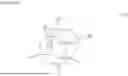









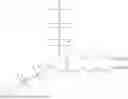


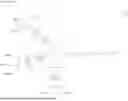
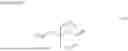






Sources:
- United States Patent and Trademark Office - verify current appl. status at the USPTO↗
Recent applications in this class:
- » 20260117091 2026-04-30
METHOD FOR PRODUCING AN ARTICLE COMPRISING AN ANTI-STATIC COATING, AND ARTICLE COMPRISING SUCH A COATING - » 20250376603 2025-12-11
TRI-CURE HYBRID ORGANO-SILICON COATINGS - » 20250354031 2025-11-20
Transparent Omniphobic Coatings - » 20250346782 2025-11-13
CHEMICAL ENTITIES - » 20250263580 2025-08-21
METAL SURFACE TREATMENT LIQUID - » 20250163297 2025-05-22
COMPOSITIONS, DEVICES, AND METHODS FOR IMPROVING A SURFACE PROPERTY OF A SUBSTRATE - » 20250129265 2025-04-24
NITRIC OXIDE RELEASING POLYSILOXANES AND METHODS FOR MAKING AND USING THE SAME - » 20250115784 2025-04-10
THERMALLY CONDUCTIVE SILICONE COMPOSITION AND PRODUCTION METHOD THEREFOR - » 20240400858 2024-12-05
HIGH CRACK THRESHOLD PLANARIZING COATINGS AND PROCESSES TO FILL WIDE AND DEEP TRENCHES FOR SILICONE WAFERS - » 20240384132 2024-11-21
COMPOSITION FOR FORMING FILM FOR SEMICONDUCTOR, LAMINATE, AND SUBSTRATE LAMINATE
Recent applications for this Assignee:
- » 20260118554 2026-04-30
GLASS PLATE AND METHOD FOR PRODUCING SAME, IN-VEHICLE DISPLAY DEVICE, AND METHOD FOR SELECTING GLASS PLATE - » 20260117023 2026-04-30
METHOD OF PRODUCING POLYETHER COMPOUND, METHOD OF PRODUCING POLYETHER COMPOUND CONTAINING REACTIVE SILICON GROUP, METHOD OF PRODUCING POLYETHER COMPOUND HAVING URETHANE BOND, AND METHOD OF PRODUCING POLYETHER COMPOUND CONTAINING POLYMERIZABLE UNSATURATED GROUP - » 20260116862 2026-04-30
NOVEL METHOD FOR PRODUCING 3-METHYL-1,2,4-THIADIAZOLE-5-CARBOHYDRAZIDE - » 20260116813 2026-04-30
CRYSTALLIZED GLASS, CHEMICALLY TOUGHENED GLASS, AND METHOD FOR PRODUCING CRYSTALLIZED GLASS - » 20260116808 2026-04-30
SUPPORTING GLASS SUBSTRATE - » 20260116807 2026-04-30
ALKALI-FREE GLASS - » 20260115649 2026-04-30
ACIDIC GAS-ABSORBING LIQUID AND ACIDIC GAS REDUCTION METHOD - » 20260115646 2026-04-30
ACIDIC GAS-ABSORBING LIQUID AND ACIDIC GAS REDUCTION METHOD - » 20260114093 2026-04-23
LIGHT EMITTING DEVICE - » 20260112692 2026-04-23
METHOD FOR PRODUCING SULFIDE SOLID ELECTROLYTE AND METHOD FOR REUSING SAME