SYSTEM AND METHOD FOR NATURAL AIR CONDITIONING
US20260117997A1
2026-04-30
19/145,311
2024-01-03
Smart Summary: A natural air conditioning system uses a special housing with a removable top and an intake vent for outside air. Inside the housing, there is a container with an entrance and an exit that helps direct the air. As the air flows into the container, it passes through an absorbent material located below it. The container also holds sea salt and a metal piece to help cool the air. Finally, a fan pushes the cooled air out of the container to refresh the surrounding space. 🚀 TL;DR
Abstract:
A natural air conditioning system with a housing having a removable top, an internal cavity and an intake vent for air to flow from outside the housing into the internal cavity. The system further has a container within the internal cavity in the housing, the container having an inner chamber, an entrance and an exit. The housing and container are configured to allow air to flow from an area in the internal cavity of the housing and outside the container through the entrance into the inner chamber of the container. An absorbent material is in an area of the housing below the container such that air flowing into to the inner chamber passes through the absorbent material. Sea salt and at least one metallic member are placed in the inner chamber in the container. A fan connected to the exit from the inner chamber of the container.
Applicant:
Interested in similar patents?
Get notified when new applications in this technology area are published.
Description
CROSS-REFERENCE TO RELATED APPLICATIONS
The present application claims the benefit of the filing of U.S. Provisional Patent Application Ser. No. 63/436,715 filed by the present inventor on Jan. 3, 3023.
The aforementioned provisional patent application is hereby incorporated by reference in its entirety.
STATEMENT REGARDING FEDERALLY SPONSORED RESEARCH OR DEVELOPMENT
None.
BACKGROUND OF THE INVENTION
Field of the Invention
The present invention relates to controlling the temperature of air in an enclosed space, and more specifically, to a system and method for maintaining air within a closed environment at a moderate temperature using all natural elements.
Brief Description Of The Related Art
A variety of cooling systems have been proposed, including commonly known systems using freon and like. Such systems suffer from significant drawbacks in terms of energy use and harm to the environment.
Other systems have proposed using solar energy. One such example is disclosed in U.S. Pat. No. 4,010,620, entitled “Cooling System.” The '620 patent proposed a system for cooling a building use a method having the steps of (1) creating a cold solution by adding water to a salt or mixture of salts being characterized as having an endothermic heat of solutions, (2) passing air over or through the solution or in contact with a heat exchanger container containing the solution in order to cool the air and warm the solution, passing the cooled air into the building to cool the building, and after the potential cooling effect is exhausted, passing heated air through the solution to evaporate the water and reform the salt for reuse, the heated air being heated at least in part by solar heat.
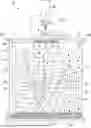
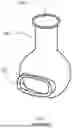
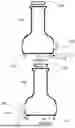
More recently, U.S. Pat. No. 11,274,837 proposed a natural air conditioning system. The natural air conditioning system of the '837 Patent has a housing 100 such as a chiminea made from terra cotta or brick or the like. The housing 100 has a hollow body and an air intake opening 104 at the top and an air exit 102 at the bottom. As shown in FIG. 5, the hollow body of the housing 100 is filled with a fist solar salt layer 112, a drying agent layer 120, a second solar salt layer 114, and a dust filter/essential oil repository 130. Other arrangements of layers, such as having a second drying agent layer below the solar salt layer 112 additional is possible with the present invention. The drying agent may be a material akin to products known as “Kitty Litter,” which can be clay-based, bentonite, or biodegradable materials. The housing 100 may have a lid 300 for placement over the air intake 114. The housing 100 may be placed on a platform or legs 116 or may rest on the ground. The housing further may have a structure such that any drying agent layers may be removed and replaced and for re-filling or replacing the solar salt layers. For example, the housing 110 could have drawers for the various layers that could be removed, emptied and refilled as needed. Such drawers or other structures, however, are not necessary components of the invention.
In the air exit 112 at the bottom of the housing is an air pump 230, a filter screen 220 and a plurality of openings 222, for example, for connecting an output hose such as a soaker hose. While three openings 222 are shown in the drawings, the invention can be used with a single opening or many openings. The air pump 220 may have an electrical plug 234 or other source of power, such as batteries or, for example, a solar power source.
SUMMARY OF THE INVENTION
In a preferred embodiment, the present invention is a natural air conditioning system with a housing having a bottom, a side wall, a removable top, an internal cavity and an intake vent for air to flow from outside the housing into the internal cavity, a container within the internal cavity in the housing, the container having an inner chamber, an entrance to the inner chamber and an exit from the inner chamber, the housing and the container being configured to allow air to flow from an area in the internal cavity of the housing and outside the container through the entrance into the inner chamber of the container, an absorbent material in the area of the housing below the container, wherein the absorbent material is positioned in the internal cavity of the housing such that air flowing into the entrance to the inner chamber passes through the absorbent material before entering the inner chamber, sea salt in the inner chamber in the container, at least one metallic member in the inner chamber in the container, and a fan connected to the exit from the inner chamber of the container, wherein the fan is positioned to draw air from outside the housing, through the absorbent material, and through the inner chamber of the container; wherein at least one of the housing and the container within the housing comprises at least one of terra cotta, brick, stone or metallic material. The container may be raised off the bottom of the housing, the entrance to the inner chamber in the container is at the bottom of the container, and the absorbent material is positioned between the bottom of the container and the bottom of the housing. The entrance to the inner chamber in the container comprises a plurality of holes in the bottom of the container. The air conditioning system may further comprise an essential oil repository between the sea salt and the fan.
In another preferred embodiment, the present invention is an air conditioning system comprising a stainless-steel outer drum, an aluminum inner drum inside the stainless steel drum, the inner drum having a cavity for receiving sea salt and a plurality of holes to permit air flow from a gap between the inner drum and the outer drum into the cavity the inner drum, an absorbent material in at least a portion of the gap between the inner drum and the outer drum, wherein the absorbent material is positioned such that air flowing from outside the outer drum into the gap between the inner drum and the outer drum passes through the absorbent material before passing through at least a portion of the plurality of holes in the inner drum, and a fan connected to the exit from the inner drum, wherein the fan is positioned to draw air from outside the outer drum, through the absorbent material, and through cavity in the inner drum. The air conditioning system may further comprise at least one metallic member in the cavity in the inner drum. The metallic member may be copper. When in use, the cavity in the inner drum is at least partially filled with sea salt and the sea salt surrounds the metallic member. The air conditioning system may comprise a plurality of metallic members in the cavity in the inner drum, wherein the cavity in the inner drum is at least partially filled with sea salt and the sea salt surrounds the metallic member. The air conditioning system may further comprise an essential oil repository between the sea salt and the fan.
The air conditioning system may further comprise a support member in the outer drum supporting the inner drum above a bottom of the outer drum, wherein the holes in the inner drum are in a bottom of the inner drum and the absorbent material is between the bottom of the outer drum and the bottom of the inner drum and the outer drum has an intake vent adjacent a top of the outer drum through which air flows from outside the outer drum into the gap between the inner drum and the outer drum. The outer drum has a removable lid, and the fan is connected to an exhaust vent in the removable lid. The intake vent may be an opening between the lid and a body of the outer drum.
Still other aspects, features, and advantages of the present invention are readily apparent from the following detailed description, simply by illustrating a preferable embodiments and implementations. The present invention is also capable of other and different embodiments and its several details can be modified in various obvious respects, all without departing from the spirit and scope of the present invention. Accordingly, the drawings and descriptions are to be regarded as illustrative in nature, and not as restrictive. Additional objects and advantages of the invention will be set forth in part in the description which follows and in part will be obvious from the description or may be learned by practice of the invention.
BRIEF DESCRIPTION OF THE DRAWINGS
For a more complete understanding of the present invention and the advantages thereof, reference is now made to the following description and the accompanying drawings, in which:
FIG. 1 is a perspective view of a prior art natural air conditioner.
FIG. 2 is front view of a prior art natural air conditioner.
FIG. 3 is a rear view of a prior art natural air conditioner.
FIG. 4 is a left side view of a prior art natural air conditioner.
FIG. 5 is a right-side view of a prior art natural air conditioner.
FIG. 6 is a front cross-sectional view of a prior art natural air conditioner.
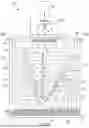
FIG. 7 is a cross-sectional view of a natural air conditioner in accordance with a preferred embodiment of the present invention.
FIG. 8 is a front view of a natural air conditioner in accordance with a preferred embodiment of the present invention.
DETAILED DESCRIPTION OF THE PREFERRED EMBODIMENTS
The preferred embodiments of the inventions are described with reference to FIG. 7. In a preferred embodiment, the present invention is a natural air conditioning system 600 with a housing 620 made, for example, of stainless steel. The housing has a bottom 610 that may be raised with legs, supports or wheel stands 612, a side wall, a removable top 650, an internal cavity and an intake vent or vents 624. An internal container 630, smaller than the housing 620, is withing the housing 620. The intake vent(s) 624 is configured to allow air to flow from outside the housing 620 through the vent(s) 624 into an area 622 between the housing 620 and the inner container 630. The container 630 has an inner chamber 632, an entrance 632a to the inner chamber 632 and an exit 632b from the inner chamber 632. The housing 620 and the container 632 are configured to allow air to flow from an area 622 in the internal cavity of the housing 620 and outside the inner container 630 through the entrance 632a into the inner chamber 632 of the container. An absorbent material 640 is in an area of the housing 620 below the inner container 630, wherein the absorbent material 640 is positioned in the internal cavity of the housing 620 such that air flowing into the entrance 632a to the inner chamber 632 passes through the absorbent material 640 before entering the inner chamber 632. Sea salt 636 is placed within in the inner chamber 632 in the container 630. At least one metallic member 634 (three metallic members are included in a preferred embodiment) is positioned in the inner chamber 632 in the container 630. A fan 660 is connected to the exit 632b from the inner chamber 632 of the container 630, wherein the fan 660 is positioned to draw air from outside the housing 620, through the absorbent material 640, and through the inner chamber 632 of the container 630; wherein at least one of the housing 620 and the container 630 within the housing 620 comprises at least one of terra cotta, brick, stone or metallic material. The container 630 may be raised off the bottom of the housing 620 with a support or supports 628. The entrance 632a to the inner chamber 632 in the container is at a bottom of the container 630, and the absorbent material 640 is positioned between the bottom of the container 630 and the bottom of the housing 620. The entrance 632a to the inner chamber 632 in the container 630 may comprise a plurality of holes in the bottom of the container 630. The air conditioning system 600 may further comprise an essential oil repository 670 between the sea 636 and the fan 660. A duct 680 may be attached to the output of the fan 660 to provide a conduit to direct air coming out of the fan to a particular desired location.
In a preferred embodiment the housing 620 and inner container 630 are cylindrical in shape, but other shapes may be used.
In another embodiment the present invention is a method for conditioning air in which a fan draws air through a vent in a housing, around at least a portion of a container within the housing, through an absorbent material and into an interior of the container, which is filled with sea salt. The fan further draws the air past the sea salt and at least one metallic member within the container. The air further is drawn through an essential oil repository and out through a duct. The fan may be located in various positions, for example, such that the fan blow airs out through the various components of the system rather than drawing the air through the components. It is also possible for the system to have a plurality of fans (more than one).
The present invention allows for a variety of additional features and advantages over prior systems including the following.
Increased CFM airflow. In one embodiment an internal aquarium pump is used to draw air through the system. By utilizing a powerful exhaust fan rather than an internal aquarium pump much more air can be moved moving much farther.
Better cold air production. By using an aluminum bin on feet, with holes in the bin and placed inside a stainless-steel outer barrel with a lid that has an airflow gap to the barrel.
Greater cooling retention. Adding copper pipes, coils or other metallic members buried in the salt mixture retains cool air temps inside the unit. The coolest air is inside the pipes.
Specific running of “softaire” to any room/floor. Attaching the unit's exhaust fan to duct work allows airflow to go directly where needed.
Longer life of the unit. Using metal bins like aluminum, stainless steel and copper prevent the degradation that salt causes to terra cotta over time.
Lighter weight. Aluminum and stainless-steel units weigh much less than terracotta. They also are less likely to suffer damage during shipping.
More quiet operation. The exhaust fan may be selected to minimize operation sounds in addition to maximizing air flow.
Smart operation. Sensors placed in the room where air is going can be automatically set to kick on at a predetermined temperature and humidity level. It can be operated and controlled with a smartphone or tablet.
More energy efficient. The unit only comes on when needed, saving energy.
Adjustable height lid. This allows adjustment of the size of the air intake vent(s) 624 to allow more or less air into the housing. This enables the unit to suck in more or less outside air. The higher the lid, the more air gets sucked directly up through the exhaust fan and duct work. Conversely, the closer the lid is to the main chamber, the more air passes through the unit. This is important because sometimes the air surrounding the unit may have a more desirable temperature or humidity than the constant temperature and humidity level given out by the unit itself.
The lid or top 650 is removable to allow replenishment of the sea salt within the inner chamber or to replace the absorbent materials. Other variations such as a door near the base of the housing also can be used to replace the absorbent material.
4 Heavy duty handles. Attaching handles (not shown) to the top of the outer drum or housing 620 for ease of lifting the units, either by hand or with hooks attached to a pulley or crane using chains.
Scalable to air condition any sized building. These units can come in all shapes and sizes to provide perfectly conditioned air to any sized facility.
Multiple exhaust fans, in duct fans or register fans can be connected to several individual units or one central unit via ducts to direct perfectly conditioned air when and where it's needed. Once again, the central units produce air in the 68-72 degree range with 48-54% humidity, depending on variables such as ambient temperature where the unit is housed and the insulation rating of the area to be air conditioned etc.
Utilizing crane or lift systems attached to the handles via chains, the units can be placed underground provided the walls of an underground chamber are stable and free from potential flooding. Stone walls with gravel drainage below would be ideal. There must also be adequate space around the units to provide enough air to circulate through.
Variable speed fans. The fan speed can be adjusted from 1 to 10 depending on the amount of air required to condition the space in question. This promotes energy savings especially in buildings where multiple fans with ducts condition different zones. Fan speeds can be adjusted manually, set on a timer, set to maximize utilization without waste by selecting the desired temperature within the range allowing the unit to turn on and off as needed, or connected to an app on a pad or smartphone. In some instances, one might need to set the fan high initially and then dial it back to maintain that temperature once the desired temperature and humidity level is achieved.
Multiple small dwellings can be connected via individual ducts with fans to a large central unit. This can be utilized in camps, or villages and powered by wind, solar panels with storage capacity or generators in off grid settings not connected to a traditional power grid. Hydrogen fuel cells can power a lot of fans with zero emotions as well.
Marine and aircraft applications. The air quality is notoriously poor in aircraft and marine vessels. Current filtration technology is limited to carbon filters or hepa type replaceable filters and does nothing to improve the actual air quality. This invention does just that and would create perfect air even in spaceships and submarines where the same air is recirculated over and over again.
Halotherapy, or salt therapy, involves breathing in air with tiny salt particles to improve your breathing. Halotherapy is considered an alternative treatment for lung problems such as asthma, bronchitis, and cough. Halotherapy is often done in spa-like salt rooms. This therapy can also help you relax and may help with skin conditions and allergies. Softaire offers these benefits in one's own home 24/7 for free as an added benefit. Any mineral can be added to the solar salt mix to address any specific deficiencies. Magnesium being a common example. Copper and iron would be other examples that could be added to the dispensing system nearest the exhaust fan to disperse customized health air.
Top sliding tray for easy replacement or addition of minerals, aromatherapy essential oils and other remedies. Building in a sliding tray in the top of the main chamber or in the lid near the exhaust fan allows for ease of access to add any minerals, essential oils or other remedies to the unit without the need to lift off the fan and lid every time. When in liquid form the oils/remedies can be added to the same organic moisture absorption product utilized in the main unit. Then placed on a tray and tiny particles are dispensed in the air in a time release fashion as air is drawn from the main unit over the mix and into the atmosphere. Essential oils of lavender and chamomile are examples that might be beneficial at night, while peppermint is known to increase appetite. Aphrodisiac oils might increase sexual appetite and so on.
Filtration against bacteria and viruses like SARS-CoV-2. Salt is a natural substance that inhibits the growth of bacteria—partly through dehydration, and also by upsetting the enzyme activity of microorganisms, damaging their DNA.3 Salt is essential to human and animal life, and has a long history of use in food preservation and flavoring, in pharmaceuticals, in home remedies (for example, as a mouthwash and wound cleanser), and in agriculture and industrial products.4 The theory behind salt's potential ability to inhibit severe acute respiratory syndrome coronavirus 2 (SARS-CoV-2) is that when droplets containing virus particles come into contact with a salt-coated surface, the water in the droplets dissolves some of the salt. When the water evaporates, the salt recrystallizes, and the jagged salt crystals pierce the virus membrane and kill it. Further, precious metals such as copper silver and gold in the form of micro powder can be added to the top tray to kill bacteria and viruses.
Dual stage action. A pre-treatment unit such as the initial chimenea in the existing patent could be installed adjacent to larger units described in this application to pre-treat the air in environments where additional air supply is needed to create adequate airflow for large demand environments. Dual stage also assists in reducing power needed by the main unit and its multiple exhaust fans. Energy savings could exceed 90% over traditional HVAC and Air Handling Units (AHU). All without harmful refrigerants and expensive throw away replacement filters. This is a very timely technology as consumers will need to reduce their HVAC power consumption in order to have enough home power supply to charge their electric vehicles.
Use of attic fan. The system performs at maximum efficiency when excessive heat and humidity is not present above the living quarters. Like a heat blanket, attic heat and humidity taxes any HVAC system and wastes energy. Where this applies, we recommend and use the following Quiet Cool as the final piece of the airflow journey.
Room fans distribute air. The use of ceiling or standing fans helps distribute softaire air throughout the living space making it spread easily throughout the dwelling at very low CFM settings. Ideally the registers in our system are placed high on the walls to where the softaire emanating from the registers are in line with ceiling fans. This is the most efficient way to circulate the air throughout the space. Allowing fresh air in the home is recommended for maximum health and safety. With this system in place any loss of heat or cold from slightly open windows is negligible.
The foregoing description of the preferred embodiment of the invention has been presented for purposes of illustration and description. It is not intended to be exhaustive or to limit the invention to the precise form disclosed, and modifications and variations are possible in light of the above teachings or may be acquired from practice of the invention. The embodiment was chosen and described in order to explain the principles of the invention and its practical application to enable one skilled in the art to utilize the invention in various embodiments as are suited to the particular use contemplated. It is intended that the scope of the invention be defined by the claims appended hereto, and their equivalents. The entirety of each of the aforementioned documents is incorporated by reference herein.
Claims
What is claimed is:1. An air conditioning system comprising:
a housing having a bottom, a side wall, a removable top, an internal cavity and a vent configured to allow air to flow from outside said housing into said internal cavity;
a container within said internal cavity in said housing, said container having an inner chamber, an entrance into said inner chamber and an exit from said inner chamber, said housing and said container being configured to allow air to flow from an area in said internal cavity of said housing and outside said container through said entrance into said inner chamber of said container;
an absorbent material in an area of said housing below said container, wherein said absorbent material is positioned in said internal cavity of said housing such that air flowing into said entrance into said inner chamber passes through said absorbent material before entering said inner chamber;
sea salt in said inner chamber in said container;
at least one metallic member in said inner chamber in said container; and
a fan connected to said exit from said inner chamber of said container, wherein said fan is positioned to draw air from outside said housing, through said absorbent material, and through said inner chamber of said container; and
wherein at least one of said housing and said container within said housing comprises at least one of terra cotta, brick, stone and metallic material.
2. The air conditioning system according to claim 1, wherein said container is raised off of said bottom of said housing, said entrance to said inner chamber in said container is at a bottom of said container, and said absorbent material is positioned between said bottom of said container and said bottom of said housing.
3. The air conditioning system according to claim 2, wherein said entrance to said inner chamber in said container comprises a plurality of holes in said bottom of said container.
4. An air conditioning system according to claim 1, further comprising:
an essential oil repository between said sea salt and said fan.
5. An air conditioning system comprising:
a stainless-steel outer drum;
an aluminum inner drum inside said stainless steel drum, said inner drum having a cavity for receiving sea salt and a plurality of holes to permit air flow from a gap between said inner drum and said outer drum into said cavity said inner drum;
an absorbent material in at least a portion of said gap between said inner drum and said outer drum, wherein said absorbent material is positioned such that air flowing from outside said outer drum into said gap between said inner drum and said outer drum passes through said absorbent material before passing through at least a portion of said plurality of holes in said inner drum; and
a fan connected to said exit from said inner drum, wherein said fan is positioned to draw air from outside said outer drum, through said absorbent material, and through cavity in said inner drum.
6. The air conditioning system according to claim 5, further comprising:
at least one metallic member in said cavity in said inner drum.
7. The air conditioning system according to claim 6, wherein said metallic member comprises copper.
8. The air conditioning system according to claim 6, wherein said cavity in said inner drum is at least partially filled with sea salt and said sea salt surrounds said metallic member.
9. The air conditioning system according to claim 5, further comprising:
a plurality of metallic members in said cavity in said inner drum, wherein said cavity in said inner drum is at least partially filled with sea salt and said sea salt surrounds said metallic member.
10. The air conditioning system according to claim 5, further comprising:
an essential oil repository between said sea salt and said fan.
11. The air conditioning system according to claim 5, further comprising:
a support member in said outer drum supporting said inner drum above a bottom of said outer drum;
wherein said holes in said inner drum are in a bottom of said inner drum and said absorbent material is between said bottom of said outer drum and said bottom of said inner drum and said outer drum has an intake vent adjacent a top of said outer drum through which air flows from outside said outer drum into said gap between said inner drum and said outer drum.
12. The air conditioning system according to claim 11, wherein said outer drum has a removable lid and said fan is connected to an exhaust vent in said removable lid.
13. The air conditioning system according to claim 12, wherein said intake vent comprises an opening between said lid and a body of said outer drum.
14. The air conditioning system according to claim 5, further comprising:
an essential oil repository between said sea salt and said fan.
15. A method for conditioning air comprising:
drawing air with an fan through an intake vent into a channel between an outer housing and an inner container, through an absorbent material, into and through an inner chamber of said inner container, and out through an exhaust vent, wherein said outer housing comprises one of a metallic material and terracotta;
said inner container comprises one of a metallic material and terracotta;
said inner chamber of said inner container is at least partially filled with sea salt; and
at least one metallic member is suspended within said sea salt in said inner chamber.
16. The method for conditioning air according to claim 15, further comprising drawing air exiting said inner chamber of said inner container through an essential oil repository.
Images & Drawings included:


Sources:
- United States Patent and Trademark Office - verify current appl. status at the USPTO↗
Similar patent applications:
- » 20210215357
System and method for natural air conditioning
Recent applications in this class:
- » 20260043560 2026-02-12
VENTILATION SYSTEM AND METHOD - » 20250362041 2025-11-27
SYSTEM AND METHOD FOR CONTROLLING AIR CIRCULATION IN A SAUNA STEAM ROOM - » 20250264234 2025-08-21
AIR MOVING DEVICE WITH BYPASS INTAKE - » 20250244031 2025-07-31
VENTILATING SYSTEM - » 20250020347 2025-01-16
AIR CONDITIONING APPLIANCES AND HEAT RECOVERY FEATURES THEREOF - » 20250003611 2025-01-02
BATHROOM EXHAUST FAN SWITCHING DEVICE - » 20240426492 2024-12-26
VENTILATION UNIT - » 20240280278 2024-08-22
EMBEDDED VENTILATION FAN - » 20240210056 2024-06-27
VENTILATION SYSTEM - » 20240159407 2024-05-16
Ventilating system