In-Context Data Synthesis for Machine Learning
US20260119792A1
2026-04-30
18/926,725
2024-10-25
Smart Summary: A prompt management system helps improve how data is processed by machine learning models. It takes a user's prompt, which includes a placeholder for data and a reference to a data source, to understand the context and type of data needed. The system then analyzes the data source and context to create relevant pieces of information from that source. Using this information, it generates new data samples that fit the user's request. Finally, the system replaces the placeholder in the original prompt with the new data and runs the prompt through the machine learning model. 🚀 TL;DR
Abstract:
Systems and methods are provided for automatically modifying prompts to facilitate data processing by a target machine-learned model. A prompt management system can process a user prompt including a variable for data replacement and at least one reference to a data source to generate an output indicative of a context of the user prompt and a data type. The system can process the data source, the context, and the data type to generate an output indicative of one or more document chunks from the data source for emulation. The system can process the context, the data type, the one or more document chunks, and the one or more attributes of the one or more document chunks to generate at least one synthesized data sample. The system can replace the variable in the user prompt with the synthesized data sample and execute the user prompt with the target machine-learned model.
Applicant:
Interested in similar patents?
Get notified when new applications in this technology area are published.
Description
FIELD
The present disclosure relates generally to machine learning technologies, and more particularly to machine learning systems for prompt generation.
BACKGROUND
Artificial intelligence systems increasingly include large machine-learned generative models, sometimes referred to as foundational models, which have the capability to provide a wide range of new product experiences. As an example, machine-learned generative models have proven successful at generating content including text, images, audio, video, and computer-executable code. Machine-learned sequence processing models such as large-language models, for instance, can be configured to receive prompts including instructions, tasks, examples, and/or other data indicative of desired actions or outputs from the model. In many instances, the quality of a model's output can be directly related to the quality of the prompt provided to the model as an input. Small modifications to prompts can often lead to large differences in model output. Accordingly, users in production and enterprise environments can spend a large amount of time generating and refining prompts for machine-learned models.
SUMMARY
Aspects and advantages of embodiments of the present disclosure will be set forth in part in the following description, or can be learned from the description, or can be learned through practice of the embodiments.
One example aspect of the present disclosure is directed to a computer-implemented method that includes, by a computing system comprising one or more computing devices, processing, with at least one machine-learned generative model, an input prompt including a variable for data replacement and at least one data source reference to generate an output indicative of a context of the input prompt and a data type from a data source to be used for the data replacement, processing, with a machine-learned embedding model, the data source, the context, and the data type to generate an output indicative of one or more document chunks from the data source for emulation, processing, with the at least one machine-learned generative model, a first intermediate prompt including the one or more document chunks from the data source to generate an output indicative of one or more attributes of the one or more document chunks, and processing, with the at least one machine-learned generative model, a second intermediate prompt including the context, the data type, the one or more document chunks, and the one or more attributes to generate an output including a synthesized data sample for the data replacement of the variable in the input prompt.
Another example aspect of the present disclosure is directed to a computing system including one or more processors and one or more non-transitory computer-readable media that collectively store instructions that, when executed by the one or more processors, cause the one or more processors to perform operations. The operations include processing, with at least one machine-learned generative model, a user prompt including a variable for data replacement and at least one reference to a data source to be used for the data replacement to generate an output indicative of a context of the user prompt and a target data type from the data source to be used for the data replacement, processing with a machine-learned embedding model the data source, the context, and the target data type to generate an output indicative of one or more document chunks from the data source for emulation, processing, with the at least one machine-learned generative model, a first intermediate prompt including the one or more document chunks from the data source to generate an output indicative of one or more attributes of the one or more document chunks, and processing, with the at least one machine-learned generative model, a second intermediate prompt including the context of the input prompt, the target data type from the data source to be used for the data replacement, the one or more document chunks from the data source, and the one or more attributes of the one or more documents chunks to generate an output including a synthesized data sample for the data replacement of the variable in the input prompt.
Yet another example aspect of the present disclosure is directed to one or more non-transitory computer-readable storage media that store instructions that, when executed by one or more processors, cause the one or more processors to perform operations. The operations include processing, with at least one machine-learned generative model, a user prompt including a variable for data replacement and at least one reference to a data source to be used for the data replacement to generate an output indicative of a context of the input prompt and a target data type from the data source to be used for the data replacement, processing with a machine-learned embedding model the data source, the context, and the target data type to generate an output indicative of one or more document chunks from the data source for emulation, processing, with the at least one machine-learned generative model, a first intermediate prompt including the one or more document chunks from the data source to generate an output indicative of one or more attributes of the one or more document chunks, and processing, with the at least one machine-learned generative model, a second intermediate prompt including the context of the input prompt, the target data type from the data source to be used for the data replacement, the one or more document chunks from the data source, and the one or more attributes of the one or more documents chunks to generate an output including a synthesized data sample for the data replacement of the variable in the input prompt.
These and other features, aspects, and advantages of various embodiments of the present disclosure will become better understood with reference to the following description and appended claims. The accompanying drawings, which are incorporated in and constitute a part of this specification, illustrate example embodiments of the present disclosure and, together with the description, serve to explain the related principles.
BRIEF DESCRIPTION OF THE DRAWINGS
Detailed discussion of embodiments directed to one of ordinary skill in the art is set forth in the specification, which makes reference to the appended figures, in which:
FIG. 1 is a block diagram depicting an example computing environment including a machine learning prompt management system and machine-learned generative model system according to example embodiments of the present disclosure;
FIG. 2 is a block diagram depicting an example computing environment including a machine learning prompt management system according to example embodiments of the present disclosure;
FIGS. 3A-3D are block diagrams depicting an example machine learning system user interface and an example of a target data source according to example embodiments of the present disclosure;
FIG. 4 is a flow chart diagram illustrating an example method of generating synthetic data for variable replacement in prompts according to example embodiments present disclosure;
FIG. 5 is a flow chart diagram illustrating an example method for training a machine-learned model according to example implementations of aspects of the present disclosure;
FIG. 6 is a block diagram of an example processing flow for using machine-learned model(s) to process input(s) to generate output(s) according to example embodiments of the present disclosure;
FIG. 7 is a block diagram of an example sequence processing model according to example embodiments of the present disclosure;
FIG. 8 is a block diagram of an example technique for populating an example input sequence for processing by a sequence processing model according to example embodiments of the present disclosure;
FIG. 9 is a block diagram of an example model development platform according to example embodiments of the present disclosure;
FIG. 10 is a block diagram of an example training workflow for training a machine-learned model according to example embodiments of the present disclosure;
FIG. 11 is a block diagram of an inference system for operating one or more machine-learned model(s) to perform inference according to example embodiments of the present disclosure;
FIG. 12 is a block diagram of an example networked computing system according to example embodiments of the present disclosure;
FIG. 13 is a block diagram of an example computing device according to example embodiments of the present disclosure; and
FIG. 14 is a block diagram of an example computing device according to example embodiments of the present disclosure.
Reference numerals that are repeated across plural figures are intended to identify the same features in various implementations.
DETAILED DESCRIPTION
Reference now will be made in detail to embodiments, one or more examples of which are illustrated in the drawings. Each example is provided by way of explanation of the embodiments, not limitation of the present disclosure. In fact, it will be apparent to those skilled in the art that various modifications and variations can be made to the embodiments without departing from the scope or spirit of the present disclosure. For instance, features illustrated or described as part of one embodiment can be used with another embodiment to yield a still further embodiment. Thus, it is intended that aspects of the present disclosure cover such modifications and variations.
Overview
Generally, the present disclosure is directed to machine learning systems that are configured for in-context learning of an target input (e.g., input text or input prompt) to automatically modify prompts and facilitate data processing of data from a target data source by machine-learned generative models such as large language models and other sequence processing models. A machine learning system is configured with a user interface such as a graphical user interface that enables a developer or other user to generate a prompt that can be processed by a target machine-learned generative model in association with a target data source. More particularly, the system enables the user to include one or more variables in a prompt that can be populated with data from a target data source before executing the prompt by the target machine-learned generative model. The system can use a machine-learned generative model to generate synthetic data from the target data source. The generative model can use in-context learning of the prompt and/or text surrounding the input variable to generate the synthetic data from the target data source. The machine-learned generative model that is used to generate the synthetic data can be the same or a different model from the target machine-learned generative model that is used to execute the user prompt. The system can replace the variable(s) in the prompt with the synthetic data generated with the machine-learned generative model from the target data source. After replacing the variable(s) with the synthetic data, the system can execute the prompt with the target machine-learned generative model.
Developers and other users often write prompts for machine-learned models. In many cases, users write prompts that are designed for a target machine-learned model to process data. For example, users may write prompts to process data for summarization, information extraction, content transformation, translation, and the like. Consider a travel website that has a large number of user reviews. The travel website may write prompts to summarize the user reviews by a machine-learned large language model (LLM). In many instances, however, developers may not have access to the data for processing during the prototyping phase for generating prompts. In other instances, developers may only have access to sparse data that can be insufficient for evaluation. As such, a developer may need to wait until data is available to write prompts for the model or may have to write prompts over time in stages as data is available. This approach to generating prompts for processing data can be inefficient and lead to inefficient usage of computing resources as well as developer time.
In accordance with example implementations of the disclosed technology, a machine learning system can include a prompt management system that is configured to generate synthesized data for variable replacements in prompts before prompt execution. The system can receive a user prompt that includes one or more variables to be replaced by data from a target data source such as a target web page or target data store. The system can also receive from the user a reference for the target data source (e.g., webpage or stored document). The system includes at least one machine-learned generative model (e.g., a large language model (LLM)) that is configured to generate synthetic data from the target data source to be used for the variable replacements. The system can generate one or more synthesized data samples that can be used to replace the variable. The system then can execute the user prompt including the synthetic data with the machine-learned generative model.
According to an example implementation, the prompt management system can include a context and data determination engine. The context and data determination engine can receive the user prompt and determine the context of the prompt and the particular data (e.g., a data type) to be used for the variable replacements. The context and data determination engine can include or otherwise access a machine-learned generative model such as an LLM that can receive the user prompt and determine the context of the prompt and the data to be used for the variable replacements. The context and data determination engine can determine a data type for data from the target data source to be used for the variable replacements.
The prompt management system can include an embedding engine configured to evaluate the target source identified by the user. The embedding engine can include or otherwise access a machine-learned embedding model. The embedding engine can use a vector search method to determine the most relevant chunk(s) of the documents for emulation. The chunks of the document can include any type of content such as text, image, video, or code.
The prompt management system can include an attribute engine configured to evaluate the document chunks and determine one or more document attributes for the document chunks. The attribute engine can include or otherwise access a machine-learned generative model such as an LLM. The machine-learned generative model used by the attribute engine can be the same as or a different machine-learned model than that used by the context and data determination engine. The attribute engine can evaluate the chunks for various attributes such as length (or size) of the document chunk(s), style of the document chunk(s), and tone of the document chunk(s).
The prompt management system can include a data synthesis engine configured to synthesize data for the variables(s) in the prompt. The data synthesis engine can include or otherwise access a machine-learned generative model such as an LLM. The machine-learned generative model used by the data synthesis engine can be the same as or a different machine-learned model than that used by the context and data determination engine and/or the attribute engine. The data synthesis engine can generate one or more synthesized data samples for the variable(s) in the prompt. The prompt management system can use the context of the prompt, the target data type from the data source to be used for the data replacement, the one or more document chunks from the data source for emulation, and the one or more attributes of the one or more document chunks to generate the synthesized data sample for the data replacement of the variable in the prompt.
The prompt management system can automatically replace the variable(s) with a synthesized data sample in some examples. In other examples, the prompt management system can present one or more synthesized data samples to a user via a user interface. The system can receive a selection of a particular data sample to use for a replacement from a user and then execute the prompt with the selected data sample. The prompt management system can execute the input prompt with the synthetic data samples by providing the input prompt to the target machine-learned generate model. the target machine-learned generative model can be the same as or different than the machine-learned generative model(s) used by the prompt management system to generate the synthetic data sample(s).
According to an example implementation, the prompt management system can include a client interface system that is configured to generate data for a user interface that can be rendered by a user computing device. The user interface is a graphical user interface (GUI) in an example embodiment. The GUI can include one or more user interface elements configured to receive a user prompt including one or more variables for data replacement and a reference to one or more data sources with data to be used for data replacement of the variable(s). The user interface can include a first user interface element (e.g., a text box) that is configured to receive the user prompt including the variable for data replacement and a second user interface element (e.g., a text box) that is configured to receive at least one reference to a data source to be used for the data replacement. The user interface can additionally include one or more user interface elements configured to display the document chunks identified from the data source(s), the synthetic data samples generated by the generative model, and/or the response of the target generative model to the user prompt with the synthetic data. For example, the user interface can include a user interface element to display the document chunks, another user interface element to display the synthetic data samples, and another user interface element to display the output of the target generative model in response to processing the user prompt with the variable data replacement(s) including the synthetically generated data.
Systems and methods in accordance with example embodiments provide a number of technical effects and benefits. A machine-learning system can include one or more machine-learned generative models that are configured to generate synthetic data samples to replace variables in user prompts based on a referenced data source. The system includes a user interface that enables developers or other users to formulate prompts that include one or more variables. The user interface further enables users to provide a reference to one or more target data sources. The system can then synthesize data samples for data replacement of the variable(s) in the prompt. The user interface enables a user to select a data sample and execute the prompts using a target machine-learned model. In this manner, the system enables developers or other users to develop prompts, even in situations where data for processing by a target machine-learned model is not fully available. The system enables the development of prompts when data is not available, such as during a prototyping phase, or when only sparse data insufficient for evaluation is available. In this manner, the disclosed machine learning system is able to automatically complete prompts using synthetic data generation with target data sources. By enabling variable replacement and synthetic data generation, the prompt management according to example aspects of the present disclosure overcomes the technical shortcomings of existing approaches. In accordance with example embodiments, a prompt management system is provided that enables prompt generation during prototyping when data may not be available, and enables synthetic data generation for variable replacement from a target data source.
A prompt management system in accordance with example embodiments of the present disclosure enables computing efficiencies by merging variable-based prompt generation and data source referencing in a combined user interface. In accordance with example embodiments of the disclosed technology, a user interface is provided that enables a user to create a prompt including variables, provide a reference to a target data source, cause synthetic data generation based on a target data source, and prompt execution using synthetic data.
Much of the following disclosure refers to large language models as specific examples of machine-learned generative models but it will be appreciated that the disclosure is equally applicable to any type of generative model such as other types of sequence processing models. For example, the disclosed technology can be used with large image models, multimodal models, and other types of foundational models. For instance, the generative models can operate in domains other than the text domain, such as image domains, audio domains, biochemical domains, etc. For instance, a sequence processing model may be used to process sequential inputs for robotic controls and other tasks. Similarly, the generative model and/or the downstream applications can be configured to perform any number of tasks. For instance, if the inputs to the generative model and/or a downstream application are images or features that have been extracted from images, the output generated by the generative model for a given image can be scores for each of a set of object categories, with each score representing an estimated likelihood that the image contains an image of an object belonging to the category. As another example, if the inputs to the generative model and/or a downstream application are sensor data, the outputs can be robotic control signals. The system can analyze the distance of generated signals relative to a target domain (e.g., using intended signals) to determine the validity of the generated signals.
Example Model Arrangements
FIG. 1 is a block diagram depicting an example computing environment 100 including a server computing system 110 that hosts or otherwise implements a machine learning system 120 and machine-learned generative model system 130 that can be accessed by user computing devices such as user computing device 150. Although a single user computing device is shown, any number of user computing devices may access the server computing system 110.
In some examples, server computing system 110 may be implemented by a first computing system and each user computing device 150 can be implemented by a different remote computing system. For instance, computing environment 100 may be implemented as a client server computing environment, including one or more client computing devices implementing each of the user computing devices 150 and one or more server computing devices implementing server computing system 110. In another example, one or more of the downstream applications can be implemented at a server computing system.
The computing systems implementing server computing system 110 and user computing device 150 including downstream applications can be connected by and communicate through one or more networks 180. Any number of user computing devices and/or server computing devices can be included in the client-server environment and communicate over a network. The network can be any type of communications network, such as a local area network (e.g., intranet), wide area network (e.g., Internet), or some combination thereof. In general, communication between the computing devices can be carried via a network interface using any type of wired and/or wireless connection, using a variety of communication protocols (e.g., TCP/IP, HTTP, RTP, RTCP, etc.), encodings or formats (e.g., HTML, XML, etc.), and/or protection schemes (e.g., VPN, secure HTTP, SSL, etc.).
In some example embodiments, a user computing device 150 can implement a downstream application and can be any suitable device, including, but not limited to, a smartphone, a tablet, a laptop, a desktop computer, or any other computer device that is configured such that it can allow a user to access remote computing devices over a network. The user computing devices can include one or more processor(s), memory, and a display as described in more detail hereinafter. The user computing devices can execute one or more client applications such as a web browser, email application, chat application, video conferencing application, word processing application or the like.
The server computing system 110 can include one or more processor(s) and memory implementing machine learning system 120 and machine-learned generative model system 130. The server computing system can be in communication with the one or more client computing device(s) using a network communication device that is not pictured.
It will be appreciated that the term “system” can refer to specialized hardware, computer logic that executes on a more general processor, or some combination thereof. Thus, a system can be implemented in hardware, application specific circuits, firmware, and/or software controlling a general-purpose processor. In one embodiment, the systems can be implemented as program code files stored on a storage device, loaded into memory and executed by a processor or can be provided from computer program products, for example computer executable instructions, that are stored in a tangible computer-readable storage medium such as RAM, hard disk, or optical or magnetic media.
Server computing system 110 can include or otherwise implement a machine learning system 120 including a prompt management system 122. Prompt management system 122 can be configured to facilitate prompt development by developers and other users, including the user of prompt variables and references to data sources for synthetic data sample generation. The prompt management system can include a client interface system that provides a user interface to facilitate integrated prompt management functionality with the machine-learned generative model system. The user interface can be a graphical user interface. The client interface system can generate data for a machine-learned system user interface 160 that can be rendered at a user computing device 150. A model interface system can be configured to interface with the machine-learned generative model system 130 including one or more generative models 132. For example, model interface system may utilize one or more application programming interfaces (APIs) to pass prompts to and receive responses from the generative model system.
Machine-learned generative model system 130 can include one or more machine-learned generative models 132. Generative models 132 can include any type of machine-learned generative model. In an example, a generative model can include a sequence processing model, such as a large language model including 10B parameters or more. In another example, a generative model can include a language model having less than 10B parameters (e.g., 1B parameters). In yet another example, the generative model can include an autoregressive language model or an image diffusion model. As further examples, a generative model can include a machine-learned text-to-image model, a machine-learned text-to-video model, a machine-learned text-to-audio model, a machine-learned multi-modal model, or any other machine-learned model configured to provide generative content in response to a user query. The generative content generated by generative models 132 can include computer-executable code data, text data, image data, video data, audio data, or other types of generative content. The generative model can be trained to process input data to generate output data. The input data can include text data, image data, audio data, latent encoding data, and/or other input data, which may include multimodal data. The output data can include computer-executable code data, text data, image data, audio data, latent encoding data, and/or other input data.
User computing device 150 can optionally execute one or more applications. In some examples, the ML system user interface 160 can be implemented within or by an application. The client user interface can include a prompt editing interface configured to receive user input such as text, links, or other data to construct a prompt for a generative model. The interface can receive user submission of a prompt and the collaboration system can provide the prompt as input to one or more generative models of a machine-learning system. The collaboration system can receive one or more responses from the generative model(s) and generate data to update the interface with the model response. The user interface can be configured to receive user input defining a prompt including one or more variables, as well as user input reference one or more data sources. For example, in response to a user input, the system can render a user interface that enables a user to provide a user prompt, one or more variables for data replacement, and one or more references to one or more data sources to be used for data synthesis. In some examples, the user interface can include user interface elements such as chips that enable a user to select prompt execution, variable replacement, etc. The user can provide an input, such as by selecting an input user interface element, to generate synthetic data from a target data source, to execute a prompt with synthetic data, etc.
FIG. 2 is a block diagram depicting an example computing environment 200 illustrating additional details of processing a user prompt by a machine learning system including a prompt management system 122 in accordance with example embodiments of the present disclosure. FIG. 2 depicts prompt management system 122 receiving a user prompt 250 and a target data source reference 252. The target data source reference 142 can be included as part of prompt 250 or can be separate from prompt 250. The prompt management system 122 can receive the user prompt 250 and target data source reference 252 via an ML system user interface 160 at a client computing device in an example embodiment. The user prompt 250 can include one or more variables to be replaced by data from a target data source. The target data source reference 252 can include a reference to a target data source 260 such as a web page or stored data. In an example, the target data source reference 252 can include a uniform resource locator (URL) or other reference to a web page or stored data. User prompt 250 can include text data, audio data, image data, latent encoding data, multimodal data (e.g., text and image) and/or other input data. By way of example, a prompt 250 for an LLM can include text articulating a task the LLM should before, parameters for performing the task (e.g., things the LLM should do and/or should not do in performing the task), guidelines or suggestions the LLM should following while performing the task, additional information such as contextual information or factual information the LLM may need to perform the task, and/or examples that illustrate how to perform the task.
The user prompt 250 and target data source reference 252 are received by a context and data determination engine 202. Context and data determination engine 202 can be configured to determine the context of the prompt 250 and the particular data (e.g., a data type) to be used for the variable replacements. The context and data determination engine 202 can include or otherwise access a machine-learned generative model such as an LLM that can receive the user prompt 250 and determine the context of the prompt and the particular data to be used for the variable replacements. The context and data determination engine 202 can determine a target data identification (ID) 206 such as a target data type for data from the target data source to be used for the variable replacements. Context and data determination engine 202 can generate one or more outputs including the determined context 204 and a target data ID 206 to be used for the variable data replacements.
The context 204 and target data ID 206 are provided from the context and data determination engine 202 to an embedding engine 210. Embedding engine 210 can be configured to evaluate the target source identified by the user. The embedding engine 210 can include or otherwise access a machine-learned embedding model. The embedding engine 210 can use a vector search method to determine the most relevant chunk(s) of the documents for emulation. The chunks of the document can include any type of content such as text, image, video, or code. The embedding engine 210 can generate one or more outputs including one or more document chunks 212 from the target data source.
The embedding engine 210 can provide the document chunks 212 to an attribute engine 220. The attribute engine 220 can include or otherwise access a machine-learned generative model such as an LLM. The document chunks can be provided as a first intermediate prompt to the generative model. The attribute engine 220 can evaluate the chunks for various attributes such as length (or size) of the document chunk(s), style of the document chunk(s), and tone of the document chunk(s). The attribute engine 220 can generate one or more outputs including one or more document chunk attributes 222. The generative model used by the attribute engine 220 can be the same as or a different machine-learned model than that used by the context and data determination engine 202.
The attribute engine 220 can provide the document chunk attributes 222 to a data synthesis engine 230. The data synthesis engine can also receive the document chunks 212, the context 204, and the target data identification 206. The data synthesis engine 230 can include or otherwise access a machine-learned generative model such as an LLM. The generative model used by the data synthesis engine 230 can be the same as or a different machine-learned model than that used by the context and data determination engine 202 and/or the attribute engine 220. The attributes 222, chunks 212, context 204, and target data identification can be provided to the LLM as a second intermediate prompt. The data synthesis engine 230 can generate one or more synthesized data samples 232 for the variable(s) in the prompt. The data synthesis engine 230 can use the context 204 of the prompt, the target data identification 206 from the data source to be used for the data replacement, the one or more document chunks 212 from the data source for emulation, and the one or more attributes 222 of the one or more document chunks to generate the synthesized data sample for the data replacement of the variable in the prompt.
The synthesized data samples(s) 232 can be used by the prompt management system to generate one or more modified prompts 234 including a synthesized data sample 232 as a replacement for a variable in the input prompt 250. In some examples, one or more synthesized data samples can be presented via ML system user interface 160 to a user who can provide an input to select a particular data sample to be used as a variable replacement to generate a modified prompt 234. In other examples, the prompt management system can automatically replace a variable in the input prompt with a synthesized data sample 232 and/or execute the input prompt with the variable data replacement without user input.
Once the variable(s) in the input prompt 250 have been replaced with synthesized data samples, the prompt management system can provide the modified prompt 234 can be provided to the target machine-learned generative model 132. The target machine-learned generative model 132 can generate one or more model responses 236 that are received by the prompt management system 122. The prompt management system 122 can provide the model response(s) to the user computing device 150. In some examples, the prompt management system can update the ML system user interface 160 to display the model response.
FIGS. 3A-3D are block diagrams depicting an example computing environment 300 including a machine learning system user interface 160 according to example embodiments of the present disclosure. User interface 160 can be rendered at a user computing device in response to data received from prompt management system 122. User interface 160 includes a prompt interface portion 310 configured to receive user input to create a prompt. The prompt interface portion 310 can include a prompt editing interface configured to receive user input such as text, links, or other data to construct a prompt for a generative model. The prompt interface portion 310 enables a user to insert one or more variables 314 to be replaced with one or more synthetic data samples generated by a machine-learned generative model of the prompt management system 122. In this example, prompt 312 is received, providing “Here are the latest news headlines about the performance of company A: {INPUT}. Based on this, provide an overall investment rating for company A. Provide your reasoning.” In this example, {INPUT} is the variable 314 to replaced with data from a target data source prior to execution. The prompt interface portion 310 includes a datasource user interface element 316 that is configured to receive user input to provide a reference to a target data source. The prompt interface portion 310 includes a “submit” user interface element 318 that enables a user to provide input to cause execution of the prompt by the target machine-learned generative model. The user interface 160 also includes a settings interface portion 340 that enables a user to select a target machine-learned generative model 132, to adjust the temperature, the token limits, and/or other settings for the machine-learned model. The user interface includes a response interface portion 330 that can display the outputs of the machine-learned generative model in response to the input prompt.
FIG. 3B depicts user interface 160 including a datasource interface portion 320 that can be rendered at the user computing device in response to user selection of the datasource user interface element 316. Datasource interface portion 320 includes one or more user interface elements that enable a user to provide an identifier such as a uniform resource locator (URL) for a target data source. The datasource interface portion 320 includes a user interface element 322 to provide a URL to reference a target data source and a user interface element 324 to provide a GCS Path for a target data source. The datasource interface portion includes a field 326 that enables a user to provide a URL or GCS path.
FIG. 3C depicts an example target data source 335 including a web page. In this example, the embedding engine utilizes the context and target data type to extract news headlines from the web page. The determined context “News headlines relating to a business” and the determined data type including a Chunk Type “Sentence” and a Number of Chunks “6 samples” can be used as an input 332 to the embedding engine along with the target data source. The embedding engine can utilize the context and target data ID with a vector search to extract news headlines from the target data source which are provided as output 334.
FIG. 3D depicts user user interface 160 with variable 314 replaced with synthetic data samples 350. In this example, the system generates six synthetic data samples that are used to replace variable 314.
FIG. 3E depicts user interface 160 which can be generated in response to the user providing an input to the submit user interface element. In response, the system generates a response that is populated within the response user interface portion.
FIG. 4 is a flowchart depicting an example method 400 of automatically modifying prompts to facilitate data processing of data from a target data source by a machine-learned model according to example embodiments of the present disclosure. One or more portion(s) of example method 400 and the other methods described here can be implemented by a computing system that includes one or more computing devices such as, for example, a machine-learned computing system as described herein. Each respective portion of example method 400 can be performed by any (or any combination) of one or more computing devices. Moreover, one or more portion(s) of example method 400 can be implemented on the hardware components of the device(s) described herein, for example, to process one or more input prompts to generate synthetic data replacements for variables in input prompts. FIG. 4 depicts elements performed in a particular order for purposes of illustration and discussion. Those of ordinary skill in the art, using the disclosures provided herein, will understand that the elements of any of the methods discussed herein can be adapted, rearranged, expanded, omitted, combined, or modified in various ways without deviating from the scope of the present disclosure. FIG. 4 is described with reference to elements/terms described with respect to other systems and figures for exemplary illustrated purposes and is not meant to be limiting. One or more portions of example method 400 can be performed additionally, or alternatively, by other systems.
At 402, example method 400 can include processing, with at least one machine-learned generative model, a user prompt including a variable for data replacement and at least one reference to a data source to be used for the data replacement to generate an output indicative of a context of the user prompt and a target data type from the data source to be used for the data replacement. At 402, for example, the prompt management system can receive the user prompt and target data source reference via an ML system user interface at a client computing device. The prompt management system can include or otherwise access a machine-learned generative model such as an LLM that can receive the user prompt and determine the context of the prompt and the particular data (e.g., a data type) to be used for the variable replacements. The prompt management system can determine a data type for data from the target data source to be used for the variable replacements. The machine-learned generative model can generate one or more outputs including the determined context and target data type to be used for the variable data replacements.
At 404, example method 400 can include processing, with a machine-learned embedding model, the data source, the context, and the target data type to generate an output indicative of one or more document chunks from the data source for emulation. The embedding engine can include or otherwise access a machine-learned embedding model that is configured to evaluate the target source identified by the user. The embedding engine can use a vector search method to determine the most relevant chunk(s) of the documents for emulation. The chunks of the document can include any type of content such as text, image, video, or code. The embedding engine can generate one or more outputs including one or more document chunks from the data source.
At 406, example method 400 can include processing, with a machine-learned generative model, at first intermediate output including the one or more document chunks to generate an output indicative of one or more attributes of the one or more document chunks. The attribute engine can include or otherwise access a machine-learned generative model such as an LLM. The attribute engine can evaluate the chunks for various attributes such as length (or size) of the document chunk(s), style of the document chunk(s), and tone of the document chunk(s). The attribute engine can generate one or more outputs including one or more document chunk attributes.
At 408, example method 400 can include processing, with a machine-learned generative model, the context, the target data type, the one or more document chunks, and the one or more attributes of the one or more document chunks to generate an output indicative of at least one synthesized data. The data synthesis engine can include or otherwise access a machine-learned generative model such as an LLM. The data synthesis engine can use the context of the prompt, the target data type from the data source to be used for the data replacement, the one or more document chunks from the data source for emulation, and the one or more attributes of the one or more document chunks to generate the synthesized data sample for the data replacement of the variable in the prompt. The data synthesis engine can generate one or more synthesized data samples for the variable(s) in the prompt.
FIG. 5 is a flowchart depicting a method 500 for training one or more machine-learned models according to aspects of the present disclosure. For instance, an example machine-learned model can include a sequence processing model, large language model, multi-modal large language model, or other machine-learned model. The example method can be used to train a machine-learned system including multiple machine-learned models or layers. The example method can be used for end-to-end training in which training data is processed through multiple models to determine an output.
At 502, example method 500 can include obtaining a training instance. A set of training data can include a plurality of training instances divided between multiple datasets (e.g., a training dataset, a validation dataset, or testing dataset). A training instance can be labeled or unlabeled. Although referred to in example method 500 as a “training” instance, it is to be understood that runtime inferences can form training instances when a model is trained using an evaluation of the model's performance on that runtime instance (e.g., online training/learning). Example data types for the training instance and various tasks associated therewith are described throughout the present disclosure.
At 504, example method 500 can include processing, using one or more machine-learned models, the training instance to generate an output. The output can be directly obtained from the one or more machine-learned models or can be a downstream result of a chain of processing operations that includes an output of the one or more machine-learned models.
At 506, example method 500 can include receiving an evaluation signal associated with the output. The evaluation signal can be obtained using a loss function. Various determinations of loss can be used, such as mean squared error, likelihood loss, cross entropy loss, hinge loss, contrastive loss, or various other loss functions. The evaluation signal can be computed using known ground-truth labels (e.g., supervised learning), predicted or estimated labels (e.g., semi-or self-supervised learning), or without labels (e.g., unsupervised learning). The evaluation signal can be a reward (e.g., for reinforcement learning). The reward can be computed using a machine-learned reward model configured to generate rewards based on output(s) received. The reward can be computed using feedback data describing human feedback on the output(s).
At 508, example method 500 can include updating the machine-learned model using the evaluation signal. For example, values for parameters of the machine-learned model(s) can be learned, in some embodiments, using various training or learning techniques, such as, for example, backwards propagation. For example, the evaluation signal can be backpropagated from the output (or another source of the evaluation signal) through the machine-learned model(s) to update one or more parameters of the model(s) (e.g., based on a gradient of the evaluation signal with respect to the parameter value(s)). For example, system(s) containing one or more machine-learned models can be trained in an end-to-end manner. Gradient descent techniques can be used to iteratively update the parameters over a number of training iterations. In some implementations, performing backwards propagation of errors can include performing truncated backpropagation through time. Example method 400 can include implementing a number of generalization techniques (e.g., weight decays, dropouts, etc.) to improve the generalization capability of the models being trained.
In some implementations, example method 500 can be implemented for training a machine-learned model from an initialized state to a fully trained state (e.g., when the model exhibits a desired performance profile, such as based on accuracy, precision, recall, etc.).
In some implementations, example method 500 can be implemented for particular stages of a training procedure. For instance, in some implementations, example method 400 can be implemented for pre-training a machine-learned model. Pre-training can include, for instance, large-scale training over potentially noisy data to achieve a broad base of performance levels across a variety of tasks/data types. In some implementations, example method 500 can be implemented for fine-tuning a machine-learned model. Fine-tuning can include, for instance, smaller-scale training on higher-quality (e.g., labeled, curated, etc.) data. Fine-tuning can affect all or a portion of the parameters of a machine-learned model. For example, various portions of the machine-learned model can be “frozen” for certain training stages. For example, parameters associated with an embedding space can be “frozen” during fine-tuning (e.g., to retain information learned from a broader domain(s) than present in the fine-tuning dataset(s)). An example fine-tuning approach includes reinforcement learning. Reinforcement learning can be based on user feedback on model performance during use.
Example Machine-learned Models
FIG. 6 is a block diagram of an example processing flow for using machine-learned model(s) 1 to process input(s) 2 to generate output(s) 3.
Machine-learned model(s) 1 can be or include one or multiple machine-learned models or model components. Example machine-learned models can include neural networks (e.g., deep neural networks). Example machine-learned models can include non-linear models or linear models. Example machine-learned models can use other architectures in lieu of or in addition to neural networks. Example machine-learned models can include decision tree based models, support vector machines, hidden Markov models, Bayesian networks, linear regression models, k-means clustering models, etc.
Example neural networks can include feed-forward neural networks, recurrent neural networks (RNNs), including long short-term memory (LSTM) based recurrent neural networks, convolutional neural networks (CNNs), diffusion models, generative-adversarial networks, or other forms of neural networks. Example neural networks can be deep neural networks. Some example machine-learned models can leverage an attention mechanism such as self-attention. For example, some example machine-learned models can include multi-headed self-attention models.
Machine-learned model(s) 1 can include a single or multiple instances of the same model configured to operate on data from input(s) 2. Machine-learned model(s) 1 can include an ensemble of different models that can cooperatively interact to process data from input(s) 2. For example, machine-learned model(s) 1 can employ a mixture-of-experts structure. See, e.g., Zhou et al., Mixture-of-Experts with Expert Routing Routing, ARXIV: 2202.09368v2 (Oct. 14, 2022).
Input(s) 2 can generally include or otherwise represent various types of data. Input(s) 2 can include one type or many different types of data. Output(s) 3 can be data of the same type(s) or of different types of data as compared to input(s) 2. Output(s) 3 can include one type or many different types of data.
Example data types for input(s) 2 or output(s) 3 include natural language text data, software code data (e.g., source code, object code, machine code, or any other form of computer-readable instructions or programming languages), machine code data (e.g., binary code, assembly code, or other forms of machine-readable instructions that can be executed directly by a computer's central processing unit), assembly code data (e.g., low-level programming languages that use symbolic representations of machine code instructions to program a processing unit), genetic data or other chemical or biochemical data, image data, audio data, audiovisual data, haptic data, biometric data, medical data, financial data, statistical data, geographical data, astronomical data, historical data, sensor data generally (e.g., digital or analog values, such as voltage or other absolute or relative level measurement values from a real or artificial input, such as from an audio sensor, light sensor, displacement sensor, etc.), and the like. Data can be raw or processed and can be in any format or schema.
In multimodal inputs 2 or outputs 3, example combinations of data types include image data and audio data, image data and natural language data, natural language data and software code data, image data and biometric data, sensor data and medical data, etc. It is to be understood that any combination of data types in an input 2 or an output 3 can be present.
An example input 2 can include one or multiple data types, such as the example data types noted above. An example output 3 can include one or multiple data types, such as the example data types noted above. The data type(s) of input 2 can be the same as or different from the data type(s) of output 3. It is to be understood that the example data types noted above are provided for illustrative purposes only. Data types contemplated within the scope of the present disclosure are not limited to those examples noted above.
Example Machine-learned Sequence Processing Models
FIG. 7 is a block diagram of an example implementation of an example machine-learned model configured to process sequences of information. For instance, an example implementation of machine-learned model(s) 1 can include machine-learned sequence processing model(s) 4. An example system can pass input(s) 2 to sequence processing model(s) 4. Sequence processing model(s) 4 can include one or more machine-learned components. Sequence processing model(s) 4 can process the data from input(s) 2 to obtain an input sequence 5. Input sequence 5 can include one or more input elements 5-1, 5-2, . . . 5-M, etc. obtained from input(s) 2. Sequence processing model 4 can process input sequence 5 using prediction layer(s) 6 to generate an output sequence 7. Output sequence 7 can include one or more output elements 7-1, 7-2, . . . 7-N, etc. generated based on input sequence 5. The system can generate output(s) 3 based on output sequence 7.
Sequence processing model(s) 4 can include one or multiple machine-learned model components configured to ingest, generate, or otherwise reason over sequences of information.
For example, some example sequence processing models in the text domain are referred to as “Large Language Models,” or LLMs. See, e.g., PaLM 2 Technical Report, GOOGLE, https://ai.google/static/documents/palm2techreport. pdf (n. d.). Other example sequence processing models can operate in other domains, such as image domains, see, e.g., Dosovitskiy et al., An Image is Worth 16×16 Words: Transformers for Image Recognition Scale Scale, ARXIV: 2010.11929v2 (Jun. 3, 2021), audio domains, e.g. e.g., Agostinelli et al., MusicLM: Generating Music From Text, ARXIV: 2301.11325v1 (Jan. 26, 2023), biochemical domains, see, e.g., Jumper et al., Highly accurate protein structure prediction with AlphaFold, 596 Nature 583 (Aug. 26, 2021), by way of example. Sequence processing model(s) 4 can process one or multiple types of data simultaneously. Sequence processing model(s) 4 can include relatively large models (e.g., more parameters, computationally expensive, etc.), relatively small models (e.g., fewer parameters, computationally lightweight, etc.), or both.
In general, sequence processing model(s) 4 can obtain input sequence 5 using data from input(s) 2. For instance, input sequence 5 can include a representation of data from input(s) 2 in a format understood by sequence processing model(s) 4. One or more machine-learned components of sequence processing model(s) 4 can ingest the data from input(s) 2, parse the data into pieces compatible with the processing architectures of sequence processing model(s) 4 (e.g., via “tokenization”), and project the pieces into an input space associated with prediction layer(s) 6 (e.g., via “embedding”).
Sequence processing model(s) 4 can ingest the data from input(s) 2 and parse the data into a sequence of elements to obtain input sequence 5. For example, a portion of input data from input(s) 2 can be broken down into pieces that collectively represent the content of the portion of the input data. The pieces can provide the elements of the sequence.
Elements 5-1, 5-2, . . . 5-M can represent, in some cases, building blocks for capturing or expressing meaningful information in a particular data domain. For instance, the elements can describe “atomic units” across one or more domains. For example, for textual input source(s), the elements can correspond to groups of one or more words or sub-word components, such as sets of one or more characters.
For example, elements 5-1, 5-2, . . . 5-M can represent tokens obtained using a tokenizer. For instance, a tokenizer can process a given portion of an input source and output a series of tokens (e.g., corresponding to input elements 5-1, 5-2, . . . 5-M) that represent the portion of the input source. Various approaches to tokenization can be used. For instance, textual input source(s) can be tokenized using a byte-pair encoding (BPE) technique. See, e.g., Kudo et al., SentencePiece: A simple and language independent subword tokenizer and detokenizer for Neural Text Processing, PROCEEDINGS OF THE 2018 CONFERENCE ON EMPIRICAL METHODS IN NATURAL LANGUAGE PROCESSING (System Demonstrations), pages 66-71 (Oct. 31-Nov. 4, 2018), https://aclanthology.org/D18-2012.pdf. Image-based input source(s) can be tokenized by extracting and serializing patches from an image.
In general, arbitrary data types can be serialized and processed into input sequence 5. It is to be understood that element(s) 5-1, 5-2, . . . 5-M depicted in FIG. 7 can be the tokens or can be the embedded representations thereof.
Prediction layer(s) 6 can predict one or more output elements 7-1, 7-2, . . . 7-N based on the input elements. Prediction layer(s) 6 can include one or more machine-learned model architectures, such as one or more layers of learned parameters that manipulate and transform the input(s) to extract higher-order meaning from, and relationships between, input element(s) 5-1, 5-2, . . . 5-M. In this manner, for instance, example prediction layer(s) 6 can predict new output element(s) in view of the context provided by input sequence 5.
Prediction layer(s) 6 can evaluate associations between portions of input sequence 5 and a particular output element. These associations can inform a prediction of the likelihood that a particular output follows the input context. For example, consider the textual snippet, “The carpenter's toolbox was small and heavy. It was full of ______. ” Example prediction layer(s) 6 can identify that “It” refers back to “toolbox” by determining a relationship between the respective embeddings. Example prediction layer(s) 6 can also link “It” to the attributes of the toolbox, such as “small” and “heavy.” Based on these associations, prediction layer(s) 6 can, for instance, assign a higher probability to the word “nails” than to the word “sawdust.”
A transformer is an example architecture that can be used in prediction layer(s) 6. See, e.g., Vaswani et al., Attention Is All Need Need, ARXIV: 1706.03762v7 (Aug. 2, 2023). A transformer is an example of a machine-learned model architecture that uses an attention mechanism to compute associations between items within a context window. The context window can include a sequence that contains input sequence 5 and potentially one or more output element(s) 7-1, 7-2, . . . 7-N. A transformer block can include one or more attention layer(s) and one or more post-attention layer(s) (e.g., feedforward layer(s), such as a multi-layer perceptron).
Prediction layer(s) 6 can include other machine-learned model architectures in addition to or in lieu of transformer-based architectures. For example, recurrent neural networks (RNNs) and long short-term memory (LSTM) models can also be used, as well as convolutional neural networks (CNNs). In general, prediction layer(s) 6 can leverage various kinds of artificial neural networks that can understand or generate sequences of information.
Output sequence 7 can include or otherwise represent the same or different data types as input sequence 5. For instance, input sequence 5 can represent textual data, and output sequence 7 can represent textual data. Input sequence 5 can represent image, audio, or audiovisual data, and output sequence 7 can represent textual data (e.g., describing the image, audio, or audiovisual data). It is to be understood that prediction layer(s) 6, and any other interstitial model components of sequence processing model(s) 4, can be configured to receive a variety of data types in input sequence(s) 5 and output a variety of data types in output sequence(s) 7.
Output sequence 7 can have various relationships to input sequence 5. Output sequence 7 can be a continuation of input sequence 5. Output sequence 7 can be complementary to input sequence 5. Output sequence 7 can translate, transform, augment, or otherwise modify input sequence 5. Output sequence 7 can answer, evaluate, confirm, or otherwise respond to input sequence 5. Output sequence 7 can implement (or describe instructions for implementing) an instruction provided via input sequence 5.
Output sequence 7 can be generated autoregressively. For instance, for some applications, an output of one or more prediction layer(s) 6 can be passed through one or more output layers (e.g., softmax layer) to obtain a probability distribution over an output vocabulary (e.g., a textual or symbolic vocabulary) conditioned on a set of input elements in a context window. In this manner, for instance, output sequence 7 can be autoregressively generated by sampling a likely next output element, adding that element to the context window, and re-generating the probability distribution based on the updated context window, and sampling a likely next output element, and so forth.
Output sequence 7 can also be generated non-autoregressively. For instance, multiple output elements of output sequence 7 can be predicted together without explicit sequential conditioning on each other. See, e.g., Saharia et al., Non-Autoregressive Machine Translation with Latent Alignments, ARXIV: 2004.07437v3 (Nov. 16, 2020).
Output sequence 7 can include one or multiple portions or elements. In an example content generation configuration, output sequence 7 can include multiple elements corresponding to multiple portions of a generated output sequence (e.g., a textual sentence, values of a discretized waveform, computer code, etc.). In an example classification configuration, output sequence 7 can include a single element associated with a classification output. For instance, an output “vocabulary” can include a set of classes into which an input sequence is to be classified. For instance, a vision transformer block can pass latent state information to a multilayer perceptron that outputs a likely class value associated with an input image.
FIG. 8 is a block diagram of an example technique for populating an example input sequence 8. Input sequence 8 can include various functional elements that form part of the model infrastructure, such as an element 8-0 obtained from a task indicator 9 that signals to any model(s) that process input sequence 8 that a particular task is being performed (e.g., to help adapt a performance of the model(s) to that particular task). Input sequence 8 can include various data elements from different data modalities. For instance, an input modality 10-1 can include one modality of data. A data-to-sequence model 11-1 can process data from input modality 10-1 to project the data into a format compatible with input sequence 8 (e.g., one or more vectors dimensioned according to the dimensions of input sequence 8) to obtain elements 8-1, 8-2, 8-3. Another input modality 10-2 can include a different modality of data. A data-to-sequence model 11-2 can project data from input modality 10-2 into a format compatible with input sequence 8 to obtain elements 8-4, 8-5, 8-6. Another input modality 10-3 can include yet another different modality of data. A data-to-sequence model 11-3 can project data from input modality 10-3 into a format compatible with input sequence 8 to obtain elements 8-7, 8-8, 8-9.
Input sequence 8 can be the same as or different from input sequence 5. Input sequence 8 can be a multimodal input sequence that contains elements that represent data from different modalities using a common dimensional representation. For instance, an embedding space can have P dimensions. Input sequence 8 can be configured to contain a plurality of elements that have P dimensions. In this manner, for instance, example implementations can facilitate information extraction and reasoning across diverse data modalities by projecting data into elements in the same embedding space for comparison, combination, or other computations therebetween.
For example, elements 8-0, . . . , 8-9 can indicate particular locations within a multidimensional embedding space. Some elements can map to a set of discrete locations in the embedding space. For instance, elements that correspond to discrete members of a predetermined vocabulary of tokens can map to discrete locations in the embedding space that are associated with those tokens. Other elements can be continuously distributed across the embedding space. For instance, some data types can be broken down into continuously defined portions (e.g., image patches) that can be described using continuously distributed locations within the embedding space.
In some implementations, the expressive power of the embedding space may not be limited to meanings associated with any particular set of tokens or other building blocks. For example, a continuous embedding space can encode a spectrum of high-order information. An individual piece of information (e.g., a token) can map to a particular point in that space: for instance, a token for the word “dog” can be projected to an embedded value that points to a particular location in the embedding space associated with canine-related information. Similarly, an image patch of an image of a dog on grass can also be projected into the embedding space. In some implementations, the projection of the image of the dog can be similar to the projection of the word “dog” while also having similarity to a projection of the word “grass,” while potentially being different from both. In some implementations, the projection of the image patch may not exactly align with any single projection of a single word. In some implementations, the projection of the image patch can align with a combination of the projections of the words “dog” and “grass. ” In this manner, for instance, a high-order embedding space can encode information that can be independent of data modalities in which the information is expressed.
Task indicator 9 can include a model or model component configured to identify a task being performed and inject, into input sequence 8, an input value represented by element 8-0 that signals which task is being performed. For instance, the input value can be provided as a data type associated with an input modality and projected along with that input modality (e.g., the input value can be a textual task label that is embedded along with other textual data in the input; the input value can be a pixel-based representation of a task that is embedded along with other image data in the input; etc.). The input value can be provided as a data type that differs from or is at least independent from other input(s). For instance, the input value represented by element 8-0 can be a learned within a continuous embedding space.
Input modalities 10-1, 10-2, and 10-3 can be associated with various different data types (e.g., as described above with respect to input(s) 2 and output(s) 3).
Data-to-sequence models 11-1, 11-2, and 11-3 can be the same or different from each other. Data-to-sequence models 11-1, 11-2, and 11-3 can be adapted to each respective input modality 10-1, 10-2, and 10-3. For example, a textual data-to-sequence model can subdivide a portion of input text and project the subdivisions into element(s) in input sequence 8 (e.g., elements 8-1, 8-2, 8-3, etc.). An image data-to-sequence model can subdivide an input image and project the subdivisions into element(s) in input sequence 8 (e.g., elements 8-4, 8-5, 8-6, etc.).
An arbitrary datatype data-to-sequence model can subdivide an input of that arbitrary datatype and project the subdivisions into element(s) in input sequence 8 (e.g., elements 8-7, 8-8, 8-9, etc.).
Data-to-sequence models 11-1, 11-2, and 11-3 can form part of machine-learned sequence processing model(s) 4. Data-to-sequence models 11-1, 11-2, and 11-3 can be jointly trained with or trained independently from machine-learned sequence processing model(s) 4. Data-to-sequence models 11-1, 11-2, and 11-3 can be trained end-to-end with machine-learned sequence processing model(s) 4.
Example Machine-learned Model Development Platform
FIG. 9 is a block diagram of an example model development platform 12 that can facilitate creation, adaptation, and refinement of example machine-learned models (e.g., machine-learned model(s) 1, sequence processing model(s) 4, etc.). Model development platform 12 can provide a number of different toolkits that developer systems can employ in the development of new or adapted machine-learned models.
Model development platform 12 can provide one or more model libraries 13 containing building blocks for new models. Model libraries 13 can include one or more pre-trained foundational models 13-1, which can provide a backbone of processing power across various tasks. Model libraries 13 can include one or more pre-trained expert models 13-2, which can be focused on performance in particular domains of expertise. Model libraries 13 can include various model primitives 13-3, which can provide low-level architectures or components (optionally pre-trained), which can be assembled in various arrangements as desired.
Model development platform 12 can receive selections of various model components 14. Model development platform 12 can pass selected model components 14 to a workbench 15 that combines selected model components 14 into a development model 16.
Workbench 15 can facilitate further refinement and adaptation of development model 16 by leveraging a number of different toolkits integrated with model development platform 12. For example, workbench 15 can facilitate alignment of the development model 16 with a desired performance profile on various tasks using a model alignment toolkit 17.
Model alignment toolkit 17 can provide a number of tools for causing development model 16 to generate outputs aligned with desired behavioral characteristics. Alignment can include increasing an accuracy, precision, recall, etc. of model outputs. Alignment can include enforcing output styles, schema, or other preferential characteristics of model outputs. Alignment can be general or domain-specific. For instance, a pre-trained foundational model 13-1 can begin with an initial level of performance across multiple domains. Alignment of the pre-trained foundational model 13-1 can include improving a performance in a particular domain of information or tasks (e.g., even at the expense of performance in another domain of information or tasks).
Model alignment toolkit 17 can integrate one or more dataset(s) 17-1 for aligning development model 16. Curated dataset(s) 17-1 can include labeled or unlabeled training data. Dataset(s) 17-1 can be obtained from public domain datasets. Dataset(s) 17-1 can be obtained from private datasets associated with one or more developer system(s) for the alignment of bespoke machine-learned model(s) customized for private use-cases.
Pre-training pipelines 17-2 can include a machine-learned model training workflow configured to update development model 16 over large-scale, potentially noisy datasets. For example, pre-training can leverage unsupervised learning techniques (e.g., de-noising, etc.) to process large numbers of training instances to update model parameters from an initialized state and achieve a desired baseline performance. Pre-training pipelines 17-2 can leverage unlabeled datasets in dataset(s) 17-1 to perform pre-training. Workbench 15 can implement a pre-training pipeline 17-2 to pre-train development model 16.
Fine-tuning pipelines 17-3 can include a machine-learned model training workflow configured to refine the model parameters of development model 16 with higher-quality data. Fine-tuning pipelines 17-3 can update development model 16 by conducting supervised training with labeled dataset(s) in dataset(s) 17-1. Fine-tuning pipelines 17-3 can update development model 16 by conducting reinforcement learning using reward signals from user feedback signals. Workbench 15 can implement a fine-tuning pipeline 17-3 to fine-tune development model 16.
Prompt libraries 17-4 can include sets of inputs configured to induce behavior aligned with desired performance criteria. Prompt libraries 17-4 can include few-shot prompts (e.g., inputs providing examples of desired model outputs for prepending to a desired runtime query), chain-of-thought prompts (e.g., inputs providing step-by-step reasoning within the exemplars to facilitate thorough reasoning by the model), and the like.
Example prompts can be retrieved from an available repository of prompt libraries 17-4. Example prompts can be contributed by one or more developer systems using workbench 15.
In some implementations, pre-trained or fine-tuned models can achieve satisfactory performance without exemplars in the inputs. For instance, zero-shot prompts can include inputs that lack exemplars. Zero-shot prompts can be within a domain within a training dataset or outside of the training domain(s).
Prompt libraries 17-4 can include one or more prompt engineering tools. Prompt engineering tools can provide workflows for retrieving or learning optimized prompt values.
Prompt engineering tools can facilitate directly learning prompt values (e.g., input element values) based one or more training iterations. Workbench 15 can implement prompt engineering tools in development model 16.
Prompt libraries 17-4 can include pipelines for prompt generation. For example, inputs can be generated using development model 16 itself or other machine-learned models. In this manner, for instance, a first model can process information about a task and output a input for a second model to process in order to perform a step of the task. The second model can be the same as or different from the first model. Workbench 15 can implement prompt generation pipelines in development model 16.
Prompt libraries 17-4 can include pipelines for context injection. For instance, a performance of development model 16 on a particular task can improve if provided with additional context for performing the task. Prompt libraries 17-4 can include software components configured to identify desired context, retrieve the context from an external source (e.g., a database, a sensor, etc.), and add the context to the input prompt. Workbench 15 can implement context injection pipelines in development model 16.
Although various training examples described herein with respect to model development platform 12 refer to “pre-training” and “fine-tuning,” it is to be understood that model alignment toolkit 17 can generally support a wide variety of training techniques adapted for training a wide variety of machine-learned models. Example training techniques can correspond to the example training method 500 described above.
Model development platform 12 can include a model plugin toolkit 18. Model plugin toolkit 18 can include a variety of tools configured for augmenting the functionality of a machine-learned model by integrating the machine-learned model with other systems, devices, and software components. For instance, a machine-learned model can use tools to increase performance quality where appropriate. For instance, deterministic tasks can be offloaded to dedicated tools in lieu of probabilistically performing the task with an increased risk of error. For instance, instead of autoregressively predicting the solution to a system of equations, a machine-learned model can recognize a tool to call for obtaining the solution and pass the system of equations to the appropriate tool. The tool can be a traditional system of equations solver that can operate deterministically to resolve the system of equations. The output of the tool can be returned in response to the original query. In this manner, tool use can allow some example models to focus on the strengths of machine-learned models—e.g., understanding an intent in an unstructured request for a task—while augmenting the performance of the model by offloading certain tasks to a more focused tool for rote application of deterministic algorithms to a well-defined problem.
Model plugin toolkit 18 can include validation tools 18-1. Validation tools 18-1 can include tools that can parse and confirm output(s) of a machine-learned model. Validation tools 18-1 can include engineered heuristics that establish certain thresholds applied to model outputs. For example, validation tools 18-1 can ground the outputs of machine-learned models to structured data sources (e.g., to mitigate “hallucinations”).
Model plugin toolkit 18 can include tooling packages 18-2 for implementing one or more tools that can include scripts or other executable code that can be executed alongside development model 16. Tooling packages 18-2 can include one or more inputs configured to cause machine-learned model(s) to implement the tools (e.g., few-shot prompts that induce a model to output tool calls in the proper syntax, etc.). Tooling packages 18-2 can include, for instance, fine-tuning training data for training a model to use a tool.
Model plugin toolkit 18 can include interfaces for calling external application programming interfaces (APIs) 18-3. For instance, in addition to or in lieu of implementing tool calls or tool code directly with development model 16, development model 16 can be aligned to output instruction that initiate API calls to send or obtain data via external systems.
Model plugin toolkit 18 can integrate with prompt libraries 17-4 to build a catalog of available tools for use with development model 16. For instance, a model can receive, in an input, a catalog of available tools, and the model can generate an output that selects a tool from the available tools and initiates a tool call for using the tool.
Model development platform 12 can include a computational optimization toolkit 19 for optimizing a computational performance of development model 16. For instance, tools for model compression 19-1 can allow development model 16 to be reduced in size while maintaining a desired level of performance. For instance, model compression 19-1 can include quantization workflows, weight pruning and sparsification techniques, etc. Tools for hardware acceleration 19-2 can facilitate the configuration of the model storage and execution formats to operate optimally on different hardware resources. For instance, hardware acceleration 19-2 can include tools for optimally sharding models for distributed processing over multiple processing units for increased bandwidth, lower unified memory requirements, etc. Tools for distillation 19-3 can provide for the training of lighter-weight models based on the knowledge encoded in development model 16. For instance, development model 16 can be a highly performant, large machine-learned model optimized using model development platform 12. To obtain a lightweight model for running in resource-constrained environments, a smaller model can be a “student model” that learns to imitate development model 16 as a “teacher model.” In this manner, for instance, the investment in learning the parameters and configurations of development model 16 can be efficiently transferred to a smaller model for more efficient inference.
Workbench 15 can implement one, multiple, or none of the toolkits implemented in model development platform 12. Workbench 15 can output an output model 20 based on development model 16. Output model 20 can be a deployment version of development model 16. Output model 20 can be a development or training checkpoint of development model 16. Output model 20 can be a distilled, compressed, or otherwise optimized version of development model 16.
FIG. 10 is a block diagram of an example training flow for training a machine-learned development model 16. One or more portion(s) of the example training flow can be implemented by a computing system that includes one or more computing devices such as, for example, computing systems described with reference to the other figures. Each respective portion of the example training flow can be performed by any (or any combination) of one or more computing devices. Moreover, one or more portion(s) of the example training flow can be implemented on the hardware components of the device(s) described herein, for example, to train one or more systems or models. FIG. 10 depicts elements performed in a particular order for purposes of illustration and discussion. Those of ordinary skill in the art, using the disclosures provided herein, will understand that the elements of any of the methods discussed herein can be adapted, rearranged, expanded, omitted, combined, or modified in various ways without deviating from the scope of the present disclosure. FIG. 10 is described with reference to elements/terms described with respect to other systems and figures for exemplary illustrated purposes and is not meant to be limiting. One or more portions of the example training flow can be performed additionally, or alternatively, by other systems.
Initially, development model 16 can persist in an initial state as an initialized model 21. Development model 16 can be initialized with weight values. Initial weight values can be random or based on an initialization schema. Initial weight values can be based on prior pre-training for the same or for a different model.
Initialized model 21 can undergo pre-training in a pre-training stage 22. Pre-training stage 22 can be implemented using one or more pre-training pipelines 17-2 over data from dataset(s) 17-1. Pre-training can be omitted, for example, if initialized model 21 is already pre-trained (e.g., development model 16 contains, is, or is based on a pre-trained foundational model or an expert model).
Pre-trained model 23 can then be a new version of development model 16, which can persist as development model 16 or as a new development model. Pre-trained model 23 can be the initial state if development model 16 was already pre-trained. Pre-trained model 23 can undergo fine-tuning in a fine-tuning stage 24. Fine-tuning stage 24 can be implemented using one or more fine-tuning pipelines 17-3 over data from dataset(s) 17-1. Fine-tuning can be omitted, for example, if a pre-trained model as satisfactory performance, if the model was already fine-tuned, or if other tuning approaches are preferred.
Fine-tuned model 29 can then be a new version of development model 16, which can persist as development model 16 or as a new development model. Fine-tuned model 29 can be the initial state if development model 16 was already fine-tuned. Fine-tuned model 29 can undergo refinement with user feedback 26. For instance, refinement with user feedback 26 can include reinforcement learning, optionally based on human feedback from human users of fine-tuned model 25. As reinforcement learning can be a form of fine-tuning, it is to be understood that fine-tuning stage 24 can subsume the stage for refining with user feedback 26. Refinement with user feedback 26 can produce a refined model 27. Refined model 27 can be output to downstream system(s) 28 for deployment or further development.
In some implementations, computational optimization operations can be applied before, during, or after each stage. For instance, initialized model 21 can undergo computational optimization 29-1 (e.g., using computational optimization toolkit 19) before pre-training stage 22. Pre-trained model 23 can undergo computational optimization 29-2 (e.g., using computational optimization toolkit 19) before fine-tuning stage 24. Fine-tuned model 25 can undergo computational optimization 29-3 (e.g., using computational optimization toolkit 19) before refinement with user feedback 26. Refined model 27 can undergo computational optimization 29-4 (e.g., using computational optimization toolkit 19) before output to downstream system(s) 28. Computational optimization(s) 29-1, . . . 29-4 can all be the same, all be different, or include at least some different optimization techniques.
Example Machine-learned Model Inference System
FIG. 11 is a block diagram of an inference system for operating one or more machine-learned model(s) 1 to perform inference (e.g., for training, for deployment, etc.). A model host 31 can receive machine-learned model(s) 1. Model host 31 can host one or more model instance(s) 31-1, which can be one or multiple instances of one or multiple models. Model host 31 can host model instance(s) 31-1 using available compute resources 31-2 associated with model host 31.
Model host 31 can perform inference on behalf of one or more client(s) 32. Client(s) 32 can transmit an input request 33 to model host 31. Using input request 33, model host 31 can obtain input(s) 2 for input to machine-learned model(s) 1. Machine-learned model(s) 1 can process input(s) 2 to generate output(s) 3. Using output(s) 3, model host 31 can return an output payload 34 for responding to input request 33 from client(s) 32. Output payload 34 can include or be based on output(s) 3.
Model host 31 can leverage various other resources and tools to augment the inference task. For instance, model host 31 can communicate with tool interfaces 35 to facilitate tool use by model instance(s) 31-1. Tool interfaces 35 can include local or remote APIs. Tool interfaces 35 can include integrated scripts or other software functionality. Model host 31 can engage online learning interface(s) 36 to facilitate ongoing improvements to machine-learned model(s) 1. For instance, online learning interface(s) 36 can be used within reinforcement learning loops to retrieve user feedback on inferences served by model host 31. Model host 31 can access runtime data source(s) 37 for augmenting input(s) 2 with additional contextual information. For instance, runtime data source(s) 37 can include a knowledge graph 37-1 that facilitates structured information retrieval for information associated with input request(s) 33 (e.g., a search engine service). Runtime data source(s) 37 can include public or private, external or local database(s) 37-2 that can store information associated with input request(s) 33 for augmenting input(s) 2. Runtime data source(s) 37 can include account data 37-3 which can be retrieved in association with a user account corresponding to a client 32 for customizing the behavior of model host 31 accordingly.
Model host 31 can be implemented by one or multiple computing devices or systems. Client(s) can be implemented by one or multiple computing devices or systems, which can include computing devices or systems shared with model host 31.
For example, model host 31 can operate on a server system that provides a machine-learning service to client device(s) that operate client(s) 32 (e.g., over a local or wide-area network). Client device(s) can be end-user devices used by individuals. Client device(s) can be server systems that operate client(s) 32 to provide various functionality as a service to downstream end-user devices.
In some implementations, model host 31 can operate on a same device or system as client(s) 32. Model host 31 can be a machine-learning service that runs on-device to provide machine-learning functionality to one or multiple applications operating on a client device, which can include an application implementing client(s) 32. Model host 31 can be a part of a same application as client(s) 32. For instance, model host 31 can be a subroutine or method implemented by one part of an application, and client(s) 32 can be another subroutine or method that engages model host 31 to perform inference functions within the application. It is to be understood that model host 31 and client(s) 32 can have various different configurations.
Model instance(s) 31-1 can include one or more machine-learned models that are available for performing inference. Model instance(s) 31-1 can include weights or other model components that are stored on in persistent storage, temporarily cached, or loaded into high-speed memory. Model instance(s) 31-1 can include multiple instance(s) of the same model (e.g., for parallel execution of more requests on the same model). Model instance(s) 31-1 can include instance(s) of different model(s). Model instance(s) 31-1 can include cached intermediate states of active or inactive model(s) used to accelerate inference of those models. For instance, an inference session with a particular model may generate significant amounts of computational results that can be re-used for future inference runs (e.g., using a KV cache for transformer-based models). These computational results can be saved in association with that inference session so that session can be executed more efficiently when resumed.
Compute resource(s) 31-2 can include one or more processors (central processing units, graphical processing units, tensor processing units, machine-learning accelerators, etc.) connected to one or more memory devices. Compute resource(s) 31-2 can include a dynamic pool of available resources shared with other processes. Compute resource(s) 31-2 can include memory devices large enough to fit an entire model instance in a single memory instance. Compute resource(s) 31-2 can also shard model instance(s) across multiple memory devices (e.g., using data parallelization or tensor parallelization, etc.). This can be done to increase parallelization or to execute a large model using multiple memory devices which individually might not be able to fit the entire model into memory.
Input request 33 can include data for input(s) 2. Model host 31 can process input request 33 to obtain input(s) 2. Input(s) 2 can be obtained directly from input request 33 or can be retrieved using input request 33. Input request 33 can be submitted to model host 31 via an API.
Model host 31 can perform inference over batches of input requests 33 in parallel. For instance, a model instance 31-1 can be configured with an input structure that has a batch dimension. Separate input(s) 2 can be distributed across the batch dimension (e.g., rows of an array). The separate input(s) 2 can include completely different contexts. The separate input(s) 2 can be multiple inference steps of the same task. The separate input(s) 2 can be staggered in an input structure, such that any given inference cycle can be operating on different portions of the respective input(s) 2. In this manner, for instance, model host 31 can perform inference on the batch in parallel, such that output(s) 3 can also contain the batch dimension and return the inference results for the batched input(s) 2 in parallel. In this manner, for instance, batches of input request(s) 33 can be processed in parallel for higher throughput of output payload(s) 34.
Output payload 34 can include or be based on output(s) 3 from machine-learned model(s) 1. Model host 31 can process output(s) 3 to obtain output payload 34. This can include chaining multiple rounds of inference (e.g., iteratively, recursively, across the same model(s) or different model(s)) to arrive at a final output for a task to be returned in output payload 34. Output payload 34 can be transmitted to client(s) 32 via an API.
Online learning interface(s) 36 can facilitate reinforcement learning of machine-learned model(s) 1. Online learning interface(s) 36 can facilitate reinforcement learning with human feedback (RLHF). Online learning interface(s) 36 can facilitate federated learning of machine-learned model(s) 1.
Model host 31 can execute machine-learned model(s) 1 to perform inference for various tasks using various types of data. For example, various different input(s) 2 and output(s) 3 can be used for various different tasks. In some implementations, input(s) 2 can be or otherwise represent image data. Machine-learned model(s) 1 can process the image data to generate an output. As an example, machine-learned model(s) 1 can process the image data to generate an image recognition output (e.g., a recognition of the image data, a latent embedding of the image data, an encoded representation of the image data, a hash of the image data, etc.). As another example, machine-learned model(s) 1 can process the image data to generate an image segmentation output. As another example, machine-learned model(s) 1 can process the image data to generate an image classification output. As another example, machine-learned model(s) 1 can process the image data to generate an image data modification output (e.g., an alteration of the image data, etc.). As another example, machine-learned model(s) 1 can process the image data to generate an encoded image data output (e.g., an encoded and/or compressed representation of the image data, etc.). As another example, machine-learned model(s) 1 can process the image data to generate an upscaled image data output. As another example, machine-learned model(s) 1 can process the image data to generate a prediction output.
In some implementations, the task is a computer vision task. In some cases, input(s) 2 includes pixel data for one or more images and the task is an image processing task. For example, the image processing task can be image classification, where the output is a set of scores, each score corresponding to a different object class and representing the likelihood that the one or more images depict an object belonging to the object class. The image processing task may be object detection, where the image processing output identifies one or more regions in the one or more images and, for each region, a likelihood that region depicts an object of interest. As another example, the image processing task can be image segmentation, where the image processing output defines, for each pixel in the one or more images, a respective likelihood for each category in a predetermined set of categories. For example, the set of categories can be foreground and background. As another example, the set of categories can be object classes. As another example, the image processing task can be depth estimation, where the image processing output defines, for each pixel in the one or more images, a respective depth value. As another example, the image processing task can be motion estimation, where the network input includes multiple images, and the image processing output defines, for each pixel of one of the input images, a motion of the scene depicted at the pixel between the images in the network input.
In some implementations, input(s) 2 can be or otherwise represent natural language data. Machine-learned model(s) 1 can process the natural language data to generate an output. As an example, machine-learned model(s) 1 can process the natural language data to generate a language encoding output. As another example, machine-learned model(s) 1 can process the natural language data to generate a latent text embedding output. As another example, machine-learned model(s) 1 can process the natural language data to generate a translation output. As another example, machine-learned model(s) 1 can process the natural language data to generate a classification output. As another example, machine-learned model(s) 1 can process the natural language data to generate a textual segmentation output. As another example, machine-learned model(s) 1 can process the natural language data to generate a semantic intent output. As another example, machine-learned model(s) 1 can process the natural language data to generate an upscaled text or natural language output (e.g., text or natural language data that is higher quality than the input text or natural language, etc.). As another example, machine-learned model(s) 1 can process the natural language data to generate a prediction output (e.g., one or more predicted next portions of natural language content).
In some implementations, input(s) 2 can be or otherwise represent speech data (e.g., data describing spoken natural language, such as audio data, textual data, etc.). Machine-learned model(s) 1 can process the speech data to generate an output. As an example, machine-learned model(s) 1 can process the speech data to generate a speech recognition output. As another example, machine-learned model(s) 1 can process the speech data to generate a speech translation output. As another example, machine-learned model(s) 1 can process the speech data to generate a latent embedding output. As another example, machine-learned model(s) 1 can process the speech data to generate an encoded speech output (e.g., an encoded and/or compressed representation of the speech data, etc.). As another example, machine-learned model(s) 1 can process the speech data to generate an upscaled speech output (e.g., speech data that is higher quality than the input speech data, etc.). As another example, machine-learned model(s) 1 can process the speech data to generate a textual representation output (e.g., a textual representation of the input speech data, etc.). As another example, machine-learned model(s) 1 can process the speech data to generate a prediction output.
In some implementations, input(s) 2 can be or otherwise represent latent encoding data (e.g., a latent space representation of an input, etc.). Machine-learned model(s) 1 can process the latent encoding data to generate an output. As an example, machine-learned model(s) 1 can process the latent encoding data to generate a recognition output. As another example, machine-learned model(s) 1 can process the latent encoding data to generate a reconstruction output. As another example, machine-learned model(s) 1 can process the latent encoding data to generate a search output. As another example, machine-learned model(s) 1 can process the latent encoding data to generate a reclustering output. As another example, machine-learned model(s) 1 can process the latent encoding data to generate a prediction output.
In some implementations, input(s) 2 can be or otherwise represent statistical data. Statistical data can be, represent, or otherwise include data computed and/or calculated from some other data source. Machine-learned model(s) 1 can process the statistical data to generate an output. As an example, machine-learned model(s) 1 can process the statistical data to generate a recognition output. As another example, machine-learned model(s) 1 can process the statistical data to generate a prediction output. As another example, machine-learned model(s) 1 can process the statistical data to generate a classification output. As another example, machine-learned model(s) 1 can process the statistical data to generate a segmentation output. As another example, machine-learned model(s) 1 can process the statistical data to generate a visualization output. As another example, machine-learned model(s) 1 can process the statistical data to generate a diagnostic output.
In some implementations, input(s) 2 can be or otherwise represent sensor data. Machine-learned model(s) 1 can process the sensor data to generate an output. As an example, machine-learned model(s) 1 can process the sensor data to generate a recognition output. As another example, machine-learned model(s) 1 can process the sensor data to generate a prediction output. As another example, machine-learned model(s) 1 can process the sensor data to generate a classification output. As another example, machine-learned model(s) 1 can process the sensor data to generate a segmentation output. As another example, machine-learned model(s) 1 can process the sensor data to generate a visualization output. As another example, machine-learned model(s) 1 can process the sensor data to generate a diagnostic output. As another example, machine-learned model(s) 1 can process the sensor data to generate a detection output.
In some implementations, machine-learned model(s) 1 can be configured to perform a task that includes encoding input data for reliable and/or efficient transmission or storage (and/or corresponding decoding). For example, the task may be an audio compression task. The input may include audio data and the output may comprise compressed audio data. In another example, the input includes visual data (e.g. one or more images or videos), the output comprises compressed visual data, and the task is a visual data compression task. In another example, the task may comprise generating an embedding for input data (e.g. input audio or visual data). In some cases, the input includes audio data representing a spoken utterance and the task is a speech recognition task. The output may comprise a text output which is mapped to the spoken utterance. In some cases, the task comprises encrypting or decrypting input data. In some cases, the task comprises a microprocessor performance task, such as branch prediction or memory address translation.
In some implementations, the task is a generative task, and machine-learned model(s) 1 can be configured to output content generated in view of input(s) 2. For instance, input(s) 2 can be or otherwise represent data of one or more modalities that encodes context for generating additional content.
In some implementations, the task can be a text completion task. Machine-learned model(s) 1 can be configured to process input(s) 2 that represent textual data and to generate output(s) 3 that represent additional textual data that completes a textual sequence that includes input(s) 2. For instance, machine-learned model(s) 1 can be configured to generate output(s) 3 to complete a sentence, paragraph, or portion of text that follows from a portion of text represented by input(s) 2.
In some implementations, the task can be an instruction following task. Machine-learned model(s) 1 can be configured to process input(s) 2 that represent instructions to perform a function and to generate output(s) 3 that advance a goal of satisfying the instruction function (e.g., at least a step of a multi-step procedure to perform the function). Output(s) 3 can represent data of the same or of a different modality as input(s) 2. For instance, input(s) 2 can represent textual data (e.g., natural language instructions for a task to be performed) and machine-learned model(s) 1 can process input(s) 2 to generate output(s) 3 that represent textual data responsive to the instructions (e.g., natural language responses, programming language responses, machine language responses, etc.). Input(s) 2 can represent image data (e.g., image-based instructions for a task to be performed, optionally accompanied by textual instructions) and machine-learned model(s) 1 can process input(s) 2 to generate output(s) 3 that represent textual data responsive to the instructions (e.g., natural language responses, programming language responses, machine language responses, etc.). One or more output(s) 3 can be iteratively or recursively generated to sequentially process and accomplish steps toward accomplishing the requested functionality. For instance, an initial output can be executed by an external system or be processed by machine-learned model(s) 1 to complete an initial step of performing a function. Multiple steps can be performed, with a final output being obtained that is responsive to the initial instructions.
In some implementations, the task can be a question answering task. Machine-learned model(s) 1 can be configured to process input(s) 2 that represent a question to answer and to generate output(s) 3 that advance a goal of returning an answer to the question (e.g., at least a step of a multi-step procedure to perform the function). Output(s) 3 can represent data of the same or of a different modality as input(s) 2. For instance, input(s) 2 can represent textual data (e.g., natural language instructions for a task to be performed) and machine-learned model(s) 1 can process input(s) 2 to generate output(s) 3 that represent textual data responsive to the question (e.g., natural language responses, programming language responses, machine language responses, etc.). Input(s) 2 can represent image data (e.g., image-based instructions for a task to be performed, optionally accompanied by textual instructions) and machine-learned model(s) 1 can process input(s) 2 to generate output(s) 3 that represent textual data responsive to the question (e.g., natural language responses, programming language responses, machine language responses, etc.). One or more output(s) 3 can be iteratively or recursively generated to sequentially process and accomplish steps toward answering the question. For instance, an initial output can be executed by an external system or be processed by machine-learned model(s) 1 to complete an initial step of obtaining an answer to the question (e.g., querying a database, performing a computation, executing a script, etc.). Multiple steps can be performed, with a final output being obtained that is responsive to the question.
In some implementations, the task can be an image generation task. Machine-learned model(s) 1 can be configured to process input(s) 2 that represent context regarding a desired portion of image content. The context can include text data, image data, audio data, etc. Machine-learned model(s) 1 can be configured to generate output(s) 3 that represent image data that depicts imagery related to the context. For instance, machine-learned model(s) 1 can be configured to generate pixel data of an image. Values for channel(s) associated with the pixels in the pixel data can be selected based on the context (e.g., based on a probability determined based on the context).
In some implementations, the task can be an audio generation task. Machine-learned model(s) 1 can be configured to process input(s) 2 that represent context regarding a desired portion of audio content. The context can include text data, image data, audio data, etc. Machine-learned model(s) 1 can be configured to generate output(s) 3 that represent audio data related to the context. For instance, machine-learned model(s) 1 can be configured to generate waveform data in the form of an image (e.g., a spectrogram). Values for channel(s) associated with pixels of the image can be selected based on the context. Machine-learned model(s) 1 can be configured to generate waveform data in the form of a sequence of discrete samples of a continuous waveform. Values of the sequence can be selected based on the context (e.g., based on a probability determined based on the context).
In some implementations, the task can be a data generation task. Machine-learned model(s) 1 can be configured to process input(s) 2 that represent context regarding a desired portion of data (e.g., data from various data domains, such as sensor data, image data, multimodal data, statistical data, etc.). The desired data can be, for instance, synthetic data for training other machine-learned models. The context can include arbitrary data type(s). Machine-learned model(s) 1 can be configured to generate output(s) 3 that represent data that aligns with the desired data. For instance, machine-learned model(s) 1 can be configured to generate data values for populating a dataset. Values for the data object(s) can be selected based on the context (e.g., based on a probability determined based on the context).
Example Computing Systems and Devices
FIG. 12 is a block diagram of an example networked computing system that can perform aspects of example implementations of the present disclosure. The system can include a number of computing devices and systems that are communicatively coupled over a network 49. An example computing device 50 is described to provide an example of a computing device that can perform any aspect of the present disclosure (e.g., implementing model host 31, client(s) 32, or both). An example server computing system 60 is described as an example of a server computing system that can perform any aspect of the present disclosure (e.g., implementing model host 31, client(s) 32, or both). Computing device 50 and server computing system(s) 60 can cooperatively interact (e.g., over network 49) to perform any aspect of the present disclosure (e.g., implementing model host 31, client(s) 32, or both). Model development platform system 70 is an example system that can host or serve model development platform(s) 12 for development of machine-learned models. Third-party system(s) 80 are example system(s) with which any of computing device 50, server computing system(s) 60, or model development platform system(s) 70 can interact in the performance of various aspects of the present disclosure (e.g., engaging third-party tools, accessing third-party databases or other resources, etc.).
Network 49 can be any type of communications network, such as a local area network (e.g., intranet), wide area network (e.g., Internet), or some combination thereof and can include any number of wired or wireless links. In general, communication over network 49 can be carried via any type of wired or wireless connection, using a wide variety of communication protocols (e.g., TCP/IP, HTTP, SMTP, FTP), encodings or formats (e.g., HTML, XML), or protection schemes (e.g., VPN, secure HTTP, SSL). Network 49 can also be implemented via a system bus. For instance, one or more devices or systems of FIG. 12 can be co-located with, contained by, or otherwise integrated into one or more other devices or systems.
Computing device 50 can be any type of computing device, such as, for example, a personal computing device (e.g., laptop or desktop), a mobile computing device (e.g., smartphone or tablet), a gaming console or controller, a wearable computing device, an embedded computing device, a server computing device, a virtual machine operating on a host device, or any other type of computing device. Computing device 50 can be a client computing device. Computing device 50 can be an end-user computing device. Computing device 50 can be a computing device of a service provided that provides a service to an end user (who may use another computing device to interact with computing device 50).
Computing device 50 can include one or more processors 51 and a memory 52. Processor(s) 51 can be any suitable processing device (e.g., a processor core, a microprocessor, an ASIC, an FPGA, a controller, a microcontroller, etc.) and can be one processor or a plurality of processors that are operatively connected. Memory 52 can include one or more non-transitory computer-readable storage media, such as HBM, RAM, ROM, EEPROM, EPROM, flash memory devices, magnetic disks, etc., and combinations thereof. Memory 52 can store data 53 and instructions 54 which can be executed by processor(s) 51 to cause computing device 50 to perform operations. The operations can implement any one or multiple features described herein. The operations can implement example methods and techniques described herein.
Computing device 50 can also include one or more input components that receive user input. For example, a user input component can be a touch-sensitive component (e.g., a touch-sensitive display screen or a touch pad) that is sensitive to the touch of a user input object (e.g., a finger or a stylus). The touch-sensitive component can serve to implement a virtual keyboard. Other example user input components include a microphone, camera, LIDAR, a physical keyboard or other buttons, or other means by which a user can provide user input.
Computing device 50 can store or include one or more machine-learned models 55. Machine-learned models 55 can include one or more machine-learned model(s) 1, such as a sequence processing model 4. Machine-learned models 55 can include one or multiple model instance(s) 31-1. Machine-learned model(s) 55 can be received from server computing system(s) 60, model development platform system 70, third party system(s) 80 (e.g., an application distribution platform), or developed locally on computing device 50. Machine-learned model(s) 55 can be loaded into memory 52 and used or otherwise implemented by processor(s) 51. Computing device 50 can implement multiple parallel instances of machine-learned model(s) 55.
Server computing system(s) 60 can include one or more processors 61 and a memory 62. Processor(s) 61 can be any suitable processing device (e.g., a processor core, a microprocessor, an ASIC, an FPGA, a controller, a microcontroller, etc.) and can be one processor or a plurality of processors that are operatively connected. Memory 62 can include one or more non-transitory computer-readable storage media, such as HBM, RAM, ROM, EEPROM, EPROM, flash memory devices, magnetic disks, etc., and combinations thereof. Memory 62 can store data 63 and instructions 64 which can be executed by processor(s) 61 to cause server computing system(s) 60 to perform operations. The operations can implement any one or multiple features described herein. The operations can implement example methods and techniques described herein.
In some implementations, server computing system 60 includes or is otherwise implemented by one or multiple server computing devices. In instances in which server computing system 60 includes multiple server computing devices, such server computing devices can operate according to sequential computing architectures, parallel computing architectures, or some combination thereof.
Server computing system 60 can store or otherwise include one or more machine-learned models 65. Machine-learned model(s) 65 can be the same as or different from machine-learned model(s) 55. Machine-learned models 65 can include one or more machine-learned model(s) 1, such as a sequence processing model 4. Machine-learned models 65 can include one or multiple model instance(s) 31-1. Machine-learned model(s) 65 can be received from computing device 50, model development platform system 70, third party system(s) 80, or developed locally on server computing system(s) 60. Machine-learned model(s) 65 can be loaded into memory 62 and used or otherwise implemented by processor(s) 61. Server computing system(s) 60 can implement multiple parallel instances of machine-learned model(s) 65.
In an example configuration, machine-learned models 65 can be included in or otherwise stored and implemented by server computing system 60 to establish a client-server relationship with computing device 50 for serving model inferences. For instance, server computing system(s) 60 can implement model host 31 on behalf of client(s) 32 on computing device 50. For instance, machine-learned models 65 can be implemented by server computing system 60 as a portion of a web service (e.g., remote machine-learned model hosting service, such as an online interface for performing machine-learned model operations over a network on server computing system(s) 60). For instance, server computing system(s) 60 can communicate with computing device 50 over a local intranet or internet connection. For instance, computing device 50 can be a workstation or endpoint in communication with server computing system(s) 60, with implementation of machine-learned models 65 being managed by server computing system(s) 60 to remotely perform inference (e.g., for runtime or training operations), with output(s) returned (e.g., cast, streamed, etc.) to computing device 50. Machine-learned models 65 can work cooperatively or interoperatively with machine-learned models 55 on computing device 50 to perform various tasks.
Model development platform system(s) 70 can include one or more processors 71 and a memory 72. Processor(s) 71 can be any suitable processing device (e.g., a processor core, a microprocessor, an ASIC, an FPGA, a controller, a microcontroller, etc.) and can be one processor or a plurality of processors that are operatively connected. Memory 72 can include one or more non-transitory computer-readable storage media, such as HBM, RAM, ROM, EEPROM, EPROM, flash memory devices, magnetic disks, etc., and combinations thereof. Memory 72 can store data 73 and instructions 74 which can be executed by processor(s) 71 to cause model development platform system(s) 70 to perform operations. The operations can implement any one or multiple features described herein. The operations can implement example methods and techniques described herein. Example operations include the functionality described herein with respect to model development platform 12. This and other functionality can be implemented by developer tool(s) 75.
Third-party system(s) 80 can include one or more processors 81 and a memory 82. Processor(s) 81 can be any suitable processing device (e.g., a processor core, a microprocessor, an ASIC, an FPGA, a controller, a microcontroller, etc.) and can be one processor or a plurality of processors that are operatively connected. Memory 82 can include one or more non-transitory computer-readable storage media, such as HBM, RAM, ROM, EEPROM, EPROM, flash memory devices, magnetic disks, etc., and combinations thereof. Memory 82 can store data 83 and instructions 84 which can be executed by processor(s) 81 to cause third-party system(s) 80 to perform operations. The operations can implement any one or multiple features described herein. The operations can implement example methods and techniques described herein. Example operations include the functionality described herein with respect to tools and other external resources called when training or performing inference with machine-learned model(s) 1, 4, 16, 20, 55, 65, etc. (e.g., third-party resource(s) 85).
FIG. 12 illustrates one example arrangement of computing systems that can be used to implement the present disclosure. Other computing system configurations can be used as well. For example, in some implementations, one or both of computing system 50 or server computing system(s) 60 can implement all or a portion of the operations of model development platform system 70. For example, computing system 50 or server computing system(s) 60 can implement developer tool(s) 75 (or extensions thereof) to develop, update/train, or refine machine-learned models 1, 4, 16, 20, 55, 65, etc. using one or more techniques described herein with respect to model alignment toolkit 17. In this manner, for instance, computing system 50 or server computing system(s) 60 can develop, update/train, or refine machine-learned models based on local datasets (e.g., for model personalization/customization, as permitted by user data preference selections).
FIG. 13 is a block diagram of an example computing device 98 that performs according to example embodiments of the present disclosure. Computing device 98 can be a user computing device or a server computing device (e.g., computing device 50, server computing system(s) 60, etc.). Computing device 98 can implement model host 31. For instance, computing device 98 can include a number of applications (e.g., applications 1 through N). Each application can contain its own machine learning library and machine-learned model(s). For example, each application can include a machine-learned model. Example applications include a text messaging application, an email application, a dictation application, a virtual keyboard application, a browser application, etc. As illustrated in FIG. 13, each application can communicate with a number of other components of the computing device, such as, for example, one or more sensors, a context manager, a device state component, or additional components. In some implementations, each application can communicate with each device component using an API (e.g., a public API). In some implementations, the API used by each application is specific to that application.
FIG. 14 is a block diagram of an example computing device 99 that performs according to example embodiments of the present disclosure. Computing device 99 can be the same as or different from computing device 98. Computing device 99 can be a user computing device or a server computing device (e.g., computing device 50, server computing system(s) 60, etc.). Computing device 98 can implement model host 31. For instance, computing device 99 can include a number of applications (e.g., applications 1 through N). Each application can be in communication with a central intelligence layer. Example applications include a text messaging application, an email application, a dictation application, a virtual keyboard application, a browser application, etc. In some implementations, each application can communicate with the central intelligence layer (and model(s) stored therein) using an API (e.g., a common API across all applications).
The central intelligence layer can include a number of machine-learned models. For example, as illustrated in FIG. 14, a respective machine-learned model can be provided for each application and managed by the central intelligence layer. In other implementations, two or more applications can share a single machine-learned model. For example, in some implementations, the central intelligence layer can provide a single model for all of the applications. In some implementations, the central intelligence layer is included within or otherwise implemented by an operating system of computing device 99.
The central intelligence layer can communicate with a central device data layer. The central device data layer can be a centralized repository of data for computing device 99. As illustrated in FIG. 14, the central device data layer can communicate with a number of other components of the computing device, such as, for example, one or more sensors, a context manager, a device state component, or additional components. In some implementations, the central device data layer can communicate with each device component using an API (e.g., a private API).
Additional Disclosure
The technology discussed herein makes reference to servers, databases, software applications, and other computer-based systems, as well as actions taken and information sent to and from such systems. The inherent flexibility of computer-based systems allows for a great variety of possible configurations, combinations, and divisions of tasks and functionality between and among components. For instance, processes discussed herein can be implemented using a single device or component or multiple devices or components working in combination. Databases and applications can be implemented on a single system or distributed across multiple systems. Distributed components can operate sequentially or in parallel.
While the present subject matter has been described in detail with respect to various specific example embodiments thereof, each example is provided by way of explanation, not limitation of the disclosure. Those skilled in the art, upon attaining an understanding of the foregoing, can readily produce alterations to, variations of, and equivalents to such embodiments. Accordingly, the subject disclosure does not preclude inclusion of such modifications, variations or additions to the present subject matter as would be readily apparent to one of ordinary skill in the art. For instance, features illustrated or described as part of one embodiment can be used with another embodiment to yield a still further embodiment. Thus, it is intended that the present disclosure cover such alterations, variations, and equivalents.
Aspects of the disclosure have been described in terms of illustrative embodiments thereof. Any and all features in the following claims can be combined or rearranged in any way possible, including combinations of claims not explicitly enumerated in combination together, as the example claim dependencies listed herein should not be read as limiting the scope of possible combinations of features disclosed herein. Accordingly, the scope of the present disclosure is by way of example rather than by way of limitation, and the subject disclosure does not preclude inclusion of such modifications, variations or additions to the present subject matter as would be readily apparent to one of ordinary skill in the art. Moreover, terms are described herein using lists of example elements joined by conjunctions such as “and,” “or,” “but,” etc. It should be understood that such conjunctions are provided for explanatory purposes only. Clauses and other sequences of items joined by a particular conjunction such as “or,” for example, can refer to “and/or,” “at least one of”, “any combination of” example elements listed therein, etc. Terms such as “based on” should be understood as “based at least in part on.”
The term “can” should be understood as referring to a possibility of a feature in various implementations and not as prescribing an ability that is necessarily present in every implementation. For example, the phrase “X can perform Y” should be understood as indicating that, in various implementations, X has the potential to be configured to perform Y, and not as indicating that in every instance X must always be able to perform Y. It should be understood that, in various implementations, X might be unable to perform Y and remain within the scope of the present disclosure.
The term “may” should be understood as referring to a possibility of a feature in various implementations and not as prescribing an ability that is necessarily present in every implementation. For example, the phrase “X may perform Y” should be understood as indicating that, in various implementations, X has the potential to be configured to perform Y, and not as indicating that in every instance X must always be able to perform Y. It should be understood that, in various implementations, X might be unable to perform Y and remain within the scope of the present disclosure.
Additional details regarding aspects of the present disclosure can be found in the attached Appendix A.
Claims
What is claimed is:1. A computer-implemented method of generating synthetic data for variable replacements in prompts for prompt execution, the method comprising, by a computing system comprising one or more computing devices:
processing, with at least one machine-learned generative model, an input prompt including a variable for data replacement and at least one data source reference to generate an output indicative of a context of the input prompt and a data type from a data source to be used for the data replacement;
processing, with a machine-learned embedding model, the data source, the context, and the data type to generate an output indicative of one or more document chunks from the data source for emulation;
processing, with the at least one machine-learned generative model, a first intermediate prompt including the one or more document chunks from the data source to generate an output indicative of one or more attributes of the one or more document chunks; and
processing, with the at least one machine-learned generative model, a second intermediate prompt including the context, the data type, the one or more document chunks, and the one or more attributes to generate an output including a synthesized data sample for the data replacement of the variable in the input prompt.
2. The computer-implemented method of claim 1, further comprising:
replacing the variable for data replacement in the input prompt with the synthesized data sample;
processing the input prompt with the at least one machine-learned generative model to generate an output based at least in part on the synthesized data sample.
3. The computer-implemented method of claim 1, further comprising:
providing to the at least one machine-learned generative model the input prompt including the variable for data replacement and the at least one data source reference to the data source to be used for the data replacement;
providing to the at least one machine-learned generative model the first intermediate prompt including the one or more document chunks from the data source;
providing to the at least one machine-learned generative model the second intermediate prompt including the context of the input prompt, the data type from the data source to be used for the data replacement, the one or more document chunks from the data source, and the one or more attributes of the one or more documents chunks.
4. The computer-implemented method of claim 1, wherein:
the at least one machine-learned generative model includes a first machine-learned generative model;
processing, with at least one machine-learned generative model, the input prompt comprises processing the input prompt with the first machine-learned generative model;
processing, with the at least one machine-learned generative model, the first intermediate prompt comprises processing the first intermediate prompt with the first machine-learned generative model;
processing, with the at least one machine-learned generative model, the second intermediate prompt comprises processing the second intermediate prompt with the first machine-learned generative model.
5. The computer-implemented method of claim 1, wherein:
the at least one machine-learned generative model includes a first machine-learned generative model and a second machine-learned generative model;
processing, with at least one machine-learned generative model, the input prompt comprises processing the input prompt with the first machine-learned generative model;
processing, with the at least one machine-learned generative model, the first intermediate prompt comprises processing the first intermediate prompt with the second machine-learned generative model;
processing, with the at least one machine-learned generative model, the second intermediate prompt comprises processing the second intermediate prompt with the second machine-learned generative model.
6. The computer-implemented method of claim 1, wherein:
the at least one machine-learned generative model includes a large language model.
7. The computer-implemented method of claim 6, wherein:
the large language model is a multimodal large language model.
8. The computer-implemented method of claim 1, further comprising:
providing a graphical user interface including a first user interface element configured to receive the input prompt and a second user interface element configured to receive the at least one data source reference to the data source.
9. The computer-implemented method of claim 8, further comprising:
providing, via the graphical user interface, an indication of the synthesized data sample;
receiving, via the graphical user interface, an input to replace the variable with the synthesized data sample;
replacing the variable with the synthesized data sample;
processing the input prompt with the at least one machine-learned generative model to generate an output based at least in part on the synthesized data sample.
10. A computing system, comprising:
one or more processors; and
one or more non-transitory computer-readable media that collectively store instructions that, when executed by the one or more processors, cause the one or more processors to perform operations, comprising:
processing, with at least one machine-learned generative model, a user prompt including a variable for data replacement and at least one reference to a data source to be used for the data replacement to generate an output indicative of a context of the user prompt and a target data type from the data source to be used for the data replacement;
processing with a machine-learned embedding model the data source, the context, and the target data type to generate an output indicative of one or more document chunks from the data source for emulation;
processing, with the at least one machine-learned generative model, a first intermediate prompt including the one or more document chunks from the data source to generate an output indicative of one or more attributes of the one or more document chunks; and
processing, with the at least one machine-learned generative model, a second intermediate prompt including the context of the input prompt, the target data type from the data source to be used for the data replacement, the one or more document chunks from the data source, and the one or more attributes of the one or more documents chunks to generate an output including a synthesized data sample for the data replacement of the variable in the input prompt.
11. The computing system of claim 10, wherein the operations further comprise:
replacing the variable for data replacement in the input prompt with the synthesized data sample;
processing the input prompt with the at least one machine-learned generative model to generate an output based at least in part on the synthesized data sample.
12. The computing system of claim 10, wherein the operations further comprise:
providing to the at least one machine-learned generative model the input prompt including the variable for data replacement and the at least one reference to the data source to be used for the data replacement;
providing to the at least one machine-learned generative model the first intermediate prompt including the one or more document chunks from the data source;
providing to the at least one machine-learned generative model the second intermediate prompt including the context of the input prompt, the target data type from the data source to be used for the data replacement, the one or more document chunks from the data source, and the one or more attributes of the one or more documents chunks.
13. The computing system of claim 10, wherein:
the at least one machine-learned generative model includes a first machine-learned generative model;
processing, with at least one machine-learned generative model, the input prompt comprises processing the input prompt with the first machine-learned generative model;
processing, with the at least one machine-learned generative model, the first intermediate prompt comprises processing the first intermediate prompt with the first machine-learned generative model;
processing, with the at least one machine-learned generative model, the second intermediate prompt comprises processing the second intermediate prompt with the first machine-learned generative model.
14. The computing system of claim 10, wherein:
the at least one machine-learned generative model includes a first machine-learned generative model and a second machine-learned generative model;
processing, with at least one machine-learned generative model, the input prompt comprises processing the input prompt with the first machine-learned generative model;
processing, with the at least one machine-learned generative model, the first intermediate prompt comprises processing the first intermediate prompt with the second machine-learned generative model;
processing, with the at least one machine-learned generative model, the second intermediate prompt comprises processing the second intermediate prompt with the second machine-learned generative model.
15. The computing system of claim 10, wherein the operations further comprise:
providing a graphical user interface including a first user interface element configured to receive the user prompt and a second user interface element configured to receive the at least one reference to the data source.
16. One or more non-transitory computer-readable media that collectively store instructions that, when executed by one or more processors, cause the one or more processors to perform operations, comprising:
processing, with at least one machine-learned generative model, a user prompt including a variable for data replacement and at least one reference to a data source to be used for the data replacement to generate an output indicative of a context of the input prompt and a target data type from the data source to be used for the data replacement;
processing with a machine-learned embedding model the data source, the context, and the target data type to generate an output indicative of one or more document chunks from the data source for emulation;
processing, with the at least one machine-learned generative model, a first intermediate prompt including the one or more document chunks from the data source to generate an output indicative of one or more attributes of the one or more document chunks; and
processing, with the at least one machine-learned generative model, a second intermediate prompt including the context of the input prompt, the target data type from the data source to be used for the data replacement, the one or more document chunks from the data source, and the one or more attributes of the one or more documents chunks to generate an output including a synthesized data sample for the data replacement of the variable in the input prompt.
17. The one or more non-transitory computer-readable media of claim 16, wherein the operations further comprise:
replacing the variable for data replacement in the input prompt with the synthesized data sample;
processing the input prompt with the at least one machine-learned generative model to generate an output based at least in part on the synthesized data sample.
18. The one or more non-transitory computer-readable media of claim 16, wherein the operations further comprise:
providing to the at least one machine-learned generative model the input prompt including the variable for data replacement and the at least one reference to the data source to be used for the data replacement;
providing to the at least one machine-learned generative model the first intermediate prompt including the one or more document chunks from the data source;
providing to the at least one machine-learned generative model the second intermediate prompt including the context of the input prompt, the target data type from the data source to be used for the data replacement, the one or more document chunks from the data source, and the one or more attributes of the one or more documents chunks.
19. The one or more non-transitory computer-readable media of claim 16, wherein:
the at least one machine-learned generative model includes a large language model.
20. The one or more non-transitory computer-readable media of claim 16, wherein the operations further comprise:
providing a graphical user interface including a first user interface element configured to receive the input prompt and a second user interface element configured to receive the at least one reference to the data source.
Images & Drawings included:




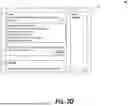
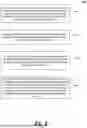
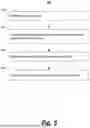


Sources:
- United States Patent and Trademark Office - verify current appl. status at the USPTO↗
Recent applications in this class:
- » 20260111662 2026-04-23
AUTOMATICALLY MAPPING SENTENCES TO EDUCATIONAL STANDARDS USING INTEGRATED PROGRAMMATIC AND SPECIALIZED GUIDED AND CONSTRAINED ARTIFICIAL INTELLIGENCE - » 20260093913 2026-04-02
MANAGING DEVIATION BETWEEN INFERENCE MODELS - » 20260093912 2026-04-02
MANAGING INFERENCE MODEL CORRECTNESS - » 20260093911 2026-04-02
MANAGING INFERENCE MODEL CONSISTENCY USING A SET OF PROMPTS - » 20260087248 2026-03-26
ARTIFICIAL INTELLIGENCE ENTERPRISE APPLICATION FRAMEWORK - » 20260080164 2026-03-19
COMPUTER IMPLEMENTED METHODS FOR THE AUTOMATED ANALYSIS OR USE OF DATA, INCLUDING USE OF A LARGE LANGUAGE MODEL - » 20260080163 2026-03-19
COMPUTER IMPLEMENTED METHODS FOR THE AUTOMATED ANALYSIS OR USE OF DATA, INCLUDING USE OF A LARGE LANGUAGE MODEL - » 20260080162 2026-03-19
GENERATIVE ARTIFICIAL INTELLIGENCE SUMMARIZATION SERVICE - » 20260080161 2026-03-19
Computer System, Computer-Implemented Method, and Computer Readable Media for Handling Incomplete Inputs to Large Language Models (LLMs) - » 20260073134 2026-03-12
CREATING A DIGITAL ASSISTANT