SYSTEMS AND METHODS FOR RESOURCE DISTRIBUTION PROCESS ASSESSMENTS USING ADVANCED COMPUTATIONAL MODELS FOR DATA ANALYSIS AND AUTOMATED PROCESSING
US20260120183A1
2026-04-30
18/926,248
2024-10-24
Smart Summary: A system has been created to help assess how resources are distributed between lenders and borrowers. When a borrower requests a resource distribution document, the system gathers important information about them, like their credit history and market trends. It then calculates the borrower's capacity to handle the resources and checks relevant regulations. The resource distribution document can be securely stored on a blockchain for transparency. Additionally, a smart contract is generated to outline the terms of the resource transfer, ensuring that resources are automatically transferred from the lender to the borrower when the contract is executed. 🚀 TL;DR
Abstract:
Systems, computer program products, and methods are described herein for resource distribution process assessments using advanced computational models for data analysis and automated processing. The present disclosure is configured to receive a request to generate a resource distribution document from a borrower, the resource distribution document comprising a transfer of a plurality of resources from a lender to the borrower. Further, the present disclosure may analyze borrower metadata associated with the borrower comprising credit history, market trends, and collateral quality. Further, the present disclosure may generate a borrower capacity, analyze a regulation database, and generate the resource distribution document. Additionally, or alternatively, the resource distribution document may be generated and stored on a blockchain. Further, the present disclosure may generate a smart contract comprising terms associated with the resource distribution document and transfer, based on execution of the smart contract, the plurality of resources from the lender to the borrower.
Inventors:
- Pratap Dande 83 🇺🇸 Saint Johns, FL, United States
- Bojan Zdravkovic 13 🇺🇸 Jersey City, NJ, United States
- Tony Aidoo 10 🇺🇸 Aubrey, TX, United States
- Rahul Yaksh 43 🇺🇸 Austin, TX, United States
- Dennis Vranjesevic 5 🇺🇸 Kent Cliffs, NY, United States
- Brian Neal Jacobson 2 🇺🇸 Granada Hills, CA, United States
- Noell York Eury 2 🇺🇸 Stanfield, NC, United States
Assignee:
- BANK OF AMERICA CORPORATION 7,731 🇺🇸 Charlotte, NC, United States
Applicant:
Interested in similar patents?
Get notified when new applications in this technology area are published.
Classification:
G06F9/5033 » CPC further
Arrangements for program control, e.g. control units using stored programs, i.e. using an internal store of processing equipment to receive or retain programs; Multiprogramming arrangements; Allocation of resources, e.g. of the central processing unit [CPU] to service a request the resource being a machine, e.g. CPUs, Servers, Terminals considering data affinity
G06F9/50 IPC
Arrangements for program control, e.g. control units using stored programs, i.e. using an internal store of processing equipment to receive or retain programs; Multiprogramming arrangements Allocation of resources, e.g. of the central processing unit [CPU]
Description
TECHNOLOGICAL FIELD
Example embodiments of the present disclosure relate to resources distribution process assessments using advanced computational models for data analysis and automated processing.
BACKGROUND
There are significant challenges associated with assessing resource distributions. Applicant has identified a number of deficiencies and problems associated with conventional procedures for assessing resource distributions. Through applied effort, ingenuity, and innovation, many of these identified problems have been solved by developing solutions that are included in embodiments of the present disclosure, many examples of which are described in detail herein.
BRIEF SUMMARY
The following presents a simplified summary of one or more embodiments of the present disclosure, in order to provide a basic understanding of such embodiments. This summary is not an extensive overview of all contemplated embodiments and is intended to neither identify key or critical elements of all embodiments nor delineate the scope of any or all embodiments. Its sole purpose is to present some concepts of one or more embodiments of the present disclosure in a simplified form as a prelude to the more detailed description that is presented later.
Systems, methods, and computer program products are provided for resource distribution process assessments using advanced computational models for data analysis and automated processing.
Embodiments of the present invention address the above needs and/or achieve other advantages by providing apparatuses (e.g., a system, computer program product, and/or other devices) and methods for resource distribution process assessments using advanced computational models for data analysis and automated processing. The system embodiments may comprise a processing device and a non-transitory storage device containing instructions when executed by the processing device, to perform the steps disclosed herein. In computer program product embodiments of the invention, the computer program product comprises a non-transitory computer-readable medium comprising code causing an apparatus to perform the steps disclosed herein. Computer implemented method embodiments of the invention may comprise providing a computing system comprising a computer processing device and a non-transitory computer readable medium, where the computer readable medium comprises configured computer program instruction code, such that when said instruction code is operated by said computer processing device, said computer processing device performs certain operations to carry out the steps disclosed herein.
In some embodiments, the present disclosure provides for resource distribution process assessments using advanced computational models for data analysis and automated processing. In some embodiments, the present disclosure may receive a request to generate a resource distribution document from a borrower, the resource distribution document comprising a transfer of a plurality of resources from a lender to the borrower. In some embodiments, the present disclosure may analyze borrower metadata associated with the borrower comprising credit history, market trends, and collateral quality. In some embodiments, the present disclosure may generate a borrower capacity of the borrower based on the borrower metadata. In some embodiments, the present disclosure may analyze a regulation database comprising policy rules associated with the resource distribution document. In some embodiments, the present disclosure may generate the resource distribution document, wherein the resource distribution document is generated and stored on a blockchain. In some embodiments, the present disclosure may generate a smart contract comprising terms associated with the resource distribution document, wherein the smart contract automatically executes upon the terms being met, and wherein the smart contract is stored on the blockchain. In some embodiments, the present disclosure may transfer, based on execution of the smart contract, the plurality of resources from the lender to the borrower. In some embodiments, the present disclosure may generate a summary report comprising details based on monitoring the borrower during a repayment period associated with the resource distribution document.
In some embodiments, the resource may include a syndicated resource, and the lender may include a plurality of lenders.
In some embodiments, the resource may include a syndicated resource, and the borrower may include a plurality of borrowers.
In some embodiments, the resource may include a syndicated resource, the lender may include a plurality of lenders, and the borrower may include a plurality of borrowers.
In some embodiments, the present disclosure may generate a capacity threshold, wherein the capacity threshold indicates a minimum ability required of the borrower to meet repayment obligations associated with the resource distribution document. In some embodiments, the present disclosure may determine the borrower's compliance with the capacity threshold.
In some embodiments, generating the summary report may include determining a credit deterioration, wherein the credit deterioration includes the borrower's inability to meet repayment obligations associated with the resource distribution document.
In some embodiments, the credit deterioration may include analyzing business performance metrics associated with the borrower.
In some embodiments, the present disclosure may include a data ingestion engine configured to aggregate a history of resource distributions associated with the lender; a data processing engine configured to process structured data associated with the history of resource distributions associated with the lender; a natural language processing (NLP) engine configured to process unstructured data associated with the history of resource distributions associated with the lender; a machine learning (ML) model configured to determine leverage across different industries; and a recommendation engine configured to predict uncertainties associated with the resource distribution document. In some embodiments, the present disclosure may analyze, using the data ingestion engine, data processing engine, and NLP engine, a portfolio of the lender, wherein the portfolio comprises the history of resource distributions associated with the lender; determine, using the ML model and based on the portfolio of the lender, an industry in which the lender is overleveraged; determine, using the ML model, the resource distribution document is associated with the industry in which the lender is overleveraged; and recommend, using the recommendation engine, the lender cancel the resource distribution document.
In some embodiments, the present disclosure may analyze, using the data ingestion engine, data processing engine, and NLP engine, a portfolio of the lender, wherein the portfolio comprises the history of resource distributions associated with the lender; determine, using the ML model and based on the portfolio of the lender, the portfolio of the lender is diversified; and recommend, using the recommendation engine, the lender proceed with transferring the plurality of resources from the lender to the borrower.
The above summary is provided merely for purposes of summarizing some example embodiments to provide a basic understanding of some aspects of the present disclosure. Accordingly, it will be appreciated that the above-described embodiments are merely examples and should not be construed to narrow the scope or spirit of the disclosure in any way. It will be appreciated that the scope of the present disclosure encompasses many potential embodiments in addition to those here summarized, some of which will be further described below.
BRIEF DESCRIPTION OF THE DRAWINGS
Having thus described embodiments of the disclosure in general terms, reference will now be made the accompanying drawings. The components illustrated in the figures may or may not be present in certain embodiments described herein. Some embodiments may include fewer (or more) components than those shown in the figures.
FIGS. 1A-1C illustrates technical components of an exemplary distributed computing environment for resource distribution process assessments using advanced computational models for data analysis and automated processing, in accordance with an embodiment of the disclosure;
FIG. 2 illustrates an exemplary generative AI subsystem, in accordance with an embodiment of the disclosure;
FIG. 3 illustrates a process flow for resource distribution process assessments using advanced computational models for data analysis and automated processing, in accordance with an embodiment of the disclosure;
FIG. 4 illustrates additional embodiments of the process flow for resource distribution process assessments using advanced computational models for data analysis and automated processing, in accordance with an embodiment of the disclosure;
FIG. 5 illustrates example embodiments of a transfer of resources from a lender to a borrower, in accordance with an embodiment of the disclosure; and
FIG. 6 illustrates an example embodiment of recommend, using a recommendation engine, either cancelling the resource distribution document or proceeding with the resource distribution document, in accordance with an embodiment of the disclosure.
DETAILED DESCRIPTION
Embodiments of the present disclosure will now be described more fully hereinafter with reference to the accompanying drawings, in which some, but not all, embodiments of the disclosure are shown. Indeed, the disclosure may be embodied in many different forms and should not be construed as limited to the embodiments set forth herein; rather, these embodiments are provided so that this disclosure will satisfy applicable legal requirements. Where possible, any terms expressed in the singular form herein are meant to also include the plural form and vice versa, unless explicitly stated otherwise. Also, as used herein, the term “a” and/or “an” shall mean “one or more,” even though the phrase “one or more” is also used herein. Furthermore, when it is said herein that something is “based on” something else, it may be based on one or more other things as well. In other words, unless expressly indicated otherwise, as used herein “based on” means “based at least in part on” or “based at least partially on.” Like numbers refer to like elements throughout.
As used herein, an “entity” may be any institution employing information technology resources and particularly technology infrastructure configured for processing large amounts of data. Typically, these data can be related to the people who work for the organization, its products or services, the customers or any other aspect of the operations of the organization. As such, the entity may be any institution, group, association, financial institution, establishment, company, union, authority or the like, employing information technology resources for processing large amounts of data.
As described herein, a “user” may be an individual associated with an entity. As such, in some embodiments, the user may be an individual having past relationships, current relationships or potential future relationships with an entity. In some embodiments, the user may be an employee (e.g., an associate, a project manager, an IT specialist, a manager, an administrator, an internal operations analyst, or the like) of the entity or enterprises affiliated with the entity.
As used herein, a “user interface” may be a point of human-computer interaction and communication in a device that allows a user to input information, such as commands or data, into a device, or that allows the device to output information to the user. For example, the user interface includes a graphical user interface (GUI) or an interface to input computer-executable instructions that direct a processor to carry out specific functions. The user interface typically employs certain input and output devices such as a display, mouse, keyboard, button, touchpad, touch screen, microphone, speaker, LED, light, joystick, switch, buzzer, bell, and/or other user input/output device for communicating with one or more users.
As used herein, an “engine” may refer to core elements of an application, or part of an application that serves as a foundation for a larger piece of software and drives the functionality of the software. In some embodiments, an engine may be self-contained, but externally-controllable code that encapsulates powerful logic designed to perform or execute a specific type of function. In one aspect, an engine may be underlying source code that establishes file hierarchy, input and output methods, and how a specific part of an application interacts or communicates with other software and/or hardware. The specific components of an engine may vary based on the needs of the specific application as part of the larger piece of software. In some embodiments, an engine may be configured to retrieve resources created in other applications, which may then be ported into the engine for use during specific operational aspects of the engine. An engine may be configurable to be implemented within any general purpose computing system. In doing so, the engine may be configured to execute source code embedded therein to control specific features of the general purpose computing system to execute specific computing operations, thereby transforming the general purpose system into a specific purpose computing system.
As used herein, “authentication credentials” may be any information that can be used to identify of a user. For example, a system may prompt a user to enter authentication information such as a username, a password, a personal identification number (PIN), a passcode, biometric information (e.g., iris recognition, retina scans, fingerprints, finger veins, palm veins, palm prints, digital bone anatomy/structure and positioning (distal phalanges, intermediate phalanges, proximal phalanges, and the like), an answer to a security question, a unique intrinsic user activity, such as making a predefined motion with a user device. This authentication information may be used to authenticate the identity of the user (e.g., determine that the authentication information is associated with the account) and determine that the user has authority to access an account or system. In some embodiments, the system may be owned or operated by an entity. In such embodiments, the entity may employ additional computer systems, such as authentication servers, to validate and certify resources inputted by the plurality of users within the system. The system may further use its authentication servers to certify the identity of users of the system, such that other users may verify the identity of the certified users. In some embodiments, the entity may certify the identity of the users. Furthermore, authentication information or permission may be assigned to or required from a user, application, computing node, computing cluster, or the like to access stored data within at least a portion of the system.
It should also be understood that “operatively coupled,” as used herein, means that the components may be formed integrally with each other, or may be formed separately and coupled together. Furthermore, “operatively coupled” means that the components may be formed directly to each other, or to each other with one or more components located between the components that are operatively coupled together. Furthermore, “operatively coupled” may mean that the components are detachable from each other, or that they are permanently coupled together. Furthermore, operatively coupled components may mean that the components retain at least some freedom of movement in one or more directions or may be rotated about an axis (i.e., rotationally coupled, pivotally coupled). Furthermore, “operatively coupled” may mean that components may be electronically connected and/or in fluid communication with one another.
As used herein, an “interaction” may refer to any communication between one or more users, one or more entities or institutions, one or more devices, nodes, clusters, or systems within the distributed computing environment described herein. For example, an interaction may refer to a transfer of data between devices, an accessing of stored data by one or more nodes of a computing cluster, a transmission of a requested task, or the like.
It should be understood that the word “exemplary” is used herein to mean “serving as an example, instance, or illustration.” Any implementation described herein as “exemplary” is not necessarily to be construed as advantageous over other implementations.
As used herein, “determining” may encompass a variety of actions. For example, “determining” may include calculating, computing, processing, deriving, investigating, ascertaining, and/or the like. Furthermore, “determining” may also include receiving (e.g., receiving information), accessing (e.g., accessing data in a memory), and/or the like. Also, “determining” may include resolving, selecting, choosing, calculating, establishing, and/or the like. Determining may also include ascertaining that a parameter matches a predetermined criterion, including that a threshold has been met, passed, exceeded, and so on.
As used herein, a “resource” may generally refer to objects, products, devices, goods, commodities, services, and the like, and/or the ability and opportunity to access and use the same. Some example implementations herein contemplate property held by a user, including property that is stored and/or maintained by a third-party entity. In some example implementations, a resource may be associated with one or more accounts or may be property that is not associated with a specific account. Examples of resources associated with accounts may be accounts that have cash or cash equivalents, commodities, and/or accounts that are funded with or contain property, such as safety deposit boxes containing jewelry, art or other valuables, a trust account that is funded with property, or the like. For purposes of this disclosure, a resource is typically stored in a resource repository-a storage location where one or more resources are organized, stored and retrieved electronically using a computing device.
As used herein, a “transfer,” a “distribution,” and/or an “allocation” may refer to any transaction, activities or communication between one or more entities, or between the user and the one or more entities. A resource transfer may refer to any distribution of resources such as, but not limited to, a payment, processing of funds, purchase of goods or services, a return of goods or services, a payment transaction, a credit transaction, or other interactions involving a user's resource or account. Unless specifically limited by the context, a “resource transfer” a “transaction”, “transaction event” or “point of transaction event” may refer to any activity between a user, a merchant, an entity, or any combination thereof. In some embodiments, a resource transfer or transaction may refer to financial transactions involving direct or indirect movement of funds through traditional paper transaction processing systems (i.e. paper check processing) or through electronic transaction processing systems. Typical financial transactions include point of sale (POS) transactions, automated teller machine (ATM) transactions, person-to-person (P2P) transfers, internet transactions, online shopping, electronic funds transfers between accounts, transactions with a financial institution teller, personal checks, conducting purchases using loyalty/rewards points etc. When discussing that resource transfers or transactions are evaluated, it could mean that the transaction has already occurred, is in the process of occurring or being processed, or that the transaction has yet to be processed/posted by one or more financial institutions. In some embodiments, a resource transfer or transaction may refer to non-financial activities of the user. In this regard, the transaction may be a customer account event, such as but not limited to the customer changing a password, ordering new checks, adding new accounts, opening new accounts, adding or modifying account parameters/restrictions, modifying a payee list associated with one or more accounts, setting up automatic payments, performing/modifying authentication procedures and/or credentials, and the like.
As used herein, “payment instrument” may refer to an electronic payment vehicle, such as an electronic credit or debit card. The payment instrument may not be a “card” at all and may instead be account identifying information stored electronically in a user device, such as payment credentials or tokens/aliases associated with a digital wallet, or account identifiers stored by a mobile application.
There are many problems associated with resource distribution (e.g., commercial lending) operations. The problems may include the complexity relating to the origination, diversification, servicing, and administration of the commercial loans, for example. Specifically, financial institutions may face issues due to the complex nature of analyzing documents relating to a commercial loan. For example, in today's market, financial institutions are increasingly investing in technology, talent, and uncertainty management capabilities to improve their commercial loan portfolios. This focus is driven by the need to address the significant complexity involved in underwriting practices, particularly in areas such as documenting loan agreements, security documents, and legal contracts. Assessing the creditworthiness of commercial loans presents further challenges, as economic factors and industry-specific uncertainties play a critical role in the decision-making process.
Moreover, ensuring compliance with regulatory requirements, such as the Truth in Lending Act (TILA), the Equal Credit Opportunity Act (ECOA), and Know Your Customer (KYC) regulations, demands substantial resources and expertise. These regulations are in place to ensure transparency and fairness, but they also add layers of operational and legal complexity. Additionally, external factors like economic downturns, industry disruptions, and market volatility can heavily influence the credit quality and overall performance of commercial loans, making it essential for institutions to stay agile and responsive to changing market conditions.
What is more, the present disclosure provides a technical solution to a technical problem. As described herein, the technical problem includes the inefficiencies and complexities involved in commercial lender operations, including manual loan processing, lengthy approval times, compliance with multiple regulations, and uncertainty assessment inaccuracies. The technical solution presented herein allows for the use of blockchain technology and AI-driven tools to streamline and automate the loan origination, approval, and monitoring process, improving accuracy and reducing the manual input required, while enhancing compliance and uncertainty management. In particular, the disclosure provided herein is an improvement over existing solutions to the inefficient and error-prone conventional commercial loan processes, (i) with fewer steps to achieve the solution, thus reducing the amount of computing resources, such as processing resources, storage resources, network resources, and/or the like, that are being used (e.g., using AI-powered uncertainty assessments rather than manual underwriting processes), (ii) providing a more accurate solution to problem, thus reducing the number of resources required to remedy any errors made due to a less accurate solution (e.g., automated smart contracts executing predefined terms versus manual contract enforcement), (iii) removing manual input and waste from the implementation of the solution, thus improving speed and efficiency of the process and conserving computing resources (e.g., automated borrower data analysis and real-time credit assessment using AI), (iv) determining an optimal amount of resources that need to be used to implement the solution, thus reducing network traffic and load on existing computing resources (e.g., optimized blockchain based transactions reducing redundancy in verification processes). Furthermore, the technical solution described herein uses a rigorous, computerized process to perform specific tasks and/or activities that were not previously performed. In specific implementations, the technical solution bypasses a series of steps previously implemented, thus further conserving computing resources.
In addition, the technical solution described herein is an improvement to computer technology and is directed to non-abstract improvements to the functionality of a computer platform itself. Specifically, the disclosure as described herein is a solution to the problem of inefficient loan processing, uncertainty management inaccuracies, and regulatory compliance challenges in commercial lending operations. Further, the embodiments in the present disclosure may be characterized as identifying a specific improvement in computer capabilities and/or network functionalities in response to the present disclosure's integration to existing devices, software, applications, and/or the like. In this way, the present disclosure improves the capability of a system to automate loan origination, streamline approval processes, and enhance real-time uncertainty assessment and compliance monitoring. Further, the present disclosure improves the functionality of networks in response to reducing the resources consumed by the system (e.g., network resources, computing resources, memory resources, and/or the like).
FIGS. 1A-1C illustrate technical components of an exemplary distributed computing environment 100 for resource distribution process assessments using advanced computational models for data analysis and automated processing, in accordance with an embodiment of the disclosure. As shown in FIG. 1A, the distributed computing environment 100 contemplated herein may include a system 130, an end-point device(s) 140, and a network 110 over which the system 130 and end-point device(s) 140 communicate therebetween. FIG. 1A illustrates only one example of an embodiment of the distributed computing environment 100, and it will be appreciated that in other embodiments one or more of the systems, devices, and/or servers may be combined into a single system, device, or server, or be made up of multiple systems, devices, or servers. Also, the distributed computing environment 100 may include multiple systems, same or similar to system 130, with each system providing portions of the necessary operations (e.g., as a server bank, a group of blade servers, or a multi-processor system).
In some embodiments, the system 130 and the end-point device(s) 140 may have a client-server relationship in which the end-point device(s) 140 are remote devices that request and receive service from a centralized server (e.g., system 130). In some other embodiments, the system 130 and the end-point device(s) 140 may have a peer-to-peer relationship in which the system 130 and the end-point device(s) 140 are considered equal and all have the same abilities to use the resources available on the network 110. Instead of having a central server (e.g., system 130) which would act as the shared drive, each device that is connect to the network 110 would act as the server for the files stored on it.
The system 130 may represent various forms of servers, such as web servers, database servers, file server, or the like, various forms of digital computing devices, such as laptops, desktops, video recorders, audio/video players, radios, workstations, or the like, or any other auxiliary network devices, such as wearable devices, Internet-of-things devices, electronic kiosk devices, mainframes, or the like, or any combination of the aforementioned.
The end-point device(s) 140 may represent various forms of electronic devices, including user input devices such as personal digital assistants, cellular telephones, smartphones, laptops, desktops, and/or the like, merchant input devices such as point-of-sale (POS) devices, electronic payment kiosks, resource distribution devices, and/or the like, electronic telecommunications device (e.g., automated teller machine (ATM)), and/or edge devices such as routers, routing switches, integrated access devices (IAD), and/or the like.
The network 110 may be a distributed network that is spread over different networks. This provides a single data communication network, which can be managed jointly or separately by each network. Besides shared communication within the network, the distributed network often also supports distributed processing. In some embodiments, the network 110 may include a telecommunication network, local area network (LAN), a wide area network (WAN), and/or a global area network (GAN), such as the Internet. Additionally, or alternatively, the network 110 may be secure and/or unsecure and may also include wireless and/or wired and/or optical interconnection technology. The network 110 may include one or more wired and/or wireless networks. For example, the network 110 may include a cellular network (e.g., a long-term evolution (LTE) network, a code division multiple access (CDMA) network, a 3G network, a 4G network, a 5G network, another type of next generation network, and/or the like), a public land mobile network (PLMN), a local area network (LAN), a wide area network (WAN), a metropolitan area network (MAN), a telephone network (e.g., the Public Switched Telephone Network (PSTN)), a private network, an ad hoc network, an intranet, the Internet, a fiber optic-based network, a cloud computing network, or the like, and/or a combination of these or other types of networks.
It is to be understood that the structure of the distributed computing environment and its components, connections and relationships, and their functions, are meant to be exemplary only, and are not meant to limit implementations of the disclosures described and/or claimed in this document. In one example, the distributed computing environment 100 may include more, fewer, or different components. In another example, some or all of the portions of the distributed computing environment 100 may be combined into a single portion, or all of the portions of the system 130 may be separated into two or more distinct portions.
FIG. 1B illustrates an exemplary component-level structure of the system 130, in accordance with an embodiment of the disclosure. As shown in FIG. 1B, the system 130 may include a processor 102, memory 104, storage device 106, a high-speed interface 108 connecting to memory 104, high-speed expansion points 111, and a low-speed interface 112 connecting to a low-speed bus 114, and an input/output (I/O) device 116. The system 130 may also include a high-speed interface 108 connecting to the memory 104, and a low-speed interface 112 connecting to low-speed port 114 and storage device 106. Each of the components 102, 104, 106, 108, 111, and 112 may be operatively coupled to one another using various buses and may be mounted on a common motherboard or in other manners as appropriate. As described herein, the processor 102 may include a number of subsystems to execute the portions of processes described herein. Each subsystem may be a self-contained component of a larger system (e.g., system 130) and capable of being configured to execute specialized processes as part of the larger system. The processor 102 may process instructions for execution within the system 130, including instructions stored in the memory 104 and/or on the storage device 106 to display graphical information for a GUI on an external input/output device, such as a display 116 coupled to a high-speed interface 108. In some embodiments, multiple processors, multiple buses, multiple memories, multiple types of memory, and/or the like may be used. Also, multiple systems, same or similar to system 130, may be connected, with each system providing portions of the necessary operations (e.g., as a server bank, a group of blade servers, a multi-processor system, and/or the like). In some embodiments, the system 130 may be managed by an entity, such as a business, a merchant, a financial institution, a card management institution, a software and/or hardware development company, a software and/or hardware testing company, and/or the like. The system 130 may be located at a facility associated with the entity and/or remotely from the facility associated with the entity.
The processor 102 can process instructions, such as instructions of an application that may perform the functions disclosed herein. These instructions may be stored in the memory 104 (e.g., non-transitory storage device) or on the storage device 106, for execution within the system 130 using any subsystems described herein. It is to be understood that the system 130 may use, as appropriate, multiple processors, along with multiple memories, and/or I/O devices, to execute the processes described herein.
The memory 104 may store information within the system 130. In one implementation, the memory 104 is a volatile memory unit or units, such as volatile random access memory (RAM) having a cache area for the temporary storage of information, such as a command, a current operating state of the distributed computing environment 100, an intended operating state of the distributed computing environment 100, instructions related to various methods and/or functionalities described herein, and/or the like. In another implementation, the memory 104 is a non-volatile memory unit or units. The memory 104 may also be another form of computer-readable medium, such as a magnetic or optical disk, which may be embedded and/or may be removable. The non-volatile memory may additionally or alternatively include an EEPROM, flash memory, and/or the like for storage of information such as instructions and/or data that may be read during execution of computer instructions. The memory 104 may store, recall, receive, transmit, and/or access various files and/or information used by the system 130 during operation. The memory 104 may store any one or more of pieces of information and data used by the system in which it resides to implement the functions of that system. In this regard, the system may dynamically utilize the volatile memory over the non-volatile memory by storing multiple pieces of information in the volatile memory, thereby reducing the load on the system and increasing the processing speed.
The storage device 106 is capable of providing mass storage for the system 130. In one aspect, the storage device 106 may be or contain a computer-readable medium, such as a floppy disk device, a hard disk device, an optical disk device, or a tape device, a flash memory or other similar solid state memory device, or an array of devices, including devices in a storage area network or other configurations. A computer program product can be tangibly embodied in an information carrier. The computer program product may also contain instructions that, when executed, perform one or more methods, such as those described above. The information carrier may be a non-transitory computer- or machine-readable storage medium, such as the memory 104, the storage device 106, or memory on processor 102.
In some embodiments, the system 130 may be configured to access, via the network 110, a number of other computing devices (not shown). In this regard, the system 130 may be configured to access one or more storage devices and/or one or more memory devices associated with each of the other computing devices. In this way, the system 130 may implement dynamic allocation and de-allocation of local memory resources among multiple computing devices in a parallel and/or distributed system. Given a group of computing devices and a collection of interconnected local memory devices, the fragmentation of memory resources is rendered irrelevant by configuring the system 130 to dynamically allocate memory based on availability of memory either locally, or in any of the other computing devices accessible via the network. In effect, the memory may appear to be allocated from a central pool of memory, even though the memory space may be distributed throughout the system. Such a method of dynamically allocating memory provides increased flexibility when the data size changes during the lifetime of an application and allows memory reuse for better utilization of the memory resources when the data sizes are large.
The high-speed interface 108 manages bandwidth-intensive operations for the system 130, while the low-speed interface 112 manages lower bandwidth-intensive operations. Such allocation of functions is exemplary only. In some embodiments, the high-speed interface 108 is coupled to memory 104, input/output (I/O) device 116 (e.g., through a graphics processor or accelerator), and to high-speed expansion ports 111, which may accept various expansion cards (not shown). In such an implementation, low-speed interface 112 is coupled to storage device 106 and low-speed expansion port 114. The low-speed expansion port 114, which may include various communication ports (e.g., USB, Bluetooth, Ethernet, wireless Ethernet), may be coupled to one or more input/output devices, such as a keyboard, a pointing device, a scanner, or a networking device such as a switch or router (e.g., through a network adapter).
The system 130 may be implemented in a number of different forms. For example, the system 130 may be implemented as a standard server, or multiple times in a group of such servers. Additionally, the system 130 may also be implemented as part of a rack server system or a personal computer (e.g., laptop computer, desktop computer, tablet computer, mobile telephone, and/or the like). Alternatively, components from system 130 may be combined with one or more other same or similar systems and an entire system 130 may be made up of multiple computing devices communicating with each other.
FIG. 1C illustrates an exemplary component-level structure of the end-point device(s) 140, in accordance with an embodiment of the disclosure. As shown in FIG. 1C, the end-point device(s) 140 includes a processor 152, memory 154, an input/output device such as a display 156, a communication interface 158, and a transceiver 160, among other components. The end-point device(s) 140 may also be provided with a storage device, such as a microdrive or other device, to provide additional storage. Each of the components 152, 154, 156, 158, 160, 162, 164, 166, 168 and 170, are interconnected using various buses, and several of the components may be mounted on a common motherboard or in other manners as appropriate.
The processor 152 is configured to execute instructions within the end-point device(s) 140, including instructions stored in the memory 154, which in one embodiment includes the instructions of an application that may perform the functions disclosed herein, including certain logic, data processing, and data storing functions. The processor 152 may be implemented as a chipset of chips that include separate and multiple analog and digital processors. The processor 152 may be configured to provide, for example, for coordination of the other components of the end-point device(s) 140, such as control of user interfaces, applications run by end-point device(s) 140, and wireless communication by end-point device(s) 140.
The processor 152 may be configured to communicate with the user through control interface 164 and display interface 166 coupled to a display 156 (e.g., input/output device 156). The display 156 may be, for example, a Thin-Film-Transistor Liquid Crystal Display (TFT LCD) or an Organic Light Emitting Diode (OLED) display, or other appropriate display technology. An interface of the display may include appropriate circuitry and configured for driving the display 156 to present graphical and other information to a user. The control interface 164 may receive commands from a user and convert them for submission to the processor 152. In addition, an external interface 168 may be provided in communication with processor 152, so as to enable near area communication of end-point device(s) 140 with other devices. External interface 168 may provide, for example, for wired communication in some implementations, or for wireless communication in other implementations, and multiple interfaces may also be used.
The memory 154 stores information within the end-point device(s) 140. The memory 154 can be implemented as one or more of a computer-readable medium or media, a volatile memory unit or units, or a non-volatile memory unit or units. Expansion memory may also be provided and connected to end-point device(s) 140 through an expansion interface (not shown), which may include, for example, a Single In Line Memory Module (SIMM) card interface. Such expansion memory may provide extra storage space for end-point device(s) 140 or may also store applications or other information therein. In some embodiments, expansion memory may include instructions to carry out or supplement the processes described above and may include secure information also. For example, expansion memory may be provided as a security module for end-point device(s) 140 and may be programmed with instructions that permit secure use of end-point device(s) 140. In addition, secure applications may be provided via the SIMM cards, along with additional information, such as placing identifying information on the SIMM card in a non-hackable manner. In some embodiments, the user may use applications to execute processes described with respect to the process flows described herein. For example, one or more applications may execute the process flows described herein. In some embodiments, one or more applications stored in the system 130 and/or the user input system 140 may interact with one another and may be configured to implement any one or more portions of the various user interfaces and/or process flow described herein.
The memory 154 may include, for example, flash memory and/or NVRAM memory. In one aspect, a computer program product is tangibly embodied in an information carrier. The computer program product contains instructions that, when executed, perform one or more methods, such as those described herein. The information carrier is a computer- or machine-readable medium, such as the memory 154, expansion memory, memory on processor 152, or a propagated signal that may be received, for example, over transceiver 160 or external interface 168.
In some embodiments, the user may use the end-point device(s) 140 to transmit and/or receive information or commands to and from the system 130 via the network 110. Any communication between the system 130 and the end-point device(s) 140 may be subject to an authentication protocol allowing the system 130 to maintain security by permitting only authenticated users (or processes) to access the protected resources of the system 130, which may include servers, databases, applications, and/or any of the components described herein. To this end, the system 130 may trigger an authentication subsystem that may require the user (or process) to provide authentication credentials to determine whether the user (or process) is eligible to access the protected resources. Once the authentication credentials are validated and the user (or process) is authenticated, the authentication subsystem may provide the user (or process) with permissioned access to the protected resources. Similarly, the end-point device(s) 140 may provide the system 130 (or other client devices) permissioned access to the protected resources of the end-point device(s) 140, which may include a GPS device, an image capturing component (e.g., camera), a microphone, and/or a speaker.
The end-point device(s) 140 may communicate with the system 130 through communication interface 158, which may include digital signal processing circuitry where necessary. Communication interface 158 may provide for communications under various modes or protocols, such as GSM voice calls, SMS, EMS, or MMS messaging, CDMA, TDMA, PDC, WCDMA, CDMA2000, GPRS, and/or the like. Such communication may occur, for example, through transceiver 160. Additionally, or alternatively, short-range communication may occur, such as using a Bluetooth, Wi-Fi, near-field communication (NFC), and/or other such transceiver (not shown). Additionally, or alternatively, a Global Positioning System (GPS) receiver module 170 may provide additional navigation-related and/or location-related wireless data to user input system 140, which may be used as appropriate by applications running thereon, and in some embodiments, one or more applications operating on the system 130.
Communication interface 158 may provide for communications under various modes or protocols, such as the Internet Protocol (IP) suite (commonly known as TCP/IP). Protocols in the IP suite define end-to-end data handling methods for everything from packetizing, addressing and routing, to receiving. Broken down into layers, the IP suite includes the link layer, containing communication methods for data that remains within a single network segment (link); the Internet layer, providing internetworking between independent networks; the transport layer, handling host-to-host communication; and the application layer, providing process-to-process data exchange for applications. Each layer contains a stack of protocols used for communications.
The end-point device(s) 140 may also communicate audibly using audio codec 162, which may receive spoken information from a user and convert the spoken information to usable digital information. Audio codec 162 may likewise generate audible sound for a user, such as through a speaker, e.g., in a handset of end-point device(s) 140. Such sound may include sound from voice telephone calls, may include recorded sound (e.g., voice messages, music files, etc.) and may also include sound generated by one or more applications operating on the end-point device(s) 140, and in some embodiments, one or more applications operating on the system 130.
Various implementations of the distributed computing environment 100, including the system 130 and end-point device(s) 140, and techniques described here can be realized in digital electronic circuitry, integrated circuitry, specially designed application specific integrated circuits (ASICs), computer hardware, firmware, software, and/or combinations thereof.
FIG. 2 illustrates an exemplary generative AI subsystem 200, in accordance with an embodiment of the invention. The generative AI subsystem 200 may include a data ingestion engine 202, a data pre-processing engine 204, a model training engine 206, and a loss function and optimization engine 208. It should be understood that the generative AI subsystem 200 is merely an example, and other embodiments may include more, fewer, or different components depending on the specific requirements and implementations of the system. For instance, additional engines for data validation, feature selection, or distributed computing may be integrated into the subsystem, or certain components described herein may be consolidated or omitted based on system performance objectives. Therefore, the generative AI subsystem 200 should not be considered limiting and may be adapted to various configurations within the scope of the invention.
The data ingestion engine 202 may identify various internal and/or external data sources to generate, test, and/or integrate new features for training the generative AI model. These internal and/or external data sources (e.g., text corpora, web-based text data, document repositories, or decentralized text storage system) may be initial locations where the data originates or where physical information is first digitized. In addition to conventional data sources, the data ingestion engine 202 may support decentralized storage systems, such as blockchain-based data sources, and privacy-preserving methods such as differential privacy. The data ingestion engine 202 may identify the location of the data and describe connection characteristics for access and retrieval of data. In some embodiments, data is transported from each data source using any applicable network protocols, such as the File Transfer Protocol (FTP), Hyper-Text Transfer Protocol (HTTP), or any of the myriad Application Programming Interfaces (APIs) provided by websites, networked applications, and other services. In some embodiments, the these data sources may include Enterprise Resource Planning (ERP) databases that host data related to day-to-day business activities such as accounting, procurement, project management, exposure management, supply chain operations, and/or the like, mainframe that is often the entity's central data processing center, edge devices that may be any piece of hardware, such as sensors, actuators, gadgets, appliances, or machines, that are programmed for certain applications and can transmit data over the internet or other networks, and/or the like.
Depending on the nature of the data, the data ingestion engine 202 may move the data to a destination for storage or further analysis. Typically, the data may be in varying formats as they come from different sources, including RDBMS, other types of databases, S3 buckets, CSVs, or from streams. For a large language model (“LLM”), text data may originate from sources such as web scrapes, social media, large public text datasets, or the like. Since the data comes from different places, it needs to be cleansed and transformed so that it can be analyzed together with data from other sources. The data may be ingested in real-time, using stream processing, in batches using a batch data warehouse, or a combination of both. Stream processing may be used to process continuous data stream (e.g., data from edge devices), i.e., computing on data directly as it is received, and filter the incoming data to retain specific portions that are deemed useful by aggregating, analyzing, transforming, and ingesting the data. On the other hand, the batch data warehouse collects and transfers data in batches according to scheduled intervals, trigger events, or any other logical ordering.
In machine learning, the quality of data and the useful information that can be derived therefrom directly affects the ability of the machine learning model to learn. The data pre-processing engine 204 may implement advanced integration and processing steps needed to prepare the data for machine learning execution, including tokenization, text normalization, and removal of irrelevant elements like HTML tags in web-based data, especially for LLM training. This may include modules to perform any upfront, data transformation to consolidate the data into alternate forms by changing the value, structure, or format of the data using generalization, normalization, attribute selection, and aggregation, text-specific transformations such as stemming and lemmatization, data cleaning by filling missing values, smoothing the noisy data, resolving the inconsistency, and removing outliers, and/or any other encoding steps as needed. In some embodiments, the data pre-processing engine 204 may perform real-time pre-processing at the edge via edge computing devices, allowing for the transformation and reduction of data prior to transmission to centralized locations, thereby reducing latency and conserving network bandwidth.
In addition to improving the quality of the data, the data pre-processing engine 204 may transform categorical data into numerical formats that are suitable for machine learning algorithms. In this regard, the data pre-processing engine 204 may use techniques such as one-hot encoding or label encoding depending on the nature of the categorical variables and the intended use of the data.
In some embodiments, the data pre-processing engine 204 may also include dimensionality reduction techniques, where the number of input features is reduced while retaining the most relevant information. In this regard, the data pre-processing engine 204 may include methods such as Principal Component Analysis (PCA) or apply feature selection algorithms to remove redundant or irrelevant features, thereby reducing the computational complexity of the model training phase. Feature selection may be particularly beneficial in datasets with a high number of features, ensuring that the generative AI models do not overfit to noise or irrelevant details. The pre-processed data output from the data pre-processing engine 204 may then be fed into the model training module 206.
The model training engine 206 may be responsible for training the generative AI models using the pre-processed data from the data pre-processing engine 204. The model training engine 206 may implement various machine learning algorithms, including but not limited to Generative Adversarial Networks (GANs), Variational Autoencoders (VAEs), transformers, diffusion models, or other specialized architectures depending on the specific requirements of the system. These models may be used in a broad range of applications, such as LLMs for text generation, image generation models, video synthesis models, audio generation models, and/or the like. The model training engine 206 may optimize these models by continuously adjusting their internal parameters based on the patterns and relationships identified within the data.
In some embodiments, the model training engine 206 may include a training data handler, which manages the partitioning of the pre-processed data into training, validation, and testing datasets. The training data is used to update the model's parameters, while the validation and testing datasets are reserved to evaluate the model's performance during and after training. The model training engine 206 may support various data-handling strategies, such as cross-validation or random shuffling, to ensure that the model generalizes well and is not overfitting to the training data.
In embodiments involving large language models, the model training engine 206 may utilize transformer-based architectures, such as the Transformer, BERT, GPT, or the like. Transformer models rely on mechanisms like self-attention to capture dependencies between words in a sequence, regardless of their distance from one another. The self-attention mechanism allows the model to weigh the importance of different words in a sentence and establish complex relationships important for understanding context. During training, the model may process vast amounts of text data and learn to predict the next word or token in a sequence based on the input context. This training process allows LLMs to generate coherent text, complete sentences, translate languages, or answer questions based on learned patterns from the data.
The transformer-based LLMs may be trained using autoregressive (e.g., GPT) or masked-language modeling techniques (e.g., BERT). In autoregressive models, the training process may include predicting the next word in a sequence by progressively revealing more context to the model. The model iteratively improves its predictions based on its performance during prior iterations. Masked-language modeling involves masking certain words in a sentence and training the model to correctly predict the masked words based on surrounding context. Both approaches enable LLMs to capture intricate patterns in human language, improving their ability to handle tasks such as summarization, translation, and text generation. Loss functions like cross-entropy loss may be used to optimize the model's performance by comparing predicted tokens with the actual tokens in the dataset to guide the model to minimize prediction errors during training.
In embodiments involving image generation models, the model training engine 206 may utilize transformer-based architectures, such as Vision Transformers (ViTs) or generative adversarial networks (GANs). Vision Transformers rely on self-attention mechanisms to process images as sequences of patches rather than whole images, allowing the model to capture spatial dependencies and patterns across the image. During training, the model may be exposed to large datasets containing diverse image types to learn features like textures, edges, and shapes. The model may then generate or reconstruct images by interpreting these patterns and applying learned spatial relationships. GAN-based models may also be used, where a generator network creates images, and a determinator network evaluates their realism, enabling the model to improve through adversarial training.
Image generation models may employ various training techniques, such as pixel-wise reconstruction or adversarial training, depending on the architecture. Pixel-wise reconstruction methods involve learning to reconstruct an image from its corrupted or downscaled version, optimizing the model to minimize the difference between the predicted and actual pixels (e.g., using mean squared error as the loss function). Adversarial training, often used with GANs, involves iteratively improving the generator network to produce images that are increasingly indistinguishable from real images, based on feedback from the determinator network. These approaches allow the model to capture complex visual features, enabling applications such as image synthesis, enhancement, and style transfer.
For video generation models, the model training engine 206 may employ transformer-based architectures like Video Transformers or GAN-based models specifically designed for handling temporal sequences. Video Transformers use self-attention mechanisms to model dependencies not only between pixels within a single frame but also across frames, allowing them to understand temporal relationships and motion patterns in videos. The model may be trained on large video datasets, enabling it to learn and reproduce dynamic changes and interactions between objects over time. GAN-based video models may incorporate spatiotemporal networks to evaluate the realism of generated video sequences, optimizing the model to produce continuous and coherent frames.
Video generation models may utilize spatial-temporal modeling techniques or adversarial training for generating realistic motion and video sequences. Spatial-temporal modeling involves learning the spatial features within each frame while simultaneously capturing the temporal dependencies between frames, optimizing the model's ability to predict future frames or complete missing sequences. Loss functions like mean squared error or perceptual loss may be applied to reduce discrepancies between predicted and actual frames. Adversarial training, on the other hand, may involve a generator creating video sequences and a determinator evaluating their realism, encouraging the generator to improve by minimizing the discrepancy identified by the determinator. These techniques may enable video generation models to create coherent and realistic sequences, useful in applications such as video synthesis and animation.
In audio generation models, the model training engine 206 may utilize architectures such as Audio Transformers or recurrent neural networks (RNNs) like WaveNet, designed to handle sequential and waveform data. Audio Transformers leverage attention mechanisms to capture relationships between segments of audio, allowing them to model temporal dependencies and predict the next audio sample based on previous context. During training, the model may process large audio datasets containing diverse sound patterns to learn representations of different audio features, such as frequency, amplitude, and harmonics. This training enables the model to generate coherent audio sequences, including speech, music, or ambient sounds, by synthesizing these learned patterns.
Audio generation models may be trained using sequence modeling techniques or autoregressive methods, depending on the architecture. Sequence modeling techniques involve processing and predicting sequences of audio samples, optimizing the model to capture and reproduce temporal dependencies in sound. Autoregressive methods, such as those employed in WaveNet, focus on predicting each audio sample based on prior samples, progressively refining the generated audio sequence over multiple iterations. Loss functions like mean absolute error or cross-entropy loss may be used to minimize the error between predicted and actual audio samples, guiding the model to improve its accuracy. These approaches allow audio generation models to create continuous and realistic audio outputs, applicable in areas such as speech synthesis, music generation, and sound effect creation.
The reconstruction loss ensures that the difference between the original input and the reconstructed output is minimized, guiding the decoder to generate outputs that closely resemble the input data. The second component, KL divergence loss, regularizes the latent space by ensuring that the distribution of latent variables conforms to a predefined probabilistic distribution, often a Gaussian distribution. This constraint encourages the model to learn a well-organized and smooth latent space, allowing for meaningful sampling from this space during inference. By combining these loss functions, the VAE can learn a latent space that not only captures the underlying patterns in the data but also allows for the generation of novel outputs by sampling new points from this space. During the inference phase, the trained model can sample random points from the latent space to generate new, previously unseen data instances.
In training generative AI models, the model training engine 206 may implement optimization techniques such as gradient clipping, learning rate scheduling, and mixed-precision training. Gradient clipping may be used to stabilize the training process, especially in transformer-based models, by capping the magnitude of gradients to prevent them from becoming excessively large. Learning rate scheduling may involve gradually increasing the learning rate during initial training phases (warm-up) and then decaying it as training progresses to fine-tune the model's parameters more effectively. Mixed-precision training, which leverages lower-precision (e.g., float16) arithmetic while retaining higher precision (e.g., float32) for specific calculations, may be used to accelerate training and reduce memory consumption, enabling the model to scale efficiently even when trained on large datasets.
In some embodiments, the model training engine 206 may implement early stopping mechanisms to prevent overfitting. Early stopping monitors the generative AI model's performance on the validation dataset, halting the training process if the performance does not improve after a specified number of iterations. This ensures that the generative AI model does not continue training on noise or irrelevant patterns, which could degrade its performance on unseen data. The model training engine 206 may also support distributed training across multiple computing nodes, allowing the system to scale its computational resources as needed. Distributed training may involve splitting the generative AI model and data across multiple machines or GPUs, where each node processes a portion of the data and updates the model in parallel. This is particularly useful for large datasets or models that require significant computational power, such as deep generative models. The model training engine 206 may synchronize the updates across the nodes using techniques like synchronous or asynchronous gradient descent.
Once the generative AI model is trained, the model training engine 206 may save the final trained generative AI model in a persistent storage location for future use. In specific embodiments, metadata such as the number of epochs, the final loss values, and values of learned parameters may be logged for model versioning and/or retraining at a later stage. In some embodiments, the model training engine 206 may also implement transfer learning, where a pre-trained model is fine-tuned on a smaller, domain-specific dataset. This may reduce the amount of time and data required to train a new model, especially in cases where the available data is limited or highly specialized. The model training engine 206 may adjust the parameters of the pre-trained model to better align with the new dataset, while preserving the learned features from the original training.
In embodiments involving LLMs, new output is generated by sampling from the model's probability distribution of tokens, conditioned on the context provided as input. Transformer-based architectures, such as GPT, use an auto-regressive approach where the model predicts the next token in a sequence one step at a time, using previously generated tokens as input for subsequent predictions. The process starts with a prompt or an initial sequence of words, and the model iteratively generates new tokens, forming coherent sentences or paragraphs based on the learned context and language patterns. For masked-language modeling (e.g., BERT), new output may be generated by filling in masked parts of the input sequence, allowing the model to complete sentences or generate variations of the provided text. The generated output can be controlled by adjusting parameters which influence the randomness of the token sampling, enabling the generation of diverse or deterministic responses.
In image generation models, such as those using ViTs or GANs, new output is generated by sampling from the learned distribution in the model's latent space. For GANs, the generator network creates an image by transforming random noise vectors into structured image outputs through a series of layers that learn visual features like shapes, textures, and colors. The generated image is then refined through adversarial feedback from the determinator network, which assesses the realism of the generated output. For transformer-based image models, the process may involve reconstructing images by assembling patches based on the learned dependencies between them. Input conditions, such as prompts describing desired features or specific noise vectors, guide the generation process, allowing for the creation of customized images or variations of existing visual styles. These models may also generate images based on style transfer techniques or predefined templates, synthesizing images that align with the characteristics present in the training data.
Video generation models utilize spatiotemporal dependencies to synthesize new video sequences based on the patterns learned during training. In transformer-based architectures, the model may generate video frames sequentially, predicting the next frame based on the input frames and the temporal context established by prior frames. GAN-based models, specifically designed for video synthesis, may sample noise vectors or use a sequence of frames as input, transforming these into continuous and temporally coherent video outputs through the generator network. The determinator evaluates the temporal consistency and realism of the output, ensuring the generated video mimics the motion dynamics and object interactions present in real-world video data. Such models may also use attention mechanisms to focus on critical elements within each frame and their evolution across time, facilitating realistic scene transitions and motion patterns. The generation process may include user-defined input such as initial frames, motion descriptions, or specific video attributes, providing control over the output.
Audio generation models, including Audio Transformers or autoregressive architectures like WaveNet, generate new audio sequences by predicting audio samples based on learned dependencies in sequential sound data. For autoregressive models, the generation process involves producing each audio sample one at a time, conditioned on previously generated samples, allowing the model to build complex audio patterns such as speech, music, or ambient sounds. The model starts with an initial segment or a random seed and uses its learned parameters to predict and synthesize subsequent samples, constructing a continuous audio waveform. Audio Transformers, on the other hand, may use attention mechanisms to identify important temporal segments within the input audio and synthesize new output based on these learned patterns. The user can control the type of audio generated by providing parameters such as pitch, tempo, or initial sound clips, enabling the model to generate outputs tailored to specific use cases like speech synthesis, music composition, or environmental sound generation.
In some embodiments, generative AI models may also integrate multiple modalities, enabling cross-modal generation where output in one modality influences or conditions the generation in another. For example, a video generation model may use text descriptions as input, synthesizing video content that aligns with the specified narrative or visual scene described. Similarly, image generation models may generate visual representations based on audio inputs, such as generating animations synchronized to musical rhythms or speech patterns. These cross-modal systems typically involve conditional GANs or multi-modal transformers, where the model processes input from one domain (e.g., text or audio) and learns to generate output in another domain (e.g., video or image) by aligning the patterns and dependencies between the different modalities. These models may allow users to generate complex, multimodal content based on combinations of inputs, such as using textual prompts to control the visual and auditory elements of a video.
It will be understood that the embodiment of the generative AI subsystem 200 illustrated in FIG. 2 is exemplary and that other embodiments may vary. The generative AI subsystem 200, as well as its constituent elements, may vary, and modifications or alternative configurations may be implemented without departing from the broader scope of the invention. For instance, different machine learning algorithms, data sources, optimization techniques, or training methodologies may be employed depending on system requirements, application domain, and available computational resources. Furthermore, features and functionalities described in one embodiment may be combined with those of another embodiment as needed, and vice versa.
FIG. 3 illustrates a process flow for resource distribution process assessments using advanced computational models for data analysis and automated processing, in accordance with an embodiment of the disclosure. The method may be carried out by various components of the distributed computing environment 100 discussed herein (e.g., the system 130, one or more end-point device(s) 140, etc.). An example system may include at least one processing device and at least one non-transitory storage device with computer-readable program code stored thereon and accessible by the at least one processing device, wherein the computer-readable code when executed is configured to carry out the method discussed herein.
In some embodiments, a resource distribution assessment system (e.g., similar to one or more of the systems described herein with respect to FIGS. 1A-1C) may perform one or more of the steps of process flow 300. For example, a resource distribution assessment system (e.g., the system 130 described herein with respect to FIGS. 1A-1C) may perform the steps of process flow 300.
As shown in block 302, the process flow 300 of this embodiment includes receiving a request to generate a resource distribution document from a borrower. In some embodiments, the disclosure as provided herein may receive a request to generate a resource distribution document from a borrower, the resource distribution document including a transfer of a plurality of resource from a lender to the borrower. In some embodiments, the resource distribution document may include a commercial loan, which may include the transfer of resources or funds from the lender to the borrower. In this way, and in some embodiments, the resource distribution document may include an initial request from a borrower to a lender for a transfer of funds structured as a commercial loan. In other embodiments, the resource distribution document may be documentation, forms, or the like that are further along in the process of a commercial loan (e.g., past the loan origination phase).
In some embodiments, the resource may include a syndicated resource, the lender may include a plurality of lenders, and/or the borrower may include a plurality of borrowers. For example, as shown in FIG. 5, the lender 502 may include a plurality of lenders. In this regard, the lender or plurality of lenders may produce the resources 504 that will be transferred to the borrower 506 (or plurality of borrowers). For example, the lender(s) 502 may collectively contribute equal or unequal portions of the resources 504 to be transferred. Similarly, the borrower(s) 506 may receive equal or unequal amounts of the resources 504 being transferred.
As shown in block 304, the process flow 300 of this embodiment includes analyzing borrower metadata. In some embodiments, this may include analyzing borrower metadata associated with the borrower including credit history, market trends, and collateral quality.
In some embodiments, the borrower metadata may be analyzed via the AI engines as described herein. For example, an AI engine including components as described in FIG. 2 may analyze the borrower metadata. The borrower metadata may include a wide range of data sources including financial statements, credit history, market trends, industry benchmarks, and the like. In this regard, the borrower metadata may be used to determine a creditworthiness of the borrower. Additionally, or alternatively, the use of AI to analyze the borrower metadata may automate and streamline review of the resource distribution process.
In some embodiments, the borrower metadata may include details associated with the borrower, which may include company registration details, industry classification, ownership structure, operational history, or the like. Further, the borrower metadata may include organizational structure (e.g., whether the borrower is a corporation, LLC, partnership, or the like). Analyzing the borrower metadata may also include analyzing the borrower's financial metrics, cash flow, resources, financial ratios, and the like to determine the financial health of the borrower.
In some embodiments, the borrower may offer collateral in exchange for the resources transferred by the lender. The quality of the borrower's collateral may be determined via the current market value and condition of the collateral, along with the history of ownership and current ownership status. In addition, whether the collateral is being used as collateral in another loan may affect the quality of the present valuation of the collateral. Further, the borrower's borrowing habits and patterns may be included in the borrower metadata, which may indicate the borrower's reliability and ability to conform to the repayment obligations of the present loan.
As shown in block 306, the process flow 300 of this embodiment includes generating a borrower capacity of the borrower. In some embodiments, this may include generating a borrower capacity of the borrower based on the borrower metadata. The borrower capacity may include the borrower's ability to take on financial resources in the form of a loan. The factors that may contribute to determining the borrower capacity may include how many loans the borrower has received in the past, the size of the historic loans, whether the borrower repaid those loans in a timely manner, and the like. Further, the borrower's capacity may include ratings from third party agencies that analyze borrower data to determine the borrower's perceived ability to repay loans. In this way, the borrower capacity may include a number that may be used to compare against industry benchmarks to determine how well the borrower stands as compared against other borrowers in the industry.
As shown in block 308, the process flow 300 of this embodiment includes analyzing a regulation database. In some embodiments, this may include analyzing a regulation database including policy rules associated with the resource distribution document. The regulation database may include rules, laws, regulations, policies, and the like used to regulate or control the transaction in question. In this way, the regulation database may be queried to determine appropriate actions for a particular transaction. The regulations database may include information on laws such as anti-money laundering (AML) regulations, Know Your Customer (KYC) rules, lending limits, industry-specific regulations, and the like. In this way, the regulation database may assist with a determination that the borrower and the terms of the commercial loan (e.g., the resource distribution document) meet the necessary legal standards. For example, if the borrower is associated with a highly regulated sector, the regulation database may flag additional compliance requirements the lender may need to consider. Further, if the resource distribution document conflicts with the regulations, the lender may modify the agreement or even deny proceeding with the transfer of resources.
As shown in block 310, the process flow 300 of this embodiment includes generating the resource distribution document. In some embodiments, this may include generating document, wherein the distribution document is generated and stored on a blockchain. The resource distribution document may be generated based on the metrics and data analyzed associated with the borrower. Further, the resource distribution document may be accessed and updated on the blockchain, allowing for the lender and borrower to access the resource distribution document. In this way, a smart contract may be created and the resource distribution document's terms may be embedded into the smart contract.
For example, as shown in block 312, the process flow 300 of this embodiment includes generating a smart contract including terms associated with the resource distribution document. In some embodiments, this may include generating a smart contract including terms associated with the resource distribution document, wherein the smart contract automatically executes upon the terms being met, and wherein the smart contract is stored on the blockchain. In this way, the smart contract may automate actions such as resource disbursement, interest calculations, repayment, and the like, based on predefined conditions. The blockchain's decentralized nature may allow the parties (e.g., the lender, borrower, other interested parties) to access the resource distribution document in real-time.
As shown in block 314, the process flow 300 of this embodiment includes transferring the plurality of resources from the lender to the borrower. In some embodiments, this may include transferring, based on an execution of the smart contract, the plurality of resources from the lender to the borrower. For example, the blockchain may facilitate the transfer of the resources or funds, such as the loan amount, interest rate, repayment conditions or obligations, and the like. In this way, when the predefined conditions of the smart contract are met, the smart contract automatically triggers the transfer of the loan from the lender to the borrower. For example, the predefined conditions may include identification of the borrower, collateral registration and assessment, fulfillment of regulatory requirements via the regulatory database, and the like. The transfer of resources may involve a transfer of digital resources, tokenized resources, traditional fiat currencies, or the like. In some embodiments, the smart contract may update the blockchain in real time with the transferred resources to update the blockchain with the current status of the resource transfer. Further, the blockchain may record each step of the transaction to ensure the ledger is updated and maintained appropriately.
As shown in block 316, the process flow 300 of this embodiment includes generating a summary report. In some embodiments, this may include generating a summary report including details based on monitoring the borrower during a repayment period associated with the resource distribution document. In some embodiments, the summary report may include providing details of the borrower's financial health and compliance with the loan terms or the resource distribution document. The report may be based on continouous monitoring of the borrower's repayment behavior, financial performance, adherence to the terms of the resource distribution document, and the like. For example, the report may include the borrower's repayment history, outstanding balance, and accrued interest. Further, in some emboidments, the summary report may include real-time financial metrics, such as cash flows, existing obligations, changes in collateral values, and the like. Further still, in some embodiments, alerts may be generated for instances in which the borrower is failing or potentially failing to meet repayment obligations.
For example, in some embodiments, generating the summary report may include determining a credit deterioration, wherein the credit deterioration includes the borrower's inability to meet repayment obligations associated with the resource distribution document. Credit deterioration may refer to the borrower's inability to meet repayment obligations, the decline in the borrower's financial health, or adverse changes in the borrower's operating environment. The deterioration may include instances in which the borrower has a drop in revenue, a decline in cash flow, increase in existing obligations, missed loan repayments, delayed loan repayments, or the like. For example, in some embodiments, the credit deterioration may include analyzing business performance metrics associated with the borrower.
Further, external factors may indicate a credit deterioration, as well, which may include economic downturns, market volatility, industry specific challenges, regulatory changes, or the like. The credit deterioration of a borrower may provide insight to the borrower's ability to fulfill obligations associated with the resource distribution document. In this way, advanced monitoring tools may be used to analyze borrower behavior, internal conditions of the borrower, external conditions of the borrower, and the like to provide the lender with early warning signs of credit deterioration.
As shown in block 318, the process flow 300 of this embodiment may include generating a capacity threshold. In some embodiments, this may include generating a capacity threshold, wherein the capacity threshold indicates a minimum ability required of the borrower to meet repayment obligations associated with the resource distribution document. The capacity threshold may be determined via analysis of the borrower's financial metrics that may provide insight into how well the borrower may be able to meet repayment obligations. In some embodiments, the capacity threshold may be a baseline metric used to ensure the borrower has enough liquidity to handle the obligations without straining their own operations in a way that may cause uncertainty associated with the repayment of the resources of the resource distribution document. For example, tools may be used that may forecast the borrower's future cash flow, which may be used to determine how uncertain it is for the borrower to meet repayment obligations. By monitoring the borrower's financial performance, the lender, via the system, may reduce the likelihood of repayment issues.
As shown in block 320, the process flow 300 of this embodiment may include determining the borrower's compliance with the capacity threshold. The borrower's compliance with the capacity threshold may include a comparison of the borrower's financial metrics to the conditions associated with the capacity threshold. In this way, the capacity threshold may be generated based on financial metrics associated with a particular resource distribution document. For example, the lender may input financial data relating to how much uncertainty the lender is willing to accept associated with a particular resource distribution document. The resource distribution document may then be used to determine a capacity threshold, wherein the capacity threshold indicates the acceptable uncertainty level for the resource distribution document. In some embodiments, the borrower's financial performance, metrics, data, or the like may then be compared against the capacity threshold of the particular resource distribution document to ensure that the borrower can meet the repayment obligations of the resource distribution document. Further, the borrower's financial performance may be monitored, and the borrower's compliance with the capacity threshold may be updated, to ensure the borrower can meet the repayment obligations.
As shown in block 322 of FIG. 4, the process flow 300 of this embodiment may include analyzing a portfolio of the lender. In some embodiments, this may include analyzing, using the data ingestion engine, data processing engine, and/or NLP engine, a portfolio of the lender, wherein the portfolio includes the history of resource distributions associated with the lender. For example, as shown in FIG. 6, a lender portfolio 602 may include one or more historical transactions 626 associated with a lender 502. The lender 502 may have transferred a plurality of resources to one or more borrowers in the past, or may be in the process of providing the plurality of resources to the one or more borrowers. Further, in some embodiments, the historical transactions 626 may include a transaction of resources provided to the borrower (e.g., the borrower 506). The lender portfolio 602 may be transmitted to the data ingestion engine 606.
Further, in some embodiments, a resource distribution document (RDD) 604 may be transmitted analyzed by the data ingestion engine 606. The RDD 604 may be associated with the resource transaction as shown in FIG. 5. For example, the RDD 604 may include the resource transaction associated with the lender 502 and the borrower 506. The RDD 604 may provide information that may be used to determine the type of industry the borrower 506 is associated with, the type of resource transaction that may take place (e.g., how the resources will be transferred from the lender 502 to the borrower 506), the metadata associated with the borrower 506, and the like.
In some embodiments, the data ingestion engine may be configured to aggregate a history of resource distributions associated with the lender. For example, the data ingestion engine may aggregate the historical transactions 626 of the lender portfolio 602. Further, in some embodiments, the data ingestion engine 606 may aggregate the data associated with the RDD 604. In this way, and some embodiments, the data ingestion engine 606 may aggregate, receive, or the like data associated with the RDD 604 and/or the data associated with the lender portfolio 602. Further, the data ingestion engine 606 may configure the data received (e.g., the data from the RDD 604 and/or the data from the lender portfolio 602) to be processed or analyzed by the data processing engine 608. The data configuration of the data ingestion engine 606 may include configuring structured or unstructured data. In some embodiments, the data ingestion engine 606 may transfer or otherwise transmit the aggregated data to the data processing engine 608. For example, the type of data collected associated with the lender portfolio 602 may include loan details, borrower types, industry classifications, geographic information, loan types, collateral data, loan performance, and the like. Each of these data types may have structured data, unstructured data, or a combination of both, which may be used to determine how well the lender portfolio 602 is diversified.
In some embodiments, the data processing engine may be configured to process structured data associated with the history of resource distributions associated with the lender. In this way, the data processing engine 606 may receive the structured data from the RDD 604 and/or the lender portfolio 602. The structured data may include data in a structured format, which may include data in tabular form, a spreadsheet, or data otherwise organized in a structured manner. By way of non-limiting example, the data from the lender portfolio 602 may include a tabular form, which may or may not include all of the data associated with the lender portfolio 602. In this way, the data received by the data processing engine 608 may include a portion of the data associated with the historical transaction 626, which may be in a structured format via a spreadsheet, table, or otherwise.
In some embodiments, the NLP engine may be configured to process unstructured data associated with the history of resource distributions associated with the lender. In this way, the unstructured data received from the lender portfolio 602 and/or the RDD 604 via the data ingestion engine 606 may be processed by the NLP engine 610. The unstructured data may be data that describes, explains, contextualizes, or the like, the data ingestion engine 606 or the data processing engine 608. For example, the unstructured data processed in the NLP engine 610 may explain structured data from the data processing engine 608. In this way, the NLP engine 610 may add context to the structured data that may be used later in the system.
In some embodiments, the ML model may be configured to determine leverage across different industries. For example, as shown in block 324, the process flow 300 of this embodiment may include determining an industry in which the lender is overleveraged. The industry determination 612 (as shown in FIG. 6) may be determined by the ML model 614. The industry determination 612 may include a determination of which industry the borrower (e.g., the borrower 506) is associated with. In some embodiments, the industry determination 612 may include one or more industries the borrower 506 is associated with. In this way, the ML model 614 may use the data received from the data ingestion engine 606, data processing engine 608, or NLP engine 610 to determine the industry the borrower 506 is associated with. Further, the ML model 614 may receive the lender portfolio 602 and/or the RDD 604 to analyze the documents further to make the industry determination 612. The industry determination 612 may include making a determination that the borrower 506 is associated with a particular industry, such as manufacturing, real estate, retail, automotive, or the like.
Further, as shown in block 326, the process flow 300 of this embodiment may include determining the resource distribution document is associated with the industry in which the lender is overleveraged. For example, the industry determination 612 may include an industry to which the RDD 604 is associated. In this way, the industry the borrower 506 is associated with and the industry the RDD 604 is associated with may be different. Further, in some embodiments, the industry determination 612 may be the industry to which the lender portfolio 602 and/or lender 502 is associated with. In this way, the ML model 614 may determine an industry that the lender portfolio 602 is generally based upon. For example, historical transactions 626 may be used to determine which industry the lender portfolio 602 is associated with by analyzing which industries that are common or frequent among the historical transactions 626.
In some embodiments, the recommendation engine may be configured to predict uncertainties associated with the resource distribution document. In this way, the uncertainties may be associated with the borrower's financial metrics or performance, the borrower's compliance with the capacity threshold, external factors (e.g., market volatility, economic trends, etc.). The uncertainties may be aggregated and analyzed to determine how likely it is for the borrower to meet repayment obligations. Further, future uncertainties may also be predicted by analyzing internal borrower financial metrics along with external factors such as market trends to provide insights into how certain or uncertain it is for the borrower to repay the resources at a future time.
In some embodiments, as shown in block 328, the process flow 300 may include recommending the lender cancel the resource distribution document.
For example, as shown in FIG. 6, the ML model 614 may determine that the lender portfolio 602 is an overleveraged portfolio 622. The lender portfolio 602 being overleveraged may be based on the industry determination 612, wherein the ML model 614 determines that the industries associated with the lender portfolio 602 are outsized in some form or fashion. In this way, the determination may include an industry is a majority, a plurality, or otherwise at least a portion of the lender portfolio 602. For example, the ML model 614 may determine that the lender 502 is overleveraged in an industry when it has lent a disproportionate amount of resources to companies within the industry. The ML model 614 may determine that the lender 502 may be too exposed to uncertainties associated with the industry, which may include the industry's economic performance, industry downturns, regulatory changes, unexpected disruptions, or the like. The ML model 614 may determine overleverage in a particular industry when the lender 502 has not adequately spread resources across different sectors, regions, industries, or the like, which may leave the lender 502 vulnerable to market disruptions in one particular industry.
Further, the ML model 614 may determine the lender 502 is overleveraged by analyzing several factors, which include but are not limited to a high concentration of loans (e.g., a large portion of the lender's portfolio may be allocated to one industry), a lack of diversification (e.g., the lender may fail to diversity its loans across different industries or borrower types), over-emphasis on booming industries (e.g., the lender may be overconfident on a particular industry's growth and extend resources too aggressively).
In some embodiments, if the ML model 614 determines overleverage, the ML model 614 may recommend mitigation strategies to assist with diversification of the lender portfolio 602. In this regard, the ML model 614 may recommend cancelling the present RDD 604, different resource distributions to different borrowers in different industries, perform stress tests on the lender portfolio 602, or monitor industry-specific regulation changes and/or uncertainties. For example, the ML model 614 may determine the lender portfolio is an overleveraged portfolio 622 due to the lender portfolio 602 having a high concentration of loans in a particular industry. Further, the industry associated with the RDD 604 may be analyzed (as shown in block 624) and compared against the lender portfolio 602. In some embodiments, if an overleveraged portfolio 622 exists and the RDD industry 624 is the same as the overleveraged industry, the recommendation engine 618 may recommend cancelling the RDD 626.
As shown in block 330, the process flow 300 of this embodiment may include determining the portfolio of the lender is diversified. In some embodiments, the ML model 614 may determine the lender portfolio 602 is a diversified portfolio 616 because the portfolio includes historical transactions 626 that are diversified in terms of industry, geography, borrower type, loan type, term and maturity, credit assessment, and the like. In this way, the ML model 614 may determine that the portfolio is diversified enough to proceed with the RDD 604. For example, and as shown in block 332, the process flow 300 of this embodiment may include recommending the lender proceed with transferring the plurality of resources from the lender to the borrower. To do this, the ML model 614 may compare the RDD 604 with the diversified portfolio 616 and determine the industry the RDD 604 is associated with will not negatively affect the lender portfolio 602 or affect it in an outsized manner. Further, the recommendation engine 618 may recommend the lender 502 proceed with the RDD 604 (e.g., as shown in block 620).
As will be appreciated by one of ordinary skill in the art, the present disclosure may be embodied as an apparatus (including, for example, a system, a machine, a device, a computer program product, and/or the like), as a method (including, for example, a business process, a computer-implemented process, and/or the like), as a computer program product (including firmware, resident software, micro-code, and the like), or as any combination of the foregoing. Many modifications and other embodiments of the present disclosure set forth herein will come to mind to one skilled in the art to which these embodiments pertain having the benefit of the teachings presented in the foregoing descriptions and the associated drawings. Although the figures only show certain components of the methods and systems described herein, it is understood that various other components may also be part of the disclosures herein. In addition, the method described above may include fewer steps in some cases, while in other cases may include additional steps. Modifications to the steps of the method described above, in some cases, may be performed in any order and in any combination.
Therefore, it is to be understood that the present disclosure is not to be limited to the specific embodiments disclosed and that modifications and other embodiments are intended to be included within the scope of the appended claims. Although specific terms are employed herein, they are used in a generic and descriptive sense only and not for purposes of limitation.
Claims
What is claimed is:1. A system for resource distribution process assessments using advanced computational models for data analysis and automated processing, the system comprising:
a processing device;
a non-transitory storage device containing instructions when executed by the processing device, causes the processing device to perform the steps of:
receive a request to generate a resource distribution document from a borrower, the resource distribution document comprising a transfer of a plurality of resources from a lender to the borrower;
analyze borrower metadata associated with the borrower comprising credit history, market trends, and collateral quality;
generate a borrower capacity of the borrower based on the borrower metadata;
analyze a regulation database comprising policy rules associated with the resource distribution document;
generate the resource distribution document, wherein the resource distribution document is generated and stored on a blockchain;
generate a smart contract comprising terms associated with the resource distribution document, wherein the smart contract automatically executes upon the terms being met, and wherein the smart contract is stored on the blockchain;
transfer, based on execution of the smart contract, the plurality of resources from the lender to the borrower; and
generate a summary report comprising details based on monitoring the borrower during a repayment period associated with the resource distribution document.
2. The system of claim 1, wherein the resource comprises a syndicated resource, and wherein the lender comprises a plurality of lenders.
3. The system of claim 1, wherein the resource comprises a syndicated resource, and wherein the borrower comprises a plurality of borrowers.
4. The system of claim 1, wherein the resource comprises a syndicated resource, wherein the lender comprises a plurality of lenders, and wherein the borrower comprises a plurality of borrowers.
5. The system of claim 1, wherein executing the instructions further causes the processing device to:
generate a capacity threshold, wherein the capacity threshold indicates a minimum ability required of the borrower to meet repayment obligations associated with the resource distribution document; and
determine the borrower's compliance with the capacity threshold.
6. The system of claim 1, wherein generating the summary report comprises determining a credit deterioration, wherein the credit deterioration comprises the borrower's inability meet repayment obligations associated with the resource distribution document.
7. The system of claim 6, wherein the credit deterioration further comprises analyzing business performance metrics associated with the borrower.
8. The system of claim 1, further comprising:
a data ingestion engine configured to aggregate a history of resource distributions associated with the lender;
a data processing engine configured to process structured data associated with the history of resource distributions associated with the lender;
a natural language processing (NLP) engine configured to process unstructured data associated with the history of resource distributions associated with the lender;
a machine learning (ML) model configured to determine leverage across different industries; and
a recommendation engine configured to predict uncertainties associated with the resource distribution document;
wherein executing the instructions further causes the processing device to:
analyze, using the data ingestion engine, data processing engine, and NLP engine, a portfolio of the lender, wherein the portfolio comprises the history of resource distributions associated with the lender;
determine, using the ML model and based on the portfolio of the lender, an industry in which the lender is overleveraged;
determine, using the ML model, the resource distribution document is associated with the industry in which the lender is overleveraged; and
recommend, using the recommendation engine, the lender cancel the resource distribution document.
9. The system of claim 1, further comprising:
a data ingestion engine configured to aggregate a history of resource distributions associated with the lender;
a data processing engine configured to process structured data associated with the history of resource distributions associated with the lender;
a natural language processing (NLP) engine configured to process unstructured data associated with the history of resource distributions associated with the lender;
a machine learning (ML) model configured to determine leverage across different industries; and
a recommendation engine configured to predict uncertainties associated with the resource distribution document;
wherein executing the instructions further causes the processing device to:
analyze, using the data ingestion engine, data processing engine, and NLP engine, a portfolio of the lender, wherein the portfolio comprises the history of resource distributions associated with the lender;
determine, using the ML model and based on the portfolio of the lender, the portfolio of the lender is diversified; and
recommend, using the recommendation engine, the lender proceed with transferring the plurality of resources from the lender to the borrower.
10. A computer program product for resource distribution process assessments using advanced computational models for data analysis and automated processing, the computer program product comprising a non-transitory computer-readable medium comprising code causing an apparatus to:
receive a request to generate a resource distribution document from a borrower, the resource distribution document comprising a transfer of a plurality of resources from a lender to the borrower;
analyze borrower metadata associated with the borrower comprising credit history, market trends, and collateral quality;
generate a borrower capacity of the borrower based on the borrower metadata;
analyze a regulation database comprising policy rules associated with the resource distribution document;
generate the resource distribution document, wherein the resource distribution document is generated and stored on a blockchain;
generate a smart contract comprising terms associated with the resource distribution document, wherein the smart contract automatically executes upon the terms being met, and wherein the smart contract is stored on the blockchain;
transfer, based on execution of the smart contract, the plurality of resources from the lender to the borrower; and
generate a summary report comprising details based on monitoring the borrower during a repayment period associated with the resource distribution document.
11. The computer program product of claim 10, wherein the resource comprises a syndicated resource, and wherein the lender comprises a plurality of lenders.
12. The computer program product of claim 10, wherein the resource comprises a syndicated resource, and wherein the borrower comprises a plurality of borrowers.
13. The computer program product of claim 10, wherein the resource comprises a syndicated resource, wherein the lender comprises a plurality of lenders, and wherein the borrower comprises a plurality of borrowers.
14. The computer program product of claim 10, wherein the code further causes the apparatus to:
generate a capacity threshold, wherein the capacity threshold indicates a minimum ability required of the borrower to meet repayment obligations associated with the resource distribution document; and
determine the borrower's compliance with the capacity threshold.
15. The computer program product of claim 10, wherein generating the summary report comprises determining a credit deterioration, wherein the credit deterioration comprises the borrower's inability to meet repayment obligations associated with the resource distribution document.
16. The computer program product of claim 15, wherein the credit deterioration further comprises analyzing business performance metrics associated with the borrower.
17. The computer program product of claim 1, further comprising:
a data ingestion engine configured to aggregate a history of resource distributions associated with the lender;
a data processing engine configured to process structured data associated with the history of resource distributions associated with the lender;
a natural language processing (NLP) engine configured to process unstructured data associated with the history of resource distribution associated with the lender;
a machine learning (ML) model configured to determine leverage across different industries; and
a recommendation engine configured to predict uncertainties associated with the resource distribution document;
wherein the code further causes the apparatus to:
analyze, using the data ingestion engine, data processing engine, and NLP engine, a portfolio of the lender, wherein the portfolio comprises the history of resource distributions associated with the lender;
determine, using the ML model and based on the portfolio of the lender, an industry in which the lender is overleveraged;
determine, using the ML model, the resource distribution document is associated with the industry in which the lender is overleveraged; and
recommend, using the recommendation engine, the lender cancel the resource distribution document.
18. The computer program product of claim 1, further comprising:
a data ingestion engine configured to aggregate a history of resource distributions associated with the lender;
a data processing engine configured to process structured data associated with the history of resource distributions associated with the lender;
a natural language processing (NLP) engine configured to process unstructured data associated with the history of resource distribution associated with the lender;
a machine learning (ML) model configured to determine leverage across different industries; and
a recommendation engine configured to predict uncertainties associated with the resource distribution document;
wherein the code further causes the apparatus to:
analyze, using the data ingestion engine, data processing engine, and NLP engine, a portfolio of the lender, wherein the portfolio comprises the history of resource distributions associated with the lender;
determine, using the ML model and based on the portfolio of the lender, the portfolio of the lender is diversified; and
recommend, using the recommendation engine, the lender proceed with transferring the plurality of resources from the lender to the borrower.
19. A method for resource distribution process assessments using advanced computational models for data analysis and automated processing, the method comprising:
receiving a request to generate a resource distribution document from a borrower, the resource distribution document comprising a transfer of a plurality of resources from a lender to the borrower;
analyze borrower metadata associated with the borrower comprising credit history, market trends, and collateral quality;
generate a borrower capacity of the borrower based on the borrower metadata;
analyze a regulation database comprising policy rules associated with the resource distribution document;
generate the resource distribution document, wherein the resource distribution document is generated and stored on a blockchain;
generate a smart contract comprising terms associated with the resource distribution document, wherein the smart contract automatically executes upon the terms being met, and wherein the smart contract is stored on the blockchain;
transfer, based on execution of the smart contract, the plurality of resources from the lender to the borrower; and
generate a summary report comprising details based on monitoring the borrower during a repayment period associated with the resource distribution document.
20. The method of claim 19, wherein the resource comprises a syndicated resource, and wherein the lender comprises a plurality of lenders.
Images & Drawings included:
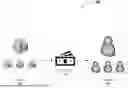




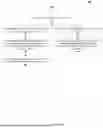
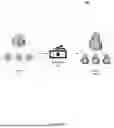
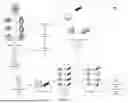
Sources:
- United States Patent and Trademark Office - verify current appl. status at the USPTO↗
Recent applications in this class:
- » 20260120184 2026-04-30
USING MODEL-BASED TREES WITH BOOSTING TO FIT LOW-ORDER FUNCTIONAL ANOVA MODELS - » 20260111954 2026-04-23
Free, paid media entertainment credit system and media market place, to access paid media entertainment, paid games, paid AR/VR services/games, paid streaming services, temporarily for free across different platforms using the new credit and trade, publish media - » 20260105516 2026-04-16
AUTHORIZATION CODE FOR ACCESS - » 20260105515 2026-04-16
INTELLIGENT ITEM FINANCING - » 20260105514 2026-04-16
USING PSYCHOMETRIC ANALYSIS FOR DETERMINING CREDIT RISK - » 20260099877 2026-04-09
METHOD AND SYSTEM FOR AUTOMATED CREDIT DATA FURNISHING INCLUDING COMPLIANCE CHECKS AND DISPUT AUTOMATION - » 20260080468 2026-03-19
DISTRIBUTED SYSTEM FOR CUSTOM FINANCING - » 20260080467 2026-03-19
Heppner Fletcher ExAlt Plan™ - Computer-Implemented Integrated Liquidity System and Methodology for Exchanging Alternative Assets - » 20260065364 2026-03-05
SYSTEMS AND METHODS FOR CREDIT LINE MANAGEMENT - » 20260065363 2026-03-05
SYSTEMS AND METHODS FOR CREDIT LINE MANAGEMENT
Recent applications for this Assignee:
- » 20260122085 2026-04-30
MULTILAYER DECISIONING STRUCTURE FOR ENHANCED NETWORK SECURITY - » 20260121951 2026-04-30
SYSTEMS AND METHODS FOR AUTOMATIC MAPPING OF APPLICATION COMPONENT DEPENDENCIES USING LOG ANALYSIS - » 20260121938 2026-04-30
NETWORK ALLOCATION AND MONITORING ENGINE USING ARTIFICIAL INTELLIGENCE AND DYNAMIC MAPPING - » 20260121920 2026-04-30
SYSTEM AND METHOD FOR RECONFIGURATION AUTHORIZATION PROTOCOL AND ANALYTICS VIA INTEGRATED MACHINE LEARNING - » 20260119731 2026-04-30
SYSTEM AND METHOD FOR ELECTRONIC DUPLICATION AND SIMULATION OF ENVIRONMENTS VIA A HARDWARE DEVICE NETWORK - » 20260119465 2026-04-30
SYSTEMS AND METHODS FOR MANAGING DATABASE MIGRATION BASED PREDICTED RESOURCE USAGE - » 20260119364 2026-04-30
SYSTEMS AND METHODS FOR AUTOMATICALLY IDENTIFYING OPTIMAL VIRTUAL MACHINE COMPONENT PARAMETERS - » 20260119288 2026-04-30
SYSTEM AND METHOD FOR ENHANCED OBSERVABILITY WITHIN APPLICATION CONTAINERS ON A CONTAINER ORCHESTRATION PLATFORM - » 20260119128 2026-04-30
SYSTEMS AND METHODS FOR AUTOMATICALLY AND DYNAMICALLY GENERATING SOFTWARE PROGRAMS FROM DISPARATE SOURCES - » 20260119002 2026-04-30
SYSTEMS AND METHODS FOR INTELLIGENT DATA TRANSMISSION SUPPRESSION AND GENERATION INCORPORATING AGGREGATED USER DATA