Hair Cutting Training Tool
US20260123737A1
2026-05-07
19/377,470
2025-11-03
Smart Summary: A hair cutting training tool helps people learn how to cut hair without needing a real person. It has a base that looks like a human scalp and has short hairs attached to it. These hairs can be made from human, animal, or synthetic materials. Users can practice different haircuts, including styles like tapered fades. This tool makes it easier for beginners to gain skills in hair cutting. 🚀 TL;DR
Abstract:
The present invention is directed to a hair cutting training tool that facilitates training of hair cutting practices without using an actual human head with hair. The tool includes a base with a plurality of hairs extending therefrom. The base is made of a silicone or other material that simulates a human scalp. The plurality of hairs may be one or more of human hair, animal hair, or synthetic hair. Each of the plurality of hairs is relatively short, for instance less than three inches, so that a user can learn how to cut short hair. The tool can be used to teach a user how to cut a variety of different hair cuts. For instance, the tool can be used to create first and second guidelines, with the intermediate hair being cut in a tapered fade.
Applicant:
Interested in similar patents?
Get notified when new applications in this technology area are published.
Classification:
A45D44/14 » CPC main
Other cosmetic or personal care articles, e.g. for hairdressers' rooms Stands for performing hairdressing work; Postiche heads
Description
CROSS REFERENCE TO A RELATED APPLICATION
This application claims the benefit of provisional patent application U.S. App. No. 63/715,917, filed on Nov. 4, 2024 and entitled “Hair Cutting Training Tool”, the entire contents of which are hereby expressly incorporated by reference into the present application.
BACKGROUND OF THE INVENTION
1. Field of the Invention
The present invention relates in general to the field of cutting hair. More specifically, the present invention is directed to a tool used to assist in teaching and training of barbers and other individuals who cut hair. Even more specifically, the present invention is directed to a tool that makes it easier for individuals to learn how to cut hair. The present invention is also directed to methods of manufacturing the tool, as well as using the tool.
2. Discussion of the Related Art
Many individuals learning how to cut or otherwise style hair attend beauty school. Other individuals learn how to cut or style hair by friends, family members, or other mentors having experience and skills associated with cutting hair. In some instances, individuals even learn how to cut hair using their own head and hair.
In addition to learning how to cut hair using an actual human being's scalp, oftentimes individuals learn to cut using a mannequin head or other headform that mimics an actual human head. In many instances, the mannequin head or other headform includes human hair. In other instances, other animal or synthetic hair materials may be affixed to the mannequin head or other headform. Oftentimes, initially the hair features a long length, allowing a user to perform multiple haircuts using the same set of hair. Unfortunately, oftentimes when the hair is of a longer length, a user will not have the opportunity to learn and experiment with shorter hair cut styles until the hair has been cut down over multiple training sessions. Particularly when the individual is learning how to cut shorter styles of hair, this results in wasted hair.
What is needed is an improved training tool that makes it easier for individuals to learn how to cut hair. What is further needed is a training tool that makes it easy for an individual to learn how to cut short hair styles without wasting hair. What is further needed is a method of manufacturing a training tool that enables a user to learn to cut hair. What is similarly needed is a method of using a training tool to learn to cut hair.
SUMMARY AND OBJECTS OF THE INVENTION
By way of summary, the present invention is directed to a hair cutting training tool. The hair cutting training tool may include a base, a plurality of openings formed in the base, and a plurality of hair materials extending from the base through the openings. Additionally, the tool may include an adhesive that is mountable to one side of the base, where the plurality of hairs extends from the opposite side of the base. The base may be made of a silicone material, a synthetic material, or any other suitable materials. The plurality of hair materials may be made of human hair, animal hair, synthetic hair, or any other suitable materials. In certain embodiments, the length of the plurality of hair materials mimic shorter hair, for instance, less than three inches in length.
According to another aspect of the invention, a frame may be provided that the tool may be mounted to. For instance, the base may be mounted directly to the frame. The frame may further include one or more grips mounted thereto that prevents or minimizes movement of the frame relative to a surface the frame rests upon. The base may alternatively be mounted to a mannequin head, a board, or another surface.
According to yet another aspect of the present invention, a method of using the hair cutting tool is provided. The method may include the steps of mounting the base to the frame, after which the plurality of hair materials may be cut in any number of different ways and using any number of different devices. For instance, one or more of a clipper, a clipper with one or more guards, and a pair of scissors may be used. Furthermore, the method may include creating a first guideline in the plurality of hair materials. Additionally, the method may include creating a second guideline in the plurality of hair materials. Further still, the method may include the step of blending a plurality of hair materials located between the first guideline and the second guideline. The method may also include the step of creating a design in the plurality of hair materials. Additionally, the method may include the step of cutting a plurality of hair materials along a side edge of the base.
According to yet another aspect of the invention, a hair cutting training tool kit is provided. The kit may include the hair cutting training tool described herein, the frame releasably resting on a surface to which the tool is attached, and a variety of hair cutting tools such as clippers, guards, scissors, and combs.
According to another aspect of the invention, a method of manufacturing a hair cutting tool is provided. This may include the steps of selecting a base material, cutting the base material into a size and a shape, perforating the base material using one or more pins or needles to create a plurality of openings, and inserting a plurality of hair materials through the plurality of openings. The method may also include the steps of releasably attaching the plurality of hair materials to the one or more pins and needles, perforating the base material using one or more pins or needles to create a plurality of openings, and then threading the plurality of hair materials through the plurality of openings, after which the one or more pins or needles are disengaged from the hair materials. Alternatively, the plurality of openings are initially created, after which the plurality of hair materials are inserted through the plurality of openings so the plurality of hair materials extend past a first side of the base material, and then knots tied in the plurality of hair materials engage with a second side of the base material opposite the first side of the base material. Alternatively still, the plurality of hair materials do not include knots, and instead are secured in place using glue, adhesive, or another material that secures the hair materials in place. After use, the plurality of hair materials may be removed from the base material, after which a new plurality of hair materials may be inserted through the plurality of openings.
These, and other aspects and objects of the present invention will be better appreciated and understood when considered in conjunction with the following description and the accompanying drawings. It should be understood, however, that the following description, while indicating preferred embodiments of the present invention, is given by way of illustration and not of limitation. Many changes and modifications may be made within the scope of the present invention without departing from the spirit thereof, and the invention includes all such modifications.
BRIEF DESCRIPTION OF DRAWING
A clear conception of the advantages and features constituting the present invention, and of the construction and operation of typical mechanisms provided with the present invention, will become more readily apparent by referring to the exemplary, and therefore non-limiting, embodiments illustrated in the drawings accompanying and forming a part of this specification, wherein like reference numerals designate the same elements in the several views, and in which:
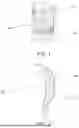
FIG. 1 is a perspective view of an inventive hair cutting training tool;
FIG. 2 is a side perspective view of the inventive hair cutting training tool of FIG. 1;
FIG. 3 is a perspective view of the inventive hair cutting training tool of FIGS. 1 and 2 after the training procedure has been completed;
FIG. 4 are side elevation views of the inventive hair cutting training tool in different shapes; and
FIG. 5 is a perspective views of the inventive hair cutting training tool in use;
FIG. 6 is a perspective views of the inventive hair cutting training tool in use;
FIG. 7 is a perspective views of the inventive hair cutting training tool in use;
FIG. 8 is a perspective views of the inventive hair cutting training tool in use; and
FIG. 9 is a perspective views of the inventive hair cutting training tool mounted to a mannequin head.
In describing the preferred embodiment of the invention which is illustrated in the drawings, specific terminology will be resorted to for the sake of clarity. However, it is not intended that the invention be limited to the specific terms so selected and it is to be understood that each specific term includes all technical equivalents which operate in a similar manner to accomplish a similar purpose. For example, the word connected, attached, or terms similar thereto are often used. They are not limited to direct connection but include connection through other elements where such connection is recognized as being equivalent by those skilled in the art.
DESCRIPTION OF PREFERRED EMBODIMENTS
The present invention and the various features and advantageous details thereof are explained more fully with reference to the non-limiting embodiments described in detail in the following description.
The present invention is directed to a learning tool 20 that helps individuals learn how to cut hair. The learning tool 20 includes a base 22 with a plurality of hair materials 24 extending therefrom. More specifically, the base 22 is made of a material that allows the hair materials 24 to be mounted thereto, while also having similar characteristics as a human scalp. For instance, in one embodiment, the base 22 is made of a silicone or other synthetic material. In terms of the hair materials 24, any number of different materials could be used, including for instance human hair, other animal hair, synthetic hair, and the like. Additionally, the base 22 may have an adhesive backing, or any other glue, fastener, and the like, so that the base 22 can be mounted to an object such as a mannequin or other hairless headform 21 as shown in FIG. 9.
As shown in many of the figures, the tool 20 may include a base 22 that is substantially rectangular in shape. Additionally, the tool 20 may include base pieces 22 that are in a variety of other different shapes that imitate a user's head. Including bases 22 having a variety of different shapes may simplify the mounting of the bases 22 to a round surface, such as a mannequin or other hairless headforms 21, in order to better imitate the experience of cutting hair on a human's head. For instance, as shown in FIG. 4, a right side base piece 25 is shown that imitates the shape and hair associated with a right side of a user's head that wraps around a user's right ear, as well as a left side base piece 27 that imitates the shape and hair associated with a left side of the user's head that wraps around a user's left ear. Of course, other shaped bases may be used that imitate the shape and hair associated with other portions of the user's head. Additionally, a single rectangular base 22 may be provided, while in other embodiments, an extended roll 29 of base material may be provided.
As can be seen in the figures, the hair materials 24 are relatively short in length. Of course, hair materials 24 of any desired length could be used. While using haircutting tools, an individual can practice manipulating their hair cutting tools and blending which is a heavily relied upon skill in the industry.
The tool 20, and more specifically the bases 22, 25, 27, 29 are mountable to a number of different structures. While each of the bases 22, 25, 27, 29 can be mounted to the different structures described herein, going forward, only base 22 will be described for simplicity. The mountability of the tool 20, base 22 and associated hair materials 24 allows the tool 20 to remain in relatively the same position during usage, such that a user can learn how to cut hair in a suitable manner, akin to when cutting an actual human's hair where the human remains substantially stationary. For instance, the base 22 may be mounted to a mannequin 21 or other device that mimics the size and shape of a human head. See FIG. 9. Alternatively, as shown in FIGS. 5 and 6, the base 22 is mountable to a board 31. In yet another embodiment shown in FIGS. 7 and 8, the base 22 is mountable to a frame 26. The frame 26 may include one or more grips 28 mounted to the bottom of the frame 26 that help ensure that the frame 26 remains stationary or relatively stationary on the surface it is placed.
Use of the tool 20 will now be described, again looking particularly to FIGS. 5-8. Initially, the tool 20, and more specifically the base 22 is mounted to the frame 26, although it could similarly be mounted to a mannequin 21, other device that imitates or mimics the size and shape of a human head, or any other device. Once mounted, a user can use the tool 20 to learn how to properly cut hair, and more specifically relatively short hair cuts. A user can cut the hair materials 24 in any way the user sees fit, but some potential examples will be further described herein. As shown in the figures, the user may use one or more devices to move, fashion, or cut the hair materials 24, including a comb or brush 30, a clipper 32, various guards 34 that are releasably mounted to the clipper 32 to limit the amount of hair material 24 that is cut, and scissors (not shown). Of course, other devices associated with grooming could be used as known to those having ordinary skill in the art.
Some potential cutting techniques will now be briefly described. Initially, a user may cut or trim the bottom of the hair material 24, for instance as can be seen in FIG. 5. This is typically completed using clippers 32. This mimics real-world scenarios where a client may have longer hair at the back of the client's head that would initially need to be trimmed to create a straight line at the top of the client's neck. This is oftentimes referred to as a guideline. In some instances, multiple guidelines may be created, with the hair materials 24 being blended between the various guidelines. Thereafter, the user can use clippers 32 with a variety of different guards 34 to trim hair materials 24 above the straight line in order to create a layered affect, with hair immediately above the straight line being relatively short as seen in FIG. 6. The user can change out the guard 34 again to one that enables the hair materials 24 to be slightly longer. The use of multiple guards 34 allows a user to create the desired layered effect, commonly referred to as a “fade” haircut that is commonly requested by users having shorter hair, but that can be challenging for users to accomplish without sufficient training. The primary benefit of the tool 20 is that users can repeatedly train and learn how to achieve aesthetically pleasing fade haircuts, without the risk of potentially incorrectly cutting an actual human's hair.
Additional techniques can similarly be practiced. For instance, a user can manipulate and cut the hair materials 24 at the sides, which would imitate the side of a client's head. See. FIG. 8. This includes a user using a comb 30 to manipulate the side hair to a desired location, at which point the clippers 32 (either with or without a guard 34) can be placed directly next to or against the comb 30, at which point the clippers 32 can be moved back and forth to cut the hair materials 24 along the comb 30.
Further still, the tool 20 may be used to allow a user to train and learn how to cut specific designs into a client's hair. For instance, a user can use the tool 20 to cut specific designs into the hair materials 24, such as letters, symbols, numbers, and the like.
Of course, a user could use the tool 20 to learn existing techniques similar to those described herein, as well as any other techniques that may be known in the industry. Additionally, a user could use the 20 to experiment with any number of different new or potential hair cutting and styling techniques.
Additionally, a method of manufacturing the tool 20 is provided. Initially, a base material is selected, and the base material is cut to a desired size and shape, such as a square, a rectangle, or the various shapes shown in FIG. 4. Next, a plurality of openings may be formed in the base material. For instance, in one embodiment, one or more pins, needles, or other thin, sharp objects are used to penetrate the base material. Next, the hair materials are threaded through the openings formed in the base material. This may occur simultaneously when the sharp objects penetrate the base material. For instance, the hair materials may be releasably attached to the sharp objects, such that the hair material travels through the base material after the sharp object, akin to a piece of thread following a needle through a piece of cloth. In an alternatively embodiment, the hair material may be inserted through the openings after the openings are formed by the sharp object. The hair pieces may be held in place relative to the base material using friction based on the tight-fighting openings relative to the hair material. In another embodiment, the ends of the hair pieces may include small knots or other features that prevent the hair pieces from being pulled all the way through the base material. In yet another embodiment, once the hair pieces are threaded through the openings to a desired location and associated length of hair, the hair pieces may be glued to the back side of the base material, otherwise, pieces or tape, adhesive, or other materials may be applied to the back side of the base material. A user can then use the training tool to learn haircutting techniques. Once the user has completed the training, any remaining pieces of hair can be removed, for instance, by pulling the hair through the openings about the back side of the base material. Thereafter, new pieces of hair material can be applied as described above.
While the above description is primarily in connection with haircut training, it should be noted that there are virtually innumerable uses for the present invention, all of which need not be detailed here. All the disclosed embodiments can be practiced without undue experimentation.
Although the best mode contemplated by the inventors of carrying out the present invention is disclosed above, practice of the present invention is not limited thereto. It will be manifest that various additions, modifications and rearrangements of the features of the present invention may be made without deviating from the spirit and scope of the underlying inventive concept. In addition, the individual components need not be fabricated from the disclosed materials but could be fabricated from virtually any suitable materials.
Moreover, the individual components need not be formed in the disclosed shapes, or assembled in the disclosed configuration, but could be provided in virtually any shape, and assembled in virtually any configuration to improve the training aspects of this tool. Furthermore, all the disclosed features of each disclosed embodiment can be combined with, or substituted for, the disclosed features of every other disclosed embodiment except where such features are mutually exclusive.
It is intended that the appended claims cover all such additions, modifications and rearrangements. Expedient embodiments of the present invention are differentiated by the appended claims.
Although the best mode contemplated by the inventors of carrying out the present invention is disclosed above, practice of the present invention is not limited thereto. It will be manifest that various additions, modifications and rearrangements of the features of the present invention may be made without deviating from the spirit and scope of the underlying inventive concept.
Moreover, the individual components need not be assembled in the disclosed configuration, but could be provided in virtually any configuration. Furthermore, all the disclosed features of each disclosed embodiment can be combined with, or substituted for, the disclosed features of every other disclosed embodiment except where such features are mutually exclusive.
It is intended that the appended claims cover all such additions, modifications and rearrangements. Expedient embodiments of the present invention are differentiated by the appended claims.
Claims
What is claimed is:1. A hair cutting training tool comprising:
a base made of one of a silicone material and a synthetic material;
a plurality of openings formed in the base; and
a plurality of hair materials extending from the base through the plurality of openings.
2. The hair cutting training tool of claim 1, further comprising an adhesive;
wherein the base comprises a first side and a second side;
wherein the plurality of hairs extends through the first side and out the second side; and
wherein the adhesive is mounted to the first side.
3. The hair cutting training tool of claim 2, wherein the plurality of hairs is a plurality of human hairs.
4. The hair cutting training tool of claim 2, wherein the plurality of hairs is a plurality of animal hairs.
5. The hair cutting training tool of claim 2, wherein the plurality of hairs is a plurality of synthetic hairs.
6. The hair cutting training tool of claim 2, wherein the plurality of hairs are each less than 3 inches in length.
7. The hair cutting training tool of claim 1, further comprising a frame;
wherein the base is releasably mountable to the frame.
8. The hair cutting training tool of claim 7, further comprising one or more grips mounted thereto to temporarily secure the frame to a mounting surface.
9. A method of using a hair cutting training tool comprising the steps of:
mounting a base to a surface; and
cutting a plurality of hairs extending from the base.
10. The method of claim 9, further comprising the step of cutting the plurality of hair materials using one or more of a clipper, a clipper with one or more guards releasably mounted thereto, and one or more pairs of scissors.
11. The method of claim 10, further comprising the step of creating a first guideline in the plurality of hair materials.
12. The method of claim 11, further comprising the step of creating a second guideline in the plurality of hair materials.
13. The method of claim 12, further comprising the step of blending a plurality of hair materials located between the first guideline and the second guideline.
14. The method of claim 10, further comprising the step of cutting a design into the plurality of hair materials.
15. A method of manufacturing a hair cutting training tool comprising the steps of:
selecting a base material;
cutting the base material into a size and a shape;
perforating the base material using one or more pins or needles to create a plurality of openings;
inserting a plurality of hair materials through the plurality of openings.
16. The method of claim 15, further comprising the step of:
releasably attaching the plurality of hair materials to the one or more pins or needles;
perforating the base material using one or more pins or needles to create a plurality of openings; and then threading the plurality of hair materials through the plurality of openings; and then
disengaging the one or more pins or needles from the plurality of hair materials.
17. The method of claim 16, further comprising the steps of:
inserting the plurality of hair materials through the plurality of openings so the plurality of hair materials extend past a first side of the base material; and
engaging a knot tied in the plurality of hair materials with a second side of the base material opposite the first side of the base material.
18. The method of claim 16, further comprising the steps of:
inserting the plurality of hair materials through the plurality of openings so the plurality of hair materials extend past a first side of the base material; and
applying a glue or adhesive to a second side of the base material opposite the first side of the base material to releasably secure the plurality of hair materials in place.
19. The method of claim 15, further comprising the step of removing the plurality of hair materials from the base material.
20. The method of claim 19, further comprising the step of inserting a second plurality of hair materials through the plurality of openings.
Images & Drawings included:



Sources:
- United States Patent and Trademark Office - verify current appl. status at the USPTO↗
Recent applications in this class:
- » 20250359646 2025-11-27
WIG MAINTENANCE DEVICE - » 20250221515 2025-07-10
Cosmetology Training Manikin Securing Apparatus With A Portable Workstation - » 20250024934 2025-01-23
Mannequin Head Holder - » 20250000240 2025-01-02
Braiding Station - » 20230133370 2023-05-04
HAIR CUT TRAINING DEVICE - » 20230091868 2023-03-23
Salon Chair Buddy Device - » 20220079326 2022-03-17
Hairstyling Support Device - » 20220053918 2022-02-24
EDUCATIONAL HAIRSTYLING APPARATUS, SYSTEM, AND METHOD - » 20210112948 2021-04-22
WIG AND HAIRPIECE HOLDER - » 20200345124 2020-11-05
Thermographically replaceable anthropoid system