POLYCARBONATE RESIN COMPOSITION
US20260125537A1
2026-05-07
19/115,321
2023-09-05
Smart Summary: A polycarbonate resin composition is made up of different materials mixed together. It contains a large portion of polycarbonate resin, which gives it strength and durability. There is also a graft copolymer that adds flexibility and toughness to the mix. Additionally, small amounts of special chemicals, like triaryl phosphate and phenolic compounds, are included to enhance the material's properties. This combination results in a resin that is both strong and versatile for various applications. 🚀 TL;DR
Abstract:
A polycarbonate resin composition including: a 55 to 90 mass % polycarbonate resin (A) having a viscosity-average molecular weight of 17500 to 30000; a 10 to 45 mass % graft copolymer (B) containing an aromatic vinyl monomer component (b1), a vinyl cyanide monomer component (b2), and a diene rubber polymer component (b3); and, relative to a total mass of (A) and (B) being 100 parts by mass, 0.001 to 0.3 parts by mass of a triaryl phosphate (C) given by specific general formula (1); and 0.001 to 0.3 parts by mass of a phenolic structure-bearing compound (D), wherein the phenolic structure-bearing compound (D) contains at least one of 4-t-butylphenol, 2,4-di-t-butylphenol, 4-α-cumylphenol, and bisphenol A.
Assignee:
- MITSUBISHI ENGINEERING-PLASTICS CORPORATION 111 🇯🇵 Tokyo, Japan
Applicant:
Interested in similar patents?
Get notified when new applications in this technology area are published.
Classification:
C08K5/523 » CPC main
Use of organic ingredients; Phosphorus-containing compounds; Phosphorus bound to oxygen; Phosphorus bound to oxygen only; Esters of phosphoric acids, e.g. of HPO with hydroxyaryl compounds
C08L69/00 » CPC further
Compositions of polycarbonates; Compositions of derivatives of polycarbonates
Description
TECHNICAL FIELD
The present invention relates to a polycarbonate resin composition and more particularly to a polycarbonate resin composition with excellent weathering resistance, and to a molded article of this polycarbonate resin composition.
BACKGROUND ART
Polycarbonate resin has excellent mechanical properties, e.g., impact resistance and so forth, and also has excellent heat resistance, excellent transparency and so forth, and as a result is widely used in numerous applications, e.g., various optical components, components in electric and electronic equipment, automotive interior and exterior trim components, OA equipment components, sheets, mechanical components, building materials and so forth.
However, polycarbonate resin has a somewhat limited use due to its poor weathering resistance. For example, its outdoor use or indoor use under fluorescent lights causes discoloration or strength reduction of the product.
To solve this problem, various light stabilizers have conventionally been used alone or in combination. A known example of such light stabilizers is a benzotriazole-based ultraviolet absorber. However, blending such an ultraviolet absorber with polycarbonate resin causes another problem, that is, a decreased hue of a polycarbonate resin composition, which is induced by heat deterioration during melt kneading and molding operations.
Further, there have been attempts to blend various additives with polycarbonate resin to impart high functionality. For example, PTL 1 describes that fiber-reinforced polycarbonate resin compositions excellent in dimensional stability, mechanical strength and fluidity can be obtained by the admixture of 5 to 15 mass % triphenyl phosphate in 85 to 95 mass % polycarbonate resin.
With the rapid development in recent years of greater functionality and higher performance by various devices and equipment, an improvement in particular in the weathering resistance of polycarbonate resin is strongly desired.
CITATION LIST
Patent Literature
- [PTL 1] Japanese Patent No. 3308657
SUMMARY OF INVENTION
Technical Problem
An object of (problem for) the present invention is to provide a polycarbonate resin composition that exhibits excellent weathering resistance, favorable impact and heat resistance, and good fluidity (moldability).
Solution to Problem
As a result of extensive and intensive investigations in order to address this problem, the present inventor has made the present invention upon discovering that excellent weathering resistance as well as favorable impact and heat resistance is exhibited by a polycarbonate resin composition that contains a prescribed triaryl phosphate compound in a small amount relative to an polymer alloy of polycarbonate and a graft polymer such as an ABS resin.
The present invention relates to a polycarbonate resin composition and a molded article described below.
-
- 1. A polycarbonate resin composition, comprising: 55 to 90 mass % of a polycarbonate resin (A) having a viscosity-average molecular weight of 17500 to 30000; 10 to 45 mass % of a graft copolymer (B) comprising an aromatic vinyl monomer component (b1), a vinyl cyanide monomer component (b2), and a diene rubber polymer component (b3); and, relative to a total mass of (A) and (B) being 100 parts by mass,
- 0.001 to 0.3 parts by mass of a triaryl phosphate (C) given by general formula (1); and 0.001 to 0.3 parts by mass of a phenolic structure-bearing compound (D),
- wherein the phenolic structure-bearing compound (D) comprises at least one of 4-t-butylphenol, 2,4-di-t-butylphenol, 4-α-cumylphenol, and bisphenol A.
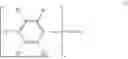
[C1]
(In formula (1), R1 to R5 are independently a hydrogen atom or a C1-12 alkyl group.)
-
- 2. The polycarbonate resin composition of the above 1, wherein at least one of the R1 to R5 on each of aromatic rings in formula (1) is a C1-12 alkyl group.
- 3. The polycarbonate resin composition of the above 1, wherein the R1 and R3 on each of the aromatic rings in formula (1) are a C1-12 alkyl group, and the R2, R4 and R5 on each of the aromatic rings are a hydrogen atom.
- 4. The polycarbonate resin composition of the above 3, wherein the R1 and R3 on each of the aromatic rings in formula (1) are a t-butyl group, and the R2, R4 and R5 on each of the aromatic rings are a hydrogen atom.
- 5. The polycarbonate resin composition of the above 1, wherein the triaryl phosphate (C) contains at least one of triphenyl phosphate, tris(2,4-di-t-butylphenyl)phosphate, and tris(4-t-butylphenyl)phosphate.
- 6. The polycarbonate resin composition of the above 1, further including 0.001 to 0.3 parts by mass of a triaryl phosphite (E) relative to the total mass of (A) and (B) being 100 parts by mass.
- 7. A pellet comprising the polycarbonate resin composition of any one of the above 1 to 6.
- 8. A molded article comprising the polycarbonate resin composition of any one of the above 1 to 6.
- 9. A molded article comprising the pellet of the polycarbonate resin composition of the above 7.
Advantageous Effects of Invention
The polycarbonate resin composition according to the present invention exhibits high weathering resistance and is excellent in impact resistance, heat resistance and fluidity (moldability).
DESCRIPTION OF EMBODIMENTS
In the following, embodiments, examples, and so forth are provided in order to describe the present invention in detail.
Unless specifically indicated otherwise, in the present description “to” in the specification of a numerical value range is used in the sense of including the numerical values provided before and after the “to” as the lower limit and upper limit.
The polycarbonate resin composition according to the present invention characteristically includes: 55 to 90 mass % of a polycarbonate resin (A) having a viscosity-average molecular weight of 17500 to 30000; 10 to 45 mass % graft of a copolymer (B) containing an aromatic vinyl monomer component (b1), a vinyl cyanide monomer component (b2), and a diene rubber polymer component (b3); and, relative to a total mass of (A) and (B) being 100 parts by mass, 0.001 to 0.3 parts by mass of a triaryl phosphate (C) given by the above general formula (1); and 0.001 to 0.3 parts by mass of a phenolic structure-bearing compound (E),
-
- wherein the phenolic structure-bearing compound (D) contains at least one of 4-t-butylphenol, 2,4-di-t-butylphenol, 4-α-cumylphenol, and bisphenol A.
[Polycarbonate Resin (A)]
The polycarbonate resin (A) used in the present invention is not particularly limited and various kinds of polycarbonate resin may be used. Polycarbonate resin can be classified into aromatic polycarbonate resin, in which each of the carbons directly bonded to the carbonate bond is an aromatic carbon, and aliphatic polycarbonate resin, in which they are aliphatic carbons, and either of these can be used. Aromatic polycarbonate resin is preferred therebetween for the polycarbonate resin (A) considering, for example, the heat resistance, mechanical properties, and electrical properties.
Of the monomers as the starting materials for aromatic polycarbonate resin, aromatic dihydroxy compounds can be exemplified by the following:
-
- dihydroxybenzenes, e.g., 1,2-dihydroxybenzene, 1,3-dihydroxybenzene (i.e., resorcinol), and 1,4-dihydroxybenzene; dihydroxybiphenyls, e.g., 2,5-dihydroxybiphenyl, 2,2′-dihydroxybiphenyl, and 4,4′-dihydroxybiphenyl;
Dihydroxynaphthalenes, e.g., 2,2′-dihydroxy-1,1′-binaphthyl, 1,2-dihydroxynaphthalene, 1,3-dihydroxynaphthalene, 2,3-dihydroxynaphthalene, 1,6-dihydroxynaphthalene, 2,6-dihydroxynaphthalene, 1,7-dihydroxynaphthalene, and 2,7-dihydroxynaphthalene;
Dihydroxydiaryl ethers, e.g., 2,2′-dihydroxydiphenyl ether, 3,3′-dihydroxydiphenyl ether, 4,4′-dihydroxydiphenyl ether, 4,4′-dihydroxy-3,3′-dimethyldiphenyl ether, 1,4-bis(3-hydroxyphenoxy)benzene, and 1,3-bis(4-hydroxyphenoxy)benzene;
Bis(hydroxyaryl)alkanes, e.g., 2,2-bis(4-hydroxyphenyl)propane (i.e., bisphenol A), 1,1-bis(4-hydroxyphenyl)propane, 2,2-bis(3-methyl-4-hydroxyphenyl)propane (i.e., bisphenol C), 2,2-bis(3-methoxy-4-hydroxyphenyl)propane, 2-(4-hydroxyphenyl)-2-(3-methoxy-4-hydroxyphenyl)propane, 1,1-bis(3-t-butyl-4-hydroxyphenyl)propane, 2,2-bis(3,5-dimethyl-4-hydroxyphenyl)propane, 2,2-bis(3-cyclohexyl-4-hydroxyphenyl)propane, 2-(4-hydroxyphenyl)-2-(3-cyclohexyl-4-hydroxyphenyl) propane, α,α′-bis(4-hydroxyphenyl)-1,4-diisopropylbenzene, 1,3-bis[2-(4-hydroxyphenyl)-2-propyl]benzene, bis(4-hydroxyphenyl)methane, bis(4-hydroxyphenyl)cyclohexylmethane, bis(4-hydroxyphenyl)phenylmethane, bis(4-hydroxyphenyl) (4-propenylphenyl)methane, bis(4-hydroxyphenyl)diphenylmethane, bis(4-hydroxyphenyl)naphthylmethane, 1,1-bis(4-hydroxyphenyl)ethane, 1,1-bis(4-hydroxyphenyl)-1-phenylethane, 1,1-bis(4-hydroxyphenyl)-1-naphthylethane, 1,1-bis(4-hydroxyphenyl)butane, 2,2-bis(4-hydroxyphenyl)butane, 2,2-bis(4-hydroxyphenyl)pentane, 1,1-bis(4-hydroxyphenyl)hexane, 2,2-bis(4-hydroxyphenyl)hexane, 1,1-bis(4-hydroxyphenyl)octane, 2,2-bis(4-hydroxyphenyl)octane, 4,4-bis(4-hydroxyphenyl)heptane, 2,2-bis(4-hydroxyphenyl)nonane, 1,1-bis(4-hydroxyphenyl)decane, and 1,1-bis(4-hydroxyphenyl)dodecane;
Bis(hydroxyaryl)cycloalkanes, e.g., 1,1-bis(4-hydroxyphenyl)cyclopentane, 1,1-bis(4-hydroxyphenyl)cyclohexane, 1,1-bis(4-hydroxyphenyl)-3,3-dimethylcyclohexane, 1,1-bis(4-hydroxyphenyl)-3,4-dimethylcyclohexane, 1,1-bis(4-hydroxyphenyl)-3,5-dimethylcyclohexane, 1,1-bis(4-hydroxyphenyl)-3,3,5-trimethylcyclohexane, 1,1-bis(4-hydroxy-3,5-dimethylphenyl)-3,3,5-trimethylcyclohexane, 1,1-bis(4-hydroxyphenyl)-3-propyl-5-methylcyclohexane, 1,1-bis(4-hydroxyphenyl)-3-t-butylcyclohexane, 1,1-bis(4-hydroxyphenyl)-4-t-butylcyclohexane, 1,1-bis(4-hydroxyphenyl)-3-phenylcyclohexane, and 1,1-bis(4-hydroxyphenyl)-4-phenylcyclohexane;
Cardo structure-containing bisphenols, e.g., 9,9-bis(4-hydroxyphenyl)fluorene and 9,9-bis(4-hydroxy-3-methylphenyl)fluorene;
Dihydroxydiaryl sulfides, e.g., 4,4′-dihydroxydiphenyl sulfide and 4,4′-dihydroxy-3,3′-dimethyldiphenyl sulfide; Dihydroxydiaryl sulfoxides, e.g., 4,4′-dihydroxydiphenyl sulfoxide and 4,4′-dihydroxy-3,3′-dimethyldiphenyl sulfoxide; and dihydroxydiaryl sulfones, e.g., 4,4′-dihydroxydiphenyl sulfone and 4,4′-dihydroxy-3,3′-dimethyldiphenyl sulfone.
Among the preceding, bis(hydroxyaryl)alkanes are preferred and bis(4-hydroxyphenyl)alkanes are preferred thereamong, while 2,2-bis(4-hydroxyphenyl)propane (i.e., bisphenol A) and 2,2-bis(3-methyl-4-hydroxyphenyl)propane (i.e., bisphenol C) are particularly preferred from the standpoints of impact resistance and heat resistance.
A single aromatic dihydroxy compound may be used or any combination of two or more in any ratio may be used.
Of the monomers as the starting materials for polycarbonate resin, the carbonate precursor can be exemplified by carbonyl halides and carbonate esters. A single carbonate precursor may be used or any combination of two or more in any ratio may be used.
The carbonyl halides can be specifically exemplified by phosgene and by haloformates such as the bischloroformates of dihydroxy compounds and the monochloroformates of dihydroxy compounds.
The carbonate esters can be specifically exemplified by diaryl carbonates such as diphenyl carbonate and ditolyl carbonate; dialkyl carbonates such as dimethyl carbonate and diethyl carbonate; and carbonates of dihydroxy compounds, e.g., biscarbonates of dihydroxy compounds, monocarbonates of dihydroxy compounds, and cyclic carbonates.
There are no particular limitations on the method of producing the polycarbonate resin (A), and any method can be used. Examples thereof are the interfacial polymerization method, melt transesterification method, pyridine method, ring-opening polymerization of a cyclic carbonate compound, and solid-state transesterification of a prepolymer. Among these, the polycarbonate resin (A) produced by interfacial polymerization or melt transesterification is preferred because this provides a greater improvement in the moist heat resistance, with interfacial polymerization being particularly preferred.
The molecular weight of the polycarbonate resin (A), expressed as the viscosity-average molecular weight (Mv) converted from the solution viscosity measured at a temperature of 25° C. using methylene chloride as the solvent, is preferably 10000 to 50000, more preferably 10000 to 40000, still more preferably 10000 to 30000, and even more preferably 10000 to 26000, and is preferably at least 10500, more preferably at least 11000, particularly preferably at least 11500, and most preferably at least 12000, and preferably not more than 24000 and particularly preferably not more than 20000. The mechanical strength of the polycarbonate resin composition according to the present invention can be further improved by having the viscosity-average molecular weight be equal to or greater than the lower limit for the indicated range. By having the viscosity-average molecular weight be not more than the upper limit for the indicated range, reductions in the fluidity of the polycarbonate resin composition according to the present invention can be suppressed and thereby ameliorated, thus raising the molding processability and facilitating the execution of molding operations.
A mixture of two or more polycarbonate resins having different viscosity-average molecular weights may be used, in which case a polycarbonate resin having a viscosity-average molecular weight outside the aforementioned preferred range may be admixed.
The viscosity-average molecular weight [Mv] refers to the value calculated using Schnell's viscosity equation, i.e., η=1.23×10⁻⁴ Mv0.83, wherein the intrinsic viscosity [η] (unit: dl/g) at a temperature of 25° C. is determined using methylene chloride as the solvent and using a Ubbelohde viscometer. The intrinsic viscosity [η] is the value calculated using the following formula and the specific viscosity [ηsp] measured at each solution concentration [C] (g/dl).
η = lim c → 0 η sp / c [ Math . 1 ]
In addition, the polycarbonate resin (A) may contain a polycarbonate oligomer in order to bring about an improved appearance for the molded article and an improvement in the fluidity. The viscosity-average molecular weight [Mv] of this polycarbonate oligomer is generally at least 1500 and is preferably at least 2000 and is generally not more than 9500 and is preferably not more than 9000. The content of the polycarbonate oligomer when contained is preferably not more than 30 mass % of the polycarbonate resin (including the polycarbonate oligomer).
The polycarbonate resin (A) may be not only a virgin starting material, but may be polycarbonate resin that has been regenerated from post-consumer products (also known as material-recycled polycarbonate resin), and also preferably contains both a virgin starting material and recycled resin, and may be composed of recycled polycarbonate resin. The proportion of recycled polycarbonate resin in the polycarbonate resin (A) is preferably at least 40%, or at least 50%, or at least 60%, or at least 80%, and may be particularly preferably 100%.
[Graft Copolymer (B)]
The graft copolymer (B) contained in the polycarbonate resin composition according to the present invention is a graft copolymer containing an aromatic vinyl monomer component (b1), a vinyl cyanide monomer component (b2), and a diene rubber polymer component (b3). The graft copolymer (B) preferably contains 40 to 80 mass % of the aromatic vinyl monomer component (b1), 10 to 30 mass % of the vinyl cyanide monomer component (b2), and 10 to 50 mass % of the diene rubber polymer component (b3), and can also contain 0 to 30 mass % of an additional monomer component (b4).
Examples of the aromatic vinyl monomer component (b1) in the graft copolymer (B) include styrene, α-methylstyrene, o-methylstyrene, p-methylstyrene, vinylxylene, ethylstyrene, dimethylstyrene, p-t-butylstyrene, vinylnaphthalene, methoxystyrene, monobromostyrene, dibromostyrene, fluorostyrene, tribromostyrene and the like; styrene is particularly preferred.
The proportion of the aromatic vinyl monomer component (b1) in 100 mass % of the graft copolymer (B) is preferably in a range of from 40 to 80 mass %, more preferably at least 45 mass %, still more preferably at least 50 mass %, particularly preferably at least 55 mass %, and is more preferably not more than 75 mass %, still more preferably not more than 70 mass %, and particularly preferably not more than 65 mass %.
Examples of the vinyl cyanide monomer component (b2) in the graft copolymer (B) include acrylonitrile, methacrylonitrile and the like; acrylonitrile is particularly preferred.
The proportion of the vinyl cyanide monomer component (b2) in 100 mass % of the graft copolymer (B) is preferably in a range of from 10 to 30 mass %, more preferably at least 12 mass %, still more preferably at least 14 mass %, particularly preferably at least 15 mass %, and is more preferably not more than 28 mass %, still more preferably not more than 26 mass %, and particularly preferably not more than 25 mass %.
Examples of the diene rubber polymer component (b3) in the graft copolymer (B) include rubber components such as polybutadiene, polyisoprene and a styrene-butadiene copolymer. The proportion of the diene rubber polymer component (b3) in 100 mass % of the graft copolymer (B) is preferably in a range of from 10 to 50 mass %, more preferably at least 13 mass %, still more preferably at least 14 mass %, particularly preferably at least 15 mass %, and is more preferably not more than 45 mass %.
The additional monomer component (b4) copolymerizable with these components may be copolymerized. In such a case, examples of the additional copolymerizable vinyl monomer include maleimide-based monomers such as maleimide, N-methylmaleimide, N-cyclohexylmaleimide and N-phenylmaleimide; acrylamide-based monomers such as acrylamide and N-methylacrylamide; unsaturated acid anhydrides such as maleic anhydride and itaconic anhydride; unsaturated acids such as acrylic acid and methacrylic acid; glycidyl acrylate; glycidyl methacrylate; 2-hydroxyethyl acrylate; 2-hydroxyethyl methacrylate; methoxypolyethylene glycol methacrylate and the like.
The proportion of the additional monomer component (b4) in 100 mass % of the graft copolymer (B) is preferably in a range of from 0 to 30 mass %, more preferably not more than 20 mass %, still more preferably not more than 10 mass %, even more preferably not more than 5 mass %, especially preferably not more than 3 mass %, and particularly preferably not more than 2 mass %.
Specific preferred examples of the graft copolymer (B) include an acrylonitrile-butadiene-styrene graft copolymer, an acrylonitrile-butadiene-styrene-α-methylstyrene graft copolymer, an acrylonitrile-ethylene-propylene-diene-styrene copolymer and the like. Among them, an acrylonitrile-butadiene-styrene graft copolymer (ABS resin) is particularly preferred.
The graft copolymer (B) is usually produced by a polymerization process such as bulk polymerization, solution polymerization, suspension polymerization, or emulsion polymerization, and any of these processes may be used.
The content of the graft copolymer (B), relative to the total mass of the polycarbonate resin (A) and the graft copolymer (B) being 100 mass %, is 10 to 45 mass %, preferably at least 12 mass %, more preferably at least 15 mass %, and is preferably not more than 42 mass %, more preferably not more than 40 mass %. The graft copolymer (B) contained in this range helps to impart excellent heat resistance and fluidity to the resultant resin composition. If the content of the graft copolymer (B) exceeds 45 mass %, the heat resistance of the resin composition will decrease. If the content is less than 10 mass %, the fluidity will decrease.
[Triaryl Phosphate (C)]
The polycarbonate resin composition according to the present invention contains the triaryl phosphate (C) given by general formula (1). As used herein, the aryl group denotes a group that contains an aromatic group, and particularly preferably denotes a phenyl group.
The R1 to R5 in formula (1) are each independently a hydrogen atom or a C1-12 alkyl group. The C1-12 alkyl group is preferably a C1-8 alkyl group, for which preferred examples are a methyl group, an ethyl group, a propyl group, a n-butyl group, a t-butyl group, a pentyl group, a hexyl group, a heptyl group, and an octyl group. Among these, C1-6 alkyl groups are preferred and C1-4 alkyl groups are particularly preferred.
When two or more of the R1 to R5 on the three aromatic rings in formula (1) are an alkyl group, these alkyl groups may each be the same or different.
The triaryl phosphate (C) is preferably such that in formula (1) at least one or more of the R1 to R5 on each aromatic ring is a C1-12 alkyl group.
In addition, it is more preferrable that the R1 and R3 on each aromatic ring are a C1-12 alkyl group and the R2, R4 and R5 on each aromatic ring are hydrogen atoms.
Specific examples of the triaryl phosphate (C) are triphenyl phosphate, tricresyl phosphate, trixylenyl phosphate, cresyl diphenyl phosphate, cresyl-2,6-dixylenyl phosphate, dicresyl phenyl phosphate, ethylphenyl diphenyl phosphate, diethylphenyl phenyl phosphate, propylphenyl diphenyl phosphate, dipropylphenyl phenyl phosphate, tripropylphenyl phosphate, butylphenyl diphenyl phosphate, dibutylphenyl phenyl phosphate, tributylphenyl phosphate, and so forth.
The triaryl phosphate (C) is preferably triphenyl phosphate or tris(4-t-butylphenyl)phosphate. It is preferred that in formula (1) the R1 and R3 on each aromatic ring are a t-butyl group and the R2, R4 and R5 on each aromatic ring are hydrogen atoms. The triaryl phosphate (C) is particularly preferably tris(2,4-di-t-butylphenyl)phosphate.
A single species of triaryl phosphate (C) may be used by itself, or two or more species may be used in combination.
The content of the triaryl phosphate (C) is 0.001 to 0.3 parts by mass relative to the total mass of the polycarbonate resin (A) and the graft copolymer (B) being 100 parts by mass. The resin composition containing the triaryl phosphate (C) in this amount, in conjunction with the phenolic structure-bearing compound (D) in a predetermined amount, exhibits excellent weathering resistance and also has a favorable hue. The content of the triaryl phosphate (C) is preferably at least 0.002 parts by mass, more preferably at least 0.003 parts by mass, or at least 0.004 parts by mass, and particularly preferably at least 0.005 parts by mass, and is preferably not more than 0.25 parts by mass, more preferably not more than 0.2 parts by mass, or not more than 0.15 parts by mass, or not more than 0.13 parts by mass, and particularly preferably not more than 0.1 part by mass.
[Phenolic Structure-Bearing Compound (D)]
The polycarbonate resin composition according to the present invention contains the phenolic structure-bearing compound (D).
The phenolic structure-bearing compound (D), which is a compound in which a hydroxy group is directly bonded to a benzene ring, is 4-t-butylphenol, 2,4-di-t-butylphenol, 4-α-cumylphenol, or bisphenol A in the present invention. Among them, 4-t-butylphenol, 4-α-cumylphenol, and 2,4-di-t-butylphenol are more preferred.
A single phenolic structure-bearing compound (D) may be contained alone, or two or more compounds (D) may be contained in combination.
The content of the phenolic structure-bearing compound (D) is 0.001 to 0.03 parts by mass relative to the total mass of the polycarbonate resin (A) and the graft copolymer (B) being 100 parts by mass. When two or more phenolic structure-bearing compounds (D) are contained, their total content is the content of the phenolic structure-bearing compound (D). The resin composition containing, in conjunction with the triaryl phosphate (C), the phenolic structure-bearing compound (D) in this amount relative to the polycarbonate resin (A) and the graft copolymer (B), exhibits high weather resistance and is excellent in impact resistance, heat resistance and fluidity (moldability).
The content of the phenolic structure-bearing compound (D), relative to the total mass of the polycarbonate resin (A) and the graft copolymer (B) being 100 parts by mass, is preferably at least 0.0015 parts by mass, more preferably at least 0.002 parts by mass, or at least 0.003 parts by mass, and particularly preferably at least 0.004 parts by mass, and is preferably not more than 0.025 parts by mass, more preferably not more than 0.02 parts by mass, or not more than 0.015 parts by mass, and particularly preferably not more than 0.013 parts by mass.
In a case where 4-t-butylphenol is contained as the phenolic structure-bearing compound (D), its content is preferably 0.0012 to 0.01 parts by mass, more preferably 0.002 to 0.003 parts by mass, relative to the total mass of (A) and (B) being 100 parts by mass.
In a case where 2,4-di-t-butylphenol is contained as the phenolic structure-bearing compound (D), its content is preferably 0.0012 to 0.01 parts by mass, more preferably 0.002 to 0.003 parts by mass, relative to the total mass of (A) and (B) being 100 parts by mass.
In a case where 4-α-cumylphenol is contained, its content is preferably 0.0012 to 0.01 parts by mass, more preferably 0.002 to 0.003 parts by mass, relative to the total mass of (A) and (B) being 100 parts by mass.
In a case where bisphenol A is contained as the phenolic structure-bearing compound (D), its content is preferably 0.002 to 0.03 parts by mass, more preferably 0.004 to 0.01 parts by mass, relative to the total mass of (A) and (B) being 100 parts by mass.
4-t-butylphenol, 2,4-di-t-butylphenol, 4-α-cumylphenol, or bisphenol A may be present in a free state as those used or yielded as a by-product in the production of the polycarbonate resin (A), or those derived from recycled polycarbonate resin, and the amounts of these are also included in the amount of the phenolic structure-bearing compound (D).
[Triaryl Phosphite (E)]
The polycarbonate resin composition according to the present invention preferably also contains a triaryl phosphite (E). As used herein, the aryl group denotes a group that contains a monocyclic or polycyclic aromatic group, and particularly preferably denotes a phenyl group.
Preferred examples of the triaryl phosphite (E) include triphenyl phosphite, tris(p-tolyl)phosphite, tris(p-nonylphenyl)phosphite, tris(monononyl/dinonyl-phenyl)phosphite, tris(2,4-di-t-butylphenyl)phosphite, tris(naphthyl)phosphite, tris(p-chlorophenyl)phosphite, tris(p-fluorophenyl)phosphite, diphenylbenzylphosphine, diphenyl(p-hydroxyphenyl)phosphite, diphenyl-1,4-dihydroxyphenyl-2-phosphite, phenylnaphthylbenzylphosphine and the like. Triphenyl phosphite and tris(2,4-di-t-butylphenyl)phosphite are particularly preferred.
The content of the triaryl phosphite (E) when contained is preferably 0.001 to 0.3 parts by mass relative to the total mass of the polycarbonate resin (A) and the graft copolymer (B) being 100 parts by mass. The resin composition containing the triaryl phosphite (E) in this amount in conjunction with the triaryl phosphate (C) exhibits a more favorable hue. The content of arylphosphine is more preferably at least 0.005 parts by mass, still more preferably at least 0.008 parts by mass, particularly preferably at least 0.01 part by mass, and is more preferably not more than 0.25 parts by mass, still more preferably not more than 0.2 parts by mass, or not more than 0.15 parts by mass, not more than 0.1 part by mass, or not more than 0.05 parts by mass, and particularly preferably not more than 0.04 parts by mass.
[Phenolic Antioxidant]
The polycarbonate resin composition according to the present invention preferably also contains a phenolic antioxidant.
For example, the phenolic antioxidant may preferably be a hindered phenolic antioxidant. Specific examples include pentaerythritol tetrakis[3-(3,5-di-t-butyl-4-hydroxyphenyl)propionate], octadecyl-3-(3,5-di-t-butyl-4-hydroxyphenyl)propionate, thiodiethylenebis[3-(3,5-di-t-butyl-4-hydroxyphenyl)propionate], N,N′-hexane-1,6-diylbis[3-(3,5-di-t-butyl-4-hydroxyphenyl)propionamide], 2,4-dimethyl-6-(1-methylpentadecyl)phenol, diethyl[[3,5-bis(1,1-dimethylethyl)-4-hydroxyphenyl]methyl]phosphate, 3,3′,3″,5,5′,5″-hexa-t-butyl-a,a′,a″-(mesitylene-2,4,6-triyl)tri-p-cresol, 4,6-bis(octylthiomethyl)o-cresol, ethylenebis(oxyethylene)bis[3-(5-t-butyl-4-hydroxy-m-tolyl)propionate], hexamethylenebis[3-(3,5-di-t-butyl-4-hydroxyphenyl)propionate], 1,3,5-tris(3,5-di-t-butyl-4-hydroxybenzyl)-1,3,5-triazine-2, 4,6(1H,3H,5H)-trione, 2,6-di-t-butyl-4-(4,6-bis(octylthio)-1,3,5-triazine-2-ylamino)phenol, 2-[1-(2-hydroxy-3,5-di-t-pentylphenyl)ethyl]-4,6-di-t-pentylphenyl acrylate, and the like.
Among them, pentaerythritol tetrakis[3-(3,5-di-t-butyl-4-hydroxyphenyl)propionate] and octadecyl-3-(3,5-di-t-butyl-4-hydroxyphenyl)propionate are particularly preferred. A single phenolic antioxidant may be used or any combination of two or more in any ratio may be used.
The content of the phenolic antioxidant when contained, relative to the total mass of the polycarbonate resin (A) and the graft copolymer (B) being 100 parts by mass, is preferably at least 0.001 part by mass, more preferably at least 0.01 part by mass, and is preferably not more than 1 part by mass, more preferably not more than 0.5 parts by mass. The phenolic antioxidant can exert its full effect when contained in an amount equal to or greater than the lower limit for the indicated range. Also, the phenolic antioxidant allows for economic efficiency with no plateau of effect observed, when contained in an amount not greater than the upper limit for the indicated range.
[Mold-Release Agents]
The resin composition according to the present invention preferably also contains a mold-release agent.
The mold-release agent can be exemplified by aliphatic carboxylic acids, aliphatic carboxylic acid/alcohol esters, aliphatic hydrocarbon compounds having a number-average molecular weight of 200 to 15000, and polysiloxane silicone oils.
The aliphatic carboxylic acids can be exemplified by saturated or unsaturated monobasic, dibasic, or tribasic aliphatic carboxylic acids. The aliphatic carboxylic acids here also encompass alicyclic carboxylic acids. Among these, preferred aliphatic carboxylic acids are monobasic or dibasic carboxylic acids having 6 to 36 carbons, while saturated monobasic aliphatic carboxylic acids having 6 to 36 carbons are more preferred. Specific examples of these aliphatic carboxylic acids are palmitic acid, stearic acid, caproic acid, capric acid, lauric acid, arachidic acid, behenic acid, lignoceric acid, cerotic acid, melissic acid, tetratriacontanoic acid, montanic acid, adipic acid, and azelaic acid.
For example, the same aliphatic carboxylic acids as cited above can be used for the aliphatic carboxylic acid in the aliphatic carboxylic acid/alcohol ester. The alcohol, on the other hand, can be exemplified by saturated or unsaturated monohydric or polyhydric alcohols. These alcohols may have a substituent such as a fluorine atom, an aryl group, and so forth. Among the preceding, monohydric or polyhydric saturated alcohols having not more than 30 carbons are preferred, while aliphatic saturated monohydric alcohols and aliphatic saturated polyhydric alcohols, in each case having not more than 30 carbons, are more preferred. Here, aliphatic is used as a term that also encompasses alicyclic compounds.
The alcohols under consideration can be specifically exemplified by the following: octanol, decanol, dodecanol, stearyl alcohol, behenyl alcohol, ethylene glycol, diethylene glycol, glycerol, pentaerythritol, 2,2-dihydroxyperfluoropropanol, neopentylene glycol, ditrimethylolpropane, and dipentaerythritol.
The ester may contain the aliphatic carboxylic acid and/or the alcohol as impurities. In addition, the ester may be a single compound or may be a mixture of a plurality of compounds. A single aliphatic carboxylic acid or any combination in any proportion of two or more may be used for the aliphatic carboxylic acid constituting one ester by bonding therein, and a single alcohol or any combination in any proportion of two or more may be used for the alcohol constituting one ester by bonding therein.
Specific examples of the aliphatic carboxylic acid/alcohol esters are beeswax (a mixture in which melissyl palmitate is the main component), stearyl stearate, behenyl behenate, stearyl behenate, glycerol monopalmitate, glycerol monostearate, glycerol distearate, glycerol tristearate, pentaerythritol monopalmitate, pentaerythritol monostearate, pentaerythritol distearate, pentaerythritol tristearate, and pentaerythritol tetrastearate.
The aliphatic hydrocarbons having a number-average molecular weight of 200 to 15000 can be exemplified by liquid paraffins, paraffin waxes, microwaxes, polyethylene waxes, Fischer-Tropsch waxes, and oligomers of C3-12 α-olefins. The aliphatic hydrocarbons also encompass alicyclic hydrocarbons. These hydrocarbons may be partially oxidized.
Among the preceding, paraffin waxes, polyethylene waxes, and partially oxidized polyethylene waxes are preferred, with paraffin waxes and polyethylene waxes being more preferred.
The number-average molecular weight of the aliphatic hydrocarbon is preferably not more than 5000.
The aliphatic hydrocarbon may be a single substance; however, a mixture of aliphatic hydrocarbons having various constituent components and/or molecular weights may be used as long as the major component is in the range indicated above.
The polysiloxane silicone oils can be exemplified by dimethylsilicone oil, methylphenylsilicone oil, diphenylsilicone oil, fluoroalkylsilicone, and so forth.
A single mold-release agent as described above may be contained or any combination of two or more in any ratio may be contained.
The content of the mold-release agent, relative to the total mass of the polycarbonate resin (A) and the graft copolymer (B) being 100 parts by mass, is generally at least 0.001 part by mass, preferably at least 0.01 part by mass and is generally not more than 2 parts by mass, preferably not more than 1 part by mass, and more preferably not more than 0.5 parts by mass. The mold release effect may be unsatisfactory when the content of the mold-release agent is below the lower limit for the indicated range. On the other hand, when the content of the mold-release agent exceeds the upper limit for the indicated range, the hydrolysis resistance may be lowered and mold contamination during injection molding and so forth may be produced.
[Ultraviolet Absorbers]
The polycarbonate resin composition according to the present invention preferably also contains an ultraviolet absorber.
The ultraviolet absorber can be exemplified by inorganic ultraviolet absorbers such as cerium oxide and zinc oxide and by organic ultraviolet absorbers such as benzotriazole compounds, benzophenone compounds, salicylate compounds, cyanoacrylate compounds, triazine compounds, oxanilide compounds, malonate ester compounds, and hindered amine compounds. Among the preceding, organic ultraviolet absorbers are preferred and benzotriazole compounds are more preferred. By containing an organic ultraviolet absorber, the resin composition according to the present invention may be provided with favorable transparency and favorable mechanical properties.
The benzotriazole compounds can be specifically exemplified by 2-(2′-hydroxy-5′-methylphenyl)benzotriazole, 2-[2′-hydroxy-3′,5′-bis(α,α-dimethylbenzyl)phenyl]-benzotriazole, 2-(2′-hydroxy-3′,5′-di-t-butylphenyl)benzotriazole, 2-(2′-hydroxy-3′-t-butyl-5′-methylphenyl)-5-chlorobenzotriazole, 2-(2′-hydroxy-3′,5′-di-t-butylphenyl)-5-chlorobenzotriazole, 2-(2′-hydroxy-3′,5′-di-t-amyl)benzotriazole, 2-(2′-hydroxy-5′-t-octylphenyl)benzotriazole, and 2,2′-methylenebis[4-(1,1,3,3-tetramethylbutyl)-6-(2H-benzotriazol-2-yl)phenol], among which 2-(2′-hydroxy-5′-t-octylphenyl)benzotriazole and 2,2′-methylenebis[4-(1,1,3,3-tetramethylbutyl)-6-(2H-benzotriazol-2-yl)phenol] are preferred and 2-(2′-hydroxy-5′-t-octylphenyl)benzotriazole is particularly preferred.
The benzophenone compounds can be specifically exemplified by 2,4-dihydroxybenzophenone, 2-hydroxy-4-methoxybenzophenone, 2-hydroxy-4-methoxybenzophenone-5-sulfonic acid, 2-hydroxy-4-n-octoxybenzophenone, 2-hydroxy-n-dodecyloxybenzophenone, bis(5-benzoyl-4-hydroxy-2-methoxyphenyl)methane, 2,2′-dihydroxy-4-methoxybenzophenone, and 2,2′-dihydroxy-4,4′-dimethoxybenzophenone.
The salicylate compounds can be specifically exemplified by phenyl salicylate and 4-t-butylphenyl salicylate.
The cyanoacrylate compounds can be specifically exemplified by ethyl 2-cyano-3,3-diphenylacrylate and 2-ethylhexyl 2-cyano-3,3-diphenylacrylate.
The oxanilide compounds can be specifically exemplified by 2-ethoxy-2′-ethyloxalic acid bisanilide.
The malonate ester compounds are preferably esters of 2-(alkylidene)malonic acid, with esters of 2-(1-arylalkylidene)malonic acid being more preferred.
The content of the ultraviolet absorber when contained, relative to the total mass of the polycarbonate resin (A) and the graft copolymer (B) being 100 parts by mass, is generally at least 0.05 parts by mass, preferably at least 0.1 part by mass and is generally not more than 1 part by mass, preferably not more than 0.5 parts by mass. The improvement in the weathering resistance and light resistance may not be adequate if the content of the ultraviolet absorber is less than the lower limit for the indicated range, while, e.g., mold deposits and so forth may be produced and mold contamination may be caused if the content of the ultraviolet absorber exceeds the upper limit for the indicated range.
A single ultraviolet absorber may be contained or any combination of two or more in any ratio may be contained.
[Additives, Etc.]
The polycarbonate resin composition according to the present invention may contain additives other than those described above, e.g., additives such as fluorescent brighteners, pigments (including titanium oxide, etc.), dyes, flame retardants, impact resistance enhancers, plasticizers, compatibilizers, and so forth. A single one of these additives or two or more of these additives may be contained.
In addition, resin other than the polycarbonate resin (A) and the graft copolymer (B) may also be contained. Such additional resin can be exemplified by thermoplastic polyester resin, e.g., polyethylene terephthalate, polytrimethylene terephthalate, and polybutylene terephthalate; styrenic resin such as polystyrene resin (GPPS), high-impact polystyrene resin (HIPS), and acrylonitrile-styrene copolymers (AS resin); polyolefin resin such as polyethylene resin and polypropylene resin; polyamide resin; polyimide resin; polyetherimide resin; polyurethane resin; polyphenylene ether resin; polyphenylene sulfide resin; polysulfone resin; and polymethacrylate resin.
The content of the resin other than the polycarbonate resin (A) and the graft copolymer (B) when contained, relative to the total mass of the polycarbonate resin (A) and the graft copolymer (B) being 100 parts by mass, is preferably not more than 20 parts by mass, more preferably not more than 10 parts by mass, still more preferably not more than 5 parts by mass, and particularly not more than 3 parts by mass.
EXAMPLES
In order to confirm the effects of the polycarbonate resin composition according to the present invention, polycarbonate resin compositions were produced as described below; however, the present invention is not to be understood as being limited to or by the examples that follow.
The following Table 1 provides the components that were used.
| TABLE 1 | |
| Component | Code |
| PC resin | A1 | Aromatic polycarbonate resin obtained by interfacial polymerization method |
| (A) | with bisphenol A as starting material | |
| “S-3000F” from Mitsubishi Engineering-Plastics Corp. Mv = 23000 | ||
| A2 | Aromatic polycarbonate resin obtained by interfacial polymerization method | |
| with bisphenol A as starting material | ||
| “H-4000F” from Mitsubishi Engineering-Plastics Corp. Mv = 16000 | ||
| A3 | Recycled aromatic polycarbonate resin, recovered from market, | |
| “PC2010ANC” from Shanghai Ausell Material Technology Co. Mv = 23000 | ||
| Copolymer (B) | B1 | ABS resin; “SXH330”, emulsion polymerization product, from NIPPON A&L. |
| B2 | ABS resin; “UT-61”, bulk polymerization product, from NIPPON A&L. | |
| Triaryl phosphate | C1 | Tris(2,4-di-t-butylphenyl)phosphate from Toronto Research Chemicals, Inc. |
| (C) | C2 | Tris(4-t-butylphenyl)phosphate from FUJIFILM Wako Pure Chemical Corp. |
| C3 | Triphenyl phosphate from Tokyo Chemical Industry Co. | |
| C4 | Tri-m-cresyl phosphate from Tokyo Chemical Industry Co. | |
| Phenolic structure- | D1 | 4-t-butylphenol |
| bearing compound | D2 | 2,4-di-t-butylphenol |
| (D) | D3 | 4-α-cumylphenol |
| Triaryl phosphite | E1 | Tris(2,4-di-t-butylphenyl)phosphite |
| (E) | “ADK STAB 2112” from ADEKA Corp. | |
| Phenolic antioxidant | F1 | Pentaerythritol tetrakis[3-(3,5-di-t-butyl-4-hydroxyphenyl)propionate] |
| “IRG 1010” from BASF | ||
| Mold-release agent | G1 | Stearyl stearate; “UNISTER M-9676” from NOF CORP. |
| G2 | Pentaerythritol tetrastearate; “VPG 861” from Emery Oleochemicals | |
| Titanium Oxide | H1 | “PFC310” from ISHIHARA SANGYO KAISHA, LTD. |
Examples 1 to 17 and Comparative Examples 1 to 8
The components specified above were blended in the proportions (parts by mass) indicated in the following Table 2 et seq. and fed to a biaxial extruder (“TEM26SX” from Toshiba Machine Co., Ltd.), where they were kneaded at a screw rotation rate of 150 rpm, a discharge rate of 25 kg/hr, and a barrel temperature of 260° C. and were extruded in a strand form from the tip of an extrusion nozzle. The thus-obtained strand was quenched in a water tank and then cut and pelletized with a pelletizer, resulting in pellets of a polycarbonate resin composition.
<MVR>
The pellets obtained in the above-described manner were dried at 100° C. for five hours, followed by measurement of MVR, or melt volume rate, (unit: g/10 min) at a measurement temperature of 250° C. and a load of 2.16 kgf in accordance with ISO 1133.
<Notched Charpy Strength>
The pellets obtained in the above-described manner were dried at 100° C. for five hours and then injection molded at a cylinder temperature of 260° C. and a mold temperature of 60° C. using an injection molding machine (“NEX80III” from NISSEI PLASTIC INDUSTRIAL CO., LTD.), resulting in an ISO multipurpose test specimen (4 mmt).
The ISO multipurpose test specimen (4 mmt) thus obtained was used to measure notched Charpy strength (unit: kJ/m2) at a temperature of 23° C. in accordance with ISO 179.
<Heat Resistance DTUL (Deflection Temperature Under Load)>
In accordance with ISO 75-1 and ISO 75-2, a constant bending load (1.80 MPa) was applied flatwise to the 4 mm×10 mm ISO multipurpose test specimen (4 mmt) at midspan, followed by measurement of the temperature (unit: ° C.) at which the distortion of the test specimen at midspan reached 0.34 mm as the temperature was increased at a constant rate.
<Weathering Resistance (ΔE)>
The pellets obtained were injection molded at a cylinder temperature of 260° C. and a mold temperature of 60° C. using an injection molding machine, “EC50SXII” from Toshiba Machine Co., Ltd., resulting in a plate-shaped molded article with a width of 60 mm, a depth of 90 mm and a thickness of 2 mm.
The thus-obtained plate-shaped molded article was subjected to light resistance treatment with light having a wavelength of 300 to 400 nm and an irradiation intensity of about 55 W/m2 at a temperature of 89° C. for 100 hours (or 300 hours for those containing titanium oxide) using a xenon weatherometer (“Ci4400” from Atlas Electric Devices Company). The hue of the plate-shaped molded article was measured before and after the light resistance treatment under reflection conditions of D65 illuminant and 100 viewing angle using “SE6000” from NIPPOIN DENSHOKU INDUSTRIES CO., LTD., and the color difference ΔE was obtained for the evaluation of light resistance.
The color difference ΔE is preferably not more than 7.5, or is preferably not more than 1.4 when titanium oxide is contained.
The evaluation results are shown in the following Table 2 et seq.
| TABLE 2 | |
| Example | |
| Component | Code | 1 | 2 | 3 | 4 | 5 | 6 | 7 |
| PC resin | A1 | 70 | 70 | 70 | 70 | 70 | 70 | 70 |
| (A) | A2 | |||||||
| A3 | ||||||||
| Copolymer | B1 | |||||||
| (B) | B2 | 30 | 30 | 30 | 30 | 30 | 30 | 30 |
| Triaryl | C1 | |||||||
| phosphate | C2 | 0.03 | ||||||
| (C) | C3 | 0.03 | 0.03 | 0.03 | 0.03 | |||
| C4 | 0.03 | 0.03 | ||||||
| Phenolic | D1 | 0.002 | 0.002 | 0.002 | 0.002 | 0.002 | ||
| structure- | D2 | 0.010 | ||||||
| bearing | D3 | 0.002 | ||||||
| compound (D) | ||||||||
| Triaryl | E1 | |||||||
| phosphite (E) | ||||||||
| Phenolic | F1 | 0.05 | 0.05 | 0.05 | 0.05 | 0.05 | ||
| antioxidant | ||||||||
| Mold-release | G1 | 0.08 | 0.08 | 0.08 | 0.08 | 0.08 | 0.08 | 0.08 |
| agent | ||||||||
| G2 | 0.08 | 0.08 | 0.08 | 0.08 | 0.08 | 0.08 | 0.08 |
| MVR (g/10 min) | 9.3 | 9.6 | 9.4 | 9.6 | 9.4 | 9.6 | 9.4 |
| Notched | 50 | 51 | 52 | 51 | 50 | 51 | 50 |
| Charpy (kJ/m2) | |||||||
| DTUL (° C.) | 108 | 108 | 108 | 108 | 108 | 108 | 108 |
| ΔE (100 hrs) | 7.4 | 7.4 | 7.4 | 7.3 | 7.3 | 7.3 | 7.3 |
| TABLE 3 | |
| Example | |
| Component | Code | 8 | 9 | 10 | 11 | 12 | 13 |
| PC resin | A1 | 70 | 70 | 70 | 70 | 70 | |
| (A) | A2 | ||||||
| A3 | 70 | ||||||
| Copolymer (B) | B1 | 30 | 30 | ||||
| B2 | 30 | 30 | 30 | 30 | |||
| Triaryl | C1 | 0.03 | 0.03 | 0.03 | |||
| phosphate (C) | C2 | ||||||
| C3 | 0.03 | 0.03 | 0.03 | ||||
| C4 | |||||||
| Phenolic | D1 | 0.002 | 0.002 | 0.002 | 0.002 | ||
| structure- | D2 | 0.010 | 0.002 | ||||
| bearing | D3 | ||||||
| Triaryl | E1 | 0.03 | 0.01 | ||||
| phosphite (E) | |||||||
| Phenolic | F1 | 0.05 | 0.05 | 0.05 | 0.05 | 0.05 | 0.05 |
| antioxidant | |||||||
| Mold-release | G1 | 0.08 | 0.08 | 0.08 | 0.08 | 0.08 | 0.08 |
| agent | G2 | 0.08 | 0.08 | 0.08 | 0.08 | 0.08 | 0.08 |
| MVR (g/10 min) | 9.6 | 9.6 | 9.2 | 9.1 | 7.8 | 7.6 |
| Notched Charpy | 51 | 51 | 51 | 49 | 44 | 47 |
| DTUL (° C.) | 108 | 108 | 108 | 108 | 108 | 108 |
| ΔE (100 hrs) | 7.4 | 7.4 | 7.4 | 7.3 | 6.5 | 6.4 |
| TABLE 4 | |
| Comparative Example | |
| Component | Code | 1 | 2 | 3 | 4 | 5 | 6 |
| PC resin | A1 | 70 | 70 | 70 | 70 | 70 | |
| (A) | A2 | 70 | |||||
| A3 | |||||||
| Copolymer (B) | B1 | ||||||
| B2 | 30 | 30 | 30 | 30 | 30 | 30 | |
| Triaryl | C1 | ||||||
| phosphate (C) | C2 | ||||||
| C3 | 0.0003 | 1.0 | 0.03 | ||||
| C4 | |||||||
| Phenolic | D1 | 0.002 | 0.002 | 0.002 | |||
| structure- | D2 | ||||||
| bearing | D3 | ||||||
| Triaryl phosphite | E1 | 0.03 | 0.03 | ||||
| (E) | |||||||
| Phenolic | F1 | 0.05 | 0.05 | 0.05 | 0.05 | 0.05 | 0.05 |
| antioxidant | |||||||
| Mold-release | G1 | 0.08 | 0.08 | 0.08 | 0.08 | 0.08 | 0.08 |
| agent | G2 | 0.08 | 0.08 | 0.08 | 0.08 | 0.08 | 0.08 |
| MVR (g/10 min) | 9.3 | 9.4 | 9.2 | 9.4 | 11 | 26 |
| Notched Charpy | 47 | 45 | 42 | 45 | 30 | 17 |
| DTUL (° C.) | 108 | 108 | 108 | 108 | 107 | 105 |
| ΔE (100 hrs) | 7.9 | 8.2 | 7.7 | 7.7 | 8.3 | 7.8 |
| TABLE 5 | ||
| Example |
| Component | Code | 14 | 15 | |
| PC resin (A) | A1 | 70 | 70 | |
| A2 | ||||
| A3 | ||||
| Copolymer (B) | B1 | 30 | 30 | |
| B2 | ||||
| Triaryl phosphate (C) | C2 | 0.03 | 0.03 | |
| Phenolic structure- | D1 | 0.002 | ||
| bearing compound (D) | D2 | 0.002 | ||
| Triaryl phosphite (E) | E1 | |||
| Phenolic antioxidant | F1 | 0.05 | 0.05 | |
| Mold-release agent | G1 | 0.08 | 0.08 | |
| G2 | 0.08 | 0.08 |
| MVR (g/10 min) | 7.8 | 7.6 |
| Notched Charpy (kJ/m2) | 44 | 47 |
| DTUL (° C.) | 108 | 108 |
| ΔE (100 hrs) | 6.5 | 6.4 |
| TABLE 6 | ||
| Comparative | ||
| Example | Example |
| Component | Code | 16 | 17 | 7 | 8 |
| PC resin (A) | A1 | 70 | 70 | 70 | 70 |
| A2 | |||||
| A3 | |||||
| Copolymer (B) | B1 | ||||
| B2 | 30 | 30 | 30 | 30 | |
| Triaryl phoaphate (C) | 0.03 | 0.03 | |||
| t-butylphenol | D1 | ||||
| D2 | 0.002 | 0.002 | 0.002 | 0.002 | |
| Triaryl phosphite (E) | E1 | ||||
| Phenolic antioxidant | F1 | 0.05 | 0.05 | 0.05 | 0.05 |
| Mold-releae agent | G1 | 0.08 | 0.08 | 0.08 | 0.08 |
| G2 | 0.08 | 0.08 | 0.08 | 0.08 | |
| Titanium oxide | H1 | 7.6 | 9.9 | 7.6 | 9.9 |
| MVR (g/10 min) | 7.1 | 7.1 | 9.3 | 9.3 |
| Notched Charpy (kJ/m2) | 40 | 40 | 40 | 41 |
| DTUL (° C.) | 108 | 108 | 108 | 108 |
| ΔE (300 hrs) | 1.3 | 1.1 | 1.6 | 1.4 |
INDUSTRIAL APPLICABILITY
The polycarbonate resin composition according to the present invention exhibits high weathering resistance with excellent impact resistance, heat resistance and fluidity (moldability), and as a consequence can be advantageously used for various and diverse molded articles.
Claims
1: A polycarbonate resin composition, comprising:
55 to 90 mass % of a polycarbonate resin (A) having a viscosity-average molecular weight of 17500 to 30000;
10 to 45 mass % of a graft copolymer (B) comprising an aromatic vinyl monomer component (b1), a vinyl cyanide monomer component (b2), and a diene rubber polymer component (b3); and,
relative to a total mass of (A) and (B) being 100 parts by mass, 0.001 to 0.3 parts by mass of a triaryl phosphate (C) given by formula (1); and 0.001 to 0.3 parts by mass of a phenolic structure-bearing compound (D) comprising at least one of 4-t-butylphenol, 2,4-di-t-butylphenol, 4-α-cumylphenol, and bisphenol A:
where R1 to R5 on each of aromatic rings are independently a hydrogen atom or a C1-12 alkyl group.
2: The polycarbonate resin composition of claim 1, wherein at least one of the R1 to R5 on each of the aromatic rings in the formula (1) is a C1-12 alkyl group.
3: The polycarbonate resin composition of claim 1, wherein the R1 and R3 on each of the aromatic rings in the formula (1) are a C1-12 alkyl group, and the R2, R4 and R5 on each of the aromatic rings are hydrogen atoms.
4: The polycarbonate resin composition of claim 3, wherein the R1 and R3 on each of the aromatic rings in the formula (1) are a t-butyl group.
5: The polycarbonate resin composition of claim 1, wherein the triaryl phosphate (C) comprises at least one of triphenyl phosphate, tris-2,4-di-t-butylphenylphosphate, and tris-4-t-butylphenylphosphate.
6: The polycarbonate resin composition of claim 1, further comprising:
0.001 to 0.3 parts by mass of a triaryl phosphite (E) relative to the total mass of (A) and (B) being 100 parts by mass.
7: A pellet, comprising the polycarbonate resin composition of claim 1.
8: A molded article, comprising the polycarbonate resin composition of claim 1.
9: A molded article, comprising the pellet of claim 7.
Images & Drawings included:


Sources:
- United States Patent and Trademark Office - verify current appl. status at the USPTO↗
Similar patent applications:
- » 20110003128
Flame-retardant polycarbonate resin composition, polycarbonate resin molded article, and method for producing the polycarbonate resin molded article - » 20120220709
POLYCARBONATE RESIN COMPOSITION, POLYCARBONATE RESIN MOLDED ARTICLE, AND MANUFACTURING METHOD THEREFOR - » 20100028640
Flame-retardant polycarbonate resin composition, polycarbonate resin molded article, and method for producing the polycarbonate resin molded article - » 20100267879
POLYCARBONATE RESIN COMPOSITION, POLYCARBONATE RESIN MOLDED ARTICLE, AND METHOD FOR PRODUCING THE SAME - » 20100316860
FLAME-RETARDANT POLYCARBONATE RESIN COMPOSITION, POLYCARBONATE RESIN MOLDED ARTICLE, AND METHOD FOR PRODUCING THE POLYCARBONATE RESIN MOLDED ARTICLE - » 20120220708
POLYCARBONATE RESIN COMPOSITION, POLYCARBONATE RESIN MOLDED ARTICLE, AND MANUFACTURING METHOD THEREFOR - » 20060089434
Thermoplastic resin composition, polycarbonate resin composition, and molded article thereof - » 20080176978
Thermoplastic resin composition, polycarbonate resin composition, and molded article thereof - » 20100256279
Polycarbonate resin composition, polycarbonate resin molded article, and method for producing the same - » 20160152768
Polycarbonate resin composition, and fluorescence detection/analysis substrate produced using polycarbonate resin composition
Recent applications in this class:
- » 20250368805 2025-12-04
Polyphenylene Ether Composition With Excellent Flammability and Dielectric Properties - » 20240279434 2024-08-22
RESIN COMPOSITION, PREPREG, RESIN-COATED FILM, RESIN-COATED METAL FOIL, METAL-CLAD LAMINATE, AND WIRING BOARD - » 20230295400 2023-09-21
COMPOSITE NON-COMBUSTIBLE MOLDED ARTICLE - » 20230009252 2023-01-12
RESIN COMPOSITION, MOLDED ARTICLE THEREOF, AND METHOD FOR PRODUCING SAID RESIN COMPOSITION - » 20210340356 2021-11-04
SELF-EXTINGUISHING RESIN MOLDED BODY - » 20210309830 2021-10-07
LONG-TERM FIRE RETARDANT WITH AN ORGANOPHOSPHATE AND METHODS FOR MAKING AND USING SAME - » 20210009787 2021-01-14
Long-term fire retardant with an organophosphate and methods for making and using same - » 20200109261 2020-04-09
Thermoplastic resin composition having excellent electrical properties, and molded article produced using same - » 20190085153 2019-03-21
FLAME-RESISTANT, TEMPERATURE-RESISTANT AND HYDROLYSIS-RESISTANT SUBSTRATES AND USE THEREOF IN ADHESIVE STRIPS FOR AUTOMOTIVE APPLICATIONS - » 20180237616 2018-08-23
3-phenyl-benzofuran-2-one derivatives containing phosphorus as stabilizers
Recent applications for this Assignee:
- » 20260048527 2026-02-19
PRODUCTION METHOD FOR RESIN PELLETS - » 20260015500 2026-01-15
POLYCARBONATE RESIN COMPOSITION AND MOLDED ARTICLE - » 20250215217 2025-07-03
POLYCARBONATE RESIN COMPOSITION AND MEMBER FOR ANTENNA - » 20250187246 2025-06-12
STIRRING AND FEEDING APPARATUS, FEEDING METHOD, AND PRODUCTION METHOD OF FIBROUS FILLER, AND PRODUCTION METHOD OF THERMOPLASTIC RESIN COMPOSITION - » 20250129246 2025-04-24
METHOD FOR PRODUCING FLAME RETARDANT POLYCARBONATE RESIN COMPOSITION PELLETS - » 20250066586 2025-02-27
POLYCARBONATE RESIN COMPOSITION - » 20240417520 2024-12-19
POLYCARBONATE RESIN COMPOSITION - » 20240392108 2024-11-28
RESIN COMPOSITION AND MOLDED ARTICLE - » 20230374300 2023-11-23
RESIN COMPOSITION, MOLDED ARTICLE, AND METHOD FOR MANUFACTURING PLATED MOLDED ARTICLE - » 20230250276 2023-08-10
RESIN COMPOSITION, FORMED ARTICLE, ELECTROMAGNETIC WAVE ABSORBER, AND, METHOD FOR PRODUCING RESIN COMPOSITION