METAL PROCESSING APPARATUS, AND METAL PROCESSING METHOD USING SAME
US20260125815A1
2026-05-07
19/489,788
2024-06-26
Smart Summary: A new machine is designed to process metal. It has a special bath where liquid metal is created. There is a device that measures how much liquid metal is in the bath using electrical signals. When the metal reaches a certain level, a tapping unit removes the liquid metal from the bath. A control unit manages this process based on the measurements taken. 🚀 TL;DR
Abstract:
The present invention relates to a metal processing apparatus, comprising: an electrolytic bath having a reaction space and forming a liquid metal to be tapped; a level measuring unit for measuring the level of the liquid metal by using an electrical signal; a tapping unit for tapping the liquid metal; and a control unit for controlling the tapping unit on the basis of the measurement result of the level measuring unit.
Inventors:
- Ki-hong Kim 7 🇰🇷 Hwaseong-si, South Korea
- Hong Youl RYU 4 🇰🇷 Sejong, South Korea
- Hwa Young WOO 2 🇰🇷 Cheongju-si, South Korea
Applicant:
Interested in similar patents?
Get notified when new applications in this technology area are published.
Classification:
C25C7/025 » CPC main
Constructional parts, or assemblies thereof, of cells; Servicing or operating of cells; Electrodes ; Connections thereof used in cells for the electrolysis of melts
C25C3/34 » CPC further
Electrolytic production, recovery or refining of metals by electrolysis of melts of metals not provided for in groups -
C25C7/06 » CPC further
Constructional parts, or assemblies thereof, of cells; Servicing or operating of cells Operating or servicing
C25C7/02 IPC
Constructional parts, or assemblies thereof, of cells; Servicing or operating of cells Electrodes ; Connections thereof
Description
TECHNICAL FIELD
The present disclosure relates to a metal processing apparatus and a metal processing method using the same.
BACKGROUND ART
Due to the expansion of the hybrid and electric vehicle markets, demand for permanent magnets, a key component, is gradually increasing.
In a Nd—Fe—B magnet having the most efficient of the existing permanent magnets, neodymium (Nd) accounts for most of the cost.
Metal processing using electrowinning and a metal processing method using the same are being performed to obtain neodymium from neodymium oxide.
However, the existing neodymium manufacturing process using electrowinning suffers from the problem of the lack of automation in the process of tapping neodymium (Nd) generated in an electrolytic bath to the outside of the electrolytic bath.
DISCLOSURE
Technical Problem
An object of the present disclosure is to provide a metal processing apparatus and a metal processing method using the same.
Technical Solution
A metal processing apparatus of the present disclosure includes: an electrolytic bath having a reaction space and forming a liquid metal to be tapped; a level measuring unit for measuring a level of the liquid metal by using an electrical signal; a tapping unit for tapping the liquid metal; and a control unit for controlling the tapping unit on the basis of a measurement result of the level measuring unit.
The reaction space may include the liquid metal and a liquid electrolyte, the liquid electrolyte may include at least two components, and the control unit may control the tapping unit to selectively and intermittently tap only the liquid metal from the reaction space.
The reaction space may include a first layer including the liquid metal, and a second layer positioned above the first layer and including the liquid electrolyte.
The liquid metal may be formed by reducing a metal oxide through electrowinning.
The liquid metal may include neodymium.
The liquid electrolyte may include LiF and NdF3.
The liquid electrolyte may include LiF and NdF3 in a weight ratio of 5:95 to 40:60.
The electrolytic bath may include a cathode, and an anode surrounding the cathode, at least a portion of the cathode and the anode may be positioned in the reaction space, and the level measuring unit may measure a voltage between the cathode and the anode.
The cathode may include at least one of tungsten, molybdenum, and iron, and the anode may include graphite.
A receiving space recessed to receive the liquid metal may be formed below the reaction space, an end of the cathode may face the receiving space, and the tapping unit may be connected to the receiving space.
The receiving space may have a first level that prevents the liquid metal from being positioned outside the receiving space and a second level that prevents the liquid electrolyte from being tapped during the tapping and is lower than the first level, and the control unit may control the tapping unit so that a level of the liquid metal in the receiving space is maintained between the first level and the second level.
The tapping unit may include a heating means and a cooling means, and the control unit may perform the tapping by combining operation of the heating means and operation of the cooling means.
The tapping unit may include a first portion connected to the receiving space and having a cross-sectional area that narrows toward a lower portion, and a second portion connected downward from the first portion and having a constant cross-sectional area.
The tapping unit may include a first section connected to the receiving space and having a cross-sectional area that narrows toward the lower portion, a second section positioned below the first section, a third section positioned below the second section, a first heating means for heating the first section, a cooling means for cooling the second section, and a second heating means for heating the third section.
The heating means may include an induction coil of a high-frequency induction heating method, and the cooling means may include a nozzle through which a cooling gas passes.
The control unit may turn on the first heating means and the second heating means to tap the liquid metal when the voltage is lower than a first value, the control unit may turn off the first heating means and turn on the cooling means to stop the tapping of the liquid metal when the voltage reaches a second value higher than the first value, and the second heating means may operate for a predetermined period of time after the tapping of the liquid metal has stopped, and then turn off.
The metal processing apparatus may further include an ingot manufacturing unit for manufacturing the liquid metal tapped through the tapping unit into an ingot shape.
The ingot manufacturing unit may include a first space in an argon (Ar) atmosphere, positioned below the tapping unit and including a receiving container for storing the liquid metal tapped through the tapping unit, a second space positioned at a front end of the first space and configured to insert the receiving container into the first space, and a third space configured to cool the receiving container delivered from the first space and discharge the receiving container to the outside.
The ingot manufacturing unit may further include a receiving container transport unit configured to transport the receiving container along the first space, the second space, and the third space.
A metal processing method of the present disclosure includes: supplying a metal oxide and a liquid electrolyte to a reaction space of an electrolytic bath, thereby forming a liquid metal to be tapped from the metal oxide through electrowinning; measuring a level of the liquid metal using an electrical signal; and controlling tapping of the liquid metal based on a result of the level measurement, in which only the liquid metal is selectively and intermittently tapped from the reaction space through the tapping control.
The tapping control may be performed by controlling a tapping unit that taps the liquid metal to the outside and includes a heating means and a cooling means, and the control may be performed by a combination of operation of the heating means and operation of the cooling means.
Advantageous Effects
According to the present disclosure, the metal processing apparatus and the metal processing method using the same are provided.
DESCRIPTION OF DRAWINGS
FIG. 1 illustrates a metal processing apparatus according to one embodiment of the present disclosure,
FIG. 2 illustrates in detail a tapping unit in the metal processing apparatus according to one embodiment of the present disclosure,
FIG. 3 illustrates a configuration of a control unit of the metal processing apparatus according to one embodiment of the present disclosure,
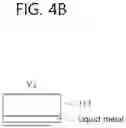
FIGS. 4A and 4B illustrate a voltage change according to a level of a liquid metal in the metal processing apparatus according to one embodiment of the present disclosure,
FIG. 5 is a flowchart illustrating a metal processing method according to one embodiment of the present disclosure,
FIGS. 6A and 6B illustrate the formation and tapping of the liquid metal in the metal processing method according to one embodiment of the present disclosure,
FIG. 7 is a flowchart illustrating a method for operating the tapping unit in the metal processing method according to one embodiment of the present disclosure,
FIG. 8 is a flowchart illustrating another example of the method for operating the tapping unit in the metal processing method according to one embodiment of the present disclosure, and
FIGS. 9A and 9B illustrate a first level and a second level of the liquid metal in the other example of the method of operating the tapping unit.
MODE FOR INVENTION
Hereinafter, the present disclosure will be described in more detail below with reference to the drawings.
The attached drawings are merely examples for more specifically explaining the technical concept of the present disclosure, and therefore, the scope of the present disclosure is not limited to the attached drawings. Furthermore, the attached drawings may exaggerate the size and spacing of components to illustrate the relationships between components.
While the following description uses neodymium (Nd) as an example of a liquid metal, the present disclosure is not limited thereto. The liquid metal may be other metals, particularly rare earth elements.
In addition, in the following description, unless otherwise specified, a “voltage” refers to a “voltage between a cathode and an anode”.
A metal processing apparatus according to one embodiment of the present disclosure will be described with reference to FIGS. 1 to 3.
FIG. 1 illustrates a metal processing apparatus according to one embodiment of the present disclosure, FIG. 2 illustrates in detail a tapping unit in the metal processing apparatus according to one embodiment of the present disclosure, and FIG. 3 illustrates a configuration of a control unit of the metal processing apparatus according to one embodiment of the present disclosure.
A metal processing apparatus 10 includes an electrolytic bath 100, a level measuring unit 200, a tapping unit 300, an ingot manufacturing unit 400, and a control unit 500.
The electrolytic bath 100 includes a main body 110, a cathode 120, and an anode 130, and the main body 110 forms a reaction space 111 and a receiving space 112. The main body 110 may be manufactured from a material that can withstand high temperatures during electrowinning and is non-reactive with the internal liquid electrolyte.
Although not illustrated, a support for supporting the main body 110, a separate external crucible, and an insulation unit may be further provided. The support serves to stably support the main body 110, the external crucible prevents the high-temperature liquid electrolyte inside the main body 110 from being exposed to the outside in the event of an emergency where the main body 110 is damaged. The insulation unit prevents the heat generated within the main body 110 from being released to the outside.
The reaction space 111 is a space where liquid metal to be tapped is formed, and may be cylindrical, but is not limited thereto. In FIG. 1, the cross-section of the reaction space 111 is depicted as a rectangle, but is not limited thereto.
The liquid metal is formed by the reduction of a metal oxide through electrowinning using a liquid electrolyte. Here, the metal oxide may be one or more selected from zirconium oxide, hafnium oxide, titanium oxide, tungsten oxide, iron oxide, nickel oxide, zinc oxide, cobalt oxide, manganese oxide, chromium oxide, tantalum oxide, gallium oxide, lead oxide, tin oxide, silver oxide, lanthanum oxide, cerium oxide, praseodymium oxide, neodymium oxide, promethium oxide, samarium oxide, europium oxide, gadolinium oxide, terbium oxide, dysprosium oxide, holmium oxide, erbium oxide, thulium oxide, ytterbium oxide, actinium oxide, thorium oxide, protactinium oxide, uranium oxide, neptunium oxide, plutonium oxide, americium oxide, curium oxide, berkelium oxide, californium oxide, einsteinium oxide, fermium oxide, mendelevium oxide, nobelium oxide, and complexes thereof. The metal oxide may include neodymium oxide, in particular, or may include both neodymium oxide and praseodymium oxide.
The liquid electrolyte may include a mixed salt of a fluoride compound of alkali metal or alkaline earth metal and NdF3. The liquid electrolyte may be provided in the form of a molten salt of the fluoride compound of alkali metal or alkaline earth metal and NdF3.
The number of the fluoride compounds of alkali metal or alkaline earth metal contained in the liquid electrolyte may be 1 or 2 or more. Examples of the fluoride compounds of the alkali metal or alkaline earth metal include Li, Mg, Na, K, or Ca. The fluoride compound of the alkali metal or alkaline earth metal may be any compound used in the art, such as LiF or CaF2, without particular limitation. The liquid electrolyte may include, for example, a mixed salt of LiF and NdF3. Due to the high melting point of NdF3, electrowinning of NdF3 alone is difficult, but by using NdF3 together with a fluorinated alkali compound such as LiF, a eutectic composition with a low melting point can be utilized in the process.
Although not limited thereto, the liquid electrolyte may contain 5 to 40 wt % LiF and 60 to 95 wt % NdF3, based on the total weight. The LiF and NdF3 may be present in a weight ratio of about 5:95 to 40:60, for example, about 30:70, within the liquid electrolyte.
In another embodiment, the liquid electrolyte may further include an additive, which is an oxide of one or more metals selected from the group consisting of alkali metals and alkaline earth metals.
The receiving space 112 is formed by recessing the main body 110 and serves as a space for receiving the formed liquid metal. The receiving space 112 may have a cylindrical shape, but is not limited thereto. In FIG. 1, the vertical cross-section of the receiving space 112 is depicted as a rectangle, but is not limited thereto. The receiving space 112 is connected to the tapping unit 300 below.
The cathode 120 and the anode 130 are spaced apart from each other by a predetermined distance, and a portion of the cathode 120 and the anode is positioned within the reaction space 111. The anode 130 is disposed to surround the cathode 120. The anode 130 may be formed as a single plate or as multiple plates. The cathode 120 and/or the anode 130, particularly at least a portion of the anode 130, is exposed to air. That is, the cathode 120 and/or the anode 130 may include a contact portion that is immersed in the liquid electrolyte and comes into contact with the liquid electrolyte and an exposed portion that is exposed to the air.
The cathode 120 may comprise one of tungsten (W), molybdenum (Mo), and iron (Fe), and the anode 130 may be made of graphite (C). For example, the cathode 120 may be a tungsten (W) electrode made of tungsten (W), and the anode 130 may be a graphite (C) electrode made of graphite (C).
The lower end of the cathode 120 faces the receiving space 112. Therefore, the liquid metal formed on the surface of the cathode 120 falls freely and is received in the receiving space 112.
In FIG. 1, the anode 130 is depicted as being disposed to surround the cathode 120. However, this is not a limitation, and any electrode arrangement typical in the relevant technical field may be applied to the present disclosure without limitation.
Although not illustrated, the cathode 120 and anode 130 may be electrically connected to a separate power supply unit for supplying power. For example, the cathode 120 and anode 130 may each be electrically connected to the power supply unit via separate power supply lines. When the power supply unit supplies current to the cathode 120 and anode 130 via the power supply lines, neodymium oxide at the cathode 120 is reduced to produce pure neodymium (Nd).
The description of the main body 110, cathode 120, and anode 130 described above is exemplary, and the structures of the main body 110, cathode 120, and anode 130 may be modified to any form commonly used in the art.
The level measuring unit 200 measures the level of liquid metal using the electrical signal (for example, a voltage signal). Specifically, the level measuring unit 200 measures the level by measuring the voltage change between the cathode 120 and anode 130 that occurs due to changes in the level of liquid metal within the receiving space 112.
Referring to FIGS. 4A and 4B, when the liquid metal level within the receiving space 112 is high, as in FIG. 4A, the voltage between the cathode 120 and the anode 130 becomes V1. Moreover, when the liquid metal level within the receiving space 112 is low, as in FIG. 4B, the voltage between the cathode 120 and the anode 130 becomes V2. The voltage between the cathode 120 and the anode 130 is changed depending on the liquid metal level, and V1 when the liquid metal level is high has a lower value than V2 when the liquid metal level is low. In other words, the voltage decreases as the liquid metal level increases.
The tapping unit 300 taps the liquid metal to the outside. The tapping unit 300 includes a first portion A connected to the receiving space 112 and having a cross-sectional area that narrows toward the lower portion, and a second portion B connected downward from the first portion and having a constant cross-sectional area.
The first portion A includes a first section 310. The second portion B includes a second section 320 positioned below the first section 310 and a third section 330 positioned below the second section 320.
In the present embodiment, the first section 310 has a truncated cone shape with a decreasing cross-sectional area toward the bottom, and the second section 320 and the third section 330 may have cylindrical shapes continuously connected to the lower portion of the first section 310, but are not limited thereto.
The tapping unit 300 includes a heating means 340 and a cooling means 350.
The heating means 340 includes a first heating means 341 for heating the first section 310 and a second heating means 342 for heating the third section 330.
The heating means 340 may be formed of an induction coil using a high-frequency induction heating method surrounding the outer sides of the first section 310 and the third section 330, but is not limited thereto.
The cooling means 350 cools the second section 320 and may include a nozzle through which cooling gas passes, but is not limited thereto. The cooling gas may be argon (Ar) or nitrogen (N2). The cooling gas may be used at room temperature.
The ingot manufacturing unit 400 is used to manufacture liquid metal tapped through the tapping unit 300 into an ingot shape, and includes a first space 410, a second space 420, a third space 430, a receiving container 440, and a receiving container transport unit 450.
The first space 410 is positioned below the tapping unit 300. The first space 410 may be created as an inert environment using an inert gas. Argon (Ar) or nitrogen (N2) gas may be used as the inert gas.
In FIG. 1, the receiving container 440 is depicted as a basket-shaped container, but this is not limited thereto. The receiving container 440 receives the liquid metal that falls freely through the tapping unit 300.
Although not illustrated, a separate guide unit may be further included to guide the tapped liquid metal to the receiving container 440.
The second space 420 is positioned at the front end of the first space 410, and the receiving container 440 positioned in the second space 420 is fed into the first space 410. Although not illustrated, a separate receiving container supply device may be further installed in the second space 420 to continuously supply the receiving container 440 to the first space 410.
In the third space 430, the receiving container 440 transferred from the first space 410 is cooled and transported to the outside. Although not illustrated, a separate cooling device may be further installed in the third space 430 to cool the receiving container 440.
The receiving container transport unit 450 transports the receiving container 440 along the second space 420, the first space 410, and the third space 430. The receiving container transport unit 450 sequentially transports the receiving container 440 from the second space 420 to the third space 430, and a conveyor belt may be used for the receiving container transport unit 450, but is not limited thereto.
The control unit 500 controls the tapping unit 300 based on the measurement results of the level measuring unit 200. Specifically, the control unit 500 controls the tapping unit 300 to selectively tap only liquid metal from the receiving space 112 based on the measurement results of the level measuring unit 200.
A metal processing method according to one embodiment of the present disclosure will be described with reference to FIGS. 5 to 7.
FIG. 5 is a flowchart illustrating the metal processing method according to one embodiment of the present disclosure, FIGS. 6A and 6B illustrate the formation and tapping of liquid metal in the metal processing method according to one embodiment of the present disclosure, and FIG. 7 is a flowchart illustrating a method for operating the tapping unit in the metal processing method according to one embodiment of the present disclosure.
First, a metal oxide and a liquid electrolyte are supplied to the reaction space 111 of the electrolytic bath 100, and electrowinning is performed. (S100)
Through electrowinning, liquid metal to be tapped is formed from the metal oxide. The electrowinning process is described in detail as follows.
The electrowinning is performed by applying electricity to the metal oxide and the liquid electrolyte through electrodes. In this case, the metal oxide may be powdered, with an average particle size of 100 μm or less, specifically 1 μm to 20 μm, to ensure stable dispersion within the liquid electrolyte.
At the cathode 120, neodymium (Nd) metal may be reduced by the reaction described in [Reaction Expression 1] below.
Nd 3 + + 3 e - = Nd [ Reaction Expression 1 ]
At the anode 130, carbon dioxide gas may be generated by the reaction described in [Reaction Expression 2] below.
C + 2 O 2 - = CO 2 + 4 e - [ Reaction Expression 2 ]
The process temperature for the electrowinning process may be any temperature as long as the process temperature is equal to or more than a temperature at which the electrolyte can be melted and neodymium oxide can be reduced. For example, the electrowinning process may be performed at a temperature most reasonable from a thermal efficiency perspective, ranging from about 800 to 1300° C., about 800 to 1100° C., about 800 to 900° C., or about 800 to 1200° C.
Referring to FIG. 6A, the liquid metal to be tapped and the liquid electrolyte are positioned within the electrolytic bath 100. The liquid electrolyte may include a metal oxide. The electrolytic bath 100 includes a first layer a at which the liquid metal is positioned and a second layer b which is positioned above the first layer a and at which the liquid electrolyte is positioned. The liquid metal received in the receiving space 112 is formed by reduction of the metal oxide through the electrowinning and includes neodymium (Nd), and the liquid electrolyte includes the mixed salt of the fluoride compound of the alkali metal or alkaline earth metal and NdF3. For example, a mixed salt of LiF and NdF3 is used. In the tapping step described below, only the first layer a is selectively tapped through an automated process.
The liquid metal formed at the cathode 120 falls freely within the liquid electrolyte and moves to the receiving space 112 positioned below the cathode 120. Since the receiving space 112 and the tapping unit 300 are connected, the liquid metal is also positioned in the tapping unit 300, as illustrated in FIG. 6B.
As the liquid metal moves to the tapping unit 300, the temperature of the liquid metal decreases and the liquid metal is solidified, and the solidified metal may turn the tapping unit 300 off. In another embodiment, the cooling means 350 can be operated to reliably maintain the off state of the tapping unit 300. The solidified liquid metal blocks the lower portion of the tapping unit 300, preventing the liquid electrolyte from easily escaping through the tapping unit 300.
Next, the liquid metal level is measured using an electrical signal. (S200) The liquid metal level is measured using a level measuring unit 200, which may measure the liquid metal level using an electrical signal (for example, a voltage signal). Specifically, the level measuring unit 200 measures the voltage between the cathode 120 and the anode 130, which is generated by changes in the liquid metal level within the receiving space 112 of the electrolytic bath 100 due to the electrowinning.
In one embodiment, the level measuring unit 200 may include or utilize information regarding the correlation between voltage and level, and this correlation may be provided using a lookup table or a correlation equation. This correlation may vary depending on the operating time of the electrolytic bath 100, the arrangement and composition of the electrodes 120 and 130, or the like.
Thereafter, the tapping of the liquid metal is controlled based on the level measurement results. (S300)
The control of the tapping of the liquid metal is achieved through the control unit 500. Specifically, the control unit 500 controls the tapping unit 300 by the combination of the operations the heating means 340 and cooling means 350 based on the measurement results of the level measuring unit 200, thereby controlling the tapping of the liquid metal. This step is described in detail with reference to FIG. 7.
FIG. 7 is a flowchart illustrating the method of operating the tapping unit in a metal processing method according to one embodiment of the present disclosure. Specifically, it illustrates detailed steps related to liquid metal tapping control (S300) through the combined operation of the heating means 340 and cooling means 350 according to voltage.
As illustrated in FIG. 6A, when the level of liquid metal in the receiving space increases and the voltage between the cathode 120 and the anode 130 decreases to V1, the first heating means 341 is turned on. (S310)
The liquid metal solidified within the first section 310 is melted by the operation of the first heating means 341.
Thereafter, the second heating means 342 is turned on to initiate the tapping of liquid metal from the first section 310 through the second section 320 and the third section 330. (S320)
Here, the operation (ON) of the second heating means 342 may be performed simultaneously with the operation of the first heating means 341. According to the operations of the first heating means 341 and the second heating means 342, the liquid metal moves downward from the receiving space 112 through the first section 310, the second section 320, and the third section 330.
Thereafter, as illustrated in FIG. 6B, when a certain amount of liquid metal within the receiving space 112 is tapped downward through the tapping unit 300, the voltage increases to V2. In this case, the first heating means 341 is turned off and the cooling means 350 is turned on. (S330)
When the cooling means 350 is turned on, the liquid metal in the second section 320 solidifies, turning the tapping unit 300 off. Thereafter, after the tapping of liquid metal has stopped or after the cooling means 350 is turned on, the second heating means 342 is operated for a certain period of time and then turned off. (S340) The certain period of time may be several seconds, tens of seconds, or minutes, and more specifically, may be 10 to 30 seconds, 10 to 60 seconds, or 1 to 5 minutes.
The second heating means 342 may be operated for a certain period of time after the cooling means 350 is operated to tap all liquid metal positioned in the third section 330.
Thereafter, the tapping is performed when the voltage decreases again, and the tapping is stopped when the voltage increases. The tapping occurs intermittently, and only liquid metal, excluding the liquid electrolyte, is selectively tapped.
In this way, voltage measurement and subsequent tapping are performed through an automated process. Subsequently, the formation and tapping of liquid metal are repeated while replenishing metal oxide.
Although not illustrated, a process for manufacturing the liquid metal tapped through the tapping unit 300 into an ingot-shaped final product may be additionally included.
The metal processing method described above, particularly the operation of the tapping unit, may be modified in various ways, and the modified examples are described with reference to FIGS. 8 and 9A and 9B.
FIG. 8 is a flowchart illustrating another example of the method for operating the tapping unit in the metal processing method according to one embodiment of the present disclosure, and FIGS. 9A and 9B illustrate a first level and a second level of the liquid metal in the other example of the method for operating the tapping unit.
In the present embodiment, the control unit 500 controls the tapping unit 300 to maintain the liquid metal level within the receiving space 112 between the first level L1 and the second level L2.
Referring to FIGS. 9A and 9B, the receiving space 112 has a first level L1 that prevents the liquid metal from being positioned outside the receiving space 112 and a second level L2 that prevents the liquid electrolyte from being tapped during the tapping and is lower than the first level.
The first level L1 corresponds to a safety level that prevents the liquid metal from overflowing outside the receiving space 112 from the inside of the receiving space 112. The second level L2 corresponds to a safety level that prevents the liquid electrolyte from being tapped together with the liquid metal when the center of the liquid metal becomes lower than the periphery during tapping of the liquid metal.
The first level L1 may be selected from 60% to 95%, 60% to 90%, 70% to 90%, 80% to 90%, or 70% to 90% of a height L of the receiving space 112. The second level may be selected from 10% to 40%, 20% to 40%, or 10% to 30% of the height L of the receiving space 112.
When the horizontal cross-sectional area of the receiving space 112 is not constant, the level may be changed by volume. A first volume may be selected from 60% to 95%, 60% to 90%, 70% to 90%, 80% to 90%, or 70% to 90% of the volume (V) of the receiving space 112. A second volume may be selected from 10% to 40%, 20% to 40%, or 10% to 30% of the volume (V) of the receiving space 112.
As illustrated in FIG. 9A, when the liquid metal level reaches the first level L1, the first heating means 341 is turned on. (S310′)
Thereafter, the second heating means 342 is turned on to initiate the tapping of liquid metal from the first section 310, through the second section 320, and through the third section 330. (S320′)
Next, as illustrated in FIG. 9B, a certain amount of liquid metal within the receiving space 112 is tapped downward through the tapping unit 300. When the liquid metal level reaches the second level L2 lower than the first level L1, the first heating means 341 is turned off and the cooling means 350 is turned on. (S330′)
Thereafter, after the tapping of liquid metal has stopped or after the cooling means 350 has been turned on, the second heating means 342 is operated for a predetermined period of time and then turned off. (S340′)
The above-described embodiments are illustrative examples of the present disclosure, and the present disclosure is not limited thereto. Those skilled in the art will be able to implement the present disclosure by making various modifications thereto. Therefore, the scope of technical protection of the present disclosure should be defined by the appended claims.
Claims
1. A metal processing apparatus, comprising:
an electrolytic bath having a reaction space and forming a liquid metal to be tapped;
a level measuring unit for measuring a level of the liquid metal by using an electrical signal;
a tapping unit for tapping the liquid metal; and
a control unit for controlling the tapping unit on the basis of a measurement result of the level measuring unit.
2. The metal processing apparatus of claim 1, wherein the reaction space includes the liquid metal and a liquid electrolyte,
the liquid electrolyte includes at least two components, and
the control unit controls the tapping unit to selectively and intermittently tap only the liquid metal from the reaction space.
3. The metal processing apparatus of claim 2, wherein the reaction space includes
a first layer including the liquid metal, and
a second layer positioned above the first layer and including the liquid electrolyte.
4. The metal processing apparatus of claim 3, wherein the liquid metal is formed by reducing a metal oxide through electrowinning.
5. The metal processing apparatus of claim 4, wherein the liquid metal includes neodymium.
6. The metal processing apparatus of claim 3, wherein the liquid electrolyte includes LiF and NdF3, and
the liquid electrolyte includes LiF and NdF3 in a weight ratio of 5:95 to 40:60.
7. The metal processing apparatus of claim 1, wherein the electrolytic bath includes
a cathode, and an anode surrounding the cathode,
at least a portion of the cathode and the anode are positioned in the reaction space, and
the level measuring unit measures a voltage between the cathode and the anode.
8. The metal processing apparatus of claim 7, wherein the cathode includes at least one of tungsten, molybdenum, and iron, and
the anode includes graphite.
9. The metal processing apparatus of claim 7, wherein a receiving space recessed to receive the liquid metal is formed below the reaction space,
an end of the cathode faces the receiving space,
the tapping unit is connected to the receiving space,
the receiving space has a first level that prevents the liquid metal from being positioned outside the receiving space and a second level that prevents the liquid electrolyte from being tapped during the tapping and is lower than the first level, and
the control unit controls the tapping unit so that a level of the liquid metal in the receiving space is maintained between the first level and the second level.
10. The metal processing apparatus of claim 9, wherein the tapping unit includes a heating means and a cooling means,
the control unit performs the tapping by combining operation of the heating means and operation of the cooling means,
the tapping unit includes a first portion connected to the receiving space and having a cross-sectional area that narrows toward a lower portion, and a second portion connected downward from the first portion and having a constant cross-sectional area,
the heating means includes an induction coil of a high-frequency induction heating method, and
the cooling means includes a nozzle through which a cooling gas passes.
11. The metal processing apparatus of claim 10, wherein the tapping unit includes
a first section connected to the receiving space and having a cross-sectional area that narrows toward the lower portion,
a second section positioned below the first section,
a third section positioned below the second section,
a first heating means for heating the first section,
a cooling means for cooling the second section, and
a second heating means for heating the third section.
12. The metal processing apparatus of claim 11, wherein the control unit turns on the first heating means and the second heating means to tap the liquid metal when the voltage is lower than a first value,
the control unit turns off the first heating means and turns on the cooling means to stop the tapping of the liquid metal when the voltage reaches a second value higher than the first value, and
the second heating means operates for a predetermined period of time after the tapping of the liquid metal has stopped, and then turns off.
13. The metal processing apparatus of claim 1, further comprising an ingot manufacturing unit for manufacturing the liquid metal tapped through the tapping unit into an ingot shape,
wherein the ingot manufacturing unit includes
a first space in an argon (Ar) atmosphere, positioned below the tapping unit and including a receiving container for storing the liquid metal tapped through the tapping unit,
a second space positioned at a front end of the first space and configured to insert the receiving container into the first space, and
a third space configured to cool the receiving container delivered from the first space and discharge the receiving container to the outside, and
the ingot manufacturing unit further includes a receiving container transport unit configured to transport the receiving container along the first space, the second space, and the third space.
14. A metal processing method, comprising:
supplying a metal oxide and a liquid electrolyte to a reaction space of an electrolytic bath, thereby forming a liquid metal to be tapped from the metal oxide through electrowinning;
measuring a level of the liquid metal using an electrical signal; and
controlling tapping of the liquid metal based on a result of the level measurement,
wherein only the liquid metal is selectively and intermittently tapped from the reaction space through the tapping control.
15. The metal processing method of claim 14, wherein the tapping control is performed by controlling a tapping unit that taps the liquid metal to the outside and includes a heating means and a cooling means, and
the control is performed by a combination of operation of the heating means and operation of the cooling means.
Images & Drawings included:




Sources:
- United States Patent and Trademark Office - verify current appl. status at the USPTO↗
Similar patent applications:
- » 20170304941
Direct diode laser processing apparatus and sheet metal processing method using the same - » 20200040463
Metal contamination prevention method and apparatus, and substrate processing method using the same and apparatus therefor - » 20170252782
METAL CONTAMINATION PREVENTING METHOD AND APPARATUS AND SUBSTRATE PROCESSING METHOD AND APPARATUS USING THE SAME - » 20130121868
METHOD OF MANUFACTURING A WELD-FREE APPARATUS FOR CONNECTION OF DISSIMILAR METALS USING FUNCTIONALLY GRADED COMPOSITIONALLY CONTROL POWDER METALLURGY AND HOT ISOSTATIC PROCESSING METHODS - » 20100135877
Method for removing metal impurity from quartz component part used in heat processing apparatus of batch type - » 20090041650
Method for removing metal impurity from quartz component part used in heat processing apparatus of batch type - » 20110114708
Metal nanoink and process for producing the metal nanoink, and die bonding method and die bonding apparatus using the metal nanoink - » 20120244701
Method for forming NiSi film, method for forming silicide film, method for forming metal film for use in silicide-annealing, apparatus for vacuum processing and film-forming apparatus - » 20130001280
METAL NANOINK AND PROCESS FOR PRODUCING THE METAL NANOINK, AND DIE BONDING METHOD AND DIE BONDING APPARATUS USING THE METAL NANOINK - » 10402714
Method and apparatus for a self-aligned heterojunction bipolar transistor using dielectric assisted metal liftoff process
Recent applications in this class:
- » 20250376779 2025-12-11
MULTI-ANODE ELECTROLYTIC CELL - » 20250369145 2025-12-04
ELECTRODE STEM AND COUPLING - » 20250215593 2025-07-03
CATHODE FOR RARE EARTH MOLTEN SALT ELECTROLYSIS AND AN ELECTROLYSIS SYSTEM COMPRISING THE SAME - » 20240426016 2024-12-26
INERT ANODE ALUMINUM ELECTROLYTIC CELL WITH VERTICAL STRUCTURE - » 20240287695 2024-08-29
ADVANCED PURIFICATION CELL FOR ALUMINUM SCRAP RECYCLING - » 20240011177 2024-01-11
METHOD FOR LINING A CATHODE ASSEMBLY OF AN ELECTROLYSIS CELL FOR PRODUCING ALUMINUM - » 20230392274 2023-12-07
Reference Electrode for Molten Salts - » 20220228280 2022-07-21
INTEGRATED PROCESS OF PYROLYSIS, ELECTRODE ANODE PRODUCTION AND ALUMINUM PRODUCTION AND JOINT PLANT - » 20200248327 2020-08-06
Method and means for application of anode covering material (ACM) in an electrolysis cell of Hall-Heroult type for aluminium production - » 20180148853 2018-05-31
Composite body