WALL PANEL ASSEMBLY FOR A VACUUM INSULATED APPLIANCE
US20260126239A1
2026-05-07
18/934,884
2024-11-01
Smart Summary: A vacuum insulated appliance has a special cabinet with walls that create a compartment. It features a trim breaker that has an outer wall and a cover that sticks out from the compartment. A wall panel assembly can be attached and removed from these walls. This assembly has a main part with a folded edge that sits close to the trim breaker cover. It uses magnets to securely connect the wall panel to the cabinet walls. 🚀 TL;DR
Abstract:
A vacuum insulated appliance, including a vacuum insulated cabinet including a plurality of walls at least partially defining a compartment. The vacuum insulated cabinet includes a trim breaker having an outer wall and a trim breaker cover abutting the outer wall and extending parallel to and away from the compartment. A wall panel assembly is removably coupled to at least one of the plurality of walls. The wall panel assembly includes a main body having a hemmed edge. The hemmed edge of the main body is positioned proximate the trim breaker cover. A magnetic coupler assembly operably coupled to the main body, wherein the magnetic coupler assembly is configured to operably couple the wall panel assembly to at least one of the plurality of walls.
Assignee:
- WHIRLPOOL CORPORATION 4,549 🇺🇸 BENTON HARBOR, MI, United States
Applicant:
Interested in similar patents?
Get notified when new applications in this technology area are published.
Classification:
F25D23/063 » CPC main
General constructional features; Walls defining a cabinet formed by an assembly of panels
F25D2201/14 » CPC further
Insulation with respect to heat using subatmospheric pressure
F25D23/06 IPC
General constructional features Walls
Description
BACKGROUND OF THE DISCLOSURE
The present disclosure generally relates to a wall panel, and more specifically, to a wall panel for a vacuum insulated refrigerator.
SUMMARY OF THE DISCLOSURE
According to one aspect of the present disclosure, a vacuum insulated appliance includes a vacuum insulated cabinet having a plurality of walls at least partially defining a compartment. The vacuum insulated cabinet includes a trim breaker having an outer wall and a trim breaker cover abutting the outer wall and extending parallel to and away from the compartment. A wall panel assembly removably coupled to at least one of the plurality of walls. The wall panel assembly includes a main body having a hemmed edge. The hemmed edge of the main body is positioned proximate the trim breaker cover. A magnetic coupler is operably coupled to the main body. The magnetic coupler is configured to operably couple the wall panel assembly to at least one of the plurality of walls.
According to yet another aspect of the present disclosure, a refrigerated appliance includes a cabinet having opposing sidewalls. At least one of the opposing sidewalls includes a notch. A wall panel assembly is operably coupled to at least one of the opposing sidewalls of the cabinet. The wall panel assembly includes a main body having an edge with a protrusion, wherein the protrusion is configured to engage with the notch of at least one of the opposing sidewalls and is configured to assist in operably coupling the wall panel assembly to at least one of the opposing sidewalls. A magnetic coupler assembly is aligned along the main body. The magnetic coupler assembly is configured to operably couple the wall panel assembly to at least one of the opposing sidewalls of the cabinet.
According to yet another aspect of the present disclosure, an appliance includes a cabinet including a plurality of walls. A door is operably coupled with the cabinet. The vacuum insulated door is operable between an open position and a closed position. A wall panel including a main body has a first side and a second side. The second side of the wall panel includes a magnetic coupler configured to operably couple the wall panel to at least one of the plurality of walls of the cabinet.
These and other features, advantages, and objects of the present disclosure will be further understood and appreciated by those skilled in the art by reference to the following specification, claims, and appended drawings.
BRIEF DESCRIPTION OF THE DRAWINGS
In the drawings:
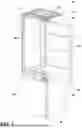
FIG. 1 is a side perspective view of a refrigeration appliance, according to the present disclosure;
FIG. 2 is a side perspective cross-sectional view of a refrigeration appliance with a vacuum insulated cabinet and vacuum insulated doors, according to the present disclosure;
FIG. 3 is a side perspective exploded view of a cabinet for a refrigeration appliance with a wrapper, a liner, and trim breaker assembly of the cabinet, according to the present disclosure;
FIG. 4 is a rear perspective view of a refrigeration appliance without a wall panel assembly, according to the present disclosure;
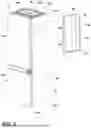
FIG. 5A is a side elevational view of a wall panel assembly including a magnetic coupler assembly having magnetic coupler discs positioned in uniform rows along a length of the wall panel assembly, according to the present disclosure;
FIG. 5B is a side elevational view of a wall panel assembly including a magnetic coupler assembly having magnetic coupler strips positioned around a periphery of the wall panel assembly and along a length of the wall panel assembly, according to the present disclosure;
FIG. 6 is a partial side perspective view of a wall panel assembly including a hemmed edge, according to the present disclosure;
FIG. 7 is a side perspective view of a refrigeration appliance including a plurality of walls and a wall panel assembly configured to be removably coupled to at least one of the plurality of walls, according to the present disclosure;
FIG. 8 is a side perspective view of a refrigeration appliance with an exploded view of a notch assembly for coupling a wall panel assembly to the refrigeration appliance, according to the present disclosure; and
FIG. 9 is a top plan cross-sectional view of a corner of a refrigerator appliance illustrating a wall panel assembly positioned proximate a trim breaker assembly, according to the present disclosure.
The components in the figures are not necessarily to scale, emphasis instead being placed upon illustrating the principles described herein.
DETAILED DESCRIPTION
The present illustrated embodiments reside primarily in combinations of method steps and apparatus components related to a wall panel assembly for a vacuum insulated appliance. Accordingly, the apparatus components and method steps have been represented, where appropriate, by conventional symbols in the drawings, showing only those specific details that are pertinent to understanding the embodiments of the present disclosure so as not to obscure the disclosure with details that will be readily apparent to those of ordinary skill in the art having the benefit of the description herein. Further, like numerals in the description and drawings represent like elements.
For purposes of description herein, the terms “upper,” “lower,” “right,” “left,” “rear,” “front,” “vertical,” “horizontal,” and derivatives thereof shall relate to the disclosure as oriented in FIG. 1. Unless stated otherwise, the term “front” shall refer to the surface of the element closer to an intended viewer, and the term “rear” shall refer to the surface of the element further from the intended viewer. However, it is to be understood that the disclosure may assume various alternative orientations, except where expressly specified to the contrary. It is also to be understood that the specific devices and processes illustrated in the attached drawings, and described in the following specification are simply exemplary embodiments of the inventive concepts defined in the appended claims. Hence, specific dimensions and other physical characteristics relating to the embodiments disclosed herein are not to be considered as limiting, unless the claims expressly state otherwise.
The terms “including,” “comprises,” “comprising,” or any other variation thereof, are intended to cover a non-exclusive inclusion, such that a process, method, article, or apparatus that comprises a list of elements does not include only those elements but may include other elements not expressly listed or inherent to such process, method, article, or apparatus. An element preceded by “comprises a . . . ” does not, without more constraints, preclude the existence of additional identical elements in the process, method, article, or apparatus that comprises the element.
Referring to FIGS. 1-9, reference numeral 10 generally designates an appliance, such as a vacuum insulated appliance 10. The appliance 10 includes a cabinet 14 having a plurality of walls 16, such as opposing sidewalls 22, a rear wall 24, a top wall 26, and a bottom wall 28. A wall panel assembly 34 is removably coupled to at least one of the plurality of walls 16. The wall panel assembly 34 includes a main body 38 and a magnetic coupler assembly 42 operably coupled to the main body 38. The magnetic coupler assembly 42 is configured to operably couple the wall panel assembly 34 to at least one of the plurality of walls 16.
Referring to FIG. 1, the appliance 10 is illustrated as a refrigerating appliance 10, however, it is contemplated that the cabinet 14 and at least one door 44a, 44b, collectively referred to herein as the doors 44 (i.e., a first insulated door 44a and a second insulated door 44b) disclosed herein may be vacuum insulated and/or may be used with a variety of appliances, structures, or insulation purposes other than with the appliance 10. Moreover, the illustrated appliance 10 is a bottom mount refrigerator having the vacuum insulated doors 44 and vacuum insulated cabinet 14. The vacuum insulated doors 44 may be a rotationally and/or laterally operable panel for doors 44 and drawers. In non-limiting examples, the refrigerating appliance 10 can be a full, single-door refrigerator, a bottom mount French door refrigerator, a top mount refrigerator, a side-by-side refrigerator, a four-door French door refrigerator, and/or a five-door French door refrigerator, each of which can have one or more insulated cabinets 14 and doors 44 (e.g., panels). In other non-limiting examples, the vacuum-insulated appliance 10 can also be a freezer, such as a top-freezer, a bottom-freezer, a side-by-side freezer, a French door freezer, a triple door freezer, an integrated/built-in freezer, and a chest freezer.
Referring still to FIG. 1, as well as FIG. 2, the cabinet 14 of the illustrated refrigeration appliance 10 defines at least one compartment 46, 48, often including a refrigerator compartment 46 and a freezer compartment 48. Accordingly, the appliance includes the first insulated door 44a and the second insulated door 44b. The first insulated door 44a and the second insulated door 44b can have substantially similar configurations. In this way, the insulated doors 44 can seal the refrigerator and freezer compartments 46, 48 defined by the cabinet 14, respectively.
The cabinet 14 of the appliance 10 may be an insulated structure having an insulation cavity 60 defined between an outer wrapper 62 and an inner liner 64. The wrapper 62 and the liner 64 may collectively be referred to as a structural wrapper that defines the insulation cavity 60. The insulation cavity 60 of the cabinet 14 typically includes one or more insulation materials 66 disposed therein. Similarly, each of the doors 44 may be insulated structures each having an insulation cavity 68a, 68b, collectively referred to herein as the insulation cavities 68 defined between wrappers 70a, 70b, collectively referred to herein as the wrappers 70 that are coupled to liners 72a, 72b, collectively referred to herein as the liners 72. The doors 44 typically include one or more insulation materials 74 disposed therein. It is generally contemplated that the insulation materials 66, 74 may be glass-type materials, carbon-based powders, silicon oxide-based materials, silica-based materials, insulating gasses, and other standard insulation materials 66, 74 known in the art.
The insulation materials 66 substantially fill the insulation cavity 60 of the cabinet 14, forming a substantially continuous layer between the wrapper 62 and the liner 64. Similarly, the insulation materials 74 substantially fill the insulation cavities 68 of the doors 44, forming a substantially continuous layer between the outer door wrappers 70 and the inner door liners 72, for one or both doors 44. The insulation cavities 60, 68 are filled with the insulation materials 66, 74 using a load port on the cabinet 14 and the insulated doors 44, respectively. The cabinet 14 and the doors 44 each define an evacuation port for applying a vacuum or negative pressure to the insulation cavities 60, 68.
Referring still to FIGS. 1 and 2, as well as FIG. 3, an at least partial vacuum 80 is defined within the insulation cavities 60, 68, forming the cabinet 14 and the doors 44 as vacuum insulated structures. The at least partial vacuum 80 defines a pressure differential 82 between an exterior 84 of the cabinet 14 and the insulation cavity 60. The pressure differential 82 serves to define an inward compressive force that is exerted on both the wrapper 62 and the liner 64 and tends to bias the wrapper 62 and the liner 64 toward the insulation cavity 60. The pressure differential 82 and the inward compressive force are also exerted on both the door wrappers 70 and door liners 72 towards the insulation cavity 68, respectively, in a similar manner.
The wrappers 62, 70 and liners 64, 72 of each of the cabinet 14 and doors 44 are made from a material at least partially resistant to bending, deformation, or otherwise being deformed in response to the inward compressive force. These materials for the wrappers 62, 70 and liners 64, 72 include, but are not limited to, metals, polymers, metal alloys, combinations thereof, and/or other similar substantially rigid materials that can be used for vacuum insulated appliances 10 and structures.
Referring still to FIGS. 1-3, the liner 64 of the cabinet 14 may include the refrigerator liner 86 to define the refrigerator compartment 46 and the freezer liner 88 to define the freezer compartment 48. The refrigerator liner 86 and the freezer liner 88 may also be separate components defining a mullion gap 90 in the insulation cavity 60 therebetween when coupled together. The mullion gap 90 may be filled with the insulation materials 66 and may be placed under the at least partial vacuum 80. The refrigerator liner 86 and the freezer liner 88 may be biased toward the mullion gap 90 in the insulation cavity 60, in a similar manner to that discussed with reference to the wrapper 62 and the liner 64 of the cabinet 14, generally.
In various examples, the refrigerator liner 86 and the freezer liner 88 may be coupled together in the mullion gap 90, however, the refrigerator liner 86 and the freezer liner 88 may still define the mullion gap 90 when coupled together. While the liner 64 is shown as having two separate liners 86, 88, the liner 64 may be a single portion or structure defining the refrigerator and freezer compartments 46, 48. The liner 64 may also be a single structure defining the refrigerator compartment 46 or the freezer compartment 48. The liner 64 can generally have a similar shape as the wrapper 62 to fit within the wrapper 62 and form the cabinet 14.
Referring still to FIG. 3, as well as FIG. 4, the wrapper 62 has a plurality of walls 16, which may include the opposing sidewalls 22, the rear wall 24, the top wall 26, the bottom wall 28, and a curved wall 94. Each of the plurality of walls 16 of the refrigeration appliance 10 includes a variety of components configured for use in maintaining insulative and structural properties of the appliance 10. For example, the opposing sidewalls 22 of the appliance 10 may include bump-out portions 96 configured to provide internal reinforcement of the inner liner 64 and outer wrapper 62 of the cabinet 14 of the appliance 10. Additionally, the opposing sidewalls 22 can include ridges 98, such as forms, configured to provide rigidity and strength to the cabinet 14 of the appliance 10 to help maintain the shape of the cabinet 14 and support a weight of the cabinet 14 when food items are placed within at least one of the compartments 46, 48. Additionally, the ridges 98 can form a space between the outer wrapper 62 and the inner liner 64 of the refrigerated appliance 10 where the insulation materials 66 can be placed, as is further described herein. Each of the plurality of walls 16 of the refrigeration appliance 10 may be composed of a variety of materials, for example, the walls 16 may be composed of a thin sheet metal measuring between approximately 0.4 mm to approximately 3 mm thick. Additionally, a metal mullion plate 100 is positioned on the outer wrapper 62 of the cabinet 14. In particular, the metal mullion plate 100 is positioned along each of the sidewalls 22. The metal mullion plate 100 provides additional structural support to the cabinet 14 of the appliance 10.
The bottom wall 28 of the wrapper 62 may be coupled to a base 102. The curved wall 94 of the wrapper 62 and the bottom wall 28 or base 102 at least partially define a mechanical compartment 104. Various appliance components 106 can be positioned on the base 102 or the bottom wall 28 within the mechanical compartment 104 below the rear wall 24 and proximate the curved wall 94 of the wrapper 62. The appliance components 106 positioned within the mechanical compartment 104 may include components 106 of a refrigerant system including, but not limited to, a compressor, a condenser, and/or portions of an evaporator assembly. The appliance components 106 may also include a controller, electronics, or other components 106 for operation of the appliance 10. Additionally, the curved wall 94 of the wrapper 62 may be covered by a cover portion 110 to at least partially protect the components 106 from damage.
Referring still to FIGS. 3 and 4, the cabinet 14 includes a trim breaker assembly 116. The trim breaker assembly 116 generally couples the wrapper 62 to the liner 64 to form the cabinet 14. It is contemplated that the trim breaker assembly 116 may be coupled to an edge 120 of the wrapper 62 and/or an edge 122 of the liner 64. The trim breaker assembly 116 has a generally rectangular shape, however, it is contemplated that other geometric shapes known in the art may be used. In this way, the trim breaker assembly 116 may not substantially interfere with access to the refrigerator and freezer compartments 46, 48 defined by the cabinet 14.
The trim breaker assembly 116 may include a cross member 128 to define apertures 132a, 132b corresponding to the refrigerator and freezer compartments 46, 48 of the appliance 10, respectively. The cross member 128 defines a mullion region 134 between the refrigerator and the freezer compartment 46, 48. The trim breaker assembly 116 generally defines an outer perimeter 138 extending along an outer portion 140 of the trim breaker assembly 116 and an inner perimeter 144 extending along an inner portion 146 of the trim breaker assembly 116. The inner perimeter 144 may be concentric and extend parallel with the outer perimeter 138. The inner perimeter 144 generally extends around both the apertures 132a, 132b corresponding to the compartments 46, 48. In the illustrated example, the inner perimeter 144 of the trim breaker assembly 116 includes a portion of a perimeter 150 of the refrigerator compartment 46 around the upper aperture 132a and a portion of a perimeter 152 of the freezer compartment 48 around the lower aperture 132b. Additional portions of the perimeters 150, 152 of the compartments 46, 48 extend across the cross member 128. These portions of the perimeters 150, 152 may extend parallel to each other across the cross member 128. In this way, the perimeters 150, 152 define openings into the compartments 46, 48, respectively.
The perimeter 150 of the refrigerator compartment 46 may be a portion of the inner perimeter 144, extending around the upper aperture 132a from a first end 154a of the mullion region 134 to a second end 154b of the mullion region 134 and along the cross member 128 from the second end 154b of the mullion region 134 to the first end 154a. Similarly, the perimeter 152 of the freezer compartment 48 may be a portion of the inner perimeter 140, extending around the lower aperture 132b from the first end 154a of the mullion region 134 to the second end 154b and along the cross member 128 from the second end 154b of the mullion region 134 to the first end 154a. It is contemplated that the inner portion 146 may extend around one aperture 132a or 132b in implementations where the appliance 10 includes one compartment 46 or 48.
Referring still to FIGS. 3 and 4, the trim breaker assembly 116 includes a trim breaker cover 158. A portion of the trim breaker cover 158 abuts an outer wall 160 (FIG. 9) of the trim breaker assembly 116 and extends generally parallel to and away from the outer wrapper 62 when coupled thereto. The trim breaker cover 158 may include a plurality of cover sections, however, the cover 158 may be a singular, integral piece that extends along the outer portion 140 of the trim breaker assembly 116, as illustrated in FIG. 3. The trim breaker cover 158 may be coupled to the outer wall 160 of the trim breaker assembly 116 via an adhesive, fastener, snap-fit, or other similar coupling mechanisms. The trim breaker cover 158 includes an arcuate end 162 defining a downwardly opening channel 164. The arcuate end 162 of the trim breaker cover 158 abuts the wrapper 62 of the cabinet 14 and may be coupled to the wrapper 62 via similar coupling mechanisms described herein.
Referring still to FIG. 4, as well as FIGS. 5A and 5B, the refrigeration appliance 10 includes the wall panel assembly 34 that is configured to couple with any one of the opposing sidewalls 22, rear wall 24, top wall 26, or bottom wall 28 of the cabinet 14. The wall panel assembly 34 includes one or more panels 34 having the main body 38. The main body 38 includes a first side 170a or a front-facing side exposed to an external environment of the appliance 10 and a second side 170b or rear-facing side that is configured to operably couple to at least one of the walls 16 of the appliance 10. The main body 38 of the wall panel assembly 34 may be composed of a variety of materials including, but not limited to, metal, plastic, aluminum, composite material and other similar materials known in the art. For example, the main body 38 of the wall panel assembly 34 can include a two-material construction, wherein the first side 170a is constructed from plastic or glass having a color and texture as desired by a user and the second side 170b constructed from a sheet of thin metal. In such instances, these materials can be permanently secured together in accordance with any known manufacturing process such as welding, casting, or through the use of adhesives.
In another example, the main body 38 of the wall panel assembly 34 may be composed of a single-material construction and can form a single, integral wall panel assembly 34 to be operably coupled to the desired wall of the appliance 10. In addition, the wall panel assembly 34 can also include any number of decorative elements such as various colors, markings, words, shapes, symbols, logos, designs, lights, types of materials, texturing of materials, patterns, images, and/or photographs. Such decorative elements can be secured onto and/or into the main body 38 in accordance with known techniques so as to be flush with the surface of the main body 38 or can be raised or protruding outward from the main body 38 so as to give a three-dimensional effect. As such, the decorative elements can be provided to make the wall panel assembly 34 stand out from the surrounding walls by providing a picture, for example, or can be provided to make the wall panel assembly 34 blend in with the surrounding walls by providing a textured surface.
The wall panel assembly 34 has a generally rectangular shape with a pair of upper corners 174a and a pair of lower corners 174b, however, it is contemplated that the wall panel assembly 34 may include any number of different sizes and shapes. When the wall panel assembly 34 is operably coupled to at least one of the walls 16 (e.g., the opposing sidewalls 22, the rear wall 24, the top wall 26, or the bottom wall 28) of the refrigeration appliance 10, the pair of upper corners 174a and the pair of lower corners 174b are configured to align or engage with a pair of respective upper and lower corners 176a, 176b of at least one of the plurality of walls 16 being used, as is further described herein.
Each of the pair of upper and lower corners 174a, 174b of the wall panel assembly 34 include hemmed edges 180, creating a folded and finished edge 180 to reduce sharp edges. In particular, the rounded profile of the hemmed edge 180 distributes any contact force over a larger area when the wall panel assembly 34 is installed on one of the plurality of walls 16. Accordingly, the hemmed edge 180 is positioned proximate the trim breaker cover 158. As such, the hemmed edge 180 minimizes the risk of wear or damage to the trim breaker cover 158 over time. Additionally, the hemmed edge 180 contributes to the overall structural integrity of the wall panel assembly 34 reducing warping or bending during installation or removal.
Referring still to FIGS. 4-6, the second side 170b of the main body 38 includes a magnetic coupler assembly 42 having a variety of magnetic couplers 184, 186 that are configured to be operably coupled thereto. In one implementation, illustrated in FIG. 5A, the magnetic couplers 184 each include a generally disc shaped body constructed from any type of metal and can be magnetized in accordance with known processes. These magnetic couplers 184 can include any number of different sizes (e.g., diameter of the magnetic coupler discs 184) and/or thicknesses. In another implementation, illustrated in FIG. 5B, the magnetic couplers 186 each include a generally elongated strip that is generally rectangular in shape and may be constructed from any type of metal and can be magnetized in accordance with known processes. These magnetic couplers 186 can include any number of different sizes, lengths, and thicknesses. Each of the magnetic couplers 184, 186 may be composed of materials including, but not limited to, ferrite (e.g., ceramic), neodymium, niobium, dysprosium, aluminum, copper, and other similar elements.
The magnetic couplers 184, 186 are coupled to the second side 170b of the wall panel assembly 34 via an adhesive coupling mechanism including, but not limited to, two-sided tape, pressure sensitive adhesive, epoxy, hot melt, and other similar adherence mechanisms. Each of the magnetic couplers 184, 186 may be coupled to the main body 38 of the wall panel assembly 34 in varying configurations. For example, as illustrated in FIG. 5A, the magnetic coupler discs 184 are configured in a number of uniform rows, such as six uniform rows consisting of a number of magnetic couplers 184 within each row, such as four magnetic couplers 184 per row. In another example, illustrated in FIG. 5B, the magnetic coupler strips 186 are configured to be coupled around a periphery of the second side 170b of the main body 38. Additionally, the magnetic coupler strips 186 are placed in uniform rows along a length of the second side 170b proximate the periphery. However, it is contemplated that the magnetic couplers 184, 186 may be arranged in a variety of configurations and placements along the second side 170b of the wall panel assembly 34. For example, in another implementation, the wall panel assembly 34 may define a cavity between the first side 170a and the second side 170b of the main body 38. The magnetic couplers 184, 186 may be positioned or disposed within the cavity of the wall panel assembly 34 such that the magnetic couplers 184, 186 are not visible or exposed during installation. Additionally, or alternatively, the magnetic coupler assembly 42 may be disposed along any one of the plurality of walls 16 (e.g., the opposing sidewalls 22). As such, the second side 170b of the wall panel assembly 34 may be magnetically coupled to the sidewall 22 in a similar manner as described herein.
Referring now to FIG. 7, traditionally, in more conventional arrangements, the illustrated refrigeration appliance 10 is a built-in refrigeration appliance 10. The built-in refrigeration appliance 10 may be positioned within an area, such as a kitchen or kitchen cabinetry. In this configuration, the opposing sidewalls 22, the rear wall 24, and the top wall 26 are typically exposed during installation. In other words, the material (e.g., sheet metal) composing the opposing sidewalls 22, the rear wall 24, and the top wall 26 are typically left exposed during installation and/or integration of the refrigeration appliance 10, as these surfaces will be concealed when the appliance 10 is fully integrated into the area, such as the kitchen cabinetry. This configuration allows for greater flexibility in the manufacturing process, as the hidden surfaces need not be finished to the same design standard as a visible front face. Additionally, the exposed nature of the plurality of walls 16 during installation facilitates easier access for connecting utilities, such as power and water lines, and may provide opportunities for enhanced insulation or the incorporation of functional components that do not necessitate user access during normal operation.
When the built-in refrigeration appliance 10 is freestanding or is not incorporated into kitchen cabinetry or other similar locations that may conceal the exposed wall 16, the wall panel assembly 34 assists in covering the exposed walls 16. In the example illustrated in FIG. 7, during installation of the wall panel assembly 34, the pair of upper corners 174a of the wall panel assembly 34 may be aligned with the upper corners 176a of the sidewall 22 of the refrigeration appliance 10. Similarly, the pair of lower corners 174b of the wall panel assembly 34 may be aligned with the lower corners 176b of the sidewall 22 such that the wall panel assembly 34 is co-extensive with the sidewall 22. Accordingly, when the upper and lower corners 174a, 174b of the wall panel assembly 34 are aligned with the respective corners 176a, 176b of the sidewall 22, the wall panel assembly 34 may be operably coupled to the sidewall 22 via the magnetic couplers 184, 186 of the magnetic coupler assembly 42.
The magnetic couplers 184, 186, which are coupled or fixed to the second side 170b of the wall panel assembly 34, are attracted to the sidewall 22 via a magnetic force. The magnetic force generated by the magnetic couplers 184, 186 creates a secure attachment between the wall panel assembly 34 and the sidewall 22. The magnetic coupling allows for ease of installation and removal of the wall panel assembly 34 without the need for permanent modification to the appliance 10. Alternatively, at least one of the pair of lower corners 174b may include a curved portion 188 (FIG. 1) configured to align with the curved wall 94 of the cabinet 14. For example, an alternative of varying styled wall panel assembly 34 may be desired for coupling with the walls 16 of the appliance 10. In such instances, the wall panel assembly 34 in use may be removed from the walls 16 of the appliance by pulling the main body 38 away from the walls 16 and the new or differing wall panel assembly 34 may be installed, as described herein.
Referring now to FIG. 8, the wall panel assembly 34 may be coupled to the sidewall 22 of the refrigeration appliance 10 via an additional or alternative coupling mechanism. For example, the sidewall 22 of the refrigeration appliance 10, as illustrated in FIG. 8, includes a series of notches 190 or recesses along an edge 192 of the sidewall 22. The notches 190 are configured to engage with corresponding protrusions 194 or tabs located along the hemmed edge 180 of the wall panel assembly 34. During installation, the protrusions 194 on the wall panel assembly 34 are aligned with the notches 190 on the sidewall 22 of the appliance 10. As the wall panel assembly 34 is pressed against the sidewall 22, the protrusions 194 may slide into or mate with the notches 190 creating a secure mechanical connection. The interlocking system of the notches 190 and protrusions 194 assists in accurately positioning the wall panel assembly 34 on the appliance 10 and provides additional stability to reduce shifting or movement of the wall panel assembly 34. The notches 190 and protrusions 194 also allow for easy removal of the wall panel assembly 34 when needed, while maintaining a sleek and seamless appearance when the wall panel assembly 34 is installed.
Referring now to FIG. 9, when the wall panel assembly 34 is operably coupled to any one of the walls 16 of the refrigerated appliance 10, the hemmed edges 180 of the wall panel assembly 34 assist in reducing damage to the appliance 10. For example, when the wall panel assembly 34 is installed, the hemmed edge 180 of the wall panel assembly 34 is positioned proximate to and/or abuts the trim breaker cover 158 of the trim breaker assembly 116. Accordingly, the hemmed edge 180 of the wall panel assembly 34 assists in reducing the formation of a sharp edge that may puncture or damage the trim breaker cover 158. In particular, the rounded profile of the hemmed edge 180 distributes any contact force over a larger area, minimizing the risk of wear or damage to the trim breaker cover 158 and the appliance 10 over time. Additionally, the hemmed edge 180 contributes to the overall structural integrity of the wall panel assembly 34 reducing warping or bending during installation or removal.
The illustrated configurations depicted in FIGS. 7-9, show the wall panel assembly 34 operably coupled to the sidewall 22 of the refrigeration appliance 10, however, it is contemplated that the wall panel assembly 34 is configured to be operably coupled with any of the opposing sidewalls 22, rear wall 24, top wall 26, or bottom wall 28 of the cabinet 14 effectively concealing the typically unfinished surfaces of the illustrated built-in refrigeration appliance 10. The wall panel assembly 34 provides a decorative and functional cover for the exposed materials of the walls 16 (e.g., sheet metal) of the appliance 10. Accordingly, the wall panel assembly 34 features the first side 170a that can be customized with different colors, textures, patterns, or even decorative elements, allowing the appliance 10 to blend seamlessly with the surroundings or stand out as a design feature. The second side 170b of the wall panel assembly 34 is equipped with a magnetic coupler assembly 42, either in the form of discs 184 or strips 186, which allow for easy and secure attachments to the walls 16 of the appliance 10. This magnetic coupler assembly 42 enables quick installation and removal of the wall panel assembly 34 without the need for permanent modifications to the refrigeration appliance 10. As a result, the wall panel assembly 34 offers a flexible and design-enhanced solution for users related to use of a built-in refrigeration appliance 10 in a freestanding configuration. The wall panel assembly 34 assists in providing an aesthetic finish of all visible manufacturing surfaces regardless of the placement of the refrigeration appliance 10.
Use of the present device may provide a variety of advantages. For example, during traditional installation of a built-in refrigerator 10, the plurality of walls 16 (i.e., the opposing sidewalls 22, the rear wall 24, and the top wall 26) are exposed until integration with the kitchen cabinetry. The wall panel assembly 34 assists in covering the exposed plurality of walls 16 when the refrigeration appliance 10 is configured to be positioned outside of the kitchen cabinetry. Additionally, the magnetic coupler assembly 42 includes magnetic couplers 184, 186 disposed along the length of the second side 170b of the main body 38 of the wall panel assembly 34 to assist in removably coupling the wall panel assembly 34 to at least one of the plurality of side walls 16. The first side 170a of the main body 38 of the wall panel assembly 34 may include a variety of textures, patterns, styles, and other aesthetic designs. The designs disposed along the length of the first side 170a of the main body 38 may be either two-dimensional or three-dimensional textured patterns. The ease of the removability of the wall panel assembly 34 from the refrigeration appliance 10 and the design variety with which the first side 170a of the main body 38 may include allows for a cost-effective and efficient mechanism for covering mechanical aspects of the appliance 10 including, but not limited to, the bump-out portions 96, ridges/forms 98, and the mullion gap 90 without damaging the wrapper 62 and liner 64 of the vacuum insulated cabinet 14.
According to another aspect of the present disclosure, a vacuum insulated appliance includes a vacuum insulated cabinet having a plurality of walls at least partially defining a compartment. The vacuum insulated cabinet includes a trim breaker having an outer wall and a trim breaker cover abutting the outer wall and extending parallel to and away from the compartment. A wall panel assembly removably coupled to at least one of the plurality of walls. The wall panel assembly includes a main body having a hemmed edge. The hemmed edge of the main body is positioned proximate the trim breaker cover. A magnetic coupler is operably coupled to the main body. The magnetic coupler is configured to operably couple the wall panel assembly to at least one of the plurality of walls.
According to another aspect, a plurality of walls includes a top wall, a bottom wall, a rear wall, and opposing sidewalls, wherein the wall panel assembly is co-extensive with at least one of the plurality of walls.
According to yet another aspect, a bottom wall is coupled to a base and a curved wall, wherein the curved wall and the base at least partially define a mechanical compartment configured to be partially covered when a wall panel assembly is operably coupled to at least one of the plurality of walls.
According to yet another aspect, a wall panel assembly includes a curved portion that is configured to align with a curved wall of a cabinet when the wall panel assembly is installed.
According to yet another aspect, a trim breaker cover includes an arcuate end defining a channel, wherein a wall panel assembly is positioned proximate the arcuate end of the trim breaker cover.
According to yet another aspect, a main body of a wall panel assembly includes a first side facing an external environment of a vacuum insulated appliance and a second side facing a vacuum insulated cabinet.
According to yet another aspect, a first side of the main body includes a textured surface extending along a length of the first side of a wall panel assembly, wherein magnetic couplers are disposed along a length of a second side of the wall panel assembly.
According to yet another aspect, magnetic couplers include magnetic coupler strips, wherein the magnetic coupler strips are configured to extend along a periphery of a second side of a wall panel assembly.
According to yet another aspect, magnetic couplers include magnetic coupler discs, wherein the magnetic coupler discs are positioned in uniform rows along a length of a second side of a wall panel assembly.
According to yet another aspect, a hemmed edge of a wall panel assembly includes a protrusion and at least one of a plurality of walls includes a notch, wherein the notch is configured to receive the protrusion to secure the wall panel assembly to at least one of the plurality of walls.
According to yet another aspect, a refrigerated appliance includes a cabinet having opposing sidewalls. At least one of the opposing sidewalls includes a notch. A wall panel assembly is operably coupled to at least one of the opposing sidewalls of the cabinet. The wall panel assembly includes a main body having an edge with a protrusion, wherein the protrusion is configured to engage with the notch of at least one of the opposing sidewalls and is configured to assist in operably coupling the wall panel assembly to at least one of the opposing sidewalls. A magnetic coupler assembly is aligned along the main body. The magnetic coupler assembly is configured to operably couple the wall panel assembly to at least one of the opposing sidewalls of the cabinet.
According to yet another aspect, a trim breaker extends along a periphery of a cabinet, and a trim breaker cover is coupled to the trim breaker including an arcuate end, wherein the trim breaker is positioned between the cabinet and the trim breaker cover.
According to yet another aspect, an edge of a wall panel assembly abuts an arcuate end of a trim breaker cover.
According to yet another aspect, an edge of a main body is hemmed to reduce damage to a trim breaker cover when a wall panel assembly is installed.
According to yet another aspect, a magnetic coupler assembly is disposed on at least one of an opposing sidewall of a cabinet, wherein a wall panel assembly is removably coupled to the cabinet via the magnetic coupler assembly.
According to yet another aspect, an appliance includes a cabinet including a plurality of walls. A door is operably coupled with the cabinet. The vacuum insulated door is operable between an open position and a closed position. A wall panel including a main body has a first side and a second side. The second side of the wall panel includes a magnetic coupler configured to operably couple the wall panel to at least one of the plurality of walls of the cabinet.
According to yet another aspect, a first side of a main body includes a textured surface extending along a length of the first side of a wall panel.
According to yet another aspect, a wall panel defines a cavity between a first side and a second side, and wherein a magnetic coupler is disposed in the cavity.
According to yet another aspect, a notch positioned along an edge of a cabinet and a protrusion positioned along an edge of a wall panel, wherein the protrusion is received by the notch when the wall panel is installed.
According to yet another aspect, a wall panel and a plurality of walls each include a pair of upper corners and a pair of lower corners, wherein the pair of upper corners and the pair of lower corners of the wall panel align with a pair of upper corners and lower corners of the plurality of walls, respectively, such that the wall panel is co-extensive with the plurality of walls.
It will be understood by one having ordinary skill in the art that construction of the described disclosure and other components is not limited to any specific material. Other exemplary embodiments of the disclosure disclosed herein may be formed from a wide variety of materials, unless described otherwise herein.
For purposes of this disclosure, the term “coupled” (in all of its forms, couple, coupling, coupled, etc.) generally means the joining of two components (electrical or mechanical) directly or indirectly to one another. Such joining may be stationary in nature or movable in nature. Such joining may be achieved with the two components (electrical or mechanical) and any additional intermediate members being integrally formed as a single unitary body with one another or with the two components. Such joining may be permanent in nature or may be removable or releasable in nature unless otherwise stated.
It is also important to note that the construction and arrangement of the elements of the disclosure as shown in the exemplary embodiments is illustrative only. Although only a few embodiments of the present innovations have been described in detail in this disclosure, those skilled in the art who review this disclosure will readily appreciate that many modifications are possible (e.g., variations in sizes, dimensions, structures, shapes and proportions of the various elements, values of parameters, mounting arrangements, use of materials, colors, orientations, etc.) without materially departing from the novel teachings and advantages of the subject matter recited. For example, elements shown as integrally formed may be constructed of multiple parts or elements shown as multiple parts may be integrally formed, the operation of the interfaces may be reversed or otherwise varied, the length or width of the structures and/or members or connector or other elements of the system may be varied, the nature or number of adjustment positions provided between the elements may be varied. It should be noted that the elements and/or assemblies of the system may be constructed from any of a wide variety of materials that provide sufficient strength or durability, in any of a wide variety of colors, textures, and combinations. Accordingly, all such modifications are intended to be included within the scope of the present innovations. Other substitutions, modifications, changes, and omissions may be made in the design, operating conditions, and arrangement of the desired and other exemplary embodiments without departing from the spirit of the present innovations.
It will be understood that any described processes or steps within described processes may be combined with other disclosed processes or steps to form structures within the scope of the present disclosure. The exemplary structures and processes disclosed herein are for illustrative purposes and are not to be construed as limiting.
Claims
What is claimed is:1. A vacuum insulated appliance, comprising
a vacuum insulated cabinet including a plurality of walls at least partially defining a compartment, wherein the vacuum insulated cabinet includes a trim breaker having an outer wall and a trim breaker cover abutting the outer wall and extending parallel to and away from the compartment; and
a wall panel assembly removably coupled to at least one of the plurality of walls, wherein the wall panel assembly includes:
a main body having a hemmed edge, wherein the hemmed edge of the main body is positioned proximate the trim breaker cover; and
a magnetic coupler operably coupled to the main body, wherein the magnetic coupler is configured to operably couple the wall panel assembly to at least one of the plurality of walls.
2. The vacuum insulated appliance of claim 1, wherein the plurality of walls includes a top wall, a bottom wall, a rear wall, and opposing sidewalls, and wherein the wall panel assembly is co-extensive with at least one of the plurality of walls.
3. The vacuum insulated appliance of claim 2, wherein the bottom wall is coupled to a base and a curved wall, and wherein the curved wall and the base at least partially define a mechanical compartment configured to be partially covered when the wall panel assembly is operably coupled to at least one of the plurality of walls.
4. The vacuum insulated appliance of claim 3, wherein the wall panel assembly includes a curved portion that is configured to align with the curved wall of the cabinet when the wall panel assembly is installed.
5. The vacuum insulated appliance of claim 1, wherein the trim breaker cover includes an arcuate end defining a channel, and wherein the wall panel assembly is positioned proximate the arcuate end of the trim breaker cover.
6. The vacuum insulated appliance of claim 1, wherein the main body of the wall panel assembly includes a first side facing an external environment of said vacuum insulated appliance and a second side facing the vacuum insulated cabinet.
7. The vacuum insulated appliance of claim 6, wherein the first side of the main body includes a textured surface extending along a length of the first side of the wall panel assembly, and wherein the magnetic couplers are disposed along a length of the second side of the wall panel assembly.
8. The vacuum insulated appliance of claim 7, wherein the magnetic couplers include magnetic coupler strips, and wherein the magnetic coupler strips are configured to extend along a periphery of the second side of the wall panel assembly.
9. The vacuum insulated appliance of claim 7, wherein the magnetic couplers include magnetic coupler discs, and wherein the magnetic coupler discs are positioned in uniform rows along a length of the second side of the wall panel assembly.
10. The vacuum insulated appliance of claim 1, wherein the hemmed edge of the wall panel assembly includes a protrusion and at least one of the plurality of walls includes a notch, and wherein the notch is configured to receive the protrusion to secure the wall panel assembly to at least one of the plurality of walls.
11. A refrigerated appliance, comprising:
a cabinet including opposing sidewalls, wherein at least one of the opposing sidewalls includes a notch; and
a wall panel assembly operably coupled to at least one of the opposing sidewalls of the cabinet, the wall panel assembly including:
a main body having an edge with a protrusion, wherein the protrusion is configured to engage with the notch of at least one of the opposing sidewalls configured to assist in operably coupling the wall panel assembly to at least one of the opposing sidewalls; and
a magnetic coupler assembly aligned along the main body, wherein the magnetic coupler assembly is configured to operably couple the wall panel assembly to at least one of the opposing sidewalls of the cabinet.
12. The refrigerated appliance of claim 11, further comprising:
a trim breaker extending along a periphery of the cabinet; and
a trim breaker cover coupled to the trim breaker including an arcuate end, wherein the trim breaker is positioned between the cabinet and the trim breaker cover.
13. The refrigerated appliance of claim 12, wherein the edge of the wall panel assembly abuts the arcuate end of the trim breaker cover.
14. The refrigerated appliance of claim 12, wherein the edge of the main body is hemmed to reduce damage to the trim breaker cover when the wall panel assembly is installed.
15. The refrigerated appliance of claim 11 wherein the magnetic coupler assembly is disposed on at least one the opposing sidewalls of the cabinet, and wherein the wall panel assembly is removably coupled to the cabinet via the magnetic coupler assembly.
16. An appliance, comprising:
a cabinet including a plurality of walls;
a door operably coupled with the cabinet, wherein the vacuum insulated door is operable between an open position and a closed position; and
a wall panel including a main body having a first side and a second side, wherein the second side of the wall panel includes a magnetic coupler configured to operably couple the wall panel to at least one of the plurality of walls of the cabinet.
17. The appliance of claim 16, wherein the first side of the main body includes a textured surface extending along a length of the first side of the wall panel.
18. The appliance of claim 16, wherein the wall panel defines a cavity between the first side and the second side, and wherein the magnetic coupler is disposed in the cavity.
19. The appliance of claim 16, further comprising:
a notch positioned along an edge of the cabinet and a protrusion positioned along an edge of the wall panel, wherein the protrusion is received by the notch when the wall panel is installed.
20. The appliance of claim 16, wherein the wall panel and the plurality of walls each include a pair of upper corners and a pair of lower corners, and wherein the pair of upper corners and the pair of lower corners of the wall panel align with the pair of upper corners and lower corners of the plurality of walls, respectively, such that the wall panel is co-extensive with the plurality of walls.
Images & Drawings included:




Sources:
- United States Patent and Trademark Office - verify current appl. status at the USPTO↗
Recent applications in this class:
- » 20260126240 2026-05-07
REFRIGERATOR - » 20260055954 2026-02-26
PANEL FASTENER - » 20260043602 2026-02-12
VACUUM ADIABATIC BODY AND REFRIGERATOR - » 20250334323 2025-10-30
FEATURE FOR ACCELERATING EVACUATION OF A VACUUM INSULATED STRUCTURE - » 20250334322 2025-10-30
VACUUM ADIABATIC BODY AND REFRIGERATOR - » 20250283654 2025-09-11
VACUUM ADIABATIC BODY AND METHOD FOR MANUFACTURING THE REFRIGERATOR - » 20250244071 2025-07-31
VACUUM ADIABATIC BODY AND METHOD FOR MANUFACTURING THE SAME - » 20250244070 2025-07-31
VACUUM ADIABATIC BODY - » 20250207844 2025-06-26
VACUUM ADIABATIC BODY AND METHOD FOR MANUFACTURING THE SAME - » 20250207843 2025-06-26
VACUUM ADIABATIC BODY AND REFRIGERATOR
Recent applications for this Assignee:
- » 20260129724 2026-05-07
AUXILIARY HEATING ASSEMBLY WITH COMPLIANT CONNECTION COMPONENT - » 20260126184 2026-05-07
ONE CHANNEL DESIGN TO AVOID STEAM LEAKAGE - » 20260125844 2026-05-07
LAUNDRY APPLIANCE HAVING LAUNDRY ACCESSORIES - » 20260125843 2026-05-07
Drying Air Return Duct For A Laundry Appliance - » 20260124589 2026-05-07
BLENDER ASSEMBLY - » 20260122732 2026-04-30
CONTROL SYSTEM FOR INDUCTION HEATING - » 20260118044 2026-04-30
TUBE ROUTING SYSTEM FOR A COOLING APPLIANCE - » 20260117452 2026-04-30
FLOW DISTRIBUTION VANE FOR THE BASEMENT OF HEAT PUMP DRYER - » 20260117451 2026-04-30
HEAT PUMP DRYER INCLUDING A HORIZONTALLY MOUNTED BLOWER ASSEMBLY - » 20260114704 2026-04-30
DISHWASHER VERTICAL PLUNGER DOOR OPEN SYSTEM