Supportive Device for Kneeling During Pilates and Other Exercises and Activities
US20260131189A1
2026-05-14
19/387,454
2025-11-12
Smart Summary: A new device helps people kneel comfortably during Pilates and other exercises. It has a soft pad that cushions the knees and prevents them from hurting on hard surfaces. The pad is attached to a flexible roller with straps. There is a space between the pad and the roller where users can place their knees. This design makes kneeling easier and more supportive. 🚀 TL;DR
Abstract:
A supportive device for a kneeling user provides padding and relief from contact of the knees of the user with an underlying support surface. The device includes a pliable planar pad that is coupled by a plurality of straps to a pliable roller. A gap formed between the pad and the roller provides a positioning area for the knees of a user.
Applicant:
Interested in similar patents?
Get notified when new applications in this technology area are published.
Classification:
A63B21/4039 » CPC main
Exercising apparatus for developing or strengthening the muscles or joints of the body by working against a counterforce, with or without measuring devices; Interfaces with the user related to strength training; Details thereof; Specific exercise interfaces contoured to fit to specific body parts, e.g. back, knee or neck support
A47C16/04 » CPC further
rests or supports for feet, legs, arms, back or head Stand-alone Prayer-stools; Kneeling stools; Kneeling supports
A63B2225/093 » CPC further
Miscellaneous features of sport apparatus, devices or equipment; Adjustable dimensions Height
A63B21/00 IPC
Exercising apparatus for developing or strengthening the muscles or joints of the body by working against a counterforce, with or without measuring devices
Description
BACKGROUND OF THE INVENTION
1. Field of the Invention
This application claims priority to U.S. Provisional Patent Application Ser. No. 63/719,096, filed on Nov. 11, 2024.
The present invention relates generally to exercise. More particularly, it relates to a supportive device for use during kneeling by the user for a task or exercise, such as gardening or Pilates, and other exercises. The device is configured with two components and a gap therebetween adapted to take the weight and resulting pressure off the kneecap of the user and enable them to hold kneeling positions much longer and more comfortably.
2. Prior Art
Pilates is an exercise regimen that employs controlled movements using Pilates equipment or a Pilates apparatus. The controlled movements are adapted to help a person improve flexibility, build strength, and develop control and endurance in the entire body. Conventionally, Pilates puts an emphasis on body alignment, breathing, the development of a strong core, and the improvement of coordination and balance. Exercising the core, which includes the muscles of the abdomen, back, and pelvis during Pilates, is conventionally thought to be the key to a person's stability.
The Pilates system and devices therefor allow for different exercises to be accomplished by the user. These exercises can be modified in a range of difficulty from beginner to advanced or to other levels, depending on the instructor and practitioner's specific goals and/or limitations. Exercise intensity is generally increased over time as the body adapts to the exercises.
The term equipment is not generally employed in describing Pilates exercising, and as such, is more often termed a Pilates apparatus. One widely employed Pilates apparatus is known conventionally as a Reformer. The Reformer apparatus was invented by Joseph Pilates, the founder of the Pilates exercise movement, as one of the primary pieces of Pilates apparatus. The
Reformer apparatus is a bed-like frame with a flat support platform, also called a carriage, which rolls back and forth on wheels, operatively positioned between the platform and the frame. Reformer apparatuses are manufactured by a wide number of manufacturers, but all are configured to be employed in a similar mode of operation. Springs or other biasing means are operatively connected with the frame, and the carriage can be set to provide movement assistance or movement resistance to aid the user in achieving proper muscle length and strength in an organized way.
Other Pilates apparatuses can include ropes in a pulley system, metal springs, and bands, which are elastic in operation, all provided with a number of different resistance tensions. These may all be employed to provide resistance exercise during a Pilates exercise session, in combination with the device herein.
For many of the exercises a user undertakes on such Pilates exercise devices, a kneeling posture is required. Such can be uncomfortable, especially during a long exercise session.
The foregoing examples of related art in the field of Pilates exercise and the apparatus employed during such exercise, and limitations related therewith, are intended to be illustrative and not exclusive, and they do not imply any limitations on the supportive invention described and claimed herein. Various limitations of the related art will become apparent to those skilled in the art upon a reading and understanding of the specification below and the accompanying drawings.
SUMMARY OF THE INVENTION
The device herein is configured to assist the user in performing numerous types of kneeling tasks or exercises, such as during Pilates, yoga, other fitness exercises, of for gardening, or any work task or activity which requires a kneeling position to perform the desired exercise or task. For many individuals and for various reasons, kneeling with pressure and weight directly on the kneecap poses a problem, and the individual may be unable to perform the exercise safely, or at all.
The disclosed device and system herein provide a means to substantially eliminate direct pressure upon the kneecap during kneeling sessions. The device is configured to transfer the weight and resulting force on the knees to the superior part of the tibia bone while stabilizing the femur of the user at the lower thigh. This enables a kneeling position to be held and feels similar to if they were kneeling on their kneecaps. With the user situated upon the device in this kneeling position correctly, the kneecap has little to no pressure exerted upon it as it is maintained slightly off the underlying support surface for the device, such as on a floor or piece of exercise equipment involved in an exercise. The same positioning during work or chores requiring kneeling will also relieve the pressure.
In some cases, the knee of the user may be making some very light contact with the support surface, but with the majority of force being redirected, there is little or no distress from maintaining the kneeled position for the user. Padding height or thickness and stabilizing surface to pad distance may both be adjusted.
The device features a combination of a foam or compressible roller, which is coupled with a plurality of straps during use, with an adjacent pad that is positioned across a gap from the roller. During exercises by the user, in a substantially kneeling position, the device operates to take pressure off the kneecap of the kneeling user and to transfer that pressure to the superior part of the tibia bone of the user. Concurrently, the device operates to stabilize the femur of the user to enable them to hold the position, while feeling similar to if they were kneeling on their kneecaps.
When the user is kneeling and the device is in operative positioning, the kneecap of the user will have little to no pressure upon it and will be in slight contact or slightly elevated above the support surface, such as the floor, the ground, a gym pad, or the carriage of a conventional Pilates machine. To that end, the elevation of the knee between the upper surface of the pad and the support surface for the exercise or task may be adjusted by a change in the thickness of the pad.
The device features, as noted, a foam roller or a roller formed of any pliable material sufficiently soft to compress and knees of the user and hold them above a support surface. In a preferred configuration is the roller is coupled to a support pad by a plurality of adjustable straps or tethers. By straps or tethers herein is meant any flexible member which may be engaged with the two components to hold them in place across a gap which can be removably coupled at distal ends, for example, and in no way limiting woven or knitted fabric straps, twine, or other flexible materials. A planar shape to the current straps is preferred to minimize any bumps. The length of the straps or tethers is adjustable by a removable coupling of one end adjacent to an opposite end to thereby adjust the size or width of a gap formed between the foam roller and the pad. These straps may be permanently coupled to the roller, or the straps may be removably engaged to or through the roller, such as through passages communicating through the components, or with removable couplings such as hook and loop fabric, buckles, clips, buttons, or similar couplings which may be separable after a connective engagement.
In one mode of the device, at least the centrally located strap is engaged through a central passage in the roller in a manner to position a first strap section of the strap against and around a front surface of the roller. By front surface of the roller herein is meant the surface opposite the rear surface of the roller, which is in contact with the knee of the user of the device during use. Positioning this centrally located strap to communicate through a central passage in the roller and contact around the front surface of the roller was found unexpectedly in experimentation to prevent a bowing of the central area of the roller during use of the device.
Additionally, in all modes of the device herein, the plurality of straps may communicate through respective passages formed through the central area of the roller from a top surface to a bottom surface thereof. The plurality of straps thus may communicate through the passages in the roller and through passages in the pad, to hold the two in a spaced relationship. By using passages through the roller and the pad, additional utility is provided because the straps at a securement point with a releasable coupling may be rotated into the passage during use. This positions the thicker area where two layers of the strap are removably coupled, within the padded surface of the roller or the pad, and was found to be more comfortable for the user during use.
In use, during exercise, the user may adjust the distance of a gap between the pad from the roller by adjusting the length of the plurality of straps coupling them together. Adjusting this length longer or shorter for the removably coupled ends of the straps will adjust the width of the gap that is formed between the roller and the pad. The user will then position their upper shin upon the pad and locate their knees in a position leaning on one side of the roller. So positioned, their knee will be held elevated above the underlying support surface within the area of the gap or be held in very slight contact with the support surface area within the gap.
The device works particularly well when employed by users during exercise upon the support surface of the carriage of a Pilates machine. In such a positioning, the user will pull the carriage with their arms while their knees are held slightly elevated or in a slight and low-force contact against the support surface.
The device herein also works well when employed by users during Pilates mat exercises and other exercises executed while kneeling upon a floor or mat, such as a yoga mat. It may also provide support to users during free weight training and calisthenic-type exercises or virtually any exercise or activity where a user will be positioned upon their knees.
Still further, the device herein is configured to also function as a support for the knees of a user working or kneeling for other purposes. By elevating the knees of the user from the underlying support surface and substantially relieving pressure exerted upon the knee, the device allows for longer and more comfortable kneeling for any reason.
With respect to the above description, before explaining at least one preferred embodiment of the herein disclosed supporting pad device, it is to be understood that the invention is not limited in its application to the details of construction and to the arrangement of the components in the following description or illustrated in the drawings. The support pad device described herein is capable of other embodiments and of being practiced and carried out in various ways, which will be obvious to those skilled in the art. Also, it is to be understood that the phraseology and terminology employed herein are for the purpose of description and should not be regarded as limiting.
As such, those skilled in the art will appreciate that the conception upon which this disclosure is based may readily be utilized as a basis for the designing of other knee support pads and for carrying out the several purposes of the present disclosed device. It is important, therefore, that the claims be regarded as including such equivalent construction and methodology insofar as they do not depart from the spirit and scope of the present invention.
As used in the claims to describe the various inventive aspects and embodiments, “comprising” means including, but not limited to, whatever follows the word “comprising”. Thus, use of the term “comprising” indicates that the listed elements are required or mandatory, but that other elements are optional and may or may not be present. By “consisting of” is meant including, and limited to, whatever follows the phrase “consisting of.” Thus, the phrase “consisting of” indicates that the listed elements are required or mandatory, and that no other elements may be present. By “consisting essentially of,” is meant including any elements listed after the phrase, and limited to other elements that do not interfere with or contribute to the activity or action specified in the disclosure for the listed elements. Thus, the phrase “consisting essentially of” indicates that the listed elements are required or mandatory, but that other elements are optional and may or may not be present depending upon whether or not they affect the activity or action of the listed elements. Finally, the term “substantially,” if not otherwise defined, means plus or minus five percent.
It is an object of this invention to provide a support pad device and method of use which significantly reduces the pressure and weight imparted to the kneecap and knees of a kneeling user thereon during exercise while in such a position.
It is a further object of this invention to provide such a support pad device which is well adapted for users during Pilates exercise when operatively positioned upon a supporting surface of the carriage or platform of conventional Pilates exercise apparatus.
An additional object of the invention herein is the provision of a padded device for use by users kneeling for other purposes, such as gardening.
Other objects, features, and advantages of the presently disclosed support pad device and method as well as the advantages thereof over existing prior art, will become apparent from the description to follow, and are accomplished by the improvements described in this specification and hereinafter described in the following detailed description which fully discloses the invention, but should not be considered as placing limitations thereon.
BRIEF DESCRIPTION OF DRAWING FIGURES
The accompanying drawings, which are incorporated herein and form a part of the specification, illustrate some, but not the only or exclusive, examples of embodiments and/or features of the disclosed support pad device. It is intended that the embodiments and figures disclosed herein are to be considered illustrative rather than limiting.
-
- In the drawings:
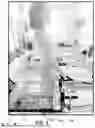
FIG. 1 depicts the device in use by a user kneeling upon the carriage of a Pilates machine.
FIG. 2 shows the device formed of a roller, which is coupled to a support pad by adjustable-length straps or similar tethers.
FIG. 3 shows the roller and pad of FIG. 2 in a separated configuration.
FIG. 4 shows a configuration of the pad device herein, wherein the pad is coupled to the roller by straps or tethers that are permanently connected to the roller.
FIG. 5 depicts a view of the pad wherein grommets are engaged therewith to provide a path for the straps or tethers therethrough.
FIG. 6 shows a configuration of the pad wherein the thickness may be adjusted to adjust the height of the top surface of the pad above the support surface upon which the user is located.
FIG. 7 shows a view of the device herein in a smaller configuration.
FIG. 8 depicts a mode of the device herein having at least one centrally located strap which has a first strap section thereof which wraps around in a contact with a front surface of the roller to prevent bowing and a second strap section which may wrap around a read side of the pad.
FIG. 9 shows a sectional view along line 9-9 of FIG. 8 showing a pathway for side-located straps that pass through a passage in the pad and the roller and are removably coupled at a position that may be subsequently slid into a passage on the roller or the pad.
FIG. 10 depicts a sectional view of the centrally located strap, which has a first strap portion thereof that passes against the front surface of the roller, whereafter the central strap communicates under the pad and through a passage of the pad, where a second strap section thereof wraps around the rear of the pad.
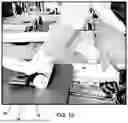
FIG. 11 depicts the device herein, during use, upon a support surface, such as a carriage of a Pilates machine, and showing the knees of the user positioned within the gap and elevated or only slightly touching the carriage surface.
FIG. 12 shows the device herein employed to support a single knee of a user during exercises requiring such.
FIG. 13 depicts the device in an as-used position for exercises, such as on an outdoor surface.
FIG. 14 shows the device being employed for exercises such as calisthenics, stretching, or the like.
FIG. 15 depicts the device as it may be in use during stretching and calisthenics.
FIG. 16 shows the device used during exercises, which may include the use of weights.
Other aspects of the presently disclosed supporting pad for kneeling exercises and method of employment thereof shall be more readily understood when considered in conjunction with the accompanying drawings, and the following detailed description, neither of which should be considered limiting.
DETAILED DESCRIPTION OF THE PREFERRED
Embodiments of the Invention
In this description, the directional prepositions of up, upwardly, down, downwardly, front, back, top, upper, bottom, lower, left, right and other such terms refer to the knee support device as it is oriented and appears in the drawings and are used for convenience only, and they are not intended to be limiting or to imply that the knee support device herein has to be used or positioned in any particular orientation.
Now referring to drawings in FIGS. 1-16, there can be seen in FIG. 1 a depiction of the device 10 in an as-used position, wherein a user is positioned atop the device 10, which is positioned atop a support surface 12, such as a carriage for a Pilates machine or a mat or floor. As shown, the device 10 includes a tube-shaped roller 14, which is coupled to a planar pad 16. By planar herein is meant substantially flat on the upper surface in contact with the leg of the user during use, and by substantially flat is meant a planar surface which may have small areas of higher or lower surfacing on the top surface and bottom surface.
The roller 14 is formed of compressible material, such as polyethylene foam or polyurethane foam, or a similar material, which has a durometer that will compress when contacted by the knee and the weight of a user during use. Other materials, having a durometer suitable for the device 10 and use herein, may also be employed.
The pad 16 is also formed of a compressible padding material, such as Ethylene Vinyl Acetate padding or polyurethane foam or a similar material, which will compress when contacted with the leg and weight of the user and provide a padding to the shin and lower knee of the user positioned atop the support pad 16. A gap 18 is formed between the front edge of the pad 16 and the rear side of the roller 14 and the underlying support surface 12.
The width or size of this gap between the roller 14 and the edge of the pad 16 may be adjusted by adjusting the length of the straps 20, which couple the pad 16 to the roller 14. This is an important feature of the device 10 herein, in that forming the gap 18 in a width that will support the surface of the knee of the user, slightly elevated above the support surface 12, to thereby provide a means to lessen the contact force of the knee of the user against the support surface 12. Additional adjustment of the height of the top surface 17 of the pad 16, above the support surface 12, is the formation of the pad 16 itself in different thicknesses or foldable or removable sections 19, such as shown in FIG. 6. Some users may require a higher elevation of their knee above the support surface 12 in the area of the gap 18, and the thickness adjustment of the pad 16 works to that utility.
As shown in FIGS. 2 and 3, the roller 14 is coupled to the pad 16 using straps 20 or tethers or the like, which are adjustable in length. The adjustment may be provided by simply tying the straps 20 to the roller 14 in different lengths. Alternatively, a buckle and overlap of the strap therethrough or hook and loop fabric may also be used as a means for adjustment of the strap length to thereby adjust the width “W” of the gap 18.
As shown in FIGS. 2 and 3, securement of the straps 20 to the pad 16 may be accomplished using passages 22 that communicate through the body forming the pad 16. Where the pad 16 is formed with a first pad 16 having the upper or top surface 17 and one or more underlying second pads 19, the passages may align to allow the straps 20 to secure through both pad portions. Recesses 24 may be formed into the exterior surface of the roller 14 to provide a path for the straps 20 therearound to keep the straps 20 from sliding.
Shown in FIG. 4 is a configuration of the pad device 10 herein, wherein the pad 16 is coupled to the roller 14 by the straps 20. As shown, the straps 20 or other tethers may be permanently engaged to the body of the roller 14. In this configuration, the adjustment of the length of the straps 20 may be again with a buckle device, hook and loop fabric or other adjustable length tethering, or simply tying the ends of the straps 20 to the pad 16 once one end of each strap passes through the passages 22.
FIG. 5 depicts a mode of the pad 16, which includes reinforcing to open ends of the passages 22. Such may be accomplished using inserts 26, such as metal or polymeric grommets, to engage within the passages 22 whereby the passage 22 communicates through an opening in the insert 26. The shape of the passage through the inserts may be a shape configured to mirror the strap 20 and 21 shape or allow a strap to easily slide through the inert 26 and aligned passages 22.
Shown in FIG. 6 is a configuration of the pad 16 wherein the thickness may be adjusted to adjust the height of the top surface 17 of the pad 16 above the support surface 12 through the provision of engageable second pads 19. As shown, the secondary pad 19 has a releasable coupling 28, such as hook and loop fabric, thereon in positions to engage a releasable coupling 28, such as the shown hook and loop fabric, upon a first or upper pad 16. More secondary pads 19 may be used and stacked using the releasable coupling 28, such as hook and loop fabric to couple adjacent pad sections.
The device 10 may be provided in varying sizes. As shown in FIG. 7, a shorter roller 14 may be coupled to a shorter pad 16 to form a smaller version of the device 10. Such might be employed for a single knee of the user, for example.
As noted above, shown in FIG. 8 is another preferred mode of the device 10 herein having at least a centrally located strap 21, which is also shown in FIG. 10. By centrally located is meant that the strap is positioned within a central area of both the pad 16 and the roller 14. The centrally located strap 21 may be formed with markings or indicia 25 thereon to provide the user with an identifier of which strap goes to a central location.
The centrally located strap 21 has a first strap section 30 thereof which follows a path from the passage 22 of the roller 14 and which then wraps around in a contact against a front surface 15 of the roller 14. This positioning of the first strap section 30 provides a restraint during use to prevent bowing of the central area of the roller 14 in a direction away from the pad 16. The centrally located strap 21 a path thereafter which runs under a lower surface of the roller and under a lower surface of the pad 16 and through a centrally located passage 22 of the pad 16 where a second strap section 32 thereof, wraps around a rear surface 19 of the pad 16 which has been found to provide resistance to prevent bowing of the pad 16 during use.
The centrally located strap 21 may have a releasable coupling 28 along the front surface 15 of the roller 14, such as with a hook and loop fabric or other releasable fasteners. As shown in FIG. 10, currently the centrally located strap 21 communicates through the passage 20 of the roller 14 and encircles a front half of the roller 14 and has a releasable coupling 28 at an end of the centrally located strap 21, which folds over subsequent to passing through a ring 34 coupled to the centrally located strap 21. As with the other straps 20 a length of the centrally located strap 21 may be adjusted by adjusting the positioning of the end of the centrally located strap 21 at the releasable connection 28 of two portions thereof. Adjusting the length of the straps 20 and 21 is most preferred for the device 10, as it provides for adjustment of the size of the gap 18 located between the pad 16 and the roller 14 to allow the user to adjust the gap for comfort.
As noted, FIG. 9 shows a sectional view along line 9-9 of FIG. 8 showing a pathway for side-located straps 20. The straps 20 communicate through a passage 22 in the pad 16 and a passage 22 in the roller 14. The two ends of the straps 20 are releasably coupled using releasable connectors 18, which, as noted, may be hook and loop fabric, buttons, snaps, or other releasable connectors. A gap 18 is formed between the front surface 23 or edge of the pad 16 and a rear surface area 27 of the roller 14.
As shown in FIG. 9, the provision of passages 22 allows for the straps 20 to be releasably connected with the releasable coupling 18, which may then be slid within the passage 22 of either the pad 16 as shown, or in a similar fashion within the passage 22 in the roller 14. Such has been found to make the device 10 more comfortable for use by eliminating bumps or uneven surfaces that might contact the body of a user during use.
In FIGS. 11-16, the device 10 is shown in various as-used positions wherein the knee of the user is supported slightly by contact with a front edge 23 of the pad 16 and a rear surface area 27 of the roller 14, to hold the knee of the user above the support surface 12 within the gap 18. In some cases, the knee might touch the support surface 12, but the upward force provided by the contact with the pad 16 and roller 14 will significantly reduce the force of any such knee contact, which will allow the user to exercise longer and in comfort.
As noted, the device 10, as shown in FIGS. 13-16, depicts the fact that the device is employable by users in any exercise where the user may kneel upon a support surface 12, such as a floor, a mat, or even outdoors to lessen the forces impacting the knee area. The device 10 should not be considered limited to use with exercise, as there are numerous ways it may be employed, not mentioned herein, wherein a user may need to kneel for a task, work, or other types of exercise. For example only and in no way limiting, in FIG. 14, the device is shown to support the knees of a user while gardening.
It should be noted and anticipated that although the knee support device herein is shown in its most simple form and shape, various components and aspects of the device 10 may be differently shaped or slightly modified when forming the invention herein. As such, those skilled in the art will appreciate the descriptions and depictions set forth in this disclosure or merely meant to portray examples of preferred modes of the knee support device herein within the overall scope and intent of the invention, and are not to be considered limiting in any manner.
Further, while all of the fundamental characteristics and features of the invention have been shown and described herein, with reference to particular embodiments thereof, a latitude of modification, various changes and substitutions are intended in the foregoing disclosure as well as the claims which follow, and it will be apparent that in some instances, some features of the knee support invention may be employed without a corresponding use of other features without departing from the scope of the invention as set forth. It should also be understood that various substitutions, modifications, and variations may be made by those skilled in the art without departing from the spirit or scope of the invention. Consequently, all such modifications and variations and substitutions are included within the scope of the invention as defined by the following claims.
Claims
What is claimed is:1. A knee support apparatus comprising:
a substantially planar pad;
a roller formed of pliable material;
a first strap coupling said planar pad to said roller;
a second strap coupling said planar pad to said roller; and
a gap positioned between a front edge of said planar pad and a rear surface area of said roller, said gap for positioning of knees of a kneeling user therein.
2. The knee support apparatus of claim 1, additionally comprising:
said first strap communicating through a first passage running through said planar pad; and
said second strap communicating through a second passage running through said planar pad.
3. The knee support apparatus of claim 1, additionally comprising:
said first strap communicating through a third passage running through said roller; and
said second strap communicating through a fourth passage running through said roller.
4. The knee support apparatus of claim 2, additionally comprising:
said first strap communicating through a third passage running through said roller; and
said second strap communicating through a fourth passage running through said roller.
5. The knee support apparatus of claim 1, additionally comprising:
a third strap coupling said planar pad to said roller;
said third strap running in between said first strap and said second strap; and
said third strap having a first strap section thereof encircling a front surface area of said roller opposite said rear surface area, said third strap thereby forming a restraint from a bowing of said roller.
6. The knee support apparatus of claim 2, additionally comprising:
a third strap coupling said planar pad to said roller;
said third strap running in between said first strap and said second strap; and
said third strap having a first strap section thereof encircling a front surface area of said roller opposite said rear surface area, said third strap thereby forming a restraint from a bowing of said roller.
7. The knee support apparatus of claim 3, additionally comprising:
a third strap coupling said planar pad to said roller;
said third strap running in between said first strap and said second strap; and
said third strap having a first strap section thereof encircling a front surface area of said roller opposite said rear surface area, said third strap thereby forming a restraint from a bowing of said roller.
8. The knee support apparatus of claim 5, additionally comprising:
said third strap having a second strap section thereof encircling a rear edge of said pad opposite said front edge, said third strap thereby forming a second restraint from a bowing of said pad.
9. The knee support apparatus of claim 6, additionally comprising:
said third strap having a second strap section thereof encircling a rear edge of said pad opposite said front edge, said third strap thereby forming a second restraint from a bowing of said pad.
10. The knee support apparatus of claim 7, additionally comprising:
said third strap having a second strap section thereof encircling a rear edge of said pad opposite said front edge, said third strap thereby forming a second restraint from a bowing of said pad.
11. The knee support apparatus of claim 1, additionally comprising:
said first strap coupling said planar pad to said roller being adjustable in length;
said second strap coupling said planar pad to said roller being adjustable in length; and
a width of said gap being adjustable by adjusting a length of said first strap and a length of said second strap.
12. The knee support apparatus of claim 5, additionally comprising:
said first strap coupling said planar pad to said roller being adjustable in length;
said second strap coupling said planar pad to said roller being adjustable in length;
said third strap coupling said planar pad to said roller being adjustable in length; and
a width of said gap being adjustable by adjusting a length of said first strap and a length of said second strap, and a length of said third strap.
13. The knee support apparatus of claim 6, additionally comprising:
said first strap coupling said planar pad to said roller being adjustable in length;
said second strap coupling said planar pad to said roller being adjustable in length;
said third strap coupling said planar pad to said roller being adjustable in length; and
a width of said gap being adjustable by adjusting a length of said first strap and a length of said second strap, and a length of said third strap.
14. The knee support apparatus of claim 7, additionally comprising:
said first strap coupling said planar pad to said roller being adjustable in length;
said second strap coupling said planar pad to said roller being adjustable in length;
said third strap coupling said planar pad to said roller being adjustable in length; and
a width of said gap being adjustable by adjusting a length of said first strap and a length of said second strap, and a length of said third strap.
15. The knee support apparatus of claim 8, additionally comprising:
said first strap coupling said planar pad to said roller being adjustable in length;
said second strap coupling said planar pad to said roller being adjustable in length;
said third strap coupling said planar pad to said roller being adjustable in length; and
a width of said gap being adjustable by adjusting a length of said first strap and a length of said second strap, and a length of said third strap.
16. The knee support apparatus of claim 9, additionally comprising:
said first strap coupling said planar pad to said roller being adjustable in length;
said second strap coupling said planar pad to said roller being adjustable in length;
said third strap coupling said planar pad to said roller being adjustable in length; and
a width of said gap being adjustable by adjusting a length of said first strap and a length of said second strap, and a length of said third strap.
17. The knee support apparatus of claim 10, additionally comprising:
said first strap coupling said planar pad to said roller being adjustable in length;
said second strap coupling said planar pad to said roller being adjustable in length;
said third strap coupling said planar pad to said roller being adjustable in length; and
a width of said gap being adjustable by adjusting a length of said first strap and a length of said second strap, and a length of said third strap.
Images & Drawings included:





Sources:
- United States Patent and Trademark Office - verify current appl. status at the USPTO↗
Recent applications in this class:
- » 20250381437 2025-12-18
Leverage Device for Adaptive Padding of Workout Equipment to Increase Muscle Stretch During Workout Reps - » 20250367497 2025-12-04
HAND STRENGTH DEVICE - » 20250312645 2025-10-09
SPINE CORRECTOR EXERCISE SYSTEM - » 20250276209 2025-09-04
LEG EXTENSION MACHINE - » 20250242196 2025-07-31
AUTOMATIC BODY POSITIONING EXERCISE SUPPORT SYSTEM - » 20250186828 2025-06-12
EXERCISE DEVICE - » 20250170447 2025-05-29
KNEE JOINT PHYSICAL THERAPY DEVICE - » 20250099805 2025-03-27
CONCAVE ANGULATED POSITIONING DEVICE - » 20250050162 2025-02-13
ERGONOMIC HANDHELD WEIGHT UNIT AND METHOD OF USE - » 20250025742 2025-01-23
TORSO EXERCISE APPARATUS