METHOD FOR PULVERIZING ZERO VALENT IRON
US20260131380A1
2026-05-14
19/382,246
2025-11-06
Smart Summary: A method is described for turning zero valent iron into a fine powder. First, a mixture of zero valent iron powder, FeS, FeS2, and anhydrous ethanol is stirred to create a slurry. This slurry is then put into a wet ball mill with grinding beads and ground for a period of 10 to 640 minutes. After milling, the slurry is separated using a magnetic device to collect the ground iron particles. Finally, these particles are washed with anhydrous ethanol and dried in a vacuum oven at a low temperature. 🚀 TL;DR
Abstract:
A method for pulverizing zero valent iron includes adding FeS, FeS2, zero valent iron powder, and anhydrous ethanol into a container and stirring uniformly to form a slurry to be milled. The slurry to be milled is added to a wet ball mill loaded with grinding beads and grounded for 10-640 minutes to obtain a slurry. The slurry is taken out of the wet ball mill and placed into a magnetic separation device for separation. The ground zero valent particles are separated and collected and then washed with anhydrous ethanol. The washed zero valent iron particles are placed into a vacuum drying oven and dried at a temperature below 40° C.
Applicant:
Interested in similar patents?
Get notified when new applications in this technology area are published.
Classification:
B22F9/04 » CPC main
Making metallic powder or suspensions thereof using physical processes starting from solid material, e.g. by crushing, grinding or milling
B22F2009/043 » CPC further
Making metallic powder or suspensions thereof using physical processes starting from solid material, e.g. by crushing, grinding or milling by ball milling
B22F2301/35 » CPC further
Metallic composition of the powder or its coating Iron
B22F2304/10 » CPC further
Physical aspects of the powder Micron size particles, i.e. above 1 micrometer up to 500 micrometer
Description
FIELD OF THE INVENTION
The present invention belongs to the Particle refinement technology field, specifically a method for pulverizing zero valent iron.
BACKGROUND OF THE INVENTION
When ultrafine zero valent iron is used in contaminated site remediation and industrial wastewater treatment, the size of the zero valent iron particles is a key factor determining its performance and applicability. Compared to larger zero valent iron particles, smaller zero valent iron particles typically have a higher specific surface area and reactivity.
In the prior art, mechanical grinding is commonly used to achieve the refinement of zero valent iron particles. However, during the mechanical grinding process, because metallic iron (Fe(0)) is ductile and can withstand severe plastic deformation, it is difficult to undergo flake fragmentation.
In the prior art, water is typically used as the grinding medium to prepare nano-sized zero valent iron by grinding micron-sized zero valent iron. However, due to the mechanochemical effect accelerating the reaction between iron and water, the effective iron content of the obtained nanoparticles is usually less than 50%, wherein most of the metallic iron is oxidized, losing its inherent reducing capacity and thus its application value.
The invention patent CN202410639668.4 discloses a method for preparing sulfur-nitrogen modified zero valent iron by wet ball milling, the sulfur-nitrogen modified zero valent iron and its application. It involves wet mixing and ball milling zero valent iron with organic molecules containing both N and S in an alcoholic organic solvent to prepare Fe-Sx-Ny co-bound sulfur-nitrogen modified zero valent iron, to avoid oxidation and spontaneous combustion of the material during ball milling.
However, the aforementioned patent not only increases the complexity of the process, but its doping complexity may also limit the material's reactivity and selectivity in practical applications, especially in environments with multiple coexisting pollutants. The different reactivities of the doped elements might affect the remediation effectiveness. Simultaneously, the crushing effect and particle size uniformity have not been thoroughly studied, which may result in relatively large final zero valent iron particles with poor transport performance, limiting their application in groundwater remediation and pollutant diffusion control.
Therefore, the technical problem that urgently needs to be solved remains how to pulverize zero valent iron to a smaller particle size while maintaining its high effective iron content, enabling its effective application in groundwater remediation and pollutant diffusion control.
SUMMARY OF THE INVENTION
The present invention is conducted to solve the above problems, in order to provide a method for pulverizing zero valent iron, enabling zero valent iron to be pulverized to a smaller particle size while maintaining its iron content.
The present invention provides a method for pulverizing zero valent iron, characterized in that comprising: S1, adding FeS, FeS2, zero valent iron powder, and anhydrous ethanol into a container, and stirring uniformly to form a slurry to be milled; S2, loading grinding beads into a wet ball mill, adding the slurry to be milled into the wet ball mill for grinding to obtain a slurry, with a grinding time of 10-640 min; S3, taking the slurry out of the wet ball mill, placing the slurry into a magnetic separation device for separation, separating and collecting the ground zero valent iron particles and washing them with anhydrous ethanol; andS4, placing the washed zero valent iron particles into a vacuum drying oven and drying at a temperature below 40° C.
The method for pulverizing zero valent iron provided by the present invention can also comprises: wherein, the diameters of both the FeS and FeS2 are 50-60 μm.
The method for pulverizing zero valent iron provided by the present invention can also comprises: wherein, the mass ratio of the FeS to FeS2 is 1:(0.9-1.1).
The method for pulverizing zero valent iron provided by the present invention can also comprises: wherein, the mass ratio of the mixture of FeS and FeS2 to the zero valent iron powder is 1:(0.15-0.25).
The method for pulverizing zero valent iron provided by the present invention can also comprises: wherein, the stirring time is 20-50 min.
The method for pulverizing zero valent iron provided by the present invention can also comprises: wherein, the zero valent iron content in the zero valent iron powder is higher than 98.5%, and the median particle size of the zero valent iron powder is 3.0-3.2 micrometers.
The method for pulverizing zero valent iron provided by the present invention can also comprises: wherein, the grinding beads are zirconia beads with a weight of 0.7-0.8 kg and a diameter of 0.2-0.4 mm.
The method for pulverizing zero valent iron provided by the present invention can also comprises: wherein, during the grinding process, the temperature inside the cavity of the wet ball mill is controlled at 8-12° C.
The effect of the present invention:
According to the method for pulverizing zero valent iron provided by the present invention, because the invention adopts FeS and FeS2 as key sulfur sources, which react with zero valent iron particles during the ball milling process to form a stable sulfide surface layer. These sulfide layers not only protect the zero valent iron particles from further oxidation but also enhance the chemical stability, durability in environmental applications, and reactivity of the material. Furthermore, compared to other sulfiding agents (such as sodium sulfide), FeS and FeS2 can provide a more uniform sulfidation effect, avoiding issues of over-sulfidation or uneven sulfidation, thereby improving the environmental friendliness of the entire production process and reducing safety hazards during production. The FeS and FeS2 additives of the present invention embed into the flake structure of the zero valent iron particles during ball milling, promoting their fracture and refinement, which not only improves the pulverization efficiency but also prevents particle cold welding, resulting in zero valent iron particles with smaller particle size and higher uniformity. The invention employs wet ball milling technology, ensuring the pulverization process of zero valent iron occurs in an oxygen-free environment by ball milling in alcohol, reducing the risk of material oxidation. Therefore, the method for pulverizing zero valent iron of the present invention has the effects of promoting zero valent iron pulverization, preventing iron oxidation, and improving the chemical stability and reactivity of the material.
BRIEF DESCRIPTION OF THE DRAWINGS
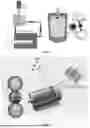
FIG. 1 is a schematic diagram of the process for preparing ultrafine zero valent iron by the wet ball milling method.
FIG. 2 is a schematic diagram of the method using water as the grinding agent in wet ball milling.
FIG. 3 is a schematic diagram of the method using alcohol as the grinding agent in wet ball milling.
FIG. 4 is a process flowchart of the method for enhanced wet grinding pulverization of zero valent iron according to the present invention.
FIG. 5 is a structural schematic diagram of the wet ball mill according to the present invention.
FIG. 6 is a scanning electron microscope (SEM) image of zero valent iron ball milled for 40 minutes and 640 minutes in Example 1 of the present invention, and a distribution chart of particle size statistics based on SEM and software image pro.
FIG. 7 is an electron microscope image and element distribution map of zero valent iron particles ball milled for 40 minutes and 640 minutes in Example 1 of the present invention.
FIG. 8 is a crystal phase microscope image of zero valent iron ball milled for 640 minutes in Example 1 of the present invention.
FIG. 9 is the removal capacity for Cr(VI) of zero valent iron ball milled for 640 minutes in Example 1 of the present invention.
FIG. 10 is a scanning electron microscope image of zero valent iron ball milled for 10 minutes, 40 minutes, and 640 minutes in Comparative Example 1 of the present invention.
FIG. 11 is the removal curve of Cr(VI) by zero valent iron from Example 1, Comparative Example 1, and the original iron powder of the present invention.
FIG. 12 is the transport performance in porous media of zero valent iron from Example 1 and Comparative Example 1 and the original iron powder of the present invention.
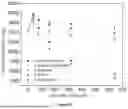
FIG. 13 is a line chart of ball milling time and average particle size for Example 1 and Comparative Examples 2-5 of the present invention.
DETAILED DESCRIPTION OF THE INVENTION
Embodiment
In the description of this application, it should be noted that, unless otherwise clearly specified and defined, the terms “install”, “connect”, and “link” should be understood broadly. For example, it may be a fixed connection, a detachable connection, or an integral connection; it may be a mechanical connection, an electrical connection, or allow communication; it may be a direct connection, an indirect connection through an intermediary, or the internal connection between two elements or the interaction relationship between two elements. Those of ordinary skill in the art can understand the specific meanings of the above terms in this application based on the specific situation.
To make the technical means, creative features, achieved objectives, and efficacy of the present invention easily understood, the following embodiments combined with the drawings provide specific explanations of the method for pulverizing zero valent iron of the present invention.
FIG. 1 is a schematic diagram of the process for preparing ultrafine zero valent iron by the wet ball milling method. FIG. 2 is a schematic diagram of the method using water as the grinding agent in wet ball milling. FIG. 3 is a schematic diagram of the method using alcohol as the grinding agent in wet ball milling. FIG. 4 is a process flowchart of the method for enhanced wet grinding pulverization of zero valent iron according to the present invention.
As shown in FIGS. 1-4, when water is used as the grinding agent in FIG. 2, the obtained nano-sized particles have a low zero valent iron content (<50%). When alcohol is used as the grinding agent in FIG. 3, the obtained nano-sized particles have a very high zero valent iron content (>95%), but effective pulverization cannot be achieved.
The method for pulverizing zero valent iron in this embodiment specifically comprises the following steps:
-
- S1: Add FeS, FeS2, zero valent iron powder, and anhydrous ethanol into a container and stir uniformly to form a slurry to be milled.
- S2: Load grinding beads into a wet ball mill, add the slurry to be milled into the wet ball mill for grinding to obtain a slurry, with a grinding time of 10-640 min.
- S3: Take the slurry out of the wet ball mill, place the slurry into a magnetic separation device for separation, separate and collect the ground zero valent iron particles and wash them with anhydrous ethanol.
- S4: Place the washed zero valent iron particles into a vacuum drying oven and drying at a temperature below 40° C.
FIG. 5 is a structural schematic diagram of the wet ball mill according to the present invention.
As shown in FIG. 5, the wet ball mill used in the above method of the present invention comprises a reactor shell 10, a rotor 20, an end cover 30, and a driving mechanism 40. Wherein, the driving mechanism 40 is used to drive the rotor 20 to rotate, including a main shaft 42, a bearing seat 41, and a belt wheel 45.
The reactor shell 10 is roughly cylindrical shaped, with an internal cavity formed, which is a reaction chamber 11. A feeding inlet 12 and a discharge outlet 13 connected to the reaction chamber 11 are set on the reactor shell 10, which are respectively used to allow the slurry to enter and exit the reaction chamber 11.
In the reactor shell 10, a cooling water chamber 14 is set at the periphery of the reaction chamber 11, which is formed around the reaction chamber 11 and not connected to the reaction chamber 11, and is utilized for accommodating the cooling water for cooling the reaction chamber 11. Cooling water can enter the cooling water chamber 14 through the cooling water inlet 912A and flow out of the cooling water chamber 14 through the cooling water outlet 16.
The rotor 20 is located inside the reaction chamber 11, which is cylindrical and has multiple annular sheets on the circumferential surface. In the present embodiment, the surface of rotor 20 is covered with a layer of polyurethane material to reduce the wear of ball milling beads and other materials on the main body of the rotor 20.
The end cover 30 is located at one end of the reactor shell 10, and a middle end cover 98 is installed on the end of the end cover 30 away from the reactor shell 10.
The bearing seat 41 is located on the opposite side of the middle end cover 31 relative to the end cover 30.
The main shaft 42 is installed in the bearing seat 41 through a bearing 43, and one end of the main shaft 42 passes through the middle end cover 31 and end cover 30 in sequence before extending into the reaction chamber 11. This end is connected to the rotor 20, allowing the main shaft 42 to drive the rotor 20 to rotate.
A mechanical seal component 44 is set inside the end cover 30, which is set on the main shaft 42 and located near the reaction chamber 11 to form a seal on the main shaft 42 and prevent liquid leakage from the reaction chamber 11 to the bearing seat 41 or other parts.
The other end of the main shaft 42 extends outside the bearing seat 41, and the belt wheel 45 is set on this end. The driving motor 40 drives the belt wheel 45 to rotate through the belt transmission mechanism, causing the main shaft 42 to rotate and driving the rotor 20 to rotate in the reaction chamber 11. When there is slurry containing ball milling beads in the reaction chamber 11, the high-speed rotation of rotor 20 can vigorously stir the slurry, allowing it to undergo mechano-chemical reaction under the action of ball milling beads. This process will generate a large amount of heat, which can be carried away by cooling water.
Example 1
S1: Add 75 g FeS, 75 g FeS2, 30 g zero valent iron powder, and 300 ml anhydrous ethanol into a container and stir for 30 min to form a slurry to be milled. The zero valent iron content in the zero valent iron powder is ≥98.5%, and the initial particle size of the zero valent iron powder is 3.1 μm.
S2: Load zirconia beads weighing 0.75 kg with a diameter of 0.3 mm as grinding beads into a wet ball mill. Add the slurry to be milled into the wet ball mill for grinding to obtain a slurry. The grinding temperature is 10° C., and the speed of the wet ball mill is 2000 rpm.
S3: Take slurry samples when the grinding time reaches 10 min, 40 min, 160 min, 320 min, and 640 min, respectively. Place each slurry sample into a magnetic separation device for separation, collect the ground zero valent iron particles, and wash them with anhydrous ethanol.
S4: Place the washed zero valent iron particles into a vacuum drying oven for drying at a temperature of 20° C.
FIG. 6 is a scanning electron microscope (SEM) image of zero valent iron ball milled for 40 minutes and 640 minutes in Example 1 of the present invention, and a distribution chart of particle size statistics based on SEM and software Image Pro.
As shown in FIG. 6, after 40 minutes of ball milling, the zero valent iron particles are mainly concentrated in the ranges of 1.0-1.5 μm and 0.5-1.0 μm, accounting for 34.6% and 39.1%, respectively. After 640 minutes of ball milling, the particle size is further reduced, mainly concentrated in the range of 0.0-0.5 μm, accounting for 42.4%, indicating that the ball milling time has a significant effect on further refining the particles.
FIG. 7 is an electron microscope image and element distribution map of zero valent iron particles ball milled for 40 minutes and 640 minutes in Example 1 of the present invention.
As shown in FIG. 7, herein, B2 is the element distribution map after coloring of B1, showing the distribution of iron and sulfur elements in zero valent iron after 40 minutes of ball milling; B4 is the element distribution map after coloring of B3, showing the distribution of iron and sulfur elements in zero valent iron after 640 minutes of ball milling. In the figures, the light-colored areas represent iron elements, while the dark-colored areas represent sulfur elements. After 40 minutes of ball milling, sulfides uniformly cover the surface of the zero valent iron particles. After 640 minutes of ball milling, the coverage degree of sulfides further increases, and the sulfide layer on the particle surface becomes more uniform, further indicating the importance of ball milling time for the sufficiency and uniformity of the sulfidation reaction.
FIG. 8 is a crystal phase microscope image of zero valent iron ball milled for 640 minutes in Example 1 of the present invention.
As shown in FIG. 8, (A) shows the overall morphology of the zero valent iron particles, where multiple cracks and fracture regions can be observed, formed due to mechanical stress during ball milling. These cracks provide paths for the embedding of FeSx particles, indicating that zero valent iron undergoes significant plastic deformation and fracture during ball milling. (B) is an enlarged view of (A), showing the distribution of FeSx particles within the zero valent iron particles. The area indicated by the arrow in the figure includes both FeSx particles and fracture regions. It can be seen that FeSx particles are embedded into the cracks of the zero valent iron and distributed inside the particles along with the extension of these cracks.
FIG. 9 is the removal capacity for Cr(VI) of zero valent iron ball milled for 640 minutes in Example 1 of the present invention.
As shown in FIG. 9, the initial concentration of Cr(VI) is 10 mg/L, followed by adding 10 mg/L of Cr(VI) at intervals, for a total of six additions. The iron concentration is 1 g/L. The vertical axis shows the percentage change of Cr(VI) concentration relative to the initial concentration (Ct/CO).
First to Third Addition:
In the first few additions of Cr(VI), zero valent iron can rapidly reduce the Cr(VI) concentration to almost zero. This indicates that in the initial stage, zero valent iron has high reducing capacity and can effectively remove each 10 mg/L addition of Cr(VI).
Fourth to Fifth Addition:
As Cr(VI) is continuously added, the removal efficiency of zero valent iron begins to decline, especially after the fourth and fifth additions, where the Cr(VI) removal rate decreases, but it can still significantly reduce the Cr(VI) concentration. This indicates that the reducing capacity of zero valent iron is gradually consumed, but it still retains strong removal capability.
Sixth Addition:
After the sixth addition, the Cr(VI) removal efficiency significantly decreases, and the Cr(VI) concentration shows an upward trend. This indicates that the reductive activity of zero valent iron is almost exhausted, and it can no longer effectively remove the newly added Cr(VI), leading to the accumulation of Cr(VI) in the solution.
Removal Capacity Calculation: From the figure, it can be seen that during the first five additions, zero valent iron successfully removes each 10 mg/L addition of Cr(VI), indicating that the removal capacity of zero valent iron is at least 50 mg-Cr(VI)/g-ZVI. At the sixth addition, the removal efficiency significantly decreases, indicating that the removal capacity of zero valent iron is approaching saturation.
Comparative Example 1
S1: Add zero valent iron powder to alcohol, stir thoroughly and uniformly to form a slurry to be milled. The zero valent iron content in the zero valent iron powder is 98.8%, and the median particle size of the zero valent iron particles is 3.1 micrometers.
S2: Load zirconia beads weighing 0.75 kg with a diameter of 0.3 mm as grinding beads into a wet ball mill. Add the slurry to be milled into the wet ball mill for grinding to obtain a slurry. The grinding temperature is 10° C., and the speed of the wet ball mill is 2000 rpm.
S3: Take slurry samples when the grinding time reaches 10 min, 40 min, 160 min, 320 min, and 640 min, respectively. Place each slurry sample into a magnetic separation device for separation, collect the ground zero valent iron particles, and wash them with anhydrous ethanol.
S4: Place the washed zero valent iron particles into a vacuum drying oven for drying at a temperature of 20° C.
FIG. 10 is a scanning electron microscope image of zero valent iron ball milled for 10 minutes, 40 minutes, and 640 minutes in Comparative Example 1 of the present invention.
As shown in FIG. 10, after 10 minutes of grinding, the zero valent iron particles undergo initial plastic deformation, but the overall particle morphology changes little, still maintaining a relatively large size. Measurements show that the particle size is about 2.73 micrometers to 4.22 micrometers, the surface is relatively rough, and the particle morphology still appears as large, loose blocks.
After 40 minutes of grinding, the shape of the zero valent iron particles gradually deforms into flakes, and the size increases slightly, reaching 4.70 micrometers and 4.13 micrometers. This indicates that during prolonged ball milling, zero valent iron particles are prone to cold welding effects, where particles re-agglomerate into larger flake structures, resulting in unsatisfactory pulverization.
After 640 minutes of prolonged grinding, the average particle size ranges from 3.03 micrometers to 2.96 micrometers, showing further development of the flake structure. However, the particle size remains relatively large, and the morphology tends to be flaky, thin, and wide, indicating that relying solely on mechanical force, the pulverization efficiency of zero valent iron is low, and it cannot be effectively pulverized to a smaller particle size.
The magnified view after 640 minutes of ball milling shows that after 640 minutes of grinding, the size of some zero valent iron particles is 2.34 micrometers to 2.52 micrometers. These particles still exhibit a flake structure, with a relatively smooth surface, and some cold welding phenomenon still exists between particles, failing to achieve significant nano-level pulverization.
FIG. 11 is the removal curve of Cr(VI) by zero valent iron from Example 1, Comparative Example 1, and the original iron powder of the present invention.
As shown in FIG. 11, the zero valent iron concentration used in the experiment is 1 g/L, and the initial concentration of hexavalent chromium (Cr(VI)) is 10 mg/L.
The three curves in the figure correspond to the removal effects of untreated original iron powder, zero valent iron ball milled in alcohol, and zero valent iron ball milled in alcohol using FeS and FeS2 as additives on Cr(VI).
Original Iron Powder (squares): The original iron powder has a relatively weak removal effect on Cr(VI). After 30 minutes of reaction, the Cr(VI) concentration decreases to about 60%. The Cr(VI) removal rate is slow in the initial stage of the reaction (0-10 minutes), indicating that the original iron powder has low reactivity, possibly due to larger particle size and smaller specific surface area.
Zero valent Iron Ball Milled in Alcohol (circles): The zero valent iron treated by ball milling in alcohol shows a significant improvement in Cr(VI) removal, especially in the first 10 minutes of reaction, where the removal rate of Cr(VI) is significantly accelerated. After 30 minutes of reaction, the Cr(VI) concentration decreases to about 40%. This indicates that ball milling treatment significantly improves the reactivity of zero valent iron, likely due to particle refinement and increased specific surface area during ball milling.
Zero valent Iron Co-milled with FeS and FeS2 (diamonds): The zero valent iron treated by ball milling in alcohol using FeS and FeS2 as additives exhibits the strongest Cr(VI) removal capacity. Within just 5 minutes, the Cr(VI) concentration rapidly drops to about 20%, and after 30 minutes, Cr(VI) is almost completely removed, with the concentration close to zero. This result indicates that the FeS and FeS2 additives significantly enhance the reactivity of zero valent iron, not only accelerating the reduction rate of Cr(VI) but also improving the thoroughness of the reaction.
FIG. 12 is the transport performance in porous media of zero valent iron from Example 1 and Comparative Example 1 and the original iron powder of the present invention.
As shown in FIG. 12, including a schematic diagram of the experimental setup, the figure shows a typical sand column experiment device used to study the transport performance of zero valent iron particles in porous media. The sand column has a length of 30 cm and a diameter of 2 cm.
A peristaltic pump is used to pump the zero valent iron suspension into the column from the bottom at a flow rate of 10 mL/min. The liquid flows through the sand layer and exits from the top.
Stirring and Mixing: Before entering the sand column, the suspension is kept uniformly dispersed by mechanical stirring (200 rpm) in a flask to ensure consistent distribution of zero valent iron particles in the fluid.
Transport Performance of Zero Valent Iron in the Sand Column:
Original Iron Powder: The left column is filled with the suspension of original zero valent iron (without any ball milling treatment). The experiment shows that the original zero valent iron has the worst transport performance. The black zero valent iron particles are almost completely retained at the bottom of the column, with a transport height of only 14.8 cm. The large particle size (3083 nanometers) makes it difficult to effectively migrate in the sand column, indicating its weak transport ability in porous media.
Iron Powder Ball Milled in Alcohol for 640 minutes: The middle column is filled with zero valent iron ball milled for 640 minutes in alcohol. Compared to the original iron powder, the alcohol-ball-milled zero valent iron shows some improvement in transport, with the transport height increasing to 26.8 cm. Nevertheless, its transport performance is still not ideal, mainly because its particle size remains large (3342 nanometers), hindering effective diffusion in the sand layer.
Iron Powder Co-milled with FeS and FeS2 for 640 min: The right column is filled with zero valent iron ball milled with FeS and FeS2 for 640 minutes. The zero valent iron under this treatment condition exhibits significantly excellent transport performance, almost filling the entire sand column (transport height close to 30 cm). Furthermore, the particle size is significantly reduced to 600 nanometers (result measured by ZETA potentiometer), making it easier to diffuse and transport in the sand layer.
Summary and Analysis: Comparison of Transport Performance. The experimental results clearly show that the transport performance of zero valent iron is closely related to its particle size. The smaller the particle size, the better the transport effect of zero valent iron in porous media. The original iron powder, due to its large particle size, can hardly transport in the sand column; the alcohol-ball-milled zero valent iron shows some improvement but is still not ideal; while the zero valent iron ball milled with FeS and FeS2, due to its significantly reduced particle size, has the optimal transport performance.
Role of FeS and FeS2: FeS and FeS2, as ball milling additives, not only significantly improve the pulverization effect of zero valent iron (reducing particle size) but also enhance its transport ability in porous media. This is of great significance for practical applications, especially in environmental remediation projects requiring particle migration in groundwater or soil. Using this modified zero valent iron can greatly improve remediation efficiency.
Potential for Environmental Remediation Applications: zero valent iron co-ball-milled with FeS and FeS2, due to its better transport performance and reactivity, is more suitable for environmental remediation, such as groundwater pollution treatment. Good transport ability in porous media means that this zero valent iron can more effectively reach pollution sources for in-depth remediation.
Comparative Example 2
Based on the experimental steps of Example 1, replace the 75 g FeS and 75 g FeS2 with an equal mass of sodium sulfide.
Comparative Example 3
Based on the experimental steps of Example 1, replace the 75 g FeS and 75 g FeS2 with an equal mass of sodium thiosulfate.
Comparative Example 4
Based on the experimental steps of Example 1, replace the 75 g FeS and 75 g FeS2 with an equal mass of thiourea.
Comparative Example 5
Based on the experimental steps of Example 1, replace the 75 g FeS and 75 g FeS2 with an equal mass of sulfur.
FIG. 13 is a line chart of ball milling time and average particle size for Example 1 and Comparative Examples 2-5 of the present invention.
As shown in FIG. 13, when iron sulfide is used as the ball milling additive in Example 1, the ball milling effect is the best, with a significant reduction in average particle size. Sodium sulfide in comparative Example 2 has the next best effect. Sodium thiosulfate, thiourea, and sulfur in comparative Examples 3-5 have poor effects, with little reduction in average particle size after ball milling.
Those skilled in the art should understand that the present invention is not limited by the above embodiments. The above embodiments and the description are only used to illustrate the principles of the present invention. Without departing from the spirit and scope of the present invention, the present invention will have various changes and improvements, all of which fall within the claimed scope of the present invention. The protection scope of the present invention is defined by the appended claims and their equivalents.
Claims
1. A method for pulverizing zero valent iron, comprising:
S1, adding FeS, FeS2, zero valent iron powder and anhydrous ethanol into a container, and stirring uniformly to form a slurry to be milled, wherein a mass ratio of said FeS to said FeS2 is 1:(0.9-1.1) and a mass ratio of a mixture of said FeS and said FeS2 to said zero valent iron powder is 1:(0.15-0.25);
loading grinding beads into a wet ball mill, adding said slurry to be milled into said wet ball mill, and grinding to obtain a slurry with a grinding time of 10-640 min;
taking said slurry out of said wet ball mill, placing the slurry into a magnetic separation device, separating and collecting ground zero valent iron particles, and washing the ground zero iron particles with anhydrous ethanol; and
placing the ground zero valent iron particles washed into a vacuum drying oven and drying at a temperature below 40° C.
2. The method for pulverizing zero valent iron according to claim 1, wherein diameters of both said FeS and said FeS2 are 50-60 μm.
3. (canceled)
4. (canceled)
5. The method for pulverizing zero valent iron according to claim 1, wherein a stirring time is 20-50 min.
6. The method for pulverizing zero valent iron according to claim 1, wherein a zero valent iron content in said zero valent iron powder is higher than 98.5%, and a median particle size of said zero valent iron powder is 3.0-3.2 micrometers.
7. The method for pulverizing zero valent iron according to claim 1, wherein said grinding beads are zirconia beads with a weight of 0.7-0.8 kg and a diameter of 0.2-0.4 mm.
8. (canceled)
Images & Drawings included:



Sources:
- United States Patent and Trademark Office - verify current appl. status at the USPTO↗
Recent applications in this class:
- » 20260102820 2026-04-16
SILVER POWDER AND CONDUCTIVE PASTE - » 20260042145 2026-02-12
PROCESS FOR THE PREPARATION OF PRE-ALLOYED POWDERS FOR DIAMOND TOOLS, AND THE POWDERS SO OBTAINED - » 20260027619 2026-01-29
METAL POWDER FORMING METHOD - » 20250281976 2025-09-11
DEPOSING INITIARY COMPOSITIONS - » 20250269429 2025-08-28
METHOD OF PRODUCING SILVER POWDER, SILVER POWDER, AND CONDUCTIVE PASTE - » 20250256333 2025-08-14
METHODS FOR NANOFUNCTIONALIZATION OF POWDERS, AND NANOFUNCTIONALIZED MATERIALS PRODUCED THEREFROM - » 20250162030 2025-05-22
METAL POWDER FORMING METHOD - » 20250083230 2025-03-13
USE OF A BASIC OXYGEN FURNACE TO PRODUCE GRANULATED METALLIC UNITS, AND ASSOCIATED SYSTEMS, DEVICES, AND METHODS - » 20250041938 2025-02-06
SYSTEM AND METHOD FOR PRODUCING MATERIAL PARTICLES - » 20240165703 2024-05-23
SYSTEMS AND METHODS FOR PARTIAL SINTERING OF POWDER TO CREATE LARGER POWDER PARTICLES FOR ADDITIVE MANUFACTURING PROCESSES