APPARATUS AND METHODS FOR AN EXTRACTOR PIN FOR DIRECT GAS OPERATED FIREARMS
US20260133002A1
2026-05-14
19/387,186
2025-11-12
Smart Summary: An extractor pin is designed to improve how direct gas operated firearms work. It has a long shape with a thicker middle part that fits into holes in the cartridge extractor's prongs. The ends of the pin fit into holes in the firearm's bolt assembly. This design allows the cartridge extractor to move easily while staying centered. The ends can be lifted, keeping the middle part in place and allowing smooth operation. 🚀 TL;DR
Abstract:
An apparatus and methods are provided for an extractor pin for optimizing the operation of a direct gas operated firearm. The extractor pin comprises an elongated member that includes a center portion configured to seat within holes in parallel prongs of the cartridge extractor. First and second end portions of the extractor pin seat within transverse holes in the bolt assembly. The center portion has a diameter that is greater than the diameter of the first and second end portions. The center portion fits loosely in the holes of the parallel prongs, allowing the cartridge extractor to pivot on the extractor pin. The first and second end portions are configured to be lifted to the top of the transverse holes such that the center portion remains disposed in the parallel prongs and centered between the transverse holes.
Assignee:
- SureFire, LLC 172 🇺🇸 Fountain Valley, CA, United States
Applicant:
Interested in similar patents?
Get notified when new applications in this technology area are published.
Classification:
F41A15/14 » CPC main
Cartridge extractors, i.e. devices for pulling cartridges or cartridge cases at least partially out of the cartridge chamber; Cartridge ejectors, i.e. devices for throwing the extracted cartridges or cartridge cases free of the gun for bolt-action guns the ejector being mounted on or within the bolt; Extractors
Description
PRIORITY
This application claims the benefit of and priority to U.S. Provisional Application, entitled “Apparatus and Methods for an Extractor Pin for Direct Gas Operated Firearms,” filed on Nov. 13, 2024, and having application Ser. No. 63/720,099, the entirety of said application being incorporated herein by reference.
FIELD
Embodiments of the present disclosure generally relate to firearms. More specifically, embodiments of the disclosure relate to an apparatus and methods for a cartridge extractor pin for optimizing the operation of a direct gas operated firearm.
BACKGROUND
The AR15/M4/M16 family of firearms and their derivatives, including all direct gas operated versions, have been in use by the military and civilian population for many years. An essential component of direct gas operated firearms is the bolt carrier group. Typically, the bolt carrier group includes a bolt mounted in a bolt carrier that is configured for axial sliding movement and rotation within a firearm. A firing pin slidably mounted within the bolt and bolt carrier restricts reciprocating axial movement of the bolt carrier group. The bolt carrier group further includes a cam-pin that limits rotation between the bolt and the bolt carrier.
The bolt carrier group generally is configured for stripping or picking up ammunition cartridges from a magazine and moving the cartridges into a battery position within a breech of the firearm. After firing each round, the bolt carrier group extracts and ejects the ammunition cartridge through an ejection port on the side of the firearm. The energy to perform these functions is provided by way of hot, expanding gases from the fired cartridge that are directed through a port at the end of the barrel and channeled back to the bolt carrier group. The expanding gases strike, or impinge, the bolt carrier moving it rearward toward the buttstock and into a retracted position. The exhaust gases are then discharged through the ejection port on the side of the firearm. After discharge, a spring acting on the bolt carrier group moves the bolt carrier back to an engaged position while at the same time stripping another cartridge from the magazine and moving that cartridge into the battery position.
Given the popularity of the AR15/M4/M16 family of firearms and their derivatives, there is a continuing desire to improve and simplify the operation of such direct gas operated firearms. Embodiments presented herein provide a cartridge extractor pin for optimizing the operation and longevity of direct gas operated rifles.
SUMMARY
An apparatus and methods are provided for an extractor pin for optimizing the operation of a direct gas operated firearm. The extractor pin comprises an elongated member that includes a center portion configured to seat within holes in parallel prongs of the cartridge extractor. First and second end portions of the extractor pin seat within transverse holes in the bolt assembly. The center portion has a diameter that is greater than the diameter of the first and second end portions. The center portion fits loosely in the holes of the parallel prongs, allowing the cartridge extractor to pivot on the extractor pin. The first and second end portions are configured to be lifted to the top of the transverse holes such that the center portion remains disposed in the parallel prongs and centered between the transverse holes.
In an exemplary embodiment, a bolt assembly for a direct gas operated firearm comprises: a bolt comprising a cylindrical member having a forward recess surrounded by multiple lugs and a side recess; an extractor pivotally mounted in the side recess by way of an extractor pin; a claw portion of the extractor biased into the forward recess by one or more springs acting on the extractor; and an ejector and a spring disposed in the forward recess.
In an exemplary embodiment, the extractor includes a pivot portion disposed between the claw portion and a biased portion. In an exemplary embodiment, the biased portion is configured to be biased away from the bolt by way of the one or more springs disposed between the biased portion and the bolt. In an exemplary embodiment, the pivot portion presses the claw portion into the forward recess due to the spring force acting on the biased portion. In an exemplary embodiment, the biased portion is configured to ensure that a rim of a cartridge casing remains within the claw portion until the cartridge casing is ejected from the firearm by way of the ejector.
In an exemplary embodiment, the pivot portion includes parallel prongs that extend from a lower surface of the extractor. In an exemplary embodiment, a transverse hole is disposed in the parallel prongs and is configured to receive the extractor pin, such that the extractor moves in a seesaw manner when the claw portion engages an ammunition cartridge casing. In an exemplary embodiment, the extractor pin comprises a generally elongated member having a center portion disposed between end portions, the center portion having a larger diameter than the diameter of the end portions.
In an exemplary embodiment, the end portions are configured to loosely seat within transverse holes disposed in the bolt while the center portion is configured to loosely seat within the transverse hole of the extractor. In an exemplary embodiment, the larger diameter of the center portion and the spring force acting on the biased portion are configured to hold the end portions in the transverse holes. In an exemplary embodiment, the transverse holes have an inner diameter that is large enough to allow passage of the center portion during removal of the extractor pin from the bolt.
In an exemplary embodiment, an extractor pin for coupling a cartridge extractor to a bolt assembly comprises: an elongated member including a center portion configured to seat within holes in parallel prongs of the extractor pin; a first end portion and a second end portion both configured to seat within transverse holes disposed in the bolt assembly; and a bevel joining the center portion with each of the first end portion and the second end portion.
In an exemplary embodiment, the center portion has a first diameter and each of the first end portion and the second end portion have a second diameter, the first diameter being greater than the second diameter. In an exemplary embodiment, the first diameter of the center portion shares a loose fit with an inner diameter of the holes in the parallel prongs, allowing the cartridge extractor to pivot on the extractor pin. In an exemplary embodiment, the center portion is configured to inhibit pivoting forces from causing the extractor pin to wander out of the transverse holes.
In an exemplary embodiment, the first end portion and the second end portion are configured to loosely seat within the transverse holes. In an exemplary embodiment, the first end portion and the second end portion are configured to be lifted to the top of the transverse holes such that the center portion remains disposed in the parallel prongs. In an exemplary embodiment, the bevels are aligned with side edges of the cartridge extractor such that that the center portion remains centered between the transverse holes. In an exemplary embodiment, the first diameter is configured to allow the center portion to be easily pushed through the transverse holes during removal of the cartridge extractor from the bolt.
These and other features of the concepts provided herein may be better understood with reference to the drawings, description, and appended claims.
BRIEF DESCRIPTION OF THE DRAWINGS
The drawings refer to embodiments of the present disclosure in which:
FIG. 1 illustrates a right-side elevation view of an exemplary embodiment of a firearm that utilizes direct gas impingement to operate a bolt carrier group comprising the firearm, in accordance with the present disclosure;
FIG. 2 illustrates an isometric view of an exemplary embodiment of a bolt assembly that is suitable for implementation of a cartridge extractor pin, according to the present disclosure;
FIG. 3 illustrates a cross-sectional view of the bolt assembly shown in FIG. 2;
FIG. 4 illustrates an upper isometric view of an exemplary embodiment of an extractor in accordance with the present disclosure;
FIG. 5 illustrates a lower isometric view of an exemplary embodiment of an extractor in accordance with the present disclosure;
FIG. 6 illustrates a top view of an exemplary embodiment of an extractor in accordance with the present disclosure;
FIG. 7 illustrates a bottom view of an exemplary embodiment of an extractor in accordance with the present disclosure;
FIG. 8 illustrates a cross-sectional view of the extractor shown in FIG. 7, taken along line 8-8, in accordance with the present disclosure;
FIG. 9 illustrates a first side view of an exemplary embodiment of a bolt, according to the present disclosure;
FIG. 10 illustrates a second side view of the bolt shown in FIG. 9, according to the present disclosure;
FIG. 11 illustrates a front view of the bolt shown in FIG. 9, in accordance with the present disclosure;
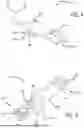
FIG. 12 illustrates an isometric view of an exemplary embodiment of an extractor pin that may be coupled with an extractor and bolt, in accordance with the present disclosure;
FIG. 13 illustrates a close-up view of a side of an exemplary embodiment of a cartridge extractor pin coupled with a bolt assembly in accordance with the present disclosure;
FIG. 14 illustrates a ghost view of the cartridge extractor pin and the bolt assembly shown in FIG. 13, according to the present disclosure;
FIG. 15 illustrates a lower isometric view of an exemplary embodiment of an extractor pin coupled with an exemplary embodiment of an extractor in accordance with the present disclosure; and
FIG. 16 illustrates a bottom view ghost view of the extractor pin and the extractor shown in FIG. 15, according to the present disclosure.
While the present disclosure is subject to various modifications and alternative forms, specific embodiments thereof have been shown by way of example in the drawings and will herein be described in detail. The present disclosure should be understood to not be limited to the particular forms disclosed, but on the contrary, the intention is to cover all modifications, equivalents, and alternatives falling within the spirit and scope of the present disclosure.
DETAILED DESCRIPTION
In the following description, numerous specific details are set forth in order to provide a thorough understanding of the present disclosure. It will be apparent, however, to one of ordinary skill in the art that the upper receiver and methods disclosed herein may be practiced without these specific details. In other instances, specific numeric references such as “first screw,” may be made. However, the specific numeric reference should not be interpreted as a literal sequential order but rather interpreted that the “first screw” is different than a “second screw.” Thus, the specific details set forth are merely exemplary. The specific details may be varied from and still be contemplated to be within the spirit and scope of the present disclosure. The term “coupled” is defined as meaning connected either directly to the component or indirectly to the component through another component. Further, as used herein, the terms “about,” “approximately,” or “substantially” for any numerical values or ranges indicate a suitable dimensional tolerance that allows the part or collection of components to function for its intended purpose as described herein.
The AR15/M4/M16 family of firearms and their derivatives, including all direct gas operated versions, have been in use by the military and civilian population for many years. Given the popularity of the AR15/M4/M16 family of firearms and their derivatives, there is a continuing desire to improve and simplify the operation of such firearms. Embodiments presented herein provide a cartridge extractor pin for optimizing the operation and longevity of direct gas operated rifles.
FIG. 1 illustrates a right-side elevation view of an exemplary embodiment of a firearm 100 that utilizes direct gas impingement to cycle the action of a bolt carrier group comprising the firearm, as described herein. In general, the firearm 100 comprises a member of the AR15/M4/M16 family of firearms, and thus the firearm 100 includes an upper receiver 104 that houses the bolt carrier group (not shown) and a lower receiver 108 that receives a magazine 112 containing a multiplicity of ammunition cartridges. The lower receiver 108 positions the ammunition cartridges within the upper receiver 104 such that the bolt carrier group may strip cartridges into a battery position within a breech of a barrel 116. An ejection port 120 on a side of the upper receiver 104 enables the bolt carrier group to eject spent ammunition cartridges after each round is fired. A buffer tube 124 coupled with a rear of the upper receiver 104 provides a housing for longitudinal movement of the bolt carrier group during stripping and ejecting ammunition cartridges. A buttstock 128, handguards 132, and a grip 136 facilitate a practitioner holding and supporting the firearm 100 during operating the firearm 100 by way of a trigger 140. Further, a suppressor (not shown) may be coupled with a muzzle end of the barrel 116 to reduce noise and muzzle flash during operating the firearm 100.
As described herein, the bolt carrier group moves longitudinally within the upper receiver 104 during stripping ammunition cartridges from the magazine 112, chambering the cartridges in the breech, and ejecting spent cartridges. The energy to perform these functions is provided by way of hot, expanding gases from each fired cartridge that cause the bolt carrier to move rearward within the buffer tube 124 toward the buttstock 128. The expanding gases are directed to the bolt carrier group from a port at an end of the barrel 116 by way of a gas block 148 and a gas tube (not shown) disposed within the handguards 132. The expanding gases cause the bolt carrier group to move rearward within the buffer tube 124 and then are discharged through the ejection port 120. After discharge, a spring acting on the bolt carrier group moves the bolt carrier forward to an engaged position while at the same time stripping another ammunition cartridge from the magazine 112 and moving that cartridge into the battery position.
FIG. 2 illustrates an exemplary embodiment of a bolt assembly 152 that is configured to chamber, fire, and extract spent ammunition cartridges during operation of the firearm 100. The bolt assembly 152 comprises a bolt 156 and an exemplary embodiment of an extractor 160. The bolt 156 is a generally cylindrical member having a forward recess 164 surrounded by multiple lugs 168, and a side recess 172. The recess 164 is configured to engage with a rim of an ammunition cartridge, while the lugs 168 are configured to engage with barrel extension lugs (not shown). The lugs 168 and the barrel extension lugs cooperate to keep the ammunition cartridge in battery during firing the ammunition cartridge.
As shown in FIG. 3, the side recess 172 is configured to house an extractor 160. The exemplary extractor 160 includes a claw portion 176 and a biased portion 180 that share an intervening pivot portion 184. The claw portion 176 is configured to grip the rim of the ammunition cartridge such that when the lugs 168 unlock from the barrel extension lugs and the bolt assembly 152 moves rearward, the claw portion 176 pulls the ammunition cartridge out of the firing chamber. The biased portion 180 is configured to be biased away from the bolt 156 by way of springs disposed between the biased portion 180 and the bolt 156. In the illustrated embodiment of FIG. 3, the bolt assembly 152 includes a primary spring 188 and a secondary spring 192 that press the biased portion 180 away from the body of the bolt 156.
The pivot portion 184 serves to press the claw portion 176 into the forward recess 164 due to the forces acting on the biased portion 180 by the springs 188, 192. The pivot portion 182 includes an extractor pin 196 that causes the extractor 160 to move in a seesaw manner during engaging an unfired ammunition cartridge. As such, the pivot portion 184 and the springs 188, 192 allow the claw portion 176 to move over the rim of the cartridge and then cause the claw portion 176 to remain fixedly engaged with the rim of the cartridge until the bolt assembly 152 is withdrawn from the breech of the firing chamber. Further, in some embodiments, the primary spring 188 may comprise a “wave spring” configured to keep the extractor 160 centered within the side recess 172 and thus reduce wear on the bolt assembly 152. As shown in FIGS. 2-3, the bolt assembly 152 further includes an ejector 200 and a spring (not shown) that are configured to throw the cartridge free of the firearm 100 once the cartridge is pulled out of the firing chamber.
FIGS. 4-8 illustrate an exemplary embodiment of an extractor 220 that may be incorporated into the bolt assembly 152 of FIGS. 2-3, in accordance with the present disclosure. Extractor 220 comprises an elongated body 224 that includes a claw portion 228 and a biased portion 232 that share an intervening pivot portion 236. As shown in FIGS. 4 and 6, the extractor 220 includes an upper surface 238 that is rounded or curved in a circumferential direction so as to substantially match a curvature of an exterior surface of the bolt 156 (see FIG. 2). The extractor 220 further includes a lug 242 that extends along the upper surface 238 above the claw portion 228. As shown in FIG. 8, the lug 242 comprises a thicker portion of the extractor 220 that is configured to reinforce the claw portion 228 so as to discourage damage or misalignment of the claw portion 228 that may otherwise arise due to rough handling of the firearm 100, dirt or debris, or by firing a cartridge that is too powerful for the firearm 100. Further details regarding reinforcing the extractor 220 by way of the lug 242, as well as with one or more elongated ribs, can be found in U.S. Provisional Application, entitled “Reinforced Cartridge Extractor For Reciprocating Firearm,” filed on Sep. 21, 2023, and having application Ser. No. 63/539,685, the entirety of said application being incorporated herein by reference.
In general, the claw portion 228 is configured to grip the rim of an ammunition cartridge such that when the lugs 168 (see FIG. 2) unlock from barrel extension lugs and the bolt assembly 152 moves rearward, the claw portion 228 pulls the ammunition cartridge out of the firing chamber. As shown in FIGS. 5 and 7-8, the claw portion 228 includes a leading edge 240 and a notch 244 disposed in a lower surface 248 of the extractor 220. The leading edge 240 may be rounded or chamfered to encourage the claw portion 228 to slide over an edge of the rim and then seat the rim in the notch 244 during forward movement of the bolt assembly 152. The notch 244 is configured to mate with a complementary curved portion of the rim of the ammunition cartridge. As such, the notch 244 is arcuate or curved in a circumferential direction so as to engage the complementary curved portion of the rim of a cartridge casing.
The biased portion 232 is configured to ensure that the rim of the cartridge casing remains within the notch 244 until the cartridge casing is ejected from the firearm 100 by way of the ejector 200 (see FIG. 3). The biased portion 232 is configured to be biased away from the bolt 156 by way of springs disposed between the biased portion 232 and the bolt 156. In the illustrated embodiment of FIG. 3, the bolt assembly 152 includes a primary spring 188 and a secondary spring 192 that press the biased portion 232 away from the body of the bolt 156. As shown in FIG. 5, a primary counterbore 252 and a secondary counterbore 256 are concentrically disposed in the lower surface 248 of the biased portion 232. The primary and secondary counterbores 252, 256 are configured to respectively retain the primary and secondary springs 188, 192 disposed between the bolt 156 and the biased portion 232. It is contemplated that the primary and secondary springs 188, 192 provide a cooperative spring force that ensures that the notch 244 reliably engages with the rim of the cartridge casing.
As shown in FIG. 5, the pivot portion 236 is disposed underneath the extractor 220. The pivot portion 236 serves to couple the extractor 220 with the bolt 156 and presses the claw portion 228 into the forward recess 164 (see FIG. 2) due to the forces acting on the biased portion 232 by the springs 188, 192. As shown in FIGS. 5 and 7, the pivot portion 236 comprises parallel prongs 260 that extend from the lower surface 248 of the extractor 220. A transverse hole 264 is disposed in the parallel prongs 260 and is configured to receive an extractor pin, such as the extractor pin 196 disclosed in connection with FIG. 3. As described hereinabove, the extractor pin 196 causes the extractor 220 to move in a seesaw manner when the claw portion 228 engages an ammunition cartridge. Thus, the pivot portion 236 and the springs 188, 192 allow the leading edge 240 to move over the rim of the cartridge and then cause the notch 244 to remain fixedly engaged with the rim of the cartridge until the bolt assembly 152 is withdrawn from the breech of the firing chamber, allowing the ejector 200 and to throw the cartridge free of the firearm 100.
It is contemplated that any of various hardened materials may be incorporated into the extractor 220, without limitation. In some embodiments, for example, the extractor 220 may comprise a steel material, such as a hardened stainless steel. The hardened steel material may comprise a steel alloy, such as 4340 steel alloy. In some embodiments, the hardened steel material comprising the extractor 220 may be further treated to provide additional durability. In other embodiments, the extractor 220 may comprise titanium, carbon steel, other steel alloys, and/or other materials that are highly resistant to wear. In some embodiments, at least a portion of the extractor 220 may be heat treated. In some embodiments, at least a portion of the extractor 220 may be polished and/or has a nitride finish to provide desired frictional properties that facilitate sliding of the claw portion 228 over the rim of an ammunition cartridge. It is contemplated that other finishing techniques, surface treatments, and the like may be incorporated into the extractor 220, without limitation, to provide desired surface properties of the extractor 220.
FIGS. 9-11 illustrate an exemplary embodiment of a bolt 280 that may be incorporated into the bolt assembly 152 of FIGS. 2-3, in accordance with the present disclosure. The bolt 280 is substantially identical to the bolt 156 shown in FIG. 2-3. As such, the bolt 280 is a generally cylindrical member having a forward recess 284 surrounded by multiple lugs 288, and a side recess 292. The forward recess 284 is configured to engage with the rim of an ammunition cartridge, while the lugs 288 are configured to engage with barrel extension lugs (not shown). The lugs 288 and the barrel extension lugs cooperate to keep the ammunition cartridge in battery during firing the ammunition cartridge. The side recess 292 is configured to house an extractor, such as the extractor 220 discussed in connection with FIGS. 4-8.
As shown in FIG. 10, the lugs 288 comprising the bolt 280 having a 70-degree rear angle 296 to reinforce the lugs 288. The rear angle 296 of the lugs 288 produces a 26% increase in bolt 280 size at the same area of the bolt lugs 288. Further, as shown in FIG. 11, the bolt 280 includes an increased bolt diameter 300 while the lugs 288 have an unchanged outer diameter. The increased bolt diameter 300 operates to prevent a thin “web” from becoming a crack initiation point that reduces the life of the bolt 280. Experimental observations have demonstrated that the rear angle 296 of the lugs 288 and the increased bolt diameter 300 greatly increase the life of the bolt 280.
Moreover, in some embodiments, the bolt 280 may be used in cooperation with a reinforced extractor 220 and a fluted firing pin (not shown). The fluted firing pin serves to keep the weight of the firing pin at substantially a mil-spec weight. As will be appreciated, the firing pin adapted for use with the bolt 280 is longer than mil-spec, which added about 1-gram greater mass, and thus fluting the firing pin removes the additional mass. Further, it is contemplated that the fluted firing pin may enable the firing pin to operate when there is fluid in the carrier group.
FIG. 12 illustrates an exemplary embodiment of an extractor pin 320 that may be coupled with an extractor and bolt, such as the extractor 220 and the bolt 280, according to the present disclosure. The extractor pin 320 comprises a generally elongated member having a center portion 328 disposed between end portions 332. The center portion 328 has a larger diameter than the diameter of the end portions 332. A bevel 340 joins the center portion 328 with each of the end portions 332. As described herein, the larger center portion 328 is configured to inhibit pivoting forces from causing the extractor pin 320 from wandering out of the holes in the bolt that support the extractor pin, as is known to happen with standard straight extractor pins.
As shown in FIGS. 13-14, the end portions 332 are configured to loosely seat within transverse holes 336 disposed in the bolt 280 while the center portion 328 is configured to loosely seat within the hole 264 (see FIGS. 15-16) of the extractor 220. More specifically, the force on the extractor 220 due to the springs 188, 192 (see FIG. 3) lifts the end portions 332 to the top of the transverse holes 336, thereby producing a gap 344 between the end portions 332 and the bottom of the transverse holes 336. The larger diameter of the center portion 328 maintains the centered position of the extractor pin 320 disposed between the transverse holes 336. Experimental observations have shown that the larger diameter of the center portion 328 and the force on the extractor 220 due to the springs 188, 192 prevent the extractor pin 320 from wandering out of the transverse holes 336, as can happen with standard straight extractor pins.
Turning to FIGS. 15-16, the extractor pin 320 is shown coupled with the extractor 220 described in connection with FIGS. 4-8. As shown in FIG. 15, the center portion 328 is inserted through the hole 264 such that the end portions 332 extend beyond the parallel prongs 260. As best shown in FIG. 16, the bevels 340 align with side edges 248 of the extractor 220 such that that the center portion 328 will remain centered between the transverse holes 336, as described above. Further, the exterior diameter of the center portion 328 shares a loose fit with the inner diameter of the hole 264, allowing the extractor 220 to pivot on the extractor pin 320.
Moreover, as described above, the extractor pin 320 shares a loose fit in the transverse holes 336 of the bolt 280 rather than being press fit into the transverse holes 336. More specifically, the transverse holes 336 can have an inner diameter that is large enough to allow passage of the center portion 328 during removal of the extractor 220 from the bolt 280. As such, a practitioner can remove the extractor 220 from the bolt 280 by simply pressing downward on extractor 220 and using a punch to nudge the extractor pin 320 through the transverse holes 336 and out of the bolt 280.
While the upper receiver and methods have been described in terms of particular variations and illustrative figures, those of ordinary skill in the art will recognize that the upper receiver is not limited to the variations or figures described. In addition, where methods and steps described above indicate certain events occurring in certain order, those of ordinary skill in the art will recognize that the ordering of certain steps may be modified and that such modifications are in accordance with the variations of the upper receiver. Additionally, certain of the steps may be performed concurrently in a parallel process, when possible, as well as performed sequentially as described above. To the extent there are variations of the upper receiver, which are within the spirit of the disclosure or equivalent to the upper receiver found in the claims, it is the intent that this patent will cover those variations as well. Therefore, the present disclosure is to be understood as not limited by the specific embodiments described herein, but only by scope of the appended claims.
Claims
What is claimed is:1. A bolt assembly for a direct gas operated firearm, comprising:
a bolt comprising a cylindrical member having a forward recess surrounded by multiple lugs and a side recess;
an extractor pivotally mounted in the side recess by way of an extractor pin;
a claw portion of the extractor biased into the forward recess by one or more springs acting on the extractor; and
an ejector and a spring disposed in the forward recess.
2. The bolt assembly of claim 1, wherein the extractor includes a pivot portion disposed between the claw portion and a biased portion.
3. The bolt assembly of claim 2, wherein the biased portion is configured to be biased away from the bolt by way of the one or more springs disposed between the biased portion and the bolt.
4. The bolt assembly of claim 3, wherein the pivot portion presses the claw portion into the forward recess due to the spring force acting on the biased portion.
5. The bolt assembly of claim 4, wherein the biased portion is configured to ensure that a rim of a cartridge casing remains within the claw portion until the cartridge casing is ejected from the firearm by way of the ejector.
6. The bolt assembly of claim 2, wherein the pivot portion includes parallel prongs that extend from a lower surface of the extractor.
7. The bolt assembly of claim 6, wherein a transverse hole is disposed in the parallel prongs and is configured to receive the extractor pin, such that the extractor moves in a seesaw manner when the claw portion engages an ammunition cartridge casing.
8. The bolt assembly of claim 7, wherein the extractor pin comprises a generally elongated member having a center portion disposed between end portions, the center portion having a larger diameter than the diameter of the end portions.
9. The bolt assembly of claim 8, wherein the end portions are configured to loosely seat within transverse holes disposed in the bolt while the center portion is configured to loosely seat within the transverse hole of the extractor.
10. The bolt assembly of claim 9, wherein the larger diameter of the center portion and the spring force acting on the biased portion are configured to hold the end portions in the transverse holes.
11. The bolt assembly of claim 10, wherein the transverse holes have an inner diameter that is large enough to allow passage of the center portion during removal of the extractor pin from the bolt.
12. An extractor pin for coupling a cartridge extractor to a bolt assembly, comprising:
an elongated member including a center portion configured to seat within holes in parallel prongs of the cartridge extractor;
a first end portion and a second end portion both configured to seat within transverse holes disposed in the bolt assembly; and
a bevel joining the center portion with each of the first end portion and the second end portion.
13. The extractor pin of claim 12, wherein the center portion has a first diameter and each of the first end portion and the second end portion have a second diameter, the first diameter being greater than the second diameter.
14. The extractor pin of claim 13, wherein the first diameter of the center portion shares a loose fit with an inner diameter of the holes in the parallel prongs, allowing the cartridge extractor to pivot on the extractor pin.
15. The extractor pin of claim 12, wherein the center portion is configured to inhibit pivoting forces from causing the extractor pin to wander out of the transverse holes.
16. The extractor pin of claim 12, wherein the first end portion and the second end portion are configured to loosely seat within the transverse holes.
17. The extractor pin of claim 16, wherein the first end portion and the second end portion are configured to be lifted to the top of the transverse holes such that the center portion remains disposed in the parallel prongs.
18. The extractor pin of claim 17, wherein the bevels are aligned with side edges of the cartridge extractor such that that the center portion remains centered between the transverse holes.
19. The extractor pin of claim 18, wherein the first diameter is configured to allow the center portion to be easily pushed through the transverse holes during removal of the cartridge extractor from the bolt.
Images & Drawings included:




Sources:
- United States Patent and Trademark Office - verify current appl. status at the USPTO↗
Recent applications in this class:
- » 20250389502 2025-12-25
BOLT CARRIER AND BOLT FOR GAS OPERATED FIREARMS - » 20250297822 2025-09-25
Firearm and Extractor, Bolt and Trigger Pin Assembly - » 20250237451 2025-07-24
FIREARM SIDE CASING EJECTION ASSEMBLY AND RELATED TECHNIQUES - » 20250224190 2025-07-10
FIREARM EXTRACTOR - » 20250102254 2025-03-27
REINFORCED CARTRIDGE EXTRACTOR FOR RECIPROCATING FIREARM - » 20240337455 2024-10-10
Bolt for a firearm - » 20240247897 2024-07-25
Ejector for firearm - » 20240044598 2024-02-08
Barrel extension extraction cam and barrel extension system - » 20240035768 2024-02-01
Extractor for an autoloading firearm - » 20230384048 2023-11-30
Firearm Cartridge Ejector
Recent applications for this Assignee:
- » 20260098699 2026-04-09
APPARATUS AND METHODS FOR A MUZZLE BRAKE - » 20260078982 2026-03-19
APPARATUS AND METHODS FOR A GUNSIGHT AND SIGHTING SYSTEM - » 20260029207 2026-01-29
APPARATUS AND METHODS FOR A DUAL DWELL WEIGHT FOR DIRECT GAS OPERATED FIREARMS - » 20250321069 2025-10-16
FIREARM SOUND SUPPRESSOR WITH PERIPHERAL VENTING - » 20250314450 2025-10-09
APPARATUS AND METHODS FOR A PISTOL STABILIZER - » 20250314445 2025-10-09
DIVERGING CENTRAL BORE FOR FIREARM SOUND SUPPRESSOR - » 20250237482 2025-07-24
SYSTEM AND METHOD FOR SHOOTER IMAGERY AND TARGET SHOOTING ANALYTICS - » 20250224198 2025-07-10
HANDGUN STABILIZER AND METHODS - » 20250164214 2025-05-22
APPARATUS AND METHODS FOR AN OPTICAL REFLECTION GUNSIGHT - » 20250164213 2025-05-22
APPARATUS AND METHODS FOR AN ILLUMINATING GUNSIGHT