Ballistic Panels for Vehicles and Methods
US20260133015A1
2026-05-14
18/747,595
2024-06-19
Smart Summary: A new vehicle protection system uses strong panels to shield against impacts. These panels are mounted without a frame, making them easier to install. The system includes hooks, fasteners, and straps to keep the panels securely attached to the vehicle. There is also a ratchet assembly that helps tighten the setup for better safety. This system can include a second panel below the first one for added protection and offers methods for improving safety for people inside the vehicle. 🚀 TL;DR
Abstract:
A frameless vehicle protection system provides a first impact resistant panel secured to a first impact resistant panel mounting mechanism. The first impact resistant panel mounting mechanism comprises at least one upper hook, at least one fastener, at least one resilient buffer, and at least one horizontal strap. The system further comprises a ratchet assembly to secure the system to the vehicle. The frameless vehicle protection system may also provide a second impact resistant panel disposed below the first impact resistant panel. Additionally, the present disclosure provides methods of installing a frameless vehicle protection system. The present disclosure further provides methods of improving protection of an occupant of a vehicle.
Applicant:
Interested in similar patents?
Get notified when new applications in this technology area are published.
Classification:
F41H5/013 » CPC main
Armour; Armour plates Mounting or securing armour plates
F41H5/263 » CPC further
Armour; Armour plates; Peepholes; Windows; Loopholes Mounting of transparent armoured panels, e.g. bulletproof windows on vehicles
F41H5/26 IPC
Armour; Armour plates Peepholes; Windows; Loopholes
Description
COPYRIGHT NOTICE
A portion of the disclosure of this patent document contains material which is subject to copyright protection. The copyright owner makes no objection to the facsimile reproduction of any one of the patent documents or the patent disclosure, as it appears in the United States Patent and Trademark Office patent file or records, but otherwise reserves all copyright rights whatsoever.
FIELD OF INVENTION
The present disclosure relates generally to vehicle safety and security. More particularly, the present disclosure relates to a frameless, externally mounted device for a vehicle. Further still, the present disclosure relates to one or more impact resistant panels affixed to an external surface of any vehicle without requiring modification to the vehicle.
BACKGROUND OF THE INVENTION
Vehicle security and occupant safety are paramount concerns for vehicle owners, law enforcement agencies, and militaries. Existing vehicle security measures focus primarily on securing interior portions and perimeters of vehicles, however, inadequate protection of side-facing windows and doors from external threats such as theft, vandalism, and ballistic hazards exist. Standard production vehicle windows and doors are inherently vulnerable to such threats due to their thin and easily breakable nature, making them susceptible to “smash-and-grab” robberies, other criminal activities, and ballistic impacts.
Existing solutions for enhancing window and door protection of production vehicles typically involve retrofitting vehicles with bulky, and often expensive, bullet and impact resistant glass and systems, which often require intricate modifications to the structure of the vehicle. Moreover, such modifications are commonly permanent and may not be feasible for all vehicles or situations, limiting their widespread adoption.
It is, therefore, an object of the present disclosure to provide vehicle owners and operators with a frameless, externally mountable and removable impact resistant device to protect from the above-mentioned and other threats.
SUMMARY OF THE INVENTION
Several devices directed to the present disclosure are disclosed herein. In one embodiment, a device comprises a frameless vehicle protection system. The frameless vehicle protection system comprises a first impact resistant panel secured to a first impact resistant panel mounting mechanism, wherein the first impact resistant panel mounting mechanism comprises at least one upper hook disposed proximate an upper portion of the first impact resistant panel, at least one fastener to removably secure the at least one upper hook to the upper portion of the first impact resistant panel, at least one resilient buffer disposed between the first impact resistant panel and a window of a vehicle, and at least one horizontal strap disposed proximate a lower portion of the first impact resistant panel. The at least one horizontal strap further comprises a first end connectable to a first side of a door of the vehicle, and an opposing second end connectable to a second side of the door of the vehicle. Further, a ratchet assembly is disposed on the at least one horizontal strap between the first and second ends adapted to tighten the at least one horizontal strap when the frameless vehicle protection system is removably secured to the vehicle.
Methods of installing a frameless vehicle protection system are also provided herein. In one embodiment, a method of installing the frameless vehicle protection system comprises attaching a first impact resistant panel mounting mechanism to a first impact resistant panel, and attaching the first impact resistant panel mounting mechanism to an external surface of a vehicle.
Methods of improving protection of an occupant of a vehicle are also provided herein. In one embodiment, a method of improving protection of the occupant of the vehicle comprises positioning a frameless vehicle protection system on an external surface of the vehicle such that the system protects a side window, and optionally, a door of the vehicle.
While the disclosure provides certain specific embodiments, the presently disclosed subject matter is not limited to those embodiments. A person of ordinary skill in the art will appreciate from the description herein that modifications can be made to the described embodiments and therefore that the specification is broader in scope than the described embodiments. All examples are therefore non-limiting.
BRIEF DESCRIPTION OF THE DRAWINGS
FIG. 1 depicts a front elevation view of one embodiment of the present disclosure comprising a frameless vehicle protection system.
FIG. 2 depicts a right side elevation view of another embodiment of a frameless vehicle protection system. The frameless vehicle protection system in the present embodiment comprises a first impact resistant panel and a first impact resistant panel mounting mechanism.
FIG. 3 depicts a front elevation view of another embodiment of a frameless vehicle protection system. In the present embodiment, the frameless vehicle protection system comprises a first impact resistant panel, a first impact resistant panel mounting mechanism, a horizontal strap, and a plurality of resilient buffers.
FIG. 4A depicts a front elevation view of another embodiment of a frameless vehicle protection system.
FIG. 4B depicts a right side elevation view of the frameless vehicle protection system of FIG. 4A.
FIG. 5 depicts a front elevation view of another embodiment of a frameless vehicle protection system. In the present embodiment, the frameless vehicle protection system is shown with a plurality of vertical straps.
FIG. 6 depicts a front elevation view of another embodiment of a frameless vehicle protection system. In the present embodiment, the frameless vehicle protection system is shown with a plurality of vertical straps and a plurality of horizontal straps.
FIG. 7 depicts a front elevation view of another embodiment of a frameless vehicle protection system. In the present embodiment, the frameless vehicle protection system comprises a first impact resistant panel, a second impact resistant panel, and a second impact resistant panel connection device.
FIG. 8A depicts a left side elevation view of one embodiment of a frameless vehicle protection system affixed to a vehicle.
FIG. 8B depicts a left side elevation view of a second embodiment of a frameless vehicle protection system affixed to a vehicle.
FIG. 8C depicts a left side elevation view of a third embodiment of a frameless vehicle protection system affixed to a vehicle.
FIG. 9 depicts a flow chart for methods of installing a frameless vehicle protection system.
FIG. 10 depicts a flow chart for methods of improving protection of an occupant of a vehicle.
DETAILED DESCRIPTION
As required, detailed embodiments of the present disclosure are provided herein; however, it is to be understood that the disclosed embodiments are merely examples of the present disclosure that may be embodied in various forms. The figures are not necessarily drawn to scale, and some features may be exaggerated to show details of particular elements. Therefore, specific structural and functional details disclosed herein are not to be interpreted as limiting, but merely as a basis for the claims and as a representative basis for teaching one skilled in the art to variously employ the present disclosure.
Unless defined otherwise, all technical and scientific terms used herein have the same meaning as is commonly understood by one of ordinary skill in the art to which this disclosure belongs. In the event that there are a plurality of definitions for a term herein, those in this disclosure prevail unless stated otherwise.
Wherever the phrase “for example,” “such as,” “including,” and the like are used herein, the phrase “and without limitation” is understood to follow unless explicitly stated otherwise. Similarly “an example,” “exemplary,” and the like are understood to be non-limiting.
The term “substantially” allows for deviations from the descriptor that do not negatively impact the intended purpose. Descriptive terms are understood to be modified by the term “substantially” even if the word “substantially” is not explicitly recited.
The term “about,” when used in connection with a numerical value, refers to the actual given value, and to the approximation to such given value that would reasonably be inferred by one of ordinary skill in the art, including approximations due to the experimental and or measurement conditions for such given value.
The terms “comprising,” “including,” “having,” “involving,” (and similarly “comprises,” “includes,” “has,” and “involves”), and the like may be used interchangeably and have the same meaning. Specifically, each of the terms is defined consistent with the common United States Patent Law definition of “comprising” and is therefore interpreted to be an open term meaning “at least the following,” and is also interpreted not to exclude additional features, limitations, aspects, etc . . . . Thus, for example, “a device having components a, b, and c” means that the device includes at least components a, b, and c. Similarly, the phrase “a method involving steps a, b, and c” means that the method includes at least steps a, b, and c.
Unless the context clearly requires otherwise, throughout the description and the claims, the words “comprise,” “comprising,” and the like are to be construed in an inclusive sense as opposed to an exclusive or exhaustive sense; that is to say, in the sense of “including but not limited to.”
Any discussion of the prior art throughout the specification should in no way be considered as an admission that such prior art is widely known or forms part of common, general knowledge in the field.
It is an object of the present disclosure to overcome or ameliorate at least one of the disadvantages of the prior art, or to provide a useful alternative.
The present disclosure relates generally to vehicle safety and security. More particularly, the present disclosure relates to a frameless, externally mounted device for a vehicle. Further still, the present disclosure relates to one or more impact resistant panels affixed to an external surface of any vehicle without requiring modification to the vehicle.
In one embodiment, a frameless vehicle protection system is provided. The frameless vehicle protection system comprises a first impact resistant panel secured to a first impact resistant panel mounting mechanism. The first impact resistant panel mounting mechanism comprises at least one upper hook disposed proximate an upper portion of the first impact resistant panel, at least one fastener to removably secure the at least one upper hook to the upper portion of the first impact resistant panel, at least one resilient buffer disposed between the first impact resistant panel and a window of a vehicle, and at least one horizontal strap disposed proximate a lower portion of the first impact resistant panel. The at least one horizontal strap comprises a first end connectable to a first side of a door of the vehicle, and an opposing second end connectable to a second side of the door of the vehicle. Further, a ratchet assembly is disposed on the at least one horizontal strap between the first and second ends adapted to tighten the at least one horizontal strap when the frameless vehicle protection system is removably secured to the vehicle.
The frameless vehicle protection system provided herein does not require a frame to mount to the external surface of the vehicle. Instead, the frameless vehicle protection system utilizes the first impact resistant panel mounting mechanism, along with, or in addition to, other components, to secure the system to the vehicle. Because framing is not required, the system is readily adaptable to various vehicles, primarily those used by law enforcement, militaries, and standard production vehicles purchased and operated by consumers. Framing, as commonly found on generally available ballistic panels, has the effect of reducing visibility of an occupant within the vehicle, reducing a number of vehicles to which the ballistic panels may be connectable, and generally requires modification to the vehicle. Advantageously, the frameless vehicle protection system provided herein does not reduce the visibility of the occupant within the vehicle, is adaptable to a plurality of vehicles, and does not require modification to the vehicle.
The frameless vehicle protection system provided herein requires no permanent modification to the vehicle. Instead, the frameless vehicle protection system is adaptable to various vehicles irrespective of make, model, type, and size. The frameless vehicle protection system is mountable, adaptable, and removable from various vehicles and does not require that the occupant modify the vehicle to employ the frameless vehicle protection system. Further, the frameless vehicle protection system provided herein is adaptable to both a driver's side, or a first side, and a passenger's side, or a second side, of the vehicle.
The frameless vehicle protection system provided herein is vehicle agnostic. For the purposes of this specification, the term “vehicle agnostic” refers to a feature of the frameless vehicle protection system that makes it compatible with and operable on any type of vehicle, regardless of the make, model, size, type, or manufacturer of the vehicle. Such vehicles include but are not limited to, cars, trucks, buses, military vehicles, police and law enforcement vehicles, and the like. The “vehicle agnostic” nature of the system ensures that it can be universally applied and function effectively across different vehicle platforms without a need for specialized adaptations or modifications specific to any particular vehicle.
The frameless vehicle protection system is adapted to be secured to the external surface of the vehicle. External surfaces of the vehicle may include a side window of the vehicle and the door of the vehicle. Further, the external surfaces may include one or more side windows and one or more doors of the vehicle in the event that the vehicle comprises one or more side windows and one or more doors. In one embodiment, the system is adapted to be secured over one side window of the vehicle. In another embodiment, the system is adapted to be secured over one or more side windows of the vehicle. This may include one or more side windows on the first side of the vehicle and one or more side windows on the first and the second side of the vehicle. In another embodiment, the system is adapted to be secured over the side window and the door of the vehicle. Additionally, the system may be adapted to be secured over one or more side windows and one or more doors of the vehicle. This may include one or more side windows and one or more doors on the first side of the vehicle and one or more side windows and one or more doors on the first and second sides of the vehicle.
The frameless vehicle protection system is adapted to be stored when not in use. Storage of the frameless vehicle protection system may occur within the vehicle or a location outside the vehicle. In one embodiment, the frameless vehicle protection system may be stored within a trunk, backseat, or bed of the vehicle when not in use. In another embodiment, the system may be removed from the vehicle and stored at an alternate location outside the vehicle when not in use. Further, the system may be inserted into a carrying case or a storage case when not in use to protect the system from damage, including but not limited to, scratching, scuffing, breakage, and the like.
Turning to the first impact resistant panel, the first impact resistant panel is adapted to be larger than the one or more side windows of the vehicle. The size of the first impact resistant panel is variable, meaning that the size is configurable based on the vehicle and the size of the one or more side windows of the vehicle. Configuring the first impact resistant panel to be larger than the one or more side windows of the vehicle increases an area of protection and ensures that no portion of the one or more side windows remains exposed to an external threat. Non-limiting examples of external threats include blunt objects such as hammers, tire irons, and crowbars, road debris, such as rocks, tires, and vehicle parts, and ballistic projectiles, such as bullets.
The first impact resistant panel comprises both the upper and lower portions. Additionally, the first impact resistant panel may further comprise an outer surface separated from an inner surface by a thickness. The thickness of the first impact resistant panel must be suitable for an anticipated impact. In one embodiment, the thickness may be suitable to prevent breakage via blunt objects. In another embodiment, the thickness may be suitable to prevent breakage via ballistic projectiles.
The first impact resistant panel may be constructed from a rigid, impact resistant material. Such materials may include polycarbonate, acrylic, and PETG. Advantageously, the first impact resistant panel is both rigid and impact resistant, but also transparent. This allows the occupant to maintain proper visibility while operating the vehicle while simultaneously providing impact protection to the occupant within the vehicle. The first impact resistant panel may be constructed from any suitable, impact resistant material such as a transparent thermoplastic.
The first impact resistant panel may further comprise at least one pre-drilled through-opening. The at least one pre-drilled through-opening exists between the outer and inner surfaces of the first impact resistant panel and spans the thickness of the first impact resistant panel. In an alternate embodiment, the at least one pre-drilled through-opening may further comprise a plurality of pre-drilled through-openings. A location, number, and size of the pre-drilled through-openings depend on the vehicle. As such, the first impact resistant panel may be configured to function with any vehicle. In one embodiment, pre-drilled through-openings are present in each corner of the first impact resistant panel, that is two pre-drilled through-openings disposed on the upper surface of the first impact resistant panel and two pre-drilled through-openings disposed on the lower surface of the first impact resistant panel. In another embodiment, pre-drilled through-openings are present in each corner of the first impact resistant panel and at equidistant spaces between the corners of the first impact resistant panel. The pre-drilled through-openings may serve several purposes. To begin, the pre-drilled through-openings may receive the fastener to affix the upper hook to the first impact resistant panel. The pre-drilled through-openings may also receive the fastener to affix the resilient buffer to the first impact resistant panel. Additionally, the pre-drilled through-openings may receive the fastener to affix the first impact resistant panel to a second impact resistant panel. In an alternate embodiment, the pre-drilled through-openings may not receive the fastener and remain void to accept additional or alternate elements and components.
In one embodiment, the pre-drilled through-openings permit the at least one fastener to be inserted to secure the first impact resistant panel to the first impact resistant panel mounting mechanism.
In an alternate embodiment, the first impact resistant panel is secured to the first impact resistant panel mounting mechanism via the at least one fastener inserted through the at least one pre-drilled through-opening, and the at least one fastener is secured via a nut. In this instance, the at least one fastener comprises a threaded member capable of receiving the nut. A size of the at least one fastener depends on the size, type, manufacturer, and shape of the vehicle. In an alternate embodiment, the fastener may comprise a rivet. In a further embodiment, the fastener may comprise a screw.
In one embodiment, the nut may comprise a polymer-insert lock nut. The polymer-insert lock nut employs an insert located towards a top end of the nut that reduces an inner diameter of the nut and which deforms over a mating thread of the fastener when the fastener is threadedly inserted. This increases friction between the nut and fastener thus increasing a holding power of the nut. In an alternate embodiment, the nut may be further secured to the fastener via a glue such as any suitable thread-locking substance.
In a further embodiment, the nut may comprise a castellated nut and pin. In this embodiment, the castellated nut is tightened onto threads of the fastener and secured into place via the pin. In an alternate embodiment, the nut may further comprise a drilled through-opening in the castellated nut through which the pin, such as a cotter pin, may be inserted to prevent a backing out of the nut over time.
Turning back to the first impact resistant panel mounting mechanism, a first washer is disposed on the outer surface of the first impact resistant panel proximate the at least one pre-drilled through-opening, and a second washer is disposed on the inner surface of the first impact resistant panel proximate the at least one pre-drilled through-opening. Select washers may include but are not limited to, flexible washers, rubber washers, neoprene washers, and locking washers. The select washers are suitable for distributing a load of the at least one fastener and protecting the first impact resistant panel. In a further embodiment, one or more washers may be disposed on both the outer and inner surfaces of the first impact resistant panel to increase a spacing between the first impact resistant panel and the window of the vehicle. Advantageously, increased spacing between the first impact resistant panel and the window of the vehicle maintains an operability of the window and permits air flow between the first impact resistant panel and the window of the vehicle. Further still, select washers disposed on the inner surface of the first impact resistant panel may serve to adjust and position the first impact resistant panel to accommodate for curvature of the vehicle.
In one embodiment, the at least one upper hook comprises a hole through which the at least one fastener removably engages. The hole permits the at least one upper hook to engage with the first impact resistant panel and secure the first impact resistant panel to the vehicle. In a further embodiment, the at least one upper hook comprises a plurality of hooks that engage with a top of the door of the vehicle. In another instance, the at least one upper hook comprises upper hooks in both upper corners of the first impact resistant panel to distribute a hanging load of the first impact resistant panel and prevent twisting of the first impact resistant panel when affixed to the vehicle or when impacted.
Further, the at least one upper hook may engage with the top of the door of the vehicle and is wedged between the door of the vehicle and a body of the vehicle when the door of the vehicle is closed. In one embodiment, the at least one upper hook removably mates with weather-stripping located on the top of the door of the vehicle. The weather-stripping provides a mating surface for the at least one upper hook when the door is open and provides a secure location for the at least one upper hook to sit when the door is closed. An advantage of this mating surface is that it is accessible when the door is open, however, it is not accessible when the door is closed. The at least one upper hook may resemble a “J,” wherein the at least one upper hook further comprises a shank and a top hook portion. The shank mates with the first impact resistant panel and the top hook portion mates with the top of the door of the vehicle. In one embodiment, the at least one upper hook is positioned proximate, as opposed to over or within, the weather-stripping located on the top of the door of the vehicle. In this embodiment, the weather-stripping of the vehicle maintains its structure and intended functionality when the frameless vehicle protection system is installed on the vehicle.
The at least one horizontal strap may further comprise a first hook disposed on the first end of the at least one horizontal strap, and a second hook disposed on the opposing, second end of the at least one horizontal strap. The first and second hooks may be in accordance with the at least one upper hook described above.
As with the at least one upper hook, the first and second hooks disposed on the at least one horizontal strap may be constructed from metal, plastic, or a combination of metal and plastic. Further, foam padding may be disposed on an inside of the hooks to prevent damage to the vehicle when the frameless vehicle protection system is affixed to the vehicle. In this instance, the foam padding protects the body of the vehicle from scratching, rubbing, damage, and abrasion.
The at least one horizontal strap may further pass through at least one guide disposed on the first impact resistant panel. In one embodiment, the guide may be secured to the first impact resistant panel via one or more of the pre-drilled through-openings and one or more fasteners or may be integral to the first impact resistant panel. The at least one guide maintains a position and alignment of the at least one horizontal strap.
The ratchet assembly is disposed on the at least one horizontal strap between the first end and second end. The ratchet assembly ratchedly engages with the at least one horizontal strap, wherein the at least one horizontal strap passes through the ratchet assembly at a first end and exits the ratchet assembly at a second end. The ratchet assembly is adapted to tighten the at least one horizontal strap when the frameless vehicle protection system is removably secured to the vehicle. Further, the first end of the at least one horizontal strap engages with the first side of the door of the vehicle, and the second end of the at least one horizontal strap engages with the second side of the door of the vehicle. In one embodiment, the ratchet assembly is disposed between the one or more guides disposed on the first impact resistant panel.
The at least one horizontal strap may be constructed from a flexible polyester webbing or a nylon webbing. A construction, size, shape, and thickness of the at least one horizontal strap depends on the vehicle selected, a desired strength, and/or a desired abrasion-resistance characteristic of the at least one horizontal strap.
In one embodiment, the at least one resilient buffer may be disposed between the first impact resistant panel and the vehicle. More specifically, the at least one resilient buffer may be disposed between the first impact resistant panel and a frame of the window of the vehicle. The at least one resilient buffer may be constructed from an elastomeric material such as rubber, polymer, or foam to dampen vibration and permit air flow between the first impact resistant panel and the side window of the vehicle. Advantageously, the at least one resilient buffer creates spacing between the first impact resistant panel and the window of the vehicle, permitting normal operating conditions of the window of the vehicle when the frameless vehicle protection system is affixed to the vehicle. That is, the window may travel up and down without being impacted by the frameless vehicle protection system as installed.
In an alternate embodiment, the at least one resilient buffer may comprise a plurality of resilient buffers disposed between the first impact resistant panel and the side window of the vehicle. In one embodiment, at least one resilient buffer is disposed on the inner surface of each corner of the first impact resistant panel. In an alternate embodiment, additional resilient buffers may be selected and disposed between the window and first impact resistant panel to increase vibration dampening.
Turning back to the first impact resistant panel, the first impact resistant panel may further comprise at least one lower hook. The at least one lower hook may be in accordance with the upper hook, the first hook disposed on the at least one horizontal strap, and the second hook disposed on the at least one horizontal strap. The at least one lower hook may serve one or more purposes. In one embodiment, the at least one lower hook removably engages with a bottom of the door of the vehicle. In another embodiment, the at least one lower hook permits attachability of the second impact resistant panel to the first impact resistant panel. In this embodiment, the at least one lower hook comprises part of a second impact resistant panel connection device. In an alternate embodiment, the at least one lower hook may comprise a plurality of lower hooks. Additionally, the at least one lower hook may be connectable to the first impact resistant panel via the at least one pre-drilled through-opening and at least one fastener.
In an alternate embodiment, the frameless vehicle protection system may be removably attachable to the vehicle via a plurality of horizontal straps. In this instance, a first horizontal strap is disposed on the upper portion of the first impact resistant panel and a second horizontal strap is disposed on the lower portion of the first impact resistant panel.
In another embodiment, the frameless vehicle protection system may be removably attachable to the vehicle via a first vertical strap and a second vertical strap.
Further still, the frameless vehicle protection system may be removably attachable to the vehicle via the first horizontal strap disposed proximate the upper portion of the first impact resistant panel, the second horizontal strap disposed proximate the lower portion of the first impact resistant panel, the first vertical strap disposed proximate a first side of the first impact resistant panel, and the second vertical strap disposed proximate a second, opposing side of the first impact resistant panel.
The frameless vehicle protection system may further comprise the second impact resistant panel, wherein the second impact resistant panel is disposed below the lower portion of the first impact resistant panel to protect the door of the vehicle. The second impact resistant panel may be in accordance with the first impact resistant panel and may be disposed on an external surface of one or more doors of the vehicle. The second impact resistant panel is removably attachable to the first impact resistant panel via the second impact resistant panel connection device.
In one embodiment, the second impact resistant panel connection device may comprise the lower hook disposed on the first impact resistant panel, a vertical polyester strap, and a fastener to affix the vertical polyester strap to the first impact resistant panel. In another embodiment, the second impact resistant panel connection device may comprise at least one second impact resistant panel hook, at least one second impact resistant panel fastener, at least one second impact resistant panel strap, and at least one hook catch. In this embodiment, a first end of the at least one second impact resistant panel strap is secured to the second impact resistant panel via the at least one second impact resistant panel fastener, and the at least one second impact resistant panel hook is disposed at a second end of the at least one second impact resistant panel strap. Further, the at least one second impact resistant panel hook removably engages with the at least one hook catch disposed on the lower portion of the first impact resistant panel. In this instance, the at least one hook catch may be integral to the first impact resistant panel or may be secured to the first impact resistant panel via the at least one fastener inserted through the at least one pre-drilled through-opening. In all embodiments of the second impact resistant panel connection device, the second impact resistant panel is removably attachable to the first impact resistant panel. Additionally, the second impact resistant panel increases an area of protection of the side of the vehicle to include one or more doors of the vehicle.
Turning back to the system, the frameless vehicle protection system is constructed to be impact and bullet resistant. For the purposes of this specification, “impact resistant” refers to the ability of a material or object, such as the first and second impact resistant panels, to withstand physical impact without experiencing significant structural failure or damage. Specifically, for the purposes of this specification, the first and second impact resistant panels are considered impact resistant due to their resistance to shattering, deterioration, breakage, cracking, or otherwise loss of integrity when subjected to a specified level of impact.
For the purposes of this specification, “bullet resistant” refers to the capability of a material or object, such as the first and second impact resistant panels, to withstand an impact of a projectile, including bullets, without experiencing significant structural failure or damage. Specifically, for the purposes of this specification, the first and second impact resistant panels are considered bullet resistant due to their resistance to shattering, deterioration, breakage, cracking, or otherwise loss of integrity when impacted by bullets or other specified projectiles under defined conditions.
Further, for purposes of this specification, “bullet proof” encompasses materials or objects which provide a higher level of protection when compared to impact and bullet resistant materials and are designed to completely prevent penetration by bullets or other specified projectiles under defined conditions. In select instances, the first and second impact resistant panels may be considered bullet proof. In other instances, the first and second impact resistant panels may be considered impact and/or bullet resistant.
In addition to protecting the occupant within the vehicle, the frameless vehicle protection system may alternatively provide protection to the occupant outside of the vehicle. In this instance, the one or more doors of the vehicle can be opened by the occupant, and the occupant may stand, crouch, kneel, or hide behind the frameless vehicle protection system affixed to the one or more windows and one or more doors of the vehicle. In this instance, the occupant is provided additional protection by the system when compared to vehicles without the system affixed. In an alternate embodiment, the frameless vehicle protection system may be removed from the vehicle and held by the occupant to provide protection of the occupant when not inside or proximate the vehicle. In this instance, a handle may be disposed on the frameless vehicle protection system.
Methods of installing a frameless vehicle protection system are also provided herein. In one embodiment, a method of installing the frameless vehicle protection system first comprises attaching a first impact resistant panel mounting mechanism to a first impact resistant panel, and attaching the first impact resistant panel mounting mechanism to an external surface of a vehicle. The first impact resistant panel may be in accordance with the first impact resistant panel described above. Additionally, the first impact resistant panel mounting mechanism may be in accordance with the first impact resistant panel mounting mechanism described above.
The method of installing the frameless vehicle protection system may further comprise optionally attaching a second impact resistant panel connection device to a second impact resistant panel. The second impact resistant panel connection device may be in accordance with the second impact resistant panel connection device described above. Additionally, the second impact resistant panel may be in accordance with the second impact resistant panel described above.
The method of installing the frameless vehicle protection system may further comprise optionally attaching the second impact resistant panel connection device to the first impact resistant panel.
The method of installing the frameless vehicle protection system may further comprise attaching a ratchet assembly to a lower portion of the first impact resistant panel. The ratchet assembly may be in accordance with the ratchet assembly described above. Further still, the ratchet assembly may further comprise the ratchet assembly and the at least one horizontal strap described above.
The method of installing the frameless vehicle protection system may further comprise attaching a first end of the ratchet assembly to a first side of a door of the vehicle.
The method of installing the frameless vehicle protection system may further comprise attaching a second end of the ratchet assembly to a second, opposing side of the door of the vehicle.
The method of installing the frameless vehicle protection system may further comprise tightening the ratchet assembly to secure the frameless vehicle protection system to the vehicle.
The method of installing the frameless vehicle protection system does not include permanently modifying the vehicle and is designed such that the frameless vehicle protection system protects the one or more side windows and one or more doors of the vehicle from an impact, including wherein the frameless vehicle protection system is bullet resistant. Additionally, the frameless vehicle protection system is adapted to be stored within the vehicle when not in use.
Methods of improving protection of an occupant of a vehicle are provided herein. In one embodiment, a method of improving protection of the occupant of the vehicle comprises positioning a frameless vehicle protection system on an external surface of the vehicle such that the system protects a side window, and optionally, a door of the vehicle. In an alternate embodiment, the system protects one or more side windows and one or more doors of the vehicle.
The method of improving protection of the occupant of the vehicle may further comprise securing the frameless vehicle protection system to the external surface of the vehicle.
The method of improving protection of the occupant of the vehicle may further comprise operating the vehicle with the frameless vehicle protection system.
The method of improving protection of the occupant of the vehicle may further comprise monitoring a position and an alignment of the frameless vehicle protection system over time.
The method of improving protection of the occupant of the vehicle does not include permanently modifying the vehicle and is designed such that the frameless vehicle protection system protects the one or more side windows and one or more doors of the vehicle from an impact, including wherein the frameless vehicle protection system is bullet resistant. Additionally, the frameless vehicle protection system is adapted to be stored within the vehicle when not in use.
DETAILED DESCRIPTION OF THE DRAWINGS
Further embodiments of the present disclosure can be described by reference to the accompanying drawings.
FIG. 1 depicts a front elevation view of one embodiment of the present disclosure comprising a frameless vehicle protection system 100. In the present embodiment, the frameless vehicle protection system 100 comprises a first impact resistant panel 102 secured to a first impact resistant panel mounting mechanism 110. The first impact resistant panel mounting mechanism 110 comprises at least one upper hook 112 disposed proximate an upper portion 107 of the first impact resistant panel 102, at least one fastener 114 to removably secure the at least one upper hook 112 to the upper portion 107 of the first impact resistant panel 102, and at least one resilient buffer 116 disposed between the first impact resistant panel 102 and a window 120 of a vehicle (shown at 805 in FIGS. 8A, 8B, and 8C). The frameless vehicle protection system 100 of the present embodiment further comprises at least one horizontal strap 130 disposed proximate a lower portion 109 of the first impact resistant panel 102, wherein the at least one horizontal strap 130 comprises a first hook 132 connectable to a first side 152 of a door 150 of the vehicle 805, and the at least one horizontal strap 130 comprises a second, opposing hook 134 connectable to a second side 154 of the door 150 of the vehicle 805. Further, the at least one horizontal strap 130 passes through at least one guide 160 disposed on the first impact resistant panel 102. Additionally, the frameless vehicle protection system 100 of the present embodiment comprises a ratchet assembly 170 disposed on the at least one horizontal strap 130 between the first hook 132 and the second hook 134 adapted to tighten the at least one horizontal strap 130 when the frameless vehicle protection system 100 is removably secured to the vehicle 805.
The frameless vehicle protection system 100 does not require a frame and requires no permanent modification to the vehicle 805. The frameless vehicle protection system 100 is vehicle agnostic such that the frameless vehicle protection system 100 is adaptable for use with vehicles of varying makes, models, and types. Further, the frameless vehicle protection system 100 is adapted to be secured to an exterior of the vehicle 805. The exterior of the vehicle 805 includes windows, such as window 120, and doors, such as door 150. Further still, the exterior of the vehicle 805 may also include one or more side windows, such as window 120, of the vehicle 805 and one or more doors, such as door 150, of the vehicle 805. The frameless vehicle protection system 100 is further adapted to be larger than the one or more side windows of the vehicle 805. Further still, the frameless vehicle protection system 100 is adapted to be either stored within the vehicle 805 or at a location outside the vehicle 805 when not in use. Storage of the frameless vehicle protection system may comprise a carrying case or a storage case to protect the system from damage, including but not limited to, scratching, scuffing, breakage, and the like.
The first impact resistant panel 102 is constructed from a rigid, impact resistant material. Further still, the first impact resistant panel 102 may be constructed from a transparent thermoplastic. The first impact resistant panel comprises two portions: the upper portion 107 and the lower portion 109. The at least one hook 112 and the at least one fastener 114 of the first impact resistant panel mounting mechanism 110 are disposed proximate the upper portion 107 of the first impact resistant panel 102, whereas the at least one horizontal strap 130, the at least one guide 160, and the ratchet assembly 170 are disposed proximate the lower portion 109 of the first impact resistant panel 102.
The first impact resistant panel mounting mechanism 110 of the present embodiment comprises the at least one upper hook 112, the at least one fastener 114, and the at least one resilient buffer 116. The first impact resistant panel mounting mechanism 110 removably secures the first impact resistant panel 102 to the exterior of the vehicle 805. The at least one upper hook 112 may be constructed from metal, plastic, or a combination of metal and plastic. Further, foam padding may be disposed on an inside of the upper hook 112 to prevent damage to the vehicle 805 when the frameless vehicle protection system 100 is affixed to the vehicle 805. In this instance, the foam padding protects a body of the vehicle 805 from scratching, rubbing, damage, and abrasion.
The at least one fastener 114 may comprise a bolt, screw, or rivet. A size of the at least one fastener 114 depends on the size, type, manufacturer, and shape of the vehicle 805.
The at least one resilient buffer 116 may be disposed between the window 120 of the vehicle 805 and the first impact resistant panel 102 to dampen vibration and permit air flow between the window 120 and the first impact resistant panel 102. Further, the at least one resilient buffer 116 may further be constructed from an elastomeric material. Further still, the at least one resilient buffer 116 may further comprise a plurality of resilient buffers 116.
The vehicle (shown at 805 in FIGS. 8A, 8B, and 8C) may include but is not limited to, cars, trucks, buses, military vehicles, police and law enforcement vehicles, and the like. The vehicle 805 comprises, in part, the window 120 and the door 150. The door 150 further comprises the first side 152 of the door 150 and the second side 154 of the door 150.
The at least one horizontal strap 130 is disposed proximate the lower portion 109 of the first impact resistant panel 102 and removably secures the first impact resistant panel 102 to the exterior of the vehicle 805. The at least one horizontal strap 130 may be constructed from a flexible polyester webbing or a nylon webbing. A construction, size, shape, and thickness of the at least one horizontal strap 130 depends on the vehicle selected, a desired strength, and/or a desired abrasion-resistance characteristic of the at least one horizontal strap 130.
Further, the at least one horizontal strap 130 comprises the first hook 132 of the at least one horizontal strap 130 and the second hook 134 of the at least one horizontal strap 130. The first hook 132 of the at least one horizontal strap 130 may be in accordance with the upper hook 112 and is removably attachable to the first side 152 of the door 150. The second hook 134 of the at least one horizontal strap 130 may be in accordance with the upper hook 112 and the first hook 132 and is removably attachable to the second side 154 of the door 150 of the vehicle 805.
The at least one guide 160, in the present embodiment, is disposed proximate the lower portion 109 of the first impact resistant panel 102. The at least one guide 160 secures the at least one horizontal strap 130 to the first impact resistant panel 102. In an alternate embodiment, one or more guides 160 may be disposed on the first impact resistant panel 102 to secure the first impact resistant panel 102 to the vehicle 805.
The ratchet assembly 170, in the present embodiment, is disposed on the at least one horizontal strap 130 between the first hook 132 and the second hook 134 of the at least one horizontal strap 130. The ratchet assembly 170 is adapted to tighten the at least one horizontal strap 130 when the frameless vehicle protection system 100 is removably secured to the vehicle 805.
FIG. 2 depicts a right side elevation view of another embodiment of a frameless vehicle protection system 200. The frameless vehicle protection system 200 in the present embodiment comprises a first impact resistant panel 202 and a first impact resistant panel mounting mechanism 210. The first impact resistant panel 202 may be in accordance with the first impact resistant panel 102 described with reference to FIG. 1. Further, the first impact resistant panel mounting mechanism 210 may be in accordance with the first impact resistant panel mounting mechanism 110 described with reference to FIG. 1.
The first impact resistant panel 202 is adapted to be removably attachable to the exterior of the vehicle 805, and more specifically, to be removably attachable over one or more side windows of the vehicle 805. The first impact resistant panel 202 comprises an outer surface 206 and an inner surface 208 separated by a thickness 211. In this embodiment, the outer surface 206 of the first impact resistant panel 202 refers to a surface directed away from the window 120 of the vehicle 805, whereas the inner surface 208 of the first impact resistant panel 202 refers to a surface directed towards the window 120 of the vehicle 805. The thickness 211 of the first impact resistant panel 202 is selected to be impact resistant. In another embodiment, the thickness 211 of the first impact resistant panel 202 is selected to be bullet resistant. In an alternate embodiment, the thickness 211 of the first impact resistant panel 202 is selected to be bullet proof.
In this embodiment, the first impact resistant panel 202 further comprises at least one pre-drilled through-opening 240. The at least one pre-drilled through-opening may accept various elements, including but not limited to, at least one fastener 214. Further, the at least one pre-drilled through-opening 240 may accept, for example, one or more guides 160, one or more upper hooks 112, or may remain void for acceptance of alternative or additional components.
The first impact resistant panel mounting mechanism 210 further comprises the fastener 214, a nut 242, a first washer 246, a second washer 248, a pin 244, and an upper hook 212. The fastener 214 may be in accordance with fastener 114 described with reference to FIG. 1.
The nut 242 threadedly engages with the at least one fastener 214 and may further comprise a polymer-insert lock nut. In an alternate embodiment and as shown in FIG. 2, the nut 242 may comprise a castellated nut and pin 244. This arrangement prevents the nut 242 from backing off threads of the fastener 214 when installed on the vehicle 805 and subjected to vibrations and air flow when the vehicle 805 is operated.
The at least one pre-drilled through-opening 240 may further comprise a plurality of pre-drilled through-openings 240 through which the at least one fastener 214 is inserted to secure the first impact resistant panel 202 to the first impact resistant panel mounting mechanism 210.
In the present embodiment, the fastener 214 removably engages with the pre-drilled through-opening 240, and the nut 242 threadedly engages with the fastener 214. The first washer 246 is disposed proximate the pre-drilled through-opening 240 on the outer surface 206 of the first impact resistant panel 202. Further, the second washer 248 is disposed proximate the pre-drilled through-opening 240 on the inner surface 208 of the first impact resistant panel 202. The washers 246, 248 may include but are not limited to, flexible washers, rubber washers, neoprene washers, and locking washers. The washers 246, 248 are suitable for distributing a load of the at least one fastener 214 and protecting the first impact resistant panel 202. In a further embodiment, one or more washers 246, 248 may be disposed on both the outer 206 and inner 208 surfaces of the first impact resistant panel 202 to increase a spacing between the first impact resistant panel 202 and the window 120 of the vehicle 805. Advantageously, increased spacing between the first impact resistant panel 202 and the window 120 of the vehicle 805 maintains an operability of the window 120 and permits air flow between the first impact resistant panel 202 and the window 120 of the vehicle 805.
Further, a hole 213 is disposed in the upper hook 212 wherein the fastener 214 removably inserts thus connecting the upper hook 212 to the first impact resistant panel mounting mechanism 210 and ultimately to the exterior of the vehicle 805. The nut 242 threadedly engages with the fastener 214 to secure the first impact resistant panel mounting mechanism 210 to the first impact resistant panel 202.
FIG. 3 depicts a front elevation view of another embodiment of a frameless vehicle protection system 300. In the present embodiment, the frameless vehicle protection system 300 comprises the first impact resistant panel 102, a first upper hook 312′, a second upper hook 312″, the at least one horizontal strap 130, and the plurality of resilient buffers 116.
The first upper hook 312′ and the second upper hook 312″ may be in accordance with upper hooks 112 and 212 and serve to removably attach the first impact resistant panel 102 to a top 356 of the door 150 of the vehicle 805. In this embodiment, the top 356 of the door 150 of the vehicle 805 refers to weather-stripping or a weather-channel of the door 150. Further, the upper hooks 312′, 312″ engage with the top 356 of the door 150 of the vehicle 805 and are wedged between the door 150 and a body of the vehicle 805 when the door 150 of the vehicle 805 is closed.
A first fastener 314′ engages with the first upper hook 312′ and a second fastener 314″ engages with the second upper hook 312″ to removably attach the upper hooks 312′, 312″ to the first impact resistant panel 102.
The at least one horizontal strap 130 is disposed proximate the lower portion 109 of the first impact resistant panel 102 and above a bottom 358 of the door 150 of the vehicle 805 and passes through a first guide 360 and a second guide 362. Guides 360, 362 may be in accordance with guide 160.
In this embodiment the plurality of pre-drilled through-openings 240 are shown disposed about a perimeter of the first impact resistant panel 102. Further, the plurality of pre-drilled through-openings 240 are disposed in corners of the first impact resistant panel 102 and reside between the window 120 and the first impact resistant panel 102. Optionally, the plurality of pre-drilled through-openings 240 may accommodate resilient buffers 116 disposed between the first impact resistant panel 102 and the window 120 of the vehicle 805. In this embodiment, the resilient buffers 116 disposed proximate the plurality of pre-drilled through-openings 240 are secured to the first impact resistant panel 102 via fasteners, such as fasteners 114, 214, 314′, 314″.
The vehicle 805 comprises, in part, the top 356 of the door 150 of the vehicle 805 and the bottom 358 of the door 150 of the vehicle 805. The upper hooks 312′, 312″ engage with the top 356 of the door 150 of the vehicle 805. Further, the ratchet assembly 170, in the present embodiment, is disposed on the at least one horizontal strap 130 between the first hook 132 and the second hook 134 of the at least one horizontal strap 130. The ratchet assembly 170, along with the at least one horizontal strap 130, are disposed above the bottom 358 of the door 150 of the vehicle 805.
FIG. 4A depicts a front elevation view of another embodiment of a frameless vehicle protection system 400. In the present embodiment, the window 120 of the vehicle 805 and the first impact resistant panel mounting mechanism 110, 210 are removed for illustrative purposes.
In this embodiment, a plurality of pre-drilled through-openings 440 are disposed about the perimeter of the first impact resistant panel 102. The plurality of pre-drilled through-openings 440 receive the fasteners 414. A plurality of resilient buffers 416 are disposed between the first impact resistant panel 102 and the window 120 (not shown) of the vehicle 805.
FIG. 4B depicts a right side elevation view of the frameless vehicle protection system 400 of FIG. 4A. In the present embodiment, the window 120 of the vehicle 805 is present. However, the first impact resistant panel mounting mechanism 110, 210 is removed for illustrative purposes.
Again, the plurality of pre-drilled through-openings 440 are disposed about the perimeter of the first impact resistant panel 102. The plurality of pre-drilled through-openings 440 receive the fasteners 414. The plurality of resilient buffers 416 are disposed between the first impact resistant panel 102 and the window 120 of the vehicle 805.
In both FIGS. 4A and 4B, a first impact resistant panel mounting mechanism, such as the first impact resistant panel mounting mechanism 110, 210, has been removed for illustrative purposes.
FIG. 5 depicts a front elevation view of another embodiment of a frameless vehicle protection system 500. In the present embodiment, the frameless vehicle protection system 500 is shown affixed to the exterior of the vehicle 805 via a first vertical strap 580′ and a second vertical strap 580″. The vertical straps 580′, 580″ pass through a plurality of guides 560 to affix the first impact resistant panel 102 to the exterior of the vehicle 805.
A first upper hook 512′ is associated with the first vertical strap 580′ and engages with the top 356 of the door 150 of the vehicle 805. Additionally, a second upper hook 512″ is associated with the second vertical strap 580″ and engages with the top 356 of the door 150 of the vehicle 805. Hooks 512′, 512″ may be in accordance with upper hooks 112, 212, 312′, 312″.
A first vertical ratchet assembly 572′ is associated with the first vertical strap 580′ and serves to tighten the frameless vehicle protection system 500 of the present embodiment to the vehicle 805. Further, a second vertical ratchet assembly 572″ is associated with the second vertical strap 580″ and serves to tighten the frameless vehicle protection system 500 of the present embodiment to the vehicle 805. Ratchet assemblies 572′, 572″ may be in accordance with ratchet assembly 170.
In the present embodiment, the frameless vehicle protection system 500 further comprises a first lower hook 590′ associated with the first vertical strap 580′ and a second lower hook 590″ associated with the second vertical strap 580″. The lower hooks 590′, 590″ removably engage with the bottom 358 of the door 150 of the vehicle 805. The lower hooks 590′, 590″ may be in accordance with hooks 112, 212, 312′, 312″, 512′, 512″ described above.
The plurality of guides 560 are disposed on the first impact resistant panel 102 and serve to hold the first vertical strap 580′ and second vertical strap 580″ to the first impact resistant panel 102. Guides 560 may be disposed on the upper portion 107 of the first impact resistant panel 102 and the lower portion 109 of the first impact resistant panel 102. Straps 580′, 580″ pass through the plurality of guides 560 which are disposed between the upper hooks 512′, 512″ and the lower hooks 590′, 590″. Guides 560 may be in accordance with guides 160, 360, 362.
FIG. 6 depicts a front elevation view of another embodiment of a frameless vehicle protection system 600. In the present embodiment, the frameless vehicle protection system 600 is shown affixed to the exterior of the vehicle 805 via the first vertical strap 580′, the second vertical strap 580″, a first horizontal strap 630′, and a second horizontal strap 630″.
In this embodiment, the first horizontal strap 630′ is disposed proximate the upper portion 107 of the first impact resistant panel 102, and the second horizontal strap 630″ is disposed proximate the lower portion 109 of the first impact resistant panel 102.
In this embodiment, the first vertical strap 580′ is disposed proximate a first side of the first impact resistant panel 102, and the second vertical strap 580″ is disposed proximate a second, opposing side of the first impact resistant panel 102.
Each of the straps 580′, 580″, 630′, 630″ passes through one or more guides 660 disposed on the first impact resistant panel 102. The one or more guides 660 may be in accordance with guide 160, 360, 362, 560.
The first horizontal strap 630′ further comprises a first hook 632′ disposed at a first end of the first horizontal strap 630′ and a second hook 634′ disposed at a second end of the first horizontal strap 630′. The second horizontal strap 630″ further comprises a first hook 632″ disposed at a first end of the second horizontal strap 630″ and a second hook 634″ disposed at a second end of the second horizontal strap 630″. Hooks 632′, 632″ engage with the first side 152 of the door 150 of the vehicle 805, and hooks 634′, 634″ engage with the second side 154 of the door 150 of the vehicle 805.
A ratchet assembly 670′ is further disposed on the first horizontal strap 630′ between the first hook 632′ and the second hook 634′. Further, a ratchet assembly 670″ is disposed on the second horizontal strap 630″ between the first hook 632″ and the second hook 634″.
FIG. 7 depicts a front elevation view of another embodiment of a frameless vehicle protection system 700. In the present embodiment, the frameless vehicle protection system 700 comprises a first impact resistant panel 702, a second impact resistant panel 704 disposed below a lower portion 709 of the first impact resistant panel 702, and a second impact resistant panel connection device 715. A first impact resistant panel mounting mechanism, such as the first impact resistant panel mounting mechanism 110, 210, has been removed for illustrative purposes.
The first impact resistant panel 702 may be in accordance with panels 102, 202 and further comprises the lower portion 709. In the present embodiment, the first impact resistant panel 702 resides proximate the window 120 of the vehicle 805.
The second impact resistant panel 704 is disposed below the lower portion 709 of the first impact resistant panel 702. In the present embodiment, the second impact resistant panel 704 resides proximate the door 150 of the vehicle 805. Further, the second impact resistant panel 704 is removably attachable to the first impact resistant panel 702 via the second impact resistant panel connection device 715.
The second impact resistant panel connection device 715 comprises a first hook 712′, a second hook 712″, fasteners 714′, fasteners 714″, first vertical strap 780′, a second vertical strap 780″, a first hook catch 764′, and a second hook catch 764″.
Hooks 712′, 712″ may be in accordance with hooks 112, 132, 134, 212, 312′, 312″, 512′, 512″, 590′, 590″, 632′, 632″, 634′, 634″. The first hook 712′ removably engages with the first hook catch 764′ disposed on the lower portion 709 of the first impact resistant panel 702. Additionally, the second hook 712″ removably engages with the second hook catch 764″ disposed on the lower portion 709 of the first impact resistant panel 702. Fastener 714′ removably attaches the first hook catch 764′ to the first impact resistant panel 702, and fastener 714″ removably attaches the second hook catch 764″ to the first impact resistant panel 702. Further, fastener 714′ removably attaches the first vertical strap 780′ to the second impact resistant panel 704. Further still, fastener 714″ removably attaches the second vertical strap 780″ to the second impact resistant panel 704.
The first vertical strap 780′ extends between the first impact resistant panel 702 and the second impact resistant panel 704. Additionally, the second vertical strap 780″ extends between the first impact resistant panel 702 and the second impact resistant panel 704. A length of the straps 780′, 780″ is configurable based on the desired vehicle and a distance between the window 120 and the door 150 of the vehicle 805.
FIG. 8A depicts a left side elevation view of one embodiment of a frameless vehicle protection system 800A affixed to the vehicle 805. In the present embodiment, the frameless vehicle protection system 800A comprises a first impact resistant panel 802. The first impact resistant panel 802 may be in accordance with the first impact resistant panels discussed above. In this embodiment, the first impact resistant panel 802 is secured to the exterior of the vehicle 805 over a driver's side window.
FIG. 8B depicts a left side elevation view of a second embodiment of a frameless vehicle protection system 800B affixed to the vehicle 805. In the present embodiment, the frameless vehicle protection system 800B comprises the first impact resistant panel 802 and a second impact resistant panel 804. The first impact resistant panel 802 may be in accordance with the first impact resistant panels discussed above. Further, the second impact resistant panel 804 may be in accordance with the second impact resistant panel 704 discussed above. In this embodiment, the impact resistant panels 802, 804 are secured to the exterior of the vehicle 805 over the driver's side window and a driver's side door.
FIG. 8C depicts a left side elevation view of a third embodiment of a frameless vehicle protection system 800C affixed to the vehicle 805. In the present embodiment, the frameless vehicle protection system 800C comprises the first impact resistant panel 802, the second impact resistant panel 804, a rear first impact resistant panel 802′, and a rear second impact resistant panel 804′. In this embodiment, the first impact resistant panels 802, 802′ may be in accordance with the first impact resistant panels described above. Additionally, the second impact resistant panels 804, 804′ may be in accordance with the second impact resistant panel 704 described above. In this embodiment, the frameless vehicle protection system 800C is affixed to and covers the driver's side window, the driver's side door, a passenger window, and a passenger door of the vehicle 805.
FIGS. 8A, 8B, and 8C illustrate the use of the frameless vehicle protection systems 800A, 800B, and 800C in connection with one side of the vehicle 805. However, the frameless vehicle protection systems 800A, 800B, and 800C may also be installed and used in connection with an opposing side of the vehicle 805. Further, in some instances, the frameless vehicle protection systems 800A, 800B, and 800C may be installed and used in connection with both sides of the vehicle 805, that is, the driver's side and the passenger's side of the vehicle 805.
FIG. 9 depicts a flow chart for a method 900 of installing a frameless vehicle protection system. The method 900 first comprises attaching a first impact resistant panel mounting mechanism to a first impact resistant panel. This is shown in Box 910. The first impact resistant panel mounting mechanism may be in accordance with any of the first impact resistant panel mounting mechanisms described above, and the first impact resistant panel may also be in accordance with first impact resistant panels 102, 202, 702, 802, and 802′ discussed above.
The method 900 next includes attaching the first impact resistant panel mounting mechanism to an external surface of a vehicle. This is shown in Box 920.
The method 900 next includes optionally attaching a second impact resistant panel connection device to a second impact resistant panel. This is shown in Box 930. The second impact resistant panel connection device may be in accordance with the second impact resistant panel connection device 715 discussed above.
The method 900 further includes optionally attaching the second impact resistant panel connection device to the first impact resistant panel. This is shown in Box 940.
The method 900 next includes attaching a ratchet assembly to a lower portion of the first impact resistant panel. This is shown in Box 950.
The method 900 next includes attaching a first end of the ratchet assembly to a first side of a door of the vehicle. This is shown in Box 960. In one embodiment, the first end of the ratchet assembly may comprise hook 132, 632′, 632″.
The method 900 next includes attaching a second end of the ratchet assembly to a second, opposing side of the door of the vehicle. This is shown in Box 970. In one embodiment, the second end of the ratchet assembly may comprise hook 134, 634′, 634″.
The method 900 concludes with tightening the ratchet assembly to secure the frameless vehicle protection system to the vehicle. This is shown in Box 980.
FIG. 10 depicts a flow chart for a method 1000 of improving protection of an occupant of a vehicle. The method 1000 first comprises positioning a frameless vehicle protection system on an external surface of a vehicle such that the system protects a side window, and optionally, a door of the vehicle. This is shown in Box 1010. The frameless vehicle protection system may be in accordance with any of the frameless vehicle protection systems described above.
The method 1000 next comprises securing the frameless vehicle protection system to the external surface of the vehicle. This is shown in Box 1020.
The method 1000 next comprises operating the vehicle with the frameless vehicle protection system. This is shown in Box 1030.
The method 1000 concludes with monitoring a position and an alignment of the frameless vehicle protection system over time. This is shown in Box 1040.
Embodiments
Embodiment 1: A frameless vehicle protection system comprising a first impact resistant panel secured to a first impact resistant panel mounting mechanism, the first impact resistant panel mounting mechanism comprising at least one upper hook disposed proximate an upper portion of the first impact resistant panel, at least one fastener to removably secure the at least one upper hook to the upper portion of the first impact resistant panel, at least one resilient buffer disposed between the first impact resistant panel and a window of a vehicle, and at least one horizontal strap disposed proximate a lower portion of the first impact resistant panel. The at least one horizontal strap comprises a first end connectable to a first side of a door of the vehicle, and an opposing second end connectable to a second side of the door of the vehicle. Further, a ratchet assembly is disposed on the at least one horizontal strap between the first and second ends adapted to tighten the at least one horizontal strap when the frameless vehicle protection system is removably secured to the vehicle.
Embodiment 2: The frameless vehicle protection system of Embodiment 1, wherein the system includes no frame.
Embodiment 3: The frameless vehicle protection system of any one of the preceding Embodiments, wherein the system requires no permanent modification to the vehicle.
Embodiment 4: The frameless vehicle protection system of any one of the preceding Embodiments, wherein the system is vehicle agnostic such that the system is adaptable for use with vehicles of varying makes, models, and types.
Embodiment 5: The frameless vehicle protection system of any one of the preceding Embodiments, wherein the vehicle is one of a plurality of vehicles to which the system is adapted to protect.
Embodiment 6: The frameless vehicle protection system of any one of the preceding Embodiments, wherein the system is adapted to be secured to an exterior of the vehicle.
Embodiment 7: The frameless vehicle protection system of any one of the preceding Embodiments, wherein the system is adapted to be secured over one or more side windows of the vehicle.
Embodiment 8: The frameless vehicle protection system of any one of the preceding Embodiments, wherein the system is adapted to be stored within the vehicle when not in use.
Embodiment 9: The frameless vehicle protection system of any one of the preceding Embodiments, wherein the first impact resistant panel is adapted to be larger than the one or more side windows of the vehicle.
Embodiment 10: The frameless vehicle protection system of any one of the preceding Embodiments, wherein the first impact resistant panel is constructed from a rigid, impact resistant material.
Embodiment 11: The frameless vehicle protection system of any one of the preceding Embodiments, wherein the first impact resistant panel is constructed from a transparent thermoplastic.
Embodiment 12: The frameless vehicle protection system of any one of the preceding Embodiments, wherein the first impact resistant panel comprises at least one pre-drilled through-opening.
Embodiment 13: The frameless vehicle protection system of any one of the preceding Embodiments, wherein the at least one pre-drilled through-opening comprises a plurality of pre-drilled through-openings through which the at least one fastener is inserted to secure the first impact resistant panel to the first impact resistant panel mounting mechanism.
Embodiment 14: The frameless vehicle protection system of any one of the preceding Embodiments, wherein the first impact resistant panel is secured to the first impact resistant panel mounting mechanism via the at least one fastener inserted through the at least one pre-drilled through-opening, and the at least one fastener is secured via a nut.
Embodiment 15: The frameless vehicle protection system of any one of the preceding Embodiments, wherein the nut may further comprise a polymer-insert lock nut.
Embodiment 16: The frameless vehicle protection system of any one of the preceding Embodiments, wherein the nut may further comprise a castellated nut and pin.
Embodiment 17: The frameless vehicle protection system of any one of the preceding Embodiments, wherein the first impact resistant panel comprises an outer surface separated from an inner surface by a thickness.
Embodiment 18: The frameless vehicle protection system of any one of the preceding Embodiments, wherein a first washer is disposed on the outer surface of the first impact resistant panel proximal the at least one pre-drilled through-opening, a second washer is disposed on the inner surface of the first impact resistant panel proximal the at least one pre-drilled through-opening, the at least one upper hook comprises a hole through which the at least one fastener removably engages, and the nut comprises a hole through which the pin slidably engages to prevent movement of the nut once secured to the at least one fastener.
Embodiment 19: The frameless vehicle protection system of any one of the preceding Embodiments, wherein the at least one upper hook comprises a plurality of hooks that engage with a top of the door of the vehicle.
Embodiment 20: The frameless vehicle protection system of any one of the preceding Embodiments, wherein the at least one upper hook engages with a top of the door of the vehicle and is wedged between the door of the vehicle and a body of the vehicle when the door of the vehicle is closed. I
Embodiment 21: The frameless vehicle protection system of any one of the preceding Embodiments, wherein the at least one horizontal strap further comprises a first hook disposed on the first end of the at least one horizontal strap, a second hook disposed on the second, opposite end of the at least one horizontal strap, and wherein the at least one horizontal strap passes through at least one guide disposed on the first impact resistant panel, the ratchet assembly is disposed on the at least one horizontal strap between the first end and second end, and the first end of the at least one horizontal strap engages with the first side of the door of the vehicle, and the second end of the at least one horizontal strap engages with the second, opposing side of the door of the vehicle.
Embodiment 22: The frameless vehicle protection system of any one of the preceding Embodiments, wherein the at least one horizontal strap is constructed from a flexible polyester webbing.
Embodiment 23: The frameless vehicle protection system of any one of the preceding Embodiments, wherein the at least one resilient buffer is constructed from an elastomeric material and is disposed between the first impact resistant panel and the side window of the vehicle to dampen vibration and permit air flow between the first impact resistant panel and the side window of the vehicle.
Embodiment 24: The frameless vehicle protection system of any one of the preceding Embodiments, wherein the at least one resilient buffer comprises a plurality of resilient buffers disposed between the first impact resistant panel and the side window of the vehicle.
Embodiment 25: The frameless vehicle protection system of any one of the preceding Embodiments, wherein the first impact resistant panel further comprises at least one lower hook.
Embodiment 26: The frameless vehicle protection system of any one of the preceding Embodiments, wherein the at least one lower hook removably engages with a bottom of the door of the vehicle.
Embodiment 27: The frameless vehicle protection system of any one of the preceding Embodiments, wherein the at least one horizontal strap comprises a plurality of horizontal straps to secure the system to the vehicle.
Embodiment 28: The frameless vehicle protection system of any one of the preceding Embodiments, wherein the system is further secured to the vehicle through a first vertical strap, and a second vertical strap.
Embodiment 29: The frameless vehicle protection system of any one of the preceding Embodiments, wherein the system is secured to the vehicle though a first horizontal strap disposed proximate the upper portion of the first impact resistant panel, a second horizontal strap disposed proximate the lower portion of the first impact resistant panel, the first vertical strap disposed proximate a first side of the first impact resistant panel, and the second vertical strap disposed proximate a second, opposing side of the first impact resistant panel.
Embodiment 30: The frameless vehicle protection system of any one of the preceding Embodiments, wherein the at least one lower hook is connectable to the first impact resistant panel via the at least one pre-drilled through-opening and at least one fastener.
Embodiment 31: The frameless vehicle protection system of any one of the preceding Embodiments, wherein the system further comprises a second impact resistant panel, the second impact resistant panel disposed below the lower portion of the first impact resistant panel to protect the door of the vehicle.
Embodiment 32: The frameless vehicle protection system of any one of the preceding Embodiments, wherein the second impact resistant panel is removably attachable to the first impact resistant panel via a second impact resistant panel connection device.
Embodiment 33: The frameless vehicle protection system of any one of the preceding Embodiments, wherein the second impact resistant panel connection device further comprises at least one second impact resistant panel hook, at least one second impact resistant panel fastener, at least one second impact resistant panel strap, and at least one hook catch, wherein a first end of the at least one second impact resistant panel strap is secured to the second impact resistant panel via the at least one second impact resistant panel fastener, the at least one second impact resistant panel hook is disposed at a second end of the at least one second impact resistant panel strap, and the at least one second impact resistant panel hook removably engages with the at least one hook catch disposed on the lower portion of the first impact resistant panel.
Embodiment 34: The frameless vehicle protection system of any one of the preceding Embodiments, wherein the second impact resistant panel is removably engageable with the first impact resistant panel.
Embodiment 35: The frameless vehicle protection system of any one of the preceding Embodiments, wherein the second impact resistant panel increases an area of protection of the side of the vehicle.
Embodiment 36: The frameless vehicle protection system of any one of the preceding Embodiments, wherein the system is bullet resistant.
Embodiment 37: A method of installing a frameless vehicle protection system comprising attaching a first impact resistant panel mounting mechanism to a first impact resistant panel, and attaching the first impact resistant panel mounting mechanism to an external surface of a vehicle.
Embodiment 38: The method of installing the frameless vehicle protection system of any one of the preceding Embodiments, further comprising optionally attaching a second impact resistant panel connection device to a second impact resistant panel.
Embodiment 39: The method of installing the frameless vehicle protection system of any one of the preceding Embodiments, further comprising optionally attaching the second impact resistant panel connection device to the first impact resistant panel.
Embodiment 40: The method of installing the frameless vehicle protection system of any one of the preceding Embodiments, further comprising attaching a ratchet assembly to a lower portion of the first impact resistant panel.
Embodiment 41: The method of installing the frameless vehicle protection system of any one of the preceding Embodiments, further comprising attaching a first end of the ratchet assembly to a first side of a door of the vehicle.
Embodiment 42: The method of installing the frameless vehicle protection system of any one of the preceding Embodiments, further comprising attaching a second end of the ratchet assembly to a second, opposing side of the door of the vehicle.
Embodiment 43: The method of installing the frameless vehicle protection system of any one of the preceding Embodiments, further comprising tightening the ratchet assembly to secure the frameless vehicle protection system to the vehicle.
Embodiment 44: The method of installing the frameless vehicle protection system of any one of the preceding Embodiments, wherein the method does not include permanently modifying the vehicle.
Embodiment 45: The method of installing the frameless vehicle protection system of any one of the preceding Embodiments, wherein the frameless vehicle protection system protects a side window and door of the vehicle from an impact.
Embodiment 46: The method of installing the frameless vehicle protection system of any one of the preceding Embodiments, wherein the frameless vehicle protection system is bullet resistant.
Embodiment 47: The method of installing the frameless vehicle protection system of any one of the preceding Embodiments, wherein the frameless vehicle protection system is adapted to be stored within the vehicle when not in use.
Embodiment 48: A method of improving protection of an occupant of a vehicle comprising positioning a frameless vehicle protection system on an external surface of the vehicle such that the system protects a side window, and optionally, a door of the vehicle.
Embodiment 49: The method of improving protection of the occupant of the vehicle of any one of the preceding Embodiments, further comprising securing the frameless vehicle protection system to the external surface of the vehicle.
Embodiment 50: The method of improving protection of the occupant of the vehicle of any one of the preceding Embodiments, further comprising operating the vehicle with the frameless vehicle protection system.
Embodiment 51: The method of improving protection of the occupant of the vehicle of any one of the preceding Embodiments, further comprising monitoring a position and an alignment of the frameless vehicle protection system over time.
Embodiment 52: The method of improving protection of the occupant of the vehicle of any one of the preceding Embodiments, wherein the method does not include permanently modifying the vehicle.
Embodiment 53: The method of improving protection of the occupant of the vehicle of any one of the preceding Embodiments, wherein the frameless vehicle protection system protects a side window and door of the vehicle from an impact.
Embodiment 54: The method of improving protection of the occupant of the vehicle of any one of the preceding Embodiments, wherein the frameless vehicle protection system is bullet resistant.
Embodiment 55: The method of improving protection of the occupant of the vehicle of any one of the preceding Embodiments, wherein the frameless vehicle protection system is adapted to be stored within the vehicle when not in use.
As previously stated, detailed embodiments of the presently disclosed subject matter are disclosed herein; however, it is to be understood that the disclosed embodiments are merely exemplary of the subject matter that may be embodied in various forms. It will be appreciated that many modifications and other variations stand within the intended scope of this subject matter as claimed below. Furthermore, the foregoing description of various embodiments does not necessarily imply exclusion. For example, “some” embodiments may include all or part of “other” and “further” embodiments within the scope of this invention. In addition, “a” does not mean “one and only one;” “a” can mean “one and more than one.”
Claims
I claim:1. A frameless vehicle protection system comprising:
a first impact resistant panel secured to a first impact resistant panel mounting mechanism, the first impact resistant panel mounting mechanism comprising:
at least one upper hook disposed proximate an upper portion of the first impact resistant panel;
at least one fastener to removably secure the at least one upper hook to the upper portion of the first impact resistant panel; and
at least one resilient buffer disposed between the first impact resistant panel and a window of a vehicle;
at least one horizontal strap disposed proximate a lower portion of the first impact resistant panel; and
wherein:
the at least one horizontal strap comprises a first hook connectable to a first side of a door of the vehicle;
the at least one horizontal strap comprises a second, opposing hook connectable to a second side of the door of the vehicle; and
the at least one horizontal strap passes through at least one guide disposed on the first impact resistant panel;
a ratchet assembly disposed on the at least one horizontal strap between the first and second hooks adapted to tighten the at least one horizontal strap when the frameless vehicle protection system is removably secured to the vehicle.
2. The frameless vehicle protection system of claim 1, wherein the system requires no frame and no permanent modification to the vehicle.
3. The frameless vehicle protection system of claim 1, wherein the system is vehicle agnostic such that the system is adaptable for use with vehicles of varying makes, models, and types.
4. The frameless vehicle protection system of claim 1, wherein the system is adapted to be secured to an exterior of the vehicle, and is further adapted to be larger than one or more side windows of the vehicle.
5. The frameless vehicle protection system of claim 1, wherein the first impact resistant panel is constructed from a transparent, impact resistant material.
6. The frameless vehicle protection system of claim 1, wherein the system is adapted to be stored within the vehicle when not in use.
7. The frameless vehicle protection system of claim 1, wherein the first impact resistant panel further comprises at least one pre-drilled through-opening, the at least one pre-drilled through-opening further comprising a plurality of pre-drilled through-openings through which the at least one fastener is inserted to secure the first impact resistant panel to the first impact resistant panel mounting mechanism.
8. The frameless vehicle protection system of claim 1, wherein a nut threadedly engages with the at least one fastener, the nut further comprising a polymer-insert lock nut.
9. The frameless vehicle protection system of claim 1, wherein:
a first washer is disposed on an outer surface of the first impact resistant panel proximate the at least one pre-drilled through-opening;
a second washer is disposed on an inner surface of the first impact resistant panel proximate the at least one pre-drilled through-opening;
the at least one upper hook comprises a hole through which the at least one fastener removably engages; and
the nut further comprises a castellated nut through which a pin slidably engages to prevent movement of the nut once secured to the at least one fastener.
10. The frameless vehicle protection system of claim 1, wherein the at least one upper hook comprises a plurality of hooks that engage with a top of the door of the vehicle.
11. The frameless vehicle protection system of claim 1, wherein the at least one resilient buffer is constructed from an elastomeric material and is disposed between the first impact resistant panel and the one or more side windows of the vehicle to dampen vibration and permit air flow between the first impact resistant panel and the one or more side windows of the vehicle.
12. The frameless vehicle protection system of claim 1, wherein the first impact resistant panel further comprises at least one lower hook that removably engages with a bottom of the door of the vehicle, and the at least one lower hook being connectable to the first impact resistant panel via at least one pre-drilled through-opening and at least one fastener.
13. The frameless vehicle protection system of claim 1, wherein the system is further secured to the vehicle through:
a first horizontal strap;
a second horizontal strap;
a first vertical strap; and
a second vertical strap.
14. The frameless vehicle protection system of claim 1, wherein the system further comprises a second impact resistant panel, the second impact resistant panel disposed below the lower portion of the first impact resistant panel, and is removably attachable to the first impact resistant panel via a second impact resistant panel connection device.
15. The frameless vehicle protection system of claim 14, wherein the second impact resistant panel connection device further comprises:
at least one second impact resistant panel hook;
at least one second impact resistant panel fastener;
at least one second impact resistant panel strap; and
at least one hook catch, wherein a first end of the at least one second impact resistant panel strap is secured to the second impact resistant panel via the at least one second impact resistant panel fastener, the at least one second impact resistant panel hook is disposed at a second end of the at least one second impact resistant panel strap, and the at least one second impact resistant panel hook removably engages with the at least one hook catch disposed on the lower portion of the first impact resistant panel.
16. A method of installing a frameless vehicle protection system comprising:
attaching a first impact resistant panel mounting mechanism to a first impact resistant panel; and
attaching the first impact resistant panel mounting mechanism to an external surface of a vehicle.
17. The method as in claim 16, further comprising:
optionally attaching a second impact resistant panel connection device to a second impact resistant panel; and
optionally attaching the second impact resistant panel connection device to the first impact resistant panel.
18. The method as in claim 17, further comprising:
attaching a ratchet assembly to a lower portion of the first impact resistant panel;
attaching a first end of the ratchet assembly to a first side of a door of the vehicle;
attaching a second end of the ratchet assembly to a second, opposing side of the door of the vehicle; and
tightening the ratchet assembly to secure the frameless vehicle protection system to the vehicle.
19. A method of improving protection of an occupant of a vehicle comprising:
positioning a frameless vehicle protection system on an external surface of the vehicle such that the system protects a side window, and optionally, a door of the vehicle.
20. The method as in claim 19, further comprising:
securing the frameless vehicle protection system to the external surface of the vehicle;
operating the vehicle with the frameless vehicle protection system; and
monitoring a position and an alignment of the frameless vehicle protection system over time.
Images & Drawings included:

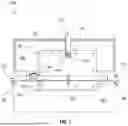


Sources:
- United States Patent and Trademark Office - verify current appl. status at the USPTO↗
Recent applications in this class:
- » 20260098710 2026-04-09
Releasably Engagable System Of Ballistic-Resistant Panels - » 20260063394 2026-03-05
PLATE CARRIER SYSTEM - » 20250264306 2025-08-21
BALLISTIC RESISTANT WALL STRUCTURES - » 20250231011 2025-07-17
ENERGY ABSORBING AND DISPENSING SPACER SYSTEM AND METHOD FOR USE WITH BODY ARMOR PLATE OR PANEL - » 20250216178 2025-07-03
Ballistic-Resistant Garment - » 20250076006 2025-03-06
Deployable Origami Structure - » 20240318941 2024-09-26
Ballistic Vest - » 20240288249 2024-08-29
Mobile System and Method of Protecting from Projectiles - » 20240230280 2024-07-11
HIGH-VISIBILITY BALLISTIC SAFETY VEST - » 20240175662 2024-05-30
BALLISTIC BODY ARMOR JACKET CARRIER WITH BREAKAWAY POCKETS AND A METHOD OF SECURING AND CONCEALING ARMOR PLATE PANELS IN JACKETS