RIFLE CASE SYSTEM
US20260137181A1
2026-05-21
19/309,426
2025-08-25
Smart Summary: A new rifle carrying case system makes it easier to transport rifles and their gear. It includes a utility case for the rifles and a roller case for accessories. Both cases can be connected together, allowing them to be carried as one unit. There is also a docking station that lets the utility case be mounted on a wall for storage. The cases have special hooks and slots that help them attach securely to each other. 🚀 TL;DR
Abstract:
A rifle carrying case system includes a utility case for carrying rifles, a roller case for carrying rifle gear and accessories, and a docking station for mounting the utility case to a support structure such as a wall. The utility case and the roller bag case each include corresponding attachment mechanisms that enable the utility case to be removably coupled to the roller case for easy transit of the cases as a combined single unit. The attachment mechanisms include at least one hook member configured with the roller bag and corresponding slots/protrusions on the utility case that may be engaged by the hooks.
Inventors:
- David Weckerly 9 🇺🇸 Knox, PA, United States
- Zachary Masek 2 🇺🇸 Jackson, WY, United States
Applicant:
Interested in similar patents?
Get notified when new applications in this technology area are published.
Classification:
A45C7/0045 » CPC main
Collapsible or extensible purses, luggage, bags or the like; Rigid or semi-rigid luggage comprising a plurality of separable elements which can be used independently of one another
A45C5/14 » CPC further
Rigid or semi-rigid luggage with built-in rolling means
F41C33/06 » CPC further
Means for wearing or carrying smallarms Containers for carrying smallarms, e.g. safety boxes, gun cases
A45C7/00 IPC
Collapsible or extensible purses, luggage, bags or the like
Description
CROSS REFERENCE
The present disclosure is a continuation-in-part of U.S. Non-Provisional application Ser. No. 18/818,819, entitled “RIFLE CASE SYSTEM” and filed Aug. 29, 2024, which is incorporated herein by reference in its entirety for all purposes.
FIELD OF THE INVENTION
The present invention relates to cases, including a case system for rifles.
BACKGROUND
Carrying cases customized to carry and transport particular items are known throughout the world. For example, some carrying cases have been customized to carry rifles and rifle gear. Such rifle cases may be used by gun enthusiasts to carry firearms as well as ammunition and other accessories to and from shooting ranges, on hunting trips, and so forth.
However, rifle carrying cases are typically somewhat bulky given the large size of the rifles and the amount of necessary gear (e.g., ammunition) that may need to be carried. In addition, multiple cases are typically needed to carry all of the equipment that a gun enthusiast may require. However, managing multiple individual cases all at once during transit of the cases may prove difficult.
Accordingly, there is a need for a rifle carrying case system that consolidates a number of cases together for transit.
SUMMARY
For some embodiments, a carrying case system includes a first carrying case having an outer surface with a ribbed profile in which longitudinal crests of the ribbed profile extend from a side of the first carrying case to form a protrusion outward from the side. A separate component that is removably attachable to the first carrying case includes a retention element that interfaces with the protrusion of the first carrying case when the first carrying case and the separate component are coupled together.
In some embodiments, a method of coupling a first carrying case to another component includes providing a first carrying case having an outer surface with a ribbed profile in which longitudinal crests of the ribbed profile extend from a side of the first carrying case to form a protrusion outward from the side. The method further includes attaching the first carrying case to a separate component such that a retention element of the separate component interfaces with the protrusion of the first carrying case.
BRIEF DESCRIPTION OF THE DRAWINGS
Various other objects, features and attendant advantages of the present invention will become fully appreciated as the same becomes better understood when considered in conjunction with the accompanying drawings, in which like reference characters designate the same or similar parts throughout the several views, and wherein:
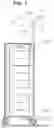
FIG. 1 shows a carrying case system according to exemplary embodiments hereof.
FIGS. 2 and 3 show aspects of a utility case according to exemplary embodiments hereof.
FIGS. 4-8 show aspects of a roller case according to exemplary embodiments hereof.
FIGS. 4-8 show aspects of a roller case according to exemplary embodiments hereof.
FIG. 9 shows aspects of a utility case removably coupled to a roller case according to exemplary embodiments hereof.
FIG. 10 shows aspects of a partition according to exemplary embodiments hereof.
FIGS. 11-12 show aspects of a docking assembly according to exemplary embodiments hereof.
FIG. 13 shows aspects of a utility case configured with a docking assembly according to exemplary embodiments hereof.
FIG. 14 shows aspects of a utility case configured with a docking assembly and of a docking assembly alone according to exemplary embodiments hereof.
FIG. 15 shows aspects of the utility case with a periphery attachment mechanism according to exemplary embodiments hereof.
FIG. 16 shows aspects of the utility case shown in FIG. 15 configured with the docking assembly according to exemplary embodiments hereof.
FIG. 17 shows an enlarged partial view of the periphery attachment mechanism for the utility case shown in FIG. 15 interfaced with the docking assembly according to exemplary embodiments hereof.
FIG. 18 shows aspects of the docking assembly in a side view of a bracket pivotable on a wall mount according to exemplary embodiments hereof.
FIG. 19 shows aspects of the docking assembly in a bottom view of the bracket pivotable on the wall mount according to exemplary embodiments hereof.
FIG. 20 shows aspects of the roller case with a second attachment mechanism for interfacing with the utility case shown in FIG. 15 according to exemplary embodiments hereof.
FIG. 21 shows aspects of the roller case shown in FIG. 20 coupled to the utility case shown in FIG. 15 in a top view according to exemplary embodiments hereof.
FIG. 22 shows aspects of the roller case shown in FIG. 20 coupled to the utility case shown in FIG. 15 in a side view according to exemplary embodiments hereof.
FIG. 23 shows aspects of the roller case shown in FIG. 20 coupled to the utility case shown in FIG. 15 in a partial sectional view according to exemplary embodiments hereof.
DETAILED DESCRIPTION OF THE INVENTION
In general, and according to exemplary embodiments hereof, a carrying case system is provided. The carrying case system includes two or more separate and individual cases that may be combined for transit, as well as a wall mount for storing the cases.
For the purposes of this specification, the carrying case system 10 will be described primarily as a rifle case system for carrying and storing rifles and rifle accessories. However, it is understood that the carrying case system 10 may be used to carry and store any type(s) of items that may benefit from the carrying case system 10 and that the scope of the carrying case system 10 is not limited in any way by the type(s) of items that it may be used with to carry and store.
FIG. 1 shows the carrying case system 10 including a utility case assembly 100, a roller case assembly 200, and a docking assembly 300. In general, the utility case assembly 100 (also referred to herein as a rifle case) may include a case for holding items such as, but not limited to, rifles, and the roller case assembly 200 (also referred to herein as a range case) may include a roller case for holding items such as, but not limited to, firearm accessories. The utility case assembly 100 and the roller case assembly 200 may each include corresponding attachment mechanisms so that the two case assemblies 100, 200 may be coupled together for transit. In this way, a user may utilize the roller case's 200's functionalities (e.g., its telescoping handle and the roller wheels) to easily transport both cases 100, 200 together and in combination. The docking assembly 300 may include wall mounted shelf assembly for storing elements of the carrying case system 10 (also referred to herein as simply the system 10), such as the utility case assembly 100 and/or the roller case assembly 200. The system 10 also may include other elements and components as necessary to fulfill its functionalities.
Utility Case Assembly 100
FIG. 2 shows a perspective view of the utility case assembly 100 closed and FIG. 3 shows a perspective of the utility case assembly 100 opened.
In some embodiments, as shown in FIGS. 2 and 3, the utility case assembly 100 includes a case 102 generally including a left side 104, a right side 106, a rear side 108, a front side 110, a top side 112, and a bottom side 114. The top side 112 may comprise a lid 116 removably coupled to the case's body portion 118. In some embodiments, as shown in FIG. 3, the lid 116 is coupled to the body portion 118 using one or more hinges 120, e.g., on the rear side 108 of the case 102. As shown in FIG. 3, the case 102 includes an inner volume 122 accessible when the lid 116 is opened. When opened, it may be preferable that the lid 116 extend open about 105° from the horizontal plane so that the lid 116 remains open until intentionally closed. In some embodiments, the inner volume 122, e.g., the interior surface of the lid 116 and/or the interior surface of the body portion 118, may include liner materials 132 such as anti-slip dual multilayered foam padding and/or other suitable materials to secure items (e.g., rifles) placed into the case's inner volume 122.
In some embodiments, the case 102 includes a front handle 124 on its front side 110 (e.g., preferably centered between the left and right sides 104, 106), a left handle 126 on its left side 104, and a right handle 128 on its right side 106 (see FIG. 3).
In some embodiments, the case 102 includes one or more locking mechanisms 130 on its front side 110 implemented between the lid 116 and the body portion 118 to lock the lid 116 in a locked position with the body 118 and to unlock the lid 116 from the body 118 so that the lid 116 may be opened. In some embodiments, the locking mechanisms 130 may include latches or other types of locking mechanisms. For example, in some embodiments, the locking mechanisms 130 may include a combination lock with roman numerals and/or other types of locks with other types of combination protocols.
In some embodiments, the case 102 includes one or more first attachment mechanisms 134 that may be used to attach and secure the case 102 to the roller case assembly 200 for transit and storage. In some embodiments, the first attachment mechanisms 134 may interface with corresponding second attachment mechanisms on the roller case assembly 200 as described in other sections. Further details of the first and second attachment mechanisms will be described below.
In some embodiments, the shell of the utility case 102 comprises rubber coated plastic and/or other suitable materials.
Roller Case Assembly 200
FIG. 4 shows a perspective view of the roller case assembly 200 closed and FIG. 5 shows a perspective of the roller case assembly 200 opened.
In some embodiments, as shown in FIGS. 4 and 5, the roller case assembly 200 includes a roller case 202 generally including a left side 204, a right side 206, a rear side 208, a front side 210, a top side 212, and a bottom side 214. The front side 210 may comprise a lid 216 removably coupled to the case's body portion 218. In some embodiments, as shown in FIG. 5, the lid 216 is coupled to the body portion 218 using one or more hinges 220, e.g., on the left side 204 of the case 202. As shown in FIG. 5, the case 202 includes an inner volume 222 accessible when the lid 216 is opened. When opened, it may be preferable that the lid 216 extend open about 105°from the horizontal plane so that the lid 216 remains open until intentionally closed. In some embodiments, the inner volume 222, e.g., the interior surface of the lid 216 and/or the interior surface of the body portion 218, may include liner materials, e.g., the interior surface of the lid 216 may include a woven elastic object retention system, and the interior surface of the body 218 may include anti-slip multilayered foam padding and/or other suitable materials to secure items (e.g., rifle gear) placed into the case's inner volume 222. The roller case system 200 also may include a flexible divider system as described in other sections.
In some embodiments, the case 202 includes a side handle 224 on its right side 206 (e.g., preferably centered between the top and bottom sides 212, 214) and a top handle 226 on its top side 212.
In some embodiments, the case 202 includes one or more locking mechanisms 230 on its right side 206 implemented between the lid 216 and the body portion 218 to lock the lid 216 in a locked position with the body 218 and to unlock the lid 216 from the body 218 so that the lid 216 may be opened. In some embodiments, the locking mechanisms 230 may include latches or other types of locking mechanisms. For example, in some embodiments, the locking mechanisms 130 may include a combination lock with roman numerals and/or other types of locks with other types of combination protocols.
In some embodiments, the roller case assembly 200 includes one or more wheel members 232 (e.g., caster wheels and/or other suitable wheels) to facilitate rolling movement of the case 202.
In some embodiments, the roller case assembly 200 includes an extendable handle system 234 configured on its rear side 208 (and/or on any suitable side of the case 202). FIG. 4 shows the extendable handle system 234 in its retracted position and FIG. 5 shows the extendable handle system 234 in its extended position. The extendable handle system 234 may be telescopic and/or may be extendable using other means.
In some embodiments, as shown in FIG. 6, the extendable handle system 234 includes an extendable support portion 236, e.g., two side-by-side rods or other suitable elongate members that may extend from and/or retract into receiving channels within the case 202 (e.g., within the case's body portion 218). The extendable handle system 234 also may include an upper handle 238 coupled to a distal end of the extendable support portion 236 that the user may grasp to physically manipulate the roller case assembly 200 (e.g., to hold while rolling the case 202 as is known in the art). In use, a user may grip the handle 238 and pull upward to extend the extendable handle system 234 from the cases'body 218 and may subsequently push down on the handle 238 to retract the extendable handle system 234 into the case's body portion 218.
In some embodiments, the extendable support portion 236 may be extended upward a distance of about 1″ to about 24″, and preferably about 6″ to about 18″, and more preferably about 8″ to about 12″.
In some embodiments, as shown in FIGS. 7 and 8, the upper handle 238 may include an upper extendable attachment mechanism 240 and the roller case 202 may include a lower extendable attachment mechanism 242. For clarity, FIGS. 7 and 8 are side sectional views. The upper and lower extendable attachment mechanisms 240, 242 may be each be designed to engage with a particular first attachment mechanism 134 on the utility case 102. In this way, the utility case 102 may be coupled to the roller case 202 using the attachment mechanisms 240, 242, 134.
In some embodiments, the upper extendable attachment mechanism 240 includes a first hook member 244. In some embodiments, the first hook member 244 may be rotatable about a pivot point 245 (e.g., about a dowel or similar configured with the handle 238) such that it may be rotated downward (e.g., clockwise) into a retracted and closed position as shown in FIG. 7, and/or rotated upward (e.g., counterclockwise) into an extended and open position as shown in FIG. 8. The hook member 244 may be rotated manually by grasping the hook member 244 and may be held in its retracted position and/or in its extended position(s) using detents or other suitable holding mechanisms. The hook member 244 also may be spring-loaded such that it may be activated (e.g., by pushing on it, by pushing a button, etc.) to cause the hook member 244 to automatically rotate upward into its extended position and/or downward into its retracted position. It also is contemplated that the hook member 244 may be extended and/or retracted linearly in addition to and/or instead of rotatably, e.g., along a track in and out. As shown in FIG. 8, when the hook member 244 is extended, the hook member 244 may be facing downwards. In addition, it also may be preferable that the hook member 244, whether in its extended position and/or in its retracted position, not obstruct a user from gripping the handle 238. For example, when the hook member 244 is retracted or extended, it may be preferable that an adequate amount of free space is made available between the handle 238 and the hook member 244 (e.g., at least one inch) such that the user may still grip the handle 238 with his/her fingers.
In some embodiments, as shown in FIGS. 7 and 8, the lower extendable attachment mechanism 242 includes a second hook member 246. In some embodiments, the second hook member 246 may slide inward (e.g., linearly) into a retracted and closed position as shown in FIG. 7, and/or outward (e.g., linearly) into an extended and open position as shown in FIG. 8. The hook member 246 may be extended manually by grasping the hook member 246 and held in its retracted position and/or in its extended position(s) using detents or other suitable holding mechanisms. The hook member 246 also may be spring-loaded such that it may be activated (e.g., by pushing on it, by pushing a button, etc.) to cause the hook member 246 to automatically extend outward into its extended position and/or inward into its retracted position. It also is contemplated that the hook member 246 may be extended and/or retracted rotatably in addition to and/or instead of slidably, e.g., about a pivot point.
In some embodiments, as shown in FIG. 2, the one or more first attachment mechanisms 134 configured with the utility case 102 may include one or more slots 136. The one or more slots 136 may be configured on the left side 104 of the case 102 and on the right side 106 of the case 102 (blocked from view in FIG. 2). In some embodiments, the lid 116 may include a slot 136 on the left and right sides 104, 106 and the case's body portion 118 may include a slot 136 on the left and right sides 104, 106. While blocked from view, the slots 136 configured on the right side 106 of the case 102 may generally match the slots 136 on the left side 104 of the case 102 in shape, form, and location on the respective side.
FIG. 9 shows the utility case 102 removably coupled to the roller case 202 by engaging the roller case's upper and lower hooks 244, 246 (both preferably extended) with the utility case's left side slot 136 and right side slot 136, respectively. That is, the utility case's left side slot 136 may receive the roller bag's upper extended hook member 244 and the utility case's right side slot 136 may receive the roller bag's lower extended hook member 246. As shown, with the left and right slots 136 engaged with the upper and lower hook members 244, 246, respectively, the utility case 102 may be locked to the roller case 202.
In some embodiments, the utility case's right side slot 136 (or alternatively its left side slot 136) may be placed onto the roller case's extended lower hook member 246 and the roller case's extendable handle system 234 may be extended to a position that places its upper hook member 244 slightly above the utility case's left side slot 136 (or alternatively its right side slot 136). The utility case 102 may then be properly positioned to place the upper slot 136 directly below the roller case's upper hook member 244 such that the extendable handle system 234 may be lowered thereby engaging the roller case's upper hook member 244 into the utility case's upper slot 136. In this arrangement, the roller case's extendable handle system 234 may be releasably locked in place (e.g., using detents, push rods, etc.) so that the utility case 102 coupled thereto may be held securely in place. Then, when a user wishes to release the utility case 102 from the roller case 202, the roller case's extendable handle system 234 may be unlocked and extended upward to release the utility case 102 therefrom.
In some embodiments, because the utility case 102 may include two slots 134 on each of the left and right sides 104, 106, e.g., one configured in the side of the lid 116 and one configured in the side of the body portion 118, the utility case 102 may be coupled to the roller case 202 with either its top side 112 (as shown in FIG. 9) or with its bottom side 114 facing outward and away from the roller case 202 (depending on whether the left and right lid side slots 134 or the left and right body portion side slots 134 are engaged with the rolling case's upper and hook members 244, 246).
In some embodiments, as shown in FIG. 10 (also see FIG. 5), the system 10 may include one or more adjustable partitions 248 or dividers that may be implemented within the roller case's inner volume 222 to divide the space therein into different sections. In some embodiments, each partition 248 may include two or more sections 250 coupled side-by-side with one another using a flexible joint 252. In some embodiments, each flexible joint 252 may extend from a first edge (e.g., a bottom edge) of the joined sections 250 to an intermediate location between the first edge and a second edge (e.g., the top edge) of the sections 250 (and preferably about midway between the bottom and top edges) thereby leaving a gap 254 extending from the intermediate location to the top edges of the sections 250. As such, in some embodiments, two partitions 248, with the first partition upside down compared to the second partition 248, may be joined together by inserting a lower gap 254 of the first partition 248 into an upper gap 254 of the second partition 248 and then sliding the first and second partitions 248 together until the gap 254 of the first partition 248 overlays the flexible joint 252 of the second partition 248 and the gap 254 of the second partition 248 overlays the flexible joint 252 of the first partition 248. In this arrangement, the first and second partitions 248 may be generally perpendicular to one another, however, it is understood that the partitions 248 also may be flexed and/or angled laterally such that the partitions 248 may be set at other angles with respect to one another.
In some embodiments, the sections 250 of the partitions 248 may be magnetized and/or ferromagnetic. In addition, each partition 248 may include a magnetized and/or ferromagnetic end section (preferably on both far ends) that may be engaged with a corresponding magnetized and/or ferromagnetic section of a joined partition 248 to generally hold the joined partitions 248 together and in place.
In addition, in some embodiments, as shown in FIG. 5, the sidewalls 256 of the roller case's inner volume 222 may include one or more vertical slots 258 designed to receive a far end edge of a given partition 248. In this way, a partition 248 may be inserted into the roller case's inner volume 222 and held in place by the engagement of the partition's far edge within the sidewall slot 258. It also is contemplated that the roller case's inner sidewalls 256 comprise magnetic and/or ferromagnetic materials such that the magnetized and/or ferromagnetic sections of a partition 248 (e.g., a far end section 250 and/or an interior section 250) also may be used to secure a given partition 248 to the case's inner sidewalls 256.
Also, as demonstrated in FIG. 5, because the partitions 248 comprise multiple sections 250 joined by flexible joints 252, the partitions 248 may be bent at any desired joint 252 to form a wide variety of partition shapes.
In some embodiments, the partition 248 may include a MOLLE panel secured to inside the roller case 202, such as by bolts to threaded bores within the roller case 202. The MOLLE panel provides a grid of holes/slots, designed to securely attach various pouches and accessories using a modular system. The sections 250 thus may be inserted into the roller case's inner volume 222 and held in place by engagement with the MOLLE panel.
It is understood that similar such partitions 248 also may be implemented into the inner volume 122 of the utility case 102.
In some embodiments, the shell of the roller case 202 comprises rubber coated plastic and/or other suitable materials.
Docking Assembly 300
FIG. 11 shows a perspective view of the docking assembly 300, FIG. 12, image (1) shows a top view of the assembly 300, and FIG. 12, image (2) shows a front view of the same.
In some embodiments, as shown in FIGS. 11 and 12, the docking assembly 300 includes a bracket 302 generally including a left side defined by a left side wall 304, a right side defined by a right side wall 306, a rear side defined by a rear side wall 308, a front side 310, a generally open top side 312, and a bottom side 314. The bracket 302 may include an inner portion 316 generally defined by the left side wall 304, the right side wall 306, the rear side wall 308, the front side 310, and a lower or bottom surface 318. In some embodiments, the inner portion 316 of the bracket 302 is designed to receive and support a lower portion of the utility case 102, e.g., with the bottom side 114 of the utility case 102 resting on the bracket's lower surface 318 and with the left and right sides 104, 106 of the utility case 102 engaged with the bracket's left and right side walls 304, 306, respectively.
The docking assembly 300 also may include a wall mount 319 coupled to the bracket 302 (e.g., to the bracket's rear side wall 308) to mount the docking assembly 300 to a wall or other type of support structure.
In some embodiments, the docking assembly 300 includes a left side holding member 320 configured with and extending from the left side wall 304 into the inner portion 316, and a right side holding member 320 configured with and extending from the right side wall 306 into the inner portion 316. The left and right holding members 320 may include elongated tabs, posts, buttons, and/or other suitable types of holding members. The left and right holding members 320 may each be depressible inward (e.g., toward each respective left and/or right side wall 304, 306 and away from the inner portion 316). The left and right holding members 320 also may be spring-loaded or otherwise biased in the outward direction away from each respective left and/or right side wall 304, 306 and toward the inner portion 316. In this way, when the left or right side holding member 320 is pressed inward, it may automatically return to its extended position upon release.
In some embodiments, the left side holding member 320 is designed to engage with the utility case's left side first attachment mechanism(s) 134 and the right side holding member 320 is designed to engage with the utility case's right side attachment mechanism(s) 134 when the utility case 102 is received into the docking assembly's inner portion 316.
In some embodiments, the utility case's left and right side first attachment mechanisms 134 include left and right side slots 136 (see FIG. 2), and the docking assembly's left and right side holding members 320 are designed to be received into the left and right side slots 136, respectively, when utility case 102 is received into the docking assembly's inner portion 316.
In some embodiments, the left and right side holding members 320 may be depressed to accommodate loading the utility case 102 into the docking assembly's inner portion 316, and then subsequently released to extend into each respective slot 136. In some embodiments, the holding members 320 each include a front end 322 facing the assembly's front side 310, and a rear end 324 facing the assembly's rear wall 308. In some embodiments, the front ends 322 and/or the rear ends 324 of the left and right holding members 320 are each tapered inward thereby each forming a wedge-shaped receiving edge.
In some embodiments, when the utility case 102 is inserted into the docking assembly's inner portion 316 from the front 310 of the assembly 300 in the direction of the arrows D (FIG. 12, image (1)), the utility case's left and right sides 104, 106 may initially engage the front ends 322 of the left and right holding members 320, respectively. As the utility case 102 is moved further into the assembly's inner portion 316, the case's left and right sides 104, 106 may ride along the wedge-shaped front ends 322 of the left and right holding members 320, respectively, thereby causing the left and right holding members 320 to each depress. This may continue until the utility case 102 is fully inserted into the assembly's inner portion 316 at which time the left and right holding members 320 may be aligned with the case's left and right slots 136, respectively, such that the holding members 320 may be released from their depressed states and may each be received into a respective slot 136. This may lock the utility case 102 within the inner portion 316 of the docking assembly 300.
In some embodiments, to remove the utility case 102 from the above-described locked position, the case 102 may be pulled forward in a generally opposite direction to the arrows D. When this happens, the rear sidewalls within each slot 136 may engage and ride along the holding members'wedge-shaped rear ends 324 thereby causing the left and right holding members 320 to each depress and allow the case 102 to be removed out the front 310 of the assembly's inner portion 316.
In some embodiments, it may be preferable that the shape and form of the left and right holding members 320 and of the left and right slots 136 be such that once the left and right holding members 320 are received into respective left and right slots 136 on the utility case 102, that the utility case 102 may only be removed from the docking assembly 300 by moving the utility case 102 forward and towards the front 310 of the docking assembly 300 (e.g., in the direction opposite the arrows D in FIG. 12. That is, it may be preferable that the case 102 may not be removed from the docking assembly 300 by lifting the case 102 upward in a direction generally away from, e.g., perpendicular to, the docking assembly's lower surface 318. This may be accomplished by providing sufficiently sharp edges on the slots 136 and on the portions of the holding members 320 between the front and rear ends 322, 324. In some embodiments, however, it is contemplated that the utility case 102 may be inserted into the docking assembly's inner portion 316 from above, wherein the bottom edges of the case 102 on the left and right sides 104, 106 may engage with and cause the docking assembly's holding members 320 to depress. However, it is preferable that the utility case 102 may not be removed from the inner portion 316 by reversing this motion.
In some embodiments, as shown in FIGS. 11-14, the docking assembly 300 includes a locking assembly 326 configured to lock and/or unlock a utility case 102 within the assembly's inner portion 316. FIGS. 11, 12 and 13 show the locking assembly 326 in a locked configuration with FIG. 13 showing the utility case 102 held within the assembly's inner portion 316, and FIG. 14 shows the locking assembly 326 unlocked and with the utility case 102 held within the assembly's inner portion 316.
In some embodiments, as shown in FIGS. 11-14, the locking assembly 326 includes a locking tab 328 extendable upwards and/or downwards at or near the assembly's front side 310 (preferably about midway between the left and right sidewalls 304, 306). As shown in FIG. 13, when the locking tab 328 is extended upward, the locking tab 328 may obstruct movement of a utility case 102 in a direction generally opposite the arrows D in FIG. 12. As such, with its movement obstructed, the case 102 may not be removable from the docking assembly's inner portion 316. However, when the locking tab 328 is retracted (e.g., lowered), as shown in FIG. 14, the locking tab 328 may no longer be obstructive and the utility case 102 may be removed from the assembly 300 (by moving the case 102 in a direction generally opposite the arrows D in FIG. 12).
In some embodiments, the locking assembly 326 includes an activation mechanism that may be implemented to cause the extension and/or retraction (i.e., the locking and unlocking) of the locking tab 328. For example, the activation mechanism may include a combination lock, a key lock, a retina scanner, a fingerprint scanner, a voice recognition system, other types of activation mechanisms, and/or any combinations thereof. When the locking tab 328 is locked, it may not be depressible and may be held fixedly in the extended upright position, and when the locking tab 328 is unlocked, it may be depressible such that a user may press the locking tab 328 downward. In other embodiments, when activated into the locked position, the locking tab 328 may automatically extend, and when activated into the unlocked position, the locking tab 328 may automatically retract.
In some embodiments, the docking assembly 300 comprises powder coated stainless steel (e.g., 12 GA powder coated 316 stainless steel) and/or other suitable materials.
FIG. 15 shows the utility case 102 with the first attachment mechanism 134 disposed along a periphery of the body portion 118. The first attachment mechanism 134 includes a plurality of protrusions 152 that in some embodiments correspond with terminus of longitudinal crests 150 of a ribbed profile forming the body portion 118. The ribbed profile of the body portion 118 includes the longitudinal crests 150 that terminate at each side of the body portion 118 and are separated by interleaved longitudinal valleys 151. With the arrangement of the first attachment mechanism 134 depicted in FIG. 15, a center of the side of the body portion 118 except for the protrusions 152 may hence define a large slot that extends all the way to the periphery where the protrusions 152 are located. For some embodiments, the protrusions 152 thus may be created by recesses along sides of the body portion 118 or any number of extensions from the body portion 118 that are like the protrusions 152. The protrusions 152 may result from extension of the longitudinal crests 150 at least 2 millimeters, such as 3-4 millimeters, beyond termination of the longitudinal valleys 151 at each side of the body portion 118.
FIG. 16 illustrates the utility case 102 shown in FIG. 15 coupled with the docking assembly 300. As shown by an enlarged partial view in FIG. 17, the docking assembly 300 includes the left and right side holding members 320 shaped as elongated tabs to interface with the protrusions 152 forming the first attachment mechanism 134 on the utility case 102. In use, the utility case 102 may slide in and/or out of the docking assembly 300 when the docking assembly 300 is unlocked by the locking assembly 326 as described above. In some embodiments, the locking assembly 326 displaces when unlocked out of interference of the utility case 102 without relying on retractable elements or separate actuation.
FIG. 18 depicts a side view of the docking assembly 300 with the bracket 302 pivotable on the wall mount 319. The bracket 302 couples to the wall mount 319 at pivots 380, such as two swivel connections on opposite sides of wall mount 319 as visible from a bottom view in FIG. 19. One or more apertures 383 in the wall mount 319 offset from the pivots 380 capture one or more retractable pins 382. The retractable pins 382 biased to be positioned in the apertures 383 thereby prevents the bracket 302 from pivoting relative to the wall mount 319 to maintain the bracket 302 in an outward position that may be perpendicular to the wall. A handle 384 accessible to a user from the front of the bracket 302 connects to a cable 386 coupled to the retractable pins 382 to overcome the bias for selective retraction of the retractable pins 382 from within the apertures 383. The retraction of the retractable pins 382, permits the bracket 302 to rotate at the pivots 380 such that the bracket 302 alone or the bracket 302 and the utility case 102 together may move to a folded position that may be parallel to wall or at least more parallel to the wall than the outward position.
FIG. 20 shows the roller case 202 with the second attachment mechanism including the second hook member 246 for interfacing with the utility case 102 shown in FIG. 15. In some embodiments, the second hook member 246 may be formed integral with, or molded into, the outside of the roller case 202 or be provided by one more ledge inserts 280. The ledge inserts 280 shown as three secure, such as by bolts, to the roller case 202 outside on the side of the roller case 202 at the lower end
By the Wheel Members 232.
In some embodiments, the roller case 202 also includes a ribbed profile with mating crests 281 and mating valleys 282 that correspond in shape to the longitudinal crests and valleys 150, 151 of the utility case 102. The ledge inserts 280 of the roller case 202 may fit within one or more of the mating valleys 282. The ledge inserts 280 may not extend outward past the mating valleys 282 to limit the ledge inserts 280 including the upward facing hook feature (see, FIG. 23) that creates the second hook member 246 from catching onto unintended extraneous objects.
FIGS. 21-22 illustrate the roller case 202 shown in FIG. 20 coupled to the utility case 102 shown in FIG. 15 respectively in a top view and a side view. The mating crests and valleys 281, 282 of the roller case 202 mesh respectively with the longitudinal valleys and crests 151,150 of the utility case 102. The meshing limits lateral movements of the utility case 102 relative to the roller case 202 when coupled together.
FIG. 23 depicts a partial cross-section of the utility case 102 and roller case 202 when coupled together as taken across line 23-23 of FIG. 21. The protrusions 152 of the utility case 102 extend into open chambers formed between the outside surface of the roller case 202 and upward hooking parts of the ledge inserts 280. Gravity facilitates holding the utility case 102 with the protrusions 152 trapped into interface with the ledge inserts 280.
For some embodiments, the utility case 102 may include an upper retention magnet 175 and/or the roller case 202 may include an upper attracting magnet 275. The upper retention and attracting magnets 175, 275 may facilitate keeping the utility and roller cases 102, 202 coupled together by being attracted to each other. Only one of the upper retention and attracting magnets 175, 275 may be needed when the material forming the other of the utility and roller cases 102, 202 is ferromagnetic. Location of the upper retention and attracting magnets 175, 275 being aligned with each other and distal to the ledge inserts 280 disposed on the opposite end of the roller case 202 further provides for secure coupling of the utility and roller cases 102, 202 together.
As described herein, the protrusions 152 of the utility case 102 thus enable coupling the utility case 102 with another component, such as the roller case 202 and/or the docking assembly 300, having a retention element such as the second hook member 246 or the side holding members 320 configured to interface with the protrusions 152.
It is understood that any details and/or aspects of any embodiments of the carrying case system 10 described herein may be combined with any details and/or aspects of any other embodiments of the carrying case system 10 in any way to form additional embodiment(s) of the carrying case system 10 all of which are within the scope of the carrying case system 10.
Where a process is described herein, those of ordinary skill in the art will appreciate that the process may operate without any user intervention. In another embodiment, the process includes some human intervention (e.g., a step is performed by or with the assistance of a human).
As used herein, including in the claims, the phrase “at least some” means “one or more,” and includes the case of only one. Thus, e.g., the phrase “at least some ABCs” means “one or more ABCs” and includes the case of only one ABC.
As used herein, including in the claims, term “at least one” should be understood as meaning “one or more”, and therefore includes both embodiments that include one or multiple components. Furthermore, dependent claims that refer to independent claims that describe features with “at least one” have the same meaning, both when the feature is referred to as “the” and “the at least one”.
As used in this description, the term “portion” means some or all. So, for example, “A portion of X” may include some of “X” or all of “X”. In the context of a conversation, the term “portion” means some or all of the conversation.
As used herein, including in the claims, the phrase “using” means “using at least,” and is not exclusive. Thus, e.g., the phrase “using X” means “using at least X.” Unless specifically stated by use of the word “only”, the phrase “using X” does not mean “using only X.”
As used herein, including in the claims, the phrase “based on” means “based in part on” or “based, at least in part, on,” and is not exclusive. Thus, e.g., the phrase “based on factor X” means “based in part on factor X” or “based, at least in part, on factor X.” Unless specifically stated by use of the word “only”, the phrase “based on X” does not mean “based only on X.”
In general, as used herein, including in the claims, unless the word “only” is specifically used in a phrase, it should not be read into that phrase.
As used herein, including in the claims, the phrase “distinct” means “at least partially distinct.” Unless specifically stated, distinct does not mean fully distinct. Thus, e.g., the phrase, “X is distinct from Y” means that “X is at least partially distinct from Y,” and does not mean that “X is fully distinct from Y.” Thus, as used herein, including in the claims, the phrase “X is distinct from Y” means that X differs from Y in at least some way.
It should be appreciated that the words “first,” “second,” and so on, in the description and claims, are used to distinguish or identify, and not to show a serial or numerical limitation. Similarly, letter labels (e.g., “(A)”, “(B)”, “(C)”, and so on, or “(a)”, “(b)”, and so on) and/or numbers (e.g., “(i)”, “(ii)”, and so on) are used to assist in readability and to help distinguish and / or identify, and are not intended to be otherwise limiting or to impose or imply any serial or numerical limitations or orderings. Similarly, words such as “particular,” “specific,” “certain,” and “given,” in the description and claims, if used, are to distinguish or identify, and are not intended to be otherwise limiting.
As used herein, including in the claims, the terms “multiple” and “plurality” mean “two or more,” and include the case of “two.” Thus, e.g., the phrase “multiple ABCs,” means “two or more ABCs,” and includes “two ABCs.” Similarly, e.g., the phrase “multiple PQRs,” means “two or more PQRs,” and includes “two PQRs.”
The present invention also covers the exact terms, features, values and ranges, etc. in case these terms, features, values and ranges etc. are used in conjunction with terms such as about, around, generally, substantially, essentially, at least etc. (i.e., “about 3” or “approximately 3” shall also cover exactly 3 or “substantially constant” shall also cover exactly constant).
As used herein, including in the claims, singular forms of terms are to be construed as also including the plural form and vice versa, unless the context indicates otherwise. Thus, it should be noted that as used herein, the singular forms “a,” “an,” and “the” include plural references unless the context clearly dictates otherwise.
Throughout the description and claims, the terms “comprise”, “including”, “having”, and “contain” and their variations should be understood as meaning “including but not limited to”, and are not intended to exclude other components unless specifically so stated.
It will be appreciated that variations to the embodiments of the invention can be made while still falling within the scope of the invention. Alternative features serving the same, equivalent or similar purpose can replace features disclosed in the specification, unless stated otherwise. Thus, unless stated otherwise, each feature disclosed represents one example of a generic series of equivalent or similar features.
The present invention also covers the exact terms, features, values and ranges, etc. in case these terms, features, values and ranges etc. are used in conjunction with terms such as about, around, generally, substantially, essentially, at least etc. (i.e., “about 3” shall also cover exactly 3 or “substantially constant” shall also cover exactly constant).
Use of exemplary language, such as “for instance”, “such as”, “for example” (“e.g.,”) and the like, is merely intended to better illustrate the invention and does not indicate a limitation on the scope of the invention unless specifically so claimed.
While the invention has been described in connection with what is presently considered to be the most practical and preferred embodiments, it is to be understood that the invention is not to be limited to the disclosed embodiment, but on the contrary, is intended to cover various modifications and equivalent arrangements included within the spirit and scope of the appended claims.
Claims
1. A carrying case system, comprising:
a first carrying case having an outer surface with a ribbed profile in which longitudinal crests of the ribbed profile extend from a side of the first carrying case to form a protrusion outward from the side; and
a separate component that is removably attachable to the first carrying case and includes a retention element that interfaces with the protrusion of the first carrying case when the first carrying case and the separate component are coupled together.
2. The carrying case system of claim 1, wherein the separate component includes a second carrying case having wheels.
3. The carrying case system of claim 1, wherein the separate component includes a docking assembly for hanging the first carrying case on a wall.
4. The carrying case system of claim 1, wherein the separate component includes a docking assembly for hanging the first carrying case on a wall, and further comprising a second carrying case that is also removably attachable to the first carrying case and includes a hook member that interfaces with the protrusion of the first carrying case when the first and second carrying cases are coupled together.
5. The carrying case system of claim 1, wherein the separate component includes a docking assembly having a bracket that is pivotably coupled to a wall mount and configured to support the first carrying case on a wall.
6. The carrying case system of claim 1, wherein the separate component includes a docking assembly capable of supporting the first carrying case selectively in an outward position perpendicular to a wall and a folded position with the first carrying case moved more parallel to the wall relative to the outward position.
7. The carrying case system of claim 1, wherein the separate component includes a second carrying case having an exterior with mating valleys and crests corresponding to the longitudinal crests and longitudinal valleys forming the ribbed profile of the first carrying case.
8. The carrying case system of claim 7, wherein the retention element includes a ledge insert disposed in the mating valleys to hook the protrusion of the first carrying case.
9. The carrying case system of claim 1, further comprising a magnet attracting the first carrying case to the separate component.
10. The carrying case system of claim 1, wherein the retention element includes a ledge proximate a first end of the separate component to hook the protrusion of the first carrying case and further comprising a magnet attracting the first carrying case to the separate component at a second end of the separate component opposite the first end.
11. A method of coupling a first carrying case to another component, comprising:
providing a first carrying case having an outer surface with a ribbed profile in which longitudinal crests of the ribbed profile extend from a side of the first carrying case to form a protrusion outward from the side; and
attaching the first carrying case to a separate component such that a retention element of the separate component interfaces with the protrusion of the first carrying case.
12. The method of claim 11, further comprising moving the first carrying case and the separate component together using wheels of the separate component that is a second carrying case.
13. The method of claim 11, wherein the attaching the first carrying case to the separate component hangs the first carrying case on a wall.
14. The method of claim 11, wherein the attaching the first carrying case to the separate component hangs the first carrying case on a wall, and further comprising removing the first carrying from the separate component and attaching the first carrying case to a second carrying case such that a hook member interfaces with the protrusion of the first carrying case.
15. The method of claim 11, wherein the separate component includes a docking assembly having a bracket and a wall mount supporting the first carrying case on a wall and further comprising pivoting the bracket relative to the wall mount.
16. The method of claim 11, wherein the separate component includes a docking assembly supporting the first carrying case and further comprising moving the docking assembly between an outward position with the first carrying case perpendicular to a wall and a folded position with the first carrying case moved more parallel to the wall relative to the outward position.
17. The method of claim 11, wherein the attaching the first carrying case to the separate component includes mating an exterior of a second carrying case having corresponding valleys and crests to the longitudinal crests and longitudinal valleys forming the ribbed profile of the first carrying case.
18. The method of claim 17, wherein the retention element includes a ledge insert disposed in the corresponding valleys to hook the protrusion of the first carrying case.
19. The method of claim 11, further comprising attracting the first carrying case to the separate component with a magnet.
20. The method of claim 11, wherein the attaching the first carrying case to the separate component includes hooking the protrusion into a ledge of the retention element proximate a first end of the separate component and further comprising attracting the first carrying case to the separate component with a magnet at a second end of the separate component opposite the first end.
Images & Drawings included:




Sources:
- United States Patent and Trademark Office - verify current appl. status at the USPTO↗
Similar patent applications:
- » 20260063387
RIFLE CASE SYSTEM
Recent applications in this class:
- » 20240381988 2024-11-21
LUGGAGE WITH DETACHABLE AND STACKABLE COMPARTMENTS, INVERTIBLE SEPARATOR, AND AIR PACKS TO OCCUPY EMPTY SPACE AND SECURE CONTENTS - » 20240074556 2024-03-07
LUGGAGE SYSTEMS - » 20220408890 2022-12-29
MULTIFUNCTIONAL OPEN-CLOSE TYPE TOOL KIT - » 20220079311 2022-03-17
LUGGAGE SYSTEMS - » 20210378373 2021-12-09
Luggage Coupling Assembly - » 20210282515 2021-09-16
Removable storage pouch assembly - » 20200275749 2020-09-03
One plus two travel case - » 20200205533 2020-07-02
Connectable suitcase - » 20200178661 2020-06-11
Interconnecting luggage system - » 20200060400 2020-02-27
Multi-compartment deflatable carryon baggage