POLYLACTIC ACID RESIN WITH IMPROVED MELTABILITY AND REACTIVITY, AND METHOD FOR PREPARING THE SAME
US20260139094A1
2026-05-21
19/119,732
2024-06-26
Smart Summary: A new type of polylactic acid resin has been developed that melts and flows better than previous versions. By treating this resin with water, its melt index can be increased, making it easier to work with. This method also enhances the resin's reactivity, allowing it to mix well with different additives. As a result, the resin can be used in a wider range of applications. Overall, these improvements make the resin more versatile and user-friendly. 🚀 TL;DR
Abstract:
A polylactic acid resin and a method for preparing same, the polylactic acid resin having the feature that the melt index of the polylactic acid resin can be increased and the flowability can be improved through a simple method of treating the polylactic acid resin with water. The method also makes it possible to improve the reactivity of the polylactic acid resin and improves its compatibility with various additives, thereby expanding the application fields of the polylactic acid resin.
Inventors:
- Wan Kyu OH 23 🇰🇷 Daejeon, South Korea
- Doyun LEE 2 🇰🇷 Daejeon, South Korea
- Won Hee WOO 9 🇰🇷 Daejeon, South Korea
Applicant:
Interested in similar patents?
Get notified when new applications in this technology area are published.
Classification:
C08G63/88 » CPC main
Macromolecular compounds obtained by reactions forming a carboxylic ester link in the main chain of the macromolecule Post-polymerisation treatment
C08G63/08 » CPC further
Macromolecular compounds obtained by reactions forming a carboxylic ester link in the main chain of the macromolecule; Polyesters derived from hydroxycarboxylic acids or from polycarboxylic acids and polyhydroxy compounds derived from hydroxycarboxylic acids Lactones or lactides
Description
CROSS-REFERENCE TO RELATED APPLICATION(S)
This application is a National Stage Application of International Application No. PCT/KR2024/008850 filed on Jun. 26, 2024, which claims priority to and the benefit of Korean Patent Application No. 10-2023-0087615 filed on Jul. 6, 2023 in the Korean Intellectual Property Office, the disclosure of which is incorporated herein by reference in its entirety.
TECHNICAL FIELD
The present disclosure relates to a polylactic acid resin with improved meltability and reactivity and a method for preparing the same.
BACKGROUND
Polylactic acid (PLA) is a plant-derived resin obtained from plants such as corn, and is receiving attention as an excellent eco-friendly material due to its biodegradable properties. Unlike petroleum-based resins such as polystyrene resins, polyvinyl chloride resins, or polyethylene resins, which are currently used, polylactic acid has effects of preventing depletion of petroleum-based resources and suppressing carbon dioxide emissions, and therefore, may reduce environmental pollution, which is a disadvantage of petroleum-based plastic products.
As environmental pollution caused by waste plastics and the like has emerged as social problems, efforts have been made to expand the application range of polylactic acid to various fields, including food packing materials and containers, electronic product cases, etc., to which general plastics (petroleum-based resins) have been applied.
Polylactic acid has a diverse range of melt index (MI) required according to the product to be produced. Among them, polylactic acid with a high melt index may be required, and for example, polylactic acid with a high melt index (500-3000 g/10 min @230° C.) is required to produce melt-blown nonwoven fabrics. However, since the melt index of the polylactic acid generally prepared by a commercial process has the range of 5 to 200 g/10 min (as measured at 230° C. under 2.16 kg according to ASTM D1238), polymerization of a polylactic acid with high melt index described above is not easy by conventional methods.
There are various reasons why polymerization of polylactic acid with high flowability is difficult, but typically, a process of removing volatile substances such as residual monomers after polymerization of a polylactic acid (devolatilization process) is essentially included, but there is a problem that part of a polylactic acid with high flowability may evaporate together, which may make the process not smooth, and it is difficult to form pellets during the pelletizing process. In addition, the polylactic acid synthesized by a conventional polymerization method has low acid value, which limits post-processing and/or modification. For example, there is a problem that reaction with chain extenders or branching agents is decreased.
Therefore, the present inventors have conducted extensive research to solve the above problems, and as a result, found that by treating the prepared polylactic acid with distilled water as described below, it is possible to increase the melt index and simultaneously improve its flowability, thereby preparing a polylactic acid with high flowability, and completed the present disclosure.
DETAILED DESCRIPTION OF THE INVENTION
Technical Problem
It is an object of the present disclosure to provide a polylactic acid resin with improved meltability and reactivity and a method for preparing the same.
Technical Solution
In order to achieve the above object, according to the present disclosure, provided is a polylactic acid resin having the following features:
-
- a melt index of 300 to 3000 g/10 min, as measured at 230° C. under 2.16 kg according to ASTM D1238,
- an acid value of 20 to 100 mmol acid/kg, and
- an inorganic impurity content of 100 mg/kg or less.
The polylactic acid resin according to the present disclosure is characterized by increasing the melt index and simultaneously improving the flowability by the preparation method described below, and the polylactic acid resin is also characterized in that it contains almost no inorganic impurities because no other chemicals or catalysts are used in the preparation method.
Preferably, the weight average molecular weight of the polylactic acid resin is 50,000 to 100,000 g/mol.
Preferably, the melt index is 400 g/10 min or more, 500 g/10 min or more, 600 g/10 min or more, 700 g/10 min or more, 800 g/10 min or more, 900 g/10 min or more, or 1000 g/10 min or more; and 2900 g/10 min or less, 2800 g/10 min or less, 2700 g/10 min or less, 2600 g/10 min or less, 2500 g/10 min or less, 2400 g/10 min or less, 2300 g/10 min or less, 2200 g/10 min or less, 2100 g/10 min or less, or 2000 g/10 min or less.
Preferably, the acid value is 30 mmol acid/kg or more; 90 mmol acid/kg or less, 80 mmol acid/kg or less, 70 mmol acid/kg or less, or 60 mmol acid/kg or less.
Preferably, the inorganic impurity is Sn and P, and the total amount of Sn and P is 85 mg/kg or less. In addition, preferably, the inorganic impurity is Na, Zn, Ti, Al, Ag, Mg, Mn, Ba, Ca, Co, Cr, Cu, Fe, Ga, K, Li, Ni, Sb, Sr, V, and Zr, and the total amount of Na, Zn, Ti, Al, Ag, Mg, Mn, Ba, Ca, Co, Cr, Cu, Fe, Ga, K, Li, Ni, Sb, Sr, V, and Zr is 10 mg/kg or less.
In addition, according to the present disclosure, provided is a method for preparing the above-mentioned polylactic acid resin, the method comprising the steps of:
-
- immersing the polylactic acid resin in water (step 1);
- maintaining the temperature of the water in the step 1 at 65 to 99° C. (step 2); and
- recovering the polylactic acid resin from the water (step 3).
The present disclosure is characterized in that, through a simple method for treating polylactic acid, which is generally prepared by a commercial process, with water, it is possible to increase the melt index of the polylactic acid and simultaneously improve its flowability. Hereinafter, the present disclosure will be described in detail step by step.
(Step 1)
Step 1 of the present disclosure is a step of immersing the polylactic acid resin in water, which is a step of preparing the hydrolysis of the polylactic acid.
The polylactic acid resin used in the step 1 is generally prepared by a commercialized process, and preferably has a melt index of 5 to 200 g/10 min (as measured at 230° C. under 2.16 kg according to ASTM D1238). In other words, the present disclosure prepares a polylactic acid resin with high flowability by hydrolyzing a general polylactic acid resin with low flowability as described below, instead of polymerizing a polylactic acid resin with high flowability.
Preferably, a weight average molecular weight of the polylactic acid resin used in the step 1 is 100,000 to 250,000 g/mol. More preferably, the weight average molecular weight of the polylactic acid resin is 110,000 or more; and 240,000 or less, 230,000 or less, 220,000 or less, 210,000 or less, 200,000 or less, 190,000 or less, 180,000 or less, 170,000 or less, 160,000 or less, or 150,000 or less.
Preferably, the melt index of the polylactic acid resin of the step 1 (as measured at 230° C. under 2.16 kg according to ASTM D1238) is 10 g/10 min or more, 20 g/10 min or more, 30 g/10 min or more, 40 g/10 min or more, 50 g/10 min or more, 60 g/10 min or more, 70 g/10 min or more, 80 g/10 min or more, 90 g/10 min or more, or 100 g/10 min or more; and 190 g/10 min or less, 180 g/10 min or less, 170 g/10 min or less, 160 g/10 min or less, 150 g/10 min or less, or 140 g/10 min or less.
Preferably, the water is distilled water. Preferably, the weight ratio of the polylactic acid resin and the water in the step 1 is 1:0.1 to 1:10. More preferably, the weight ratio of the polylactic acid resin and the water in the step 1 is 1:0.2 or more, 1:0.3 or more, or 1:0.4 or more; and 1:9 or less, 1:8 or less, 1:7 or less, 1:6 or less, 1:5 or less, 1:4 or less, 1:3 or less, 1:2 or less, or 1:1 or less.
On the other hand, since the polylactic acid resin is added to water, it is preferably used in the form of pellets. The pellets are not particularly limited as long as they have a shape widely used in the technical field to which the present disclosure pertains.
(Step 2)
Step 2 of the present disclosure is a step of maintaining the temperature of the water in the step 1 at 65 to 99° C., which is a step of hydrolyzing the polylactic acid resin.
The ‘hydrolyzing polylactic acid resin’ means hydrolyzing a part of polylactic acid resin, and in particular, hydrolyzing a part of a polylactic acid resin with low flowability. This improves the flowability of the polylactic acid resin as a whole.
Preferably, the temperature of the water in the step 1 is maintained at 66° C. or more, 67° C. or more, 68° C. or more, 69° C. or more, or 70° C. or more; and 98° C. or less, 98° C. or less, 97° C. or less, 96° C. or less, 95° C. or less, 94° C. or less, 93° C. or less, 92° C. or less, or 91° C. or less.
Preferably, the step 2 is carried out under a normal pressure. The normal pressure means 1 atm±0.1 atm.
Preferably, the step 2 is carried out for 0.5 to 24 hours. If the time required for carrying out the step is less than 0.5 hours, the hydrolysis occurs too little and the improvement in flowability is slight. Conversely, if the time required for carrying out the step is more than 24 hours, there is a problem that the hydrolysis occurs too much and the flowability is too high. More preferably, the step 2 is carried out for 1 hour or more; and 22 hours or less, 20 hours or less, 18 hours or less, 16 hours or less, 14 hours or less, 12 hours or less, or 10 hours or less.
(Step 3)
Step 3 of the present disclosure is a step of recovering the polylactic acid resin from the water after the treatment of the step 2.
Since the polylactic acid resin has been in contact with high-temperature water for a long time, it is preferably cooled at a fast rate. Therefore, the polylactic acid resin recovered in the step 3 is preferably cooled to 10° C. to 20° C. For this purpose, it is preferable to bring it into contact with cold water of 10° C. or less.
Further, for subsequent finishing of the polylactic acid resin, it is preferable to sufficiently remove even small amounts of water, and for this purpose, it is preferable to dry under reduced pressure. Preferably, it is preferable to dry so that the moisture content of the polylactic acid resin becomes 100 ppmw or less.
The drying method is not particularly limited, but as an example, it is preferable to dry under reduced pressure at 25° C. to 35° C. until the moisture content of the polylactic acid resin becomes 5,000 ppmw or less, and then dry under reduced pressure at 80 to 90° C. until the moisture content becomes 100 ppmw or less. If the moisture content exceeds 5,000 ppmw, hydrolysis may further progress when drying under reduced pressure at 80 to 90° C., and there is also a problem that it takes too long for the moisture content to reach 100 ppmw when drying under reduced pressure at 25° C. to 35° C.
The polylactic acid resin recovered in the step 3 is characterized by having an increased melt index and improved flowability compared to a polylactic acid resin before treatment.
Preferably, the weight average molecular weight of the polylactic acid resin recovered in the step 3 is 50,000 to 100,000 g/mol.
Preferably, the melt index of the polylactic acid resin recovered in the step 3 is 300 to 3000 g/10 min (as measured at 230° C. under 2.16 kg according to ASTM D1238).
Preferably, the preparation method according to the present disclosure satisfies the following Mathematical Formula 1:
3. ≤ M I 1 / M I 0 ≤ 24 [ Mathematical Formula 1 ]
-
- wherein in Mathematical Formula 1:
- MI0 is the melt index of the polylactic acid resin of the step 1 (as measured at 230° C. under 2.16 kg according to ASTM D1238); and
- MI1 is the melt index of the polylactic acid resin recovered in the step 3 (as measured at 230° C. under 2.16 kg according to ASTM D1238).
Preferably, the preparation method according to the present disclosure satisfies the following Mathematical Formula 2:
4.5 ≤ M I 1 / M I 0 ≤ 24 [ Mathematical Formula 2 ]
-
- wherein in the Mathematical Formula 2, MI0 and MI1 are as defined in Mathematical Formula 1.
Advantageous Effects
As set forth above, a preparation method according to the present disclosure has the feature that the melt index of a polylactic acid resin can be increased and the flowability can be improved through a simple method of treating a polylactic acid resin with water.
BRIEF DESCRIPTION OF THE DRAWINGS
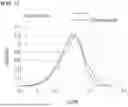
FIGS. 1 and 2 show the results of Experimental Examples of the present disclosure.
DETAILED DESCRIPTION OF THE EMBODIMENTS
Hereinafter, exemplary embodiments of the present disclosure will be described in more detail with reference to the following examples. However, the following examples are provided for illustrative purposes only, and the scope of the present disclosure is not intended to be limited thereby.
In the following examples and experimental examples, each physical property was measured as follows
-
- Flowability (MI; melt index): measured at 230° C. under 1.2 kg according to ASTM D1238.
- Acid value measurement: Polylactic acid resin (1.5 g) was sufficiently dissolved in CHCl3 (60 mL), and then titrated with 0.01 N KOH in EtOH solution to measure and convert the acid value of each resin. At this time, the unit of acid value was [mmol Acid/kg PLA]. Specifically, the membrane portion (opaque white portion) of the electrode and the titration solution tube were set to be always immersed in the solution. The acid value of the polylactic acid resin was calculated by converting the amount of KOH used.
- Weight average molecular weight (Mw), number average molecular weight (Mn), and molecular weight distribution (PDI, polydispersity index): The weight average molecular weight and the number average molecular weight were measured by calibrating with PC standard using Agilent 12000 series GPC. In addition, the value obtained by dividing the weight average molecular weight by the number average molecular weight was calculated as the molecular weight distribution (PDI).
Example 1
Polylactic acid (Mw: 116,700 g/mol; PDI: 1.88, MI: 120 g/10 min) pellets (30 kg) were placed in a 50 L SUS container A and vacuum-dried overnight at 110° C. At this time, the shape of the pellets was a spherical or egg shape with a diameter of 3 mm to 5 mm.
Distilled water (15 kg) of 95° C. was added to a container A containing vacuum-dried pellets, and the mixture was stirred and then placed in an oven preheated to the same temperature as the added distilled water, and maintained for 2.5 hours. After completion, excess water of 10° C. or less was poured into a container A containing the mixture, and the mixture was rapidly cooled to 10-20° C. The cooled pellets were separated from the water using a strainer, and then dried under reduced pressure at 30° C. for 8 to 24 hours so that the moisture content became 5,000 ppm or less. Then, the pellets having a moisture content of 5,000 ppm or less were dried under reduced pressure at 85° C. for 8 to 24 hours so that the moisture content became 100 ppm or less. The weight average molecular weight, molecular weight distribution, MI, and acid value of the obtained pellets were measured, and shown in Table 1 below.
Examples 2 to 4
The polylactic acid pellets were treated in the same manner as in Example 1, except that the temperature of the distilled water and/or the time maintained in the oven were changed as shown in Table 1 below.
Comparative Example
Polylactic acid (Mw: 116,700 g/mol; PDI: 1.88, MI: 120 g/10 min) pellets that were not separately treated were used as comparative examples.
Experimental Example 1
The weight average molecular weight, molecular weight distribution, MI, and acid value were measured for the pellets obtained according to Examples and Comparative Example, and shown in Table 1 below.
| TABLE 1 | ||||||
| Distilled | ||||||
| water | Distilled water | Acid value | ||||
| treatment | treatment | Ml (g/10 | (mmol acid/kg | Mw | ||
| time (h) | temperature (° C.) | min) | PLA) | (g/mol) | PDI | |
| Example 1 | 2.5 | 95 | 1500 | 55 | 60,000 | 1.86 |
| Example 2 | 1.5 | 95 | 650 | 42 | 72,000 | 1.90 |
| Example 3 | 1.0 | 95 | 450 | 35 | 77,000 | 1.92 |
| Example 4 | 2.5 | 90 | 400 | 30 | 83,300 | 1.89 |
| Comparative | 0 | — | 120 | 10 | 116,700 | 1.88 |
| Example | ||||||
Experimental Example 2
The polylactic acid pellets of Comparative Example (hereinafter referred to as ‘A’) and 2 phr of ADR-4468 (branching agent, BASF) were mixed at 200° C. and 60 rpm for 5 minutes using a Brabender mixer. In addition, the polylactic acid pellets obtained in Example 4 (hereinafter referred to as ‘B’) and 2 phr of ADR-4468 (branching agent, BASF) were mixed at 200° C. and 60 rpm for 5 minutes using a Brabender mixer.
The weight average molecular weight, PDI, and MI were measured for each prepared melt, and the results are shown in Table 2 and FIGS. 1 and 2 below.
| TABLE 2 | ||||
| Mw increase rate | ||||
| MI | Mw | due to addition of | ||
| Sample | (g/10 min) | (g/mol) | PDI | branching agent 1) |
| A | 120 | 116,700 | 1.88 | — |
| A + Branching | 66 | 141,700 | 2.00 | 21% |
| agent 2phr | ||||
| B | 400 | 83,300 | 1.89 | — |
| B + Branching | 31 | 202,900 | 2.53 | 144% |
| agent 2phr | ||||
| 1) Mw change rate (%) due to addition of branching agent = (Mw after addition of branching agent − Mw before addition of branching agent/(Mw before addition of branching agent) |
As shown in Table 2 and FIG. 1, the sample A is a polylactic acid resin that has not been treated with distilled water according to the present disclosure, and its Mw increases by about 123% due to the addition of a branching agent, whereas the sample B is a polylactic acid resin that has been treated with distilled water according to the present disclosure, and its Mw increases by about 244% due to the addition of a branching agent, thereby confirming that the reactivity of the polylactic acid treated according to the present disclosure with a branching agent is significantly improved.
Experimental Example 3
The inorganic impurity content of the polylactic acid pellets obtained in Examples 1 to 4 was measured by the following method.
The analysis was performed using an inductively coupled plasma optical emission spectrometer (ICP-OES), wherein scandium (Sc) was used as an internal standard, and an RF power of 1300 W, a plasma gas flow of 15.00 L/min, a sample gas flow of 0.8 L/min, and an auxiliary gas flow of 0.20 L/min were applied.
The results are shown in Table 3 below.
| TABLE 3 | |
| Content (mg/Kg)** |
| Na, Zn, Ti, Al, Ag, Mg, Mn, | ||||
| Ba, Ca, Co, Cr, Cu, Fe, | Total | |||
| Sn* | P* | Ga, K, Li, Ni, Sb, Sr, V, Zr | content | |
| Example 1 | 20 | 50 | <5 | <75 |
| Example 2 | 30 | 50 | <5 | <85 |
| Example 3 | 20 | 60 | <5 | <85 |
| *Sn and P are components resulting from the catalyst and stabilizer used in PLA polymerization. | ||||
| **Analysis results using ICP-OES. |
As shown in Table 3, the polylactic acid according to the present disclosure uses hydrolysis, does not use other chemicals or catalysts, thereby being characterized in that it contains almost no inorganic impurities.
Experimental Example 4
A nonwoven fabric was produced from the polylactic acid pellets obtained in Examples 1 to 3 and Comparative Examples by the following method, and the results were evaluated.
Each polylactic acid pellet was heated and extruded, transferred to a nozzle, and passed through an orifice with a diameter of 0.2 mm and a number of 32 per inch to spin fibers. A meltblown nonwoven fabric having an average fiber diameter of 15 μm or less was formed by the high-temperature and high-speed gas sprayed from the nozzle around the nozzle during the spinning, and the process temperature at this time was as shown in Table 4 below. The diameter of the nonwoven fiber was analyzed using a scanning electron microscope (SEM).
The results are shown in Table 4 below.
| TABLE 4 | ||
| Process | Nonwoven evaluation results |
| temperature (° C.) | Fiber |
| Nozzle | hot-air | Weight(g/m2) | diameter (nm) | |
| Example 1 | 220 | 250 | 40 | 2.0 |
| 230 | 260 | 1.8 | ||
| Example 2 | 220 | 240 | 40 | 2.1 |
| 2.1 | ||||
| 20 | 1.5 | |||
| 1.5 | ||||
| Example 3 | 240 | 260 | 30 | 2.2 |
| Comparative | 250 | 270 | 40 | 10.2 |
| Example | 270 | 270 | 6.1 | |
As shown in Table 4, it was confirmed that the polylactic acid according to the present disclosure has a low MI and can be made into ultrafine fibers during the melt blowing process.
Claims
1. A polylactic acid resin having the following features:
a melt index of 300 to 3000 g/10 min, as measured at 230° C. under 2.16 kg according to ASTM D1238,
an acid value of 20 to 100 mmol acid/kg, and
an inorganic impurity content of 100 mg/kg or less.
2. The polylactic acid resin according to claim 1, wherein:
a weight average molecular weight of the polylactic acid resin is 50,000 to 100,000 g/mol.
3. The polylactic acid resin according to claim 1, wherein:
the melt index is 300 to 2000 g/10 min.
4. The polylactic acid resin according to claim 1, wherein:
the acid value is 30 to 100 mmol acid/kg.
5. The polylactic acid resin according to claim 1, wherein:
the inorganic impurity is Sn and P, and
the total amount of Sn and P is 85 mg/kg or less.
6. The polylactic acid resin according to claim 1, wherein:
the inorganic impurity is Na, Zn, Ti, Al, Ag, Mg, Mn, Ba, Ca, Co, Cr, Cu, Fe, Ga, K, Li, Ni, Sb, Sr, V, and Zr, and
the total amount of Na, Zn, Ti, Al, Ag, Mg, Mn, Ba, Ca, Co, Cr, Cu, Fe, Ga, K, Li, Ni, Sb, Sr, V, and Zr is 10 mg/kg or less.
7. A method for preparing the polylactic acid resin of claim 1, the method comprising the steps of:
immersing the polylactic acid resin in water (step 1);
maintaining the temperature of the water in the step 1 at 65 to 99° C. (step 2); and
recovering the polylactic acid resin from the water (step 3).
8. The method according to claim 7, wherein:
a melt index of the polylactic acid resin of the step 1 is 5 to 200 g/10 min (as measured at 230° C. under 2.16 kg according to ASTM D1238).
9. The method according to claim 7, wherein:
a weight ratio between the polylactic acid resin and the water in the step 1 is 1:0.1 to 1:10.
10. The method according to claim 7, wherein:
the temperature of the water in the step 2 is maintained at 70 to 99° C.
11. The method according to claim 7, wherein:
the step 2 is carried out under a normal pressure.
12. The method according to claim 7, wherein:
the step 2 is carried out for 0.5 to 24 hours.
13. The method according to claim 7,
satisfying the following Mathematical Formula 1:
3. ≤ M I 1 / M I 0 ≤ 24 [ Mathematical Formula 1 ]
wherein in Mathematical Formula 1:
MI0 is the melt index of the polylactic acid resin of the step 1 (as measured at 230° C. under 2.16 kg according to ASTM D1238); and
MI1 is the melt index of the polylactic acid resin recovered in the step 3 (as measured at 230° C. under 2.16 kg according to ASTM D1238).
14. The method according to claim 7, wherein:
a weight average molecular weight of the polylactic acid resin of the step 1 is 100,000 to 250,000 g/mol.
Images & Drawings included:


Sources:
- United States Patent and Trademark Office - verify current appl. status at the USPTO↗
Recent applications in this class:
- » 20250115708 2025-04-10
CRYSTALLINITY ADJUSTMENT FOR PET SOLID-STATE POLYMERIZATION PROCESS - » 20240409685 2024-12-12
POLYMERS AND METHODS OF USE - » 20220169785 2022-06-02
BUILD MATERIALS FOR ADDITIVE MANUFACTURING APPLICATIONS - » 20210079158 2021-03-18
Polymer composition for selective sintering - » 20200347182 2020-11-05
Process and apparatus for direct crystallization of polycondensates - » 20200317862 2020-10-08
PROCESS AND APPARATUS FOR DIRECT CRYSTALLIZATION OF POLYCONDENSATES - » 20190031827 2019-01-31
Poly(butylene terephthalate) method and associated composition and article - » 20180155494 2018-06-07
A ONE STEP PROCESS FOR THE PELLETISATION OF POLY LACTIC ACID WITHOUT MELT PROCESSING - » 20170218119 2017-08-03
Process and apparatus for direct crystallization of polycondensates - » 20170015781 2017-01-19
Process for enhancing the molecular weight of a polyester