METHOD FOR FIRE REFINING OF COMPLEX CRUDE LEAD
US20260139341A1
2026-05-21
18/579,022
2023-09-16
Smart Summary: A new method refines complex crude lead to make it purer. First, the crude lead is condensed to separate low-copper lead from copper waste. Next, the low-copper lead is crystallized to get rid of silver and bismuth, resulting in low-silver and high-silver lead. Then, sulfur is added to the low-silver lead to remove more copper, producing copper-removed lead and more copper waste. Finally, an alkali process is used to eliminate arsenic, antimony, and tin, leading to refined lead and a slag containing those unwanted elements. 🚀 TL;DR
Abstract:
Provided is a method for fire refining of a complex crude lead. The method includes subjecting the complex crude lead to condensation to obtain a low-copper lead and a copper dross I; subjecting the low-copper lead to crystallization to remove silver and bismuth to obtain a low-silver lead and a high-silver lead; subjecting the low-silver lead to deep copper removal with sulfur addition to obtain a copper-removed lead and a copper dross II; and subjecting the copper-removed lead to arsenic-antimony-tin removal by an alkali process to obtain a refined lead and an arsenic-antimony-tin slag.
Inventors:
- Baoqiang Xu 4 🇨🇳 Yunnan, China
- Bin Yang 4 🇨🇳 Yunnan, China
- Wenlong Jiang 4 🇨🇳 Yunnan, China
- Yang Tian 4 🇨🇳 Yunnan, China
- Yifu LI 3 🇨🇳 Yunnan, China
- Kai WANG 1 🇨🇳 Yunnan, China
- Huan ZHANG 1 🇨🇳 Yunnan, China
- Jinping MA 1 🇨🇳 Yunnan, China
Applicant:
Interested in similar patents?
Get notified when new applications in this technology area are published.
Classification:
C22B13/10 » CPC main
Obtaining lead; Refining Separating metals from lead by crystallising, e.g. by Pattison process
C22B11/02 » CPC further
Obtaining noble metals by dry processes
C22C11/04 » CPC further
Alloys based on lead with copper as the next major constituent
Description
CROSS REFERENCE TO RELATED APPLICATION
This application is a national stage application of International Patent Application No. PCT/CN2023/119268 filed on Sep. 16, 2023, which claims the benefit and priority of Chinese Patent Application No. 2023106874145 entitled “Method for fire refining of complex crude lead”, filed with the China National Intellectual Property Administration (CNIPA) on Jun. 12, 2023. The two applications each are incorporated by reference herein in its entirety as part of the present application.
TECHNICAL FIELD
The present disclosure relates to a process for fire refining of a complex crude lead, and belongs to the technical field of nonferrous metal metallurgy.
BACKGROUND
Lead is widely used in industrial sectors such as chemical industry, cables, batteries, and radioactive protection due to low price and large output, as well as excellent anti-corrosion and anti-radiation properties. In 2021, the production and consumption of refined lead in China ranked first over the world. Lead ore resources in China face problems such as more low-grade ores, less high-grade ores, and high impurity contents, and have high contents of copper, tin, arsenic, antimony, and bismuth therein, posing severe challenges to lead refining.
In modern lead smelting, crude lead is obtained from lead concentrate through direct lead smelting, and then refined to obtain refined lead. Crude lead is generally refined by fire refining and electrolytic refining. At present, the fire refining for crude lead is relatively widely used by many enterprises which accounts for about 70% of refining enterprises. Foreign lead ores have few impurities, and the crude lead obtained by reduction smelting is mainly refined by fire refining; while domestic lead ores have many types of impurities, and the crude lead obtained by reduction smelting is mainly refined by electrolytic refining. During the fire refining, the crude lead is refined to finally obtain refined lead thought six processes of copper removal by condensation, deep copper removal with sulfur addition, removal of tin, arsenic and antimony by adding alkali, silver removal by adding zinc, removal of zinc, and removal of bismuth. The copper removal by condensation could theoretically remove copper to 0.06%, and the deep copper removal with sulfur addition could remove copper to a range of 0.001% to 0.005%; the removal of tin, arsenic and antimony is generally conducted by using sodium hydroxide and sodium nitrate to oxidize and remove impurities arsenic, antimony, and tin; the removal of silver is conducted by adding zinc to enrich the silver in a silver-zinc shell; some residual zinc after the silver removal could be removed by oxidation, chlorination, alkali, and vacuum methods; and the bismuth removal is conducted by adding calcium and magnesium. The removal of each impurity in the traditional fire refining of crude lead is in a form of adding agents and forming slags to achieve removal, which requires a large amount of agents, has a large amount of slags produced, high energy consumption, a long and time-consuming process, and serious environmental pollution, and may introduce a large number of new impurities.
During the electrolytic refining, the crude lead is initially subjected to removal of copper and tin, and cast into an anode plate; cathode lead and anode slime are obtained by electrolysis in an electrolyte; the cathode lead is casted to obtain a lead ingot; and precious metals are enriched in the anode slime which is obtained by accompanying the entire process for refining lead, and finally recovered from the lead anode slime. Electrolytic refining has a high product quality and is especially suitable for processing crude lead with high silver and bismuth contents, but shows the disadvantages of long processing time, large investment, more waste liquid, and long recycling cycle of precious metals. Lead smelters in China generally adopt preliminary fire refining-electrolytic refining. The preliminary fire refining mainly removes copper and tin to obtain a crude lead, and the crude lead is casted into an anode plate and then subjected to electro-refine to produce electrolytic lead.
Preliminary fire refining is required in the lead refining, resulting in a long refining process, large construction investment, and a large amount of waste liquid generated. Patent publication No. CN201210031769.0 discloses a method for refining crude lead by direct electrolytic. In this method, the crude lead is casted into a crude lead anode and placed in an anode bag, and then subjected to electrolysis in an electrolyte containing additives and a perchloric acid-lead perchlorate to electrodeposit lead in an anode onto a cathode, thereby obtaining electrolytic lead at the cathode and an anode slime at the anode. However, in this method, the crude lead is directly electrolytically refined without pre-refining, and the high contents of impurity elements such as tin and copper in the crude lead affect an electrolysis efficiency. Moreover, tin will enter into the cathode lead, reducing a quality of the cathode lead and even causing high impurity content. As a result, the lead ingots are unqualified and required to remove some impurities by new processes. Patent publication No. CN201810619887.0 discloses a method for fire refining of a complex crude lead. Specifically, a crude lead melt is oxidized at a temperature of 800° C. to 850° C. to obtain a lead liquid, the lead liquid is re-oxidized at a temperature of 850° C. to 900° C. to obtain soot-like lead oxide, the soot-like lead oxide is reduced to obtain a reduced product, and the reduced product is repeatedly treated to obtain refined lead. However, this method requires repeated oxidation and reduction, which have high energy consumption and large slag volume, and no dedicated recovery of precious metals. Patent publication No. CN87104574 discloses a new technology for fire refining of a crude lead. Refined lead and silver-rich lead are obtained from the crude lead by condensation and copper removal with sulfur, alkali removal of arsenic-antimony-tin under compressed air and oxygen, as well as removal of silver and bismuth by crystallization; the silver-rich lead is vacuum-distilled to obtain crude silver and refined lead or lead alloy; the crude silver is electrolyzed to obtain electrolytic silver and anode slime; and gold is recovered from the anode slime. This process requires crude lead to have an impurity silver content of less than 1% and a bismuth content of 0.02% to 0.2%, making impurity content requirements high and difficult to meet the modern refining demands of high-bismuth crude lead. It is necessary to add a large amount of sulfur, sodium hydroxide and other agents to remove copper, tin, arsenic, and antimony, thus increasing smelting cost. According to the book “Lead Metallurgy” written by a chief editor of the Nonferrous Heavy Metal Smelting Teaching and Research Section of Northeastern Institute of Technology in 1960, the impurities contents in crude lead are up to the following: copper of 2.028%, tin of 0.019%, arsenic of 0.957%, antimony of 0.66%, bismuth of 0.11%, and silver of 0.18444%. In the last century, various impurities in crude lead had generally low contents, and could be well removed by applying a method disclosed in the Patent publication No. CN87104574. However, in recent years, lead ore products in China have characteristics that types of impurities are more and contents thereof are high. The contents of copper, tin, arsenic, antimony, bismuth, and silver in the crude lead obtained through melting far exceed those in the crude lead of the last century. Accordingly, the above-mentioned process may require more reagents and produce more slags during refining, such that the technical solution recorded in the above patent does not achieve industrial application in the end. So far, the electrolytic refining of crude lead is commonly used in China to avoid adding a large amount of reagents to remove impurities.
In the present disclosure, lead is refined through a condensation-crystallization-slagging process, and impurities are removed from a complex crude lead during refining, thereby addressing problems such as many kinds of impurities and high content thereof in the crude lead, complicated processes, and high smelting costs.
In view of this, the present disclosure is proposed.
SUMMARY
In view of the above problems and deficiencies existing in the prior art, the present disclosure provides a method for fire refining of a complex crude lead, which has advantages of simple process, convenient operation, simple equipment required, low cost, high suitability of raw materials, and safe and controllable procedures. The present disclosure is realized through the following technical solutions.
A method for fire refining of a complex crude lead, which is performed by a condensation-crystallization-slagging process. In this method, the complex crude lead is subjected to condensation to remove copper, while tin, arsenic, antimony and other impurities could also be removed in large quantities to obtain a low-copper lead and a copper dross I. The low-copper lead is subjected to continuous crystallization to remove silver and bismuth, while antimony, arsenic, tin, copper and other impurities are partially removed to obtain a low-silver lead and a high-silver lead. The low-silver lead is subjected to deep copper removal with sulfur addition to obtain a copper-removed lead and a copper dross II. The copper-removed lead is subjected to arsenic-antimony-tin removal by an alkali process to obtain a refined lead and an arsenic-antimony-tin slag. Specifically, the method includes steps of:
-
- (1) subjecting the complex crude lead to condensation to obtain a low-copper lead and a copper dross I; where copper precipitates through the condensation, high-melting compounds formed from part of the copper and arsenic, antimony, and tin float on a liquid lead, the high-melting compounds are copper dross and are removed by scooping, and the low-copper lead is obtained below the dross;
- (2) subjecting the low-copper lead obtained in step (1) to crystallization to remove silver and bismuth to obtain a low-silver lead and a high-silver lead;
- (3) subjecting the low-silver lead obtained in step (2) to deep copper removal with sulfur addition to obtain a copper-removed lead and a copper dross II; and
- (4) subjecting the copper-removed lead obtained in step (3) to arsenic-antimony-tin removal by an alkali process to obtain a refined lead and an arsenic-antimony-tin slag.
In some embodiments, the complex crude lead in step (1) includes: 78.5 wt % to 99.5 wt % of lead, 0.01 wt % to 5.5 wt % of copper, 0.01 wt % to 3.2 wt % of tin, 0.02 wt % to 5.6 wt % of arsenic, 0.02 wt % to 5.2 wt % of antimony, 0.02 wt % to 1.5 wt % of silver, 0.01 wt % to 0.5 wt % of bismuth, and less than 0.1 wt % each of nickel, iron, zinc, and chromium. A sum of the above metal contents is 100%.
In some embodiments, the condensation in step (1) is performed for 1 h to 5 h by heating the complex crude lead to a first temperature of 480° C. to 960° C., then cooling to a second temperature of 320° C. to 446° C. at a speed of 2° C./min to 8° C./min, and holding at the second temperature; the copper dross which has been condensed could be separated by centrifugation to obtain the low-copper lead, thereby reducing a slag production rate and improving a metal recovery rate.
In some embodiments, the crystallization in step (2) is conducted in a crystallization and enrichment equipment to enrich silver; the crystallization and enrichment equipment has an inclination angle of 4° to 12°, a rotational speed of 3 r/min to 11 r/min, and a temperature gradient of 304° C. to 335° C. with an gradient increment of greater than 0.1° C.; the high-silver lead is discharged for 20 s to 80 s each time, with an interval of 8 min to 52 min between each discharge; and a treatment capacity of the crystallization and enrichment equipment is in a range of 1 ton to 30 tons per day for each.
In some embodiments, in step (3), a reagent for the deep copper removal with sulfur addition is sulphur, and the deep copper removal with sulfur addition is conducted at a temperature of 328° C. to 360° C. at a stirring speed of 2 r/min to 20 r/min.
In some embodiments, in step (4), a reagent for the tin-arsenic-antimony removal by an alkali process is selected from the group consisting of sodium nitrate (NaNO3) and sodium hydroxide (NaOH), and the tin-arsenic-antimony removal by an alkali process is conducted at a temperature of 380° C. to 480° C.
In some embodiments, the copper dross I obtained in step (1) and the copper dross II obtained in step (3) are recovered.
In some embodiments, the arsenic-antimony-tin slag obtained in the step (4) is recovered.
In some embodiments, the silver in the high-silver lead obtained in step (2) is enriched by not less than 3 times.
In some embodiments, the high-silver lead obtained in step (2) is subjected to silver refining.
In some embodiments, the high-silver lead in step (2) has a direct recovery rate of silver of greater than 92%.
In some embodiments, the crystallization and enrichment equipment used in step (2) is an existing crystallization and enrichment equipment, for example, that disclosed in the Patent publication No. CN113999992A, the content of which is incorporated by reference herein.
In some embodiments, the condensation in step (1) refers to a process of a liquid phase transforming to a solid phase in non-ferrous metal metallurgy.
In some embodiments, the refined lead in step (4) has a purity of not less than 99.94 wt %, and a copper content of less than 0.005 wt %, a tin content of less than 0.001 wt %, an arsenic content of less than 0.001 wt %, an antimony content of less than 0.001 wt %, a silver content of less than 0.008 wt %, a bismuth content of less than 0.06 wt %, a zinc content of less than 0.0005 wt %, an iron content of less than 0.002 wt %, a chromium content of less than 0.002 wt %, and a nickel content of less than 0.002 wt %.
In some embodiments, by the method according to the present disclosure, a lead recovery rate is not less than 99.96%.
Some embodiments of the present disclosure have the following beneficial effects:
-
- 1. In some embodiments of the present disclosure, a large amount of copper, tin, arsenic, and antimony are removed by condensation, which has a short process and a low smelting cost.
- 2. In some embodiments of the present disclosure, silver and bismuth are removed from the low-copper lead through crystallization (physical method), and then enriched in the high-silver lead. No new impurities are introduced, and there is a high direct recovery rate of silver.
- 3. In some embodiments of the present disclosure, the crystallization causes a large amount of arsenic, antimony, tin, and copper to be enriched in the high-silver lead, while only a small amount of tin, arsenic, antimony, and copper remains in the low-silver lead, thereby greatly reducing amounts of additives used in the lead refining.
- 4. In some embodiments of the present disclosure, the method for fire refining of lead performed by a condensation-crystallization-slagging process is a physical method, and shows short smelting cycle, low energy consumption, less investment, and simple equipment.
- 5. In some embodiments of the present disclosure, the method has high adaptability for raw materials, and is suitable for various complex crude leads, and shows a high metal recovery rate.
- 6. In some embodiments of the present disclosure, the condensation-crystallization-slagging process for refining lead has a cycle of 1 d and an energy consumption of 250-300 (kWh/t).
- 7. In some embodiments of the present disclosure, a condensation-crystallization-slagging process is adopted for lead refining, thus changing the traditional six-step refining to a four-step refining. Compared with traditional methods, the method according to the present disclosure exhibits a lead refining cycle shortened by 10% to 30%, a silver recovery cycle shortened by 20% to 30%, and an energy consumption reduced by 10% to 20%. The method shows obvious economic benefits and could be fully industrialized.
BRIEF DESCRIPTION OF THE DRAWINGS
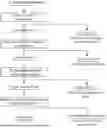
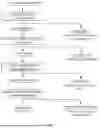
FIG. 1 shows a flow chart of the method according to an embodiment of the present disclosure.
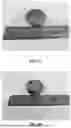
FIG. 2A and FIG. 2B show pictures of the raw material and a part of the refined lead product in Example 1 of the present disclosure; where FIG. 2A is a picture of the complex crude lead raw material, and FIG. 2B is a picture of a part of the refined lead product.
DETAILED DESCRIPTION OF THE EMBODIMENTS
The present disclosure will be further described below with reference to the accompanying drawings and specific examples.
Example 1
As shown in FIG. 1, a method for fire refining of a complex crude lead is performed by a condensation-crystallization-slagging process, which consists of the following steps:
-
- (1) 10 t of a complex crude lead (with the composition shown in Table 1) was subjected to condensation in a condensation pot with a diameter of 1.6 m and a depth of 0.7 m. The condensation was performed for 2 h by heating the complex crude lead to a first temperature of 650° C. to obtain a melt, cooling the melt to a second temperature of 333° C. at a speed of 5° C./min while stirring, and then holding at 333° C. to obtain a low-copper lead (with the mass and composition shown in Table 1) below a dross and a copper dross I (the dross above a lead melt).
- (2) The low-copper lead obtained in step (1) was subjected to crystallization to remove silver and bismuth. The crystallization was performed in a crystallization and enrichment equipment with a length of 3 m, a width of 0.52 m, a depth of 0.31 m. The equipment was set to has a slope of 8°, a rotational speed of 3 r/min, and a temperature gradient of 305° C. to 335° C. increasing from low to high as follows: 305° C., 314° C., 320° C., 325° C., 330° C., and 335° C., so as to obtain a low-silver lead and a high-silver lead. Specifically, a melt of the low-copper lead was put into the crystallization and enrichment equipment, and when the melt covered a spiral shaft, an inlet flow rate was reduced. Crystals were precipitated through natural cooling, and transported by a spiral movement caused by the spiral shaft to a high-temperature section where melting exudation and purification was conducted to obtain the low-silver lead. A resulting liquid of melting exudation refluxed to a low-temperature section to continue the crystallization, and after a period of time, a lead content in the low-temperature section decreased, and the contents of silver, bismuth, arsenic, antimony, and tin increased to obtain the high-silver lead. The high-silver lead was discharged for 20 s at a time with an interval of 30 min between each discharge. The mass and composition of the low-silver lead and the high-silver lead are shown in Table 1, and this step was conducted for 9 h.
- (3) The low-silver lead obtained in step (2) was subjected to deep copper removal with sulfur addition (sulphur, with a sulphur addition amount of 3.01 kg) at 350° C. and a stirring rate of 8 r/min for 2 h to obtain a copper-removed lead (with mass and composition shown in Table 1) and a copper dross II.
- (4) The copper-removed lead obtained in step (3) was subjected to arsenic-antimony-tin removal with alkali addition at 400° C. for 3 h, and the alkali consisted of 7.16 kg of sodium nitrate (NaNO3) and 18.51 kg of sodium hydroxide (NaOH). A resulting arsenic-antimony-tin slag on the surface was removed by scooping to obtain a refined lead (with mass and composition shown in Table 1).
The comprehensive energy consumption and economic and technical indicators of this example are shown in Table 2; and pictures of a crude lead raw material sample and a refined lead product are shown in FIG. 2.
| TABLE 1 |
| Chemical compositions of the complex crude lead raw material and the product |
| Chemical composition (mass percentage) % |
| Product | Mass/kg | Pb | Cu | Sn | As | Sb | Ag | Bi | Zn | Fe | Cr | Ni |
| Raw | 10000 | 95.327 | 1.12 | 0.62 | 1.22 | 1.5 | 0.12 | 0.06 | 0.009 | 0.006 | 0.008 | 0.008 |
| material | ||||||||||||
| Low-copper | 9640.6 | 98.92 | 0.112 | 0.093 | 0.244 | 0.45 | 0.1188 | 0.0552 | 0.00048 | 0.0018 | 0.0015 | 0.0011 |
| lead | ||||||||||||
| Low-silver | 6655.6 | 99.71 | 0.043 | 0.01 | 0.019 | 0.127 | 0.0024 | 0.029 | 0.0005 | 0.002 | 0.0005 | 0.0005 |
| lead | ||||||||||||
| High-silver | 2836.8 | 97.21 | 0.263 | 0.21 | 0.67 | 1.11 | 0.39 | 0.126 | 0.0005 | 0.0015 | 0.0004 | 0.0006 |
| lead | ||||||||||||
| Copper- | 6604.2 | 99.79 | 0.001 | 0.006 | 0.017 | 0.126 | 0.0026 | 0.029 | 0.0005 | 0.002 | 0.0003 | 0.0004 |
| removed | ||||||||||||
| lead | ||||||||||||
| Refined | 6524 | 99.971 | 0.001 | 0.0004 | 0.0005 | 0.0008 | 0.0026 | 0.021 | 0.0003 | 0.001 | 0.0002 | 0.0002 |
| lead | ||||||||||||
| TABLE 2 |
| Economic indicators of crude lead refining |
| Energy | Direct | Lead | ||
| Capacity | consumption | recovery | recovery | |
| (t/d) | (kW · h/t) | rate of silver % | rate % | |
| Whole process | 1 | 279 | 96.59 | 99.97 |
As shown in Table 1, after the complex crude lead is subjected to condensation, a copper content is reduced to 0.112%, and the arsenic-, antimony-, and tin-impurity are significantly reduced. The contents of zinc-, iron-, cadmium-, and nickel-impurity could all meet the national standard requirements of “Lead Ingots”. The low-silver lead obtained through crystallization has a silver content of 0.0024%, which is lower than that in the Pb99.985 grade, and shows a direct recovery rate of silver of 96.59%. The high-silver lead contains 0.39% of silver, which indicates that the silver is enriched by 3.28 times. The low-silver lead has a copper content of 0.001% after deep copper removal with sulfur addition. The copper-removed lead has an arsenic content of 0.0005% and an antimony content of 0.0008% after being refined with alkali addition. The contents of all impurities could meet a Pb99.970 grade.
As shown in Table 2, compared with the traditional six-step refining, the method for refining lead according to the present disclosure exhibits a cycle shortened by 10% to 30%, an energy consumption reduced by 10% to 20%, a direct recovery rate of silver reaching to 96.59%, and a lead recovery rate reaching to 99.97% indicating that the method has obvious economic benefits and could be fully industrialized.
Example 2
As shown in FIG. 1, a method for fire refining of a complex crude lead is performed by a condensation-crystallization-slagging process, which consists of the following steps:
(1) 10 t of a complex crude lead (with the composition shown in Table 3) was subjected to condensation in a condensation pot with a diameter of 1.6 m and a depth of 0.7 m. The condensation was performed for 2 h by heating the complex crude lead to a first temperature of 500° C. to obtain a melt, cooling the melt to a second temperature of 340° C. at a speed of 2° C./min while stirring, and then holding at 340° C., to obtain a low-copper lead (with the mass and composition shown in Table 3) below a dross and a copper dross I (the dross above a lead melt).
-
- (2) The low-copper lead obtained in step (1) was subjected to crystallization to remove silver and bismuth. The crystallization is performed in a crystallization and enrichment equipment with a length of 3 m, a width of 0.52 m, a depth of 0.31 m. The equipment was set to has a slope of 12°, a rotational speed of 3 r/min, and a temperature gradient of 305° C. to 335° C. increasing from low to high as follows: 305° C., 315° C., 320° C., 325° C., 330° C., and 335° C., so as to obtain a low-silver lead and a high-silver lead. Specifically, a melt of the low-copper lead was put into the crystallization and enrichment equipment, and when the melt covered a spiral shaft, an inlet flow rate was reduced. Crystals were precipitated through natural cooling, and transported by a spiral movement caused by the spiral shaft to a high-temperature section where melting exudation and purification was conducted to obtain the low-silver lead. A resulting liquid of melting exudation refluxed to a low-temperature section to continue the crystallization, and after a period of time, a lead content in the low-temperature section decreased, and the contents of silver, bismuth, arsenic, antimony, and tin increased to obtain the high-silver lead. The high-silver lead was discharged for 60 s at a time with an interval of 50 min between each discharge. The mass and composition of the low-silver lead and the high-silver lead are shown in Table 3, and this step was conducted for 11 h.
- (3) The low-silver lead obtained in step (2) was subjected to deep copper removal with sulfur addition (sulphur, with a sulphur addition amount of 2.61 kg) at 360° C. and a stirring rate of 15 r/min for 2.5 h to obtain a copper-removed lead (with mass and composition shown in Table 3) and a copper dross II.
- (4) The copper-removed lead obtained in step (3) was subjected to arsenic-antimony-tin removal with alkali addition at 480° C. for 3 h, and the alkali consisted of 2.48 kg of sodium nitrate (NaNO3) and 6.81 kg of sodium hydroxide (NaOH). A resulting arsenic-antimony-tin slag on the surface was removed by scooping to obtain a refined lead (with mass and composition shown in Table 3).
The comprehensive energy consumption and economic and technical indicators of this example are shown in Table 4.
| TABLE 3 |
| Chemical compositions of the complex crude lead raw material and the product |
| Chemical composition (mass percentage) % |
| Product | Mass/kg | Pb | Cu | Sn | As | Sb | Ag | Bi | Zn | Fe | Cr | Ni |
| Raw | 10000 | 96.99 | 0.51 | 0.31 | 0.69 | 0.82 | 0.34 | 0.12 | 0.047 | 0.031 | 0.068 | 0.055 |
| material | ||||||||||||
| Low-copper | 9680 | 99.06 | 0.051 | 0.0248 | 0.138 | 0.164 | 0.3366 | 0.1104 | 0.001 | 0.0016 | 0.0014 | 0.002 |
| lead | ||||||||||||
| Low-silver | 7750 | 99.86 | 0.032 | 0.0035 | 0.016 | 0.018 | 0.0051 | 0.045 | 0.00035 | 0.0013 | 0.0013 | 0.005 |
| lead | ||||||||||||
| High-silver | 1901 | 96.51 | 0.13 | 0.11 | 0.59 | 0.69 | 1.59 | 0.35 | 0.00051 | 0.0015 | 0.0015 | 0.001 |
| lead | ||||||||||||
| Copper- | 7745 | 99.90 | 0.001 | 0.003 | 0.016 | 0.018 | 0.005 | 0.045 | 0.00032 | 0.0011 | 0.0013 | 0.0005 |
| removed | ||||||||||||
| lead | ||||||||||||
| Refined | 7705 | 99.99 | 0.001 | 0.0004 | 0.0005 | 0.0005 | 0.005 | 0.01 | 0.0003 | 0.001 | 0.0002 | 0.0002 |
| lead | ||||||||||||
| TABLE 4 |
| Economic indicators of crude lead refining |
| Energy | Direct | Lead | ||
| Capacity | consumption | recovery | recovery | |
| (t/d) | (kW · h/t) | rate of silver % | rate % | |
| Whole process | 1 | 261 | 92.77 | 99.976 |
As shown in Table 3, after the complex crude lead was subjected to condensation, a copper content is reduced to 0.051%, and the arsenic-, antimony-, and tin-impurity are significantly reduced. The contents of zinc-, iron-, cadmium-, and nickel-impurity could all meet the national standard requirements of “Lead Ingots”. The low-silver lead obtained through crystallization has a silver content of 0.0051%, which is lower than that in the Pb99.940 grade, and shows a direct recovery rate of silver of 92.77%. The high-silver lead contains 1.59% of silver, which indicates that the silver is enriched by 4.72 times. The low-silver lead has a copper content of 0.001% after deep copper removal with sulfur addition. The copper-removed lead has an arsenic content of 0.0005% and an antimony content of 0.0005% after being refined with alkali addition. The contents of all impurities could meet a Pb99.970 grade.
As shown in Table 4, compared with the traditional six-step refining, the method for refining lead according to the present disclosure exhibits a cycle shortened by 10% to 30%, an energy consumption reduced by 10% to 20%, a direct recovery rate of silver reaching to 92.77%, and a lead recovery rate reaching to 99.976%, indicating that the method has obvious economic benefits and could be fully industrialized.
Example 3
As shown in FIG. 1, a method for fire refining of a complex crude lead is performed by a condensation-crystallization-slagging process, which consists of the following steps:
(1) 50 t of a complex crude lead (with the composition shown in Table 5) was subjected to condensation in a condensation pot with a diameter of 2.8 m and a depth of bin. The condensation was performed for 3 h by heating the complex crude lead to a first temperature of 900° C. to obtain a melt, cooling the melt to a second temperature of 340° C. at a speed of 8° C./min while stirring, and then holding at 340° C. to obtain a low-copper lead (with the mass and composition shown in Table 5) below a dross and a copper dross I (the dross above a lead melt).
-
- (2) The low-copper lead obtained in step (1) was subjected to crystallization to remove silver and bismuth. The crystallization was performed in a crystallization and enrichment equipment with a length of 4 m, a width of 0.61 m, a depth of 0.42 m. The equipment was set to has a slope of 10°, a rotational speed of 10 r/min, and a temperature gradient of 305° C. to 335° C. increasing from low to high as follows: 305° C., 313° C., 320° C., 325° C., 331° C., and 335° C., so as to obtain a low-silver lead and a high-silver lead. Specifically, a melt of the low-copper lead was put into the crystallization and enrichment equipment, and when the melt covered a spiral shaft, an inlet flow rate was reduced. Crystals was precipitated through natural cooling, and transported by a spiral movement caused by the spiral shaft to a high-temperature section where melting exudation and purification was conducted to obtain the low-silver lead. A resulting liquid of melting exudation refluxed to a low-temperature section to continue the crystallization, and after a period of time, a lead content in the low-temperature section decreased, and the contents of silver, bismuth, arsenic, antimony, and tin increased to obtain the high-silver lead. The high-silver lead was discharged for 20 s at a time with an interval of 10 min between each discharge. The mass and composition of the low-silver lead and the high-silver lead were shown in Table 5, and this step was conducted for 12 h.
- (3) The low-silver lead obtained in step (2) was subjected to deep copper removal with sulfur addition (sulphur, with a sulphur addition amount of 115 kg) at 360° C. and a stirring rate of 10 r/min for 2 h to obtain a copper-removed lead (with mass and composition shown in Table 5) and a copper dross II.
- (4) The copper-removed lead obtained in step (3) was subjected to arsenic-antimony-tin removal with alkali addition at 450° C. for 3 h, and the alkali consisted of 155.12 kg of sodium nitrate (NaNO3) and 427.56 kg of sodium hydroxide (NaOH). A resulting arsenic-antimony-tin slag on the surface was removed by scooping to obtain a refined lead (with mass and composition shown in Table 5).
The comprehensive energy consumption and economic and technical indicators of this example are shown in Table 6.
| TABLE 5 |
| Chemical compositions of the complex crude lead raw material and the product |
| Chemical composition (mass percentage) % |
| Product | Mass/kg | Pb | Cu | Sn | As | Sb | Ag | Bi | Zn | Fe | Cr | Ni |
| Raw | 50000 | 85.655 | 4.2 | 1.15 | 4.33 | 4.14 | 0.21 | 0.07 | 0.036 | 0.08 | 0.065 | 0.034 |
| material | ||||||||||||
| Low-copper | 49230 | 97.86 | 0.336 | 0.1725 | 0.6495 | 0.621 | 0.2079 | 0.0644 | 0.005 | 0.0018 | 0.0015 | 0.0011 |
| lead | ||||||||||||
| Low-silver | 40899 | 99.08 | 0.28 | 0.1 | 0.28 | 0.19 | 0.0056 | 0.023 | 0.00036 | 0.0005 | 0.0004 | 0.00034 |
| lead | ||||||||||||
| High-silver | 8205 | 92.72 | 0.581 | 0.42 | 2.29 | 2.56 | 1.166 | 0.256 | 0.0016 | 0.00088 | 0.00035 | 0.0003 |
| lead | ||||||||||||
| Copper- | 40696 | 99.401 | 0.004 | 0.05 | 0.23 | 0.19 | 0.0056 | 0.023 | 0.00036 | 0.0005 | 0.00036 | 0.00031 |
| removed | ||||||||||||
| lead | ||||||||||||
| Refined | 40316 | 99.961 | 0.004 | 0.001 | 0.001 | 0.0008 | 0.0051 | 0.022 | 0.00036 | 0.002 | 0.0002 | 0.0003 |
| lead | ||||||||||||
| TABLE 6 |
| Economic indicators of crude lead refining |
| Energy | Direct | Lead | ||
| Capacity | consumption | recovery | recovery | |
| (t/d) | (kW · h/t) | rate of silver % | rate % | |
| Whole process | 1 | 291 | 93.47 | 99.98 |
As shown in Table 5, after the complex crude lead was subjected to condensation, a copper content is reduced to 0.336%, and the arsenic-, antimony-, and tin-impurity are significantly reduced. The contents of zinc-, iron-, cadmium-, and nickel-impurity could all meet the national standard requirements of “Lead Ingots”. The low-silver lead obtained through crystallization has a silver content of 0.0056%, which is lower than that in the Pb99.940 grade. The high-silver lead contains 1.166% of silver, which indicates that the silver is enriched by 5.61 times. The low-silver lead has a copper content of 0.004% after deep copper removal with sulfur addition. The copper-removed lead has an arsenic content of 0.001% and an antimony content of 0.0008% after being refined with alkali addition. The contents of all impurities could meet a Pb99.940 grade.
As shown in Table 6, compared with the traditional six-step refining, the method for refining lead according to the present disclosure exhibits a cycle shortened by 10% to 30%, an energy consumption reduced by 10% to 20%, a direct recovery rate of silver reaching to 93.47%, and a lead recovery rate reaching to 99.98% indicating that the method has obvious economic benefits and could be fully industrialized.
Example 4
As shown in FIG. 1, a method for fire refining of a complex crude lead is performed by a condensation-crystallization-slagging process, which consists of the following steps:
-
- (1) 50 t of a complex crude lead (with the composition shown in Table 7) was subjected to condensation in a condensation pot with a diameter of 2.8 m and a depth of 1 m. The condensation was performed for 3 h by heating the complex crude lead to a first temperature of 900° C. to obtain a melt, cooling the melt to a second temperature of 340° C. at a speed of 8° C./min while stirring, and then holding at 340° C. to obtain a low-copper lead (with the mass and composition shown in Table 7) below a dross and a copper dross I (the dross above a lead melt).
- (2) The low-copper lead obtained in step (1) was subjected to crystallization to remove silver and bismuth. The crystallization was performed in a crystallization and enrichment equipment with a length of 4 m, a width of 0.61 m, a depth of 0.42 m. The equipment was set to has a slope of 10°, a rotational speed of 6 r/min, and a temperature gradient of 305° C. to 335° C. increasing from low to high as follows: 305° C., 312° C., 318° C., 325° C., 329° C., and 335° C., so as to obtain a low-silver lead and a high-silver lead. Specifically, a melt of the low-copper lead was put into the crystallization and enrichment equipment, and when the melt covered a spiral shaft, an inlet flow rate was reduced. Crystals were precipitated through natural cooling, and transported by a spiral movement caused by the spiral shaft to a high-temperature section where melting exudation and purification was conducted to obtain the low-silver lead. A resulting liquid of melting exudation refluxed to a low-temperature section to continue the crystallization, and after a period of time, a lead content in the low-temperature section decreased, and the contents of silver, bismuth, arsenic, antimony, and tin increased to obtain the high-silver lead. The high-silver lead was discharged for 50 s at a time with an interval of 45 min between each discharge. The mass and composition of the low-silver lead and the high-silver lead are shown in Table 7, and this step was conducted for 16 h.
- (3) The low-silver lead obtained in step (2) was subjected to deep copper removal with sulfur addition (sulphur, with a sulphur addition amount of 6.86 kg) at 338° C. and a stirring rate of 6 r/min for 2 h to obtain a copper-removed lead (with mass and composition shown in Table 7) and a copper dross II.
- (4) The copper-removed lead obtained in step (3) was subjected to arsenic-antimony-tin removal with alkali addition at 380° C. for 4 h, and the alkali consisted of 8.16 kg of sodium nitrate (NaNO3) and 23.98 kg of sodium hydroxide (NaOH). A resulting arsenic-antimony-tin slag on the surface was removed by scooping to obtain a refined lead (with mass and composition shown in Table 7).
The comprehensive energy consumption and economic and technical indicators of this example are shown in Table 8.
| TABLE 7 |
| Chemical compositions of the complex crude lead raw material and the product |
| Chemical composition (mass fraction) % |
| Product | Mass/kg | Pb | Cu | Sn | As | Sb | Ag | Bi | Zn | Fe | Cr | Ni |
| Raw | 50000 | 99.12 | 0.126 | 0.031 | 0.031 | 0.32 | 0.12 | 0.068 | 0.012 | 0.023 | 0.077 | 0.056 |
| material | ||||||||||||
| Low-copper | 49180 | 99.81 | 0.0126 | 0.00465 | 0.0062 | 0.064 | 0.12 | 0.06256 | 0.00024 | 0.00069 | 0.00077 | 0.00112 |
| lead | ||||||||||||
| Low-silver | 34426 | 99.942 | 0.0083 | 0.0032 | 0.0032 | 0.012 | 0.0019 | 0.0231 | 0.0002 | 0.0006 | 0.0005 | 0.001 |
| lead | ||||||||||||
| High-silver | 14701 | 98.99 | 0.021 | 0.0085 | 0.015 | 0.19 | 0.39 | 0.161 | 0.00031 | 0.00082 | 0.00072 | 0.0013 |
| lead | ||||||||||||
| Copper- | 34411 | 99.946 | 0.001 | 0.003 | 0.011 | 0.012 | 0.0019 | 0.0231 | 0.0002 | 0.0005 | 0.0005 | 0.001 |
| removed | ||||||||||||
| lead | ||||||||||||
| Refined | 34400 | 99.945 | 0.001 | 0.00032 | 0.001 | 0.001 | 0.0018 | 0.0231 | 0.0002 | 0.0006 | 0.0005 | 0.001 |
| lead | ||||||||||||
| TABLE 8 |
| Economic indicators of crude lead refining |
| Energy | Direct | Lead | ||
| Capacity | consumption | recovery | recovery | |
| (t/d) | (kW · h/t) | rate of silver % | rate % | |
| Whole process | 2 | 279 | 97.15 | 99.99 |
As shown in Table 7, after the complex crude lead was subjected to condensation, a copper content is reduced to 0.0126%, and the arsenic-, antimony-, and tin-impurity are significantly reduced. The contents of zinc-, iron-, cadmium-, and nickel-impurity could all meet the national standard requirements of “Lead Ingots”. The low-silver lead obtained through crystallization has a silver content of 0.0019%, which is lower than that in the Pb99.985 grade. The high-silver lead contains 0.39% of silver, which indicates that the silver is enriched by 3.25 times. The low-silver lead exhibits a copper content of 0.001% after deep copper removal with sulfur addition. The copper-removed lead has an arsenic content of 0.001% and an antimony content of 0.001% after being refined with alkali addition. The contents of all impurities could meet a Pb99.970 grade.
As shown in Table 8, compared with the traditional six-step refining, the method for refining lead according to the present disclosure exhibits a cycle shortened by 10% to 30%, an energy consumption reduced by 10% to 20%, a direct recovery rate of silver reaching to 97.15%, and a lead recovery rate reaching to 99.99% indicating that the method has obvious economic benefits and could be fully industrialized.
The present disclosure is described in detail above with reference to the accompanying drawings and in conjunction with embodiments, but the disclosure is not limited to the above embodiments. Within the knowledge of a person of ordinary skill in the art, various variations could also be made without departing from the spirit of the disclosure.
Claims
What is claimed is:1. A method for fire refining of a complex crude lead, which is performed by a condensation-crystallization-slagging process, comprising steps of:
(1) subjecting the complex crude lead to condensation to obtain a low-copper lead and a copper dross I;
(2) subjecting the low-copper lead obtained in step (1) to crystallization to remove silver and bismuth, to obtain a low-silver lead and a high-silver lead;
(3) subjecting the low-silver lead obtained in step (2) to deep copper removal with sulfur addition, to obtain a copper-removed lead and a copper dross II; and
(4) subjecting the copper-removed lead obtained in step (3) to arsenic-antimony-tin removal by an alkali process to obtain a refined lead and an arsenic-antimony-tin slag.
2. The method for fire refining of the complex crude lead according to claim 1, wherein the complex crude lead in step (1) comprises:
78.5 wt % to 99.5 wt % of lead, 0.01 wt % to 55 wt % of copper, 0.01 wt % to 3.2 wt % of tin, 0.02 wt % to 5.6 wt % of arsenic, 0.02 wt % to 5.2 wt % of antimony, 0.02 wt % to 1.5 wt % of silver, 0.01 wt % to 0.5 wt % of bismuth, and less than 0.1 wt % of each of nickel, iron, zinc, and chromium.
3. The method for fire refining of the complex crude lead according to claim 1, wherein the condensation in step (1) is performed for 1 h to 5 h by heating the complex crude lead to a first temperature of 480° C. to 960° C., then cooling to a second temperature of 320° C. to 446° C. at a speed of 2° C./min to 8° C./min and holding at the second temperature.
4. The method for fire refining of a complex crude lead according to claim 1, wherein the crystallization in step (2) is conducted in a crystallization and enrichment equipment to enrich silver; the crystallization and enrichment equipment has an inclination angle of 4° to 12° a rotational speed of 3 r min to 11 r/min, and a temperature gradient of 304° C. to 335° C. with an gradient increment of greater than 0.1° C.; the high-silver lead is discharged for 20 s to 80 s each time, with an interval of 8 min to 52 min between each discharge; and a treatment capacity of the crystallization and enrichment equipment is in a range of 1 ton to 30 tons per day for each.
5. The method for fire refining of a complex crude lead according to claim 1, Wherein in step (3), a reagent for the deep copper removal with sulfur addition is sulphur; and the deep copper removal with sulfur addition is conducted at a temperature of 328° C. to 360° C. at a stirring speed of 2 r/min to 20 r/min.
6. The method for fire refining of the complex crude lead according to claim 1, wherein in step (4), a reagent for the arsenic-antimony-tin removal by an alkali process is selected from the group consisting of sodium nitrate and sodium hydroxide; and the arsenic-antimony-tin removal by an alkali process is conducted at a temperature of 380° C. to 480° C.
7. The method for fire refining of the complex crude lead according to claim 1, wherein the copper dross I obtained in step (1), the copper dross II obtained in step (3), and the arsenic-antimony-tin slag obtained in step (4) are classified and recovered.
8. The method for fire refining of the complex crude lead according to claim 1, wherein the high-silver lead obtained in step (2) is subjected to silver refining.
Images & Drawings included:
Sources:
- United States Patent and Trademark Office - verify current appl. status at the USPTO↗