SLAB ELEMENT
US20260139482A1
2026-05-21
19/480,882
2024-05-02
Smart Summary: A slab element has two layers: a top layer and a bottom layer. The top layer is stronger and made from a denser material than the bottom layer. In the final setup, the top layer sits on top of the bottom layer. The bottom layer is thicker than the top layer. Together, these layers provide strength and support for various structures. 🚀 TL;DR
Abstract:
A slab element comprises a top layer and a bottom layer. The top layer comprise top reinforcement means and the bottom layer comprises bottom reinforcement means. The top layer is located on top of the bottom layer in an installed state of the slab element. The top layer is made from a material with a higher density as the bottom layer. The bottom layer is thicker than the top layer.
Assignee:
- B.O. Base One Industries Limited 1 🇨🇾 Nicosia, Cyprus
Applicant:
Interested in similar patents?
Get notified when new applications in this technology area are published.
Classification:
E04C2/06 » CPC main
Building elements of relatively thin form for the construction of parts of buildings, e.g. sheet materials, slabs, or panels characterised by specified materials of concrete or other stone-like material; of asbestos cement; of cement and other mineral fibres reinforced
E04C2/043 » CPC further
Building elements of relatively thin form for the construction of parts of buildings, e.g. sheet materials, slabs, or panels characterised by specified materials of concrete or other stone-like material; of asbestos cement; of cement and other mineral fibres of plaster
E04C2/044 » CPC further
Building elements of relatively thin form for the construction of parts of buildings, e.g. sheet materials, slabs, or panels characterised by specified materials of concrete or other stone-like material; of asbestos cement; of cement and other mineral fibres of concrete
E04C2/049 » CPC further
Building elements of relatively thin form for the construction of parts of buildings, e.g. sheet materials, slabs, or panels characterised by specified materials of concrete or other stone-like material; of asbestos cement; of cement and other mineral fibres completely or partially of insulating material, e.g. cellular concrete or foamed plaster
E04C2/32 » CPC further
Building elements of relatively thin form for the construction of parts of buildings, e.g. sheet materials, slabs, or panels characterised by the shape or structure formed of corrugated or otherwise indented sheet-like material; composed of such layers with or without layers of flat sheet-like material
E04C2/04 IPC
Building elements of relatively thin form for the construction of parts of buildings, e.g. sheet materials, slabs, or panels characterised by specified materials of concrete or other stone-like material; of asbestos cement; of cement and other mineral fibres
Description
FIELD
The present application relates to a slab element. The application is in the field of structural building materials.
BACKGROUND
The rapid growth of many areas around the world has driven the need for sustainable housing and functional buildings. As a result, it is essential to employ modern methods and materials to accelerate construction rates, reduce the weight of buildings and building materials, minimize waste, increase life expectancy, and enhance building resilience against natural and unnatural hazards such as earthquakes. Meeting these demands necessitates innovative solutions based on the use of sustainable modern building materials and modern methods of construction. This approach will ultimately result in shorter construction times, reduced weight of buildings, enhanced durability, and lower construction costs. By incorporating sustainable materials and practices in building construction, resilient, efficient, and eco-friendly buildings can be created that meet the needs of the present without compromising the ability of future generations to meet their own needs.
Currently, various types of materials and systems are used in construction, including stone, wood, bricks, reinforced concrete, metal, hollow concrete blocks, plaster, and other materials. These materials are primarily used for outer walls or slabs between floors. However, for less rigid or more fragile materials, additional volume or thickness is required to bear the increased weight as building floors increase. It is crucial to choose the right materials for each specific use, taking into account the required strength, durability, and environmental impact. By carefully selecting and utilizing sustainable materials, structures can be built that are not only strong and durable but also environmentally friendly and contribute to the well-being of the community.
One of the primary objectives of civil engineering is to reduce the weight of structures and buildings without compromising their strength or safety. To achieve this objective, innovative, lightweight, and high-resistance composite materials have been developed by engineers.
It is wildly recognized in civil engineering that reducing the weight of the structures enhances its seismic safety. In other words, reducing the weight of (lightening) a building not only enhances its efficiency and sustainability but also provides an added layer of safety.
The use of traditional and outdated construction materials such as bricks, clay blocks and cement blocks constitute a significant impact on both the energy consumption and deadload of the building. These materials require a considerable amount of energy for transportation which can lead to an increased carbon footprint. In addition to that, the use of such materials generally results in slow construction times with a high waste output not only leading to project delays and increased costs but also negatively impacting the environment.
Furthermore, as the weight of a building increases, the cost of the building structure increases thereby leading to a rise in the cost of the building. These issues can be considered as part of the numerous problems faced by the construction field.
Many construction materials are available individually for assembly at the construction site, while others are assembled as pre-fabricated in a production factory, then transported to the site to be erected. Further machine work or modifications are often required on site on these pre-fabricated elements to customize them to the needs of the architectural designs to allow for mechanical, electrical and plumbing (MEP) installations.
Traditional construction techniques for multi-story buildings such as Poured Concrete, Precast Concrete, Structural Steel, Wood Frame and Masonry construction have inherent inefficiencies resulting in time, cost and quality penalties. Multi-story buildings constructed with these construction techniques are built in the traditional manner of field craftsmen applying construction materials to first fabricate the frame of the multi-story dwelling on a foundation at the building site according to a set of architectural plans. While these methods of construction have worked for many years, they are associated with many problems that can be solved by adopting modern construction techniques and materials.
Traditional construction techniques are time consuming and involve a lengthy process leading to extended construction times, extensive labor and manhour cost with significant financial burdens.
This in-situ fabrication may result in poorer quality, is prone to an increase in errors and in particular human error, and requires the workers to innovate with respect to the interconnection of utilities, thereby resulting in inconsistency in implementation.
In summary, for all of the above-mentioned situations and scenarios, the process of construction ends up being time consuming and requires significant manpower resulting in both an inefficient and costly process.
SUMMARY
It is the object of the present application to remedy the above-mentioned deficiencies and to provide a quicker, more efficient, sustainable and modern material for better and more cost-effective building construction. The features of the slab element according to the independent claims are addressing said object of the present application. Selected embodiments are comprised in the dependent claims. Each of which, alone or in any combination with the other dependent claims, can represent an embodiment of the present application. The described subject matter has been developed to enhance the approach and methodologies used in the building construction industry for all types of building structures. Also, the purpose of the application is to construct any building and make it environmentally sounder, stronger, faster and safer.
The advantages of the present application are related to the overall weight reduction of structures, the costs associated with it and to enhance the methodologies used in building to maximize output and shorten construction times while promoting sustainability by reducing the overall carbon footprint of the building throughout its life cycle.
According to an aspect of the present application, a slab element comprises a top layer and a bottom layer. The top layer comprises top reinforcement means and the bottom layer comprises bottom reinforcement means. The top layer is located on top of the bottom layer in an installed state of the slab element. The top layer is made from a material with a higher density than the bottom layer. The bottom layer is thicker than the top layer. The top layer may have a significantly lower thickness than the bottom layer. The reinforcement means may be embedded in the respective layer as a reinforcement layer and/or be mixed with the material of the respective layer. This aspect may have the advantage that a lightweight slab element can be manufactured cost efficiently while maximizing its performance.
According to an aspect of the present application, the top layer comprises cementitious material. The bottom layer comprises gypsum plaster and/or low density cementitious material. This aspect may have the advantage that a lightweight slab element can be manufactured cost efficiently and with enhanced properties.
According to an aspect of the present application, the top and bottom layers comprise reinforcement means. Said reinforcement means may comprise any kind of reinforcement known in the art. The reinforcement means can be different for the top and bottom layer. Also, there can be more than one kind of reinforcement means in one layer (e.g. mesh or rebar or cables together with chopped fibres). This aspect may have the advantage that the stability of the slab element is increased.
According to an aspect of the present application, the reinforcement means comprise at least one of reinforcement bar, steel mesh, fibre glass mesh, fibre, chopped fibre, cables, nano-wires, nano-bars, textile, fabric, fibre reinforced polymers, bamboo. Chopped fibre may be any kind of fibre chops made of any kind of fibers known in the art. The chopped fibres can be mixed with the respective material the layer is made from. The reinforcement bars can be made from any materials such as steel, fibres, plastic and a combination thereof. All reinforcement means can be used in all layers, however, cables cannot be used in the top layer.
According to an aspect of the present application, the reinforcement means in the bottom layer are prestressed (e.g. cables). This aspect may have the advantage that the stability and integrity of the slab element is increased.
According to an aspect of the present application the reinforcement means in the bottom layer comprise steel rebars or fibre rebars (reinforcement bars). This aspect may have the advantage that the stability of the slab element is increased.
According to an aspect of the present application, the slab element comprises MEP-installation. In case of a corrugated bottom layer (see below), the MEP-installation can be at least partially located in a corrugation recess. This aspect may have the advantage that construction time for a structure using the slab element is reduced.
According to an aspect of the present application, the slab element comprises a connection structure along at least one of its edges. Said connection structure is meant to connect the slab element to adjacent slab elements during construction. Said connection structure may be complementary forms like groove and tongue. The connection structure(s) may have an increased density of the material they are made from in case of the bottom layer. In case of complementary forms, the slab element may comprise at least two connection structures that complement each other, however, are located on different-usually opposite-edges of the slab element. The slab element may comprise connection structures for wall elements such that wall elements can be connected to the slab element. The connection structures can comprise the top and/or bottom layer. However, they can be located only at the top layer or only at the bottom layer. The slab element may comprise connection structures for floor/ceiling elements such that floor/ceiling elements can be connected to the slab element when used as a staircase. This aspect may have the advantage that construction time and complexity for a structure using the slab element is reduced and the accuracy is increased.
According to an aspect of the present application, the bottom layer can comprise a gradual change in density. The density is higher in the area where the bottom layer meets the top layer. Further, all areas at the edges of the bottom layer can have a higher density. Such gradual change in density may be achieved by applying the bottom layer in a wet state (pouring or spraying). The application may be in several sub-layers such that the bottom layer is made up from multiple layers of the same material, however, having different densities. Such gradual change in density may be applied to the top layer as well. Usually this is not necessary as the top layer is relatively thin compared to the bottom layer, however, it is possible to have a gradual change in density in the top layer as well. In this case the highest density would be in the top of the top layer. This aspect may have the advantage that stability is added in an area where it is needed while keeping the overall weight and material consumption of the slab as low as possible.
According to an aspect of the present application, the bottom layer is corrugated. The corrugation may have any kind of shape, it is characterized by a series of corrugation protrusions and corrugation recesses. The corrugation may have any orientation. The corrugation can be curved or straight (e.g. along the long side of the slab element or perpendicular to it). The corrugation may be in a form where there is no material of the bottom layer in the corrugation recesses, only in the corrugation protrusions. In this case the corrugation protrusions are located on the top layer, e.g. as ribs. The bottom reinforcement layer may be at least partially be integrated in the corrugation protrusions. This aspect may have the advantage that a weight of the slab element is reduced as well as insulation or MEP installations can at least partially be arranged in the corrugation recesses.
According to an aspect of the present application, the bottom reinforcement layer is located in corrugation protrusions of the corrugated bottom layer. This aspect may have the advantage that stability is added in an area where it is needed while keeping the overall weight and material consumption of the slab as low as possible.
According to an aspect of the present application the corrugated bottom layer comprises insulation. The insulation can be comprised of any insulation material known in the art e.g. fiberglass, rockwool, expanded or extruded polymers, gypsum plaster, etc. The insulation may be located only in the corrugation recesses. This aspect may have the advantage that operational HVAC costs can be reduced.
According to an aspect of the present application the insulation is located in at least one of the corrugation recesses of the corrugated bottom layer. The insulation can also insulate MEP-installation (e.g. hot water lines or heating pipes) that run in the corrugation recess. As the bottom layer has already insulating properties due to its lower density, filling only the corrugation recesses with insulation increases the overall insulation properties of the slab element and no additional thickness is added while keeping the weight as low as possible. The insulation has a lower specific weight than the bottom layer. This aspect may have the advantage that construction and heating costs can be saved and thermal and acoustic insulation performance increased.
According to an aspect of the present application the slab element comprises a step layer. The step layer comprises steps. The steps may comprise treads and risers. The step layer is located on the top of the top layer. With the step layer the slab element can be used as a staircase in the installed state of the slab element. At least one of the step layer, the steps, the tread or the riser can comprise reinforcement means (see above). This aspect has the advantage that construction costs can be lowered.
The step layer may be fabricated together with the top layer and the bottom layer to form a monolithic, unitary slab element. However, the step layer, or steps or treads and risers may be separate elements that are fabricated using any suitable material (natural stone, wood, steel, mineral materials, etc.), even having the final finish (e.g. tiles, natural stone, wood, etc.) and be installed e.g. at a construction site onto the installed slab element. At least one of the step layer, steps, treads and risers may be attachable to the top layer.
According to an aspect of the present application the steps can include hollow sections. This aspect has the advantage that construction costs can be lowered.
According to an aspect of the present application the density of the step layer is significantly lower than the top layer. This aspect may have the advantage that the overall weight and material consumption of the slab element is kept as low as possible while conserving the stability and integrity of the element.
Each of the above aspects is to be considered an invention on its own. The aspects may be freely combined with each other and each feature not described as being dependent on another feature may also be freely combined with each other. The installed state is how the slab element is used/finally placed in a structure like a building. The slab element may be used to form a conventional ceiling, thus being placed horizontally. The slab element may be used to form a stair or staircase, thus being placed angled or tilted. The slab element may be used to form a roof, thus being placed angled/tilted or (nearly) horizontally. The slab element may feature different types of connection structure depending on its area of use e.g. as a conventional ceiling, a stair or staircase and as a roof element.
BRIEF DESCRIPTION OF THE FIGURES
Further advantages and features of the present disclosure will be apparent from the appended figures. The figures are of merely informing purpose and not of limiting character. The figures schematically describe embodiments of the present application. Hence, the appended figures cannot be considered limiting for e.g. the dimensions of the present disclosure.
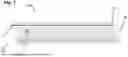
FIG. 1 depicts a schematic sectional view of a slab element according to one embodiment.
FIG. 2 depicts a schematic exploded view of a slab element according to another embodiment.
FIG. 3 is a sectional view of a slab element according to another embodiment.
FIG. 4 is a sectional view of a slab element according to another embodiment.
FIG. 5 is a sectional front view of a slab element similar to the slab element depicted in FIG. 4.
FIG. 6 is a sectional view of a slab element according to another embodiment.
It is to be noted that in the different embodiments described herein same parts/elements are numbered with same reference signs, however, the disclosure in the detailed description may be applied to all parts/elements having the regarding reference signs. Also, the directional terms/position indicating terms chosen in this description like left, right, top, bottom, up, upper, down, lower, downwards, lateral, sideward are referring to the directly described figure and may correspondingly be applied to the new position after a change in position or another depicted position in another figure. All figures are not to scale and no indication of proportions should be taken unless directly referred to.
DETAILED DESCRIPTION OF THE EMBODIMENTS
Initially referring to FIG. 1 a schematic sectional view of a slab element 100 comprising a top layer 10 and a bottom layer 20 is depicted. The top layer 10 comprises top reinforcement means 11. The top reinforcement means 11 are here a layer of mesh embedded in the top layer 10. The top reinforcement means 11 of the top layer 10 can comprise steel mesh or fibre mesh, rebars or chopped fibers. The top layer can comprise standard or high-performance cementitious material. The bottom layer 20 comprises bottom reinforcement means 21. The bottom reinforcement means 21 of the bottom layer 20 can comprise at least one of cables, rebars (from steel or fiber), mesh (steel wire, fiberglass, any other mesh), chopped fibers.
Along the edges (left and right in FIG. 1) the slab element 100 comprises connection structures 40 that are complementary. In other words, a connection structure 40 of the slab element 100 complements the connection structure of the following slab element. Even if all figures of this disclosure are not to scale and schematic, the top layer 10 is thinner than the bottom layer 20. The bottom layer can comprise cementitious material and/or gypsum plaster. Also, the cementitious material can be low density cementitious material. Any type of slab to slab connection can be used depending on needs.
FIG. 2 is a schematic exploded view of a slab element 100 according to another embodiment. The slab element 100 is essentially the same as the one depicted in FIG. 1, however, the bottom layer 20 further comprises MEP-installation 30. The top layer 10 comprises the top reinforcement means 11. The top layer 10 further comprises chopped fibres as further top reinforcement means 11. Here, the chopped fibres being the reinforcement means are only depicted as a layer (2nd layer from the top) for the sake of clarity and demonstration. However, in reality they are mixed with the material of the top layer 10. In this case the top layer 10 comprises multiple top reinforcement means 11. The top layer 10 can have a flooring finish. The depicted slab element may have a change in density of the bottom layer 20 wherein the density increases towards areas at the end walls. Said areas would be all end faces of the slab element, at the narrow and long sides depicted in FIG. 2 (increase of density parallel to a horizontal plane, however, the increase of density may be also or alternatively parallel to a vertical plane).
FIG. 3 is a sectional view of a slab element 100 according to another embodiment. Here, the top layer 10 and the connection structures 40 are the same as disclosed in FIG. 1. However, the bottom layer 20 comprises a corrugation 70. The corrugation 70 comprises corrugation protrusions (“ribs”) 71 and corrugation recesses 72. The bottom reinforcement means 21 is/are comprised by the corrugation protrusions 71. Here, the bottom reinforcement means 21 can comprise cables or rebars (from steel or fiber). Additionally or alternatively, the bottom reinforcement means 21 may comprise mesh covering and following the corrugation 70. The corrugation recesses 72 are filled with an optional insulation and/or gypsum plaster 80. Also, MEP installation may be at least partially be arranged in the corrugation recesses 72.
FIG. 4 is a sectional view of a slab element 100 according to another embodiment. Here, the slab element 100 is designed to be included into a staircase as a flight of stairs. The slab element 100 comprises a top layer 10 having top reinforcement means 11 (see above). The top layer 10 is sandwiched by the bottom layer 20 beneath and the step layer 60 comprising stairs 61 on top (i.e. on the top of the top layer 10). The bottom layer 20 comprises bottom reinforcement means 21 (see above). The steps 61 can comprise step reinforcement means 50 that can comprise steel mesh, fiber mesh or chopped fibers. The step layer 60 comprises light weight cementitious material.
The step layer 60 may be fabricated with the top and bottom layer 10, 20 to form a unitary, monolithic slab element 100. However, the step layer 60 or steps 61 or treads 62 and risers 63 can be prefabricated from any suitable material (steel, wood, mineral material, etc.) even having the final finish (e.g. tiles, natural stone, wood) and then be attached in situ (e.g. at the construction site) to the installed slab element 100. Along the edges (left and right in FIG. 4) the slab element 100 comprises connection structures 40 that are complementary (see above).
FIG. 5 is a sectional front view of a slab element 100 similar to the slab element 100 depicted in FIG. 4. Here, the slab element 100 comprises a corrugation 70 with corrugation protrusions 71 and corrugation recesses 72 (see above). Here, there is no insulation included into the corrugation recesses 72 which is, however, possible. Also, there is/are no bottom reinforcement means 21 depicted, however, they are possible.
FIG. 6 is a sectional view of a slab element 100 according to another embodiment, which is similar to the slab element 100 depicted in FIG. 4. The steps 61 comprise treads 62 and risers 63. Here, the steps 61 comprise hollow sections 64. The hollow sections 64 are made up by the treads 62 and risers 63 and the top layer. The tread 62 and/or riser 62 can comprise step reinforcement means 50 that can comprise steel mesh, fiber mesh or chopped fibers. Along the edges (left and right in FIG. 6 and similar to FIG. 4) the slab element 100 comprises connection structures 40 that are complementary (see above).
In all figures like reference signs are used for like or similar parts/elements as in the other figures. Thus, a detailed explanation of such part/element will only be given once for the sake of brevity. Reference numbers like first and second are meant for distinguishing purposes only, as the order may be changed voluntarily. The dimensions are exemplary. FIGS. 4 and 6 depict the step layer as non-continuous where the treads 62 meet the risers 63. This corner is in direct contact with the top layer 10. However, the step layer can be continuous in an area between the top layer 10 and the steps 61/treads 62 and risers 63.
The embodiments depict possible variations of carrying out the subject matter of the application, however, it is to be noted that the subject matter of the application is not limited to the depicted embodiments/variations but numerous combinations of the here described embodiments/variations are possible and these combinations lie in the field of the skills of the person skilled in the art being motivated by this description. The features explained with different embodiments may be freely combined with each other.
Gypsum plaster, also known as plaster of Paris, is a building material made by heating gypsum, a soft sulfate mineral composed of calcium sulfate dihydrate (CaSO4·2H2O), to remove its water content. This process results in a fine, white pow-der that, when mixed with water, forms a workable paste. As it dries, gypsum plaster hardens to create a smooth, durable surface suitable for various applications in construction and other industries. Further additives can be added.
The scope of protection is determined by the appended claims. The description and drawings, however, are to be considered when interpreting the claims. Single features or feature combinations of the described and/or depicted features may represent independent inventive solutions. The object of the independent solutions may be found in the description. It is further to be noted that for a better understanding parts/elements are depicted to some extend not to scale and/or enlarged and/or down scaled.
LIST OF REFERENCE SIGNS
-
- 100 slab element
- 10 top layer
- 11 top reinforcement layer
- 20 bottom layer
- 21 bottom reinforcement layer
- 30 MEP installation
- 40 connection structure
- 50 step reinforcement means
- 60 step layer
- 61 steps
- 62 tread
- 63 riser
- 64 hollow section
- 70 corrugation
- 71 corrugation protrusion
- 72 corrugation recess
- 80 insulation
Claims
1-14. (canceled)
15. Slab element, comprising a top layer and a bottom layer, wherein the top layer comprises top reinforcement means and the bottom layer comprises bottom reinforcement means, and wherein the top layer is located on top of the bottom layer in an installed state of the slab element, characterised in that the top layer is made from a material with a higher density as the bottom layer, and wherein the bottom layer is thicker than the top layer.
16. Slab element according to claim 15, wherein the top layer comprises cementitious material and the bottom layer comprises gypsum plaster and/or low-density cementitious material.
17. Slab element according to claim 15, wherein the reinforcement means comprise at least one of reinforcement bar, steel rebars, fibre rebars, steel mesh, fibre glass mesh, fibre, chopped fibre, cables, nano-wires, nano-bars, textile, fabric, fibre reinforced plastics, bamboo.
18. Slab element according to claim 15, wherein the bottom reinforcement means in the bottom layer are prestressed.
19. Slab element according to claim 15, further comprising at least one of MEP-installation; a connection structure along at least one of its edges.
20. Slab element according to claim 15, wherein the bottom layer comprises a gradual change in density, wherein the density is higher in the area where the bottom layer meets the top layer.
21. Slab element according to claim 15, wherein the bottom layer is corrugated.
22. Slab element according to claim 21, wherein the bottom reinforcement means is/are at least partially located in corrugation protrusions of the corrugated bottom layer.
23. Slab element according to claim 21, wherein the insulation is located in the corrugation recesses of the bottom layer.
24. Slab element according to claim 21, further comprising a step layer which is located on the top of the top layer, such that the slab element is used as a staircase in the installed state of the slab element.
25. Slab element according to claim 24, wherein the step layer comprises steps.
26. Slab element according to claim 24, wherein the density of the step layer is lower than the top layer.
27. Slab element according to claim 24, wherein the step layer is attachable to the top layer.
28. Slab element according to claim 25, wherein the steps comprise a hollow section.
Images & Drawings included:



Sources:
- United States Patent and Trademark Office - verify current appl. status at the USPTO↗
Similar patent applications:
- » 20050022464
Frontal butt connection between two roof slab elements of a flat roof and corresponding roof slab element - » 20180331487
Active element slab for a laser source - » 20140318059
Bracket and an arrangement for supporting a precast slab element of concrete on a precast structure element of concrete - » 20110258949
Prestressed slab element - » 20090217945
Method and Device for Cleaning Slabs, Thin Slabs, Profiled Elements, or Similar - » 15830735
Coupling between slab bolster elements - » 20120247055
Structural unit comprising a truss and fibrous cementitious slab building element connected together - » 20110088347
Joint elements for slabs - » 20120036909
METHOD AND DEVICE FOR CLEANING SLABS, THIN SLABS, PROFILED ELEMENTS, OR SIMILAR - » 20190316362
Assessable ceramic slab-shaped element
Recent applications in this class:
- » 20240376709 2024-11-14
POST-TENSIONED EXPANDING CONCRETE WITH FIBERS FOR SLABS - » 20240229460 2024-07-11
Reinforced masonry and method for carrying out such masonry - » 20240133177 2024-04-25
Reinforced masonry and method for carrying out such masonry - » 20240011291 2024-01-11
DECORATIVE CONCRETE WITH UNIFORM SURFACE AND METHOD OF FORMING THE SAME - » 20220316210 2022-10-06
Precast building panel - » 20220145627 2022-05-12
Construction panel with high resistance to fire and a method for producing a construction panel with high resistance to fire - » 20220145626 2022-05-12
Short fiber-reinforced concrete structure using continuous fiber-reinforced polymer material - » 20220018128 2022-01-20
Building panel with sections - » 20210348387 2021-11-11
SYSTEMS AND METHODS FOR COUPLING PREFABRICATED PANELS TOGETHER AND REINFORCING FRAME STRUCTURE - » 20210277653 2021-09-09
COMPOSITE STRUCTURE INCLUDING A STRUCTURAL PANEL AND A METAL SUPPORT