CURABLE COMPOSITION AND METHODS FOR FORMING FILM AND MANUFACTURING ARTICLE
US20260140445A1
2026-05-21
19/378,135
2025-11-03
Smart Summary: A special mixture is created that can harden into a film or be used to make various products. It includes a substance that can change when exposed to light, a liquid to help it flow, and a small amount of a surface-active agent that helps with spreading. The mixture has a specific thickness and uses a solvent that boils at a low temperature. Both the main substance and the solvent have similar properties that help them work well together. The surface-active agent is designed to repel water and has certain chemical properties that make it effective without using harmful materials like fluorine or silicon. 🚀 TL;DR
Abstract:
A curable composition with a viscosity of 1.3 mPa·s to 60 mPa·s at 23° C. and 1 atm contains a polymerizable compound (a), a photopolymerization initiator (b), a solvent (d) in an amount ranging from more than 5% to 95% by volume relative to the entire curable composition, and a surfactant (c1) in an amount of 0.1% to 10% by mass relative to the entire curable composition. The solvent (d) has a boiling point of less than 250° C. at 1 atm. The polymerizable compound (a) and the solvent (d) each have an SP value ranging from 17 MPa1/2 to less than 25 MPa1/2. The surfactant (c1) does not contain fluorine or silicon atoms and has a liquid-repellent atomic group with an SP value ranging from 11 MPa1/2 to less than 17 MPa1/2 and a lyophilic atomic group with an SP value ranging from 25 MPa1/2 to less than 35 MPa1/2.
Inventors:
- TOSHIKI ITO 41 🇯🇵 KANAGAWA, Japan
- Tetsushi Yamamoto 7 🇯🇵 Tokyo, Japan
- HINAKO MATSUSHIMA 6 🇯🇵 Tochigi, Japan
- HIDEKI IMAMURA 10 🇯🇵 Tochigi, Japan
Applicant:
Interested in similar patents?
Get notified when new applications in this technology area are published.
Classification:
G03F7/0048 » CPC main
Photomechanical, e.g. photolithographic, production of textured or patterned surfaces, e.g. printing surfaces; Materials therefor, e.g. comprising photoresists; Apparatus specially adapted therefor; Photosensitive materials characterised by the solvents or agents facilitating spreading, e.g. tensio-active agents
C08F220/1811 » CPC further
Copolymers of compounds having one or more unsaturated aliphatic radicals, each having only one carbon-to-carbon double bond, and only one being terminated by only one carboxyl radical or a salt, anhydride ester, amide, imide or nitrile thereof; Monocarboxylic acids having less than ten carbon atoms; Derivatives thereof; Esters of monohydric alcohols or phenols of phenols or of alcohols containing two or more carbon atoms with acrylic or methacrylic acids Cor C-(Meth)acrylate, e.g. isodecyl (meth)acrylate, isobornyl (meth)acrylate or 2-naphthyl (meth)acrylate
G03F7/0002 » CPC further
Photomechanical, e.g. photolithographic, production of textured or patterned surfaces, e.g. printing surfaces; Materials therefor, e.g. comprising photoresists; Apparatus specially adapted therefor Lithographic processes using patterning methods other than those involving the exposure to radiation, e.g. by stamping
G03F7/028 » CPC further
Photomechanical, e.g. photolithographic, production of textured or patterned surfaces, e.g. printing surfaces; Materials therefor, e.g. comprising photoresists; Apparatus specially adapted therefor; Photosensitive materials; Non-macromolecular photopolymerisable compounds having carbon-to-carbon double bonds, e.g. ethylenic compounds with photosensitivity-increasing substances, e.g. photoinitiators
G03F7/004 IPC
Photomechanical, e.g. photolithographic, production of textured or patterned surfaces, e.g. printing surfaces; Materials therefor, e.g. comprising photoresists; Apparatus specially adapted therefor Photosensitive materials
C08F220/18 IPC
Copolymers of compounds having one or more unsaturated aliphatic radicals, each having only one carbon-to-carbon double bond, and only one being terminated by only one carboxyl radical or a salt, anhydride ester, amide, imide or nitrile thereof; Monocarboxylic acids having less than ten carbon atoms; Derivatives thereof; Esters of monohydric alcohols or phenols of phenols or of alcohols containing two or more carbon atoms with acrylic or methacrylic acids
G03F7/00 IPC
Photomechanical, e.g. photolithographic, production of textured or patterned surfaces, e.g. printing surfaces; Materials therefor, e.g. comprising photoresists; Apparatus specially adapted therefor
Description
BACKGROUND
Field of the Technology
The present disclosure relates to a curable composition and methods for forming a film and producing an article.
Description of the Related Art
In the field of semiconductor devices, microelectromechanical systems (MEMS), and similar technologies, miniaturization is increasingly demanded, and imprinting techniques (optical imprinting techniques) are attracting attention as microfabrication techniques. In imprinting techniques, a curable composition is fed (applied) onto a substrate and cured in a state where a mold having a fine relief pattern in its surface is in contact with the composition. Thus, the relief pattern of the mold is transferred to the cured film of the curable composition, thereby forming a pattern on the substrate. Imprinting techniques enable the formation of fine patterns (structures) with sizes of several nanometers on substrates.
An example of pattern formation using an imprinting technique will be described. First, a liquid curable composition is discretely dropped (applied) in a pattern formation region on a substrate. The droplets of the curable composition in the pattern formation region spread over the surface of the substrate. This phenomenon is called pre-spreading. Next, a mold is brought into contact with (pressed on) the curable composition on the substrate. Consequently, the droplets of the curable composition spread throughout the gap between the substrate and the mold due to capillary action.
This phenomenon is called spreading. In addition, the curable composition fills the recesses of the mold pattern due to capillary action. This phenomenon is called filling. The duration required to complete such spreading and filling is called filling time. After completion of filling, the curable composition is irradiated with light to be cured.
The cured composition on the substrate is then separated from the mold. Thus, a cured pattern of the curable composition is formed by transferring the pattern of the mold to the curable composition on the substrate through these steps. At this point, the cured pattern of the curable composition formed on the substrate has a residual film. The residual film is a cured film remaining between the recesses of the cured film of the curable composition (protrusions of the mold pattern) and the substrate.
Also, photolithography for manufacturing semiconductor devices requires the substrate to be planarized. For example, in extreme ultraviolet lithography (EUV), which is a technique of photolithography that has been attracting attention in recent years, the relief pattern in the surface of the substrate to which the curable composition is fed must be restricted to several tens of nanometers or smaller because the focal depth at which the projected image is formed decreases as miniaturization progresses. Imprinting techniques also require planarization to the same extent as EUV to improve the degree of filling and line width accuracy of the curable composition. In a planarization technique, a flat surface is formed by dropping a curable composition discretely onto a substrate provided with a relief structure in an amount corresponding to the relief structure and subsequently curing the composition while being in contact with a mold having a flat surface.
In pattern formation methods and planarization techniques using imprinting, the curable composition on the substrate is brought into contact with a mold in a state where the droplets of the curable composition do not touch each other. This process inevitably causes air bubbles to be trapped between the mold, the substrate, and the composition. Consequently, it takes a long time for the air bubbles to diffuse across the mold and substrate to disappear, which is one of the factors that reduce productivity (throughput). Accordingly, a technique has been developed to merge the droplets of the curable composition on the substrate before bringing the curable composition into contact with the mold (see Japanese Patent Laid-Open No. 2022-188736).
Unfortunately, the technique disclosed in Japanese Patent Laid-Open No. 2022-188736 causes a defect in the mold releasing step of separating the cured form of the curable composition on the substrate from the mold, in which the cured form of the composition peels off the substrate with adhering to the mold.
SUMMARY
Accordingly, the present disclosure provides a novel technique for curable compositions.
An aspect of the present disclosure is directed to a curable composition containing a polymerizable compound (a), a photopolymerization initiator (b), a solvent (d), and a surfactant (c1). The curable composition has a viscosity of 1.3 mPa·s to 60 mPa·s at 23° C. and 1 atm. The amount of the solvent (d) ranges from more than 5% to 95% by volume relative to the total volume of the curable composition. The solvent (d) has a boiling point of less than 250° C. at 1 atm. The polymerizable compound (a) and the solvent (d) each have a solubility parameter (SP) value ranging from 17 MPa1/2 to less than 25 MPa1/2. The surfactant (c1) does not contain fluorine or silicon atoms and has a liquid-repellent atomic group with an SP value ranging from 11 MPa1/2 to less than 17 MPa1/2 and a lyophilic atomic group with an SP value ranging from 25 MPa1/2 to less than 35 MPa1/2. The amount of the surfactant (c1) in the curable composition is 0.1% to 10% by mass relative to the total mass of the curable composition.
Features of the present disclosure will become apparent from the following description of embodiments with reference to the attached drawings. The following description of embodiments is described by way of example.
BRIEF DESCRIPTION OF THE DRAWINGS
FIGS. 1A to 1G are illustrative representations of a method for forming a pattern (film formation method) according to an aspect of the present disclosure.
DESCRIPTION OF THE EMBODIMENTS
Embodiments of the present disclosure will now be described with reference to the drawings. However, it should be appreciated that the embodiments described below are not intended to limit the scope of the appended claims. Although the embodiments include several features, not all of those features are necessarily essential and may be combined as needed. In the accompanying drawings, the same or similar parts are designated by the same reference numerals and thus description thereof is omitted.
When providing a novel technique for curable compositions, the present inventors have identified conditions, in a step of separating the mold from a cured form of a curable composition on a substrate, that enhance the adhesion between the substrate and the cured form of the composition while reducing the adhesion between the mold and the cured form.
Curable Composition
The curable composition (A) disclosed herein is useful for ink jet methods and is, in addition, useful as a curable composition for photo-imprinting. The curable composition (A) disclosed herein contains component (a) that is a polymerizable compound, component (b) that is a photopolymerization initiator, and component (d) that is a solvent.
The term “cured film” used herein refers to a film formed by polymerizing a curable composition to cure the composition on a substrate. The cured film is not particularly limited in shape, and may have a pattern in its surface. Also, a cured film remaining between the recesses of the cured film of the curable composition (protrusions of the mold pattern) and the substrate is referred to as a residual film.
Component (a): Polymerizable Compound
Component (a) consists of one or more polymerizable compounds. The term “polymerizable compound” mentioned herein refers to a compound that reacts with a polymerizing factor, such as a radical, produced from a photopolymerization initiator (component (b)) and forms a polymer film through a chain reaction (polymerization reaction).
Examples of such polymerizable compounds include radical-polymerizable compounds with SP values ranging from 17 MPa1/2 to less than 25 MPa1/2. Component (a) may be a single polymerizable compound or a combination of a plurality of (two or more) polymerizable compounds.
The SP value, δ (J/cm3)1/2, or MPa1/2, of a compound can be calculated by equation (1) for the atomic group contribution method using cohesive energies Ei (J/mol) and molar volume Vi (cm3/mol) of the respective Fedors' atomic groups listed in TABLE 7. 3 on pages 195-197 of D. W. van Krevelen and K. te Nijenhuis, Properties of Polymers, 4th Edition (2009).
δ = ∑ E i ∑ V i ( 1 )
Radical-polymerizable compounds include (meth)acrylic compounds, styrene-based compounds, vinyl compounds, allyl compounds, fumaric compounds, and maleic compounds.
(Meth)acrylic compounds have one or more acryloyl groups or methacryloyl groups. Examples of monofunctional (meth)acrylic compounds containing one acryloyl or methacryloyl group include, but are not limited to:
-
- phenoxyethyl (meth)acrylate, phenoxy-2-methylethyl (meth)acrylate, phenoxyethoxyethyl (meth)acrylate, 3-phenoxy-2-hydroxypropyl (meth)acrylate, 2-phenylphenoxyethyl (meth)acrylate, 4-phenylphenoxyethyl (meth)acrylate, 3-(2-phenylphenyl)-2-hydroxypropyl (meth)acrylate, EO-modified p-cumylphenol (meth)acrylate, 2-bromophenoxyethyl (meth)acrylate, 2,4-dibromophenoxyethyl (meth)acrylate, 2,4,6-tribromophenoxyethyl (meth)acrylate, EO-modified phenoxy (meth)acrylate, PO-modified phenoxy (meth)acrylate, polyoxyethylene nonylphenyl ether (meth)acrylate, isobornyl (meth)acrylate, 1-adamantyl (meth)acrylate, 2-methyl-2-adamantyl (meth)acrylate, 2-ethyl-2-adamantyl (meth)acrylate, bornyl (meth)acrylate, tricyclodecanyl (meth)acrylate, dicyclopentanyl (meth)acrylate, dicyclopentenyl (meth)acrylate, cyclohexyl (meth)acrylate, 4-butylcyclohexyl (meth)acrylate, acryloylmorpholine, 2-hydroxyethyl (meth)acrylate, 2-hydroxypropyl (meth)acrylate, 2-hydroxybutyl (meth)acrylate, methyl (meth)acrylate, ethyl (meth)acrylate, propyl (meth)acrylate, isopropyl (meth)acrylate, butyl (meth)acrylate, amyl (meth)acrylate, isobutyl (meth)acrylate, t-butyl (meth)acrylate, pentyl (meth)acrylate, isoamyl (meth)acrylate, hexyl (meth)acrylate, heptyl (meth)acrylate, octyl (meth)acrylate, isooctyl (meth)acrylate, 2-ethylhexyl (meth)acrylate, nonyl (meth)acrylate, decyl (meth)acrylate, isodecyl (meth)acrylate, undecyl (meth)acrylate, dodecyl (meth)acrylate, lauryl (meth)acrylate, stearyl (meth)acrylate, isostearyl (meth)acrylate, benzyl (meth)acrylate, tetrahydrofurfuryl (meth)acrylate, butoxyethyl (meth)acrylate, ethoxydiethylene glycol (meth)acrylate, polyethylene glycol mono(meth)acrylate, polypropylene glycol mono(meth)acrylate, methoxyethylene glycol (meth)acrylate, ethoxyethyl (meth)acrylate, methoxypolyethylene glycol (meth)acrylate, methoxypolypropylene glycol (meth)acrylate, diacetone (meth)acrylamide, isobutoxymethyl(meth)acrylamide, N,N-dimethyl(meth)acrylamide, t-octyl(meth)acrylamide, dimethylaminoethyl (meth)acrylate, diethylaminoethyl (meth)acrylate, 7-amino-3,7-dimethyloctyl (meth)acrylate, N,N-diethyl(meth)acrylamide, N,N-dimethylaminopropyl(meth)acrylamide, 1-, or 2-naphthyl (meth)acrylate, 1- or 2-naphthylmethyl (meth)acrylate, 3- or 4-phenoxybenzyl (meth)acrylate, cyanobenzyl (meth)acylate, and naphthalene methyl (meth)acrylate.
Examples of commercially available products of such monofunctional (meth)acrylic compounds include, but are not limited to: Aronix (registered trademark) series M101, M102, M110, M111, M113, M117, M5700, TO-1317, M120, M150, and M156 (all produced by Toagosei); MEDOL 10, MIBDOL 10, CHDOL 10, MMDOL 30, MEDOL 30, MIBDOL 30, CHDOL 30, LA, IBXA, 2-MTA, HPA, and Biscoat series #150, #155, #158, #190, #192, #193, #220, #2000, #2100, and #2150 (all produced by Osaka Organic Chemical Industry); Light Acrylates BO-A, EC-A, DJ/CM3, THF-A, HOP-A, HOA-MPE, HOA-MPL, PO-A, P-200A, NP-4EA, and NP-8EA, and Epoxy Esters M-600A, POB-A, and OPP-EA (all produced by Kyoeisha Chemical); KAYARAD (registered trademark) series TC110S, R-564, and R-128H (all produced by Nippon Kayaku); NK Esters AMP-10G, AMP-20G, and A-LEN-10 (all produced by Shin-Nakamura Chemical); FA-511A, FA-512A, and FA-513A (all produced by Resonac Corporation); PHE, CEA, PHE-2, PHE-4, BR-31, BR-31M, and BR-32 (all produced by Dai-ichi Kogyo Seiyaku); VP (produced by BASF); ACMO, DMAA, and DMAPAA (all produced by Kohjin); and HRD-01 (produced by Nippon Shokubai).
Examples of polyfunctional (meth)acrylic compounds containing two or more acryloyl or methacryloyl groups include, but are not limited to: trimethylolpropane di(meth)acrylate, trimethylolpropane tri(meth)acrylate, EO-modified trimethylolpropane tri(meth)acrylate, PO-modified trimethylolpropane tri(meth)acrylate, EO, PO-modified trimethylolpropane tri(meth)acrylate, dimethylol tricyclodecane di(meth)acrylate, pentaerythritol tri(meth)acrylate, pentaerythritol tetra(meth)acrylate, ethylene glycol di(meth)acrylate, tetraethylene glycol di(meth)acrylate, polyethylene glycol di(meth)acrylate, polypropylene glycol di(meth)acrylate, 1,4-butanediol di(meth)acrylate, 1,6-hexanediol di(meth)acrylate, neopentyl glycol di(meth)acrylate, 1,9-nonanediol di(meth)acrylate, 1,10-decanediol di(meth)acrylate, 1,3-adamantanedimethanol di(meth)acrylate, tris(2-hydroxyethyl)isocyanurate tri(meth)acrylate, tris(acryloyloxy)isocyanurate, bis(hydroxymethyl)tricyclodecane di(meth)acrylate, dipentaerythritol penta(meth)acrylate, dipentaerythritol hexa(meth)acrylate, EO-modified 2,2-bis(4-((meth)acryloxy)phenyl)propane, PO-modified 2,2-bis(4-((meth)acryloxy)phenyl)propane, EO, PO-modified 2,2-bis(4-((meth)acryloxy)phenyl)propane, o-, m- or p-benzene di(meth)acrylate, and o-, m-, or p-xylene di(meth)acrylate.
Examples of commercially available products of such polyfunctional (meth)acrylic compounds include, but are not limited to:
-
- Yupimer (registered trademark) UV series SA1002 and SA2007 (both produced by Mitsubishi Chemical); Biscoat series #195, #230, #215, #260, #335HP, #295, #300, #360, #700, GPT, and 3PA (all produced by Osaka Organic Chemical Industry); Light Acrylates 4EG-A, 9EG-A, NP-A, DCP-A, BP-4EA, BP-4PA, TMP-A, PE-3A, PE-4A, and DPE-6A (all produce by Kyoeisha Chemical); KAYARAD (registered trademark) series PET-30, TMPTA, R-604, DPHA, DPCA-20, -30, -60 and -120, HX-620, D-310, and D-330 (all produced by Nippon Kayaku); Aronix (registered trademark) series M208, M210, M215, M220, M240, M305, M309, M310, M315, M325, and M400 (all produced by Toagosei); Ripoxy (registered trademark) series VR-77, VR-60, and VR-90 (all produced by Resonac Corporation); OGSOL EA-0200 and OGSOL EA-0300 (both produced by Osaka Gas Chemicals); and SR295 and SR355 (both produced by Sartomer).
In the above-presented compounds, (meth)acrylate refers to an acrylate or a methacrylate having an alcohol residue equivalent to that of the acrylate. Also, a (meth)acryloyl group refers to both acryloyl and methacryloyl groups collectively. EO represents ethylene oxide, and EO-modified compound A is a compound in which the (meth)acrylic acid residue and the alcohol residue of compound A are bound to each other with an ethylene oxide block structure therebetween. PO represents propylene oxide, and PO-modified compound B is a compound in which the (meth)acrylic acid residue and the alcohol residue of compound B are bound to each other with a propylene oxide block structure therebetween.
Specific examples of styrene-based compounds include, but are not limited to: styrene; alkyl styrenes, such as 2,4-dimethyl-α-methylstyrene, o-methylstyrene, m-methylstyrene, p-methylstyrene, 2,4-dimethylstyrene, 2,5-dimethylstyrene, 2,6-dimethylstyrene, 3,4-dimethylstyrene, 3,5-dimethylstyrene, 2,4,6-trimethylstyrene, 2,4,5-trimethylstyrene, pentamethylstyrene, o-ethylstyrene, m-ethylstyrene, p-ethylstyrene, diethylstyrene, triethylstyrene, propylstyrene, 2,4-diisopropylstyrene, butylstyrene, hexylstyrene, heptylstyrene, and octylstyrene; halogenated styrenes, such as fluorostyrene, o-chlorostyrene, m-chlorostyrene, p-chlorostyrene, o-bromostyrene, m-bromostyrene, p-bromostyrene, dibromostyrene, and iodostyrene; and other compounds having the styryl group as a polymerizable functional group, such as nitrostyrene, acetylstyrene, o-methoxystyrene, m-methoxystyrene, p-methoxystyrene, o-hydroxystyrene, m-hydroxystyrene, p-hydroxystyrene, 2-vinylbiphenyl, 3-vinylbiphenyl, 4-vinylbiphenyl, 1-vinylnaphthalene, 2-vinylnaphthalene, 4-vinyl-p-terphenyl, 1-vinylanthracene, α-methylstyrene, o-isopropenyltoluene, m-isopropenyltoluene, p-isopropenyltoluene, 2,3-dimethyl-α-methylstyrene, 3,5-dimethyl-α-methylstyrene, p-isopropyl-α-methylstyrene, α-ethylstyrene, α-chlorostyrene, divinylbenzene, diisopropylbenzene, and divinylbiphenyl.
Specific examples of vinyl compounds include, but are not limited to:
-
- vinylpyridine, vinylpyrrolidone, vinyl carbazole, vinyl acetate, and acrylonitrile; conjugated diene monomers, such as butadiene, isoprene, and chloroprene; halogenated vinyl compounds, such as vinyl chloride and vinyl bromide; halogenated vinylidene compounds, such as vinylidene chloride, organic carboxylic acid vinyl esters and their derivatives, such as vinyl acetate, vinyl propionate, vinyl butyrate, vinyl benzoate, and divinyl adipate; and (meth)acrylonitrile and other compounds having the vinyl group as a polymerizable functional group.
(Meth)acrylonitrile mentioned herein refers to acrylonitrile and methacrylonitrile collectively.
Examples of allyl compounds include, but are not limited to:
-
- allyl acetate, allyl benzoate, diallyl adipate, diallyl terephthalate, diallyl isophthalate, and diallyl phthalate.
Examples of fumaric compounds include, but are not limited to:
-
- dimethyl fumarate, diethyl fumarate, diisopropyl fumarate, di-sec-butyl fumarate, diisobutyl fumarate, di-n-butyl fumarate, di-2-ethylhexyl fumarate, and dibenzyl fumarate.
Examples of maleic compounds include, but are not limited to:
-
- dimethyl maleate, diethyl maleate, diisopropyl maleate, di-sec-butyl maleate, diisobutyl maleate, di-n-butyl maleate, di-2-ethylhexyl maleate, and dibenzyl maleate.
Examples of other radical-polymerizable compounds include, but are not limited to:
-
- itaconic acid dialkyl esters and their derivatives, such as dimethyl itaconate, diethyl itaconate, diisopropyl itaconate, di-sec-butyl itaconate, diisobutyl itaconate, di-n-butyl itaconate, DI-2-ethylhexyl itaconate, and dibenzyl itaconate; organic carboxylic acid N-vinylamide derivatives, such as N-methyl-N-vinylacetamide; and maleimide and its derivatives, such as N-phenylmaleimide and N-cyclohexylmaleimide.
When component (a) consists of a plurality of compounds having one or more polymerizable functional groups, the component (a) preferably includes both monofunctional and polyfunctional polymerizable compounds. The proportion of polyfunctional polymerizable compounds in component (a) is preferably 20% by mass or more, more preferably 25% by mass or more, and particularly 40% by mass or more. This is because combining monofunctional polymerizable and polyfunctional polymerizable compounds results in a cured film exhibiting an excellent balance of properties, including high mechanical strength, high dry etching resistance, and high heat resistance.
In the film formation method disclosed herein, it takes several milliseconds to several hundred seconds until the droplets of curable composition (A), discretely applied onto a substrate, merge to form a substantially continuous liquid film. Accordingly, a waiting step is required. The waiting step allows the solvent (component (d)) to volatilize, but not the component (a). Accordingly, the boiling points of the one or more polymerizable compounds in component (a) are each preferably 250° C. or more under normal pressure, more preferably 300° C. or more, still more preferably 350° C. or more. To impart high dry etching resistance and high heat resistance to the cured film of the curable composition (A), component (a) preferably includes at least a compound with an aromatic structure, an aromatic heterocyclic structure, an alicyclic structure, or the like. Note that normal pressure is defined as 1 atm (atmospheric pressure).
The boiling point of polymerizable compounds (component (a)) generally correlates with molecular weight. The molecular weights of the one or more polymerizable compounds in component (a) are each preferably 200 or more, more preferably 240 or more, still more preferably 250 or more. Even when a polymerizable compound has a molecular weight of 200 or less, the polymerizable compound can be favorably used as component (a) provided that the boiling point of the polymerizable compound is 250° C. or more. Thus, the boiling points of the one or more polymerizable compounds in component (a) can be each preferably 250° C. or more under normal pressure.
Also, the vapor pressure of polymerizable compounds (component (a)) is preferably 0.001 mmHg or less at 80° C. When component (a) includes one or more polymerizable compounds, the vapor pressure of each polymerizable compound is desirably 0.001 mmHg or less at 80° C. This is because while it is preferable to heat the polymerizable compounds so as to accelerate the volatilization of the solvent (component (d)) described later, the volatilization of component (a) should be inhibited.
The boiling point and vapor pressure of organic compounds can be calculated according to, for example, Hansen Solubility Parameters in Practice (HSPiP) 5th Edition 5.3.04.
Ohnishi Parameter of Component (a)
The dry etching rate V, the total number of atoms N, the total number of carbon atoms Nc, and the total number of oxygen atoms No in an organic compound have the following relationship (2):
V ∝ N / ( Nc - No ) ( 2 )
In this relationship, N/(Nc−No) is known as “Ohnishi parameter” (hereinafter abbreviated to “OP”). For example, U.S. Patent Application Laid-Open No. 2020/0286740 discloses a technique to produce a photocurable composition highly resistant to dry etching using a polymerizable compound having a low OP.
Relationship (2) suggests that organic compounds containing a larger number of oxygen atoms or a lower number of aromatic ring structures or alicyclic structures exhibit higher OP and accordingly higher dry etching rate.
In the curable composition (A) disclosed herein, component (a) has an OP of 1.80 to 4.00. Preferably, the OP of component (a) is 2.00 to 3.50, particularly 2.40 to 3.00. When the OP of component (a) is 4.00 or less, the cured film of curable composition (A) exhibits high dry etching resistance. Also, when the OP of component (a) is 1.80 or more, the cured film of the curable composition (A) can be easily removed after processing the underlayer using the cured film. For component (a) consisting of a plurality of polymerizable compounds a1, a2, and an, the OP is calculated as the weighted average based on molar fractions (molar fraction weighted average), as expressed by equation (3) presented below. Thus, the OP of component (a) consisting of two or more polymerizable compounds is calculated as the molar fraction weighted average of the N/(Nc−No) values of the respective polymerizable compounds.
O P = ∑ i = n n i OP i = n 1 O P 1 + n 2 O P 2 + … + n n O P n ( 3 )
-
- wherein OPn represents the OP of component an, and nn represents the molar fraction of component an in the entire component (a).
To control the OP of component (a) to the range of 1.80 to 2.70, preferably, component (a) includes at least compound (a-1) containing two or more cyclic structures, at least one of which is an aromatic or aromatic heterocyclic structure.
Compound (a-1): Polymerizable Compound Containing Aromatic, Aromatic Heterocyclic, or Alicyclic Structure
Component (a) may include polymerizable compound (a-1) having an aromatic, aromatic heterocyclic, or alicyclic structure. Preferably, the proportion of polymerizable compound (a-1) in component (a) is 65% by mass or more. When the proportion of polymerizable compound (a-1) is 65% by mass or more, the OP can be reduced to 2.70 or less.
The cyclic structure may be an aromatic structure, an aromatic heterocyclic structure, or an alicyclic structure.
The aromatic structure preferably has 6 to 22 carbon atoms, more preferably 6 to 18 carbon atoms, still more preferably 6 to 10 carbon atoms. Specific examples of the aromatic structure include:
-
- a benzene ring, a naphthalene ring, an anthracene ring, a phenanthrene ring, a phenalene ring, a fluorene ring, a benzocyclooctene ring, an acenaphthylene ring, a biphenylene ring, an indene ring, an indane ring, a triphenylene ring, a pyrene ring, a chrysene ring, a perylene ring, and a tetrahydronaphthalene ring.
Among these aromatic rings, a benzene or naphthalene ring is preferred, and a benzene ring is more preferred. The aromatic structure may have a combined structure of a plurality of aromatic rings, and examples include a biphenyl ring and bisphenyl rings.
The aromatic heterocyclic structure preferably has 1 to 12 carbon atoms, more preferably 1 to 6 carbon atoms, still more preferably 1 to 5 carbon atoms. Specific examples of the aromatic heterocyclic structure include:
-
- a thiophene ring, a furan ring, a pyrrole ring, an imidazole ring, a pyrazole ring, a triazole ring, a tetrazole ring, a thiazole ring, a thiadiazole ring, an oxadiazole ring, an oxazole ring, a pyridine ring, a pyradine ring, a pyrimidine ring, a pyridazine ring, an isoindole ring, an indole ring, an indazole ring, a purine ring, a quinolizine ring, an isoquinoline ring, a quinoline ring, naphthyridine rings including a phthalazine ring, a quinoxaline ring, a quinazoline ring, and a cinnoline ring, a carbazole ring, an acridine ring, a phenazine ring, a phenothiazine ring, a phenoxathiin ring, and a phenoxazine ring.
The alicyclic structure preferably has 3 or more carbon atoms, more preferably 4 or more carbon atoms, still more preferably 6 or more carbon atoms. The alicyclic structure preferably has 22 or fewer carbon atoms, more preferably 18 or fewer carbon atoms, still more preferably 6 or fewer carbon atoms, further preferably 5 or fewer carbon atoms. Specific examples of the alicyclic structure include:
-
- a cyclopropane ring, a cyclobutane ring, a cyclobutene ring, a cyclopentane ring, a cyclohexane ring, a cyclohexene ring, a cycloheptane ring, a cyclooctane ring, a dicyclopentadiene ring, a spirodecane ring, a spirononane ring, tetrahydrodicyclopentadiene rings, octahydronaphthalene rings, decahydronaphthalene rings, hexahydroindane rings, a bornane ring, a norbornane ring, a norbornene ring, an isobornane ring, tricyclodecane rings, a tetracyclododecane ring, and an adamantane ring.
Polymerizable compound (a-1) with a boiling point of 250° C. or more may have an SP value ranging from 17 MPa1/2 to less than 25 MPa1/2, and specific examples include, but are not limited to:
-
- 3-phenoxybenzyl acrylate (mPhOBzA, OP 2.54, boiling point: 367.4° C., 80° C. vapor pressure: 0.0004 mmHg, molecular weight: 254.3, SP value: 22.0 MPa1/2)
-
- 1-naphthyl acrylate (NaA, OP: 2.27, boiling point: 317° C., 80° C. vapor pressure: 0.0422 mmHg, molecular weight: 198, SP value: 22.5 MPa1/2)
-
- 2-phenylphenoxyethyl acrylate (PhPhOEA, OP: 2.57, boiling point: 364.2° C., 80° C. vapor pressure: 0.0006 mmHg, molecular weight: 268.3, SP value: 21.7 MPa1/2)
-
- 1-naphthylmethyl acrylate (NalMA, OP: 2.33, boiling point: 342.1° C., 80° C. vapor pressure: 0.042 mmHg, molecular weight: 212.2, SP value: 22.0 MPa1/2)
-
- 2-naphthylmethyl acrylate (Na2MA, OP: 2.33, boiling point: 342.1° C., 80° C. vapor pressure: 0.042 mmHg, molecular weight: 212.2, SP value: 22.0 MPa1/2)
-
- DPhPA (OP: 2.38, boiling point: 354.5° C., 80° C. vapor pressure: 0.0022 mmHg, molecular weight: 266.3, SP value: 21.1 MPa1/2), represented by the following formula:
-
- PhBzA (OP: 2.29, boiling point: 350.4° C., 80° C. vapor pressure: 0.0022 mmHg, molecular weight: 238.3, SP value: 21.9 MPa1/2), represented by the following formula:
-
- FLMA (OP: 2.20, boiling point: 349.3° C., 80° C. vapor pressure: 0.0018 mmHg, molecular weight: 250.3, SP value: 22.6 MPa1/2), represented by the following formula:
-
- ATMA (OP: 2.13, boiling point: 414.9° C., 80° C. vapor pressure: 0.0001 mmHg, molecular weight: 262.3, SP value: 22.9 MPa1/2), represented by the following formula:
-
- DNaMA (OP: 2.00, boiling point: 489.4° C., 80° C. vapor pressure: <0.0001 mmHg, molecular weight: 338.4, SP value: 23.1 MPa1/2), represented by the following formula:
-
- BPh44DA (OP: 2.63, boiling point: 444° C., 80° C. vapor pressure: <0.0001 mmHg, molecular weight: 322.3, SP value: 22.2 MPa1/2), represented by the following formula:
-
- BPh43DA (OP: 2.63, boiling point: 439.5° C., 80° C. vapor pressure: <0.0001 mmHg, molecular weight: 322.3, SP value: 22.2 MPa1/2), represented by the following formula:
-
- DPhEDA (OP: 2.63, boiling point: 410° C., 80° C. vapor pressure: 0.0001 mmHg, molecular weight: 322.3, SP value: 21.8 MPa1/2), represented by the following formula:
-
- BPMDA (OP: 2.68, boiling point: 465.7° C., 80° C. vapor pressure: <0.0001 mmHg, molecular weight: 364.4, SP value: 21.3 MPa1/2), represented by the following formula:
-
- Na13MDA (OP: 2.71, boiling point: 438.8° C., 80° C. vapor pressure: <0.0001 mmHg, molecular weight: 296.3, SP value: 22.4 MPa1/2), represented by the following formula:
-
- polymerizable compound (a-1-1) (OP: 2.40, boiling point: 333.4° C., 80° C. vapor pressure: 0.0181 mmHg, molecular weight: 199.2, SP value: 24.1 MPa1/2), represented by the following formula:
-
- polymerizable compound (a-1-2) (OP: 2.40, boiling point: 333.4° C., 80° C. vapor pressure: 0.0181 mmHg, molecular weight: 199.2, SP value: 24.1 MPa1/2), represented by the following formula:
-
- polymerizable compound (a-1-3) (OP: 1.86, boiling point: 369.5° C., 80° C. vapor pressure: 0.0053 mmHg, molecular weight: 193.3, SP value: 22.5 MPa1/2), represented by the following formula:
-
- polymerizable compound (a-1-4) (OP: 2.85, boiling point: 438.8° C., 80° C. vapor pressure: <0.0001 mmHg, molecular weight: 296.3, SP value: 22.4 MPa1/2) represented by the following formula:
-
- polymerizable compound (a-1-5) (OP: 2.71, boiling point: 438.8° C., 80° C. vapor pressure: <0.0001 mmHg, molecular weight: 296.3, SP value: 22.0 MPa1/2), represented by the following formula:
-
- polymerizable compound (a-1-6) (OP: 2.87, boiling point: 421.0° C., 80° C. vapor pressure: <0.0001 mmHg, molecular weight: 338.4, SP value: 22.4 MPa1/2), represented by the following formula:
-
- polymerizable compound (a-1-7) (OP: 2.87, boiling point: 465.2° C., 80° C. vapor pressure: <0.0001 mmHg, molecular weight: 338.4, SP value: 22.4 MPa1/2) represented by the following formula:
-
- polymerizable compound (a-1-8) (OP: 2.68, boiling point: 465.7° C., 80° C. vapor pressure: <0.0001 mmHg, molecular weight: 364.4, SP value: 21.3 MPa1/2), represented by the following formula:
-
- polymerizable compound (a-1-9) (OP: 2.50, boiling point: 433.1° C., 80° C. vapor pressure: <0.0001 mmHg, molecular weight: 320.3, SP value: 23.1 MPa1/2), represented by the following formula:
-
- polymerizable compound (a-1-10) (OP: 2.64, boiling point: 468.1° C., 80° C. vapor pressure: <0.0001 mmHg, molecular weight: 326.4, SP value: 23.5 MPa1/2), represented by the following formula:
-
- polymerizable compound (a-1-11) (OP: 3.25, boiling point: 553.4° C., 80° C. vapor pressure: <0.0001 mmHg, molecular weight: 358.4), represented by the following formula:
-
- polymerizable compound (a-1-12) (OP: 2.63, boiling point: 443.9° C., 80° C. vapor pressure: <0.0001 mmHg, molecular weight: 322.4, SP value: 21.5 MPa1/2) represented by the following formula:
-
- polymerizable compound (a-1-13) (OP: 2.89, boiling point: 509.3° C., 80° C. vapor pressure: <0.0001 mmHg, molecular weight: 406.4, SP value: 22.5 MPa1/2), represented by the following formula:
-
- polymerizable compound (a-1-14) (OP: 2.63, boiling point: 450.0° C., 80° C. vapor pressure: <0.0001 mmHg, molecular weight: 322.4, SP value: 21.8 MPa1/2) represented by the following formula:
-
- polymerizable compound (a-1-15) (OP: 3.00, boiling point: 476.5° C., 80° C. vapor pressure: <0.0001 mmHg, molecular weight: 366.4, SP value: 23.0 MPa1/2), represented by the following formula:
-
- polymerizable compound (a-1-16) (OP: 2.68, boiling point: 447.4° C., 80° C. vapor pressure: <0.0001 mmHg, molecular weight: 364.4, SP value: 21.4 MPa1/2) represented by the following formula:
-
- polymerizable compound (a-1-17) (OP: 2.36, boiling point: 543.8° C., 80° C. vapor pressure: <0.0001 mmHg, molecular weight: 398.5, SP value: 22.4 MPa1/2), represented by the following formula:
-
- polymerizable compound (a-1-18) (OP: 3.27, boiling point: 526.9° C., 80° C. vapor pressure: <0.0001 mmHg, molecular weight: 396.4, SP value: 21.8 MPa1/2), represented by the following formula:
-
- polymerizable compound (a-1-19) (OP: 2.71, boiling point: 333.7° C., 80° C. vapor pressure: 0.0302 mmHg, molecular weight: 244.3, SP value: 20.1 MPa1/2), represented by the following formula:
-
- polymerizable compound (a-1-20) (OP: 2.73, boiling point: 333.7° C., 80° C. vapor pressure: 0.0134 mmHg, molecular weight: 258.3, SP value: 20.0 MPa1/2), represented by the following formula:
-
- polymerizable compound (a-1-21) (OP: 2.71, boiling point: 319.2° C., 80° C. vapor pressure: 0.0566 mmHg, molecular weight: 262.3, SP value: 20.6 MPa1/2), represented by the following formula:
-
- polymerizable compound (a-1-22) (OP: 2.71, boiling point: 336.9° C., 80° C. vapor pressure: 0.0055 mmHg, molecular weight: 244.3, SP value: 20.3 MPa1/2), represented by the following formula:
-
- polymerizable compound (a-1-23) (OP: 3.00, boiling point: 370.9° C., 80° C. vapor pressure: 0.0021 mmHg, molecular weight: 274.4, SP value: 20.1 MPa1/2), represented by the following formula:
-
- polymerizable compound (a-1-24) (OP: 3.00, boiling point: 376.4° C., 80° C. vapor pressure: 0.0005 mmHg, molecular weight: 274.4, SP value: 20.3 MPa1/2), represented by the following formula:
-
- polymerizable compound (a-1-25) (OP: 3.00, boiling point: 379.4° C., 80° C. vapor pressure: 0.0002 mmHg, molecular weight: 288.4, SP value: 20.2 MPa1/2), represented by the following formula:
-
- polymerizable compound (a-1-26) (OP: 2.33, boiling point: 360.8° C., 80° C. vapor pressure: 0.0006 mmHg, molecular weight: 252.3, SP value: 21.6 MPa1/2), represented by the following formula:
-
- polymerizable compound (a-1-27) (OP: 2.54, boiling point: 371.5° C., 80° C. vapor pressure: 0.0003 mmHg, molecular weight: 254.3, SP value: 22.0 MPa1/2), represented by the following formula:
-
- polymerizable compound (a-1-28) (OP: 2.57, boiling point: 381.2° C., 80° C. vapor pressure: 0.0001 mmHg, molecular weight: 268.3, SP value: 21.7 MPa1/2), represented by the following formula:
-
- polymerizable compound (a-1-29) (OP: 2.57, boiling point: 381.8° C., 80° C. vapor pressure: 0.0004 mmHg, molecular weight: 268.3, SP value: 21.7 MPa1/2), represented by the following formula:
-
- polymerizable compound (a-1-30) (OP: 2.50, boiling point: 487.4° C., 80° C. vapor pressure: <0.0001 mmHg, molecular weight: 374.4, SP value: 22.2 MPa1/2), represented by the following formula:
-
- polymerizable compound (a-1-31) (OP: 2.67, boiling point: 417.2° C., 80° C. vapor pressure: <0.0001 mmHg, molecular weight: 268.3, SP value: 23.1 MPa1/2) represented by the following formula:
-
- polymerizable compound (a-1-32) (OP: 2.67, boiling point: 417.2° C., 80° C. vapor pressure: <0.0001 mmHg, molecular weight: 268.3, SP value: 23.1 MPa1/2) represented by the following formula:
-
- polymerizable compound (a-1-33) (OP: 2.67, boiling point: 417.2° C., 80° C. vapor pressure: <0.0001 mmHg, molecular weight: 268.3, SP value: 23.1 MPa1/2) represented by the following formula:
-
- polymerizable compound (a-1-34) (OP: 2.67, boiling point: 417.2° C., 80° C. vapor pressure: <0.0001 mmHg, molecular weight: 268.3, SP value: 23.1 MPa1/2) represented by the following formula:
-
- polymerizable compound (a-1-35) (OP: 2.71, boiling point: 438.8° C., 80° C. vapor pressure: <0.0001 mmHg, molecular weight: 296.3, SP value: 22.4 MPa1/2) represented by the following formula:
Compound (a-2): Polymerizable Compound Containing Si Atom
Component (a) may include polymerizable compound (a-2) containing at least a Si atom. When component (a) includes polymerizable compound (a-2), curable composition (A) preferably contains 10% by weight or more of Si atoms relative to the total mass of the curable composition (A) after the solvent (component (d)) has been removed.
Polymerizable compound (a-2) containing at least a Si atom may be linear or branched. Examples include cyclic siloxane compounds expressed as the following structures, in which group Q has a polymerizable functional group, for example, a radical-polymerizable functional group. Specific examples of the radical-polymerizable functional group include (meth)acryloyl, (meth)acrylamide, vinylbenzene, acryl ether, vinyl ether, and maleimide. Group Q having a polymerizable functional group can be any of the groups having such a polymerizable functional group.
Other examples of polymerizable compound (a-2) include those having a silsesquioxane skeleton represented by the following chemical formula (I) or a silicone skeleton represented by the following chemical formula (II). In chemical formula (I), m+n=8 (8≥m≥1) holds true, and R1 is a divalent organic group. In chemical formula (II), A, B, R2, and R3 each independently represent an alkyl group with 1 to 6 carbon atoms, a cycloalkyl group, an alkoxy group, a phenyl group, a hydroxy group, and t represents an integer of 1 to 3, and at least one of A and B is a polymerizable functional group.
Group Q, which has a polymerizable functional group, and the polymerizable functional groups represented by A or B may be radical-polymerizable functional groups. Specific examples of such radical-polymerizable functional groups include (meth)acryloyl, (meth)acrylamide, vinylbenzene, acryl ether, vinyl ether, and maleimide. Group Q having a polymerizable functional group can be any of the groups having such a polymerizable functional group.
Silicon-containing (meth)acrylic compounds contain at least one acryloyl or methacryloyl group. Examples of silicon-containing monofunctional (meth)acrylic compounds having one acryloyl or methacryloyl group include, but are not limited to:
-
- (2-acryloyletoxy)trimethylsilane,
- N-(3-acryloyl-2-hydroxypropyl)-3-aminopropyltriethoxysilane,
- acryloxymethyltrimethoxysilane,
- (acryloxymethyl)phenethyltrimethylsilane,
- acryloxymethyltrimethylsilane,
- (3-acryloxypropyl)dimethylmethoxysilane,
- (3-acryloxypropyl)methylbis(trimethylsiloxy)silane,
- (3-acryloxypropyl)methyldichlorosilane,
- (3-acryloxypropyl)methyldiethoxysilane,
- (3-acryloxypropyl)methyldimethoxysilane,
- (3-acryloxypropyl)trichlorosilane,
- (3-acryloxypropyl)trimethoxysilane,
- (3-acryloxypropyl)tris(trimethylsiloxy)silane,
- acryloxytriisopropylsilane,
- acryloxytrimethylsilane,
- methacryloxymethyltrimethoxysilane,
- o-(methacryloxyethoxy)carbamoylpropyl methyldimethoxysilane,
- (methacryloxymethyl)bis(trimethylsiloxy)methylsilane,
- N-(3-methacryloyl-2-hydroxypropyl)-3-aminopropyltriethoxysilane,
- (methacryloxymethyl)methyldimethoxysilane,
- (methacryloxymethyl)methyldiethoxysilane,
- methacryloxymethyltriethoxysilane,
- methacryloxypropyltrimethoxysilane,
- methacryloxypropyltriisopropoxysilane,
- o-(methacryloxyethyl)-N-(triethoxysilylpropyl) carbamate,
- methacryloxypropylmethyldimethoxysilane,
- methacryloxypropylmethyldiethoxysilane,
- methacryloxypropyldimethylmethoxysilane,
- methacryloxypropyldimethylethoxysilane,
- (methacryloxymethyl)dimethylethoxysilane,
- methacryloxypropyltriethoxysilane,
- methacryloxypropylsilatrane,
- methacryloxypentamethyldisiloxane
- (methacryloxymethyl)phenyldimethylsilane,
- methacryloxytrimethylsilane,
- methacryloxymethyltrimethylsilane,
- (3-methacryloxy-2-hydroxypropoxypropyl)methylbis(trimethylsiloxy)silane,
- methacryloxypropylpentamethyldisiloxane,
- o-(methacryloxyethyl)-3-[bis(trimethylsiloxy)methylsilyl]propyl carbamate,
- (methacryloxymethyltris(trimethylsiloxy)silane,
- methacryloxyethoxytrimethylsilane,
- (3-methacryloxy-2-hydroxypropoxypropyl)methylbis(trimethylsiloxy)silane,
- methacryloxypropyltris(vinyldimethylsiloxy)silane,
- methacryloxypropyltris(trimethylsiloxy)silane,
- 3-methacryloxypropyltriacetoxysilane,
- methacryloxypropylmethyldichlorosilane,
- methacryloxypropyltrichlorosilane,
- 3-methacryloxypropylbis(trimethylsiloxy)methylsilane,
- 3-methacryloxypropyldimethylchlorosilane,
- o-methacryloxy(polyethyleneoxy)trimethylsilane,
- poly(methacryloxypropyl) silsesquioxane, and
- methacryloxypropylheptaisobutyl-T8-silsesquioxane.
Examples of commercially available products of such silicon-containing monofunctional (meth)acrylic compounds include, but are not limited to: SIA0160.0, SIA0180.0, SIA0182.0, SIA0184.0, SIA0186.0, SIA0190.0, SIA0194.0, SIA0196.0, SIA0197.0, SIA0198.0, SIA0199.0, SIA0200.0, SIA0200.A1, SIA0210.0, SIA0315.0, SIA0320.0, SIM6483.0, SIM6487.5, SIM6480.76, SIM6481.2, SIM6486.1, SIM6481.1, SIM6481.46, SIM6481.43, SIM6482.0, SIM6487.4, SIM6487.35, SIM6480.8, SIM6486.9, SIM6486.8, SIM6486.5, SIM6486.4, SIM6481.3, SIM6487.3, SIM6487.1, SIM6487.6, SIM6486.14, SIM6481.48, SIM6481.5, SIM6491.0, SIM6485.6, SIM6481.15, SIM6487.0, SIM6481.05, SIM6485.8, SIM6481.0, SIM6487.4LI, SIM6481.16, SIM6487.8, SIM6487.6HP, SIM6487.17, SIM6486.7, SIM6487.2, SIM6486.0, SIM6486.2, SIM6487.6-06, SIM6487.6-20, SIM6485.9, SST-R8C42, SLT-3R01, and SIM6486.65 (all produced by GELEST); and
-
- TM-0701T, FM-0711, FM-0721, and FM-0725 (all produced by JNC).
Silicon-containing (meth)acrylamide-based compounds contain at least one acrylamide or methacrylamide group. Examples of silicon-containing monofunctional (meth)acrylamide-based compounds having one acrylamide or methacrylamide group include, but are not limited to:
-
- 3-acrylamidopropyltrimethoxysilane and 3-acrylamidopropyltris(trimethylsiloxy)silane.
Examples of commercially available products of such silicon-containing monofunctional (meth)acrylamide-based compounds include, but are not limited to:
-
- SIA0146.0 and SIA0150.0 (both produced by GELEST).
Examples of polyfunctional (meth)acrylic compounds containing two or more acryloyl or methacryloyl groups include, but are not limited to:
-
- linear polydimethylsiloxane modified with acryloxypropyl groups at both ends,
- linear polydimethylsiloxane modified with methacryloxypropyl groups at both ends,
- cyclic siloxane modified with a plurality of acryloxypropyl groups,
- cyclic siloxane modified with a plurality of methacryloxypropyl groups,
- silsesquioxane modified with a plurality of acryloxypropyl groups, and
- silsesquioxane modified with a plurality of methacryloxypropyl groups.
Examples of commercially available products of such silicon-containing polyfunctional (meth)acrylic compounds include, but are not limited to:
-
- SIA0200.2, SIA0200.3, SIM6487.42, DMS-R11, DMS-R05, DMS-R22, DMS-R18, and DMS-R31 (all produced by GELEST);
- FM-7711, FM-7721, and FM-7725 (all produced by JNC);
- X-22-2445 (produced by Shin-Etsu Chemical); and
- AC-SQ TA-100, MAC-SQ TM-100, AC-SQSI-20, and MAC-SQSI-20 (all produced by Toagosei).
Also, the following compounds may be synthesized or obtained according to a known literature, Ogawa et al., “Ultraviolet curable branched siloxanes as low-k dielectrics for imprint Lithography,” J. Vac. Sci. Technol. B 31(1), 011601:
-
- linear modified polydimethylsiloxane modified with methacryloxypropyl groups at both ends (MA-Si-12),
- 8-membered siloxane modified with four methacryloxypropyl groups (8-ring), and
- 10-membered siloxane modified with five methacryloxypropyl groups (10-ring).
The proportion of component (a) in the curable composition (A) is preferably 40% to 99% by mass relative to the total mass of components (a) and (b) and later-described component (c), that is, all constituents except the solvent (component (d)).
More preferably, the proportion of component (a) is 50% to 95% by mass, still more preferably 60% to 90% by mass. When the proportion of component (a) is 40% by mass or more, the curable composition results in a cured film with high mechanical strength. Also, component (a) in a proportion of 99% by mass or less results in high proportions of components (b) and (c), leading to good properties such as high photopolymerization speed. At least a part of component (a), which includes one or more polymerizable compounds, may be a polymer containing a polymerizable functional group. Preferably, the polymer contains at least a cyclic structure such as an aromatic structure, an aromatic heterocyclic structure, or an alicyclic structure. For example, the polymer preferably contains at least one of the structural units represented by the following structures (1) to (6):
In structures (1) to (6), each R represents independently a substituent containing a partial structure with an aromatic ring, and R1 represents a hydrogen atom or a methyl group. In the structural units expressed by structures (1) to (6) used herein, the portion excluding R is the main chain of a specific polymer.
The formula weight of substituent R is preferably 80 or more, more preferably 100 or more, still more preferably 130 or more, and further preferably 150 or more. The upper limit of the formula weight of substituent R is practically 500 or less.
The polymer containing a polymerizable functional group is typically a compound having a weight average molecular weight of 500 or more, preferably 1000 or more, more preferably 2000 or more. The upper limit of the weight average molecular weight is not specified, but is preferably, for example, 50000 or less. When the weight average molecular weight is such a lower limit as mentioned above or higher, the polymer has a boiling point of 250° C. or more, enhancing the mechanical strength of the cured film. Also, when the weight average molecular weight is the above-mentioned upper limit or less, the polymer is highly soluble in the solvent and can maintain the fluidity of the droplets to be applied discretely, with a viscosity not so high, consequently increasing the flatness of the surface of the resulting liquid film. Weight average molecular weight (Mw) mentioned herein is a value measured by gel permeation chromatography (GPC) unless otherwise specified.
Specific examples of the polymerizable functional group of the polymer include (meth)acryloyl, epoxy, oxetane, methylol, methylol ether, and vinyl ether. (Meth)acryloyl groups are particularly preferred from the viewpoint of easy polymerization.
When a polymer containing a polymerizable functional group is added as at least a part of component (a), the polymer can be added in any proportion within the range in which the viscosity of the curable composition can be in the range specified later. For example, the amount of the polymer is preferably 0.1% to 60% by mass relative to the total mass of all constituents excluding the solvent (component (d)), more preferably 1% to 50% by mass, still more preferably 10% to 40% by mass. When the proportion of the polymer containing a polymerizable functional group is 0.1% by mass or more, the curable composition can exhibit enhanced heat resistance, dry etching resistance, and mechanical strength, and reduced volatility. When the proportion of the polymer containing a polymerizable functional group is 60% by mass or less, the curable composition can exhibit a viscosity within the range specified later.
Component (b): Photopolymerization Initiator
Component (b) is a photopolymerization initiator. The term “photopolymerization initiator” used herein is a compound that senses light having a specific wavelength and produces a polymerizing factor (radical). Specifically, the photopolymerization initiator is a polymerization initiator that produces a radical with light (infrared light, visible light, ultraviolet light, far ultraviolet light, X-ray), charged particle radiation such as electron beams, or other radiation (radical generator). Component (b) may be a single photopolymerization initiator or a combination of a plurality of photopolymerization initiators.
Examples of radical generators include, but are not limited to:
-
- substituted or unsubstituted 2,4,5-triarylimidazole dimers, such as 2-(o-chlorophenyl)-4,5-diphenylimidazole dimer, 2-(o-chlorophenyl)-4,5-di(methoxyphenyl)imidazole dimer, 2-(o-fluorophenyl)-4,5-diphenylimidazole dimer, and 2-(o- or p-methoxyphenyl)-4,5-diphenylimidazole dimer; benzophenone and benzophenone derivatives, such as N,N′-tetramethyl-4,4′-diaminobenzophenone (Michler's ketone), N,N′-tetraethyl-4,4′-diaminobenzophenone, 4-methoxy-4′-dimethylaminobenzophenone, 4-chlorobenzophenone, 4,4′-dimethoxybenzophenone, and 4,4′-diaminobenzophenone; α-amino aromatic ketone derivatives, such as 2-benzyl-2-dimethylamino-1-(4-morpholinophenyl)butan-1-one and 2-methyl-1-[4-(methylthio)phenyl]-2-morpholinopropan-1-one; quinones, such as 2-ethylanthraquinone, phenanthrenequinone, 2-t-butylanthraquinone, octamethylanthraquinone, 1,2-benzanthraquinone, 2,3-benzanthraquinone, 2-phenylanthraquinone, 2,3-diphenylanthraquinone, 1-chloroanthraquinone, 2-methylanthraquinone, 4-naphthoquinone, 9,10-phenanthraquinone, 2-methyl-1,4-naphthoquinone, and 2,3-dimethylanthraquinone; benzoin ether derivatives, such as benzoin methyl ether, benzoin ethyl ether, and benzoin phenyl ether; benzoin and benzoin derivatives, such as methyl benzoin, ethyl benzoin, and propyl benzoin; benzyl derivatives, such as benzyl dimethyl ketal; acridine derivatives, such as 9-phenylacridine and 1,7-bis(9,9′-acridinyl)heptane; N-phenylglycine and N-phenylglycine derivatives; acetophenone and acetophenone derivatives, such as 3-methylacetophenone, acetophenone benzyl ketal, 1-hydroxycyclohexyl phenyl ketone, and 2,2-dimethoxy-2-phenylacetophenone; thioxanthone and thioxanthone derivatives, such as diethylthioxanthone, 2-isopropylthioxanthone, and 2-chlorothioxanthone; acylphosphine oxide derivatives, such as 2,4,6-trimethylbenzoyldiphenylphosphine oxide, bis(2,4,6-trimethylbenzoyl)phenylphosphine oxide, and bis-(2,6-dimethoxybenzoyl)-2,4,4-trimethylpentylphosphine oxide; oxime ester derivatives, such as 1-[4-(phenylthio)]-2-(0-benzoyloxime)-1,2-octanedione and 1-[9-ethyl-6-(2-methylbenzoyl)-9H-carbazol-3-yl]ethanone O-acetyloxime; and xanthone, fluorenone, benzaldehyde, fluorene, anthraquinone, triphenylamine, carbazole, 1-(4-isopropylphenyl)-2-hydroxy-2-methylpropan-1-one, and 2-hydroxy-2-methyl-1-phenylpropan-1-one.
Examples of commercially available products of such radical generators include, but are not limited to:
-
- Irgacure series 184, 369, 651, 500, 819, 907, 784, and 2959, CGI-1700, -1750, and -1850, CG24-61, Darocur series 1116 and 1173, and Lucirin (registered trademark) series TPO, LR 8893, and LR 8970 (all produced by BASF); and Ubecryl P36 (produced by UCB).
Among those radical generators, component (b) is preferably an acylphosphine oxide-based photopolymerization initiator. Acylphosphine oxide-based photopolymerization initiators among the above-presented radical generators include:
-
- 2,4,6-trimethylbenzoyldiphenylphosphine oxide, bis(2,4,6-trimethylbenzoyl)phenylphosphine oxide, and bis-(2,6-dimethoxybenzoyl)-2,4,4-trimethylpentylphosphine oxide.
The proportion of component (b) in the curable composition (A) is preferably 0.1% to 50% by mass relative to the total mass of components (a) and (b) and later-described component (c), that is, all constituents except the solvent (component (d)). More preferably, the proportion of component (b) in the curable composition (A) is 0.1% to 20% by mass, still more preferably 1% to 20% by mass, relative to the total mass of all constituents except the solvent (component (d)). When the proportion of component (b) is 0.1% by mass or more, the curable composition can be cured at a high speed; hence the reaction efficiency increases. When the proportion of component (b) is 50% by mass or less, the curable composition can form a cured film having a certain degree of mechanical strength.
Component (C): Non-Polymerizable Compound
The curable composition (A) disclosed herein may contain a non-polymerizable compound as component (c) in addition to components (a) and (b), according to purposes, within a range in which the advantageous effects intended in the present disclosure are not impaired. Such component (c) can be a compound that does not have a polymerizable functional group such as (meth)acryloyl groups and cannot sense light with a specific wavelength to produce the above-mentioned polymerizing factors (radicals). Examples of non-polymerizable compounds include sensitizers, hydrogen donors, surfactants (c1), antioxidants, polymer components, and other additives. Component (c) may include a plurality of such compounds.
A sensitizer is a compound that is optionally added to promote a polymerization reaction or increase the reaction conversion rate. These sensitizer may be an individual compound or a mixture of two or more compounds.
The sensitizer may be a sensitizing dye or the like. The sensitizing dye is a compound that absorbs light with a specific wavelength to be excited and interacts with the photopolymerization initiator that is component (b).
This interaction includes energy transfer or electron transfer from the excited sensitizing dye to the photopolymerization initiator acting as component (b). Specific examples of the sensitizing dye include, but are not limited to:
-
- anthracene derivatives, anthraquinone derivatives, pyrene derivatives, perylene derivatives, carbazole derivatives, benzophenone derivatives, thioxanthone derivatives, xanthone derivatives, coumarin derivatives, phenothiazine derivatives, camphorquinone derivatives, acridine dyes, thiopyrylium salt-based dyes, merocyanine dyes, quinoline dyes, styryl quinoline dyes, ketocoumarin dyes, thioxanthene dyes, xanthene dyes, oxonol dyes, cyanine dyes, rhodamine dyes, and pyrylium salt-based dyes.
The hydrogen donor is a compound that can react with initiator radicals or chain end radicals generated from the photopolymerization initiator as component (b), thereby producing a more reactive radical. When the photopolymerization initiator as component (b) is a photoradical generator, a hydrogen donor is preferably added.
Specific examples of the hydrogen donor include, but are not limited to:
-
- amine compounds, such as n-butylamine, di-n-butylamine, tri-n-butylphosphine, allylthiourea, s-benzylisothiuronium p-toluenesulfinate, triethylamine, diethylaminoethyl methacrylate, triethylenetetramine, 4,4′-bis(dialkylamino)benzophenone, ethyl N,N-dimethylaminobenzoate, isoamyl N,N-dimethylaminobenzoate, pentyl 4-(dimethylamino)benzoate, triethanolamine, and N-phenylglycine; and mercapto compounds, such as 2-mercapto-N-phenylbenzoimidazole and mercaptopropionic acid esters.
The hydrogen donor to be used may be an individual compound or a mixture of two or more compounds.
The hydrogen donor may have a function as a sensitizer.
In an embodiment of the present disclosure, a surfactant (c1) is added to the curable composition (A) to suppress flowing over and exuding. The surfactant (c1) functions as an internally added release agent that reduces the interfacial bonding strength between the mold and the curable composition, that is, reduces the release force in the mold releasing step described later. The phrase “internally added” used herein means that the agent is added to the curable composition before applying or placing the curable composition. Surfactants containing no fluorine or silicon atoms can be used as the surfactant (c1). The amount of surfactant (c1) to be added is limited, as described later. The surfactant (c1) used herein does not have polymerizability. The surfactant (c1) may be an individual surfactant or a mixture of two or more surfactants.
The surfactant (c1) does not contain fluorine or silicon atoms and has a liquid-repellent atomic group with an SP value ranging from 11 MPa1/2 to less than 17 MPa1/2 and a lyophilic atomic group with an SP value ranging from 25 MPa1/2 to less than 35 MPa1/2.
The surfactant (c1) desirably has a molecular weight ranging from 200 to less than 2000, preferably from 210 to less than 1970.
In the surfactant (c1), the molar volume ratio of the liquid-repellent atomic group to the lyophilic atomic group ranges from 1.5 to less than 5, preferably from 1.6 to less than 4.7.
Preferably, the liquid-repellent atomic group of the surfactant (c1) contains two or more methyl groups.
The liquid-repellent atomic group of the surfactant (c1) preferably has an SP value close to the SP value of nitrogen, which is the major constituent of the air, specifically 11.9 MPa1/2 (reference to Charles M. Hansen, “Hansen Solubility Parameters: A User's Handbook” 2nd Edition (2007), p. 252, TABLE 13.4) in the application step and waiting step described later, and a low SP value ranging from 11 MPa1/2 to less than 17 MPa1/2 so as to reduce the release force in the mold releasing step described later. Such liquid-repellent atomic groups include, for example, methyl (CH3—, molar volume: 33.5 cm3/mol, SP value: 11.9 MPa1/2), ethyl (CH3—CH2—, molar volume: 49.6 cm3/mol, SP value: 13.9 MPa1/2), propyl, (CH3—(CH2)2—, molar volume: 65.7 cm3/mol, SP value: 14.9 MPa1/2), butyl (CH3—(CH2)3—, molar volume: 81.8 cm3/mol, SP value: 15.5 MPa1/2), pentyl (CH3—(CH2)4—, molar volume: 97.9 cm3/mol, SP value: 15.8 MPa1/2), hexyl (CH3—(CH2)5—, molar volume: 114.0 cm3/mol, SP value: 16.1 MPa1/2), heptyl (CH3—(CH2)6—, molar volume: 130.1 cm3/mol, SP value: 16.2 MPa1/2, octyl (CH3—(CH2)7—, molar volume: 146.2 cm3/mol, SP value: 16.4 MPa1/2), nonyl (CH3—(CH2)8—, molar volume: 162.3 cm3/mol, SP value: 16.5 MPa1/2), decyl (CH3—(CH2)9—, molar volume: 178.4 cm3/mol, SP value: 16.6 MPa1/2), dodecyl (CH3—(CH2)11—, molar volume 210.6 cm3/mol, SP value: 16.7 MPa1/2), tridecyl (CH3—(CH2)12—, molar volume: 226.7 cm3/mol, SP value: 16.8 MPa1/2), myristyl (CH3—(CH2)13—, molar volume: 242.8 cm3/mol, SP value: 16.8 MPa1/2), isopropyl ((CH3)2CH—, molar volume: 66.0 cm3/mol, SP value: 14.0 MPa1/2) isobutyl ((CH3)2CH—CH2—, molar volume: 82.1 cm3/mol, SP value: 14.7 MPa1/2) isopentyl ((CH3)2CH—(CH2)2—, molar volume: 98.2 cm3/mol, SP value: 15.2 MPa1/2) isodecyl ((CH3)2CH—(CH2)7—, molar volume: 178.7 cm3/mol, SP value: 16.3 MPa/1/2) tert-butyl ((CH3)3C—, molar volume: 81.3 cm3/mol, SP value: 13.9 MPa1/2), 2-ethylhexyl (CH3—(CH2)3—CH(—CH2—CH3)—CH2—, molar volume: 146.5 cm3/mol, SP value: 15.8 MPa1/2), and 3,5-dimethyl-1-(2-methylpropyl)hexyl (CH3—CH(CH3)—CH2—CH(CH3)—CH2—CH(CH2—CH(CH3)2)—, molar volume: 211.8 cm3/mol, SP value: 15.7 MPa1/2).
The lyophilic atomic group of the surfactant (c1) preferably has an SP value close to the SP value of quartz, which forms the mold 106 used in the contact step described later, 33.0 MPa1/2 (calculated using Fedors' SiO4 atomic group), specifically an SP value ranging from 25 MPa1/2 to less than 35 MPa1/2. Such lyophilic atomic groups include, for example, hydroxy-terminated ethylene oxide (—O—CH2—CH2—OH, molar volume: 49.0 cm3/mol, SP value: 26.8 MPa1/2), carboxy-terminated ethylene oxide (—O—CH2—CH2—COOH, molar volume: 64.5 cm3/mol, SP value: 25.2 MPa1/2), cyano-terminated ethylene oxide (—O—CH2—CH2—CN, molar volume: 60.0 cm3/mol, SP value: 25.4 MPa1/2) acetylenic group (—C≡C—, molar volume: 13.0 cm3/mol, SP value: 33.0 MPa1/2), amide-ethylene oxide (—CO—NH—CH2—CH2—O—, molar volume: 51.3 cm3/mol, SP value: 27.6 MPa1/2), hydroxy-terminated amide-ethylene oxide (—CO—NH—CH2—CH2—OH, molar volume: 60.5 cm3/mol, SP value: 30.8 MPa1/2), hydroxy-terminated N-methylamide-ethylene oxide (—CO—N(CH3)—CH2—CH2—OH, molar volume: 80.5 cm3/mol, SP “hydroxy-terminated N-methylamide-ethylene oxide”: 26.8 MPa1/2), monoglyceride (—COO—CH2—CH(OH)—CH2—OH, molar volume: 79.0 cm3/mol, SP value: 31.5 MPa1/2), diglyceride (—COO—CH2—CH(—COO—)—CH2—OH, molar volume: 84.0 cm3/mol, SP value: 29.8 MPa1/2) triglyceride (—COO—CH2—CH(—COO—)—CH2—COO—, molar volume: 89.0 cm3/mol, SP value: 28.2 MPa1/2), glyceride (—COO—CH2—CH(OH)—CH2—O—, molar volume: 69.8 cm3/mol, SP value: 29.3 MPa1/2), polyglycerin (—CH2—CH(OH)—CH2—O—, molar volume: 48.0 cm3/mol, SP value: 28.3 MPa1/2), hydroxy-terminated polyglycerin (—CH2—CH(OH)—CH2—OH, molar volume: 57.2 cm3/mol, SP value: 31.6 MPa1/2), AND anhydrosorbitol (C4H5O(OH)2—CH(OH)—CH2—O—, molar volume: 101.6 cm3/mol, SP value: 32.7 MPa1/2).
Examples of preferred surfactants include acetylene glycol-ethylene oxide adducts, acetylene glycol-ethylene oxide/propylene oxide adducts, alkyl polyethylene oxide adducts, polyoxyethylene 2-ethylhexyl ether, and alkyl polyethylene oxide/propylene oxide adducts.
Acetylene Glycol-Ethylene Oxide Adducts
Acetylene glycol-ethylene oxide adducts include SURFYNOL 420 (molecular weight: 284, molar volume of liquid-repellent atomic groups ((CH3)2CH—CH2—C(CH3)<(×2)): 192.8 cm3/mol, molar volume of lyophilic atomic groups (—O—CH2—CH2—OH (×2), —C≡C— (×1)): 111.0 cm3/mol, molar volume ratio: 1.7), SURFYNOL 440 (molecular weight: 381, molar volume ratio: 1.7), SURFYNOL 465 (molecular weight: 667, molar volume ratio: 1.7), and SURFYNOL 485 (molecular weight: 1548, molar volume ratio: 1.7), all produced by Nissin Chemical Industry:
Acetylene glycol-ethylene oxide adducts also include OLFINE E1004C (molecular weight: 381, molar volume of liquid repellent atomic groups ((CH3)2CH—CH2—C(CH3)<(×2)): 192.8 cm3/mol, molar volume of lyophilic atomic groups (—O—CH2—CH2—OH (×2), —C≡C— (×1)): 111.0 cm3/mol, molar volume ratio: 1.7), OLFINE E1004 (molecular weight: 403, molar volume ratio: 1.7), OLFINE E1006 (molecular weight: 491, molar volume ratio: 1.7), OLFINE E1010 (molecular weight: 667, molar volume ratio: 1.7), OLFINE E1020 (molecular weight: 1107, molar volume ratio: 1.7), OLFINE E1030 W (molecular weight: 1548, molar volume ratio: 1.7), and OLFINE E1204C (molecular weight: 403, molar volume ratio: 1.7), all produced by Nissin Chemical Industry; and
DYNOL 604 (molecular weight: 431, number of Fedors' methyl groups in the liquid-repellent atomic groups ((CH3)2CH—CH2—C(CH3)<(×2)): 6, molar volume of the liquid-repellent atomic groups: 225.0 cm3/mol, molar volume of the lyophilic atomic groups (—O—CH2—CH2—OH (×2), —C≡C— (×1)): 111.0 cm3/mol, molar volume ratio: 2.0), and DYNOL 607 (molar volume ratio: 2.0), all produced by Nissin Chemical Industry:
Acetylene Glycol-Ethylene Oxide/Propylene Oxide Adducts
Acetylene glycol-ethylene oxide/propylene oxide adducts include SURFYNOL 2502 (molar volume of liquid-repellent atomic groups ((CH3)2CH—CH2—C(CH3)<(×2)): 192.8 cm3/mol, molar volume of lyophilic atomic groups (—O—CH2—CH2—OH (×2), —C≡C— (×1)): 111.0 cm3/mol, molar volume ratio: 1.7), produced by Nissin Chemical Industry.
Alkyl Polyethylene Oxide Adducts
Alkyl polyethylene oxide adducts include TERGITOL 15-S-3 (molecular weight: 333, number of Fedors' methyl groups in the liquid-repellent atomic group: 2, malar volume of the liquid-repellent atomic group (CH3—(CH2)6—CH((CH2)4—CH3)— (×1)): 227.0 cm3/mol, molar volume of lyophilic atomic group (—O—CH2—CH2—OH (×1)): 49.0 cm3/mol, molar volume ratio: 4.6), TERGITOL 15-S-5 (molecular weight: 421, number of Fedors' methyl groups in the liquid-repellent atomic group: 2, molar volume ratio: 4.6), TERGITOL 15-S-7 (molecular weight: 509, number of Fedors' methyl groups in the liquid-repellent atomic group: 2, molar volume ratio: 4.6), TERGITOL 15-S-9 (molecular weight: 597, number of Fedors' methyl groups in the liquid-repellent atomic group: 2, molar volume ratio: 4.6), TERGITOL 15-S-12 (molecular weight: 729, number of Fedors' methyl groups in the liquid-repellent atomic group: 2, molar volume ratio: 4.6), TERGITOL 15-S-15 (molecular weight: 861, number of Fedors' methyl groups in the liquid-repellent atomic group: 2, molar volume ratio: 4.6), TERGITOL 15-S-20 (molecular weight: 1081, number of Fedors' methyl groups in the liquid-repellent atomic group: 2, molar volume ratio: 4.6), TERGITOL 15-S-30 (molecular weight: 1522, number of Fedors' methyl groups in the liquid-repellent atomic group: 2, molar volume ratio: 4.6), and TERGITOL 15-S-40 (molecular weight: 1962, number of Fedors' methyl groups in the liquid-repellent atomic group: 2, molar volume ratio: 4.6), all produced by Dow Chemical:
Alkyl polyethylene oxide adducts also include TERGITOL TMN-3 (molecular weight: 318, number of Fedors' methyl groups in the liquid-repellent atomic group: 5, molar volume of the liquid-repellent atomic group (CH3—CH(CH3)—CH2—CH(CH3)—CH2—CH(—CH2—CH(CH3)2)— (×1)): 211.8 cm3/mol, molar volume of the lyophilic atomic group (—O—CH2—CH2—OH (×1)): 49.0 cm3/mol, molar volume ratio: 4.3), TERGITOL TMN-6 (molecular weight: 539, number of Fedors' methyl groups in the liquid-repellent atomic group: 5, molar volume ratio: 4.3), TERGITOL TMN-10 (molecular weight: 671, number of Fedors' methyl groups in the liquid-repellent atomic group: 5, molar volume ratio: 4.3), all produced by Dow Chemical:
Polyoxyethylene 2-ehylhexyl ethers include BLAUNON EH-2 (molecular weight: 218, number of Fedors' methyl groups in the liquid-repellent atomic group: 2, molar volume of the liquid-repellent atomic group (CH3—(CH2)3—CH(—CH2—CH3)—CH2— (×1)): 146.5 cm3/mol, molar volume of the lyophilic atomic group (—O—CH2—CH2—OH (×1)): 49.0 cm3/mol, molar volume ratio: 3.0), BLAUNON EH-4 (molecular weight: 306, number of Fedors' methyl groups in the liquid-repellent atomic group: 2, molar volume ratio: 3.0), BLAUNON EH-6 (molecular weight: 395, number of Fedors' methyl groups in the liquid-repellent atomic group: 2, molar volume ratio: 3.0), BLAUNON EH-11 (molecular weight: 615, Fedors' methyl groups in the liquid-repellent atomic group: 2, molar volume ratio: 3.0), and BLAUNON EH-30 (molecular weight: 1452, number of Fedors' methyl groups in the liquid-repellent atomic group: 2, molar volume ratio: 3.0), all produced by Aoki Oil Industrial:
Alkyl polyethylene oxide/propylene oxide adducts include ECOSURF EH-3 (molecular weight: 553, number of Fedors' methyl groups in the liquid-repellent atomic group: 2, molar volume of the liquid-repellent atomic group (CH3—(CH2)3—CH(—CH2—CH3)—CH2— (×1)): 146.5 cm3/mol, molar volume of the lyophilic atomic group (—O—CH2—CH2—OH (×1)): 49.0 cm3/mol, molar volume ratio: 3.0, the propylene oxide chain having two or more repeating units contains two or more methyl groups but does not belong to preferred liquid-repellent atomic groups), ECOSURF EH-6 (molecular weight: 685, number of Fedors' methyl groups in the liquid-repellent atomic group: 2, molar volume ratio: 3.0), ECOSURF EH-9 (molecular weight: 817, number of Fedors' methyl groups in the liquid-repellent atomic group: 2, molar volume ratio: 3.0), and ECOSURF EH-14 (molecular weight: 1037, number of Fedors' methyl groups in the liquid-repellent atomic group: 2, molar volume ratio: 3.0), all produced by Dow Chemical:
The proportion of component (c) excluding surfactants in the curable composition (A) is preferably 0.01% to 50% by mass relative to the total mass of components (a), (b), and (c), that is, all constituents except the solvent (component (d)). More preferably, the proportion of component (c) excluding surfactants in the curable composition (A) is 0.1% to 10% by mass relative to the total mass of all constituents except the solvent (component (d)). Also, when the proportion of component (c) excluding surfactants is 50% by mass or less, the curable composition can form a cured film having a certain degree of mechanical strength.
In the embodiments of the present disclosure, the upper limit of the proportion of the surfactant (c1) is determined according to the surface tension of the curable composition (A) excluding the solvent (component (d)) and its contact angles at the substrate surface and mold surface, as described later. Also, when the proportion of the surfactant (c1) is 0.1% by mass or more, the intended effects of the present disclosure can be produced.
Component (d): Solvent
The curable composition (A) disclosed herein contains a solvent with a boiling point ranging from 100° C. to less than 250° C. and an SP value ranging from 17 MPa1/2 to less than 25 MPa1/2 under normal pressure as component (d). Component (d) may be a solvent that can dissolve components (a), (b), and (c), and examples include alcohol-based solvents, ketone-based solvents, ether-based solvents, ester-based solvents, and nitrogen-containing solvents. Such solvents as component (d) may be used individually or in combination. The boiling points of component (d) is preferably 100° C. or more under normal pressure, more preferably 140° C. or more, still more preferably 150° C. or more. The boiling points of component (d) is less than 250° C., preferably less than 200° C., under normal pressure. When component (d) has a boiling point of less than 100° C. under normal pressure, the volatilization speed can be so high in the waiting step described later that component (d) volatilizes before droplets of the curable composition (A) merge. Thus, droplets of the curable composition (A) may not merge. Also, when component (d) has a boiling point of 250° C. or more under normal pressure, the solvent (component (d)) cannot sufficiently volatilize and may remain in the cured film of the curable composition (A). In the case of component (d) consisting of two or more solvents, the boiling point under normal pressure of each solvent desirably ranges from 100° C. to less than 250° C. (e.g., 100° C. to less than 200° C.).
Examples of alcohol-based solvents include:
-
- monoalcohol-based solvents, such as methanol, ethanol, n-propanol, isopropanol, n-butanol, isobutanol, sec-butanol, tert-butanol, n-pentanol, isopentanol, 2-methylbutanol, sec-pentanol, tert-pentanol, 3-methoxybutanol, n-hexanol, 2-methylpentanol, sec-hexanol, 2-ethylbutanol, sec-heptanol, 3-heptanol, n-octanol, 2-ethylhexanol, sec-octanol, n-nonyl alcohol, 2,6-dimethylheptan-4-ol, n-decanol, sec-undecyl alcohol, trimethylnonyl alcohol, sec-tetradecyl alcohol, sec-heptadecyl alcohol, phenol, cyclohexanol, methylcyclohexanol, 3,3,5-trimethylcyclohexanol, benzyl alcohol, phenylmethylcarbinol, diacetone alcohol, and cresol; polyhydric alcohol-based solvents, such as ethylene glycol, 1,2-propylene glycol, 1,3-butylene glycol, 2,4-pentanediol, 2-methyl-2,4-pentanediol, 2,5-hexanediol, 2,4-heptanediol, 2-ethyl-1,3-hexanediol, diethylene glycol, dipropylene glycol, triethylene glycol, tripropylene glycol, and glycerin.
Examples of ketone-based solvents include:
-
- acetone, methyl ethyl ketone, methyl n-propyl ketone, methyl n-butyl ketone, diethyl ketone, methyl isobutyl ketone, methyl n-pentyl ketone, ethyl n-butyl ketone, methyl n-hexyl ketone, diisobutyl ketone, trimethyl nonanone, cyclohexanone, methyl cyclohexanone, 2,4-pentanedione, acetonyl acetone, diacetone alcohol, acetophenone, and fenchone.
Examples of ether-based solvents include:
-
- ethyl ether, isopropyl ether, n-butyl ether, n-hexyl ether, 2-ethyl hexyl ether, ethylene oxide, 1,2-propylene oxide, dioxolane, 4-methyl dioxolane, dioxane, dimethyldioxane, 2-methoxyethanol, 2-ethoxyethanol, ethylene glycol diethyl ether, 2-n-butoxyethanol, 2-n-hexoxyethanol, 2-phenoxyethanol, 2-(2-ethylbutoxy)ethanol, ethylene glycol dibutyl ether, diethylene glycol monomethyl ether, diethylene glycol monoethyl ether, diethylene glycol diethyl ether, diethylene glycol mono-n-butyl ether, diethylene glycol di-n-butyl ether, diethylene glycol mono-n-hexyl ether, ethoxy triglycol, tetraethylene glycol di-n-butyl ether, 1-n-butoxy-2-propanol, 1-phenoxy-2-propanol, propylene glycol monomethyl ether, propylene glycol monoethyl ether, propylene glycol monopropyl ether, dipropylene glycol monomethyl ether, dipropylene glycol monoethyl ether, dipropylene glycol monopropyl ether, tripropylene glycol monomethyl ether, tetrahydrofuran, and 2-methyltetrahydrofuran.
Examples of ester-based solvents include:
-
- diethyl carbonate, methyl acetate, ethyl acetate, amyl acetate, γ-butyrolactone, γ-valerolactone, n-propyl acetate, isopropyl acetate, n-butyl acetate, isobutyl acetate, sec-butyl acetate, n-pentyl acetate, sec-pentyl acetate, 3-methoxybutyl acetate, methylpentyl acetate, 2-ethylbutyl acetate, 2-ethylhexyl acetate, benzyl acetate, cyclohexyl acetate, methylcyclohexyl acetate, n-nonyl acetate, methyl acetoacetate, ethyl acetoacetate, ethylene glycol monomethyl ether acetate, ethylene glycol monoethyl ether acetate, diethylene glycol monomethyl ether acetate, diethylene glycol monoethyl ether acetate, diethylene glycol mono-n-butyl ether acetate, propylene glycol monomethyl ether acetate, propylene glycol monoethyl ether acetate, propylene glycol monopropyl ether acetate, propylene glycol monobutyl ether acetate, dipropylene glycol monomethyl ether acetate, dipropylene glycol monoethyl ether acetate, ethylene glycol diacetate, methoxy triglycol acetate, ethyl propionate, n-butyl propionate, isoamyl propionate, diethyl oxalate, di-n-butyl oxalate, methyl lactate, ethyl lactate, n-butyl lactate, n-amyl lactate, diethyl malonate, dimethyl phthalate, and diethyl phthalate.
Examples of nitrogen-containing solvents include: N-methylformamide, N,N-dimethylformamide, N,N-diethylformamide, acetamide, N-methylacetamide, N,N-dimethylacetamide, N-methylpropionamide, and N-methylpyrrolidone.
Among the solvents presented above, ether-based or ester-based solvents are preferred. More preferably, ether-based or ester-based solvents with a glycol structure from the viewpoint of easy film formation.
Solvents with an SP value ranging from 17 MPa1/2 to less than 25 MPa1/2 are more preferred, and examples include:
-
- propylene glycol monomethyl ether (boiling point: 120° C., SP value: 20.8 MPa1/2), propylene glycol monoethyl ether (boiling point: 133° C., SP value: 20.4 MPa1/2) propylene glycol monopropyl ether ((boiling point: 149° C., SP value: 20.1 MPa1/2), propylene glycol monomethyl ether acetate (boiling point: 146° C., SP value: 17.9 MPa1/2) propylene glycol monoethyl ether acetate (boiling point: 160° C., SP value: 17.8 MPa1/2) and propylene glycol monopropyl ether acetate (SP value: 17.8 MPa1/2).
Particularly preferred can be propylene glycol monomethyl ether acetate (boiling point: 146° C., SP value: 17.9 MPa1/2).
Preferably, the solvent used herein has at least one of an ester structure, a ketone structure, a hydroxy group, and an ether structure. Specifically, the solvent is an individual or mixed solvent selected from the group consisting of propylene glycol monomethyl ether acetate (boiling point: 146° C., SP value: 17.9 MPa1/2), propylene glycol monomethyl ether (boiling point: 120° C., SP value: 20.8 MPa1/2), cyclohexanone (boiling point: 156° C., SP value: 20.0 MPa1/2), 2-heptanone (boiling point: 151° C., SP value: 18.1 MPa1/2), γ-butyrolactone (boiling point: 204° C., SP value: 20.3 MPa1/2), and ethyl lactate (boiling point: 154° C., SP value: 22.6 MPa1/2).
In an embodiment, the solvent, or component (d), may be a polymerizable compound with a boiling point ranging from 80° C. to less than 250° C. under normal pressure. The polymerizable compound with a boiling point ranging from 80° C. to less than 250° C. under normal pressure is preferably one having an SP value ranging from 17 MPa1/2 to less than 25 MPa1/2. Examples of such polymerizable compounds include: cyclohexyl acrylate (boiling point: 198° C., SP value: 18.9 MPa1/2), benzyl acrylate (boiling point: 229° C., SP value: 20.7 MPa1/2), isobornyl acrylate (boiling point: 245° C., SP value: 17.8 MPa1/2), tetrahydrofurfuryl acrylate (boiling point: 202° C., SP value: 19.5 MPa1/2), trimethylcyclohexyl acrylate (boiling point: 232° C., SP value: 17.9 MPa1/2) isooctyl acrylate (boiling point: 217° C., SP value: 17.6 MPa1/2), n-octyl acrylate (boiling point: 228° C., SP value: 17.9 MPa1/2), ethoxyethoxyethyl acrylate (boiling point: 230° C., SP value: 18.7 MPa1/2), divinylbenzene (boiling point: 193° C., SP value: 19.0 MPa1/2) 1,3-diisopropenylbenzene (boiling point: 218° C., SP value: 18.8 MPa1/2), styrene (boiling point: 145° C., SP value: 18.9 MPa1/2), and α-methylstyrene (boiling point: 165° C., SP value: 18.8 MPa1/2).
In the embodiments of the present disclosure, the amount of component (d), or solvent, ranges from more than 5% by volume to 95% by volume or less relative to 100% by volume of the curable composition (A), preferably 15% to 85% by volume, more preferably 40% to 80% by volume. For example, the amount of the solvent (component (d)) is 40% to 85% by volume. If the amount of the solvent (component (d)) is less than 5% by volume, a thin film cannot be obtained after the solvent volatilizes, even though a substantially continuous liquid film of the curable composition is formed. If the amount of the solvent (component (d)) is more than 95% by volume, even droplets most densely dropped by an ink jet method cannot form a thick film after the solvent volatilizes.
Temperature for Preparing Curable Composition
For preparing the curable composition (A) disclosed herein, at least components (a) and (b) and a surfactant (c1) are mixed and dissolved under a predetermined temperature. Specifically, the predetermined temperature is in the range of 0° C. to 100° C. The same applies to the case where the curable composition (A) contains component (d).
Viscosity of Curable Composition
The curable composition (A) disclosed herein is liquid. This is because the curable composition (A) is discretely dropped as droplets onto a substrate by an ink jet method in the application step described later. The viscosity of the curable composition (A) disclosed herein is 1.3 mPa·s to 60 mPa·s at 23° C. and 1 atm, preferably 2 mPa·s to 30 mPa s, more preferably 5 mPa·s to 15 mPa s. If the viscosity of the curable composition (A) is lower than 2 mPa s, the ejection of the droplets by an ink jet method is inconsistent. Also, the curable composition (A) with a viscosity higher than 60 mPa s cannot form droplets of about 1.0 pL to 3.0 pL in volume, which is desirable in the embodiments of the present disclosure.
The curable composition in a state where the solvent (component (d)) has volatilized, that is, the mixture of the constituents of the curable composition (A) excluding the solvent, has a viscosity of 30 mPa·s to 10,000 mPa·s at 23° C. and 1 atm. The viscosity of the mixture of the constituents of the curable composition (A) excluding the solvent (component (d)) is preferably 90 mPa·s to 2,000 mPa s, for example, 120 mPa·s to 1,000 mPa s, at 23° C. and 1 atm. More preferably, the viscosity of the mixture of the constituents of the curable composition (A) excluding the solvent (component (d)) is 150 mPa·s to 500 mPa·s at 23° C. and 1 atm. The curable composition (A) adjusted so that the mixture of all the constituents except the solvent (component (d)) has a viscosity of 1,000 mPa·s or less can rapidly complete spreading and filling when brought into contact with a mold. Thus, the use of the curable composition (A) disclosed herein enables high-throughput imprinting processing and reduces pattern defects resulting from filling failure. Also, when the curable composition (A) is adjusted so that the mixture of all the constituents except the solvent (component (d)) has a viscosity of 1 mPa·s or more, undesirable flow of droplets of the curable composition (A) can be prevented after the solvent volatilizes. In addition, such a curable composition (A) does not easily flow out from the edges of the mold.
Surface Tension of Curable Composition
In the embodiments of the present disclosure, the surface tension of the curable composition (A) in a state where the solvent (component (d) has volatilized is preferably 5 mN/m to 70 mN/m at 23° C. and 1 atm. The composition of all the constituents except the solvent (component (d)) preferably has a surface tension of 7 mN/m to 50 mN/m, more preferably 10 mN/m to 40 mN/m, at 23° C. and 1 atm. Higher surface tension, such as 5 mN/m or more, results in stronger capillary forces. Consequently, when the curable composition (A) is brought into contact with a mold, the filling step (which includes spreading and filling) is completed in a short time. Also, the surface tension of 70 mN/m or less allows the curable composition (A) to form a cured film with surface smoothness through curing.
Contact Angle of Curable Composition
In the embodiments of the present disclosure, the contact angle of the curable composition (A) is preferably such that the composition of all the constituents except the solvent (component (d)) is 0° to 900 both on the surface of the substrate and the surface of the mold. When the contact angle exceeds 90°, capillary forces act in the negative direction (the direction causing contraction at the interface between the mold and the curable composition) within the mold pattern and in the gap between the substrate and the mold. This may hinder the curable composition (A) from filling the mold. The smaller the contact angle, the stronger the capillary forces, which increases the filling speed.
Impurities in Curable Composition
Desirably, impurities in the curable composition (A) disclosed herein are minimized. The impurities mentioned herein refer to constituents other than components (a), (b), (c), and (d). Hence, the curable composition (A) disclosed herein is preferably obtained through a purification step. The purification step is preferably filtration or the like using a filter.
Preferably, the filtration is performed by passing the mixture of components (a), (b), and (c) through a filter, for example, with a pore size of 0.001 m to 5.0 m. Preferably, the filtration using a filter is performed in a plurality of steps or repeated several times (circulating filtration). The filtrate may be filtered again through the same filter or using some filters with different pore sizes. The filter may be made of, but not limited to, polyethylene, polypropylene, fluororesin, or nylon. Such a purification step can remove impurities such as particulate matter from the curable composition. Thus, unexpected defects resulting from unevenness, which is formed in the cured film after curing due to impurities in the curable composition, can be prevented.
When the curable composition disclosed herein is used for manufacturing semiconductor integrated circuits, it is desirable to avoid contamination of the curable composition with impurities containing metal atoms (metallic impurities) as much as possible to prevent interference with product operation. The concentration of metallic impurities in the curable composition is preferably 10 ppm or less, more desirably 100 ppb or less.
Glass Transition Temperature of Curable Composition
When the curable composition has a much higher glass transition temperature than the mold releasing temperature, the cured composition, upon release from the mold, is in a tough glass state and, hence, exhibits a high mechanical strength, being less prone to pattern collapse or damage caused by releasing the mold. For a mold releasing step at room temperature, accordingly, the glass transition temperature of the cured composition (cured form of the curable composition (A)) is preferably 70° C. or more, more preferably 100° C. or more, particularly 150° C. or more.
The glass transition temperature of the cured composition (photocured composition) can be measured using differential scanning calorimetry (DSC) or a dynamic viscoelasticity meter. A case of measuring the glass transition temperature by DSC will be described, for example. In this case, obtained are the straight line formed by extending the base line of the DSC curve of the cured composition on the low temperature side (the portion of the DSC curve where no phase transitions or reactions occur in the specimen) toward the high temperature side, the tangent drawn at the point where the slope of the curve reaches its maximum during the step-like change in the glass transition region. Then, the extrapolated glass transition start temperature (Tig) is obtained by finding the intersection of the straight line with the tangent and is defined as the glass transition temperature. For example, STA-6000 (manufactured by Perkin Eimer) is one of the major measuring apparatuses. In another case, where the glass transition temperature is measured using a dynamic viscoelasticity meter, the temperature at which the loss tangent (tan 6) of the cured composition reaches its maximum is defined as the glass transition temperature. The apparatus for measuring the dynamic viscoelasticity may be, for example, MCR301 (manufactured by Anton Paar).
Substrate
In the description of the present disclosure, the member onto which droplets of the curable composition (A) are dropped discretely is referred to as a substrate.
The substrate is a substrate to be processed and is typically a silicon wafer. The substrate may have a layer to be processed at its surface. The substrate may include another layer under the layer to be processed. The use of quartz as the substrate enables the fabrication of a replica of the mold (replica mold) for imprinting. However, the substrate is not limited to a silicon wafer or a quartz substrate. The substrate may be arbitrarily selected from materials known as substrates for semiconductor devices, such as aluminum, titanium-tungsten alloy, aluminum-silicon alloy, aluminum-copper-silicon alloy, silicon oxide, and silicon nitride. Preferably, the substrate or the surface of the layer to be processed is surface-treated by silane coupling treatment, silazane treatment, or the deposition of an organic thin film to increase the adhesion with the curable composition (A). The organic thin film deposited as surface treatment preferably has an SP value ranging from 17 MPa1/2 to less than 25 MPa1/2 at the surface, and, for example, the adhesion layer disclosed in PCT Japanese Translation Patent Publication No. 2009-503139 can be used as such an organic thin film.
Pattern Formation Method
The method for forming a pattern in the present disclosure will now be described with reference to FIGS. 1A to 1G. The cured film formed in the present disclosure preferably has a pattern with a size of 1 nm to 10 mm and more preferably has a pattern with a size of 10 nm to 100 m. Techniques for forming nanometer-scale (1 nm to 100 nm) patterns (relief structures) using light are generally called photo-imprinting. The film formation method used herein forms a film of a curable composition in the gap between a mold and a substrate using a photo-imprinting method. However, the curable composition may be cured using other energy, such as heat or electromagnetic waves. The film formation method disclosed herein may be used as a pattern formation method for forming a film with a pattern or as a planarizing film formation method for forming a film with no pattern (e.g., planarizing film).
An example in which the film formation method disclosed herein is applied to a pattern formation method will now be described. The pattern formation method includes, for example, a formation step, an application step, a waiting step, a contact step, a curing step, and a mold releasing step. In the formation step, a priming layer is formed. In the application step, droplets of the curable composition (A) are applied discretely onto the priming layer. The waiting step is a duration of waiting for the merging of droplets of the curable composition (A) and the volatilization of the solvent (component (d)). In the contact step, the curable composition (A) is brought into contact with a mold. In the curing step, the curable composition (A) is cured. In the mold releasing step, the cured film of the curable composition (A) is separated from the mold. The application step is performed after the formation step. The waiting step follows the application step. The contact step is performed after the waiting step. The curing step is performed after the contact step. The mold releasing step is performed after the curing step.
Application Step
In the application step, droplets 102 of a curable composition (A) are applied discretely onto a substrate 101, as schematically illustrated in FIG. 1A. In this step, droplets 102 of the curable composition (A), each with a volume of 1.0 pL or more, are applied at a density of 80 droplets/mm2 or more. A priming layer may be deposited on the substrate 101. The substrate 101 may be subjected to surface treatment to impart an SP value ranging from 17 MPa1/2 to less than 25 MPa1/2 to the surface, such as silane coupling treatment, silazane treatment, or the deposition of an organic thin film, to increase the adhesion with the curable composition (A).
For applying droplets 102 of the curable composition (A) onto the substrate, an ink jet method is particularly preferred. Preferably, droplets 102 of the curable composition (A) are densely applied over the area of the substrate 101 opposing the area of the mold 106 where the recesses of the pattern are densely arranged. In contrast, the droplets 102 are sparsely applied over the area of the substrate 101 opposing the area of the mold 106 where the recesses of the pattern are sparsely arranged. As a result, the film (residual film) of the curable composition (A) described later, formed on the substrate 101 is controlled to have a uniform thickness irrespective of the pattern density of the mold 106.
In order to specify the volume of the curable composition (A) to be applied, an indicator, average residual liquid film thickness, is defined. The average residual liquid film thickness is the quotient obtained by dividing the volume of the curable composition (A) (excluding the solvent (component (d)) applied in the application step by the area of the film forming region of the mold. The volume of the curable composition, excluding the solvent (component (d)), is the sum of the volumes of droplets of the curable composition (A) after the solvent (component (d)) has volatilized. This definition enables the average residual liquid film thickness to be specified irrespective of any irregularities of the substrate surface. The average residual liquid film thickness may be interpreted to be the quotient obtained by dividing the volume of the curable composition remaining after the waiting step, described below, by the area of the film forming region, and is preferably 20 nm or less.
Waiting Step
In the present disclosure, the waiting step follows the application step and precedes the contact step. The average initial liquid film thickness is now defined as the quotient obtained by dividing the total volume of droplets of the curable composition (A) dropped by a single patterning operation by the total area of the region where the pattern is formed by the single patterning operation (pattern formation region). In the waiting step, droplets 102 of the curable composition (A) spread over the substrate 101, as schematically illustrated in FIG. 1B. Consequently, the curable composition (A) covers the entirety of the pattern formation region of the substrate 101.
Furthermore, in the waiting step, the solvent 105 (component (d)) in the liquid film 104 volatilizes, as schematically illustrated in FIG. 1D. The amount of solvent (component (d)) remaining in the liquid film 103 after the waiting step (for example, upon starting the contact step) is preferably controlled to 10% by volume or less, when the total volume of all the constituents except the solvent (component (d)) is considered 100% by volume. If more than 10% by volume of solvent (component (d)) is left, the mechanical properties of the resulting cured film may decrease.
In the waiting step, in order to accelerate the volatilization of the solvent (component (d)), a baking step may be performed by heating the substrate 101 and the curable composition (A), or the atmosphere surrounding the substrate 101 may be ventilated. This heating is performed, for example, at temperatures ranging from 30° C. to 200° C., preferably 80° C. to 150° C., and particularly 90° C. to 110° C. The heating time may be 10 s to 600 s. The baking step may use a heating device, such as a hot plate or an oven.
The duration of the waiting step is, for example, 0.1 s to 600 s, preferably 10 s to 300 s. If the duration of the waiting step is shorter than 0.1 s, the droplets of the curable composition (A) cannot sufficiently merge, failing to form a substantially continuous liquid film. In contrast, a duration of the waiting step exceeding 600 s reduces productivity. Therefore, to reduce the decrease in productivity, substrates after the completion of the application step may be transferred to the waiting step one after another, so that multiple substrates are subjected to the waiting step in parallel, and the substrates after the completion of the waiting step are transferred to the contact step one after another. In the known art, it theoretically takes thousands to tens of thousands of seconds to form a substantially continuous liquid film. In practice, however, volatilization interferes with the spreading of droplets of the curable composition, failing to form a continuous liquid film.
When the solvent (component (d)) volatilizes in the waiting step, a substantially continuous liquid film 104 formed of components (a), (b), and (c) is left. The average residual liquid film thickness of the substantially continuous liquid film 104 after the solvent (component d) has volatilized (has been removed) is smaller than that of the liquid film 103 by the amount of the volatilized solvent (component (d)). The pattern formation region of the substrate 101 is held coated entirely with the substantially continuous liquid film 104 of the curable composition (A) from which the solvent (component (d)) is removed.
The liquid-repellent atomic group of the surfactant (c1) having an SP value ranging from 11 MPa1/2 to less than 17 MPa1/2, close to the SP value of the major constituent of the air, nitrogen, 11.9 MPa1/2 (reference to Charles M. Hansen, “Hansen Solubility Parameters: A User's Handbook” 2nd Edition (2007), p. 252, TABLE 13.4), segregates on the air side.
Contact Step
In the contact step, the substantially continuous liquid film 104 of the curable composition (A) from which the solvent (component (d)) is removed is brought into contact with a mold 106, as schematically illustrated in FIG. 1E. The contact step includes the sub step of changing the state of the curable composition (A) and the mold 106 from a state where they are not in contact to a state where they are in contact, and the sub step of maintaining the state where they are in contact. Through these sub steps, the liquid of the curable composition (A) fills the recesses of the fine pattern in the surface of the mold 106 to form a liquid film filling the fine pattern of the mold 106.
Rapid completion of the spreading and filling of the curable composition (A) in the contact step reduces the duration of the state where the mold 106 is held in contact with the curable composition (A) (the time required for the contact step). Reducing the time required for the contact step leads to a reduction in the time required for pattern formation (film formation), thereby increasing productivity. Preferably, the duration of the contact step is 0.1 s to 3 s, particularly 0.1 s to 1 s. A contact step shorter than 0.1 s results in insufficient spreading and filling, leading to a tendency for defects known as incomplete filling to occur frequently.
In a curing step including a sub step of irradiation with light, the mold 106 is made of an optically transparent material, taking into account the irradiation sub step. Examples of the material of the mold 106 include glass, quartz, optically transparent resins, such as polymethyl methacrylate (PMMA), and polycarbonate, transparent metal films formed by vapor deposition, soft films of polydimethylsiloxane or the like, photocured films, and metal films. If an optically transparent resin is used as the material of the mold 106, a resin insoluble in any constituent of the curable composition (A) is selected. Quartz is suitable as the material of the mold 106 because it has a small thermal expansion coefficient and minimizes pattern distortion.
The lyophilic atomic group of the surfactant (c1) having an SP value ranging from 25 MPa1/2 to less than 35 MPa1/2, close to the SP value of quartz, 33.0 MPa1/2 (calculated using Fedors' SiO4 atomic group), segregates on the quartz side.
The pattern formed in the surface of the mold 106 has a height of, for example, 4 nm to 200 nm. The smaller the height of the pattern of the mold 106, the smaller the force required to separate the mold 106 from the cured film of the curable composition, that is, the smaller the releasing force, in the mold releasing step. This reduces the number of defects in mold releasing where the pattern of the curable composition is torn off and remains in the mold 106. In addition, the impact of separating the mold may cause elastic deformation of the pattern of the curable composition, which can cause adjacent pattern elements to come into contact with each other, leading to adhesion or damage. To avoid such disadvantages, it is advantageous that the height of pattern elements is about twice or less the width of the pattern elements (aspect ratio of 2 or less). However, an excessively small height of the pattern elements leads to a reduced processing precision of the substrate 101.
The mold 106 may be subjected to surface treatment before the contact step to improve its release from the curable composition (A). For the surface treatment, for example, a releasing agent may be applied to the surface of the mold 106 to form a releasing agent layer. Examples of the releasing agent to be applied to the surface of the mold 106 include silicon-containing releasing agents, fluorine-containing releasing agents, hydrocarbon releasing agents, polyethylene-based releasing agents, polypropylene-based releasing agents, paraffin releasing agents, montanic releasing agents, and carnauba releasing agents. Commercially available coating-type releasing agents, such as Optool (registered trademark) DSX produced by Daikin Industries, can be suitably used. An individual releasing agent may be used, or two or more releasing agents may be used in combination. In particular, the releasing agent is preferably a hydrocarbon releasing agent that does not contain fluorine or silicon atoms and has a liquid-repellent atomic group with an SP value ranging from 11 MPa1/2 to less than 17 MPa1/2 and a lyophilic atomic group with an SP value ranging from 25 MPa1/2 to less than 35 MPa1/2.
When the mold 106 is brought into contact with the curable composition (A) in the contact step, the pressure applied to the curable composition (A) is, for example, but not limited to, 0 MPa to 100 MPa. Preferably, the pressure applied to the curable composition (A) for bringing the mold 106 into contact with the curable composition (A) is 0 MPa to 50 MPa, more preferably 0 MPa to 30 MPa, still more preferably 0 MPa to 20 MPa.
Although the contact step can be performed in any atmosphere of air, reduced pressure, and an inert gas, an atmosphere of reduced pressure or an inert gas is preferred. Such atmospheres can prevent oxygen or moisture from affecting the curing reaction. Examples of inert gases that can be used in the contact step include nitrogen, carbon dioxide, helium, argon, chlorofluorocarbon gases, and mixtures of these gases. Gases containing 10% by mole of carbon dioxide or helium are preferred, particularly a gas containing 10% by mass or more of carbon dioxide. Helium gas diffuses easily into the mold, the substrate, the curable composition, and the like, dissipating the atmospheric gas trapped in the mold pattern and the like rapidly. Carbon dioxide dissolves easily in the curable composition or the priming layer on the substrate, dissipating the atmospheric gas trapped in the mold pattern and the like rapidly. Also, the curable composition preferably has a carbon dioxide solubility coefficient of 0.5 kg/m3·atm to 10 kg/m3·atm. Details are disclosed in Japanese Patent Laid-Open No. 2022-99271. When the contact step is performed in an atmosphere of a specific gas, including atmospheric air, the pressure of the gas is preferably 0.0001 to 10 atmospheres.
Curing Step
In the curing step, the curable composition (A) is cured by being irradiated with irradiation light 107 as curing energy, as schematically illustrated in FIG. 1F, thus forming a cured film. In the curing step, the irradiation light 107 is applied to the curable composition (A) through the mold 106. More specifically, the irradiation light 107 is applied to the curable composition (A) filling the fine pattern of the mold 106 through the mold 106. Thus, the curable composition (A) filling the fine pattern of the mold 106 is cured into a cured film 108 with a pattern.
The irradiation light 107 is selected according to the wavelength that the curable composition (A) senses. Specifically, the irradiation light 107 is selected from those with wavelengths of 150 nm to 400 nm, such as ultraviolet light, X-ray radiation, and electron beams. Ultraviolet light is particularly preferred as the irradiation light 107. This is because many of the commercially available curing aids (photopolymerization initiators) are sensitive to ultraviolet light. Examples of light sources that emit ultraviolet light include high-pressure mercury-vapor lamps, ultrahigh-pressure mercury-vapor lamps, low-pressure mercury-vapor lamps, Deep-UV lamps, carbon arc lamps, chemical lamps, metal halide lamps, xenon lamps, KrF excimer lasers, ArF excimer lasers, and F2 lasers. Ultrahigh-pressure mercury-vapor lamps are particularly preferred as the light source emitting ultraviolet light. The number of light sources may be one or more. The entirety of the curable composition (A) filling the fine pattern of the mold may be irradiated with light, or only a portion (limited to a specific area) of the curable composition may be irradiated. The irradiation with light may be performed over the entire region of the substrate intermittently several times or continuously.
Alternatively, for example, a first region may be irradiated in a first irradiation stage, and a second region, different from the first region, may be irradiated in a second irradiation stage.
Mold Releasing Step
In the mold releasing step, the mold 106 is separated from the cured film 108, as schematically illustrated in FIG. 1G. The separation of the mold 106 from the cured film 108 with a pattern provides an independent cured film 108 with the pattern, which is the inverse of the fine pattern of the mold 106.
In this state, the cured film 108 with the pattern retains a cured form of the curable composition in the recesses of the cured film 108. This cured form of the curable composition is called the residual film.
The adhesion layer (organic thin film formed on the substrate as surface treatment) has an SP value ranging from 17 MPa1/2 to less than 25 MPa1/2 at the surface, the adhesion between the curable composition (A) and the adhesion layer is increased. In addition, the liquid-repellent atomic group of the surfactant (c1) has a small SP value ranging from 11 MPa1/2 to less than 17 MPa1/2, reducing the release force.
For separating the mold 106 from the cured film 108 with the pattern, separation conditions are not limited, provided that part of the cured film 108 with the pattern is not physically damaged. For example, the substrate 101 may be fixed, and the mold 106 is moved away from the fixed substrate 101. Alternatively, the mold 106 may be fixed, and the substrate 101 is moved away from the fixed mold 106. The mold 106 may be separated from the cured film 108 with the pattern by moving both the mold 106 and the substrate 101 in opposite directions.
Repetition
The process including a series of steps from the application step to the mold releasing step in this order (manufacturing process) forms a cured film having a desired relief pattern structure (pattern structure corresponding to the relief pattern structure of the mold 106) in a desired position.
The pattern formation method disclosed herein allows the series (shot) of steps from the application step to the mold releasing step to be performed on the same substrate repeatedly several times, thus providing a cured film 108 with a plurality of desired patterns.
Planarizing Film Formation Method
An example in which the film formation method described herein is applied to a planarizing film formation method will now be described. The planarizing film formation method includes, for example, an application step, a waiting step, a contact step, a curing step, and a mold releasing step. In the application step, droplets of a curable composition (A) are applied onto a substrate. The waiting step is a duration of waiting for the merging of droplets of the curable composition (A) and the volatilization of the solvent (component (d)). In the contact step, the curable composition (A) is brought into contact with a mold. In the curing step, the curable composition (A) is cured. In the mold releasing step, the cured film of the curable composition (A) is separated from the mold. In the planarizing film formation method, a substrate having a surface with irregularities of about 10 nm to 1,000 nm in height difference and a mold with the flat surface are used, and a cured film with a surface following the flat surface of the mold is formed through the contact step, the curing step, and the mold releasing step. In the application step, droplets of a curable composition (A) are densely applied in the recesses of the substrate, while the curable composition (A) is sparsely applied on the protrusions of the substrate. The waiting step follows the application step. The contact step is performed after the waiting step. The curing step is performed after the contact step. The mold releasing step is performed after the curing step.
Method for Manufacturing Article
A method for manufacturing an article includes a film formation step of forming a film of a curable composition on a substrate using the above-described film formation method, a processing step of processing the substrate with the film of the curable composition formed in the film formation step, and a fabricating step of fabricating an article using the substrate processed in the processing step. The film formation method may be implemented as a pattern formation method or a planarizing film formation method, as described above.
The cured film 108 having a pattern formed by the pattern formation method described herein may be used as it is, as at least a component of various articles. Alternatively, the cured film 108 having a pattern formed by the pattern formation method described herein may be temporarily used as a mask for etching or ion implantation of a substrate 101 (in the case of a substrate 101 with a layer to be processed, the layer to be processed). The mask is removed after the etching or ion implantation in the step of processing the substrate 101. Thus, various articles are manufactured.
For removing the cured composition (residual film) in the recesses of the pattern in the cured film by etching, known techniques, such as dry etching, may be used without limitation to a specific technique. For dry etching, a known dry etching apparatus may be used. The dry etching source gas is appropriately selected according to the elemental composition of the cured composition to be etched. Specifically, examples of the source gas include halogen-based gas, such as CF4, C2F6, C3F8, CCl2F2, CCl4, CBrF3, BCl3, PCl3, SF6, and Cl2. Other examples of the source gas include oxygen-containing gases, such as O2, CO, and CO2; and inert gases, such as He, N2, and Ar. H2 or NH3 may also be used. The source gas may be a mixed gas of these gases. In this operation, the cured film needs to have high resistance to dry etching to achieve high yield when the underlying substrate is processed.
Articles mentioned herein include electrical circuit elements, optical devices, microelectromechanical systems (MEMS), recording devices, sensors, and molds. Examples of electrical circuit elements include volatile or non-volatile semiconductor memory, such as dynamic random-access memory (DRAM), static random-access memory (SRAM), flash Memory, or magnetoresistive random-access memory (MRAM); and semiconductor devices, such as large-scale integrated circuits (LSI), charge-coupled devices (CCD), image sensors, and field-programmable gate arrays (FPGA). Exemplary optical devices include microlenses, light guides, waveguides, antireflection films, diffraction gratings, polarizers, color filters, light-emitting devices, displays, and solar cells. Examples of MEMS devices include digital micromirror devices (DMD), microfluidic channels, and electromechanical conversion elements. Examples of recording devices include optical disks, such as CDs and DVDs, magnetic disks, magneto-optical disks, and magnetic heads. Examples of sensors include magnetic sensors, optical sensors, and gyro sensors. Examples of molds include those used for imprinting.
Known lithography processes, such as imprint lithography and extreme ultraviolet (EUV) lithography, can be conducted on a planarizing film formed by the planarizing film formation method described herein. Also, the curable composition disclosed herein can be applied onto a stack including a spin-on-glass (SOG) film and/or a silicon oxide layer for a photolithography process. Thus, a device such as a semiconductor device can be manufactured. Also, electronic apparatuses including such a device can be fabricated, including displays, cameras, and medical apparatuses. Examples of devices include LSI, system LSI, DRAM, synchronous dynamic random-access memory (SDRAM), Rambus DRAM (RDRAM), direct Rambus DRAM (D-RDRAM), and NAND flash memory.
EXAMPLES
Specific examples will be described to supplement the above-described embodiments. Experiments were conducted using four different compositions, as presented in Table 1. Polymerizable compounds used were 1-naphthylmethyl acrylate (NalMA, OP: 2.33, boiling point: 342.1° C., 80° C. vapor pressure: 0.042 mmHg, molecular weight: 212.2, SP value: 22.0 MPa1/2) and tricyclodecane dimethanol diacrylate (DCPDA, OP: 3.29, boiling point: 342° C., 80° C. vapor pressure: 0.0024 mmHg, molecular weight: 304, SP value: 20.3 MPa1/2). Propylene glycol monomethyl ether acetate (PGMEA, boiling point: 146° C., SP value: 17.9 MPa1/2) was used as the solvent.
EXAMPLE
The composition of the Example contains 3 parts by mass of a surfactant, DYNOL 604 (produced by Nissin Chemical Industry, molecular weight: 431, liquid-repellent atomic group ((CH3)2CH—CH2—CH2—C(CH3)<) SP value: 16.0 MPa1/2, lyophilic atomic group (—O—CH2—CH2—OH) SP value: 26.8 MPa1/2, number of Fedors' methyl group in the liquid-repellent atomic group: 6, lyophilic atomic group (—C≡C—) SP value: 33.0 MPa1/2) as in Table 1.
Comparative Example 1
The composition of Comparative Example 1 does not contain any surfactant as in Table 1.
Comparative Example 2
The composition of Comparative Example 2 contains 3 parts by mass of a surfactant, FS2000M1 (produced by CHANGZHOU FOREIGN, molecular weight: 2680, liquid-repellent atomic group (CF3—(CF2)7—CH2—CH2—) SP value: 13.3 MPa1/2, number of Fedors' methyl group in the liquid-repellent atomic group: 0, lyophilic atomic group (—O—CH2—CH2—OH) SP value: 26.8 MPa1/2, the propylene oxide chain having two or more repeating units contains two or more methyl groups but does not belong to preferred liquid repellent atomic groups), as in Table 1.
Comparative Example 3
The composition of Comparative Example 3 contains 3 parts by mass of a surfactant, random copolymer of polyoxyethylene polyoxypropylene stearyl ether BLAUNON SA-30/70 2000R (produced by Aoki Oil Industrial, molecular weight: 2000, liquid-repellent atomic group ((CH3—(CH2)17—) SP value: 17.0 MPa1/2, number of Fedors' methyl group in the liquid-repellent atomic group: 1, lyophilic atomic group (—O—CH2—CH2—OH) SP value: 26.8 MPa1/2, the propylene oxide chain having two or more repeating units contains two or more methyl groups but does not belong to preferred liquid repellent atomic groups), as in Table 1.
| TABLE 1 | |||
| Comparative | Comparative | Comparative |
| Example | Example 1 | Example 2 | Example 3 | |
| Solvent | 80 | PGMEA | 80 | PGMEA | 80 | PGMEA | 80 | PGMEA |
| vol % | vol % | vol % | vol % | |||||
| Polymerizable | 20 | Na1MA | 20 | Na1MA | 20 | Na1MA | 20 | Na1MA |
| vol % | (60 wt. parts) | vol % | (60 wt. parts) | vol % | (60 wt. parts) | vol % | (60 wt. parts) | |
| compound | DCPDA | DCPDA | DCPDA | DCPDA | ||||
| (40 wt. parts) | (40 wt. parts) | (40 wt. parts) | (40 wt. parts) | |||||
| Photopolymerization | Omnirad819 | Omnirad819 | Omnirad819 | Omnirad819 | ||||
| initiator | (3 wt. parts) | (3 wt. parts) | (3 wt. parts) | (3 wt. parts) | ||||
| Surfactant | DYNOL604 | None | FS2000M1 | BLAUNON | ||||
| (3 wt. parts) | (3 wt. parts) | SA-30/70 | ||||||
| (3 wt. parts) | ||||||||
Pattern Collapse Test
The compositions of the Example and Comparative Examples 1 to 3 presented in Table 1 were subjected to the application step, waiting step, contact step, curing step, and mold releasing step using a quartz mold having a line-and-space (L/S) pattern with a depth of 50 nm and a width of 20 nm over the entire area. The patterns obtained through these steps were observed for rating their pattern collapses according to the following criteria.
Criteria:
-
- AAA: Pattern collapse was observed in less than 0.5% of the pattern formation region.
- AA: Pattern collapse was observed in less than 1% of the pattern formation region.
- A: Pattern collapse was observed in less than 10% of the pattern formation region.
- B: Pattern collapse was observed in 10% or more of the pattern formation region.
LPOS Defect Test
The compositions of the Example and Comparative Examples 1 to 3 presented in Table 1 were subjected to the application step, waiting step, contact step, curing step, and mold releasing step using a quartz mold having a line-and-space (L/S) pattern with a depth of 50 nm and a width of 20 nm (L/S) over the entire area. The patterns obtained through these steps were observed for rating longitudinal position (LPOS) defects according to the following criteria.
Criteria:
-
- A: No LPOS defects were observed in the pattern formation region.
- B: An LPOS defect was observed in the pattern formation region.
The results of the above-described tests are presented in the following Table 2.
| TABLE 2 | ||||
| Comparative | Comparative | Comparative | ||
| Example | Example 1 | Example 2 | Example 3 | |
| Solvent | SP value (MPa1/2) | 17.9 (PGMEA) |
| Polymerizable | SP value (MPa1/2) | 220 (Na1MA) |
| compound | 20.3 (DCPDA) |
| Surfactant | Trade name | DYNOL604 | — | FS2000M1 | BLAUNON |
| SA-30/70 | |||||
| Molecular weight | 431 | 2680 | 2000 |
| Liquid- | Structural | (CH3)2CH— | CF3—(CF2)7— | CH3—(CH2)17— | ||
| repellent | formula | CH2—CH2— | CH2CH2— | (×1) | ||
| atomic | C(CH3) < (×2) | (×1) | ||||
| group | Fedors | 6 | 0 | 1 | ||
| Number of | ||||||
| methyl | ||||||
| group | ||||||
| Molar | 225.0 | 250.7 | 307.2 | |||
| volume | ||||||
| V1 | ||||||
| (cm3/mol) | ||||||
| SP value | 16.0 | 13.3 | 17.0 | |||
| (MPa1/2) | ||||||
| Lyophilic | Structural | —O—CH2— | —O—CH2— | —O—CH2— | ||
| atomic | formula | CH2—OH(×2) | CH2—OH(×1) | CH2—OH(×1) | ||
| group | —C≡C—(×1) | |||||
| Molar | 1110 | 49.0 | 49.0 | |||
| volume | ||||||
| V2 | ||||||
| (cm3/mol) | ||||||
| SP value | 26.8 | 268 | 268 | |||
| (MPa1/2) | 33.0 |
| Molar volume ratio | 2.0 | 5.1 | 6.3 | ||
| V1/V2 |
| Defect in mold releasing (pattern | AAA | AAA | AAA | A |
| collapse) | (0/96) | (0/96) | (0/96) | (2/96) |
| Defect in mold releasing (LPOS) | A | B | B | B |
| (OK) | (NG) | (NG) | (NG) | |
The concept of the present disclosure is not limited to the above-described embodiments, and various modifications and changes may be made without departing from the spirit and scope of the disclosure. The claims will be appended below to make public the scope of the disclosure.
Accordingly, the present disclosure provides a novel technique for curable compositions.
While the present disclosure has been described with reference to embodiments, it is to be understood that the present disclosure is not limited to the disclosed embodiments. The scope of the following claims is to be accorded the broadest interpretation so as to encompass all such modifications and equivalent structures and functions.
This application claims the benefit of Japanese Patent Application No. 2024-203410, filed Nov. 21, 2024, which is hereby incorporated by reference herein in its entirety.
Claims
What is claimed is:1. A curable composition comprising:
a polymerizable compound (a) having a solubility parameter value ranging from 17 MPa1/2 to less than 25 MPa1/2;
a photopolymerization initiator (b); and
a surfactant (c1) not containing fluorine or silicon atoms, the surfactant (c1) having a liquid-repellent atomic group with a solubility parameter value ranging from 11 MPa1/2 to less than 17 MPa1/2 and a lyophilic atomic group with a solubility parameter value ranging from 25 MPa1/2 to less than 35 MPa1/2,
wherein the amount of the surfactant (c1) in the curable composition is 0.1% to 10% by mass relative to the total mass of the curable composition.
2. The curable composition according to claim 1, wherein the surfactant (c1) has a molecular weight of 200 to less than 2000.
3. The curable composition according to claim 1, wherein the molar volume ratio of the liquid-repellent atomic group to the lyophilic atomic group of the surfactant (c1) is 1.5 to less than 5.
4. The curable composition according to claim 1, wherein the liquid-repellent atomic group of the surfactant (c1) contains two or more methyl groups.
5. The curable composition according to claim 1, wherein the curable composition is used in an ink jet method.
6. The curable composition according to claim 1, wherein the curable composition is used for photo-imprinting.
7. A film formation method for forming a film of a curable composition on a substrate, the method comprising:
applying a plurality of droplets of the curable composition according to claim 1 discretely onto the substrate, and
waiting until the plurality of droplets merges with adjacent droplets to form a liquid film.
8. The film formation method according to claim 7, wherein the application includes applying the plurality of droplets discretely onto the substrate by an ink jet method.
9. The film formation method according to claim 7, wherein the waiting lasts until the solvent in the liquid film volatilizes to 10% by volume or less relative to the total volume of the liquid film.
10. The film formation method according to claim 7, further comprising bringing the liquid film into contact with a mold after the waiting.
11. The film formation method according to claim 10,
wherein the mold has a pattern, and
the contact is achieved by bringing the liquid film into contact with the pattern of the mold, and
wherein the film formation method further comprises curing the liquid film to form a cured film with a pattern corresponding to the pattern of the mold after the contact.
12. The film formation method according to claim 10,
wherein the mold has a flat surface, and
the contact is achieved by bringing the liquid film into contact with the flat surface of the mold, and
wherein the film formation method further comprises curing the liquid film to form a cured film with a surface following the flat surface of the mold.
13. A method for manufacturing an article, comprising:
forming a film of a curable composition on a substrate using the film formation method according to claim 7;
processing the substrate with the film formed in the formation of a film; and
fabricating an article using the substrate processed in the processing of the substrate.
14. A curable composition with a viscosity of 1.3 mPa·s to 60 mPa·s at 23° C. and 1 atm, the curable composition comprising:
a polymerizable compound (a) with a solubility parameter value ranging from 17 MPa1/2 to less than 25 MPa1/2;
a photopolymerization initiator (b);
a solvent (d) with a boiling point of less than 250° C. at 1 atm and a solubility parameter value ranging from 17 MPa1/2 to less than 25 MPa1/2; and
a surfactant (c) not containing fluorine or silicon atoms, the surfactant (c1) having a liquid-repellent atomic group with a solubility parameter value ranging from 11 MPa1/2 to less than 17 MPa1/2 and a lyophilic atomic group with a solubility parameter value ranging from 25 MPa1/2 to less than 35 MPa1/2,
wherein the amount of the solvent (d) in the curable composition ranges from more than 5% to 95% by volume relative to the total volume of the curable composition, and
wherein the amount of the surfactant (c1) in the curable composition ranges from 0.1% to 10% by mass relative to the total mass of the curable composition.
Images & Drawings included:

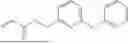


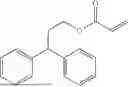

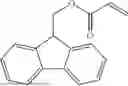


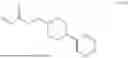


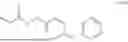

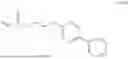


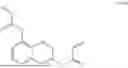


Sources:
- United States Patent and Trademark Office - verify current appl. status at the USPTO↗
Similar patent applications:
- » 20260077385
FILM FORMING METHOD, CURABLE COMPOSITION, AND ARTICLE MANUFACTURING METHOD - » 20240191088
Curable composition, film forming method and article manufacturing method - » 20250043138
CURABLE COMPOSITION, FILM FORMING METHOD AND ARTICLE MANUFACTURING METHOD - » 20260117010
CURABLE COMPOSITION, FILM FORMING METHOD AND ARTICLE MANUFACTURING METHOD - » 20250226218
FILM FORMING METHOD, ARTICLE MANUFACTURING METHOD, AND CURABLE COMPOSITION - » 20240101842
CURABLE COMPOSITION, FILM FORMING METHOD AND ARTICLE MANUFACTURING METHOD - » 20250277126
CURABLE COMPOSITION, FILM FORMING METHOD, AND ARTICLE MANUFACTURING METHOD - » 20250289960
MATERIAL KIT, CURABLE COMPOSITION, FILM FORMING METHOD, AND ARTICLE MANUFACTURING METHOD - » 20250250377
CURABLE COMPOSITION, FILM FORMING METHOD, PATTERN FORMING METHOD, AND ARTICLE MANUFACTURING METHOD - » 20250109253
CURABLE COMPOSITION, INVERTED PATTERN FORMING METHOD, FILM FORMING METHOD, AND ARTICLE MANUFACTURING METHOD
Recent applications in this class:
- » 20260126725 2026-05-07
CURABLE COMPOSITION AND METHODS FOR FORMING FILM AND MANUFACTURING ARTICLE - » 20260063995 2026-03-05
SEMICONDUCTOR PHOTORESIST COMPOSITIONS AND METHODS OF FORMING PATTERNS USING THE COMPOSITIONS - » 20260029711 2026-01-29
ENHANCED EUV MATERIALS, PHOTORESISTS AND METHODS OF THEIR USE. - » 20260010072 2026-01-08
METHOD FOR PRODUCING SOLUTION, METHOD FOR PRODUCING RESIST COMPOSITION, PATTERN FORMING METHOD, AND METHOD FOR PRODUCING ELECTRONIC DEVICE - » 20250390018 2025-12-25
PHOTOSENSITIVE RESIN COMPOSITION, PHOTOSENSITIVE ELEMENT, METHOD FOR FORMING RESIST PATTERN, AND METHOD FOR PRODUCING CIRCUIT BOARD - » 20250362598 2025-11-27
PHOTORESIST DEVELOPER AND METHOD OF DEVELOPING PHOTORESIST - » 20250362597 2025-11-27
RESIST COMPOSITION AND RESIST FILM FORMING METHOD USING SAME - » 20250278018 2025-09-04
THINNER COMPOSITION - » 20250189887 2025-06-12
SOLUTION, SOLUTION STORAGE BODY, ACTINIC RAY-SENSITIVE OR RADIATION-SENSITIVE RESIN COMPOSITION, PATTERN FORMING METHOD, AND MANUFACTURING METHOD OF SEMICONDUCTOR DEVICE - » 20250180989 2025-06-05
COMPOSITION FOR PRETREATMENT