TEXT SEQUENCE RECOMMENDATION METHOD AND SYSTEM BASED ON LARGE LANGUAGE MODEL
US20260140985A1
2026-05-21
19/365,283
2025-10-22
Smart Summary: A method and system for recommending text sequences uses a large language model to improve suggestions. It starts with preparing data, then pre-training the language model, fine-tuning it for specific sequences, and finally matching the recommendations. By using a large language model, the system can better understand and analyze text, moving away from traditional ID-based recommendations. This approach helps in situations where there is little initial data or when transferring knowledge from one area to another. Ultimately, the recommendations are refined using a specialized sequence model for better accuracy. 🚀 TL;DR
Abstract:
A text sequence recommendation method and system based on a large language model is disclosed, belonging to the technical field of recommendation algorithms. The method includes: a data preprocessing stage, a large language model pre-training stage, a sequence model fine-tuning stage and a matching stage. According to this disclosure, a large language model is introduced into a text sequence recommendation task, so that text can be better modeled by utilizing rich pre-training corpus of the large language model; meanwhile, sequence modeling is performed on the text, the capability of sequence recommendations modeling in a large model is activated, an ID-based recommendation paradigm in a traditional recommendation algorithm is eliminated, and recommendation task learning processing is better performed in a cold start scenario and a knowledge transfer scenario; and finally, a recommendation result is finally optimized by a sequence model.
Inventors:
- Zhi LI 6 🇨🇳 Guangzhou, China
- Feiran Huang 13 🇨🇳 Guangzhou, China
- Zhenghang Yang 2 🇨🇳 Guangzhou, China
- Zhibo Zhou 5 🇨🇳 Guangzhou, China
- Shaojun XIE 2 🇨🇳 Guangzhou, China
Assignee:
- JINAN UNIVERSITY 46 🇨🇳 Guangzhou, China
Applicant:
Interested in similar patents?
Get notified when new applications in this technology area are published.
Classification:
G06F16/3347 » CPC main
Information retrieval; Database structures therefor; File system structures therefor of unstructured textual data; Querying; Query processing; Query execution using vector based model
G06F40/166 » CPC further
Handling natural language data; Text processing Editing, e.g. inserting or deleting
G06F16/334 IPC
Information retrieval; Database structures therefor; File system structures therefor of unstructured textual data; Querying; Query processing Query execution
Description
CROSS-REFERENCE TO RELATED APPLICATIONS
The application claims priority to Chinese patent application No. 2024116609916, filed on Nov. 20, 2024, the entire contents of which are incorporated herein by reference.
TECHNICAL FIELD
This disclosure relates to the technical field of recommendation algorithms, and in particular, to a text sequence recommendation method and system based on a large language model.
BACKGROUND
In recent years, with the rapid development of computer technology, the Internet and related industries, a large amount of text-based data is generated on the Internet every day, showing the characteristics of big data. At the same time, artificial intelligence content generation technology is also developing rapidly, further accelerating the emergence of data information. How to quickly filter out the content that everyone is really interested in from such a huge amount of data has promoted the research of recommendation systems. Recommendation system is a technology that uses user behavior data and text information to provide users with personalized recommendations. It analyzes users' historical behavior and text features, uses algorithm models to predict content that users may be interested in, and makes recommendations. Such systems are widely used in text-based fields, such as news push, e-book recommendations, academic article retrieval, etc., aiming to improve user experience, enhance user stickiness, and promote the effective dissemination of content. The development of recommendation systems not only has a significant impact on users and businesses, but also provides rich practical opportunities for research and application in the fields of information technology and artificial intelligence.
As an important scenario in recommendation systems, sequence recommendation has always received widespread attention. In recommendation systems, the temporal information of user behavior is crucial. For user's next behavior prediction, whether a user's past behavior sequence can be effectively utilized is directly related to the accuracy of recommendations and user experience. The key to solving the sequential recommendation problem is to infer users' preferences from their historical behavior sequences through a series of technical means, and to perform personalized recommendations or searches based on the order of their behaviors. The existing method has the problems in sequential recommendation scenarios, such as insufficient use of text information in historical behavior information by ID-based coding logic, misalignment between behavior sequence pattern and recommendation algorithm space, and inaccurate recommendation due to the large language hallucination problem when using a large language model.
SUMMARY
An objective of this disclosure is to provide a text sequence recommendation technology based on a large language model in order to solve the above problems, which aims to overcome the defect of insufficient utilization of historical text content information in a text sequence recommendation scenario, and achieve a better recommendation effect by activating the sequence recommendation capability of the large language model and performing optimization in semantic space and vector space simultaneously and then alleviating the influence of the hallucination problem caused when the large model preforms a recommendation task.
This disclosure provides a text sequence recommendation method based on a large language model in order to achieve the above technical objective, including the following stages:
-
- a data preprocessing stage: converting historical text sequence data clicked by a user into an attribute key-value pair set to construct a dataset for large model training;
- a large language model pre-training stage: constructing the dataset into a prompt word training set for the large language model, and converting a sequence recommendation task into a natural language task and then model training is performed to obtain an optimal text sequence recommendation result at a semantic space level;
- a sequence model fine-tuning stage: fine-tuning a sequence model, so that a result based on the large language model is optimized for the sequence recommendation task; and
- a matching stage: matching text content in an embedding vector space dimension based on the processing results of the large language model stage and the sequence model stage, and outputting a sequence recommendation result.
Preferably, in the data preprocessing stage, the historical text sequence data is processed by removing punctuation marks, removing HTML tags, removing stop words, removing redundant spaces and performing word form restoration; and
-
- the processed data is constructed into a format including attribute keys and values, and is ranked in reverse order of interaction time, and an interaction sequence with more than 5 interactions is selected as the dataset.
Preferably, in the large language model pre-training stage, a missing corpus prompt dataset is constructed by masking values in a certain sequence within the interaction sequence;
-
- a contrastive learning prompt dataset is constructed based on user interacted text data and non-interacted text data; and
- the prompt word training set is constructed according to the fact that the missing corpus dataset and the contrastive learning prompt dataset are divided in a ratio of training set:validation set:test set of 8:1:1.
Preferably, in the large language model pre-training stage, a low-rank matrix is used as a supplement to fine-tuning parameters of a large model, and original parameters are merged with parameters of the low-rank matrix to form the overall parameters of the large language model for model training.
Preferably, in the large language model pre-training stage, a goal of training the large model is:
max ∑ x , y ∈ Z ∑ t = 1 ❘ "\[LeftBracketingBar]" y ❘ "\[RightBracketingBar]" log ( P u ( y t ❘ "\[LeftBracketingBar]" x , y < t ) ) ;
-
- where x represents the given task, yt is the large model output, y<t represents the output content between the large model output yt, and Pu represents the overall parameters of the large language model.
Preferably, in the sequence model fine-tuning stage, Langformer is used as the sequence model to prevent an excessively long interaction sequence from affecting a calculation result and to improve the calculation efficiency of an attention mechanism.
Preferably, in the sequence model fine-tuning stage, a reference vector is selected, a vector trained by the large language model is used as a positive sample of the reference vector, and a vector not trained by the large language model is used as a negative sample of the reference vector; and based on the reference vector, according to the positive sample and the negative sample, by setting a perturbation factor, a contrastive learning Loss function is constructed for fine-tuning a downstream task, where the contrastive learning Loss function is expressed as:
L c = - min ∑ i = 1 N [ E final - E D pos 2 - E final - E D neg 2 + α 1 ] ;
-
- where Efinal represents the reference vector, EDpos represents the positive sample, EDneg represents the negative sample, α1 represents the perturbation factor, and Lc represents the contrastive learning Loss function.
Preferably, in the process of fine-tuning the downstream task, a multilayer perceptron is used as the downstream task and is transferred using a cross entropy Loss, where the cross entropy Loss is expressed as:
L b = - ∑ i = 1 n ( y i log ( y ^ i ) + ( 1 - y i ) log ( 1 - y ^ i ) ) ;
-
- where n is the number of samples, yi is the actual click behavior, which is 1 if clicked, and is 0 if not clicked, and ŷi is the prediction probability of the model output;
- for the sequence model, the fine-tuning overall Loss function is: L=Lb+Lc.
Preferably, in the matching stage, text data to be recommended is obtained, reasoning is performed by the large model to obtain an output result of the large model, the output result and an embedding vector set of the text data to be recommended are reasoned using a downstream task model, and final text recommendation is performed according to a cosine similarity between a reasoning result and a vector in the embedding vector set to be recommended.
This disclosure discloses a text sequence recommendation system based on a large language model, wherein the system is configured to execute the above-mentioned text sequence recommendation method based on a large language model, the system including:
-
- a data preprocessing module, configured to convert historical text sequence data clicked by a user into an attribute key-value pair set to construct a dataset for large model training;
- a large language model pre-training module, configured to construct the dataset into a prompt word training set for the large language model, and convert a sequence recommendation task into a natural language task and then model training is performed to obtain an optimal text sequence recommendation result at a semantic space level;
- a sequence model fine-tuning module, configured to fine-tune a sequence model, so that a result based on the large language model is optimized for the sequence recommendation task; and
- a matching stage module, configured to match text content in an embedding vector space dimension based on the processing results of the large language model stage and the sequence model stage, and output a sequence recommendation result.
This disclosure has the following technical effects.
According to this disclosure, a large language model is introduced into a text sequence recommendation task, so that more comprehensive training corpus of the large language model can be utilized, and the utilization of text information in historical behavior information can be enhanced; meanwhile, based on contrastive learning and sequence construction prompts, the sequence recommendation capability of the large language model is stimulated. In view of the previous problems such as misalignment between sequence pattern and recommendation algorithm space, as well as large language model hallucination, etc., according to this disclosure, a sequence model is introduced to perform fine-tuning and optimization at the vector level, which can effectively match different spaces and perform vector fitting, thereby alleviating the problem of large language model hallucination and effectively improving the performance of text sequence recommendation.
BRIEF DESCRIPTION OF DRAWINGS
In order to more clearly illustrate the embodiments of this disclosure or the technical solutions in the prior art, the drawings to be used in the embodiments will be briefly introduced below. Obviously, the drawings described below are only some embodiments of this disclosure. Ordinary technicians in this field can obtain other drawings according to these drawings without paying creative work.
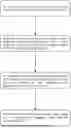
FIG. 1 is a flow chart of steps of a method according to this disclosure;
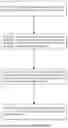
FIG. 2 is a schematic diagram of training data processing according to this disclosure;
FIG. 3 is a schematic diagram of a large language model training process according to this disclosure;
FIG. 4 is a schematic diagram of fine-tuning a sequence model according to this disclosure; and
FIG. 5 is a schematic diagram of sequence recommendation result matching according to this disclosure.
DETAILED DESCRIPTION OF THE EMBODIMENTS
In order to make the objectives, technical solutions and advantages of the embodiments of this disclosure clearer, the technical solutions in the embodiments of this disclosure will be clearly and completely described below in conjunction with the drawings in the embodiments of this disclosure. Obviously, the described embodiments are only some, rather than all of the embodiments of this disclosure. The components of the embodiments of this disclosure, as generally described and illustrated in the figures herein, may be arranged and designed in a wide variety of different configurations. Therefore, the following detailed description of the embodiments of this disclosure provided in the accompanying drawings is not intended to limit the scope of this disclosure for protection, but merely represents selected embodiments of this disclosure. Based on the embodiments of this disclosure, all other embodiments obtained by those skilled in the art without making any creative efforts shall fall within the scope of protection of this disclosure.
As shown in FIGS. 1-5, the main steps of the text sequence recommendation algorithm technology based on a large language model provided by this disclosure are as follows: training data preprocessing, large language model training, sequence model fine-tuning, and sequence recommendation result matching; and specific details include the following:
S1. Training Data Preprocessing:
-
- based on text content clicked by a user, historical text sequence data clicked by the user is constructed, and a recommended sequence text dataset required in the subsequent steps is constructed by converting the historical text sequence data into an attribute key-value pair set, where each text is represented by an attribute dictionary, which includes different attribute feature information of the text, and the final processing process is shown in FIG. 2.
S1.1. Training Data Preprocessing:
-
- collected training data is processed, including: punctuation marks are removed: punctuation marks are removed from text to reduce noise; HTML tags are removed: if the captured text contains HTML tags, the HTML tags are cleaned up using regular expressions or an HTML parser (such as BeautifulSoup); stop words are removed: stop words (such as “the”, “is”, etc.) may not be helpful for a task, and these words are removed to reduce input dimensions; redundant spaces are removed: there may be redundant spaces or line breaks in the text, which should be cleaned up uniformly; and word form restoration (lemmatization) is performed: a word may be restored to its dictionary form, for example, “running” becomes “run”. A word form restoration tool in spaCy or NLTK may be used.
s1.2. Construction of a Text Sequence Key-Value Pair Dataset:
-
- based on the data processed in step S1.1, a text sequence key-value pair dataset is constructed according to the task; and for the text data clicked by the user, the data is constructed into a dictionary value of {attribute key 1: value 1; attribute key 2: value 2; . . . attribute key n; value n}, denoted as D. The ith attribute key and value are represented by Keyi and Valuei, and are ranked in reverse order of interaction time. For a user, a user interacted text sequence is a sequence composed of D, denoted as Seq (DE Seq). The overall data processing flow is as shown in FIG. 1. For each user, the length of a user interacted sequence is not necessarily the same. An interaction sequence with more than 5 interactions is selected as the final dataset in order to reduce the impact of insufficient interaction on model training.
S2. Large Language Model Training:
-
- as shown in FIG. 3, based on the dataset obtained in step S1, a prompt word training set of the large language model is constructed, a sequence recommendation task is converted into a natural language task, and the large language model is pulled for training to obtain an optimal text sequence recommendation result at a semantic space level.
S2.1. Large Language Model Acquisition:
-
- large language models are usually divided into two types: open-source model and paid model. Open-source models are usually model weights, such as Meta's Lima series and Ali's Qwen series. Paid models are usually invoked via API interfaces, such as OpenAI's ChatGPT series. In this disclosure, taking the Llama series as an example, fine-tuning can be made to the other large language models, and the obtained original large model parameters can be represented as L0.
S2.2. Construction of a Large Language Model Training Prompt Word Dataset:
large model prompt words are constructed using the dataset constructed in step S1.2; a missing corpus prompt dataset is constructed by masking values in a certain sequence within the interaction sequence, denoted as Cq. Masking certain content in the sequence is completed by the large language model, which can significantly improve the learning capability of the large language mode for the sequence content. For promptmask∈Cq, the constructed features are as follows:
-
- Q: The user has interacted with the following text content. The content ranked in reverse order of interaction time is [Seqmask]. Please predict the missing content;
- A: The complete sequence data the user has interacted with is [Seq];
- In the above content, Seqmask is a complete text interaction sequence to be supplemented after masking certain positions, and Seq is a complete user interacted text sequence.
A contrastive learning prompt dataset is constructed according to user interacted text data and non-interacted text data, denoted as Cc. By constructing a contrastive learning prompt at the text level, the core idea of contrastive learning, “bringing similarities closer and dissimilarities further apart,” is instilled into the large language model through natural language. For promptCc∈Cc in the contrastive learning prompt dataset, the constructed features are as follows:
-
- The user clicked on item [Di] and also clicked on item [Dj], but did not click on item [Dk];
- The missing corpus dataset and the contrastive learning prompt dataset are divided in a ratio of training set:validation set:test set of 8:1:1. The training set, validation set, and test set are represented by Tcq, Tcc, Vcq, Vcc, Tcq, and Tcc respectively.
S2.3. Training of Large Language Model According to the Prompt Dataset:
-
- for the original large model Lo, fully training its parameters is a time-consuming and labor-intensive task. A low-rank matrix is used as a supplement to fine-tuning parameters of the large model in order to facilitate fine-tuning training. The principle of the LoRA method is to use rank decomposition and then merge the trained parameters with the original parameters of the large model. Since the parameters of the original model are not trained, only fewer parameters are needed to approach the effect of originally training all the parameters. The original parameters of the large language model are denoted as Po, and the parameters of the low-rank matrix after training are denoted as P1. The original parameters Po are merged with the parameters P1 of the low-rank matrix. After merging, the overall parameters of the large language model are expressed as Pu, which can be expressed as follows: Pu=Po+P1.
The overall task of step S2 is to make the output yt of the trained large language model Lt as close as possible to the given task x and the output content y<t before the output yt, so as to maximize the output yt. The overall optimization goal is shown as follows:
max ∑ x , y ∈ Z ∑ t = 1 ❘ "\[LeftBracketingBar]" y ❘ "\[RightBracketingBar]" log ( P u ( y t ❘ "\[LeftBracketingBar]" x , y < t ) ) .
S2.4. Acquisition of an Original Text Interaction Embedding Vector:
based on the text attribute key-value pair dictionary D constructed in step S1.2, the text attribute key-value pair dictionary D is input into the trained large language model Lt in step S2.2. Since the original structure of the large language model is a multilayer Transformer structure, referring to the structure of a Transformer model, the vector output by its embedding layer is taken as an attribute key-value embedding vector Ed of D under the model encoding of model Lt. The process can be expressed by the following formula:
E d = L t ( D ) ;
This facilitates subsequent fine-tuning of the sequence model. Based on the data sequence Seq and the attribute key-value pair dictionary D in step S1.2, an embedding vector Eseq is trained based on the sequence of the trained large language model Lt. The training process can be expressed as follows:
E seq = L t ( Seq ( D 1 , D 2 , … , D n ) ) ;
S3. Fine-Tuning of a Sequence Model:
-
- a sequence model of a sequence prediction task is fine-tuned based on the dataset constructed in step S1 using the text embedding vector output by the large language model trained in step S2 in order to align the sequence recommendation results at a finer level, thereby enhancing the sequence prediction information at the embedding vector level and reducing the impact of the large language model output hallucination on the final result. The overall process is as shown in FIG. 4.
S3.1. Initialization of a Sequence Model Tensor:
-
- for the sequence model, in order to prevent an excessively long interaction sequence from affecting a calculation result and to improve the calculation efficiency of an attention mechanism, in this disclosure, Langformer is selected as the sequence model, which is similar to the traditional Transformer model in structure, but is optimized in attention layer mechanism, that is, a traditional self-attention module is converted into a sliding window attention module. The sliding window attention module stipulates that each token can only see w tokens in a set window, so its complexity is reduced from O(n2) of the traditional attention mechanism to O(n*w)w<<n. For the sequence model Langformer, the sequence model trained in step S2.3 is used as its initial embedding vector. Before the initial embedding vector, an initial embedding vector Ecls∈n×m of a sequence identifier [CLS] is added, where n is the size of each training batch number, m is the vector dimension when initializing Ecls, and its value is randomly initialized. The final initialized model tensor Einit can be expressed as:
Einit = Ecls Eseq ;
The initialized vector is trained and fitted by Langformer to obtain the Langformer output vector Efinal.
S3.2 Fine-Tuning of a Downstream Task Based on the Sequence Model:
-
- for the sequence model, based on the tensor initialization in step S3.1, the downstream task is fine-tuned. The downstream task is mainly to output a matching score Score between the embedding vector Efinal output by the sequence model and the attribute key-value embedding vector trained in step S2.3. The fine-tuning training steps for each user Ui are as follows:
- Taking the embedding vector Efinal after training in step S3.1 as a reference vector;
- Taking the interacted text attribute key-value pair dictionary Dk of the user Ui after training sequence, and the vector EDpos obtained after training the large language model Lt as positive samples of the reference vector Efinal for comparison;
- Taking the non-interacted text attribute key-value pair dictionary Dk of the user Ui in all text data, and the vector obtained after training the large language model Lt as negative samples of the reference vector Efinal for comparison; and
- Selecting one positive sample and h negative samples, constructing a contrastive learning loss function for learning, the contrastive learning loss function Le being shown as follows, where α1 is a perturbation factor:
- for the sequence model, based on the tensor initialization in step S3.1, the downstream task is fine-tuned. The downstream task is mainly to output a matching score Score between the embedding vector Efinal output by the sequence model and the attribute key-value embedding vector trained in step S2.3. The fine-tuning training steps for each user Ui are as follows:
L c = - min ∑ i = 1 N [ E final - E D pos 2 - E final - E D neg 2 + α 1 ] .
The downstream task model here only needs to use a multilayer perceptron. In this disclosure, the downstream task model adopts a four-layer structure. Specifically, the first layer is a linear layer with a dimension space of m×n, where m and n are an input feature dimension size and an output feature dimension size, respectively; the second layer is a nonlinear layer with a tanh function as an activation function; the third layer is a linear layer with a dimension space of n×k, where k is the same as the dimension of the attribute key-value pair dictionary vector ED output in the large language model; and in the fourth layer, the scores of Efinal and ED are calculated, and a cross entropy Loss is transferred, which can be expressed as follows:
L b = - ∑ i = 1 n ( y i log ( y ^ i ) + ( 1 - y i ) log ( 1 - y ^ i ) ) ;
-
- where n is the number of samples, yi is the actual click behavior, which is 1 if clicked, and is 0 if not clicked, and ŷi is the prediction probability of the model output.
For the sequence model, the fine-tuned overall Loss function is: L=Lb+Lc.
S4. Sequence Recommendation Result Matching:
-
- for users who need prediction, their historical interaction sequences are generated according to step S1, and prompt words are constructed; prompt word interaction is performed on the trained model in S2 to obtain output recommendation results; and then, the recommendation results are input into the sequence model to generate a final embedding text vector for retrieval, and matching is performed in a vector database based on the embedding text vector, and the K bits with the highest matching scores are output as the recommendation results.
S4.1. Sorting of Data to be Recommended:
-
- for the text data to be recommended, the text data to be recommended is sorted into the attribute key-value pair form required for model input according to step S1.1, and a prompt use case required by the large model is constructed according to step S2.2.
S4.2. Large Model Reasoning:
-
- the prompt use case sorted in step S4.1 is used to construct the prompt Promptfinal as follows:
The following is a user interacted text content data sequence [Seq]. Please output the possible interacted text content in a format of {attribute key 1: attribute value 1, . . . , attribute key n: attribute value n}, take into account the content that may appear simultaneously with the interacted content, and avoid the content that cannot appear simultaneously.
{attribute key 1: attribute value 1, . . . , attribute key n: the attribute value n} is used as a text recommendation result output by the large language model, represented by repfinal, and is input into the large language model Lt as input data to obtain its sequence embedding vector, represented as Erepfinal. Meanwhile, all the text data attribute key-value pair dictionaries D to be matched are input into the large language model Lt to obtain their embedding vectors, represented as ED, and the embedding vectors are stored in the vector database.
S4.3. Sequence Model Downstream Task Matching:
-
- the large model output result Erepfinal obtained in step S4.2, and the embedding vector set Cemd to be recommended are reasoned using the downstream task model to obtain its final representation embedding vector Eult. A cosine similarity between the output result and the vector in the embedding vector set to be recommended is calculated, and k vectors with the highest similarity are selected for final text recommendation. The process can be expressed as follows:
Sim = E ult · E D E ult · E D E D ∈ C emb Final rep = TopK ( Sim )
Finalrep in the above formula represents the final recommendation result.
According to this disclosure, a large language model is introduced into a text sequence recommendation task, so that text can be better modeled by utilizing rich pre-training corpus of the large language model; meanwhile, sequence modeling is performed on the text, the capability of sequence recommendation modeling in a large model is activated, an ID-based recommendation paradigm in a traditional recommendation algorithm is activated, and recommendation task learning processing is better performed in a cold start scenario and a knowledge transfer scenario; and finally, a recommendation result is finally optimized by a sequence model, so that the problem output results of previous large language models cannot be accurately matched due to hallucination can be solved.
This disclosure is described with reference to flowcharts and/or block diagrams of methods, apparatus (systems), and computer program products according to embodiments of this disclosure. It should be understood that each flow and/or block in the flowcharts and/or block diagrams, and combinations of flows and/or blocks in the flowcharts and/or block diagrams, can be implemented by computer program instructions. These computer program instructions can be provided to a processor of a general-purpose computer, a special-purpose computer, an embedded processor, or other programmable data processing device to produce a machine, so that the instructions executed by the processor of the computer or other programmable data processing device produce a device for implementing the functions specified in one or more processes in the flowchart and/or one or more blocks in the block diagram.
In the description of this disclosure, it should be understood that the terms “first” and “second” are used for descriptive purposes only and cannot be understood as indicating or implying relative importance or implicitly indicating the number of the indicated technical features. Therefore, features defined as “first” or “second” may explicitly or implicitly include one or more of the features. In the description of this disclosure, “plurality” means two or more, unless otherwise clearly defined.
Obviously, those skilled in the art can make various modifications and variations to this disclosure without departing from the spirit and scope of this disclosure. Thus, if these modifications and variations of this disclosure fall within the scope of the claims of this disclosure and their equivalents, this disclosure is intended to include these modifications and variations.
Claims
What is claimed is:1. A text sequence recommendation method based on a large language model, comprising the following stages:
a data preprocessing stage: converting historical text sequence data clicked by a user into an attribute key-value pair set to construct a dataset for large model training;
a large language model pre-training stage: constructing the dataset into a prompt word training set for the large language model, and converting a sequence recommendation task into a natural language task and then model training is performed to obtain an optimal text sequence recommendation result at a semantic space level;
a sequence model fine-tuning stage: fine-tuning a sequence model, so that a result based on the large language model is optimized for the sequence recommendation task; and
a matching stage: matching text content in an embedding vector space dimension based on the processing results of the large language model stage and the sequence model stage, and outputting a sequence recommendation result, wherein
in the sequence model fine-tuning stage, Langformer is used as the sequence model to prevent an excessively long interaction sequence from affecting a calculation result and to improve the calculation efficiency of an attention mechanism;
in the sequence model fine-tuning stage, a reference vector is selected, a vector trained by the large language model is used as a positive sample of the reference vector, and a vector not trained by the large language model is used as a negative sample of the reference vector; and
based on the reference vector, according to the positive sample and the negative sample, by setting a perturbation factor, a contrastive learning Loss function is constructed for fine-tuning a downstream task, wherein the contrastive learning Loss function is expressed as:
L c = - min ∑ i = 1 N [ E final - E D pos 2 - E final - E D neg 2 + α 1 ] ;
wherein, Efinal represents the reference vector, EDpos represents the positive sample, EDneg represents the negative sample, α1 represents the perturbation factor, and Lc represents the contrastive learning Loss function.
2. The text sequence recommendation method based on a large language model according to claim 1, wherein:
in the data preprocessing stage, the historical text sequence data is processed by removing punctuation marks, removing HTML tags, removing stop words, removing redundant spaces, and performing word form restoration; and
the processed data is constructed into a format including attribute keys and values, and is ranked in reverse order of interaction time, and an interaction sequence with more than 5 interactions is selected as the dataset.
3. The text sequence recommendation method based on a large language model according to claim 2, wherein:
in the large language model pre-training stage, a missing corpus prompt dataset is constructed by masking values in a certain sequence within the interaction sequence;
a contrastive learning prompt dataset is constructed according to user interacted text data and non-interacted text data; and
the prompt word training set is constructed according to the fact that the missing corpus dataset and the contrastive learning prompt dataset are divided in a ratio of training set:validation set:test set of 8:1:1.
4. The text sequence recommendation method based on a large language model according to claim 3, wherein:
in the large language model pre-training stage, a low-rank matrix is used as a supplement to fine-tuning parameters of a large model, and original parameters are merged with parameters of the low-rank matrix to form the overall parameters of the large language model for model training.
5. The text sequence recommendation method based on a large language model according to claim 4, wherein:
in the large language model pre-training stage, a goal of training the large model is:
max ∑ x , y ∈ Z ∑ t = 1 ❘ "\[LeftBracketingBar]" y ❘ "\[RightBracketingBar]" log ( P u ( y t ❘ "\[LeftBracketingBar]" x , y < t ) ) ;
wherein, x represents the given task, yt is the large model output, y<t represents the output content between the large model output yt, and Pu represents the overall parameters of the large language model.
6. The text sequence recommendation method based on a large language model according to claim 1, wherein:
in the process of fine-tuning the downstream task, a multilayer perceptron is used as the downstream task and is transferred using a cross entropy Loss, where the cross entropy Loss is expressed as:
L b = - ∑ i = 1 n ( y i log ( y ^ i ) + ( 1 - y i ) log ( 1 - y ^ i ) ) ;
wherein, n is the number of samples, yi is the actual click behavior, which is 1 if clicked, and is 0 if not clicked, and ŷi is the prediction probability of the model output;
for the sequence model, the fine-tuned overall Loss function is: L=Lb+Lc.
7. The text sequence recommendation method based on a large language model according to claim 6, wherein:
in the matching stage, text data to be recommended is obtained, reasoning is performed by the large model to obtain an output result of the large model, the output result and an embedding vector set of the text data to be recommended are reasoned using a downstream task model, and final text recommendation is performed according to a cosine similarity between a reasoning result and a vector in the embedding vector set to be recommended.
8. A text sequence recommendation system based on a large language model, wherein the system is configured to execute the text sequence recommendation method based on a large language model according to claim 1, the system comprising:
a data preprocessing module, configured to convert historical text sequence data clicked by a user into an attribute key-value pair set to construct a dataset for large model training;
a large language model pre-training module, configured to construct the dataset into a prompt word training set for the large language model, and convert a sequence recommendation task into a natural language task and then model training is performed to obtain an optimal text sequence recommendation result at a semantic space level;
a sequence model fine-tuning module, configured to fine-tune a sequence model, so that a result based on the large language model is optimized for the sequence recommendation task; and
a matching stage module, configured to match text content in an embedding vector space dimension based on the processing results of the large language model stage and the sequence model stage, and output a sequence recommendation result.
Images & Drawings included:








Sources:
- United States Patent and Trademark Office - verify current appl. status at the USPTO↗
Recent applications in this class:
- » 20260147812 2026-05-28
A MODULE AND METHOD FOR GENERATING AN ENHANCED RESPONSE USING A RETRIEVAL AUGMENTED GENERATION MODEL - » 20260140986 2026-05-21
System and Method for Persistent Cognitive Machines with a Metacognitive Fabric - » 20260140984 2026-05-21
ONTOLOGY-GROUNDED RETRIEVAL-AUGMENTED GENERATION - » 20260127207 2026-05-07
TECHNIQUES FOR DISCOVERING PROCESSES USING NATURAL LANGUAGE INPUT - » 20260127206 2026-05-07
APPLICATION GENERATION SYSTEM BASED ON INGESTED DOCUMENTS USING INTEGRATED PROGRAMMATIC AND SPECIALIZED GUIDED AND CONSTRAINED ARTIFICIAL INTELLIGENCE - » 20260127205 2026-05-07
CONTEXTUAL RETRIEVAL FOR MULTI-TENANT RETRIEVAL-AUGMENTED GENERATION (RAG) WITH ADAPTIVE LEARNING - » 20260119557 2026-04-30
SYSTEM AND METHOD FOR NATURAL LANGUAGE PROCESSING WITH FORMATTED DATA - » 20260119556 2026-04-30
METHOD AND SYSTEM FOR RETRIEVING INFORMATION - » 20260119555 2026-04-30
SYSTEM AND METHOD FOR SELECTING A CAPABILITY OF AN ARTIFICIAL INTELLIGENCE (AI) PRODUCTIVITY TOOL-ENABLABLE SOFTWARE APPLICATION VIA VECTORIZED AND NORMALIZED SYSTEM/COMPONENT CONTEXT TELEMETRY DATA - » 20260119554 2026-04-30
SECURITY COUNTERMEASURE SUPPORT SYSTEM
Recent applications for this Assignee:
- » 20260113353 2026-04-23
METHOD AND SYSTEM BASED ON CONTRASTIVE LEARNING FOR ASSISTING RECOMMENDATION SYSTEM TO DEFEND AGAINST SHILLING ATTACKS - » 20260106727 2026-04-16
BOOTSTRAPPABLE FULLY HOMOMORPHIC ATTRIBUTE-BASED ENCRYPTION METHOD WITH UNBOUNDED CIRCUIT DEPTH - » 20260072015 2026-03-12
Model for simulating ALS constructed based on CASP4 and its construction method - » 20260063834 2026-03-05
HOLLOW-CORE FIBER AND OPTICAL TRANSMISSION SYSTEM - » 20250137994 2025-05-01
MASS SPECTROMETRY METHOD AND SYSTEM - » 20250066742 2025-02-27
VIRAL VECTOR AND RECOMBINANT SIMIAN ADENOVIRUS - » 20250061458 2025-02-20
METHOD AND SYSTEM FOR ERROR-RESILIENT ASSET TRANSFER IN BLOCKCHAIN - » 20250061446 2025-02-20
METHOD AND SYSTEM FOR ESCROW-FREE ATOMIC CROSS-CHAIN SWAP WITH RECIPIENT'S CONFIRMATION - » 20240223388 2024-07-04
METHOD AND SYSTEM FOR ATOMIC, CONSISTENT AND ACCOUNTABLE CROSS-CHAIN REWRITING - » 20240184838 2024-06-06
Diversified recommendation method for news based on graph neural network and its device