WIRELESS CHARACTERISTICS INFORMATION REPORTING FOR TIME SENSITIVE COMMUNICATION
US20260142880A1
2026-05-21
19/118,783
2022-11-07
Smart Summary: A method has been developed to share important information about wireless communication for time-sensitive tasks. It works within a system called Time-Sensitive Networking (TSN), which connects different nodes in a network. The method identifies changes in certain wireless characteristics that affect communication. After detecting these changes, the information is sent to a Centralized Network Controller (CNC). This helps the CNC adjust the TSN system to maintain efficient communication. 🚀 TL;DR
Abstract:
Embodiments of the present disclosure provide a method performed for transmission of information related to wireless characteristics for time sensitive communication in a Time-Sensitive Networking, TSN, system, the TSN system being integrated to a wireless communication network, operated as a virtual TSN node, the virtual TSN node being connected to a plurality of TSN nodes, the method being performed by a network node in the wireless communication network operated as the TSN node, the method includes determining variation in one or more nodal characteristic parameters related to the wireless communication network operated as the TSN node. The method includes transmitting the information related to the variation in the one or more nodal characteristic parameters, the information being intended for a Centralized Network Controller, CNC, to enable the CNC for performing reconfiguration of the TSN system.
Inventors:
- Janos Harmatos 48 🇭🇺 Budapest, Hungary
- Balázs Varga 64 🇭🇺 Budapest, Hungary
- Joachim SACHS 83 🇸🇪 Sollentuna, Sweden
- György MIKLÓS 13 🇭🇺 PILISBOROSJENÖ, Hungary
- Dhruvin Patel 31 🇩🇪 Aachen, Germany
- Marilet De Andrade Jardim 18 🇸🇪 Kista, Sweden
- János FARKAS 6 🇭🇺 KECSKEMÉT, Hungary
Assignee:
- TELEFONAKTIEBOLAGET LM ERICSSON (PUBL) 18,111 🇸🇪 Stockholm, Sweden
Applicant:
Interested in similar patents?
Get notified when new applications in this technology area are published.
Classification:
H04L41/0894 » CPC main
Arrangements for maintenance, administration or management of data switching networks, e.g. of packet switching networks; Configuration management of networks or network elements Policy-based network configuration management
H04L41/0895 » CPC further
Arrangements for maintenance, administration or management of data switching networks, e.g. of packet switching networks; Configuration management of networks or network elements Configuration of virtualised networks or elements, e.g. virtualised network function or OpenFlow elements
H04W24/08 » CPC further
Supervisory, monitoring or testing arrangements Testing, supervising or monitoring using real traffic
Description
TECHNICAL FIELD
The present disclosure relates generally to the field of Time Sensitive Networking, TSN, systems. More particularly, it relates to method, network node, and computer program products for reporting of information related to wireless characteristics for time sensitive communication.
BACKGROUND
An automation industry is undergoing a digital transformation towards the “Fourth Industrial Revolution” (Industry 4.0), which involves smart manufacturing. Flexible connectivity infrastructure provided by the automation industry is a key enabler for manufacturing to interconnect machines, products and all kinds of other devices in a flexible, secure, and consistent manner.
Communication technology enablers for the digital transformation of the automation industry are Time Sensitive Networking, TSN, system (TSN network) on a wireline side, and a Third Generation Partnership Project, 3GPP, Fifth Generation, 5G, network on a wireless side. The TSN system is based on the Institute of Electrical and Electronics Engineers, IEEE 802.3 Ethernet standard. The TSN system provides deterministic services through IEEE 802. 3 networks, for example, time synchronization, guaranteed low latency transmissions and high reliability. The 5G network, an alternative to a wired connectivity solution supports communication with unprecedented reliability and very low latency, as well as massive Internet of Things, IOT, connectivity. Thus, the TSN system and the 5G network are considered as complementary technologies in providing deterministic communication services, thereby paying the way towards future advanced manufacturing systems and other vertical areas. Also, the TSN system and the 5G network are essential for network convergence that is a support of all kinds of communication services via a same network infrastructure. Therefore, the TSN system can be integrated to the 5G network, which supports the deterministic communication services over heterogeneous infrastructure and multiple application domains required for the network convergence. The integration of the TSN system to the 5G system provides converged communication on the same network infrastructure for a wide range of services, for example, time sensitive applications that require deterministic, reliable and low latency communications.
With the integration of the TSN system to the 5G network, the 5G network is deployed as a set of IEEE compliant virtual TSN nodes (also be referred to as virtual TSN bridges). The virtual-TSN node can be connected to TSN nodes (also be referred to wired TSN nodes/bridges). The 5G network comprises a 5G core network and a Radio Access Network, RAN. A User Plane Function, UPF, of the 5G core network acts as a gateway to the TSN system. The RAN spans over a production plant to provide wireless connectivity to one or more User Equipments, UEs.
The 5G network/virtual TSN node defines several gateways between the TSN system and the 5G network. The gateways include a TSN Application Function, AF, device side TSN translators, DS-TTs on the UEs, and network side TSN translators, NW-TT on the UPF. The TSN AF connects a Centralized Network Controller, CNC, a Centralized User Configuration, CUC and a 5G control plane.
End-to-end, E2E, time sensitive/deterministic communication provided by the integrated TSN-5G system requires deterministic transmission latency between an ingress port and an egress port. The deterministic transmission latency may be described as an upper bound/maximum allowed packet delay, PD_max, together with a maximum tolerated Packet Delay Variation, PDV. An Ethernet based TSN system can provide a small PDV due to wired connectivity characteristics. A minimum and maximum delay between port pairs of the TSN node are key characteristics for computations to achieve the deterministic transmission latency. However, there are some substantial differences between the 5G network/virtual TSN node and the TSN nodes of the TSN system. One of the differences is that PDV of the 5G network remains considerable higher, for example, 1-2 orders of magnitude compared to the wired TSN nodes where latencies can be controlled at a level of 10's microsecond. Thus, a key challenge in achieving the deterministic transmission latency in the integrated TSN-5G network is higher PDV of the 5G network. In addition, the higher PDV of the 5G network makes it difficult to practically apply time scheduled transmission for some time schedule configurations, even though a support for 802.1Qbv has been targeted in the 5G standard via a hold and forward mechanism.
SUMMARY
Compared to the wired TSN node, the 5G network operating as the virtual TSN node has multiple nodes and complex topology within itself and a more dynamic nature. In accordance with the topology, node, and link characteristics of the virtual TSN node, the CNC determines a network configuration that supports the TSN streams such that the TSN streams meet deterministic transmission latency. If the CNC does not determine the network configuration efficiently, the PDV of the virtual TSN node may increase. Thus, it is important for the CNC to efficiently determine the network configuration for reducing the PDV while achieving the deterministic communication/time sensitive communication.
Consequently, there is a need for an improved method and arrangement for transmission of information related to wireless characteristics, which is used to efficiently configure the TSN system for reducing the PDV that alleviates at least some of the above-cited problems.
It is therefore an object of the present disclosure to provide a method, a network node, and a computer program product for transmission of the information related to the wireless characteristics for time sensitive communication in the TSN system, to mitigate, alleviate, or eliminate all or at least some of the above-discussed drawbacks of presently known solutions.
This and other objects are achieved by means of a method, a network node, and a computer program product as defined in the appended claims. The term exemplary is in the present context to be understood as serving as an instance, example or illustration.
According to a first aspect of the present disclose, a method for transmission of information related to wireless characteristics for time sensitive communication in a Time Sensitive Networking, TSN, system is provided. The TSN system is integrated to a wireless communication network being operated as a virtual TSN node. The virtual TSN node is connected to a plurality of TSN nodes. The method is performed by a network node in the wireless communication network operated as the virtual TSN node. The method comprises determining variation in one or more nodal characteristic parameters related to the wireless communication network operated as the virtual TSN node. The method comprises transmitting the information related to the variation in the one or more nodal characteristic parameters, said information being intended for a Centralized Network Controller, CNC, to enable the CNC for performing reconfiguration of the TSN system.
In some embodiments, the step of determining variation in the one or more nodal characteristic parameters related to the wireless communication network comprises obtaining information identifying predetermined nodal values of a configuration of a Radio Access Network, RAN, associated with the network node. The method comprises monitoring the one or more nodal characteristic parameters in relation to the obtained predetermined nodal values to determine over time, the variation in the one or more nodal characteristic parameters in relation to the obtained predetermined nodal values.
In some embodiments, the step of determining variation in the one or more nodal characteristic parameters related to the wireless communication network comprises performing Quality of Service, QoS, monitoring and determining variation in the one or more nodal characteristic parameters related to the wireless communication network from the performed QoS monitoring.
In some embodiments, the one or more nodal characteristic parameters relates to the wireless communication network comprise one or more of: latency characteristics of the wireless communication network, latency percentiles representing an expected latency range for the latency characteristics, distribution of latency within at least one port pair, representing a mapping of a device side TSN translator, DS-TT, associated with the UE and a network side translator, NW-TT, associated with a User Plane Function, UPF, of a core network, CN, connected to the network node, and minimum/maximum latency within the at least one port pair.
In some embodiments, the step of transmitting the information related to the variation in the one or more nodal characteristic parameters related to the wireless communication network comprises identifying at least one operation mode of the network node. The method comprises transmitting the information related to the variation in the one or more nodal characteristic parameters of the wireless communication network intended to the CNC for each port pair in the identified at least one operation mode of the network node.
In some embodiments, the step of transmitting the information related to the variation in the one or more nodal characteristic parameters related to the wireless communication network comprises identifying at least operation mode of the network node. The method comprises transmitting the information related to the variation in the one or more nodal characteristic parameters related to the wireless communication network and information indicating the identified at least one operation mode of the network node intended to the CNC.
In some embodiments, the method further comprises transmitting information indicating a configuration of the wireless communication network with the information related to the variation in the one or more nodal characteristic parameters of the wireless communication network intended to the CNC, enabling the CNC to perform reconfiguration of the TSN system.
According to a second aspect of the present disclosure, a method performed for reception of information related to wireless characteristics for time sensitive communication in a Time-Sensitive Networking, TSN, system is provided. The TSN system is integrated to a wireless communication network operated as a virtual TSN node. The virtual TSN node is connected to a plurality of TSN nodes. The method is performed by a Centralized Network Controller, CNC, being connected to the wireless communication network. The method comprises receiving, from a network node in the wireless communication network, information related to variation in one or more nodal characteristic parameters related to the wireless communication network. In accordance with the received information, the method comprises performing reconfiguration of the TSN system.
In some embodiments, the step of receiving the information related to variation in the one or more nodal characteristic parameters related to the wireless communication network comprises receiving the information related to variation in one or more nodal characteristic parameters related to the wireless communication network for each port pair in each operation mode of the network node, wherein the port pair representing a mapping of a device side TSN translator, DS-TT, associated with a User Equipment, UE, connected to the network node and a network side translator, NW-TT, associated with a User Plane Function, UPF, of a core network, CN, connected to the network node.
In some embodiments, the step of receiving the information related to variation in the one or more nodal characteristic parameters related to the wireless communication network further comprises receiving information indicating an operation mode of the network node.
In some embodiments, the method further comprises scheduling network configurations for the TSN system integrated to the wireless communication network for a change in the operation mode of the network node in the wireless communication network.
According to a third aspect of the present disclosure, an apparatus of a network node in a wireless communication network configured for transmission of information related to wireless characteristics for time sensitive communication in a Time-Sensitive Networking, TSN, system is provided. The TSN system is integrated to a wireless communication network being operated as a virtual TSN node. The virtual TSN node is connected to a plurality of TSN nodes. The apparatus is configured to cause determination of variation in one or more nodal characteristic parameters related to the wireless communication network. Upon the determination, the apparatus is configured to cause transmission of the information related to the variation in the one or more nodal characteristic parameters, said information being intended for a Centralized Network Controller, CNC, to enable the CNC for performing reconfiguration of the TSN system.
A fourth aspect is a network node comprising the apparatus of the third aspect.
According to a fifth aspect of the present disclosure, a Centralized Network Controller, CNC, being connected to a wireless communication network configured for reception of Radio Access Network, RAN, assistance information for time sensitive communication in a Time-Sensitive Networking, TSN system is provided. The TSN system is integrated to the wireless communication network being operated as a virtual TSN node. The virtual TSN node is connected to a plurality of TSN nodes. The CNC is adapted for receiving, from a network node in the wireless communication network, information related to variation in one or more nodal characteristic parameters related to the wireless communication network. The CNC is adapted for performing, in accordance with the received information, reconfiguration of the TSN system.
According to a sixth aspect of the present disclosure, there is provided a computer program product comprising a non-transitory computer readable medium, having thereon a computer program comprising program instructions. The computer program is loadable into a data processing unit and configured to cause execution of the method according to any of the first and second aspects when the computer program is run by the data processing unit.
In some embodiments, any of the above aspects may additionally have features identical with or corresponding to any of the various features as explained above for any of the other aspects.
An advantage of some embodiments is that alternative and/or improved approaches are provided for transmission of information related to wireless characteristics for time sensitive communication in the TSN system.
An advantage of some embodiments is that a wireless and richer model may be provided for the wireless communication network to proactively transmit/report information related to variation in the one or more nodal characteristic parameters related to the wireless communication network to the CNC.
An advantage of some embodiments is that enabling the network node to determine what information is required to be determined on the wireless characteristics/connectivity characteristics for the time sensitive communication/deterministic communication with the TSN system and when the information is required to be exchanged with the TSN controller, i.e., the CNC. Thus, the CNC may use such information for better and more efficient configuration of the TSN system, which reduces Packet Delay Variation, PDV, in achieving deterministic transmission latency.
An advantage of some embodiments is that the information related to variation in the one or more nodal characteristic parameters related to the wireless communication network (i.e., the information on the wireless characteristics) may be transmitted for multiple operation modes of the network node independently from the information which of the operation modes is active. Thus, minimizing an amount of reporting/transmitting by the network node to the CNC when the operation mode of the port pair in the virtual TSN bridge changes and allows the CNC to pre-plan network configurations that may be needed after changes of the operation mode of the network node.
An advantage of some embodiments is that the CNC may determine a configuration set-up of the TSN system closer to reality by considering the information related to variation in the one or more nodal characteristic parameters related to the wireless communication network into an account.
Other advantages may be readily apparent to one having skill in the art. Certain embodiments may have none, some, or all of the recited advantages.
BRIEF DESCRIPTION OF THE DRAWINGS
The foregoing will be apparent from the following more particular description of the example embodiments, as illustrated in the accompanying drawings in which like reference characters refer to the same parts throughout the different views. The drawings are not necessarily to scale, emphasis instead being placed upon illustrating the example embodiments.
FIG. 1 discloses an example of a Time Sensitive Networking, TSN, system integrated to a wireless communication network according to some examples;
FIG. 2 discloses an example of a TSN system integrated to a wireless communication network, which acts as a virtual TSN node according to some examples;
FIG. 3 discloses an example of a wireless communication network according to some examples;
FIGS. 4A and 4B disclose an example architecture of a TSN system integrated to a wireless communication network according to some examples;
FIG. 5 is a flowchart illustrating example method steps according to some examples;
FIG. 6 is a flowchart illustrating example method steps according to some examples;
FIG. 7 is a signaling diagram illustrating example signaling according to some examples;
FIG. 8 is a schematic block diagram illustrating an example apparatus according to some embodiments;
FIG. 9 is a schematic block diagram illustrating an example apparatus according to some embodiments; and
FIG. 10 discloses an example computing environment according to some examples.
DETAILED DESCRIPTION
Aspects of the present disclosure will be described more fully hereinafter with reference to the accompanying drawings. The apparatus and method disclosed herein can, however, be realized in many different forms and should not be construed as being limited to the aspects set forth herein. Like numbers in the drawings refer to like elements throughout.
The terminology used herein is for the purpose of describing particular aspects of the disclosure only, and is not intended to limit the invention. It should be emphasized that the term “comprises/comprising” when used in this specification is taken to specify the presence of stated features, integers, steps, or components, but does not preclude the presence or addition of one or more other features, integers, steps, components, or groups thereof. As used herein, the singular forms “a”, “an” and “the” are intended to include the plural forms as well, unless the context clearly indicates otherwise.
Network node: As used herein, a network node (also be referred to as radio access node, radio network node, or the like) is any node in a Radio Access Network, RAN, of a wireless communication network that operates to wirelessly transmit and/or receive signals. Some examples of the network node include, but are not limited to, a base station (for example a New Radio, NR, base station, gNB, in a Third Generation Partnership Project, 3GPP, Fifth Generation, 5G, NR network or an enhanced or evolved Node B, eNB, in a 3GPP Long Term Evolution, LTE, network), a high-power or macro base station, a low-power base station (for example, a micro base station, a pico base station, a home eNB, or the like), a relay node, and so on.
Core network node: As used herein, a core network node is any type of node in a core network that implements a core network function. Some examples of the core network node include, for example, a Mobility Management Entity, MME, a Packet Data Network Gateway, P-GW, a Service Capability Exposure Function, SCEF, a Home Subscriber Server, HSS, or the like. Some other examples of the core network node include a node implementing an Access and Mobility Function, AMF, a User Plane Function, UPF, a Session Management Function, SMF, an Authentication Server Function, AUSF, a Network Slice Selection Function, NSSF, a Network Exposure Function, NEF, a Network Repository Function, NRF, a Policy Control Function, PCF, a Unified Data Management, UDM, and so on.
User Equipment, UE: As used herein, a UE (also be referred to as wireless device) is any type of device that has access to (i.e., is served by) a wireless communication network by wirelessly transmitting and/or receiving signals to a network node(s). Some examples of the UE are a target device, a device to device, D2D, UE, a machine type UE, a UE capable of machine to machine, M2M, communication, personal digital assistant, PDA, tablet, mobile terminals, smart phone, laptop embedded equipped, LEE, laptop mounted equipment, LME, universal serial bus, USB, dongles, UE category M2, ProSe UE, and so on.
Note that the description given herein focuses on a 3GPP wireless communication network and, as such, 3GPP terminology or terminology similar to 3GPP terminology is oftentimes used. However, the concepts disclosed herein are not limited to a 3GPP system.
Embodiments of the present disclosure will be described and exemplified more fully hereinafter with reference to the accompanying drawings. The solutions disclosed herein can, however, be realized in many different forms and should not be construed as being limited to the examples set forth herein.
It will be appreciated that when the present disclosure is described in terms of a method, it may also be embodied in one or more processors and one or more memories coupled to the one or more processors, wherein the one or more memories store one or more programs that perform the steps, services and functions disclosed herein when executed by the one or more processors.
FIG. 1 discloses an example of a Time Sensitive Networking, TSN, system, 100 integrated to a wireless communication network 80. As depicted in FIG. 1, the TSN system 100 may be integrated with the wireless communication network 80 to provide converged communication on a same network infrastructure for a wide range of services, for example, time sensitive applications that require deterministic, reliable and low latency communications.
The TSN system (also be referred to as TSN network) 100 may be based on the Institute of Electrical and Electronics Engineers, IEEE 802.3 Ethernet standard. The TSN system may provide deterministic services through IEEE 802.3 networks, for example, time synchronization, guaranteed low latency transmissions and high reliability.
The wireless communication network (also be referred to wireless communication system, cellular communication network/system, or the like) may be a wireless network, for example, a Fifth Generation, 5GS, network, a Long Term Evolution, LTE, network, an Evolved Universal Terrestrial Radio Access Network, E-UTRAN, a Wideband Code Division Multiple Access, WCDMA, network, a Global System for Mobile communications, GSM, network, a Worldwide Interoperability for Microwave Access, WiMAX, or any other future generation network.
The wireless communication network 80 comprises a Radio Access Network, RAN, 40 and a core network, CN, 60. The wireless communication network 100 may use a number of different Radio Access Technologies, RATs, such as LTE, LTE-Advanced, 5G, WCDMA, GSM/Enhanced Data rate for GSM Evolution, EDGE, WiMAX, Ultra Mobile Broadband, WMB, or the like.
The RAN 40 comprises one or more network nodes 40a, each providing radio coverage over one or more geographical areas, such as cells 25 supporting the one or more RATs. In some examples, the network node 40a may be a radio access node such as a radio network controller, an access point such as a Wireless Local Area Network, WLAN, access point or an Access Point Station, AP STA, an access controller, a base station, a base transceiver station, an Access Point base station, a base station router, a transmission arrangement of a radio base station, a standalone access point, or any other unit of the RAN capable of serving one or more User Equipments, UEs 30a, 30b, in the cell/service area. Examples of the base station may include, a gNodeB, gNB, an evolved Node B, eNB, and so on.
The CN 60 comprises a core network node. The core network node may be configured to communicate with the network node 40a via an interface, for example, an S1 interface. Examples of the core network node may include, a Mobile Switching Centre, MSC, a Mobility Management Entity, MME, an Operation and Management, O&M, node, an Operation, Administration and Maintenance, OAM, node, an Operations Support Systems, OSS, node, a Self-Organizing Network, SON, node, a Packet Data Network Gateway, P-GW, a Service Capability Exposure Function, SCEF, a Home Subscriber Server, HSS, or the like. The core network node may further be a distributed node comprised in a cloud 102. The core network node may further include a node implementing network functions of the CN 60 such as but are not limited to, an Access and Mobility Function, AMF, a User Plane Function, UPF, a Session Management Function, SMF, an Authentication Server Function, AUSF, a Network Slice Selection Function, NSSF, a Network Exposure Function, NEF, a Network Repository Function, NRF, a Policy Control Function, PCF, a Unified Data Management, UDM, and so on. The network functions of the CN 60 are described in detail in conjunction with FIG. 3.
In the wireless communication network 80, the one or more UEs 30a and 30b (collectively referred to as UE 30) may communicate with the CN 60 via the network nodes 40a of the RAN 40. Examples of the UE 30 may include, a wireless device, a mobile station, a non-access point, non-AP, station, STA, a wireless terminal, or the like. It should be understood by those skilled in the art that “wireless device” is a non-limiting term, which means any terminal, a wireless communication terminal, a User Equipment, a Mobile Type Communication, MTC, device, a Device to Device, D2D, terminal, or a node for example, a smart phone, a laptop, a mobile phone, a sensor, a relay, a mobile tablet, or even a base station communicating within the cell.
The UE 30 may be located in the cell 25 of the network node 40a, which is referred to as a serving cell and the cell of other network nodes may be referred to as neighbouring cells for the UE 30. Although the network node 40a, in FIG. 1, is only providing a serving cell 25, the network node 40a may further provide one or more neighbouring cells to the serving cell 25.
The UE 30 (also be referred to as first end station) may be connected to one or more end stations such as one or more second end stations. The second end station may include, but are not limited to, robots, a factory floor, or the like.
The wireless communication network 80 may according to some embodiments herein communicate with one or more nodes in the TSN system 100. The TSN system 100 may be connected to one or more end stations, such as, the second end stations.
According to some embodiments herein, with the integration of the TSN system 100, the wireless communication network 80 operates as a TSN virtual node (also be referred to as TSN virtual bridge, virtual wireless bridge, or the like).
FIG. 2 discloses an example of the TSN system 100 integrated to the wireless communication network 80, wherein the wireless communication network 80 operates as the virtual TSN node. The TSN system 100 comprises one or more TSN nodes. For simplicity, the TSN system 100 comprising TSN nodes 70a and 70b is depicted in FIG. 2. The TSN nodes 70a and 70b may be wired TSN nodes (also be referred to as wired nodes, wired TSN bridges, or the like). With the integration of the TSN system 100 to the wireless communication network 80, the TSN system 100 may comprise the virtual TSN node 80. The virtual TSN node 80 referred herein may be the wireless communication network 80 or the virtual TSN node 80 may be a node implemented by the wireless communication network 80.
The TSN nodes 70a and 70b, and the virtual TSN node 80 may be connected to one or more end stations, for example, second end stations, which suppose to exchange time sensitive communication. The time sensitive communication may comprise TSN streams or TSN packets, or TSN flows to be exchanged between the end stations. As depicted in FIG. 2, the TSN node 70a may be connected to an end station 35a and the virtual TSN node 80 may be connected to an end station 35b. Examples of the end stations 35a and 35b may include, but are not limited to, robots, a factory floor, or the like. The end stations 35a and 35b may be connected to the UEs associated with the virtual TSN node 80 through the TSN nodes 70a/70b (not shown).
In some examples, the TSN nodes 70a and 70b, the virtual TSN node 80, and the end stations 35a and 35b may be configured in a static configuration setup or a centralized network configuration setup. In the static configuration setup, the TSN nodes 70a and 70b, the virtual TSN node 80, and the end stations 35a and 35b may be configured during network setup. In the centralized network configuration setup, a Centralized Network Controller, CNC, 90 (also be referred to as centralized network configuration, TSN controller, or the like) may configure the TSN nodes 70a and 70b, and the virtual TSN node 80 for TSN streams (data packets exchanged between the end stations through the TSN nodes 70a and 70b and the virtual TSN node 80). The CNC 90 may be adapted for configuring network resource reservations for the TSN nodes 70a and 70b, and the virtual TSN node 80. The CNC 90 may also be adapted for coordinating any changes to the configured network resource reservations with any new reservations. The network resource reservations may be made or requested by the end stations 35a and 35b. In the fully centralized network configuration setup where both network and user configuration are centralized, the CNC may receive requirements of data flows from a Centralized User Controller, CUC, 95 (also be referred to as centralized user configuration) and then compute a route, and a time schedule required for end-to-end, E2E, transmission for each TSN stream. The CNC may also configure the TSN nodes 70a and 70b and the virtual TSN node 80 in accordance with the computed route and time schedule.
In some embodiments, the wireless communication network acting as the virtual TSN node 80 may obtain, from a controller of the TSN system (not shown) or the CNC 90, one or more TSN Quality of Service, QoS, parameters and information related to a traffic pattern for the virtual TSN node 80. The TSN QOS parameters may be mapped to QoS policy(ies) and/or rules in the wireless communication network and applied in the wireless communication network in order to satisfy TSN QOS requirements for the virtual TSN node. In addition, at least some of the information related to the traffic pattern for the virtual TSN node may be provided to an edge node to achieve the desired traffic pattern. In some examples, the edge node may be the UPF of the CN for uplink direction or the UE for downlink direction.
In some other embodiments, the wireless communication system operating as the virtual TSN node 80 may obtain, from the controller of the TSN system or the CNC 90, information related to the traffic pattern for the preceding TSN node 70b (the TSN node that precedes the virtual TSN node 80 in a direction of TSN traffic flow). At least some of the information related to the traffic pattern for the preceding TSN node 70b may be provided to the one or more network nodes of the wireless communication system for radio optimization. Components of the wireless communication network operating as the virtual TSN node 80 is described in detail in conjunction with FIG. 3.
FIG. 3 discloses the wireless communication network 80 operating as the virtual TSN node, while integrated to the TSN system. As depicted in FIG. 3, the wireless communication network 80 comprises the RAN 40, the CN 60, and the UE 30. The RAN 40 includes the network node 40a.
The network node 40a may be directly connected to the UE 30. The network node 40a may include a group of a plurality of base stations including a base station, and the plurality of base stations may perform communication via an interface. The base station may have a structure having a central unit, CU, and a distributed unit, DU, separated from each other. In this case, one CU may control a plurality of DUs. The base station may be referred to as an access point, AP, a next-generation node i.e., a gNB, a 5th generation node, a wireless point, or a transmission/reception point, TRP, or the like. The UE 30 accesses the RAN 40 and communicates with the network node 40a through a wireless channel. The UE 30 may be a user equipment, UE, a mobile station, a subscriber station, a remote terminal, a wireless terminal or the like.
The CN 60, which is the network that manages or controls the RAN 40 and processes data and control signals for the UE 30, transmitted and received via the RAN 40. The CN 60 may perform various functions including control of a user plane and a control plane, processing of mobility, management of subscriber information, charging, and interworking with other types of systems such as, LTE, system.
To perform the various functions described above, the CN 60 may include a plurality of functionally separated entities (i.e., core network nodes) having different network functions. For example, the network functions may include an AMF 42, a SMF 44, a UPF 46, a PCF 48, a network repository function, NRF 50, a UDM 52, a NEF 54, and a unified data repository UDR 55. Although, not shown in FIG. 3, the CN 60 may interwork with a TSN Application Function, AF, the CNC and the TSN system. In some examples, the CN 60 may be referred as a 5th generation, 5G, core, 5GC, which is a core network of a 5G system.
The UE 30 connected to the RAN 40 may accesses the AMF 42, which performs a mobility management function of the CN 60. The AMF 42 is a function or a device that is responsible for both access to the RAN 40 and the mobility management of the UE 30. The SMF 44 is a network function that manages a session. The AMF 42 may be connected to the SMF 44, and the AMF 42 may route session-related messages of the UE 30 to the SMF 44. The SMF 44 may be connected to the UPF 46 to allocate a user plane resource to be provided to the UE 30 and establish a tunnel for transmitting data between the network node 40a and the UPF 46. The SMF 44, as a main entity managing a Protocol Data Unit, PDU session, may be responsible for QoS setting/update for QoS flows in the PDU session. The PCF 48 may control information associated with a policy and charging of a session used by the UE 30. The NRF 50 may be connected to all the network functions. Each network function is registered with the NRF 50 when starting to run in the operator network, so as to inform the NRF 50 that the network function is running in the wireless communication network 80. The UDM 52, as a network function may perform a role similar to a home subscriber server, HSS, of a 4G network, and store subscription information of the UE 30 or context information used by the UE 30 in the network.
The NEF 54 may serve to connect a third party server to the network function in the wireless communication network 80. In addition, the NEF 54 may serve to provide data to the UDR 56 and to update or obtain data. The UDR 56 may serve to store subscription information of the UE 30, store policy information, store data exposed to the outside, or store information necessary for a third-party application. Further, the UDR 56 may also serve to provide stored data to other network functions.
The UDM 52, PCF 48, SMF 44, AMF 42, NRF 50, NEF 54, and UDR 56 may be connected to a service-based interface. Services or application programing interfaces, APIs, provided by these network functions are used by other network functions and thus may exchange control messages with each other. For example, when the AMF 42 delivers a session-related message to the SMF 44, a service or API called Nsmf_PDUSession_CreateSMContext may be used.
FIGS. 4A and 4B disclose an example architecture of the TSN system 100 integrated with the wireless communication network 80 in which embodiments of the present disclosure may be implemented. For a seamless integration between the wireless communication network 80 and the TSN system 100, the wireless communication network 80 and the TSN system 100 may interoperate in a transparent manner to minimize impact on other TSN entities.
With the integration of the TSN system 100 to the wireless communication network 80, the TSN system 100 comprises the one or more TSN nodes/wired TSN bridges 70a and 70b, and the virtual TSN node 80. The TSN nodes 70a and 70b and the virtual TSN node 80 are described in detail in conjunction with FIG. 2.
The virtual TSN node/wireless communication network 80 comprises the RAN and the CN. The RAN comprises the network node 40a. The CN comprises network functions such as, the AMF 42, the SMF 44, the PCF 48, the NEF 54, the UDM 52, the UPF 46, or the like. All these network functions of the CN are described in detail in conjunction with FIG. 3.
In some examples, the virtual TSN node/wireless communication network 80 may define several gateways, which enable the virtual TSN node 80 to communicate with the TSN system 100 and the CNC 90. The gateways may include the TSN AF 85, a device side TSN translator, DS-TT, 20, on the UE 30, and a network side TSN translator, NW-TT, 75 on the UPF 46 of the CN. TSN ingress ports and egress ports may be provided via the DS-TT 20 on the UE 30 and via the NW-TT 75 on the CN.
The TSN AF 85 may be configured to connect the CNC 90, the CUC 95 entities and a control plane, C-plane. In some examples, the TSN AF 85 may be associated with the CN. In some examples, the TSN AF 85 may be a third party entity outside an operator network or an entity inside the operator network. For example, the TSN AF 85 may be an entity within the CN, which is inside the operator network, since the CN corresponds to an essential function for supporting TSN. The TSN AF 85 may derive information about a TSN stream from information provided by the CNC 90 in the form of bridge management information, and possibly using other configuration data. The TSN AF 85 may determine QoS parameters including: a priority, a Maximum Burst Size, a delay and a Maximum Bitrate, and may provide these parameters to the PCF 48.
In some examples, the DS-TT 20 and the NW-TT 75 may support hold and forward functionality of purpose of de-jittering, and per-stream filtering and policing as defined in clause 8.6.5.1 of IEEE std 802.1Q. The DS-TT 20 may optionally support link layer connectivity discovery and reporting as defined in IEEE std 802.1AN for discovery of the end stations attached to the DS-TT 20. The NW-TT 75 may support link layer connectivity discover and reporting as defined in IEEE std 802.1AB for discovery of the end stations attached to the NW-TT 75. If the DS-TT 20 does not support the link layer connectivity discovery and reporting, the NW-TT 75 may perform the link layer connectivity discovery and reporting as defined in IEEE std 802.1AB for discovery of the end stations attached to the DS-TT 20 on behalf of the DS-TT 20.
Further, as depicted in FIG. 4B, the CNC 90 may be configured to configure and operate the TSN nodes 70a and 70b of the TSN system 100 and the virtual TSN node 80. Configuring, by the CNC, the TSN nodes 70a and 70b of the TSN system 100 and the virtual TSN node 80 are described in detail in FIG. 2.
The CNC 90 operates the virtual TSN node 80 by considering the virtual TSN node as the TSN node. However, there are some substantial differences between the virtual TSN node 80 and the TSN node 70a/70b. One of the differences may be in achieving deterministic transmission latency is Packet Delay Variation, PDV. The PDV of the wireless communication network 80 may remain considerably higher and for example, may be in 1-2 orders of magnitude, compared to the TSN nodes 70a, and 70b of the TSN system 100, wherein latencies may be controlled at the level of 10's microseconds. Such a high PDV of the wireless communication network 80 makes it difficult to practically apply time-scheduled transmission for time-schedule configurations.
Therefore, according to some embodiments of the present disclosure, the network node 40a in the wireless communication network/virtual TSN node 80, implements a method for transmission of information related to wireless characteristics for time sensitive communication in the TSN system 100. Such information may be utilized for better and more efficient configuration of time sensitive communication in the TSN system 100, while decreasing PDV of the wireless communication network in achieving deterministic transmission latency.
The network node 40a determines variation in one or more nodal characteristic parameters related to the wireless communication network 80. In some examples, the one or more nodal characteristic parameters may comprise one or more of: latency characteristics of the wireless communication network (80), latency percentiles representing an expected latency range for the latency characteristics, distribution of latency within at least one port pair comprising a mapping of the DS-TT associated with the UE 30 and the NW-TT 75 associated with the UPF 46 of the CN 60 connected to the network node 40a, and minimum/maximum latency within the at least one port pair. Upon the determination, the network node 40a transmits the information related to the variation in the one or more nodal characteristic parameters. Herein, said information being intended for the CNC 90 to enable the CNC 90 for performing reconfiguration of the TSN system 100.
According to some embodiments of the present disclosure, the CNC 90 implements a method for reception of the information related to the wireless characteristics for the time sensitive communication in the TSN system 100.
The CNC 90 receives, from the network node 40a through the CN 60 in the wireless communication network 80, the information related to variation in one or more nodal characteristic parameters related to the wireless communication network 80. In accordance with the received information, the CNC 60 performs reconfiguration of the TSN system 100. In some examples, reconfiguration of the TSN system 100 may comprise updating forwarding paths for the TSN streams and TSN features (for example, IEEE 802.1AS time synchronization) and accordingly reconfiguring the TSN nodes 70a and 70b and the virtual TSN node 80. Such a reconfiguration may decrease the PDV of the wireless communication network 90 while achieving deterministic transmission latency.
Various examples for transmission and reception of the information related to wireless characteristics for time sensitive communication in the TSN system 100 are explained in conjunction with figures in the later parts of the description.
FIG. 5 is a flowchart illustrating example method steps of a method 500 performed by the network node in the wireless communication network for transmission of information related to wireless characteristics for time sensitive communication in the TSN system. The TSN system is integrated to the wireless communication network operating as the virtual TSN node, wherein the virtual TSN node being connected to the plurality of TSN nodes.
At step 502, the method 500 comprises determining variation in one or more nodal characteristic parameters related to the wireless communication network. Herein the one or more nodal characteristic parameters related to the wireless communication network may be parameters defining the wireless characteristics or connectivity characteristics of the wireless communication network.
In some embodiments, the step 502 of determining variation in the one or more nodal characteristic parameters related to the wireless communication network may comprise obtaining information identifying predetermined nodal values of a configuration of a RAN associated with the network node, and a configuration of the UE connected to the network node. In relation to the obtained predetermined nodal values, the method may comprise monitoring the one or more nodal characteristics parameters to determine over time, the variation in the one or more nodal characteristic parameters.
In some embodiments, the step 502 of determining the variation in the one or more nodal characteristic parameters related to the wireless communication network may comprise performing QoS monitoring for determining variation in the one or more nodal characteristic parameters related to the wireless communication network.
In some examples, the one or more nodal characteristic parameters related to the wireless communication network may comprise one or more of: latency characteristics of the wireless communication network, latency percentiles representing an expected latency range for the latency characteristics, distribution of latency within at least one port pair comprising a mapping of the DS-TT associated with the UE and the NW-TT associated with the UPF of the CN connected to the network node, and minimum/maximum latency within the at least one port pair. In some examples, the distribution of latency within the at least one port pair may be encoded in at least one suitable form and made available for the CNC for computations of configurations for the time sensitive communication. In some examples, the latency percentiles may comprise a 0-percentile (i.e., minimum, min, latency), a 50-percentile (i.e., median latency), a 90-percentile, and a 99-percentile. Thus, the one or more nodal characteristic parameters related to the wireless communication network may provide a fine grain description of the latency characteristics of the wireless communication network.
Upon the determination of variation in the one or more nodal characteristic parameter related to the wireless communication network, at step 504, the method 500 comprises transmitting the information related to the variation in the one or more nodal characteristic parameters. Said information is intended for the CNC 90 to enable the CNC for performing reconfiguration of the TSN system. In some examples, the network node may transmit the information related to the variation in the one or more nodal characteristic parameters to the CNC 90 through one or more network functions of the CN connected to the network node. For instance, the network node may transmit the information to the SMF, which forwards the information to the TSN AF and the TSN AF may forward the information to the CNC. In some examples, performing by the CNC the reconfiguration of the TSN system 100 may comprise reconfiguring the TSN nodes of the TSN system and the virtual TSN node by updating forwarding paths for TSN streams related to the UE and TSN features (for example, IEEE 802.1AS time synchronization).
In some embodiments, the step 504 of transmitting the information related to variation in the one or more nodal characteristic parameters related to the wireless communication network may comprise identifying an operation mode of the network node. In some examples, the operation mode/operation point of the network node may correspond to operation of the network node in different RAN configurations (for example, different carriers, stationary/mobile, or the like). Upon identifying the operation mode of the network node, the method may comprise transmitting the information related to the variation in the one or more nodal characteristic parameters of the wireless communication network intended to the CNC per port pair in each operation mode of the network node. Thus, the information related to the variation in the one or more nodal characteristic parameters of the wireless communication network may be transmitted without distinguishing the operation modes of the network node.
In some embodiments, the step 504 of transmitting the information related to the variation in the one or more nodal characteristic parameters of the wireless communication network may comprise identifying the operation mode of the network node. In accordance with the identified operation mode of the network node, the method may comprise transmitting the information related to the variation in the one or more nodal characteristic parameters of the wireless communication network and information indicating the identified operation mode of the network node intended to the CNC. Such a transmission of the information determines transmission of the information per operation mode, so that the transmission may result in a denser latency distribution with less variance.
Thus, the information related to one or more nodal characteristic parameters received from the network node may be prepared for multiple operation modes independently from the information which of the operation modes of the network node is active. Such information may minimize an amount of reporting/transmission of the information related to one or more nodal characteristic parameters by the wireless communication network to the CNC, when the operation mode of the port in the wireless communication network/virtual TSN node changes.
In some embodiments, the method may further comprise transmitting information indicating a configuration of the wireless communication network with the information related to the variation in the one or more nodal characteristic parameters of the wireless communication network intended to the CNC, enabling the CNC to perform reconfiguration of the TSN system. In some examples, the configuration of the wireless communication network is a setting by which the wireless network is operating. The configuration includes information about how the one or more nodal characteristic parameters are varied. Thus, the configuration is indicated to CNC to perform reconfiguration and/or rescheduling.
Thus, a dynamic nature of the wireless communication network 80 may be considered into account for proactively updating the CNC 90 about change in the configuration information of the wireless communication network 80. In some examples, the information indicating the configuration of the wireless communication network may be proactively transmitted to the CNC to ensure minimum complex reconfiguration cost/changes in the CNC, min and max latency within the at least one port pair, and defined expected range for the latency characteristics.
Thus, the information related to the variation in the one or more nodal characteristic parameters of the wireless communication network transmitted to the CNC may not only report the minimum/maximum latency within the at least one port pair, but also a richer distribution (for example, quantiles) of performance range of the wireless communication network. Such information may be utilized by the CNC for efficient and better configuration of TSN system while decreasing PDV to achieve deterministic transmission latency.
FIG. 6 is a flowchart illustrating example method steps of a method 600 performed by the CNC connected to the wireless communication network for reception of information related to wireless characteristics for time sensitive communication in the TSN system. The TSN system is integrated to the wireless communication network operating as the virtual TSN node, wherein the virtual TSN node being connected to the plurality of TSN nodes.
At step 602, the method 600 comprises receiving, from the network node in the wireless communication network, information related to variation in one or more nodal characteristic parameters related to the wireless communication network. In some examples, the one or more nodal characteristic parameters related to the wireless communication network may comprise one or more of: latency characteristics of the wireless communication network, latency percentiles representing an expected latency range for the latency characteristics, distribution of latency within at least one port pair comprising a mapping of the DS-TT associated with the UE and the NW-TT associated with the UPF of the CN connected to the network node, and minimum/maximum latency within the at least one port pair.
In some embodiments, the step 602 of receiving the information related to variation in the one or more nodal characteristic parameters related to the wireless communication network may comprise receiving the information related to variation in one or more nodal characteristic parameters related to the wireless communication network per port pair in each operation mode of the network node. The port pair may comprise a mapping of the DS-TT associated with the UE connected to the network node and the NW-TT associated with the UPF of the CN connected to the network node.
In some embodiments, the step 602 of receiving the information related to variation in the one or more nodal characteristic parameters related to the wireless communication network may comprise receiving the information related to variation in the one or more nodal characteristic parameters related to the wireless communication network and information indicating an operation mode of the network node.
In accordance with the received information, at step 604, the method 600 comprises performing reconfiguration of the TSN system. In some examples, performing the reconfiguration of the TSN system may comprise reconfiguring the TSN nodes of the TSN system and the virtual TSN node by updating forwarding paths for TSN streams related to the UE and TSN features (for example, IEEE 802.1AS time synchronization.
In some embodiments, the method 600 may further comprise scheduling network configurations for the TSN system integrated to the wireless communication network for a change in the operation mode of the network node in the wireless communication network. In some examples, the network configurations may be scheduled in accordance with at least one of:
-
- the received information related to variation in the one or more nodal characteristic parameters related to the wireless communication network per port pair in each operation mode of the network node; and
- the received information related to variation in the one or more nodal characteristic parameters related to the wireless communication network along with the information indicating the operation mode of the network node.
For example, the wireless communication network/virtual TSN node (i.e., the network node of the virtual TSN node) may be in multiple operation modes, when operating in different RAN configurations (for example different frequency carriers, stationary/mobile, or the like). For each operation mode, one or more virtual TSN nodes (for example, with min/max/quantile latency) may be pre-defined and at least one virtual TSN node from the pre-defined one or more virtual TSN nodes may be provided proactively to the CNC. The CNC may consider at least one of the one or more nodal characteristic parameters received from the network node for an active operation mode of the network node in the virtual TSN node to schedule/plan the network configurations for the TSN nodes and the virtual TSN node of the TSN system. The CNC may also schedule/pre-plan a possible network configuration, from the received information related to one or more nodal characteristic parameters, in case if the network node in the virtual TSN node changes to another operation mode. For example, the CNC may schedule the possible network configuration, when a carrier/communication link (for example, a 5G link) associated with the network node is handed over from a midband carrier for example, 3.7 GigaHertz, GHz to a highband carrier, for example, 26 GHz. For another example, the CNC may schedule the possible network configuration, when the UE connected to the network node changes from a stationary state to a mobile state.
Thus, the information related to one or more nodal characteristic parameters received from the network node may be made for multiple operation modes independently from the information which of the operation modes of the network node is active. Such information may allow the CNC to schedule/pre-plan the network configurations that may be required after changes of the operation modes of the network node in the wireless communication network.
FIG. 7 is a signaling diagram illustrating example signaling for configuring and reconfiguring the TSN system. As depicted in FIG. 7, the TSN system comprising the TSN nodes 70a and 70b may be integrated to the wireless communication network 80 operating as the virtual TSN node. The CNC 90 operates the TSN nodes 70a and 70b and the wireless communication network/virtual TSN node 80.
The CUC 95 discovers (701a) a talker and a listener supposed to exchange time sensitive communication/TSN streams. In some examples, if the integration of the TSN system to the wireless communication network 80 is deployed in an automated industry, the CUC 95 receives an input from an industrial application/engineering, for example, a Programmable Logic Controller, PLC, which indicates the talkers and listeners supposed to exchange the time sensitive communication. Herein, the talker may be a sender or source end station and the listener may be a receiver or destination end station.
Upon discovering the talker and the listener, the CUC 95 reads (702a) capabilities of the talker and listener (the end stations) in the TSN system that includes information about period/interval of user traffic and payload sizes.
Based on the capabilities of the talker and the listener, the CUC 95 selects (703) the talker and listener for each TSN steam and creates other stream related information such as, but are not limited to, a stampID as an identifier for each TSN stream, a stream rank, and user to network requirements.
Meanwhile, the CNC 90 discovers (701b) a physical network topology using, for example, a Link Layer Discovery Protocol, LLDP, and any network management protocol, such as, a Remote Management Protocol, RMP. The CNC 90 reads (702b) TSN capabilities of the TSN nodes, for example, TSN nodes 70a and 70b, (for example, IEEE 802.1Q, 802.1AS, 802.1CB) in the TSN system by means of the network management protocol.
Upon selecting the talker and listener for each TSN stream (at step 703), the CUC 95 initiates (704) join requests to configure the TSN stream in order to configure network resources at the TSN nodes 70a and 70b for the TSN stream from the talker to the listener. Also, the CUC 95 may create talker and listener groups (a group of elements specifying the TSN stream) as specified in IEEE 802.1Q.
Based on the initiated join request, the CNC 90 configures (706) forwarding paths for the TSN streams and TSN features (for example, IEEE 802.1AS time synchronization). Based on the configured forwarding paths and the TSN features, the CNC 90 configures (707) the TSN nodes 70a and 70b and the wireless communication network 80. The CNC 90 transmits (708) stream and interface configurations to the CUC 95. The CNC 90 configures (709) the end stations/talker and listener.
On configuring the TSN nodes 70a and 70b, the wireless communication network 80, and the end stations, the wireless communication network 80 (i.e., the network node in the wireless communication network 80) transmits information related to variation in one or more nodal characteristic parameters related to the wireless communication network 80 to the CNC 90. In some examples, the one or more nodal characteristic parameters related to the wireless communication network may comprise one or more of: latency characteristics of the wireless communication network, latency percentiles representing an expected latency range for the latency characteristics, distribution of latency within at least one port pair comprising a mapping of the DS-TT associated with the UE and the NW-TT associated with the UPF of the CN connected to the network node, and minimum/maximum latency within the at least one port pair.
In some examples, the information related to the variation in one or more nodal characteristic parameters related to the wireless communication network 80 may be made for multiple operation modes of the network node in the wireless communication network 80 independently from the information which of the operation modes is active. For example, the transmitted information to the CNC 90 may comprise information related to variation in the one or more nodal characteristic parameters related to the wireless communication network per port pair in each operation mode of the network node. For another example, the transmitted information to the CNC 90 may comprise the information related to variation in the one or more nodal characteristic parameters related to the wireless communication network and the information indicating the operation mode of the network node.
In some examples, the information related to the variation in one or more nodal characteristic parameters related to the wireless communication network 80 may be transmitted to the CNC 90 along with the information indicating a configuration of the wireless communication network 80.
In accordance with the received information related to variation in one or more nodal characteristic parameters related to the wireless communication network 80, the CNC 90 updates/reconfigures (711) the forwarding paths and the TSN features. Based on the reconfigured forwarding paths and the TSN features, the CNC 90 reconfigures (712) the TSN nodes 70a and 70b and the wireless communication network 80. The CNC 90 also reconfigures (713) the end stations/talkers and listeners. Thereby, the information related to variation in one or more nodal characteristic parameters may be used by the CNC 90 for better and more efficient configuration of time sensitive communication/deterministic communication in the TSN network.
FIG. 8 is a schematic block diagram illustrating an example apparatus 800 in the network node of the wireless communication network. The apparatus 800 may e.g. be comprised in the network node. The apparatus 800 is capable of performing transmission of information related to wireless characteristics for time sensitive communication in the TSN system and may be configured to cause performance of the method 500 for transmission of information related to wireless characteristics for time sensitive communication in the TSN system.
As depicted in FIG. 8, the apparatus 800 comprises a control system 802 that includes a memory 802a, one or more processors 804, a controlling circuitry 806, a network interface 808, a nodal characteristics determination module 810, and a report generator module 812. The memory 802a, the one or more processors 804, the controlling circuitry 806, the network interface 808, the nodal characteristics determination module 810, and the report generator module 812 may be operatively connected to each other. Examples of the one or more processors 804 (also referred to as processing circuitry) may include, Central Processing Units, CPUs, Application Specific Integrated Circuits, ASICs, Field Programmable Gate Arrays, FPGAs, and so on.
In addition, the apparatus 800 comprises radio units 814 that each includes one or more transmitters 816 and one or more receivers 818 coupled to one or more antennas 820 and 822. The radio units 814 may be referred to or be part of radio interface circuitry. In some embodiments, the radio unit(s) 814 is external to the control system 802 and connected to the control system 802 via, e.g., a wired connection (e.g., an optical cable). However, in some other embodiments, the radio unit(s) 814 and potentially the antenna(s) 820 and 822 are integrated together with the control system 802.
The controlling circuitry 806, may in some embodiments be adapted to control the above mentioned components of the apparatus 800. The controlling circuitry 806 may be adapted to control the steps as executed by the network node. For example, the controlling circuitry 806 may be adapted to perform transmission of information related to wireless characteristics for time sensitive communication in the TSN system (as described above in conjunction with the method 500 and FIG. 5).
The nodal characteristics determination module 810 may be adapted to monitor one or more nodal characteristic parameters related to the wireless communication network to determine over time, the variation in the one or more nodal characteristic parameters. In some examples, the nodal characteristics determination module 810 may monitor the one or more nodal characteristic parameters in relation to obtained information identifying predetermined nodal values of a configuration of the RAN associated with the network node and a configuration of the UE connected to the network node.
The report generator module 812 may be adapted to generate the information related to the variation in the one or more nodal characteristic parameters.
The network interface 808 may be adapted to transmit the information related to the variation in the one or more nodal characteristic parameters intended to the CNC. In some examples, the network interface 808 may transmit the information related to the variation in the one or more nodal characteristic parameters of the wireless communication network intended to the CNC per port pair in each operation mode of the network node. In some examples, the network interface 808 may transmit the information related to the variation in the one or more nodal characteristic parameters related to the wireless communication network along with information indicating the identified operation mode of the network node intended to the CNC. In some examples, the network interface 808 may transmit the information related to the variation in the one or more nodal characteristic parameters related to the wireless communication network along with information indicating a configuration of the wireless communication network intended to the CNC.
The one or more processors 804 may be adapted to identify the operation mode of the network node.
The memory 802a may store at least one of, the information identifying predetermined nodal values of the configuration of the RAN associated with the network node and the configuration of the UE connected to the network node, the operation mode of the network node, the information related to the variation in the one or more nodal characteristic parameters of the wireless communication network, and so on.
FIG. 9 is an example schematic diagram showing an apparatus 900. The apparatus 900 may e.g. be comprised in the CNC. The apparatus 900 is capable of performing reception of information related to wireless characteristics for time sensitive communication in the TSN system and may be configured to cause performance of the method 600 for reception of information related to wireless characteristics for time sensitive communication in the TSN system.
According to at least some embodiments of the present invention, the apparatus 900 in FIG. 9 comprises one or more modules. These modules may e.g. be a memory 902, a processor 904, a controlling circuitry 906, a transceiver 908, and a reconfiguration module 910. The controlling circuitry 906, may in some embodiments be adapted to control the above mentioned modules.
The memory 902, the processor 904, the transceiver 908, and the reconfiguration module 910 as well as the controlling circuitry 906, may be operatively connected to each other.
The controlling circuitry 906 may be adapted to control the steps as executed by the CNC. For example, the controlling circuitry 906 may be adapted to perform reception of information related to wireless characteristics for time sensitive communication in the TSN system (as described above in conjunction with the method 600 and FIG. 6).
The transceiver 908 may be adapted to receive, from the network node in the wireless communication through one or more network functions of the CN connected to the network node, the information related to wireless characteristics that is the information related to variation in the one or more nodal characteristic parameters of the wireless communication network.
The reconfiguration module 910 may be adapted to reconfigure the TSN system in accordance with the received information related to variation in the one or more nodal characteristic parameters of the wireless communication network.
The processor 904 may be adapted to operate the TSN system and the wireless communication network operating as the virtual TSN node.
Further, the memory 902 may store at least one of, the information related to variation in the one or more nodal characteristic parameters of the wireless communication network, or the like.
Any appropriate steps, methods, features, functions, or benefits disclosed herein may be performed through one or more functional units or modules of one or more virtual apparatuses. Each virtual apparatus may comprise a number of these functional units. These functional units may be implemented via processing circuitry, which may include one or more microprocessor or microcontrollers, as well as other digital hardware, which may include digital signal processors, DSPs, special-purpose digital logic, and the like. The processing circuitry may be configured to execute program code stored in memory, which may include one or several types of memory such as read-only memory (ROM), random-access memory, RAM, cache memory, flash memory devices, optical storage devices, etc. Program code stored in memory includes program instructions for executing one or more telecommunications and/or data communications protocols as well as instructions for carrying out one or more of the techniques described herein. In some implementations, the processing circuitry may be used to cause the respective functional unit to perform corresponding functions according one or more embodiments of the present disclosure.
The foregoing description of the specific embodiments will so fully reveal the general nature of the embodiments herein that others can, by applying current knowledge, readily modify and/or adapt for various applications such specific embodiments without departing from the generic concept, and, therefore, such adaptations and modifications should and are intended to be comprehended within the meaning and range of equivalents of the disclosed embodiments. It is to be understood that the phraseology or terminology employed herein is for the purpose of description and not of limitation. Therefore, while the embodiments herein have been described in terms of preferred embodiments, those skilled in the art will recognize that the embodiments herein can be practiced with modification within the scope of the disclosure.
FIG. 10 illustrates an example computing environment 1000 implementing a method and the apparatus, as described in FIGS. 5 and 8, and FIGS. 6 and 9. As depicted in FIG. 10, the computing environment 1000 comprises at least one data processing module 1006 that is equipped with a control module 1002 and an Arithmetic Logic Unit (ALU) 1004, a plurality of networking devices 1014 and a plurality Input output, I/O devices 1012, a memory 1008, a storage 1010. The data processing module 1006 may be responsible for implementing the method described in FIGS. 5 and 6. For example, the data processing module 1006 may in some embodiments be equivalent to the CPU/processor of the apparatus described above in conjunction with the FIGS. 6 and 9. The data processing module 1006 is capable of executing software instructions stored in memory 1008. The data processing module 1006 receives commands from the control module 1002 in order to perform its processing. Further, any logical and arithmetic operations involved in the execution of the instructions are computed with the help of the ALU 1004.
The computer program is loadable into the data processing module 1006, which may, for example, be comprised in an electronic apparatus (such as a network node, a CNC). When loaded into the data processing module 1006, the computer program may be stored in the memory 1008 associated with or comprised in the data processing module 1006. According to some embodiments, the computer program may, when loaded into and run by the data processing module 1006, cause execution of method steps according to, for example, any of the method illustrated in FIGS. 5 and 6 or otherwise described herein.
The overall computing environment 1000 may be composed of multiple homogeneous and/or heterogeneous cores, multiple CPUs of different kinds, special media and other accelerators. Further, the plurality of data processing modules 1006 may be located on a single chip or over multiple chips.
The algorithm comprising of instructions and codes required for the implementation are stored in either the memory 1008 or the storage 1010 or both. At the time of execution, the instructions may be fetched from the corresponding memory 1008 and/or storage 1010, and executed by the data processing module 1006.
In case of any hardware implementations various networking devices 1014 or external I/O devices 1012 may be connected to the computing environment to support the implementation through the networking devices 1014 and the I/O devices 1012.
The embodiments disclosed herein can be implemented through at least one software program running on at least one hardware device and performing network management functions to control the elements. The elements shown in FIG. 10 include blocks which can be at least one of a hardware device, or a combination of hardware device and software module.
Claims
1. A method performed for transmission of information related to wireless characteristics for time sensitive communication in a Time-Sensitive Networking, TSN, system, the TSN system integrated to a wireless communication network operated as a virtual TSN node, the wireless communication network operated as the virtual TSN node being connected to a plurality of TSN nodes, the method being performed by a network node in the wireless communication network operated as the virtual TSN node, the method comprising:
determining a variation in one or more nodal characteristic parameters related to the wireless communication network operated as the virtual TSN node; and
transmitting information related to the variation in the one or more nodal characteristic parameters, said information being intended for a Centralized Network Controller, CNC, to enable the CNC for performing reconfiguration of the TSN system.
2. The method according to claim 1, wherein the step of determining variation in the one or more nodal characteristic parameters related to the wireless communication network comprises:
obtaining information identifying predetermined nodal values of a configuration of a Radio Access Network, RAN, associated with the network node; and
monitoring the one or more nodal characteristic parameters in relation to the obtained predetermined nodal values to determine over time, the variation in the one or more nodal characteristic parameters in relation to the obtained predetermined nodal values.
3. The method according to claim 1, wherein the step of determining the variation in the one or more nodal characteristic parameters related to the wireless communication network comprises:
performing Quality of Service, QoS, monitoring and determining the variation in the one or more nodal characteristic parameters related to the wireless communication network from the performed QoS monitoring.
4. The method according to claim 1, wherein the one or more nodal characteristic parameters related to the wireless communication network comprise:
latency characteristics of the wireless communication network.
5. The method according to claim 1, wherein the step of transmitting the information related to the variation in the one or more nodal characteristic parameters related to the wireless communication network comprises:
identifying at least one operation mode of the network node; and
transmitting the information related to the variation in the one or more nodal characteristic parameters of the wireless communication network intended to the CNC for each port pair in the identified at least one operation mode of the network node.
6. The method according to claim 1, wherein the step of transmitting the information related to the variation in the one or more nodal characteristic parameters related to the wireless communication network comprises:
identifying at least one operation mode of the network node; and
transmitting the information related to the variation in the one or more nodal characteristic parameters related to the wireless communication network and information indicating the identified at least one operation mode of the network node intended to the CNC.
7. The method according to claim 1, further comprising:
transmitting information indicating a configuration of the wireless communication network with the information related to the variation in the one or more nodal characteristic parameters of the wireless communication network intended to the CNC, enabling the CNC to perform reconfiguration of the TSN system.
8. A method performed for reception of information related to wireless characteristics for time sensitive communication in a Time-Sensitive Networking, TSN, system, the TSN system being integrated to a wireless communication network operated as a virtual TSN node, wireless communication network operated as the virtual TSN node being connected to a plurality of TSN nodes, the method being performed by a Centralized Network Controller, CNC, being connected to the wireless communication network operated as the virtual TSN node, the method comprising:
receiving from a network node in the wireless communication network operated as the virtual TSN node, information related to variation in one or more nodal characteristic parameters related to the wireless communication network; and
performing in accordance with the received information, reconfiguration of the TSN system.
9. The method according to claim 8, wherein the step of receiving the information related to variation in the one or more nodal characteristic parameters related to the wireless communication network comprises:
receiving the information related to variation in the one or more nodal characteristic parameters related to the wireless communication network for each port pair in each operation mode of the network node, wherein the port pair representing a mapping of a device side TSN translator, DS-TT, associated with a User Equipment, UE, connected to the network node and a network side translator, NW-TT, associated with a User Plane Function, UPF, of a core network, CN, connected to the network node.
10. The method according to claim 8, wherein the step of receiving the information related to variation in the one or more nodal characteristic parameters related to the wireless communication network further comprises:
receiving information indicating an operation mode of the network node.
11. The method according to claim 9, further comprising:
scheduling network configurations for the TSN system integrated to the wireless communication network for a change in the operation mode of the network node in the wireless communication network.
12. A apparatus of a network node in a wireless communication network configured for transmission of information related to wireless characteristics for time sensitive communication in a Time-Sensitive Networking, TSN, system, the TSN system being integrated to a wireless communication network, being operated as a virtual TSN node, the virtual TSN node being connected to a plurality of TSN nodes, the apparatus being configured to cause:
determination of variation in one or more nodal characteristic parameters related to the wireless communication network operated as the virtual TSN node; and
transmission of the information related to the variation in the one or more nodal characteristic parameters, said information being intended for a Centralized Network Controller, CNC, to enable the CNC for performing reconfiguration of the TSN system.
13-14. (canceled)
15. The apparatus according to claim 12, wherein the one or more nodal characteristic parameters related to the wireless communication network comprise
latency characteristics of the wireless communication network.
16-23. (canceled)
24. A non-transitory computer readable medium, having thereon a computer program comprising program instructions configured to cause execution of the method according to claim 1 when the computer program is run by a data processing unit.
25. The method according to claim 1, wherein the one or more nodal characteristic parameters related to the wireless communication network comprise latency percentiles representing an expected latency range for the latency characteristics
26. The method according to claim 1, wherein the one or more nodal characteristic parameters related to the wireless communication network comprise distribution of latency within at least one port pair, representing a device side TSN translator, DS-TT, associated with the UE and a network side translator, NW-TT, associated with a User Plane Function, UPF, of a core network, CN, connected to the network node.
27. The method according to claim 1, wherein the one or more nodal characteristic parameters related to the wireless communication network comprise minimum and maximum latency within the at least one port pair.
28. The apparatus according to claim 12, wherein the one or more nodal characteristic parameters related to the wireless communication network comprise latency percentiles representing an expected latency range for the latency characteristics.
29. The apparatus according to claim 12, wherein the one or more nodal characteristic parameters related to the wireless communication network comprise distribution of latency within at least one port pair, representing a device side TSN translator, DS-TT, associated with the UE and a network side translator, NW-TT, associated with a User Plane Function, UPF, of a core network, CN, connected to the network node.
30. The apparatus according to claim 12, wherein the one or more nodal characteristic parameters related to the wireless communication network comprise minimum and maximum latency within the at least one port pair.
Images & Drawings included:
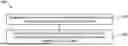
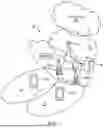


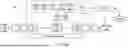
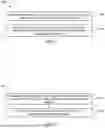
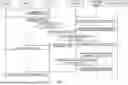
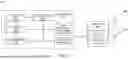


Sources:
- United States Patent and Trademark Office - verify current appl. status at the USPTO↗
Recent applications in this class:
- » 20260142879 2026-05-21
INTENT CENTRIC, POLICY ENFORCED OUT-OF-BAND DATA HANDLING INCREMENTAL NETWORK INTENT PROVISIONING - » 20260135763 2026-05-14
SMART-TOR POLICY ORCHESTRATION BASED ON NCCL TOPOLOGY - » 20260121929 2026-04-30
IMPLEMENTING A POLICY-BASED FRAMEWORK FOR O-CLOUD RESOURCE MANAGEMENTAND ORCHESTRATION SERVICES IN A TELECOMMUNICATIONS NETWORK - » 20260121928 2026-04-30
CROSS DOMAIN POLICY WITH INTENT-BASED CATALOG(S) IN NETWORK(S) - » 20260113241 2026-04-23
CONFIGURATION OF NODE PORT FOR MAINTENANCE WITHOUT LOAD BALANCER COORDINATION - » 20260113240 2026-04-23
SYSTEMS AND METHODS FOR NETWORK EXPOSURE FUNCTION PACKET FLOW DETECTION SERVICE - » 20260106799 2026-04-16
MANAGING SERVICE-LEVEL ENERGY EFFICIENCY IN A COMMUNICATION NETWORK - » 20260106798 2026-04-16
AUTONOMOUS CLOUD-BASED POLICY VALIDATION - » 20260081836 2026-03-19
METHOD AND SYSTEM FOR POLICY CONTROL FUNCTION SELECTION SERVICE - » 20260081835 2026-03-19
SUBSCRIBER ATTRIBUTE BASED USER PLANE FUNCTION (UPF) SELECTION IN WIRELESS COMMUNICATION NETWORKS
Recent applications for this Assignee:
- » 20260142930 2026-05-21
HANDLING TRANSMISSION OF PACKETS IN TSN SYSTEM - » 20260142697 2026-05-21
RADIO NETWORK NODE, AND METHOD PERFORMED THEREIN - » 20260142692 2026-05-21
CONTROL OF A REFLECTIVE INTELLIGENT SURFACE - » 20260136502 2026-05-14
COVER FOR A SIGNAL CONNECTOR - » 20260136188 2026-05-14
USER TAGS BEACON-BASED MOBILITY MANAGEMENT FOR COMMUNICATION SERVICES VIA I/O USER DEVICES PERFORMING USER TERMINAL EMULATION AS A CLOUD COMPUTING SERVICE - » 20260136150 2026-05-14
ERROR CORRECTION OF HEAD-RELATED FILTERS - » 20260136044 2026-05-14
SELECTIVE APPLICATION OF NEURAL NETWORK BASED FILTERING TO PICTURE REGIONS - » 20260135604 2026-05-14
SOUNDING REFERENCE SIGNAL PANEL SWITCHING FOR UPLINK BEAM MANAGEMENT - » 20260134622 2026-05-14
ENCODING AND DECODING POINT DATA IDENTIFYING A PLURALITY OF POINTS IN A THREE-DIMENSIONAL SPACE - » 20260134356 2026-05-14
AUTOMATED HITCHHIKING