ORGANIC ELECTROLUMINESCENT MATERIALS AND DEVICES
US20260143906A1
2026-05-21
19/389,712
2025-11-14
Smart Summary: A new type of organic material has been created that can emit light when electricity is applied. It has a specific chemical structure that includes rings and certain elements like platinum or palladium. The design allows for different parts of the molecule to connect in various ways, forming stable structures. This material can be used in devices like organic light-emitting diodes (OLEDs), which are found in screens and lighting. Additionally, it can be incorporated into various consumer products, enhancing their functionality. 🚀 TL;DR
Abstract:
A compound comprising a structure of Formula I,
is provided. In Formula I, each of moiety A and, when present, moiety D is a monocyclic ring or a polycyclic fused ring system; M is Pt or Pd; each of X1 to X10, Z1, and Z2 is C or N; each of L1 and L2 is a direct bond or a linking group; each of K1, K2, and K3 is a direct bond or a linking group; Y2 is a linking group; at least one pair of RC are joined or fused to form a 5-membered or 6-membered aromatic ring, which can be further fused or substituted; each R substituent is hydrogen or a General Substituent defined herein. Formulations, OLEDs, and consumer products containing the compound are also provided.
Inventors:
- Alexey Borisovich Dyatkin 330 🇺🇸 Ambler, PA, United States
- Hsiao-Fan CHEN 231 🇺🇸 Lawrence Township, NJ, United States
- Tyler FLEETHAM 171 🇺🇸 Yardley, PA, United States
- Andres VAZQUEZ-LOPEZ 7 🇺🇸 Philadelphia, PA, United States
Assignee:
- UNIVERSAL DISPLAY CORPORATION 1,894 🇺🇸 Ewing, NJ, United States
Applicant:
Interested in similar patents?
Get notified when new applications in this technology area are published.
Classification:
C07B59/004 » CPC further
Introduction of isotopes of elements into organic compounds ; Labelled organic compounds Acyclic, carbocyclic or heterocyclic compounds containing elements other than carbon, hydrogen, halogen, oxygen, nitrogen, sulfur, selenium or tellurium
C07F15/0086 » CPC further
Compounds containing elements of Groups 8, 9, 10 or 18 of the Periodic System compounds of the platinum group Platinum compounds
C07B2200/05 » CPC further
Indexing scheme relating to specific properties of organic compounds Isotopically modified compounds, e.g. labelled
C07B59/00 IPC
Introduction of isotopes of elements into organic compounds ; Labelled organic compounds
C07F15/00 IPC
Compounds containing elements of Groups 8, 9, 10 or 18 of the Periodic System
Description
CROSS-REFERENCE TO RELATED APPLICATIONS
This application claims priority under 35 U.S.C. § 119(e) to U.S. Provisional Application No. 63/723,466, filed on Nov. 21, 2024, and U.S. Provisional Application No. 63/724,511, filed on Nov. 25, 2024, and U.S. Provisional Application No. 63/736,045, filed on Dec. 19, 2024, and U.S. Provisional Application No. 63/734,821, filed on Dec. 17, 2024, and U.S. Provisional Application No. 63/733,708, filed on Dec. 13, 2024, and U.S. Provisional Application No. 63/754,137, filed on Feb. 5, 2025, the entire contents of each of which are incorporated herein by reference.
FIELD
The present disclosure generally relates to organic or metal coordination compounds and formulations and their various uses including as emitters, sensitizers, charge transporters, or exciton transporters in devices such as organic light emitting diodes and related electronic devices and consumer products.
BACKGROUND
Opto-electronic devices that make use of organic materials are becoming increasingly desirable for various reasons. Many of the materials used to make such devices are relatively inexpensive, so organic opto-electronic devices have the potential for cost advantages over inorganic devices. In addition, the inherent properties of organic materials, such as their flexibility, may make them well suited for particular applications such as fabrication on a flexible substrate. Examples of organic opto-electronic devices include organic light emitting diodes/devices (OLEDs), organic phototransistors, organic photovoltaic cells, organic scintillators, and organic photodetectors. For OLEDs, the organic materials may have performance advantages over conventional materials.
OLEDs make use of thin organic films that emit light when voltage is applied across the device. OLEDs are becoming an increasingly interesting technology for use in applications such as displays, illumination, and backlighting.
One application for emissive molecules is a full color display. Industry standards for such a display call for pixels adapted to emit particular colors, referred to as “saturated” colors. In particular, these standards call for saturated red, green, and blue pixels. Alternatively, the OLED can be designed to emit white light. In conventional liquid crystal displays emission from a white backlight is filtered using absorption filters to produce red, green and blue emission. The same technique can also be used with OLEDs. The white OLED can be either a single emissive layer (EML) device or a stack structure. Color may be measured using CIE coordinates, which are well known to the art.
SUMMARY
In one aspect, the present disclosure provides a compound comprising a structure of Formula I:
In Formula I:
-
- each of moiety A and, when present, moiety D is independently a monocyclic ring or a polycyclic fused ring system, wherein the monocyclic ring or each ring of the polycyclic fused ring system is independently a 5-membered to 10-membered carbocyclic or heterocyclic ring;
- metal M is Pt or Pd;
- each of X1 to X10, Z1, and Z2 is independently C or N;
- each of L1 and L2 is independently selected from the group consisting of direct bond, BR, BRR′, NR, PR, P(O)R, O, S, Se, C═O, C═S, C═Se, C═NR′, C═CRR′, S═O, SO2, CR, CRR′, SiRR′, GeRR′, and combinations of any two thereof;
- n is 0 or 1, and L1 is not present when n is 0;
- each of K1, K2, and K3 is independently a direct bond or selected from the group consisting of O, S, N(Rα), P(Rα), B(Rα), C(Rα)(Rβ), and Si(Rα)(Rβ);
- Y2 is selected from the group consisting of BR, BRR′, NR, PR, P(O)R, O, S, Se, C═O, C═S, C═Se, C═NR, C═CRR′, S═O, SO2, CR, CRR′, SiRR′, and GeRR′;
- each independently represents a single bond or a double bond;
- when moiety D is present, each of Y1 and Z3 is present and is independently C or N;
- when moiety D is absent, K3 is a direct bond, RD is absent, Y1 is selected from BR, BRR′, NR, NRR′, PR, PRR′, P(O)R, O, S, SR, Se, C═O, C═S, C═Se, C═NR′, C═CRR′, S═O, SO2, CR, CRR′, SiRR′, and GeRR′, and Z3 is selected from CR, NR, O, S, Se, P, and As;
- at least one pair of RC are joined or fused to form a 5-membered or 6-membered aromatic ring, ring C′, which can be further fused or substituted;
- each of RA, RB, and, when present, RD independently represent mono to the maximum allowable substitutions, or no substitutions;
- RC represents di to the maximum allowable substitutions;
- each R, R′, Rα, Rβ, RA, RB, RC, and, when present, RD is independently a hydrogen or a substituent selected from the group consisting of deuterium, halogen, alkyl, cycloalkyl, heteroalkyl, heterocycloalkyl, arylalkyl, alkoxy, aryloxy, amino, silyl, germyl, boryl, alkenyl, cycloalkenyl, heteroalkenyl, alkynyl, aryl, heteroaryl, acyl, carboxylic acid, ether, ester, nitrile, isonitrile, sulfanyl, sulfinyl, sulfonyl, phosphino, selenyl, and combinations thereof;
- any two of R, R′, Rα, Rβ, RA, RB, RC, and, if present, RD can be joined or fused into a ring or a fused ring system; and an RD is optionally joined to X1.
In another aspect, the present disclosure provides a formulation including a compound comprising a structure of Formula I as described herein.
In yet another aspect, the present disclosure provides an OLED having an organic layer comprising a compound comprising a structure of Formula I as described herein.
In yet another aspect, the present disclosure provides a consumer product comprising an OLED with an organic layer comprising a compound comprising a structure of Formula I as described herein.
BRIEF DESCRIPTION OF THE DRAWINGS
FIG. 1 shows an organic light emitting device.
FIG. 2 shows an inverted organic light emitting device that does not have a separate electron transport layer.
DETAILED DESCRIPTION
A. Terminology
Unless otherwise specified, the below terms used herein are defined as follows:
As used herein, “top” means furthest away from the substrate, while “bottom” means closest to the substrate. Where a first layer is described as “disposed over” a second layer, the first layer is disposed further away from substrate. There may be other layers between the first and second layer, unless it is specified that the first layer is “in contact with” the second layer. For example, a cathode may be described as “disposed over” an anode, even though there are various organic layers in between.
As used herein, “solution processable” means capable of being dissolved, dispersed, or transported in and/or deposited from a liquid medium, either in solution or suspension form.
As used herein, and as would be generally understood by one skilled in the art, a first “Highest Occupied Molecular Orbital” (HOMO) or “Lowest Unoccupied Molecular Orbital” (LUMO) energy level is “greater than” or “higher than” a second HOMO or LUMO energy level if the first energy level is closer to the vacuum energy level. Since ionization potentials (IP) are measured as a negative energy relative to a vacuum level, a higher HOMO energy level corresponds to an IP having a smaller absolute value (an IP that is less negative). Similarly, a higher LUMO energy level corresponds to an electron affinity (EA) having a smaller absolute value (an EA that is less negative). On a conventional energy level diagram, with the vacuum level at the top, the LUMO energy level of a material is higher than the HOMO energy level of the same material. A “higher” HOMO or LUMO energy level appears closer to the top of such a diagram than a “lower” HOMO or LUMO energy level.
As used herein, and as would be generally understood by one skilled in the art, a first work function is “greater than” or “higher than” a second work function if the first work function has a higher absolute value. Because work functions are generally measured as negative numbers relative to vacuum level, this means that a “higher” work function is more negative. On a conventional energy level diagram, with the vacuum level at the top, a “higher” work function is illustrated as further away from the vacuum level in the downward direction. Thus, the definitions of HOMO and LUMO energy levels follow a different convention than work functions.
Layers, materials, regions, and devices may be described herein in reference to the color of light they emit. In general, as used herein, an emissive region that is described as producing a specific color of light may include one or more emissive layers disposed over each other in a stack.
As used herein, a “NIR”, “red”, “green”, “blue”, “yellow” layer, material, region, or device refers to a layer, a material, a region, or a device that emits light in the wavelength range of about 700-1500 nm, 580-700 nm, 500-600 nm, 400-500 nm, 540-600 nm, respectively, or a layer, a material, a region, or a device that has a highest peak in its emission spectrum in the respective wavelength region. In some arrangements, separate regions, layers, materials, or devices may provide separate “deep blue” and “light blue” emissions. As used herein, the “deep blue” emission component refers to an emission having a peak emission wavelength that is at least about 4 nm less than the peak emission wavelength of the “light blue” emission component. Typically, a “light blue” emission component has a peak emission wavelength in the range of about 465-500 nm, and a “deep blue” emission component has a peak emission wavelength in the range of about 400-470 nm, though these ranges may vary for some configurations.
In some arrangements, a color altering layer that converts, modifies, or shifts the color of the light emitted by another layer to an emission having a different wavelength is provided. Such a color altering layer can be formulated to shift wavelength of the light emitted by the other layer by a defined amount, as measured by the difference in the wavelength of the emitted light and the wavelength of the resulting light. In general, there are two classes of color altering layers: color filters that modify a spectrum by removing light of unwanted wavelengths, and color changing layers that convert photons of higher energy to lower energy. For example, a “red” color filter can be present in order to filter an input light to remove light having a wavelength outside the range of about 580-700 nm. A component “of a color” refers to a component that, when activated or used, produces or otherwise emits light having a particular color as previously described. For example, a “first emissive region of a first color” and a “second emissive region of a second color different than the first color” describes two emissive regions that, when activated within a device, emit two different colors as previously described.
As used herein, emissive materials, layers, and regions may be distinguished from one another and from other structures based upon light initially generated by the material, layer or region, as opposed to light eventually emitted by the same or a different structure. The initial light generation typically is the result of an energy level change resulting in emission of a photon. For example, an organic emissive material may initially generate blue light, which may be converted by a color filter, quantum dot or other structure to red or green light, such that a complete emissive stack or sub-pixel emits the red or green light. In this case the initial emissive material, region, or layer may be referred to as a “blue” component, even though the sub-pixel is a “red” or “green” component.
In some cases, it may be preferable to describe the color of a component such as an emissive region, sub-pixel, color altering layer, or the like, in terms of 1931 CIE coordinates. For example, a yellow emissive material may have multiple peak emission wavelengths, one in or near an edge of the “green” region, and one within or near an edge of the “red” region as previously described. Accordingly, as used herein, each color term also corresponds to a shape in the 1931 CIE coordinate color space. The shape in 1931 CIE color space is constructed by following the locus between two color points and any additional interior points. For example, interior shape parameters for red, green, blue, and yellow may be defined as shown below:
| Color | CIE Shape Parameters | |
| Central Red | Locus: [0.6270, 0.3725]; [0.7347, 0.2653]; | |
| Interior: [0.5086, 0.2657] | ||
| Central Green | Locus: [0.0326, 0.3530]; [0.3731, 0.6245]; | |
| Interior: [0.2268, 0.3321 | ||
| Central Blue | Locus: [0.1746, 0.0052]; [0.0326, 0.3530]; | |
| Interior: [0.2268, 0.3321] | ||
| Central Yellow | Locus: [0.373l, 0.6245]; [0.6270, 0.3725]; | |
| Interior: [0.3700, 0.4087]; [0.2886, 0.4572] | ||
The terms “halo,” “halogen,” and “halide” are used interchangeably and refer to fluorine, chlorine, bromine, and iodine.
The term “acyl” refers to a substituted carbonyl group (—C(O)—Rs).
The term “ester” refers to a substituted oxycarbonyl (—O—C(O)—Rs or —C(O)—O—Rs) group.
The term “ether” refers to an —ORs group.
The terms “sulfanyl” or “thio-ether” are used interchangeably and refer to a —SRs group.
The term “selenyl” refers to a —SeRs group.
The term “sulfinyl” refers to a —S(O)—Rs group.
The term “sulfonyl” refers to a —SO2—Rs group.
The term “phosphino” refers to a group containing at least one phosphorus atom bonded to the relevant structure. Common examples of phosphino groups include, but are not limited to, groups such as a —P(Rs)2 group or a —PO(Rs)2 group, wherein each Rs can be same or different.
The term “silyl” refers to a group containing at least one silicon atom bonded to the relevant structure. Common examples of silyl groups include, but are not limited to, groups such as a —Si(Rs)3 group, wherein each Rs can be same or different.
The term “germyl” refers to a group containing at least one germanium atom bonded to the relevant structure. Common examples of germyl groups include, but are not limited to, groups such as a —Ge(Rs)3 group, wherein each Rs can be same or different.
The term “boryl” refers to a group containing at least one boron atom bonded to the relevant structure. Common examples of boryl groups include, but are not limited to, groups such as a —B(Rs)2 group or its Lewis adduct —B(Rs)3 group, wherein Rs can be same or different.
In each of the above, Rs can be hydrogen or a substituent selected from the group consisting of the General Substituents as defined in this application. Preferred Rs is selected from the group consisting of deuterium, halogen, alkyl, cycloalkyl, heteroalkyl, heterocycloalkyl, arylalkyl, alkoxy, aryloxy, amino, silyl, alkenyl, cycloalkenyl, heteroalkenyl, alkynyl, aryl, heteroaryl, and combination thereof. More preferably Rs is selected from the group consisting of alkyl, cycloalkyl, aryl, heteroaryl, and combination thereof.
The term “alkyl” refers to and includes both straight and branched chain alkyl groups having an alkyl carbon atom bonded to the relevant structure. Preferred alkyl groups are those containing from one to fifteen carbon atoms, preferably one to nine carbon atoms, and the preferred alkyl groups include methyl, ethyl, n-propyl, iso-propyl, n-butyl, sec-butyl, iso-butyl, tert-butyl, n-pentyl, 2-methylbutyl, 3-methylbutyl, 2,2-dimethylpropyl, 1,3-dimethylpropyl, 1,1-dimethylpropyl, 2-ethylpropyl, 1,2-dimethylpropyl, n-hexyl, 2-methylpentyl, 3-methylpentyl, 2,2-dimethylbutyl, 2,3-dimethylbutyl, n-heptyl, 2-methylhexyl, 3-methylhexyl, 2,2-dimethylpentyl, 2,3-dimethylpentyl, 2,4-dimethylpentyl, 3,3-dimethylpentyl, 3-ethylpentyl, 2,2,3-trimethylbutyl, and the like. Additionally, the alkyl group can be further substituted.
The term “cycloalkyl” refers to and includes monocyclic, polycyclic, and spiro alkyl groups having a ring alkyl carbon atom bonded to the relevant structure. Preferred cycloalkyl groups are those containing 3 to 12 ring carbon atoms and includes cyclopropyl, cyclopentyl, cyclohexyl, bicyclo[3.1.1]heptyl, spiro[4.5]decyl, spiro[5.5]undecyl, adamantyl, and the like. Additionally, the cycloalkyl group can be further substituted.
The terms “heteroalkyl” or “heterocycloalkyl” refer to an alkyl or a cycloalkyl group, respectively, having at least one carbon atom replaced by a heteroatom. Optionally the at least one heteroatom is selected from O, S, N, P, B, Si, Ge and Se, preferably, O, S or N. Additionally, the heteroalkyl or heterocycloalkyl group can be further substituted.
The term “alkenyl” refers to and includes both straight and branched chain alkene groups. Alkenyl groups are essentially alkyl groups that include at least one carbon-carbon double bond in the alkyl chain with one carbon atom from the carbon-carbon double bond that is bonded to the relevant structure. Cycloalkenyl groups are essentially cycloalkyl groups that include at least one carbon-carbon double bond in the cycloalkyl ring. The term “heteroalkenyl” as used herein refers to an alkenyl group having at least one carbon atom replaced by a heteroatom. Optionally the at least one heteroatom is selected from O, S, N, P, B, Si, Ge, and Sc, preferably, O, S, or N. Preferred alkenyl, cycloalkenyl, or heteroalkenyl groups are those containing two to fifteen carbon atoms. Additionally, the alkenyl, cycloalkenyl, or heteroalkenyl group can be further substituted.
The term “alkynyl” refers to and includes both straight and branched chain alkyne groups. Alkynyl groups are essentially alkyl groups that include at least one carbon-carbon triple bond in the alkyl chain with one carbon atom from the carbon-carbon triple bond that is bonded to the relevant structure. Preferred alkynyl groups are those containing two to fifteen carbon atoms. Additionally, the alkynyl group can be further substituted.
The terms “aralkyl” or “arylalkyl” are used interchangeably and refer to an aryl-substituted alkyl group having an alkyl carbon atom bonded to the relevant structure. Additionally, the aralkyl group can be further substituted.
The term “heterocyclic group” refers to and includes aromatic and non-aromatic cyclic groups containing at least one heteroatom. Optionally the at least one heteroatom is selected from O, S, Sc, N, P, B, Si, Ge, and Sc, preferably, O, S, N, or B. Hetero-aromatic cyclic groups may be used interchangeably with heteroaryl. Preferred hetero-non-aromatic cyclic groups are those containing 3 to 10 ring atoms, preferably those containing 3 to 7 ring atoms, which includes at least one hetero atom, and includes cyclic amines such as morpholino, piperidino, pyrrolidino, and the like, and cyclic ethers/thio-ethers, such as tetrahydrofuran, tetrahydropyran, tetrahydrothiophene, and the like. Additionally, the heterocyclic group can be further substituted or fused.
The term “aryl” refers to and includes both single-ring and polycyclic aromatic hydrocarbyl groups. The polycyclic rings may have two or more rings in which two carbons are common to two adjoining rings (the rings are “fused”). Preferred aryl groups are those containing six to thirty carbon atoms, preferably six to twenty-four carbon atoms, six to eighteen carbon atoms, and more preferably six to twelve carbon atoms. Especially preferred is an aryl group having six carbons, ten carbons, twelve carbons, fourteen carbons, or eighteen carbons. Suitable aryl groups include phenyl, biphenyl, triphenyl, triphenylene, tetraphenylene, naphthalene, anthracene, phenalene, phenanthrene, pyrene, chrysene, perylene, and azulene, preferably phenyl, biphenyl, triphenyl, triphenylene, and naphthalene. Additionally, the aryl group can be further substituted or fused, such as, without limitation, fluorene.
The term “heteroaryl” refers to and includes both single-ring aromatic groups and polycyclic aromatic ring systems that include at least one heteroatom. The heteroatoms include, but are not limited to O, S, Se, N, P, B, Si, Ge, and Se. In many instances, O, S, N, or B are the preferred heteroatoms. Hetero-single ring aromatic systems are preferably single rings with 5 or 6 ring atoms, and the ring can have from one to six heteroatoms. The hetero-polycyclic ring systems can have two or more aromatic rings in which two atoms are common to two adjoining rings (the rings are “fused”) wherein at least one of the rings is a heteroaryl. The hetero-polycyclic aromatic ring systems can have from one to six heteroatoms per ring of the polycyclic aromatic ring system. Preferred heteroaryl groups are those containing three to thirty carbon atoms, preferably three to twenty-four carbon atoms, three to eighteen carbon atoms, and more preferably three to twelve carbon atoms. Suitable heteroaryl groups include dibenzothiophene, dibenzofuran, dibenzoselenophene, furan, thiophene, benzofuran, benzothiophene, benzoselenophene, carbazole, indolocarbazole, pyridylindole, pyrrolodipyridine, pyrazole, imidazole, triazole, oxazole, thiazole, oxadiazole, oxatriazole, dioxazole, thiadiazole, pyridine, pyridazine, pyrimidine, pyrazine, triazine, oxazine, oxathiazine, oxadiazine, indole, benzimidazole, indazole, indoxazine, benzoxazole, benzisoxazole, benzothiazole, quinoline, isoquinoline, cinnoline, quinazoline, quinoxaline, naphthyridine, phthalazine, pteridine, xanthene, acridine, phenazine, phenothiazine, phenoxazine, benzofuropyridine, furodipyridine, benzothienopyridine, thienodipyridine, benzoselenophenopyridine, selenophenodipyridine, azaborine, borazine, 5λ2,9λ2-diaza-13b-boranaphtho[2,3,4-de]anthracene, 5λ2-benzo[d]benzo[4,5]imidazo[3,2-a]imidazole, and 5,9-dioxa-13b-boranaphtho[3,2,1-de]anthracene; preferably dibenzothiophene, dibenzofuran, dibenzoselenophene, carbazole, indolocarbazole, imidazole, pyridine, triazine, benzimidazole, 5λ2,9λ2-diaza-13b-boranaphtho[2,3,4-de]anthracene, 5λ2-benzo[d]benzo[4,5]imidazo[3,2-a]imidazole, and 5,9-dioxa-13b-boranaphtho[3,2,1-de]anthracene. Additionally, the heteroaryl group can be further substituted or fused.
Of the aryl and heteroaryl groups listed above, the groups of triphenylene, naphthalene, anthracene, dibenzothiophene, dibenzofuran, dibenzoselenophene, carbazole, indolocarbazole, imidazole, pyridine, pyrazine, pyrimidine, triazine, benzimidazole, 5λ2,9λ2-diaza-13b-boranaphtho[2,3,4-de]anthracene, 5λ2-benzo[d]benzo[4,5]imidazo[3,2-a]imidazole, 5,9-dioxa-13b-boranaphtho[3,2,1-de]anthracene, and the respective aza-analogs of each thereof are of particular interest.
In many instances, the General Substituents are selected from the group consisting of deuterium, halogen, alkyl, cycloalkyl, heteroalkyl, heterocycloalkyl, arylalkyl, alkoxy, aryloxy, amino, silyl, germyl, boryl, alkenyl, cycloalkenyl, heteroalkenyl, alkynyl, aryl, heteroaryl, acyl, carboxylic acid, ether, ester, nitrile, isonitrile, sulfanyl, selenyl, sulfinyl, sulfonyl, phosphino, and combinations thereof.
In some instances, the Preferred General Substituents are selected from the group consisting of deuterium, fluorine, alkyl, cycloalkyl, heteroalkyl, alkoxy, aryloxy, amino, silyl, germyl, boryl, alkenyl, cycloalkenyl, heteroalkenyl, aryl, heteroaryl, nitrile, isonitrile, sulfanyl, and combinations thereof.
In some instances, the More Preferred General Substituents are selected from the group consisting of deuterium, fluorine, alkyl, cycloalkyl, alkoxy, aryloxy, amino, silyl, germyl, boryl, aryl, heteroaryl, nitrile, sulfanyl, and combinations thereof.
In some instances, the Even More Preferred General Substituents are selected from the group consisting of deuterium, fluorine, alkyl, cycloalkyl, silyl, aryl, heteroaryl, nitrile, and combinations thereof.
In yet other instances, the Most Preferred General Substituents are selected from the group consisting of deuterium, alkyl, cycloalkyl, aryl, heteroaryl, and combinations thereof.
In the event one or more substituents (e.g., R, R′, R″, RA, RA, R1, R1, etc.) is not specifically defined, each of the one or more substituents shall be understood to independently represent hydrogen or a substituent selected from the group consisting of the General Substituents defined herein. Similarly, each of the one or more substituents can optionally be joined or fused with another substituent to form a ring. It shall also be understood that any substituent that can be selected from the General Substituents defined herein can also be selected from the Preferred General Substituents defined herein, the More Preferred General Substituents defined herein, the Even More Preferred General Substituents defined herein, or the Most Preferred General Substituents defined herein.
The terms “substituted” and “substitution” refer to a substituent other than H that is bonded to the relevant position, e.g., a carbon or nitrogen. For example, when R1 represents mono-substitution, then one R1 must be other than H (i.e., a substitution). Similarly, when R1 represents di-substitution, then two of R1 must be other than H. Similarly, when R1 represents zero or no substitution, R1, for example, can be a hydrogen for all available valencies of ring atoms, as in carbon atoms for benzene and the nitrogen atom in pyrrole, or simply represents nothing for ring atoms with fully filled valencies, e.g., the nitrogen atom in pyridine. The maximum number of substitutions possible in a ring structure will depend on the total number of available valencies in the ring atoms.
As used herein, “combinations thereof” indicates that one or more members of the applicable list are combined to form a known or chemically stable arrangement that one of ordinary skill in the art can envision from the applicable list. For example, an alkyl and deuterium can be combined to form a partial or fully deuterated alkyl group; a halogen and alkyl can be combined to form a halogenated alkyl substituent; and a halogen, alkyl, and aryl can be combined to form a halogenated arylalkyl. In one instance, the term substitution includes a combination of two to four of the listed groups. In another instance, the term substitution includes a combination of two to three groups. In yet another instance, the term substitution includes a combination of two groups. Preferred combinations of substituent groups are those that contain up to fifty atoms that are not hydrogen or deuterium, or those which include up to forty atoms that are not hydrogen or deuterium, or those that include up to thirty atoms that are not hydrogen or deuterium. In many instances, a preferred combination of substituent groups will include up to twenty atoms that are not hydrogen or deuterium.
The “aza” designation in the fragments described herein, i.e. aza-dibenzofuran, aza-dibenzothiophene, etc. means that one or more of the C—H groups in the respective aromatic ring can be replaced by a nitrogen atom, for example, and without any limitation, azatriphenylene encompasses both dibenzo[f,h]quinoxaline and dibenzo[f,h]quinoline. One of ordinary skill in the art can readily envision other nitrogen analogs of the aza-derivatives described above, and all such analogs are intended to be encompassed by the terms as set forth herein.
The present disclosure includes all acceptable isotopically-labelled compounds of the present disclosure wherein one or more atoms are replaced by atoms having the same atomic number, but an atomic mass or mass number different from the atomic mass or mass number usually found in nature.
Examples of isotopes suitable for inclusion in the compounds of the present disclosure include isotopes of hydrogen, such as 2H and 3H, carbon, such as 11C, 13C and 14C, chlorine, such as 36Cl, fluorine, such as 18F, iodine, such as 113I, 124I and 125I, nitrogen, such as 13N and 15N, oxygen, such as 15O, 17O and 18O, phosphorus, such as 32P, and sulphur, such as 35S.
Certain isotopically-labelled compounds of the present disclosure, for example, those incorporating a radioactive isotope, are useful in diagnostic and other studies. The radioactive isotopes tritium. i.e. 3H, and carbon-14, i.e. 14C, are particularly useful for this purpose in view of their ease of incorporation and ready means of detection.
Substitution with heavier isotopes such as deuterium, i.e. 2H, may afford certain advantages resulting from greater stability, and hence may be preferred in some circumstances.
Isotopically-labelled compounds of the invention can generally be prepared by conventional techniques known to those skilled in the art or by processes analogous to those described in the accompanying Examples and Preparations using an appropriate isotopically-labelled reagents in place of the non-labelled reagent previously employed.
For example, deuterated compounds can be readily prepared using methods known in the art. For example, U.S. Pat. No. 8,557,400, Patent Pub. No. WO 2006/095951, and U.S. Pat. Application Pub. No. US 2011/0037057, which are hereby incorporated by reference in their entireties, describe the making of deuterium-substituted organometallic complexes. Further reference is made to Ming Yan, et al., Tetrahedron 2015, 71, 1425-30 and Atzrodt et al., Angew. Chem. Int. Ed. (Reviews) 2007, 46, 7744-65, which are incorporated by reference in their entireties, describe the deuteration of the methylene hydrogens in benzyl amines and efficient pathways to replace aromatic ring hydrogens with deuterium, respectively.
As used herein, any specifically listed substituent, such as, without limitation, methyl, phenyl, pyridyl, etc. includes undeuterated, partially deuterated, and fully deuterated versions thereof. Similarly, classes of substituents such as, without limitation, alkyl, aryl, cycloalkyl, heteroaryl, etc. also include undeuterated, partially deuterated, and fully deuterated versions thereof. Unless otherwise specified, atoms in chemical structures without valences fully filled by H or D should be considered to include undeuterated, partially deuterated, and fully deuterated versions thereof. For example, the chemical structure of
implies to include C6H6, C6D6, C6H3D3, and any other partially deuterated variants thereof. Some common basic partially or fully deuterated groups include, without limitation, CD3, CD2C(CH3)3, C(CD3)3, and C6D5. Similarly, where partially or fully defined atomic structures show a particular position may be or is deuterium, the same atomic structures with one, two, or up to all deuterium atoms replaced by hydrogen are also envisioned.
It is to be understood that when a molecular fragment is described as being a substituent or otherwise attached to another moiety, its name may be written as if it were a fragment (e.g. phenyl, phenylene, naphthyl, dibenzofuryl) or as if it were the whole molecule (e.g. benzene, naphthalene, dibenzofuran). As used herein, these different ways of designating a substituent or attached fragment are considered to be equivalent.
In some instances, a pair of substituents in the molecule can be joined or fused into a ring. The preferred ring is a five to nine-membered carbocyclic or heterocyclic ring, includes both instances where the portion of the ring formed by the pair of substituents is saturated and where the portion of the ring formed by the pair of substituents is unsaturated. In yet other instances, a pair of adjacent substituents can be joined or fused into a ring. As used herein, “adjacent” means that the two substituents involved can be on the same ring next to each other, or on two neighboring rings having the two closest available substitutable positions, such as 2, 2′ positions in a biphenyl, or 1, 8 position in a naphthalene.
B. The Compounds of the Present Disclosure
In one aspect, the present disclosure provides a compound comprising a structure of Formula I:
In Formula I:
-
- each of moiety A and, when present, moiety D is independently a monocyclic ring or a polycyclic fused ring system, wherein the monocyclic ring or each ring of the polycyclic fused ring system is independently a 5-membered to 10-membered carbocyclic or heterocyclic ring;
- metal M is Pt or Pd;
- each of X1 to X10, Z1, and Z2 is independently C or N;
- each of L1 and L2 is independently selected from the group consisting of direct bond, BR, BRR′, NR, PR, P(O)R, O, S, Se, C═O, C═S, C═Se, C═NR′, C═CRR′, S═O, SO2, CR, CRR′, SiRR′, GeRR′, and combinations of any two thereof;
- n is 0 or 1, and L1 is not present when n is 0;
- each of K1, K2, and K3 is independently a direct bond or selected from the group consisting of O, S, N(Rα), P(Rα), B(Rα), C(Rα)(Rβ), and Si(Rα)(Rβ);
- Y2 is selected from the group consisting of BR, BRR′, NR, PR, P(O)R, O, S, Se, C═O, C═S, C═Se, C═NR, C═CRR′, S═O, SO2, CR, CRR′, SiRR′, and GeRR′;
- each independently represents a single bond or a double bond;
- when moiety D is present, each of Y1 and Z3 is present and is independently C or N;
- when moiety D is absent, K3 is a direct bond, RD is absent, Y1 is selected from BR, BRR′, NR, NRR′, PR, PRR′, P(O)R, O, S, SR, Se, C═O, C═S, C═Se, C═NR′, C═CRR′, S=O, SO2, CR, CRR′, SiRR′, and GeRR′, and Z3 is selected from CR, NR, O, S, Se, P, and As;
- at least one pair of RC are joined or fused to form a 5-membered or 6-membered aromatic ring, ring C′, which can be further fused or substituted;
- each of RA, RB, and, when present, RD independently represent mono to the maximum allowable substitutions, or no substitutions;
- RC represents di to the maximum allowable substitutions;
- each R, R′, Rα, Rβ, RA, RB, RC, and, when present, RD is independently a hydrogen or a substituent selected from the group consisting of the General Substituents defined herein;
- any two of R, R′, Rα, Rβ, RA, RB, RC, and, if present, RD can be joined or fused into a ring or a fused ring system; and
- an RD is optionally joined to X1.
In some embodiments, any two substituents can be joined or fused into a ring or a fused ring system. In some embodiment, if the RC on X3 and X4 are joined to form ring C′, moiety D is present, RD is directly attached to X1, and L1 is absent, then RB on X7 and X8 do not form a 6-membered aromatic ring.
In some embodiments, if the RC on X2 and X3 are joined to form ring C′, moiety D is present, and no RD is attached to X1, then ring D is not imidazole.
In some embodiments, the compound does not comprise:
and the compound is not
In some embodiments, the compound consists essentially of Formula I. In some embodiments, the compound has a structure of Formula I.
In some embodiments of Formula I, at least one R, R′, Rα, Rβ, RA, RB, RC, and, when present, RD is partially or fully deuterated. In some embodiments, at least one RA is partially or fully deuterated. In some embodiments, at least one RB is partially or fully deuterated. In some embodiments, at least one RC is partially or fully deuterated. In some embodiments, RD is partially or fully deuterated. In some embodiments, at least one of R or R′ is partially or fully deuterated. In some embodiments, at least one of Rα or Rβ is partially or fully deuterated.
In some embodiments, moiety A and, when present, moiety D is a monocyclic ring or a polycyclic fused ring system, wherein the monocyclic ring or each ring of the polycyclic fused ring system is independently a 5-membered or 6-membered carbocyclic or heterocyclic ring.
In some embodiments, moiety A and, when present, moiety D is a monocyclic ring or a polycyclic fused ring system, wherein the monocyclic ring or each ring of the polycyclic fused ring system is independently a 5-membered or 6-membered aryl or heteroaryl ring.
In some embodiments, each R, R′, Rα, Rβ, RA, RB, RC, and, when present, RD is independently a hydrogen or a substituent selected from the group consisting of the Preferred General Substituents defined herein. In some embodiments, each R, R′, Rα, Rβ, RA, RB, RC, and, when present, RD is independently a hydrogen or a substituent selected from the group consisting of the More Preferred General Substituents defined herein. In some embodiments, each R, R′, Rα, Rβ, RA, RB, RC, and, when present, RD is independently a hydrogen or a substituent selected from the group consisting of the Even More Preferred General Substituents defined herein. In some embodiments, each R, R′, Rα, Rβ, RA, RB, RC, and, when present, RD is independently a hydrogen or a substituent selected from the group consisting of the Most Preferred General Substituents defined herein.
In some embodiments, M is Pt. In some embodiments, M is Pd.
In some embodiments, moiety A and, when present, moiety D is selected from the group consisting of the following Cyclic Moiety List: benzene, pyridine, pyrimidine, pyridazine, pyrazine, triazine, imidazole, imidazole derived carbene, pyrazole, pyrrole, oxazole, furan, thiophene, thiazole, triazole, naphthalene, quinoline, isoquinoline, quinazoline, benzofuran, aza-benzofuran, benzoxazole, aza-benzoxazole, benzothiophene, aza-benzothiophene, benzothiazole, aza-benzothiazole, benzoselenophene, aza-benzoselenophene, indene, aza-indene, indole, aza-indole, benzimidazole, aza-benzimidazole, benzimidazole derived carbene, aza-benzimidazole derived carbene, carbazole, aza-carbazole, dibenzofuran, aza-dibenzofuran, dibenzothiophene, aza-dibenzothiophene, quinoxaline, naphthalazine, phenanthrene, aza-phenanathrene, anthracene, aza-anthracene, phenanthridine, fluorene, and aza-fluorene. In some embodiments, the aza variant includes one N on a benzo ring. In some embodiments, the aza variant includes one N on a benzo ring and that N is coordinated to the metal M.
In some embodiments, moiety A is a monocyclic ring. In son embodiments, moiety A is selected from the group consisting of benzene, pyridine, pyrimidine, pyridazine, pyrazine, triazine, imidazole, pyrazole, pyrrole, oxazole, furan, thiophene, thiazole, and triazole. In some embodiments, moiety A is imidazole, pyridine, or benzene. In some embodiments, moiety A is imidazole. In some embodiments, moiety A is pyridine. In son embodiments, moiety A is benzene.
In some embodiments, moiety A is a polycyclic fused ring system. In some embodiments, moiety A is selected from the group consisting of naphthalene, quinoline, isoquinoline, quinazoline, benzofuran, aza-benzofuran, benzoxazole, aza-benzoxazole, benzothiophene, aza-benzothiophene, benzothiazole, aza-benzothiazole, benzoselenophene, aza-benzoselenophene, indene, aza-indene, indole, aza-indole, benzimidazole, aza-benzimidazole, carbazole, aza-carbazole, dibenzofuran, aza-dibenzofuran, dibenzothiophene, aza-dibenzothiophene, quinoxaline, phthalazine, phenanthrene, aza-phenanathrene, anthracene, aza-anthracene, phenanthridine, fluorene, and aza-fluorene. In some embodiments, moiety A is dibenzofuran or benzimidazole.
In some embodiments, moiety D is present.
In some embodiments, moiety D is a monocyclic ring. In some embodiments, moiety D is a 6-membered ring. In son embodiments, moiety D is a 6-membered heterocyclic ring. In son embodiments, moiety D is a 6-membered heteroaryl ring.
In some embodiments, moiety D is selected from the group consisting of benzene, pyridine, pyrimidine, pyridazine, pyrazine, triazine, imidazole, pyrazole, pyrrole, oxazole, furan, thiophene, thiazole, and triazole.
In some embodiments, moiety D is imidazole, imidazole-derived carbene, pyridine, or benzene. In some embodiments, moiety D is imidazole. In some embodiments, moiety D is imidazole-derived carbene. In some embodiments, moiety D is pyridine. In some embodiments, moiety D is benzene.
In some embodiments, moiety D is a polycyclic fused ring system. In some embodiments, moiety D is selected from the group consisting of naphthalene, quinoline, isoquinoline, quinazoline, benzofuran, aza-benzofuran, benzoxazole, aza-benzoxazole, benzothiophene, aza-benzothiophene, benzothiazole, aza-benzothiazole, benzoselenophene, aza-benzoselenophene, indene, aza-indene, indole, aza-indole, benzimidazole, aza-benzimidazole, carbazole, aza-carbazole, dibenzofuran, aza-dibenzofuran, dibenzothiophene, azaibenzothiophene, quinoxaline, phthalazine, phenanthrene, aza-phenanathrene, anthracene, aza-anthracene, phenanthridine, fluorene, and aza-fluorene.
In some embodiments, moiety D is benzimidazole or benzimidazole-derived carbene. In some embodiments, moiety D is benzimidazole. In some embodiments, moiety D is benzimidazole-derived carbene.
In some embodiments, at least one of moiety A and, when present, moiety D can independently be a polycyclic fused ring structure. In some embodiments, at least one of moiety A and, when present, moiety D can independently be a polycyclic fused ring structure comprising at least two fused rings. In some embodiments, the polycyclic fused ring structure has one 6-membered ring and one 5-membered ring. In some such embodiments, either the 5-membered ring or the 6-membered ring can coordinate to the metal. In some embodiments, the polycyclic fused ring structure has two 6-membered rings. In some embodiments, at least one of moiety A and, when present, moiety D can independently be selected from the group consisting of benzofuran, benzothiophene, benzoselenophene, naphthalene, and aza-variants thereof.
In some embodiments, at least one of moiety A and, when present, moiety D can independently be a polycyclic fused ring structure comprising at least three fused rings. In some embodiments, the polycyclic fused ring structure has two 6-membered rings and one 5-membered ring. In some such embodiments, the 5-membered ring is fused to the ring coordinated to metal M and the second 6-membered ring is fused to the 5-membered ring. In some embodiments, at least one of moiety A and, when present, moiety D can independently be selected from the group consisting of dibenzofuran, dibenzothiophene, dibenzoselenophene, and aza-variants thereof. In some such embodiments, at least one of moiety A and, when present, moiety D can independently be further substituted at the ortho- or meta-position of the O, S, or Se atom by a substituent selected from the group consisting of deuterium, fluorine, nitrile, alkyl, cycloalkyl, aryl, heteroaryl, and combinations thereof. In some such embodiments, the aza-variants contain exactly one N atom at the 6-position (ortho to the O, S, or Se) with a substituent at the 7-position (meta to the O, S, or Se).
In some embodiments, at least one of moiety A and, when present, moiety D can independently be a polycyclic fused ring structure comprising at least four fused rings. In some embodiments, the polycyclic fused ring structure comprises three 6-membered rings and one 5-membered ring. In some such embodiments, the 5-membered ring is fused to the ring coordinated to metal M, the second 6-membered ring is fused to the 5-membered ring, and the third 6-membered ring is fused to the second 6-membered ring. In some such embodiments, the third 6-membered ring is further substituted by a substituent selected from the group consisting of deuterium, fluorine, nitrile, alkyl, cycloalkyl, aryl, heteroaryl, and combinations thereof.
In some embodiments, at least one of moiety A and, when present, moiety D can independently be a polycyclic fused ring structure comprising at least five fused rings. In some embodiments, the polycyclic fused ring structure comprises four 6-membered rings and one 5-membered ring or three 6-membered rings and two 5-membered rings. In some embodiments comprising two 5-membered rings, the 5-membered rings are fused together. In some embodiments comprising two 5-membered rings, the 5-membered rings are separated by at least one 6-membered ring. In some embodiments with one 5-membered ring, the 5-membered ring is fused to the ring coordinated to metal M, the second 6-membered ring is fused to the 5-membered ring, the third 6-membered ring is fused to the second 6-membered ring, and the fourth 6-membered ring is fused to the third 6-membered ring.
In some embodiments, at least one of moiety A and, when present, moiety D can independently be an aza version of the polycyclic fused rings described above. In some such embodiments, at least one of moiety A and, when present, moiety D can independently contain exactly one aza N atom. In some such embodiments, at least one of moiety A and, when present, moiety D contains exactly two aza N atoms, which can be in one ring, or in two different rings. In some such embodiments, the ring having aza N atom is separated by at least two other rings from the metal M atom. In some such embodiments, the ring having aza N atom is separated by at least three other rings from the metal M atom. In some such embodiments, each of the ortho position of the aza N atom is substituted.
In some embodiments, Z3 is C and Y1 is C.
In some embodiments, Z3 is carbene carbon and Y1 is N. In some embodiments, K3 is a direct bond.
In some embodiments, Z3 is N and Y1 is C. In some embodiments, K3 is a direct bond.
In some embodiments, each of X1 to X4 is C.
In some embodiments, at least one of X1 to X4 is N. In some embodiments, exactly one of X1 to X4 is N.
In some embodiments, X1 is N. In some embodiments, X2 is N. In some embodiments, X3 is N. In some embodiments, X4 is N.
In some embodiments, each of X5 to X8 is C.
In some embodiments, at least one of X5 to X8 is N. In some embodiments, exactly one of X5 to X8 is N.
In some embodiments, XS is N. In some embodiments, X6 is N. In some embodiments, X7 is N. In some embodiments, X8 is N.
In some embodiments, Z1 is C. In some embodiments, Z1 is N.
In some embodiments, X9 and X10 are C.
In some embodiments, Z2 is C. In some embodiments, Z2 is N.
In some embodiments, X9 and X10 are N.
In some embodiments, Z3 is C. In some embodiments, Z3 is N.
In some embodiments, Y1 is C. In some embodiments, Y1 is N.
In some embodiments, K1 is a direct bond.
In some embodiments, K1 is O or S. In some embodiments, K1 is O. In some embodiments, K1 is N(Rα), P(Rα), or B(Rα). In some embodiments, K1 is C(Rα)(Rβ) or Si(Rα)(Rβ).
In some embodiments, K2 is a direct bond.
In some embodiments, K2 is O or S. In some embodiments, K2 is O. In some embodiments, K2 is N(Rα), P(Rα), or B(Rα). In some embodiments, K2 is C(Rα)(Rβ) or Si(Rα)(Rβ).
In some embodiments, K3 is a direct bond.
In some embodiments, K3 is O or S. In some embodiments, K3 is O. In some embodiments, K3 is N(Rα), P(Rα), or B(Rα). In some embodiments, K3 is C(Rα)(Rβ) or Si(Rα)(Rβ).
In some embodiments, each of K1, K2, and K3 is a direct bond.
In some embodiments, each of K1 and K2 is a direct bond. In some embodiments, K3 is a direct bond. In some embodiments, K3 is not a direct bond; K3 is O.
In some embodiments, Y2 is selected from the group consisting of O, S, and Se.
In some embodiments, Y2 is selected from the group consisting of BR, NR, and PR In some embodiments, Y2 is NR. In some embodiments, the R is not joined with an RB to form a ring. In some embodiments, the R is not joined with an RB to form a 6-membered aromatic ring. In some embodiments, the R is not joined with RB or RC to form a ring.
In some embodiments, Y2 is selected from the group consisting of BRR′, CRR′, SiRR′, and GeRR′. In some embodiments, Y2 is selected from the group consisting of P(O)R, C═O, C═S, C═Se, C═NR, C═CRR′, S═O, and SO2. In some embodiments, Y2 is CR.
In some embodiments, n is 1. In some embodiments, n is 0.
In some embodiments, L1 is a direct bond. In some embodiments, L1 is selected from the group consisting of O, S, and Se. In some embodiments, L1 is O.
In some embodiments, L1 is selected from the group consisting of BR, NR, and PR. In some embodiments, L1 is NR. In some embodiments, R is not joined to RB to form carbazole. In some embodiments, R is not joined to RB to forma ring. In some embodiments, R is not joined to RA to form a ring. In some embodiments, R is joined with RA or RB to forma ring.
In some embodiments, L1 is selected from the group consisting of BRR′, CRR′, SiRR′, and GeRR′. In some embodiments, L1 is selected from the group consisting of P(O)R, C═O, C═S, C═Se, C═NR, C═CRR′, S=O, and SO2. In some embodiments, L1 is CR. In some embodiments, L1 is a combination of two single atom linkers each independently selected from the group consisting of BR, BRR′, NR, PR, P(O)R, O, S, Se, C═O, C═S, C═Se, C═NR′, C═CRR′, S=O, SO2, CR, CRR′, SiRR′, and GeRR′.
In some embodiments, an RD is joined to X1.
In some embodiments, L2 is a direct bond.
In some embodiments, L2 is selected from the group consisting of O, S, and Se. In some embodiments, L2 is selected from the group consisting of BR, NR, and PR.
In some embodiments, L2 is NR. In some embodiments, the R is joined or fused to an RA to form a 5-membered ring. In some embodiments, R is aryl or heteroaryl and is joined or fused to an RA to form a polycyclic fused ring system. In some such embodiments, R is aryl or heteroaryl and is joined or fused to an RA to form a carbazole. In some embodiments, R is aryl or heteroaryl and is joined or fused to an RA to form a 5λ2-benzo[d]benzo[4,5]imidazo[3,2-a]imidazole (bimbim).
In some embodiments, the R is benzene that is para-substituted by a substituted or unsubstituted aryl. In some embodiments, the R is benzene that is para-substituted by substituted or unsubstituted phenyl. In some such embodiments, the substituted or unsubstituted phenyl is 3,5-dialkyl phenyl. In some embodiments, the 3,5-dialkyl phenyl is 3,5-di-tert-butyl phenyl.
In some embodiments, L2 is selected from the group consisting of BRR′, CRR′, SiRR′, and GeRR′. In some embodiments, L2 is selected from the group consisting of P(O)R, C═O, C═S, C═Se, C═NR, C═CRR′, S═O, and SO2. In some embodiments, L2 is CR. In some embodiments, L2 is a combination of two single atom linkers each independently selected from the group consisting of BR, BRR′, NR, PR, P(O)R, O, S, Se, C═O, C═S, C═Se, C═NR′, C═CRR′, S═O, SO2, CR, CRR′, SiRR′, and GeRR′.
In some embodiments, moiety D is absent, K3 is a direct bond, RD is absent.
In some embodiments where moiety D is absent, Y1 is selected from the group consisting of O, S, and Se. In some embodiments where moiety D is absent, Y1 is selected from the group consisting of BR, SR, NR, and PR.
In some embodiments where moiety D is absent, Y1 is NR. In some embodiments where moiety D is absent, Y1 is BR. In some embodiments where moiety D is absent, Y1 is SR.
In some embodiments where moiety D is absent, Y1 is selected from the group consisting of BRR′, CRR′, SiRR′, GeRR′, NRR, and PRR′. In some embodiments where moiety D is absent, Y1 is CRR′, SR, SiRR′, or GeRR′. In some embodiments where moiety D is absent, Y1 is CRR′, SiRR′, or GeRR′. In some embodiments where moiety D is absent, Y1 is BRR′, NRR′, or PRR′. In some embodiments where moiety D is absent, Y1 is PRR′.
In some embodiments where moiety D is absent, Y1 is selected from the group consisting of P(O)R, C═O, C═S, C═Se, C═NR, C═CRR′, S═O, and SO2. In some embodiments where moiety D is absent, Y1 is C═O. In some embodiments where moiety D is absent, Y1 is CR.
In some embodiments where moiety D is absent, Z3 is CR. In some embodiments where moiety D is absent, Z3 is NR. In some embodiments where moiety D is absent, Z3 is O. In some embodiments where moiety D is absent, Z3 is S. In some embodiments where moiety D is absent, Z3 is Se. In some embodiments where moiety D is absent, Z3 is P. In some embodiments where moiety D is absent, Z3 is As.
In some embodiments, moiety D is absent and the combination of K3—Z3—Y1-L2 has a structure selected from the group consisting of:
-
- wherein represents bonding to the metal M;
- wherein
-
- represents bonding to moiety A; and
- wherein the remaining variables are the same as previously defined.
In some embodiments, moiety D is absent and the combination of K3—Z3—Y1-L2 has a structure selected from the group consisting of:
-
- wherein represents bonding to the metal M; and
- wherein
-
- represents bonding to moiety A.
In some embodiments, the compound comprises an electron-withdrawing group. In some embodiments, the electron-withdrawing group has a Hammett constant larger than 0. In some embodiments, the electron-withdrawing group has a Hammett constant equal or larger than 0.1, 0.2, 0.3, 0.4, 0.5, 0.6, 0.7, 0.8, 0.9, 1.0, or 1.1.
In some embodiments, the compound comprises an electron-withdrawn group selected from the group consisting of the structures of the following EWG1 LIST: F, CF3, CN, COCH3, CHO, COCF3, COOMe, COOCF3, NO2, SF3, SiF3, PF4, SF5, OCF3, SCF3, SeCF3, SOCF3, SeOCF3, SO2F, SO2CF3, SeO2CF3, OSeO2CF3, OCN, SCN, SeCN, NC, +N(Rk2)3, (Rk2)2CCN, (Rk2)2CCF3, CNC(CF3)2, BRk3Rk2, substituted or unsubstituted dibenzoborole, 1-substituted carbazole, 1,9-substituted carbazole, substituted or unsubstituted carbazole, substituted or unsubstituted pyridine, substituted or unsubstituted pyrimidine, substituted or unsubstituted pyrazine, substituted pyridoxine, substituted or unsubstituted triazine, substituted or unsubstituted oxazole, substituted or unsubstituted benzoxazole, substituted or unsubstituted thiazole, substituted or unsubstituted benzothiazole, substituted or unsubstituted imidazole, substituted or unsubstituted benzimidazole, ketone, carboxylic acid, ester, nitrile, isonitrile, sulfinyl, sulfonyl, partially and fully fluorinated alkyl, partially and fully fluorinated aryl, partially and fully fluorinated heteroaryl, cyano-containing alkyl, cyano-containing aryl, cyano-containing heteroaryl, isocyanate,
-
- wherein each Rk1 represents mono to the maximum allowable substitution, or no substitutions;
- wherein YG is selected from the group consisting of BRe, NRe, PRe, O, S, Se, C═O, S═O, SO2, CReRf, SiReRf, and GeReRf; and
- wherein each of Rk1, Rk2, Rk3, Re, and Rf is independently a hydrogen or a substituent selected from the group consisting of the General Substituents defined herein.
In some embodiments, the compound comprises an electron-withdrawing group selected from the group consisting of the structures of the following EWG2 List:
In some embodiments, the compound comprises an electron-withdrawing group selected from the group consisting of the structures of the following EWG3 LIST:
In some embodiments, the compound comprises an electron-withdrawing group selected from the group consisting of the structures of the following EWG4 LIST:
In some embodiments, the compound comprises a π-electron deficient electron-withdrawing group selected from the group consisting of the structures of the following Pi-EWG LIST: CN, COCH3, CHO, COCF3, COOMe, COOCF3, NO2, SF3, SiF3, PF4, SF5, OCF3, SCF3, SeCF3, SOCF3, SeOCF3, SO2F, SO2CF3, SeO2CF3, OSeO2CF3, OCN, SCN, SeCN, NC, N+(R2)3, BRk2Rk3, substituted or unsubstituted dibenzoborole, 1-substituted carbazole, 1,9-substituted carbazole, substituted or unsubstituted carbazole, substituted or unsubstituted pyridine, substituted or unsubstituted pyrimidine, substituted or unsubstituted pyrazine, substituted or unsubstituted pyridazine, substituted or unsubstituted triazine, substituted or unsubstituted oxazole, substituted or unsubstituted benzoxazole, substituted or unsubstituted thiazole, substituted or unsubstituted benzothiazole, substituted or unsubstituted imidazole, substituted or unsubstituted benzimidazole, ketone, carboxylic acid, ester, nitrile, isonitrile, sulfinyl, sulfonyl, partially and fully fluorinated aryl, partially and fully fluorinated heteroaryl, cyano-containing aryl, cyano-containing heteroaryl, isocyanate,
wherein the variables are the same as previously defined.
In some embodiments, at least one RA is or comprises an electron-withdrawing group from the EWG1 LIST as defined herein. In some embodiments, at least one RA is or comprises an electron-withdrawing group from the EWG2 LIST as defined herein. In some embodiments, at least one RA is or comprises an electron-withdrawing group from the EWG3 LIST as defined herein. In some embodiments, at least one RA is or comprises an electron-withdrawing group from the EWG4 LIST as defined herein. In some embodiments, at least one RA is or comprises an electron-withdrawing group from the Pi-EWG LIST as defined herein.
In some embodiments, at least one RB is or comprises an electron-withdrawing group from the EWG1 LIST as defined herein. In some embodiments, at least one RB is or comprises an electron-withdrawing group from the EWG2 LIST as defined herein. In some embodiments, at least one RB is or comprises an electron-withdrawing group from the EWG3 LIST as defined herein. In some embodiments, at least one RB is or comprises an electron-withdrawing group from the EWG4 LIST as defined herein. In some embodiments, at least one RB is or comprises an electron-withdrawing group from the Pi-EWG LIST as defined herein.
In some embodiments, at least one R1 is or comprises an electron-withdrawing group from the EWG1 LIST as defined herein. In some embodiments, at least one RC is or comprises an electron-withdrawing group from the EWG2 LIST as defined herein. In some embodiments, at least one RC is or comprises an electron-withdrawing group from the EWG3 LIST as defined herein. In some embodiments, at least one RC is or comprises an electron-withdrawing group from the EWG4 LIST as defined herein. In some embodiments, at least one RC is or comprises an electron-withdrawing group from the Pi-EWG LIST as defined herein.
In some embodiments, at least one RD is or comprises an electron-withdrawing group from the EWG1 LIST as defined herein. In some embodiments, at least one RD is or comprises an electron-withdrawing group from the EWG2 LIST as defined herein. In some embodiments, at least one RD is or comprises an electron-withdrawing group from the EWG3 LIST as defined herein. In some embodiments, at least one RD is or comprises an electron-withdrawing group from the EWG4 LIST as defined herein. In some embodiments, at least one RD is or comprises an electron-withdrawing group from the Pi-EWG LIST as defined herein.
In some embodiments, at least one R or R′ is or comprises an electron-withdrawing group from the EWG1 LIST as defined herein. In some embodiments, at least one R or R′ is or comprises an electron-withdrawing group from the EWG2 LIST as defined herein. In some embodiments, at least one R or R′ is or comprises an electron-withdrawing group from the EWG3 LIST as defined herein. In some embodiments, at least one R or R′ is or comprises an electron-withdrawing group from the EWG4 LIST as defined herein. In some embodiments, at least one R or R′ is or comprises an electron-withdrawing group from the Pi-EWG LIST as defined herein.
In some embodiments, at least one R, R′, Rα, Rβ, RA, RB, RC, or, when present, RD is or comprises deuterium.
In some embodiments, at least one RA is not hydrogen. In some embodiments, at least one RA is not hydrogen or deuterium.
In some embodiments, at least one RA comprises at least one C atom. In some embodiments, at least one RA comprises at least two C atoms. In some embodiments, at least one RA comprises at least three C atoms. In some embodiments, at least one RA comprises at least four C atoms.
In some embodiments, at least one RA comprises a substituent selected from the group consisting of alkyl, cycloalkyl, silyl, germyl, aryl, heteroaryl, and combinations thereof.
In some embodiments, at least one RA is bonded or fused to a substituent of L1 or L2. In some embodiments, at least one RA is bonded or fused to a substituent of L1 or L2 to form a carbazole moiety. In some embodiments, at least one RA is bonded or fused to a substituent of L1 or L2 to form a 5λ2-benzo[d]benzo[4,5]imidazo[3,2-a]imidazole (bimbim) moiety. In some embodiments, at least one RA is bonded or fused to a substituent of L1. In some embodiments, at least one RA is bonded or fused to a substituent of L2.
In some embodiments, at least one RB is not hydrogen. In some embodiments, the RB at X5 is not hydrogen. In some embodiments, RB at X6 is not hydrogen. In some embodiments, RB at X7 is not hydrogen. In some embodiments, RB at X is not hydrogen.
In some embodiments, RB at X5 is H. In some embodiments, RB at X6 is H. In some embodiments, RB at X7 is H. In some embodiments, RB at X is H.
In some embodiments, at least one RB is not hydrogen or deuterium.
In some embodiments, at least one RB comprises at least one C atom. In some embodiments, at least one RB comprises at least two C atoms. In some embodiments, at least one RB comprises at least three C atoms. In some embodiments, at least one RB comprises at least four C atoms.
In some embodiments, the RB at X5 comprises at least one C atom. In some embodiments, the RB at X6 comprises at least one C atom. In some embodiments, the RB at X7 comprises at least one C atom. In some embodiments, the RB at X8 comprises at least one C atom.
In some embodiments, at least one RB comprises a substituent selected from the group consisting of alkyl, cycloalkyl, silyl, germyl, aryl, heteroaryl, and combinations thereof. In some embodiments, RB at X5 comprises a substituent selected from the group consisting of alkyl, cycloalkyl, silyl, germyl, aryl, heteroaryl, and combinations thereof. In some embodiments, RB at X6 comprises a substituent selected from the group consisting of alkyl, cycloalkyl, silyl, germyl, aryl, heteroaryl, and combinations thereof. In some embodiments, RB at X7 comprises a substituent selected from the group consisting of alkyl, cycloalkyl, silyl, germyl, aryl, heteroaryl, and combinations thereof. In some embodiments, RB at X8 comprises a substituent selected from the group consisting of alkyl, cycloalkyl, silyl, germyl, aryl, heteroaryl, and combinations thereof.
In some embodiments, the RB on X7 and X8 are not joined or fused to forma ring.
In some embodiments, the RB on X7 and X8 are not joined or fused to forma 6-membered ring. In some embodiments, the RB on X7 and X8 are joined or fused to form a 5-membered ring.
In some embodiments, at least one RC that is not part of ring C′ is not hydrogen.
In some embodiments, RC at X1 is not part of ring C′ and is not hydrogen. In some embodiments, RC at X2 is not part of ring C′ and is not hydrogen. In some embodiments, Rc at X3 is not part of ring C′ and is not hydrogen. In some embodiments, RC at X4 is not part of ring C′ and is not hydrogen.
In some embodiments, RC at X1 is hydrogen. In some embodiments, RC at X2 is not hydrogen. In some embodiments, RC at X3 is not hydrogen. In some embodiments, RC at X4 is not hydrogen.
In some embodiments, at least one RC that is not part of ring C′ is not hydrogen or deuterium.
In some embodiments, at least one RC that is not part of ring C′ comprises at least one C atom. In some embodiments, at least one RC that is not part of ring C′ comprises at least two C atoms. In some embodiments, at least one RC that is not part of ring C′ comprises at least three C atoms. In some embodiments, at least one RC that is not part of ring C′ comprises at least four C atoms.
In some embodiments, at least one RC that is not part of ring C′ comprises a substituent selected from the group consisting of alkyl, cycloalkyl, silyl, germyl, aryl, heteroaryl, and combinations thereof.
In some embodiments, the RC at X1 and X2 are joined to form moiety C′.
In some embodiments, the RC at X2 and X3 are joined to form moiety C′.
In some embodiments, the RC at X3 and X4 are joined to form moiety C′.
In some embodiments, moiety D is absent.
In some embodiments, moiety D is present, no RD is attached to X1, and moiety D is not imidazole.
In some embodiments, moiety D is a substituted or unsubstituted 6 to 10 membered ring, and RD is not attached to X1. In some embodiments, moiety D is partially or fully saturated.
In some embodiments, moiety D is a substituted or unsubstituted 5-membered ring selected from the group consisting of oxazole, thiazole, pyrazole, triazole, pyrrole, tetrazole, furan, and thiophene.
In some embodiments, the RC at X3 and X4 are joined to form moiety C′.
In some embodiments, moiety D is present, RD is not attached to X1, and L1 is absent, and the RB at X7 and X8 are not joined or fused to form a 6-membered aromatic ring. In some embodiments, moiety D is present, RD is directly attached to X1, n is 0, and RBat X7 and X8 are not joined or fused to form a ring. In some embodiments, moiety D is present, RD is directly attached to X, n=0, and RB on X7 and X8 form a 5-membered aromatic ring. In some embodiments, moiety D is present, RD is directly attached to X, and n=1.
In some embodiments, moiety C′ is selected from the group consisting of benzene, pyridine, pyrimidine, pyridazine, pyrazine, and triazine. In some embodiments, ring C′ is benzene. In some embodiments, ring C′ is pyridine.
In some embodiments, moiety C′ is selected from the group consisting of oxazole, thiazole, imidazole, furan and thiophene.
In some embodiments, ring C′ is annulated by a moiety C″, wherein moiety C″ is a monocyclic ring or a polycyclic fused ring system, wherein the monocyclic ring or each ring of the polycyclic fused ring system is independently a 5-membered to 10-membered carbocyclic or heterocyclic ring.
In some embodiments, ring C′ is annulated by a moiety C″, wherein moiety C″ is a monocyclic ring or a polycyclic fused ring system, wherein the monocyclic ring or each ring of the polycyclic fused ring system is independently a 5-membered or 6-membered carbocyclic or heterocyclic ring.
In some embodiments, ring C′ is annulated by a moiety C″, wherein moiety C″ is a monocyclic ring or a polycyclic fused ring system, wherein the monocyclic ring or each ring of the polycyclic fused ring system is independently a 5-membered or 6-membered aryl or heteroaryl ring.
In some embodiments, moiety C″ is selected from the group consisting of the Cyclic Moiety List defined herein.
In some embodiments, moiety C″ is a monocyclic ring. In some embodiments, moiety C″ is benzene.
In some embodiments, moiety C″ is polycyclic fused ring system. In some embodiments, the RC at X1 and X2 are joined to form a moiety C1, wherein moiety C1 is a monocyclic ring or a polycyclic fused ring system, wherein the monocyclic ring or each ring of the polycyclic fused ring system is independently a 5-membered to 10-membered carbocyclic or heterocyclic ring.
In some embodiments, moiety C1 is selected from the group consisting of the Cyclic Moiety List defined herein. In some embodiments, moiety C1 is a monocyclic ring. In some embodiments, moiety C1 is benzene.
In some embodiments, moiety C1 is polycyclic fused ring system.
In some embodiments, at least one RD is not hydrogen. In some embodiments, at least one RD is not hydrogen or deuterium.
In some embodiments, at least one RD comprises at least one C atom. In some embodiments, at least one RD comprises at least two C atoms. In some embodiments, at least one RD comprises at least three C atoms. In some embodiments, at least one RD comprises at least four C atoms.
In some embodiments, at least one RD comprises a substituent selected from the group consisting of alkyl, cycloalkyl, silyl, germyl, aryl, heteroaryl, and combinations thereof.
In some embodiments, no RD is attached to X1.
In some embodiments, at least one R or R′ is not hydrogen. In some embodiments, at least one R or R′ is not hydrogen or deuterium.
In some embodiments, at least one R or R′ comprises at least one C atom. In some embodiments, at least one R or R′ comprises at least two C atoms. In some embodiments, at least one R or R′ comprises at least three C atoms. In some embodiments, at least one R or R′ comprises at least four C atoms.
In some embodiments, at least one R or R′ comprises a substituent selected from the group consisting of alkyl, cycloalkyl, silyl, germyl, aryl, heteroaryl, and combinations thereof.
In some embodiments, Y is NR, BR, or PR, and R has a structure selected from the structures of LIST 3 defined herein. In some such embodiments, the R is selected from the group consisting of R1 to R468 as defined in LIST 6 defined herein.
In some embodiments, the R of Y2 comprises a structure of Formula II,
-
- Ring F is a 5-membered to 10-membered carbocyclic or heterocyclic ring;
- wherein RF represents mono to tri-substitutions, or no substitutions;
- wherein each R1′, R2′, and RF is independently hydrogen or a substituent selected from the group consisting of the General Substituents defined herein; and
- wherein at least one of R1′ or R2′ is not hydrogen or deuterium.
In some embodiments, Ring F is a 5-membered or 6-membered carbocyclic or heterocyclic ring. In some embodiments, Ring F is a 5-membered or 6-membered aryl or heteroaryl ring.
In some embodiments, neither R1′ or R2 is hydrogen or deuterium.
In some embodiments, each of R1′ and R2′ is independently selected from the group consisting of alkyl, cycloalkyl, aryl, heteroaryl, silyl, germyl, and combinations thereof. In some embodiments, R1′ and R2′ are the same. In some embodiments, R1′ and R2′ are different.
In some embodiments, each of R1′ and R2′ comprises at least 1 carbon atom. In some embodiments, each of R1′ and R2′ comprises at least 2 carbon atoms. In some embodiments, each of R1′ and R2′ comprises at least 3 carbon atoms. In some embodiments, each of R1′ and R2′ comprises at least 4 carbon atoms.
In some embodiments, at least one RF is not hydrogen or deuterium.
In some embodiments, at least one RF is selected from the group consisting of alkyl, cycloalkyl, aryl, heteroaryl, silyl, germyl, and combinations thereof.
In some embodiments, ring F is selected from the group consisting of benzene, pyridine, pyrimidine, pyridazine, pyrazine, triazine, imidazole, imidazole-derived carbene, pyrazole, pyrrole, oxazole, furan, thiophene, thiazole, and triazole.
In some embodiments, the R of Y2 comprises a structure of Formula IIA,
wherein each of X1a, X2a, and X3a is independently C or N.
In some embodiments, the RF bonded to X1a is selected from the group consisting of alkyl, cycloalkyl, aryl, heteroaryl, silyl, germyl, and combinations thereof. In some embodiments, the RF bonded to X1a is alkyl. In some embodiments, the RF bonded to X1a is aryl or heteroaryl. In some embodiments, the RF bonded to X1a is silyl. In some embodiments, the RF bonded to X1a is germyl.
In some embodiments, the RF bonded to X2a is selected from the group consisting of alkyl, cycloalkyl, aryl, heteroaryl, silyl, germyl, and combinations thereof. In some embodiments, the RF bonded to X2a is alkyl. In some embodiments, the RF bonded to X2a is aryl or heteroaryl. In some embodiments, the RF bonded to X2a is silyl. In some embodiments, the RF bonded to X2a is germyl.
In some embodiments, the RF bonded to X3a is selected from the group consisting of alkyl, cycloalkyl, aryl, heteroaryl, silyl, germyl, and combinations thereof. In some embodiments, the RF bonded to X3a is alkyl. In some embodiments, the RF bonded to X3a is aryl or heteroaryl. In some embodiments, the RF bonded to X3a is silyl. In some embodiments, the RF bonded to X3a is germyl.
In some embodiments, each of X1a, X2a, and X3a is C.
In some embodiments, at least one of X1a, X2a, and X3a is N. In some embodiments, exactly one of X1a, X2a, and X3a is N.
In some embodiments, the compound is selected from the group consisting of compounds having the formula of Pt(LA′)(Ly):
-
- wherein Ly is selected from the group consisting of the structures of the following LIST 2:
-
- each of RX and RY is independently a hydrogen or a substituent selected from the group consisting of the General Substituents defined herein;
- the remaining variables are the same as previously defined; and
- any two substituents may be optionally joined or fused to form a ring.
In some embodiments, at least one of R, R′, RA, RB, RC, RD, RE, RX, or RY is independently selected from the structures of the following LIST 3:
wherein
-
- each of QA, QB, QC, QD, and QE independently represents mono to the maximum allowable substitution, or no substitution; each QA, QB, QC, QD, QE, QA1, QB1, QC1, QD1 and QE1 is independently a hydrogen or a substituent selected from the group consisting of alkyl, cycloalkyl, heteroalkyl, heterocycloalkyl, boryl, arylalkyl, alkoxy, aryloxy, amino, silyl, germyl, alkenyl, cycloalkenyl, heteroalkenyl, alkynyl, aryl, heteroaryl, acyl, carboxylic acid, ether, ester, nitrile, isonitrile, sulfanyl, sulfinyl, sulfonyl, phosphino, selenyl, and combinations thereof;
- each Yaa and Ybb is independently selected from the group consisting of a direct bond, BR, BRR′, NR, PR, O, S, Se, C═O, C═S, C═Se, C═NR, C═CRR′, S═O, SO2, CR, CRR′, SiRR′, GeRR′, alkyl, cycloalkyl, aryl, heteroaryl, and combinations thereof; and any two substituents can be joined or fused to form a ring.
In some embodiments, the compound is selected from the group consisting of the compounds having the formula of Pt(LA′)(Ly):
-
- wherein LA′ is selected from LA·ai-(Ri)(Rj)(Rk)(Rl), wherein ai is an integer from 1 to 81, wherein each of Ri, Rj, Rk, and Rl is independently selected from R1 to R468; and each of LA·1-(R1)(R1)(R1)(R1) to LA·81-(R468)(R468)(R468)(R468) is defined in structures shown in the following LIST 4:
| LA′ | Structure of LA′ | |
| LA′1-(Ri)(Rj)(Rk)(Rl), wherein LA′1- (R1)(R1)(R1)(R1) to LA′1- (R468)(R468)(R468)(R468) have the structure | ||
| LA′2-(Ri)(Rj)(Rk)(Rl), wherein LA′2- (R1)(R1)(R1)(R1) to LA′2- (R468)(R468)(R468)(R468) have the structure | ||
| LA′3-(Ri)(Rj)(Rk)(Rl), wherein LA′3- (R1)(R1)(R1)(R1) to LA′3- (R468)(R468)(R468)(R468) have the structure | ||
| LA′4-(Ri)(Rj)(Rk)(Rl), wherein LA′4- (R1)(R1)(R1)(R1) to LA′4- (R468)(R468)(R468)(R468) have the structure | ||
| LA′5-(Ri)(Rj)(Rk)(Rl), wherein LA′5- (R1)(R1)(R1)(R1) to LA′5- (R468)(R468)(R468)(R468) have the structure | ||
| LA′6-(Ri)(Rj)(Rk)(Rl), wherein LA′6- (R1)(R1)(R1)(R1) to LA′6- (R468)(R468)(R468)(R468) have the structure | ||
| LA′7-(Ri)(Rj)(Rk)(Rl), wherein LA′7- (R1)(R1)(R1)(R1) to LA′7- (R468)(R468)(R468)(R468) have the structure | ||
| LA′8-(Ri)(Rj)(Rk)(Rl), wherein LA′8- (R1)(R1)(R1)(R1) to LA′8- (R468)(R468)(R468)(R468) have the structure | ||
| LA′9-(Ri)(Rj)(Rk)(Rl), wherein LA′9- (R1)(R1)(R1)(R1) to LA′9- (R468)(R468)(R468)(R468) have the structure | ||
| LA′10-(Ri)(Rj)(Rk)(Rl), wherein LA′10- (R1)(R1)(R1)(R1) to LA′10- (R468)(R468)(R468)(R468) have the structure | ||
| LA′11-(Ri)(Rj)(Rk)(Rl), wherein LA′11- (R1)(R1)(R1)(R1) to LA′11- (R468)(R468)(R468)(R468) have the structure | ||
| LA′12-(Ri)(Rj)(Rk)(Rl), wherein LA′12- (R1)(R1)(R1)(R1) to LA′12- (R468)(R468)(R468)(R468) have the structure | ||
| LA′13-(Ri)(Rj)(Rk)(Rl), wherein LA′13- (R1)(R1)(R1)(R1) to LA′13- (R468)(R468)(R468)(R468) have the structure | ||
| LA′14-(Ri)(Rj)(Rk)(Rl), wherein LA′14- (R1)(R1)(R1)(R1) to LA′14- (R468)(R468)(R468)(R468) have the structure | ||
| LA′15-(Ri)(Rj)(Rk)(Rl), wherein LA′15- (R1)(R1)(R1)(R1) to LA′15- (R468)(R468)(R468)(R468) have the structure | ||
| LA′16-(Ri)(Rj)(Rk)(Rl), wherein LA′16- (R1)(R1)(R1)(R1) to LA′16- (R468)(R468)(R468)(R468) have the structure | ||
| LA′17-(Ri)(Rj)(Rk)(Rl), wherein LA′17- (R1)(R1)(R1)(R1) to LA′17- (R468)(R468)(R468)(R468) have the structure | ||
| LA′18-(Ri)(Rj)(Rk)(Rl), wherein LA′18- (R1)(R1)(R1)(R1) to LA′18- (R468)(R468)(R468)(R468) have the structure | ||
| LA′19-(Ri)(Rj)(Rk)(Rl), wherein LA′19- (R1)(R1)(R1)(R1) to LA′19- (R468)(R468)(R468)(R468) have the structure | ||
| LA′20-(Ri)(Rj)(Rk)(Rl), wherein LA′20- (R1)(R1)(R1)(R1) to LA′20- (R468)(R468)(R468)(R468) have the structure | ||
| LA′21-(Ri)(Rj)(Rk)(Rl), wherein LA′21- (R1)(R1)(R1)(R1) to LA′21- (R468)(R468)(R468)(R468) have the structure | ||
| LA′22-(Ri)(Rj)(Rk)(Rl), wherein LA′22- (R1)(R1)(R1)(R1) to LA′22- (R468)(R468)(R468)(R468) have the structure | ||
| LA′23-(Ri)(Rj)(Rk)(Rl), wherein LA′23- (R1)(R1)(R1)(R1) to LA′23- (R468)(R468)(R468)(R468) have the structure | ||
| LA′24-(Ri)(Rj)(Rk)(Rl), wherein LA′24- (R1)(R1)(R1)(R1) to LA′24- (R468)(R468)(R468)(R468) have the structure | ||
| LA′25-(Ri)(Rj)(Rk)(Rl), wherein LA′25- (R1)(R1)(R1)(R1) to LA′25- (R468)(R468)(R468)(R468) have the structure | ||
| LA′26-(Ri)(Rj)(Rk)(Rl), wherein LA′26- (R1)(R1)(R1)(R1) to LA′26- (R468)(R468)(R468)(R468) have the structure | ||
| LA′27-(Ri)(Rj)(Rk)(Rl), wherein LA′27- (R1)(R1)(R1)(R1) to LA′27- (R468)(R468)(R468)(R468) have the structure | ||
| LA′28-(Ri)(Rj)(Rk)(Rl), wherein LA′28- (R1)(R1)(R1)(R1) to LA′28- (R468)(R468)(R468)(R468) have the structure | ||
| LA′29-(Ri)(Rj)(Rk)(Rl), wherein LA′29- (R1)(R1)(R1)(R1) to LA′29- (R468)(R468)(R468)(R468) have the structure | ||
| LA′30-(Ri)(Rj)(Rk)(Rl), wherein LA′30- (R1)(R1)(R1)(R1) to LA′30- (R468)(R468)(R468)(R468) have the structure | ||
| LA′31-(Ri)(Rj)(Rk)(Rl), wherein LA′31- (R1)(R1)(R1)(R1) to LA′31- (R468)(R468)(R468)(R468) have the structure | ||
| LA′32-(Ri)(Rj)(Rk)(Rl), wherein LA′32- (R1)(R1)(R1)(R1) to LA′32- (R468)(R468)(R468)(R468) have the structure | ||
| LA′33-(Ri)(Rj)(Rk)(Rl), wherein LA′33- (R1)(R1)(R1)(R1) to LA′33- (R468)(R468)(R468)(R468) have the structure | ||
| LA′34-(Ri)(Rj)(Rk)(Rl), wherein LA′34- (R1)(R1)(R1)(R1) to LA′34- (R468)(R468)(R468)(R468) have the structure | ||
| LA′35-(Ri)(Rj)(Rk)(Rl), wherein LA′35- (R1)(R1)(R1)(R1) to LA′35- (R468)(R468)(R468)(R468) have the structure | ||
| LA′36-(Ri)(Rj)(Rk)(Rl), wherein LA′36- (R1)(R1)(R1)(R1) to LA′36- (R468)(R468)(R468)(R468) have the structure | ||
| LA′37-(Ri)(Rj)(Rk)(Rl), wherein LA′37- (R1)(R1)(R1)(R1) to LA′37- (R468)(R468)(R468)(R468) have the structure | ||
| LA′38-(Ri)(Rj)(Rk)(Rl), wherein LA′38- (R1)(R1)(R1)(R1) to LA′38- (R468)(R468)(R468)(R468) have the structure | ||
| LA′39-(Ri)(Rj)(Rk)(Rl), wherein LA′39- (R1)(R1)(R1)(R1) to LA′39- (R468)(R468)(R468)(R468) have the structure | ||
| LA′40-(Ri)(Rj)(Rk)(Rl), wherein LA′40- (R1)(R1)(R1)(R1) to LA′40- (R468)(R468)(R468)(R468) have the structure | ||
| LA′41-(Ri)(Rj)(Rk)(Rl), wherein LA′41- (R1)(R1)(R1)(R1) to LA′41- (R468)(R468)(R468)(R468) have the structure | ||
| LA′42-(Ri)(Rj)(Rk)(Rl), wherein LA′42- (R1)(R1)(R1)(R1) to LA′42- (R468)(R468)(R468)(R468) have the structure | ||
| LA′43-(Ri)(Rj)(Rk)(Rl), wherein LA′43- (R1)(R1)(R1)(R1) to LA′43- (R468)(R468)(R468)(R468) have the structure | ||
| LA′44-(Ri)(Rj)(Rk)(Rl), wherein LA′44- (R1)(R1)(R1)(R1) to LA′44- (R468)(R468)(R468)(R468) have the structure | ||
| LA′45-(Ri)(Rj)(Rk)(Rl), wherein LA′45- (R1)(R1)(R1)(R1) to LA′45- (R468)(R468)(R468)(R468) have the structure | ||
| LA′46-(Ri)(Rj)(Rk)(Rl), wherein LA′46- (R1)(R1)(R1)(R1) to LA′46- (R468)(R468)(R468)(R468) have the structure | ||
| LA′47-(Ri)(Rj)(Rk)(Rl), wherein LA′47- (R1)(R1)(R1)(R1) to LA′47- (R468)(R468)(R468)(R468) have the structure | ||
| LA′48-(Ri)(Rj)(Rk)(Rl), wherein LA′48- (R1)(R1)(R1)(R1) to LA′48- (R468)(R468)(R468)(R468) have the structure | ||
| LA′49-(Ri)(Rj)(Rk)(Rl), wherein LA′49- (R1)(R1)(R1)(R1) to LA′49- (R468)(R468)(R468)(R468) have the structure | ||
| LA′50-(Ri)(Rj)(Rk)(Rl), wherein LA′50- (R1)(R1)(R1)(R1) to LA′50- (R468)(R468)(R468)(R468) have the structure | ||
| LA′51-(Ri)(Rj)(Rk)(Rl), wherein LA′51- (R1)(R1)(R1)(R1) to LA′51- (R468)(R468)(R468)(R468) have the structure | ||
| LA′52-(Ri)(Rj)(Rk)(Rl), wherein LA′52- (R1)(R1)(R1)(R1) to LA′52- (R468)(R468)(R468)(R468) have the structure | ||
| LA′53-(Ri)(Rj)(Rk)(Rl), wherein LA′53- (R1)(R1)(R1)(R1) to LA′53- (R468)(R468)(R468)(R468) have the structure | ||
| LA′54-(Ri)(Rj)(Rk)(Rl), wherein LA′54- (R1)(R1)(R1)(R1) to LA′54- (R468)(R468)(R468)(R468) have the structure | ||
| LA′55-(Ri)(Rj)(Rk)(Rl), wherein LA′55- (R1)(R1)(R1)(R1) to LA′55- (R468)(R468)(R468)(R468) have the structure | ||
| LA′56-(Ri)(Rj)(Rk)(Rl), wherein LA′56- (R1)(R1)(R1)(R1) to LA′56- (R468)(R468)(R468)(R468) have the structure | ||
| LA′57-(Ri)(Rj)(Rk)(Rl), wherein LA′57- (R1)(R1)(R1)(R1) to LA′57- (R468)(R468)(R468)(R468) have the structure | ||
| LA′58-(Ri)(Rj)(Rk)(Rl), wherein LA′58- (R1)(R1)(R1)(R1) to LA′58- (R468)(R468)(R468)(R468) have the structure | ||
| LA′59-(Ri)(Rj)(Rk)(Rl), wherein LA′59- (R1)(R1)(R1)(R1) to LA′59- (R468)(R468)(R468)(R468) have the structure | ||
| LA′60-(Ri)(Rj)(Rk)(Rl), wherein LA′60- (R1)(R1)(R1)(R1) to LA′60- (R468)(R468)(R468)(R468) have the structure | ||
| LA′61-(Ri)(Rj)(Rk)(Rl), wherein LA′61- (R1)(R1)(R1)(R1) to LA′61- (R468)(R468)(R468)(R468) have the structure | ||
| LA′62-(Ri)(Rj)(Rk)(Rl), wherein LA′62- (R1)(R1)(R1)(R1) to LA′62- (R468)(R468)(R468)(R468) have the structure | ||
| LA′63-(Ri)(Rj)(Rk)(Rl), wherein LA′63- (R1)(R1)(R1)(R1) to LA′63- (R468)(R468)(R468)(R468) have the structure | ||
| LA′64-(Ri)(Rj)(Rk)(Rl), wherein LA′64- (R1)(R1)(R1)(R1) to LA′64- (R468)(R468)(R468)(R468) have the structure | ||
| LA′65-(Ri)(Rj)(Rk)(Rl), wherein LA′65- (R1)(R1)(R1)(R1) to LA′65- (R468)(R468)(R468)(R468) have the structure | ||
| LA′66-(Ri)(Rj)(Rk)(Rl), wherein LA′66- (R1)(R1)(R1)(R1) to LA′66- (R468)(R468)(R468)(R468) have the structure | ||
| LA′67-(Ri)(Rj)(Rk)(Rl), wherein LA′67- (R1)(R1)(R1)(R1) to LA′67- (R468)(R468)(R468)(R468) have the structure | ||
| LA′68-(Ri)(Rj)(Rk)(Rl), wherein LA′68- (R1)(R1)(R1)(R1) to LA′68- (R468)(R468)(R468)(R468) have the structure | ||
| LA′69-(Ri)(Rj)(Rk)(Rl), wherein LA′69- (R1)(R1)(R1)(R1) to LA′69- (R468)(R468)(R468)(R468) have the structure | ||
| LA′70-(Ri)(Rj)(Rk)(Rl), wherein LA′70- (R1)(R1)(R1)(R1) to LA′70- (R468)(R468)(R468)(R468) have the structure | ||
| LA′71-(Ri)(Rj)(Rk)(Rl), wherein LA′71- (R1)(R1)(R1)(R1) to LA′71- (R468)(R468)(R468)(R468) have the structure | ||
| LA′72-(Ri)(Rj)(Rk)(Rl), wherein LA′72- (R1)(R1)(R1)(R1) to LA′72- (R468)(R468)(R468)(R468) have the structure | ||
| LA′73-(Ri)(Rj)(Rk)(Rl), wherein LA′73- (R1)(R1)(R1)(R1) to LA′73- (R468)(R468)(R468)(R468) have the structure | ||
| LA′74-(Ri)(Rj)(Rk)(Rl), wherein LA′74- (R1)(R1)(R1)(R1) to LA′74- (R468)(R468)(R468)(R468) have the structure | ||
| LA′75-(Ri)(Rj)(Rk)(Rl), wherein LA′75- (R1)(R1)(R1)(R1) to LA′75- (R468)(R468)(R468)(R468) have the structure | ||
| LA′76-(Ri)(Rj)(Rk)(Rl), wherein LA′76- (R1)(R1)(R1)(R1) to LA′76- (R468)(R468)(R468)(R468) have the structure | ||
| LA′77-(Ri)(Rj)(Rk)(Rl), wherein LA′77- (R1)(R1)(R1)(R1) to LA′77- (R468)(R468)(R468)(R468) have the structure | ||
| LA′78-(Ri)(Rj)(Rk)(Rl), wherein LA′78- (R1)(R1)(R1)(R1) to LA′78- (R468)(R468)(R468)(R468) have the structure | ||
| LA′79-(Ri)(Rj)(Rk)(Rl), wherein LA′79- (R1)(R1)(R1)(R1) to LA′79- (R468)(R468)(R468)(R468) have the structure | ||
| LA′80-(Ri)(Rj)(Rk)(Rl), wherein LA′80- (R1)(R1)(R1)(R1) to LA′80- (R468)(R468)(R468)(R468) have the structure | ||
| LA′81-(Ri)(Rj)(Rk)(Rl), wherein LA′81- (R1)(R1)(R1)(R1) to LA′81- (R468)(R468)(R468)(R468) have the structure | ||
-
- wherein Ly is selected from Lybi-(Rs)(Rt)(Ru) wherein bi is an integer from 1 to 67, wherein each of Rs, Rt, Ru is independently selected from the group consisting of R1 to R468; and each of Ly1-(R1)(R1)(R1) to Ly67-(R468)(R468)(R468) is defined in structures in the following LIST 5:
| Ly | Structure of Ly |
| Ly1-(Rs)(Rt)(Ru), wherein Ly1-(R1)(R1)(R1) to Ly1- (R468)(R468)(R468) have the structure | |
| Ly2-(Rs)(Rt)(Ru), wherein Ly2-(R1)(R1)(R1) to Ly2- (R468)(R468)(R468) have the structure | |
| Ly3-(Rs)(Rt)(Ru), wherein Ly3-(R1)(R1)(R1) to Ly3- (R468)(R468)(R468) have the structure | |
| Ly4-(Rs)(Rt)(Ru), wherein Ly4-(R1)(R1)(R1) to Ly4- (R468)(R468)(R468) have the structure | |
| Ly5-(Rs)(Rt)(Ru), wherein Ly5-(R1)(R1)(R1) to Ly5- (R468)(R468)(R468) have the structure | |
| Ly6-(Rs)(Rt)(Ru), wherein Ly6-(R1)(R1)(R1) to Ly6- (R468)(R468)(R468) have the structure | |
| Ly7-(Rs)(Rt)(Ru), wherein Ly7-(R1)(R1)(R1) to Ly7- (R468)(R468)(R468) have the structure | |
| Ly8-(Rs)(Rt)(Ru), wherein Ly8-(R1)(R1)(R1) to Ly8- (R468)(R468)(R468) have the structure | |
| Ly9-(Rs)(Rt)(Ru), wherein Ly9-(R1)(R1)(R1) to Ly9- (R468)(R468)(R468) have the structure | |
| Ly10-(Rs)(Rt)(Ru), wherein Ly10-(R1)(R1)(R1) to Ly10- (R468)(R468)(R468) have the structure | |
| Ly11-(Rs)(Rt)(Ru), wherein Ly11-(R1)(R1)(R1) to Ly11- (R468)(R468)(R468) have the structure | |
| Ly12-(Rs)(Rt)(Ru), wherein Ly12-(R1)(R1)(R1) to Ly12- (R468)(R468)(R468) have the structure | |
| Ly13-(Rs)(Rt)(Ru), wherein Ly13-(R1)(R1)(R1) to Ly13- (R468)(R468)(R468) have the structure | |
| Ly14-(Rs)(Rt)(Ru), wherein Ly14-(R1)(R1)(R1) to Ly14- (R468)(R468)(R468) have the structure | |
| Ly15-(Rs)(Rt)(Ru), wherein Ly15-(R1)(R1)(R1) to Ly15- (R468)(R468)(R468) have the structure | |
| Ly16-(Rs)(Rt)(Ru), wherein Ly16-(R1)(R1)(R1) to Ly16- (R468)(R468)(R468) have the structure | |
| Ly17-(Rs)(Rt)(Ru), wherein Ly17-(R1)(R1)(R1) to Ly17- (R468)(R468)(R468) have the structure | |
| Ly18-(Rs)(Rt)(Ru), wherein Ly18-(R1)(R1)(R1) to Ly18- (R468)(R468)(R468) have the structure | |
| Ly19-(Rs)(Rt)(Ru), wherein Ly19-(R1)(R1)(R1) to Ly19- (R468)(R468)(R468) have the structure | |
| Ly20-(Rs)(Rt)(Ru), wherein Ly20-(R1)(R1)(R1) to Ly20- (R468)(R468)(R468) have the structure | |
| Ly21-(Rs)(Rt)(Ru), wherein Ly21-(R1)(R1)(R1) to Ly21- (R468)(R468)(R468) have the structure | |
| Ly22-(Rs)(Rt)(Ru), wherein Ly22-(R1)(R1)(R1) to Ly22- (R468)(R468)(R468) have the structure | |
| Ly23-(Rs)(Rt)(Ru), wherein Ly23-(R1)(R1)(R1) to Ly23- (R468)(R468)(R468) have the structure | |
| Ly24-(Rs)(Rt)(Ru), wherein Ly24-(R1)(R1)(R1) to Ly24- (R468)(R468)(R468) have the structure | |
| Ly25-(Rs)(Rt)(Ru), wherein Ly25-(R1)(R1)(R1) to Ly25- (R468)(R468)(R468) have the structure | |
| Ly26-(Rs)(Rt)(Ru), wherein Ly26-(R1)(R1)(R1) to Ly26- (R468)(R468)(R468) have the structure | |
| Ly27-(Rs)(Rt)(Ru), wherein Ly27-(R1)(R1)(R1) to Ly27- (R468)(R468)(R468) have the structure | |
| Ly28-(Rs)(Rt)(Ru), wherein Ly28-(R1)(R1)(R1) to Ly28- (R468)(R468)(R468) have the structure | |
| Ly29-(Rs)(Rt)(Ru), wherein Ly29-(R1)(R1)(R1) to Ly29- (R468)(R468)(R468) have the structure | |
| Ly30-(Rs)(Rt)(Ru), wherein Ly30-(R1)(R1)(R1) to Ly30- (R468)(R468)(R468) have the structure | |
| Ly31-(Rs)(Rt)(Ru), wherein Ly31-(R1)(R1)(R1) to Ly31- (R468)(R468)(R468) have the structure | |
| Ly32-(Rs)(Rt)(Ru), wherein Ly32-(R1)(R1)(R1) to Ly32- (R468)(R468)(R468) have the structure | |
| Ly33-(Rs)(Rt)(Ru), wherein Ly33-(R1)(R1)(R1) to Ly33- (R468)(R468)(R468) have the structure | |
| Ly34-(Rs)(Rt)(Ru), wherein Ly34-(R1)(R1)(R1) to Ly34- (R468)(R468)(R468) have the structure | |
| Ly35-(Rs)(Rt)(Ru), wherein Ly35-(R1)(R1)(R1) to Ly35- (R468)(R468)(R468) have the structure | |
| Ly36-(Rs)(Rt)(Ru), wherein Ly36-(R1)(R1)(R1) to Ly36- (R468)(R468)(R468) have the structure | |
| Ly37-(Rs)(Rt)(Ru), wherein Ly37-(R1)(R1)(R1) to Ly37- (R468)(R468)(R468) have the structure | |
| Ly38-(Rs)(Rt)(Ru), wherein Ly38-(R1)(R1)(R1) to Ly38- (R468)(R468)(R468) have the structure | |
| Ly39-(Rs)(Rt)(Ru), wherein Ly39-(R1)(R1)(R1) to Ly39- (R468)(R468)(R468) have the structure | |
| Ly40-(Rs)(Rt)(Ru), wherein Ly40-(R1)(R1)(R1) to Ly40- (R468)(R468)(R468) have the structure | |
| Ly41-(Rs)(Rt)(Ru), wherein Ly41-(R1)(R1)(R1) to Ly41- (R468)(R468)(R468) have the structure | |
| Ly42-(Rs)(Rt)(Ru), wherein Ly42-(R1)(R1)(R1) to Ly42- (R468)(R468)(R468) have the structure | |
| Ly43-(Rs)(Rt)(Ru), wherein Ly43-(R1)(R1)(R1) to Ly43- (R468)(R468)(R468) have the structure | |
| Ly44-(Rs)(Rt)(Ru), wherein Ly44-(R1)(R1)(R1) to Ly44- (R468)(R468)(R468) have the structure | |
| Ly45-(Rs)(Rt)(Ru), wherein Ly45-(R1)(R1)(R1) to Ly45- (R468)(R468)(R468) have the structure | |
| Ly46-(Rs)(Rt)(Ru), wherein Ly46-(R1)(R1)(R1) to Ly46- (R468)(R468)(R468) have the structure | |
| Ly47-(Rs)(Rt)(Ru), wherein Ly47-(R1)(R1)(R1) to Ly47- (R468)(R468)(R468) have the structure | |
| Ly48-(Rs)(Rt)(Ru), wherein Ly48-(R1)(R1)(R1) to Ly48- (R468)(R468)(R468) have the structure | |
| Ly49-(Rs)(Rt)(Ru), wherein Ly49-(R1)(R1)(R1) to Ly49- (R468)(R468)(R468) have the structure | |
| Ly50-(Rs)(Rt)(Ru), wherein Ly50-(R1)(R1)(R1) to Ly50- (R468)(R468)(R468) have the structure | |
| Ly51-(Rs)(Rt)(Ru), wherein Ly51-(R1)(R1)(R1) to Ly51- (R468)(R468)(R468) have the structure | |
| Ly52-(Rs)(Rt)(Ru), wherein Ly52-(R1)(R1)(R1) to Ly52- (R468)(R468)(R468) have the structure | |
| Ly53-(Rs)(Rt)(Ru), wherein Ly53-(R1)(R1)(R1) to Ly53- (R468)(R468)(R468) have the structure | |
| Ly54-(Rs)(Rt)(Ru), wherein Ly54-(R1)(R1)(R1) to Ly54- (R468)(R468)(R468) have the structure | |
| Ly55-(Rs)(Rt)(Ru), wherein Ly55-(R1)(R1)(R1) to Ly55- (R468)(R468)(R468) have the structure | |
| Ly56-(Rs)(Rt)(Ru), wherein Ly56-(R1)(R1)(R1) to Ly56- (R468)(R468)(R468) have the structure | |
| Ly57-(Rs)(Rt)(Ru), wherein Ly57-(R1)(R1)(R1) to Ly57- (R468)(R468)(R468) have the structure | |
| Ly58-(Rs)(Rt)(Ru), wherein Ly58-(R1)(R1)(R1) to Ly58- (R468)(R468)(R468) have the structure | |
| Ly59-(Rs)(Rt)(Ru), wherein Ly59-(R1)(R1)(R1) to Ly59- (R468)(R468)(R468) have the structure | |
| Ly60-(Rs)(Rt)(Ru), wherein Ly60-(R1)(R1)(R1) to Ly60- (R468)(R468)(R468) have the structure | |
| Ly61-(Rs)(Rt)(Ru), wherein Ly61-(R1)(R1)(R1) to Ly61- (R468)(R468)(R468) have the structure | |
| Ly62-(Rs)(Rt)(Ru), wherein Ly62-(R1)(R1)(R1) to Ly62- (R468)(R468)(R468) have the structure | |
| Ly63-(Rs)(Rt)(Ru), wherein Ly63-(R1)(R1)(R1) to Ly63- (R468)(R468)(R468) have the structure | |
| Ly64-(Rs)(Rt)(Ru), wherein Ly64-(R1)(R1)(R1) to Ly64- (R468)(R468)(R468) have the structure | |
| Ly65-(Rs)(Rt)(Ru), wherein Ly65-(R1)(R1)(R1) to Ly65- (R468)(R468)(R468) have the structure | |
| Ly66-(Rs)(Rt)(Ru), wherein Ly66-(R1)(R1)(R1) to Ly66- (R468)(R468)(R468) have the structure | |
| Ly67-(Rs)(Rt)(Ru), wherein Ly67-(R1)(R1)(R1) to Ly67- (R468)(R468)(R468) have the structure | |
-
- wherein R1 to R468 have the structures defined in the following LIST 6:
| Structure | |
| R1 | |
| R2 | |
| R3 | |
| R4 | |
| R5 | |
| R6 | |
| R7 | |
| R8 | |
| R9 | |
| R10 | |
| R11 | |
| R12 | |
| R13 | |
| R14 | |
| R15 | |
| R16 | |
| R17 | |
| R18 | |
| R19 | |
| R20 | |
| R21 | |
| R22 | |
| R23 | |
| R24 | |
| R25 | |
| R26 | |
| R27 | |
| R28 | |
| R29 | |
| R30 | |
| R31 | |
| R32 | |
| R33 | |
| R34 | |
| R35 | |
| R36 | |
| R37 | |
| R38 | |
| R39 | |
| R40 | |
| R41 | |
| R42 | |
| R43 | |
| R44 | |
| R45 | |
| R46 | |
| R47 | |
| R48 | |
| R49 | |
| R50 | |
| R51 | |
| R52 | |
| R53 | |
| R54 | |
| R55 | |
| R56 | |
| R57 | |
| R58 | |
| R59 | |
| R60 | |
| R61 | |
| R62 | |
| R63 | |
| R64 | |
| R65 | |
| R66 | |
| R67 | |
| R68 | |
| R69 | |
| R70 | |
| R71 | |
| R72 | |
| R73 | |
| R74 | |
| R75 | |
| R76 | |
| R77 | |
| R78 | |
| R79 | |
| R80 | |
| R81 | |
| R82 | |
| R83 | |
| R84 | |
| R85 | |
| R86 | |
| R87 | |
| R88 | |
| R89 | |
| R90 | |
| R91 | |
| R92 | |
| R93 | |
| R94 | |
| R95 | |
| R96 | |
| R97 | |
| R98 | |
| R99 | |
| R100 | |
| R101 | |
| R102 | |
| R103 | |
| R104 | |
| R105 | |
| R106 | |
| R107 | |
| R108 | |
| R109 | |
| R110 | |
| R111 | |
| R112 | |
| R113 | |
| R114 | |
| R115 | |
| R116 | |
| R117 | |
| R118 | |
| R119 | |
| R120 | |
| R121 | |
| R122 | |
| R123 | |
| R124 | |
| R125 | |
| R126 | |
| R127 | |
| R128 | |
| R129 | |
| R130 | |
| R131 | |
| R132 | |
| R133 | |
| R134 | |
| R135 | |
| R136 | |
| R137 | |
| R138 | |
| R139 | |
| R140 | |
| R141 | |
| R142 | |
| R143 | |
| R144 | |
| R145 | |
| R146 | |
| R147 | |
| R148 | |
| R149 | |
| R150 | |
| R151 | |
| R152 | |
| R153 | |
| R154 | |
| R155 | |
| R156 | |
| R157 | |
| R158 | |
| R159 | |
| R160 | |
| R161 | |
| R162 | |
| R163 | |
| R164 | |
| R165 | |
| R166 | |
| R167 | |
| R168 | |
| R169 | |
| R170 | |
| R171 | |
| R172 | |
| R173 | |
| R174 | |
| R175 | |
| R176 | |
| R177 | |
| R178 | |
| R179 | |
| R180 | |
| R181 | |
| R182 | |
| R183 | |
| R184 | |
| R185 | |
| R186 | |
| R187 | |
| R188 | |
| R189 | |
| R190 | |
| R191 | |
| R192 | |
| R193 | |
| R194 | |
| R195 | |
| R196 | |
| R197 | |
| R198 | |
| R199 | |
| R200 | |
| R201 | |
| R202 | |
| R203 | |
| R204 | |
| R205 | |
| R206 | |
| R207 | |
| R208 | |
| R209 | |
| R210 | |
| R211 | |
| R212 | |
| R213 | |
| R214 | |
| R215 | |
| R216 | |
| R217 | |
| R218 | |
| R219 | |
| R220 | |
| R221 | |
| R222 | |
| R223 | |
| R224 | |
| R225 | |
| R226 | |
| R227 | |
| R228 | |
| R229 | |
| R230 | |
| R231 | |
| R232 | |
| R233 | |
| R234 | |
| R235 | |
| R236 | |
| R237 | |
| R238 | |
| R239 | |
| R240 | |
| R241 | |
| R242 | |
| R243 | |
| R244 | |
| R245 | |
| R246 | |
| R247 | |
| R248 | |
| R249 | |
| R250 | |
| R251 | |
| R252 | |
| R253 | |
| R254 | |
| R255 | |
| R256 | |
| R257 | |
| R258 | |
| R259 | |
| R260 | |
| R261 | |
| R262 | |
| R263 | |
| R264 | |
| R265 | |
| R266 | |
| R267 | |
| R268 | |
| R269 | |
| R270 | |
| R271 | |
| R272 | |
| R273 | |
| R274 | |
| R275 | |
| R276 | |
| R277 | |
| R278 | |
| R279 | |
| R280 | |
| R281 | |
| R282 | |
| R283 | |
| R284 | |
| R285 | |
| R286 | |
| R287 | |
| R288 | |
| R289 | |
| R290 | |
| R291 | |
| R292 | |
| R293 | |
| R294 | |
| R295 | |
| R296 | |
| R297 | |
| R298 | |
| R299 | |
| R300 | |
| R301 | |
| R302 | |
| R303 | |
| R304 | |
| R305 | |
| R306 | |
| R307 | |
| R308 | |
| R309 | |
| R310 | |
| R311 | |
| R312 | |
| R313 | |
| R314 | |
| R315 | |
| R316 | |
| R317 | |
| R318 | |
| R319 | |
| R320 | |
| R321 | |
| R322 | |
| R323 | |
| R324 | |
| R325 | |
| R326 | |
| R327 | |
| R328 | |
| R329 | |
| R330 | |
| R331 | |
| R332 | |
| R333 | |
| R334 | |
| R335 | |
| R336 | |
| R337 | |
| R338 | |
| R339 | |
| R340 | |
| R341 | |
| R342 | |
| R343 | |
| R344 | |
| R345 | |
| R346 | |
| R347 | |
| R348 | |
| R349 | |
| R350 | |
| R351 | |
| R352 | |
| R353 | |
| R354 | |
| R355 | |
| R356 | |
| R357 | |
| R358 | |
| R359 | |
| R360 | |
| R361 | |
| R362 | |
| R363 | |
| R364 | |
| R365 | |
| R366 | |
| R367 | |
| R368 | |
| R369 | |
| R370 | |
| R371 | |
| R372 | |
| R373 | |
| R374 | |
| R375 | |
| R376 | |
| R377 | |
| R378 | |
| R379 | |
| R380 | |
| R381 | |
| R382 | |
| R383 | |
| R384 | |
| R385 | |
| R386 | |
| R387 | |
| R388 | |
| R389 | |
| R390 | |
| R391 | |
| R392 | |
| R393 | |
| R394 | |
| R395 | |
| R396 | |
| R397 | |
| R398 | |
| R399 | |
| R400 | |
| R401 | |
| R402 | |
| R403 | |
| R404 | |
| R405 | |
| R406 | |
| R407 | |
| R408 | |
| R409 | |
| R410 | |
| R411 | |
| R412 | |
| R413 | |
| R414 | |
| R415 | |
| R416 | |
| R417 | |
| R418 | |
| R419 | |
| R420 | |
| R421 | |
| R422 | |
| R423 | |
| R424 | |
| R425 | |
| R426 | |
| R427 | |
| R428 | |
| R429 | |
| R430 | |
| R431 | |
| R432 | |
| R433 | |
| R434 | |
| R435 | |
| R436 | |
| R437 | |
| R438 | |
| R439 | |
| R440 | |
| R441 | |
| R442 | |
| R443 | |
| R444 | |
| R445 | |
| R446 | |
| R447 | |
| R448 | |
| R449 | |
| R450 | |
| R451 | |
| R452 | |
| R453 | |
| R454 | |
| R455 | |
| R456 | |
| R457 | |
| R458 | |
| R459 | |
| R460 | |
| R461 | |
| R462 | |
| R463 | |
| R464 | |
| R465 | |
| R466 | |
| R467 | |
| R468 | |
In some embodiments, the compound can be Pt(LA·ai-(Ri)(Rj)(Rk)(Rl))(Lybi-Rs)(Rt)(Ru)), wherein ai is an integer from 1 to 81, wherein each of Ri, Rj, Rk, and Rl is independently selected from R1 to R468; wherein bi is an integer from 1 to 67, wherein each of Rs, Rt, Ru is independently selected from the group consisting of R1 to R468. In some embodiments, the compound of Pt(LA·ai-(Ri)(Rj)(Rk)(Rl))(Lybi-(Rs)(Rt)(Ru)) consists of the compound from Pt(LA·1(R1)(R1)(R1)(R1))(Ly1-R1)(R1)(R1)) to Pt(LA·81-(R468)(R468)(R468)(R468))(Ly67-(R468)(R468)(R468)).
In some embodiments, when Lybi-(Rs)(Rt)(Ru) is selected from the group consisting of LA·ai-(Ri)(Rj)(Rk)(Rl), the compound can be Pt(LA·ai-(Ri)(Rj)(Rk)(Rl))(LA·ai-(Ri)(Rj)(Rk)(Rl)), wherein ai is an integer from 1 to 81, wherein each of Ri, Rj, Rk, and Rl is independently selected from R1 to R468. In some embodiments, the compound of Pt(LA·ai-(Ri)(Rj)(Rk)(Rl))(LA·ai-(Ri)(Rj)(Rk)(Rl)) consists of the compound from Pt(LA·1-(R1)(R1)(R1)(R1))(LA·1-(R1)(R1)(R1)(R1)) to Pt(LA·81-(R468)(R468)(R468)(R468))(LA·81-(R468)(R468)(R468)(R468)).
In some embodiments, the compound is selected from the group consisting of the structures of the following LIST 7:
In some embodiments, the compound having a first ligand LA of Formula I described herein can be at least 30% deuterated, at least 40% deuterated, at least 50% deuterated, at least 60% deuterated, at least 70% deuterated, at least 80% deuterated, at least 90% deuterated, at least 95% deuterated, at least 99% deuterated, or 100% deuterated. As used herein, percent deuteration has its ordinary meaning and includes the percent of all possible hydrogen atoms in the compound (e.g., positions that are hydrogen or deuterium) that are occupied by deuterium atoms. In some embodiments, carbon atoms comprised the ring coordinated to the metal M are fully or partially deuterated. In some embodiments, carbon atoms comprised by a polycyclic ring system coordinated to the metal M are fully or partially deuterated. In some embodiments, a substituent attached to a monocyclic or fused polycyclic ring system coordinated to the metal M is fully or partially deuterated.
In some embodiments, the compound of formula I has an emission at room temperature with a full width at half maximum (FWHM) of equal to or less than 50, 45, 40, 35, 30, 25, 20, 15, 10, or 5 nm. Narrower FWHM means better color purity for the OLED display application.
In some embodiments of heteroleptic compound having the formula of M(LA)p(LB)q(LC)r as defined above, the ligand LA has a first substituent RI, where the first substituent RI has a first atom a-I that is the farthest away from the metal M among all atoms in the ligand LA. Additionally, the ligand LB, if present, has a second substituent RII, where the second substituent RII has a first atom a-II that is the farthest away from the metal M among all atoms in the ligand LB. Furthermore, the ligand LC, if present, has a third substituent RIII, where the third substituent RIII has a first atom a-III that is the farthest away from the metal M among all atoms in the ligand LC.
In such heteroleptic compounds, vectors VD1, VD2, and VD3 can be defined as follows. VD1 represents the direction from the metal M to the first atom a-I and the vector VD1 has a value D1 that represents the straight line distance between the metal M and the first atom a-I in the first substituent RI. VD2 represents the direction from the metal M to the first atom a-II and the vector VD2 has a value D2 that represents the straight line distance between the metal M and the first atom a-II in the second substituent RII. VD3 represents the direction from the metal M to the first atom a-III and the vector VD3 has a value D3 that represents the straight line distance between the metal M and the first atom a-III in the third substituent RIII.
In such heteroleptic compounds, a sphere having a radius r is defined whose center is the metal M and the radius r is the smallest radius that will allow the sphere to enclose all atoms in the compound that are not part of the substituents RI, RII and RIII; and where at least one of D1, D2, and D3 is greater than the radius r by at least 1.5 Å. In some embodiments, at least one of D1, D2, and D3 is greater than the radius r by at least 2.9, 3.0, 4.3, 4.4, 5.2, 5.9, 7.3, 8.8, 10.3, 13.1, 17.6, or 19.1 Å. In some embodiments, at least two of D1, D2, and D3 is greater than the radius r by at least 1.5, 2.9, 3.0, 4.3, 4.4, 5.2, 5.9, 7.3, 8.8, 10.3, 13.1, 17.6, or 19.1 Å.
In some embodiments of such heteroleptic compound, the compound has a transition dipole moment axis and angles are defined between the transition dipole moment axis and the vectors VD1, VD2, and VD3, where at least one of the angles between the transition dipole moment axis and the vectors VD1, VD2, and VD3 is less than 40. In some embodiments, at least one of the angles between the transition dipole moment axis and the vectors VD1, VD2, and VD3 is less than 30°, 20°, 15°, or 10°. In some embodiments, at least two of the angles between the transition dipole moment axis and the vectors VD1, VD2, and VD3 are less than 20°. In some embodiments, at least two of the angles between the transition dipole moment axis and the vectors VD1, VD2, and VD3 are less than 15° or 10°.
In some embodiments, all three angles between the transition dipole moment axis and the vectors VD1, VD2, and VD3 are less than 20°. In some embodiments, all three angles between the transition dipole moment axis and the vectors VD1, VD2, and VD3 are less than 15° or 10°.
In some embodiments of such heteroleptic compounds, the compound has a vertical dipole ratio (VDR) of 0.33 or less. In some embodiments of such heteroleptic compounds, the compound has a VDR of 0.30, 0.25, 0.20, or 0.15 or less.
One of ordinary skill in the art would readily understand the meaning of the terms transition dipole moment axis of a compound and vertical dipole ratio of a compound. Nevertheless, the meaning of these terms can be found in U.S. Pat. No. 10,672,997 whose disclosure is incorporated herein by reference in its entirety. In U.S. Pat. No. 10,672,997, horizontal dipole ratio (HDR) of a compound, rather than VDR, is discussed. However, one skilled in the art readily understands that VDR=1−HDR.
In some embodiments, the compound can be an emissive dopant. In some embodiments, the compound can produce emissions via phosphorescence, fluorescence, thermally activated delayed fluorescence, triplet-triplet annihilation, or combinations of these processes. In some embodiments, the emissive dopant can be a racemic mixture, or can be enriched in one enantiomer. In some embodiments, the present compounds can have different stereoisomers, such as fac and mer. The current compound relates both to individual isomers and to mixtures of various isomers in any mixing ratio. In some embodiments, the compound can be homoleptic (each ligand is the same). In some embodiments, the compound can be heteroleptic (at least one ligand is different from others). When there are more than one ligand coordinated to a metal, the ligands can all be the same in some embodiments. In some other embodiments, at least one ligand is different from the other ligands. In some embodiments, every ligand can be different from every other ligand. This is also true in embodiments where a ligand being coordinated to a metal can be linked with other ligands being coordinated to that metal to form a tridentate, tetradentate, pentadentate, or hexadentate ligands. Thus, where the coordinating ligands are being linked together, all of the ligands can be the same in some embodiments, and at least one of the ligands being linked can be different from the other ligand(s) in some other embodiments.
In yet another aspect of the present disclosure, a formulation that comprises the novel compound disclosed herein is described. The formulation can include one or more components selected from the group consisting of a solvent, an emitter, a host, a hole injection material, hole transport material, electron blocking material, hole blocking material, and an electron transport material, disclosed herein.
The present disclosure encompasses any chemical structure comprising the novel compound of the present disclosure, or a monovalent or polyvalent variant thereof. In other words, the inventive compound, or a monovalent or polyvalent variant thereof, can be a part of a larger chemical structure. Such chemical structure can be selected from the group consisting of a monomer, a polymer, a macromolecule, and a supramolecule (also known as supermolecule). As used herein, a “monovalent variant of a compound” refers to a moiety that is identical to the compound except that one hydrogen has been removed and replaced with a bond to the rest of the chemical structure. As used herein, a “polyvalent variant of a compound” refers to a moiety that is identical to the compound except that more than one hydrogen has been removed and replaced with a bond or bonds to the rest of the chemical structure. In the instance of a supramolecule, the inventive compound can also be incorporated into the supramolecule complex without covalent bonds. As used in this context, the description that a structure A comprises a moiety B means that the structure A includes the structure of moiety B not including the H or D atoms that can be attached to the moiety B. This is because at least one H or D on a given moiety structure has to be replaced to become a substituent so that the moiety B can be part of the structure A, and one or more of the H or D on a given moiety B structure can be further substituted once it becomes a part of structure A.
C. The OLEDs and the Devices of the Present Disclosure
In another aspect, the present disclosure also provides an OLED device comprising a first organic layer that contains a compound as disclosed in the above compounds section of the present disclosure.
In some embodiments, the OLED comprises: an anode; a cathode; and an organic layer disposed between the anode and the cathode, where the organic layer comprises a compound comprising a structure of Formula I as described herein.
In some embodiments, the organic layer is selected from the group consisting of HIL, HTL, EBL, EML, HBL, ETL, and EIL. In some embodiments, the organic layer may be an emissive layer and the compound as described herein may be an emissive dopant or a non-emissive dopant. In some embodiments, the emissive layer further optionally comprises a dopant selected from the group consisting of delayed-fluorescent, and non-delayed fluorescent.
In some embodiments, the organic layer may further comprise a host, wherein host comprises at least one chemical group selected from the group consisting of triphenylene, carbazole, indolocarbazole, dibenzothiophene, dibenzofuran, dibenzoselenophene, 5λ2-benzo[d]benzo[4,5]imidazo[3,2-a]imidazole, 5,9-dioxa-13b-boranaphtho[3,2,1-de]anthracene, azaborinine, oxaborinine, dihydroacridine, xanthene, dihydrobenzoazasiline, dibenzooxasiline, phenoxazine, phenoxathiine, phenothiazine, dihydrophenazine, fluorene, naphthalene, anthracene, phenanthrene, phenanthroline, benzoquinoline, quinoline, isoquinoline, quinazoline, pyrimidine, pyrazine, pyridine, triazine, boryl, silyl, aza-triphenylene, aza-carbazole, aza-indolocarbazole, aza-dibenzothiophene, aza-dibenzofuran, aza-dibenzoselenophene, aza-5λ2-benzo[d]benzo[4,5]imidazo[3,2-a]imidazole, and aza-(5,9-dioxa-13b-boranaphtho[3,2,1-de]anthracene).
In some embodiments, the host can be selected from the group consisting of the structures of the following HOST Group 1:
wherein:
-
- each of J1 to J6 is independently C or N;
- L′ is a direct bond or an organic linker,
- each YAA, YBB, YCC, and YDD is independently selected from the group consisting of absent a bond, direct bond, O, S, Se, CRR′, SiRR′, GeRR′, NR, BR, BRR′;
- each of RA′, RB′, RC′, RD′, RE′, RF′, and RG′ independently represents mono, up to the maximum substitutions, or no substitutions;
- each R, R′, RA′, RB′, RC′, RD′, RE′, RF′, and RG′ is independently a hydrogen or a substituent selected from the group consisting of the General Substituents as defined herein; any two substituents can be joined or fused to form a ring; and
- where possible, each unsubstituted aromatic carbon atom can be replaced with one or more N to form an aza-substituted ring.
In some embodiments at least one of J1 to J3 is N. In some embodiments at least two of J1 to J3 are N. In some embodiments, all three of J1 to J3 are N. In some embodiments, each YCC and YDD is independently O, S, or SiRR′, or more preferably O or S. In some embodiments, at least one unsubstituted aromatic carbon atom is replaced with N to form an aza-ring.
In some embodiments, L′ is an organic linker selected from the group consisting of BR, BRR′, NR, PR, P(O)R, O, S, Se, C═O, C═S, C═Se, C═NR, C═CRR′, S═O, SO2, CR, CRR′, SiRR′, GeRR′, alkylene, cycloalkyl, aryl, cycloalkylene, arylene, heteroarylene, and combinations thereof.
In some embodiments, the host is selected from the group consisting of EG1-MG1-EG1 to EG53-MG27-EG53 with a formula of EGa-MGb-EGc, or EG1-EG1 to EG53-EG53 with a formula of EGa-EGc when MGb is absent, wherein a is an integer from 1 to 53, b is an integer from 1 to 27, c is an integer from 1 to 53. The structure of EG1 to EG53 is shown below:
The structures of MG1 to MG27 are shown below:
above, the two bonding positions in the asymmetric structures MG1, MG11, MG12, MG13, MG14, MG17, MG24, and MG25 are labeled with numbers for identification purposes.
In some embodiments, the host can be any of the aza-substituted variants thereof, fully or partially deuterated variants thereof, and combinations thereof. In some embodiments, the host has formula EGa-MGb-Egc and is selected from the group consisting of h1 to h112 defined in the following HOST Group 2 list, where each of MGb, EGa, and EGc are defined as follows:
| h | MGb | EGa | EGc | |
| h1 | MG1 | EG3 | EG36 | |
| h2 | MG1 | EG8 | EG12 | |
| h3 | MG1 | EG13 | EG14 | |
| h4 | MG1 | EG13 | EG18 | |
| h5 | MG1 | EG13 | EG25 | |
| h6 | MG1 | EG13 | EG36 | |
| h7 | MG1 | EG22 | EG36 | |
| h8 | MG1 | EG25 | EG46 | |
| h9 | MG1 | EG27 | EG46 | |
| h10 | MG1 | EG27 | EG48 | |
| h11 | MG1 | EG32 | EG50 | |
| h12 | MG1 | EG35 | EG46 | |
| h13 | MG1 | EG36 | EG45 | |
| h14 | MG1 | EG36 | EG49 | |
| h15 | MG1 | EG40 | EG45 | |
| h16 | MG2 | EG3 | EG36 | |
| h17 | MG2 | EG25 | EG31 | |
| h18 | MG2 | EG31 | EG33 | |
| h19 | MG2 | EG36 | EG45 | |
| h20 | MG2 | EG36 | EG46 | |
| h21 | MG3 | EG4 | EG36 | |
| h22 | MG3 | EG34 | EG45 | |
| h23 | MG4 | EG13 | EG17 | |
| h24 | MG5 | EG13 | EG45 | |
| h25 | MG5 | EG17 | EG36 | |
| h26 | MG5 | EG18 | EG36 | |
| h27 | MG6 | EG17 | EG17 | |
| h28 | MG7 | EG43 | EG45 | |
| h29 | MG8 | EG1 | EG28 | |
| h30 | MG8 | EG6 | EG7 | |
| h31 | MG8 | EG7 | EG7 | |
| h32 | MG8 | EG7 | EG11 | |
| h33 | MG9 | EG1 | EG43 | |
| h34 | MG10 | 4-EG1 | 2-EG37 | |
| h35 | MG10 | 4-EG1 | 2-EG38 | |
| h36 | MG10 | EG1 | EG42 | |
| h37 | MG11 | 4-EG1 | 2-EG39 | |
| h38 | MG12 | 1-EG17 | 9-EG31 | |
| h39 | MG13 | 3-EG17 | 9-EG4 | |
| h40 | MG13 | 3-EG17 | 9-EG13 | |
| h41 | MG13 | 3-EG17 | 9-EG31 | |
| h42 | MG13 | 3-EG17 | 9-EG45 | |
| h43 | MG13 | 3-EG17 | 9-EG46 | |
| h44 | MG13 | 3-EG17 | 9-EG48 | |
| h45 | MG13 | 3-EG17 | 9-EG49 | |
| h46 | MG13 | 3-EG32 | 9-EG31 | |
| h47 | MG13 | 3-EG44 | 9-EG3 | |
| h48 | MG14 | 3-EG13 | 5-EG45 | |
| h49 | MG14 | 3-EG23 | 5-EG45 | |
| h50 | MG15 | EG3 | EG48 | |
| h51 | MG15 | EG17 | EG31 | |
| h52 | MG15 | EG31 | EG36 | |
| h53 | MG16 | EG17 | EG17 | |
| h54 | MG17 | EG17 | EG17 | |
| h55 | MG18 | EG16 | EG24 | |
| h56 | MG18 | EG16 | EG30 | |
| h57 | MG18 | EG20 | EG41 | |
| h58 | MG19 | EG16 | EG29 | |
| h59 | MG20 | EG1 | EG31 | |
| h60 | MG20 | EG17 | EG18 | |
| h61 | MG21 | EG23 | EG23 | |
| h62 | MG22 | EG1 | EG45 | |
| h63 | MG22 | EG1 | EG46 | |
| h64 | MG22 | EG3 | EG46 | |
| h65 | MG22 | EG4 | EG46 | |
| h66 | MG22 | EG4 | EG47 | |
| h67 | MG22 | EG9 | EG45 | |
| h68 | MG23 | EG1 | EG3 | |
| h69 | MG23 | EG1 | EG6 | |
| h70 | MG23 | EG1 | EG14 | |
| h71 | MG23 | EG1 | EG18 | |
| h72 | MG23 | EG1 | EG19 | |
| h73 | MG23 | EG1 | EG23 | |
| h74 | MG23 | EG1 | EG51 | |
| h75 | MG23 | EG2 | EG18 | |
| h76 | MG23 | EG3 | EG3 | |
| h77 | MG23 | EG3 | EG4 | |
| h78 | MG23 | EG3 | EG5 | |
| h79 | MG23 | EG4 | EG4 | |
| h80 | MG23 | EG4 | EG5 | |
| h81 | MG24 | 2-EG1 | 10-EG33 | |
| h82 | MG24 | 2-EG4 | 10-EG36 | |
| h83 | MG24 | 2-EG21 | 10-EG36 | |
| h84 | MG24 | 2-EG23 | 10-EG36 | |
| h85 | MG25 | 2-EG1 | 9-EG33 | |
| h86 | MG25 | 2-EG3 | 9-EG36 | |
| h87 | MG25 | 2-EG4 | 9-EG36 | |
| h88 | MG25 | 2-EG17 | 9-EG27 | |
| h89 | MG25 | 2-EG17 | 9-EG36 | |
| h90 | MG25 | 2-EG21 | 9-EG36 | |
| h91 | MG25 | 2-EG23 | 9-EG27 | |
| h92 | MG25 | 2-EG23 | 9-EG36 | |
| h93 | MG26 | EG1 | EG9 | |
| h94 | MG26 | EG1 | EG10 | |
| h95 | MG26 | EG1 | EG21 | |
| h96 | MG26 | EG1 | EG23 | |
| h97 | MG26 | EG1 | EG26 | |
| h98 | MG26 | EG3 | EG3 | |
| h99 | MG26 | EG3 | EG9 | |
| h100 | MG26 | EG3 | EG23 | |
| h101 | MG26 | EG3 | EG26 | |
| h102 | MG26 | EG4 | EG10 | |
| h103 | MG26 | EG5 | EG10 | |
| h104 | MG26 | EG6 | EG10 | |
| h105 | MG26 | EG10 | EG10 | |
| h106 | MG26 | EG10 | EG14 | |
| h107 | MG26 | EG10 | EG15 | |
| h108 | MG27 | EG52 | EG53 | |
| h109 | — | EG13 | EG18 | |
| h110 | — | EG17 | EG31 | |
| h111 | — | EG17 | EG50 | |
| h112 | — | EG40 | EG45 | |
In the table above, the EGa and EGc structures that are bonded to one of the asymmetric structures MG10, MG11, MF12, MG13, MG14, MG17, MG24, and MG25, are noted with a numeric prefix identifying their bonding position in the MGb structure.
In some embodiments, the organic layer may further comprise a host, wherein the host comprises a metal complex.
In some embodiments, the emissive layer can comprise two hosts, a first host and a second host. In some embodiments, the first host is a hole transporting host, and the second host is an electron transporting host. In some embodiments, the first host is a hole transporting host, and the second host is a bipolar host. In some embodiments, the first host is an electron transporting host, and the second host is a bipolar host. In some embodiments, the first host and the second host can form an exciplex. In some embodiments, the emissive layer can comprise a third host. In some embodiments, the third host is selected from the group consisting of an insulating host (wide band gap host), a hole transporting host, and an electron transporting host. In some embodiments, the third host forms an exciplex with one of the first host and the second host, or with both the first host and the second host. In some embodiments, the emissive layer can comprise a fourth host. In some embodiments, the fourth host is selected from the group consisting of an insulating host (wide band gap host), a hole transporting host, and an electron transporting host. In some embodiments, the fourth host forms an exciplex with one of the first host, the second host, and the third host, with two of the first host, the second host, and the third host, or with each of the first host, the second host, and the third host. In some embodiments, the electron transporting host has a LUMO less than −2.4 eV, less than −2.5 eV, less than −2.6 eV, or less than −2.7 eV. In some embodiments, the hole transporting host has a HOMO higher than −5.6 eV, higher than −5.5 eV, higher than −5.4 eV, or higher than −5.35 eV. The HOMO and LUMO values can be determined using solution electrochemistry. Solution cyclic voltammetry and differential pulsed voltammetry can be performed using a CH Instruments model 6201B potentiostat using anhydrous dimethylformamide (DMF) solvent and tetrabutylammonium hexafluorophosphate as the supporting electrolyte. Glassy carbon, platinum wire, and silver wire were used as the working, counter and reference electrodes, respectively. Electrochemical potentials can be referenced to an internal ferrocene-ferroconium redox couple (Fc/Fc+) by measuring the peak potential differences from differential pulsed voltammetry. The corresponding highest occupied molecular orbital (HOMO) and lowest unoccupied molecular orbital (LUMO) energies can be determined by referencing the cationic and anionic redox potentials to ferrocene (4.8 eV vs. vacuum) according to literature ((a) Fink, R.; Heischkel, Y.; Thelakkat, M.; Schmidt, H.-W. Chem. Mater. 1998, 10, 3620-3625. (b) Pommerehne, J.; Vestweber, H.; Guss, W.; Mahrt, R. F.; Bassler, H.; Porsch, M.; Daub, J. Adv. Mater: 1995, 7, 551).
In some embodiments, the compound as described herein may be a sensitizer or a component of a sensitizer, wherein the device may further comprise an acceptor that receives the energy from the sensitizer. In some embodiments, the acceptor is an emitter in the device. In some embodiments, the acceptor may be a fluorescent material. In some embodiments, the compound described herein can be used as a phosphorescent sensitizer in an OLED where one or multiple layers in the OLED contain an acceptor in the form of one or more non-delayed fluorescent and/or delayed fluorescence material. In some embodiments, the compound described herein can be used as one component of an exciplex to be used as a sensitizer. As a phosphorescent sensitizer, the compound must be capable of energy transfer to the acceptor and the acceptor will emit the energy or further transfer energy to a final emitter. The acceptor concentrations can range from 0.001% to 99.9%. The acceptor could be in either the same layer as the phosphorescent sensitizer or in one or more different layers. In some embodiments, the acceptor is a thermally activated delayed fluorescence (TADF) material. In some embodiments, the acceptor is a non-delayed fluorescent material. In some embodiments, the emission can arise from any or all of the sensitizer, acceptor, and final emitter. In some embodiments, the acceptor has an emission at room temperature with a full width at half maximum (FWHM) of equal to or less than 50, 45, 40, 35, 30, 25, 20, 15, 10, or 5 nm. Narrower FWHM means better color purity for the OLED display application.
As used herein, phosphorescence generally refers to emission of a photon with a change in electron spin quantum number, i.e., the initial and final states of the emission have different electron spin quantum numbers, such as from T1 to S0 state. Most of the Ir and Pt complexes currently used in OLED are phosphorescent emitters. In some embodiments, if an exciplex formation involves a triplet emitter, such exciplex can also emit phosphorescent light. On the other hand, fluorescent emitters generally refer to emission of a photon without a change in electron spin quantum number, such as from S1 to S0 state, or from D1 to D0 state. Fluorescent emitters can be delayed fluorescent or non-delayed fluorescent emitters. Depending on the spin state, fluorescent emitter can be a singlet emitter or a doublet emitter, or other multiplet emitter. It is believed that the internal quantum efficiency (IQE) of fluorescent OLEDs can exceed the 25% spin statistics limit through delayed fluorescence. There are two types of delayed fluorescence, i.e. P-type and E-type delayed fluorescence. P-type delayed fluorescence is generated from triplet-triplet annihilation (ITA). On the other hand, E-type delayed fluorescence does not rely on the collision of two triplets, but rather on the thermal population between the triplet states and the singlet excited states. Thermal energy can activate the transition from the triplet state back to the singlet state. This type of delayed fluorescence is also known as TADF. E-type delayed fluorescence characteristics can be found in an exciplex system or in a single compound. Without being bound by theory, it is believed that TADF emissions require a compound or an exciplex having a small singlet-triplet energy gap (ΔES-T) less than or equal to 400, 350, 300, 250, 200, 150, 100, or 50 meV. There are two major types of TADF emitters, one is called donor-acceptor type TADF, the other one is called multiple resonance (MR) TADF. Often, single compound donor-acceptor TADF compounds are constructed by connecting an electron donor moiety such as amino- or carbazole-derivatives and an electron acceptor moiety such as N-containing six-membered aromatic rings or cyano-substituted aromatic rings. Donor-acceptor exciplexes can be formed between a hole transporting compound and an electron transporting compound. Examples of MR-TADF materials include highly conjugated fused ring systems. In some embodiments, MR-TADF materials comprises boron, carbon, and nitrogen atoms. Such materials may comprise other atoms, such as oxygen, as well. In some embodiments, the reverse intersystem crossing time from T1 to S1 of the delayed fluorescent emission at 293K is less than or equal to 10 microseconds. In some embodiments, such time can be greater than 10 microseconds and less than 100 microseconds.
In some embodiments, the OLED may comprise an additional compound selected from the group consisting of a non-delayed fluorescence material, a delayed fluorescence material, a phosphorescent material, and combination thereof.
In some embodiments, the inventive compound described herein is a phosphorescent material.
In some embodiments, the phosphorescent material is an emitter which emits light within the OLED. In some embodiments, the phosphorescent material does not emit light within the OLED. In some embodiments, the phosphorescent material energy transfers its excited state to another material within the OLED. In some embodiments, the phosphorescent material participates in charge transport within the OLED. In some embodiments, the phosphorescent material is a sensitizer or a component of a sensitizer, and the OLED further comprises an acceptor. In some embodiments, the phosphorescent material forms an exciplex with another material within the OLED, for example a host material, an emitter material.
In some embodiments, the non-delayed fluorescence material or the delayed fluorescence material is an emitter which emits light within the OLED. In some embodiments, the non-delayed fluorescence material or the delayed fluorescence material does not emit light within the OLED. In some embodiments, the non-delayed fluorescence material or the delayed fluorescence material energy transfers its excited state to another material within the OLED. In some embodiments, the non-delayed fluorescence material or the delayed fluorescence material participates in charge transport within the OLED. In some embodiments, the non-delayed fluorescence material or the delayed fluorescence material is an acceptor, and the OLED further comprises a sensitizer.
In some embodiments of the OLED, the delayed fluorescence material comprises at least one donor group and at least one acceptor group. In some embodiments, the delayed fluorescence material is a metal complex. In some embodiments, the delayed fluorescence material is a non-metal complex. In some embodiments, the delayed fluorescence material is a Pt, Pd, Zn, Cu, Ag, or Au complex (some of them are also called metal-assisted (MA) TADF). In some embodiments, the metal-assisted delayed fluorescence material comprises a metal-carbene bond. In some embodiments, the non-delayed fluorescence material or delayed fluorescence material comprises at least one chemical group selected from the group consisting of aryl-amine, aryloxy, arylthio, triphenylene, carbazole, indolocarbazole, dibenzothiophene, dibenzofuran, dibenzoselenophene, 5λ2-benzo[d]benzo[4,5]imidazo[3,2-a]imidazole, 5,9-dioxa-13b-boranaphtho[3,2,1-de]anthracene, 5λ2,9λ2-diaza-13b-boranaphtho[2,3,4-de]anthracene, 5-oxa-9λ2-aza-13b-boranaphtho[3,2,1-de]anthracene, azaborinine, oxaborinine, dihydroacridine, xanthene, dihydrobenzoazasiine, dibenzooxasiline, phenoxazine, phenoxathiine, phenothiazine, dihydrophenazine, fluorene, naphthalene, anthracene, phenanthrene, phenanthroline, benzoquinoline, quinoline, isoquinoline, quinazoline, pyrimidine, pyrazine, pyridine, triazine, boryl, amino, silyl, aza-variants thereof, and combinations thereof. In some embodiments, non-delayed the fluorescence material or delayed fluorescence material comprises a tri(aryl/heteroaryl)borane with one or more pairs of the substituents from the aryl/heteroaryl being joined to form a ring. In some embodiments, the fluorescence material comprises at least one chemical group selected from the group consisting of naphthalene, anthracene, phenalene, phenanthrene, fluorene, pyrene, chrysene, perylene, and azulene.
In yet another aspect, the OLED of the present disclosure may also comprise an emissive region containing a compound or a formulation of the compound as disclosed in the above compounds section of the present disclosure. In some embodiments, the emissive region can comprise a compound or a formulation containing a compound comprising a structure of Formula I as described herein. In some embodiments, the emissive region consists of one or more organic layers, wherein at least one of the one or more organic layers has a minimum thickness selected from the group consisting of 350, 400, 450, 500, 550, 600, 650 and 700 Å. In some embodiments, the at least one of the one or more organic layers are formed from an Emissive System that has a figure of merit (FOM) value equal to or larger than the number selected from the group consisting of 2.50, 2.55, 2.60, 2.65, 2.70, 2.75, 2.80, 2.85, 2.90, 2.95, 3.00, 5.00, 10.0, 15.0, and 20.0. The definition of FOM is available in U.S. patent Application Publication No. 2023/0292605, and its entire contents are incorporated herein by reference. In some embodiments, the at least one of the one or more organic layers comprises a compound or a formulation of the compound as disclosed in Sections A and D of the present disclosure.
In some embodiments, the OLED or the emissive region comprising the inventive compound disclosed herein can be incorporated into a full-color pixel arrangement of a device. The full-color pixel arrangement of such a device comprises at least one pixel, wherein the at least one pixel comprises a first subpixel and a second subpixel. The first subpixel includes a first OLED comprising a first emissive region. The second subpixel includes a second OLED comprising a second emissive region. In some embodiments, the first and/or second OLED, the first and/or second emissive region can be the same or different and each can independently have the various device characteristics and the various embodiments of the inventive compounds included therein, and various combinations and subcombinations of the various device characteristics and the various embodiments of the inventive compounds included therein, as disclosed herein.
In some embodiments, the first emissive region is configured to emit a light having a peak wavelength λmax1; the second emissive region is configured to emit a light having a peak wavelength λmax2. In some embodiments, the difference between the peak wavelengths λmax1 and λmax2 is at least 4 nm but within the same color. For example, a light blue and a deep blue light as described above. In some embodiments, a first emissive region is configured to emit a light having a peak wavelength λmax1 in one region of the visible spectrum of 400-500 nm, 500-600 nm, 600-700 nm; and a second emissive region is configured to emit light having a peak wavelength λmax2 in one of the remaining regions of the visible spectrum of 400-500 nm, 500-600 nm, 600-700 nm. In some embodiments, the first emissive region comprises a first number of emissive layers that are deposited one over the other if more than one; and the second emissive region comprises a second number of emissive layers that is deposited one over the other if more than one; and the first number is different from the second number. In some embodiments, both the first emissive region and the second emissive region comprise a phosphorescent material, which may be the same or different. In some embodiments, the first emissive region comprises a phosphorescent material, while the second emissive region comprises a fluorescent material. In some embodiments, both the first emissive region and the second emissive region comprise a fluorescent material, which may be the same or different.
In some embodiments, the at least one pixel of the OLED or emissive regions includes a total of N subpixels; wherein the N subpixels comprises the first subpixel and the second subpixel; wherein each of the N subpixels comprises an emissive region; wherein the total number of the emissive regions within the at least one pixel is equal to or less than N−1. In some embodiments, the second emissive region is exactly the same as the first emissive region; and each subpixel of the at least one pixel comprises the same one emissive region as the first emissive region. In some embodiments, the full-color pixel arrangements can have a plurality of pixels comprising a first pixel region and a second pixel region; wherein at least one display characteristic in the first pixel region is different from the corresponding display characteristic of the second pixel region, and wherein the at least one display characteristic is selected from the group consisting of resolution, cavity mode, color, outcoupling, and color filter.
In some embodiments, the OLED is a stacked OLED comprising one or more charge generation layers (CGLs). In some embodiments, the OLED comprises a first electrode, a first emissive region disposed over the first electrode, a first CGL disposed over the first emissive region, a second emissive region disposed over the first CGL, and a second electrode disposed over the second emissive region. In some embodiments, the first and/or the second emissive regions can have the various device characteristics as described above for the pixelated device. In some embodiments, the stacked OLED is configured to emit white color. In some embodiments, one or more of the emissive regions in a pixelated or in a stacked OLED comprises a sensitizer and an acceptor with the various sensitizing device characteristics and the various embodiments of the inventive compounds disclosed herein. For example, the first emissive region is comprised in a sensitizing device, while the second emissive region is not comprised in a sensitizing device; in some instances, both the first and the second emissive regions are comprised in sensitizing devices.
In some embodiments, the OLED can emit light having at least 1%, 5%, 10, 30%, 50%, 70%, 80%, 90%, 95%, 99%, or 100% from the plasmonic mode. In some embodiments, at least one of the anode, the cathode, or a new layer disposed over the organic emissive layer functions as an enhancement layer. The enhancement layer comprises a plasmonic material exhibiting surface plasmon resonance that non-radiatively couples to the emitter material and transfers excited state energy from the emitter material to non-radiative mode of surface plasmon polariton. In some embodiments, the enhancement layer is provided no more than a threshold distance away from the organic emissive layer, wherein the emitter material has a total non-radiative decay rate constant and a total radiative decay rate constant due to the presence of the enhancement layer. A threshold distance is where the total non-radiative decay rate constant is equal to the total radiative decay rate constant. Another threshold distance is the distance at which the total radiative decay rate constant divided by the sum of the total non-radiative decay rate constant and total radiative decay rate constant is equal to the photoluminescent yield of the emissive material without the enhancement layer present.
In some embodiments, the OLED further comprises an outcoupling layer. In some embodiments, the outcoupling layer is disposed over the enhancement layer on a side opposite the organic emissive layer The outcoupling layer scatters the energy from the surface plasmon polaritons. In some embodiments this energy is scattered as photons to free space. In other embodiments, the energy is scattered from the surface plasmon mode into other modes of the device such as but not limited to the organic waveguide mode, the substrate mode, or another waveguiding mode. In some embodiments, one or more intervening layer can be disposed between the enhancement layer and the outcoupling layer. The examples for intervening layer(s) can be dielectric materials, including organic, inorganic, perovskites, oxides, and may include stacks and/or mixtures of these materials.
The enhancement layer modifies the effective properties of the medium in which the emitter material resides resulting in any or all of the following: a decreased rate of emission, a modification of emission line-shape, a change in emission intensity with angle, a change in the stability of the emitter material, a change in the efficiency of the OLED, and a reduced efficiency roll-off of the OLED device. Placement of the enhancement layer on the cathode side, anode side, or on both sides, or the enhancement layer itself being as the CGL, results in OLED devices which take advantage of any of the above-mentioned effects. In addition to the specific functional layers mentioned herein and illustrated in the various OLED examples shown in the figures, the OLEDs according to the present disclosure nay include any of the other functional layers often found in OLEDs.
In some embodiments, the enhancement layer can be comprised of plasmonic materials, optically active metamaterials, or hyperbolic metamaterials. In some embodiments, the plasmonic material includes at least one metal. In such embodiments the metal may include at least one of Ag, Al, Au, Ir, Pt, Ni, Cu, W, Ta, Fe, Cr, Mg, Ga, Rh, Ti, Ru, Pd, In, Bi, or Ca, alloys or mixtures of these materials, and stacks of these materials. In some embodiments, the enhancement layer is provided as a planar layer. In other embodiments, the enhancement layer has wavelength-sized features that are arranged periodically, quasi-periodically, or randomly, or sub-wavelength-sized features that are arranged periodically, quasi-periodically, or randomly.
In some embodiments, the outcoupling layer has wavelength-sized or sub-wavelength sized features that are arranged periodically, quasi-periodically, or randomly. In some embodiments, the outcoupling layer may be composed of a plurality of nanoparticles. In some embodiments, the outcoupling layer is composed of a plurality of nanoparticles disposed over a material. In these embodiments the outcoupling layer may be tunable by at least one of: varying a size of the plurality of nanoparticles, varying a shape of the plurality of nanoparticles, changing a material of the plurality of nanoparticles, adjusting a thickness of the material, changing the refractive index of the material, adding an additional layer disposed on the plurality of nanoparticles, varying a thickness of the enhancement layer, or varying the material of the enhancement layer. The plurality of nanoparticles of the device may be formed from at least one of metal, dielectric material, semiconductor materials, an alloy of metal, a mixture of dielectric materials, a stack or layering of one or more materials, and/or a core of one type of material and that is coated with a shell of a different type of material. In some embodiments, the outcoupling layer is composed of at least metal nanoparticles wherein the metal is selected from the group consisting of Ag, Al, Au, Ir, Pt, Ni, Cu, W, Ta, Fe, Cr, Mg, Ga, Rh, Ti, Ru, Pd, In, Bi, and Ca, alloys or mixtures of these materials, and stacks of these materials. In some embodiments the outcoupling layer is formed by lithography.
In some embodiments of a plasmonic device, the emitter, and/or host compounds used in the emissive layer has a vertical dipole ratio (VDR) of 0.33 or more. In some such embodiments, the emitter, and/or host compounds have a VDR of 0.40, 0.50, 0.60, 0.70, or more.
In yet another aspect, the present disclosure also provides a consumer product comprising an organic light-emitting device (OLED) having an anode; a cathode; and an organic layer disposed between the anode and the cathode, wherein the organic layer may comprise a compound or a formulation of the compound as disclosed in the above compounds section of the present disclosure.
In some embodiments, the consumer product comprises an OLED having an anode; a cathode; and an organic layer disposed between the anode and the cathode, wherein the organic layer may comprise a compound comprising a structure of Formula I as described herein.
Generally, an OLED comprises at least one organic layer disposed between and electrically connected to an anode and a cathode. When a current is applied, the anode injects holes and the cathode injects electrons into the organic layer(s). The injected holes and electrons each migrate toward the oppositely charged electrode. When an electron and hole localize on the same molecule, and an “exciton,” which is a localized electron-hole pair having an excited energy state, is formed. Light is emitted when the exciton relaxes via a photoemissive mechanism. In some cases, the exciton may be localized as an excimer or an exciplex. Non-radiative mechanisms, such as thermal relaxation, may also occur, but are generally considered undesirable.
FIG. 1 shows an organic light emitting device 100. The figures are not necessarily drawn to scale. Device 100 may include a substrate 110, an anode 115, a hole injection layer (HIL) 120, a hole transport layer (HTL) 125, an electron blocking layer (EBL) 130, an emissive layer (EML) 135, a hole blocking layer (HBL) 140, an electron transport layer (ETL) 145, an electron injection layer (EIL) 150, a protective layer 155, a cathode 160, and a barrier layer 170. Cathode 160 is a compound cathode having a first conductive layer 162 and a second conductive layer 164. Device 100 may be fabricated by depositing the layers described, in order. The properties and functions of these various layers, as well as example materials, are described in more detail in U.S. Pat. No. 7,279,704 at cols. 6-10, which are incorporated by reference.
More examples for each of these layers are available. For example, a flexible and transparent substrate-anode combination is disclosed in U.S. Pat. No. 5,844,363, which is incorporated by reference in its entirety. An example of a p-doped hole transport layer is m-MTDATA doped with F4-TCNQ at a molar ratio of 50:1, as disclosed in U.S. Patent Application Publication No. 2003/0230980, which is incorporated by reference in its entirety. Examples of emissive and host materials are disclosed in U.S. Pat. No. 6,303,238 to Thompson et al., which is incorporated by reference in its entirety. An example of an n-doped electron transport layer is BPhen doped with Li at a molar ratio of 1:1, as disclosed in U.S. Patent Application Publication No. 2003/0230980, which is incorporated by reference in its entirety. U.S. Pat. Nos. 5,703,436 and 5,707,745, which are incorporated by reference in their entireties, disclose examples of cathodes including compound cathodes having a thin layer of metal such as Mg:Ag with an overlying transparent, electrically-conductive, sputter-deposited ITO layer. The theory and use of blocking layers is described in more detail in U.S. Pat. No. 6,097,147 and U.S. Patent Application Publication No. 2003/0230980, which are incorporated by reference in their entireties. Examples of injection layers are provided in U.S. Patent Application Publication No. 2004/0174116, which is incorporated by reference in its entirety. A description of protective layers may be found in U.S. Patent Application Publication No. 2004/0174116, which is incorporated by reference in its entirety.
FIG. 2 shows an inverted OLED 200. The device includes a substrate 210, a cathode 215, an emissive layer 220, a hole transport layer 225, and an anode 230. Device 200 may be fabricated by depositing the layers described, in order. Because the most common OLED configuration has a cathode disposed over the anode, and device 200 has cathode 215 disposed under anode 230, device 200 may be referred to as an “inverted” OLED. Materials similar to those described with respect to device 100 may be used in the corresponding layers of device 200. FIG. 2 provides one example of how some layers may be omitted from the structure of device 100.
The simple layered structure illustrated in FIGS. 1 and 2 is provided by way of non-limiting example, and it is understood that embodiments of the present disclosure may be used in connection with a wide variety of other structures. The specific materials and structures described are exemplary in nature, and other materials and structures may be used. Functional OLEDs may be achieved by combining the various layers described in different ways, or layers may be omitted entirely, based on design, performance, and cost factors. Other layers not specifically described may also be included. Materials other than those specifically described may be used. Although many of the examples provided herein describe various layers as comprising a single material, it is understood that combinations of materials, such as a mixture of host and dopant, or more generally a mixture, may be used. Also, the layers may have various sublayers. The names given to the various layers herein are not intended to be strictly limiting. For example, in device 200, hole transport layer 225 transports holes and injects holes into emissive layer 220, and may be described as a hole transport layer or a hole injection layer. In one embodiment, an OLED may be described as having an “organic layer” disposed between a cathode and an anode. This organic layer may comprise a single layer, or may further comprise multiple layers of different organic materials as described, for example, with respect to FIGS. 1 and 2.
Structures and materials not specifically described may also be used, such as OLEDs comprised of polymeric materials (PLEDs) such as disclosed in U.S. Pat. No. 5,247,190 to Friend et al., which is incorporated by reference in its entirety. By way of further example, OLEDs having a single organic layer may be used. OLEDs may be stacked, for example as described in U.S. Pat. No. 5,707,745 to Forrest et al, which is incorporated by reference in its entirety. The OLED structure may deviate from the simple layered structure illustrated in FIGS. 1 and 2. For example, the substrate may include an angled reflective surface to improve out-coupling, such as a mesa structure as described in U.S. Pat. No. 6,091,195 to Forrest et al., and/or a pit structure as described in U.S. Pat. No. 5,834,893 to Bulovic et al., which are incorporated by reference in their entireties.
Unless otherwise specified, any of the layers of the various embodiments may be deposited by any suitable method. For the organic layers, preferred methods include thermal evaporation, ink-jet, such as described in U.S. Pat. Nos. 6,013,982 and 6,087,196, which are incorporated by reference in their entireties, organic vapor phase deposition (OVPD), such as described in U.S. Pat. No. 6,337,102 to Forrest et al., which is incorporated by reference in its entirety, and deposition by organic vapor jet printing (OVJP, also referred to as organic vapor jet deposition (OVJD)), such as described in U.S. Pat. No. 7,431,968, which is incorporated by reference in its entirety. Other suitable deposition methods include spin coating and other solution based processes. Solution based processes are preferably carried out in nitrogen or an inert atmosphere. For the other layers, preferred methods include thermal evaporation, sputtering, chemical vapor deposition, atomic layer deposition, and electron beam deposition. Preferred patterning methods include deposition through a mask, photolithography, and cold welding such as described in U.S. Pat. Nos. 6,294,398 and 6,468,819, which are incorporated by reference in their entireties, and patterning associated with some of the deposition methods such as ink-jet and organic vapor jet printing (OVJP). Other methods may also be used. The materials to be deposited may be modified to make them compatible with a particular deposition method. For example, substituents such as alkyl and aryl groups, branched or unbranched, and preferably containing at least 3 carbons, may be used in small molecules to enhance their ability to undergo solution processing. Substituents having 20 carbons or more may be used, and 3-20 carbons are a preferred range. Materials with asymmetric structures may have better solution processability than those having symmetric structures, because asymmetric materials may have a lower tendency to recrystallize. Dendrimer substituents may be used to enhance the ability of small molecules to undergo solution processing.
Devices fabricated in accordance with embodiments of the present disclosure may further optionally comprise a barrier layer. One purpose of the barrier layer is to protect the electrodes and organic layers from damaging exposure to handful species in the environment including moisture, vapor and/or gases, etc. The barrier layer may be deposited over, under or next to a substrate, an electrode, or over any other parts of a device including an edge. The barrier layer may comprise a single layer, or multiple layers. The barrier layer may be formed by various known chemical vapor deposition techniques and may include compositions having a single phase as well as compositions having multiple phases. Any suitable material or combination of materials may be used for the barrier layer. The barrier layer may incorporate an inorganic or an organic compound or both. The preferred barrier layer comprises a plurality of alternative layers of polymeric material and non-polymeric material; organic material and inorganic material; or a mixture of a polymeric material and a non-polymeric material as one example described in U.S. Pat. No. 7,968,146, PCT Pat. Application Nos. PCT/US2007/023098 and PC/US2009/042829, which are herein incorporated by reference in their entireties.
Devices fabricated in accordance with embodiments of the present disclosure can be incorporated into a wide variety of electronic component modules (or units) that can be incorporated into a variety of electronic products or intermediate components. Examples of such electronic products or intermediate components include display screens, lighting devices such as discrete light source devices or lighting panels, etc. that can be utilized by the end-user product manufacturers. Such electronic component modules can optionally include the driving electronics and/or power source(s). Devices fabricated in accordance with embodiments of the present disclosure can be incorporated into a wide variety of consumer products that have one or more of the electronic component modules (or units) incorporated therein. A consumer product comprising an OLED that includes the compound of the present disclosure in the organic layer in the OLED is disclosed. Such consumer products would include any kind of products that include one or more light source(s) and/or one or more of some type of visual displays. Some examples of such consumer products include flat panel displays, curved displays, computer monitors, medical monitors, televisions, billboards, lights for interior or exterior illumination and/or signaling, heads-up displays, fully or partially transparent displays, flexible displays, rollable displays, foldable displays, stretchable displays, laser printers, telephones, mobile phones, tablets, phablets, personal digital assistants (PDAs), wearable devices, laptop computers, digital cameras, camcorders, viewfinders, micro-displays (displays that are less than 2 inches diagonal), 3-D displays, virtual reality or augmented reality displays, vehicles, video walls comprising multiple displays tiled together, theater or stadium screen, a light therapy device, and a sign. Various control mechanisms may be used to control devices fabricated in accordance with the present disclosure, including passive matrix and active matrix. Many of the devices are intended for use in a temperature range comfortable to humans, such as 18 degrees C. to 30 degrees C., and more preferably at room temperature (20-25° C.), but could be used outside this temperature range, for example, from −40 degree C. to +80° C.
More details on OLEDs, and the definitions described above, can be found in U.S. Pat. No. 7,279,704, which is incorporated herein by reference in its entirety.
The materials and structures described herein may have applications in devices other than OLEDs. For example, other optoelectronic devices such as organic solar cells and organic photodetectors nay employ the materials and structures. More generally, organic devices, such as organic transistors, may employ the materials and structures.
In some embodiments, the OLED has one or more characteristics selected from the group consisting of being flexible, being rollable, being foldable, being stretchable, and being curved. In some embodiments, the OLED is transparent or semi-transparent. In some embodiments, the OLED further comprises a layer comprising carbon nanotubes. In some embodiments, the OLED further comprises one or more quantum dots. Such quantum dots can be in the emissive layer, or in other functional layers, such as a down conversion layer.
In some embodiments, the OLED comprises a RGB pixel arrangement or white plus color filter pixel arrangement. In some embodiments, the OLED is a mobile device, a handheld device, or a wearable device. In some embodiments, the OLED is a display panel having less than 10 inch diagonal or 50 square inch area. In some embodiments, the OLED is a display panel having at least 10 inch diagonal or 50 square inch area. In some embodiments, the OLED is a lighting panel.
D. Other Materials Used in the OLED
The materials described herein are as various examples useful for a particular layer in an OLED. They may also be used in combination with a wide variety of other materials present in the device. For example, emissive dopants disclosed herein may be used by themselves in the EML, or in conjunction with a wide variety of other emitters, hosts, transport layers, blocking layers, injection layers, electrodes and other layers that may be present. The materials described or referred to below are non-limiting examples of materials that may be useful in combination with the compounds and the devices disclosed herein, and one of skill in the art can readily consult the literature to identify other materials that may be useful in combination.
a) Conductivity Dopants:
A charge transport layer can be doped with conductivity dopants to substantially alter its density of charge carriers, which will in turn alter its conductivity. The conductivity is increased by generating charge carriers in the matrix material, and depending on the type of dopant, a change in the Fermi level of the semiconductor may also be achieved. Hole-transporting layer can be doped by p-type conductivity dopants and n-type conductivity dopants are used in the electron-transporting layer. In some embodiments, conductivity dopants comprise at least one chemical moiety selected from the group consisting of cyano, fluorinated aryl or heteroaryl, fluorinated alkyl or cycloalkyl, alkylene, heteroaryl, amide, benzodithiophene, and highly conjugated heteroaryl groups extended by non-ring double bonds.
b) HIL/HTL:
A hole injecting/transporting material to be used in the present disclosure is not particularly limited, and any compound may be used as long as the compound is typically used as a hole injecting/transporting material. Examples of the material include, but are not limited to: a phthalocyanine or porphyrin derivative; an aromatic amine derivative; an indolocarbazole derivative; a polymer containing fluorohydrocarbon; a polymer with conductivity dopants; a conducting polymer, such as PEDOT/PSS; a self-assembly monomer derived from compounds such as phosphonic acid and silane derivatives; a metal oxide derivative, such as MoOx; a p-type semiconducting organic compound, such as 1,4,5,8,9,12-Hexaazatriphenylenehexacarbonitrile; a metal complex, and a cross-linkable compounds.
Examples of aromatic amine derivatives used in HIL or HTL include, but not limit to the following general structures:
Each of Ar1 to A9 is selected from the group consisting of aromatic hydrocarbon cyclic compounds such as benzene, biphenyl, triphenyl, triphenylene, naphthalene, anthracene, phenalene, phenanthrene, fluorene, pyrene, chrysene, perylene, and azulene; the group consisting of aromatic heterocyclic compounds such as dibenzothiophene, dibenzofuran, dibenzoselenophene, furan, thiophene, benzofuran, benzothiophene, benzoselenophene, carbazole, indolocarbazole, pyridylindole, pyrrolodipyridine, pyrazole, imidazole, triazole, oxazole, thiazole, oxadiazole, oxatriazole, dioxazole, thiadiazole, pyridine, pyridazine, pyrimidine, pyrazine, triazine, oxazine, oxathiazine, oxadiazine, indole, benzimidazole, indazole, indoxazine, benzoxazole, benzisoxazole, benzothiazole, quinoline, isoquinoline, cinnoline, quinazoline, quinoxaline, naphthyridine, phthalazine, pteridine, xanthene, acridine, phenazine, phenothiazine, phenoxazine, benzofuropyridine, furodipyridine, benzothienopyridine, thienodipyridine, benzoselenophenopyridine, and selenophenodipyridine; and the group consisting of 2 to 10 cyclic structural units which are groups of the same type or different types selected from the aromatic hydrocarbon cyclic group and the aromatic heterocyclic group and are bonded to each other directly or via at least one of oxygen atom, nitrogen atom, sulfur atom, silicon atom, phosphorus atom, boron atom, chain structural unit and the aliphatic cyclic group. Each of Ar1 to Ar9 may be unsubstituted or may be substituted by a general substituent as described above, any two substituents can be joined or fused into a ring.
In some embodiments, each Ar1 to Ar9 independently comprises a moiety selected from the group consisting of:
wherein k is an integer from 1 to 20; X101 to X108 is C or N; Z101 is C, N, O, or S.
Examples of metal complexes used in HIR or HTL include, but are not limited to the following general formula:
wherein Met is a metal, which can have an atomic weight greater than 40; (Y101-Y102) is a bidentate ligand, the coordinating atoms of Y101 and Y102 are independently selected from C, N, O, P, and S; L101 is an another ligand; k′ is an integer value from 1 to the maximum number of ligands that may be attached to the metal; and k′+k″ is the maximum number of ligands that may be attached to the metal.
In some embodiments, (Y101-Y102) is a 2-phenylpyridine or 2-phenylimidazole derivative. In some embodiments, (Y101-Y102) is a carbene ligand. In some embodiments, Met is selected from Ir, Pt, Pd, Os, Cu, and Zn. In some embodiments, the metal complex has a smallest oxidation potential in solution vs. Fc+/Fc couple less than about 0.6 V.
In some embodiments, the HIL/HTL material is selected from the group consisting of phthalocyanine and porphryin compounds, starburst triarylamines, CFx fluorohydrocarbon polymer, conducting polymers (e.g., PEDOT:PSS, polyaniline, polypthiophene), phosphonic acid and sliane SAMs, triarylamine or polythiophene polymers with conductivity dopants, Organic compounds with conductive inorganic compounds (such as molybdenum and tungsten oxides), n-type semiconducting organic complexes, metal organometallic complexes, cross-linkable compounds, polythiophene based polymers and copolymers, triarylamines, triaylamine with spirofluorene core, arylamine carbazole compounds, triarylamine with (di)benzothiophene/(di)benzofuran, indolocarbazoles, isoindole compounds, and metal carbene complexes.
c) EBL:
An electron blocking layer (EBL) may be used to reduce the number of electrons and/or excitons that leave the emissive layer. The presence of such a blocking layer in a device may result in substantially higher efficiencies, and/or longer lifetime, as compared to a similar device lacking a blocking layer. Also, a blocking layer may be used to confine emission to a desired region of an OLED. In some embodiments, the EBL material has a higher LUMO (closer to the vacuum level) and/or higher triplet energy than one or more emitters closest to the EBL interface. In some embodiments, the compound used in EBL contains at least one carbazole group and/or at least one arylamine group. In some embodiments the HOMO level of the compound used in the EBL is shallower than the HOMO level of one or more of the hosts in the EML. In some embodiments, the compound used in EBL contains the same molecule or the same functional groups used as one of the hosts described herein.
d) Hosts:
The light emitting layer of the organic EL device of the present disclosure preferably contains at least a light emitting material as the dopant, and a host material. Examples of the host material are not particularly limited, and any metal complexes or organic compounds may be used as long as the host won't fully quench the emission of the dopant.
Examples of metal complexes used as host are preferred to have the following general formula:
wherein Met is a metal; (Y103-Y104) is a bidentate ligand, the coordinating atoms of Y103 and Y104 are independently selected from C, N, O, P, and S; L101 is an another ligand; k′ is an integer value from 1 to the maximum number of ligands that may be attached to the metal; and k′+k″ is the maximum number of ligands that may be attached to the metal.
In some embodiments, the metal complexes are:
wherein (O—N) is a bidentate ligand, having metal coordinated to atoms O and N.
In some embodiments, Met is selected from Ir and Pt. In a further embodiment, (Y103-Y104) is a carbene ligand.
In some embodiments, the host compound contains at least one of the following groups selected from the group consisting of aromatic hydrocarbon cyclic compounds such as benzene, biphenyl, triphenyl, triphenylene, tetraphenylene, naphthalene, anthracene, phenalene, phenanthrene, fluorene, pyrene, chrysene, perylene, and azulene; the group consisting of aromatic heterocyclic compounds such as dibenzothiophene, dibenzofuran, dibenzoselenophene, furan, thiophene, benzofuran, benzothiophene, benzoselenophene, carbazole, indolocarbazole, pyridylindole, pyrrolodipyridine, pyrazole, imidazole, triazole, oxazole, thiazole, oxadiazole, oxatriazole, dioxazole, thiadiazole, pyridine, pyridazine, pyrimidine, pyrazine, triazine, oxazine, oxathiazine, oxadiazine, indole, benzimidazole, indazole, indoxazine, benzoxazole, benzisoxazole, benzothiazole, quinoline, isoquinoline, cinnoline, quinazoline, quinoxaline, naphthyridine, phthalazine, pteridine, xanthene, acridine, phenazine, phenothiazine, phenoxazine, aza-dibenzothiophene, aza-dibenzofuran, aza-dibenzoselenophene, aza-carbazole, aza-indolocarbazole, aza-triphenylene, aza-tetraphenylene, 5λ2-benzo[d]benzo[4,5]imidazo[3,2-a]imidazole, 5,9-dioxa-13b-boranaphtho[3,2,1-de]anduracene; and the group consisting of 2 to 10 cyclic structural units which are groups of the same type or different types selected from the aromatic hydrocarbon cyclic group and the aromatic heterocyclic group and are bonded to each other directly or via at least one of oxygen atom, nitrogen atom, sulfur atom, silicon atom, phosphorus atom, boron atom, chain structural unit and the aliphatic cyclic group. Each option within each group nay be unsubstituted or may be substituted by the General Substituents as described herein or may be further fused.
In some embodiments, the host compound comprises at least one of the moieties selected from the group consisting of:
wherein k is an integer from 0 to 20 or 1 to 20. X101 to X108 are independently selected from C or N. Z101 and Z102 are independently selected from C, N, O, or S.
In some embodiments, the host material is selected from the group consisting of arylcarbazoles, metal 8-hydroxyquinolates, (e.g., alq3, balq), metal phenoxybenzothiazole compounds, conjugated oligomers and polymers (e.g., polyfluorene), aromatic fused rings, zinc complexes, chrysene based compounds, aryltriphenylene compounds, poly-fused heteroaryl compounds, donor acceptor type molecules, dibenzofuran/dibenzothiophene compounds, polymers (e.g., pvk), spirofluorene compounds, spirofluorene-carbazole compounds, indolocabazoles, 5-member ring electron deficient heterocycles (e.g., triazole, oxadiazole), tetraphenylene complexes, metal phenoxypyridine compounds, metal coordination complexes (e.g., Zn, Al with N{circumflex over ( )}N ligands), dibenzothiophene/dibenzofuran-carbazole compounds, silicon/germanium aryl compounds, aryl benzoyl esters, carbazole linked by non-conjugated groups, aza-carbazole/dibenzofuran/dibenzothiophene compounds, and high triplet metal organometallic complexes (e.g., metal-carbene complexes).
e) Emitter Materials in EML:
One or more emitter materials may be used in conjunction with the compound or device of the present disclosure. The emitter material can be emissive or non-emissive in the current device as described herein. Examples of the emitter materials are not particularly limited, and any compounds may be used as long as the compounds are capable of producing emissions in a regular OLED device. Examples of suitable emitter materials include, but are not limited to, compounds which are capable of producing emissions via phosphorescence, non-delayed fluorescence, delayed fluorescence, especially the thermally activated delayed fluorescence, i.e., TADF (also referred to as E-type delayed fluorescence), triplet-triplet annihilation, or combinations of these processes.
In some embodiments, the emitter material has the formula of M(L1)x(L)y(L3)z;
-
- wherein L1, L2, and L3 can be the same or different;
- wherein x is 1, 2, or 3;
- wherein y is 0, 1, or 2;
- wherein z is 0, 1, or 2;
- wherein x+y+z is the oxidation state of the metal M;
- wherein L1 is selected from the group consisting of the structures of LIGAND LIST:
wherein each L2 and L3 are independently selected from the group consisting of
and the structures of LIGAND LIST; wherein:
-
- M is selected from the group consisting of Ir, Rh, Re, Ru, Os, Pt, Pd, Zn, Au, Ag, and Cu;
- T is selected from the group consisting of B, Al, Ga, and In;
- K1′ is a direct bond or is selected from the group consisting of NRe, PRe, O, S, and Se;
- each Y1 to Y15 are independently selected from the group consisting of carbon and nitrogen;
- Y′ is selected from the group consisting of BRe, NRe, PRe, O, S, Se, C═O, S═O, SO2, CReRf, SiReRf, and GeReRf;
- each Ra, Rb, Rc, and Rd can independently represent from mono to the maximum possible number of substitutions, or no substitution;
- each Ra1, Rb1, Rc1, Rd1, Ra, Rb, Rc, Rd, Re, and Rf is independently a hydrogen or a substituent selected from the group consisting of the General Substituents as defined herein; and
wherein any two substituents can be fused or joined to form a ring or form a multidentate ligand.
In some embodiments, the emitter material is selected from the group consisting oft following Dopant Group 1:
-
- wherein
- each of X96 to X99 is independently C or N;
- each Y100 is independently selected from the group consisting of a NR″, O, S, and Se;
- each of R10a, R20a, R30a, R40a, and R50a independently represents mono substitution, up to the maximum substitutions, or no substitution;
- each of R, R′, R″, R10a, R11a, R12a, R13a, R20a, R30a, R40a, R50a, R60, R70, R97, R98, and R99 is independently a hydrogen or a substituent selected from the group consisting of the General Substituents as defined herein; any two substituents can be joined or fused to form a ring.
In some embodiments, the emitter material is selected from the group consisting of the following Dopant Group 2:
-
- wherein:
- each Y100 is independently selected from the group consisting of a NR″, O, S, and Se;
- L is independently selected from the group consisting of a direct bond, BR″, BR″R′″, NR″, PR″, O, S, Se, C═O, C═S, C═Se, C⊚NR″, C═CR″R′″, S═O, SO2, CR″, CR″R″, SiR″R′″, GeR″R′″, alkyl, cycloalkyl, aryl, heteroaryl, and combinations thereof; X100 and X200 for each occurrence is selected from the group consisting of O, S, Se, NR″, and CR″R′″;
- each RA″, RB″, RC″, RD″, RE″, and RF″ independently represents mono-, up to the maximum substitutions, or no substitutions; each of R, R′, R″, R′″, RA1′, RA2′, RA″, RB″, RC″, RD″, RE″, RF″, RG″ RH″, RI″, RJ″, RK″, RL″, RM″, and RN″ is independently a hydrogen or a substituent selected from the group consisting of the General Substituents as defined herein; and any two substituents can be joined or fused to form a ring.
In some embodiments of the above Dopant Groups 1 and 2, each unsubstituted aromatic carbon atom can be replaced with N to form an aza-ring. In some embodiments, the maximum number of N atom in one ring is 1 or 2. In some embodiments of the above Dopant Groups 2, Pt atom in each formula can be replaced by Pd atom.
In some embodiments of the OLD, the delayed fluorescence material comprises at least one donor group and at least one acceptor group. In some embodiments, the delayed fluorescence material is a metal complex. In some embodiments, the delayed fluorescence material is a non-metal complex. In some embodiments, the delayed fluorescence material is a Zn, Cu, Ag, or Au complex.
In some embodiments of the OLD, the delayed fluorescence material has the formula of M(L5)(L6), wherein M is Cu, Ag, or Au, L5 and L6 are different, and L5 and L6 are independently selected from the group consisting of:
-
- wherein A1-A9 are each independently selected from C or N;
- each RP, RQ, and RU independently represents mono-, up to the maximum substitutions, or no substitutions;
- wherein each RP, RP, RU, RSA, RSB, RRA, RRB, RRC, RRD, RRE, and RRF is independently a hydrogen or a substituent selected from the group consisting of the General Substituents as defined herein; any two substituents can be joined or fused to form a ring.
In some embodiments of the OLED, the delayed fluorescence material comprises at least one of the donor moieties selected from the group consisting of:
wherein YT, YU, YV, and YW are each independently selected from the group consisting of B, C, Si, Ge, N, P, O, S, Se, C═O, S═O, and SO2.
In some of the above embodiments, any carbon ring atoms up to maximum of a total number of three, together with their substituents, in each phenyl ring of any of above structures can be replaced with N.
In some embodiments, the delayed fluorescence material comprises at least one of the acceptor moieties selected from the group consisting of nitrile, isonitrile, borane, fluoride, pyridine, pyrimidine, pyrazine, triazine, aza-carbazole, aza-dibenzothiophene, aza-dibenzofuran, aza-dibenzoselenophene, aza-triphenylene, imidazole, pyrazole, oxazole, thiazole, isoxazole, isothiazole, triazole, thiadiazole, and oxadiazole. In some embodiments, the acceptor moieties and the donor moieties as described herein can be connected directly, through a conjugated linker, or a non-conjugated linker, such as a sp3 carbon or silicon atom.
In some embodiments, the fluorescent material comprises at least one of the chemical moieties selected from the group consisting of:
-
- wherein YF, YG, YH, and YI are each independently selected from the group consisting of B, C, Si, Ge, N, P, O, S, Se, C═O, S═O, and SO2;
- wherein XF and XG are each independently selected from the group consisting of C and N.
In some of the above embodiments, any carbon ring atoms up to maximum of a total number of three, together with their substituents, in each phenyl ring of any of above structures can be replaced with N.
f) HBL:
A hole blocking layer (HBL) may be used to reduce the number of holes and/or excitons that leave the emissive layer. The presence of such a blocking layer in a device may result in substantially higher efficiencies and/or longer lifetime as compared to a similar device lacking a blocking layer. Also, a blocking layer may be used to confine emission to a desired region of an OLED. In some embodiments, the HBL material has a lower HOMO (further away from the vacuum level) and/or higher triplet energy than one or more of the emitters closest to the HBL interface.
In some embodiments, a compound used in the HBL contains the same molecule or the same functional groups used as host described above.
In some embodiments, a compound used in the HBL comprises at least one of the following moieties selected from the group consisting of:
k is an integer from 1 to 20; L101 is another ligand, k′ is an integer from 1 to 3.
g) ETL:
Electron transport layer (ETL) may include a material capable of transporting electrons. Electron transport layer may be intrinsic (undoped), or doped. Doping may be used to enhance conductivity. Examples of the ETL material are not particularly limited, and any metal complexes or organic compounds may be used as long as they are typically used to transport electrons.
In some embodiments, compound used in ETL comprises at least one of the following moieties in the molecule:
fullerenes; wherein k is an integer from 1 to 20, X101 to X108 is selected from C or N; Z101 is selected from the group consisting of C, N, O, and S.
In some embodiments, the metal complexes used in ETL contains, but not limit to the following general formula:
wherein (O—N) or (N—N) is a bidentate ligand, having metal coordinated to atoms O, N or N, N; L101 is another ligand; k′ is an integer value from 1 to the maximum number of ligands that may be attached to the metal.
In some embodiments, the ETL material is selected from the group consisting of anthracene-benzoimidazole compounds, aza triphenylene derivatives, anthracene-benzothiazole compounds, metal 8-hydroxyquinolates, metal hydroxybenoquinolates, bathocuprine compounds, 5-member ring electron deficient heterocycles (e.g., triazole, oxadiazole, imidazole, benzoimidazole), silole compounds, arylborane compounds, fluorinated aromatic compounds, fullerene (e.g., C60), triazine complexes, and Zn (N{circumflex over ( )}N) complexes.
h) Charge generation layer (CGL)
In tandem or stacked OLEDs, the CGL plays an essential role in the performance, which is composed of an n-doped layer and a p-doped layer for injection of electrons and holes, respectively. Electrons and holes are supplied from the CGL and electrodes. The consumed electrons and holes in the CGL are refilled by the electrons and holes injected from the cathode and anode, respectively; then, the bipolar currents reach a steady state gradually. Typical CGL materials include n and p conductivity dopants used in the transport layers.
In any compounds disclosed herein, the hydrogen atoms can be partially or fully deuterated. The minimum amount of hydrogen of the compound being deuterated is selected from the group consisting of 30%, 40%, 50%, 60%, 70%, 80%, 90%, 95%, 99%, and 100%. As used herein, percent deuteration has its ordinary meaning and includes the percent of all possible hydrogen and deuterium atoms that are replaced by deuterium atoms. In some embodiments, the deuterium atoms are attached to an aromatic ring. In some embodiments, the deuterium atoms are attached to a saturated carbon atom, such as an alkyl or cycloalkyl carbon atom. In some other embodiments, the deuterium atoms are attached to a heteroatom, such as Si, or Ge atom.
It is understood that the various embodiments described herein are by way of example only and are not intended to limit the scope of the invention. For example, many of the materials and structures described herein may be substituted with other materials and structures without deviating from the spirit of the invention. The present invention as claimed may therefore include variations from the particular examples and preferred embodiments described herein, as will be apparent to one of skill in the art. It is understood that various theories as to why the invention works are not intended to be limiting.
E. Experimental Data
Synthesis of Inventive Compound-1
Synthesis of 2-(3-(tert-butyl)-5-(4,4,5,5-tetramethyl-1,3,2-doxaborolan-2-yl)phenoxy)-9-(4-(tert-butyl)pyridin-2-yl)-9H-carbazole. 2-(3-bromo-5-(tert-butyl)phenoxy)-9-(4-(tert-butyl)pyridin-2-yl)-9H-carbazole (2.0 g, 1 Eq, 3.8 mmol) was dissolved in 20 mL of tetrahydrofuran (THF). Reaction was cooled to −75° C., then n-BuLi (2.5 M, 1.82 mL, 1.2 Eq, 4.55 mmol) was added dropwise. 2-isopropoxy-4,4,5,5-tetramethyl-1,3,2-dioxaborolane (1.058 g, 1.16 mL, 1.5 Eq, 5.687 mmol) added immediately after the n-BuLi addition at −78° C. The reaction mixture was allowed to warm to room temperature (−22° C.). After 2 hour the reaction mixture was quenched with isopropyl alcohol. The mixture was filtered through a plug of diatomaceous earth with THF. The material was purified by reverse chromatography to give desired compound as a white solid. 2.1 g, (96%).
Synthesis of 2-(3-(tert-buty) (9-(4-(tert-butyl)pyridin-2-yl)-9H-carbazol-2-yl)oxy)phenyl)-1-(3,5-diisopropyl-[1,1′-biphenyl]-4-yl)-1H-naphtho[1,2-d]imidazole. 2-bromo-1-(3,5-diisopropyl-[1,1′-biphenyl]-4-yl)-1H-naphtho[1,2-d]imidazole (1.285 g, 1 Eq, 2.658 mmol), trimethyl borate (552.4 mg, 593 μL, 2 Eq, 5.316 mmol), 1,1′-Bis(diphenylphosphino)ferrocene-palladium(II) dichloride (194.5 mg, 0.1 Eq, 265.8 μmol) and potassium carbonate (918.4 mg, 2.5 Eq, 6.645 mmol) were dissolved in a 4:1 mixture of 1,4-Dioxane (25.20 mL):Water (10.50 mL). The reaction mixture heated was to 75° C. and stirred. 2-(3-(tert-butyl)-5-(4,4,5,5-tetramethyl-1,3,2-dioxaborolan-2-yl)phenoxy)-9-(4-(tert-butyl)pyridin-2-yl)-9H-carbazole (2.100 g, 1.1 Eq, 2.924 mmol) dissolved in a solution of 1:4 dioxane water (2.5 mL) was then added dropwise. The reaction mixture was stirred for 15 hours. The resulting mixture was allowed to cool to room temperature, then diluted with THF, filtered through diatomaceous earth, and rinsed with THF. The material was then purified by column chromatography to give the desired compound as a yellow solid. 2.4 g (85%).
Synthesis of Inventive Compound 1. 2-(3-(tert-butyl)-5-((9-(4-(tert-butyl)pyridin-2-yl)-9H-carbazol-2-yl)oxy)phenyl)-1-(3,5-diisopropyl-[1,1′-biphenyl]-4-yl)-1H-naphtho[1,2-d]imidazole (1.1 g), a platinum precursor (1.2 Eq), and base (2 Eq) were charged to a vial with solvent and refluxed for 16 hours. The reaction was cooled to room temperature and extracted with dichloromethane (DCM). The organic layers were combined, filtered through diatomaceous earth, dried over Na2SO4, and concentrated. The crude was purified by column chromatography to afford the desired inventive Compound 1 as an orange solid. 0.7 g (52%).
Synthesis of Inventive Compound-2. Inventive compound 2 could be made following the same procedure for Inventive Compound-1 but using 2-bromo-1-(3,5-diisopropyl-[1,1′-biphenyl]4-yl)-1H-phenanthro[9,10-d]imidazole instead of 2-bromo-1-(3,5-diisopropyl-[1,1′-biphenyl]4-yl)-1H-naphtho[1,2-d]imidazole.
Synthesis of Inventive Compound-3. Inventive Compound 3 could be made following the same procedure for Inventive Compound-1 but using 2-bromo-1-(3,5-diisopropyl-[1,1′-biphenyl]4-yl)-1H-naphtho[2,3-d]imidazole instead of 2-bromo-1-(3,5-diisopropyl-[1,1′-biphenyl]4-yl)-1H-naphtho[1,2-d]imidazole.
Synthesis of Inventive Compound-4. Inventive Compound 4 could be made following the same procedure for Inventive Compound-1 but using 2-bromo-3-(3,5-diisopropyl-[1,1′-biphenyl]-4-yl)-3H-naphtho[1,2-d]imidazole instead of 2-bromo-1-(3,5-diisopropyl-[1,1′-biphenyl]-4-yl)-1H-naphtho[1,2-d]imidazole.
Synthesis of Inventive Compound-5. Inventive Compound 5 could be made following the same procedure reported in CN107353309 Å but using 1-(3,5-diisopropyl-[1,1′-biphenyl]-4-yl)-2-(3-iodophenyl)-1H-naphtho[1,2-d]imidazole instead of 2-(3-iodophenyl)-1-methyl-1H-benzo[d]imidazole and using 3-(1-(3,5-diisopropyl-[1,1′-biphenyl]-4-yl)-1H-naphtho[1,2-d]imidazol-2-yl)phenol instead of 3-(1-methyl-1H-benzo[d]imidazol-2-yl)phenol.
Synthesis of Inventive Compound-6. Inventive Compound 6 could be made following the same procedure reported in U.S. Publication No. 20200115406 A1 but using 2-(4-bromo-1-(5-(tert-butyl)-[1,1′-biphenyl]-2-yl)-1H-naphtho[1,2-d]imidazol-2-yl)-4,6-di-tert-butylphenol instead of 2-(4-bromo-1-(5-(tert-butyl)-[1,1′-biphenyl]-2-yl)-1H-benzo[d]imidazol-2-yl)-4,6-di-tert-butylphenol and using 2-(3-(tert-butyl)-5-(4,4,5,5-tetramethyl-1,3,2-dioxaborolan-2-yl)phenyl)-4-phenylpyridine instead of 2-(3-(tert-butyl)-5-(4,4,5,5-tetramethyl-1,3,2-dioxaborolan-2-yl)phenyl)-4-(p-tolyl)pyridine.
Synthesis of Inventive Compound-7. Inventive Compound 7 could be made following the same procedure reported in KR2024022989 Abut using 2-(3-(tert-butyl)-5-(4,4,5,5-tetramethyl-1,3,2-dioxaborolan-2-yl)phenyl)-1-(5-(tert-butyl)-[1,1′-biphenyl]-2-yl)-1H-naphtho[1,2-d]imidazole instead of 2-(3-(tert-butyl)-5-(4,4,5,5-tetramethyl-1,3,2-dioxaborolan-2-yl)phenyl)-1-(5-(tert-butyl)-[1,1′-biphenyl]-2-yl)-1H-benzo[d]imidazole.
| TABLE 1 |
| Photophysical properties |
| Table 1 summarizes the photophysical properties of Inventive Compound-1 and Comparative Compound. |
| T1 | |||
| Structure | (nm) | PLQY | |
| Inventive Compound-1 | 490 | 0.84 | |
| Comparative Compound | 495 | 0.84 | |
The compounds differ only in the additional phenyl ring fused to the benzimidazole. The Inventive Compound-1 exhibits a bluer color by 5 nm. The bluer color is beneficial for its OLED application to realize a deep saturate green color. The bluer emission along with the retention of high PLQY would be particularly as a phosphorescent sensitizer in a phosphor sensitized fluorescent OLED. The improvement of the photophysical properties are above the value that could be attributed to experimental error and the observed improvement is significant.
Emission spectra used to determine T1 and PLQY were collected on a Horiba Fluorolog-3 spectrofluorometer equipped with a Synapse Plus CCD detector. All samples were excited at 340 nm. Samples of the compounds dissolved in 2-methyl tetrahydrofuran (2-MeTHF) were frozen in liquid nitrogen. PLQY values were measured using a Hamamatsu Quantaurus-QY Plus UV-NIR absolute PL quantum yield spectrometer with an excitation wavelength of 340 nm. Solutions of 1% emitter with poly(methyl methacrylate) (PMMA) in toluene were prepared, filtered, and dropcast onto Quartz substrates.
The following Table 2 shows density functional theory (DFT) calculations of the T1, HOMO, and LUMO values for Inventive Compound-2 to Inventive Compound-7.
| TABLE 2 |
| DFT Calculations |
| HOMO | LUMO | |||
| Structure | T1 (nm) | (eV) | (eV) | |
| Inventive Compound-2 | 511 | −5.15 | −1.67 | |
| Inventive Compound-3 | 619 | −5.19 | −2.03 | |
| Inventive Compound-4 | 526 | −5.14 | −1.73 | |
| Inventive Compound-5 | 534 | −5.25 | −1.83 | |
| Inventive Compound-6 | 574 | −5.01 | −2.02 | |
| Inventive Compound-7 | 521 | −5.09 | −1.73 | |
The data shows that, depending on the location of the inventive feature, the T1, HOMO, and LUMO can be judiciously turned to meet the requirements for different applications.
Density functional theory (DFT) was used to calculate the HOMO, LUMO, and triplet (T1) energy. Calculations were performed using the B3LYP functional with a CEP-31G basis set. Geometry optimizations were performed in vacuum. Excitation energies were obtained at these optimized geometries using time-dependent density functional theory (TDDFT). A continuum solvent model was applied in the TDDFT calculation to simulate tetrahydrofuran solvent. All calculations were carried out using the program Gaussian.
The calculations obtained with the above-identified DFT functional set and basis set are theoretical. Computational composite protocols, such as Gaussian with the CEP-31G basis set used herein, rely on the assumption that electronic effects are additive and, therefore, larger basis sets can be used to extrapolate to the complete basis set (CBS) limit. However, when the goal of a study is to understand variations in HOMO, LUMO, S1, T1, bond dissociation energies, etc. over a series of structurally-related compounds, the additive effects are expected to be similar. Accordingly, while absolute errors from using the B3LYP may be significant compared to other computational methods, the relative differences between the HOMO, LUMO, S1, T1, and bond dissociation energy values calculated with B3LYP protocol are expected to reproduce experiment quite well. See, e.g., Hong et al., Chem. Mater. 2016, 28, 5791-98, 5792-93 and Supplemental Information (discussing the reliability of DFT calculations in the context of OLED materials). Moreover, with respect to iridium or platinum complexes that are useful in the OLED art, the data obtained from DFT calculations correlates very well to actual experimental data. See Tavasli et al., J. Mater. Chem. 2012, 22, 6419-29, 6422 (Table 3) (showing DFT calculations closely correlating with actual data for a variety of emissive complexes); Morello, G. R, J. Mol. Model. 2017, 23:174 (studying of a variety of DFT functional sets and basis sets and concluding the combination of B3LYP and CEP-31G is particularly accurate for emissive complexes).
Claims
What is claimed is:1. A compound comprising a structure of Formula I:
wherein:
each of moiety A and, when present, moiety D is independently a monocyclic ring or a polycyclic fused ring system, wherein the monocyclic ring or each ring of the polycyclic fused ring system is independently a 5-membered to 10-membered carbocyclic or heterocyclic ring;
metal M is Pt or Pd;
each of X1 to X10, Z1, and Z2 is independently C or N;
each of L1 and L2 is independently selected from the group consisting of direct bond, BR, BRR′, NR, PR, P(O)R, O, S, Se, C═O, C═S, C═Se, C═NR′, C═CRR′, S═O, SO2, CR, CRR′, SiRR′, GeRR′, and combinations of any two thereof;
n is 0 or 1, and L1 is not present when n is 0;
each of K1, K2, and K3 is independently a direct bond or selected from the group consisting of O, S, N(Rα), P(Rα), B(Rα), C(Rα)(Rβ), and Si(Rα)(Rβ);
Y2 is selected from the group consisting of BR, BRR′, NR, PR, P(O)R, O, S, Se, C═O, C═S, C═Se, C═NR, C═CRR′, S═O, SO2, CR, CRR′, SiRR′, and GeRR′;
each independently represents a single bond or a double bond;
when moiety D is present, each of Y1 and Z3 is present and is independently C or N;
when moiety D is absent, K3 is a direct bond, RD is absent, Y1 is selected from BR, BRR′, NR, NRR′, PR, PRR′, P(O)R, O, S, SR, Se, C═O, C═S, C═Se, C═NR′, C═CRR′, S═O, SO2, CR, CRR′, SiRR′, and GeRR′, and Z3 is selected from CR, NR, O, S, Se, P, and As;
at least one pair of RC are joined or fused to form a 5-membered or 6-membered aromatic ring, ring C′, which can be further fused or substituted;
each of RA, RB, and, when present, RD independently represent mono to the maximum allowable substitutions, or no substitutions;
RC represents di to the maximum allowable substitutions;
each R, R′, Rα, Rβ, RA, RB, RC, and, when present, RD is independently a hydrogen or a substituent selected from the group consisting of deuterium, halogen, alkyl, cycloalkyl, heteroalkyl, heterocycloalkyl, arylalkyl, alkoxy, aryloxy, amino, silyl, germyl, boryl, alkenyl, cycloalkenyl, heteroalkenyl, alkynyl, aryl, heteroaryl, acyl, carboxylic acid, ether, ester, nitrile, isonitrile, sulfanyl, sulfinyl, sulfonyl, phosphino, selenyl, and combinations thereof;
any two of R, R′, Rα, Rβ, RA, RB, RC, and RD (if present) can be joined or fused into a ring or a fused ring system; and
an RD is optionally joined to X1, with the provisos that:
if the RC on X3 and X4 are joined to form a 5-membered or 6-membered aromatic ring, moiety D is present, RD is directly attached to X1, and L1 is absent, then RB on X7 and X8 do not form a 6-membered aromatic ring;
if the RC on X1 and X3 are joined to form ring C′, moiety D is present, and no RD is attached to X1, then ring D is not imidazole;
the compound is
and
the compound is not
2. The compound of claim 1, wherein each R, R′, Rα, Rβ, RA, RB, RC, and, when present, RD is independently a hydrogen or a substituent selected from the group consisting of deuterium, fluorine, alkyl, cycloalkyl, heteroalkyl, alkoxy, aryloxy, amino, silyl, germyl, boryl, alkenyl, cycloalkenyl, heteroalkenyl, aryl, heteroaryl, nitrile, isonitrile, sulfanyl, and combinations thereof.
3. The compound of any claim 1, wherein moiety A and, when present, moiety D is selected from the group consisting of the following Cyclic Moiety List: benzene, pyridine, pyrimidine, pyridazine, pyrazine, triazine, imidazole, imidazole derived carbene, pyrazole, pyrrole, oxazole, furan, thiophene, thiazole, triazole, naphthalene, quinoline, isoquinoline, quinazoline, benzofuran, aza-benzofuran, benzoxazole, aza-benzoxazole, benzothiophene, aza-benzothiophene, benzothiazole, aza-benzothiazole, benzoselenophene, aza-benzoselenophene, indene, aza-indene, indole, aza-indole, benzimidazole, aza-benzimidazole, benzimidazole derived carbene, aza-benzimidazole derived carbene, carbazole, aza-carbazole, dibenzofuran, aza-dibenzofuran, dibenzothiophene, aza-dibenzothiophene, quinoxaline, phthalazine, phenanthrene, aza-phenanathrene, anthracene, aza-anthracene, phenanthridine, fluorene, and aza-fluorene.
4. The compound of claim 1, wherein each of X1 to X4 is C; or each of X5 to X8 is C; or X9 and X10 are C.
5. The compound of claim 1, wherein Z1 is C or Z2 is C.
6. The compound of claim 1, wherein each of K1 and K2 is a direct bond.
7. The compound of claim 1, wherein Y2 is selected from the group consisting of BR, NR, and PR.
8. The compound of claim 1, wherein L1 is O; or L1 is selected from the group consisting of BR, NR, and PR, or L2 is selected from the group consisting of BR, NR, and PR.
9. The compound of claim 1, wherein Y1 is CR.
10. The compound of claim 1, wherein moiety D is absent and the combination of K3—Z3—Y1-L2 has a structure selected from the group consisting of:
wherein rpresents bonding to the metal M;
wherein
represents bonding to moiety A; and
wherein the remaining variables are the same as previously defined.
11. The compound of claim 1, wherein moiety D is absent and the combination of K3—Z3—Y1-L2 has a structure selected from the group consisting of:
wherein represents bonding to the metal M; and
wherein
represents bonding to moiety A.
12. The compound of claim 1, wherein the compound comprising a structure of Formula I comprises an electron-withdrawing group selected from the group consisting of the following EWG1 LIST: F, CF3, CN, COCH3, CHO, COCF3, COOMe, COOCF3, NO2, SF3, SiF3, PF4, SF3, OCF3, SCF3, SeCF3, SOCF3, SeOCF3, SO2F, SO2CF3, SeO2CF3, OSeO2CF3, OCN, SCN, SeCN, NC, +N(Rk2)3, (Rk2)2CCN, (Rk2)2CCF3, CNC(CF3)2, BRk3Rk2, substituted or unsubstituted dibenzoborole, 1-substituted carbazole, 1,9-substituted carbazole, substituted or unsubstituted carbazole, substituted or unsubstituted pyridine, substituted or unsubstituted pyrimidine, substituted or unsubstituted pyrazine, substituted or unsubstituted pyridoxine, substituted or unsubstituted triazine, substituted or unsubstituted oxazole, substituted or unsubstituted benzoxazole, substituted or unsubstituted thiazole, substituted or unsubstituted benzothiazole, substituted or unsubstituted imidazole, substituted or unsubstituted benzimidazole, ketone, carboxylic acid, ester, nitrile, isonitrile, sulfinyl, sulfonyl, partially and fully fluorinated alkyl, partially and fully fluorinated aryl, partially and fully fluorinated heteroaryl, cyano-containing alkyl, cyano-containing aryl, cyano-containing heteroaryl, isocyanate,
wherein each Rk1 represents mono to the maximum allowable substitution, or no substitutions;
wherein YG is selected from the group consisting of BRe, NRe, PRe, O, S, Se, C═O, S═O, SO2, CReRf, SiReRf, and GeReRf; and
wherein each of Rk1, Rk2, Rk3, Re, and Rf is independently a hydrogen or a substituent selected from the group consisting of deuterium, halogen, alkyl, cycloalkyl, heteroalkyl, heterocycloalkyl, arylalkyl, alkoxy, aryloxy, amino, silyl, germyl, boryl, alkenyl, cycloalkenyl, heteroalkenyl, alkynyl, aryl, heteroaryl, acyl, carboxylic acid, ether, ester, nitrile, isonitrile, sulfanyl, sulfinyl, sulfonyl, phosphino, selenyl, and combinations thereof.
13. The compound of claim 1, wherein the RC at X2 and X3 are joined to form moiety C′, or the RC at X3 and X4 are joined to form moiety C′.
14. The compound of claim 1, wherein the compound is selected from the group consisting of compounds having the formula of Pt(LA′)(Ly):
wherein LA′ is selected from the group consisting of the structures of the following list:
wherein Ly,is selected from the group consisting of the structures of the following list:
each of RX and RY is independently a hydrogen or a substituent selected from the group consisting of deuterium, halogen, alkyl, cycloalkyl, heteroalkyl, heterocycloalkyl, arylalkyl, alkoxy, aryloxy, amino, silyl, germyl, boryl, alkenyl, cycloalkenyl, heteroalkenyl, alkynyl, aryl, heteroaryl, acyl, carboxylic acid, ether, ester, nitrile, isonitrile, sulfanyl, sulfinyl, sulfonyl, phosphino, selenyl, and combinations thereof,
the remaining variables are the same as previously defined; and
any two substituents may be optionally joined or fused to form a ring.
15. The compound of claim 1, wherein the compound is selected from the group consisting of the compounds having the formula of Pt(LA′)(Ly):
wherein LA′ is selected from LA·ai-(Ri)(Rj(Rk)(Rl), wherein ai is an integer from 1 to 81, wherein each of Ri, Rj, Rk, and Rl is independently selected from R1 to R468; and each of LA′·1-(R1)(R1)(R1)(R1) to LA·81-(R468)(R468)(R468)(R468) is defined in structures of the following list:
| LA′ | Structure of LA′ |
| LA′1-(Ri)(Rj)(Rk)(Rl), wherein LA′1-(R1)(R1)(R1)(R1) to LA′1-(R468)(R468)(R468) (R468) have the structure | |
| LA′2-(Ri)(Rj)(Rk)(Rl), wherein LA′2-(R1)(R1)(R1)(R1) to LA′2-(R468)(R468)(R468) (R468) have the structure | |
| LA′3-(Ri)(Rj)(Rk)(Rl), wherein LA′3-(R1)(R1)(R1)(R1) to LA′3-(R468)(R468)(R468) (R468) have the structure | |
| LA′4-(Ri)(Rj)(Rk)(Rl), wherein LA′4-(R1)(R1)(R1)(R1) to LA′4-(R468)(R468)(R468) (R468) have the structure | |
| LA′5-(Ri)(Rj)(Rk)(Rl), wherein LA′5-(R1)(R1)(R1)(R1) to LA′5-(R468)(R468)(R468) (R468) have the structure | |
| LA′6-(Ri)(Rj)(Rk)(Rl), wherein LA′6-(R1)(R1)(R1)(R1) to LA′6-(R468)(R468)(R468) (R468) have the structure | |
| LA′7-(Ri)(Rj)(Rk)(Rl), wherein LA′7-(R1)(R1)(R1)(R1) to LA′7-(R468)(R468)(R468) (R468) have the structure | |
| LA′8-(Ri)(Rj)(Rk)(Rl), wherein LA′8-(R1)(R1)(R1)(R1) to LA′8-(R468)(R468)(R468) (R468) have the structure | |
| LA′9-(Ri)(Rj)(Rk)(Rl), wherein LA′9-(R1)(R1)(R1)(R1) to LA′9-(R468)(R468)(R468) (R468) have the structure | |
| LA′10-(Ri)(Rj)(Rk)(Rl), wherein LA′10-(R1)(R1)(R1)(R1) to LA′10-(R468)(R468)(R468) (R468) have the structure | |
| LA′11-(Ri)(Rj)(Rk)(Rl), wherein LA′11-(R1)(R1)(R1)(R1) to LA′11-(R468)(R468)(R468) (R468) have the structure | |
| LA′12-(Ri)(Rj)(Rk)(Rl), wherein LA′12-(R1)(R1)(R1)(R1) to LA′12-(R468)(R468)(R468) (R468) have the structure | |
| LA′13-(Ri)(Rj)(Rk)(Rl), wherein LA′13-(R1)(R1)(R1)(R1) to LA′13-(R468)(R468)(R468) (R468) have the structure | |
| LA′14-(Ri)(Rj)(Rk)(Rl), wherein LA′14-(R1)(R1)(R1)(R1) to LA′14-(R468)(R468)(R468) (R468) have the structure | |
| LA′15-(Ri)(Rj)(Rk)(Rl), wherein LA′15-(R1)(R1)(R1)(R1) to LA′15-(R468)(R468)(R468) (R468) have the structure | |
| LA′16-(Ri)(Rj)(Rk)(Rl), wherein LA′16-(R1)(R1)(R1)(R1) to LA′16-(R468)(R468)(R468) (R468) have the structure | |
| LA′17-(Ri)(Rj)(Rk)(Rl), wherein LA′17-(R1)(R1)(R1)(R1) to LA′17-(R468)(R468)(R468) (R468) have the structure | |
| LA′18-(Ri)(Rj)(Rk)(Rl), wherein LA′18-(R1)(R1)(R1)(R1) to LA′18-(R468)(R468)(R468) (R468) have the structure | |
| LA′19-(Ri)(Rj)(Rk)(Rl), wherein LA′19-(R1)(R1)(R1)(R1) to LA′19-(R468)(R468)(R468) (R468) have the structure | |
| LA′20-(Ri)(Rj)(Rk)(Rl), wherein LA′20-(R1)(R1)(R1)(R1) to LA′20-(R468)(R468)(R468) (R468) have the structure | |
| LA′21-(Ri)(Rj)(Rk)(Rl), wherein LA′21-(R1)(R1)(R1)(R1) to LA′21-(R468)(R468)(R468) (R468) have the structure | |
| LA′22-(Ri)(Rj)(Rk)(Rl), wherein LA′22-(R1)(R1)(R1)(R1) to LA′22-(R468)(R468)(R468) (R468) have the structure | |
| LA′23-(Ri)(Rj)(Rk)(Rl), wherein LA′23-(R1)(R1)(R1)(R1) to LA′23-(R468)(R468)(R468) (R468) have the structure | |
| LA′24-(Ri)(Rj)(Rk)(Rl), wherein LA′24-(R1)(R1)(R1)(R1) to LA′24-(R468)(R468)(R468) (R468) have the structure | |
| LA′25-(Ri)(Rj)(Rk)(Rl), wherein LA′25-(R1)(R1)(R1)(R1) to LA′25-(R468)(R468)(R468) (R468) have the structure | |
| LA′26-(Ri)(Rj)(Rk)(Rl), wherein LA′26-(R1)(R1)(R1)(R1) to LA′26-(R468)(R468)(R468) (R468) have the structure | |
| LA′27-(Ri)(Rj)(Rk)(Rl), wherein LA′27-(R1)(R1)(R1)(R1) to LA′27-(R468)(R468)(R468) (R468) have the structure | |
| LA′28-(Ri)(Rj)(Rk)(Rl), wherein LA′28-(R1)(R1)(R1)(R1) to LA′28-(R468)(R468)(R468) (R468) have the structure | |
| LA′29-(Ri)(Rj)(Rk)(Rl), wherein LA′29-(R1)(R1)(R1)(R1) to LA′29-(R468)(R468)(R468) (R468) have the structure | |
| LA′30-(Ri)(Rj)(Rk)(Rl), wherein LA′30-(R1)(R1)(R1)(R1) to LA′30-(R468)(R468)(R468) (R468) have the structure | |
| LA′31-(Ri)(Rj)(Rk)(Rl), wherein LA′31-(R1)(R1)(R1)(R1) to LA′31-(R468)(R468)(R468) (R468) have the structure | |
| LA′32-(Ri)(Rj)(Rk)(Rl), wherein LA′32-(R1)(R1)(R1)(R1) to LA′32-(R468)(R468)(R468) (R468) have the structure | |
| LA′33-(Ri)(Rj)(Rk)(Rl), wherein LA′33-(R1)(R1)(R1)(R1) to LA′33-(R468)(R468)(R468) (R468) have the structure | |
| LA′34-(Ri)(Rj)(Rk)(Rl), wherein LA′34-(R1)(R1)(R1)(R1) to LA′34-(R468)(R468)(R468) (R468) have the structure | |
| LA′35-(Ri)(Rj)(Rk)(Rl), wherein LA′35-(R1)(R1)(R1)(R1) to LA′35-(R468)(R468)(R468) (R468) have the structure | |
| LA′36-(Ri)(Rj)(Rk)(Rl), wherein LA′36-(R1)(R1)(R1)(R1) to LA′36-(R468)(R468)(R468) (R468) have the structure | |
| LA′37-(Ri)(Rj)(Rk)(Rl), wherein LA′37-(R1)(R1)(R1)(R1) to LA′37-(R468)(R468)(R468) (R468) have the structure | |
| LA′38-(Ri)(Rj)(Rk)(Rl), wherein LA′38-(R1)(R1)(R1)(R1) to LA′38-(R468)(R468)(R468) (R468) have the structure | |
| LA′39-(Ri)(Rj)(Rk)(Rl), wherein LA′39-(R1)(R1)(R1)(R1) to LA′39-(R468)(R468)(R468) (R468) have the structure | |
| LA′40-(Ri)(Rj)(Rk)(Rl), wherein LA′40-(R1)(R1)(R1)(R1) to LA′40-(R468)(R468)(R468) (R468) have the structure | |
| LA′41-(Ri)(Rj)(Rk)(Rl), wherein LA′41-(R1)(R1)(R1)(R1) to LA′41-(R468)(R468)(R468) (R468) have the structure | |
| LA′41-(Ri)(Rj)(Rk)(Rl), wherein LA′41-(R1)(R1)(R1)(R1) to LA′41-(R468)(R468)(R468) (R468) have the structure | |
| LA′43-(Ri)(Rj)(Rk)(Rl), wherein LA′43-(R1)(R1)(R1)(R1) to LA′43-(R468)(R468)(R468) (R468) have the structure | |
| LA′44-(Ri)(Rj)(Rk)(Rl), wherein LA′44-(R1)(R1)(R1)(R1) to LA′44-(R468)(R468)(R468) (R468) have the structure | |
| LA′45-(Ri)(Rj)(Rk)(Rl), wherein LA′45-(R1)(R1)(R1)(R1) to LA′45-(R468)(R468)(R468) (R468) have the structure | |
| LA′46-(Ri)(Rj)(Rk)(Rl), wherein LA′46-(R1)(R1)(R1)(R1) to LA′46-(R468)(R468)(R468) (R468) have the structure | |
| LA′47-(Ri)(Rj)(Rk)(Rl), wherein LA′47-(R1)(R1)(R1)(R1) to LA′47-(R468)(R468)(R468) (R468) have the structure | |
| LA′48-(Ri)(Rj)(Rk)(Rl), wherein LA′48-(R1)(R1)(R1)(R1) to LA′48-(R468)(R468)(R468) (R468) have the structure | |
| LA′49-(Ri)(Rj)(Rk)(Rl), wherein LA′49-(R1)(R1)(R1)(R1) to LA′49-(R468)(R468)(R468) (R468) have the structure | |
| LA′50-(Ri)(Rj)(Rk)(Rl), wherein LA′50-(R1)(R1)(R1)(R1) to LA′50-(R468)(R468)(R468) (R468) have the structure | |
| LA′51-(Ri)(Rj)(Rk)(Rl), wherein LA′51-(R1)(R1)(R1)(R1) to LA′51-(R468)(R468)(R468) (R468) have the structure | |
| LA′52-(Ri)(Rj)(Rk)(Rl), wherein LA′52-(R1)(R1)(R1)(R1) to LA′52-(R468)(R468)(R468) (R468) have the structure | |
| LA′53-(Ri)(Rj)(Rk)(Rl), wherein LA′53-(R1)(R1)(R1)(R1) to LA′53-(R468)(R468)(R468) (R468) have the structure | |
| LA′54-(Ri)(Rj)(Rk)(Rl), wherein LA′54-(R1)(R1)(R1)(R1) to LA′54-(R468)(R468)(R468) (R468) have the structure | |
| LA′55-(Ri)(Rj)(Rk)(Rl), wherein LA′55-(R1)(R1)(R1)(R1) to LA′55-(R468)(R468)(R468) (R468) have the structure | |
| LA′56-(Ri)(Rj)(Rk)(Rl), wherein LA′56-(R1)(R1)(R1)(R1) to LA′56-(R468)(R468)(R468) (R468) have the structure | |
| LA′57-(Ri)(Rj)(Rk)(Rl), wherein LA′57-(R1)(R1)(R1)(R1) to LA′57-(R468)(R468)(R468) (R468) have the structure | |
| LA′58-(Ri)(Rj)(Rk)(Rl), wherein LA′58-(R1)(R1)(R1)(R1) to LA′58-(R468)(R468)(R468) (R468) have the structure | |
| LA′59-(Ri)(Rj)(Rk)(Rl), wherein LA′59-(R1)(R1)(R1)(R1) to LA′59-(R468)(R468)(R468) (R468) have the structure | |
| LA′60-(Ri)(Rj)(Rk)(Rl), wherein LA′60-(R1)(R1)(R1)(R1) to LA′60-(R468)(R468)(R468) (R468) have the structure | |
| LA′61-(Ri)(Rj)(Rk)(Rl), wherein LA′61-(R1)(R1)(R1)(R1) to LA′61-(R468)(R468)(R468) (R468) have the structure | |
| LA′62-(Ri)(Rj)(Rk)(Rl), wherein LA′62-(R1)(R1)(R1)(R1) to LA′62-(R468)(R468)(R468) (R468) have the structure | |
| LA′63-(Ri)(Rj)(Rk)(Rl), wherein LA′63-(R1)(R1)(R1)(R1) to LA′63-(R468)(R468)(R468) (R468) have the structure | |
| LA′64-(Ri)(Rj)(Rk)(Rl), wherein LA′64-(R1)(R1)(R1)(R1) to LA′64-(R468)(R468)(R468) (R468) have the structure | |
| LA′65-(Ri)(Rj)(Rk)(Rl), wherein LA′65-(R1)(R1)(R1)(R1) to LA′65-(R468)(R468)(R468) (R468) have the structure | |
| LA′66-(Ri)(Rj)(Rk)(Rl), wherein LA′66-(R1)(R1)(R1)(R1) to LA′66-(R468)(R468)(R468) (R468) have the structure | |
| LA′67-(Ri)(Rj)(Rk)(Rl), wherein LA′67-(R1)(R1)(R1)(R1) to LA′67-(R468)(R468)(R468) (R468) have the structure | |
| LA′68-(Ri)(Rj)(Rk)(Rl), wherein LA′68-(R1)(R1)(R1)(R1) to LA′68-(R468)(R468)(R468) (R468) have the structure | |
| LA′69-(Ri)(Rj)(Rk)(Rl), wherein LA′69-(R1)(R1)(R1)(R1) to LA′69-(R468)(R468)(R468) (R468) have the structure | |
| LA′70-(Ri)(Rj)(Rk)(Rl), wherein LA′70-(R1)(R1)(R1)(R1) to LA′70-(R468)(R468)(R468) (R468) have the structure | |
| LA′71-(Ri)(Rj)(Rk)(Rl), wherein LA′71-(R1)(R1)(R1)(R1) to LA′71-(R468)(R468)(R468) (R468) have the structure | |
| LA′72-(Ri)(Rj)(Rk)(Rl), wherein LA′72-(R1)(R1)(R1)(R1) to LA′72-(R468)(R468)(R468) (R468) have the structure | |
| LA′73-(Ri)(Rj)(Rk)(Rl), wherein LA′73-(R1)(R1)(R1)(R1) to LA′73-(R468)(R468)(R468) (R468) have the structure | |
| LA′74-(Ri)(Rj)(Rk)(Rl), wherein LA′74-(R1)(R1)(R1)(R1) to LA′74-(R468)(R468)(R468) (R468) have the structure | |
| LA′75-(Ri)(Rj)(Rk)(Rl), wherein LA′75-(R1)(R1)(R1)(R1) to LA′75-(R468)(R468)(R468) (R468) have the structure | |
| LA′76-(Ri)(Rj)(Rk)(Rl), wherein LA′76-(R1)(R1)(R1)(R1) to LA′76-(R468)(R468)(R468) (R468) have the structure | |
| LA′77-(Ri)(Rj)(Rk)(Rl), wherein LA′77-(R1)(R1)(R1)(R1) to LA′77-(R468)(R468)(R468) (R468) have the structure | |
| LA′78-(Ri)(Rj)(Rk)(Rl), wherein LA′78-(R1)(R1)(R1)(R1) to LA′78-(R468)(R468)(R468) (R468) have the structure | |
| LA′79-(Ri)(Rj)(Rk)(Rl), wherein LA′79-(R1)(R1)(R1)(R1) to LA′79-(R468)(R468)(R468) (R468) have the structure | |
| LA′80-(Ri)(Rj)(Rk)(Rl), wherein LA′80-(R1)(R1)(R1)(R1) to LA′80-(R468)(R468)(R468) (R468) have the structure | |
| LA′81-(Ri)(Rj)(Rk)(Rl), wherein LA′81-(R1)(R1)(R1)(R1) to LA′81-(R468)(R468)(R468) (R468) have the structure | |
wherein Ly,is selected from Lybi-(Rs)(Rt)(Ru) wherein bi is an integer from 1 to 67, wherein each of Rs, Rt, Ru is independently selected from the group consisting of R1 to R468; and each of Ly1-(R1)(R1)(R1) to Ly67-(R468)(R468)(R468) is defined in structures of the following list:
| Ly | Structure of Ly |
| Ly1-(Rs)(Rt)(Ru), wherein Ly1-(R1)(R1)(R1) to Ly1-(R468)(R468)(R468) have the structure | |
| Ly2-(Rs)(Rt)(Ru), wherein Ly2-(R1)(R1)(R1) to Ly2-(R468)(R468)(R468) have the structure | |
| Ly3-(Rs)(Rt)(Ru), wherein Ly3-(R1)(R1)(R1) to Ly3-(R468)(R468)(R468) have the structure | |
| Ly4-(Rs)(Rt)(Ru), wherein Ly4-(R1)(R1)(R1) to Ly4-(R468)(R468)(R468) have the structure | |
| Ly5-(Rs)(Rt)(Ru), wherein Ly5-(R1)(R1)(R1) to Ly5-(R468)(R468)(R468) have the structure | |
| Ly6-(Rs)(Rt)(Ru), wherein Ly6-(R1)(R1)(R1) to Ly6-(R468)(R468)(R468) have the structure | |
| Ly7-(Rs)(Rt)(Ru), wherein Ly7-(R1)(R1)(R1) to Ly7-(R468)(R468)(R468) have the structure | |
| Ly8-(Rs)(Rt)(Ru), wherein Ly8-(R1)(R1)(R1) to Ly8-(R468)(R468)(R468) have the structure | |
| Ly9-(Rs)(Rt)(Ru), wherein Ly9-(R1)(R1)(R1) to Ly9-(R468)(R468)(R468) have the structure | |
| Ly10-(Rs)(Rt)(Ru), wherein Ly10-(R1)(R1)(R1) to Ly10-(R468)(R468)(R468) have the structure | |
| Ly11-(Rs)(Rt)(Ru), wherein Ly11-(R1)(R1)(R1) to Ly11-(R468)(R468)(R468) have the structure | |
| Ly12-(Rs)(Rt)(Ru), wherein Ly12-(R1)(R1)(R1) to Ly12-(R468)(R468)(R468) have the structure | |
| Ly13-(Rs)(Rt)(Ru), wherein Ly13-(R1)(R1)(R1) to Ly13-(R468)(R468)(R468) have the structure | |
| Ly14-(Rs)(Rt)(Ru), wherein Ly14-(R1)(R1)(R1) to Ly14-(R468)(R468)(R468) have the structure | |
| Ly15-(Rs)(Rt)(Ru), wherein Ly15-(R1)(R1)(R1) to Ly15-(R468)(R468)(R468) have the structure | |
| Ly16-(Rs)(Rt)(Ru), wherein Ly16-(R1)(R1)(R1) to Ly16-(R468)(R468)(R468) have the structure | |
| Ly17-(Rs)(Rt)(Ru), wherein Ly17-(R1)(R1)(R1) to Ly17-(R468)(R468)(R468) have the structure | |
| Ly18-(Rs)(Rt)(Ru), wherein Ly18-(R1)(R1)(R1) to Ly18-(R468)(R468)(R468) have the structure | |
| Ly19-(Rs)(Rt)(Ru), wherein Ly19-(R1)(R1)(R1) to Ly19-(R468)(R468)(R468) have the structure | |
| Ly20-(Rs)(Rt)(Ru), wherein Ly20-(R1)(R1)(R1) to Ly20-(R468)(R468)(R468) have the structure | |
| Ly21-(Rs)(Rt)(Ru), wherein Ly21-(R1)(R1)(R1) to Ly21-(R468)(R468)(R468) have the structure | |
| Ly22-(Rs)(Rt)(Ru), wherein Ly22-(R1)(R1)(R1) to Ly22-(R468)(R468)(R468) have the structure | |
| Ly23-(Rs)(Rt)(Ru), wherein Ly23-(R1)(R1)(R1) to Ly23-(R468)(R468)(R468) have the structure | |
| Ly24-(Rs)(Rt)(Ru), wherein Ly24-(R1)(R1)(R1) to Ly24-(R468)(R468)(R468) have the structure | |
| Ly25-(Rs)(Rt)(Ru), wherein Ly25-(R1)(R1)(R1) to Ly25-(R468)(R468)(R468) have the structure | |
| Ly26-(Rs)(Rt)(Ru), wherein Ly26-(R1)(R1)(R1) to Ly26-(R468)(R468)(R468) have the structure | |
| Ly27-(Rs)(Rt)(Ru), wherein Ly27-(R1)(R1)(R1) to Ly27-(R468)(R468)(R468) have the structure | |
| Ly28-(Rs)(Rt)(Ru), wherein Ly28-(R1)(R1)(R1) to Ly28-(R468)(R468)(R468) have the structure | |
| Ly29-(Rs)(Rt)(Ru), wherein Ly29-(R1)(R1)(R1) to Ly29-(R468)(R468)(R468) have the structure | |
| Ly30-(Rs)(Rt)(Ru), wherein Ly30-(R1)(R1)(R1) to Ly30-(R468)(R468)(R468) have the structure | |
| Ly31-(Rs)(Rt)(Ru), wherein Ly31-(R1)(R1)(R1) to Ly31-(R468)(R468)(R468) have the structure | |
| Ly32-(Rs)(Rt)(Ru), wherein Ly32-(R1)(R1)(R1) to Ly32-(R468)(R468)(R468) have the structure | |
| Ly33-(Rs)(Rt)(Ru), wherein Ly33-(R1)(R1)(R1) to Ly33-(R468)(R468)(R468) have the structure | |
| Ly34-(Rs)(Rt)(Ru), wherein Ly34-(R1)(R1)(R1) to Ly34-(R468)(R468)(R468) have the structure | |
| Ly35-(Rs)(Rt)(Ru), wherein Ly35-(R1)(R1)(R1) to Ly35-(R468)(R468)(R468) have the structure | |
| Ly36-(Rs)(Rt)(Ru), wherein Ly36-(R1)(R1)(R1) to Ly36-(R468)(R468)(R468) have the structure | |
| Ly37-(Rs)(Rt)(Ru), wherein Ly37-(R1)(R1)(R1) to Ly37-(R468)(R468)(R468) have the structure | |
| Ly38-(Rs)(Rt)(Ru), wherein Ly38-(R1)(R1)(R1) to Ly38-(R468)(R468)(R468) have the structure | |
| Ly39-(Rs)(Rt)(Ru), wherein Ly39-(R1)(R1)(R1) to Ly39-(R468)(R468)(R468) have the structure | |
| Ly40-(Rs)(Rt)(Ru), wherein Ly40-(R1)(R1)(R1) to Ly40-(R468)(R468)(R468) have the structure | |
| Ly41-(Rs)(Rt)(Ru), wherein Ly41-(R1)(R1)(R1) to Ly41-(R468)(R468)(R468) have the structure | |
| Ly42-(Rs)(Rt)(Ru), wherein Ly42-(R1)(R1)(R1) to Ly42-(R468)(R468)(R468) have the structure | |
| Ly43-(Rs)(Rt)(Ru), wherein Ly43-(R1)(R1)(R1) to Ly43-(R468)(R468)(R468) have the structure | |
| Ly44-(Rs)(Rt)(Ru), wherein Ly44-(R1)(R1)(R1) to Ly44-(R468)(R468)(R468) have the structure | |
| Ly45-(Rs)(Rt)(Ru), wherein Ly45-(R1)(R1)(R1) to Ly45-(R468)(R468)(R468) have the structure | |
| Ly46-(Rs)(Rt)(Ru), wherein Ly46-(R1)(R1)(R1) to Ly46-(R468)(R468)(R468) have the structure | |
| Ly47-(Rs)(Rt)(Ru), wherein Ly47-(R1)(R1)(R1) to Ly47-(R468)(R468)(R468) have the structure | |
| Ly48-(Rs)(Rt)(Ru), wherein Ly48-(R1)(R1)(R1) to Ly48-(R468)(R468)(R468) have the structure | |
| Ly49-(Rs)(Rt)(Ru), wherein Ly49-(R1)(R1)(R1) to Ly49-(R468)(R468)(R468) have the structure | |
| Ly50-(Rs)(Rt)(Ru), wherein Ly50-(R1)(R1)(R1) to Ly50-(R468)(R468)(R468) have the structure | |
| Ly51-(Rs)(Rt)(Ru), wherein Ly51-(R1)(R1)(R1) to Ly51-(R468)(R468)(R468) have the structure | |
| Ly52-(Rs)(Rt)(Ru), wherein Ly52-(R1)(R1)(R1) to Ly52-(R468)(R468)(R468) have the structure | |
| Ly53-(Rs)(Rt)(Ru), wherein Ly53-(R1)(R1)(R1) to Ly53-(R468)(R468)(R468) have the structure | |
| Ly54-(Rs)(Rt)(Ru), wherein Ly54-(R1)(R1)(R1) to Ly54-(R468)(R468)(R468) have the structure | |
| Ly55-(Rs)(Rt)(Ru), wherein Ly55-(R1)(R1)(R1) to Ly55-(R468)(R468)(R468) have the structure | |
| Ly56-(Rs)(Rt)(Ru), wherein Ly56-(R1)(R1)(R1) to Ly56-(R468)(R468)(R468) have the structure | |
| Ly57-(Rs)(Rt)(Ru), wherein Ly57-(R1)(R1)(R1) to Ly57-(R468)(R468)(R468) have the structure | |
| Ly58-(Rs)(Rt)(Ru), wherein Ly58-(R1)(R1)(R1) to Ly58-(R468)(R468)(R468) have the structure | |
| Ly59-(Rs)(Rt)(Ru), wherein Ly59-(R1)(R1)(R1) to Ly59-(R468)(R468)(R468) have the structure | |
| Ly60-(Rs)(Rt)(Ru), wherein Ly60-(R1)(R1)(R1) to Ly60-(R468)(R468)(R468) have the structure | |
| Ly61-(Rs)(Rt)(Ru), wherein Ly61-(R1)(R1)(R1) to Ly61-(R468)(R468)(R468) have the structure | |
| Ly62-(Rs)(Rt)(Ru), wherein Ly62-(R1)(R1)(R1) to Ly62-(R468)(R468)(R468) have the structure | |
| Ly63-(Rs)(Rt)(Ru), wherein Ly63-(R1)(R1)(R1) to Ly63-(R468)(R468)(R468) have the structure | |
| Ly64-(Rs)(Rt)(Ru), wherein Ly64-(R1)(R1)(R1) to Ly64-(R468)(R468)(R468) have the structure | |
| Ly65-(Rs)(Rt)(Ru), wherein Ly65-(R1)(R1)(R1) to Ly65-(R468)(R468)(R468) have the structure | |
| Ly66-(Rs)(Rt)(Ru), wherein Ly66-(R1)(R1)(R1) to Ly66-(R468)(R468)(R468) have the structure | |
| Ly67-(Rs)(Rt)(Ru), wherein Ly67-(R1)(R1)(R1) to Ly67-(R468)(R468)(R468) have the structure | |
wherein R1 to R468 have the structures defined in LIST 6 defined herein.
16. The compound of claim 1, wherein the compound is selected from the group consisting of the structures of the following list:
17. An organic light emitting device (OLED) comprising:
an anode;
a cathode; and
an organic layer disposed between the anode and the cathode, wherein the organic layer comprises a compound comprises a structure of Formula I:
wherein
each of moiety A and, when present, moiety D is independently a monocyclic ring or a polycyclic fused ring system, wherein the monocyclic ring or each ring of the polycyclic fused ring system is independently a 5-membered to 10-membered carbocyclic or heterocyclic ring;
metal M is Pt or Pd;
each of X1 to X10, Z1, and Z2 is independently C or N;
each of L1 and L2 is independently selected from the group consisting of direct bond, BR, BRR′, NR, PR, P(O)R, O, S, Se, C═O, C═S, C═Se, C═NR′, C═CRR′, S═O, SO2, CR, CRR′, SiRR′, GeRR′, and combinations of any two thereof;
n is 0 or 1, and L1 is not present when n is 0;
each of K1, K2, and K3 is independently a direct bond or selected from the group consisting of O, S, N(Rα), P(Rα), B(Rα), C(Rα)(Rβ), and Si(Rα)(Rβ);
Y2 is selected from the group consisting of BR, BRR′, NR, PR, P(O)R, O, S, Se, C═O, C═S, C═Se, C═NR, C═CRR′, S═O, SO2, CR, CRR′, SiRR′, and GeRR′;
each independently represents a single bond or a double bond;
when moiety D is present, each of Y1 and Z3 is present and is independently C or N;
when moiety D is absent, K3 is a direct bond, RD is absent, Y1 is selected from BR, BRR′, NR, NRR′, PR, PRR′, P(O)R, O, S, SR, Se, C═O, C═S, C═Se, C═NR′, C═CRR′, S═O, SO2, CR, CRR′, SiRR′, and GeRR′, and Z3 is selected from CR, NR, O, S, Se, P, and As;
at least one pair of RC are joined or fused to form a 5-membered or 6-membered aromatic ring, ring C′, which can be further fused or substituted;
each of RA, RB, and, when present, RD independently represent mono to the maximum allowable substitutions, or no substitutions;
RC represents di to the maximum allowable substitutions;
each R, R′, Rα, Rβ, RA, RB, RC, and, when present, RD is independently a hydrogen or a substituent selected from the group consisting of deuterium, halogen, alkyl, cycloalkyl, heteroalkyl, heterocycloalkyl, arylalkyl, alkoxy, aryloxy, amino, silyl, germyl, boryl, alkenyl, cycloalkenyl, heteroalkenyl, alkynyl, aryl, heteroaryl, acyl, carboxylic acid, ether, ester, nitrile, isonitrile, sulfanyl, sulfinyl, sulfonyl, phosphino, selenyl, and combinations thereof;
any two of R, R′, Rα, Rβ, RA, RB, RC, and RD (if present) can be joined or fused into a ring or a fused ring system; and
an RD is optionally joined to X1, with the provisos that:
if the RC on X3 and X4 are joined to form a 5-membered or 6-membered aromatic ring, moiety D is present, RD is directly attached to X1, and L1 is absent, then RB on X7 and X8 do not form a 6-membered aromatic ring;
if the RC on X2 and X3 are joined to form ring C′, moiety D is present, and no RD is attached to X1, then ring D is not imidazole;
the compound does not comprise:
and
the compound is not
18. The OLED of claim 17, wherein the organic layer is an emissive layer and the compound is an emissive dopant or a sensitizer, wherein when the compound is a sensitizer, the OLED further comprises an acceptor selected from the group consisting of a fluorescent emitter, a delayed fluorescence emitter, and combination thereof.
19. The OLED of claim 17, wherein the organic layer further comprises a host, wherein host comprises at least one chemical moiety selected from the group consisting of triphenylene, carbazole, indolocarbazole, dibenzothiophene, dibenzofuran, dibenzoselenophene, 5λ2-benzo[d]benzo[4,5]imidazo[3,2-a]imidazole, 5,9-dioxa-13b-boranaphtho[3,2,1-de]anthracene, azaborinine, oxaborinine, dihydroacridine, xanthene, dihydrobenzoazasiline, dibenzooxasiline, phenoxazine, phenoxathiine, phenothiazine, dihydrophenazine, fluorene, naphthalene, anthracene, phenanthrene, phenanthroline, benzoquinoline, quinoline, isoquinoline, quinazoline, pyrimidine, pyrazine, pyridine, triazine, boryl, silyl, aza-triphenylene, aza-carbazole, aza-indolocarbazole, aza-dibenzothiophene, aza-dibenzofuran, aza-dibenzoselenophene, aza-5λ2-benzo[d]benzo[4,5]imidazo[3,2-a]imidazole, and aza-(5,9-dioxa-13b-boranaphtho[3,2,1-de]anthracene); or
the host is selected from the group consisting of the HOST Group 1 defined herein; wherein:
each of J1 to J6 is independently C or N;
L′ is a direct bond or an organic linker,
each YAA, YBB, YCC, and YDD is independently selected from the group consisting of a sent a bond, direct bond, O, S, Se, CRR′, SiRR′, GeRR′, NR, BR, BRR′;
each of RA′, RB′, RC′, RD′, RE′, RF′, and RG′ independently represents mono, up to the maximum substitutions, or no substitutions;
each R, R′, RA′, RB′, RC′, RD′, RE′, RF′, and RG′ is independently a hydrogen or a substituent selected from the group consisting of deuterium, halogen, alkyl, cycloalkyl, heteroalkyl, heterocycloalkyl, arylalkyl, alkoxy, aryloxy, amino, silyl, germyl, boryl, alkenyl, cycloalkenyl, heteroalkenyl, alkynyl, aryl, heteroaryl, acyl, carboxylic acid, ether, ester, nitrile, isonitrile, sulfanyl, sulfinyl, sulfonyl, phosphino, selenyl, and combinations thereof; any two substituents can be joined or fused to form a ring; and
where possible, each unsubstituted aromatic carbon atom is optionally replaced with one or more N to form an aza-substituted ring.
20. A compound, or a neutral molecular form thereof, or a monovalent or polyvalent form thereof, or a monomeric or polymeric form thereof, or a macromolecular or supramolecular form thereof;
wherein the compound comprises a structure of Formula I:
wherein:
each of moiety A and, when present, moiety D is independently a monocyclic ring or a polycyclic fused ring system, wherein the monocyclic ring or each ring of the polycyclic fused ring system is independently a 5-membered to 10-membered carbocyclic or heterocyclic ring;
metal M is Pt or Pd;
each of X to X10, Z1, and Z2 is independently C or N;
each of L1 and L2 is independently selected from the group consisting of direct bond, BR, BRR′, NR, PR, P(O)R, O, S, Se, C═O, C═S, C═Se, C═NR′, C═CRR′, S═O, SO2, CR, CRR′, SiRR′, GeRR′, and combinations of any two thereof;
n is 0 or 1, and L is not present when n is 0;
each of K1, K2, and K3 is independently a direct bond or selected from the group consisting of O, S, N(Rα), P(Rα), B(Rα), C(Rα)(Rβ), and Si(Rα)(Rβ);
Y2 is selected from the group consisting of BR, BRR′, NR, PR, P(O)R, O, S, Se, C═O, C═S, C═Se, C═NR, C═CRR′, S═O, SO2, CR, CRR′, SiRR′, and GeRR′;
each independently represents a single bond or a double bond;
when moiety D is present, each of Y1 and Z3 is present and is independently C or N;
when moiety D is absent, K3 is a direct bond, RD is absent, Y1 is selected from BR, BRR′, NR, NRR′, PR, PRR′, P(O)R, O, S, SR, Se, C═O, C═S, C═Se, C═NR′, C═CRR′, S═O, SO2, CR, CRR′, SiRR′, and GeRR′, and Z3 is selected from CR, NR, O, S, Se, P, and As;
at least one pair of RC are joined or fused to form a 5-membered or 6-membered aromatic ring, ring C′, which can be further fused or substituted;
each of RA, RB, and, when present, RD independently represent mono to the maximum allowable substitutions, or no substitutions;
RC represents di to the maximum allowable substitutions;
each R, R′, Rα, Rβ, RA, RB, RC, and, when present, RD is independently a hydrogen or a substituent selected from the group consisting of deuterium, halogen, alkyl, cycloalkyl, heteroalkyl, heterocycloalkyl, arylalkyl, alkoxy, aryloxy, amino, silyl, germyl, boryl, alkenyl, cycloalkenyl, heteroalkenyl, alkynyl, aryl, heteroaryl, acyl, carboxylic acid, ether, ester, nitrile, isonitrile, sulfanyl, sulfinyl, sulfonyl, phosphino, selenyl, and combinations thereof;
any two of R, R′, Rα, Rβ, RA, RB, RC, and RD (if present) can be joined or fused into a ring or a fused ring system; and
an RD is optionally joined to X1, with the provisos that:
if the RC on X3 and X4 are joined to form a 5-membered or 6-membered aromatic ring, moiety D is present, RD is directly attached to X1, and L1 is absent, then RB on X7 and X do not form a 6-membered aromatic ring;
if the RC on X2 and X3 are joined to form ring C′, moiety D is present, and no RD is attached to X, then ring D is not imidazole;
the compound does not comprise:
and
the compound is not
Images & Drawings included:

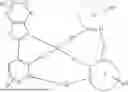


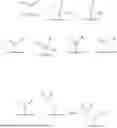


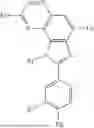


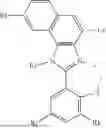


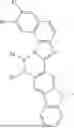


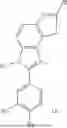


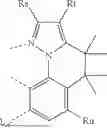
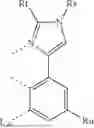


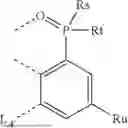




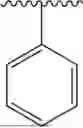


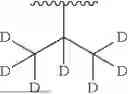


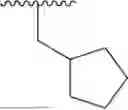


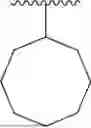


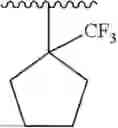
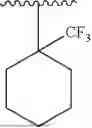


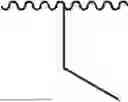


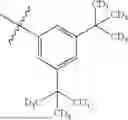
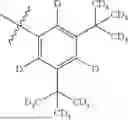








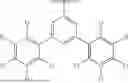


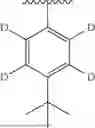




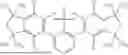





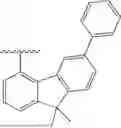

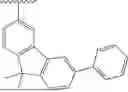

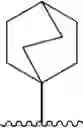

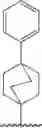


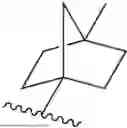


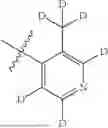

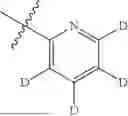




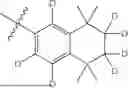


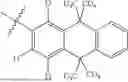


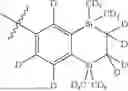


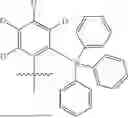


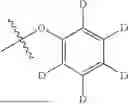


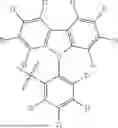


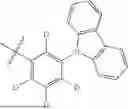


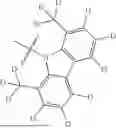









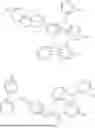








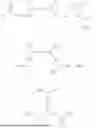
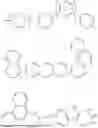

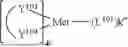


















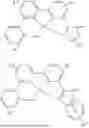




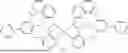





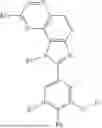






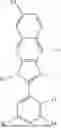


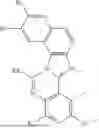


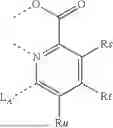


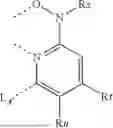













Sources:
- United States Patent and Trademark Office - verify current appl. status at the USPTO↗
Similar patent applications:
- » 20140077191
Compound, organic electroluminescence device material, organic electroluminescence device and electronic device - » 20240368103
COMPOUND, ORGANIC-ELECTROLUMINESCENCE-DEVICE MATERIAL, ORGANIC ELECTROLUMINESCENCE DEVICE, AND ELECTRONIC DEVICE - » 20250057041
COMPOUND, ORGANIC-ELECTROLUMINESCENCE-DEVICE MATERIAL, ORGANIC ELECTROLUMINESCENCE DEVICE, AND ELECTRONIC DEVICE - » 20140239273
Anthracene derivative, organic-electroluminescence-device material, organic electroluminescence device, and electronic equipment - » 20170005274
COMPOUND, ORGANIC ELECTROLUMINESCENT DEVICE MATERIAL, ORGANIC ELECTROLUMINESCENT DEVICE, AND ELECTRONIC EQUIPMENT - » 20180102484
Compound, organic electroluminescence device material, organic electroluminescence device and electronic device - » 20240276878
COMPOUND, ORGANIC-ELECTROLUMINESCENCE-DEVICE MATERIAL, ORGANIC ELECTROLUMINESCENCE DEVICE, AND ELECTRONIC DEVICE - » 20090167165
Organic electroluminescent device material, organic electroluminescent device, display and illuminating device - » 20060251918
Organic electroluminescent device material and organic electroluminescent device using same - » 20100181553
Organic electroluminescent device material and organic electroluminescent device
Recent applications in this class:
- » 20260150491 2026-05-28
ORGANIC COMPOUND AND ORGANIC LIGHT-EMITTING ELEMENT - » 20260143905 2026-05-21
ORGANIC ELECTROLUMINESCENT MATERIALS AND DEVICES - » 20260143904 2026-05-21
ORGANIC ELECTROLUMINESCENT MATERIALS AND DEVICES - » 20260143903 2026-05-21
ORGANIC ELECTROLUMINESCENT MATERIALS AND DEVICES - » 20260143902 2026-05-21
ORGANIC ELECTROLUMINESCENT MATERIALS AND DEVICES - » 20260143901 2026-05-21
ORGANOMETALLIC COMPOUND, LIGHT-EMITTING DEVICE INCLUDING THE ORGANOMETALLIC COMPOUND, AND ELECTRONIC APPARATUS INCLUDING THE LIGHT-EMITTING DEVICE - » 20260136753 2026-05-14
ELECTRONIC APPARATUS, LIGHT EMITTING-ELEMENT, AND POLYCYCLIC COMPOUND FOR THE SAME - » 20260136752 2026-05-14
ORGANIC ELECTROLUMINESCENT MATERIALS AND DEVICES - » 20260123173 2026-04-30
CONDENSED CYCLIC COMPOUND, ORGANIC LIGHT-EMITTING DEVICE INCLUDING THE SAME, AND ELECTRONIC APPARATUS INCLUDING ORGANIC LIGHT-EMITTING DEVICE - » 20260123172 2026-04-30
LIGHT-EMITTING ELEMENT, CONDENSED POLYCYCLIC COMPOUND FOR THE SAME AND ELECTRONIC APPARATUS INCLUDING THE LIGHT-EMITTING ELEMENT
Recent applications for this Assignee:
- » 20260150572 2026-05-28
ORGANIC ELECTROLUMINESCENT MATERIALS AND DEVICES - » 20260143963 2026-05-21
ORGANIC ELECTROLUMINESCENT MATERIALS AND DEVICES - » 20260143961 2026-05-21
ORGANIC ELECTROLUMINESCENT MATERIALS AND DEVICES - » 20260143905 2026-05-21
ORGANIC ELECTROLUMINESCENT MATERIALS AND DEVICES - » 20260143904 2026-05-21
ORGANIC ELECTROLUMINESCENT MATERIALS AND DEVICES - » 20260143903 2026-05-21
ORGANIC ELECTROLUMINESCENT MATERIALS AND DEVICES - » 20260143902 2026-05-21
ORGANIC ELECTROLUMINESCENT MATERIALS AND DEVICES - » 20260138995 2026-05-21
ORGANIC ELECTROLUMINESCENT MATERIALS AND DEVICES - » 20260136823 2026-05-14
ORGANIC ELECTROLUMINESCENT MATERIALS AND DEVICES - » 20260136752 2026-05-14
ORGANIC ELECTROLUMINESCENT MATERIALS AND DEVICES