PHARMACEUTICAL COMPOSITION COMPRISING ECHINOCANDIN ANALOG AND PREPARATION METHOD FOR PHARMACEUTICAL COMPOSITION
US20260144845A1
2026-05-28
19/123,421
2023-10-25
Smart Summary: A new type of medicine has been created that includes a special compound called an echinocandin analog. This medicine is mixed with other ingredients like a solubilizer and a buffer to help it work better. The combination makes the medicine very stable, meaning it won't break down easily over time. A method for making this medicine has also been developed. Overall, this new formulation aims to improve treatment options in healthcare. 🚀 TL;DR
Abstract:
The present disclosure provides a pharmaceutical composition comprising an echinocandin analog and a preparation method for the pharmaceutical composition. Specifically, the present disclosure provides a pharmaceutical composition, comprising a compound represented by formula (I) or a pharmaceutically acceptable salt thereof, a solubilizer, and a buffer. The composition has excellent stability.
Inventors:
- Hao Chen 5 🇨🇳 Lianyungang, China
- Linmao YE 2 🇨🇳 Lianyungang, China
- Yingfang FAN 2 🇨🇳 Lianyungang, China
- Dong AN 1 🇨🇳 Lianyungang, China
- Qingqing MENG 1 🇨🇳 Lianyungang, China
- Kai JIANG 1 🇨🇳 Lianyungang, China
Applicant:
Interested in similar patents?
Get notified when new applications in this technology area are published.
Classification:
A61K38/12 » CPC main
Medicinal preparations containing peptides; Peptides having up to 20 amino acids in a fully defined sequence; Derivatives thereof Cyclic peptides, e.g. bacitracins; Polymyxins; Gramicidins S, C; Tyrocidins A, B or C
A61K9/0019 » CPC further
Medicinal preparations characterised by special physical form; Galenical forms characterised by the site of application Injectable compositions; Intramuscular, intravenous, arterial, subcutaneous administration; Compositions to be administered through the skin in an invasive manner
A61K9/08 » CPC further
Medicinal preparations characterised by special physical form Solutions
A61K9/19 » CPC further
Medicinal preparations characterised by special physical form; Particulate form, e.g. powders, Processes for size reducing of pure drugs or the resulting products, Pure drug nanoparticles lyophilised, i.e. freeze-dried, solutions or dispersions
A61K47/22 » CPC further
Medicinal preparations characterised by the non-active ingredients used, e.g. carriers or inert additives; Targeting or modifying agents chemically bound to the active ingredient; Organic compounds, e.g. natural or synthetic hydrocarbons, polyolefins, mineral oil, petrolatum or ozokerite Heterocyclic compounds, e.g. ascorbic acid, tocopherol or pyrrolidones
A61K47/26 » CPC further
Medicinal preparations characterised by the non-active ingredients used, e.g. carriers or inert additives; Targeting or modifying agents chemically bound to the active ingredient; Organic compounds, e.g. natural or synthetic hydrocarbons, polyolefins, mineral oil, petrolatum or ozokerite Carbohydrates, e.g. sugar alcohols, amino sugars, nucleic acids, mono-, di- or oligo-saccharides; Derivatives thereof, e.g. polysorbates, sorbitan fatty acid esters or glycyrrhizin
A61K9/00 IPC
Medicinal preparations characterised by special physical form
Description
The present application claims priority to Chinese patent application 2022113124878 filed on Oct. 25, 2022 and Chinese patent application 2023108308433 filed on Jul. 7, 2023. The contents of the above Chinese patent applications are incorporated herein by reference in their entirety.
TECHNICAL FIELD
The present disclosure belongs to the field of pharmaceutical preparations, and specifically relates to a pharmaceutical composition comprising an echinocandin analog and a preparation method therefor.
BACKGROUND
Currently available drugs for the treatment of fungal infections include amphotericin B, a macrolide polyene that interacts with fungal membrane sterols; flucytosine, a fluoropyrimidine that interacts with fungal protein and DNA biosynthesis; and a variety of azole antifungals (e.g., ketoconazole, itraconazole, and fluconazole) that inhibit fungal membrane-sterol biosynthesis (Alexander et al., Drugs, 54:657, 1997). The application of amphotericin B is limited due to infusion-related reactions and nephrotoxicity, in spite of the fact that it has a broad spectrum of activity and is considered the “gold standard” for antifungal therapy (Warnock, J. Antimicrob. Chemother., 41:95, 1998). The use of flucytosine is also limited due to the development of drug-resistant microorganisms and its narrow spectrum of activity. The widespread use of azole antifungals is leading to the emergence of clinically resistant strains of Candida spp. Echinocandins are a novel class of antifungals that are typically comprised of a cyclic hexapeptide and a lipophilic tail, the latter of which is attached to the hexapeptide core via an amide linkage. These drugs interfere with the synthesis of β-1,3-glucose in fungal cell walls by non-competitive inhibition of β-1,3-glucose synthase, leading to changes in the permeability of the fungal cell walls, and thus cell lysis and death. Due to the absence of cell walls in human cells and the presence of cell walls in fungal cells, echinocandin antifungals can directly act upon the components of the fungal cell walls, thereby having low toxicity to humans. Therefore, these drugs have been one of the safest antifungals to date.
Anidulafungin is a class of echinocandin antifungals developed by Vicuron Pharmaceuticals (USA) and marketed under the brand name Eraxis, which was approved by the FDA in 2006. Anidulafungin has a broad spectrum of antimicrobial activity. CN100335122C discloses a pharmaceutical composition comprising anidulafungin and a micelle-forming surfactant.
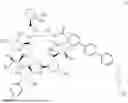
WO2021110125 discloses a novel-structure echinocandin antifungal, such as a compound represented by formula I, which demonstrates excellent antimicrobial activity.
SUMMARY
The present disclosure aims to provide a pharmaceutical composition comprising an active ingredient of a compound represented by formula I or a pharmaceutically acceptable salt thereof, wherein the composition has good formulation stability.
The present disclosure provides a pharmaceutical composition comprising an active ingredient of a compound represented by formula I or a pharmaceutically acceptable salt thereof, a solubilizer, and a buffer, wherein the buffer is selected from one or more of glycine, alanine, valine, leucine, isoleucine, phenylalanine, serine, threonine, tyrosine, cysteine, methionine, proline, tryptophan, lysine, arginine, histidine, aspartic acid, glutamic acid, asparagine, glutamine, phosphate, citrate, maleate, borate, carbonate, acetate, lactate, tartrate, malate, succinate, ascorbate, oxalate, and sulfate.
The buffer may be in free form or salt form, or a combination of both.
The present disclosure provides a pharmaceutical composition comprising an active ingredient of a compound represented by formula I or a pharmaceutically acceptable salt thereof, a solubilizer, and a buffer, wherein the buffer comprises at least one amino acid.
In certain embodiments, the solubilizer is selected from one or more of polysorbate, polyoxyethylene castor oil derivatives, polyoxyethylene stearate, sorbitan trioleate, bile salts, and lecithin. In certain embodiments, the solubilizer is polysorbate, such as polysorbate 20, polysorbate 40, polysorbate 60, or polysorbate 80. The solubilizer facilitates preventing precipitation of the active ingredient during storage or in vivo after administration, thereby reducing potential side effects (e.g., irritation).
In certain embodiments, the buffer is histidine, including histidine and a combination of histidine and histidine hydrochloride.
In certain embodiments, the pharmaceutical composition may further comprise a stabilizer, wherein the stabilizer is selected from one or more of mannitol, sucrose, trehalose, maltose, dextrose, and lactose. In certain embodiments, the stabilizer is mannitol.
In certain embodiments, the pharmaceutical composition may further comprise a pH adjuster, wherein the pH adjuster may be sodium hydroxide, hydrochloric acid, etc.
In certain embodiments, the compound represented by formula I or the pharmaceutically acceptable salt thereof is an acetate of the compound represented by formula I.
In certain embodiments, the weight ratio of the active ingredient of the compound represented by formula I or the pharmaceutically acceptable salt thereof to the buffer is 1:0.01 to 1:5. In certain embodiments, the weight ratio of the active ingredient of the compound represented by formula I or the pharmaceutically acceptable salt thereof to the buffer is 1:0.05 to 1:5, non-limiting examples of which include 1:0.01, 1:0.02, 1:0.05, 1:0.1, 1:0.15, 1:0.2, 1:0.25, 1:0.3, 1:0.35, 1:0.4, 1:0.45, 1:0.5, 1:0.6, 1:0.7, 1:0.8, 1:0.9, 1:1, 1:1.5, 1:2, 1:2.5, 1:3, 1:3.5, 1:4, 1:4.5, 1:5, or any value between any two of these ratios. In certain embodiments, the weight ratio of the active ingredient of the compound represented by formula I or the pharmaceutically acceptable salt thereof to the buffer is 1:0.02 to 1:3, such as 1:0.05 to 1:1, which is suitable for stabilizing the pH of the composition.
In certain embodiments, the weight ratio of the active ingredient of the compound represented by formula I or the pharmaceutically acceptable salt thereof to the solubilizer is 1:0.1 to 10. In certain embodiments, the weight ratio of the active ingredient of the compound represented by formula I or the pharmaceutically acceptable salt thereof to the solubilizer is 1:0.5 to 5, non-limiting examples of which include 1:1, 1:1.2, 1:1.4, 1:1.5, 1:1.6, 1:1.8, 1:2, 1:2.2, 1:2.4, 1:2.5, 1:2.6, 1:2.8, 1:3, 1:3.2, 1:3.4, 1:3.5, 1:3.6, 1:3.8, 1:4, 1:4.2, 1:4.4, 1:4.5, 1:4.6, 1:4.8, 1:5, or any value between any two of these ratios.
In certain embodiments, the weight ratio of the active ingredient of the compound represented by formula I or the pharmaceutically acceptable salt thereof to the stabilizer is 1:0.1 to 10, preferably 1:0.5 to 5, non-limiting examples of which include 1:0.5, 1:0.6, 1:0.8, 1:0.9, 1:1, 1:1.2, 1:1.4, 1:1.6, 1:1.8, 1:2, 1:2.2, 1:2.4, 1:2.6, 1:2.8, 1:3, 1:3.2, 1:3.4, 1:3.6, 1:3.8, 1:4, 1:4.2, 1:4.4, 1:4.6, 1:4.8, 1:5, or any value between any two of these ratios.
In certain embodiments, the pharmaceutical composition has a pH of 4 to 8. In certain embodiments, the pharmaceutical composition has a pH of 4.5 to 7. In certain embodiments, the pharmaceutical composition has a pH of 5.5 to 6.5, non-limiting examples of which include 4.5, 5.0, 5.1, 5.2, 5.3, 5.4, 5.5, 5.6, 5.7, 5.8, 5.9, 6.0, 6.1, 6.2, 6.3, 6.4, 6.5, 6.6, 6.7, 6.8, 6.9, 7.0, or any value between any two of these numbers.
In certain embodiments, the content of the active ingredient or the pharmaceutically acceptable salt thereof in the pharmaceutical composition is 5 to 300 mg/mL, such as 10 to 250 mg/mL, non-limiting examples of which include 10, 15, 20, 25, 30, 35, 40, 45, 50, 55, 60, 65, 70, 75, 80, 85, 90, 95, 100, 105, 110, 115, 120, 125, 130, 135, 140, 145, 150, 155, 160, 165, 170, 175, 180, 185, 190, 195, 200, 205, 210, 215, 220, 225, 230, 235, 240, 245, 250 mg/mL, or any value between any two of these numbers.
The present disclosure further provides a pharmaceutical composition comprising:
-
- 5 to 300 mg/mL of a compound represented by formula I or a pharmaceutically acceptable salt thereof;
- a stabilizer, which is mannitol, wherein the weight ratio of the compound represented by formula I or the pharmaceutically acceptable salt thereof to the stabilizer is 1:0.5 to 5;
- a buffer, which is histidine, wherein the weight ratio of the compound represented by formula I or the pharmaceutically acceptable salt thereof to the buffer is 1:0.05 to 5;
- a solubilizer, which is polysorbate, wherein the weight ratio of the compound represented by formula I or the pharmaceutically acceptable salt thereof to the solubilizer is 1:0.5 to 5;
- and optionally a pH adjuster,
- wherein the composition has a pH of 5.5 to 6.5.
The pharmaceutical composition of the present disclosure may further comprise other pharmaceutical excipients, such as cosolvents, tonicity adjusters, adsorbents, or complexing agents.
The pharmaceutical composition provided by the present disclosure may be in solid or liquid form, wherein the pharmaceutical composition in solid form is typically obtained by lyophilizing a composition in liquid form, or may be redissolved or reconstituted to obtain a composition in liquid form. The pharmaceutical composition in liquid form may be in the form of a solution or a suspension, preferably a solution. In certain embodiments, the liquid composition is obtained by redissolving or reconstituting a lyophilized composition or is a liquid composition prior to lyophilization. In certain embodiments, the solid composition is redissolved or reconstituted to obtain the aforementioned pharmaceutical composition.
The present disclosure provides a use of the aforementioned pharmaceutical composition in the manufacture of a medicament for treating and/or preventing fungal infections.
The present disclosure provides a use of the aforementioned pharmaceutical composition in the manufacture of a medicament for preventing, stabilizing, or inhibiting fungal growth or killing fungi.
The pharmaceutical composition provided by the present disclosure is used as a medicament. The medicament may be used to prevent, stabilize, or inhibit fungal growth or kill fungi.
The present disclosure provides a method for preventing, stabilizing, or inhibiting fungal growth or killing fungi, comprising administering a therapeutically effective amount of the pharmaceutical composition to a patient in need thereof.
The present disclosure provides a method for preparing the aforementioned pharmaceutical composition, comprising the step of mixing a compound represented by formula I or a pharmaceutically acceptable salt thereof with a solubilizer and a buffer.
In certain embodiments, the method further comprises the steps of pH adjustment and lyophilization.
The terms “about” and “approximately” as used herein mean that a numerical value is within an acceptable error range for the particular value as determined by one of ordinary skill in the art, and the numerical value depends in part on how the value is measured or determined (i.e., the limitations of the measurement system). For example, “about” may mean within 1 or more than 1 standard deviation per the practice in the art. Alternatively, “about” or “substantially comprising” may mean a range of up to 20%. Furthermore, particularly for biological systems or processes, the term may mean up to an order of magnitude or up to 5-fold of a numerical value. Unless otherwise stated, when a particular value is provided in the present application and claims, the meaning of “about” or “substantially comprising” should be assumed to be within an acceptable error range for the particular value.
The numerical values in the present disclosure are instrument measurements or calculated values based on instrument measurements, and have a certain degree of error. Generally, +10% falls within a reasonable error range. It is certainly necessary to consider the context in which the numerical value is used. For example, for the content of total impurities, the error range of the value after measurement shall not exceed ±10%, and may be ±9%, ±8%, ±7%, ±6%, ±5%, ±4%, ±3%, ±2%, or ±1%, preferably ±5%.
The term “weight-to-volume ratio” in the present disclosure refers to the weight (g) of the ingredient per 100 mL of the liquid system, i.e., g/100 mL.
DETAILED DESCRIPTION OF THE PREFERRED EMBODIMENT
The following examples are provided to further illustrate the present disclosure in detail. These examples are provided merely for illustrative purposes and are not intended to limit the scope of the present disclosure.
In the examples, the content of acetate of the compound represented by formula I is calculated based on the free form of the compound represented by formula I.
Example 1: Buffer Screening Experiment
Experimental method: Tween 80 was weighed and mixed uniformly with water for injection until dissolved. The active ingredient was then added and stirred to dissolve. A buffer was weighed and dissolved in water for injection with stirring, and mixed uniformly with the active ingredient solution. Mannitol was then added, and the pH was adjusted to 5.5 to 6.5. The mixture was sterilized by filtration, filled into vials, and lyophilized to prepare compositions 2 and 3, respectively.
| TABLE 1 |
| Components of each composition |
| Composi- | Composi- | Composi- | |
| tion 1 | tion 2 | tion 3 | |
| Acetate of compound represented by | 200 | mg | 200 | mg | 200 | mg |
| formula I | ||||||
| Tween 80 | 500 | mg | 400 | mg | 500 | mg |
| Mannitol | 200 | mg | 200 | mg | 200 | mg |
| Acetic acid | 6 | mg |
| Histidine | / | 21 | mg | 21 | mg |
| Histidine hydrochloride | / | 42 | mg | 42 | mg |
| Hydrochloric acid/sodium hydroxide | q.s. | q.s. | q.s. |
| pH | 5.5 to 6.5 | 5.5 to 6.5 | 5.5 to 6.5 |
| Water for injection | 4 | mL | 4 | mL | 4 | mL |
Test conclusion: Composition 1 exhibited poor stability with a significant increase in pH after lyophilization. Compositions 2 and 3, which employed a pH buffer system of histidine/histidine hydrochloride, maintained the pH of the redissolved solution within the range of 5.5 to 6.5.
| TABLE 2 |
| Buffer screening results |
| pH of redissolved | |||
| solution after | |||
| No. | pH before lyophilization | lyophilization | |
| Composition 1 | 6.3 | 8.3 | |
| Composition 2 | 5.9 | 6.4 | |
| Composition 3 | 6.0 | 6.4 | |
Example 2: Formulation Stability
Tween 80 was weighed and mixed uniformly with water for injection until dissolved. The active ingredient was then added and stirred to dissolve. A buffer was weighed and dissolved in water for injection with stirring, and mixed uniformly with the active ingredient solution. Mannitol was then added, and the pH was adjusted to 5.5 to 6.5. The mixture was sterilized by filtration, filled into vials, and lyophilized to prepare compositions A and B.
| TABLE 3 |
| Components of each composition |
| Composition A | Composition B | |
| Acetate of compound represented by | 200 | mg | 200 | mg |
| formula I | ||||
| Tween 80 | 400 | mg | 500 | mg |
| Mannitol | 200 | mg | 200 | mg |
| Histidine | 21 | mg | 21 | mg |
| Histidine hydrochloride | 42 | mg | 42 | mg |
| Hydrochloric acid/sodium hydroxide | q.s. | q.s. |
| pH | 5.5 to 6.5 | 5.5 to 6.5 |
| Water for injection | 4 | mL | 4 | mL |
Experimental design and protocol: Compositions A and B were subjected to stress testing to evaluate the effects of temperature (40° C.±2° C./RH 75%±5%), freeze-thaw cycles (2 days at −20° C. followed by 2 days at 25° C. as 1 cycle), and light exposure on the samples. The specific protocol is shown in Table 4, and results are shown in Table 5.
| TABLE 4 |
| Stress testing protocol |
| Testing | Testing | |
| Placement conditions | timepoints | parameters |
| High | 40° C. ± 2° C./RH | 0 days, 5 | Appearance; clarity |
| temperature | 75% ± 5% | days, 12 | and color of |
| days, 30 | solution; pH; | ||
| days | moisture; visible | ||
| Freeze-thaw | 2 days at −20° C. | 3 cycles | particles; insoluble |
| cycle | followed by 2 days at | particulates; related | |
| 25° C. as 1 cycle | substances; content | ||
| Light | Illuminance ≥ 1.2*106 | 0 days, 5 | |
| exposure | Lux · hr | days, 12 | |
| Near-UV energy ≥ 200 | days, 30 | ||
| w · hr/m2 | days | ||
| TABLE 5.1 |
| Stress testing results - high temperature results |
| Composition A | Composition B |
| High | High | High | High | High | High | |||
| Testing | temperature | temperature | temperature | temperature | temperature | temperature | ||
| parameters | Initial point | for 5 days | for 12 days | for 30 days | Initial point | for 5 days | for 12 days | for 30 days |
| Appearance | Off-white | Off-white | Off-white | Off-white | Off-white | Off-white | Off-white | Off-white |
| lyophilized | lyophilized | lyophilized | lyophilized | lyophilized | lyophilized | lyophilized | lyophilized | |
| cake | cake | cake | cake | cake | cake | cake | cake | |
| Clarity and | Clear, | / | / | Clear, | Clear, | / | / | Clear, |
| color of | colorless | colorless | colorless | colorless | ||||
| solution | ||||||||
| pH | 6.4 | / | / | 6.4 | 6.4 | / | / | 6.4 |
| Total | 0.35% | 0.37% | 0.43% | 0.73% | 0.34% | 0.37% | 0.43% | 0.71% |
| impurities | ||||||||
| Isomer | 0.26% | 0.27% | 0.28% | 0.29% | 0.25% | 0.27% | 0.28% | 0.30% |
| Content | 105.4% | 105.0% | 103.5% | 105.3% | 103.0% | 103.5% | 103.9% | 103.1% |
| determination | ||||||||
| (on a free | ||||||||
| base basis) | ||||||||
| Note: | ||||||||
| “/” indicates that the parameter is not tested at the timepoint. |
| TABLE 5.2 |
| Stress testing results - freeze-thaw cycle results |
| Testing | Composition A | Composition B |
| parameters | Initial point | Cycle 1 | Cycle 2 | Cycle 3 | Initial point | Cycle 1 | Cycle 2 | Cycle 3 |
| Appearance | Off-white | Off-white | Off-white | Off-white | Off-white | Off-white | Off-white | Off-white |
| lyophilized | lyophilized | lyophilized | lyophilized | lyophilized | lyophilized | lyophilized | lyophilized | |
| cake | cake | cake | cake | cake | cake | cake | cake | |
| Clarity and | Clear, | / | / | Clear, | Clear, | / | / | Clear, |
| color of | colorless | colorless | colorless | colorless | ||||
| solution | ||||||||
| pH | 6.4 | / | / | 6.4 | 6.4 | / | / | 6.4 |
| Total | 0.35% | 0.36% | 0.32% | 0.32% | 0.34% | 0.37% | 0.34% | 0.32% |
| impurities | ||||||||
| Isomer | 0.26% | / | 0.27% | 0.27% | 0.25% | 0.27% | 0.27% | 0.27% |
| Content | 105.4% | 105.3% | 103.9% | 105.1% | 103.0% | 103.4% | 103.6% | 103.4% |
| determination | ||||||||
| Note: | ||||||||
| “/” indicates that the parameter is not tested at the timepoint. |
| TABLE 5.3 |
| Stress testing results - light exposure results (composition A) |
| Light exposure of unboxed vials | Light exposure of vials in box packaging |
| Testing | Initial point | 5 days | 12 days | 30 days | 5 days | 12 days | 30 days |
| Appearance | Off-white | Off-white | Off-white | Off-white | Off-white | Off-white | Off-white |
| lyophilized | lyophilized | lyophilized | lyophilized | lyophilized | lyophilized | lyophilized | |
| cake | cake | cake | cake | cake | cake | cake | |
| Clarity and color | Clear, | / | / | Clear, | / | Clear, | |
| of solution | colorless | colorless | colorless | ||||
| pH | 6.4 | / | / | 6.4 | / | / | 6.4 |
| Total impurities | 0.35% | 0.35% | 0.34% | 0.43% | 0.34% | 0.34% | 0.41% |
| Isomer | 0.26% | 0.27% | 0.27% | 0.27% | 0.27% | 0.27% | 0.27% |
| Content | 105.4% | 105.0% | 103.8% | 105.0% | 105.4% | 104.5% | 105.2% |
| determination | |||||||
| Note: | |||||||
| “/” indicates that the parameter is not tested at the timepoint. |
| TABLE 5.4 |
| Stress testing results - light exposure results (composition B) |
| Testing | Light exposure of unboxed vials | Light exposure of vials in box packaging |
| parameters | Initial point | 5 days | 12 days | 30 days | 5 days | 12 days | 30 days |
| Appearance | Off-white | Off-white | Off-white | Off-white | Off-white | Off-white | Off-white |
| lyophilized | lyophilized | lyophilized | lyophilized | lyophilized | lyophilized | lyophilized | |
| cake | cake | cake | cake | cake | cake | cake | |
| Clarity and color | Clear, | / | / | Clear, | / | / | Clear, |
| of solution | colorless | colorless | colorless | ||||
| pH | 6.4 | / | / | 6.4 | / | / | 6.4 |
| Total impurities | 0.34% | 0.34% | 0.32% | 0.41% | 0.33% | 0.34% | 0.41% |
| Isomer | 0.25% | 0.27% | 0.27% | 0.27% | 0.27% | 0.27% | 0.27% |
| Content | 103.0% | 103.6% | 103.1% | 104.2% | 103.4% | 103.9% | 103.7% |
| determination | |||||||
| Note: | |||||||
| “/” indicates that the parameter is not tested at the timepoint. |
Experimental conclusion: Both compositions demonstrated good stability under all stress conditions.
Example 3
Using the method described in Example 1, comparative compositions were prepared with different buffers according to the components in Table 6, and the pH of each composition was measured before lyophilization and after redissolution.
| TABLE 6 |
| Components of each composition |
| Formu- | Formu- | Formu- | Formu- | Formu- | |
| la 1 | la 2 | la 3 | la 4 | la 5 | |
| Acetate of | 200 | mg | 200 | mg | 200 | mg | 200 | mg | 200 | mg |
| compound | ||||||||||
| represented | ||||||||||
| by formula I | ||||||||||
| Tween 80 | 400 | mg | 400 | mg | 400 | mg | 400 | mg | 400 | mg |
| Mannitol | 200 | mg | 200 | mg | 200 | mg | 200 | mg | 200 | mg |
| Glycine | / | / | 11.3 | mg | / | / |
| Arginine | / | / | / | 63 | mg | ||
| hydrochlo- | |||||||
| ride |
| Lactic acid | 0.5 | mg | / | / | / | / |
| Tartaric acid | / | 1.83 | mg | / | / | / |
| Citric acid | / | / | / | / | 68 | mg |
| Hydrochloric | q.s. to pH 5.5 to 6.5 |
| acid/sodium | |
| hydroxide |
| Water for | 4 | mL | 4 | mL | 4 | mL | Until | 4 | mL |
| injection | dissolved |
| pH before | 5.96 | 5.65 | 5.53 | 5.54 | 5.68 |
| lyophili- | |||||
| zation | |||||
| pH of | 8.05 | 8.05 | 8.66 | 8.54 | 8.10 |
| redissolved | ||||||||||
| solution after | ||||||||||
| lyophili- | ||||||||||
| zation | ||||||||||
Experimental conclusion: Other types of pH buffers showed inferior buffering capacity compared to histidine on the pH of the compositions.
Example 4
Using the method described in Example 1, compositions were prepared with different levels of excipients according to the components in Table 7, and the pH of each composition was measured before lyophilization and after redissolution.
| TABLE 7 |
| Components of each composition |
| Composi- | Composi- | Composi- | |
| tion 4 | tion 5 | tion 6 | |
| Acetate of compound represented | 200 | mg | 200 | mg | 200 | mg |
| by formula I | ||||||
| Tween 80 | 400 | mg | 400 | mg | 450 | mg |
| Mannitol | 200 | mg | 450 | mg | 500 | mg |
| Histidine | 37 | mg | 21 | mg | 21 | mg |
| Histidine hydrochloride | / | 42 | mg | 42 | mg |
| Hydrochloric acid/sodium hydroxide | q.s. | q.s. | q.s. |
| pH | 5.5 to 6.5 | 5.5 to 6.5 | 5.5 to 6.5 |
| Water for injection | 4 | mL | 4 | mL | 4 | mL |
| pH before lyophilization | 5.47 | 5.9 | 5.9 |
| pH of redissolved solution after | 6.45 | 6.5 | 6.4 |
| lyophilization |
Experimental conclusion: The excipients showed good buffering capacity on the pH of each composition.
Claims
1. A pharmaceutical composition comprising a compound represented by formula I or a pharmaceutically acceptable salt thereof, a solubilizer, and a buffer, wherein the buffer is selected from one or more of glycine, alanine, valine, leucine, isoleucine, phenylalanine, serine, threonine, tyrosine, cysteine, methionine, proline, tryptophan, lysine, arginine, histidine, aspartic acid, glutamic acid, asparagine, glutamine, phosphate, citrate, maleate, borate, carbonate, acetate, lactate, tartrate, malate, succinate, ascorbate, oxalate, and sulfate;
2. The pharmaceutical composition according to claim 1, wherein
the solubilizer is selected from one or more of polysorbate, polyoxyethylene castor oil derivatives, polyoxyethylene stearate, sorbitan trioleate, bile salts, and lecithin.
3. The pharmaceutical composition according to claim 1, further comprising a stabilizer, wherein the stabilizer is selected from one or more of mannitol, sucrose, trehalose, maltose, dextrose, and lactose.
4. The pharmaceutical composition according to claim 1, further comprising a pH adjuster.
5. The pharmaceutical composition according to claim 1, wherein the compound represented by formula I or the pharmaceutically acceptable salt thereof is an acetate of the compound represented by formula I.
6. The pharmaceutical composition according to claim 1, wherein the weight ratio of the compound represented by formula I or the pharmaceutically acceptable salt thereof to the buffer is 1:0.01 to 5.
7. The pharmaceutical composition according to claim 1, wherein the weight ratio of the compound represented by formula I or the pharmaceutically acceptable salt thereof to the solubilizer is 1:0.1 to 10.
8. The pharmaceutical composition according to claim 1, wherein the weight ratio of the compound represented by formula I or the pharmaceutically acceptable salt thereof to the stabilizer is 1:0.1 to 10.
9. The pharmaceutical composition according to claim 1, wherein the composition has a pH of 4 to 8, preferably 4.5 the 7, more preferably 5.5 to 6.5.
10. The pharmaceutical composition according to claim 1, wherein the content of the compound represented by formula I or the pharmaceutically acceptable salt thereof is 5 to 300 mg/mL.
11. The pharmaceutical composition according to claim 1, wherein the pharmaceutical composition comprises:
5 to 300 mg/mL of a compound represented by formula I or a pharmaceutically acceptable salt thereof;
a stabilizer, which is mannitol, wherein the weight ratio of the compound represented by formula I or the pharmaceutically acceptable salt thereof to the stabilizer is 1:0.5 to 5;
a buffer, which is histidine, wherein the weight ratio of the compound represented by formula I or the pharmaceutically acceptable salt thereof to the buffer is 1:0.05 to 5;
a solubilizer, which is polysorbate, wherein the weight ratio of the compound represented by formula I or the pharmaceutically acceptable salt thereof to the solubilizer is 1:0.5 to 5;
and optionally a pH adjuster,
wherein the composition has a pH of 5.5 to 6.5.
12. The pharmaceutical composition according to claim 1, wherein the pharmaceutical composition is a liquid composition.
13. A solid composition, wherein the solid composition is redissolved or reconstituted to obtain the pharmaceutical composition as defined in claim 1.
14. A lyophilized composition, wherein the lyophilized composition is obtained by lyophilizing the pharmaceutical composition as defined in claim 1.
15. (canceled)
16. A method for treating and/or preventing fungal infections, or for preventing, stabilizing, or inhibiting fungal growth or killing fungi, which the method comprises administering to a subject a therapeutically effective amount of the pharmaceutical composition as defined in claim 1.
17-19. (canceled)
20. The pharmaceutical composition according to claim 1, wherein the buffer is histidine.
21. The pharmaceutical composition according to claim 1, wherein the solubilizer is polysorbate.
22. The pharmaceutical composition according to claim 1, further comprising a stabilizer, wherein the stabilizer is mannitol.
23. The pharmaceutical composition according to claim 1, wherein the weight ratio of the compound represented by formula I or the pharmaceutically acceptable salt thereof to the buffer is 1:0.05 to 5.
24. The pharmaceutical composition according to claim 1, wherein the composition has a pH of 4.5 to 7.
Images & Drawings included:


Sources:
- United States Patent and Trademark Office - verify current appl. status at the USPTO↗
Recent applications in this class:
- » 20260137754 2026-05-21
APPLICATION OF A COMBINATION DRUG IN THE TREATMENT OF PATHOGENIC BACTERIAL PERSISTENT INFECTIONS - » 20260137753 2026-05-21
DAPTOMYCIN COMPOSITIONS - » 20260097093 2026-04-09
TARGETED AMATOXIN CONJUGATE FOR THE TREATMENT OF SOLID TUMORS - » 20260091083 2026-04-02
CYCLIC PROSAPOSIN PEPTIDES AND USES THEREOF - » 20260091082 2026-04-02
CYCLIC PEPTIDE DERIVATIVE COMPOSITION FOR TREATING OR PREVENTING EYE DISEASE - » 20260077013 2026-03-19
COMBINATIONS FOR USE IN CANCER THERAPY - » 20260069653 2026-03-12
COMPLEMENT INHIBITOR DOSING REGIMENS - » 20260053886 2026-02-26
ANTICANCER AGENT - » 20260053885 2026-02-26
PHARMACEUTICAL COMPOSITIONS - » 20260034193 2026-02-05
Brevican-Binding Peptides for Brain Tumor Imaging