PROCESS FOR THE PREPARATION OF PYRAZOLE CARBOXYLIC ACID AMIDES
US20260146028A1
2026-05-28
19/119,883
2022-10-11
Smart Summary: A new method has been developed to separate a mixture that includes a base, an organic solvent, water, and a specific compound. This process uses distillation, which is a technique to separate liquids based on their boiling points. After distillation, a phase separator is used to help separate the different components of the mixture. The goal is to effectively isolate the desired compound from the other substances. This method could improve the efficiency of preparing pyrazole carboxylic acid amides. 🚀 TL;DR
Abstract:
The invention relates to a process for separating the solution mixture, characterized in that the solution mixture comprises a base, an organic solvent, water and the compound of formula (I) the process comprises the distillation of the solution mixture wherein there is a phase separator in the downstream of the distillation.
Inventors:
- Jihao SHAN 1 🇨🇳 Nantong, Jiangsu, China
- Xin LIU 1 🇨🇳 Nantong, Jiangsu, China
- Jianjian XUE 1 🇨🇳 Nantong, Jiangsu, China
- Jinyang PAN 1 🇨🇳 Nantong, Jiangsu, China
- Yaoping FENG 1 🇨🇳 Nantong, Jiangsu, China
Assignee:
- SYNGENTA CROP PROTECTION AG 757 🇨🇭 Basel, Switzerland
Applicant:
Interested in similar patents?
Get notified when new applications in this technology area are published.
Classification:
C07D231/14 » CPC main
Heterocyclic compounds containing 1,2-diazole or hydrogenated 1,2-diazole rings not condensed with other rings having two or three double bonds between ring members or between ring members and non-ring members with hetero atoms or with carbon atoms having three bonds to hetero atoms with at the most one bond to halogen, e.g. ester or nitrile radicals, directly attached to ring carbon atoms
Description
The present invention relates to a process for the preparation of pyrazole carboxylic acid amides, particularly 3-difluoromethyl-1-methyl-1H-pyrazole-4-carboxylic acid (9-dichloromethylene-1,2,3,4-tetrahydro-1,4-methano-naphthalen-5-yl)-amide, more particularly to a process for separating the solution mixture derived from its preparation.
The compound 3-difluoromethyl-1-methyl-1H-pyrazole-4-carboxylic acid (9-dichloromethylene-1,2,3,4-tetrahydro-1,4-methano-naphthalen-5-yl)-amide and its microbicidal properties is described for example in WO 2007/048556.
The preparation of 3-difluoromethyl-1-methyl-1H-pyrazole-4-carboxylic acid (9-dichloromethylene-1,2,3,4-tetrahydro-1,4-methano-naphthalen-5-yl)-amide is known from WO 2007/048556.
Said compound can be prepared according to schemes 1 and 4 by a) reacting the compound of formula A
in the presence of an alkyl nitrite with a compound of formula B
wherein R′ and R″ are e.g. C1-C4alkyl, to a compound of formula C
-
- b) hydrogenating the compound of formula C in the presence of a suitable metal catalyst to a compound of formula D
-
- c) ozonising the compound of formula D and subsequent treatment with a reducing agent to a compound of formula E
-
- d) reacting the compound of formula E in the presence of triphenylphosphane/carbon tetrachloride to 2, 9-dichloromethylidene-5-nitro-benzonorbornene of formula F
-
- e) hydrogenating the compound of formula F in the presence of a metal catalyst to 2,9-dichloromethylidene-5-amino-benzonorbornene of formula G
-
- f) and reacting the compound of formula G with a compound of formula H
-
- to 3-difluoromethyl-1-methyl-1H-pyrazole-4-carboxylic acid (9-dichloromethylene-1,2,3,4-tetrahydro-1,4-methano-naphthalen-5-yl)-amide.
More specifically, in the above-mentioned process for the preparation of 3-difluoromethyl-1-methyl-1H-pyrazole-4-carboxylic acid (9-dichloromethylene-1,2,3,4-tetrahydro-1,4-methano-naphthalen-5-yl)-amide (compound of formula (I)), xylene is used as a solvent for reaction, subsequent crystallization. In order to recycle the xylene, the solution must be purified by removing water and triethylamine (TEA). As a result, there is a part of xylene loss during the distillation.
Such loss should be reduced as low as possible for the cost and environmental consideration. Thus, the aim of the present application is to provide a novel process for increasing the recovery rate of such organic solvent.
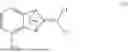
Thus, according to the present invention, there is provided a process for separating the solution mixture, characterized in that the solution mixture comprises a base, an organic solvent, water and the compound of formula (I)
-
- the process comprising a distillation of the solution mixture wherein there is a phase separator in the downstream of the distillation.
According to a preferred embodiment of the present application, the base is triethylamine, pyridine, 2,6-lutidine, NaOH, KOH, sodium acetate, potassium carbonate, sodium carbonate, sodium bicarbonate, or potassium bicarbonate.
According to a preferred embodiment of the present application, the organic solvent is tetrahydrofuran, 1,4-dioxane, dimethoxyethane, diethyl ether, tert-butyl methyl ether, methyl-ethyl-ketone, ethyl acetate, methyl acetate, an aromatic hydrocarbon, or an aliphatic hydrocarbon.
According to a preferred embodiment of the present application, the organic solvent is an aromatic or aliphatic hydrocarbon.
According to a preferred embodiment of the present application, the organic solvent is toluene, xylene, benzene, hexane, pentane or a petroleum ether.
According to a preferred embodiment of the present application, there are at least one condenser, preferably two condensers in the downstream of the distillation.
According to a preferred embodiment of the present application, there are two condensers, in the downstream of the distillation.
According to a preferred embodiment of the present application, the phase separator is in the downstream of the condensers.
According to a preferred embodiment of the present application, the recovery rate of the organic solvent increases at least 15%, preferably at least 18%, more preferably at least 20% and most preferably at least 25%, in comparison with the condition without using the phase separator.
According to a preferred embodiment of the present application, the distillation is operated in batch mode.
According to a preferred embodiment of the present application, the content of the organic solvent in the solution mixture is from 65 wt % to 75 wt %, preferably from 67 wt % to 73 wt %, more preferably from 69 wt % to 71 wt %, over the total weight of the solution mixture.
According to the preferred embodiment of the present application, the content of the compound of formula (I) in the solution mixture is from 15 wt % to 25 wt %, preferably from 17 wt % to 23 wt %, more preferably from 19 wt % to 21 wt %, over the total weight of the solution mixture.
According to a preferred embodiment of the present application, the content of the base in the solution mixture is from 3 wt % to 7.5 wt %, preferably from 3.5 wt % to 7.3 wt %, more preferably from 3.9 wt % to 7.1 wt %, over the total weight of the solution mixture. According to a preferred embodiment of the present application, the content of water in the solution mixture is from 0.3 wt % to 4.5 wt %, preferably from 0.4 wt % to 4.3 wt %, more preferably from 0.5 wt % to 3.8 wt %, over the total weight of the solution mixture.
DESCRIPTION OF DRAWINGS
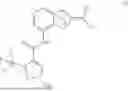
FIG. 1 is the general flow chart for producing the compound of formula (I).
FIG. 2 is a prior art process for producing the compound of formula (I). without using phase separator.
FIG. 3 is the inventive process for producing the compound of formula (I), by using phase separator.
PREFERRED EMBODIMENT
As indicated in FIG. 1, the desired compound is produced by a series reaction involving the use of the organic solvent, the base and water. After the reaction, there will be a solution mixture comprising the base, the organic solvent, water and the compound of formula (I) (identified as “Product” in FIG. 1). The volatile components, such as for example the base and/or the organic solvent, will be separated from the solution mixture through distillation. And the desired compound will be recovered by crystallization, filtration, drying and packing.
The distillation for separating such volatile components will be preferably operated in batch mode as shown in FIG. 2 and FIG. 3. The main difference between FIG. 2 and FIG. 3 is the use of the phase separator after distillation operation.
Such distillation can be performed in continuous, semi-continuous or batch, preferably batch mode. In the case of batch distillation, there are obtained two product streams, firstly the mixture of the organic solvent such as xylene and the base such as triethylamine having water content less than 0.05 wt %, and then the product stream mainly consisting of organic solvent such as xylene.
Generally, the operation condition of the distillation will be beneficial for the separation of the base, the organic solvent and water, particularly the distillation is operated under vacuum condition, such as 200 mbar to 400 mbar, preferably 250 mbar to 350 mbar (absolute pressure). The reflux ratio for the distillation will be from 1 to 5.
The function of the phase separator is mainly for the separation of water from the organic phase.
The resulting mixture recovered from the distillation can be recycled to the specific step for producing the compound of formula (I).
PREPARATORY EXAMPLES
Example 1 (Comparative)
In the distillation unit (FIG. 2), there are two fractions
-
- 1. 1000 kg head fraction in receiver 1 as organic waste which contain TEA (196 kg), xylene (706 kg) and 98 kg water.
- 2. Approx. 1255 kg high purity of xylene (TEA content <=0.3 wt. %, water content <=0.05 wt. %) as the second fraction in receiver 2 and be recovered back to process.
There is a lot of solvent loss in head fraction.
Example 2 (Inventive)
After the improvement of distillation unit (FIG. 3), a new phase separator implemented in the system which could remove most water during distillation. As a result, more xylene and TEA recovered in second fraction with water content <=0.05 wt. %.
The new process of distillation has been implemented in the plant
-
- 1. Most water (78 kg) removed to receiver 1 (same vessel for head fraction) by phase separator.
- 2. 647 kg head fraction in receiver 1 as organic waste which contain TEA (176 kg), xylene (373 kg) and 20 kg water.
- 3. Approx. 1608 kg xylene and TEA mixture (water content <=0.05 wt. %) as the second fraction in receiver 2 and be recovered back to process.
The organic solvent recovery rate is increased by up to 28%.
Claims
1. A process for separating the solution mixture, characterized in that the solution mixture comprises a base, an organic solvent, water and the compound of formula (I)
the process comprising a distillation of the solution mixture wherein there is a phase separator in the downstream of the distillation.
2. The process according to the process of claim 1, characterized in that the base is triethylamine, pyridine, 2,6-lutidine, NaOH, KOH, sodium acetate, potassium carbonate, sodium carbonate, sodium bicarbonate, or potassium bicarbonate.
3. The process according to the process of claim 1, characterized in that the organic solvent is tetrahydrofuran, 1,4-dioxane, dimethoxyethane, diethyl ether, tert-butyl methyl ether, methyl-ethyl-ketone, ethyl acetate, methyl acetate, an aromatic hydrocarbon, or an aliphatic hydrocarbon.
4. The process according to the process of claim 1, characterized in that the organic solvent is an aromatic or aliphatic hydrocarbon.
5. The process according to the process of claim 1, characterized in that the organic solvent is toluene, xylene, benzene, hexane, pentane or a petroleum ether.
6. The process according to the process of claim 1, characterized in that there is at least one condenser, preferably two condensers, in the downstream of the distillation.
7. The process according to the process of claim 1, characterized in that there are two condensers in the downstream of the distillation.
8. The process according to the process of claim 6, characterized in that the phase separator is in the downstream of the condensers.
9. The process according to the process of claim 1, characterized in that the recovery rate of the organic solvent increases at least 15%, preferably at least 18%, more preferably at least 20% and most preferably at least 25%, in comparison with the condition without using the phase separator.
10. The process according to the process of claim 1, characterized in that the distillation is operated in batch mode.
11. The process according to the process of claim 1, characterized in that the content of the organic solvent in the solution mixture is from 65 wt % to 75 wt %, preferably from 67 wt % to 73 wt %, more preferably from 69 wt % to 71 wt %, over the total weight of the solution mixture.
12. The process according to the process of claim 1, characterized in that the content of the compound of formula (I) in the solution mixture is from 15 wt % to 25 wt %, preferably from 17 wt % to 23 wt %, more preferably from 19 wt % to 21 wt %, over the total weight of the solution mixture.
13. The process according to the process of claim 1, characterized in that the content of the base in the solution mixture is from 3 wt % to 7.5 wt %, preferably from 3.5 wt % to 7.3 wt %, more preferably from 3.9 wt % to 7.1 wt %, over the total weight of the solution mixture.
14. The process according to the process of claim 1, characterized in that the content of water in the solution mixture is from 0.3 wt % to 4.5 wt %, preferably from 0.4 wt % to 4.3 wt %, more preferably from 0.5 wt % to 3.8 wt %, over the total weight of the solution mixture.
Images & Drawings included:





Sources:
- United States Patent and Trademark Office - verify current appl. status at the USPTO↗
Similar patent applications:
- » 20120136162
Process for the preparation of pyrazole carboxylic acid amides - » 20130035495
Process for the preparation of pyrazole carboxylic acid amides - » 20130035496
Process for the preparation of pyrazole carboxylic acid amides - » 20130041160
Process for the preparation of pyrazole carboxylic acid amides - » 20130041161
Process for the preparation of pyrazole carboxylic acid amides - » 20130310592
Process for the preparation of pyrazole carboxylic acid amides - » 20150018562
Process for the preparation of phenyl substituted 3-difluoromethyl-1-methyl-1H-pyrazole-4-carboxylic acid N-methoxy-[1-methyl-2 phenylethyl] amides
Recent applications in this class:
- » 20260132111 2026-05-14
Host-Targeted Pan-Respiratory Antiviral Small Molecule Therapeutics - » 20260078095 2026-03-19
NEUROTENSIN RECEPTOR LIGANDS - » 20260055062 2026-02-26
HETEROCYCLIC INHIBITORS OF MCT4 - » 20250388549 2025-12-25
CRYSTALLINE SALTS OF A PLASMA KALLIKREIN INHIBITOR - » 20250388548 2025-12-25
CRYSTALLINE SALTS OF A PLASMA KALLIKREIN INHIBITOR - » 20250388547 2025-12-25
CRYSTALLINE SALTS OF A PLASMA KALLIKREIN INHIBITOR - » 20250388546 2025-12-25
CRYSTALLINE SALTS OF A PLASMA KALLIKREIN INHIBITOR - » 20250388545 2025-12-25
CRYSTALLINE SALTS OF A PLASMA KALLIKREIN INHIBITOR - » 20250376448 2025-12-11
CRYSTALLINE SALTS OF A PLASMA KALLIKREIN INHIBITOR - » 20250376447 2025-12-11
CRYSTALLINE SALTS OF A PLASMA KALLIKREIN INHIBITOR
Recent applications for this Assignee:
- » 20260144222 2026-05-28
SNAP PEA VARIETY SUGAR 204 - » 20260137082 2026-05-21
FUNGICIDAL COMPOSITIONS COMPRISING FLUDIOXONIL - » 20260137041 2026-05-21
SIMULTANEOUS GENE EDITING AND HAPLOID INDUCTION - » 20260132125 2026-05-14
PESTICIDALLY ACTIVE FUSED BICYCLIC HETEROAROMATIC COMPOUNDS - » 20260130377 2026-05-14
FUNGICIDAL MIXTURE COMPRISING CYCLOTHIAZOMYCIN C AND MALONOMICIN - » 20260130373 2026-05-14
EMULSIFIABLE CONCENTRATE (EC) - » 20260130372 2026-05-14
FUNGICIDAL MIXTURE COMPRISING STREPTIMIDONE AND MALONOMICIN - » 20260130309 2026-05-07
PENTAS PLANT NAMED 'PEZZ0023' - » 20260130308 2026-05-07
CATHARANTHUS PLANT NAMED 'CARZ0005' - » 20260130307 2026-05-07
CATHARANTHUS PLANT NAMED 'CARZ0006'