RESIN COMPOSITION AND USES OF THE SAME
US20260146124A1
2026-05-28
19/024,205
2025-01-16
Smart Summary: A new type of resin has been created that includes two main parts. The first part is a maleimide compound that has a specific structure called indane. The second part contains certain compounds that have double bonds, which are important for the resin's properties. These compounds are categorized into two groups, referred to as formula (I) and formula (II). Together, these components make a resin that can be used in various applications. 🚀 TL;DR
Abstract:
A resin composition is provided. The resin composition comprises (A) a maleimide compound with indane structure and (B) a component having ethylenically unsaturated double bond(s). The component having ethylenically unsaturated double bond(s) is selected from the group consisting of compounds represented by formula (I), compounds represented by formula (II), and combinations thereof. Formulas (I) and (II) are as defined in the specification.
Inventors:
- Meng-Huei CHEN 5 🇹🇼 Zhubei City, Taiwan
- JEN-CHI CHIANG 4 🇹🇼 Zhubei City, Taiwan
- WEI-HSIN HUANG 2 🇹🇼 ZHUBEI CITY, Taiwan
Applicant:
Interested in similar patents?
Get notified when new applications in this technology area are published.
Classification:
C08G61/02 » CPC main
Macromolecular compounds obtained by reactions forming a carbon-to-carbon link in the main chain of the macromolecule Macromolecular compounds containing only carbon atoms in the main chain of the macromolecule, e.g. polyxylylenes
C08G61/122 » CPC further
Macromolecular compounds obtained by reactions forming a carbon-to-carbon link in the main chain of the macromolecule; Macromolecular compounds containing atoms other than carbon in the main chain of the macromolecule derived from five- or six-membered heterocyclic compounds, other than imides
C08J5/24 » CPC further
Manufacture of articles or shaped materials containing macromolecular substances Impregnating materials with prepolymers which can be polymerised , e.g. manufacture of prepregs
C08K5/3492 » CPC further
Use of organic ingredients; Nitrogen-containing compounds; Heterocyclic compounds having nitrogen in the ring having more than two nitrogen atoms in the ring; Six-membered rings Triazines
C08G2261/1642 » CPC further
Macromolecular compounds obtained by reactions forming a carbon-to-carbon link in the main chain of the macromolecule; Definition of the polymer structure; End groups comprising organic end groups comprising reactive double bonds or triple bonds
C08G61/12 IPC
Macromolecular compounds obtained by reactions forming a carbon-to-carbon link in the main chain of the macromolecule Macromolecular compounds containing atoms other than carbon in the main chain of the macromolecule
Description
CLAIM FOR PRIORITY
This application claims the benefit of Taiwan Patent Application No. 113145174 filed on Nov. 22, 2024, the subject matters of which are incorporated herein in their entirety by reference.
BACKGROUND
Field of the Invention
The present invention relates to a resin composition, especially a resin composition comprising a maleimide compound with indane structure and a component having ethylenically unsaturated double bond(s). The resin composition of the present invention can be used in combination with a reinforcing material to constitute a prepreg or be used as a metal foil adhesive to prepare a metal-clad laminate and a printed circuit board (PCB).
Descriptions of the Related Art
As a result of the development of high-frequency and high-speed transmission electronic products, the miniaturization of electronic elements, and the high-density wiring in substrates, there are higher demands for the physicochemical properties of the electronic materials used. Conventional resin compositions with epoxy resin as the main component have failed to meet these requirements and are thus being replaced by resin compositions with polyphenylene ether (PPE) as the main component. For example, U.S. Pat. No. 6,352,782 B2 (Applicant: General Electric (GE)) discloses a thermosetting polyphenylene ether resin composition, which comprises an end capped polyphenylene ether with unsaturated groups (mPPE) and a cross-linkable unsaturated monomer compound. In this document, triallyl isocyanurate (TAIC) is used as a monomer cross-linking agent together with an acrylate capped polyphenylene ether to form a thermosetting composition to meet the requirements for high-frequency electrical properties.
However, the electrical properties provided by existing PPE resin are still unsatisfactory and require further improvement. Additionally, modern electronic products must rapidly transmit high-frequency signals with high capacity. The transmission of signals generates substantial amount heat, which can lead to signal loss or delay. Consequently, the thermal resistance properties of existing PPE resin are becoming inadequate to meet industrial requirements.
SUMMARY
Given the aforementioned technical problems, the present invention provides a resin composition which uses a maleimide compound with indane structure and a component having ethylenically unsaturated double bond(s). The electronic materials prepared from the cured product of the resin composition can exhibit high glass transition temperature (Tg), low coefficient of thermal expansion (CTE), low dielectric constant (Dk), low dielectric loss factor (Df), excellent aging resistance (indicated by Df variation), excellent heat resistance after moisture absorption, excellent processing stability (indicated by filling property and tackiness), excellent adhesion to a metal layer (high peeling strength), and low water absorption.
Therefore, an objective of the present invention is to provide a resin composition, which comprises:
-
- (A) a maleimide compound with indane; and
- (B) a component having ethylenically unsaturated double bond(s), which is selected from the group consisting of compounds represented by formula (I), compounds represented by formula (II), and combinations thereof,
-
- wherein,
- each A is independently —O—, —S—, or —N(R1)—, wherein R1 is H, a C1-C20 hydrocarbyl, a C1-C20 halogenated hydrocarbyl, or a group formed by substituting a part of the C1-C20 hydrocarbyl or halogenated hydrocarbyl with at least one of O and S;
- each R is independently an unsubstituted or substituted divalent nitrogen-containing heteroaromatic ring;
- each X is independently
wherein R2 and R3 are independently a direct bond or a C1-C4 alkylene, Ar1 and Ar2 are independently an unsubstituted or substituted divalent aromatic hydrocarbyl, L is a direct bond, —O—, —S—, —N(R4)—, —C(O)—O—, —C(O)—NH—, —S(O)—, S(O)2—, —P(O)—, a C1-C20 alkylene, a C1-C20 halogenated alkylene, a divalent cardo structure, or an unsubstituted or substituted divalent C5-C30 alicyclic hydrocarbyl, R4 is H, a C1-C20 hydrocarbyl, or a C1-C20 halogenated hydrocarbyl, p is an integer of 0-5, and each Ar1 can be identical or different when p is 2 or more;
-
- each Y is independently a group containing ehylenically unsaturated double bond(s), and each Y can be identical or different;
- m is an integer of 1 to 100; and
- n is an integer of 1 to 100.
In an embodiment of the present invention, the maleimide compound (A) with indane structure is selected from the group consisting of compounds represented by formula (III), compounds represented by formula (IV), and combinations thereof,
-
- wherein,
- E is a group represented by the following formula (V), with a bonding position represented by *,
-
- each Ra is independently a C1-C10 linear or branched alkyl group, a C1-C10 alkoxy group, a C1-C10 alkylthio group, a C6-C10 aryl group, a C6-C10 aryloxy group, a C6-C10 arylthio group, a C3-C10 cycloalkyl group, a halogen atom, nitro group, a hydroxyl group, or thiol group;
- each Rb is independently a C1-C10 linear or branched alkyl group, a C1-C10 alkoxy group, a C1-C10 alkylthio group, a C6-C10 aryl group, a C6-C10 aryloxy group, a C6-C10 arylthio group, a C3-C10 cycloalkyl group, a halogen atom, a hydroxyl group, or a thiol group;
- each Rc is independently a C1-C10 hydrocarbyl or a C1-C10 halogenated alkyl group; q is an integer from 0 to 4;
- r is an integer from 0 to 3;
- s is an average number of repeating units, with a value from 1 to 20;
- t is an average number of repeating units, with a value from 0.95 to 10;
- u is an integer from 0 to 4; and
- y is an average number of repeating units, with a value from 1 to 20.
In an embodiment of the present prevention, the component (B) having ethylenically unsaturated double bond(s) is selected from the group consisting of compounds represented by formula (Ia), compounds represented by formula (IIa), and combinations thereof,
-
- wherein,
- R, A and Y in formulas (la) and (Ila) have the same definition as in formulas (I) and (II);
- X1 and X2 each independently have the same definition as X in formulas (I) and (II), and X1 and X2 are different from each other;
- X′ is X1 or X2;
- n1 and n2 are each independently an integer from 0 to 50, and a sum of n1 and n2 is less than 100; and
- m1 and m2 are each independently an integer from 0 to 50, with the proviso that m1 and m2 are not both 0 at the same time.
In an embodiment of the present invention, R in formulas (I), (II), (Ia), and (IIa) is each independently an unsubstituted or substituted divalent nitrogen-containing heteroaromatic ring selected from the group consisting of a pyrrole ring, a pyridine ring, a pyrimidine ring, a pyridazine ring, a pyrazine ring, a triazine ring, a quinoline ring, an isoquinoline ring, a quinoxaline ring, a phthalazine ring, a quinazoline ring, a naphthyridine ring, a carbazole ring, an acridine ring, and a phenazine ring.
In an embodiment of the present invention, Ar1 and Ar2 are independently an unsubstituted or substituted divalent aromatic hydrocarbyl. The divalent aromatic hydrocarbyl is phenylene, naphthylene, anthracenylene, or biphenylene. Each Ar1 can be identical or different.
In an embodiment of the present invention, L is a C1-C10 alkylene, a C1-C10 halogenated alkylene,
or an unsubstituted or substituted divalent C5-C30 alicyclic hydrocarbyl,
-
- wherein,
- R5 and R6 are each independently F or a C1-C20 linear hydrocarbyl;
- R7 and R5 are independently a direct bond, an unsubstituted or substituted linear hydrocarbylene, or an unsubstituted or substituted alicyclic hydrocarbylene; and
- j is an integer from 0 to 4.
In an embodiment of the present invention, Y in formulas (I), (II), (Ia), and (IIa) is each independently 2-isopropenylphenyl, 3-isopropenylphenyl, 4-isopropenylphenyl, 2-allylphenyl, 3-allylphenyl, 4-allylphenyl, 2-methoxy-4-allylphenyl, 4-(1-propenyl)-2-methoxyphenyl, 4-vinylbenzyl, 3-vinylbenzyl, 2-vinylbenzyl, allyl, acryloyl, methacryloyl, or methallyl.
In an embodiment of the present invention, the resin composition further comprises an additive selected from the group consisting of a catalyst, a cross-linking agent, an elastomer, a filler, a dispersing agent, a toughener, a viscosity modifier, a flame retardant, a plasticizer, a coupling agent, and combinations thereof.
Another objective of the present invention is to provide a prepreg prepared by impregnating or coating a substrate with the aforementioned resin composition, and drying the impregnated or coated substrate.
Yet another objective of the present invention is to provide a metal-clad laminate, which is prepared by laminating the aforementioned prepreg and a metal foil or by coating the aforementioned resin composition onto a metal foil and then drying the coated metal foil.
A further objective of the present invention is to provide a printed circuit board, which is prepared from the aforementioned metal-clad laminate.
To render the above objectives, technical features and advantages of the present invention more apparent, the present invention will be described in detail with reference to some embodiments hereinafter.
BRIEF DESCRIPTION OF THE DRAWINGS
Not applicable.
DETAILED DESCRIPTION
Hereinafter, some embodiments of the present invention will be described in detail. However, the present invention may be embodied in various embodiments and should not be limited to the embodiments described in the specification.
Unless otherwise specified, the expressions “a,” “the,” or the like recited in the specification and in the claims should include both the singular and the plural forms.
Unless otherwise specified, when the amount of components in a solution, mixture, or composition is given in the specification and the claims, it is calculated based on the total weight excluding the solvent.
The resin composition of the present invention involves the combined use of a maleimide compound (A) with indane and a specific component (B) having ethylenically unsaturated double bond(s). The electronic material prepared from the cured product of the resin composition of the present invention can exhibit excellent glass transition temperature (Tg), coefficient of thermal expansion (CTE), dielectric constant (Dk), dielectric loss factor (Df), aging resistance (indicated by variation of Df), heat resistance after moisture absorption (PCT), processing stability (indicated by filling property and tackiness), adhesion to a metal layer (high peeling strength), and resistance to water absorption. The resin composition of the present invention and its applications are described in detail below.
1. Resin Composition
The resin composition of the present invention comprises a maleimide compound (A) with indane structure and a component (B) having ethylenically unsaturated double bond(s) as essential components. It may further comprise optional components. The detailed descriptions of these components are as follows.
1.1. (A) Maleimide Compound with Indane Structure
The maleimide compound with indane structure (A) is a compound that contains indane structure in its molecule. For example, it can be a maleimide compound with indane structure that contains one or more maleimide groups in its molecule. Specifically, the maleimide compound (A) can include a structure represented by the following formula (a) in its molecule.
In formula (a), each R1 is independently a C1-C10 linear or branched alkyl group, a C1-C10 alkoxy group, a C1-C10 alkylthio group, a C6-C10 aryl group, a C6-C10 aryloxy group, a C6-C10 arylthio group, a C3-C10 cycloalkyl group, a halogen atom, a hydroxyl group, or a thiol group, and r is an integer from 0 to 3.
In an embodiments of the present invention, the maleimide compound with indane structure is preferably selected from the group consisting of compounds represented by formula (III), compounds represented by formula (IV), and combinations thereof,
-
- wherein,
- E is a group represented by the following formula (V), with a bonding position represented by *.
In formulas (III), (IV), and (V),
-
- each Ra is independently a C1-C10 linear or branched alkyl group, a C1-C10 alkoxy group, a C1-C10 alkylthio group, a C6-C10 aryl group, a C6-C10 aryloxy group, a C6-C10 arylthio group, a C3-C10 cycloalkyl group, a halogen atom, nitro group, a hydroxyl group, or a thiol group;
- each Rb is independently a C1-C10 linear or branched alkyl group, a C1-C10 alkoxy group, a C1-C10 alkylthio group, a C6-C10 aryl group, a C6-C10 aryloxy group, a C6-C10 arylthio group, a C3-C10 cycloalkyl group, a halogen, a hydroxyl group, or a thiol group;
- each Rc is independently a C1-C10 hydrocarbyl group or a C1-C10 halogenated alkyl group;
- q is an integer from 0 to 4;
- r is an integer from 0 to 3;
- s is an average number of repeating units, with a value from 1 to 20;
- t is an average number of repeating units, with a value from 0.95 to 10;
- u is an integer from 0 to 4; and
- y is an average number of repeating units, with a value from 1 to 20.
Examples of the C1-C10 linear or branched alkyl group include, but are not limited to, methyl, ethyl, n-propyl, isopropyl, n-butyl, isobutyl, sec-butyl, tert-butyl, n-pentyl, isopentyl, tert-pentyl, neopentyl, n-hexyl, isohexyl, sec-hexyl, tert-hexyl, neohexyl, n-heptyl, isoheptyl, n-octyl, isooctyl, n-nonyl, isononyl, n-decyl, and isodecyl. Examples of the C1-C10 alkoxy group include, but are not limited to, methoxy, ethoxy, n-propoxy, isopropoxy, n-butoxy, isobutoxy, tert-butoxy, n-pentoxy, isopentoxy, neopentoxy, and cyclohexyloxy. Examples of the C1-C10 alkylthio group include, but are not limited to, methylthio, ethylthio, n-propylthio, and isopropylthio. Examples of the C6-C10 aryl group include, but are not limited to, phenyl and naphthyl. Examples of the C6-C10 aryloxy group include, but are not limited to phenoxy. Examples of the C6-C10 arylthio group include, but are not limited to, phenylthio, 2-methylphenylthio, 4-tert-butylphenylthio. Examples of the C3-C10 cycloalkyl group include, but are not limited to, cyclopropyl, cyclobutyl, cyclopentyl, cyclohexyl, cycloheptyl, cyclooctyl, cyclononyl, and cyclodecyl. Examples of the C1-C10 hydrocarbyl group include, but are not limited to in the aforementioned C1-C10 linear or branched alkyl groups, C6-C10 aryl groups and C3-C10 cycloalkyl groups. Examples of the C1-C10 halogenated alkyl group include, but are not limited to, the aforementioned C1-C10 linear or branched alkyl groups and C3-10 cycloalkyl groups substituted with a halogen.
Formula (IV) represents a compound formed by the polymerization of the following monomers:
-
- wherein,
- Rc, u, and E each have the definitions as described in formula (IV)
The preparation method of the maleimide compounds (A) with indane structure is not particularly limited. For example, it can be synthesized by first preparing a compound with both indane structure and aniline structure, and then performing maleimidation on it, thereby obtaining a maleimide compound with indane structure. Specific examples of synthesis methods for the maleimide compounds (A) with indane structure can be found in the synthesis examples provided in the Examples section below.
In the resin composition of the present invention, based on the total weight of the resin composition, the amount of the maleimide compound (A) with indane structure can range from 5 wt % to 18 wt %. For example, based on the total weight of the resin composition, the amount of the maleimide compound (A) with indane structure can be 5 wt %, 6 wt %, 7 wt %, 8 wt %, 9 wt %, 10 wt %, 11 wt %, 12 wt %, 13 wt %, 14 wt %, 15 wt %, 16 wt %, 17 wt %, or 18 wt %, or within a range between any two of the values described herein, but the present invention is not limited thereto.
1.2. (B) Component Having Ethylenically Unsaturated Double Bond(s)
1.2.1. Embodiments of Formulas (I) and (II)
The component (B) having ethylenically unsaturated double bond(s) is selected from the group consisting of compounds represented by formula (I), compound represented by formula (II), and combinations thereof,
-
- wherein, m is an integer from 1 to 100, n is an integer from 1 to 100, and A, R, X and Y are as defined below.
[A]
Each A is independently —O—, —S—, or —N(R1)—, wherein R1 is H, a C1-C20 hydrocarbyl, a C1-C20 halogenated hydrocarbyl, or a group formed by substituting a part of the C1-C20 hydrocarbyl or halogenated hydrocarbyl with at least one of O and S.
The C1-20 hydrocarbyl can be a C1-C20 linear hydrocarbyl, a C3-C20 alicyclic hydrocarbyl, or a C6-C20 aromatic hydrocarbyl. Examples of the C1-C20 linear hydrocarbyl include, but are not limited to, methyl, ethyl, n-propyl, isopropyl, n-butyl, isobutyl, sec-butyl, tert-butyl, n-pentyl, vinyl, propenyl, butenyl, ethynyl, propynyl, butynyl, and pentynyl. Examples of the C3-C20 alicyclic hydrocarbyl include, but are not limited to, cyclopropyl, cyclobutyl, cyclopentyl, cyclohexyl, norbornyl, adamantanyl, cyclopropenyl, cyclobutenyl, cyclopentenyl, cyclohexenyl, and norbornenyl. Examples of the C6-C20 aromatic hydrocarbyl include, but are not limited to, phenyl, tolyl, xylyl, naphthyl, anthryl, benzyl, phenethyl, phenylpropyl, and naphthylmethyl.
The C1-C20 halogenated hydrocarbyl refers to a group formed by substituting one or more, or all, of the hydrogen atom(s) in the aforementioned C1-C20 hydrocarbyl with halogen(s) such as fluorine (F), chlorine (Cl), bromine (Br), and iodine (I).
The group formed by substituting a part of the C1-C20 hydrocarbyl or halogenated hydrocarbyl with at least one of O and S include, but are not limited to, a group that is substituted with —O—, —S—, ═O, —S(O)—, or —S(O)2—.
[R]
Each R is independently an unsubstituted or substituted divalent nitrogen-containing heteroaromatic ring. Examples of the nitrogen-containing heteroaromatic ring include, but are not limited to, a pyrrole ring, a pyridine ring, a pyrimidine ring, a pyridazine ring, a pyrazine ring, a triazine ring, a quinoline ring, an isoquinoline ring, a quinoxaline ring, a phthalazine ring, a quinazoline ring, a naphthyridine ring, a carbazole ring, an acridine ring, or a phenazine ring.
The aforementioned “substituted” means that the divalent nitrogen-containing heteroaromatic ring can be substituted with one or more of the following substituents: a halogen atom, nitro, cyano, amino (including primary amino, secondary amino, and tertiary amino), a C1-C20 hydrocarbyl, a C1-C20 halogenated hydrocarbyl, and a group formed by substituting a part of the C1-C20 hydrocarbyl or halogenated hydrocarbyl with at least one of O and S. Examples of the C1-C20 hydrocarbyl, the C1-C20 halogenated hydrocarbyl, and the group formed by substituting a part of the C1-C20 hydrocarbyl or halogenated hydrocarbyl with at least one of O and S include, but are not limited to, those described above for A in Formulas (I) and (II).
[X]
Each X is independently wherein p is an integer from 0 to 5, and each Ar1 can be identical or different when p is 2 or more.
R2 and R3 are independently a direct bond or a C1-C4 alkylene. Examples of the C1-C4 alkylene include, but are not limited to, methylene, ethylene, n-propylene, isopropylene, n-butylene, and sec-butylene.
Ar1 and Ar2 are independently an unsubstituted or substituted divalent aromatic hydrocarbyl. Examples of the divalent aromatic hydrocarbyl include, but are not limited to, phenylene, naphthylene, anthracenylene, and biphenylene. The aforementioned “substituted” means that the divalent aromatic hydrocarbyl can be substituted with one or more of the following substituents: allyl, a halogen, nitro, cyano, amino (including primary amino, secondary amino, and tertiary amino), carboxyl, sulfo, phosphate, phosphonate, a C1-C20 hydrocarbyl, a C1-C20 halogenated hydrocarbyl, a C1-C20 alkoxy, and a C1-C20 alkylthio. Examples of the C1-C20 hydrocarbyl and the C1-C20 halogenated hydrocarbyl include, but are not limited to, those described above for A in Formulas (I) and (II).
L is a direct bond, —O—, —S—, —N(R4)—, —C(O)—O—, —C(O)—NH—, —S(O)—, S(O)2—, —P(O)—, a C1-C20 alkylene, a C1-C20 halogenated alkylene, a divalent cardo structure, or an unsubstituted or substituted divalent C5-C30 alicyclic hydrocarbyl.
In—N(R4)—, R4 is H, a C1-C20 hydrocarbyl, or a C1-C20 halogenated hydrocarbyl. Examples of the C1-C20 hydrocarbyl and the C1-C20 halogenated hydrocarbyl include, but are not limited to, those described above for A in Formulas (I) and (II).
Examples of the C1-C20 alkylene include, but are not limited to, methylene, ethylene, n-propylene, isopropylene, n-butylene, sec-butylene, neopentylene, 4-methyl-pentan-2,2-diyl, nonan-1,9-diyl, and decan-1,1-diyl.
Examples of the C1-C20 halogenated alkylene include, but are not limited to, a group formed by substituting one or more, or all, of the hydrogen atoms in the aforementioned C1-C20 alkylene with halogen(s) such as fluorine (F), chlorine (Cl), bromine (Br), and iodine (I).
The cardo structure refers to a cyclic side-chain structure which is pendent to the main chain of a molecule. Examples of the cardo structure include, but are not limited to,
The divalent C5-C30 alicyclic hydrocarbyl can be a divalent C5-C15 monocyclic alicyclic hydrocarbyl, a divalent C5-C15 monocyclic fluorinated alicyclic hydrocarbyl, a divalent C7-C30 polycyclic alicyclic hydrocarbyl, or a divalent C7-C30 polycyclic fluorinated alicyclic hydrocarbyl. Examples of the divalent C5-C15 monocyclic alicyclic hydrocarbyl include, but are not limited to, cyclopentylene, cyclohexylene, cycloheptylene, cyclooctylene, cyclononylene, cyclodecylene, and cyclododecanylene. Examples of the divalent C7-C30 polycyclic alicyclic hydrocarbyl include, but are not limited to, norbornylene, adamantanylene, tricycle[2.2.1.02,6]heptylene, and bornanylene. Examples of the divalent C5-C15 monocyclic fluorinated alicyclic hydrocarbyl and the divalent C7-C30 polycyclic fluorinated alicyclic hydrocarbyl include, but are not limited to, a group formed by substituting one or more, or all, of the hydrogen atoms in the aforementioned divalent C5-C15 monocyclic alicyclic hydrocarbyl and divalent C7-C30 polycyclic alicyclic hydrocarbyl with fluorene atom(s).
The substituted divalent C5-C30 alicyclic hydrocarbyl refers to the divalent C5-C30 alicyclic hydrocarbyl that is substituted with one or more of the following substituents: a halogen, nitro, cyano, amino (including primary amino, secondary amino, and tertiary amino), a C1-C20 hydrocarbyl, a C1-C20 halogenated hydrocarbyl, and a group formed by substituting a part of the C1-C20 hydrocarbyl or halogenated hydrocarbyl with at least one of O and S. Examples of the C1-C20 hydrocarbyl, C1-C20 halogenated hydrocarbyl, and a group formed by substituting a part of the C1-C20 hydrocarbyl or halogenated hydrocarbyl with at least one of O and S include, but are not limited to, those described above for A in Formulas (I) and (II).
In an embodiment of the present invention, L is a C1-C10 alkylene, a C1-C10 halogenated alkylene,
or an unsubstituted or substituted divalent C5-C30 alicyclic hydrocarbyl, wherein R5 and R6 are each independently F or a C1-C20 linear hydrocarbyl; R7 and R5 are independently a direct bond, an unsubstituted or substituted linear hydrocarbylene, or an unsubstituted or substituted alicyclic hydrocarbylene; and j is an integer from 0 to 4.
[Y]
Each Y is independently a group containing ethylenically unsaturated double bond(s), preferably a C3-C50 group containing ethylenically unsaturated double bond(s). Examples of the C3-C50 group containing ethylenically unsaturated double bond(s) include, but are not limited to, 2-isopropenylphenyl, 3-isopropenylphenyl, 4-isopropenylphenyl, 2-allylphenyl, 3-allylphenyl, 4-allylphenyl, 2-methoxy-4-allylphenyl, 4-(1-propenyl)-2-methoxyphenyl, 4-vinylbenzyl, 3-vinylbenzyl, 2-vinylbenzyl, allyl, acryloyl, methacryloyl, and methallyl.
1.2.2. Embodiments of Formulas (Ia) and (IIa)
In an embodiment of the present invention, the component (B) having ethylenically unsaturated double bond(s) comprises at least two different kinds of X. Specifically, the component (B) having ethylenically unsaturated double bond(s) is selected from the group consisting of compounds represented by formula (Ia), compounds represented by formula (IIa), and combinations thereof.
-
- wherein R, A and Y in formulas (Ia) and (Ila) have the same definition as in formulas (I) and (II); X1 and X2 each have the same definition as X in formulas (I) and (II), and X1 and X2 are different from each other; X′ is X1 or X2; n1 and n2 are independently an integer from 0 to 50, and a sum of n1 and n2 is less than 100; and m1 and m2 are independently an integer from 0 to 50, with the proviso that m1 and m2 are not 0 at the same time.
1.2.3. Synthesis of Component (B)
The synthesis method for the component (B) having ethylenically unsaturated double bond(s) is not particularly limited. Persons having ordinary skill in the art would be able to synthesize the component (B) having ethylenically unsaturated double bond(s) using established chemical mechanisms based on the disclosure within the specification of this application. For example, the component (B) having ethylenically unsaturated double bond(s) of Formulas (I) or (II) can be synthesized using the following method: reacting a monomer comprising an R moiety with a monomer comprising an X moiety and a monomer comprising a Y moiety in an organic solvent in the presence of an alkali metal or alkali metal compound; or initially reacting a monomer comprising an R moiety with a monomer comprising an X moiety, followed by a subsequent reaction with a monomer comprising a Y moiety. This process results in the formation of a component (B) where the X moiety and the Y moiety, the X moiety and the R moiety, and the Y moiety and the R moiety are linked by an A moiety, derived from the monomer comprising an X moiety or the monomer comprising a Y moiety.
Examples of the monomer comprising an R moiety include, but are not limited to, the following compounds: a pyrimidine compound such as 4,6,-dichloropyrimidine, 4,6-dibromopyrimidine, 2,4-dichloropyrimidine, 2,5-dichloropyrimidine, 2,5-dibromopyrimidine, 5-bromo-2-chloropyrimidine, 5-bromo-2-fluoropyrimidine, 5-bromo-2-iodopyrimidine, 2-chloro-5-fluoropyrimidine, 2-chloro-5-iodopyrimidine, 2-phenyl-4,6-dichloropyrimidine, 2-methylthio-4,6-dichloropyrimidine, 2-methylsulfonyl-4,6-dichloropyrimidine, 5-methyl-4,6-dichloropyrimidine, 2-amino-4,6-dichloropyrimidine, 5-amino-4,6-dichloropyrimidine, 2,5-diamino-4,6-dichloropyrimidine, 4-amino-2,6-dichloropyrimidine, 5-methoxy-4,6-dichloropyrimidine, 5-methoxy-2,4-dichloropyrimidine, 2-methyl-4,6-dichloropyrimidine, 6-methyl-2,4-dichloropyrimidine, 5-methyl-2,4-dichloropyrimidine, 5-nitro-2,4-dichloropyrimidine, 4-amino-2-chloro-5-fluoropyrimidine, 2-methyl-5-amino-4,6-dichloropyrimidine, and 5-bromo-4-chloro-2-methylthiopyrimidine; a pyridazine compound such as 3,6-dichloropyridazine, 3,5-dichloropyridazine, 4-methyl-3,6-dichloropyridazine; and a pyrazine compound such as 2,3-dichloropyrazine, 2,6-dichloropyrazine, 2,5-dibromopyrazine, 2,6-dibromopyrazine, 2-amino-3,5-dibromopyrazine, and 5,6-dicyano-2,3-dichloropyrazine. The aforementioned monomers comprising an R moiety can be used alone or in any combination.
Examples of the monomer comprising an X moiety include, but are not limited to, the following compounds: a dihydroxybenzene compound such as p-dihydroxybenzene, m-dihydroxybenzene, o-dihydroxybenzene, phenyl-1,4-dihydroxybenzene; a bisphenol compound such as 9,9-bis(4-hydroxyphenyl) fluorene, 9,9-bis(4-hydroxy-3-methylphenyl) fluorene, 9,9-bis(4-hydroxy-3-phenylphenyl) fluorene, 1,1-bis(4-hydroxyphenyl)-1-phenylethane, bis(4-hydroxyphenyl)diphenylmethane, 2,2-bis(4-hydroxyphenyl) propane, 2,2-bis(4-hydroxy-3-allylphenyl) propane, 2,2-bis(4-hydroxy-3-methylphenyl) propane, 2,2-bis(4-hydroxy-3-phenylphenyl) propane, 4,4′-(1,3-dimethylbutylidene)bisphenol, 1,1-bis(4-hydroxyphenyl) nonane, bis(4-hydroxyphenyl) sulfone, 1,1-bis(4-hydroxyphenyl)cyclohexane, 1,1-bis(4-hydroxyphenyl)-3,3,5-trimethylcyclohexane, 1,1-bis(3-methyl-4-hydroxyphenyl)-3,3,5-trimethylcyclohexane, 1,1-bis(3-cyclohexyl-4-hydroxyphenyl)-3,3,5-trimethylcyclohexane, 1,4-bis[2-(4-hydroxyphenyl)-2-propyl]benzene, 1,3-bis[2-(4-hydroxyphenyl)-2propyl]benzene, 4,4′-cyclododecylidene bisphenol, and 4,4′-decylidene bisphenol; and a diol compound such as PRIPLAST 1901, 1838, 3186, 3192, 3197, and 3199 (available from Croda Japan Company). The aforementioned monomers comprising an X moiety can be used alone or in any combination.
Examples of the monomer comprising a Y moiety include, but are not limited to, a monophenol compound such as 4-isopropenylphenol, 3-isopropenylphenol, 2-isopropenylphenol, 4-vinylphenol, 2-allylphenol, 3-allylphenol, and 4-allylphenol; an aliphatic halide such as allyl chloride, 4-(chloromethyl) styrene, 3-(chloromethyl) styrene, and 2-(chloromethyl) styrene; an acid halide such as acryloyl chloride and methacryloyl chloride; an anhydride such as acrylic anhydride, methacrylic anhydride; an unsaturated alcohol such as (4-vinylphenyl) methanol, (3-vinylphenyl) methanol, and (2-vinylphenyl) methanol. The aforementioned monomer comprising a Y moiety can be used alone or in any combination.
Examples of the organic solvent include, but are not limited to, tetrahydrofuran (THF), dioxane, cyclopentyl methyl ether, anisole, phenetole, diphenyl ether, dialkoxy benzene, trialkoxy benzene, N,N-dimethylacetamide (DMAc), N,N-dimethylformamide, N-methyl-2-pyrrolidone, 1,3-dimethyl-2-imidazolidinone, γ-butyrolactone, sulfolane, dimethyl sulfoxide, diethyl sulfoxide, dimethyl sulfone, diethyl sulfone, diisopropyl sulfone, diphenyl sulfone, diphenyl ketone, 2-heptanone, cyclohexanone, methyl ethyl ketone, dichloromethane, chloroform, chlorobenzene, benzene, toluene, and xylene. The aforementioned solvents can be used alone or in any combination.
Examples of the alkali metal or alkali metal compound include, but are not limited to, Li, Na, K, sodium hydride, potassium hydride, lithium hydride, lithium carbonate, sodium carbonate, potassium carbonate, lithium bicarbonate, sodium bicarbonate, and potassium bicarbonate. The aforementioned alkali metal or alkali metal compound can be used alone or in any combination.
The weight average molecular weight (Mw) of the synthesized component (B) having ethylenically unsaturated double bond(s) is preferably from 1,000 to 500,000, but the present invention is not limited thereto. The weight average molecular weight (Mw) is determined using gel permeation chromatography (GPC) and calculated by comparison with a standard sample. The unit of the weight average molecular weight (Mw) is “g/mol”.
For specific examples of the synthesis method of the component (B) having ethylenically unsaturated double bond(s), please refer to the Synthesis Examples provided in the Example section.
1.2.4. Amount of Component (B)
In the resin composition of the present invention, based on the total weight of the resin composition, the amount of the component (B) having ethylenically unsaturated double bond(s) can range from 28 wt % to 43 wt %. For example, based on the total weight of the resin composition, the amount of the component (B) having ethylenically unsaturated double bond(s) can be 28 wt %, 29 wt %, 30 wt %, 31 wt %, 32 wt %, 33 wt %, 34 wt %, 35 wt %, 36 wt %, 37 wt %, 38 wt %, 39 wt %, 40 wt %, 41 wt %, 42 wt %, or 43 wt %, or within a range between any two of the values described herein, but the present invention is not limited thereto.
1.3. Optional Components
Without departing from the principle of the present invention, the resin composition of the present invention can further comprise optional components. The optional components can be any additives known in the art, such as catalysts, cross-linking agents, elastomers, fillers, dispersing agents, tougheners, viscosity modifiers, flame retardants, plasticizers, and coupling agents, to adaptively improve the processibility of the resin composition during the production process or to improve the physicochemical properties of the electronic materials prepared from the resin composition. The use of such additives can be easily carried out by persons having ordinary skill in the art, based on the disclosure in this specification. Below, only catalysts, crosslinking agents, elastomers, and fillers are cited as examples for explanation.
1.3.1. Catalyst
In an embodiment of the present invention, the resin composition further comprises a catalyst. A catalyst is a component that can promote a cross-linking reaction. Examples of the catalyst include, but are not limited to, organic peroxides. Examples of the organic peroxides include, but are not limited to, dicumyl peroxide, tert-butyl peroxybenzoate, di-tert-amyl peroxide, isopropylcumyl-tert-butyl peroxide, tert-butylcumylperoxide, di(isopropylcumyl) peroxide, di-tert-butyl peroxide, α,α′-bis(tert-butylperoxy)diisopropyl benzene, benzoyl peroxide, 1,1-bis(tert-butylperoxy)-3,3,5-trimethylcyclohexane, 4,4-di(tert-butylperoxy)butyl valerate, 2,5-dimethyl-2,5-di(tert-butylperoxy) hexane, and 2,5-dimethyl-2,5-di(tert-butylperoxy)-3-hexyne. The aforementioned organic peroxides can be used alone or in any combination. In the appended examples, α,α′-bis(tert-butylperoxy)diisopropyl benzene (Perbutyl P) is used.
Based on the total weight of the resin composition, the amount of the catalyst can range from 0.44 wt % to 0.54 wt %. For example, based on the total weight of the resin composition, the amount of the catalyst can be 0.44 wt %, 0.45 wt %, 0.46 wt %, 0.47 wt %, 0.48 wt %, 0.49 wt %, 0.50 wt %, 0.51 wt %, 0.52 wt %, 0.53 wt %, or 0.54 wt %, or within a range between any two of the values described herein, but the present invention is not limited thereto.
1.3.2. Cross-Linking Agent
In an embodiment of the present invention, the resin composition further comprises a cross-linking agent. A cross-linking agent is a component containing unsaturated group(s) capable of reacting with the maleimide compound (A) with indane structure and/or the component (B) having ethylenically unsaturated double bond(s), resulting in a stereo network structure. The unsaturated group(s) are capable of initiating addition polymerization through light or heat, particularly in the presence of a polymerization initiator. Examples of the unsaturated group(s) include, but are not limited to, vinyl, vinyl benzyl, allyl, acrylic, and methacrylic.
Based on the number of unsaturated group(s) present in the cross-linking agents, the cross-linking agents can be categorized into monofunctional cross-linking agents, having only one unsaturated group in the molecule, and polyfunctional cross-linking agents, having at least two unsaturated groups in the molecule. In the present invention, preference is given to polyfunctional cross-linking agents. Examples of the polyfunctional cross-linking agents include, but are not limited to, a polyfunctional allyl-based compound, a polyfunctional acrylic ester, a polyfunctional acrylic amide, and a polyfunctional styrene-based compound. The aforementioned cross-linking agents can be used alone or in any combination.
A polyfunctional allyl-based compound refers to a compound containing at least two allyls in the molecule. Examples of the polyfunctional allyl-based compound include, but are not limited to, diallyl phthalate, diallyl isophthalate, triallyl trimellitate, triallyl mesate, 1,1′-(1,4-butyl)bis(3,5-diallyl-1,3,5-triazine-2,4,6-trione) (hereinafter “Di-L-DAIC”), triallyl isocyanurate (TAIC), triallyl cyanurate (TAC), and prepolymers of the preceding compounds. In the appended examples, TAIC or Di-L-DAIC is used.
A polyfunctional acrylic ester refers to a compound containing at least two acrylic groups in the molecule. Examples of the polyfunctional acrylic ester include, but are not limited to, trimethylolpropane tri(meth) acrylate, 1,6-hexanediol di(meth) acrylate, ethyleneglycol di(meth) acrylate, propyleneglycol di(meth) acrylate, 1,3-butanediol di(meth) acrylate, 1,4-butanediol di(meth) acrylate, cyclohexane dimethanol di(meth) acrylate, diethylene glycol di(meth) acrylate, triethylene glycol di(meth) acrylate, and prepolymers containing the preceding compounds.
A polyfunctional styrene-based compound refers to a compound containing at least two alkenyls in the molecule. Examples of the polyfunctional styrene-based compound include, but are not limited to, 1,3-divinylbenzene, 1,4-divinylbenzene, trivinylbenzene, 1,3-diisopropenylbenzene, 1,4-diisopropenylbenzene, 1,2-bis(p-vinylphenyl) ethane, 1,2-bis(m-vinylphenyl) ethane, 1-(p-vinylphenyl)-2-(m-vinylphenyl)-ethane, 1,4-bis(p-vinylphenylethyl)benzene, 1,4-bis(m-vinylphenylethyl)benzene, 1,3-bis(p-vinylphenylethyl)benzene, 1,3-bis(m-vinylphenylethyl)benzene, 1-(p-vinylphenylethyl)-4-(m-vinylphenylethyl)benzene, 1-(p-vinylphenylethyl)-3-(m-vinylphenylethyl)benzene, and prepolymers containing the preceding compounds.
Based on the total weight of the resin composition, the amount of the cross-linking agent can range from 0 wt % to 33 wt %. For example, based on the total weight of the resin composition, the amount of the cross-linking agent can be 1 wt %, 2 wt %, 3 wt %, 4 wt %, 5 wt %, 6 wt %, 7 wt %, 8 wt %, 9 wt %, 10 wt %, 11 wt %, 12 wt %, 13 wt %, 14 wt %, 15 wt %, 16 wt %, 17 wt %, 18 wt %, 19 wt %, 20 wt %, 21 wt %, 22 wt %, 23 wt %, 24 wt %, 25 wt %, 26 wt %, 27 wt %, 28 wt %, 29 wt %, 30 wt %, 31 wt %, 32 wt %, or 33 wt %, or within a range between any two of the values described herein, but the present invention is not limited thereto.
1.3.3. Elastomer
In an embodiment of the present invention, the resin composition further comprises an elastomer to improve the toughness of the prepared electronic material. Examples of the elastomer include, but are not limited to, polybutadiene, a styrene-butadiene copolymer, a styrene-butadiene-divinylbenzene copolymer, polyisoprene, a styrene-isoprene copolymer, an acrylonitrile-butadiene copolymer, an acrylonitrile-butadiene-styrene copolymer, and a functionally modified derivative of the preceding compounds. Examples of the functionally modified derivative include, but are not limited to, a maleic-anhydride-modified polybutadiene and a maleic-anhydride-modified butadiene-styrene copolymer. The aforementioned elastomers can be used alone or in any combination. In the appended examples, a butadiene-styrene copolymer and a styrene-butadiene-divinylbenzene branched copolymer are used.
Based on the total weight of the resin composition, the amount of the elastomer can range from 9 wt % to 18 wt %. For example, based on the total weight of the resin composition, the amount of the elastomer can be 9 wt %, 10 wt %, 11 wt %, 12 wt %, 13 wt %, 14 wt %, 15 wt %, 16 wt %, 17 wt %, or 18 wt %, or within a range between any two of the values described herein, but the present invention is not limited thereto.
1.3.4. Filler
In an embodiment of the present invention, the resin composition further comprises a filler. Examples of the filler include, but are not limited to, silica (including solid silica and hollow silica), aluminum oxide, magnesium oxide, magnesium hydroxide, calcium carbonate, talc, clay, aluminum nitride, boron nitride, aluminum hydroxide, silicon aluminum carbide, silicon carbide, sodium carbonate, titanium dioxide, zinc oxide, zirconium oxide, quartz, diamond, diamond-like carbon, graphite, calcined kaolin, pryan, mica, hydrotalcite, polytetrafluoroethylene (PTFE) powders, glass beads, ceramic whiskers, carbon nanotubes, and nanosized inorganic powders. The aforementioned fillers can be used alone or in any combination. In the appended examples, silica is used.
Based on the total weight of the resin composition, the amount of the filler can range from 38 wt % to 48 wt %. For example, based on the total weight of the resin composition, the amount of the filler can be 38 wt %, 39 wt %, 40 wt %, 41 wt %, 42 wt %, 43 wt %, 44 wt %, 45 wt %, 46 wt %, 47 wt %, or 48 wt %, or within a range between any two of the values described herein, but the present invention is not limited thereto.
1.4. Preparation of Resin Composition
The resin composition of the present invention may be prepared into a varnish for subsequent processing by uniformly mixing the components of the resin composition, including the maleimide compound (A) with indane structure, the component (B) having ethylenically unsaturated double bond(s) and optional components, with a stirrer, and dissolving or dispersing the resultant mixture in a solvent. The solvent can be any inert solvent that can dissolve or disperse the components of the resin composition but does not react with the components of the resin composition. Examples of the solvent include, but are not limited to, toluene, γ-butyrolactone, methyl ethyl ketone, cyclohexanone, butanone, acetone, xylene, methyl isobutyl ketone, N,N-dimethylformamide (DMF), N,N-dimethylacetamide (DMAc), and N-methylpyrolidone (NMP). The mentioned solvents can be used alone or in any combination. The content of the solvent is not particularly limited as long as the components of the resin composition can be uniformly dissolved or dispersed therein. In the appended examples, a mixture of methyl ethyl ketone (MEK) and toluene is used as a solvent.
2. Prepreg
The present invention also provides a prepreg prepared from the aforementioned resin composition. The prepreg is prepared by impregnating or coating a substrate with the aforementioned resin composition and drying the impregnated or coated substrate. Examples of common substrate include, but are not limited to, papers, cloths, or mats made from a material selected from the group consisting of paper fibers, glass fibers, quartz fibers, organic polymer fibers, carbon fibers, and combinations thereof. Examples of the glass fibers include, but are not limited to, E-glass fibers, D-glass fibers, L-glass fibers, S-glass fibers, T-glass fibers, Q-glass fibers, UN-glass fibers, and NE-glass fibers. Examples of the organic polymer fibers include, but are not limited to, high-modulus polypropylene (HMPP) fibers, polyamide fibers, ultra-high molecular weight polyethylene (UHMWPE) fibers, and liquid crystal polymer (LCP) fibers, and polytetrafluoroethylene (PTFE) fibers. The cloths made from the material selected from the aforementioned group can be woven or non-woven.
Generally, appropriate reinforcing materials can be selected to meet the required properties. For dimensional stability, woven fabrics that have undergone super fiber opening treatment or leveling treatment can be chosen. For heat resistance after moisture absorption, glass fiber woven fabrics that have undergone surface treatments with silane coupling agents such as epoxy silane or amino silane can be selected. For electrical properties, low-dielectric constant and the low dielectric loss factor glass fibers, such as L-glass, NE-glass, Q-glass, can be used to form low dielectric glass cloth. In some embodiments of the present invention, NE-1078 reinforced glass fabric is used as a reinforcing material, and the NE-1078 reinforced glass fabric is heated and dried at 155° C. for 2 to 5 minutes (B-stage) after being impregnated or coated with the resin composition to provide a semi-cured prepreg.
3. Metal-Clad Laminate and Printed Circuit Board
The present invention also provides a metal-clad laminate, which is obtained by laminating the aforementioned prepreg with a metal foil. Specifically, the metal-clad laminate of the present invention comprises a dielectric layer and a metal layer, wherein the dielectric layer is provided from the aforementioned prepreg. The metal-clad laminate can be prepared by superimposing a plurality of the aforementioned prepregs as the dielectric layer, superimposing a metal foil (such as a copper foil, as the metal layer) on at least one external surface of the dielectric layer composed of the superimposed prepregs to provide a superimposed object, and then performing a hot-pressing operation to the superimposed object to obtain the metal-clad laminate. Alternatively, the metal-clad laminate can be prepared by coating the aforementioned resin composition directly on a metal foil and drying the coated metal foil.
The external metal foil of the metal-clad laminate can be further subjected to patterning to provide a printed circuit board.
4. Examples
4.1. Testing Methods
The present invention is further illustrated by the embodiments hereinafter, wherein the testing instruments and methods are as follows.
[Peeling Strength Test]
Peeling strength refers to the adhesion of the metal foil, serving as the conductive layer, to the dielectric layer. The peeling strength is expressed by the force required for vertically peeling a ⅛-inch-wide copper foil from the laminate. The unit of the peeling strength is lbf/in.
[Glass Transition Temperature (Tg) Test]
The copper-clad laminate is etched to remove the copper foils on both sides, resulting in an unclad laminate. The unclad laminate undergoes a glass transition temperature (Tg) test. Specifically, the Tg of the unclad laminate is determined using a dynamic mechanical analyzer with model number “Q800”, available from TA Instruments. The testing conditions are as follows: the mode is bending mode, the frequency is 10 Hz, the heating rate is 5° C./min, and the dynamic viscoelasticity is measured during heating from room temperature to 280° C. . . . The Tg is identified as the temperature at which tanδ in the resulting viscoelasticity curve reaches its maximum.
[Coefficient of Thermal Expansion (z-CTE) Test]
A thermomechanical analyzer (TMA) is used to measure the coefficient of thermal expansion of the fully cured resin composition in Z-direction (i.e., in the thickness direction of the substrate) (z-CTE). The testing method is as follows: preparing a sample of the fully cured resin composition sized at 5 mm×5 mm×1.5 mm; setting the conditions to a starting temperature of 30° C., an end temperature of 330° C., a heating rate of 10° C./min, and a load of 0.05 Newton (N); and subjecting the sample to a thermomechanical analysis under the aforementioned conditions in expansion/compression mode. This measures the values of thermal expansion per 1° C. within the range of 30° C. to 330° C., which are then averaged to obtain the z-CTE. The unit of z-CTE is %.
[Dielectric Properties Test (the Dielectric Constant Dk0 and the Dielectric Loss Factor Df0 in Dried State)]
The copper-clad laminate is etched to remove the copper foils on both sides, obtaining an unclad laminate with a resin content (RC) of 70% as a test specimen. The test specimen is placed in a dryer at 105° C. and dried for 2 hours to eliminate any moisture. Subsequently, the test specimen is removed from the dryer, placed in a desiccator, and returned to a temperature of 25° C. The dielectric constant and the dielectric loss factor of the test specimen are determined using a cavity perturbation method. Specifically, a network analyzer (ZNA67 from Rohde & Schwarz Company) is used to determine the dielectric constant (Dk0) and the dielectric loss factor (Df0) of the dried test specimen at 10 GHz.
[Thermal-Oxidative Aging Resistance Test (Variation of Dielectric Loss Factor (ΔDf1) after High-Temperature Treatment)]
The copper-clad laminate is etched to remove the copper foils on both sides, obtaining an unclad laminate (RC=70%) as a test specimen. The test specimen is placed in a dryer at 105° C. and dried for 2 hours to eliminate any moisture. Subsequently, the test specimen is removed from the dryer, placed in a desiccator, and returned to a temperature of 25° C. The same testing procedures described in the preceding dielectric properties test section are repeated to determine the dielectric constant (Dk0) and the dielectric loss factor (Df0) of the dried test specimen at 10 GHz.
Afterward, the dried test specimen is placed in an oven at 125° C. for 30 days. Subsequently, the same testing procedures described in the preceding dielectric properties test section are repeated to determine the dielectric loss factor (Df1) of the test specimen after the high-temperature treatment at 10 GHz.
The variation of the dielectric loss factor ΔDf1 is calculated according to the formula provided below and is assessed according to the specified standard. A smaller variation indicates better thermal-oxidative aging resistance of the test specimen.
Δ Df 1 = Df 1 - Df 0
-
- ⊚: the variation is 0.0025 or lower.
- ◯: the variation is higher than 0.0025 and not higher than 0.0030.
- Δ: the variation is higher than 0.0030 and not higher than 0.0045.
- X: the variation is higher than 0.0045.
[Damp-Heat Aging Resistance Test (Variation of Dielectric Loss Factor ΔDf2 after High-Temperature and High-Moisture Treatment)]
The copper-clad laminate is etched to remove the copper foils on both sides, obtaining an unclad laminate (RC=70%) as a test specimen. The test specimen is placed in a dryer at 105° C. and dried for 2 hours to eliminate any moisture. Subsequently, the test specimen is removed from the dryer, placed in a desiccator, and returned to a temperature of 25° C. The same testing procedures described in the preceding dielectric properties test section are repeated to determine the dielectric constant (Dk0) and the dielectric loss factor (Df0) of the dried test specimen at 10 GHz
Afterward, the dried test specimen is exposed to an environment at 85° C. with a relative humidity (RH) of 85% for 30 days. Subsequently, the same testing procedures described in the preceding dielectric properties test section are repeated to determine the dielectric loss factor (Df2) of the test specimen after the high-temperature and high-moisture treatment at 10 GHz. The variation of dielectric loss factor ΔDf2 is calculated according to the formula provided below and assessed according to the specified standard. A smaller variation indicates better damp-heat aging resistance of the test specimen.
Δ Df 2 = Df 2 - Df 0
-
- ⊚: the variation is 0.0025 or lower.
- ◯: the variation is higher than 0.0025 and not higher than 0.0030.
- Δ: the variation is higher than 0.0030 and not higher than 0.0045.
- X: the variation is higher than 0.0045.
[Heat Resistance after Moisture Absorption Test]
The heat resistance after moisture absorption test follows the method specified in JIS C5012 to evaluate the solder-floating thermal resistance of the metal-clad laminate after being exposed to a temperature of 60° C. and a relative humidity (RH) of 60% for 120 hours. Specifically, the metal-clad laminate is subjected to solder-floating in a solder bath at 288° C. for 60 seconds. Subsequently, the metal-clad laminate is visually inspected and examined under an optical microscope (with a magnification of 5× to 1000× being used to assist observation) to identify any defects, such as measling or swelling. If no defects, such as measling or swelling, are observed, the test result is recorded as “◯”, meaning that the laminate passes the heat resistance after moisture absorption test. In case any defects, such as measling or swelling, are identified, the test result is recorded as “X”, meaning that the laminate fails the heat resistance after moisture absorption test.
[Filling Test]
A glass-fiber epoxy substrate with 588 plated through holes, formed by panel plating, is prepared. The substrate has a thickness of 1.8 mm, and each plated through hole has a diameter of 0.9 mm. A 1078 NE-glass fiber fabric is impregnated or coated with the resin composition and dried at 155° C. for 2 to 5 minutes (B-stage), resulting a semi-cured prepreg (having a resin content of 70% and a thickness of 0.88 mm). Subsequently, two prepregs are placed on one side of the glass-fiber epoxy substrate with through holes and heated to 200° C. to 220° C. at a heating rate of 2° C./min to 4° C./min. The material is then hot-pressed and cured at this temperature under a full pressure of 18 kg/cm2 (an initial pressure of 8 kg/cm2) for 120 minutes to provide a sample for evaluation. The sample is examined under an optical microscope at 100× magnification to observe cross-sections of the 588 filled plated through holes. The results are assessed according to the following criteria: if all the plated through holes are completely filled or only a few through holes (118 or less) are not completely filled, the filling property of the resin composition is good, and the result is recorded as “O”. However, if the resin composition leaks from the bottom of the through holes or if many of the through holes (more than 118) are not completely filled, the filling property of the resin composition is poor, and the result is recorded as “X”.
[Tackiness Test]
A 1078 NE-glass fiber fabric is impregnated or coated with the resin composition and dried at 155° C. for 2 to 5 minutes (B-stage) to obtain a semi-cured prepreg. Subsequently, multiple semi-cured prepregs are stacked together. The stacking of the prepregs is observed with unaided eyes. If there are no instances of powder spalling or tacky characteristics observed, the result is recorded as “O”, meaning that the prepreg is not tacky and its processibility is good. However, if powder spalling or tackiness is observed, the result is recorded as “X”, meaning that the prepreg is tacky and its processibility is poor.
[Water Absorption Rate Test]
The water absorption rate test follows the IPC-TM650 2.6.2.1 standard. A prepreg is cut into a 2-inch×2-inch sample and dried before being precisely weighed (to 0.1 mg). Subsequently, the sample is soaked in a distilled water bath at a constant temperature of 23±1.1° C. for 24 hours. After water absorption, the sample is re-weighed (precisely weighed to 0.1 mg). The water absorption rate is calculated as the percentage ratio of “the difference between the weight of the sample after water absorption and the initial dry weight of the sample” to “the initial dry weight of the sample”.
4.2. Preparation of Compound
4.2.1. Preparation of Maleimide Compound with Indane Structure
Synthesis Example A1: Synthesis of Compound A1
Under an Inert Atmosphere, 58.2 g of 2,6-Dimethyl Aniline, 326 g of α,α,α′,α′-tetramethyl-1,3-phenyldimethanol, 336 g of toluene, and 84 g of active clay were added to a 2000 mL round-bottom flask. The mixture was then stirred at 115° C. for 2 hours to allow the reaction to proceed. After azeotropic dehydration, the temperature was raised to 215° C. and stirred for additional 4.5 hours to obtain the polymer represented by formula (Aa) below.
After the container cooled down to 130° C., 174.6 g of 2,6-dimethyl aniline was added. The temperature was then raised to 230° C. and the mixture was stirred for 2 hours. After the reaction completed, 350 g of toluene was added for washing and filtration, and the solvent was removed by rotary evaporation to obtain the polymer represented by formula (Ab) below.
Under an inert atmosphere, 158.2 g of maleic anhydride, 840 g of toluene, and 44.5 g of methanesulfonic acid were added to a 2000 mL round-bottom flask and stirred at room temperature. A solution of 414.2 g of the polymer of formula (Ab) and 210 g of N,N-dimethylacetamide was then slowly add dropwise to the flask, and the reaction was allowed to continue for 3 hours under stirring. The temperature was then raised to 130° C., and the reaction was allowed to continue for additional 4 hours under stirring followed by azeotropic dehydration. After cooling to room temperature, methanol and deionized water were added repeatedly for washing and filtration. The solvent was then removed by rotary evaporation at 80° C. to obtain the polymer represented by formula (III-1) below, which is compound A1.
Synthesis Example A2: Synthesis of Compound A2
The polymer of formula (Aa) was prepared using the same method as described in Synthesis Example A1. Then, under an inert atmosphere, 79.1 g of maleic anhydride, 420 g of toluene, and 23 g of methanesulfonic acid were added to a 2000 mL round-bottom flask and stirred at room temperature. Subsequently, 450.2 g of the polymer of formula (Aa) was slowly add dropwise to the flask, and the reaction was allowed to continue for 3 hours under stirring. The temperature was then raised to 130° C., and the reaction was allowed to continue for additional 5 hours under stirring followed by azeotropic dehydration. After cooling to room temperature, methanol and deionized water were added repeatedly for washing and filtration. The solvent was then removed by rotary evaporation at 80° C., resulting in polymer represented by formula (IV-1) below, which is compound A2.
Synthesis Example A3: Synthesis of Compound A3
Under an inert atmosphere, 84.8 g of 2,6-diisopropylaniline, 326 g of α,α,α′,α′-tetramethyl-1,3-phenyldimethanol, 336 g of toluene, and 84 g of active clay were added to a 2000 mL round-bottom flask. The mixture was then stirred at 120° C. for 3 hours to allow the reaction to proceed. After azeotropic dehydration, the temperature was raised to 220° C. and stirred for additional 5.5 hours to obtain the polymer represented by formula (Ac) below.
Under an inert atmosphere, 79.1 g of maleic anhydride, 420 g of toluene, and 23 g of methanesulfonic acid were added to a 2000 mL round-bottom flask and stirred at room temperature. After the polymer of formula (Ac) was cooled down to 80° C., 450.2 g of the polymer of formula (Ac) was slowly added dropwise to the flask, and the reaction was allowed to continue for 3 hours under stirring. The temperature was then raised to 130° C., and the reaction was allowed to continue for additional 5 hours under stirring followed by azeotropic dehydration. After cooling to room temperature, methanol and deionized water were added repeatedly for washing and filtration. The solvent was then removed by rotary evaporation at 80° C., resulting in polymer represented by formula (IV-2) below.
4.2.2. Preparation of Component Having Ethylenically Unsaturated Double Bond(s)
Synthesis Example B1: Synthesis of Compound B1
Under an inert atmosphere, 29 g of 2,2-bis(4-hydroxy-3-methylphenyl) propane, 18.9 g of 2-phenyl-4,6-dichloropyrimidine, and 21.2 g of potassium carbonate were added to a 500 mL round-bottom flask. Then, 46.7 g of N-methyl-2-pyrrolidone solvent was added, followed by stirring at 100° C. for 6 hours to allow the reaction to proceed. After the reaction completed, the product was cooled to 10° C. At 10° C., 12.7 g of a mixture of 3-(chloromethyl) styrene and 4-(chloromethyl) styrene was slowly added dropwise. The temperature was then raised to 100° C., and the reaction was continued at 100° C. for 4 hours. Subsequently, an additional 61 g of N-methyl-2-pyrrolidone solvent was added and stirred for 30 minutes. Afterward, methanol was added repeatedly for washing and filtration. The solvent was then removed by rotary evaporation, resulting in compound B1 represented by formula (I-1) below. In formula (I-1), n is an integer from 1 to 5.
Synthesis Example B2: Synthesis of Compound B2
Under an inert atmosphere, 41 g of 1,1-bis(3-methyl-4-hydroxyphenyl)-3,3,5-trimethylcyclohexane, 20 g of 2-phenyl-4,6-dichloropyrimidine, and 22.4 g of potassium carbonate were added to a 500 mL round-bottom flask. Then, 51 g of N-methyl-2-pyrrolidone solvent was added, followed by stirring at 100° C. for 6 hours to allow reaction to proceed. After the reaction completed, the product was cooled to 10° C. At 10° C., 10.4 g of a mixture of 3-(chloromethyl) styrene and 4-(chloromethyl) styrene was slowly added dropwise. The temperature was then raised to 100° C., and the reaction was continued at 100° C. for 4 hours. Subsequently, an additional 67 g of N-methyl-2-pyrrolidone solvent was added and stirred for 30 minutes. Afterward, methanol was added repeatedly for washing and filtration. The solvent was then removed by rotary evaporation, resulting in compound B2 represented by formula (I-2) below. In formula (I-2), n is an integer from 1 to 5.
Synthesis Example B3: Synthesis of Compound B3
Under an inert atmosphere, 49.2 g of 9,9-bis(4-hydroxy-3-methylphenyl) fluorene, 43.3 g of 2-phenyl-4,6-dichloropyrimidine, and 48.5 g of potassium carbonate were added to a 500 mL round-bottom flask. Then, 236 g of N-methyl-2-pyrrolidone solvent was added, followed by stirring at 100° C. for 6 hours to allow the reaction to proceed. After the reaction completed, the product was cooled to 10° C. At 10° C., 22.6 g of a mixture of 3-(chloromethyl) styrene and 4-(chloromethyl) styrene was slowly added dropwise. The temperature was then raised to 100° C., and the reaction was continued at 100° C. for 4 hours. Subsequently, an additional 72 g of N-methyl-2-pyrrolidone solvent was added and stirred for 30 minutes. Afterward, methanol was added repeatedly for washing and filtration. The solvent was then removed by rotary evaporation, resulting in compound B3 represented by formula (I-3) below. In formula (I-3), n is an integer from 1 to 5.
Synthesis Example B4: Synthesis of Compound B4
Under an inert atmosphere, 99.6 g of 1,1-bis(3-methyl-4-hydroxyphenyl)-3,3,5-trimethylcyclohexane, 41.7 g of 2-phenyl-4,6-dichloropyrimidine, and 55 g of potassium carbonate were added to a 500 mL round-bottom flask. Then, 89.6 g of N-methyl-2-pyrrolidone solvent was added, followed by stirring at 140° C. for 6 hours to allow reaction to proceed. After the reaction completed, the product was cooled to 10° C. At 10° C., 8.5 g of methacryloyl chloride was slowly added dropwise. The temperature was then raised to 70° C., and the reaction was continued at 70° C. for 4 hours. Subsequently, an additional 515 g of N-methyl-2-pyrrolidone solvent was added and stirred for 30 minutes. Afterward, methanol was added repeatedly for washing and filtration. The solvent was then removed by rotary evaporation, resulting in compound B4 represented by formula (I-4) below. In formula (I-4), n is an integer from 1 to 5.
Synthesis Example B5: Synthesis of Compound B5
Under an inert atmosphere, 72.0 g of 2,2-bis(4-hydroxy-3-methylphenyl) propane, 71.2 g of 2-phenyl-4,6-dichloropyrimidine, and 50.3 g of potassium carbonate were added to a 1000 mL round-bottom flask. Then, 89.6 g of N-methyl-2-pyrrolidone solvent was added, followed by stirring at 105° C. for 7 hours to allow the reaction to proceed. After the reaction completed, the product was cooled to 10° C. At 10° C., 11.2 g of a mixture of (3-vinylphenyl) methanol and (4-vinylphenyl) methanol was slowly added dropwise. The temperature was then raised to 105° C., and the reaction was continued at 105° C. for 5 hours. Subsequently, an additional 511 g of N-methyl-2-pyrrolidone solvent was added and stirred for 35 minutes. Afterward, methanol was added repeatedly for washing and filtration. The solvent was then removed by rotary evaporation, resulting in compound B5 represented by formula (II-1) below. In formula (II-1), m is an integer from 1 to 5.
Synthesis Example B6: Synthesis of Compound B6
Under an inert atmosphere, 44.9 g of 1,1-bis(3-methyl-4-hydroxyphenyl)-3,3,5-trimethylcyclohexane, 82.6 g of 2-phenyl-4,6-dichloropyrimidine, and 59.2 g of potassium carbonate were added to a 1000 mL round-bottom flask. Then, 45.1 g of 2,2-bis(4-hydroxy-3-allylphenyl) propane and 96.5 g of N-methyl-2-pyrrolidone solvent was added, followed by stirring at 140° C. for 4 hours to allow the reaction to proceed. After the reaction completed, the product was cooled to 10° C. At 10° C., 11.2 g of a mixture of (3-vinylphenyl) methanol and (4-vinylphenyl) methanol was slowly added dropwise. The temperature was then raised to 70° C., and the reaction was continued at 70° C. for 4 hours. Subsequently, an additional 515 g of N-methyl-2-pyrrolidone solvent was added and stirred for 30 minutes. Afterward, methanol was added repeatedly for washing and filtration. The solvent was then removed by rotary evaporation, resulting in compound B6 represented by formula (Ila-1) below. In formula (Ia-1), m1 is an integer of 1 to 5, and m2 is an integer from 1 to 5.
4.3. Preparation of Resin Composition
4.3.1. List of Raw Materials Used in Examples and Comparative Examples
| Raw material | Description |
| Compound A1 | Maleimide compound with indane structure, prepared in Synthesis Example A1 |
| Compound A2 | Maleimide compound with indane structure, prepared in Synthesis Example A2 |
| Compound A3 | Maleimide compound with indane structure, prepared in Synthesis Example A3 |
| Compound B1 | Component having ethylenically unsaturated double bond(s), prepared in |
| Synthesis Example B1 | |
| Compound B2 | Component having ethylenically unsaturated double bond(s), prepared in |
| Synthesis Example B2 | |
| Compound B3 | Component having ethylenically unsaturated double bond(s), prepared in |
| Synthesis Example B3 | |
| Compound B4 | Component having ethylenically unsaturated double bond(s), prepared in |
| Synthesis Example B4 | |
| Compound B5 | Component having ethylenically unsaturated double bond(s), prepared in |
| Synthesis Example B5 | |
| Compound B6 | Component having ethylenically unsaturated double bond(s), prepared in |
| Synthesis Example B6 | |
| BMI-70 | Maleimide compound without indane structure, available from KI Chemical |
| Company | |
| SA9000 | Polyphenylene ether resin with unsaturated groups, available from SABIC |
| Company | |
| OPE-2st | Polyphenylene ether resin with unsaturated groups, available from Mitsubishi gas |
| chemical Company; solid content: 63.5 wt % | |
| Di-L-DAIC | Cross-linking agent, which is |
| 1,1′-(1,4-butyl)bis(3,5-diallyl-1,3,5-triazine-2,4,6-trione) | |
| TAIC | Cross-linking agent, triallyl isocyanurate, available from Evonik Company |
| Ricon 100 | Elastomer, butadiene-styrene copolymer, available from Cray Valley Company |
| Ricon 257 | Elastomer, styrene-butadiene-divinylbenzene copolymer, available from Cray |
| Valley Company; solid content: 53 wt % | |
| Perbutyl-P | Catalyst, available from NOF Corporation. |
| SC-5500 SVC | SiO2 filler surface-modified with vinyl silane, with an average particle size of 1.5 |
| microns, available from Adamatech Company | |
4.3.2 Preparation Method
According to the components and proportions shown in Table 1-1, Table 1-2 and Table 1-3, the components were mixed using a stirrer at room temperature, and methyl ethyl ketone and toluene were added. Then, the resultant mixture was stirred at room temperature for 60 to 120 minutes to obtain the resin compositions of Examples 1 to 18 and Comparative Examples 1 to 10.
| TABLE 1-1 | |
| Examples |
| Unit: parts by weight | 1 | 2 | 3 | 4 | 5 | 6 | 7 | 8 | 9 |
| Maleimide | Compound | 40 | 20 | 40 | 20 | 30 | ||||
| compound | A1 | |||||||||
| with indane | Compound | 40 | 30 | 40 | ||||||
| structure (A) | A2 | |||||||||
| Compound | 30 | |||||||||
| A3 | ||||||||||
| Component | Compound | 60 | 60 | 80 | 70 | |||||
| having | B1 | |||||||||
| ethylenically | Compound | 60 | 60 | 80 | 70 | |||||
| unsaturated | B2 | |||||||||
| double bond(s) | Compound | 70 | ||||||||
| (B) | B3 | |||||||||
| Compound | ||||||||||
| B4 | ||||||||||
| Compound | ||||||||||
| B5 | ||||||||||
| Compound | ||||||||||
| B6 | ||||||||||
| Polyphenylene | SA9000 | |||||||||
| ether | OPE-2st | |||||||||
| Cross-linking | TAIC | 15 | 15 | 15 | 15 | 15 | 15 | 15 | 15 | 15 |
| agent | Di-L-DAIC | 18 | 18 | 18 | 18 | 18 | 18 | 18 | 18 | 18 |
| Elastomer | Ricon 100 | 10 | ||||||||
| Ricon 257 | 19 | 19 | 19 | 19 | 19 | 19 | 19 | 19 | ||
| Filler | SC-5500 | 65 | 65 | 65 | 65 | 65 | 65 | 65 | 65 | 65 |
| SVC | ||||||||||
| Catalyst | Perbutyl-P | 1 | 1 | 1 | 1 | 1 | 1 | 1 | 1 | 1 |
| TABLE 1-2 | |
| Examples |
| Unit: parts by weight | 10 | 11 | 12 | 13 | 14 | 15 | 16 | 17 | 18 |
| Maleimide | Compound | 20 | 40 | 40 | 40 | |||||
| compound | A1 | |||||||||
| with indane | Compound | 10 | 30 | 10 | ||||||
| structure (A) | A2 | |||||||||
| Compound | 30 | 10 | ||||||||
| A3 | ||||||||||
| Component | Compound | |||||||||
| having | B1 | |||||||||
| ethylenically | Compound | |||||||||
| unsaturated | B2 | |||||||||
| double bond(s) | Compound | 80 | 90 | 70 | 70 | |||||
| (B) | B3 | |||||||||
| Compound | 60 | |||||||||
| B4 | ||||||||||
| Compound | 60 | 90 | ||||||||
| B5 | ||||||||||
| Compound | 60 | 90 | ||||||||
| B6 | ||||||||||
| Polyphenylene | SA9000 | |||||||||
| ether | OPE-2st | |||||||||
| Cross-linking | TAIC | 15 | 15 | 15 | 33 | 33 | 33 | 15 | 15 | |
| agent | Di-L-DAIC | 18 | 18 | 18 | 18 | 18 | ||||
| Elastomer | Ricon 100 | 10 | ||||||||
| Ricon 257 | 19 | 19 | 19 | 19 | 19 | 19 | 19 | 19 | ||
| Filler | SC-5500 | 65 | 65 | 65 | 65 | 65 | 65 | 65 | 65 | 65 |
| SVC | ||||||||||
| Catalyst | Perbutyl-P | 1 | 1 | 1 | 1 | 1 | 1 | 1 | 1 | 1 |
| TABLE 1-3 | |
| Comparative Examples |
| Unit: parts by weight | 1 | 2 | 3 | 4 | 5 | 6 | 7 | 8 | 9 | 10 |
| Maleimide | Compound | 40 | 40 | 40 | 10 | 40 | 100 | ||||
| compound | A1 | ||||||||||
| with indane | Compound | 40 | |||||||||
| structure (A) | A2 | ||||||||||
| Compound | 40 | ||||||||||
| A3 | |||||||||||
| Component | Compound | ||||||||||
| having | B1 | ||||||||||
| ethylenically | Compound | ||||||||||
| unsaturated | B2 | ||||||||||
| double bond(s) | Compound | 100 | 70 | ||||||||
| (B) | B3 | ||||||||||
| Compound | |||||||||||
| B4 | |||||||||||
| Compound | |||||||||||
| B5 | |||||||||||
| Compound | |||||||||||
| B6 | |||||||||||
| Maleimide | BMI-70 | 30 | |||||||||
| compound | |||||||||||
| without indane | |||||||||||
| structure | |||||||||||
| Polyphenylene | SA9000 | 60 | 60 | 60 | 60 | 90 | |||||
| ether | OPE-2st | 95 | 60 | ||||||||
| Cross-linking | TAIC | 15 | 15 | 15 | 15 | 15 | 15 | 15 | 15 | 15 | 15 |
| agent | Di-L-DAIC | 18 | 18 | 18 | 18 | 18 | 18 | 18 | 18 | 18 | 18 |
| Elastomer | Ricon 100 | 10 | 10 | 10 | |||||||
| Ricon 257 | 19 | 19 | 19 | 19 | 19 | 19 | 19 | ||||
| Filler | SC-5500 | 65 | 65 | 65 | 65 | 65 | 65 | 65 | 65 | 65 | 65 |
| SVC | |||||||||||
| Catalyst | Perbutyl-P | 1 | 1 | 1 | 1 | 1 | 1 | 1 | 1 | 1 | |
4.4. Preparation and Property Measurements of Metal-Clad Laminate
Metal-clad laminates of Examples 1 to 18 and Comparative Examples 1 to 10 were individually prepared using the respective prepared resin compositions. Initially, glass fiber cloths (Model No.: 1078; thickness: 0.043 mm) were impregnated with the resin compositions of Examples 1 to 18 and Comparative Examples 1 to 10 using roll coaters. The thicknesses of these impregnated glass fiber cloths were carefully controlled. Subsequently, the impregnated glass fiber cloths underwent drying in an oven at 155° C. for 2 minutes to 5 minutes, resulting in semi-cured (B-stage) prepregs (resin content of the prepreg: 70%). Afterward, multiple prepregs were superimposed, and two sheets of 0.5-ounce copper foils were superimposed on the respective two surfaces of the outermost layers. The superimposed objects were then subjected to a high-temperature curing process using a hot pressing under the following conditions: heating to 200° C. to 220° C. at a heating rate of 2° C./min to 4° C./min, and hot-pressing at 200° C. to 220° C. for 120 minutes under a full pressure of 18 kg/cm2 (with an initial pressure of 8 kg/cm2).
The properties of the metal-clad laminates of Examples 1 to 18 and Comparative Examples 1 to 10, including glass transition temperature (Tg), coefficient of thermal expansion (z-CTE), dielectric properties, aging resistance, heat resistance after moisture absorption, processing stability (including filling and tackiness properties), peeling strength, and water absorption rate, were tested according to the aforementioned testing methods. The results are tabulated in Table 2-1, Table 2-2 and Table 2-3.
| TABLE 2-1 | |
| Examples |
| 1 | 2 | 3 | 4 | 5 | 6 | 7 | 8 | 9 | |
| Peeling | 4.4 | 4.3 | 4.2 | 4.2 | 4.9 | 4.9 | 4.6 | 4.7 | 4.4 |
| strength | |||||||||
| (lbf/in) | |||||||||
| Tg (° C.) | 239 | 238 | 246 | 248 | 230 | 233 | 245 | 249 | 257 |
| z-CTE (%) | 1.6 | 1.6 | 1.7 | 1.7 | 1.6 | 1.5 | 1.7 | 1.6 | 1.2 |
| Dk0 | 3.12 | 3.13 | 3.07 | 3.11 | 3.11 | 3.12 | 3.11 | 3.09 | 3.12 |
| Df0 × 10−3 | 1.21 | 1.20 | 1.19 | 1.20 | 1.20 | 1.19 | 1.18 | 1.18 | 1.15 |
| Thermal- | ⊚ | ⊚ | ⊚ | ⊚ | ⊚ | ⊚ | ⊚ | ⊚ | ⊚ |
| oxidative | |||||||||
| aging | |||||||||
| resistance | |||||||||
| (ΔDf1) | |||||||||
| Damp-heat | ⊚ | ⊚ | ⊚ | ⊚ | ⊚ | ⊚ | ⊚ | ⊚ | ⊚ |
| aging | |||||||||
| resistance | |||||||||
| (ΔDf2) | |||||||||
| Heat | ◯ | ◯ | ◯ | ◯ | ◯ | ◯ | ◯ | ◯ | ◯ |
| resistance | |||||||||
| after | |||||||||
| moisture | |||||||||
| absorption | |||||||||
| Filling test | ◯ | ◯ | ◯ | ◯ | ◯ | ◯ | ◯ | ◯ | ◯ |
| Tackiness | ◯ | ◯ | ◯ | ◯ | ◯ | ◯ | ◯ | ◯ | ◯ |
| test | |||||||||
| Water | 0.09 | 0.10 | 0.12 | 0.11 | 0.08 | 0.09 | 0.11 | 0.12 | 0.08 |
| absorption | |||||||||
| rate (%) | |||||||||
| TABLE 2-2 | |
| Examples |
| 10 | 11 | 12 | 13 | 14 | 15 | 16 | 17 | 18 | |
| Peeling | 4.3 | 4.2 | 4.4 | 4.3 | 4.1 | 4.0 | 4.2 | 4.1 | 4.3 |
| strength | |||||||||
| (lbf/in) | |||||||||
| Tg (° C.) | 254 | 270 | 265 | 257 | 231 | 230 | 241 | 253 | 253 |
| z-CTE (%) | 1.3 | 1.4 | 1.3 | 1.3 | 1.6 | 1.7 | 1.4 | 1.3 | 1.4 |
| Dk0 | 3.12 | 3.13 | 3.12 | 3.12 | 3.08 | 3.11 | 3.12 | 3.10 | 3.09 |
| Df0 × 10−3 | 1.14 | 1.12 | 1.16 | 1.17 | 1.20 | 1.25 | 1.15 | 1.14 | 1.12 |
| Thermal- | ⊚ | ⊚ | ⊚ | ⊚ | ⊚ | ⊚ | ⊚ | ⊚ | ⊚ |
| oxidative | |||||||||
| aging | |||||||||
| resistance | |||||||||
| (ΔDf1) | |||||||||
| Damp-heat | ⊚ | ⊚ | ⊚ | ⊚ | ⊚ | ⊚ | ⊚ | ⊚ | ⊚ |
| aging | |||||||||
| resistance | |||||||||
| (ΔDf2) | |||||||||
| Heat | ◯ | ◯ | ◯ | ◯ | ◯ | ◯ | ◯ | ◯ | ◯ |
| resistance | |||||||||
| after | |||||||||
| moisture | |||||||||
| absorption | |||||||||
| Filling test | ◯ | ◯ | ◯ | ◯ | ◯ | ◯ | ◯ | ◯ | ◯ |
| Tackiness | ◯ | ◯ | ◯ | ◯ | ◯ | ◯ | ◯ | ◯ | ◯ |
| test | |||||||||
| Water | 0.09 | 0.10 | 0.10 | 0.09 | 0.09 | 0.12 | 0.08 | 0.09 | 0.09 |
| absorption | |||||||||
| rate (%) | |||||||||
| TABLE 2-3 | |
| Comparative Examples |
| 1 | 2 | 3 | 4 | 5 | 6 | 7 | 8 | 9 | 10 | |
| Peeling | 3.7 | 3.8 | 4.0 | 3.9 | 4.2 | 4.2 | 3.9 | 3.9 | 3.2 | 3.6 |
| strength | ||||||||||
| (lbf/in) | ||||||||||
| Tg (° C.) | 194 | 223 | 225 | 221 | 235 | 215 | 226 | 201 | 250 | 237 |
| z-CTE (%) | 3.6 | 3.0 | 3.1 | 3.2 | 2.7 | 3.4 | 2.9 | 2.4 | 2.8 | 2.5 |
| Dk0 | 3.22 | 3.18 | 3.21 | 3.18 | 3.19 | 3.17 | 3.16 | 3.14 | 3.15 | 3.20 |
| Df0 × 10 − 3 | 1.94 | 1.81 | 1.83 | 1.82 | 1.79 | 1.86 | 1.81 | 1.72 | 1.65 | 1.85 |
| Thermal- | X | Δ | Δ | Δ | X | X | X | ◯ | ◯ | ◯ |
| oxidative | ||||||||||
| aging | ||||||||||
| resistance | ||||||||||
| (ΔDf1) | ||||||||||
| Damp-heat | X | Δ | Δ | Δ | X | X | X | ◯ | ◯ | ◯ |
| aging | ||||||||||
| resistance | ||||||||||
| (ΔDf2) | ||||||||||
| Heat | ◯ | ◯ | ◯ | ◯ | ◯ | ◯ | ◯ | ◯ | ◯ | ◯ |
| resistance | ||||||||||
| after | ||||||||||
| moisture | ||||||||||
| absorption | ||||||||||
| Filling test | ◯ | ◯ | ◯ | ◯ | X | ◯ | X | ◯ | ◯ | ◯ |
| Tackiness | ◯ | ◯ | ◯ | ◯ | ◯ | X | ◯ | ◯ | ◯ | ◯ |
| test | ||||||||||
| Water | 0.32 | 0.23 | 0.22 | 0.23 | 0.23 | 0.25 | 0.26 | 0.18 | 0.16 | 0.21 |
| absorption | ||||||||||
| rate (%) | ||||||||||
As shown in Table 2-1, Table 2-2 and Table 2-3, the metal-clad laminates prepared from the resin compositions of the present invention has outstanding peeling strength, glass transition temperature (Tg), coefficient of thermal expansion (z-CTE), dielectric properties, aging resistance, heat resistance after moisture absorption, processing stability (filling and tackiness properties), and water absorption rate. By contrast, the comparative examples show that if the resin composition does not comprise both the maleimide compound (A) with indane structure and the component (B) having ethylenically unsaturated double bond(s), the obtained metal-clad laminate cannot simultaneously have the aforementioned outstanding properties.
In particular, Comparative Examples 8 and 9 respectively show that the inventive efficacy cannot be achieved when solely using the maleimide compound (A) with indane structure or the component (B) having ethylenically unsaturated double bond(s). Comparative Examples 1 to 7 demonstrate that the inventive efficacy cannot be achieved if the component (B) having ethylenically unsaturated double bond(s) in the present invention is substituted by polyphenylene ethers. Comparative Example 10 shows that the inventive efficacy cannot be achieved if the maleimide compound (A) does not contain indane structure.
The above examples are used to illustrate the principle and efficacy of the present invention and show the inventive features thereof, but are not used to limit the scope of the present invention. People skilled in this field may proceed with a variety of modifications and replacements based on the disclosures and suggestions of the invention as described. Therefore, the scope of protection of the present invention is that as defined in the claims as appended.
Claims
What is claimed is:1. A resin composition, comprising:
(A) a maleimide compound with indane structure; and
(B) a component having ethylenically unsaturated double bond(s), which is selected from the group consisting of compounds represented by formula (I), compounds represented by formula (II), and combinations thereof,
wherein,
each A is independently —O—, —S—, or —N(R1)—, wherein R1 is H, a C1-C20 hydrocarbyl, a C1-C20 halogenated hydrocarbyl, or a group formed by substituting a part of the C1-C20 hydrocarbyl or halogenated hydrocarbyl with at least one of O and S;
each R is independently an unsubstituted or substituted divalent nitrogen-containing heteroaromatic ring;
each X is independently
wherein R2 and R3 are independently a direct bond or a C1-C4 alkylene, Ar1 and Ar2 are independently an unsubstituted or substituted divalent aromatic hydrocarbyl, L is a direct bond, —O—, —S—, —N(R4)—, —C(O)—O—, —C(O)—NH—, —S(O)—, S(O)2—, —P(O)—, a C1-C20 alkylene, a C1-C20 halogenated alkylene, a divalent cardo structure, or an unsubstituted or substituted divalent C5-C30 alicyclic hydrocarbyl, R4 is H, a C1-C20 hydrocarbyl, or a C1-C20 halogenated hydrocarbyl, p is an integer from 0 to 5, and each Ar1 can be identical or different when p is 2 or more;
each Y is independently a group containing ethylenically unsaturated double bond(s);
m is an integer from 1 to 100; and
n is an integer from 1 to 100.
2. The resin composition of claim 1, wherein the maleimide compound (A) with indane structure is selected from the group consisting of compounds represented by formula (III), compounds represented by formula (IV), and combinations thereof,
wherein,
E is a group represented by the following formula (V), with a bonding position represented by *,
each Ra is independently a C1-C10 linear or branched alkyl group, a C1-C10 alkoxy group, a C1-C10 alkylthio group, a C6-C10 aryl group, a C6-C10 aryloxy group, a C6-C10 arylthio group, a C3-C10 cycloalkyl group, a halogen atom, nitro group, a hydroxyl group, or thiol group;
each Rb is independently a C1-C10 linear or branched alkyl group, a C1-C10 alkoxy group, a C1-C10 alkylthio group, a C6-C10 aryl group, a C6-C10 aryloxy group, a C6-C10 arylthio group, a C3-C10 cycloalkyl group, a halogen atom, a hydroxyl group, or thiol group;
each Rc is independently a C1-C10 hydrocarbyl or a C1-C10 halogenated alkyl group;
q is an integer from 0 to 4;
r is an integer from 0 to 3;
s is an average number of repeating units, with a value from 1 to 20;
t is an average number of repeating units, with a value from 0.95 to 10;
u is an integer from 0 to 4; and
y is an average number of repeating units, with a value from 1 to 20.
3. The resin composition of claim 1, wherein the component (B) having ethylenically unsaturated double bond(s) is selected from the group consisting of compounds represented by formula (Ia), compounds represented by formula (IIa), and combinations thereof,
wherein,
R, A and Y in formulas (Ia) and (Ila) have the same definition as in formulas (I) and (II);
X1 and X2 each independently have the same definition as X in formulas (I) and (II), and X1 and X2 are different from each other;
X′ is X1 or X2;
n1 and n2 are each independently an integer from 0 to 50, and a sum of n1 and n2 is less than 100; and
m1 and m2 are each independently an integer from 0 to 50, with the proviso that m1 and m2 are not both 0 at the same time.
4. The resin composition of claim 1, wherein R in formulas (I) and (II) is each independently an unsubstituted or substituted divalent nitrogen-containing heteroaromatic ring selected from the group consisting of a pyrrole ring, a pyridine ring, a pyrimidine ring, a pyridazine ring, a pyrazine ring, a triazine ring, a quinoline ring, an isoquinoline ring, a quinoxaline ring, a phthalazine ring, a quinazoline ring, a naphthyridine ring, a carbazole ring, an acridine ring, and a phenazine ring.
5. The resin composition of claim 2, wherein R in formulas (I) and (II) is each independently an unsubstituted or substituted divalent nitrogen-containing heteroaromatic ring selected from the group consisting of a pyrrole ring, a pyridine ring, a pyrimidine ring, a pyridazine ring, a pyrazine ring, a triazine ring, a quinoline ring, an isoquinoline ring, a quinoxaline ring, a phthalazine ring, a quinazoline ring, a naphthyridine ring, a carbazole ring, an acridine ring, and a phenazine ring.
6. The resin composition of claim 1, wherein Ar1 and Arz are independently an unsubstituted or substituted divalent aromatic hydrocarbyl, wherein the divalent aromatic hydrocarbyl is phenylene, naphthylene, anthracenylene, or biphenylene, and each Ar1 can be identical or different.
7. The resin composition of claim 2, wherein Ar1 and Arz are independently an unsubstituted or substituted divalent aromatic hydrocarbyl, wherein the divalent aromatic hydrocarbyl is phenylene, naphthylene, anthracenylene, or biphenylene, and each Ar1 can be identical or different.
8. The resin composition of claim 1, wherein L is a C1-C10 alkylene, a C1-C10 halogenated alkylene,
or an unsubstituted or substituted divalent C5-C30 alicyclic hydrocarbyl,
wherein,
R5 and R6 are each independently F or a C1-C20 linear hydrocarbyl;
R7 and R8 are independently a direct bond, an unsubstituted or substituted linear hydrocarbylene, or an unsubstituted or substituted alicyclic hydrocarbylene; and
j is an integer from 0 to 4.
9. The resin composition of claim 2, wherein L is a C1-C10 alkylene, a C1-C10 halogenated alkylene,
or an unsubstituted or substituted divalent C5-C30 alicyclic hydrocarbyl,
wherein,
R5 and R6 are each independently F or a C1-C20 linear hydrocarbyl;
R7 and R5 are independently a direct bond, an unsubstituted or substituted linear hydrocarbylene, or an unsubstituted or substituted alicyclic hydrocarbylene; and
j is an integer from 0 to 4.
10. The resin composition of claim 1, wherein Y in formulas (I) and (II) is each independently 2-isopropenylphenyl, 3-isopropenylphenyl, 4-isopropenylphenyl, 2-allylphenyl, 3-allylphenyl, 4-allylphenyl, 2-methoxy-4-allylphenyl, 4-(1-propenyl)-2-methoxyphenyl, 4-vinylbenzyl, 3-vinylbenzyl, 2-vinylbenzyl, allyl, acryloyl, methacryloyl, or methallyl.
11. The resin composition of claim 2, wherein Y in formulas (I) and (II) is each independently 2-isopropenylphenyl, 3-isopropenylphenyl, 4-isopropenylphenyl, 2-allylphenyl, 3-allylphenyl, 4-allylphenyl, 2-methoxy-4-allylphenyl, 4-(1-propenyl)-2-methoxyphenyl, 4-vinylbenzyl, 3-vinylbenzyl, 2-vinylbenzyl, allyl, acryloyl, methacryloyl, or methallyl.
12. The resin composition of claim 1, further comprising an additive selected from the group consisting of a catalyst, a cross-linking agent, an elastomer, a filler, a dispersing agent, a toughener, a viscosity modifier, a flame retardant, a plasticizer, a coupling agent, and combinations thereof.
13. The resin composition of claim 2, further comprising an additive selected from the group consisting of a catalyst, a cross-linking agent, an elastomer, a filler, a dispersing agent, a toughener, a viscosity modifier, a flame retardant, a plasticizer, a coupling agent, and combinations thereof.
14. A prepreg, which is prepared by impregnating or coating a substrate with the resin composition of claim 1 and drying the impregnated or coated substrate.
15. A metal-clad laminate, which is prepared by laminating the prepreg of claim 14 and a metal foil.
16. A printed circuit board, which is prepared from the metal-clad laminate of claim 15.
17. A metal-clad laminate, which is prepared by coating the resin composition of claim 1 onto a metal foil and drying the coated metal foil.
18. A printed circuit board, which is prepared from the metal-clad laminate of claim 17.
Images & Drawings included:


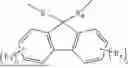
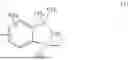
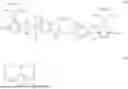


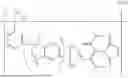


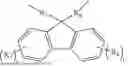
Sources:
- United States Patent and Trademark Office - verify current appl. status at the USPTO↗
Similar patent applications:
- » 20150053116
Infrared reflecting blue pigment, infrared reflecting green pigment, paint and resin composition using the infrared reflecting blue pigment, and paint and resin composition using the infrared reflecting green pigment - » 20090223414
Infrared reflecting blue pigment, infrared reflecting green pigment, paint and resin composition using the infrared reflecting blue pigment, and paint and resin composition using the infrared reflecting green pigment - » 20100124663
RESIN COMPOSITION AND SHEET USING RESIN COMPOSITION - » 20220235219
RESIN COMPOSITION, USE OF THE RESIN COMPOSITION, OPTOELECTRONIC DEVICE AND METHOD FOR PRODUCING AN OPTOELECTRONIC DEVICE - » 20090263745
Polyimide precursor, resin composition comprising the polyimide precursor, pattern forming method using the resin composition, and articles produced by using the resin composition - » 20110281218
Polyimide precursor, resin composition comprising the polyimide precursor, pattern forming method using the resin composition, and articles produced by using the resin composition - » 20050173116
Resin compositions and methods of using resin compositions to control proppant flow-back - » 20070267194
Resin Compositions and Methods of Using Resin Compositions to Control Proppant Flow-Back - » 20100132943
Resin compositions and methods of using resin compositions to control proppant flow-back - » 20190055384
RESIN COMPOSITION AND MOLDED ARTICLE USING RESIN COMPOSITION
Recent applications in this class:
- » 20260146125 2026-05-28
LADDER POLYMERS AND IMPROVED METHODS OF MAKING THE SAME - » 20260015456 2026-01-15
POLYFUNCTIONAL VINYL RESIN, PRODUCTION METHOD THEREFOR, COMPOSITION OF POLYFUNCTIONAL VINYL RESIN, AND CURED OBJECT THEREFROM - » 20250163211 2025-05-22
MIXED SOLID-STATE IONIC-ELECTRONIC POLYMER CONDUCTORS FOR ELECTROCHEMICAL DEVICES - » 20250154313 2025-05-15
POLYMER, RESIN COMPOSITION, ARTICLE COMPRISING THE SAME, AND PREPARATION METHOD THEREOF - » 20250122328 2025-04-17
COPOLYMERS DERIVED FROM DICYCLOPENTADIENE - » 20250075029 2025-03-06
POLYCYLOOLEFINIC POLYMERS AND ANION EXCHANGE MEMBRANES DERIVED THEREFROM - » 20250066536 2025-02-27
COMPOSITIONS AND METHODS OF MAKING POLYMERIZING NUCLEIC ACIDS - » 20250011527 2025-01-09
MODIFIED NAPHTHOL RESIN AND PREPARATION METHOD THEREOF - » 20240141097 2024-05-02
Polymers and methods for their manufacture - » 20240124641 2024-04-18
Polycyloolefinic polymers and anion exchange membranes derived therefrom