HEAVY DISTILLATE-BASED ADDITIVES AND METHODS FOR USE IN STABILIZING ASPHALTENES
US20260146201A1
2026-05-28
18/961,185
2024-11-26
Smart Summary: A new type of additive is made from leftover materials produced when waste plastic is broken down using heat. This additive is derived from a heavy liquid that contains special chemicals called polynuclear aromatic hydrocarbons. These chemicals can have different structures, with some having 2 to 4 rings and others having 5 to 10 rings. The additive helps to stabilize asphaltenes, which are complex compounds found in materials like crude oil. By using this method, waste plastic can be turned into a useful product that improves the quality of other substances. 🚀 TL;DR
Abstract:
A stabilizing additive is prepared from a heavy distillate byproduct obtained from one or more waste plastic pyrolysis processes. The heavy distillate byproduct may include polynuclear aromatic hydrocarbons that each include between 2 and 4 condensed rings, heavy polynuclear aromatic hydrocarbons having between 5 and 10 condensed aromatic rings, and combinations of polynuclear aromatic hydrocarbons and heavy polynuclear aromatic hydrocarbons.
Assignee:
- Baker Hughes Oilfield Operations LLC 1,045 🇺🇸 Houston, TX, United States
Applicant:
Interested in similar patents?
Get notified when new applications in this technology area are published.
Classification:
C10C3/005 » CPC main
Working-up pitch, asphalt, bitumen by mixing several fractions (also coaltar fractions with petroleum fractions)
C10C3/00 IPC
Working-up pitch, asphalt, bitumen
Description
FIELD OF THE INVENTION
This disclosure relates generally to methods for stabilizing asphaltenes in petroleum feedstocks and to additive useful in stabilizing asphaltenes.
BACKGROUND OF THE INVENTION
Asphaltenes precipitation is a major problem in oil production and refining. These asphaltenes are amorphous solids with complex structures, relatively high molecular weight, and varying degrees of polarity depending on their origin. Typical asphaltenes are known to have different solubilities in crude oil or in certain solvents like carbon disulfide. While asphaltenes are generally soluble in xylene and toluene, they are insoluble in solvents like light paraffins, including but not necessarily limited to pentane and heptane. Under ambient conditions, these fouling-causing components are liquid and may exist in the form of colloidal dispersions stabilized by other components in a crude oil or other petroleum feedstock. Under increased temperatures or pressure, however, asphaltenes may aggregate, deposit, or otherwise be subjected to compositional and morphological changes. Typically, temperatures starting from 180-200° C. can induce phase separation and precipitation of asphaltenes. Above 400° C., thermal cracking converts asphaltenes into less soluble thermally cracked asphaltenes with increased fouling tendency. Asphaltenes may also precipitate when feedstocks of different compositions are blended or when feedstocks are subjected to mechanical or physicochemical processing.
Asphaltene precipitation often occurs in pipelines, separators, valves, furnaces, heat exchangers, and other equipment. Once precipitated and/or deposited, asphaltenes present numerous problems for crude oil producers. For example, asphaltene deposits can partially or completely plug or block downhole tubulars, well-bores, choke off pipes, pipelines, transfer lines or other conduits, valves and safety devices, and interfere with the proper functioning of separator equipment. These phenomena may result in shutdown, loss of production and risk of explosion or unintended release of hydrocarbons into the environment.
To combat asphaltene precipitation, synthetic dispersants produced from petrochemical base products are often used to treat crude oils. While these products have demonstrated success in mitigating asphaltene precipitation, traditional synthetic dispersants are expensive. Accordingly, there is a need for effective and affordable additives for stabilizing asphaltenes in petroleum feedstocks. It is to this and other objects that the embodiments of the present disclosure are directed.
SUMMARY OF THE INVENTION
In some embodiments, the present disclosure is directed to a stabilizing additive for stabilizing asphaltenes in a petroleum feedstock, where the stabilizing additive includes heavy distillate byproduct derived from waste plastic pyrolysis. In some embodiments, the heavy distillate byproduct includes one or more polynuclear aromatic hydrocarbons that each include between 2 and 4 condensed rings. Suitable polynuclear aromatic hydrocarbons include naphthalene, biphenyl, acenaphthene, fluorene, acenaphthylene, anthracene, phenanthrene, phenalene, fluoranthene, tetracene, and chrysene and alkyl polynuclear aromatic hydrocarbons, such as alkyl-naphthalene, alkyl-anthracene and alkyl-phenanthrene. In some embodiments, the heavy distillate byproduct includes one or more heavy polynuclear aromatic hydrocarbons having between 5 and 10 condensed aromatic rings, where suitable heavy polynuclear aromatic hydrocarbons include pentacene, perylene, benzo[a]pyrene, indeno[1,2,3-cd]pyrene, corannulene, benzo[ghi]perylene, coronene, dibenz[ah]anthracene, and ovalene. In some embodiments, the stabilizing additive also includes a synthetic asphaltene dispersant.
In other aspects, the present disclosure is directed to a method for stabilizing asphaltenes in a petroleum feedstock. The method includes the steps of preparing a stabilizing additive comprising heavy distillate byproduct from a waste plastic pyrolysis process and introducing the stabilizing additive to the petroleum feedstock. In some embodiments, the method also includes the steps of evaluating the petroleum feedstock for asphaltene instability before introducing the stabilizing additive and evaluating the petroleum feedstock for improved asphaltene stability after introducing the stabilizing additive.
BRIEF DESCRIPTION OF DRAWINGS
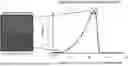
FIG. 1 is a line graph providing a conceptual guide for interpreting results of the Baker Hughes Field ASI Test (ASIT).
FIG. 2 is a line graph comparing stability of an untreated heavy crude with that of a heavy crude treated with 1,000 ppm stabilizing additive.
FIG. 3 is a line graph comparing stabilizing of an untreated heavy crude with that of a heavy crude treated with 500 ppm stabilizing additive.
FIG. 4 is a line graph depicting the impact of varying dose rates up to 5,000 ppm by weight of a stabilizing additive on the stability of a heavy crude.
FIG. 5 is a line graph depicting the impact of varying dose rates up to 10,000 ppm by weight of a stabilizing additive on the stability of a 50:50 mixture of heavy crude and WTI crude oil.
DETAILED DESCRIPTION
It is well known that global waste plastic levels present a disposal problem with significant adverse effects on the environment. One approach for dealing with this waste is through conversion of waste plastic to lower molecular weight hydrocarbon materials. The decomposition of hydrocarbon polymers of waste plastics, which can have high molecular weights (i.e., long carbon-chain lengths), can yield lower molecular weight hydrocarbons (i.e., shorter carbon-chain lengths) that may be useful as fuels or other additives. Producing valuable low molecular weight hydrocarbon materials from the pyrolysis (thermal decomposition) of waste plastic may have environmental benefits both from less reliance on traditional production processes that are pollutive and reduced levels of plastic waste sent to landfills or incinerated.
Portions of the hydrocarbon polymers that do not decompose during pyrolysis or that are retropolymerized/condensed into a non-distillable fraction are left as a residual byproduct. Pyrolysis of waste plastic to oil or fuel typically generates about 10% unusable residual byproduct. This byproduct residuum of waste plastic pyrolysis typically contains considerable unwanted contaminants, including solids. The solid contaminants are not soluble in the residue matrix, behave like insoluble coke, and can contain a high level of metals (e.g., metals from the catalysts left in the plastic matrix during polymerizations or from plastic additives). The residuum may also contain fouling material made of mostly insoluble polynuclear aromatic hydrocarbons (PNAs), also referred to as polyaromatic hydrocarbons or polycyclic aromatic hydrocarbons, and small unconverted polymers.
Heavy distillate fractions are residuum that are rich in both PNAs and heavy polynuclear aromatic hydrocarbons (hPNAs), which make these waste plastic pyrolysis byproducts difficult to process further at refinery units (e.g., crude units, thermal cracking units, hydrocracking units, etc.). The PNAs and hPNAs in heavy distillates tend to foul the unit preheat exchangers and rapidly deactivate catalysts, resulting in coking. For example, heavy distillates are not suitable for steam cracking because they cause coking of the heater while failing to convert to the desired steam cracking products. Although hydrotreating can make these heavy distillates more suitable for processes such as steam cracking, these hydrotreatments are complicated by the byproduct's high PNA/hPNA content. A need therefore exists for identifying a beneficial use of the heavy distillates produced by waste plastic pyrolysis processes.
It has been discovered that certain heavy distillates produced by waste plastic pyrolysis are capable of acting as stabilizing additives for asphaltenes in a petroleum feedstock. As used herein, the term “petroleum feedstock” refers to a mixture of hydrocarbons that is used to make one or more petroleum-based products, such as, without limitation, fuels (e.g., gasoline, diesel, jet fuel, kerosene), asphalt, lubricants, chemical reagents, and solvents. Suitable petroleum feedstocks include, but are not necessarily limited to, crude oils, heavy oils, coker feedstocks, visbreaker feedstocks, vacuum tower bottoms, fuel oils, diesel oils, bunker fuel oils (including, but not limited to, #6 oils), and mixtures thereof.
In accordance with certain embodiments, a stabilizing additive for stabilizing asphaltenes in the petroleum feedstock includes a heavy distillate byproduct obtained from waste plastic pyrolysis. The heavy distillate byproduct may incorporate heavy distillates resulting from a single waste plastic pyrolysis process or from multiple, separately conducted waste plastic pyrolysis processes that are performed at the same or different sites. The heavy distillate byproduct may include one or more PNA compounds, one or more hPNA compounds, or combinations of PNA and hPNA compounds. With reference to PNAs, each compound includes between 2 and 4 condensed aromatic rings and has a boiling point ranging from 220° C. to 450° C. Suitable PNA compounds include naphthalene, biphenyl, acenaphthene, fluorene, acenaphthylene, anthracene, phenanthrene, phenalene, fluoranthene, tetracene, and chrysene. The PNAs may also be alkyl PNAs, including but not limited to alkyl-naphthalene, alkyl-anthracene, and alkyl-phenanthrene. Turning to hPNAs, these compounds include between 5 and 10 condensed aromatic rings, alternatively between 5 and 7 condensed aromatic rings, alternatively 5 or 6 condensed aromatic rings. Suitable hPNAs include pentacene, perylene, benzo[a]pyrene, indeno[1,2,3-cd]pyrene, corannulene, benzo[ghi]perylene, coronene, dibenz[ah]anthracene, and ovalene.
It will be appreciated that the stabilizing additive may combine the heavy distillate byproduct with one or more synthetic asphaltene dispersants. Thus, in accordance with certain embodiments, the stabilizing additive includes between about 1 wt. % and about 99 wt. % heavy distillate byproduct and between about 1 wt. % and about 99 wt. % synthetic asphaltene dispersant, more particularly between about 3 wt. % and about 50 wt. % heavy distillate byproduct and between about 50 wt. % and about 97 wt. % synthetic asphaltene dispersant. The synthetic asphaltene dispersants may be derived from a petrochemical base product. Suitable synthetic asphaltene dispersants include, without limitation, alkyl phenolic resins, maleic anhydride derivatives, polyisobutylene succinimides (PIBSI) derivatives, and fatty acid amine condensates.
In another aspect, illustrative embodiments include a method for stabilizing asphaltenes in a petroleum feedstock. The method generally involves the steps of preparing a stabilizing additive having heavy distillate byproduct from one or more waste plastic pyrolysis processes and introducing a volume of the stabilizing additive to the petroleum feedstock. The waste plastic pyrolysis process(es) used to produce the heavy distillate byproduct may be performed on a waste plastic such as, without limitation, polyethylene, polypropylene, polyvinylchloride, polyethylene terephthalate, polystyrene, polycarbonate, polyamide (e.g., nylon class), polymethyl methacrylate, and polyurethane, and combinations thereof. The term “waste plastic” is used herein to refer to plastic that was previously manufactured into an article (e.g., plastic bottles or other packaging) that has outlived its usefulness for its original purpose.
In the introducing step, the stabilizing additive may be mixed with the petroleum feedstock using, e.g., a pump system or a chemical injection quill. The amount of stabilizing additive introduced into the petroleum feedstock ranges between about 250 ppm and about 10,000 ppm stabilizing additive based on the petroleum feedstock, more particularly between about 500 ppm and about 5,000 ppm stabilizing additive, more particularly between about 1,000 ppm and 2,000 ppm stabilizing additive. The stabilizing additive may be introduced to the petroleum feedstock at temperatures between about ambient and/or room temperature (defined herein as about 22° C.) and about 1,000° C., more particularly between about 50° C. and about 900° C., more particularly between about 200° C. and about 800° C.
In accordance with certain embodiments, the petroleum feedstock is initially evaluated for asphaltene instability to determine whether a treatment of the stabilizing additive is needed. As used here, the term “instability” refers to the formation of an additional phase with objectionable or problematic properties in a mixture. Asphaltene instability may occur when asphaltenes precipitate, flocculate, or agglomerate. In contrast, asphaltene stability is reflected when the asphaltenes remain in solution in the petroleum feedstock. It will be appreciated that “asphaltene instability” and “asphaltene stability” reference relative states, and that varying degrees of asphaltene instability/stability are possible.
The evaluation for asphaltene instability may be performed using a known or proprietary evaluation technique, including. Suitable techniques include, but not necessarily limited to, ASTM D7060 (optical detection method; p-value), ASTM D7157 (n-heptane phase separation; optical detection; s-value), ASTM D4312 (toluene equivalents test), and ASTM D2781 (the spot test). The Baker Hughes Field ASI Test (ASIT) is a suitable proprietary evaluation technique that provides an accurate and reliable determination of asphaltene stability by light scattering. More particularly, ASIT is a laboratory testing method based on the application of light scattering flocculation titration with an asphaltene paraffin precipitant, typically heptane or another suitable precipitant. As depicted in FIG. 1, higher asphaltene stability index (ASI) values indicate greater stability.
If an unsuitable degree of asphaltene instability is detected in the petroleum feedstock, stabilizing additive may be introduced accordingly. In accordance with certain embodiments, a predetermined instability threshold is established to determine whether the detected degree of asphaltene instability is unsuitable, thus requiring treatment with the stabilizing additive. The predetermined instability threshold may be the lowest degree of asphaltene instability that is detectable using the selected evaluation technique. Alternatively, the predetermined instability threshold may be a higher degree of asphaltene instability that is established experimentally or by other criteria (e.g., the degree of asphaltene instability at which measurable asphaltene deposition occurs in the system of interest). Different predetermined instability thresholds may be used based on the type of petroleum feedstock.
In some instances, the amount of stabilizing additive used for the volume of treatment is also calculated by evaluating the asphaltene instability of petroleum feedstock. In general, where a higher degree of asphaltene instability is detected, a higher amount of stabilizing additive will be introduced to the petroleum feedstock, as compared to the amount of stabilizing additive that would be introduced if a low degree of asphaltene instability had been detected. The amount of stabilizing additive may also be calculated as the amount needed to lower asphaltene instability to below the predetermined instability threshold.
The petroleum feedstock may be evaluated again after the stabilizing additive is introduced (preferably using the same technique as the initial evaluation) to determine whether asphaltene stability has been improved by the treatment. An improved asphaltene stability is understood to refer to a lowered degree of asphaltene instability, with reference to the initial stability evaluation, or an absence of detectable asphaltene instability. If an undesirable degree of asphaltene instability remains after the initial stabilizing additive treatment (e.g., the predetermined instability threshold is still exceeded), a subsequent volume of the stabilizing additive may be added to the petroleum feedstock.
EXAMPLES
The stabilizing additive and method for stabilizing asphaltenes in a petroleum feedstock is further illustrated by the following Examples, which are provided for the purpose of demonstration rather than limitation.
Example 1
In this Example, the proprietary Baker Hughes ASIT evaluation technique was used to evaluate stability of a heavy crude with and without 1,000 ppm stabilizing additive. Temperature was controlled and maintained at 50° C., and light scattering was performed at an intensity in the near infrared. As depicted in FIG. 2, at a normalized power level of 1.00, the treated heavy crude demonstrated an ASI of approximately 69, whereas the untreated heavy crude demonstrated a lower ASI of approximately 64. Thus, the treated heavy crude reflected greater asphaltene stability than the untreated heavy crude.
Example 2
For this Example, a heavy crude was evaluated with and without 500 ppm stabilizing additive using the ASIT technique. FIG. 3 depicts that, at a temperature of 50° C. and a normalized power level of 1.00, the treated heavy crude had an ASI of approximately 35, and the untreated heavy crude had a lower ASI of approximately 30. These results demonstrate, again, that greater asphaltene stability was achieved using the stabilizing additive.
Example 3
This Example evaluated the degree of asphaltene stability resulting from different dose rates of the stabilizing additive. As shown in FIG. 4, introducing 2,000 ppm stabilizing additive to a heavy crude resulted in about 50% increase in stability (0.45 compared to 0.3 for the untreated heavy crude), and introducing 5,000 ppm stabilizing additive nearly doubled the degree of asphaltene stability (0.55 compared to 0.3).
An additional evaluation was performed with a different petroleum feedstock, namely, a mixture of 50 wt. % heavy crude and 50 wt. % West Texas Intermediate (WTI) crude oil. Although stabilization occurred at lower concentrations, FIG. 5 demonstrates that the effect “reverses” after 10,000 ppm stabilizing additive, such that the stabilizing additive showed destabilizing effects. Similar trends are often observed with high concentrations of traditional synthetic asphaltene dispersants.
Comparing FIGS. 4 and 5, the observed impact of the stabilizing additive is not related to changes in the crude oil properties or the solubility parameter of the crude oil. A clear stabilizing effect for asphaltenes was shown in the typical range of lab tests for synthetic asphaltene dispersants (i.e., 500 ppm to 5,000 ppm). Based on the stability measurements, an increase in asphaltene dispersion/solvation comparable to that of synthetic asphaltene dispersants was observed when introducing the stabilizing additive in the same dose rate range.
For purposes of the instant disclosure, terms of approximation (e.g., “about”, “substantially”, “approximately”, etc.) should be interpreted according to their ordinary and customary meanings as used in the associated art unless indicated otherwise. Absent a specific definition and absent ordinary and customary usage in the associated art, such terms should be interpreted to be ±10% of the base value.
When, in this document, a range is given as “(a first number) to (a second number)” or “(a first number)-(a second number)”, this means a range whose lower limit is the first number and whose upper limit is the second number. For example, 25 to 100 should be interpreted to mean a range whose lower limit is 25 and whose upper limit is 100. Additionally, it should be noted that where a range is given, every possible subrange or interval within that range is also specifically intended unless the context indicates to the contrary. For example, if the specification indicates a range of 25 to 100 such range is also intended to include subranges such as 26-100, 27-100, etc., 25-99, 25-98, etc., as well as any other possible combination of lower and upper values within the stated range, e.g., 33-47, 60-97, 41-45, 28-96, etc. Note that integer range values have been used in this paragraph for purposes of illustration only and decimal and fractional values (e.g., 46.7-91.3) should also be understood to be intended as possible subrange endpoints unless specifically excluded.
It is to be understood that even though numerous characteristics and advantages of various embodiments of the present invention have been set forth in the foregoing description, together with details of the structure and functions of various embodiments of the invention, this disclosure is illustrative only, and changes may be made in detail, especially in matters of structure and arrangement of parts and steps within the principles of the present invention to the full extent indicated by the broad general meaning of the terms in which the appended claims are expressed. It will be further appreciated that unless otherwise excluded, aspects of one embodiment can be combined or incorporated into other embodiments disclosed herein. It will be appreciated by those skilled in the art that the teachings of the present invention can be applied to other systems without departing from the scope and spirit of the present invention.
Claims
It is claimed:1. A stabilizing additive for stabilizing asphaltenes in a petroleum feedstock, wherein the stabilizing additive comprises a heavy distillate byproduct from waste plastic pyrolysis.
2. The stabilizing additive of claim 1, wherein the heavy distillate byproduct comprises one or more polynuclear aromatic hydrocarbons.
3. The stabilizing additive of claim 2, wherein each polynuclear aromatic hydrocarbon comprises between 2 and 4 condensed aromatic rings.
4. The stabilizing additive of claim 3, wherein the one or more polynuclear aromatic hydrocarbons is selected from the group consisting of naphthalene, biphenyl, acenaphthene, fluorene, acenaphthylene, anthracene, phenanthrene, phenalene, fluoranthene, tetracene, and chrysene.
5. The stabilizing additive of claim 3, wherein the one or more polynuclear aromatic hydrocarbons comprises one or more alkyl polynuclear aromatic hydrocarbons.
6. The stabilizing additive of claim 4, wherein the one or more alkyl polynuclear aromatic hydrocarbons are selected from the group consisting of alkyl-naphthalene, alkyl-anthracene, and alkyl-phenanthrene.
7. The stabilizing additive of claim 1, wherein the heavy distillate byproduct further comprises one or more heavy polynuclear aromatic hydrocarbons.
8. The stabilizing additive of claim 7, wherein each heavy polynuclear aromatic hydrocarbons comprises between 5 and 10 condensed aromatic rings.
9. The stabilizing additive of claim 8, wherein the one or more heavy polynuclear aromatic hydrocarbons are selected from the group consisting of pentacene, perylene, benzo[a]pyrene, indeno[1,2,3-cd]pyrene, corannulene, benzo[ghi]perylene, coronene, dibenz[ah]anthracene, and ovalene.
10. The stabilizing additive of claim 1 further comprising a synthetic asphaltene dispersant.
11. The stabilizing additive of claim 10, wherein the synthetic asphaltene dispersant is selected from the group consisting of alkyl phenolic resins, maleic anhydride derivatives, polyisobutylene succinimides (PIBSI) derivatives, and fatty acid amine condensates.
12. The stabilizing additive of claim 10 comprising:
between about 1 wt. % and about 99 wt. % heavy distillate byproduct; and
between about 1 wt. % and about 99 wt. % synthetic asphaltene dispersant.
13. A method for stabilizing asphaltenes in a petroleum feedstock comprising:
preparing a stabilizing additive comprising a heavy distillate byproduct from waste plastic pyrolysis; and
introducing a volume of the stabilizing additive to the petroleum feedstock.
14. The method of claim 13, wherein the step of introducing the volume of the stabilizing additive to the petroleum feedstock comprises the step of introducing between about 250 ppm and about 10,000 ppm stabilizing additive based on the petroleum feedstock.
15. The method of claim 13, wherein the step of introducing the volume of the stabilizing additive to the petroleum feedstock is performed at a temperature between about 22° C. and about 1,000° C.
16. The method of claim 13, further comprising the step of evaluating the petroleum feedstock for asphaltene instability before introducing the volume of the stabilizing additive.
17. The method of claim 16, further comprising the step of evaluating the petroleum feedstock for improved asphaltene stability after introducing the volume of the stabilizing additive.
18. The method of claim 13, further comprising the step of performing the waste plastic pyrolysis process on a waste plastic selected from the group consisting of polyethylene, polypropylene, polyvinylchloride, polyethylene terephthalate, polystyrene, polycarbonate, polyamide, polymethyl methacrylate, and polyurethane, and combinations thereof.
19. The method of claim 13, wherein the petroleum feedstock is selected from the group consisting of crude oils, heavy oils, coker feedstocks, visbreaker feedstocks, vacuum tower bottoms, fuel oils, diesel oils, bunker fuel oils, and mixtures thereof.
20. The method of claim 13, wherein the heavy distillate byproduct comprises polynuclear aromatic hydrocarbons, heavy polynuclear aromatic hydrocarbons, or a combination of polynuclear aromatic hydrocarbons and heavy polynuclear aromatic hydrocarbons.
Images & Drawings included:



Sources:
- United States Patent and Trademark Office - verify current appl. status at the USPTO↗
Recent applications in this class:
- » 20250179369 2025-06-05
PITCH COMPOSITIONS AND METHODS RELATED THERETO - » 20240409815 2024-12-12
METHODS AND SYSTEMS FOR PRODUCING CRACKING RESISTANT ASPHALT BINDER USING PHASE ANGLE - » 20240182789 2024-06-06
IMPROVED PITCH PRODUCT, PROCESS FOR ITS PREPARATION AND USE - » 20220356403 2022-11-10
Methods for expanding and enriching hydrocarbon diluent pools - » 20200339886 2020-10-29
Methods for expanding and enriching hydrocarbon diluent pools - » 20170175000 2017-06-22
Methods for expanding and enriching hydrocarbon diluent pools - » 20170137718 2017-05-18
Composition formed of Bitumen Bases for the Manufacture of Bitumen Comprising a Slurry Residue - » 20130303809 2013-11-14
Methods for expanding and enriching hydrocarbon diluent pools
Recent applications for this Assignee:
- » 20260139575 2026-05-21
ESP WITH IMPROVED DEPLOYMENT FOR LIVE INTERVENTION - » 20260132709 2026-05-14
ESP Recirculation System with Gas Separation - » 20260132694 2026-05-14
BI-DIRECTIONAL SEAL WITH DUAL SEAL PROFILE SYSTEM AND METHOD - » 20260117145 2026-04-30
INJECTIVITY IMPROVEMENT WITH THIOALCOHOLS - » 20260117114 2026-04-30
Method of Improving Performance of Relative Permeability Modifiers - » 20260103964 2026-04-16
ADVANCED MANAGEMENT OF ARTIFICIAL LIFT SYSTEMS IN SANDY APPLICATIONS - » 20260098202 2026-04-09
ADDITIVES FOR ENHANCING WEAR CONTROL PERFORMANCE OF OILFIELD CORROSION INHIBITORS - » 20260063008 2026-03-05
MILL, WHIPSTOCK, AND ANCHOR ASSEMBLY, METHOD AND SYSTEM - » 20260055688 2026-02-26
AUTO-ENGAGEABLE COUPLING FOR PREVENTING TRANSMISSION OF REVERSE ROTATION TO ESP MOTORS - » 20260049542 2026-02-19
VENTURI CONTROLLED UNLOADING VALVE FOR GAS LIFT SYSTEM